Greek metre, made accessible
The sounds, rhythms and forms of Greek poetry, from syllables to complete poems.
Song and verse in ancient Greece
Poetry that was sung
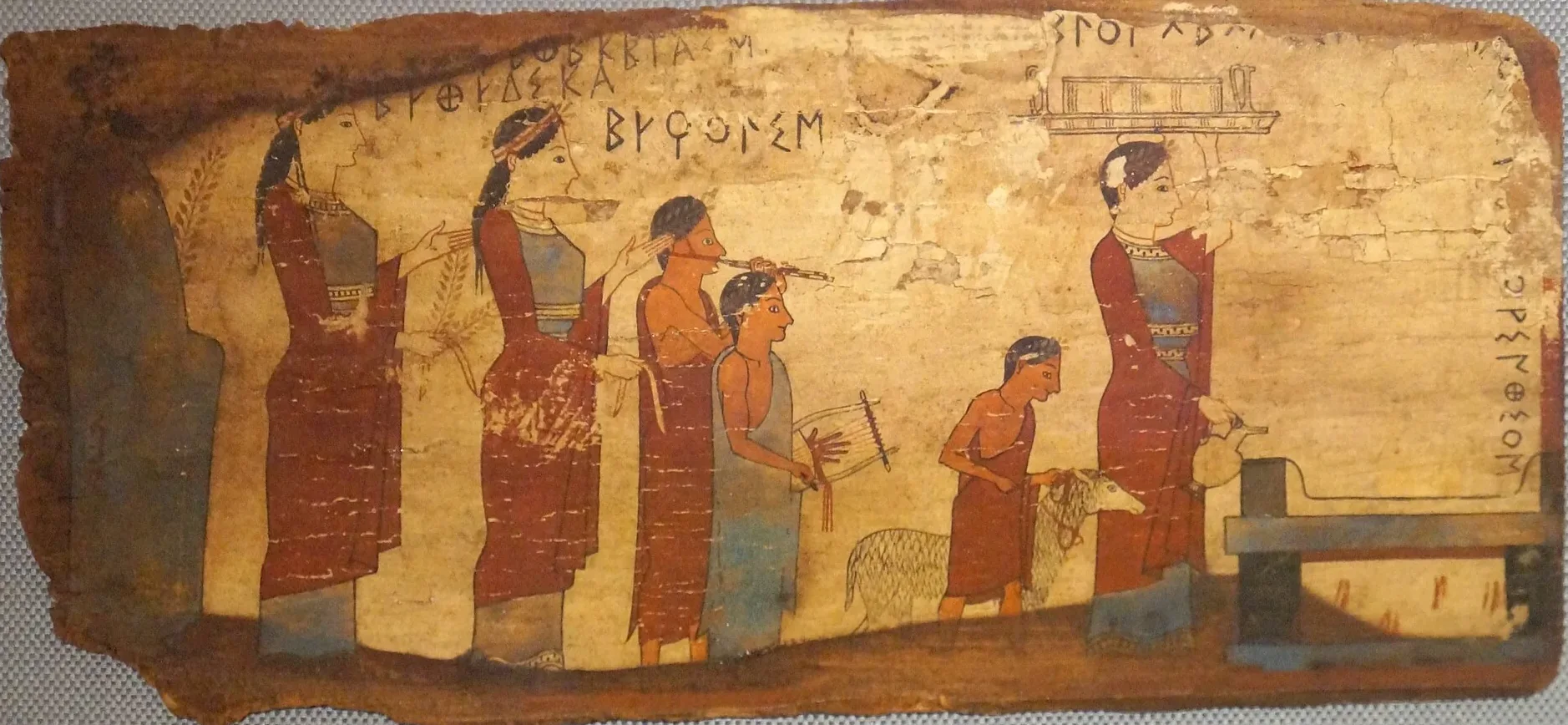
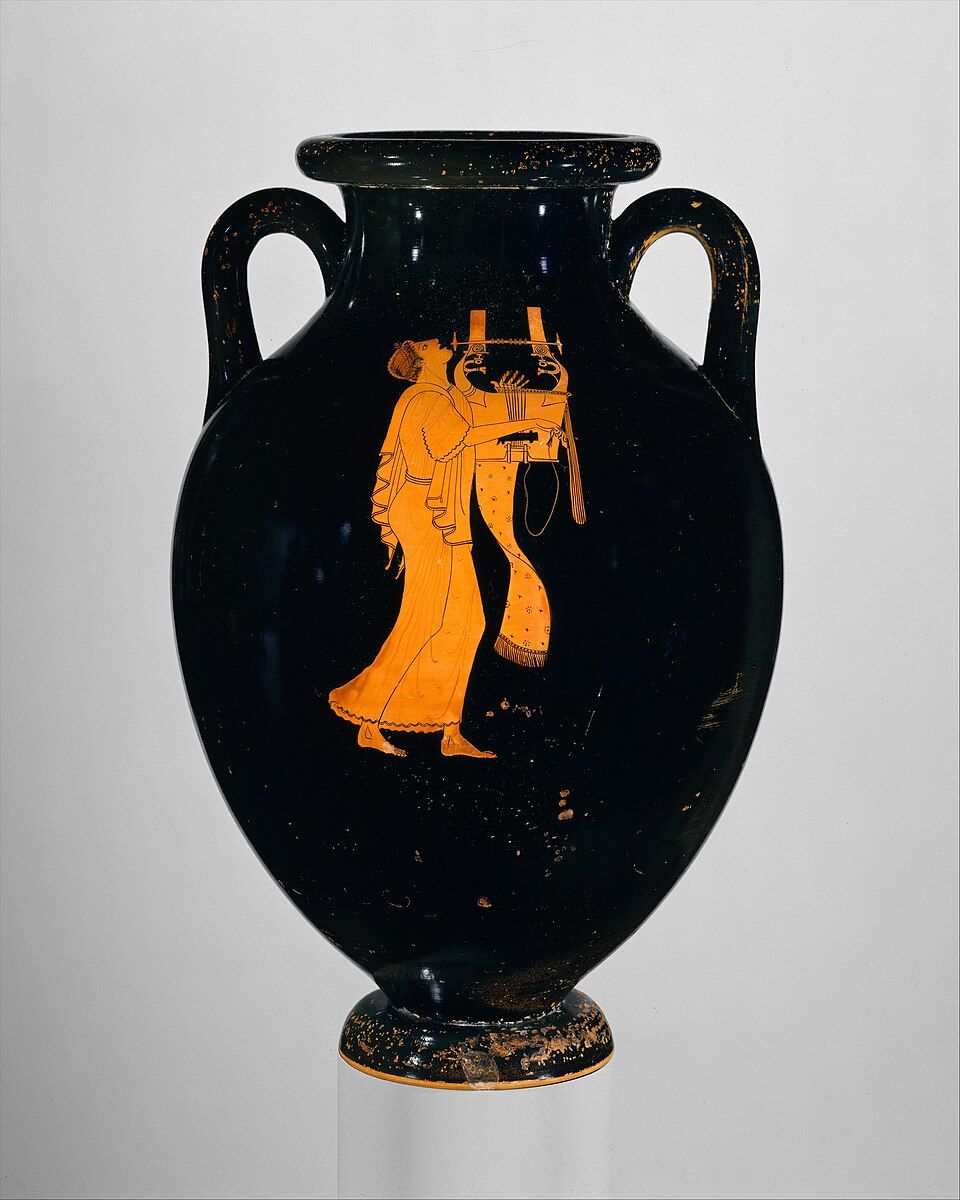
The word music is Greek, and so are melody, harmony, rhythm and chorus.[1] For the Greeks, words and music were one art, mousikē, the art of the Muses.[2] Most Greek poetry was made to be heard, and the greater part of Greek music was song, solo or choral, with the lyre or the pipes to accompany it.[3]
Song ran through Greek life. Festivals had processions with singing choruses, and peace itself meant song and dance: war, by contrast, was “danceless, lyreless”.[4] Every year at Athens five hundred men and five hundred boys sang in the choruses of the dithyramb, and at a drinking party each guest was expected to sing in turn.[5] Boys learned the lyre at school as well as their letters,[6] and at the Panathenaea rhapsodes competed in reciting Homer.[7]
The poet made the tune as well as the words.[8] The tunes were passed on by ear, and almost all are lost: not a note survives from before the last decade of the fifth century BC.[9] But the rhythm was fixed in the words themselves, by their long and short syllables, and so it is still there.[10] That is what Greek metre is: the music that lives on inside the poems. Read a line of Sappho with its lengths, and you hear the rhythm she sang.
The tradition was long. It runs from the epics of Homer, through Sappho, Pindar and the tragedians, to the songs Mesomedes wrote at the court of the emperor Hadrian,[11] a Christian hymn with musical notes on a papyrus of the third century AD,[12] and the hexameters of Nonnus in the fifth century AD.[13]
Notes and sources
- ^ West 1992, p. 1.
- ^ D’Angour 2018, pp. 49–50.
- ^ West 1992, pp. 39–40.
- ^ West 1992, pp. 13–17.
- ^ West 1992, pp. 25–26, 34.
- ^ West 1992, pp. 36–38.
- ^ Goldhill 1997, p. 129.
- ^ West 1992, p. 130.
- ^ D’Angour 2018, pp. 49–50; West 1992, p. 129.
- ^ D’Angour 2018, pp. 49–50.
- ^ Pöhlmann and West 2001, pp. 5–6.
- ^ Pöhlmann and West 2001, p. 1; West 1992, p. 8.
- ^ Allen 1968, p. 120.
Sources
- Allen, W. S. 1968. Vox Graeca: A Guide to the Pronunciation of Classical Greek. Cambridge. p. 120 (Nonnus, fifth century AD).
- D’Angour, A. 2018. ‘The Musical Setting of Ancient Greek Texts’, in T. Phillips and A. D’Angour (eds), Music, Text, and Culture in Ancient Greece. Oxford. pp. 49–50 (words and music one mousikē; rhythm in the composer’s hands, melody passed on by ear).
- Goldhill, S. 1997. ‘The language of tragedy: rhetoric and communication’, in P. E. Easterling (ed.), The Cambridge Companion to Greek Tragedy. Cambridge. p. 129 (rhapsodes at the Panathenaea).
- Pöhlmann, E. and West, M. L. 2001. Documents of Ancient Greek Music. Oxford. pp. 1 (the latest document, a Christian hymn of the third century AD), 5–6 (the songs of Mesomedes).
- West, M. L. 1992. Ancient Greek Music. Oxford. pp. 1 (the Greek musical vocabulary), 8 (the latest score), 13–17 (song and dance as the life of a community at peace; “danceless, lyreless”; festival choruses), 25–26 and 34 (the symposium; the dithyrambic choruses), 36–38 (musical education), 39–40 (song the greater part of Greek music), 129 (not a note before the last decade of the fifth century), 130 (the poet his own composer).
Homer, Iliad 1.1
μῆνιν ἄειδε θεὰ Πηληϊάδεω Ἀχιλῆος
Sing, goddess, of the wrath of Achilles, son of Peleus,
Long — · short ⏑ · either ×. Each group is one foot; ‿ joins vowels in one syllable.
Read by David Chamberlain (2016), CC BY 4.0; excerpt.
The sections
Explore the site
 New to Greek? Start hereTwo short paths, one after the other: first the sounds, then the rhythm. No Greek needed to begin.
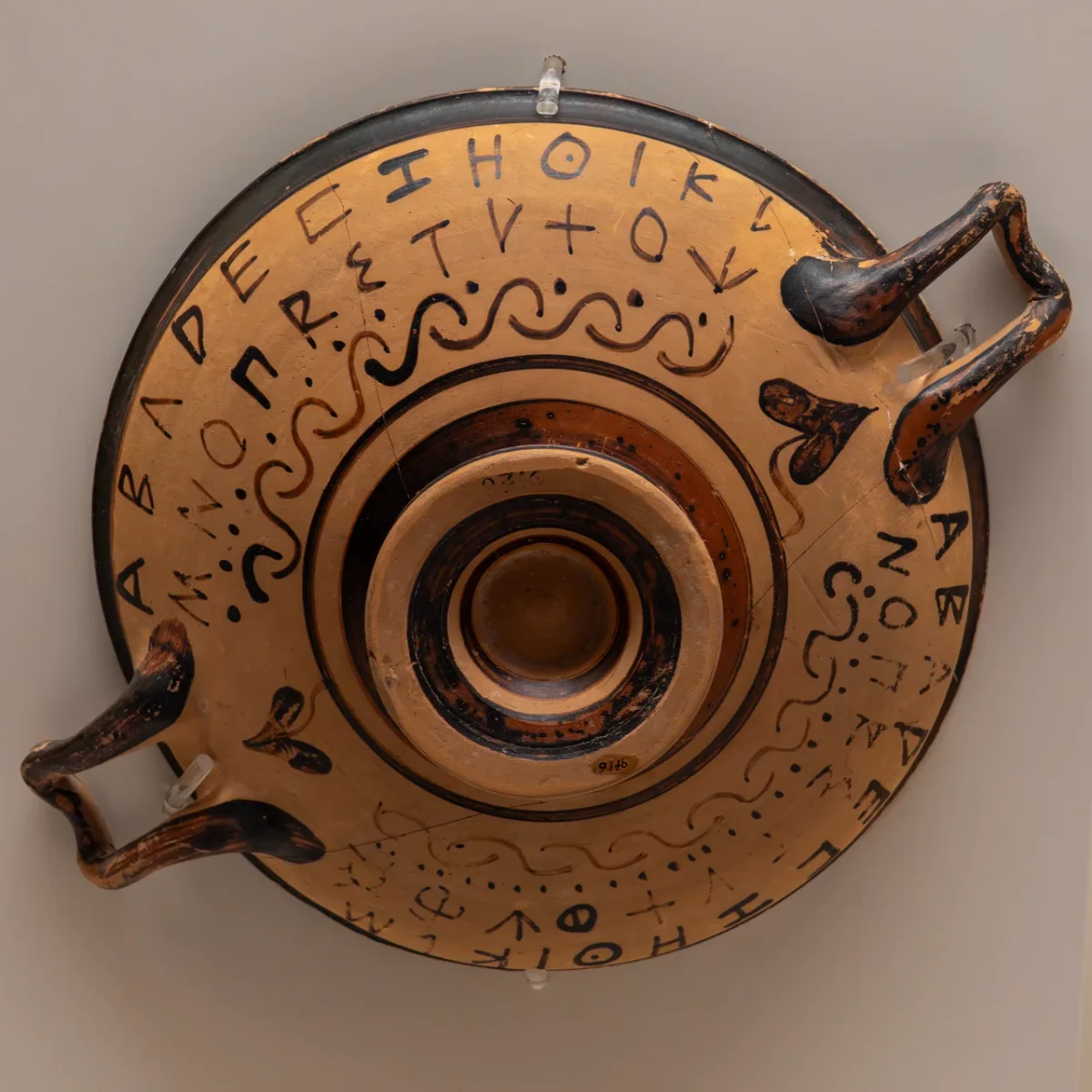 PhonologyBefore you can hear a rhythm you need the sounds. Classical Greek did not sound like Modern Greek: every vowel was long or short, φ θ χ were stops with a puff of breath, and the accent was a rise in pitch, not a stress. Learn the sounds letter by letter, hear them in recordings of Homer, and see how they make syllables.Explore Phonology
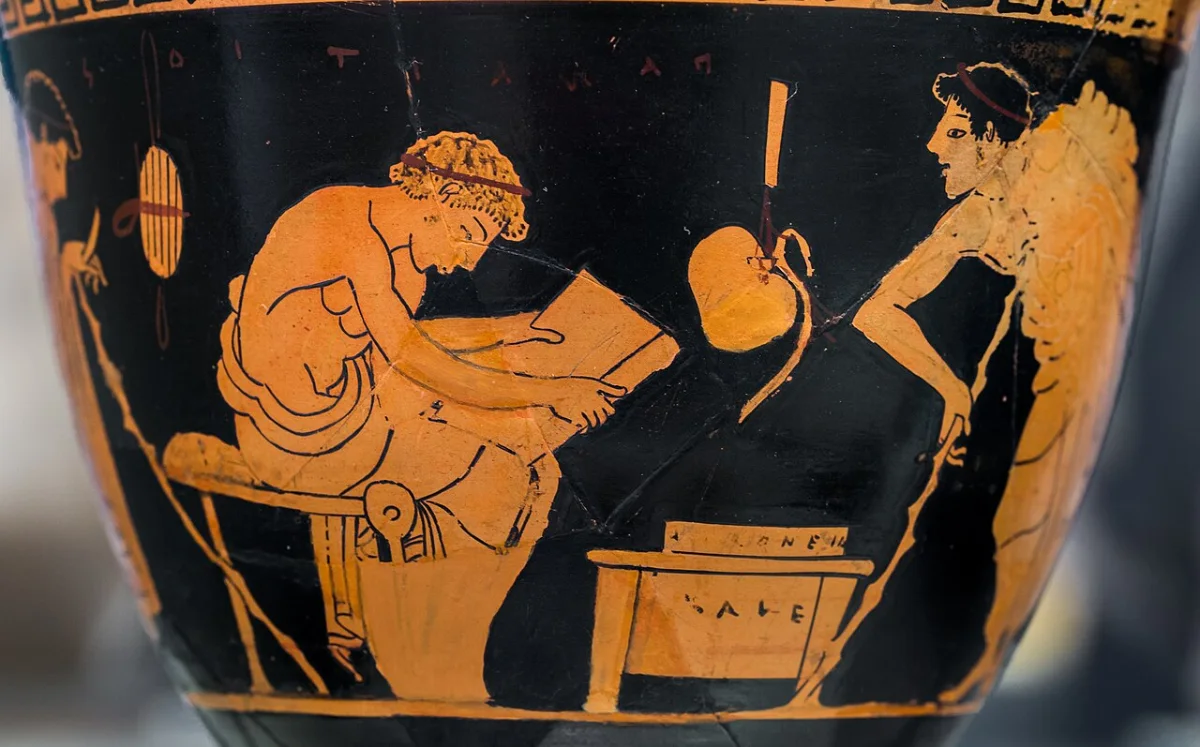 MetreGreek verse is measured in time. Every syllable is long or short, and a line is a pattern of the two, as a tune is a pattern of long and short notes. Learn how the length of a syllable is decided, the few signs that write it down, and how feet, cola and periods build a line.Explore Metre
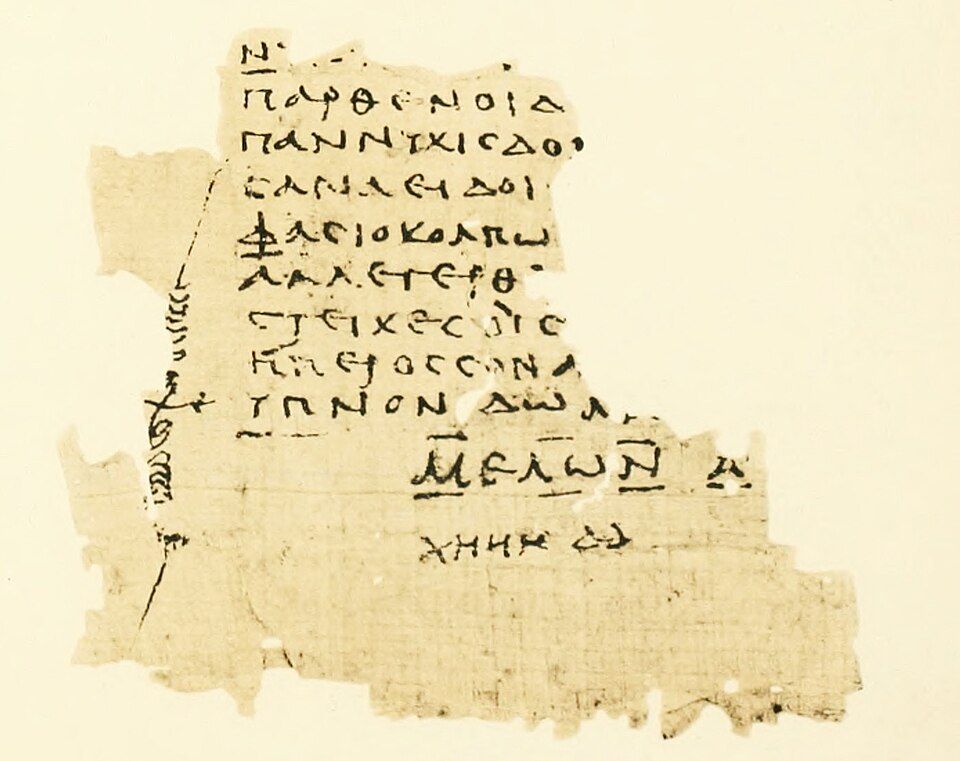 Verse formsEach kind of poetry had its own movement: the dactylic hexameter of epic, the iambic trimeter of spoken drama, the elegiac couplet of the drinking party, the stanzas of Sappho and Alcaeus, the agitated dochmiacs of tragedy. Meet the families one by one, with lines scanned syllable by syllable.Explore Verse forms
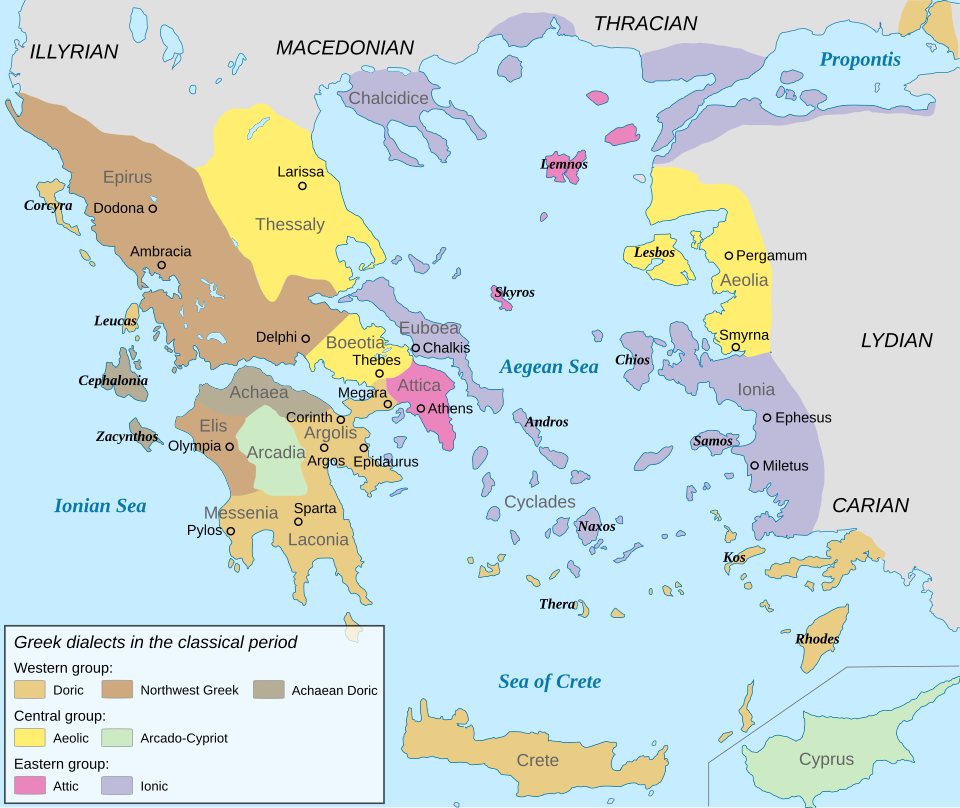 Dialects and stylesGreek poetry was never written in one Greek. Homer mixes Ionic with Aeolic forms, Sappho sings in the Aeolic of Lesbos, choral lyric has a Doric colour, and Athenian drama speaks Attic. A dialect changes the shape of words, and with them the rhythm.Explore Dialects and styles
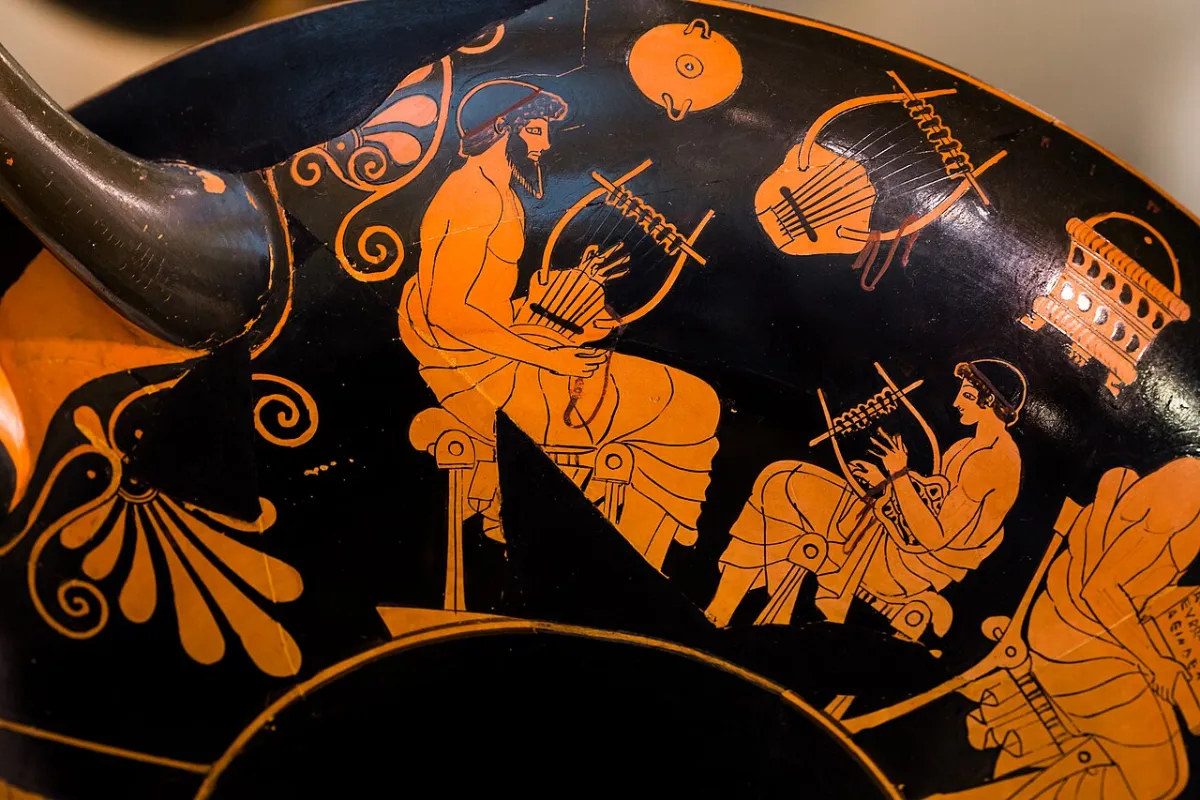
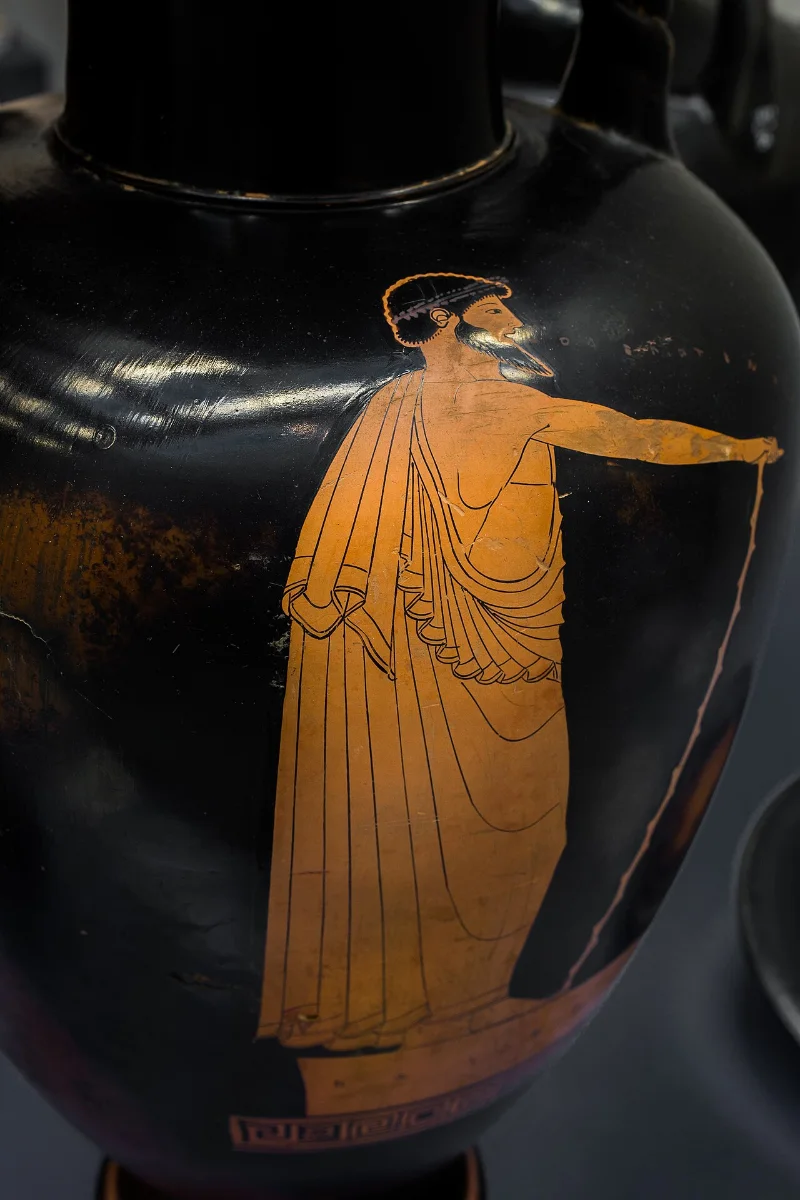 MusicThe poems were songs. A few dozen scores survive, on stone and papyrus, with the theorists who explained scales and rhythms and the vase-paintings that show lyres, pipes and choruses in action. See what is known and what is guessed, and listen to modern reconstructions.Explore Music
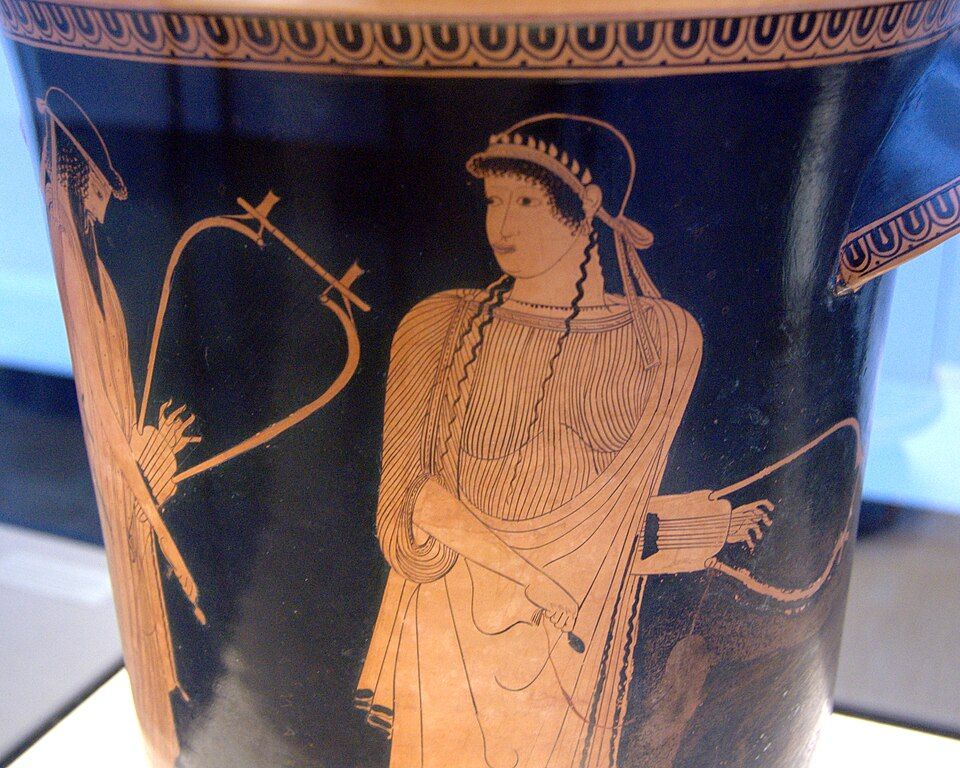 Poets and playwrightsFrom Homer and Hesiod to the women poets of the Hellenistic age and Nonnus in late antiquity: who each poet was, how they wrote and in which metres, and their poems set out line by line with scansion, transliteration and translation, some with recordings.Explore Poets and playwrights
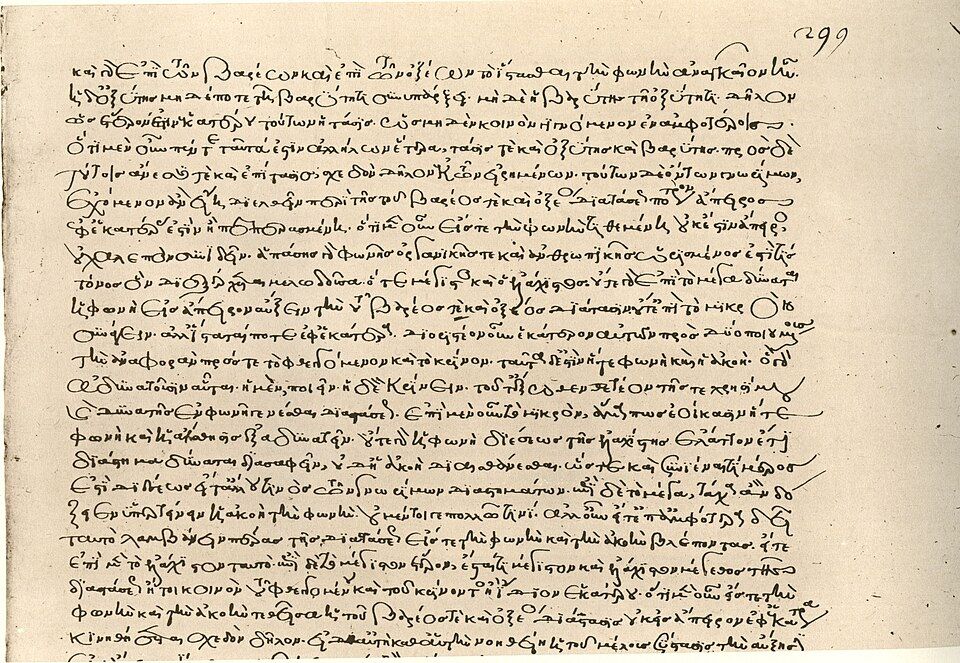 ResourcesThe reference shelf: every book and edition the pages rest on, with what may be reused; a glossary of every term, work and name, which also pops up wherever a term is used; the plans for what comes next; and the author and licence of every picture.Explore Resources
To read, hear and try
Featured pages
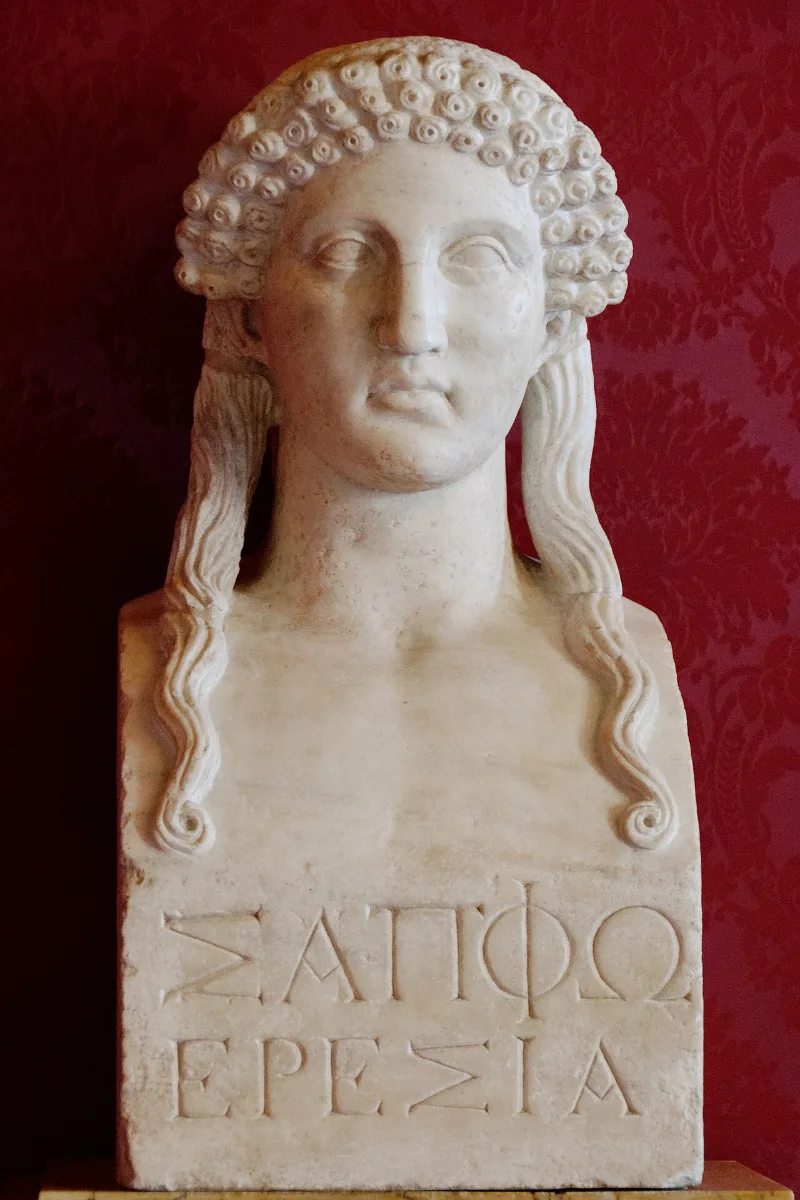 SapphoPoems and fragmentsRead Sappho’s poetry with scansion, translations and notes.Explore
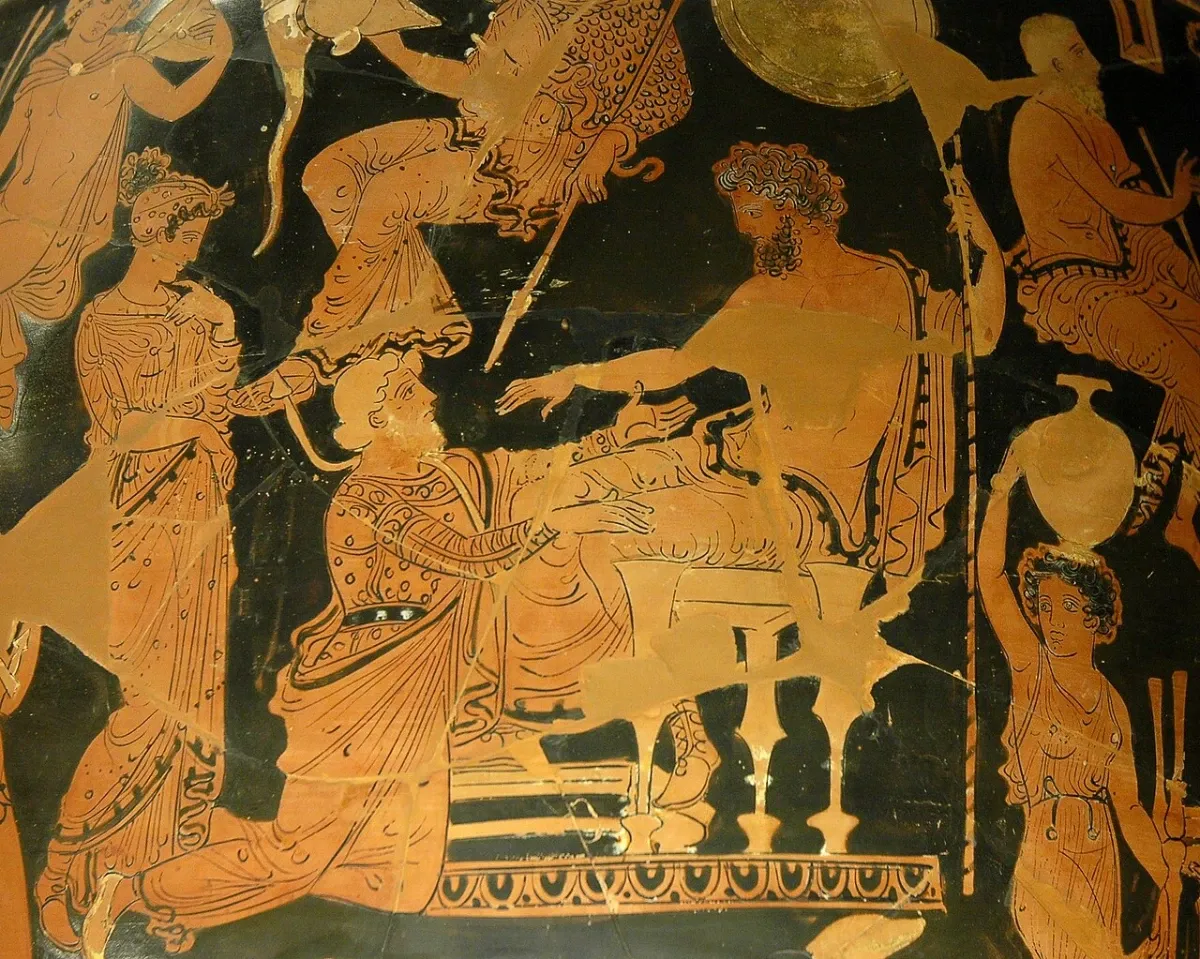 Homer, Iliad 1The Iliad, read aloudDavid Chamberlain reads the opening of the Iliad in a restored ancient pronunciation, and the text follows his voice line by line, with the scansion.Explore
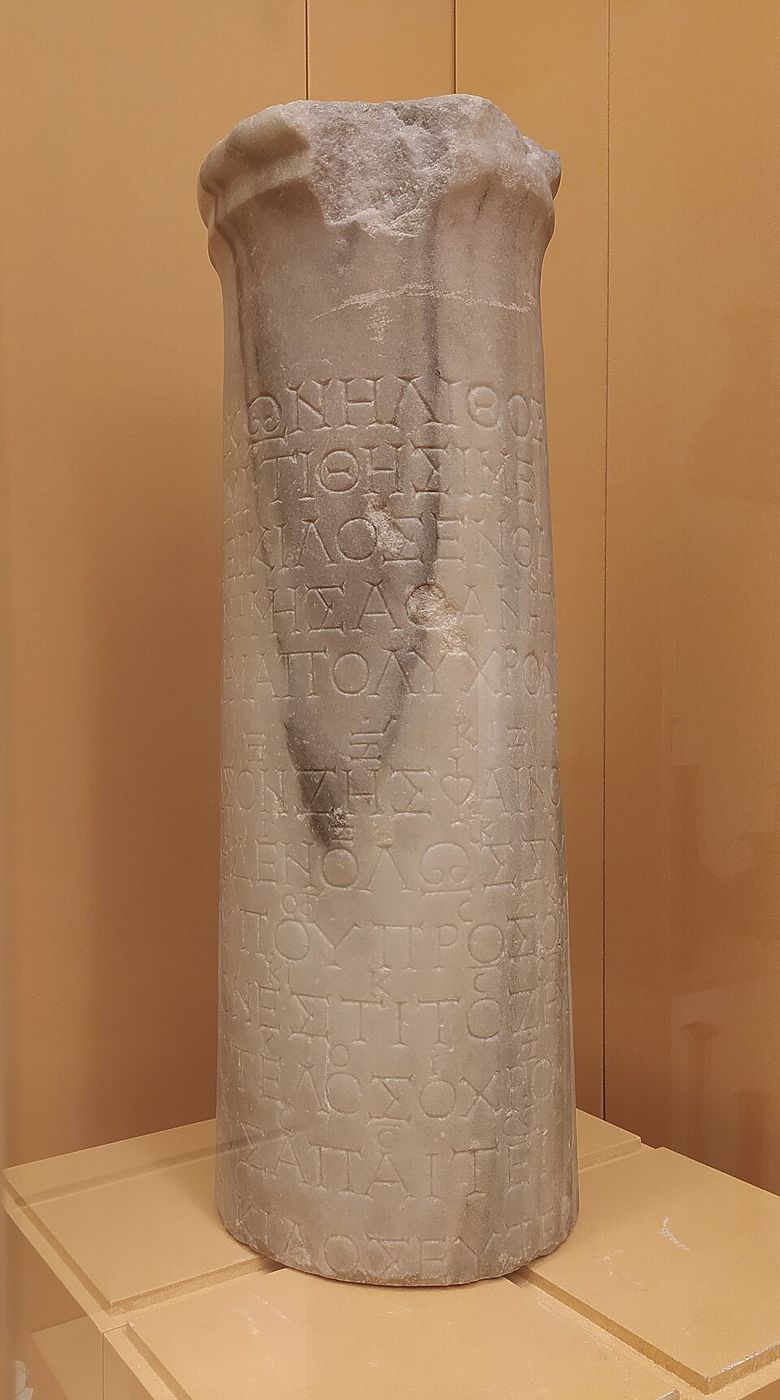 MusicThe Seikilos songA short song with its words and its notes cut together on a marble grave-pillar from near Tralles in Asia Minor. Hear a recording of it sung.Explore
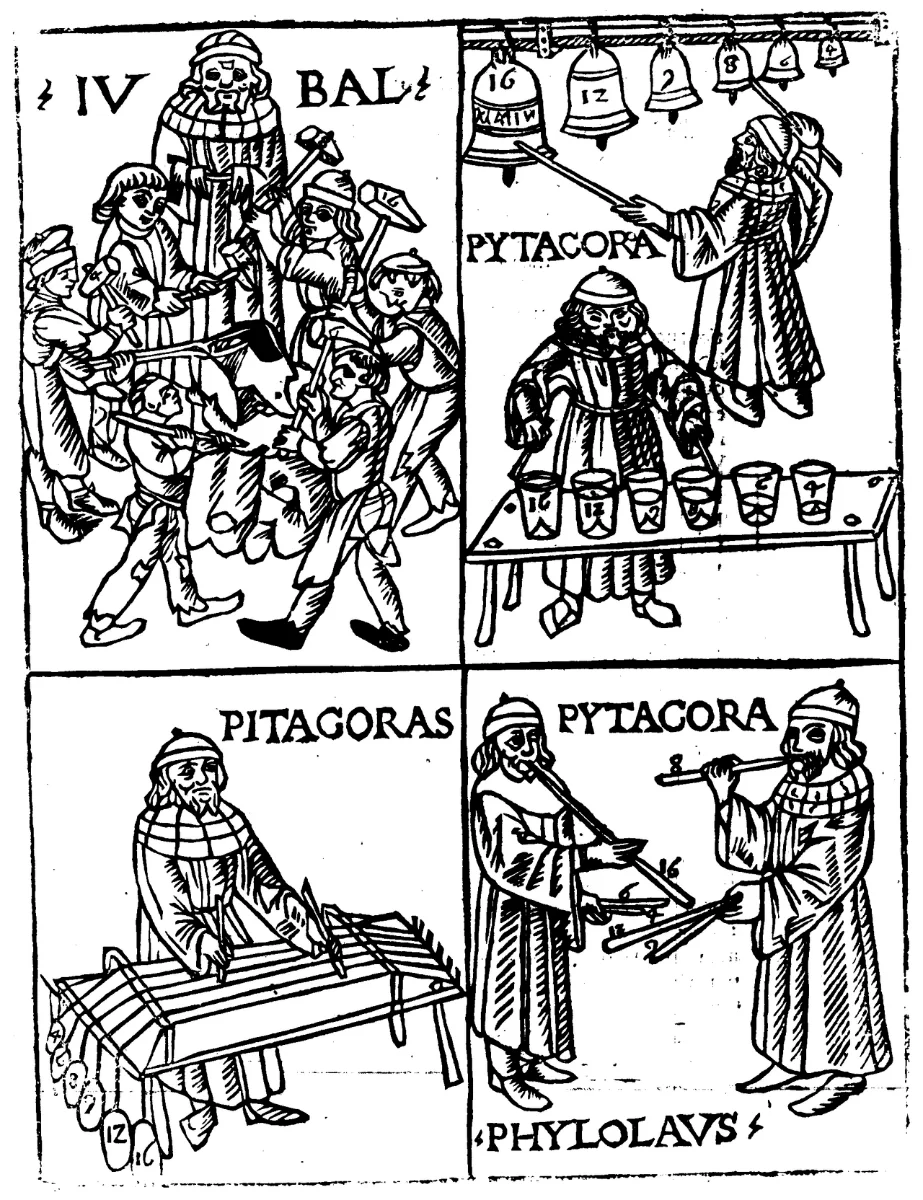 MusicMusic theoryTone and semitone, the tetrachord and its genera, keys and notation, explained step by step with diagrams that play.Explore
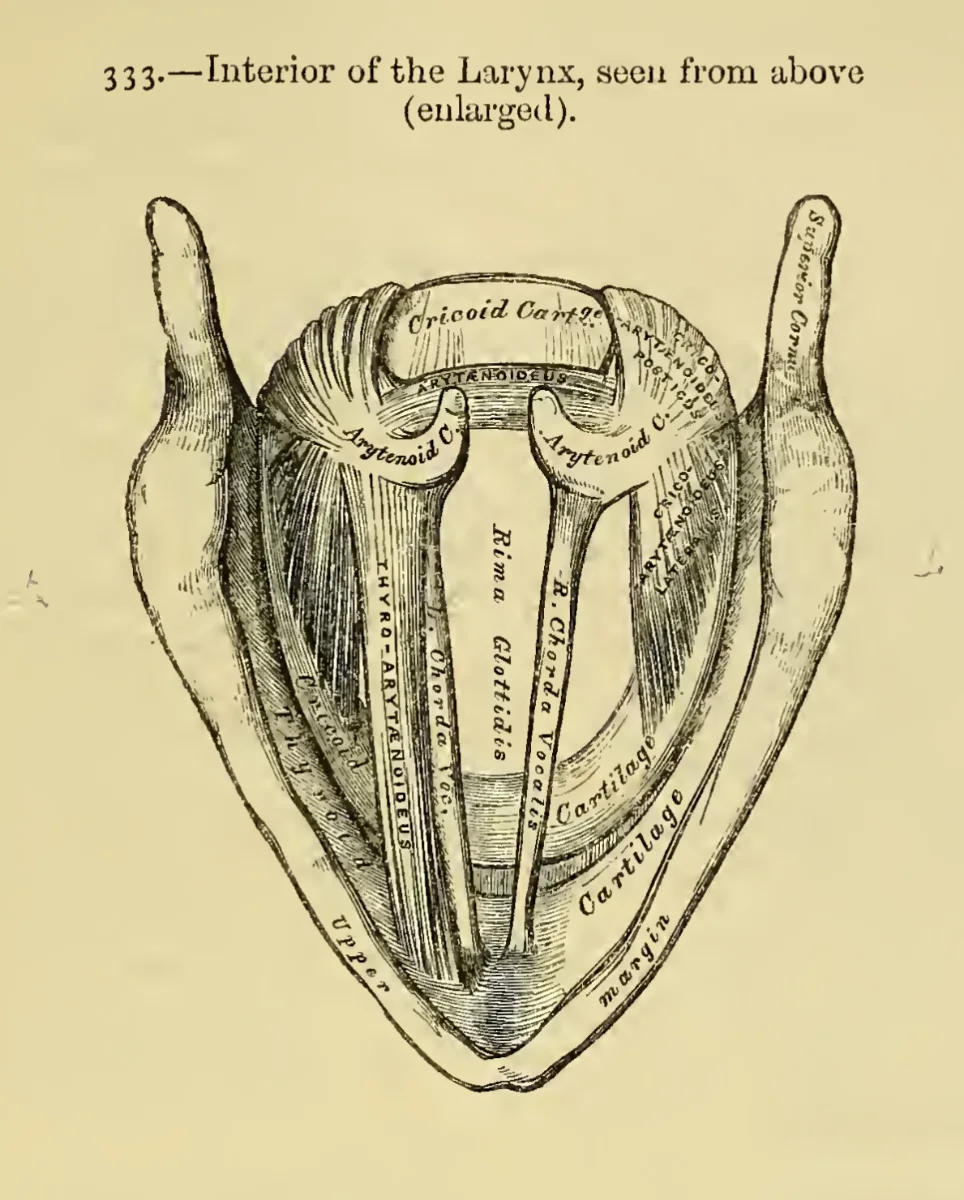 PhonologyThe sound labA recording turned into a picture: see the pitch and the length of Greek syllables in Chamberlain’s Iliad, then record your own voice and compare.Explore
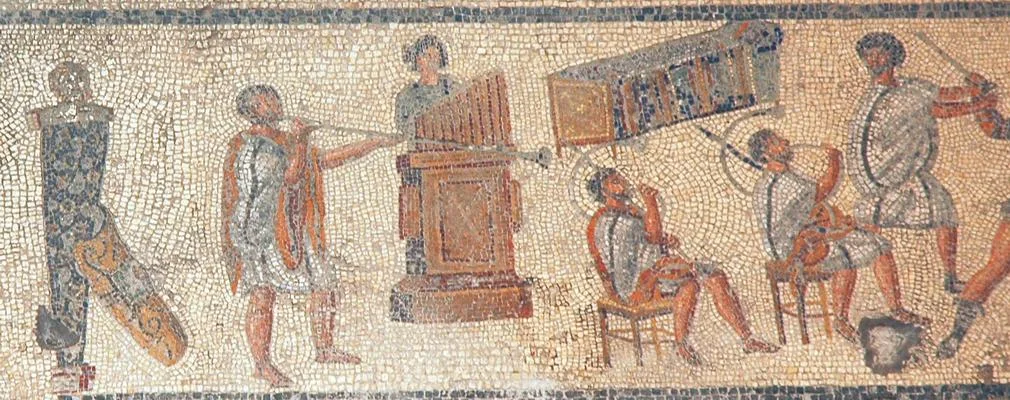
About metrehelp.org
metrehelp.org is part of the Language Help project. It is made for students: for anyone who wants to hear how Greek poetry sounded and to feel its rhythms, from a first look at long and short syllables to the debates of the scholars.
Everything here is free to read. The licence notes explain what you may reuse and how to give credit.


