
Dialects and styles
The literary dialects of Greek poetry and their effects on metre.
The literary dialects and the genres that go with them: epic, Lesbian song, Doric choral lyric, Attic drama.
Dialects and styles: a guide to this section
This section is about the language of Greek poetry. Greek was spoken in many dialects, and the poets wrote in several of them. A poet did not simply write the dialect of home. Each kind of poem had grown up in one region, and it kept that region’s dialect wherever it travelled.[1]
Dialect matters for metre, because the dialects differ in their vowels and in the length of their syllables. This guide explains the words the menu uses, shows how the pages are arranged, and suggests an order.
Dialect and genre
A dialect is a regional form of a language, with its own sounds and word-forms. Linguists sort the Greek dialects of the archaic and classical periods into four groups: Attic-Ionic, Aeolic, West Greek (including Doric) and Arcado-Cypriot.[1]
A genre is a kind of poem, defined by its occasion and its form: epic, elegy, iambus, song for one voice, song for a chorus, drama. By the eighth and seventh centuries BC there were at least three traditions of poetry. Each was bound to a dialect, and each had metres of its own:[2]
- The Ionian tradition: epic, elegy and iambus. Its pages here are Epic Ionic.
- The Aeolian tradition, known only from Sappho and Alcaeus on the island of Lesbos. Its page is Lesbian Aeolic.
- The Dorian tradition of the Peloponnese and the western colonies, with long and complex strophes. Its page is Doric, the dialect of choral lyric.
Athenian drama is written in Attic, the dialect of Athens. It has the fourth page.
One vowel as a signpost
The quickest way to tell the dialects apart is one vowel. Older Greek had a long ᾱ (ā) in many words. Doric and Aeolic kept it. Attic and Ionic turned it into η (ē):[3]
| Doric and Aeolic | Attic and Ionic | Meaning |
|---|---|---|
| φάμα (phāmā) | φήμη (phēmē) | report, fame |
| μᾶλον (mālon) | μῆλον (mēlon) | apple |
Both vowels are long, so this change never alters the metre. Other differences do, and the How dialect affects metre tab and each dialect’s Metrical consequences tab show them.
Words the menu uses
Monody is song for a single voice, like the songs of Sappho and Alcaeus. Choral lyric is song for a chorus that danced as it sang, like the odes of Pindar.[4] Choral song kept Doric as its dialect, whatever the poet’s own birthplace.[5]
The lyric koinē (κοινή, koinē, “common”) is the mixed literary dialect used by most lyric poets.[6] It is not the same as the Koinē of the Hellenistic world, the common Greek of later centuries, which the Attic page’s last tab, Koinē and accent, describes.
The proof that genre, not birthplace, chose the dialect comes from poets who wrote in more than one genre. Simonides of Ceos, an Ionic island, wrote his choral lyric mostly in Doric, but his elegy in Ionic.[7]
The pages
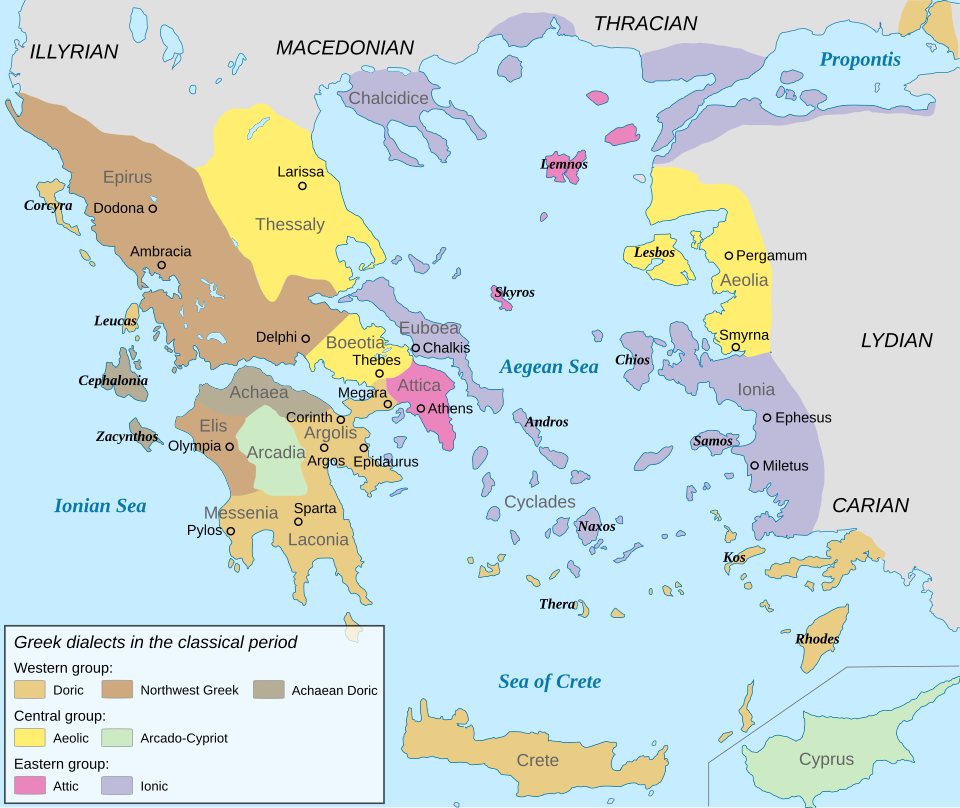 OverviewDialect and genre
Tabs: How dialect affects metre · Editions and orthography · Papyri and metrical evidence · Map
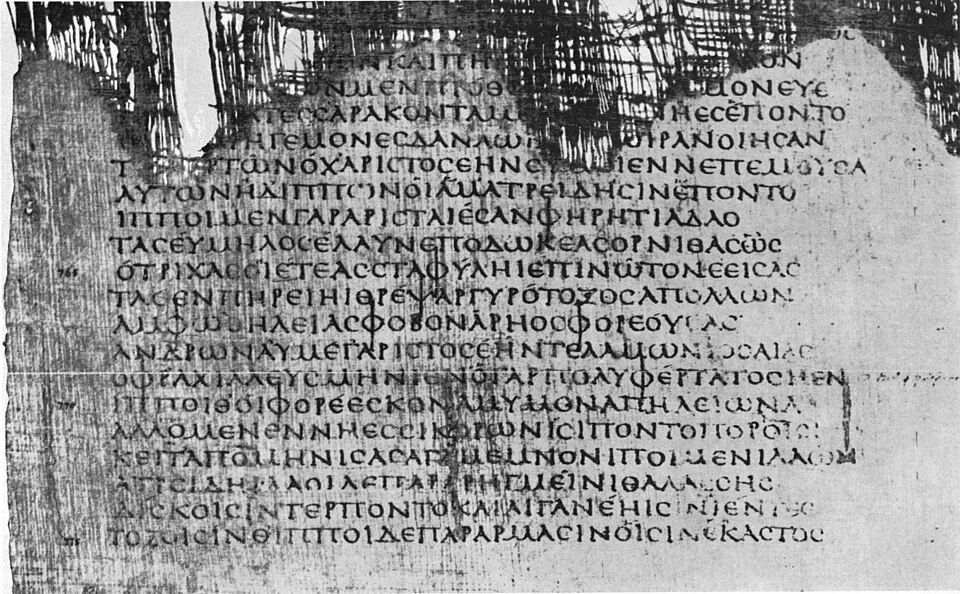 Epic IonicEpic and elegyThe traditional Ionic language of epic, elegy and iambus, and its metrical freedoms.
Tabs: Features · Metrical consequences · Ionic under the metre
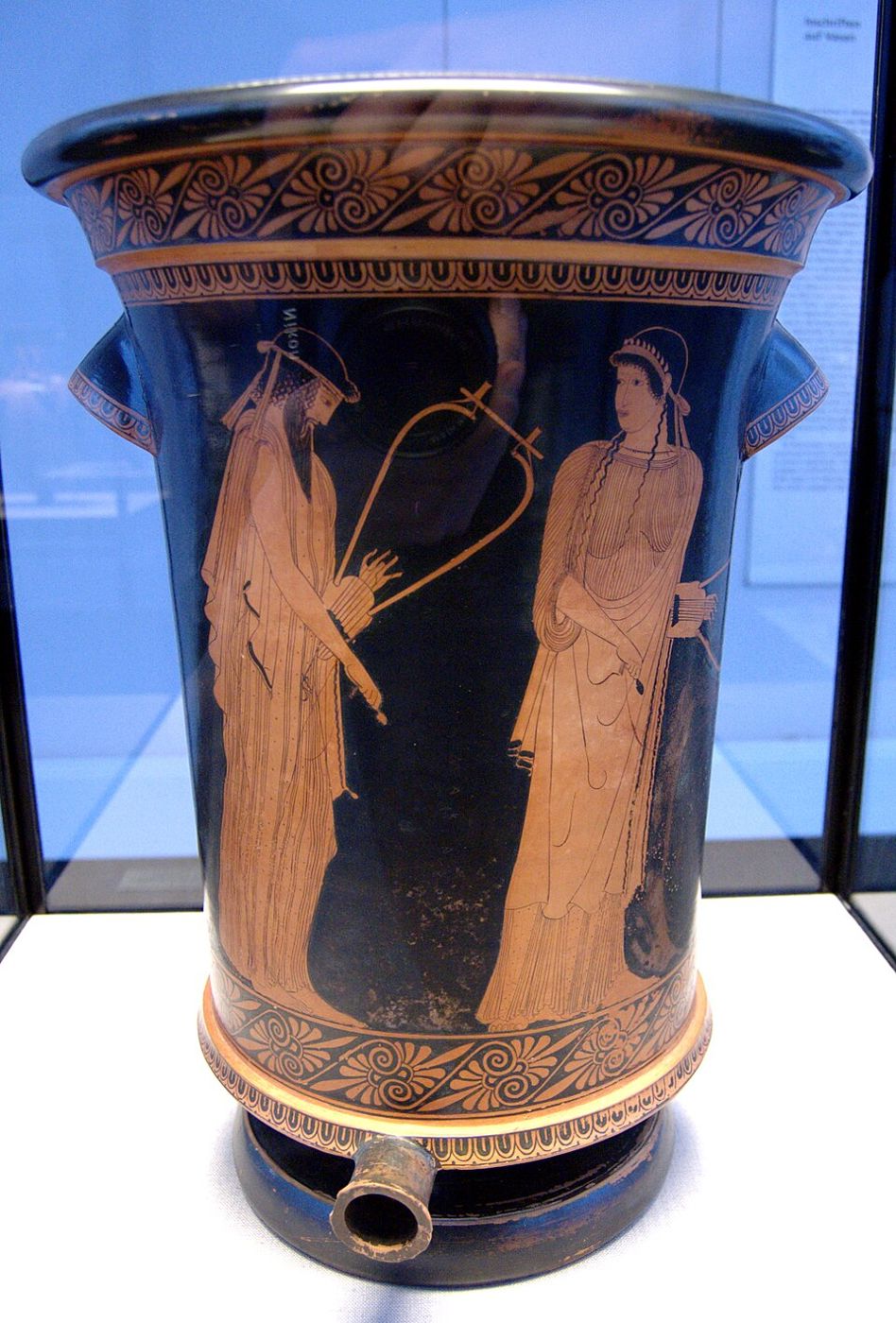 Lesbian AeolicMonodyThe sounds, spelling and poetic forms of Sappho’s and Alcaeus’ Lesbian Greek.
Tabs: Features · Metrical consequences · Corpus and imitators · Sappho's dialect · Grammarians and papyri
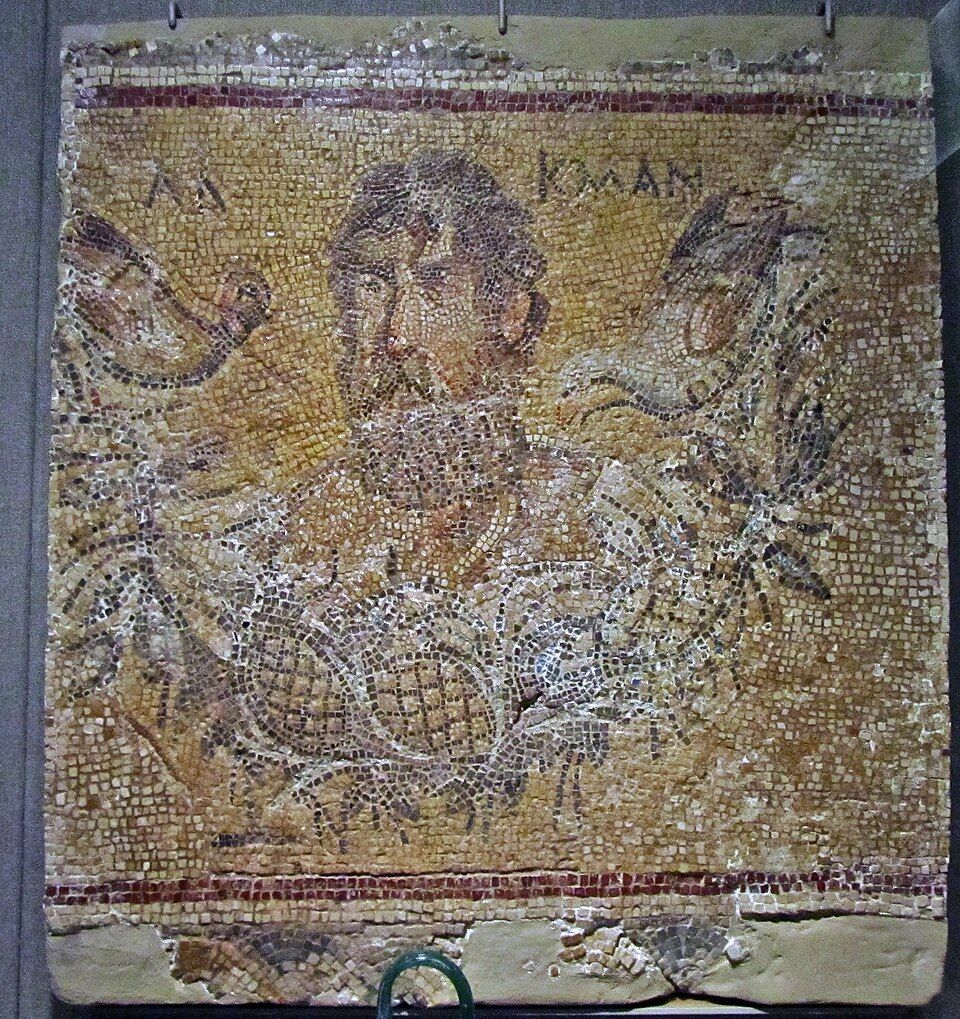 DoricChoral lyricThe Doric language of choral song, its mixed forms and their metrical effects.
Tabs: Features · Metrical consequences · Dactyls and Pindar · Bacchylides · Layers and metre · In tragedy · Corinna
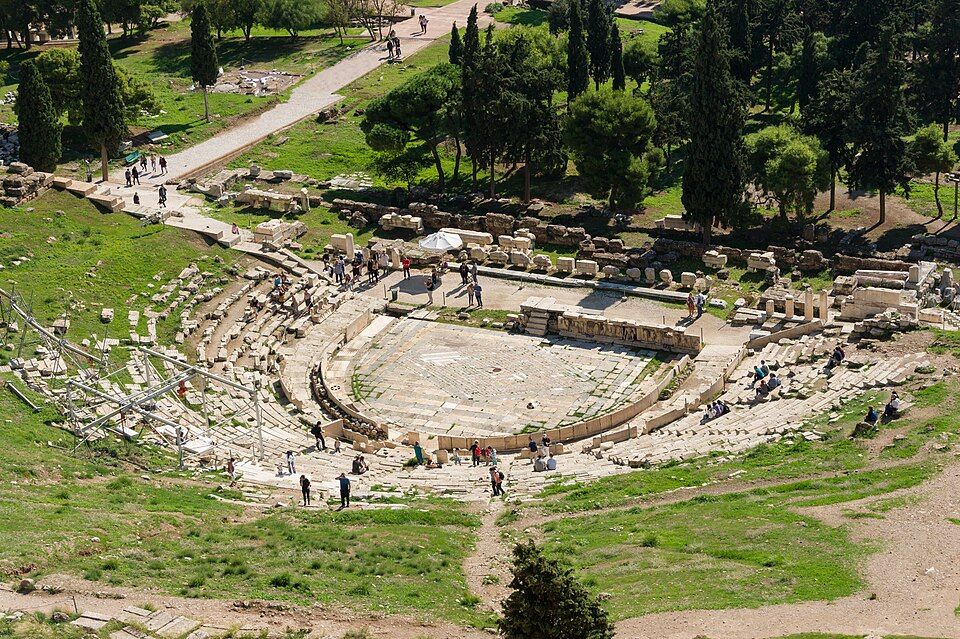 AtticDramaAttic dialogue, Doric-coloured songs and the later life of dramatic Greek.
Tabs: Spoken verse · Lyric parts · Later Attic · Koinē and accent
A suggested path
- Overview: Dialect and genre first, then How dialect affects metre. The Map tab shows where each dialect was spoken.
- Epic Ionic, with Homer’s page under Poets and playwrights open beside it.
- Lesbian Aeolic, with Sappho and Alcaeus.
- Doric, with Pindar and Bacchylides.
- Attic, with the dramatists.
- Finally the Overview’s Editions and orthography and Papyri and metrical evidence: how editors decide which spelling to print.
To hear the vowels this section talks about.[8]


