
Pronunciation systems
Reconstructed Attic, Erasmian, Lucian, Byzantine and Modern Greek pronunciation.
4. Pronunciation systems · 1 of 8
Reconstructed classical Attic
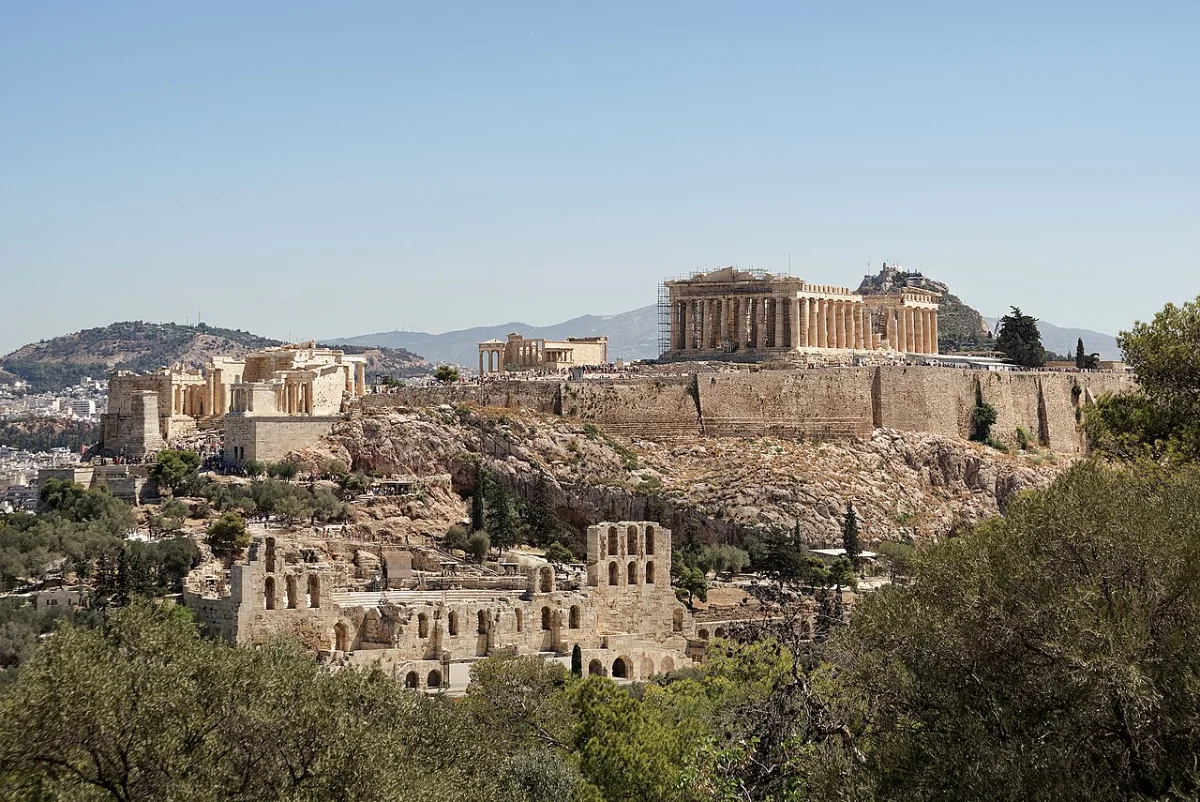
What it is. The reconstructed pronunciation is not a tradition but a result. It is the sound system of Attic Greek as it can be recovered for one time and place: the Athens of the fifth century BC. The evidence is of many kinds. It includes the spelling and its mistakes, the statements of ancient grammarians, transcriptions into other languages, comic animal noises, the metre, and the comparison of related languages.[1]
The standard statement in English is W. S. Allen’s Vox Graeca (1968). The same values, after Sturtevant and Allen, are also set out letter by letter beside the modern ones.[2] The Sounds page of this section goes through the evidence sound by sound. Here is the system in outline, and what remains uncertain.
The system in outline
- Stops. There were three series. The plain voiceless stops were π τ κ, and the voiced stops β δ γ. The aspirates φ θ χ were stops released with a breath, like the p t k of English pot [pʰɒt], top [tʰɒp], cat [kʰæt] said emphatically.[3] They were not fricatives.[4] A fricative, like English [f] in fat or [θ] in thing, is made by forcing the breath through a narrow gap.
- The rest of the consonants. σ was the only fricative. It was voiced to [z] only before voiced consonants. ζ was the cluster [zd], and ξ ψ were the clusters [ks ps]. λ was clear. ρ was trilled, and voiceless at the start of a word. γ was [ŋ] before another velar consonant (κ γ χ). The rough breathing was a real [h].[5]
- Vowels. There were five short vowels and seven long ones. The short vowels were [a e i o y], written α ε ι ο υ. The long vowels were [aː ɛː eː iː ɔː uː yː], written ᾱ η ει ῑ ω ου ῡ. An open vowel is said with the jaw lower than a close one: η and ω were open, and ει and ου close. υ was the front rounded vowel [y].[6] Length was a property of the vowel itself, not of the accent.[7]
- Diphthongs. αι αυ ευ οι υι were true diphthongs: [ai au eu oi yi]. The long diphthongs ᾳ ῃ ῳ still had their second element in the fifth century. Even so, Allen advises reading them as plain long vowels.[8]
- Accent. The accent was a pitch accent. The voice rose on the accented mora and fell on the next one, and there is no proof of extra loudness.[9]
- Double consonants and clusters were pronounced double. So ἵππος has a long [pː] and a heavy first syllable.[10]
What the dates mean
A reconstruction has to pick a moment. Allen’s choice is deliberately conservative: the Attic of the fifth century, with the fourth treated as the same.[11] Several sounds were already moving:
- ου had closed from [oː] to [uː] by the middle of the fourth century, perhaps earlier. So Allen simply recommends [uː] for every author, rather than giving each author his own stage.[12]
- ει was closing towards [iː], and it was confused with ι from the late fourth century.[13]
- ζ was passing from [zd] to [z] in the fourth century.[14]
There was a social side as well. Teodorsson argued that the Athenian majority had made many of the later changes, even the loss of length, by about 350 BC, while the educated kept the conservative system. Horrocks thinks Teodorsson’s dates a century or more too early. The reconstruction describes the conservative, educated speech of the late classical city.[15]
What is uncertain
The individual sounds are the firm part. The accent is the soft part. That its primary mark was pitch is agreed. But whether the accented syllable also carried some extra loudness or length cannot be settled on the evidence.[16] The intonation of a whole sentence is almost entirely unknown.[17]
The exact quality of several vowels can only be given by the nearest modern key word. French lune [lyn] for υ and tête [tɛt] for η are approximations, as Allen says himself.[18]
It is also worth knowing how old the reconstruction is as a scholarly result. The Renaissance reformers had the vowels and consonants roughly right by 1528. The accent, however, was only understood in the nineteenth century, through Sanskrit, the accented papyri and the musical fragments.[19]
In practice
The system can be spoken as a whole, and it is. A “Restored Classical” Attic is one of the pronunciations in use today. Its essentials are vowel length, the pitch accent and double consonants.[20]
Its hardest point for an English speaker is the three-way contrast of π, φ and β. English aspirates its p automatically at the start of a stressed syllable, and it does not use aspiration to tell words apart. So a learner trying to say φίλος tends to produce an affricate, and to leave π aspirated. That merges what Attic kept distinct.[21] An affricate is a stop that runs into a fricative, like the [pf] of German Pferd. As a teaching device, fricatives may be allowed for φ θ χ while the rest of the system is learned.[22]
Notes
- ^ Allen 1968, pp. v–viii.
- ^ Horrocks 2010, pp. xviii–xx.
- ^ Roach 2004, p. 240.
- ^ Allen 1968, pp. 12–30.
- ^ Allen 1968, pp. 31–58.
- ^ Allen 1968, pp. 59–75; Horrocks 2010, p. 161.
- ^ Allen 1968, pp. 84–89.
- ^ Allen 1968, pp. 75–83.
- ^ Allen 1968, pp. 106–124; Probert 2006, pp. 55–57.
- ^ Allen 1968, p. 10.
- ^ Allen 1968, p. viii.
- ^ Allen 1968, p. 73.
- ^ Allen 1968, p. 66.
- ^ Allen 1968, pp. 55–56.
- ^ Horrocks 2010, pp. 122 n. 4, 163–165.
- ^ Probert 2006, pp. 55–57.
- ^ Allen 1968, p. 118.
- ^ Allen 1968, pp. 65, 67.
- ^ Probert 2006, pp. 99–103.
- ^ Ranieri 2021, p. 7.
- ^ Ranieri 2021, p. 11.
- ^ Allen 1968, p. 27.
4. Pronunciation systems · 2 of 8
Byzantine pronunciation
Byzantine teachers read ancient Greek with the pronunciation of their own time. They brought that living tradition to western Europe in the fourteenth and fifteenth centuries.[1]
Greek in the West
For most of the Middle Ages western Europe had almost no Greek. Roger Bacon remarked in 1267 that not five men in Latin Christendom knew Greek grammar, and in 1360 Petrarch could count only eight or nine Italians who knew the language. Teaching grew slowly in Italy through the fourteenth and fifteenth centuries, and faster after the fall of Constantinople in 1453 sent more Byzantine scholars west.[1]
Those scholars taught the Greek of their own day. In effect, this was the pronunciation of Modern Greek:
- β δ γ and φ θ χ were fricatives;
- ζ was a single [z];
- κ χ γ λ ν were softened before the front vowels [e] and [i];
- the υ of αυ and ευ was [v] or [f];
- αι was a single vowel, [e];
- above all, ι, η, υ, ει, οι and υι all had one sound, [i].[2]
Vowel length had gone. The accent was a stress, and the accented syllable lasted longer than the others. So length went with the accent, instead of belonging to the vowel.[3] Roger Ascham later complained, with some exaggeration, that every sound in Greek had been reduced to the thin character of one letter, the iota. One heard only a feeble piping like sparrows, or a hissing like snakes.[4]
Read in this way, the ancient metres made no sense, because they are built on the length of syllables. Nor did the ancient writers who call some vowels long and others short by nature, whether accented or not.[5]
The first doubts
The starting point was a precept of Quintilian’s (1.7.30): a word should be written as it sounds. If the ancients had followed it, then the vowel letters and digraphs that the Byzantines pronounced alike must once have sounded different. The inference was not watertight, since Quintilian himself allowed for usage, and it led to some wrong conclusions. But it set the reconstruction going.[6]
The earliest proposals are those of the Spanish humanist Antonio de Nebrija (Antonius Nebrissensis), in 1486. By his own account they won him no support and turned friends into enemies. In 1503 he argued three points. η was a long vowel, standing to ε as ω stands to ο. ζ stood for σδ. And β, like δ, was a stop and not a fricative, since the ancients grouped β, δ and γ together. His later list of the Greeks’ errors covers most of the features above. But his reliance on the spelling misled him into rejecting the single-vowel value of ου.[7]
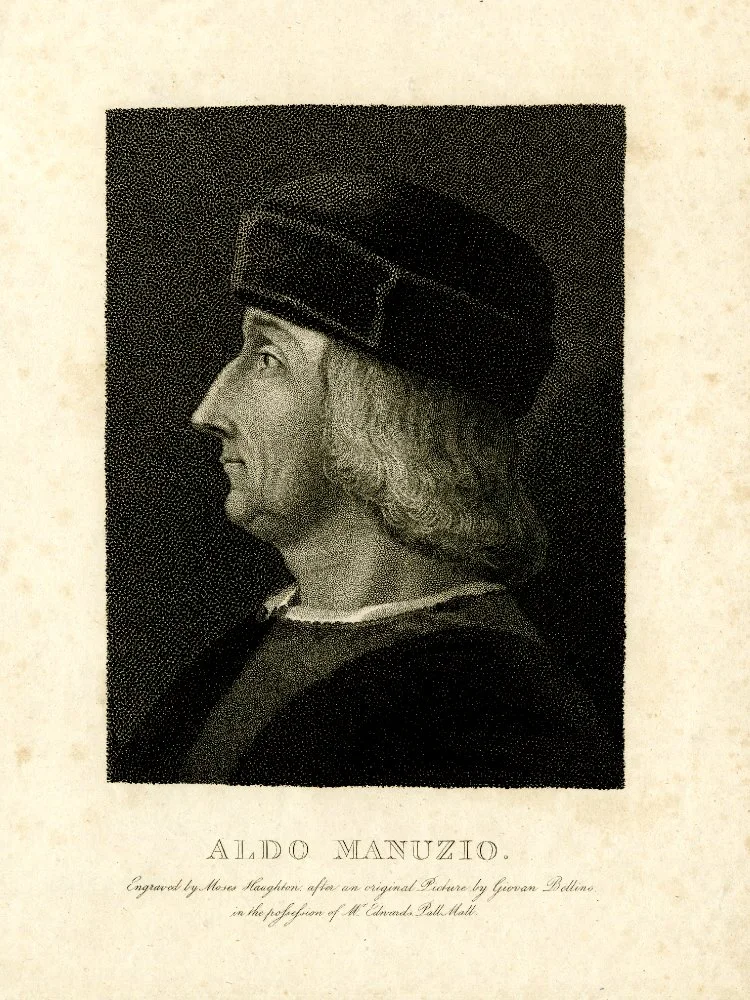
The next reformer was Aldus Manutius, whose press at Venice printed Greek and Latin texts from 1494.[8] In 1508 he noted the wrong pronunciation of the digraphs. He was also the first to cite the comic sheep’s βῆ βῆ: no sheep says [vi vi].[9] Jerome Aleander, about 1512, added the confusion of long and short vowels and the neglect of the rough breathing.[10] The later reform is described on the Erasmian pronunciation tab, which introduces its author and his proposals.
Notes
- ^ a b Allen 1968, p. 125.
- ^ Allen 1968, p. 125; Reynolds and Wilson 1991, p. 159.
- ^ Probert 2006, pp. 98–99.
- ^ Allen 1968, pp. 125–126.
- ^ Probert 2006, p. 99.
- ^ Allen 1968, p. 126.
- ^ Allen 1968, p. 126; Reynolds and Wilson 1991, p. 159.
- ^ Sparkes 2006, p. 518.
- ^ Allen 1968, pp. 126–127.
- ^ Allen 1968, p. 127.
4. Pronunciation systems · 3 of 8
The Erasmian pronunciation
What it is. “Erasmian” names not one pronunciation but a family. It covers the ways of reading Greek that grew out of the Renaissance reform of the vowels and consonants. Each of them has since been shaped by the sounds of its own country. Erasmian is the pronunciation of most classrooms outside Greece. The pronunciation it replaced, and the first doubts about it, are on the Byzantine pronunciation tab.
Who Erasmus was
Desiderius Erasmus of Rotterdam (c. 1466–1536) was a Dutch humanist.[1] His scholarship ranged over the whole of classical and biblical learning. Among his many editions was one of the Greek New Testament, published in 1516.[2] The reform of Greek pronunciation was only a small part of his work. It bears his name because his treatise of 1528 was the one that caught on.
The dialogue of 1528
That treatise was printed at Basel in 1528. Its title is De recta Latini Graecique sermonis pronuntiatione dialogus, “A dialogue on the right pronunciation of Latin and Greek”. It is a conversation between a bear, Ursus, and a lion, Leo. The bear reports the opinions of a gathering of grammarians, and these opinions are plainly Erasmus’ own.[3] The dialogue was the culmination of the reforming movement.[4]
Its Greek values come close to the modern reconstruction:
- η is an open long e, “between α and ε”;
- ου is [uː];
- υ is the French u;
- αυ, ευ and αι are real diphthongs;
- ζ is σδ;
- β is a stop, like Latin b;
- θ, less happily, is the th of English thief, [θ].[5]
The evidence is of three kinds. The first is the Latin spelling of Greek words. η is written with Latin ē, and ου with Latin ū, so they cannot both have been [i]. The second is the Greek spelling itself. η often stands where an older Greek had long α, so it was an e-sound and not an i. And a digraph such as αυ or ευ points to two sounds, not one.
The third kind is comparison with living languages, some good and some not. αι is heard in the German Kaiser, with the diphthong [aɪ], says the bear. The pupil offers the cuckoo’s κόκκυξ, which sings u, not i. The teacher dismisses this in jest, asking whether the bird sings the same tune in Greece as at home.[5]
On the accent Erasmus saw the central point. Neither the Greek nor the Latin accent should lengthen its vowel. He compared the accent with music, in which a low note may be held long and a high one briefly. These comparisons suggest that he took the Greek accent to be a change of pitch, though he never said so plainly.[6]
How it spread
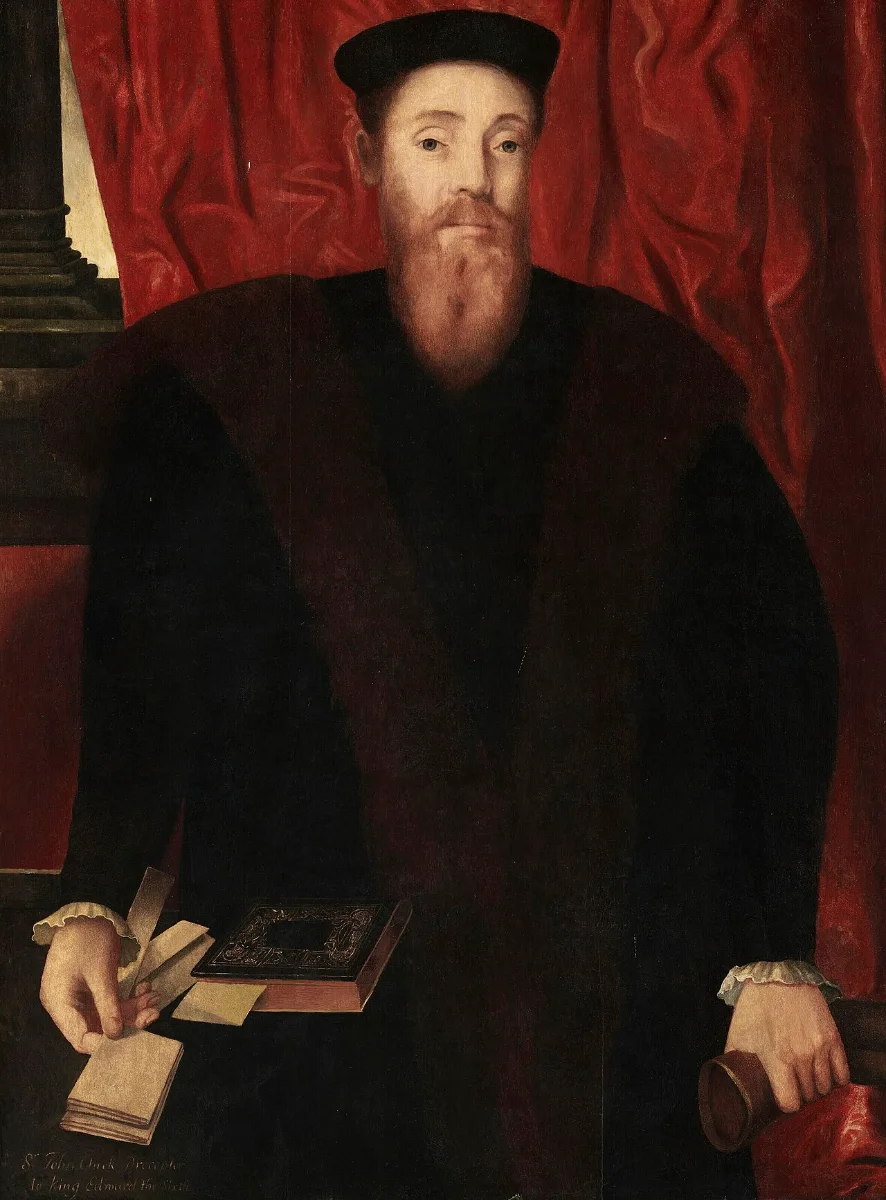
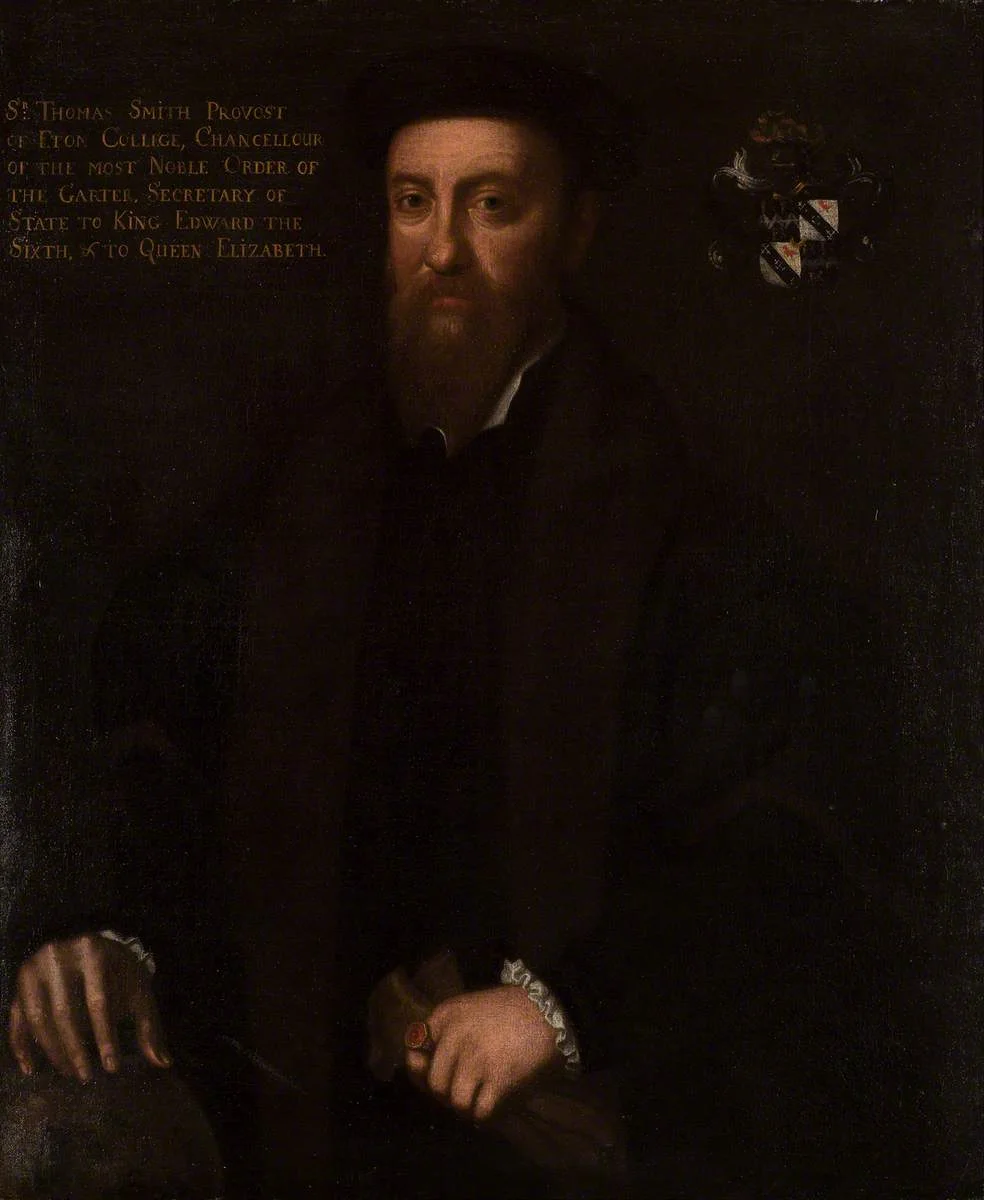
Erasmus did not adopt the reformed sounds himself, and neither had Aleander.[7] The practical application came from England. In 1540 two young Cambridge scholars, John Cheke and Thomas Smith, were elected Regius Professors of Greek and of Civil Law. They taught the reconstructed sounds, and gave each an English key word. η was the ea of bread and meat, then an open vowel. ω was the vowel of moan. αυ and ευ were the vowels of claw and few, which were then still diphthongs.
Cheke built his case, as Erasmus had, on onomatopoeia, on words borrowed between Greek and Latin, and on the statements of ancient authors. The reforms met opposition that was academic, religious and political at once. They could proceed freely only after Elizabeth’s accession.[8]
From England the “Erasmian” pronunciation spread to the continent.[9] Within about a century and a half the reformed vowels and consonants were in use over most of Europe.[10] The older Byzantine way is sometimes called “Reuchlinian”. The name comes from Johannes Reuchlin (1455–1521), who brought Greek studies to Germany with the pronunciation he had learned from Greek-speaking teachers.[11]
One thing the reformers did not touch was the accent. That story is told on the Accent unreformed tab. What happened to the reformed vowels in English mouths, and the system that an English-speaking reader actually uses, are on the Erasmian in English tab.
Notes
- ^ Probert 2006, p. 99.
- ^ Sparkes 2006, pp. 518–519.
- ^ Probert 2006, p. 99; Allen 1968, p. 127.
- ^ Allen 1968, p. 127.
- ^ a b Allen 1968, pp. 127–128.
- ^ Probert 2006, pp. 99–100; Allen 1968, p. 134.
- ^ Allen 1968, p. 128.
- ^ Allen 1968, pp. 128–129.
- ^ Allen 1968, p. 130.
- ^ Probert 2006, p. 100.
- ^ Allen 1968, p. 130 n. 2.
4. Pronunciation systems · 4 of 8
What the reform left alone: the accent
The reform described on the Erasmian tab changed the vowels and consonants. It did not change the accent, and the consequences are still with every reader trained in the tradition.
An accent that does not lengthen
Erasmus had seen the central point. In his dialogue the bear argues that neither the Greek nor the Latin accent should lengthen the vowel it falls on. The habit of the day was to lengthen the accented ε of ἀνέχου and ἀπέχου, and to shorten the unaccented ᾱ of Μενέλᾱος. The bear says this was wrong. Erasmus also compared the accent with music, in which a low note may be held long and a high one briefly. These comparisons suggest that he took the Greek accent to be a change of pitch.[1]
Allen puts it more cautiously. Erasmus recognised the confusion, and he saw that a raised pitch need not lengthen a syllable. But he drew no clear line between pitch and stress.[2]
What the reformers did instead
Within about a century and a half the new vowels and consonants were in use over most of Europe. But the accent was not reformed at all. The English reformers made no change in the accentuation. Readers everywhere went on stressing the marked syllable as the Byzantines had. The idea that accent and vowel length could be independent of each other struck Erasmus’ successors as contrary to common sense.[3]
A melodic accent works by pitch, and a dynamic accent by stress. Allen later judged that the reformers could not have done otherwise. Even if they had been able to tell the two kinds apart in theory, bringing in the unfamiliar melodic kind in practice was as impracticable for them as it is for modern reformers.[4]
Vossius and Henninius
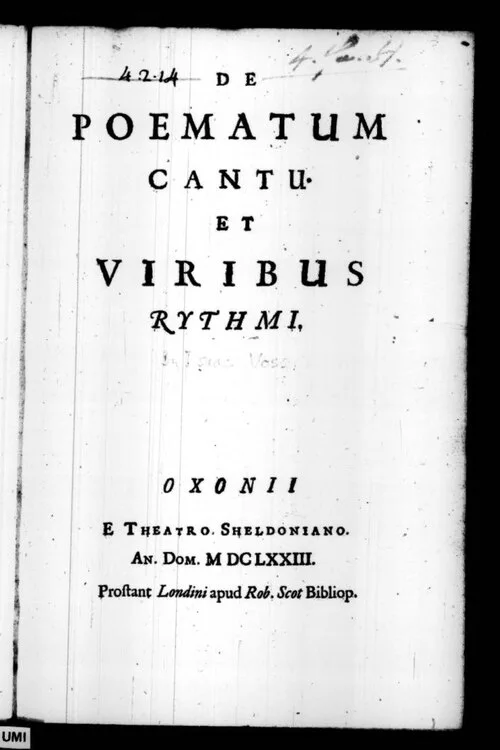
The clash between a stress on the accent and the metre then produced two further theories. Isaac Vossius, in De poematum cantu et viribus rhythmi (Oxford, 1673), denied that the marks had anything to do with the original pronunciation. On his view a reader could ignore them.
Henninius (H. C. Hennin of Utrecht) went further, in his Dissertatio paradoxa of 1684. He proposed accenting Greek by the Latin rule. The penult is the last syllable but one, and the antepenult the one before it. The Latin rule puts a stress on a heavy penult, and otherwise on the antepenult. That rule, he held, was rational. The Greek marks, like the accentuation of English, were merely conventional.[5]
This “Henninian” stress was established in Holland and England by the early eighteenth century. It became the habit of Britain, the Netherlands and their former colonies, the Commonwealth and South Africa among them. Germany, Italy and most of the rest of Europe kept the Byzantine stress on the written accent.[6] Until about 1800, even those who kept the marks found it hard to believe that an accent could fail to lengthen its syllable.[7]
The story of the Anglo-Dutch habit, and what it does to a modern reader’s ear, is told on the From pitch to stress tab. What happened to the reformed vowels in English mouths is on the Erasmian in English tab.
Notes
4. Pronunciation systems · 5 of 8
Erasmian in English mouths
The reform described on the Erasmian tab fixed the values of the letters once. What English speakers have done with them since is a second history.
The English vowel shift
In England the reform was overtaken by the Great Vowel Shift. This change moved the English long vowels, and it carried the English Greek with them, away from the values Cheke had chosen. He had keyed η to the ea of bread and meat, then an open vowel, and ω to moan. Those English words moved. By the nineteenth century the English Greek bore little relation to the classical values. A schoolbook of 1902 still gives ει as in bait and ου as in note.[1]
A reform of 1895, The Restored Pronunciation of Greek and Latin by Arnold and Conway, gave accurate values, with English, Welsh and French key words. But on practical grounds it recommended fricatives for φ θ χ and [dz] for ζ. Those recommendations were what English schools and universities followed in Allen’s day.[2] The grammar of 1902 shows the result. The letters are “usually pronounced like their English equivalents”, and the reconstructed values are set beside them.[3]
The system as spoken
So an English-speaking Erasmian reader typically says:
- φ θ χ as [f θ k] or [f θ x];
- β δ γ as stops;
- ζ as [dz];
- ει and η alike as [eɪ], and ου as [uː];
- αι as in high [haɪ], and ευ as in new [njuː].[4]
There is little vowel length, and a stress falls on the written accent or on the Latin position.
Luke Ranieri, whose own system is described on the Lucian tab, objects to this on several counts, and the objections are his own. He calls it a hodgepodge that varies from country to country. It has not moved since Erasmus. It neglects vowel length and ignores the pitch accent. It restores β δ γ as stops while keeping fricatives for φ θ χ, the reverse of the historical order. And it gives ει a diphthong it never had, while English mouths merge ει, η and even ε into one.[5] He grants that it untangles the modern merger of the i-sounds, and that it has a long classroom record.[6]
Allen held the same view of the fricatives, but he allowed them as a device for beginners.[7] The comparison tab sets the usual English values beside the others, sound by sound.
Notes
4. Pronunciation systems · 6 of 8
The ‘Lucian’ pronunciation of Luke Ranieri
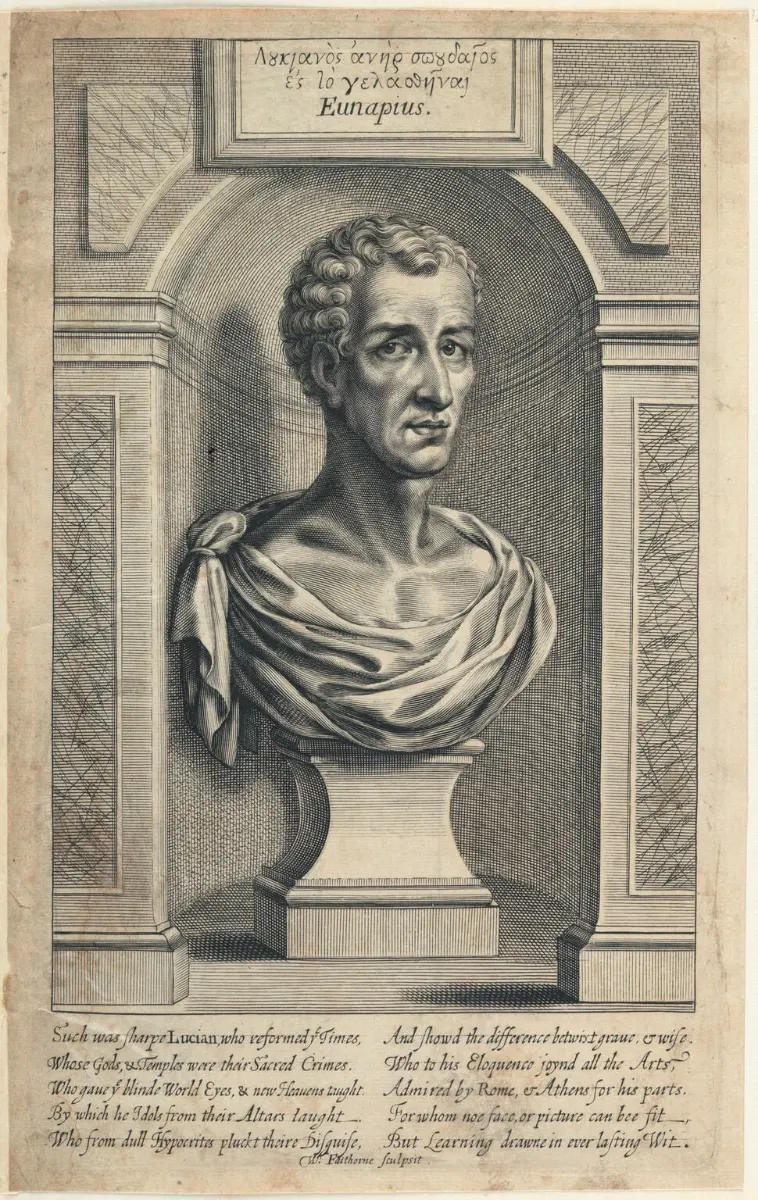
What it is, and whose. The “Lucian” pronunciation is the system of Luke Amadeus Ranieri, a teacher and performer of Latin and Greek. He worked it out with Raphael Turrigiano in early 2020, and published it in his Ancient Greek Pronunciation Guide (December 2020, revised January 2021). It is named after Lucian of Samosata. It aims at the Greek of the first and second centuries AD, the age of the Second Sophistic, and so it pairs with the restored pronunciation of classical Latin.[1]
It is not a reconstruction in Allen’s sense. Ranieri says himself that the research is Allen’s and Horrocks’. His novelty is to take one historical stage and make it a coherent system for speaking.[2] Everything below is his account.
Why a second-century target
Ranieri sets out four aims that a pronunciation should satisfy at once. He calls them his quadrivium: historical accuracy, beauty, usability in a classroom, and acceptability to modern Greeks.[3]
The fifth-century reconstruction, he argues, fails the third aim. Few learners speak a language in which aspiration tells words apart. English speakers trying to say φ tend to make an affricate, while leaving π its English puff of breath. So a new, unhistorical merger replaces the old contrast.[4]
The Koine of Randall Buth is built on the spellings of the papyri. It fails the first aim, in the other direction. It is too advanced for the early Empire. It drops vowel length, double consonants and the pitch accent, which Ranieri holds were alive into the second century AD.[5] His second-century stage keeps those three, which he calls indispensable. At the same time it takes the consonants and diphthongs some way towards their modern values.[6]
The sounds
The standard form has these sounds:[7]
- Vowels. The vowel qualities are those of Modern Greek, [a e̞ i o̞], with υ still the front rounded [y]. Vowel length is kept, so ᾱ η ει ῑ ω ου ῡ are long [aː e̞ː iː iː o̞ː uː yː]. ει has merged with long ι, though it may be kept as [e̞ː] before a vowel. η may be raised to [eː].
- Diphthongs. αι is the diphthong [ae̯], and οι is [ø̞y̯]. Both are half-way between the classical [ai oi] and the Byzantine [e y]. The long diphthongs ᾳ ῃ ῳ have lost their iota.[8]
- The aspirate [h] is sounded after a pause, and it fades in connected speech.[9]
- Fricatives have come in: δ [ð], θ [θ], γ [ɣ] and χ [x]. The last two are palatalised before front vowels, and κ likewise becomes [c].[10] A palatalised sound is said with the tongue raised towards the hard palate. But φ and β are bilabial [ɸ β], not labiodental [f v].[11] A bilabial sound is made with both lips, and a labiodental one with the lower lip against the upper teeth.
- αυ and ευ are “false diphthongs”. Each is a vowel plus a bilabial fricative: [aβʷ], or [aɸʷ] before a voiceless sound.[12]
- Other consonants. σ and ζ are retracted, and ζ is a long [zː]. ρ is a tap, ρρ a trill, and ῥ a voiceless trill. Double consonants are long, as in Cypriot Greek.[13]
Ranieri’s chart[14] gives each letter three more conservative and three more innovative variants. So a speaker can step back towards fifth-century Attic, or forward towards Buth’s Koine. But some sounds changed together and should not be mixed. Fricative φ goes with fricative β and with [av af] for αυ. A stop β goes with a true diphthong αυ and with aspirated φ θ χ.[15]
The accent
Ranieri accepts that the ancient accent was one of pitch. He describes it with a two-level model like that of Japanese. The accented mora is high and the next mora low. A circumflex is a high then a low within one long vowel. And there is a downward drift through the sentence.[16]
But in his own speech he reinforces the pitch with a stress on the same syllable. He defends this as a plausible stage of the transition to the later stress accent, and as a mercy to learners whose languages use stress.[17] So the Lucian pronunciation as recorded is pitch plus stress, by its author’s own account.[18]
How it stands to the evidence
Ranieri’s dates are Allen’s and Horrocks’. The first clear sign of a fricative φ comes in the first century AD. The aspirate was lost about the second century, and length about the third. The stress accent was in place by the fourth.[19]
The timing depends on the speaker. The majority Koine had lost length and the pitch accent by the middle of the second century BC. Conservative, educated speech kept them into Roman times. β δ γ were fricatives for most literate speakers by the fourth century AD, and the aspirates followed later and unevenly.[20]
A single “second-century” system therefore sets a conservative register beside some early changes, as every spoken standard must. The choice is Ranieri’s, and the comparison tab lets it be heard.
Notes
- ^ Ranieri 2021, pp. 2, 8, 14.
- ^ Ranieri 2021, p. 14.
- ^ Ranieri 2021, p. 8.
- ^ Ranieri 2021, p. 11.
- ^ Ranieri 2021, pp. 6–7, 12, 17–18.
- ^ Ranieri 2021, pp. 7, 14–15.
- ^ Ranieri 2021, pp. 15–25.
- ^ Ranieri 2021, p. 19.
- ^ Ranieri 2021, p. 20.
- ^ Ranieri 2021, pp. 21–23.
- ^ Ranieri 2021, pp. 23–24.
- ^ Ranieri 2021, pp. 24–25.
- ^ Ranieri 2021, pp. 20–23.
- ^ Ranieri 2021, pp. 32–34.
- ^ Ranieri 2021, p. 25.
- ^ Ranieri 2021, pp. 26–27.
- ^ Ranieri 2021, p. 26.
- ^ See the Pitch without stress tab.
- ^ Allen 1968, pp. 21–23, 51, 88–89, 119.
- ^ Horrocks 2010, pp. 118, 122 n. 5, 164–172.
4. Pronunciation systems · 7 of 8
From the Koine to Modern Greek
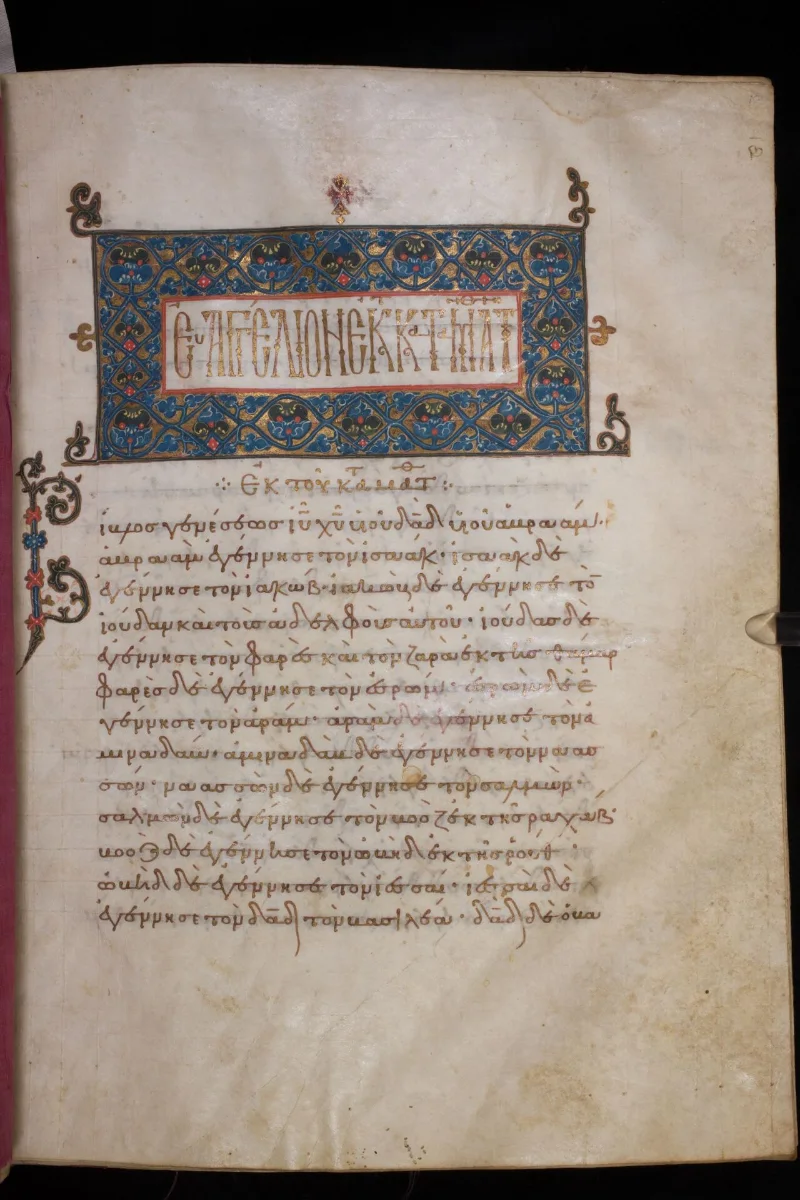
What it is. The Byzantine pronunciation is the Greek that the refugees of the fifteenth century taught the West.[1] With one further change, it is also the Greek of Greece today. The Renaissance called it “Reuchlinian”, after Erasmus’ opponent.[2] It is the end of a long and well-dated history, which can be traced through the spellings of inscriptions and papyri. A reader who uses it for ancient verse should know what changed, and when.
The vowels: itacism
The classical system had five short and seven long vowels, as well as its diphthongs. It collapsed into a triangle of six vowels, [i y e a o u], and then of five.[3] Two chains of change drove the collapse.
At the front, ει rose from [eː] to [iː]. η rose into the place that ει had left, and then on to [i]. αι stopped being a diphthong and became a single vowel: first [æː], then [e]. At the back, ου had long been [uː].[4]
The diphthong οι passed through [ø] to [y], and so merged with υ. The two finally lost their lip-rounding and became [i] in the middle Byzantine era, probably the ninth or tenth century.[5] The long diphthongs ᾳ ῃ ῳ lost their iota, which editors later restored beneath the line.[6]
The result is called itacism. ι η υ ει οι υι all came to be pronounced [i]. So ἡμεῖς and ὑμεῖς, “we” and “you”, sound alike.[7]
When each step happened depends on who was speaking. In Boeotia, official spelling shows ει as [i] in the fifth century BC. In the Egyptian Koine the majority had merged ει with ι, and αι with ε, by the middle of the second century BC. But η was not generally [i] before the early Byzantine era, and υ kept its rounding for most speakers much longer.[8] Educated Attic lagged a century or more behind the street.[9]
Length and accent
With the vowels went vowel length. In a letter of the second century BC, confusions of ο and ω show that for its writer long and short no longer differed. This loss is tied to the change of accent.
The circumflex was a rise and fall within one long vowel. The acute was a rise, with the fall on the next syllable. Once no vowel was inherently long, the circumflex could no longer be told from the acute. So the contrast of pitch collapsed, and the loudness that had probably always gone with the rise came to the fore. In Egypt the native language beneath the Greek was Coptic, a language with strong stress, and it helped the reinterpretation along.[10]
The dates differ with the source. Horrocks dates the change as widespread by about 150 BC for most speakers, with a possible first sign in Thessaly in 214 BC. For conservative speech he puts it under the Roman Empire.[11] Allen’s dates, from the literary evidence, are later: length was lost about the third century AD, and the stress accent was in place by the fourth.[12] Probert places the change in the early centuries AD. The first verse built on stress is in two hymns of Gregory of Nazianzus in the fourth century, and a mature accentual poetry appears in Romanos in the sixth.[13] The range reflects register and region.
What did not change is the place of the accent. With few exceptions, Modern Greek stresses the syllable that the ancient marks accent.[14]
The consonants
- The voiced stops β δ γ became the fricatives [v ð ɣ]. γ changed first, perhaps by the second century BC, then β by the first century AD, and δ by the third or fourth. After a nasal they stayed stops: μπ ντ γκ still give [b d ɡ].[15]
- The aspirates φ θ χ became [f θ x], later and unevenly. Laconian had a fricative θ in the fifth century BC. A fricative φ is first clear in the first century AD. The change was widely, but not universally, through by the end of the fourth century.[16]
- The second element of αυ and ευ narrowed to a fricative. This gave [av ev], and [af ef] before voiceless sounds.[17]
- ζ became [z]. Double consonants were simplified in most dialects. The aspirate [h] was lost. κ γ χ came to be palatalised before front vowels.[18]
- Final ν weakened and later dropped. A nasal before a voiceless fricative was lost, so νύμφη became νύφη.[19]
Reading verse with it
The modern pronunciation keeps the words but not the measures. Without vowel length the quantitative metres cannot be heard. And the stress falls where the pitch once rose, which in classical verse bears no relation to the metre.[20] Byzantine and later Greek poetry found a new measure of its own: the fifteen-syllable “political” verse, built on stress.[21] The comparison tab sets its sounds beside the others.
Notes
- ^ Allen 1968, p. 125.
- ^ Ranieri 2021, p. 3.
- ^ Horrocks 2010, p. 160.
- ^ Horrocks 2010, pp. 161–162.
- ^ Horrocks 2010, pp. 162–163, 169, 274; Allen 1968, p. 65.
- ^ Horrocks 2010, pp. 163, 175.
- ^ Ranieri 2021, pp. 3–4.
- ^ Horrocks 2010, pp. 163–169.
- ^ Horrocks 2010, pp. 164–165.
- ^ Horrocks 2010, pp. 118, 169–170.
- ^ Horrocks 2010, pp. 34, 122 n. 5, 164, 169.
- ^ Allen 1968, pp. 88–89, 119.
- ^ Probert 2006, pp. 50–51.
- ^ Probert 2006, p. 86.
- ^ Horrocks 2010, p. 170.
- ^ Horrocks 2010, pp. 170–171; Allen 1968, pp. 21–23.
- ^ Horrocks 2010, pp. 163, 169.
- ^ Horrocks 2010, pp. 171–172, 274–275.
- ^ Horrocks 2010, pp. 171, 275–276.
- ^ Horrocks 2010, pp. 45, 118.
- ^ Horrocks 2010, p. 328.
4. Pronunciation systems · 8 of 8
The four systems compared, letter by letter
The table gives every letter and digraph in the four systems described on this page’s other tabs, in IPA. Short and long vowels have separate rows (α and ᾱ, ι and ῑ, υ and ῡ). The three long diphthongs ᾳ ῃ ῳ each have a row of their own.
Press a sign to hear that sound. Every distinct value in the table has its own clip, so two cells sound alike only when they are alike. A cell with the same value as Classical Attic says “= Classical” instead of repeating the sign. Press the word under it to hear the example word spoken in that system.
Where the sounds come from. A single consonant plays its Wikimedia Commons recording. A vowel plays a cut from the Commons recording of that vowel. The cut lasts about 0.17 seconds for a short vowel and 0.42 for a long one. That difference is what the rows for α and ᾱ, ι and ῑ, υ and ῡ exist to make audible. The classical diphthongs, and the classical ου, are in David Chamberlain’s voice: each is cut out of a word of his reading of Homer (καί, αὐτούς, τεῦχε, τοῖσι, υἱόν, δαμᾷ, τριπλῇ, οὐκ). Where no reading has a diphthong, it is two vowel cuts joined by computer, and it is marked ∿.
The ∿ mark means a synthetic clip. The synthetic clips are these:
- the aspirates [pʰ tʰ kʰ], the clusters and the Lucian false diphthongs, from the espeak-ng formant synthesiser;
- the Lucian mid vowels [e̞ o̞]. These are Denelson83’s recordings of [e] and [o], with the vowel quality moved half-way towards [ɛ] and [ɔ] by resynthesis in the phonetics program Praat;
- the Modern [av ev], from piper-tts’s Modern Greek voice.
- the diphthongs joined by computer from two vowel recordings: classical ῳ [ɔːi], which Chamberlain says as a plain long vowel, and the diphthongs of the other systems where they differ from the classical ones.
The line under the table names the source of whatever is playing.
The Classical Attic column includes human readings by David Chamberlain and Erutuon. Each button identifies its reader and source; ∿ marks a synthetic example. A button labelled “=Classical” reuses the Classical clip. The other Classical, Erasmian and Lucian word examples are synthesized with espeak-ng. For the synthetic clips in the two systems with a pitch accent, the pitch contour was imposed afterwards with Praat: a rise on the accented mora and a fall on the next, or a rise-fall within a circumflexed vowel. In the Lucian clips a stress was added on the same syllable, as Ranieri says he does.[1] The Modern words are spoken by piper-tts’s neural Modern Greek voice, which is why they sound the most like a person. The Erasmian column is one classroom variety among several.
The sources of the four columns.
- The classical values are Allen’s.[2] Horrocks tabulates the same values.[3]
- The Erasmian values are those of English-speaking classrooms after the vowel shift and the Arnold–Conway reform.[4] Beside them stand Thompson’s school values of 1902,[5] and Ranieri’s description of what English speakers make of ει, η and ε.[6] English speakers also aspirate π τ κ at the start of a stressed syllable. This is the very feature that Allen uses to teach φ θ χ.[7] So the Erasmian column writes [pʰ tʰ kʰ] for them.
- The Lucian values are Luke Ranieri’s own, from the chart of his guide.[8]
- The modern values are Horrocks’.[9]
One cell departs from Horrocks’ table. His table prints Modern β as [b].[10] That contradicts his own account of the voiced stops becoming fricatives, [v] among them,[11] and it is evidently a misprint. So the table here gives [v]. Horrocks also writes Modern ρ as [r].[12] He writes the palatal γ as [j] in his table but [ʝ] in his text,[13] and the table here follows the text.
a sound of classical Attic ∿ synthetic clip ▶ the example word in that system; ∿ marks a synthetic reading = Classical: the same sound as in the first column
| Letter | Classical AtticAllen 1968 | ErasmianEnglish classroom | LucianRanieri 2021 | Byzantine and ModernHorrocks 2010 | Example |
|---|---|---|---|---|---|
| α | short | = Classicaloften without length | = Classicalshort | = Classicalno length | ἀγαθόςgood |
| ᾱ | long | English “father”; length often dropped | = Classicallong | length lost | χώρᾱland |
| β | = Classical | bilabial fricative; [b] after μ | Horrocks’ table prints [b], a misprint; pp. 170–171 give the fricative | βίοςlife | |
| γ | [ŋ] before κ γ χ ξ | = Classical[ŋ] before κ γ χ ξ | [ʝ] before front vowels; [ɡ] after [ŋ] | [ʝ] before front vowels (Horrocks writes [j]) | γῆearth |
| δ | dental | = Classical | [d] after ν | δῶρονgift | |
| ε | short close-mid | = Classicaloften [eɪ] in English mouths | mid, as in Modern Greek | = ClassicalHorrocks writes [e]; mid in practice | ἔχωI have |
| ζ | [z] at the start of a word | long, retracted [z̠ː] | ΖεύςZeus | ||
| η | long open-mid | English “bait”; or [ɛː] | long mid; may be raised to [eː] | μήτηρmother | |
| θ | aspirated stop | θεόςgod | |||
| ι | short | English “bit” | = Classicalshort | = Classical | ἵπποςhorse |
| ῑ | long | = Classical | = Classicallong | length lost | νίκηvictory |
| κ | unaspirated | English k, aspirated at the start of a stressed syllable | = Classicalunaspirated; [c] before front vowels | = Classical[c] before front vowels | καλόςfine |
| λ | clear | = Classical | = Classicalclear | = Classical | λόγοςword |
| μ | = Classical | = Classical | = Classical | μοῦσαMuse | |
| ν | = Classical | = Classical | = Classical | νόμοςlaw | |
| ξ | = Classical | = Classical | = Classical | ξένοςstranger | |
| ο | short close-mid | English “pot” | mid, as in Modern Greek | = ClassicalHorrocks writes [o]; mid in practice | ὁδόςroad |
| π | unaspirated | English p, aspirated at the start of a stressed syllable | = Classicalunaspirated | = Classical | πόλιςcity |
| ρ | trilled; ῥ voiceless [r̥] | English r | tap; ρρ trilled; ῥ [r̥] | = ClassicalHorrocks writes [r] | ῥήτωρspeaker |
| σ | [z] before β γ δ μ | = Classical | retracted; [z̠] before voiced consonants | = Classical[z] before voiced consonants | σοφόςwise |
| τ | dental, unaspirated | English t, aspirated at the start of a stressed syllable | = Classicalunaspirated | = Classical | τέχνηcraft |
| υ | short, as French “lune” | = Classicalor [ʊ]; varies | = Classicalshort | ὕδωρwater | |
| ῡ | long | often English “oo”; or [yː] | = Classicallong | length and rounding lost | μῦςmouse |
| φ | aspirated stop | bilabial | φίλοςfriend | ||
| χ | aspirated stop | = ClassicalEnglish k, no different from κ; or [x] as in “loch” | [ç] before front vowels | [ç] before front vowels | χρόνοςtime |
| ψ | = Classical | = Classical | = Classical | ψυχήsoul | |
| ω | long open-mid | English “moan” | long mid | ὥραseason | |
| αι | English “high” | Ranieri himself says [æe̯] | αἰείalways | ||
| ει | long close-mid | English “bait” | a conservative variant keeps [eː] before a vowel | εἰμίI am | |
| οι | English “boy” | between [oi] and Byzantine [y] | οἶκοςhouse | ||
| υι | varies | υἱόςson | |||
| αυ | English “how” | [aɸʷ] before voiceless | [af] before voiceless | αὐτόςself | |
| ευ | English “new”; or [eu] | [e̞ɸʷ] before voiceless | [ef] before voiceless | εὖwell | |
| ου | [oː] in early Attic | = Classical | = Classical | length lost | οὐρανόςsky |
| ᾳ | Allen advises plain ᾱ | the iota ignored | the iota lost before the 1st c. BC | ᾄδωI sing | |
| ῃ | Allen advises plain η | the iota ignored | the iota lost | τῇto the (fem.) | |
| ῳ | Allen advises plain ω | the iota ignored | the iota lost | ᾠδήsong | |
| ῾ | rough breathing | = Classical | = Classicalafter a pause; fading in connected speech | —silent | ἡμεῖςwe |
Reading the table. Three things separate the columns.
First, the aspirates. φ θ χ are stops with breath in Attic, and fricatives everywhere else. In the Erasmian column the fricatives came in through English habit rather than evidence. Meanwhile English π τ κ carry the breath that Attic φ θ χ had.[14]
Second, the vowels. Attic and Lucian keep length, so that ᾱ, η, ει, ω, ου, ῑ, ῡ are long. Erasmian as usually spoken does not. Modern Greek has lost length, together with the pitch accent.[15]
Third, the diphthongs and the front vowels. ει, η, υ, οι and υι drifted towards [i], and this drift is called itacism. It is complete in the modern column. It is half-way in Lucian’s second-century target, where ει has arrived and η and οι are on the road. It is absent in Attic. English Erasmian, meanwhile, makes a new diphthong [eɪ] of both ει and η.[16]
Notes
- ^ Ranieri 2021, p. 26.
- ^ Allen 1968, pp. 10–83, 155–157.
- ^ Horrocks 2010, pp. xviii–xix.
- ^ Allen 1968, pp. 130–134.
- ^ Thompson 1902, pp. 4–6.
- ^ Ranieri 2021, pp. 5–6.
- ^ Allen 1968, pp. 16, 26.
- ^ Ranieri 2021, pp. 15–25, 32–34.
- ^ Horrocks 2010, pp. xviii–xx, 160–172, 274–277.
- ^ Horrocks 2010, p. xviii.
- ^ Horrocks 2010, pp. 170–171.
- ^ Horrocks 2010, p. xix.
- ^ Horrocks 2010, p. 172.
- ^ Allen 1968, pp. 16–27, 133–134.
- ^ Allen 1968, pp. 84–89; Horrocks 2010, pp. 118, 169; Ranieri 2021, pp. 5, 15.
- ^ Horrocks 2010, pp. 160–169; Ranieri 2021, pp. 6, 15–19.


