Poets and playwrightsWomen poets
Anyte
Anyte of Tegea: dedications, epitaphs and pastoral scenes in elegiac verse.
About · 1 of 3
Who Anyte was
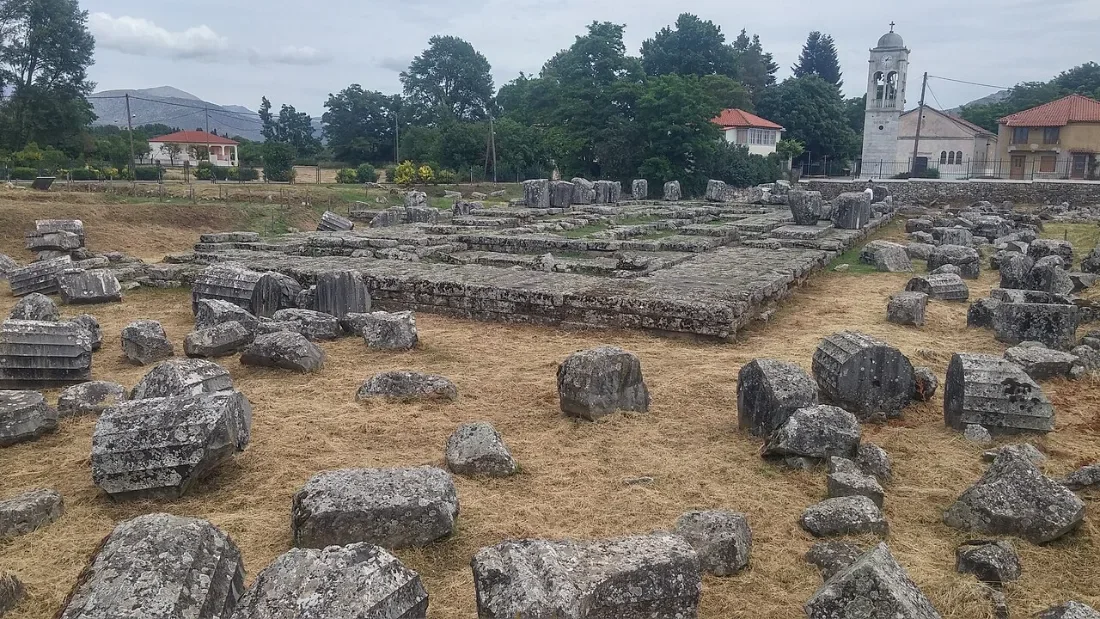
Anyte wrote epigrams, somewhere between 310 and 290 BCE.[1] Almost nothing about her life is certain. Pollux (Onomasticon 5.48) says that she came from Tegea in Arcadia, in the central Peloponnese. No other ancient author confirms it, and nothing is known of her family. An epigram of doubtful authorship (A.P. 7.492) makes her a woman of Mytilene on Lesbos. The link is generally thought artificial, designed to connect her with Sappho.[2]
A legend. Pausanias, describing Naupactus on the Gulf of Corinth, tells how the sanctuary of Asclepius there was founded. The god inspired Anyte to sail to Naupactus with a sealed tablet for a blind man, Phalysius. When he broke the seal, he could see to read it. The tablet told him to give Anyte two thousand gold staters, and he did so before founding the sanctuary (Pausanias 10.38.13).[3] The tale makes the poet a vessel of divine knowledge. Stories rarely tell of women poets travelling alone.[4]
What she wrote. She apparently wrote epic poetry too, now lost.[5] What survives is a substantial collection of epigrams, preserved in the Palatine and Planudean anthologies. Nineteen are certainly hers and two more very probably, twenty-one in all. We have more complete poems of Anyte than of any other woman poet of antiquity, and only Sappho has left more words (after Snyder).[1]
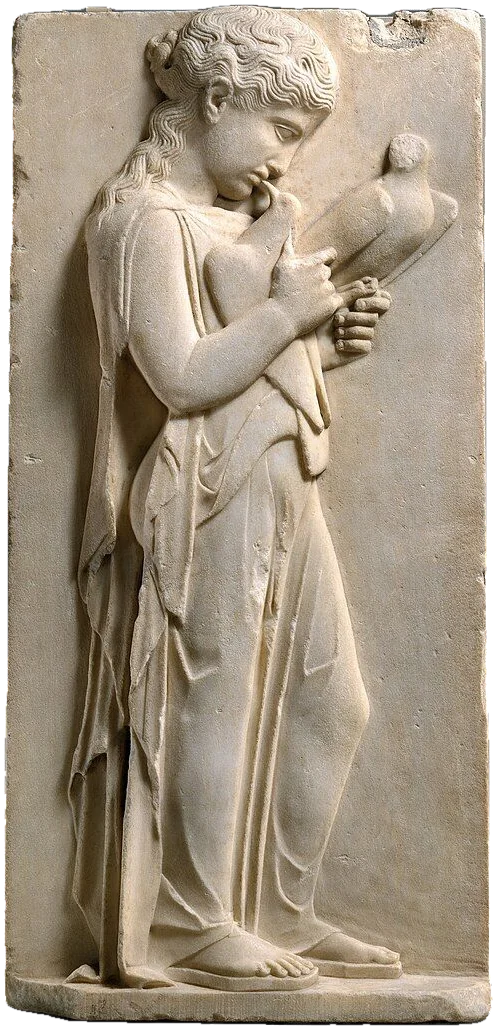
A dedicatory epigram goes with an offering to a god; a funerary epigram stands on a tomb. Anyte’s epigrams are of these two kinds. Their subjects are young girls and women, children, animals and pastoral landscapes. But they also include war, war-horses, spears, and soldiers killed in battle. Their language draws on epic.[1]
The pastoral landscape. Anyte is now recognised as one of the first Hellenistic poets, perhaps the first, to set poems in an idyllic countryside. It is a land of springs, shade and shepherds, where travellers and herdsmen meet Pan and the Nymphs. She may have influenced later pastoral poets such as Theocritus, and Vergil in his Eclogues. The epigrammatist Mnasalces imitated her heavily.[6]
A book of epigrams. Gutzwiller argues that Anyte’s poems were published as a book in her own time, since Meleager still had a collection of them when he compiled his Garland.[1] Stehle and Bowman suggest that epigram gave women poets a way to compose in private for public circulation. In Bowman’s word it was a “loophole”. Through it, poems by women could stand in public places, as dedications and epitaphs, so long as the “speaker” herself was not present.[7]
Her reputation. Meleager wove “many lilies of Anyte” into his Garland (A.P. 4.1.5). Antipater of Thessalonica drew up a canon of nine women poets, and it names “the mouth of Anyte” (Ἀνύτης στόμα, Anytēs stoma, A.P. 9.26.3).[8] Tatian says that the sculptor Cephisodotus made statues of Anyte and Moero.[9]
Notes
- ^ a b c d Natoli et al. 2022, p. 144.
- ^ Natoli et al. 2022, pp. 145, 174 n. 5.
- ^ Natoli et al. 2022, p. 145.
- ^ Natoli et al. 2022, pp. 145–146.
- ^ Natoli et al. 2022, p. 144 with n. 2.
- ^ Natoli et al. 2022, p. 144 with n. 1.
- ^ Bowman 2019, quoted by Natoli et al. 2022, p. 144.
- ^ Natoli et al. 2022, p. 178.
- ^ Natoli et al. 2022, p. 108.
About · 2 of 3
Twenty-one epigrams
Where they survive. Anyte’s epigrams come down in the two Byzantine anthologies. These are the Palatine (A.P.) and the Planudean (A.Pl.); modern editions of the Greek Anthology print the Planudean additions as Book 16. One epigram is quoted by Pollux.[1] The numbers below are those of the Anthology and of Gow and Page’s Hellenistic Epigrams (G–P), as in Natoli et al., pp. 147–169:
| G–P | Source | Kind and subject |
|---|---|---|
| 1 | A.P. 6.123 | dedication: a Cretan warrior’s spear set up in Athena’s temple |
| 2 | A.P. 6.153 | dedication: an ox-sized cauldron, with dedicator and maker named |
| 3 | A.Pl. 291 | dedication to Pan and the Nymphs for water in the summer heat |
| 4 | A.P. 7.724 | epitaph for a young captain who died for his country |
| 5 | A.P. 7.486 | a mother at the tomb of her unmarried daughter |
| 6 | A.P. 7.490 | lament for the maiden Antibia, much courted |
| 7 | A.P. 7.646 | Erato’s last words to her father |
| 8 | A.P. 7.649 | a marble maiden on the tomb, in place of a marriage-bed |
| 9 | A.P. 7.208 | epitaph for a war-horse |
| 10 | Pollux 5.48 | a puppy killed by a viper |
| 11 | A.P. 7.202 | lament for a dead creature that woke the speaker at dawn: a cicada (Geoghegan) or a cock (Gow and Page) |
| 12 | A.P. 7.215 | a dolphin (?) cast up on the shore: three couplets |
| 13 | A.P. 6.312 | children driving a goat like a race-horse by a temple |
| 14 | A.P. 9.745 | Dionysus’ horned goat |
| 15 | A.P. 9.144 | Aphrodite’s statue looking out over the sea |
| 16 | A.P. 9.313 | rest under the laurel by a spring |
| 17 | A.P. 9.314 | Hermes at the crossroads by the shore, beside a spring |
| 18 | A.Pl. 228 | to a traveller: rest by the spring |
| 19 | A.Pl. 231 | a dialogue with Pan playing his pipe |
| 20 | A.P. 7.190 | tomb of a girl’s grasshopper and cicada (Anyte or Leonidas) |
| 21 | A.P. 7.232 | epitaph for Amyntor (Anyte or Antipater of Sidon) |
Nos. 20 and 21 have double ascriptions. Gow and Page argue that both are Anyte’s, and Geoghegan holds that “there can be no doubt” about no. 20.[2] Three further epigrams were once attributed to her (G–P 22–24 = A.P. 7.236, 7.492, 7.538). They are of dubious authorship and are left out.[3]
Texts and editions. Natoli et al. use Gow and Page’s edition and Geoghegan’s edition with commentary (1979).[4] They print Gow and Page’s text with occasional departures. For G–P 4 they follow Geoghegan’s text, and in G–P 6.3 they print his ἐπὶ πάντων (epi pantōn) for Gow and Page’s ἐπιπάντων (epipantōn).[5] The text of G–P 17 line 4 is uncertain and obelised.[6]
Paton’s text, used on this site’s works page, often differs from Gow and Page. Its version of G–P 4 begins ἦ ῥα μένος σε, Πρόαρχ’, ὄλεσ’ ἐν δαΐ (ē rha menos se, Proarch’, oles’ en daï), where Geoghegan reads Ἥβα μέν σε, πρόαρχε, ἕσαν (Hēba men se, proarche, hesan). In G–P 18.1 it has πτελέαν (pteleān), “elm”, for πέτραν (petrān), “rock”. In G–P 1.1 it has τεῖδε (teide) for τᾷδε (tāide), both “here”. The online text of Paton also has slips of digitisation. For example, a line of G–P 2 is split in two, and θάνατοσ (thanatos, with the wrong form of sigma) stands for θάνατος in G–P 7. The works page uses only epigrams checked letter by letter.
One exception in form. All her epigrams are quatrains of two elegiac couplets, except one. G–P 12, on a sea-creature cast up on the beach, has three couplets.[7]
Notes
About · 3 of 3
Elegiac quatrains in epic language
The form. Anyte’s epigrams are in elegiac couplets. Nearly all of them are quatrains of two couplets. The one poem in three couplets is the epitaph for a sea-creature, A.P. 7.215.[1]
The couplet joins a hexameter to a “pentameter”. A hemiepes, “half-epic”, is the first half of a hexameter, up to the middle of the third foot. The pentameter is two hemiepes, — ⏔ — ⏔ — | — ⏑ ⏑ — ⏑ ⏑ — ‖, divided by word-end, with contraction only in the first half.[2] The couplet had been the commonest metre of epigram since the sixth century.[3] In the Hellenistic period it was the standard metre, and its versification was stricter than that of the hexameter poets.[4]
Epic language in a Doric frame. Anyte draws on epic language, dialect and themes.[5] Greene describes her as transforming epigram by bringing Homer’s heroic idiom into it.[6] Her forms are Doric, with ᾱ where Attic has η.[7] In her verse this ᾱ often fills a long position. Here is the opening of the epitaph for Philaenis (A.P. 7.486.1–2, Paton’s text):
πολλάκι τῷδ’ ὀλοφυδνὰ κόρας ἐπὶ σάματι Κλείνα
μάτηρ ὠκύμορον παῖδ’ ἐβόασε φίλαν,
pollaki tōid’ olophydna korās epi sāmati Kleina / mātēr ōkymoron paid’ eboāse philan,
“Often at this tomb of her daughter Cleina, the mother, cried out in lament for her dear child, dead too soon,”
A hexameter and a pentameter. The Doric long ᾱ (red) of κόρας, σάματι, μάτηρ and ἐβόασε stands each time in a long position; Attic would have η: κόρης, σήματι, μήτηρ, ἐβόησε.
Anyte, A.P. 7.486.1–2, Paton’s text
synthetic ∿
Doric κόρας (korās; Attic κόρης, korēs), σάματι (sāmati; σήματι, sēmati), μάτηρ (mātēr; μήτηρ, mētēr) and ἐβόασε (eboāse; ἐβόησε, eboēse) all have a long ᾱ. Each of them stands in a long position here.[8] In ὀλοφυδνά (olophydna), “lamenting”, the δν (dn) closes the syllable before it, as δν always does.[9] The word ὀλοφυδνά itself recalls Achilles’ “lamenting word” to the ghost of Patroclus in Iliad 23.102.[10] The hexameter is wholly dactylic. Word-end falls after ὀλοφυδνά, at the feminine caesura, and after κόρας, at the hephthemimeral caesura.[11]
Two prosodic licences of epic. The bucolic epigram A.P. 9.313 opens:
ἵζευ ἅπας ὑπὸ καλὰ δάφνας εὐθαλέα φύλλα
hizeu hapas hypo kāla daphnas euthālea phylla
“Sit, everyone, under the fine, flourishing leaves of the laurel”
-ζευ (red) is shortened before the vowel of ἅπας: epic correption. κα- of καλά (red) is long. -θα- of εὐθαλέα (red) is long by nature, the Doric εὐθᾱλής.
Anyte, A.P. 9.313.1
synthetic ∿
The diphthong of ἵζευ is shortened before ἅπας. This is epic correption.[12] The first α of καλά is long. It is long in epic and early iambic poets, and short in lyric and tragedy. In elegiac, epigrammatic and bucolic verse it can be either, “the latter usu. in thesi”, that is, in a long position, as here.[13] The first α of δάφνας is short.[14]
In epic, words containing ⏑ ⏑ ⏑ can undergo “metrical lengthening”.[15] εὐθαλέα looks like a candidate, but it is not one: its α is long by nature. LSJ lists a Doric adjective εὐθᾱλής, with long ᾱ, distinct from εὐθαλής “blooming”, and it cites this very line.[16] So εὐθᾱλέα scans — — ⏑ ⏑ without any licence.
Sound and shape. Natoli et al. point out some effects of rhythm. The two hexameters of A.Pl. 228 are metrically parallel. The first half of its last pentameter is heavily spondaic, perhaps to give a lengthened pause to the rest it describes (the parallel holds for their text, which has πέτραν in line 1; Paton’s πτελέαν puts a dactyl in the second foot and breaks it).[17] In Geoghegan’s text, the first line of the epitaph for the captain (A.P. 7.724) has a balanced syllabic structure.[18] In the cauldron dedication (A.P. 6.153), the genealogies of dedicator and maker fill most of the quatrain. They fill everything after the first two and a half feet of the opening line, that is, after its penthemimeral caesura.[19]
Five of the epigrams are scanned line by line on the works page.
Notes
- ^ Natoli et al. 2022, pp. 147–168, 160, 337.
- ^ West 1987, p. 24; Aloni 2009, p. 168.
- ^ Aloni 2009, p. 170.
- ^ West 1987, p. 80.
- ^ Natoli et al. 2022, p. 144.
- ^ Quoted in Natoli et al. 2022, p. 175 n. 10.
- ^ Natoli et al. 2022, p. 332.
- ^ Natoli et al. 2022, pp. 152, 155, 332.
- ^ West 1987, p. 16.
- ^ Natoli et al. 2022, p. 152.
- ^ West 1987, p. 19.
- ^ West 1987, p. 14.
- ^ LSJ s.v. καλός.
- ^ Natoli et al. 2022, p. 165.
- ^ West 1987, p. 21.
- ^ LSJ s.v. εὐθᾱλής.
- ^ Natoli et al. 2022, p. 167; Natoli et al. 2022, p. 166.
- ^ Natoli et al. 2022, p. 151.
- ^ Natoli et al. 2022, p. 148.
Anyte, a dedication and two epitaphs (A.P. 6.153, 7.486, 7.724)
Synopsis
Anyte wrote between about 310 and 290 BCE. Pollux makes her a woman of Tegea in Arcadia, though no other ancient author confirms it.[1] Twenty-one of her epigrams survive in the Palatine and Planudean anthologies. Gutzwiller argues that they first circulated as a book in her lifetime, and that Meleager still had this book when he compiled his Garland.[2] Most of the epigrams are dedications and epitaphs. They are on girls, children and animals, but also on war and fallen soldiers, in language drawn from epic.[2] Some dedications may commemorate real offerings. Others are purely literary, and let the reader imagine standing before the object. Epitaphs likewise give a voice to a tombstone, real or imaginary.[3]
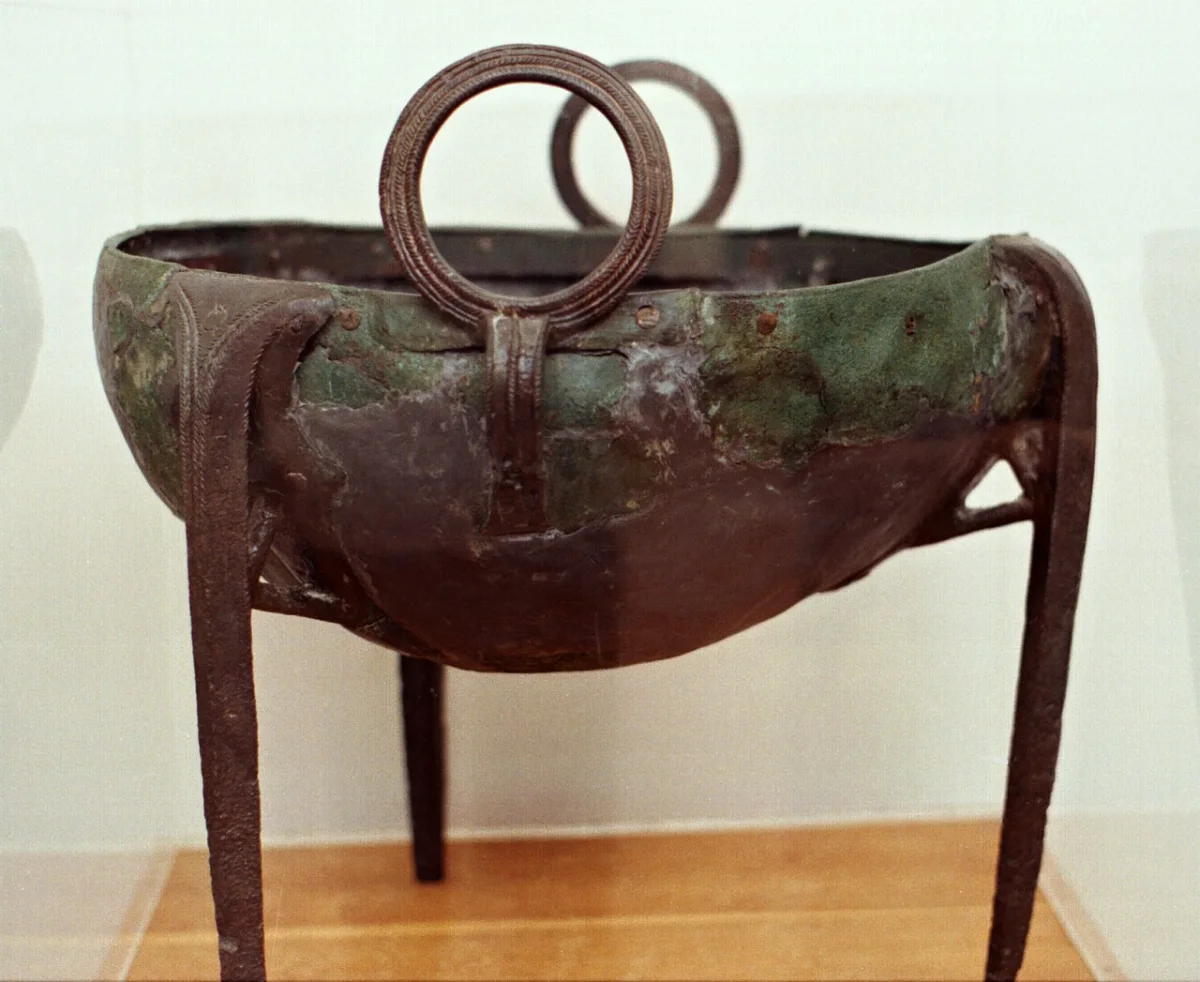
There are three poems here. The first is a dedication to Athena of an ox-sized cauldron, given by Cleubotus of Tegea and made by Aristoteles of Cleitor, another Arcadian town (A.P. 6.153). In the second, the mother Cleina cries out at the grave of her daughter Philaenis, who died unmarried (A.P. 7.486). The third is a young captain’s epitaph, whose tombstone “sings” that he fell for his country (A.P. 7.724).[4]
Text and translation
The uninterrupted Greek with its English translation, line by line.
Show text and translation
Βουχανδὴς ὁ λέβης· ὁ δὲ θεὶς Ἐριασπίδα υἱὸς
Anyte · Greek Anthology 6.153, 7.486, 7.724 (Gow–Page 2, 5, 4) · elegiac couplets · text of Paton (1917), via the Perseus Digital Library
How to read each line
A guide to the Greek, syllables, pitch marks and quantities.
Show the reading key
- Above each line: the line as the edition prints it, each word placed over its own syllables. The main row: the same Greek divided into metrical syllables, each written as it is pronounced. A consonant that closes a syllable is written with it (λόθ | ρο); an elided word is closed up with the next vowel (ν’ἀ); a final consonant carried into the next word is set with a thin space (ς ἰ). Wider gaps mark word-ends.
- Above the syllables: the pitch of each syllable, from the accents. Under them: the quantity of each syllable as it falls in the line, then the transliteration, syllable by syllable, with accented syllables in capitals.
- Under each line: a line-for-line translation. In the right margin of the scansion: the line type, its scheme, and its analysis into cola.
Key to the labels
The names, patterns and symbols used beside this poem.
Show the labels and symbols
The labels in the right margin of the scansion below name the line, its scheme, the feet as the line realises them, and the caesurae and diaereses (the named word-ends) that fall in it. In the scheme ⏔ is a biceps, two shorts that may be contracted to one long; ⏕ is a long that may be resolved into two shorts; × is an anceps, long or short. A click on any syllable highlights its metron or colon, or, with the switch, its foot.
| Label | Name and shape | What it is |
|---|---|---|
| hem1 | First hemiepes— ⏔ — ⏔ — | The first two and a half feet of the hexameter, up to the penthemimeral caesura; in the pentameter, its whole first half. |
| hem2 | Second half of the hexameter⏔ — ⏔ — ⏑ ⏑ — × | From the penthemimeral caesura to the line-end: the fifth foot is nearly always a dactyl, the sixth is — ×. |
| hemp | Second hemiepes— ⏑ ⏑ — ⏑ ⏑ × | The second half of the pentameter: two dactyls and a single syllable, with no contraction allowed. |
The traditional feet
| Foot and shape | Where |
|---|---|
| First foot: dactyl or spondee— ⏔ | Scheme positions 1–2. The biceps (⏑ ⏑) may be contracted to a single long, making a spondee. |
| Second foot: dactyl or spondee— ⏔ | Scheme positions 3–4. |
| Third foot: dactyl or spondee— ⏔ | Scheme positions 5–6. The penthemimeral caesura falls after its first syllable, the “trochaic” caesura after its second. |
| Fourth foot: dactyl or spondee— ⏔ | Scheme positions 7–8. Word-end at the end of this foot, when it is a dactyl, is the bucolic diaeresis (West’s “bucolic caesura”: word-end at the end of the fourth foot after an uncontracted biceps)[5]. |
| Fifth foot: dactyl— ⏑ ⏑ | Scheme positions 9–10. A spondee here (a “spondaic line”) is rare. |
| Sixth foot— × | Scheme positions 11–12: a long and the indifferent final syllable. |
| First foot: dactyl or spondee— ⏔ | Scheme positions 1–2 of the pentameter. |
| Second foot: dactyl or spondee— ⏔ | Scheme positions 3–4. |
| Half-foot before the diaeresis— | Scheme position 5: the long that closes the first hemiepes; word-end must follow. |
| Fourth foot: dactyl— ⏑ ⏑ | Scheme positions 6–8: no contraction after the diaeresis. |
| Fifth foot: dactyl— ⏑ ⏑ | Scheme positions 9–11. |
| Final syllable× | Scheme position 12. |
Scansion
Three quatrains in Doric dress and epic language, scanned foot by foot: a cauldron for Athena, a mother at her daughter's tomb, and the stone that sings of a young captain.
Big enough for an ox, this cauldron. The one who set it here is Eriaspidas’ son,
Cleubotus; Tegea of the broad dance-floors is his homeland.
It is a present to Athena. Its maker was Aristoteles
of Cleitor, who was given the same name as his father.
Again and again over her daughter’s grave, Cleina, wailing,
the mother, shouted the name of her dear child, taken so young,
calling for the spirit of Philaenis, who, before her marriage,
crossed over the grey-green flood of Acheron’s river.
So it was your fighting spirit, Proarchus, that killed you in battle; and your father’s,
Pheidias’, house you have plunged into black grief by dying;
yet the stone over you sings out this noble saying:
that you fell fighting to defend your own dear land.
Metre
- The couplet. All three poems are quatrains in elegiac couplets:[6] a hexameter, with less prosodic licence than in stichic epic, followed by a “pentameter”, — ⏔ — ⏔ — | — ⏑ ⏑ — ⏑ ⏑ — ‖, two hemiepes always divided by word-end; contraction is limited to the first half, and elision at the division is admitted.[7] Elegiacs are the standard metre of epigram.[8]
- A strict style. Anyte wrote about 310–290 BCE.[9] In West’s account Hellenistic elegists handle their verse more strictly than the hexameter poets do: they keep hiatus rare; they seldom shorten words that would scan unshortened, words of the shape (… ⏑ ⏑) — —; before the feminine caesura they normally set a word whose own ending is — ⏑; and from the later third century BC they come to prefer a long vowel or diphthong just before the division of the pentameter.[8] Here the words before the feminine caesurae all end — ⏑ by nature (δῶρον, ὀλοφυδνά, ἀγκαλέουσα, ὕπερθεν). Five of the six pentameter divisions fall on a long vowel or diphthong (πάτρᾱ, γενέτᾳ, ποταμοῦ, δνοφερῷ, φίλᾱς); in 7.486.2 the syllable before the division, -ρον of ὠκύμορον, is long only by position. Two long syllables are certainly shortened before a vowel (epic correption)[10], both in 7.724: τοι, and πένθει, a word of the shape — — of the kind West says these poets shortened less. The genitives Ἐριασπίδα (6.153.1) and Φειδία (7.724.2) also stand short before a vowel: either shortened or in hiatus.[11]
- Doric long ᾱ. Anyte’s forms are Doric, with ᾱ where Attic has η (Natoli et al. 2022, App. A, p. 332): ἁ, τἀθάνᾳ, γενέτᾳ, κόρας, σάματι, μάτηρ, ἐβόασε, ψυχάν, ἔβα, φίλας are all glossed by Natoli et al. with Attic η, or are Doric forms they list.[12] Where such an α stands in an open syllable that the metre needs long, the input marks it with a macron so that the reason given on the page is the true one (ᾱ̔, πάτρᾱ, τἀθᾱ́νᾳ, κόρᾱς, σᾱ́ματι, μᾱ́τηρ, ἐβόᾱσε, ψῡχᾱ́ν, the relative ᾱ̔̀, φίλᾱς); ψῡχή has a long υ[13] and πάτρᾱ a long final α.[14] The marks are not shown on the page.
- Stop + liquid. Inside a word the cluster usually makes position, the normal treatment in epic (πάτ-ρα 6.153.2, πέτ-ρος 7.724.3, πατ-ρός 7.724.1), but in πατρίδος (7.724.4) the first syllable stays short, the treatment of Attic speech, which early poetry normally admits only at the beginning of a word.[15] At the beginning of a word the cluster leaves a short final vowel short (σάματι Κλείνα, σε Πρόαρχ’). The cluster δν always makes position (ὀλοφυδ-νά)[15].
- The text. Paton’s text (Loeb, 1917) from the Perseus Digital Library, compared letter by letter with the XML. Two slips of the digital file are corrected from Paton’s printed page (vol. I, p. 376, consulted in the archive.org scan): the Perseus file breaks the first line of 6.153 in two after θείς, and prints τάθάνᾳ for the crasis τἀθάνᾳ in 6.153.3. Natoli et al. print Gow and Page’s text, which differs in 6.153.1 υἱός (Paton υἱὸς), 6.153.3 τἀθάνᾳ δὲ δῶρον (Paton τἀθάνᾳ δὲ τὸ δῶρον) and 7.486.3 ἁ (Paton ἃ); for 7.724 they follow Geoghegan, whose first line is quite different[16].[17]
Prosody, line by line
Every syllable, with the reason for its length. Quantities are read from the vowel where the spelling shows it, from the consonants that follow (“position”), from the accent where it tells, and from the metre where nothing else does. Editors’ notes on the text follow in the boxed paragraphs.
- 6.153.1
Line 6.153.1 · Βουχανδὴς ὁ λέβης· ὁ δὲ θεὶς Ἐριασπίδα υἱὸς
Βουχανδὴς ὁ λέβης· ὁ δὲ θεὶς Ἐριασπίδα υἱὸς
Βουχανδὴςὁλέβης·ὁδὲθεὶςἘριασπίδαυἱὸςspondee, dactyl, dactyl, dactyl, dactyl, — ×; penthemimeral caesura; caesura after the third trochee; hephthemimeral caesura.
- 1 —Βουου is a diphthong, long by nature.
- 2 —χανα is a vowel of unknown length; closed by ν: long by position; a single long contracts the two shorts of the biceps at position 2.
- 3 —δὴςὴ is long by nature.
- 4 ⏑ὁὁ is short by nature; one of the two shorts of the biceps at position 4.
- 5 ⏑λέέ is short by nature; one of the two shorts of the biceps at position 4.
- 6 —βης·η is long by nature.
- 7 ⏑ὁὁ is short by nature; one of the two shorts of the biceps at position 6.
- 8 ⏑δὲὲ is short by nature; one of the two shorts of the biceps at position 6.
- 9 —θεὶςεὶ is a diphthong, long by nature.
- 10 ⏑ἘἘ is short by nature; one of the two shorts of the biceps at position 8.
- 11 ⏑ριι is short by the metre (position 8 must be short); one of the two shorts of the biceps at position 8.
- 12 —ασα is a vowel of unknown length; closed by σ: long by position.
- 13 ⏑πίί is short by the metre (position 10 must be short); one of the two shorts of the biceps at position 10.
- 14 ⏑δαα is short by the metre (position 10 must be short); the next word begins with a vowel and nothing is elided: hiatus; one of the two shorts of the biceps at position 10.
- 15 —υἱυἱ is a diphthong, long by nature.
- 16 ×ὸςὸ is short by nature; closed by ς: long by position; the position is anceps.
The first foot is a spondee (Βου χαν), the other four dactyls. The Perseus file divides this line in two after θείς, a slip of digitisation; Paton prints a single hexameter. Penthemimeral caesura after λέβης, at a sense-pause: Natoli et al. point out that the genealogies of dedicator and maker take up the whole quatrain after these first two and a half feet.[18] The word-end the page reports after the second ὁ, between the two shorts of the third foot, is not a caesura: the article is a prepositive and counts with the word that follows.[5] Hephthemimeral caesura after θείς. The last vowel of Ἐριασπίδα, the father’s name in the genitive, stands short before υἱός, as the second short of the fifth foot. It is either a short vowel in hiatus or a long one shortened before the next vowel (epic correption); West describes both licences in the hexameter,[19] and which one this is depends on the quantity of the Doric genitive ending, which the sources used for this page do not state. υἱός keeps its diphthong long; Homer sometimes shortens it.[10]
- 6.153.2
Line 6.153.2 · Κλεύβοτος· ἁ πάτρα δʼ εὐρύχορος Τεγέα·
Κλεύβοτος· ἁ πάτρα δʼ εὐρύχορος Τεγέα·
Κλεύβοτο·ς ἁπάτραδ’εὐρύχοροςΤεγέα·dactyl, spondee, —, dactyl, dactyl, ×; diaeresis after the first hemiepes.
- 1 —Κλεύεύ is a diphthong, long by nature.
- 2 ⏑βοο is short by nature; one of the two shorts of the biceps at position 2.
- 3 ⏑το·ο is short by nature; one of the two shorts of the biceps at position 2.
- 4 —ς ἁᾱ̔ is long (its length is not shown by the ordinary spelling); the first consonant belongs to the previous word and is carried over to this vowel.
- 5 —πάτά is a vowel of unknown length; closed by τ before a liquid: stop + liquid makes position, as it usually does in epic; a single long contracts the two shorts of the biceps at position 4.
- 6 —ραᾱ is long (its length is not shown by the ordinary spelling).
- 7 —δ’εὐεὐ is a diphthong, long by nature; the apostrophe marks an elided vowel; the consonant before it joins this syllable.
- 8 ⏑ρύύ is short by the metre (position 7 must be short).
- 9 ⏑χοο is short by nature.
- 10 —ροςο is short by nature; closed by ς: long by position.
- 11 ⏑Τεε is short by nature.
- 12 ⏑γέέ is short by nature.
- 13 ×α·α is of unknown length; the position is anceps, so either scans.
The second foot is a spondee: πάτ- is closed by the τρ inside the word, the usual treatment in epic,[15] and its single long syllable fills the biceps. The article ἁ (Attic ἡ)[20] has the long ᾱ of Doric, and so does the final α of πάτρα,[13] which fills the last position of the first half. The δ’ of δέ is elided before εὐρύχορος. The second half is pure dactyls, as it must be.[7] Τεγέα, a city of Arcadia in the Peloponnese,[20] ends the period, where either quantity is admitted.
- 6.153.3
Line 6.153.3 · τἀθάνᾳ δὲ τὸ δῶρον· Ἀριστοτέλης δʼ ἐπόησεν
τἀθάνᾳ δὲ τὸ δῶρον· Ἀριστοτέλης δʼ ἐπόησεν
τἀθάνᾳδὲτὸδῶρο·ν Ἀριστοτέληςδ’ἐπόησενspondee, dactyl, dactyl, dactyl, dactyl, — ×; caesura after the third trochee.
- 1 —τἀἀ is long by crasis: the coronis marks two words contracted into one long vowel.
- 2 —θάᾱ́ is long (its length is not shown by the ordinary spelling); a single long contracts the two shorts of the biceps at position 2.
- 3 —νᾳᾳ is long by nature.
- 4 ⏑δὲὲ is short by nature; one of the two shorts of the biceps at position 4.
- 5 ⏑τὸὸ is short by nature; one of the two shorts of the biceps at position 4.
- 6 —δῶῶ is long by nature.
- 7 ⏑ρο·ο is short by nature; one of the two shorts of the biceps at position 6.
- 8 ⏑ν ἈἈ is short by the metre (position 6 must be short); the first consonant belongs to the previous word and is carried over to this vowel; one of the two shorts of the biceps at position 6.
- 9 —ρισι is a vowel of unknown length; closed by σ: long by position.
- 10 ⏑τοο is short by nature; one of the two shorts of the biceps at position 8.
- 11 ⏑τέέ is short by nature; one of the two shorts of the biceps at position 8.
- 12 —ληςη is long by nature; closed by ς: long by position.
- 13 ⏑δ’ἐἐ is short by nature; the apostrophe marks an elided vowel; the consonant before it joins this syllable; one of the two shorts of the biceps at position 10.
- 14 ⏑πόό is short by nature; one of the two shorts of the biceps at position 10.
- 15 —ηη is long by nature.
- 16 ×σενε is short by nature; closed by ν: long by position; the position is anceps.
τἀθάνᾳ is τᾷ Ἀθάνᾳ run together, crasis and Doric for Attic τῇ Ἀθήνῃ:[20] one long syllable, as crasis gives, commonest after a monosyllable, especially the article.[21] Doric Ἀθάνα has ᾱ where Attic has η, and θᾱ́ alone fills the biceps of the first foot. The Perseus file prints τάθάνᾳ, with an acute where Paton’s page has the coronis. Feminine caesura after δῶρον, whose ν is carried over to Ἀριστοτέλης.[22] The second syllable of ἐπόησεν is spelt with ο (Attic ἐποίησεν) and is short. Natoli et al. print τἀθάνᾳ δὲ δῶρον, without the τό that Paton has:[18] without it the second foot would lack one of its shorts.
- 6.153.4
Line 6.153.4 · Κλειτόριος, γενέτᾳ ταὐτὸ λαχὼν ὄνομα.
Κλειτόριος, γενέτᾳ ταὐτὸ λαχὼν ὄνομα.
Κλειτόριος,γενέτᾳταὐτὸλαχὼνὄνομα.dactyl, dactyl, —, dactyl, dactyl, ×; diaeresis after the first hemiepes.
- 1 —Κλειει is a diphthong, long by nature.
- 2 ⏑τόό is short by nature; one of the two shorts of the biceps at position 2.
- 3 ⏑ριι is short by the metre (position 2 must be short); one of the two shorts of the biceps at position 2.
- 4 —ος,ο is short by nature; closed by ς: long by position.
- 5 ⏑γεε is short by nature; one of the two shorts of the biceps at position 4.
- 6 ⏑νέέ is short by nature; one of the two shorts of the biceps at position 4.
- 7 —τᾳᾳ is long by nature.
- 8 —ταὐαὐ is a diphthong, long by nature.
- 9 ⏑τὸὸ is short by nature.
- 10 ⏑λαα is short by the metre (position 8 must be short).
- 11 —χὼνὼ is long by nature.
- 12 ⏑ὄὄ is short by nature.
- 13 ⏑νοο is short by nature.
- 14 ×μα.α is short by the accent rule: acute on the antepenult requires a short final syllable; the position is anceps.
Κλειτόριος, “of Kleitor”, also an Arcadian town;[20] its ς closes the syllable before γενέτᾳ. The division follows γενέτᾳ, the dative of γενέτης, “father”,[18] whose Doric ᾳ fills the last position of the first half. ταὐτό is τὸ αὐτό by crasis,[23] one long syllable that opens the second half. ὄνομα ends the period with a short syllable, which is admitted there.[24]
- 7.486.1
Line 7.486.1 · πολλάκι τῷδʼ ὀλοφυδνὰ κόρας ἐπὶ σάματι Κλείνα
πολλάκι τῷδʼ ὀλοφυδνὰ κόρας ἐπὶ σάματι Κλείνα
πολλάκιτῷδ’ὀλοφυδνὰκόραςἐπὶσάματιΚλείναdactyl, dactyl, dactyl, dactyl, dactyl, — ×; caesura after the third trochee; hephthemimeral caesura; bucolic diaeresis.
- 1 —πολο is short by nature; closed by λ: long by position.
- 2 ⏑λάά is short by the metre (position 2 must be short); one of the two shorts of the biceps at position 2.
- 3 ⏑κιι is short by the metre (position 2 must be short); one of the two shorts of the biceps at position 2.
- 4 —τῷῷ is long by nature.
- 5 ⏑δ’ὀὀ is short by nature; the apostrophe marks an elided vowel; the consonant before it joins this syllable; one of the two shorts of the biceps at position 4.
- 6 ⏑λοο is short by nature; one of the two shorts of the biceps at position 4.
- 7 —φυδυ is a vowel of unknown length; closed by δ: long by position; δν is one of the four clusters (γμ, γν, δμ, δν) that never leave the syllable before them short.[15]
- 8 ⏑νὰὰ is short by the metre (position 6 must be short); one of the two shorts of the biceps at position 6.
- 9 ⏑κόό is short by nature; one of the two shorts of the biceps at position 6.
- 10 —ραςᾱ is long (its length is not shown by the ordinary spelling).
- 11 ⏑ἐἐ is short by nature; one of the two shorts of the biceps at position 8.
- 12 ⏑πὶὶ is short by the metre (position 8 must be short); one of the two shorts of the biceps at position 8.
- 13 —σάᾱ́ is long (its length is not shown by the ordinary spelling).
- 14 ⏑μαα is short by the metre (position 10 must be short); one of the two shorts of the biceps at position 10.
- 15 ⏑τιι is short by the accent rule (the accent falls too far back for a long final syllable); the next word begins with Κλ, a stop + liquid that does not make position here, so the syllable stays short; one of the two shorts of the biceps at position 10.
- 16 —Κλείεί is a diphthong, long by nature.
- 17 ×ναα is of unknown length; the position is anceps, so either scans.
Five dactyls. The δν of ὀλοφυδνά closes the syllable before it, as δν always does;[15] ὀλοφυδνά recalls the “lamenting word” that Achilles speaks to the ghost of Patroclus (Iliad 23.102)[25]. Feminine caesura after ὀλοφυδνά; hephthemimeral caesura after κόρας.[26] The word-end the page reports after ἐπί, at the end of the fourth foot, is not a bucolic caesura: a preposition is a prepositive and counts with its noun.[5] κόρᾱς and σᾱ́ματι have the long ᾱ of Doric (Attic κόρης, σήματι)[25]. The ι of σάματι stays short before the Κλ of Κλείνα.[15]
- 7.486.2
Line 7.486.2 · μάτηρ ὠκύμορον παῖδʼ ἐβόασε φίλαν,
μάτηρ ὠκύμορον παῖδʼ ἐβόασε φίλαν,
μάτηρὠκύμορονπαῖδ’ἐβόασεφίλαν,spondee, dactyl, —, dactyl, dactyl, ×; diaeresis after the first hemiepes.
- 1 —μάᾱ́ is long (its length is not shown by the ordinary spelling).
- 2 —τηρη is long by nature; a single long contracts the two shorts of the biceps at position 2.
- 3 —ὠὠ is long by nature.
- 4 ⏑κύύ is short by the metre (position 4 must be short); one of the two shorts of the biceps at position 4.
- 5 ⏑μοο is short by nature; one of the two shorts of the biceps at position 4.
- 6 —ρονο is short by nature; closed by ν: long by position.
- 7 —παῖαῖ is a diphthong, long by nature.
- 8 ⏑δ’ἐἐ is short by nature; the apostrophe marks an elided vowel; the consonant before it joins this syllable.
- 9 ⏑βόό is short by nature.
- 10 —αᾱ is long (its length is not shown by the ordinary spelling).
- 11 ⏑σεε is short by nature.
- 12 ⏑φίί is short by the metre (position 11 must be short).
- 13 ×λαν,α is a vowel of unknown length; closed by ν: long by position; the position is anceps.
The first foot is a spondee: μᾱ́τηρ has the long ᾱ of Doric (Attic μήτηρ; Natoli et al. 2022, App. A, p. 332), and the word ends after the contracted biceps, which West finds frequent only in the first foot.[27] The division follows ὠκύμορον, whose last syllable -ρον is long only because παῖδ’ begins with a consonant: West contrasts syllables like this, which owe their length to the consonant that opens the next half, with those that have a long vowel or diphthong.[8] παῖδ’ opens the second half and is elided before ἐβόασε; Natoli et al. call it a crasis for παῖδα,[25] but it is elision of the final α.[28] ἐβόᾱσε, Attic ἐβόησε,[25] has the long ᾱ of Doric in the first long of the second half.
- 7.486.3
Line 7.486.3 · ψυχὰν ἀγκαλέουσα Φιλαινίδος, ἃ πρὸ γάμοιο
ψυχὰν ἀγκαλέουσα Φιλαινίδος, ἃ πρὸ γάμοιο
ψυχὰνἀγκαλέουσαΦιλαινίδο,ς ἃπρὸγάμοιοspondee, dactyl, dactyl, dactyl, dactyl, — ×; caesura after the third trochee; bucolic diaeresis.
- 1 —ψυῡ is long (its length is not shown by the ordinary spelling).
- 2 —χὰνᾱ̀ is long (its length is not shown by the ordinary spelling); a single long contracts the two shorts of the biceps at position 2.
- 3 —ἀγἀ is a vowel of unknown length; closed by γ: long by position.
- 4 ⏑καα is short by the metre (position 4 must be short); one of the two shorts of the biceps at position 4.
- 5 ⏑λέέ is short by nature; one of the two shorts of the biceps at position 4.
- 6 —ουου is a diphthong, long by nature.
- 7 ⏑σαα is short by the accent rule: acute on the antepenult requires a short final syllable; one of the two shorts of the biceps at position 6.
- 8 ⏑Φιι is short by the metre (position 6 must be short); one of the two shorts of the biceps at position 6.
- 9 —λαιαι is a diphthong, long by nature.
- 10 ⏑νίί is short by the metre (position 8 must be short); one of the two shorts of the biceps at position 8.
- 11 ⏑δο,ο is short by nature; one of the two shorts of the biceps at position 8.
- 12 —ς ἃᾱ̔̀ is long (its length is not shown by the ordinary spelling); the next word begins with πρ: the syllable is closed before it: long by position; the first consonant belongs to the previous word and is carried over to this vowel.
- 13 ⏑πρὸὸ is short by nature; one of the two shorts of the biceps at position 10.
- 14 ⏑γάά is short by the metre (position 10 must be short); one of the two shorts of the biceps at position 10.
- 15 —μοιοι is a diphthong, long by nature.
- 16 ×οο is short by nature; the position is anceps.
The first foot is a spondee: ψῡχᾱ́ν, Attic ψυχήν, has a long υ[29] and the long ᾱ of Doric, and again the word ends after the contracted first biceps.[27] ἀγκαλέουσα is Attic ἀνακαλέουσα;[25] its ἀγ- is closed by the γκ. Feminine caesura after ἀγκαλέουσα, a word that ends — ⏑ by nature.[8] Bucolic caesura after Φιλαινίδος, at the end of a dactylic fourth foot;[5] its ς is carried over to the relative ἅ (Attic ἥ), which is long by nature and closed besides before the πρ of πρό. Natoli et al. print ἁ.[25] γάμοιο is the epic genitive (Attic γάμου)[25].
- 7.486.4
Line 7.486.4 · χλωρὸν ὑπὲρ ποταμοῦ χεῦμʼ Ἀχέροντος ἔβα.
χλωρὸν ὑπὲρ ποταμοῦ χεῦμʼ Ἀχέροντος ἔβα.
χλωρὸν ὑπὲρποταμοῦχεῦμ’Ἀχέροντος ἔβα.dactyl, dactyl, —, dactyl, dactyl, ×; diaeresis after the first hemiepes.
- 1 —χλωω is long by nature.
- 2 ⏑ρὸὸ is short by nature; one of the two shorts of the biceps at position 2.
- 3 ⏑ν ὑὑ is short by the metre (position 2 must be short); the first consonant belongs to the previous word and is carried over to this vowel; one of the two shorts of the biceps at position 2.
- 4 —πὲρὲ is short by nature; closed by ρ: long by position.
- 5 ⏑ποο is short by nature; one of the two shorts of the biceps at position 4.
- 6 ⏑ταα is short by the metre (position 4 must be short); one of the two shorts of the biceps at position 4.
- 7 —μοῦοῦ is a diphthong, long by nature.
- 8 —χεῦεῦ is a diphthong, long by nature.
- 9 ⏑μ’ἈἈ is short by the metre (position 7 must be short); the apostrophe marks an elided vowel; the consonant before it joins this syllable.
- 10 ⏑χέέ is short by nature.
- 11 —ρονο is short by nature; closed by ν: long by position.
- 12 ⏑τοο is short by nature.
- 13 ⏑ς ἔἔ is short by nature; the first consonant belongs to the previous word and is carried over to this vowel.
- 14 ×βα.α is of unknown length; the position is anceps, so either scans.
- 7.724.1
Line 7.724.1 · ἦ ῥα μένος σε, Πρόαρχʼ, ὄλεσ’ ἐν δαΐ, δῶμά τε πατρὸς
ἦ ῥα μένος σε, Πρόαρχʼ, ὄλεσ’ ἐν δαΐ, δῶμά τε πατρὸς
ἦῥαμένοςσε,Πρόαρχ’,ὄλεσ’ἐνδαΐ,δῶμάτεπατρὸςdactyl, dactyl, dactyl, dactyl, dactyl, — ×; penthemimeral caesura (with elision); hephthemimeral caesura; bucolic diaeresis.
- 1 —ἦἦ is long by nature.
- 2 ⏑ῥαα is short by the metre (position 2 must be short); one of the two shorts of the biceps at position 2.
- 3 ⏑μέέ is short by nature; one of the two shorts of the biceps at position 2.
- 4 —νοςο is short by nature; closed by ς: long by position.
- 5 ⏑σε,ε is short by nature; the next word begins with Πρ, a stop + liquid that does not make position here, so the syllable stays short; one of the two shorts of the biceps at position 4.
- 6 ⏑Πρόό is short by nature; one of the two shorts of the biceps at position 4.
- 7 —αρα is a vowel of unknown length; closed by ρ: long by position.
- 8 ⏑χ’,ὄὄ is short by nature; the apostrophe marks an elided vowel; the consonant before it joins this syllable; one of the two shorts of the biceps at position 6.
- 9 ⏑λεε is short by nature; one of the two shorts of the biceps at position 6.
- 10 —σ’ἐνἐ is short by nature; closed by ν: long by position; the apostrophe marks an elided vowel; the consonant before it joins this syllable.
- 11 ⏑δαα is short by the metre (position 8 must be short); one of the two shorts of the biceps at position 8.
- 12 ⏑ΐ,ΐ is short by the metre (position 8 must be short); one of the two shorts of the biceps at position 8.
- 13 —δῶῶ is long by nature.
- 14 ⏑μάά is short by the accent rule: circumflex on the penult requires a short final syllable; one of the two shorts of the biceps at position 10.
- 15 ⏑τεε is short by nature; one of the two shorts of the biceps at position 10.
- 16 —πατα is a vowel of unknown length; closed by τ before a liquid: stop + liquid makes position, as it usually does in epic.
- 17 ×ρὸςὸ is short by nature; closed by ς: long by position; the position is anceps.
Five dactyls, in Paton’s text. σε keeps its ε short before the Πρ of Πρόαρχε.[15] Πρόαρχ’ and ὄλεσ’ are elided;[28] the penthemimeral caesura falls after the elided Πρόαρχ’. The word-end the page reports after ἐν is not a hephthemimeral caesura: the preposition counts with δαΐ.[5] Bucolic caesura after δαΐ, the dative of δάϊς, “war, battle”, always in this form in Homer,[13] with both its vowels short here. In πατρός the first syllable is closed by the τρ inside the word.[15] The line is quite different in the text of Geoghegan that Natoli et al. print, Ἥβα μέν σε, πρόαρχε, ἕσαν· παίδων ἅτε ματρός (in our rendering, “the young men laid you to rest, commander … as children do a mother”), in which the dead commander is Pheidias himself;[32] Natoli et al. note the balanced syllabic structure of that line.[33]
- 7.724.2
Line 7.724.2 · Φειδία ἐν δνοφερῷ πένθει ἔθου φθίμενος·
Φειδία ἐν δνοφερῷ πένθει ἔθου φθίμενος·
Φειδίαἐνδνοφερῷπένθειἔθουφθίμενος·dactyl, dactyl, —, dactyl, dactyl, ×; diaeresis after the first hemiepes.
- 1 —Φειει is a diphthong, long by nature.
- 2 ⏑δίί is short by the metre (position 2 must be short); one of the two shorts of the biceps at position 2.
- 3 ⏑αα is short by the metre (position 2 must be short); the next word begins with a vowel and nothing is elided: hiatus; one of the two shorts of the biceps at position 2.
- 4 —ἐνἐ is short by nature; closed by ν: long by position.
- 5 ⏑δνοο is short by nature; one of the two shorts of the biceps at position 4.
- 6 ⏑φεε is short by nature; one of the two shorts of the biceps at position 4.
- 7 —ρῷῷ is long by nature.
- 8 —πένέ is short by nature; closed by ν: long by position.
- 9 ⏑θειει is a diphthong, long by nature; shortened before the vowel that begins the next word (epic correption), as the metre requires.
- 10 ⏑ἔἔ is short by nature.
- 11 —θουου is a diphthong, long by nature; the next word begins with φθ: the syllable is closed before it: long by position.
- 12 ⏑φθίί is short by the metre (position 10 must be short).
- 13 ⏑μεε is short by nature.
- 14 ×νος·ο is short by nature; closed by ς: long by position; the position is anceps.
Φειδία is the father’s name in the genitive in Paton’s text (“your father’s, Pheidias’, house”), a vocative in Geoghegan’s.[32] Its last vowel stands short before ἐν, as the second short of the first foot: a short vowel in hiatus, or a long one shortened (epic correption)[10], depending on the quantity of the ending.[34] The division follows δνοφερῷ. In the second half the diphthong of πένθει is shortened before ἔθου (epic correption)[10], a word of the shape — — that Hellenistic elegists shortened less often.[8] Natoli et al. hear an echo of Aeschylus, Persians 535–536.[33]
- 7.724.3
Line 7.724.3 · ἀλλὰ καλόν τοι ὕπερθεν ἔπος τόδε πέτρος ἀείδει,
ἀλλὰ καλόν τοι ὕπερθεν ἔπος τόδε πέτρος ἀείδει,
ἀλλὰκαλόντοιὕπερθεν ἔποςτόδεπέτρος ἀείδει,dactyl, dactyl, dactyl, dactyl, dactyl, — ×; caesura after the third trochee; hephthemimeral caesura; bucolic diaeresis.
- 1 —ἀλἀ is a vowel of unknown length; closed by λ: long by position.
- 2 ⏑λὰὰ is short by the metre (position 2 must be short); one of the two shorts of the biceps at position 2.
- 3 ⏑καα is short by the metre (position 2 must be short); one of the two shorts of the biceps at position 2.
- 4 —λόνό is short by nature; closed by ν: long by position.
- 5 ⏑τοιοι is a diphthong, long by nature; shortened before the vowel that begins the next word (epic correption), as the metre requires; one of the two shorts of the biceps at position 4.
- 6 ⏑ὕὕ is short by the metre (position 4 must be short); one of the two shorts of the biceps at position 4.
- 7 —περε is short by nature; closed by ρ: long by position.
- 8 ⏑θεε is short by nature; one of the two shorts of the biceps at position 6.
- 9 ⏑ν ἔἔ is short by nature; the first consonant belongs to the previous word and is carried over to this vowel; one of the two shorts of the biceps at position 6.
- 10 —ποςο is short by nature; closed by ς: long by position.
- 11 ⏑τόό is short by nature; one of the two shorts of the biceps at position 8.
- 12 ⏑δεε is short by nature; one of the two shorts of the biceps at position 8.
- 13 —πέτέ is short by nature; closed by τ before a liquid: stop + liquid makes position, as it usually does in epic.
- 14 ⏑ροο is short by nature; one of the two shorts of the biceps at position 10.
- 15 ⏑ς ἀἀ is short by the metre (position 10 must be short); the first consonant belongs to the previous word and is carried over to this vowel; one of the two shorts of the biceps at position 10.
- 16 —είεί is a diphthong, long by nature.
- 17 ×δει,ει is a diphthong, long by nature; the position is anceps.
Five dactyls. The κα of καλόν is short, as it may be in elegy and epigram.[35] τοι is shortened before ὕπερθεν (epic correption)[10]. Feminine caesura after ὕπερθεν, whose ν is carried over to ἔπος:[30] the word that once began with a digamma[36] is treated here as beginning with a vowel. Hephthemimeral caesura after ἔπος; bucolic caesura after τόδε. In πέτρος the τρ inside the word closes the first syllable.[15] Natoli et al. note that ἔπος and ἀείδει are words closely associated with epic.[33]
- 7.724.4
Line 7.724.4 · ὡς ἔθανες πρὸ φίλας μαρνάμενος πατρίδος.
ὡς ἔθανες πρὸ φίλας μαρνάμενος πατρίδος.
ὡςἔθανεςπρὸφίλαςμαρνάμενοςπατρίδος.dactyl, dactyl, —, dactyl, dactyl, ×; diaeresis after the first hemiepes.
- 1 —ὡςὡ is long by nature.
- 2 ⏑ἔἔ is short by nature; one of the two shorts of the biceps at position 2.
- 3 ⏑θαα is short by the metre (position 2 must be short); one of the two shorts of the biceps at position 2.
- 4 —νεςε is short by nature; closed by ς: long by position.
- 5 ⏑πρὸὸ is short by nature; one of the two shorts of the biceps at position 4.
- 6 ⏑φίί is short by the metre (position 4 must be short); one of the two shorts of the biceps at position 4.
- 7 —λαςᾱ is long (its length is not shown by the ordinary spelling); closed by ς: long by position.
- 8 —μαρα is a vowel of unknown length; closed by ρ: long by position.
- 9 ⏑νάά is short by the metre (position 7 must be short).
- 10 ⏑μεε is short by nature.
- 11 —νοςο is short by nature; closed by ς: long by position.
- 12 ⏑παα is a vowel of unknown length; τρ is carried whole into the next syllable, so this syllable stays open and short (correption before a stop + liquid cluster, as the metre needs).
- 13 ⏑τρίί is short by the metre (position 11 must be short).
- 14 ×δος.ο is short by nature; closed by ς: long by position; the position is anceps.
The division follows φίλᾱς, the Doric genitive (Attic φίλης), with its long ᾱ. In πατρίδος, unlike πατρός in line 9, the first syllable stays short before the τρ inside the word: the second half of the pentameter has no place for a long there. This is the treatment usual in Attic speech, which early poetry normally admits only at the beginning of a word.[15] πρό keeps its ο short before φ.
Notes
- ^ Natoli et al. 2022, pp. 144–145.
- ^ a b Natoli et al. 2022, p. 144.
- ^ Natoli et al. 2022, pp. 147, 150.
- ^ Natoli et al. 2022, pp. 148–152.
- ^ a b c d e West 1987, p. 21.
- ^ Natoli et al. 2022, pp. 148, 150, 152.
- ^ a b West 1987, p. 24.
- ^ a b c d e West 1987, p. 80.
- ^ Natoli et al. 2022, p. 144.
- ^ a b c d e West 1987, p. 14.
- ^ See the notes on lines 1 and 10.
- ^ Natoli et al. 2022, pp. 149, 152.
- ^ a b c LSJ s.v.
- ^ LSJ s.v. πάτρα.
- ^ a b c d e f g h i j West 1987, p. 16.
- ^ See the note on line 9.
- ^ Natoli et al. 2022, pp. 148, 150–152.
- ^ a b c Natoli et al. 2022, p. 148.
- ^ West 1987, pp. 14–15, 21.
- ^ a b c d Natoli et al. 2022, p. 149.
- ^ West 1987, pp. 14–15.
- ^ West 1987, pp. 12, 19.
- ^ Natoli et al. 2022, p. 149; West 1987, pp. 14–15.
- ^ West 1987, pp. 4, 24.
- ^ a b c d e f g Natoli et al. 2022, p. 152.
- ^ West 1987, p. 19.
- ^ a b West 1987, p. 20.
- ^ a b West 1987, p. 13.
- ^ LSJ s.v. ψυχή.
- ^ a b West 1987, p. 12.
- ^ West 1987, p. 13; Natoli et al. 2022, p. 152, call it a crasis.
- ^ a b Natoli et al. 2022, pp. 150–151.
- ^ a b c Natoli et al. 2022, p. 151.
- ^ See line 1.
- ^ LSJ s.v. καλός, “Quantity”.
- ^ West 1987, p. 17.
Text and sources
- Text: The Greek Anthology, ed. W. R. Paton (Loeb Classical Library, London 1917), vols. I–II, from the Perseus Digital Library (urn:cts:greekLit:tlg7000.tlg001.perseus-grc6, -grc7), licensed CC BY-SA 4.0 as stated in the TEI header; 6.153 checked against Paton’s printed page (vol. I, p. 376, archive.org scan “greekanthology01pato”); changes as listed under Metre.
- Readings of Gow and Page and of Geoghegan, notes and glosses: B. A. Natoli, A. Pitts and J. P. Hallett, Ancient Women Writers of Greece and Rome (Routledge 2022), ch. 6, pp. 144, 148–152; App. A, p. 332.
- Rules: M. L. West, Introduction to Greek Metre (Oxford 1987), pp. 4, 12–17 (prosody), 19–21 (hexameter, caesurae, prepositives), 24 (the elegiac couplet), 80 (Hellenistic elegiacs), checked against the page images (p. 20 against a photograph).
- Quantities: LSJ (Perseus Digital Library, CC BY-SA), s.vv. δάϊς, καλός, πάτρα, ψυχή.
Quotations from copyrighted works are not covered by this page’s licence.
By the spring
Anyte, two invitations to rest (A.P. 9.313, A.Pl. 228)
Synopsis
Anyte wrote between about 310 and 290 BCE. Pollux makes her a woman of Tegea in Arcadia, though no other ancient author confirms it.[1] Twenty-one of her epigrams survive in the Palatine and Planudean anthologies. Gutzwiller argues that they first circulated as a book in her lifetime, and that Meleager still had this book when he compiled his Garland.[2] She is now recognised as one of the first Hellenistic poets, perhaps the first, to set poems in an idyllic countryside. It is a land of springs, shade and shepherds, where travellers meet Pan and the Nymphs. She may have influenced Theocritus and Vergil, and the epigrammatist Mnasalces imitated her closely.[2] Such poems may evoke an inscription set up at a spring or fountain, with the landscape itself as the speaker.[3]
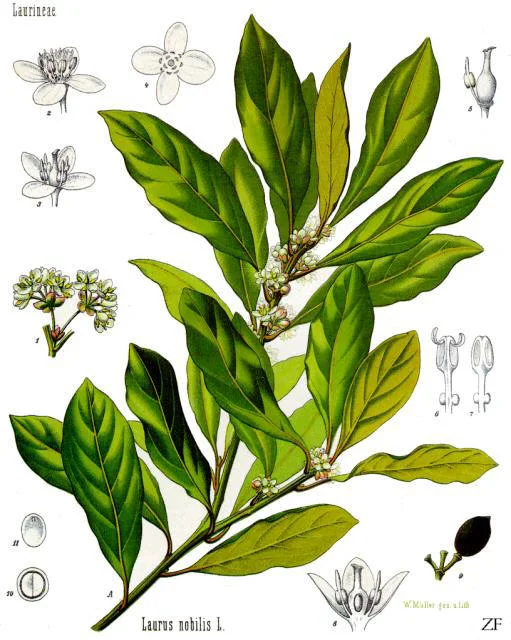
In the two poems here an unnamed voice speaks. In the first, it invites everyone to sit under the laurel and drink from the stream in the summer heat (A.P. 9.313). In the second, it invites a stranger to rest his limbs in the shade and drink the cold spring water (A.Pl. 228). Its call, Ξεῖνε, “stranger”, opens many epitaphs.[4]
Text and translation
The uninterrupted Greek with its English translation, line by line.
Show text and translation
ἵζευ ἅπας ὑπὸ καλὰ δάφνας εὐθαλέα φύλλα
Anyte · Greek Anthology 9.313, 16.228 (Gow–Page 16, 18) · elegiac couplets · text of Paton (1917–1918), via the Perseus Digital Library
How to read each line
A guide to the Greek, syllables, pitch marks and quantities.
Show the reading key
- Above each line: the line as the edition prints it, each word placed over its own syllables. The main row: the same Greek divided into metrical syllables, each written as it is pronounced. A consonant that closes a syllable is written with it (λόθ | ρο); an elided word is closed up with the next vowel (ν’ἀ); a final consonant carried into the next word is set with a thin space (ς ἰ). Wider gaps mark word-ends.
- Above the syllables: the pitch of each syllable, from the accents. Under them: the quantity of each syllable as it falls in the line, then the transliteration, syllable by syllable, with accented syllables in capitals.
- Under each line: a line-for-line translation. In the right margin of the scansion: the line type, its scheme, and its analysis into cola.
Key to the labels
The names, patterns and symbols used beside this poem.
Show the labels and symbols
The labels in the right margin of the scansion below name the line, its scheme, the feet as the line realises them, and the caesurae and diaereses (the named word-ends) that fall in it. In the scheme ⏔ is a biceps, two shorts that may be contracted to one long; ⏕ is a long that may be resolved into two shorts; × is an anceps, long or short. A click on any syllable highlights its metron or colon, or, with the switch, its foot.
| Label | Name and shape | What it is |
|---|---|---|
| hem1 | First hemiepes— ⏔ — ⏔ — | The first two and a half feet of the hexameter, up to the penthemimeral caesura; in the pentameter, its whole first half. |
| hem2 | Second half of the hexameter⏔ — ⏔ — ⏑ ⏑ — × | From the penthemimeral caesura to the line-end: the fifth foot is nearly always a dactyl, the sixth is — ×. |
| hemp | Second hemiepes— ⏑ ⏑ — ⏑ ⏑ × | The second half of the pentameter: two dactyls and a single syllable, with no contraction allowed. |
The traditional feet
| Foot and shape | Where |
|---|---|
| First foot: dactyl or spondee— ⏔ | Scheme positions 1–2. The biceps (⏑ ⏑) may be contracted to a single long, making a spondee. |
| Second foot: dactyl or spondee— ⏔ | Scheme positions 3–4. |
| Third foot: dactyl or spondee— ⏔ | Scheme positions 5–6. The penthemimeral caesura falls after its first syllable, the “trochaic” caesura after its second. |
| Fourth foot: dactyl or spondee— ⏔ | Scheme positions 7–8. Word-end at the end of this foot, when it is a dactyl, is the bucolic diaeresis (West’s “bucolic caesura”: word-end at the end of the fourth foot after an uncontracted biceps)[5]. |
| Fifth foot: dactyl— ⏑ ⏑ | Scheme positions 9–10. A spondee here (a “spondaic line”) is rare. |
| Sixth foot— × | Scheme positions 11–12: a long and the indifferent final syllable. |
| First foot: dactyl or spondee— ⏔ | Scheme positions 1–2 of the pentameter. |
| Second foot: dactyl or spondee— ⏔ | Scheme positions 3–4. |
| Half-foot before the diaeresis— | Scheme position 5: the long that closes the first hemiepes; word-end must follow. |
| Fourth foot: dactyl— ⏑ ⏑ | Scheme positions 6–8: no contraction after the diaeresis. |
| Fifth foot: dactyl— ⏑ ⏑ | Scheme positions 9–11. |
| Final syllable× | Scheme position 12. |
Scansion
Two quatrains that invite the passer-by to rest by a spring in the summer heat, among the first Greek poems set in an idyllic countryside, scanned foot by foot.
Sit, everyone, beneath the laurel’s lovely, thriving leaves,
and from the seasonable stream take a sweet drink,
so that your dear limbs, gasping from summer’s toil,
may rest, as the breath of the west wind strikes them.
Stranger, under this elm give your worn-out limbs some rest;
sweetly for you the air sighs through the green foliage.
And drink the chill water from the fountain; for to wayfarers
in the scorching heat such a rest is dear.
Metre
- The couplet. Both poems are quatrains in elegiac couplets:[6] a hexameter followed by a “pentameter”, — ⏔ — ⏔ — | — ⏑ ⏑ — ⏑ ⏑ — ‖, two hemiepes always divided by word-end, with contraction limited to the first half.[7] Anyte has been recognised as one of the first poets, perhaps the first, to set poems in an idyllic countryside of springs and shade;[8] both epigrams may evoke an inscription for a spring.[9]
- Spondees for rest. The two closing pentameters (9.313.4, 16.228.4) have their whole first half spondaic, both bicipitia contracted. Of the second, Natoli et al. suggest that the heavy first half perhaps gives a lengthened pause to the relief it describes.[10] The fourth foot of 9.313.1 and the second and third feet of 16.228.3 are also spondees.
- A strict style. West finds the Hellenistic elegists stricter than the hexameter poets: hiatus is rare, words of the shape (… ⏑ ⏑) — — are seldom shortened, the feminine caesura is usually preceded by a word naturally ending — ⏑, and in time a long vowel or diphthong comes to be preferred just before the division of the pentameter.[11] There is no hiatus here; all four pentameter divisions fall on a long vowel or diphthong (ἄρυσαι, πνοιῇ, χλωροῖς, θερμῷ); the words before the two feminine caesurae end — ⏑ by nature (καλά, ἀσθμαίνοντα). Of the three correptions,[12] two shorten the particle τοι; the third shortens ἵζευ, a word of the shape — — of the kind West says these poets shortened less.
- Quantities. The poems are Doric, with ᾱ where Attic has η (Natoli et al. 2022, App. A, p. 332; glosses pp. 165, 167: δάφνας, ἁδύ, τάν, παγᾶς). Where such an α, or another α ι υ long by nature, stands in an open syllable that the metre needs long, the input marks it with a macron so that the reason given on the page is the true one: ἅπᾱς,[13] κᾱλά,[14] δάφνᾱς, εὐθᾱλέα,[15] νᾱ́ματος,[16] ᾱ̔δύ,[17] τᾱ́ν, τετρῡμένα,[18] πῑ́δακα,[19] πᾱγᾶς, ψῡχρόν,[20] ὁδῑ́ταις.[21] The marks are not shown on the page.
- The text. Paton’s text from the Perseus Digital Library, compared letter by letter with the XML; 9.313 also against Paton’s printed page (vol. III, p. 168, archive.org scan; the scan of vol. V has no usable Greek text). In 16.228.3 the Perseus file prints πίδακὰ τʼ with a grave accent; this page prints the acute that stands before an enclitic, as Natoli et al. do.[22] Natoli et al. print Gow and Page’s text, which differs in 9.313.1 Ἵζε’ (Paton ἵζευ), 9.313.4 πνοιᾷ (πνοιῇ) and 16.228.1 πέτραν, “rock” (πτελέαν, “elm”), and punctuates 16.228.2 as a parenthesis between dashes.[6]
Prosody, line by line
Every syllable, with the reason for its length. Quantities are read from the vowel where the spelling shows it, from the consonants that follow (“position”), from the accent where it tells, and from the metre where nothing else does. Editors’ notes on the text follow in the boxed paragraphs.
- 9.313.1
Line 9.313.1 · ἵζευ ἅπας ὑπὸ καλὰ δάφνας εὐθαλέα φύλλα,
ἵζευ ἅπας ὑπὸ καλὰ δάφνας εὐθαλέα φύλλα,
ἵζευἅπαςὑπὸκαλὰδάφναςεὐθαλέαφύλλα,dactyl, dactyl, dactyl, spondee, dactyl, — ×; caesura after the third trochee; hephthemimeral caesura.
- 1 —ἵζ is a double consonant (two sounds) and closes the syllable: long by position.
- 2 ⏑ζευευ is a diphthong, long by nature; shortened before the vowel that begins the next word (epic correption), as the metre requires; one of the two shorts of the biceps at position 2.
- 3 ⏑ἅἅ is short by the metre (position 2 must be short); one of the two shorts of the biceps at position 2.
- 4 —παςᾱ is long (its length is not shown by the ordinary spelling).
- 5 ⏑ὑὑ is short by the metre (position 4 must be short); one of the two shorts of the biceps at position 4.
- 6 ⏑πὸὸ is short by nature; one of the two shorts of the biceps at position 4.
- 7 —καᾱ is long (its length is not shown by the ordinary spelling).
- 8 ⏑λὰὰ is short by the metre (position 6 must be short); one of the two shorts of the biceps at position 6.
- 9 ⏑δάά is a vowel of unknown length; φν is carried whole into the next syllable, so this syllable stays open and short (correption before a stop + nasal cluster, as the metre needs); one of the two shorts of the biceps at position 6.
- 10 —φναςᾱ is long (its length is not shown by the ordinary spelling).
- 11 —εὐεὐ is a diphthong, long by nature; a single long contracts the two shorts of the biceps at position 8.
- 12 —θαᾱ is long (its length is not shown by the ordinary spelling).
- 13 ⏑λέέ is short by nature; one of the two shorts of the biceps at position 10.
- 14 ⏑αα is short by the metre (position 10 must be short); one of the two shorts of the biceps at position 10.
- 15 —φύλύ is a vowel of unknown length; closed by λ: long by position.
- 16 ×λα,α is of unknown length; the position is anceps, so either scans.
The diphthong of ἵζευ, “sit”, is shortened before ἅπας (epic correption)[12]; the first syllable is long because ζ counts as two consonants.[23] Natoli et al. print Ἵζε’ and gloss it as the middle imperative ἵζευ, an echo of Priam’s invitation to Helen in Iliad 3.162.[24] ἅπᾱς has a long α,[25] and its ς is carried over to ὑπό.[26] The κα of καλά is long here, in a long position, as LSJ says it usually is in epigram when it may be either (s.v. καλός). Feminine caesura after καλά, hephthemimeral caesura after δάφνας. The first α of δάφνας is short:[27] the φν inside the word does not close the syllable, a treatment West finds seldom with nasals before the fifth century;[28] its second α is the long ᾱ of the Doric genitive (Attic δάφνης)[27]. The fourth foot is a spondee (φνας εὐ). εὐθᾱλέα, “flourishing”, has a long ᾱ: LSJ lists the Doric adjective εὐθᾱλής and cites this line for it (s.v.); with a short α the word could not stand in the hexameter.
- 9.313.2
Line 9.313.2 · ὡραίου τʼ ἄρυσαι νάματος ἁδὺ πόμα,
ὡραίου τʼ ἄρυσαι νάματος ἁδὺ πόμα,
ὡραίουτ’ἄρυσαινάματος ἁδὺπόμα,spondee, dactyl, —, dactyl, dactyl, ×; diaeresis after the first hemiepes.
- 1 —ὡὡ is long by nature.
- 2 —ραίαί is a diphthong, long by nature; a single long contracts the two shorts of the biceps at position 2.
- 3 —ουου is a diphthong, long by nature.
- 4 ⏑τ’ἄἄ is short by the metre (position 4 must be short); the apostrophe marks an elided vowel; the consonant before it joins this syllable; one of the two shorts of the biceps at position 4.
- 5 ⏑ρυυ is short by the metre (position 4 must be short); one of the two shorts of the biceps at position 4.
- 6 —σαιαι is a diphthong, long by nature.
- 7 —νάᾱ́ is long (its length is not shown by the ordinary spelling).
- 8 ⏑μαα is short by the metre (position 7 must be short).
- 9 ⏑τοο is short by nature.
- 10 —ς ἁᾱ̔ is long (its length is not shown by the ordinary spelling); the first consonant belongs to the previous word and is carried over to this vowel.
- 11 ⏑δὺὺ is short by the metre (position 10 must be short).
- 12 ⏑πόό is short by nature.
- 13 ×μα,α is of unknown length; the position is anceps, so either scans.
The first foot is a spondee (ὡ ραί): the diphthong of ὡραίου keeps its length before the vowel that follows inside the word. τ’ is elided before ἄρυσαι,[29] whose first two syllables fill the biceps. The division follows ἄρυσαι, whose final diphthong fills the last position of the first half. νᾱ́ματος has the long α of νᾶμα,[25] and ἁδύ the long ᾱ of Doric;[30] the ς of νάματος is carried over to ἁδύ. πόμα is Doric for Attic πῶμα[27] and ends the period.
- 9.313.3
Line 9.313.3 · ὄφρα τοι ἀσθμαίνοντα πόνοις θέρεος φίλα γυῖα
ὄφρα τοι ἀσθμαίνοντα πόνοις θέρεος φίλα γυῖα
ὄφρατοιἀσθμαίνονταπόνοιςθέρεοςφίλαγυῖαdactyl, spondee, dactyl, dactyl, dactyl, — ×; caesura after the third trochee; hephthemimeral caesura.
- 1 —ὄφὄ is short by nature; closed by φ before a liquid: stop + liquid makes position, as it usually does in epic.
- 2 ⏑ραα is short by the metre (position 2 must be short); one of the two shorts of the biceps at position 2.
- 3 ⏑τοιοι is a diphthong, long by nature; shortened before the vowel that begins the next word (epic correption), as the metre requires; one of the two shorts of the biceps at position 2.
- 4 —ἀσἀ is a vowel of unknown length; closed by σ: long by position.
- 5 —θμαίαί is a diphthong, long by nature; a single long contracts the two shorts of the biceps at position 4.
- 6 —νονο is short by nature; closed by ν: long by position.
- 7 ⏑ταα is short by the accent rule: acute on the antepenult requires a short final syllable; one of the two shorts of the biceps at position 6.
- 8 ⏑πόό is short by nature; one of the two shorts of the biceps at position 6.
- 9 —νοιςοι is a diphthong, long by nature; closed by ς: long by position.
- 10 ⏑θέέ is short by nature; one of the two shorts of the biceps at position 8.
- 11 ⏑ρεε is short by nature; one of the two shorts of the biceps at position 8.
- 12 —οςο is short by nature; closed by ς: long by position.
- 13 ⏑φίί is short by the metre (position 10 must be short); one of the two shorts of the biceps at position 10.
- 14 ⏑λαα is short by the metre (position 10 must be short); one of the two shorts of the biceps at position 10.
- 15 —γυῖυῖ is a diphthong, long by nature.
- 16 ×αα is short by the accent rule: circumflex on the penult requires a short final syllable; the position is anceps.
The φρ inside ὄφρα closes its first syllable, as stop + liquid inside a word usually does in epic;[28] ὄφρα is the Homeric word for Attic ἵνα.[27] τοι is shortened before ἀσθμαίνοντα (epic correption)[12]. The second foot is a spondee (ἀσ θμαί). Feminine caesura after ἀσθμαίνοντα, a word that ends — ⏑ by nature;[11] hephthemimeral caesura after πόνοις. The ς of θέρεος closes its syllable before φίλα.
- 9.313.4
Line 9.313.4 · ἀμπαύσῃς, πνοιῇ τυπτόμενα Ζεφύρου.
ἀμπαύσῃς, πνοιῇ τυπτόμενα Ζεφύρου.
ἀμπαύσῃς,πνοιῇτυπτόμεναΖεφύρου.spondee, spondee, —, dactyl, dactyl, ×; diaeresis after the first hemiepes.
- 1 —ἀμἀ is a vowel of unknown length; closed by μ: long by position.
- 2 —παύαύ is a diphthong, long by nature; a single long contracts the two shorts of the biceps at position 2.
- 3 —σῃς,ῃ is long by nature; closed by ς: long by position.
- 4 —πνοιοι is a diphthong, long by nature; a single long contracts the two shorts of the biceps at position 4.
- 5 —ῇῇ is long by nature.
- 6 —τυπυ is a vowel of unknown length; closed by π: long by position.
- 7 ⏑τόό is short by nature.
- 8 ⏑μεε is short by nature.
- 9 —ναthe next word begins with the double consonant Ζ: the syllable is closed before it: long by position.
- 10 ⏑Ζεε is short by nature.
- 11 ⏑φύύ is short by the metre (position 11 must be short).
- 12 ×ρου.ου is a diphthong, long by nature; the position is anceps.
The whole first half is spondaic: ἀμπαύσῃς (the Ionic form, Attic ἀναπαύσῃς)[27] and πνοιῇ, in which the diphthong keeps its length before the vowel that follows inside the word. The division follows πνοιῇ; Natoli et al. print Doric πνοιᾷ and compare Homer’s ἅμα πνοιῇ Ζεφύροιο, Iliad 19.415.[27] The last syllable of τυπτόμενα is long before Ζεφύρου, because ζ counts as two consonants.[23]
- 16.228.1
Line 16.228.1 · ξεῖνʼ, ὑπὸ τὰν πτελέαν τετρυμένα γυῖʼ ἀνάπαυσον·
ξεῖνʼ, ὑπὸ τὰν πτελέαν τετρυμένα γυῖʼ ἀνάπαυσον·
ξεῖν’,ὑπὸτὰνπτελέαντετρυμέναγυῖ’ἀνάπαυσον·dactyl, dactyl, spondee, dactyl, dactyl, — ×; penthemimeral caesura; bucolic diaeresis.
- 1 —ξεῖεῖ is a diphthong, long by nature.
- 2 ⏑ν’,ὑὑ is short by the metre (position 2 must be short); the apostrophe marks an elided vowel; the consonant before it joins this syllable; one of the two shorts of the biceps at position 2.
- 3 ⏑πὸὸ is short by nature; one of the two shorts of the biceps at position 2.
- 4 —τὰνᾱ̀ is long (its length is not shown by the ordinary spelling); closed by ν: long by position.
- 5 ⏑πτεε is short by nature; one of the two shorts of the biceps at position 4.
- 6 ⏑λέέ is short by nature; one of the two shorts of the biceps at position 4.
- 7 —ανα is a vowel of unknown length; closed by ν: long by position.
- 8 —τετε is short by nature; closed by τ before a liquid: stop + liquid makes position, as it usually does in epic; a single long contracts the two shorts of the biceps at position 6.
- 9 —ρυῡ is long (its length is not shown by the ordinary spelling).
- 10 ⏑μέέ is short by nature; one of the two shorts of the biceps at position 8.
- 11 ⏑ναα is short by the metre (position 8 must be short); one of the two shorts of the biceps at position 8.
- 12 —γυῖ’υῖ is a diphthong, long by nature; the apostrophe marks an elided vowel; the consonant before it joins this syllable.
- 13 ⏑ἀἀ is short by the metre (position 10 must be short); one of the two shorts of the biceps at position 10.
- 14 ⏑νάά is short by the metre (position 10 must be short); one of the two shorts of the biceps at position 10.
- 15 —παυαυ is a diphthong, long by nature.
- 16 ×σον·ο is short by nature; closed by ν: long by position; the position is anceps.
ξεῖν’ is elided before ὑπό;[29] Natoli et al. note that the address “Stranger” is common in funerary epigram.[10] The article τᾱ́ν (Attic τήν)[10] is closed by its ν before πτ-. Penthemimeral caesura after πτελέαν, whose last syllable is closed by the τ of τετρυμένα. The third foot is a spondee (αν τετ): the τρ inside τετρυμένα closes the syllable before it,[28] and the υ is long.[31] Bucolic caesura after τετρυμένα. γυῖ’ is elided before ἀνάπαυσον. Paton’s πτελέαν, “elm”, gives a dactyl in the second foot. Gow and Page, printed by Natoli et al., read πέτραν, “rock”;[22] with it the line runs dactyl, spondee, spondee, dactyl, dactyl, like line 7, and Natoli et al. remark that the two hexameters are exactly parallel in metre.[10]
- 16.228.2
Line 16.228.2 · ἁδύ τοι ἐν χλωροῖς πνεῦμα θροεῖ πετάλοις·
ἁδύ τοι ἐν χλωροῖς πνεῦμα θροεῖ πετάλοις·
ἁδύτοιἐνχλωροῖςπνεῦμαθροεῖπετάλοις·dactyl, spondee, —, dactyl, dactyl, ×; diaeresis after the first hemiepes.
- 1 —ἁᾱ̔ is long (its length is not shown by the ordinary spelling).
- 2 ⏑δύύ is short by the metre (position 2 must be short); one of the two shorts of the biceps at position 2.
- 3 ⏑τοιοι is a diphthong, long by nature; shortened before the vowel that begins the next word (epic correption), as the metre requires; one of the two shorts of the biceps at position 2.
- 4 —ἐνἐ is short by nature; closed by ν: long by position.
- 5 —χλωω is long by nature; a single long contracts the two shorts of the biceps at position 4.
- 6 —ροῖςοῖ is a diphthong, long by nature; closed by ς: long by position.
- 7 —πνεῦεῦ is a diphthong, long by nature.
- 8 ⏑μαα is short by the accent rule (the accent falls too far back for a long final syllable); the next word begins with θρ, a stop + liquid that does not make position here, so the syllable stays short.
- 9 ⏑θροο is short by nature.
- 10 —εῖεῖ is a diphthong, long by nature.
- 11 ⏑πεε is short by nature.
- 12 ⏑τάά is short by the metre (position 11 must be short).
- 13 ×λοις·οι is a diphthong, long by nature; closed by ς: long by position; the position is anceps.
- 16.228.3
Line 16.228.3 · πίδακά τʼ ἐκ παγᾶς ψυχρὸν πίε· δὴ γὰρ ὁδίταις
πίδακά τʼ ἐκ παγᾶς ψυχρὸν πίε· δὴ γὰρ ὁδίταις
πίδακάτ’ἐκπαγᾶςψυχρὸνπίε·δὴγὰρ ὁδίταιςdactyl, spondee, spondee, dactyl, dactyl, — ×; penthemimeral caesura; hephthemimeral caesura; bucolic diaeresis.
- 1 —πίῑ́ is long (its length is not shown by the ordinary spelling).
- 2 ⏑δαα is short by the metre (position 2 must be short); one of the two shorts of the biceps at position 2.
- 3 ⏑κάά is short by the accent rule: acute on the antepenult requires a short final syllable; one of the two shorts of the biceps at position 2.
- 4 —τ’ἐκἐ is short by nature; closed by κ: long by position; the apostrophe marks an elided vowel; the consonant before it joins this syllable.
- 5 —παᾱ is long (its length is not shown by the ordinary spelling); a single long contracts the two shorts of the biceps at position 4.
- 6 —γᾶςᾶ carries a circumflex, so it is long; closed by ς: long by position.
- 7 —ψυῡ is long (its length is not shown by the ordinary spelling); a single long contracts the two shorts of the biceps at position 6.
- 8 —χρὸνὸ is short by nature; closed by ν: long by position.
- 9 ⏑πίί is short by the metre (position 8 must be short); one of the two shorts of the biceps at position 8.
- 10 ⏑ε·ε is short by nature; one of the two shorts of the biceps at position 8.
- 11 —δὴὴ is long by nature.
- 12 ⏑γὰὰ is short by the metre (position 10 must be short); one of the two shorts of the biceps at position 10.
- 13 ⏑ρ ὁὁ is short by nature; the first consonant belongs to the previous word and is carried over to this vowel; one of the two shorts of the biceps at position 10.
- 14 —δίῑ́ is long (its length is not shown by the ordinary spelling).
- 15 ×ταιςαι is a diphthong, long by nature; closed by ς: long by position; the position is anceps.
πῖδαξ, “spring”, has a long ι,[25] and the accusative πίδακά takes a second accent before the enclitic τ’. Spondees in the second and third feet: πᾱγᾶς (Attic πηγῆς)[10] has two long ᾱ, and ψυχρόν a long υ.[20] Penthemimeral caesura after παγᾶς; hephthemimeral caesura after ψυχρόν; bucolic caesura after πίε, at a sense-pause. The ι of πίε, the imperative of πίνω,[10] is short. The ρ of γάρ is carried over to ὁδίταις, which has a long ι.[21]
- 16.228.4
Line 16.228.4 · ἄμπαυμʼ ἐν θερμῷ καύματι τοῦτο φίλον.
ἄμπαυμʼ ἐν θερμῷ καύματι τοῦτο φίλον.
ἄμπαυμ’ἐνθερμῷκαύματιτοῦτοφίλον.spondee, spondee, —, dactyl, dactyl, ×; diaeresis after the first hemiepes.
- 1 —ἄμἄ is a vowel of unknown length; closed by μ: long by position.
- 2 —παυαυ is a diphthong, long by nature; a single long contracts the two shorts of the biceps at position 2.
- 3 —μ’ἐνἐ is short by nature; closed by ν: long by position; the apostrophe marks an elided vowel; the consonant before it joins this syllable.
- 4 —θερε is short by nature; closed by ρ: long by position; a single long contracts the two shorts of the biceps at position 4.
- 5 —μῷῷ is long by nature.
- 6 —καύαύ is a diphthong, long by nature.
- 7 ⏑μαα is short by the metre (position 7 must be short).
- 8 ⏑τιι is short by the accent rule: acute on the antepenult requires a short final syllable.
- 9 —τοῦοῦ is a diphthong, long by nature.
- 10 ⏑τοο is short by nature.
- 11 ⏑φίί is short by the metre (position 11 must be short).
- 12 ×λον.ο is short by nature; closed by ν: long by position; the position is anceps.
Notes
- ^ Natoli et al. 2022, pp. 144–145.
- ^ a b Natoli et al. 2022, p. 144.
- ^ Natoli et al. 2022, p. 164.
- ^ Natoli et al. 2022, pp. 164–167.
- ^ West 1987, p. 21.
- ^ a b Natoli et al. 2022, pp. 164, 166.
- ^ a b West 1987, p. 24.
- ^ Natoli et al. 2022, p. 144.
- ^ Natoli et al. 2022, pp. 164, 167.
- ^ a b c d e f g Natoli et al. 2022, p. 167.
- ^ a b West 1987, p. 80.
- ^ a b c d West 1987, p. 14.
- ^ LSJ s.v. ἅπας.
- ^ LSJ s.v. καλός, “Quantity”: either quantity in elegiac and epigrammatic verse, “the latter usu. in thesi”.
- ^ LSJ s.v. εὐθᾱλής, a Doric adjective, citing this line.
- ^ LSJ s.v. νᾶμα.
- ^ LSJ s.v. ἡδύς: Doric ἁδύς with long ᾱ.
- ^ LSJ s.v. τρύω: perfect passive τέτρῡμαι.
- ^ LSJ s.v. πῖδαξ.
- ^ a b LSJ s.v. ψυχρός.
- ^ a b LSJ s.v. ὁδίτης.
- ^ a b Natoli et al. 2022, p. 166.
- ^ a b West 1987, p. 12 n. 1.
- ^ Natoli et al. 2022, pp. 164–165.
- ^ a b c LSJ s.v.
- ^ West 1987, p. 12.
- ^ a b c d e f Natoli et al. 2022, p. 165.
- ^ a b c d West 1987, p. 16.
- ^ a b c West 1987, p. 13.
- ^ LSJ s.v. ἡδύς; Natoli et al. 2022, p. 165.
- ^ LSJ s.v. τρύω: τέτρῡμαι.
- ^ LSJ s.v. ἡδύς; Natoli et al. 2022, p. 167.
Text and sources
- Text: The Greek Anthology, ed. W. R. Paton (Loeb Classical Library, London 1917–1918), vols. III and V, from the Perseus Digital Library (urn:cts:greekLit:tlg7000.tlg001.perseus-grc8, -grc10), licensed CC BY-SA 4.0 as stated in the TEI header; 9.313 checked against Paton’s printed page (vol. III, p. 168, archive.org scan “greekanthology03pato”); change as listed under Metre.
- Readings of Gow and Page, notes and glosses: B. A. Natoli, A. Pitts and J. P. Hallett, Ancient Women Writers of Greece and Rome (Routledge 2022), ch. 6, pp. 144, 164–167; App. A, p. 332.
- Rules: M. L. West, Introduction to Greek Metre (Oxford 1987), pp. 12–16 (prosody), 19, 21 (caesurae), 24 (the elegiac couplet), 80 (Hellenistic elegiacs), checked against the page images.
- Quantities: LSJ (Perseus Digital Library, CC BY-SA), s.vv. ἅπας, ἡδύς, εὐθᾱλής, καλός, νᾶμα, ὁδίτης, πῖδαξ, τρύω, ψυχρός.
Quotations from copyrighted works are not covered by this page’s licence.


