Poets and playwrightsWomen poets
Moero of Byzantium
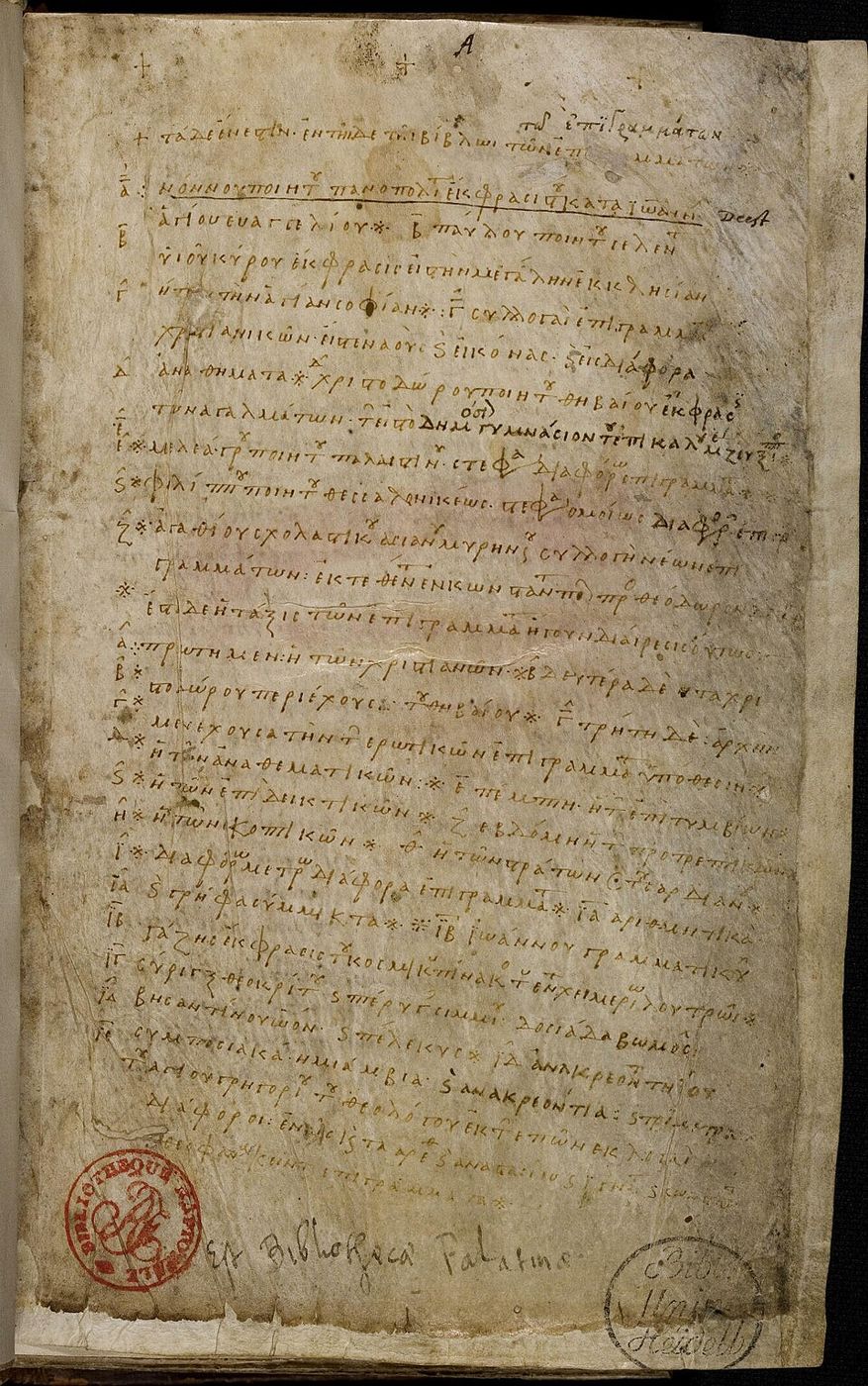
Moero of Byzantium: dedicatory epigrams and the hexameters of Mnemosyne.
About · 1 of 3
Who Moero was
Moero came from Byzantium. Her name appears in two forms. Μοιρώ (Moirō, Latinised Moero) is the form in Parthenius, Athenaeus, Meleager, Antipater of Thessalonica and the headings of her epigrams. Μυρώ (Myrō, Myro) is the form in Pausanias, Tatian, the Suda and Eustathius.[1]
She was probably born in the last quarter of the fourth century BCE. A poet’s floruit is the time when he or she was at the height of activity. Moero’s has been put at roughly 300–280 BCE (after Gow and Page, Snyder and Skinner).[2] That makes her a poet of the early Hellenistic period.
What the ancient sources say. The Suda is a Byzantine lexicon. It makes her the mother or the daughter of the tragedian Homerus of Byzantium, and the wife of the scholar Andromachus. It says that she wrote epic, lyric and elegiac poetry.[3] The sixth-century poet Christodorus describes a statue of her son Homerus. In it he calls her “glorious Moero of Byzantium, whom while still a girl the Muses reared, skilled in heroic verse” (A.P. 2.410–411).[3] Skinner has suggested that this picture of a girl taught by the Muses may reflect a child’s persona that Moero adopted in her poems.[4]
Her reputation. She was esteemed in antiquity, and the esteem lasted.[3] Meleager’s Garland was an anthology of epigrams made about 100 BCE.[5] It wove in “many lilies of Moero” beside Anyte’s lilies and Sappho’s roses (A.P. 4.1.5–6). Antipater of Thessalonica named her among the nine women poets whom Helicon and Pieria nourished. They were a mortal counterpart of the nine Muses (A.P. 9.26.3).[6] The Christian writer Tatian (Oratio ad Graecos 33) says that the sculptor Cephisodotus made statues of Moero and Anyte.[3]
Athenaeus explains why poets call the Pleiades (Πλειάδες, Pleiades) Πέλειαι (Peleiai) and Πελειάδες (Peleiades), “doves”. He credits Moero with being the first to understand Homer’s meaning rightly. In her poem Mnemosyne she said that it was the Pleiades that brought ambrosia to Zeus. The critic Crates, he adds, took the credit for the idea as his own (Athenaeus 11.490e–491a, ch. 80 in Kaibel; Natoli et al. locate her name there).[1]
Lost poems. Other sources give glimpses of what is lost:[7]
| Source | What it says |
|---|---|
| Pausanias 9.5.8 | Myro of Byzantium said that Amphion, poet-founder of Thebes, built an altar to Hermes and received a lyre from him |
| Eustathius on Iliad 2.711 | she wrote a hymn to Poseidon |
| Parthenius, Erotica pathemata 27 | her Arai (“Curses”) told of Alcinoe, punished by Athena with desire for a stranger; she left husband and children and drowned herself |
| Athenaeus 11.491b | quotes ten hexameters of her Mnemosyne[8] |
Moero in Anyte? An epigram ascribed to Anyte or Leonidas (A.P. 7.190) has a little girl called Myro burying her pet cicada and grasshopper. Skinner argues that Anyte was alluding here to the poems of her predecessor Moero.[9] Paton’s edition is the text used on this site, and it heads the epigram with Leonidas.
Notes
- ^ a b Natoli et al. 2022, p. 115 n. 1.
- ^ Natoli et al. 2022, p. 108 with n. 2.
- ^ a b c d Natoli et al. 2022, p. 108.
- ^ Natoli et al. 2022, p. 108 with n. 4.
- ^ Natoli et al. 2022, p. 120.
- ^ Natoli et al. 2022, pp. 108, 178–179.
- ^ Natoli et al. 2022, pp. 108–109.
- ^ See the Transmission tab.
- ^ Natoli et al. 2022, p. 109 with n. 5.
About · 2 of 3
Two epigrams and ten hexameters
Moero wrote epic, lyric and elegiac verse. Of all this, three pieces survive. Two are epigrams of four lines each, preserved in the Greek Anthology. The third is a ten-line excerpt of a hexameter poem, quoted by Athenaeus.[1][2]
| Text | Where it survives | Edition numbers | Content |
|---|---|---|---|
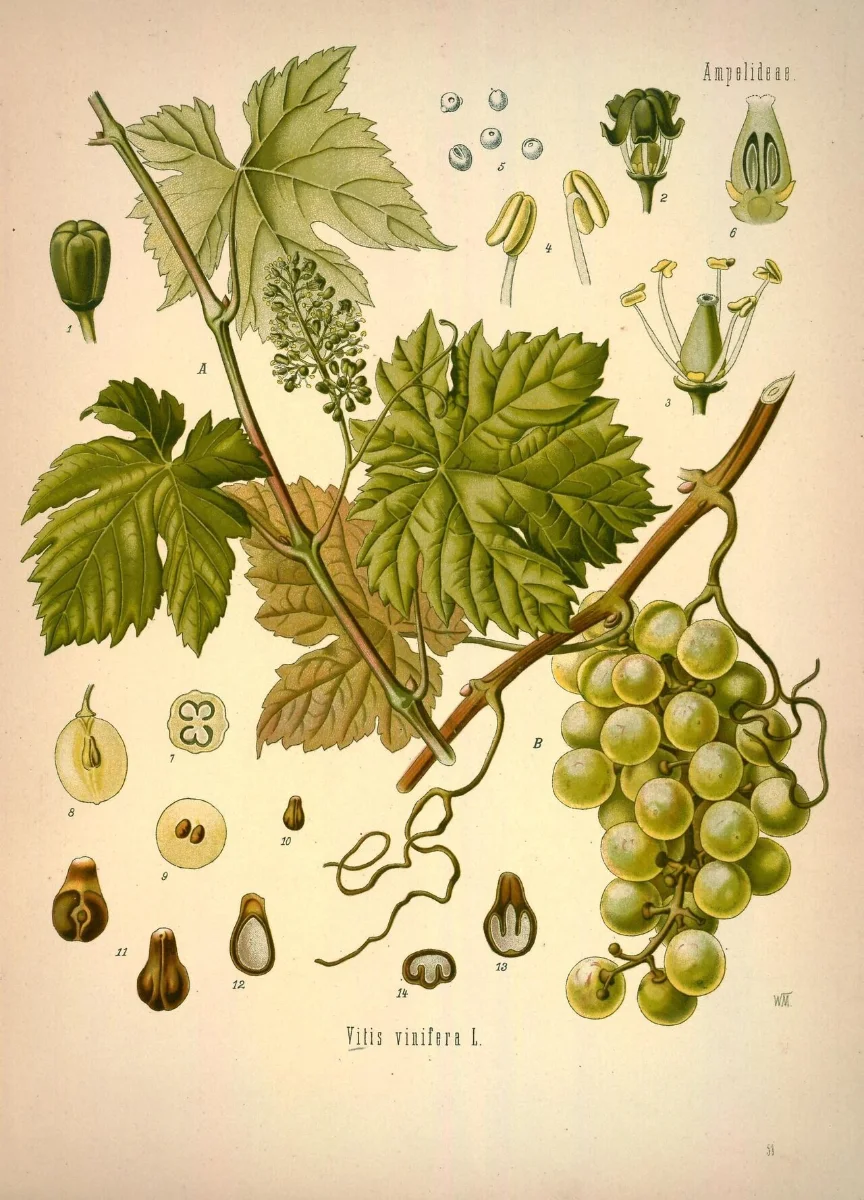
| Epigram on a bunch of grapes | A.P. 6.119 | Gow–Page 1 | a ripe cluster lies fallen under the golden colonnade of Aphrodite’s temple, no longer shaded by its mother vine |
| Epigram for the Nymphs | A.P. 6.189 | Gow–Page 2 | a prayer to river Nymphs to protect Cleonymus, who has set up wooden images of them under the pines |
| Mnemosyne | Athenaeus 11.491b | fr. 1 Powell | the infant Zeus reared secretly in a Cretan cave, fed ambrosia by doves and nectar by an eagle, whom he later honours |
The epigrams. The Greek Anthology that preserves them is the Palatine collection. Constantine Cephalas put it together in the tenth century CE. He drew much of it from Meleager’s Garland of about 100 BCE.[3] Meleager names Moero among his poets (A.P. 4.1.5–6).
Both epigrams combine the conventions of the genre with new images. The first plays funerary language (“you lie here”) off against a dedication, and it imagines the vine as the grape’s mother. The second evokes a sacred landscape of water and trees.[4] Whether the grape-cluster was real or painted is left open.[5]
Editions differ in places. In 6.189.1 Natoli et al., following Gow and Page, print Νύμφαι Ἁμαδρυάδες (Nymphai Hamadryades), “tree-nymphs”. Paton’s text, used on this site’s works page, has νύμφαι Ἀνιγριάδες (nymphai Anigriades), “nymphs of the river Anigrus”. The scansion is the same: Ἁ-μαδ-ρυ-ά-δες and Ἀ-νιγ-ρι-ά-δες both give ⏑ — ⏑ ⏑ — after the correpted -φαι.[6]
The Mnemosyne. Athenaeus quotes the ten hexameters in his discussion of the Pleiades. They are his evidence that Moero understood Homer’s “shy doves who carry ambrosia to Father Zeus” (Odyssey 12.62–63; our translation) as the Pleiades (Athenaeus 11.490e–491b).[7] Athenaeus adds that the critic Crates took her interpretation over and published it as his own.[8]
The poem’s title names Mnemosyne, the mother of the Muses. Its surviving story is the secret upbringing of Zeus on Crete. That is also the subject of Corinna’s song of Cithaeron.[9] Moero’s caretakers for the child, doves and an eagle, are her own. Callimachus’ Hymn to Zeus has the goat Amaltheia, bees and the nymphs of Dicte instead.[7]
The text quoted on this site is Kaibel’s. Natoli et al. differ in a few readings, none of which changes the scansion (ὁ δ’, ho d’, for Kaibel’s ὃ δ’ in line 2; γαμφηλῇς, gamphēlēis, “with its jaws”, for γαμφηλῇ in 6; αὔτως, autōs, for αὕτως, hautōs, in 9; εἰσιν, eisin, for εἰσι in 10).[10] Olson’s Loeb text has γαμφηλῇς too. It also has τῷ (tōi), “therefore”, for τόν (ton) in 7, and a capital in Πελειάσιν (Peleiasin) (9), which reads the birds as the Pleiades. These do not change the scansion either.[11]
Lost works. Parthenius summarised her Arai (“Curses”) for Cornelius Gallus. Pausanias and Eustathius cite other poems.[12]
Notes
- ^ Natoli et al. 2022, p. 108.
- ^ Natoli et al. 2022, pp. 109–115.
- ^ Natoli et al. 2022, p. 120.
- ^ Natoli et al. 2022, pp. 109–111.
- ^ Natoli et al. 2022, p. 109.
- ^ Natoli et al. 2022, pp. 111–112.
- ^ a b Natoli et al. 2022, p. 114.
- ^ Olson 2009, p. 385.
- ^ Natoli et al. 2022, p. 113.
- ^ Natoli et al. 2022, p. 112.
- ^ Olson 2009, pp. 386–388.
- ^ Natoli et al. 2022, pp. 108–109, 116 n. 3; see the Life tab.
About · 3 of 3
Elegiacs and epic hexameters
After the classical period three stichic metres came to dominate Greek poetry. A stichic metre repeats the same line, or the same pair of lines, with no stanzas. Moero’s two surviving metres are two of the three.[1] Her epigrams are in the elegiac couplet, and her epic Mnemosyne is in the dactylic hexameter.[2]
Two terms are needed here. When a word ending in a vowel stands before a word beginning with a vowel, the meeting is called hiatus. When a long vowel or diphthong is shortened before another vowel, that is called correption. Elegiacs are the usual metre of epigram in the later centuries. In the Hellenistic period their versification is generally stricter than that of the hexameter poets. Hiatus is restricted, and correption is used less.[3]
The epigrams. Each is a quatrain of two couplets. In each couplet a hexameter is followed by a “pentameter”: — ⏔ — ⏔ — | — ⏑ ⏑ — ⏑ ⏑ — ‖. Each half of the pentameter is called a hemiepes, and the two halves are always divided by word-end. Two shorts may be replaced by one long, which is called contraction. In the pentameter this is allowed only in the first half.[4] The epigram for the Nymphs begins (A.P. 6.189.1–2, Paton’s text):
νύμφαι Ἀνιγριάδες, ποταμοῦ κόραι, αἳ τάδε βένθη
ἀμβρόσιαι ῥοδέοις στείβετε ποσσὶν ἀεί,
nymphai Anigriades, potamou korai, hai tade benthē / ambrosiai rhodeois steibete possin aei,
“Nymphs of the Anigrus, daughters of the river, immortal ones, who tread these depths for ever with rosy feet,”
An elegiac couplet, wholly dactylic. Red: -φαι and -ραι, final diphthongs shortened before a vowel (epic correption); -νιγ-, closed by the γρ inside the word. The pentameter divides after ῥοδέοις.
Moero, A.P. 6.189.1–2, Paton’s text (Perseus)
synthetic ∿
The hexameter is wholly dactylic. The same holds for the line in Gow and Page’s text, which has Ἁμαδρυάδες in place of Ἀνιγριάδες with the same scansion.[5]
Twice a final diphthong stands before a vowel: νύμφαι before Ἀ-, and κόραι before αἳ. Natoli et al. call these hiatus.[5] In each the diphthong is shortened. This is “epic correption”, which occurs almost only in double-short rhythm.[6] In Ἀνιγριάδες the stop and liquid γρ inside the word close the syllable before them (-νιγ-ρι-). That is the normal treatment in epic.[7]
The third line is χαίρετε καὶ σῴζοιτε Κλεώνυμον (chairete kai sōizoite Kleōnymon), “greetings to you; keep Cleonymus safe”. Its second foot, καὶ σῴ-, is the only spondee in the poem outside the last foot of a line (the pentameters’ first halves are dactylic too). It may echo the emphasis of the prayer “and may you keep safe”.[8]
The Mnemosyne. The ten hexameters are epic in language as well as metre. Examples are ἀέξετο (aexeto), “grew”, the Homeric form of αὔξω (auxō); the iterative φορέεσκε (phoreeske), “used to carry”, of a type Homer often uses; and the pluperfect ἠείδει (ēeidei), “knew”.[9] The first line shows two of epic’s lengthenings (Athenaeus 11.491b, Kaibel’s text):
Ζεὺς δ’ ἄρ’ ἐνὶ Κρήτῃ τρέφετο μέγας, οὐδ’ ἄρα τίς νιν
Zeus d’ ar’ eni Krētēi trepheto megas, oud’ ara tis nin
“Great Zeus was reared in Crete, nor did anyone [of the blessed gods] know of him;”
Red: the final ι of ἐνί, lengthened before κρ-; the final ο of τρέφετο, lengthened before the continuant μ-. Both stand in the princeps, the long first position of a foot.
Moero, Mnemosyne 1 (Athenaeus 11.491b), Kaibel’s text
synthetic ∿
The final ι of ἐνί is long before the initial κρ of Κρήτῃ. The final ο of τρέφετο is long before the μ of μέγας. The first is lengthening by an initial stop and liquid. The second is lengthening by an initial continuant. A continuant is a consonant, such as μ, whose sound can be held. The long first position of a foot is called the princeps. Both kinds of lengthening are found almost only there, as here.[10]
Line 7 is τὸν καὶ νικήσας πατέρα Κρόνον εὐρύοπα Ζεύς (ton kai nīkēsas patera Kronon euryopa Zeus). It has a monosyllable at line-end, which is uncommon in epic. The phrase εὐρύοπα Ζεύς stands in the same place in Hesiod’s Theogony (514), and Natoli et al. take it as an allusion.[9] Here ρα is lengthened before Κρ- in the princeps of the fourth foot. The πα of εὐρύοπα is long before ζ, which counts as two consonants.[11]
τὸν καὶ νικήσας πατέρα Κρόνον εὐρύοπα Ζεὺς
ton kai nīkēsas patera Kronon euryopa Zeus
“And when wide-seeing Zeus had beaten his father Cronus,”
Red: -ρα, lengthened before Κρ- in the princeps of the fourth foot; -πα, long before ζ, which counts as two consonants; and the monosyllable Ζεύς at line-end, the Hesiodic phrase εὐρύοπα Ζεύς.
Moero, Mnemosyne 7 (Athenaeus 11.491b), Kaibel’s text
synthetic ∿
Both epigrams and the ten hexameters are scanned line by line on the works page.
Notes
- ^ West 1987, p. 68.
- ^ Natoli et al. 2022, pp. 110–112, 337.
- ^ West 1987, p. 80.
- ^ West 1987, p. 24.
- ^ a b Natoli et al. 2022, p. 111.
- ^ West 1987, p. 14.
- ^ West 1987, p. 16; Devine and Stephens 1994, p. 35.
- ^ Natoli et al. 2022, p. 112.
- ^ a b Natoli et al. 2022, p. 114.
- ^ West 1987, pp. 17, 22; Natoli et al. 2022, p. 113.
- ^ West 1987, p. 12 n. 1.
Moero, the two epigrams (A.P. 6.119, 6.189)
Synopsis
Moero (or Myro) of Byzantium was probably born in the last quarter of the fourth century BCE. She flourished about 300–280. The Suda says that she wrote epic, lyric and elegiac verse. Of it there survive two epigrams of four lines and ten hexameters of a poem called Mnemosyne. Later writers mention a hymn to Poseidon and a poem of Curses.[1] She was admired. Antipater of Thessalonica counted her among the nine women poets fed by the Muses, and Tatian says that the sculptor Cephisodotus made her statue.[2] Both epigrams use the conventions of dedication and of the epitaph in new ways. Each evokes a sacred place in nature.[3]
In the first, a ripe bunch of grapes lies fallen under the golden colonnade of Aphrodite’s temple, no longer shaded by its mother vine (A.P. 6.119). In the second, Cleonymus asks the Nymphs, daughters of the river, to protect him. In return he has set up wooden images of them under the pines (A.P. 6.189).[4]
Text and translation
The uninterrupted Greek with its English translation, line by line.
Show text and translation
κεῖσαι δὴ χρυσέαν ὑπὸ παστάδα τὰν Ἀφροδίτας
Moero of Byzantium · Greek Anthology 6.119, 6.189 (Gow–Page 1–2) · elegiac couplets · text of Paton (1917), via the Perseus Digital Library
How to read each line
A guide to the Greek, syllables, pitch marks and quantities.
Show the reading key
- Above each line: the line as the edition prints it, each word placed over its own syllables. The main row: the same Greek divided into metrical syllables, each written as it is pronounced. A consonant that closes a syllable is written with it (λόθ | ρο); an elided word is closed up with the next vowel (ν’ἀ); a final consonant carried into the next word is set with a thin space (ς ἰ). Wider gaps mark word-ends.
- Above the syllables: the pitch of each syllable, from the accents. Under them: the quantity of each syllable as it falls in the line, then the transliteration, syllable by syllable, with accented syllables in capitals.
- Under each line: a line-for-line translation. In the right margin of the scansion: the line type, its scheme, and its analysis into cola.
Key to the labels
The names, patterns and symbols used beside this poem.
Show the labels and symbols
The labels in the right margin of the scansion below name the line, its scheme, the feet as the line realises them, and the caesurae and diaereses (the named word-ends) that fall in it. In the scheme ⏔ is a biceps, two shorts that may be contracted to one long; ⏕ is a long that may be resolved into two shorts; × is an anceps, long or short. A click on any syllable highlights its metron or colon, or, with the switch, its foot.
| Label | Name and shape | What it is |
|---|---|---|
| hem1 | First hemiepes— ⏔ — ⏔ — | The first two and a half feet of the hexameter, up to the penthemimeral caesura; in the pentameter, its whole first half. |
| hem2 | Second half of the hexameter⏔ — ⏔ — ⏑ ⏑ — × | From the penthemimeral caesura to the line-end: the fifth foot is nearly always a dactyl, the sixth is — ×. |
| hemp | Second hemiepes— ⏑ ⏑ — ⏑ ⏑ × | The second half of the pentameter: two dactyls and a single syllable, with no contraction allowed. |
The traditional feet
| Foot and shape | Where |
|---|---|
| First foot: dactyl or spondee— ⏔ | Scheme positions 1–2. The biceps (⏑ ⏑) may be contracted to a single long, making a spondee. |
| Second foot: dactyl or spondee— ⏔ | Scheme positions 3–4. |
| Third foot: dactyl or spondee— ⏔ | Scheme positions 5–6. The penthemimeral caesura falls after its first syllable, the “trochaic” caesura after its second. |
| Fourth foot: dactyl or spondee— ⏔ | Scheme positions 7–8. Word-end at the end of this foot, when it is a dactyl, is the bucolic diaeresis (West’s “bucolic caesura”: word-end at the end of the fourth foot after an uncontracted biceps)[5]. |
| Fifth foot: dactyl— ⏑ ⏑ | Scheme positions 9–10. A spondee here (a “spondaic line”) is rare. |
| Sixth foot— × | Scheme positions 11–12: a long and the indifferent final syllable. |
| First foot: dactyl or spondee— ⏔ | Scheme positions 1–2 of the pentameter. |
| Second foot: dactyl or spondee— ⏔ | Scheme positions 3–4. |
| Half-foot before the diaeresis— | Scheme position 5: the long that closes the first hemiepes; word-end must follow. |
| Fourth foot: dactyl— ⏑ ⏑ | Scheme positions 6–8: no contraction after the diaeresis. |
| Fifth foot: dactyl— ⏑ ⏑ | Scheme positions 9–11. |
| Final syllable× | Scheme position 12. |
Scansion
Two dedicatory quatrains of the early Hellenistic period, scanned foot by foot: a fallen grape-cluster addressed like the dead, and a prayer to river Nymphs.
So now you rest in Aphrodite’s golden portico,
grape-bunch, swollen with Dionysus’ drops;
your mother will not wind her lovely vine-shoot round you any more
or grow her nectar-sweet leaf over your head.
Anigrian nymphs, daughters of the river, deathless ones who walk
these depths with rosy feet for evermore,
greetings to you; keep Cleonymus from harm, who dedicated to you,
divine ones, these fine wooden statues here beneath the pines.
Metre
- The couplet. Both epigrams are quatrains in elegiac couplets (App. B, p. 337)[6]: a hexameter followed by a “pentameter”, — ⏔ — ⏔ — | — ⏑ ⏑ — ⏑ ⏑ — ‖, two hemiepes always divided by word-end, contraction allowed only in the first half, the last position free.[7] Elegiacs are the standard metre of epigram.[8]
- A dactylic style. Moero’s floruit is put at roughly 300–280 BCE.[9] The two poems are strongly dactylic. In 6.189 the only contracted biceps is καὶ σῴ- in the third line, where Natoli et al. hear the emphasis of the prayer;[10] 6.119 has four, two in its hexameters (κεῖ σαι, τοι μᾱ́-) and one in the first half of each pentameter (the ῡ of Διωνῡ́σου, the κρᾱ- of κρᾱτός). The fifth foot of all four hexameters is a dactyl.
- Hellenistic practice. West describes Hellenistic elegiac versification as in general stricter than that of the hexameter poets: hiatus restricted, and less use of correption with words that fit the verse without it, those shaped (… ⏑ ⏑) — —; the place before a feminine caesura normally taken by a word that ends — ⏑ by nature; and, after the late third century BC, a preference at the pentameter’s division for a syllable with a long vowel or diphthong.[8] There is no hiatus here. There are three correptions:[11] φῡ́σει in 6.119.4, and νύμφαι and κόραι in 6.189.1, which Natoli et al. call hiatus;[12] νύμφαι, shaped — —, is the kind of word that West says Hellenistic poets less often shortened. The one feminine caesura (6.189.3) follows σῴζοιτε, which ends — ⏑ by nature. Three of the four pentameter divisions fall on a long vowel or diphthong (Διωνῡ́σου, ῥοδέοις, πιτύων); κρᾱτός (6.119.4) is long only before the ν that follows.
- Dialect and quantities. The epigrams have the long ᾱ of literary Doric where Attic has η (Natoli et al. 2022, App. A, p. 332): τᾱ́ν and μᾱ́τηρ are glossed as Attic τήν and μήτηρ;[13] ὔμμι is the Aeolic and epic form of ὑμῖν.[10] Where an α ι υ stands in an open syllable whose length the metre needs, the input marks the length that LSJ or Natoli’s gloss gives, so that the reason shown is the true one: χρυσέᾱν (the feminine), τᾱ́ν, Ἀφροδῑ́τας, Διωνῡ́σου, μᾱ́τηρ, φῡ́σει, κρᾱτός, κᾱλά.[14] The marks are not shown on the page.
- Prosody. As in epic: a stop + liquid inside a word normally makes position (βότ-ρυ, Ἀνιγ-ριάδες), but Ἀφροδίτας keeps its first syllable short before φρ, as the name must in dactylic verse, which would not otherwise admit it.[15] At the beginning of a word a stop + liquid may leave a short syllable short (περὶ κλῆμα, σῴζοιτε Κλεώνυμον).
- The text. Paton’s text (Loeb, vol. I, 1917) from the Perseus Digital Library, compared letter by letter with the XML; the Perseus file ends 6.119 with a raised point, printed here as a full stop. Natoli et al. print Gow and Page’s text:[13] identical in 6.119 apart from punctuation; in 6.189.1 Νύμφαι Ἁμαδρυάδες, “tree-Nymphs”, for Paton’s νύμφαι Ἀνιγριάδες, “Nymphs of the Anigrus”, with the same scansion.
Prosody, line by line
Every syllable, with the reason for its length. Quantities are read from the vowel where the spelling shows it, from the consonants that follow (“position”), from the accent where it tells, and from the metre where nothing else does. Editors’ notes on the text follow in the boxed paragraphs.
- 6.119.1
Line 6.119.1 · κεῖσαι δὴ χρυσέαν ὑπὸ παστάδα τὰν Ἀφροδίτας,
κεῖσαι δὴ χρυσέαν ὑπὸ παστάδα τὰν Ἀφροδίτας,
κεῖσαιδὴχρυσέανὑπὸπαστάδατὰνἈφροδίτας,spondee, dactyl, dactyl, dactyl, dactyl, — ×; penthemimeral caesura; bucolic diaeresis.
- 1 —κεῖεῖ is a diphthong, long by nature.
- 2 —σαιαι is a diphthong, long by nature; a single long contracts the two shorts of the biceps at position 2.
- 3 —δὴὴ is long by nature; the next word begins with χρ: the syllable is closed before it: long by position.
- 4 ⏑χρυυ is short by the metre (position 4 must be short); one of the two shorts of the biceps at position 4.
- 5 ⏑σέέ is short by nature; one of the two shorts of the biceps at position 4.
- 6 —ανᾱ is long (its length is not shown by the ordinary spelling).
- 7 ⏑ὑὑ is short by the metre (position 6 must be short); one of the two shorts of the biceps at position 6.
- 8 ⏑πὸὸ is short by nature; one of the two shorts of the biceps at position 6.
- 9 —πασα is a vowel of unknown length; closed by σ: long by position.
- 10 ⏑τάά is short by the metre (position 8 must be short); one of the two shorts of the biceps at position 8.
- 11 ⏑δαα is short by the metre (position 8 must be short); one of the two shorts of the biceps at position 8.
- 12 —τὰνᾱ̀ is long (its length is not shown by the ordinary spelling).
- 13 ⏑ἈἈ is a vowel of unknown length; φρ is carried whole into the next syllable, so this syllable stays open and short (correption before a stop + liquid cluster, as the metre needs); one of the two shorts of the biceps at position 10.
- 14 ⏑φροο is short by nature; one of the two shorts of the biceps at position 10.
- 15 —δίῑ́ is long (its length is not shown by the ordinary spelling).
- 16 ×τας,α is a vowel of unknown length; closed by ς: long by position; the position is anceps.
The first foot is a spondee (κεῖ σαι). χρυσέᾱν has three syllables here, with a short υ, and its feminine ᾱ fills the third princeps: penthemimeral caesura after it. LSJ notes that Homer pronounces χρυσέη, χρυσέην and the like as two syllables (synizesis, with long ῡ), while lyric poets, and sometimes epigrammatists, use a short υ (s.v. χρύσεος); read with synizesis, χρῡσέ‿ᾱν would also scan, with a spondee in the second foot. The article τᾱ́ν has the long ᾱ of Doric (Attic τήν)[16], and its ν is carried over to Ἀφροδῑ́τας, whose first syllable stays short before φρ[15] and whose ι is long.[17] Bucolic diaeresis after παστάδα. κεῖσαι … ὑπό, “you lie beneath”, is the language of epitaphs.[16]
- 6.119.2
Line 6.119.2 · βότρυ, Διωνύσου πληθόμενος σταγόνι·
βότρυ, Διωνύσου πληθόμενος σταγόνι·
βότρυ,Διωνύσουπληθόμενοςσταγόνι·dactyl, spondee, —, dactyl, dactyl, ×; diaeresis after the first hemiepes.
- 1 —βότό is short by nature; closed by τ before a liquid: stop + liquid makes position, as it usually does in epic.
- 2 ⏑ρυ,υ is short by the metre (position 2 must be short); one of the two shorts of the biceps at position 2.
- 3 ⏑Διι is short by the metre (position 2 must be short); one of the two shorts of the biceps at position 2.
- 4 —ωω is long by nature.
- 5 —νύῡ́ is long (its length is not shown by the ordinary spelling); a single long contracts the two shorts of the biceps at position 4.
- 6 —σουου is a diphthong, long by nature; the next word begins with πλ: the syllable is closed before it: long by position.
- 7 —πληη is long by nature.
- 8 ⏑θόό is short by nature.
- 9 ⏑μεε is short by nature.
- 10 —νοςο is short by nature; closed by ς: long by position.
- 11 ⏑σταα is short by the metre (position 10 must be short).
- 12 ⏑γόό is short by nature.
- 13 ×νι·ι is of unknown length; the position is anceps, so either scans.
In βότρυ the τρ inside the word makes position (βότ-ρυ), the normal epic treatment.[15] The second foot is contracted by the long ῡ of Διωνῡ́σου (Ep. Διώνῡσος)[18], whose last syllable, a diphthong, fills the position before the division. The second half is pure. The final short ι of σταγόνι stands at period-end.[19]
- 6.119.3
Line 6.119.3 · οὐδ’ ἔτι τοι μάτηρ ἐρατὸν περὶ κλῆμα βαλοῦσα
οὐδ’ ἔτι τοι μάτηρ ἐρατὸν περὶ κλῆμα βαλοῦσα
οὐδ’ἔτιτοιμάτηρἐρατὸνπερὶκλῆμαβαλοῦσαdactyl, spondee, dactyl, dactyl, dactyl, — ×; penthemimeral caesura; hephthemimeral caesura; bucolic diaeresis.
- 1 —οὐοὐ is a diphthong, long by nature.
- 2 ⏑δ’ἔἔ is short by nature; the apostrophe marks an elided vowel; the consonant before it joins this syllable; one of the two shorts of the biceps at position 2.
- 3 ⏑τιι is short by the metre (position 2 must be short); one of the two shorts of the biceps at position 2.
- 4 —τοιοι is a diphthong, long by nature.
- 5 —μάᾱ́ is long (its length is not shown by the ordinary spelling); a single long contracts the two shorts of the biceps at position 4.
- 6 —τηρη is long by nature.
- 7 ⏑ἐἐ is short by nature; one of the two shorts of the biceps at position 6.
- 8 ⏑ραα is short by the metre (position 6 must be short); one of the two shorts of the biceps at position 6.
- 9 —τὸνὸ is short by nature; closed by ν: long by position.
- 10 ⏑πεε is short by nature; one of the two shorts of the biceps at position 8.
- 11 ⏑ρὶὶ is a vowel of unknown length; the next word begins with κλ, a stop + liquid that does not make position here, so the syllable stays short; one of the two shorts of the biceps at position 8.
- 12 —κλῆῆ is long by nature.
- 13 ⏑μαα is short by the accent rule: circumflex on the penult requires a short final syllable; one of the two shorts of the biceps at position 10.
- 14 ⏑βαα is short by the metre (position 10 must be short); one of the two shorts of the biceps at position 10.
- 15 —λοῦοῦ is a diphthong, long by nature.
- 16 ×σαα is short by the accent rule: circumflex on the penult requires a short final syllable; the position is anceps.
The second foot is contracted (τοι μᾱ́-): μᾱ́τηρ is Doric for μήτηρ.[20] Penthemimeral caesura after μᾱ́τηρ, hephthemimeral after ἐρατόν, bucolic diaeresis after κλῆμα. περί keeps its short ι before the κλ of κλῆμα.[15] δ’ is elided. περὶ … βαλοῦσα is tmesis, the preverb separated from its verb.[12]
- 6.119.4
Line 6.119.4 · φύσει ὑπὲρ κρατὸς νεκτάρεον πέταλον.
φύσει ὑπὲρ κρατὸς νεκτάρεον πέταλον.
φύσειὑπὲρκρατὸςνεκτάρεονπέταλον.dactyl, spondee, —, dactyl, dactyl, ×; diaeresis after the first hemiepes.
- 1 —φύῡ́ is long (its length is not shown by the ordinary spelling).
- 2 ⏑σειει is a diphthong, long by nature; shortened before the vowel that begins the next word (epic correption), as the metre requires; one of the two shorts of the biceps at position 2.
- 3 ⏑ὑὑ is short by the metre (position 2 must be short); one of the two shorts of the biceps at position 2.
- 4 —πὲρὲ is short by nature; closed by ρ: long by position.
- 5 —κραᾱ is long (its length is not shown by the ordinary spelling); a single long contracts the two shorts of the biceps at position 4.
- 6 —τὸςὸ is short by nature; closed by ς: long by position.
- 7 —νεκε is short by nature; closed by κ: long by position.
- 8 ⏑τάά is short by the metre (position 7 must be short).
- 9 ⏑ρεε is short by nature.
- 10 —ονο is short by nature; closed by ν: long by position.
- 11 ⏑πέέ is short by nature.
- 12 ⏑ταα is short by the metre (position 11 must be short).
- 13 ×λον.ο is short by nature; closed by ν: long by position; the position is anceps.
φῡ́σει, future of φύω, has a long υ;[21] its diphthong ει is shortened before ὑπέρ (epic correption)[11]. The second foot is contracted by κρᾱτός, “head”, whose α is long;[22] its ς closes the syllable before νεκτάρεον, and word-end after it marks the division. In νεκτάρεον the ε and ο are separate syllables.
- 6.189.1
Line 6.189.1 · νύμφαι Ἀνιγριάδες, ποταμοῦ κόραι, αἳ τάδε βένθη
νύμφαι Ἀνιγριάδες, ποταμοῦ κόραι, αἳ τάδε βένθη
νύμφαιἈνιγριάδες,ποταμοῦκόραι,αἳτάδεβένθηdactyl, dactyl, dactyl, dactyl, dactyl, — ×; penthemimeral caesura; hephthemimeral caesura; bucolic diaeresis.
- 1 —νύμύ is a vowel of unknown length; closed by μ: long by position.
- 2 ⏑φαιαι is a diphthong, long by nature; shortened before the vowel that begins the next word (epic correption), as the metre requires; one of the two shorts of the biceps at position 2.
- 3 ⏑ἈἈ is short by the metre (position 2 must be short); one of the two shorts of the biceps at position 2.
- 4 —νιγι is a vowel of unknown length; closed by γ before a liquid: stop + liquid makes position, as it usually does in epic.
- 5 ⏑ριι is short by the metre (position 4 must be short); one of the two shorts of the biceps at position 4.
- 6 ⏑άά is short by the metre (position 4 must be short); one of the two shorts of the biceps at position 4.
- 7 —δες,ε is short by nature; closed by ς: long by position.
- 8 ⏑ποο is short by nature; one of the two shorts of the biceps at position 6.
- 9 ⏑ταα is short by the metre (position 6 must be short); one of the two shorts of the biceps at position 6.
- 10 —μοῦοῦ is a diphthong, long by nature.
- 11 ⏑κόό is short by nature; one of the two shorts of the biceps at position 8.
- 12 ⏑ραι,αι is a diphthong, long by nature; shortened before the vowel that begins the next word (epic correption), as the metre requires; one of the two shorts of the biceps at position 8.
- 13 —αἳαἳ is a diphthong, long by nature.
- 14 ⏑τάά is short by the metre (position 10 must be short); one of the two shorts of the biceps at position 10.
- 15 ⏑δεε is short by nature; one of the two shorts of the biceps at position 10.
- 16 —βένέ is short by nature; closed by ν: long by position.
- 17 ×θηη is long by nature; the position is anceps.
Five dactyls: Natoli et al. note that the line is dactylic throughout.[12] Two diphthongs are shortened before a vowel, νύμφαι before Ἀνιγριάδες and κόραι before αἵ: Natoli et al. call these two instances of hiatus;[12] in West’s terms they are epic correption.[11] In Ἀνιγριάδες the γρ inside the word makes position (-νιγ-ρι-). Penthemimeral caesura after Ἀνιγριάδες, hephthemimeral after ποταμοῦ, bucolic diaeresis after κόραι.
- 6.189.2
Line 6.189.2 · ἀμβρόσιαι ῥοδέοις στείβετε ποσσὶν ἀεί,
ἀμβρόσιαι ῥοδέοις στείβετε ποσσὶν ἀεί,
ἀμβρόσιαιῥοδέοιςστείβετεποσσὶν ἀεί,dactyl, dactyl, —, dactyl, dactyl, ×; diaeresis after the first hemiepes.
- 1 —ἀμἀ is a vowel of unknown length; closed by μ: long by position.
- 2 ⏑βρόό is short by nature; one of the two shorts of the biceps at position 2.
- 3 ⏑σιι is short by the metre (position 2 must be short); one of the two shorts of the biceps at position 2.
- 4 —αιαι is a diphthong, long by nature.
- 5 ⏑ῥοο is short by nature; one of the two shorts of the biceps at position 4.
- 6 ⏑δέέ is short by nature; one of the two shorts of the biceps at position 4.
- 7 —οιςοι is a diphthong, long by nature; closed by ς: long by position.
- 8 —στείεί is a diphthong, long by nature.
- 9 ⏑βεε is short by nature.
- 10 ⏑τεε is short by nature.
- 11 —ποσο is short by nature; closed by σ: long by position.
- 12 ⏑σὶὶ is short by the metre (position 10 must be short).
- 13 ⏑ν ἀἀ is short by the metre (position 11 must be short); the first consonant belongs to the previous word and is carried over to this vowel.
- 14 ×εί,εί is a diphthong, long by nature; the position is anceps.
Two dactyls before the division (ἀμ βρό σι, αι ῥο δέ), which follows ῥοδέοις. In ἀμβρόσιαι the ι and αι are separate syllables. The ν of ποσσίν is carried over to ἀεί, whose first syllable is short.
- 6.189.3
Line 6.189.3 · χαίρετε καὶ σῴζοιτε Κλεώνυμον, ὃς τάδε καλὰ
χαίρετε καὶ σῴζοιτε Κλεώνυμον, ὃς τάδε καλὰ
χαίρετεκαὶσῴζοιτεΚλεώνυμο,ν ὃςτάδεκαλὰdactyl, spondee, dactyl, dactyl, dactyl, — ×; caesura after the third trochee; bucolic diaeresis.
- 1 —χαίαί is a diphthong, long by nature.
- 2 ⏑ρεε is short by nature; one of the two shorts of the biceps at position 2.
- 3 ⏑τεε is short by nature; one of the two shorts of the biceps at position 2.
- 4 —καὶαὶ is a diphthong, long by nature.
- 5 —σῴῴ is long by nature; ζ is a double consonant (two sounds) and closes the syllable: long by position; a single long contracts the two shorts of the biceps at position 4.
- 6 —ζοιοι is a diphthong, long by nature.
- 7 ⏑τεε is short by nature; the next word begins with Κλ, a stop + liquid that does not make position here, so the syllable stays short; one of the two shorts of the biceps at position 6.
- 8 ⏑Κλεε is short by nature; one of the two shorts of the biceps at position 6.
- 9 —ώώ is long by nature.
- 10 ⏑νυυ is short by the metre (position 8 must be short); one of the two shorts of the biceps at position 8.
- 11 ⏑μο,ο is short by nature; one of the two shorts of the biceps at position 8.
- 12 —ν ὃςὃ is short by nature; closed by ς: long by position; the first consonant belongs to the previous word and is carried over to this vowel.
- 13 ⏑τάά is short by the metre (position 10 must be short); one of the two shorts of the biceps at position 10.
- 14 ⏑δεε is short by nature; one of the two shorts of the biceps at position 10.
- 15 —καᾱ is long (its length is not shown by the ordinary spelling).
- 16 ×λὰὰ is of unknown length; the position is anceps, so either scans.
The second foot, καὶ σῴ-, is the only spondee in the poem outside a line’s last foot.[10] Feminine caesura after σῴζοιτε, a word that ends — ⏑ by nature; bucolic diaeresis after Κλεώνυμον, whose ν is carried over to ὅς. The ε of σῴζοιτε stays short before the Κλ of Κλεώνυμον.[15] The last word, κᾱλά, has a long α: in elegy and epigram the α of καλός may be short or long, “the latter usually in thesi”, i.e. in the long position.[23]
- 6.189.4
Line 6.189.4 · εἵσαθ’ ὑπαὶ πιτύων ὔμμι, θεαί, ξόανα.
εἵσαθ’ ὑπαὶ πιτύων ὔμμι, θεαί, ξόανα.
εἵσαθ’ὑπαὶπιτύωνὔμμι,θεαί,ξόανα.dactyl, dactyl, —, dactyl, dactyl, ×; diaeresis after the first hemiepes.
- 1 —εἵεἵ is a diphthong, long by nature.
- 2 ⏑σαα is short by the metre (position 2 must be short); one of the two shorts of the biceps at position 2.
- 3 ⏑θ’ὑὑ is short by the metre (position 2 must be short); the apostrophe marks an elided vowel; the consonant before it joins this syllable; one of the two shorts of the biceps at position 2.
- 4 —παὶαὶ is a diphthong, long by nature.
- 5 ⏑πιι is short by the metre (position 4 must be short); one of the two shorts of the biceps at position 4.
- 6 ⏑τύύ is short by the metre (position 4 must be short); one of the two shorts of the biceps at position 4.
- 7 —ωνω is long by nature.
- 8 —ὔμὔ is a vowel of unknown length; closed by μ: long by position.
- 9 ⏑μι,ι is short by the metre (position 7 must be short).
- 10 ⏑θεε is short by nature.
- 11 —αί,αί is a diphthong, long by nature; the next word begins with the double consonant ξ: the syllable is closed before it: long by position.
- 12 ⏑ξόό is short by nature.
- 13 ⏑αα is short by the metre (position 11 must be short).
- 14 ×να.α is short by the accent rule: acute on the antepenult requires a short final syllable; the position is anceps.
Notes
- ^ Natoli et al. 2022, pp. 108–109.
- ^ Natoli et al. 2022, p. 108.
- ^ Natoli et al. 2022, p. 109.
- ^ Natoli et al. 2022, pp. 110–112.
- ^ West 1987, p. 21.
- ^ Natoli et al. 2022, pp. 109–111.
- ^ West 1987, p. 24.
- ^ a b West 1987, p. 80.
- ^ Natoli et al. 2022, p. 108.
- ^ a b c d e Natoli et al. 2022, p. 112.
- ^ a b c West 1987, p. 14.
- ^ a b c d Natoli et al. 2022, p. 111.
- ^ a b Natoli et al. 2022, pp. 110–111.
- ^ LSJ s.vv. Ἀφροδίτη, Διόνυσος, μήτηρ, φύω, κράς, καλός.
- ^ a b c d e West 1987, p. 16.
- ^ a b Natoli et al. 2022, p. 110.
- ^ LSJ.
- ^ LSJ s.v. Διόνυσος.
- ^ a b West 1987, pp. 4, 24.
- ^ Natoli et al. 2022, p. 111; LSJ s.v. μήτηρ.
- ^ LSJ s.v.
- ^ LSJ s.v. κράς: gen. κρᾱτός.
- ^ LSJ s.v. καλός, Quantity.
Text and sources
- Text: The Greek Anthology, ed. W. R. Paton (Loeb Classical Library, London 1917), vol. I, from the Perseus Digital Library (urn:cts:greekLit:tlg7000.tlg001.perseus-grc6), licensed CC BY-SA 4.0 as stated in the TEI header.
- Gow and Page’s text, glosses and notes: B. A. Natoli, A. Pitts and J. P. Hallett, Ancient Women Writers of Greece and Rome (Routledge 2022), ch. 4, pp. 108–112; App. A, p. 332; App. B, p. 337.
- Rules: M. L. West, Introduction to Greek Metre (Oxford 1987), pp. 4, 14, 16, 21 (the bucolic caesura), 24, 80, checked against the page images.
- Quantities: LSJ (Perseus Digital Library, CC BY-SA), s.vv. Ἀφροδίτη, Διόνυσος, καλός, κράς, μήτηρ, φύω, χρύσεος.
Quotations from copyrighted works are not covered by this page’s licence.
Moero, Mnemosyne (Athenaeus 11.491b)
Synopsis
Moero (or Myro) of Byzantium was probably born in the last quarter of the fourth century BCE. She flourished about 300–280. The Suda says that she wrote epic, lyric and elegiac verse. Of it there survive two epigrams of four lines and ten hexameters of a poem called Mnemosyne. Later writers mention a hymn to Poseidon and a poem of Curses.[1] She was admired. Antipater of Thessalonica counted her among the nine women poets fed by the Muses, and Tatian says that the sculptor Cephisodotus made her statue.[2] The Mnemosyne is named after the mother of the Muses. It was an epic, or a short epyllion (a “little epic”). Its surviving lines tell how the infant Zeus was reared in secret in a cave on Crete. Doves fed him with ambrosia and an eagle with nectar, and later he honoured them both.[3]
Athenaeus quotes the ten lines while explaining why poets call the Pleiades “doves” (Πελειάδες). In Moero’s poem the doves who fed Zeus are honoured as the messengers of summer and winter (Athenaeus 11.490e–491b).[4]
Text and translation
The uninterrupted Greek with its English translation, line by line.
Show text and translation
Ζεὺς δ’ ἄρ’ ἐνὶ Κρήτῃ τρέφετο μέγας
Moero of Byzantium · Mnemosyne, quoted by Athenaeus 11.491b · dactylic hexameters · text of Kaibel (1887–1892), via the Perseus Digital Library
How to read each line
A guide to the Greek, syllables, pitch marks and quantities.
Show the reading key
- Above each line: the line as the edition prints it, each word placed over its own syllables. The main row: the same Greek divided into metrical syllables, each written as it is pronounced. A consonant that closes a syllable is written with it (λόθ | ρο); an elided word is closed up with the next vowel (ν’ἀ); a final consonant carried into the next word is set with a thin space (ς ἰ). Wider gaps mark word-ends.
- Above the syllables: the pitch of each syllable, from the accents. Under them: the quantity of each syllable as it falls in the line, then the transliteration, syllable by syllable, with accented syllables in capitals.
- Under each line: a line-for-line translation. In the right margin of the scansion: the line type, its scheme, and its analysis into cola.
Key to the labels
The names, patterns and symbols used beside this poem.
Show the labels and symbols
The labels in the right margin of the scansion below name the line, its scheme, the feet as the line realises them, and the caesurae and diaereses (the named word-ends) that fall in it. In the scheme ⏔ is a biceps, two shorts that may be contracted to one long; ⏕ is a long that may be resolved into two shorts; × is an anceps, long or short. A click on any syllable highlights its metron or colon, or, with the switch, its foot.
| Label | Name and shape | What it is |
|---|---|---|
| hem1 | First hemiepes— ⏔ — ⏔ — | The first two and a half feet of the hexameter, up to the penthemimeral caesura; in the pentameter, its whole first half. |
| hem2 | Second half of the hexameter⏔ — ⏔ — ⏑ ⏑ — × | From the penthemimeral caesura to the line-end: the fifth foot is nearly always a dactyl, the sixth is — ×. |
The traditional feet
| Foot and shape | Where |
|---|---|
| First foot: dactyl or spondee— ⏔ | Scheme positions 1–2. The biceps (⏑ ⏑) may be contracted to a single long, making a spondee. |
| Second foot: dactyl or spondee— ⏔ | Scheme positions 3–4. |
| Third foot: dactyl or spondee— ⏔ | Scheme positions 5–6. The penthemimeral caesura falls after its first syllable, the “trochaic” caesura after its second. |
| Fourth foot: dactyl or spondee— ⏔ | Scheme positions 7–8. Word-end at the end of this foot, when it is a dactyl, is the bucolic diaeresis (West’s “bucolic caesura”: word-end at the end of the fourth foot after an uncontracted biceps)[5]. |
| Fifth foot: dactyl— ⏑ ⏑ | Scheme positions 9–10. A spondee here (a “spondaic line”) is rare. |
| Sixth foot— × | Scheme positions 11–12: a long and the indifferent final syllable. |
Scansion
Ten hexameters on the infant Zeus in his Cretan cave, fed ambrosia by doves and nectar by an eagle: epic language, epic lengthenings, and an ending borrowed from Hesiod.
So great Zeus was brought up in Crete, and not one
of the blessed gods knew of him; and he grew strong in every limb.
The trembling doves fed him in the holy grotto,
fetching ambrosia from Ocean’s currents,
and a great eagle, always scooping nectar out of a rock,
used to bring it in his beak for Zeus the wise to drink.
And when wide-seeing Zeus had beaten his father Cronus,
he made the eagle deathless and gave him a home in the sky.
In just the same way he gave honour to the trembling doves,
the birds that announce, you know, both summer and winter.
Metre
- The hexameter. — ⏔ — ⏔ — ⏔ — ⏔ — ⏔ — ×: six feet, the biceps of the first five contractible, least often the fifth; a caesura normally in the third foot, after its long (penthemimeral) or between its shorts (feminine), or else after the fourth long (hephthemimeral).[6] The excerpt is from a lost epic or epyllion.[7] Every fifth foot here is a dactyl. Each line has a third-foot caesura, five (lines 1, 2, 5, 7, 10) after the long and five between the shorts, and there is word-end after the fourth foot (the bucolic caesura)[5] in every line but 3 and 4.
- Epic prosody. The lines show epic’s lengthenings in the princeps:[8] a final short vowel before an initial stop + liquid (ἐνὶ Κρήτῃ, ἄρα τρήρωνες, πατέρα Κρόνον) or a double consonant (ὑπὸ ζαθέῳ, εὐρύοπα Ζεύς), before the initial continuant μ (τρέφετο μέγας, which Natoli et al. note, p. 113), and the metrical lengthening of ἀθάνατον. Long final vowels and diphthongs are shortened before a vowel four times (epic correption)[9], and a stop + liquid inside a word makes position (πέτ-ρης, line 5)[10].
- Epic language. Natoli et al. point to ἀέξετο, the Homeric form of αὔξω, the iterative φορέεσκε, the pluperfect ἠείδει, and Homeric echoes: the doves that bring ambrosia to Zeus (Od. 12.62–63), Hephaestus drawing nectar (Il. 1.598), and Zeus reared in Crete (Hesiod, Theogony 480).[11] The texts of these lines were checked in the Perseus Digital Library.
- Editorial marks. Where LSJ marks a vowel long that the spelling does not show, the input marks it so that the reason given for the syllable is the true one: νῑκήσας, τῑμήν.[12] The lengthened syllables τρέφετο (before μ) and ἀθάνατον are marked as lengthened, not as long vowels. The marks are not shown on the page.
- The text. Kaibel’s Teubner text of Athenaeus (1887–1892), from the Perseus Digital Library, compared letter by letter with the XML. Natoli et al. print the same lines with four small differences: ὁ δ’ for ὃ δ’ (2), γαμφηλῇς for γαμφηλῇ (6), αὔτως for αὕτως (9) and εἰσιν for εἰσι (10);[13] none changes the scansion.
- Why Athenaeus quotes it. Athenaeus discusses the poets’ habit of calling the Pleiades Πέλειαι or Πελειάδες, “doves”, and says that Moero of Byzantium was the first to understand Homer’s meaning rightly, saying in her Mnemosyne that it was the Pleiades that brought ambrosia to Zeus; the critic Crates, he adds, appropriated the credit (Athenaeus 11.490e–491b, Kaibel). The last line makes the doves the messengers of summer and winter, the role of the constellation.[14]
- Olson’s text. Kaibel’s text has been compared with S. D. Olson’s Loeb Athenaeus, which identifies the lines as Moero fr. 1 Powell.[15] Olson prints γαμφηλῇς in 6, τῷ, “therefore”, for τόν in 7, and Πελειάσιν with a capital in 9, taking the birds as the Pleiades, as Athenaeus’ argument requires; none of these changes the scansion.[16]
Prosody, line by line
Every syllable, with the reason for its length. Quantities are read from the vowel where the spelling shows it, from the consonants that follow (“position”), from the accent where it tells, and from the metre where nothing else does. Editors’ notes on the text follow in the boxed paragraphs.
- 1
Line 1 · Ζεὺς δ’ ἄρ’ ἐνὶ Κρήτῃ τρέφετο μέγας, οὐδ’ ἄρα τίς νιν
Ζεὺς δ’ ἄρ’ ἐνὶ Κρήτῃ τρέφετο μέγας, οὐδ’ ἄρα τίς νιν
Ζεὺςδ’ἄρ’ἐνὶΚρήτῃτρέφετομέγα,ς οὐδ’ἄρατίςνινdactyl, spondee, dactyl, dactyl, dactyl, — ×; penthemimeral caesura; hephthemimeral caesura; bucolic diaeresis.
- 1 —Ζεὺςεὺ is a diphthong, long by nature; closed by ς: long by position.
- 2 ⏑δ’ἄἄ is short by the metre (position 2 must be short); the apostrophe marks an elided vowel; the consonant before it joins this syllable; one of the two shorts of the biceps at position 2.
- 3 ⏑ρ’ἐἐ is short by nature; the apostrophe marks an elided vowel; the consonant before it joins this syllable; one of the two shorts of the biceps at position 2.
- 4 —νὶὶ is a vowel of unknown length; the next word begins with Κρ: the syllable is closed before it: long by position.
- 5 —Κρήή is long by nature; a single long contracts the two shorts of the biceps at position 4.
- 6 —τῃῃ is long by nature; the next word begins with τρ: the syllable is closed before it: long by position.
- 7 ⏑τρέέ is short by nature; one of the two shorts of the biceps at position 6.
- 8 ⏑φεε is short by nature; one of the two shorts of the biceps at position 6.
- 9 —τοο is short by nature, but the syllable is long before the initial μ of the next word: an initial continuant could be prolonged so as to add length to the syllable before it.[17]
- 10 ⏑μέέ is short by nature; one of the two shorts of the biceps at position 8.
- 11 ⏑γα,α is short by the metre (position 8 must be short); one of the two shorts of the biceps at position 8.
- 12 —ς οὐοὐ is a diphthong, long by nature; the first consonant belongs to the previous word and is carried over to this vowel.
- 13 ⏑δ’ἄἄ is short by the metre (position 10 must be short); the apostrophe marks an elided vowel; the consonant before it joins this syllable; one of the two shorts of the biceps at position 10.
- 14 ⏑ραα is short by the metre (position 10 must be short); one of the two shorts of the biceps at position 10.
- 15 —τίςί is a vowel of unknown length; closed by ς: long by position.
- 16 ×νινι is a vowel of unknown length; closed by ν: long by position; the position is anceps.
The second foot is contracted (νὶ Κρή). The final ι of ἐνί is long before the initial Κρ of Κρήτῃ, and the final ο of τρέφετο before the initial μ of μέγας: lengthening by an initial stop + liquid and by an initial continuant, both found almost only in the princeps, as here.[18] δ’ and ἄρ’ are elided. Penthemimeral caesura after Κρήτῃ, hephthemimeral after τρέφετο, bucolic caesura after μέγας. Natoli et al. compare Hesiod, Theogony 480, Κρήτῃ ἐν εὐρείῃ τραφέμεν.[19]
- 2
Line 2 · ἠείδει μακάρων· ὃ δ’ ἀέξετο πᾶσι μέλεσσι.
ἠείδει μακάρων· ὃ δ’ ἀέξετο πᾶσι μέλεσσι.
ἠείδειμακάρων·ὃδ’ἀέξετοπᾶσιμέλεσσι.spondee, dactyl, dactyl, dactyl, dactyl, — ×; penthemimeral caesura; caesura after the third trochee; bucolic diaeresis.
- 1 —ἠἠ is long by nature.
- 2 —είεί is a diphthong, long by nature; a single long contracts the two shorts of the biceps at position 2.
- 3 —δειει is a diphthong, long by nature.
- 4 ⏑μαα is short by the metre (position 4 must be short); one of the two shorts of the biceps at position 4.
- 5 ⏑κάά is short by the metre (position 4 must be short); one of the two shorts of the biceps at position 4.
- 6 —ρων·ω is long by nature.
- 7 ⏑ὃὃ is short by nature; one of the two shorts of the biceps at position 6.
- 8 ⏑δ’ἀἀ is short by the metre (position 6 must be short); the apostrophe marks an elided vowel; the consonant before it joins this syllable; one of the two shorts of the biceps at position 6.
- 9 —έέ is short by nature; ξ is a double consonant (two sounds) and closes the syllable: long by position.
- 10 ⏑ξεε is short by nature; one of the two shorts of the biceps at position 8.
- 11 ⏑τοο is short by nature; one of the two shorts of the biceps at position 8.
- 12 —πᾶᾶ carries a circumflex, so it is long.
- 13 ⏑σιι is short by the accent rule: circumflex on the penult requires a short final syllable; one of the two shorts of the biceps at position 10.
- 14 ⏑μέέ is short by nature; one of the two shorts of the biceps at position 10.
- 15 —λεσε is short by nature; closed by σ: long by position.
- 16 ×σι.ι is short by the accent rule: acute on the antepenult requires a short final syllable; the position is anceps.
The first foot is a spondee: ἠείδει has three syllables, ἠ-εί-δει, the pluperfect of οἶδα, used as an imperfect.[19] Penthemimeral caesura after μακάρων, at the sense-pause; there is also word-end after ὃ δ’, between the shorts of the third foot. ἀέξετο is the Homeric form of αὔξω.[19] Kaibel prints ὃ δ’, Natoli et al. ὁ δ’.[13]
- 3
Line 3 · τὸν μὲν ἄρα τρήρωνες ὑπὸ ζαθέῳ τράφον ἄντρῳ
τὸν μὲν ἄρα τρήρωνες ὑπὸ ζαθέῳ τράφον ἄντρῳ
τὸνμὲν ἄρατρήρωνες ὑπὸζαθέῳτράφον ἄντρῳdactyl, spondee, dactyl, dactyl, dactyl, — ×; caesura after the third trochee; hephthemimeral caesura.
- 1 —τὸνὸ is short by nature; closed by ν: long by position.
- 2 ⏑μὲὲ is short by nature; one of the two shorts of the biceps at position 2.
- 3 ⏑ν ἄἄ is short by the metre (position 2 must be short); the first consonant belongs to the previous word and is carried over to this vowel; one of the two shorts of the biceps at position 2.
- 4 —ραα is a vowel of unknown length; the next word begins with τρ: the syllable is closed before it: long by position.
- 5 —τρήή is long by nature; a single long contracts the two shorts of the biceps at position 4.
- 6 —ρωω is long by nature.
- 7 ⏑νεε is short by nature; one of the two shorts of the biceps at position 6.
- 8 ⏑ς ὑὑ is short by the metre (position 6 must be short); the first consonant belongs to the previous word and is carried over to this vowel; one of the two shorts of the biceps at position 6.
- 9 —πὸὸ is short by nature; the next word begins with the double consonant ζ: the syllable is closed before it: long by position.
- 10 ⏑ζαα is short by the metre (position 8 must be short); one of the two shorts of the biceps at position 8.
- 11 ⏑θέέ is short by nature; one of the two shorts of the biceps at position 8.
- 12 —ῳῳ is long by nature; the next word begins with τρ: the syllable is closed before it: long by position.
- 13 ⏑τράά is short by the metre (position 10 must be short); one of the two shorts of the biceps at position 10.
- 14 ⏑φοο is short by nature; one of the two shorts of the biceps at position 10.
- 15 —ν ἄνἄ is a vowel of unknown length; closed by ν: long by position; the first consonant belongs to the previous word and is carried over to this vowel.
- 16 ×τρῳῳ is long by nature; the position is anceps.
The second foot is contracted (ρα τρή): the final α of ἄρα is long before the τρ of τρήρωνες,[20] and the ο of ὑπό before the double consonant ζ of ζαθέῳ (ζ counts as two consonants)[21]. Feminine caesura after τρήρωνες. The hephthemimeral word-end that the page reports after ὑπό is not a real one, since a preposition counts with the word after it.[5] τρήρωνες, “timorous”, is Homer’s epithet of doves (Od. 12.63)[19]. The ν of μέν and of τράφον is carried over to the next word.[22]
- 4
Line 4 · ἀμβροσίην φορέουσαι ἀπ’ Ὠκεανοῖο ῥοάων·
ἀμβροσίην φορέουσαι ἀπ’ Ὠκεανοῖο ῥοάων·
ἀμβροσίηνφορέουσαιἀπ’Ὠκεανοῖοῥοάων·dactyl, dactyl, dactyl, dactyl, dactyl, — ×; caesura after the third trochee.
- 1 —ἀμἀ is a vowel of unknown length; closed by μ: long by position.
- 2 ⏑βροο is short by nature; one of the two shorts of the biceps at position 2.
- 3 ⏑σίί is short by the metre (position 2 must be short); one of the two shorts of the biceps at position 2.
- 4 —ηνη is long by nature; closed by ν: long by position.
- 5 ⏑φοο is short by nature; one of the two shorts of the biceps at position 4.
- 6 ⏑ρέέ is short by nature; one of the two shorts of the biceps at position 4.
- 7 —ουου is a diphthong, long by nature.
- 8 ⏑σαιαι is a diphthong, long by nature; shortened before the vowel that begins the next word (epic correption), as the metre requires; one of the two shorts of the biceps at position 6.
- 9 ⏑ἀἀ is short by the metre (position 6 must be short); one of the two shorts of the biceps at position 6.
- 10 —π’ὨὨ is long by nature; the apostrophe marks an elided vowel; the consonant before it joins this syllable.
- 11 ⏑κεε is short by nature; one of the two shorts of the biceps at position 8.
- 12 ⏑αα is short by the metre (position 8 must be short); one of the two shorts of the biceps at position 8.
- 13 —νοῖοῖ is a diphthong, long by nature.
- 14 ⏑οο is short by nature; one of the two shorts of the biceps at position 10.
- 15 ⏑ῥοο is short by nature; one of the two shorts of the biceps at position 10.
- 16 —άά is long by the metre (position 11 must be long).
- 17 ×ων·ω is long by nature; closed by ν: long by position; the position is anceps.
Five dactyls. Feminine caesura after φορέουσαι, whose final diphthong is shortened before ἀπ’ (epic correption)[9]. ἀπ’ is elided before Ὠκεανοῖο. The ο of Ὠκεανοῖο stays short before the initial ῥ of ῥοάων, before which a short syllable may also be lengthened.[23] ἐπ’ Ὠκεανοῖο ῥοάων is a Homeric line-end;[24] Natoli et al. compare the doves of Od. 12.62–63, which carry ambrosia to Father Zeus.[19]
- 5
Line 5 · νέκταρ δ’ ἐκ πέτρης μέγας αἰετὸς αἰὲν ἀφύσσων
νέκταρ δ’ ἐκ πέτρης μέγας αἰετὸς αἰὲν ἀφύσσων
νέκταρδ’ἐκπέτρηςμέγας αἰετὸς αἰὲν ἀφύσσωνspondee, spondee, dactyl, dactyl, dactyl, — ×; penthemimeral caesura; bucolic diaeresis.
- 1 —νέκέ is short by nature; closed by κ: long by position.
- 2 —ταρα is a vowel of unknown length; closed by ρ: long by position; a single long contracts the two shorts of the biceps at position 2.
- 3 —δ’ἐκἐ is short by nature; closed by κ: long by position; the apostrophe marks an elided vowel; the consonant before it joins this syllable.
- 4 —πέτέ is short by nature; closed by τ before a liquid: stop + liquid makes position, as it usually does in epic; a single long contracts the two shorts of the biceps at position 4.
- 5 —ρηςη is long by nature; closed by ς: long by position.
- 6 ⏑μέέ is short by nature; one of the two shorts of the biceps at position 6.
- 7 ⏑γαα is short by the metre (position 6 must be short); one of the two shorts of the biceps at position 6.
- 8 —ς αἰαἰ is a diphthong, long by nature; the first consonant belongs to the previous word and is carried over to this vowel.
- 9 ⏑εε is short by nature; one of the two shorts of the biceps at position 8.
- 10 ⏑τὸὸ is short by nature; one of the two shorts of the biceps at position 8.
- 11 —ς αἰαἰ is a diphthong, long by nature; the first consonant belongs to the previous word and is carried over to this vowel.
- 12 ⏑ὲὲ is short by nature; one of the two shorts of the biceps at position 10.
- 13 ⏑ν ἀἀ is short by the metre (position 10 must be short); the first consonant belongs to the previous word and is carried over to this vowel; one of the two shorts of the biceps at position 10.
- 14 —φύσύ is a vowel of unknown length; closed by σ: long by position.
- 15 ×σωνω is long by nature; closed by ν: long by position; the position is anceps.
Spondees in the first two feet (νέκ ταρ, δ’ἐκ πέτ). In πέτρης the τρ inside the word makes position, as it normally does in epic.[10] Penthemimeral caesura after πέτρης (ἐκ, a preposition, goes with it); bucolic caesura after αἰετός. The ς of μέγας and of αἰετός is carried over.[22] Natoli et al. compare Il. 1.598, οἰνοχόει γλυκὺ νέκταρ ἀπὸ κρητῆρος ἀφύσσων, with the same participle at line-end.[19]
- 6
Line 6 · γαμφηλῇ φορέεσκε ποτὸν Διὶ μητιόεντι.
γαμφηλῇ φορέεσκε ποτὸν Διὶ μητιόεντι.
γαμφηλῇφορέεσκεποτὸνΔιὶμητιόεντι.spondee, dactyl, dactyl, dactyl, dactyl, — ×; caesura after the third trochee; hephthemimeral caesura; bucolic diaeresis.
- 1 —γαμα is a vowel of unknown length; closed by μ: long by position.
- 2 —φηη is long by nature; a single long contracts the two shorts of the biceps at position 2.
- 3 —λῇῇ is long by nature.
- 4 ⏑φοο is short by nature; one of the two shorts of the biceps at position 4.
- 5 ⏑ρέέ is short by nature; one of the two shorts of the biceps at position 4.
- 6 —εσε is short by nature; closed by σ: long by position.
- 7 ⏑κεε is short by nature; one of the two shorts of the biceps at position 6.
- 8 ⏑ποο is short by nature; one of the two shorts of the biceps at position 6.
- 9 —τὸνὸ is short by nature; closed by ν: long by position.
- 10 ⏑Διι is short by the metre (position 8 must be short); one of the two shorts of the biceps at position 8.
- 11 ⏑ὶὶ is short by the metre (position 8 must be short); one of the two shorts of the biceps at position 8.
- 12 —μηη is long by nature.
- 13 ⏑τιι is short by the metre (position 10 must be short); one of the two shorts of the biceps at position 10.
- 14 ⏑όό is short by nature; one of the two shorts of the biceps at position 10.
- 15 —ενε is short by nature; closed by ν: long by position.
- 16 ×τι.ι is short by the accent rule: acute on the antepenult requires a short final syllable; the position is anceps.
The first foot is a spondee (γαμ φη). φορέεσκε is the iterative imperfect, “kept bringing”.[19] Feminine caesura after φορέεσκε, hephthemimeral after ποτόν, bucolic caesura after Διί, whose two short syllables fill the fourth biceps. Kaibel prints the singular γαμφηλῇ, “beak”; Natoli et al. the plural γαμφηλῇς,[13] the form LSJ treats as normal (s.v. γαμφηλαί); both make the same long syllable.
- 7
Line 7 · τὸν καὶ νικήσας πατέρα Κρόνον εὐρύοπα Ζεὺς
τὸν καὶ νικήσας πατέρα Κρόνον εὐρύοπα Ζεὺς
τὸνκαὶνικήσαςπατέραΚρόνον εὐρύοπαΖεὺςspondee, spondee, dactyl, dactyl, dactyl, — ×; penthemimeral caesura; hephthemimeral caesura; bucolic diaeresis.
- 1 —τὸνὸ is short by nature; closed by ν: long by position.
- 2 —καὶαὶ is a diphthong, long by nature; a single long contracts the two shorts of the biceps at position 2.
- 3 —νιῑ is long (its length is not shown by the ordinary spelling).
- 4 —κήή is long by nature; a single long contracts the two shorts of the biceps at position 4.
- 5 —σαςα is a vowel of unknown length; closed by ς: long by position.
- 6 ⏑παα is short by the metre (position 6 must be short); one of the two shorts of the biceps at position 6.
- 7 ⏑τέέ is short by nature; one of the two shorts of the biceps at position 6.
- 8 —ραα is a vowel of unknown length; the next word begins with Κρ: the syllable is closed before it: long by position.
- 9 ⏑Κρόό is short by nature; one of the two shorts of the biceps at position 8.
- 10 ⏑νοο is short by nature; one of the two shorts of the biceps at position 8.
- 11 —ν εὐεὐ is a diphthong, long by nature; the first consonant belongs to the previous word and is carried over to this vowel.
- 12 ⏑ρύύ is short by the metre (position 10 must be short); one of the two shorts of the biceps at position 10.
- 13 ⏑οο is short by nature; one of the two shorts of the biceps at position 10.
- 14 —παthe next word begins with the double consonant Ζ: the syllable is closed before it: long by position.
- 15 ×Ζεὺςεὺ is a diphthong, long by nature; closed by ς: long by position; the position is anceps.
Spondees in the first two feet; νῑκήσας has a long ι.[25] Penthemimeral caesura after νικήσας, hephthemimeral after πατέρα, bucolic caesura after Κρόνον. The final α of πατέρα is long before the Κρ of Κρόνον, in the fourth princeps,[20] and the final α of εὐρύοπα before the double consonant ζ of Ζεύς. The line ends in a monosyllable, which Natoli et al. find fairly uncommon in epic; εὐρύοπα Ζεύς stands in the same place in Hesiod, Theogony 514, and they think the allusion likely intended.[19]
- 8
Line 8 · ἀθάνατον ποίησε καὶ οὐρανῷ ἐγκατένασσεν.
ἀθάνατον ποίησε καὶ οὐρανῷ ἐγκατένασσεν.
ἀθάνατονποίησεκαὶοὐρανῷἐγκατένασσεν.dactyl, spondee, dactyl, dactyl, dactyl, — ×; caesura after the third trochee; bucolic diaeresis.
- 1 —ἀἀ is short by nature; the syllable is lengthened metrically.[5]
- 2 ⏑θάά is short by the metre (position 2 must be short); one of the two shorts of the biceps at position 2.
- 3 ⏑ναα is short by the metre (position 2 must be short); one of the two shorts of the biceps at position 2.
- 4 —τονο is short by nature; closed by ν: long by position.
- 5 —ποίοί is a diphthong, long by nature; a single long contracts the two shorts of the biceps at position 4.
- 6 —ηη is long by nature.
- 7 ⏑σεε is short by nature; one of the two shorts of the biceps at position 6.
- 8 ⏑καὶαὶ is a diphthong, long by nature; shortened before the vowel that begins the next word (epic correption), as the metre requires; one of the two shorts of the biceps at position 6.
- 9 —οὐοὐ is a diphthong, long by nature.
- 10 ⏑ραα is short by the metre (position 8 must be short); one of the two shorts of the biceps at position 8.
- 11 ⏑νῷῷ is long by nature; shortened before the vowel that begins the next word (epic correption), as the metre requires; one of the two shorts of the biceps at position 8.
- 12 —ἐγἐ is short by nature; closed by γ: long by position.
- 13 ⏑καα is short by the metre (position 10 must be short); one of the two shorts of the biceps at position 10.
- 14 ⏑τέέ is short by nature; one of the two shorts of the biceps at position 10.
- 15 —νασα is a vowel of unknown length; closed by σ: long by position.
- 16 ×σεν.ε is short by nature; closed by ν: long by position; the position is anceps.
ἀθάνατον opens with a run of four shorts, which no dactylic line can take, and its first syllable is lengthened metrically, as West describes for words containing ⏑ ⏑ ⏑.[5] The second foot is contracted (τον ποί). Feminine caesura after ποίησε; καί is shortened before οὐρανῷ, and the ῳ of οὐρανῷ before ἐγκατένασσεν (epic correption)[9]; bucolic caesura after οὐρανῷ.
- 9
Line 9 · ὣς δ’ αὕτως τρήρωσι πελειάσιν ὤπασε τιμήν,
ὣς δ’ αὕτως τρήρωσι πελειάσιν ὤπασε τιμήν,
ὣςδ’αὕτωςτρήρωσιπελειάσιν ὤπασετιμήν,spondee, spondee, dactyl, dactyl, dactyl, — ×; caesura after the third trochee; bucolic diaeresis.
- 1 —ὣςὣ is long by nature; closed by ς: long by position.
- 2 —δ’αὕαὕ is a diphthong, long by nature; the apostrophe marks an elided vowel; the consonant before it joins this syllable; a single long contracts the two shorts of the biceps at position 2.
- 3 —τωςω is long by nature; closed by ς: long by position.
- 4 —τρήή is long by nature; a single long contracts the two shorts of the biceps at position 4.
- 5 —ρωω is long by nature.
- 6 ⏑σιι is short by the accent rule: acute on the antepenult requires a short final syllable; one of the two shorts of the biceps at position 6.
- 7 ⏑πεε is short by nature; one of the two shorts of the biceps at position 6.
- 8 —λειει is a diphthong, long by nature.
- 9 ⏑άά is short by the metre (position 8 must be short); one of the two shorts of the biceps at position 8.
- 10 ⏑σιι is short by the metre (position 8 must be short); one of the two shorts of the biceps at position 8.
- 11 —ν ὤὤ is long by nature; the first consonant belongs to the previous word and is carried over to this vowel.
- 12 ⏑παα is short by the metre (position 10 must be short); one of the two shorts of the biceps at position 10.
- 13 ⏑σεε is short by nature; one of the two shorts of the biceps at position 10.
- 14 —τιῑ is long (its length is not shown by the ordinary spelling).
- 15 ×μήν,ή is long by nature; closed by ν: long by position; the position is anceps.
- 10
Line 10 · αἳ δή τοι θέρεος καὶ χείματος ἄγγελοί εἰσι.
αἳ δή τοι θέρεος καὶ χείματος ἄγγελοί εἰσι.
αἳδήτοιθέρεοςκαὶχείματος ἄγγελοίεἰσι.spondee, dactyl, spondee, dactyl, dactyl, — ×; penthemimeral caesura; bucolic diaeresis.
- 1 —αἳαἳ is a diphthong, long by nature.
- 2 —δήή is long by nature; a single long contracts the two shorts of the biceps at position 2.
- 3 —τοιοι is a diphthong, long by nature.
- 4 ⏑θέέ is short by nature; one of the two shorts of the biceps at position 4.
- 5 ⏑ρεε is short by nature; one of the two shorts of the biceps at position 4.
- 6 —οςο is short by nature; closed by ς: long by position.
- 7 —καὶαὶ is a diphthong, long by nature; a single long contracts the two shorts of the biceps at position 6.
- 8 —χείεί is a diphthong, long by nature.
- 9 ⏑μαα is short by the metre (position 8 must be short); one of the two shorts of the biceps at position 8.
- 10 ⏑τοο is short by nature; one of the two shorts of the biceps at position 8.
- 11 —ς ἄγἄ is a vowel of unknown length; closed by γ: long by position; the first consonant belongs to the previous word and is carried over to this vowel.
- 12 ⏑γεε is short by nature; one of the two shorts of the biceps at position 10.
- 13 ⏑λοίοί is a diphthong, long by nature; shortened before the vowel that begins the next word (epic correption), as the metre requires; one of the two shorts of the biceps at position 10.
- 14 —εἰεἰ is a diphthong, long by nature.
- 15 ×σι.ι is of unknown length; the position is anceps, so either scans.
Spondees in the first and third feet (αἳ δή, ος καί). Penthemimeral caesura after θέρεος, whose ς closes its last syllable before καί; bucolic caesura after χείματος. The diphthong of ἄγγελοι is shortened before εἰσι (epic correption)[9]. Kaibel prints εἰσι, Natoli et al. εἰσιν,[13] at line-end, where either scans.
Notes
- ^ Natoli et al. 2022, pp. 108–109.
- ^ Natoli et al. 2022, p. 108.
- ^ Natoli et al. 2022, pp. 109, 112–113.
- ^ Natoli et al. 2022, p. 113.
- ^ a b c d e West 1987, p. 21.
- ^ West 1987, pp. 19–20.
- ^ Natoli et al. 2022, pp. 108–109, 112.
- ^ West 1987, pp. 17, 21–22.
- ^ a b c d West 1987, p. 14.
- ^ a b West 1987, p. 16.
- ^ Natoli et al. 2022, pp. 113–114.
- ^ LSJ s.vv. νίκη, τιμή.
- ^ a b c d e Natoli et al. 2022, p. 112.
- ^ Natoli et al. 2022, p. 115, citing Aratus, Phaenomena 266.
- ^ Olson 2009, p. 21.
- ^ Olson 2009, pp. 384–389.
- ^ West 1987, pp. 17, 22.
- ^ West 1987, pp. 17, 22; Natoli et al. 2022, p. 113.
- ^ a b c d e f g h Natoli et al. 2022, p. 114.
- ^ a b West 1987, p. 22.
- ^ West 1987, p. 12 n. 1.
- ^ a b West 1987, p. 12.
- ^ West 1987, p. 17.
- ^ LSJ s.v. ῥοή, citing Il. 3.5.
- ^ LSJ s.v. νίκη.
- ^ LSJ s.v. τιμή.
Text and sources
- Text: Athenaeus, Deipnosophistae 11.80 (= 11.490e–491b), ed. G. Kaibel (Leipzig: Teubner, 1887–1892), from the Perseus Digital Library (urn:cts:greekLit:tlg0008.tlg001.perseus-grc3), licensed CC BY-SA 4.0 as stated in the TEI header.
- Notes and Natoli et al.’s text: B. A. Natoli, A. Pitts and J. P. Hallett, Ancient Women Writers of Greece and Rome (Routledge 2022), ch. 4, pp. 108–115.
- Parallels: Homer, Iliad 1.598 (ed. Monro and Allen) and Odyssey 12.62–63 (ed. Murray), Hesiod, Theogony 480, 514 (ed. Evelyn-White), Perseus Digital Library.
- Rules: M. L. West, Introduction to Greek Metre (Oxford 1987), pp. 12 n. 1, 14, 16, 17, 19–22, checked against the page images (p. 20 against a photograph).
- Quantities: LSJ (Perseus Digital Library, CC BY-SA), s.vv. γαμφηλαί, νίκη, ῥοή, τιμή.
- Compared with: S. D. Olson (ed. and trans.), Athenaeus, The Learned Banqueters V: Books 10.420e–11 (Loeb Classical Library 274, Cambridge, MA 2009), pp. 384–389 (Athenaeus 11.490b–491d).
Quotations from copyrighted works are not covered by this page’s licence.


