Poets and playwrightsChoral lyric
Stesichorus and Ibycus
Stesichorus and Ibycus: epic stories and lyric song in sixth-century Greece.
About · 1 of 5
Stesichorus: life and works
Stesichorus and Ibycus share a page for two reasons. Both came from the Greek West. And they are treated together in histories of Dorian lyric. A triad is a strophe and an antistrophe followed by an epode. Their triadic system makes the growth of the Dorian strophe even more marked.[1] Stesichorus has been called the bridge between Homeric epic and fifth-century tragedy.[2]
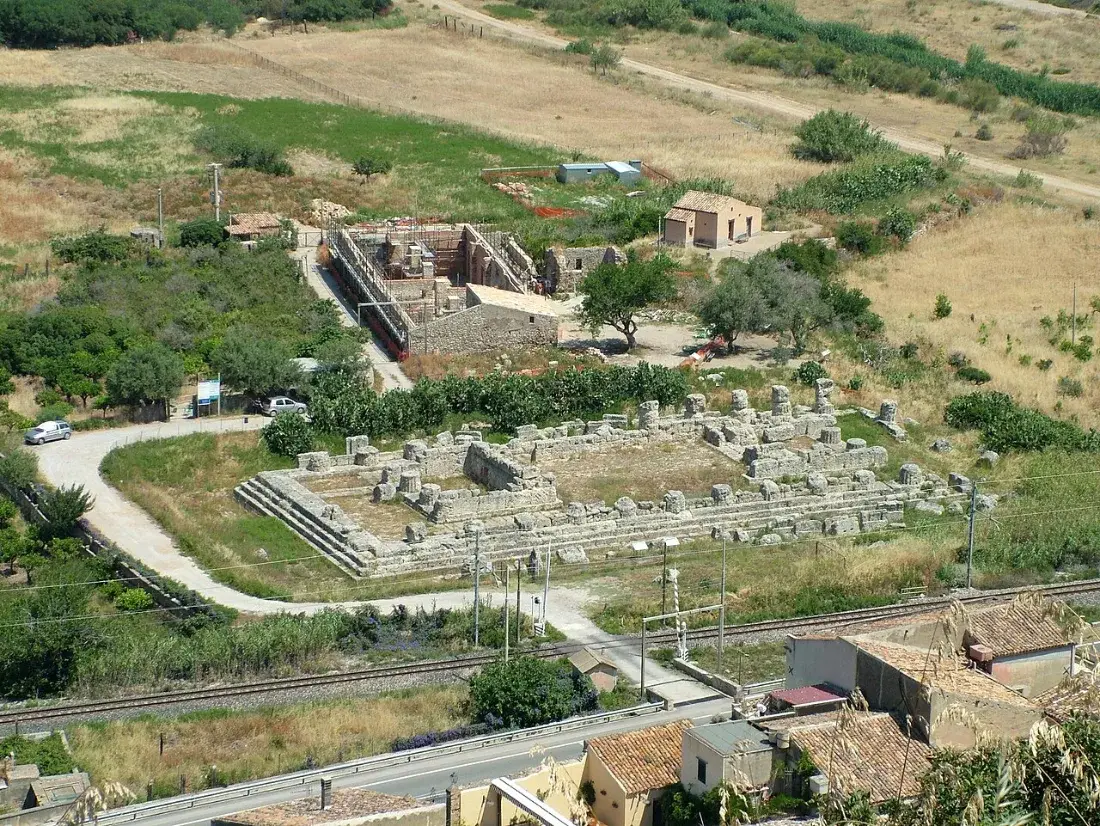
Name, home and date. His name is apt. It means “the one who establishes the chorus”. He was said to have been called Teisias originally.[2] He was born at Metaurus in Calabria (modern Gioia Tauro). He is most often associated with Himera on the north coast of Sicily, and also with Katane. The location of Metauros is itself confused in the sources.[3]
The dates of his birth and death cannot be fixed. Finglass places his activity within the period 610–540 BC.[2] Krummen and the Cambridge Companion’s chronology give the first half of the sixth century.[4]
A life in the dark. Many anecdotes are told about him. He warned Himera against the tyrant Phalaris (Aristotle). He advised the Locrians, and calmed a street battle. He was blinded for slandering Helen, and cured by his Palinode (Plato). He was the son of Hesiod. He died at Katane, where a gate was named after him. Finglass treats all these stories with “complete scepticism”. Such stories were invented to give a life to poets known only from their poems.[5]
The Loeb edition. The Loeb gives Metauron as a possible birthplace, Himera as the city whose name he bore, and Catana as the place of his tomb. It puts his life at about 632–556 BC, active in the first half of the sixth century. It thinks the Parian Marble’s date of 485/4 too late.[6] It reports twenty-six books, probably as many long poems, and a Geryoneis of at least 1,300 lines. It sets the usual assumption of choral performance beside West’s case (1971) for a singer accompanying himself on the kithara.[7]
Works. Twelve titles survive. Among them are the Geryoneis, Helen, Palinode, Sack of Troy, Returns and Oresteia. Papyri add two or three untitled poems. The Alexandrian edition filled twenty-six books, and the Oresteia and Helen took at least two books each. Rhadine and Calyce, romantic in theme, are probably not his. The one quotation from Rhadine is in a metre typical of post-classical poetry.[8] The poems were very long. A two-book poem ran to at least 2,500 lines, and the Geryoneis to at least 1,300.[8]
A poet or a tradition? (disputed). Several things led D’Alessio to a suggestion: the number of books, the fuzzy biography, the speaking name, and the stylistic divergence of the fragments. He suggested that the corpus may gather similar pieces by several late-archaic authors. Davies and Finglass hold the opposite view.[9]
Chorus or soloist? (disputed). Finglass holds that the poems were performed by a singing and dancing chorus, as the poet’s name implies. Nothing positive, in his view, speaks for the alternative. The scale of the poems points to repeated performances across the Greek world.[10] Krummen notes the long debate. She thinks the length of the poems suggests solo performance to the kithara, though some works may have been choral. She cites Pallantza and Schade for monody and Burkert for choral performance.[11]
Lyric has often been divided into choral (Doric) and monodic (Aeolic). This uncertainty is one reason why that old division is unproductive.[12] D’Angour groups Stesichorus with Simonides and Pindar, as poets who wrote for choruses more often than for solo singers.[13]
Language (disputed). His dialect of birth was Ionic. But the language of the songs is largely Doric, with epic and some Aeolic influence. Russo and Silk see it rather as epic Ionic with Doric colouring.[14]
Prosody. A stop followed by a liquid usually makes the syllable before it long. Early poets as a rule let that syllable stay short only where the group begins a word. Archilochus’ and Semonides’ iambi and “normal” Lesbian avoid even that. But in Stesichorus it is regular.[15] In epic and in Stesichorus the prosody sometimes follows older forms, notably with digamma.[16] The shortening of a long vowel or diphthong before another vowel is called correption. Stesichorus has occasional correption inside a word, as in Τρωΐας.[17]
Notes
- ^ West 1987, pp. 35–36.
- ^ a b c Finglass 2022, p. 234.
- ^ Finglass 2022, p. 234; de Kreij 2022, p. 149 with n. 19.
- ^ Krummen 2009, p. 194; Budelmann 2009, p. 386.
- ^ Finglass 2022, pp. 234–235.
- ^ Campbell 1991, pp. 2–4.
- ^ Campbell 1991, pp. 4–5.
- ^ a b Finglass 2022, p. 235.
- ^ de Kreij 2022, p. 149 with n. 20.
- ^ Finglass 2022, pp. 234–236.
- ^ Krummen 2009, p. 194 with n. 13.
- ^ de Kreij 2022, p. 142.
- ^ D’Angour 2022, p. 137.
- ^ de Kreij 2022, pp. 149–150 with nn. 21–22.
- ^ West 1987, p. 16 with n. 7.
- ^ West 1987, p. 17.
- ^ West 1987, p. 14.
About · 2 of 5
Ibycus of Rhegium
Rhegium. Ibycus was a native of Rhegium, a city founded by Chalcis in the later eighth century. A few ancient sources make him a native of Zancle (Messana), which faces Rhegium across the strait.[1] In his time Ionic was the main dialect of Rhegium. Cingano describes it as mixed, with Chalcidian and Doric elements.[2]
Date (disputed). The ancient sources disagree. The Suda, in a passage probably corrupt, puts his stay on Samos under a Polycrates in the first half of the sixth century, in the time of Croesus (Ol. 54, 564/560 BC). Eusebius puts his floruit in Ol. 60 (540/539 BC). Herodotus connects Polycrates with Anacreon and the Persian king Cambyses.
Cingano prefers the later chronology. It makes Ibycus a slightly older contemporary of Anacreon at the same court, and it suits the address to a young Polycrates in his ode. Polycrates ruled from 533 to his murder in 522, so the ode falls roughly between 540 and 530.[3] Krummen gives Polycrates’ rule as 532–525. She dates Ibycus to the second half of the century, when he probably met Anacreon on Samos.[4] De Kreij says “probably” the second half.[5] The Cambridge Companion’s chronology gives the second half of the sixth century, or less probably the first.[6]
The Loeb edition also thinks Rhegium likely, and the claim for Messana a late one. The Suda’s Olympiad 54 is usually thought too early, and Eusebius puts his floruit about 540/539. The story of his murder by bandits is told in an epigram of Antipater of Sidon.[7]
Court poet? (disputed). The usual view makes him the first professional court poet, who praised for pay. Bowie has suggested instead an accomplished aristocratic singer, who left Rhegium’s political troubles and sang for his hosts. Cingano finds the evidence for this as thin as for the usual view. He notes that the Suda’s story of the poet’s murder by robbers presupposes a wealthy, professional poet.[8] Ibycus was associated with places from Syracuse and Leontini to Sparta, Athens and Samos.[9]
Works. The Alexandrians arranged his poems in seven books, without titles. Some poems for individuals were cited by the addressee’s name, “the poem to Gorgias” or Kallias.[10] The love poems seem to have been short. Longer triadic poems with mythical narrative include the ode to Polycrates (S151, over 52 lines) and S166 (over 42 lines). He wrote at least one dithyramb (fr. 296), and papyri suggest early victory odes.[11]
In antiquity he was often paired, even confused, with Stesichorus. A poem on the funeral games of Pelias was disputed between them, until Athenaeus assigned it to Stesichorus. An old idea[12] held that Ibycus began with long Stesichorean narratives and turned to love poetry on Samos. It has no support in the fragments.[13]
Beauty and love. The Polycrates ode uses the Trojan war as a foil. Against it, the beauty of young heroes, Cyanippus, Zeuxippus and Troilus, is set above prowess. The ode ends by promising Polycrates undying fame in song.[14] The love poems frr. 286 and 287 describe the onset of Eros. Their images are the north wind, and an old prize-horse yoked for another race.[15]
In Athenaeus the speaker Myrtilus quotes the lines to Euryalus, reared by Cypris and soft-eyed Persuasion among the roses. He sets them above Philoxenus’ “blind” praise of Galateia.[16] The word for the adult lover, erastēs, is first attested in Ibycus.[17] These poems should not be read as autobiography. They belong to the conventions of sympotic praise.[18]
Performance. No ancient source says how his poems were performed. Cingano thinks the short love poems were sung solo at symposia. The Polycrates ode, the victory odes and above all the dithyramb point, in his view, to choral performance.[19]
Notes
- ^ Cingano 2022, p. 290 with n. 2; Krummen 2009, p. 198.
- ^ de Kreij 2022, p. 153; Cingano 2022, p. 290.
- ^ Cingano 2022, pp. 290–291.
- ^ Krummen 2009, p. 199.
- ^ de Kreij 2022, p. 153.
- ^ Budelmann 2009, p. 386.
- ^ Campbell 1991, pp. 6–7.
- ^ Cingano 2022, p. 293 n. 10.
- ^ Cingano 2022, p. 295.
- ^ Cingano 2022, p. 291; Krummen 2009, p. 199.
- ^ Cingano 2022, pp. 291, 296.
- ^ Schneidewin 1833.
- ^ Cingano 2022, pp. 291–292.
- ^ Krummen 2009, pp. 200–202; Cingano 2022, pp. 292–293.
- ^ Cingano 2022, p. 295; Krummen 2009, pp. 199–200.
- ^ Phillips 2022, pp. 125–126.
- ^ Cingano 2022, p. 294 n. 12.
- ^ Cingano 2022, pp. 294–295.
- ^ Cingano 2022, pp. 296–297.
About · 3 of 5
Readers, papyri and editions
Stesichorus in antiquity. Texts of his long poems circulated in fifth-century Athens. In Eupolis one character calls it old-fashioned to sing Stesichorus, Alcman and Simonides. Another has Socrates singing Stesichorus to the lyre. Aristophanes’ Peace alludes to the opening of the Oresteia. An ancient commentator traced features of the tragedians’ Orestes plays to Stesichorus, such as the recognition by a lock of hair.[1]
Quintilian still read him. Athenaeus, around AD 200, is the last who certainly did, and the last papyrus is of about the same date. After that only quotations survived, above all Plato’s account of the Palinode.[2] A calcite tablet of the late first century BC, the Tabula Iliaca Capitolina, illustrates “the Sack of Troy according to Stesichorus”.[3]
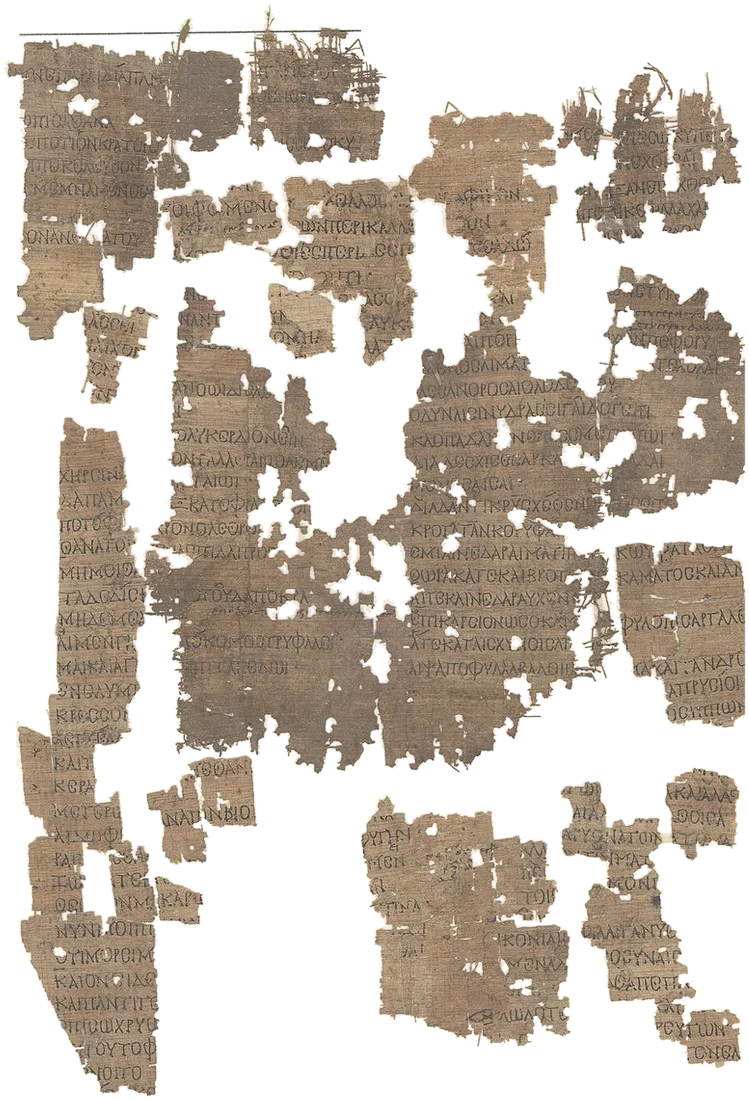
The papyri. The modern recovery began in 1956, with papyri of the Boarhunters and probably the Returns. In 1967 came the Geryoneis, Sack of Troy and Eriphyle. More followed in 1971, 1976 (the “Thebais?”) and 1990. A papyrus of 1962 preserves an ancient scholar’s discussion of his poetry.[4] In the Geryoneis papyrus, P.Oxy. 33.2617, the marginal numeral Ν (= 13) marks the 1,300th line.[5]
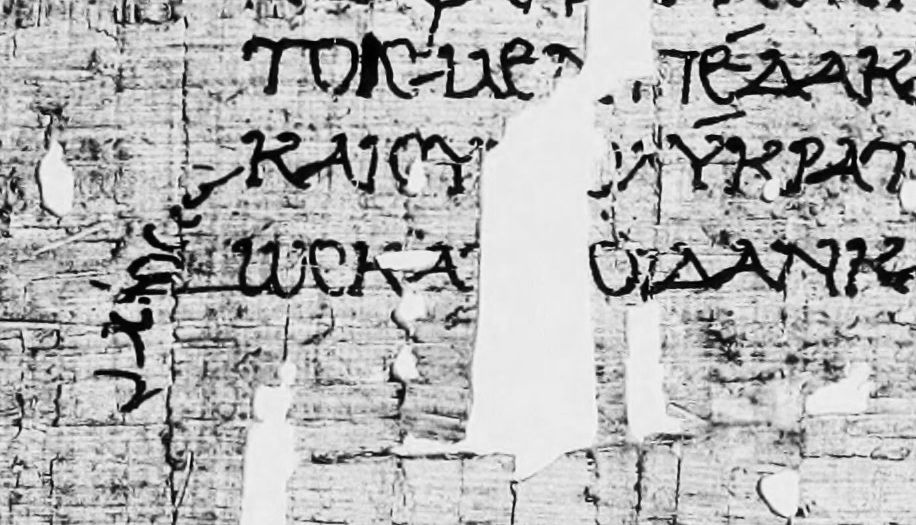
The “famous Lille Stesichorus” is P.Lille inv. 111c + 73 + 76a–c. It was extracted from mummy cartonnage. Cartonnage is made of layers of waste papyrus glued together. Jouguet and Lefebvre excavated the cartonnage in 1901, and it was destroyed to get the papyrus out. The find-spot is unclear.[6]
The fragments are reunited as PMGF 222b = fr. 97 Finglass. They were first published in CRIPEL 4 (1976) 287–303, with further work in ZPE 26 (1977) 1–6 and 7–36.[7] West, writing in 1987, calls the poem the “Thebaid”, warning that its ancient title is unknown. He refers to Parsons in ZPE 26 (1977) 7 ff.[8] Its scheme is on the Stesichorus’ metres tab. The papyrus scholarship on Stesichorus is still to appear in the Commentaria et lexica Graeca in papyris reperta.[9]
Editions of Stesichorus. Fulvius Ursinus collected the fragments in 1568. Page’s Poetae Melici Graeci (1962) and its supplement (1974) were overtaken by new papyri. Campbell’s Loeb and Davies’ PMGF, both of 1991, contained nearly all fragments then known. Finglass’s edition of 2014, with the commentary of Davies and Finglass, rests on a fresh reassessment of the evidence.[10] West cites PMG numbers (“Nostoi” PMG 209).[11] This site does the same, and adds the Finglass number for the Lille poem.
Ibycus. The seven Alexandrian books of Ibycus had no titles.[12] His erotic poems survive only by quotation, and there is “particularly little securely attributed material”.[13] One example is Athenaeus’ quotation of the Euryalus lines, in a string of passages on the beloved’s eyes.[14] Papyri, among them P.Oxy. 2637, 2735 and 3538, have confirmed that love was central to his poetry.[15] The papyri attributed to him have been surveyed in a study of his transmission by Ucciardello.[16] The edition is PMGF.[13]
P.Oxy. 2735 (disputed). Lobel suggested Stesichorus as its author, and West defended this for fr. 1. Page argued for Ibycus, followed by Davies, de Kreij and, recently, Finglass.[17] For fr. 1, dialect and Doric accentuation alone narrow the possible authors to Stesichorus or Ibycus.[9]
What the papyri do to the dialect. Ibycus’ papyri have Doric accentuation. This may partly reflect Alexandrian attempts to recreate the dialect of Rhegium, which was Doric by their time. The “schema Ibyceum” is the ending -ησι (-ēsi) in the indicative third singular, where Attic has -ει (-ei). That ending is normally a subjunctive form. Its use here may be explained by analogy, perhaps after the shortening of long final diphthongs in the Euboean colonies of the West. From the fifth century Magna Graecia was steadily Doricised, and this may have affected the later transmission of Stesichorus.[18]
Notes
- ^ Finglass 2022, pp. 241–242.
- ^ Finglass 2022, pp. 242–243.
- ^ Finglass 2022, p. 241.
- ^ Finglass 2022, p. 243.
- ^ Sampson 2022, p. 109; Finglass 2022, p. 239.
- ^ Sampson 2022, p. 116.
- ^ Sampson 2022, p. 95.
- ^ West 1987, p. 37 n. 3.
- ^ a b Sampson 2022, p. 110.
- ^ Finglass 2022, p. 243; Budelmann 2009, p. 388.
- ^ West 1987, p. 37.
- ^ Cingano 2022, p. 291; Krummen 2009, p. 199.
- ^ a b de Kreij 2022, p. 153.
- ^ Phillips 2022, pp. 124–126.
- ^ Cingano 2022, p. 294.
- ^ Cingano 2022, p. 302; de Kreij 2022, p. 153 n. 30.
- ^ Cingano 2022, p. 292 n. 6; de Kreij 2022, p. 153 n. 31.
- ^ de Kreij 2022, pp. 150 n. 22, 154 with nn. 36–37.
About · 4 of 5
Stesichorus' metres: dactyls in triads
The triad. The Dorian tradition tends toward longer periods and longer, more complex strophes. As far as we know, each strophe was a new creation for its song.[1] The enlargement is still more striking in the triadic system of Stesichorus and Ibycus. Strophe and antistrophe respond. This means that they repeat the same metrical pattern. A third stanza of different form follows, called the epode (ἡ ἐπῳδός, hē epōidos, sc. στροφή, strophē, “the after-song stanza”). The whole sequence is repeated as often as the poet wishes.[2] The same development can be described as cola joined into longer sections, with dactylic, iambic and aeolic units combined “in new and inventive ways”.[3]
| Stanza | Pattern | Triad |
|---|---|---|
| strophe | A | 1 |
| antistrophe | A, answering the strophe | 1 |
| epode | B | 1 |
| strophe | A | 2 |
| antistrophe | A | 2 |
| epode | B | 2, and so on |
Ancient tradition credited Stesichorus with inventing the triadic structure, and also the dactylo-epitrite metre.[4] The “often sophisticated patterning” of his metres is a faint echo of the lost music and dance.[5]
All Stesichorus’s poems were extensively dactylic. But they fall into two categories. In one, iambo-trochaic elements appear as well, chiefly where periods end. In the other there are none.[6]
First category: dactyls with iambo-trochaic closes
This category includes the Iliu Persis, Oresteia, Palinode, the “Thebaid” and the “Nostoi” (PMG 209). In these poems the dactylic sequences are made up mainly from the cola | D |, | × D | and | × D — ‖, and occasionally | D² | and 4da∧ ‖. In place of the anceps before a D-sequence there is sometimes a biceps. Sometimes there is a “biceps/anceps” instead. This is a position that takes either two shorts or a single syllable, long or short.[6] Here is West’s scheme of the “Thebaid”, the Lille poem (pe = penthemimer × — ⏑ — ×; ia = iambic metron × — ⏑ —; 2tr = trochaic dimeter):[7]
| West 1987, p. 37 | |
|---|---|
| str./ant. | D ⁝ D — ‖ D pe ‖ D | × D — ‖ D | × D ⁝ |
| — ⏑ — ‖ D | ia pe ||| | |
| epod. | D | × D | pe ‖ 2tr ‖ D ⁝ D — ‖ pe ‖ D ⁝ |
| D — ‖ — — — ⏑ — — ||| |
and are West’s two forms of the biceps/anceps sign. The second lacks the dotted divider, as on the dactylo-epitrite pages of this site. The dotted bar ⁝ is West’s sign for a place of frequent word-end (“often word-end”).[8] Occasionally the first biceps of the D-colon is contracted, provided no word-end follows it: — ⏔ — ⏑ ⏑ —.[6]
Second category: wholly dactylic
The wholly dactylic poems are the Geryoneis and the Syotherai. In them there is no such clear division into cola. Periods begin — ⏑ ⏑ or ⏔ — ⏑ ⏑, and end ⏑ ⏑ — or ⏑ ⏑ — —, with a uniform rhythm throughout. So the strophe of the Geryoneis can be described simply as:[9]
⏔ 3da∧ ‖ ⏔ 7da∧ ‖ ⏔ 5da∧ ‖ ⏔ 14da∧∧ |||
A single caret means that the last dactyl is replaced by — ×. This is called a pendant ending. A double caret means that the last dactyl is replaced by —. This is called a blunt ending. For example, ⏔ 6da∧∧ = ⏔ — ⏑ ⏑ — ⏑ ⏑ — ⏑ ⏑ — ⏑ ⏑ — ⏑ ⏑ —, the six longs being the six “dactyls”. Note how the blunt strophe-end contrasts with the pendant endings before it.[10]
Dactylic, not anapaestic. A period that begins with a biceps might be called anapaestic, and measured in ⏑ ⏑ — units. West prefers one name, whether the verse begins rising or falling. He distinguishes this (⏑ ⏑) — ⏑ ⏑ — rhythm from true marching anapaests. The long position of a foot is called the princeps. In this rhythm the princeps was probably shorter than the biceps. In marching anapaests they were equal. The ancient rhythmicians spoke of a “cyclic” foot ⏑ ⏑ —, with this unrationalised rhythm.[10]
Rules of contraction. Contraction mostly occurs after word-division, and is avoided before it. So ⏑ — — | is usually a sign of period-end. The last biceps of a colon or period is never contracted, and neither are two biceps in a row. So a period never has more than three longs in succession. There is no resolution, unless the biceps/anceps is counted as a case of it.[10]
Notes
- ^ West 1987, pp. 35–36.
- ^ West 1987, p. 36.
- ^ D’Angour 2022, pp. 137–138.
- ^ Krummen 2009, p. 194 n. 13; compare West’s view of dactylo-epitrite as a development of his practice, on the Ibycus’ metres tab.
- ^ Finglass 2022, p. 236.
- ^ a b c West 1987, p. 37.
- ^ West 1987, p. x.
- ^ West 1987, p. ix.
- ^ West 1987, pp. 37–38.
- ^ a b c West 1987, p. 38.
About · 5 of 5
Ibycus' metres, and the road to dactylo-epitrite
Ibycus too makes much use of dactylic measures. Like Stesichorus, he joins them with iambo-trochaic cola. But he also has some asymmetrical cola. The chief ones are — ⏑ ⏑ — ⏑ ⏑ — ⏑ — (dodᵈ, “known as the ibycean”) and — ⏑ ⏑ — ⏑ ⏑ — ⏑ — — (arᵈ). PMG 286.1–6 looks like a complete strophe, and West prints it in seven lines:[1]
ἦρι μὲν αἵ τε Κυδώνιαι
μαλίδες ἀρδόμεναι ῥοᾶν
ἐκ ποταμῶν, ἵνα Παρθένων
ēri men hai te Kydōniai / mālides ardomenai rhoān / ek potamōn, hina Parthenōn
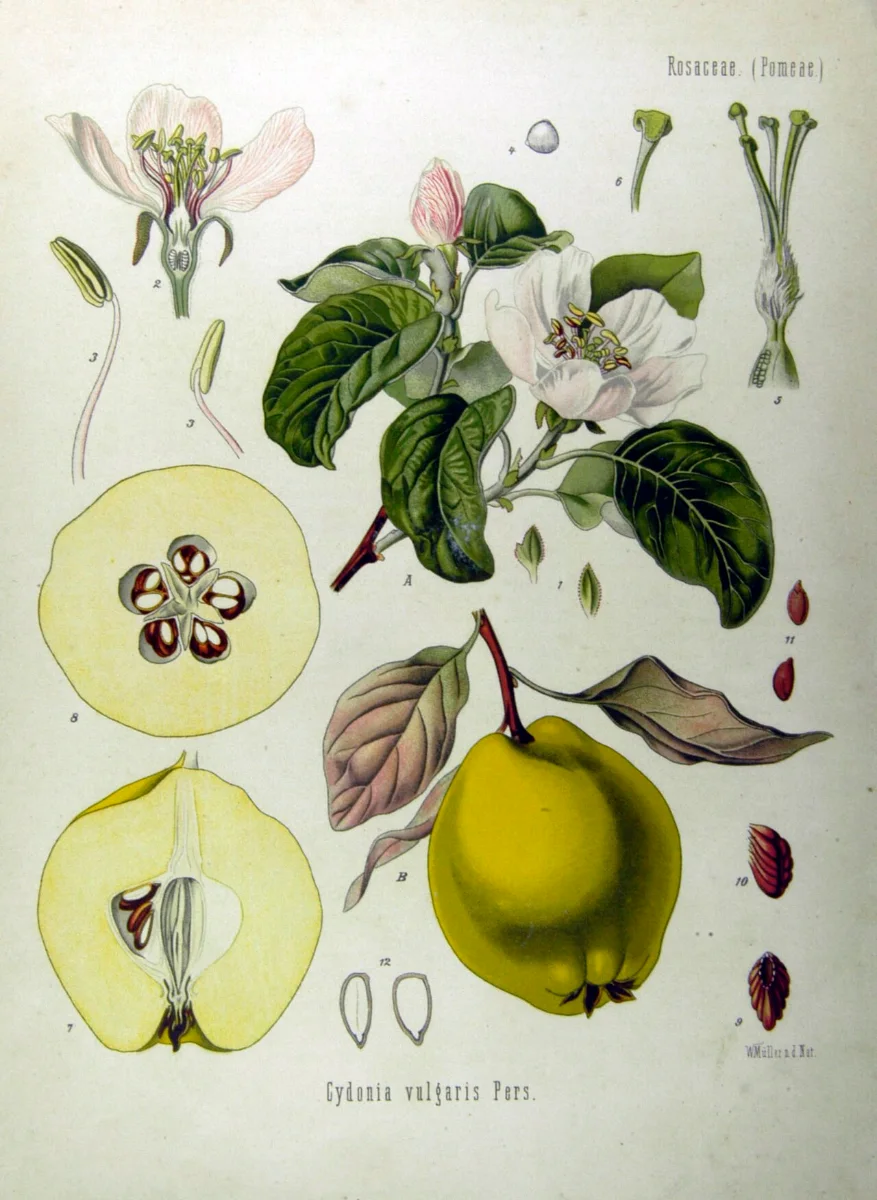
“In spring the Cydonian quince-trees, watered from the rivers’ streams, where the Maidens’”
Three ibyceans (dodᵈ), — ⏑ ⏑ — ⏑ ⏑ — ⏑ —, each a period of its own with a blunt end (⏑ —). Red: μα- of μαλίδες, long ᾱ (West’s mark).
Ibycus, PMG 286.1–6, the first three of the seven teaching lines: Greek from Bergk 1882 III p. 235, with West’s metrical labels;[1] translation ours
synthetic ∿
κᾶπος ἀκήρατος, αἵ τ’ οἰνανθίδες
αὐξόμεναι σκιεροῖσιν ὑπ’ ἔρνεσιν
οἰναρέοις θαλέθοισιν· ἐμοὶ δ’ ἔρος
οὐδεμίαν κατάκοιτος ὥραν.
kāpos akēratos, hai t’ oinanthides / auxomenai skieroisin hyp’ ernesin / oinareois thalethoisin; emoi d’ eros / oudemian katakoitos hōrān.
“garden stands unravaged, and the vine-blossoms, growing under the shady vine-shoots, flourish; but for me Love rests in no season.”
Three dactylic tetrameters (4da) that run on without period-end, so the last consonant of each line is carried over to the next; then arᵈ, — ⏑ ⏑ — ⏑ ⏑ — ⏑ — —, which ends the strophe pendant (⏑ — —) where the first three periods ended blunt. Red: τ’ οἰ-, one long in place of the third pair of shorts (contraction); -ραν of ὥραν, long ᾱ (West’s mark).
Ibycus, PMG 286.1–6, the last four of the seven teaching lines: Greek from Bergk 1882 III p. 235, with West’s metrical labels;[1] translation ours
synthetic ∿
West says only that 286.1–6 seems to be a complete strophe.[2] Whether frr. 286 and 287 are complete poems is disputed. Cingano thinks both can also be read as complete poems of a single strophe. Budelmann argues against this.[3]
The editions differ slightly in their text. Krummen prints 286 with μηλίδες (mēlides), κῆπος (kēpos) and ὑφ’ ἕρνεσιν (hyph’ hernesin), and de Kreij cites 286.5 as ἕρνεσιν (hernesin).[4] The Loeb edition has the same three readings, from the manuscripts of Athenaeus.[5] The scansion is the same.
| West | Krummen, Loeb | Difference |
|---|---|---|
| μαλίδεςmālides | μηλίδεςmēlides | ᾱ against η: “quince-trees” |
| κᾶποςkāpos | κῆποςkēpos | ᾱ against η: “garden” |
| ὑπ’ ἔρνεσινhyp’ ernesin | ὑφ’ ἕρνεσινhyph’ hernesin | smooth against rough breathing: “under the shoots” |
In the last pair, the rough breathing of ἕρνεσιν (hernesin) turns the elided ὑπ’ (hyp’) into ὑφ’ (hyph’).
The fourth period (κᾶπος … ὥραν, kāpos … hōrān) enlarges the pattern of the first three. It ends pendant (⏑ — —) where they end blunt (⏑ —).[6] West marks long ᾱ (ā) in μαλίδες (mālides) and ὥραν (hōrān). In line 4 the third biceps is contracted (αἵ τ’ οἰ-, hai t’ oi-: — —). In lines 4–6 the 4da cola run on without period-end, as a dactylic tetrameter acatalectic must.[7]
There is also an uncertain instance in Ibycus of resolution in the sequence — ⏑ ⏑. With Anacreon’s PMG 378 it is the earliest. Before them, resolution had been restricted to the sequence — ⏑ —.[8]
Triads. His longest poem is the ode to Polycrates (S151). It is composed in triads, mainly of dactylic cola, and so formally resembles the poems of Stesichorus.[9] Another fragmentary triadic poem, S166, ran to more than 42 lines.[10]
Syncopated clausulae
A clausula is the closing cadence of a period. Now and then these Dorian poets end a period heavily, on three longs. The last two appear to stand for an iambic metron, perhaps a catalectic one. A triseme is a long worth three shorts, and one or both of those two positions are trisemes. The same close returns in fifth-century lyric.[6] West’s example is from Alcman.[11]
Towards dactylo-epitrite
Simonides, Bacchylides and Pindar wrote in dactylo-epitrite. It is built from the dactylic units d, D and D² and the iambo-trochaic e, E and E², joined with or without a “link-syllable”. It grew out of what Stesichorus had already done,[12] now with more iambo-trochaic material. Contraction of the first biceps in the D-colon is found, as in Stesichorus, though very seldom.[13] The D/e of Pindar and Bacchylides can likewise be derived from Stesichorus.[14] The Simonides, Pindar and Bacchylides pages take the story on.
Notes
- ^ a b c West 1987, pp. 38–39.
- ^ West 1987, p. 38.
- ^ Cingano 2022, p. 295 with n. 15.
- ^ Krummen 2009, p. 199; de Kreij 2022, p. 154.
- ^ Campbell 1991, p. 254.
- ^ a b West 1987, p. 39.
- ^ Compare Alcman; West 1987, p. 37.
- ^ West 1987, p. 41.
- ^ Krummen 2009, p. 200; Cingano 2022, pp. 291–292.
- ^ Cingano 2022, p. 291.
- ^ See the Alcman page.
- ^ West 1987, p. 37.
- ^ West 1987, pp. 43–44.
- ^ Battezzato 2009, pp. 141–142.
Ibycus, fr. 286.1–7
Synopsis
A love poem of Ibycus in two contrasting halves. In spring the Cydonian quince trees flourish, watered by streams in the uncut garden of the Maidens, and so do the vine blossoms. But for the poet love is at rest in no season. Like the Thracian north wind blazing with lightning, it rushes from the Cyprian and shakes his heart from the roots.[1] Two images of Sappho are combined here: the lovely place, and love as a wind shaking oaks. The garden also stands in the tradition of Alcman and Sappho, whose nymphs’ gardens are a pre-nuptial theme.[2] The poem names no beloved, and it may be complete as it stands, though Budelmann argues otherwise.[3] Ibycus came from Rhegium in southern Italy. His date is disputed. The Suda places him in the first half of the sixth century BC, and Eusebius puts his prime in 540/539. Cingano prefers Eusebius’ date, since it fits his stay at the court of Polycrates of Samos.[4] Krummen likewise puts him in the second half of the century, at Polycrates’ court between 532 and 525.[2] His love poems were probably sung at symposia, and they are not to be read as autobiography.[5] The poem survives because Athenaeus quotes it (13.601b).
Lines 1–7, the spring garden and the turn, are scanned below as West prints them to show Ibycus’ dactylic strophe.[6]
Text and translation
The uninterrupted Greek with its English translation, line by line.
Show text and translation
ἦρι μὲν αἵ τε Κυδωνίαι
Ibycus · PMG 286, lines 1–7 · one strophe · Greek text as printed in West 1987, pp. 38–39
How to read each line
A guide to the Greek, syllables, pitch marks and quantities.
Show the reading key
- Above each line: the line as the edition prints it, each word placed over its own syllables. The main row: the same Greek divided into metrical syllables, each written as it is pronounced. A consonant that closes a syllable is written with it (λόθ | ρο); an elided word is closed up with the next vowel (ν’ἀ); a final consonant carried into the next word is set with a thin space (ς ἰ). Wider gaps mark word-ends.
- Above the syllables: the pitch of each syllable, from the accents. Under them: the quantity of each syllable as it falls in the line, then the transliteration, syllable by syllable, with accented syllables in capitals.
- Under each line: a line-for-line translation. In the right margin of the scansion: the line type, its scheme, and its analysis into cola.
Key to the labels
The names, patterns and symbols used beside this poem.
Show the labels and symbols
The labels in the right margin of the scansion below give the line’s analysis as the scheme file states it, then its scheme and, where the analysis notes them, the period-end, a brevis in longo or a hiatus. ‖ marks the end of a period, ||| the end of the stanza; a line without a period-end runs on into the next (synapheia). × is an anceps, long or short; the last position of every period is indifferent. A click on any syllable highlights the colon it belongs to and explains it. The sources of the labels, with their page numbers, are given line by line under Prosody, line by line.
| Label | Name and shape | What it is |
|---|---|---|
| dodd | Ibycean (dodᵈ)— ⏑ ⏑ — ⏑ ⏑ — ⏑ — | West’s dodrans, — ⏑ ⏑ — ⏑ —, with a dactylic expansion: the inner — ⏑ ⏑ is repeated once, which West marks with a superior d.[7] West notes that this asymmetrical colon goes by the name ibycean.[8] Its end, ⏑ —, is blunt. |
| da4 | Dactylic tetrameter (4da)— ⏔ — ⏔ — ⏔ — ⏑ ⏑ | Four dactyls, — ⏑ ⏑ each (a numeral gives the number of metra, p. x)[9]. Here a biceps may be contracted to one long. West marks the three tetrameters of this strophe with a single bar, his sign for word-end, not with the period-end sign.[10] An acatalectic dactylic tetrameter cannot be followed by period-end, or its last foot would be — ⏑ × instead of — ⏑ ⏑.[11] |
| ard | Aristophanean with dactylic expansion (arᵈ)— ⏑ ⏑ — ⏑ ⏑ — ⏑ — — | West’s aristophanean, — ⏑ ⏑ — ⏑ — —, with one more dactyl.[12] It closes the strophe with a pendant ending, ⏑ — —. |
Scansion
The spring garden and the restless lover: the strophe of Ibycus that West prints as his example of the poet’s asymmetrical cola, three ibyceans and an expanded period of dactylic tetrameters closing in an aristophanean, scanned position by position against his labels.
In spring the Cydonian
quince-trees, watered from the streams
of the rivers, where the Maidens’
garden lies untouched, and the vine-blossoms,
swelling under the shady shoots
of the vine, flourish; but for me love
lies at rest in no season.
Metre
- West’s analysis. West takes PMG 286.1–6 to be, to all appearances, a whole strophe, and prints it in the seven lines shown here, labelling them dodᵈ ‖ dodᵈ ‖ dodᵈ ‖ 4da | 4da | 4da | arᵈ |||.[13] The right margin of this page reproduces his labels line by line.
- Ibycus’ cola. Dactylic cola are prominent in Ibycus, and, as in Stesichorus, they can be joined with iambo-trochaic ones; Ibycus also has asymmetrical cola of his own, above all — ⏑ ⏑ — ⏑ ⏑ — ⏑ —, the dodᵈ, which bears his name (the ibycean), and — ⏑ ⏑ — ⏑ ⏑ — ⏑ — —, the arᵈ.[8] In West’s key the dodrans (dod) is — ⏑ ⏑ — ⏑ — and the aristophanean (ar) — ⏑ ⏑ — ⏑ — —; a superior d marks dactylic expansion, in which the inner — ⏑ ⏑ is repeated.[7]
- Four periods. The strophe has four periods. The first three are single ibyceans. The fourth, from κᾶπος to ὥρᾱν, is in West’s analysis the same rhythm as the first three made longer, and it closes with a pendant ending against their blunt ones:[14] the ibycean ends ⏑ —, the closing arᵈ ⏑ — —. West defines the two kinds of ending for dactylic verse on the previous page: a pendant ending replaces the last dactyl by — ×, a blunt ending by —;[8] D’Angour uses the same two terms, blunt for a line that ends ⏑ — and pendent for one that ends ⏑ — —.[15]
- Run-on tetrameters. West marks the three dactylic tetrameters with a single bar, his sign for word-end, not with the period-end ‖.[10] An acatalectic dactylic tetrameter cannot be followed by period-end, since its last foot would then be — ⏑ × instead of — ⏑ ⏑.[16] Within the period the lines are in synapheia: a final consonant goes with the first vowel of the next line,[17] so the ς of οἰνανθίδες (4), the ν of ἔρνεσιν (5) and the ς of ἔρος (6) are carried over, and each of those syllables is short.
- Contraction. One biceps is contracted, the third of line 4 (αἵ τ’ οἰ-, — —). The last biceps of each tetrameter is pure, the rule West gives for the dactyls of Stesichorus, where the last biceps of a colon or period is never contracted.[8]
- Prosody. The period is divided into syllables without regard to word-division: a consonant before a vowel begins the syllable, and a syllable is long if it has a long vowel or diphthong or is closed by a consonant.[17] Three short final vowels are elided before a vowel, τ’ (4), ὑπ’ (5) and δ’ (6).[18] There is no hiatus, no correption and no stop + liquid inside the strophe.
- Marked quantities. West marks long ᾱ in μᾱλίδες (2) and ὥρᾱν (7). The input marks only these two; the other vowels α ι υ take the length the metre requires, and each agrees with LSJ (s.vv. Κυδώνιος, ἀκήρατος, ποταμός, οἰνάρεος). The marks are not shown on the page.
- Dialect. De Kreij describes Ibycus’ language as Doric with hints of epic and literary Ionic and some Aeolic peculiarities.[19] This strophe shows retained ᾱ (μᾱλίδες, κᾶπος, ὥρᾱν), the Doric genitive plural ῥοᾶν, the Aeolic third person plural θαλέθοισιν, and both forms of the second-declension dative plural, σκιεροῖσιν and οἰναρέοις.[20]
Prosody, line by line
Every syllable, with the reason for its length. Quantities are read from the vowel where the spelling shows it, from the consonants that follow (“position”), from the accent where it tells, and from the metre where nothing else does. Editors’ notes on the text follow in the boxed paragraphs.
- 286.1
Line 286.1 · ἦρι μὲν αἵ τε Κυδωνίαι
ἦρι μὲν αἵ τε Κυδωνίαι
ἦριμὲν αἵτεΚυδωνίαι- 1 —ἦἦ is long by nature.
- 2 ⏑ριι is short by the accent rule: circumflex on the penult requires a short final syllable.
- 3 ⏑μὲὲ is short by nature.
- 4 —ν αἵαἵ is a diphthong, long by nature; the first consonant belongs to the previous word and is carried over to this vowel.
- 5 ⏑τεε is short by nature.
- 6 ⏑Κυυ is short by the metre (position 6 must be short).
- 7 —δωω is long by nature.
- 8 ⏑νίί is short by the metre (position 8 must be short).
- 9 ×αιαι is a diphthong, long by nature; the last position of the period is indifferent.
West prints dodᵈ ‖.[8] ἦρι, “in spring”, is the contracted dative of ἔαρ.[21] The ν of μέν goes with the following αἵ, so μέ- is an open short syllable, and ρι μέ fill the first double short. The υ of Κυδωνίαι is short.[22] Whatever the scheme, the last position of a period can hold a long or a short syllable,[23] so the margin shows ×; here it holds the long diphthong -αι.- 286.2
Line 286.2 · μαλίδες ἀρδομέναι ῥοᾶν
μαλίδες ἀρδομέναι ῥοᾶν
μαλίδες ἀρδομέναιῥοᾶν- 1 —μαᾱ is long (its length is not shown by the ordinary spelling).
- 2 ⏑λίί is short by the metre (position 2 must be short).
- 3 ⏑δεε is short by nature.
- 4 —ς ἀρἀ is a vowel of unknown length; closed by ρ: long by position; the first consonant belongs to the previous word and is carried over to this vowel.
- 5 ⏑δοο is short by nature.
- 6 ⏑μέέ is short by nature.
- 7 —ναιαι is a diphthong, long by nature.
- 8 ⏑ῥοο is short by nature.
- 9 ×ᾶνᾶ carries a circumflex, so it is long; closed by ν: long by position; the last position of the period is indifferent.
West prints dodᵈ ‖.[8] μᾱλίδες is the Doric form of μηλίδες, “apple-trees”;[24] with Κυδωνίαι they are quince-trees.[25] West marks the ᾱ long; ᾱ retained where Attic has η is a Doric feature of Ibycus’ language.[19] The ς of μᾱλίδες goes with ἀρ-, so -δε- is short. West accents ἀρδομέναι on the penultimate, where Athenaeus’ text as edited by Kaibel has ἀρδόμεναι. The diphthong of -ναι stands before ῥ and is long. ῥοᾶν is the genitive plural of Doric ῥοά, Attic ῥοή, “stream”,[26] with ᾱω contracted to ᾱ as elsewhere in Ibycus.[27]- 286.3
Line 286.3 · ἐκ ποταμῶν, ἵνα Παρθένων
ἐκ ποταμῶν, ἵνα Παρθένων
ἐκποταμῶν,ἵναΠαρθένων- 1 —ἐκἐ is short by nature; closed by κ: long by position.
- 2 ⏑ποο is short by nature.
- 3 ⏑ταα is short by the metre (position 3 must be short).
- 4 —μῶν,ῶ is long by nature.
- 5 ⏑ἵἵ is short by the metre (position 5 must be short).
- 6 ⏑ναα is short by the metre (position 6 must be short).
- 7 —Παρα is a vowel of unknown length; closed by ρ: long by position.
- 8 ⏑θέέ is short by nature.
- 9 ×νωνω is long by nature; closed by ν: long by position; the last position of the period is indifferent.
West prints dodᵈ ‖.[8] ἐκ is closed by its κ before π and is long. The α of ποταμῶν is short,[28] and so is the ι of ἵνα. West writes Παρθένων with a capital: the Maidens whose garden this is. Krummen describes the garden as a locus amoenus sacred to Aphrodite, with cool water, shade, and apples and quinces as symbols of love.[29]- 286.4
Line 286.4 · κᾶπος ἀκήρατος, αἵ τ’ οἰνανθίδες
κᾶπος ἀκήρατος, αἵ τ’ οἰνανθίδες
κᾶπος ἀκήρατο,ς αἵτ’οἰνανθίδεthe period runs on into 286.5 (synapheia).
The label in the margin, with its sources: dactylic tetrameter; runs on (West 1987, pp. 37, 39).
- 1 —κᾶᾶ carries a circumflex, so it is long.
- 2 ⏑ποο is short by nature; one of the two shorts of the biceps at position 2.
- 3 ⏑ς ἀἀ is short by the metre (position 2 must be short); the first consonant belongs to the previous word and is carried over to this vowel; one of the two shorts of the biceps at position 2.
- 4 —κήή is long by nature.
- 5 ⏑ραα is short by the metre (position 4 must be short); one of the two shorts of the biceps at position 4.
- 6 ⏑το,ο is short by nature; one of the two shorts of the biceps at position 4.
- 7 —ς αἵαἵ is a diphthong, long by nature; the first consonant belongs to the previous word and is carried over to this vowel.
- 8 —τ’οἰοἰ is a diphthong, long by nature; the apostrophe marks an elided vowel; the consonant before it joins this syllable; a single long contracts the two shorts of the biceps at position 6.
- 9 —νανα is a vowel of unknown length; closed by ν: long by position.
- 10 ⏑θίί is short by the metre (position 8 must be short).
- 11 ⏑δεε is short by nature; the line-end is not a period-end: the period runs on into the next line (synapheia), so this syllable keeps its own length, with no brevis in longo, and a word may run over into the next line.[30]
West prints 4da |.[14] κᾶπος, “garden”, is the Doric form of κῆπος,[31] with the retained ᾱ of Ibycus’ Doric;[19] Athenaeus’ text as edited by Kaibel has κῆπος. ἀκήρατος, “untouched, inviolate”, has short α in both places.[32] The third biceps is contracted to one long, αἵ τ’ οἰ-: τ’ is τε elided before οἰνανθίδες.[18] οἰνανθίδες are the blossoms of the vine.[33] The tetrameter runs on into the next line, so the final ς of οἰνανθίδες goes with αὐ- and -δες is the last short of the dactyl.[34]- 286.5
Line 286.5 · αὐξομέναι σκιεροῖσιν ὑπ’ ἔρνεσιν
αὐξομέναι σκιεροῖσιν ὑπ’ ἔρνεσιν
ς αὐξομέναισκιεροῖσιν ὑπ’ἔρνεσιcontinues 286.4 · one period (synapheia); the period runs on into 286.6 (synapheia).
- 1 —ς αὐαὐ is a diphthong, long by nature; ξ is a double consonant (two sounds) and closes the syllable: long by position; the first consonant belongs to the previous word and is carried over to this vowel.
- 2 ⏑ξοο is short by nature; one of the two shorts of the biceps at position 2.
- 3 ⏑μέέ is short by nature; one of the two shorts of the biceps at position 2.
- 4 —ναιαι is a diphthong, long by nature; the next word begins with σκ: the syllable is closed before it: long by position.
- 5 ⏑σκιι is short by the metre (position 4 must be short); one of the two shorts of the biceps at position 4.
- 6 ⏑εε is short by nature; one of the two shorts of the biceps at position 4.
- 7 —ροῖοῖ is a diphthong, long by nature.
- 8 ⏑σιι is short by the accent rule: circumflex on the penult requires a short final syllable; one of the two shorts of the biceps at position 6.
- 9 ⏑ν ὑὑ is short by the metre (position 6 must be short); the first consonant belongs to the previous word and is carried over to this vowel; one of the two shorts of the biceps at position 6.
- 10 —π’ἔρἔ is short by nature; closed by ρ: long by position; the apostrophe marks an elided vowel; the consonant before it joins this syllable.
- 11 ⏑νεε is short by nature.
- 12 ⏑σιι is short by the accent rule: acute on the antepenult requires a short final syllable; the line-end is not a period-end: the period runs on into the next line (synapheia), so this syllable keeps its own length, with no brevis in longo, and a word may run over into the next line.[30]
West prints 4da |.[14] West accents αὐξομέναι on the penultimate, where Kaibel’s Athenaeus has αὐξόμεναι. The diphthong of -ναι is long before σκ-. σκιεροῖσιν ends in the longer dative plural -οισιν; de Kreij notes that Ibycus slightly prefers the Doric -οις, used in the next line, and that the longer form may be literary, perhaps epic.[27] ὑπ’ is ὑπό elided before ἔρνεσιν, “shoots”.[35] West prints ὑπ’ ἔρνεσιν with the smooth breathing; the manuscripts of Athenaeus have ὑφ’ ἕρνεσιν, as LSJ notes (s.v. ἔρνος), and so does Kaibel’s text. De Kreij cites the line’s ἕρνεσιν as a non-Aeolic dative plural, beside the Aeolic -εσσι(ν) that is frequent in Ibycus.[27] The final ν goes with the next line.- 286.6
Line 286.6 · οἰναρέοις θαλέθοισιν· ἐμοὶ δ’ ἔρος
οἰναρέοις θαλέθοισιν· ἐμοὶ δ’ ἔρος
ν οἰναρέοιςθαλέθοισι·ν ἐμοὶδ’ἔροcontinues 286.5 · one period (synapheia); the period runs on into 286.7 (synapheia).
- 1 —ν οἰοἰ is a diphthong, long by nature; the first consonant belongs to the previous word and is carried over to this vowel.
- 2 ⏑ναα is short by the metre (position 2 must be short); one of the two shorts of the biceps at position 2.
- 3 ⏑ρέέ is short by nature; one of the two shorts of the biceps at position 2.
- 4 —οιςοι is a diphthong, long by nature; closed by ς: long by position.
- 5 ⏑θαα is short by the metre (position 4 must be short); one of the two shorts of the biceps at position 4.
- 6 ⏑λέέ is short by nature; one of the two shorts of the biceps at position 4.
- 7 —θοιοι is a diphthong, long by nature.
- 8 ⏑σι·ι is short by the accent rule: acute on the antepenult requires a short final syllable; one of the two shorts of the biceps at position 6.
- 9 ⏑ν ἐἐ is short by nature; the first consonant belongs to the previous word and is carried over to this vowel; one of the two shorts of the biceps at position 6.
- 10 —μοὶοὶ is a diphthong, long by nature.
- 11 ⏑δ’ἔἔ is short by nature; the apostrophe marks an elided vowel; the consonant before it joins this syllable.
- 12 ⏑ροο is short by nature; the line-end is not a period-end: the period runs on into the next line (synapheia), so this syllable keeps its own length, with no brevis in longo, and a word may run over into the next line.[30]
West prints 4da |.[14] οἰναρέοις, “of the vine”, has short α;[36] its last syllable is closed by ς before θ and is long. θαλέθοισιν, “flourish”, is a poetic form of θάλλω[37] and the main verb of the sentence that began in line 1. Its ending -οισι(ν) is the thematic third person plural that de Kreij lists as Aeolic in Ibycus.[27] δ’ is δέ elided before ἔρος. The final ς of ἔρος goes with οὐ- in the next line, so -ρος is short.- 286.7
Line 286.7 · οὐδεμίαν κατάκοιτος ὥραν.
οὐδεμίαν κατάκοιτος ὥραν.
ς οὐδεμίανκατάκοιτος ὥραν.continues 286.6 · one period (synapheia).
- 1 —ς οὐοὐ is a diphthong, long by nature; the first consonant belongs to the previous word and is carried over to this vowel.
- 2 ⏑δεε is short by nature.
- 3 ⏑μίί is short by the metre (position 3 must be short).
- 4 —ανα is a vowel of unknown length; closed by ν: long by position.
- 5 ⏑καα is short by the metre (position 5 must be short).
- 6 ⏑τάά is short by the metre (position 6 must be short).
- 7 —κοιοι is a diphthong, long by nature.
- 8 ⏑τοο is short by nature.
- 9 —ς ὥὥ is long by nature; the first consonant belongs to the previous word and is carried over to this vowel.
- 10 ×ραν.ᾱ is long (its length is not shown by the ordinary spelling); closed by ν: long by position; the last position of the period is indifferent.
West prints arᵈ |||.[14] The -αν of οὐδεμίαν is closed by ν before κ and is long. κατάκοιτος, “in bed, at rest”,[38] has its ς carried to ὥ-, so -τος is short; Kaibel’s Athenaeus prints κατακητος here. West marks the ᾱ of ὥρᾱν long. The strophe ends with the pendant ⏑ — —, after the blunt ⏑ — of the three ibyceans.[13]
The poem and this passage
The lines are quoted by Athenaeus in a survey of poets who wrote about love: after Alcman, Stesichorus, Aeschylus and Sophocles comes Ibycus of Rhegium, who “shouts and cries aloud” (Athenaeus 13.601b). The quotation continues for six more lines, in which love falls on the poet like the north wind out of Thrace, ablaze with lightning.[39] Cingano divides the poem into two contrasting parts: the gentle, watered garden of the Maidens in spring, and then, from the confession of lines 6–7, the inner landscape of the poet’s mind.[40] Krummen ranks it among the most striking nature poems left to us from antiquity, and among the first in which scenery gives voice to a state of mind.[29] Carey sets the grove beside Sappho fr. 2 V and the wind beside Sappho fr. 47 V.[41] Whether fr. 286 is a complete poem is disputed: Cingano thinks it may read well as a complete monostrophic poem, while Budelmann argues against.[42] West analyses only the first seven lines, and only they are scanned here.
The text
The Greek wording is available in Bergk’s public-domain edition.[43] Its apparatus records μαλίδες, κᾶπος and ὑπ’ ἔρνεσιν, the variants used here rather than the main text’s forms. The display retains its accentuation of Κυδωνίαι, ἀρδομέναι and αὐξομέναι, and its capitalization, punctuation and teaching quantity marks. It is therefore an adapted text, not a diplomatic transcription. The existing macrons on μᾱλίδες and ὥρᾱν are kept in the input but not shown on the page. The metrical analysis follows West.[13] West introduces the passage as “PMG 286. 1–6” but prints seven lines; Krummen cites the first six of them as 286.1–6 and Cingano the confession of love as lines 6–7,[44] so this page numbers them 1–7. The quotation in Athenaeus 13.601b, as edited by Kaibel (Perseus Digital Library), differs from West’s text in μηλίδες (2), κῆπος (4), ὑφ’ ἕρνεσιν (5) and κατακητος (7), and in the accents of ἀρδόμεναι (2) and αὐξόμεναι (5); it also writes παρθένων with a small letter and ῥοὰν with a grave accent. None of these differences changes the scansion.
Campbell’s Loeb, which keeps the numbers of PMG, prints the fragment as 286 in thirteen lines, with the text of Athenaeus’ manuscripts in the seven lines scanned here: Κυδώνιαι with the accent on the second syllable, μηλίδες, ἀρδόμεναι, κῆπος, αὐξόμεναι, ὑφ’ ἕρνεσιν and ὥραν.[45] None of these changes the scansion: η and the long ᾱ of West’s forms are both long, and φ is a single consonant as π is.
Notes
- ^ Cingano 2022, p. 295.
- ^ a b Krummen 2009, p. 199.
- ^ Cingano 2022, p. 295 with n. 15.
- ^ Cingano 2022, pp. 290–291.
- ^ Cingano 2022, pp. 294–295.
- ^ West 1987, pp. 38–39.
- ^ a b West 1987, pp. ix, x, 34.
- ^ a b c d e f g West 1987, p. 38.
- ^ West 1987, p. ix, “da”.
- ^ a b West 1987, pp. ix, 39.
- ^ West 1987, p. 37.
- ^ West 1987, pp. ix, x, 38.
- ^ a b c West 1987, pp. 38–39.
- ^ a b c d e West 1987, p. 39.
- ^ D’Angour 2022, p. 136.
- ^ West 1987, p. 37, on Alcman.
- ^ a b West 1987, p. 12.
- ^ a b West 1987, p. 13.
- ^ a b c de Kreij 2022, p. 153.
- ^ de Kreij 2022, pp. 153–154; see the notes on lines 2, 5 and 6.
- ^ LSJ s.v. ἔαρ.
- ^ LSJ s.v. Κυδώνιος, which cites this line.
- ^ West 1987, p. 4.
- ^ LSJ s.v. μηλίς.
- ^ LSJ s.v. Κυδώνιος.
- ^ LSJ s.v. ῥοή.
- ^ a b c d de Kreij 2022, p. 154.
- ^ LSJ s.v. ποταμός.
- ^ a b Krummen 2009, pp. 199–200.
- ^ a b c West 1987, pp. 3–4.
- ^ LSJ s.v. κῆπος.
- ^ LSJ s.v.
- ^ LSJ s.v. οἰνανθίς, citing this line.
- ^ West 1987, pp. 12, 37.
- ^ LSJ s.v. ἔρνος.
- ^ LSJ s.v. οἰνάρεος.
- ^ LSJ s.v. θαλέθω, citing this line.
- ^ LSJ s.v., citing this line.
- ^ Cingano 2022, p. 295; Carey 2009, pp. 36–37.
- ^ Cingano 2022, p. 295.
- ^ Carey 2009, p. 37.
- ^ Cingano 2022, p. 295 with n. 15.
- ^ Bergk 1882, p. 235.
- ^ Krummen 2009, p. 199; Cingano 2022, p. 295.
- ^ Campbell 1991, pp. 254, 592.
Text and sources
- Greek wording: T. Bergk, Poetae lyrici Graeci, fourth edition, vol. III (Leipzig 1882), p. 235, public domain. Main text and apparatus read on the page image. The seven lines use the old variants and presentation adaptations described above.
- Analysis: M. L. West, Introduction to Greek Metre (Oxford 1987), pp. 38–39 (Ibycus, PMG 286, with the metrical labels; the ibycean; the fourth period); also pp. ix–x (symbols), 4 (the last position of a period), 12–13 (syllables; elision), 34 (expansion), 37 (the dactylic tetrameter acatalectic), 38 (pendant and blunt endings; contraction in Stesichorus). All checked against the page images; pp. 38–39 at 600 dpi. Also West 1987, p. 3 (synapheia and period-end); p. 35 n. 1 (the third period of the Sapphic and Alcaic stanzas, divided between two lines of writing in antiquity).
- A. D’Angour, ‘Meter and Music’, in L. Swift (ed.), A Companion to Greek Lyric (Wiley 2022), ch. 9, p. 136 (blunt and pendent endings).
- Athenaeus, Deipnosophistae 13.76 (= 13.601b), ed. G. Kaibel (Leipzig 1887–1890), Perseus Digital Library (tlg0008.tlg001.perseus-grc3), CC BY-SA.
- E. Cingano, ‘Ibycus and Anacreon’, in L. Swift (ed.), A Companion to Greek Lyric (Wiley 2022), ch. 20, p. 295 with n. 15.
- M. de Kreij, ‘The Lyric Dialects’, ibid., ch. 10, pp. 153–154.
- E. Krummen, ‘Alcman, Stesichorus and Ibycus’, in F. Budelmann (ed.), The Cambridge Companion to Greek Lyric (Cambridge 2009), pp. 199–200.
- C. Carey, ‘Genre, occasion and performance’, ibid., pp. 36–37.
- LSJ (Perseus Digital Library, CC BY-SA), s.vv. ἔαρ, ἀκήρατος, κῆπος, ἔρνος, θαλέθω, κατάκοιτος, Κυδώνιος, μηλίς, οἰνανθίς, οἰνάρεος, ποταμός, ῥοή.
- Translation: metrehelp.org, CC BY-SA 4.0.
- D. A. Campbell, Greek Lyric III: Stesichorus, Ibycus, Simonides, and Others (Loeb Classical Library 476, Cambridge, MA 1991), Ibycus fr. 286 (pp. 254–255), compared line by line; his numbers are those of the margin of PMG (p. 592).
Quotations from copyrighted works are not covered by this page’s licence.
Stesichorus, Geryoneis fr. 19.35–47
Synopsis
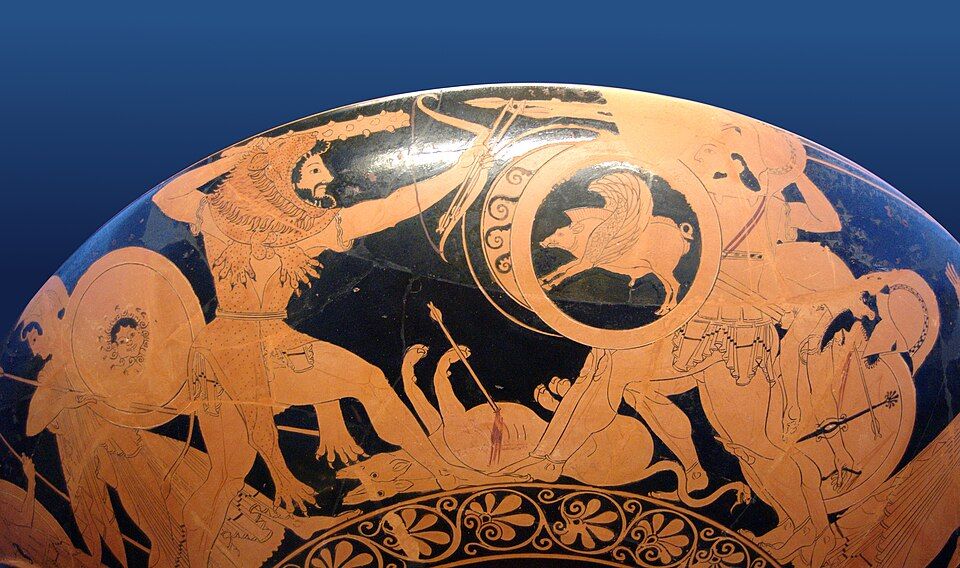
Stesichorus’ Geryoneis, “the song of Geryon”, told of one of Heracles’ last labours. Heracles journeys to the far west to take the cattle of Geryon for Eurystheus of Argos. Geryon is a monster with three heads and three bodies.[1] The Geryoneis and the Thebaid are the first long narratives since Homer. They are epic in their divine plane, battles and heroic values. Yet they are unlike epic in their laments, shifts of perspective and intimate feeling.[2] A stichometric mark is a numeral in the margin that counts the lines. Such a mark on the papyrus shows that the poem ran to at least 1,300 lines.[3] Stesichorus makes Geryon a figure of sympathy. Warned to give way, Geryon answers like Sarpedon in the Iliad. His mother Callirhoe begs him by the breast that nursed him, as Hecuba begs Hector.[4] Stesichorus was born at Metaurus in southern Italy and is associated with Himera in Sicily. He was active at some time between 610 and 540 BC, and nothing reliable is known of his life.[5] Finglass holds that his poems were sung by a dancing chorus, as his name suggests. He dismisses the view that they were for a soloist.[6] The poem survives mainly in a papyrus published in 1967.[7]
Scanned below is fr. 19.35–47 F, the death of one of Geryon’s heads. Heracles’ arrow, steeped in the Hydra’s poison, pierces his forehead, and he bows his neck like a poppy. The simile is adapted from the Iliad.[8]
Text and translation
The uninterrupted Greek with its English translation, line by line.
Show text and translation
ὀλεσάνορος αἰολοδείρου
Stesichorus · Geryoneis fr. 19.35–47 F. (= S15 col. ii 5–17) · antistrophe and the start of the epode · Greek text after Pitotto 2024 (CC BY)
How to read each line
A guide to the Greek, syllables, pitch marks and quantities.
Show the reading key
- Above each line: the line as the edition prints it, each word placed over its own syllables. The main row: the same Greek divided into metrical syllables, each written as it is pronounced. A consonant that closes a syllable is written with it (λόθ | ρο); an elided word is closed up with the next vowel (ν’ἀ); a final consonant carried into the next word is set with a thin space (ς ἰ). Wider gaps mark word-ends.
- Above the syllables: the pitch of each syllable, from the accents. Under them: the quantity of each syllable as it falls in the line, then the transliteration, syllable by syllable, with accented syllables in capitals.
- Under each line: a line-for-line translation. In the right margin of the scansion: the line type, its scheme, and its analysis into cola.
Key to the labels
The names, patterns and symbols used beside this poem.
Show the labels and symbols
The labels in the right margin of the scansion below give the line’s analysis as the scheme file states it, then its scheme and, where the analysis notes them, the period-end, a brevis in longo or a hiatus. ‖ marks the end of a period, ||| the end of the stanza; a line without a period-end runs on into the next (synapheia). × is an anceps, long or short; the last position of every period is indifferent. A click on any syllable highlights the colon it belongs to and explains it.
| Label | Name and shape | What it is |
|---|---|---|
| an3 | Three anapaests and a long (3an —)⏔ — ⏔ — ⏑ ⏑ — — | Pitotto’s first period of the strophe: three anapaests closed by one long, the pendant ending ⏑ ⏑ — —.[9] West reads the same period as dactylic: an opening biceps, then three dactyls with a pendant close (3da∧)[10]. |
| an7 | Seven anapaests and a long (7an —)⏔ — ⏑ ⏑ — ⏔ — ⏑ ⏑ — ⏑ ⏑ — ⏔ — ⏑ ⏑ — — | One period over two written lines.[11] In the epode the same length opens the stanza, with the two first anapaests written ⏔ — ⏑ ⏑ —.[11] |
| an5 | Five anapaests and a long (5an —)⏔ — ⏑ ⏑ — ⏔ — ⏑ ⏑ — ⏑ ⏑ — — | One period over two written lines, the second only ⏑ ⏑ — —.[11] West: an opening biceps and 5da∧.[10] |
| an6 | Six anapaests (6an), acatalectic⏔ — ⏔ — ⏑ ⏑ — ⏑ ⏑ — ⏔ — ⏑ ⏑ — | The first part of the last period of the strophe, over two written lines and ending in word-end.[11] |
| an8 | Eight anapaests (8an), acatalectic⏔ — ⏑ ⏑ — ⏔ — ⏔ — ⏔ — ⏑ ⏑ — ⏑ ⏑ — ⏑ ⏑ — | The second part of the last period, closing the strophe with a full anapaest, ⏑ ⏑ —, where the earlier periods close ⏑ ⏑ — —.[11] West sees the same close as a blunt ending (14da∧∧ |
| da14 | Fourteen dactyls (14da)— ⏑ ⏑ — ⏔ — ⏔ — ⏑ ⏑ … | The epode’s second period, over four written lines, of which two begin here.[11] |
The feet
| Foot and shape | Where |
|---|---|
| Anapaest, biceps contractible⏔ — | A biceps that may be two shorts or one long (Pitotto prints ⏕), then a long.[12] |
| Anapaest, pure biceps⏑ ⏑ — | Two shorts and a long; Pitotto prints these biceps as two shorts only.[9] |
| Closing long— | The extra long of a pendant ending, ⏑ ⏑ — —.[13] |
| Dactyl— ⏑ ⏑ | A long and two shorts.[14] |
| Dactyl, biceps contractible— ⏔ | A long and a biceps that may be one long (Pitotto prints ⏕)[14]. |
| Dactyl, broken off— ⏑ … | The text breaks off after the first short of this dactyl.[15] |
Scansion
The death of one of Geryon’s heads: Heracles’ poisoned arrow splits his skull, and his neck droops like a poppy shedding its leaves. A whole antistrophe and the first four lines of the epode, scanned against the triadic scheme of the papyrus as Pitotto prints it, with West’s dactylic reading beside it.
of the man-slaying, shimmer-necked
Hydra, with her agonies. Silently, by
stealth, it pushed its way into his forehead;
it split the flesh and the bones, as a god
had allotted;
the arrow kept straight on, through to the high-
est point of the crown,
and it fouled with red blood
the breastplate and the limbs, all gore.
And Geryon let his neck slant
sideways, as a poppy does
that, spoiling its soft body,
suddenly drops its leaves …
Metre
- A triadic poem. The Geryoneis was composed in triads: strophe, antistrophe and epode. Pitotto prints the scheme of each, colon by colon, as the papyrus writes the cola, and notes that the sequence recurs at regular intervals of thirteen columns of the papyrus.[9] In her edition lines 31–34 are the end of a strophe, 35–43 the whole antistrophe, and 44–47 the first four lines of the epode.[15] Only the antistrophe survives complete here, so this page has no strophe beside it to compare.
- The periods. Pitotto groups the nine cola of the strophe and antistrophe into four periods, following Haslam, Lazzeri and Davies and Finglass: 3an — ‖ 7an — ‖ 5an — ‖ 6an + 8an |||. The epode runs 7an — ‖ 14da ‖ 6da — |||, and its interpretation is more disputed.[11] The right margin gives her label for each period at its first line, and the part of the stanza in brackets.
- Anapaests or dactyls? Pitotto describes the strophe and antistrophe as built on an anapaestic rhythm; Gentili and Lomiento also take them so, but call cola 5–6 of the epode very doubtful.[16] West calls the same rhythm dactylic. For him the strophe of the Geryoneis is four periods, each opening with a biceps and continuing in dactyls: 3da∧ ‖ 7da∧ ‖ 5da∧ ‖ 14da∧∧ |||.[17] He grants that a period beginning with a biceps could be called anapaestic, but prefers one name for the rhythm whether it rises or falls, and he separates it from true marching anapaests.[10] The two analyses count the same positions: West’s 3da∧ with its opening biceps is Pitotto’s 3an —, and so on. Kelly reports that Davies and Finglass divide Stesichorus’ metres into dactylo-anapaestic and dactylo-epitrite; the Geryoneis is of the first kind.[18] West likewise sets it among the wholly dactylic poems, without the iambo-trochaic cola of poems such as the Oresteia.[19]
- Endings. The first three periods of the strophe end with a pendant ⏑ ⏑ — —; the last ends with a full anapaest, ⏑ ⏑ —.[11] In West’s terms these are the pendant and blunt endings: one caret when the last dactyl becomes — ×, two when it becomes a single long; he notes the contrast between the blunt strophe-end and the pendant endings before it.[10] Pitotto uses “pendant” for the earlier periods and “blunt” for the end of the epode, terms she takes from Haslam.[20]
- The biceps. Pitotto prints ⏕ in the positions that may hold two shorts or one long, and two shorts where only two shorts occur.[9] On this page those positions are drawn ⏔, the contractible biceps,[14] because the syllables behave as a biceps does and West says that this poem has no resolution.[10] West’s rules for contraction hold in this passage. It comes mostly after word-end and is avoided before it. The last biceps of a colon or period is never contracted. Two biceps in a row are never contracted. So no more than three longs stand together inside a period.[10] Four biceps are contracted here: σῑ- (36, after the word-end at Ὕδρας·), -τι- (40), θώ- (43, at the start of a word) and -χῡ- (46). Two of them, -τι- and -χῡ-, are inside a word.
- Synapheia. Inside a period the written lines run on. A final consonant goes with the vowel that begins the next line,[21] and Pitotto divides words between lines (36–37 ἐπι-|κλοπάδαν, 38–39 δαί-|μονος, 40–41 ἀ-|κροτάταν). Campbell’s Loeb keeps those words whole and so ends the lines at other points.[22] Only period-end allows brevis in longo,[23] so the last syllable of 35, 37, 39, 43 and 45 is shown as indifferent.
- Stop + liquid. Before κλ, κρ and δρ the metre decides whether the cluster makes position.[24] It does at the end of 36 (ἐπι-|κλ-), in 40 (ἀντι-κρύ, ἐπ’ ἀ-|κρ-) and in 43 (καὶ βρ-, a diphthong long in any case). It does not in 36 (Ὕδρας, where the syllable is short) or in 44 (ἀπέκλινε).
- Dialect. De Kreij describes the language of Stesichorus as largely Doric, with clear epic and some Aeolic influence; he uses Davies and Finglass’s numbers, the same as Pitotto’s.[25] Here there is retained ᾱ (κλοπάδᾱν, κορυφᾱ́ν, Γᾱρυόνᾱς, μᾱ́κων, ἅ), the -οισ- of the feminine participle (καταισχύνοισ’, βαλοίσα), the closed vowel of αἰολοδείρου, which de Kreij cites from this line, and the dative ὀδύναισιν in -αισι(ν) (Natoli et al. 2022, App. A, p. 332)[26]. Natoli et al. list the participle in -οισα among the features of literary Doric; de Kreij classes the diphthong of the feminine participle as Aeolic (Natoli et al. 2022, App. A, p. 332)[25]. Where the spelling leaves the length of α ι υ unknown, the note on the line explains the vowel length and gives its source.
Prosody, line by line
Every syllable, with the reason for its length. Quantities are read from the vowel where the spelling shows it, from the consonants that follow (“position”), from the accent where it tells, and from the metre where nothing else does. Editors’ notes on the text follow in the boxed paragraphs.
- 19.35
Line 19.35 · ὀλεσάνορος αἰολοδείρου
ὀλεσάνορος αἰολοδείρου
ὀλεσάνορος αἰολοδε[ί][ρ]ου- 1 ⏑ὀὀ is short by nature; one of the two shorts of the biceps at position 1.
- 2 ⏑λεε is short by nature; one of the two shorts of the biceps at position 1.
- 3 —σάᾱ́ is long (its length is not shown by the ordinary spelling).
- 4 ⏑νοο is short by nature; one of the two shorts of the biceps at position 3.
- 5 ⏑ροο is short by nature; one of the two shorts of the biceps at position 3.
- 6 —ς αἰαἰ is a diphthong, long by nature; the first consonant belongs to the previous word and is carried over to this vowel.
- 7 ⏑οο is short by nature.
- 8 ⏑λοο is short by nature.
- 9 —δε[ί]εί is a diphthong, long by nature.
- 10 ×[ρ]ουου is a diphthong, long by nature; the last position of the period is indifferent.
Antistrophe 1, Pitotto’s 3an — ‖.[9] ὀλεσάνορος, “man-destroying”, is the Doric form of ὀλεσήνωρ;[27] its ᾱ is the Doric ᾱ for η (Natoli et al. 2022, App. A, p. 332). Both biceps are realised as two shorts (ὀ λε, νο ρο). The ς of -ρος goes with αἰ-.[21] αἰολοδείρου, “with sheeny neck”,[28] is de Kreij’s example of the closed vowel ει in the third compensatory lengthening.[25] Pitotto prints a dot under the first ο and brackets ίρ. The period ends after this line, and its last position is indifferent.[23] This is S15 col. ii 5 in Campbell.[22]- 19.36
Line 19.36 · ὀδύναισιν Ὕδρας· σιγᾷ δ’ ὅ γ’ ἐπι-
ὀδύναισιν Ὕδρας· σιγᾷ δ’ ὅ γ’ ἐπι-
ὀδύναισιν Ὕδρας·σιγᾷδ’ὅγ’ἐπι-the period runs on into 19.37 (synapheia).
- 1 ⏑ὀὀ is short by nature; one of the two shorts of the biceps at position 1.
- 2 ⏑δύύ is short by the metre (position 1 must be short); one of the two shorts of the biceps at position 1.
- 3 —ναιαι is a diphthong, long by nature.
- 4 ⏑σιι is short by the accent rule: acute on the antepenult requires a short final syllable.
- 5 ⏑ν ὝὝ is a vowel of unknown length; δρ is carried whole into the next syllable, so this syllable stays open and short (correption before a stop + liquid cluster, as the metre needs); the first consonant belongs to the previous word and is carried over to this vowel.
- 6 —δρας·α is a vowel of unknown length; closed by ς: long by position.
- 7 —σιῑ is long (its length is not shown by the ordinary spelling); a single long contracts the two shorts of the biceps at position 6.
- 8 —γᾷᾷ is long by nature.
- 9 ⏑δ’ὅὅ is short by nature; the apostrophe marks an elided vowel; the consonant before it joins this syllable.
- 10 ⏑γ’ἐἐ is short by nature; the apostrophe marks an elided vowel; the consonant before it joins this syllable.
- 11 —πι-ι is a vowel of unknown length; closed by κ before a liquid: stop + liquid makes position, as it usually does in epic; the line-end is not a period-end: the period runs on into the next line (synapheia), so this syllable keeps its own length, with no brevis in longo, and a word may run over into the next line.[29]
Antistrophe 2, the first line of Pitotto’s 7an —.[11] ὀδύναισιν has the first-declension dative plural in -αισι(ν), which de Kreij lists as East Aeolic beside the Doric -αις.[30] Its ν goes with Ὕ-, and the syllable Ὑ- is short: here the metre takes δρ as not making position.[24] After the word-end at Ὕδρας· the biceps is contracted, σῑ- (σιγᾷ, “in silence”)[31]. δ’ and γ’ are elided.[32] The word ἐπικλοπάδαν is divided between this line and the next, and the final -πι- is long because κλ makes position.[24] Campbell prints σιγᾶι, with the iota adscript, and keeps ἐπικλοπάδαν whole in this line;[22] the scansion is the same.- 19.37
Line 19.37 · κλοπάδαν ἐνέρεισε μετώπῳ·
κλοπάδαν ἐνέρεισε μετώπῳ·
κλοπάδανἐνέρεισεμετώπῳ·continues 19.36 · one period (synapheia).
- 1 ⏑κλοο is short by nature.
- 2 ⏑πάά is short by the metre (position 2 must be short).
- 3 —δανᾱ is long (its length is not shown by the ordinary spelling).
- 4 ⏑ἐἐ is short by nature; one of the two shorts of the biceps at position 4.
- 5 ⏑νέέ is short by nature; one of the two shorts of the biceps at position 4.
- 6 —ρειει is a diphthong, long by nature.
- 7 ⏑σεε is short by nature.
- 8 ⏑μεε is short by nature.
- 9 —τώώ is long by nature.
- 10 ×πῳ·ῳ is long by nature; the last position of the period is indifferent.
Antistrophe 3, the end of the 7an — ‖.[11] κλοπάδᾱν, “by stealth”, ends in the Doric ᾱ where Attic has η (Natoli et al. 2022, App. A, p. 332). Its ν goes with the next word, so δᾱ is an open syllable, long by its vowel, and ἐ νέ fill the biceps. ἐνέρεισε, “thrust in”, is from ἐνερείδω.[33] The period ends with the pendant ⏑ ⏑ — —.[11] Campbell begins this line with [ἐ]νέρεισε and prints μετώπωι;[22] the scansion is the same.- 19.38
Line 19.38 · διὰ δ’ ἔσχισε σάρκα καὶ ὀστέα δαί-
διὰ δ’ ἔσχισε σάρκα καὶ ὀστέα δαί-
διὰδ’ἔσχισεσάρκα[καὶ]ὀ[σ][τ]έαδαί-the period runs on into 19.39 (synapheia).
- 1 ⏑διι is short by the metre (position 1 must be short); one of the two shorts of the biceps at position 1.
- 2 ⏑ὰὰ is short by the metre (position 1 must be short); one of the two shorts of the biceps at position 1.
- 3 —δ’ἔσἔ is short by nature; closed by σ: long by position; the apostrophe marks an elided vowel; the consonant before it joins this syllable.
- 4 ⏑χιι is short by the metre (position 3 must be short).
- 5 ⏑σεε is short by nature.
- 6 —σάρά is a vowel of unknown length; closed by ρ: long by position.
- 7 ⏑καα is short by the metre (position 6 must be short); one of the two shorts of the biceps at position 6.
- 8 ⏑[καὶ]αὶ is a diphthong, long by nature; shortened before the vowel that begins the next word (epic correption), as the metre requires; one of the two shorts of the biceps at position 6.
- 9 —ὀ[σ]ὀ is short by nature; closed by σ: long by position.
- 10 ⏑[τ]έέ is short by nature.
- 11 ⏑αα is short by the metre (position 9 must be short).
- 12 —δαί-αί is a diphthong, long by nature; the line-end is not a period-end: the period runs on into the next line (synapheia), so this syllable keeps its own length, with no brevis in longo, and a word may run over into the next line.[29]
- 19.39
Line 19.39 · μονος αἴσᾳ·
μονος αἴσᾳ·
μονος αἴσᾳ·continues 19.38 · one period (synapheia).
- 1 ⏑μοο is short by nature.
- 2 ⏑νοο is short by nature.
- 3 —ς αἴαἴ is a diphthong, long by nature; the first consonant belongs to the previous word and is carried over to this vowel.
- 4 ×σᾳ·ᾳ is long by nature; the last position of the period is indifferent.
- 19.40
Line 19.40 · διὰ δ’ ἀντικρὺ σχέθεν οἰστὸς ἐπ’ ἀ-
διὰ δ’ ἀντικρὺ σχέθεν οἰστὸς ἐπ’ ἀ-
διὰδ’ἀντικρὺσχέθεν οἰ[σ]τὸς ἐπ’ἀ-the period runs on into 19.41 (synapheia).
- 1 ⏑διι is short by the metre (position 1 must be short); one of the two shorts of the biceps at position 1.
- 2 ⏑ὰὰ is short by the metre (position 1 must be short); one of the two shorts of the biceps at position 1.
- 3 —δ’ἀνἀ is a vowel of unknown length; closed by ν: long by position; the apostrophe marks an elided vowel; the consonant before it joins this syllable.
- 4 —τικι is a vowel of unknown length; closed by κ before a liquid: stop + liquid makes position, as it usually does in epic; a single long contracts the two shorts of the biceps at position 3.
- 5 —ρὺthe next word begins with σχ: the syllable is closed before it: long by position.
- 6 ⏑σχέέ is short by nature.
- 7 ⏑θεε is short by nature.
- 8 —ν οἰ[σ]οἰ is a diphthong, long by nature; closed by σ: long by position; the first consonant belongs to the previous word and is carried over to this vowel.
- 9 ⏑τὸὸ is short by nature.
- 10 ⏑ς ἐἐ is short by nature; the first consonant belongs to the previous word and is carried over to this vowel.
- 11 —π’ἀ-ἀ is a vowel of unknown length; closed by κ before a liquid: stop + liquid makes position, as it usually does in epic; the apostrophe marks an elided vowel; the consonant before it joins this syllable; the line-end is not a period-end: the period runs on into the next line (synapheia), so this syllable keeps its own length, with no brevis in longo, and a word may run over into the next line.[29]
Antistrophe 6, the first line of Pitotto’s 6an.[11] In ἀντικρύ, “straight on”,[33] -τι- is long because κρ makes position, and it fills a contracted biceps inside a word; West says contraction is mostly found after word-end.[10] -κρύ is closed by the σ of σχέθεν. οἰστός, “arrow”, has its σ supplied. ἐπ’ is elided, and its ἀ- is long before the κρ of the next line.[36]- 19.41
Line 19.41 · κροτάταν κορυφάν,
κροτάταν κορυφάν,
κροτάτανκορυφά,continues 19.40 · one period (synapheia); the period runs on into 19.42 (synapheia).
- 1 ⏑κροο is short by nature; one of the two shorts of the biceps at position 1.
- 2 ⏑τάά is short by the metre (position 1 must be short); one of the two shorts of the biceps at position 1.
- 3 —τανᾱ is long (its length is not shown by the ordinary spelling); closed by ν: long by position.
- 4 ⏑κοο is short by nature.
- 5 ⏑ρυυ is short by the metre (position 4 must be short).
- 6 —φά,ᾱ́ is long (its length is not shown by the ordinary spelling); the line-end is not a period-end: the period runs on into the next line (synapheia), so this syllable keeps its own length, with no brevis in longo, and a word may run over into the next line.[29]
- 19.42
Line 19.42 · ἐμίαινε δ’ ἄρ’ αἵματι πορφυρέῳ
ἐμίαινε δ’ ἄρ’ αἵματι πορφυρέῳ
ν ἐμίαινεδ’ἄρ’αἵματιπορφ[υ][ρέ][ῳ]continues 19.41 · one period (synapheia); the period runs on into 19.43 (synapheia).
- 1 ⏑ν ἐἐ is short by nature; the first consonant belongs to the previous word and is carried over to this vowel; one of the two shorts of the biceps at position 1.
- 2 ⏑μίί is short by the metre (position 1 must be short); one of the two shorts of the biceps at position 1.
- 3 —αιαι is a diphthong, long by nature.
- 4 ⏑νεε is short by nature.
- 5 ⏑δ’ἄἄ is short by the metre (position 4 must be short); the apostrophe marks an elided vowel; the consonant before it joins this syllable.
- 6 —ρ’αἵαἵ is a diphthong, long by nature; the apostrophe marks an elided vowel; the consonant before it joins this syllable.
- 7 ⏑μαα is short by the metre (position 6 must be short); one of the two shorts of the biceps at position 6.
- 8 ⏑τιι is short by the accent rule: acute on the antepenult requires a short final syllable; one of the two shorts of the biceps at position 6.
- 9 —πορο is short by nature; closed by ρ: long by position.
- 10 ⏑φ[υ]υ is short by the metre (position 8 must be short); one of the two shorts of the biceps at position 8.
- 11 ⏑[ρέ]έ is short by nature; one of the two shorts of the biceps at position 8.
- 12 —[ῳ]ῳ is long by nature; the line-end is not a period-end: the period runs on into the next line (synapheia), so this syllable keeps its own length, with no brevis in longo, and a word may run over into the next line.[29]
- 19.43
Line 19.43 · θώρακά τε καὶ βροτόεντα μέλε‿α.
θώρακά τε καὶ βροτόεντα μέλε‿α.
θώρακάτεκαὶβροτόεντ[α][μέ][λε‿α].continues 19.42 · one period (synapheia).
- 1 —θώώ is long by nature; a single long contracts the two shorts of the biceps at position 1.
- 2 —ραᾱ is long (its length is not shown by the ordinary spelling).
- 3 ⏑κάά is short by the accent rule: acute on the antepenult requires a short final syllable.
- 4 ⏑τεε is short by nature.
- 5 —καὶαὶ is a diphthong, long by nature; the next word begins with βρ: the syllable is closed before it: long by position.
- 6 ⏑βροο is short by nature.
- 7 ⏑τόό is short by nature.
- 8 —ενε is short by nature; closed by ν: long by position.
- 9 ⏑τ[α]α is short by the accent rule: acute on the antepenult requires a short final syllable.
- 10 ⏑[μέ]έ is short by nature.
- 11 ×[λε‿α].εα is two vowels of one word pronounced together as one long syllable (synizesis); the last position of the period is indifferent.
Antistrophe 9, the end of the antistrophe.[11] The first biceps is contracted (θώ-), and θώρᾱκα has long ᾱ.[39] καί is long before βρ- and by its diphthong. Pitotto prints βροτόεντ[α μέλεα, Page’s reading and supplement (Page in LGS and SLG). Führer read βροτόεντ’ [ἔναρα.[15] The -εα of μέλεα is taken as one syllable (synizesis)[34], as the last position requires. The stanza closes with a full anapaest, ⏑ ⏑ —.[11] Campbell prints the same supplement.[22]- 19.44
Line 19.44 · ἀπέκλινε δ’ ἄρ’ αὐχένα Γαρυόνας
ἀπέκλινε δ’ ἄρ’ αὐχένα Γαρυόνας
ἀπέκλινεδ’ἄρ’αὐχέναΓαρ[υ][ό][να]the period runs on into 19.45 (synapheia).
- 1 ⏑ἀἀ is short by the metre (position 1 must be short); one of the two shorts of the biceps at position 1.
- 2 ⏑πέέ is short by nature; κλ is carried whole into the next syllable, so this syllable stays open and short (correption before a stop + liquid cluster, as the metre needs); one of the two shorts of the biceps at position 1.
- 3 —κλιῑ is long (its length is not shown by the ordinary spelling).
- 4 ⏑νεε is short by nature.
- 5 ⏑δ’ἄἄ is short by the metre (position 4 must be short); the apostrophe marks an elided vowel; the consonant before it joins this syllable.
- 6 —ρ’αὐαὐ is a diphthong, long by nature; the apostrophe marks an elided vowel; the consonant before it joins this syllable.
- 7 ⏑χέέ is short by nature.
- 8 ⏑ναα is short by the metre (position 7 must be short).
- 9 —Γαᾱ is long (its length is not shown by the ordinary spelling).
- 10 ⏑ρ[υ]υ is short by the metre (position 9 must be short).
- 11 ⏑[ό]ό is short by nature.
- 12 —[να]ᾱ is long (its length is not shown by the ordinary spelling); the line-end is not a period-end: the period runs on into the next line (synapheia), so this syllable keeps its own length, with no brevis in longo, and a word may run over into the next line.[29]
Epode 1, the first line of Pitotto’s 7an —.[11] In ἀπέκλῑνε, “bent aside”, the ι is long,[40] and -πε- is short: here κλ does not make position.[24] Γᾱρυόνᾱς is the Doric form of the name, with ᾱ for η in both places (Natoli et al. 2022, App. A, p. 332). Its letters after Γαρ- are supplied, and its ς goes with the ἐ- of the next line.- 19.45
Line 19.45 · ἐπικάρσιον, ὡς ὅκα μάκων
ἐπικάρσιον, ὡς ὅκα μάκων
[ς] ἐπικάρσιο,ν ὡςὅκαμ[ά]κω[ν]continues 19.44 · one period (synapheia).
- 1 ⏑[ς] ἐἐ is short by nature; the first consonant belongs to the previous word and is carried over to this vowel.
- 2 ⏑πιι is short by the metre (position 2 must be short).
- 3 —κάρά is a vowel of unknown length; closed by ρ: long by position.
- 4 ⏑σιι is short by the metre (position 4 must be short).
- 5 ⏑ο,ο is short by nature.
- 6 —ν ὡςὡ is long by nature; the first consonant belongs to the previous word and is carried over to this vowel.
- 7 ⏑ὅὅ is short by nature.
- 8 ⏑καα is short by the metre (position 8 must be short).
- 9 —μ[ά]ᾱ́ is long (its length is not shown by the ordinary spelling).
- 10 ×κω[ν]ω is long by nature; closed by ν: long by position; the last position of the period is indifferent.
- 19.46
Line 19.46 · ἅτε καταισχύνοισ’ ἁπαλὸν δέμας
ἅτε καταισχύνοισ’ ἁπαλὸν δέμας
ἅτεκαταισχύνοισ’ἁπαλὸν[δέ][μα]the period runs on into 19.47 (synapheia).
- 1 —ἅἅ̄ is long (its length is not shown by the ordinary spelling).
- 2 ⏑τεε is short by nature.
- 3 ⏑καα is short by the metre (position 3 must be short).
- 4 —ταισαι is a diphthong, long by nature; closed by σ: long by position.
- 5 —χύῡ́ is long (its length is not shown by the ordinary spelling); a single long contracts the two shorts of the biceps at position 5.
- 6 —νοιοι is a diphthong, long by nature.
- 7 ⏑σ’ἁἁ is short by the metre (position 7 must be short); the apostrophe marks an elided vowel; the consonant before it joins this syllable; one of the two shorts of the biceps at position 7.
- 8 ⏑παα is short by the metre (position 7 must be short); one of the two shorts of the biceps at position 7.
- 9 —λὸνὸ is short by nature; closed by ν: long by position.
- 10 ⏑[δέ]έ is short by nature.
- 11 ⏑[μα]α is short by the metre (position 10 must be short); the line-end is not a period-end: the period runs on into the next line (synapheia), so this syllable keeps its own length, with no brevis in longo, and a word may run over into the next line.[29]
Epode 3, the first line of Pitotto’s 14da.[11] ἅ is the feminine relative, Attic ἥ, with the Doric long ᾱ (Natoli et al. 2022, App. A, p. 332), and the line opens with a long. In καταισχύνοισ’, “spoiling”, the υ is long,[45] and -χῡ- fills a contracted biceps inside a word. The participle has -οισα for -ουσα: a feature of literary Doric for Natoli et al., an Aeolic diphthong for de Kreij (Natoli et al. 2022, App. A, p. 332)[25]. It is elided before ἁπαλόν.[32] δέμας is supplied; its ς goes with αἴ- in the next line.- 19.47
Line 19.47 · αἴψ’ ἀπὸ φύλλα βαλοίσα
αἴψ’ ἀπὸ φύλλα βαλοίσα
[ς] αἴψ’ἀπὸφύλλαβαλοίσαcontinues 19.46 · one period (synapheia); the period runs on into the next line, which is not given here (synapheia).
- 1 —[ς] αἴαἴ is a diphthong, long by nature; ψ is a double consonant (two sounds) and closes the syllable: long by position; the first consonant belongs to the previous word and is carried over to this vowel.
- 2 ⏑ψ’ἀἀ is short by the metre (position 2 must be short); the apostrophe marks an elided vowel; the consonant before it joins this syllable; one of the two shorts of the biceps at position 2.
- 3 ⏑πὸὸ is short by nature; one of the two shorts of the biceps at position 2.
- 4 —φύλύ is a vowel of unknown length; closed by λ: long by position.
- 5 ⏑λαα is short by the metre (position 4 must be short); one of the two shorts of the biceps at position 4.
- 6 ⏑βαα is short by the metre (position 4 must be short); one of the two shorts of the biceps at position 4.
- 7 —λοίοί is a diphthong, long by nature.
- 8 ⏑σαα is short by the metre (position 6 must be short); the line-end is not a period-end: the period runs on into the next line (synapheia), so this syllable keeps its own length, with no brevis in longo, and a word may run over into the next line.[29]
Epode 4.[11] αἴψ’ is αἶψα, “suddenly”, elided. Pitotto prints αἴψ’ and βαλοίσα; Campbell prints αἶψ’ and βαλοῖσ[.[22] The accents do not affect the scansion. The papyrus breaks off here. Pitotto prints a doubtful ν̣[ and then the lost positions ⏑ — ⏕. So only — ⏔ — ⏔ — ⏑ of this line can be scanned, and the period runs on into what is lost.[46]
The passage
Geryon, the three-bodied herdsman of the far West, has refused to make peace with Heracles. Heracles shoots him with an arrow steeped in the poison of the Hydra, and one of his heads falls. Finglass translates the whole of fragment 19 and sets the simile beside its model, the archer Teucer’s victim Gorgythion in the Iliad, whose head sinks like a garden poppy heavy with fruit and spring rain.[47] For Finglass, applying such a simile to a many-headed monster makes Geryon one of the great warriors of Troy, and he finds the effect serious rather than comic.[47] Kelly cites the same simile as an example of Stesichorus reworking even a unique Homeric image.[48] A stichometric mark in the papyrus shows that the poem ran to at least 1,300 lines;[49] the papyrus, P. Oxy. 2617, was published in 1967.[50]
The text
The Greek is from E. Pitotto, Stesicoro Ὁμηρικώτατος e i frammenti della Gerioneide (Venice: Edizioni Ca’ Foscari 2024), fr. 19 F. (= S15 + S21), lines 35–47, pp. 36–37. The book is open access under the Creative Commons Attribution 4.0 International licence (CC BY 4.0), as its publisher’s page and its colophon state. She numbers the fragments as Davies and Finglass do (“F.”), and gives the SLG numbers beside them.[15] Her square brackets for supplements are kept; our input closes at line-end the brackets she leaves open. She also prints dots under doubtful letters, which the scansion display does not show: the first ο of 35; ἐ- in 37; the ο and ε of ὀ[στ]έα in 38; the τ of οἰ[σ]τός in 40; ορφ in 42; οεντ in 43; Γαρ in 44; κω in 45; παλόν in ἁπαλόν in 46 (not the ἁ); the last α of βαλοίσα in 47. The input also adds macrons and a tie for the scansion, which the page does not show.
Campbell’s Loeb prints the passage as S15 col. ii 5–17, and the concordance is fr. 19.35–47 F. = S15 ii.5–17 SLG.[22] The words and supplements are the same, and so is the scansion. Campbell writes the iota adscript (σιγᾶι, μετώπωι, αἴσαι), accents αἶψ’ and βαλοῖσ[, and ends his lines only at word-end, so his lines 6, 8 and 10 are longer than Pitotto’s 36, 38 and 40. His notes credit the supplements to Page and Lobel.[22]
Notes
- ^ Finglass 2022, p. 239; Krummen 2009, p. 195.
- ^ Krummen 2009, p. 195.
- ^ Finglass 2022, p. 235.
- ^ Finglass 2022, pp. 239–240.
- ^ Finglass 2022, pp. 234–235.
- ^ Finglass 2022, p. 234.
- ^ Finglass 2022, p. 239.
- ^ Finglass 2022, p. 240.
- ^ a b c d e Pitotto 2024, pp. 19–20.
- ^ a b c d e f g West 1987, p. 38.
- ^ a b c d e f g h i j k l m n o p q r s t u v Pitotto 2024, p. 20.
- ^ Pitotto 2024, pp. 19–20; West 1987, pp. ix, 38.
- ^ Pitotto 2024, p. 20; West 1987, p. 38.
- ^ a b c West 1987, p. ix.
- ^ a b c d Pitotto 2024, p. 36.
- ^ Pitotto 2024, p. 20 nn. 6–7.
- ^ West 1987, pp. 37–38.
- ^ Kelly 2022, p. 45 n. 49.
- ^ West 1987, p. 37.
- ^ Pitotto 2024, p. 20 and n. 8.
- ^ a b c West 1987, p. 12.
- ^ a b c d e f g h i Campbell 1991, p. 76.
- ^ a b West 1987, p. 4.
- ^ a b c d West 1987, pp. 16–17.
- ^ a b c d de Kreij 2022, p. 150.
- ^ de Kreij 2022, pp. 150–151.
- ^ LSJ s.v. ὀλεσήνωρ.
- ^ LSJ s.v. αἰολόδειρος.
- ^ a b c d e f g h West 1987, pp. 3–4.
- ^ de Kreij 2022, p. 151.
- ^ LSJ s.v. σιγή, with long ι.
- ^ a b c d West 1987, p. 13.
- ^ a b LSJ s.v.
- ^ a b West 1987, p. 14.
- ^ LSJ s.v. αἶσα: lot, destiny.
- ^ West 1987, pp. 13, 16–17.
- ^ LSJ s.v. κορυφή.
- ^ LSJ s.v. μιαίνω.
- ^ LSJ s.v. θώραξ.
- ^ LSJ s.v. κλίνω, aor. ἔκλῑνα.
- ^ LSJ s.v. ἐπικάρσιος.
- ^ LSJ s.v. ὅκα.
- ^ LSJ s.v. μήκων.
- ^ Finglass 2022, p. 240; Kelly 2022, p. 46.
- ^ LSJ s.v. αἰσχύνω.
- ^ Pitotto 2024, pp. 20, 36.
- ^ a b Finglass 2022, pp. 240–241.
- ^ Kelly 2022, p. 46.
- ^ Finglass 2022, p. 235.
- ^ Finglass 2022, p. 243.
Text and sources
- Text, colometry and metrical scheme: E. Pitotto, Stesicoro Ὁμηρικώτατος e i frammenti della Gerioneide. Testo, traduzione e note di commento (Lexis Supplementi 15; Venice: Edizioni Ca’ Foscari 2024), doi:10.30687/978-88-6969-801-9, CC BY 4.0. Fr. 19 F., pp. 36–37 (text and apparatus); “Nota critica: Metro”, pp. 19–20 with nn. 4–8 (the triadic scheme; the periods; anapaests and dactyls; pendant and blunt endings). The PDF page images were read for the text and the scheme.
- M. L. West, Introduction to Greek Metre (Oxford 1987), pp. 37–38 (Stesichorus: the wholly dactylic poems; the strophe of the Geryoneis; pendant and blunt endings; the dactylic rather than anapaestic name; contraction; no resolution), also pp. ix (symbols), 4 (period-end), 12 (syllables across word-end), 13 (elision), 14 (correption; synizesis), 16–17 (stop + liquid). Page images checked for p. 38. Also West 1987, p. 3 (synapheia and period-end); pp. 34 and 35 n. 1 (the third period of the Sapphic and Alcaic stanzas, divided between two lines of writing in antiquity).
- P. J. Finglass, ‘Stesichorus’, in L. Swift (ed.), A Companion to Greek Lyric (Wiley 2022), ch. 16, pp. 235, 240–241, 243.
- A. Kelly, ‘Epic and Lyric’, ibid., ch. 3, pp. 45–46 with n. 49.
- M. de Kreij, ‘The Lyric Dialects’, ibid., ch. 10, pp. 150–151.
- B. Natoli, A. Pitts and J. Hallett, Ancient Women Writers of Greece and Rome (Routledge 2022), App. A, p. 332 (literary Doric: ᾱ for η; the participle in -οισα).
- LSJ (Perseus Digital Library, CC BY-SA), s.vv. αἰολόδειρος, αἰσχύνω, αἶσα, ἀντικρύ, ἐνερείδω, ἐπικάρσιος, θώραξ, κλίνω, κορυφή, μήκων, μιαίνω, ὅκα, ὀλεσήνωρ, σιγή.
- D. A. Campbell, Greek Lyric III: Stesichorus, Ibycus, Simonides, and Others (Loeb Classical Library 476, Cambridge, MA 1991), p. 76 (S15 col. ii 5–17), compared line by line.
- Translation: metrehelp.org, CC BY-SA 4.0.
Quotations from copyrighted works are not covered by this page’s licence.
Ibycus, fr. 287
Synopsis
A short love poem of Ibycus in two parts. Love looks at the poet again, melting, from under dark eyelids. With every kind of enchantment he throws him into the boundless nets of the Cyprian. The poet trembles at his coming. He is like a prize-winning horse in old age, still under the yoke, going unwillingly with the swift chariot to the race.[1] Like fr. 286 it names no beloved, and it may be a complete poem.[2] Ibycus came from Rhegium in southern Italy. His date is disputed. The Suda places him in the first half of the sixth century BC, and Eusebius puts his prime in 540/539. Cingano prefers Eusebius’ date, since it fits his stay at the court of Polycrates of Samos.[3] His love poems were probably sung at symposia, and they should not be read as autobiography.[4] The lines survive because of Plato. In Plato’s Parmenides, Parmenides, about to embark on a long argument in old age, compares himself to Ibycus’ old horse. The scholiast on that passage and Proclus quote the lines.[5]
The whole poem, lines 1–7, is scanned below in the layout of Bergk’s fr. 2.
Text and translation
The uninterrupted Greek with its English translation, line by line.
Show text and translation
Ἔρος αὖτέ με κυανέοισιν ὑπὸ
Ibycus · PMG 287 · the whole quotation · Greek text and scheme of Bergk 1882 (fr. 2), pp. 236–237
How to read each line
A guide to the Greek, syllables, pitch marks and quantities.
Show the reading key
- Above each line: the line as the edition prints it, each word placed over its own syllables. The main row: the same Greek divided into metrical syllables, each written as it is pronounced. A consonant that closes a syllable is written with it (λόθ | ρο); an elided word is closed up with the next vowel (ν’ἀ); a final consonant carried into the next word is set with a thin space (ς ἰ). Wider gaps mark word-ends.
- Above the syllables: the pitch of each syllable, from the accents. Under them: the quantity of each syllable as it falls in the line, then the transliteration, syllable by syllable, with accented syllables in capitals.
- Under each line: a line-for-line translation. In the right margin of the scansion: the line type, its scheme, and its analysis into cola.
Key to the labels
The names, patterns and symbols used beside this poem.
Show the labels and symbols
The labels in the right margin of the scansion below give the line’s analysis as the scheme file states it, then its scheme and, where the analysis notes them, the period-end, a brevis in longo or a hiatus. ‖ marks the end of a period, ||| the end of the stanza; a line without a period-end runs on into the next (synapheia). × is an anceps, long or short; the last position of every period is indifferent. A click on any syllable highlights the colon it belongs to and explains it. The sources of the labels, with their page numbers, are given line by line under Prosody, line by line.
| Label | Name and shape | What it is |
|---|---|---|
| b1 | Verse 1 (Bergk)⏑ ⏑ — ⏑ ⏑ — ⏑ ⏑ — ⏑ ⏑ — ⏑ ⏑ — ⏑ ⏑ — ⏑ ⏑ — ⏑ ⏑ — | Bergk prints eight units of the shape ⏑ ⏑ —, twenty-four positions, in one verse. Wilkinson calls the units of this poem rising dactyls; the modern editions divide this verse into two lines of four units each. |
| b2 | Verse 2 (Bergk)— — ⏑ ⏑ — ⏑ ⏑ — ⏑ ⏑ — × | Bergk begins the verse with two longs and ends it with a free syllable. Wilkinson notes that the transmitted ἄπειρα breaks the run of dactyls at this point and that Schneidewin’s ἀπείρονα would restore it. |
| b3 | Verse 3 (Bergk)— ⏑ ⏑ — ⏑ — ⏑ — — | The shape Bergk gives to his own text with the added με. It is not a run of dactyls. The modern editors print ἐσβάλλει here instead. |
| b4 | Verse 4 (Bergk)— — ⏑ ⏑ — ⏑ ⏑ — ⏑ ⏑ × | Two longs and then units of the shape ⏑ ⏑ —, ending in a free syllable. |
| b5 | Verse 5 (Bergk)— ⏑ ⏑ — ⏑ ⏑ — ⏑ ⏑ — ⏑ ⏑ — ⏑ ⏑ — ⏑ ⏑ — — | Twenty positions. Bergk’s text has twenty-one vowels here, so two of them must be read as one syllable; on this page ἀε- of ἀέκων is taken as one long syllable, as in the Attic contracted form ἄκων. |
| b6 | Verse 6 (Bergk)⏑ ⏑ — ⏑ ⏑ — ⏑ ⏑ — ⏑ ⏑ — | Four units of the shape ⏑ ⏑ —. |
Scansion
Love comes for the old poet again, and he likens himself to a veteran race-horse led out once more. Bergk’s public-domain text, set in his six verses and scanned against the scheme he prints, beside the modern reading of the poem as a run of rising dactyls.
Eros again, from under his dark lids, with a melting look in his eyes,
by every kind of spell into the endless
nets of Kypris throws me;
truly I tremble as he comes on,
as a yoke-bearing horse that used to carry off the prizes, near old age, reluctant,
goes with the swift chariot into the contest.
Metre
- Whose scheme. The Greek and the metrical scheme on this page are Bergk’s:[6] he prints the poem as six verses, each with its own row of signs above the text. The right margin gives each verse his scheme, sign for sign. Bergk also marks a beat, which is left out here; for the sign he uses at the end of verses 2 and 4, a short over a long, the margin shows ×, a free final syllable. Every syllable of the six verses fits his scheme; one of them needs a reading he does not state (verse 5)[7].
- The modern view: rising dactyls. Wilkinson describes fr. 287 as made of rising dactyls, units of the shape ⏑ ⏑ —.[8] She calls the poem all dactyls, with some linking longs, and notes that its last line opens with two shorts before the dactyls run on.[9] West too finds dactylic measures much in evidence in Ibycus.[10] Bergk’s first verse, eight units of ⏑ ⏑ —, and his last, four, are pure examples.
- Line division. Bergk’s six verses are not the seven lines of the modern editions. Campbell’s Loeb and Wilkinson divide his first verse into two lines after ὑπό, and they end their line 6 at γήρᾳ, so that ἀέκων opens line 7 together with Bergk’s verse 6:[11] these are the two shorts with which, Wilkinson notes, the last line begins. Wilkinson also breaks the word ἄπει|ρα between lines 3 and 4.[12]
- Where Bergk’s text leaves the dactyls. In verses 2–3 the run breaks. The scholiast’s βάλλει does not fit the regular dactyls, and Wilkinson takes Clemm’s ἐσβάλλει (1879) as the likeliest correction; the transmitted ἄπειρα is also a problem for the metre, and Schneidewin’s ἀπείρονα would mend it.[13] Bergk mends the line in another way: he adds a second με before βάλλει, to make up the number of syllables, because he thought a suppressed thesis unlikely at this point.[14] His verse 3 then has the shape — ⏑ ⏑ — ⏑ — ⏑ — —, which is not dactylic. Campbell and Wilkinson print ἐσβάλλει and no added με.
- Verse 5. Bergk’s scheme gives this verse twenty positions, but his text, with the three-syllable dative γήραϊ, has twenty-one vowel sounds. Two of them must be read as one syllable. This page takes ἀε- of ἀέκων as one long syllable, like the contracted Attic ἄκων with its long ᾱ;[15] Bergk does not say which two vowels he meant. Bergk reports that Melhorn read γήρᾳ and ended the verse there,[16] and γήρᾳ, in two syllables, is the reading of Campbell and Wilkinson.[11] With it the passage has twenty syllables with no merging, and ἀέκων keeps its two shorts.
- Verse-ends. Each of Bergk’s verses is treated here as ending a period, so its last position is free.[17] His sign at the end of verses 2 and 4 calls for this, and nothing in the other verses is affected: their last syllables are long in any case.
- Prosody. Syllables are divided without regard to word-end; a syllable is long if it has a long vowel or diphthong or is closed by a consonant.[18] Stop + liquid makes position in Κύπριδος (3) and ἀεθλοφόρος (5), and before βλ- in verse 1, as in epic.[19] One short vowel is elided, τακέρ’ (1).[20] There is hiatus between γήραϊ and ἀέκων (5).
- Dialect. De Kreij lists νιν (4) as a Doric form in Ibycus’ language, and ποτί (5) as Doric beside his usual πρός.[21] The poem also has epic forms: ἀεθλοφόρος[22] and the dative ὄχεσφι.[23]
Prosody, line by line
Every syllable, with the reason for its length. Quantities are read from the vowel where the spelling shows it, from the consonants that follow (“position”), from the accent where it tells, and from the metre where nothing else does. Editors’ notes on the text follow in the boxed paragraphs.
- 1
Line 1 · Ἔρος αὖτέ με κυανέοισιν ὑπὸ βλεφάροις τακέρ’ ὄμμασι δερκόμενος
Ἔρος αὖτέ με κυανέοισιν ὑπὸ βλεφάροις τακέρ’ ὄμμασι δερκόμενος
Ἔρος αὖτέμεκυανέοισιν ὑπὸβλεφάροιςτακέρ’ὄμμασιδερκόμενοςThe label in the margin, with its sources: Bergk v. 1 ‖ · (rising dactyls, Wilkinson).
- 1 ⏑ἜἜ is short by nature.
- 2 ⏑ροο is short by nature.
- 3 —ς αὖαὖ is a diphthong, long by nature; the first consonant belongs to the previous word and is carried over to this vowel.
- 4 ⏑τέέ is short by nature.
- 5 ⏑μεε is short by nature.
- 6 —κυυ is short by nature; the syllable is lengthened metrically.[24]
- 7 ⏑αα is short by the metre (position 7 must be short).
- 8 ⏑νέέ is short by nature.
- 9 —οιοι is a diphthong, long by nature.
- 10 ⏑σιι is short by the accent rule: acute on the antepenult requires a short final syllable.
- 11 ⏑ν ὑὑ is short by the metre (position 11 must be short); the first consonant belongs to the previous word and is carried over to this vowel.
- 12 —πὸὸ is short by nature; the next word begins with βλ: the syllable is closed before it: long by position.
- 13 ⏑βλεε is short by nature.
- 14 ⏑φάά is short by the metre (position 14 must be short).
- 15 —ροιςοι is a diphthong, long by nature; closed by ς: long by position.
- 16 ⏑ταα is short by the metre (position 16 must be short).
- 17 ⏑κέέ is short by nature.
- 18 —ρ’ὄμὄ is short by nature; closed by μ: long by position; the apostrophe marks an elided vowel; the consonant before it joins this syllable.
- 19 ⏑μαα is short by the metre (position 19 must be short).
- 20 ⏑σιι is short by the accent rule: acute on the antepenult requires a short final syllable.
- 21 —δερε is short by nature; closed by ρ: long by position.
- 22 ⏑κόό is short by nature.
- 23 ⏑μεε is short by nature.
- 24 ×νοςο is short by nature; closed by ς: long by position; the last position of the period is indifferent.
Bergk v. 1, eight units of ⏑ ⏑ —;[14] the modern editions print it as two lines, breaking after ὑπό.[25] Bergk accents Ἔρος with the smooth breathing; the scholiast’s manuscripts vary between Ἔρως and Ἔρος, as Bergk reports. The υ of κυανέοισιν is short by nature,[26] but here it stands in a long position: this is metrical lengthening, of which West gives κυάνεος as an example from Homer.[24] πὸ before βλ- is long by position, as stop + liquid usually counts in epic. τακέρ’ is τακερά, used as an adverb, “meltingly”; LSJ cites this very phrase s.v. τακερός, and Wilkinson explains the image of melting glance and melting lover.[27]- 2
Line 2 · κηλήμασι παντοδαποῖς ἐς ἄπειρα
κηλήμασι παντοδαποῖς ἐς ἄπειρα
κηλήμασιπαντοδαποῖςἐς ἄπειραThe label in the margin, with its sources: Bergk v. 2 ‖.
- 1 —κηη is long by nature.
- 2 —λήή is long by nature.
- 3 ⏑μαα is short by the metre (position 3 must be short).
- 4 ⏑σιι is short by the accent rule: acute on the antepenult requires a short final syllable.
- 5 —πανα is a vowel of unknown length; closed by ν: long by position.
- 6 ⏑τοο is short by nature.
- 7 ⏑δαα is short by the metre (position 7 must be short).
- 8 —ποῖςοῖ is a diphthong, long by nature.
- 9 ⏑ἐἐ is short by nature.
- 10 ⏑ς ἄἄ is short by the metre (position 10 must be short); the first consonant belongs to the previous word and is carried over to this vowel.
- 11 —πειει is a diphthong, long by nature.
- 12 ×ραα is short by the accent rule: acute on the antepenult requires a short final syllable; the last position of the period is indifferent; a short here is brevis in longo.
Bergk v. 2.[14] κηλήμασι, “by charms, spells”: Wilkinson notes that the noun occurs elsewhere only in Euripides (Tro. 898) and Himerius.[27] The first two syllables are long, κη- λή-; then come three units of ⏑ ⏑ —. ἐς ἄ- are two shorts, the ς carried to the next vowel. ἄπειρα, “boundless”, is the form the scholiast gives; Schneidewin and Hecker proposed the epic ἀπείρονα, and Gentili supports it.[28] LSJ gives ἀπείρων as the epic form of ἄπειρος, “boundless”, and cites the endless bonds of Ares and Aphrodite, δεσμοὶ ἀπείρονες (Od. 8.340), which Wilkinson compares.[29] The last syllable, -ρα, is short in the last, free position.- 3
Line 3 · δίκτυα Κύπριδός με βάλλει·
δίκτυα Κύπριδός με βάλλει·
δίκτυαΚύπριδόςμεβάλλει·The label in the margin, with its sources: Bergk v. 3 ‖ · με added by Bergk.
- 1 —δίκί is a vowel of unknown length; closed by κ: long by position.
- 2 ⏑τυυ is short by the metre (position 2 must be short).
- 3 ⏑αα is short by the accent rule: acute on the antepenult requires a short final syllable.
- 4 —Κύπῠ́ is short (its length is not shown by the ordinary spelling); closed by π before a liquid: stop + liquid makes position, as it usually does in epic.
- 5 ⏑ριι is short by the metre (position 5 must be short).
- 6 —δόςό is short by nature; closed by ς: long by position.
- 7 ⏑μεε is short by nature.
- 8 —βάλά is a vowel of unknown length; closed by λ: long by position.
- 9 ×λει·ει is a diphthong, long by nature; the last position of the period is indifferent.
Bergk v. 3.[14] Bergk’s second με is his own addition, to complete the verse; the scholiast has βάλλει, and the modern editors print Clemm’s ἐσβάλλει instead.[30] The υ of Κύπριδος is short by nature and long by position before πρ in epic;[31] the macron-free spelling is Bergk’s, the breve in the input is ours. -δός is closed by ς before μ and long. With Bergk’s με the verse runs — ⏑ ⏑ — ⏑ — ⏑ — —; with ἐσβάλλει the run of dactyls goes on.[13]- 4
Line 4 · ἦ μὰν τρομέω νιν ἐπερχόμενον,
ἦ μὰν τρομέω νιν ἐπερχόμενον,
ἦμὰντρομέωνιν ἐπερχόμενον,The label in the margin, with its sources: Bergk v. 4 ‖.
- 1 —ἦἦ is long by nature.
- 2 —μὰνὰ is a vowel of unknown length; closed by ν: long by position.
- 3 ⏑τροο is short by nature.
- 4 ⏑μέέ is short by nature.
- 5 —ωω is long by nature.
- 6 ⏑νιι is short by the metre (position 6 must be short).
- 7 ⏑ν ἐἐ is short by nature; the first consonant belongs to the previous word and is carried over to this vowel.
- 8 —περε is short by nature; closed by ρ: long by position.
- 9 ⏑χόό is short by nature.
- 10 ⏑μεε is short by nature.
- 11 ×νον,ο is short by nature; closed by ν: long by position; the last position of the period is indifferent.
Bergk v. 4.[14] ἦ μάν, “truly”: two longs, μάν closed by ν. τρομέω, “I tremble”, keeps ε and ω apart,[32] so -μέ- is short; de Kreij notes that in Ibycus ε does not contract before ο, ω or α.[21] νιν, “him”, is the Doric pronoun;[21] its ν goes with ἐ-. Wilkinson notes that “him approaching” is the pivot between the two halves of the poem.[33] The final syllable stands in the free last position.- 5
Line 5 · ὥστε φερέζυγος ἵππος ἀεθλοφόρος ποτὶ γήραϊ ἀ‿έκων
ὥστε φερέζυγος ἵππος ἀεθλοφόρος ποτὶ γήραϊ ἀ‿έκων
ὥστεφερέζυγος ἵππος ἀεθλοφόροςποτὶγήραϊἀ‿έκωνhiatus inside the line.
The label in the margin, with its sources: Bergk v. 5 ‖.
- 1 —ὥσὥ is long by nature; closed by σ: long by position.
- 2 ⏑τεε is short by nature.
- 3 ⏑φεε is short by nature.
- 4 —ρέέ is short by nature; ζ is a double consonant (two sounds) and closes the syllable: long by position.
- 5 ⏑ζυυ is short by the metre (position 5 must be short).
- 6 ⏑γοο is short by nature.
- 7 —ς ἵπἵ is a vowel of unknown length; closed by π: long by position; the first consonant belongs to the previous word and is carried over to this vowel.
- 8 ⏑ποο is short by nature.
- 9 ⏑ς ἀἀ is short by the metre (position 9 must be short); the first consonant belongs to the previous word and is carried over to this vowel.
- 10 —εθε is short by nature; closed by θ before a liquid: stop + liquid makes position, as it usually does in epic.
- 11 ⏑λοο is short by nature.
- 12 ⏑φόό is short by nature.
- 13 —ροςο is short by nature; closed by ς: long by position.
- 14 ⏑ποο is short by nature.
- 15 ⏑τὶὶ is short by the metre (position 15 must be short).
- 16 —γήή is long by nature.
- 17 ⏑ραα is short by the metre (position 17 must be short).
- 18 ⏑ϊϊ is short by the accent rule: acute on the antepenult requires a short final syllable; the next word begins with a vowel and nothing is elided: hiatus.
- 19 —ἀ‿έἀέ is two vowels of one word pronounced together as one long syllable (synizesis).
- 20 ×κωνω is long by nature; closed by ν: long by position; the last position of the period is indifferent.
Bergk v. 5.[6] φερέζυγος, “yoke-bearing”, is found only here;[34] ρέ is long before ζ, a double consonant. ἀεθλοφόρος, “prize-winning”, is the epic and lyric form of ἀθλοφόρος;[22] θλ makes position, so ἀ- is short and εθ- long. ποτί is the Doric form of πρός.[35] γήραϊ is the uncontracted dative of γῆρας, “old age”, with short α;[36] Melhorn and the modern editors read γήρᾳ.[37] Bergk’s twenty positions leave room for only one syllable in ἀε- (Attic contracts it to ἄκων with long ᾱ[15])[38].- 6
Line 6 · σὺν ὄχεσφι θοοῖς ἐς ἅμιλλαν ἔβα.
σὺν ὄχεσφι θοοῖς ἐς ἅμιλλαν ἔβα.
σὺν ὄχεσφιθοοῖςἐς ἅμιλλαν ἔβα.The label in the margin, with its sources: Bergk v. 6 |||.
- 1 ⏑σὺὺ is short by the metre (position 1 must be short).
- 2 ⏑ν ὄὄ is short by nature; the first consonant belongs to the previous word and is carried over to this vowel.
- 3 —χεσε is short by nature; closed by σ: long by position.
- 4 ⏑φιι is short by the accent rule: acute on the antepenult requires a short final syllable.
- 5 ⏑θοο is short by nature.
- 6 —οῖςοῖ is a diphthong, long by nature.
- 7 ⏑ἐἐ is short by nature.
- 8 ⏑ς ἅἅ is short by the metre (position 8 must be short); the first consonant belongs to the previous word and is carried over to this vowel.
- 9 —μιλι is a vowel of unknown length; closed by λ: long by position.
- 10 ⏑λαα is short by the accent rule: acute on the antepenult requires a short final syllable.
- 11 ⏑ν ἔἔ is short by nature; the first consonant belongs to the previous word and is carried over to this vowel.
- 12 ×βα.ᾱ is long (its length is not shown by the ordinary spelling); the last position of the period is indifferent.
Bergk v. 6, four units of ⏑ ⏑ —.[6] σὺν ὄ- are two shorts, the ν carried over. ὄχεσφι is the poetic dative of the Homeric neuter plural ὄχεα, “chariot”, used of a single chariot.[39] θοοῖς, “swift”, is a Homeric epithet.[40] ἐς ἅ- are two shorts. ἅμιλλα is a contest, here the horse-race.[22] ἔβα is the Doric aorist of βαίνω with long ᾱ;[41] it stands in the last position.
The poem and its source
The lines are quoted by a scholiast on Plato, Parmenides 137a, where Parmenides compares himself, forced in old age to take on a long argument, to Ibycus’ old race-horse; Proclus quotes them too.[42] Since there is no connecting particle, Wilkinson takes them to be the opening of a poem, and she notes that it may even be complete.[8] Cingano reads it as a poem in two parts: a new assault of Eros in lines 1–4, then the poet’s alarm and the image of the ageing horse in lines 5–7.[43]
The text
The Greek is Bergk’s, from the fourth edition of his Poetae Lyrici Graeci, where the poem is Ibycus fr. 2,[6] read on the page images. Bergk died in 1881, and the edition is in the public domain. The breve on Κύπριδος, the long mark on ἔβα, the sign of lengthening under κυ- and the tie in ἀ‿έκων are in the input only, for the scansion; the page shows Bergk’s spelling. Bergk’s fr. 2 is fr. 287 in Page’s Poetae Melici Graeci, the number Campbell and Wilkinson keep.[11]
Campbell’s Loeb text differs from Bergk’s in its seven-line division, in ἐσβάλλει (Clemm) without Bergk’s added με, and in γήρᾳ for γήραϊ; it keeps the transmitted ἄπειρα and records ἀπείρονα as a conjecture of Schneidewin and Hecker.[25] Wilkinson prints the same text.[12] The first two differences change the scansion of verses 2–3, the third that of verse 5, as set out above.
Notes
- ^ Cingano 2022, p. 295.
- ^ Cingano 2022, p. 295 with n. 15.
- ^ Cingano 2022, pp. 290–291.
- ^ Cingano 2022, pp. 294–295.
- ^ Bergk 1882, pp. 236–237.
- ^ a b c d Bergk 1882, pp. 236–237.
- ^ See below.
- ^ a b Wilkinson 2013, p. 232.
- ^ Wilkinson 2013, p. 40.
- ^ West 1987, p. 38.
- ^ a b c Campbell 1991, p. 256; Wilkinson 2013, p. 231.
- ^ a b Wilkinson 2013, p. 231.
- ^ a b Wilkinson 2013, p. 239.
- ^ a b c d e Bergk 1882, p. 236.
- ^ a b LSJ s.v. ἀέκων.
- ^ Bergk 1882, p. 237.
- ^ West 1987, p. 4.
- ^ West 1987, p. 12.
- ^ West 1987, pp. 16–17.
- ^ West 1987, p. 13.
- ^ a b c de Kreij 2022, p. 154.
- ^ a b c LSJ s.v.
- ^ LSJ s.v. ὄχος.
- ^ a b West 1987, p. 21.
- ^ a b Campbell 1991, p. 256.
- ^ LSJ s.v. κυάνεος, which marks υ and α short.
- ^ a b Wilkinson 2013, p. 238.
- ^ Wilkinson 2013, p. 239; Bergk 1882, p. 236.
- ^ LSJ s.vv. ἄπειρος (B), ἀπείρων (B).
- ^ Bergk 1882, p. 236; Wilkinson 2013, p. 239; Campbell 1991, p. 256.
- ^ LSJ s.v. Κύπρις.
- ^ LSJ s.v. τρομέω.
- ^ Wilkinson 2013, p. 240, after Davies.
- ^ LSJ s.v.; Wilkinson 2013, p. 241.
- ^ de Kreij 2022, p. 154; Wilkinson 2013, p. 242.
- ^ LSJ s.v. γῆρας, which gives γήραϊ and contracted γήρᾳ.
- ^ Bergk 1882, p. 237; Campbell 1991, p. 256.
- ^ See the Metre section. ἀέκων, “unwilling”, is the epic and Ionic form.
- ^ LSJ s.v. ὄχος; Wilkinson 2013, p. 242.
- ^ LSJ s.v. θοός.
- ^ LSJ s.v. βαίνω, Dor. ἔβᾱν.
- ^ Campbell 1991, pp. 256–257; Wilkinson 2013, p. 231; Bergk 1882, p. 236.
- ^ Cingano 2022, p. 295.
Text and sources
- Text and scheme: T. Bergk, Poetae Lyrici Graeci, 4th edn, vol. III: Poetas melicos continens (Leipzig: Teubner 1882), Ibycus fr. 2, pp. 236–237 with apparatus; read on the page images of the archive.org scan poetaelyricigrae03berguoft. Public domain.
- C. L. Wilkinson, The Lyric of Ibycus: Introduction, Text and Commentary (Sozomena 13; Berlin and Boston: De Gruyter 2013), pp. 40, 231–232, 238–242 (read in the ANU Library’s ebook, one page at a time).
- D. A. Campbell, Greek Lyric III: Stesichorus, Ibycus, Simonides, and Others (Loeb Classical Library 476, Cambridge, MA 1991), Ibycus fr. 287, pp. 256–257 (read on the Loeb Classical Library site).
- M. L. West, Introduction to Greek Metre (Oxford 1987), pp. 4, 12–13, 16–17, 21, 38.
- E. Cingano, ‘Ibycus and Anacreon’, in L. Swift (ed.), A Companion to Greek Lyric (Wiley 2022), ch. 20, p. 295.
- M. de Kreij, ‘The Lyric Dialects’, ibid., ch. 10, p. 154.
- LSJ (Perseus Digital Library, CC BY-SA), s.vv. κυάνεος, τακερός, ἄπειρος (B), ἀπείρων (B), Κύπρις, τρομέω, φερέζυγος, ἀεθλοφόρος, γῆρας, ἀέκων, ὄχος, θοός, ἅμιλλα, βαίνω.
- Translation: metrehelp.org, CC BY-SA 4.0.
Quotations from copyrighted works are not covered by this page’s licence.


