Poets and playwrightsChoral lyric
Pindar
Pindar’s victory odes: dactylo-epitrite and aeolic rhythms in choral triads.
Works
- Synopsis
- Text and translation
- How to read each line
- Key to the labels
- Scansion
- Metre
- Prosody, line by line
- Notes
- Synopsis
- Text and translation
- How to read each line
- Key to the labels
- Scansion
- Metre
- Prosody, line by line
- Notes
- Synopsis
- Text and translation
- How to read each line
- Key to the labels
- Scansion
- Metre
- Prosody, line by line
- Notes
- Synopsis
- Text and translation
- How to read each line
- Key to the labels
- Scansion
- Metre
- Prosody, line by line
- Notes
- Synopsis
- Text and translation
- How to read each line
- Key to the labels
- Scansion
- Metre
- Prosody, line by line
- Notes
- Synopsis
- Text and translation
- How to read each line
- Key to the labels
- Scansion
- Metre
- Prosody, line by line
- Notes
About · 1 of 8
Who Pindar was
What is known. Pindar is generally believed to have been born at Cynoscephalae in Boeotia around 518 BC. His death is placed around 446, not long after Pythian 8.[1] His earliest surviving poem, Pythian 10, dates from 498, and his last datable one, Pythian 8, from 446.[2] The Cambridge Companion’s chronology gives “520s/510s to post-446”.[3] Olympian 9, for a wrestling victory of 466, was written when Pindar was in his fifties.[4]
He seems to have belonged to a distinguished aristocratic family. But the names of his parents, especially his father, are uncertain. The tradition also names a wife, Megacleia, a son, Daiphantos, and two daughters, Protomache and Eumetis.[1]
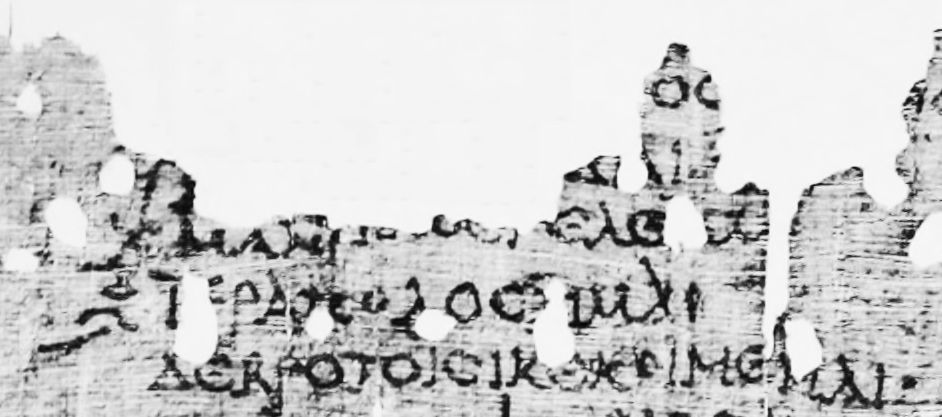
What is only told. The biographical tradition only looks rich. There are five ancient Lives transmitted with the odes, a fragmentary life on papyrus (P.Oxy. 2438), the Suda, and many anecdotes. Yet just one fact about his life is accepted as certain: he was a Theban. Ancient biographies of poets were typically built out of the poems, sometimes refracted through comedy. Familiar story-types attached themselves to famous names.
So the Ambrosian Life tells a story on the authority of Chamaeleon and Ister. Near Mount Helicon, bees built a honeycomb in the sleeping child’s mouth. The story may echo Hesiod’s encounter with the Muses on Helicon. It has a parallel in the tradition about Sophocles.[5]
A Theban for all Greece. Thebes sided with the Persians in Xerxes’ invasion. Ceos, the island of Simonides and Bacchylides, fought at sea against him.[2] Pindar nevertheless received commissions from almost every part of the Greek world. So the world-view of his poems is “truly pan-Hellenic”. It complements the Athenian world of the tragedians, with whom he is often compared.[1] The patrons and occasions are set out on the Victory odes tab.
Language. His poetry is in a largely Doric dialect, with strong Aeolic influence. It allows specifically epic forms, most often in Pythian 4. That is the longest ode. It runs to thirteen triads, where he otherwise never exceeds five.[6] His native Boeotian has left few traces. Perhaps this is because most of his songs were sung outside Boeotia, to listeners who were not Boeotians.[7]
Corinna. The Suda says that the Boeotian poet Corinna defeated Pindar five times in competition. In Plutarch she tells the young Pindar to sow by the handful, not by tipping out the whole sack. Aelian reports that he called her a sow. He was perhaps prompted by his own line about the taunt of the “Boeotian pig” (Olympian 6.90). Whether Corinna was his contemporary at all is disputed.[8]
A classic by the fourth century. By the middle of the fourth century Pindar had something like canonical status. Aristotle quotes him to illustrate general principles. Plato’s Gorgias turns his “custom is the king of all” (fr. 169a.1 S–M) into a philosophical crux. Chamaeleon of Pontus wrote on his life.[9] How his style struck ancient readers is described on the Style tab.
Prosody. Several rules of Greek prosody have a Pindaric exception.
- Pindar, with Theognis and Solon, shows greater freedom than other early poets in scanning a syllable short before stop + liquid.[10]
- He admits elision of -αι (-ai) in middle endings. Alone among the poets listed in the handbook, he elides the normally unelidable περί (peri, “around”).[11]
- A continuant is a consonant whose sound can be held. He occasionally lengthens a final continuant as if it closed the syllable. An example is Nemean 1.51 ἔδραμον ἀθρόοι (edramon athrooi, “they ran in a crowd”), scanned ⏑ ⏑ — — ⏑ —: the -ον of ἔδραμον counts long before the vowel of ἀθρόοι.[12] West’s text has the two words side by side; Sandys’s prints the line in another order.
- Correption is the shortening of a long vowel or diphthong before another vowel. He allows correption inside a word, as in ἰχνεύων (ichneuōn, “tracking”), where ευ counts short before ω: ἰχ-νεύ-ων, — ⏑ —. He also allows a short syllable before σκ (sk) in σκοτεινόν (skoteinon, “dark”, Nemean 7.61), and before σλ (sl) in the dialect form ἐσλός (eslos, “noble”, for ἐσθλός, esthlos). More often, though, he has ἐσ'λός with the first syllable long.[13]
Notes
- ^ a b c Brown 2022, p. 334.
- ^ a b Pelliccia 2009, p. 241.
- ^ Budelmann 2009, p. 386.
- ^ Pelliccia 2009, p. 253.
- ^ Brown 2022, p. 334 with nn. 3–6.
- ^ de Kreij 2022; West 1987, p. 42.
- ^ de Kreij 2022.
- ^ Klinck 2008, pp. 3, 153; see the Corinna page.
- ^ Phillips 2022, p. 120.
- ^ West 1987, p. 16.
- ^ West 1987, p. 13.
- ^ West 1987, p. 18.
- ^ West 1987, pp. 14, 18.
About · 2 of 8
The four books and their transmission
What survives. Pindar is unique among the early melic poets. He alone has a large number of complete poems that reach us by direct manuscript transmission.[1] An epinician is a victory ode, and these poems are the four books of epinicians: the Olympians, Pythians, Nemeans and Isthmians. Of the works of the nine canonical lyric poets, only these came down by direct tradition. Outside the canon, so did the Theognidean corpus.[2]
Everything else is fragments, chiefly from papyri. There are substantial parts of the book of Paeans from Oxyrhynchus. There are significant fragments of hymns, dithyrambs, partheneia, hyporchemata and enkomia, and very little of the dirges.[3]
Before Alexandria. How the poems survived before the Alexandrian edition is almost entirely unknown. The Rhodian historian Gorgon tells that Olympian 7 was inscribed in gold letters in the temple of Athena at Lindos. The story may reflect preservation by families and communities.[4]
In fourth-century Athens the Peripatetic Chamaeleon wrote a monograph On Pindar. Its surviving fragment is on the Corinthian custom of courtesans praying to Aphrodite. It quotes Pindar’s encomium for Xenophon of Corinth (fr. 122, which Chamaeleon calls a skolion), with the opening of Olympian 13. Hadjimichael takes such monographs to have quoted and interpreted the poems, without editing or classifying them. That work was left to Alexandria.[5]
Seventeen books. The Ambrosian Life says that Pindar wrote seventeen books: hymns, paeans, dithyrambs (2), prosodia (2), partheneia (2), “separated from the partheneia”, hyporchemes (2), encomia, laments and epinicians (4).[4] Who arranged them is disputed. Two Lives attribute the division into books to Aristophanes of Byzantium. But many scholars doubt that his work went beyond classification.[6]
Others give the work to Callimachus. Nicholson writes that “Callimachus arranged Pindar’s odes into books”. Barbantani says that he grouped the epinicians by place (fr. 450 Pfeiffer). But Phillips finds “no evidence that Callimachus edited Pindar”. Morrison places Callimachus’ classifying work, such as calling Pythian 2 a “Nemean”, in his catalogue, the Pinakes.[7]
The order of the epinicians. The books follow the rank of the games. Within each book a rough ranking begins with the four-horse chariot race. Olympian 1, for a single racehorse, was put first by Aristophanes, because it tells of the origin of the games.[8] Brown describes the order Olympia, Pythia, Nemea, Isthmus as “descending status”. Nicholson holds that the Isthmian book originally came before the Nemean, as the Isthmia ranked higher, and that the two were later reversed.[9] The sources differ.
Colometry. A colon is a short unit of verse, and colometry is the division of a lyric text into cola. Aristophanes is credited with colometrised texts of Pindar.[10] Dionysius of Halicarnassus says that “Aristophanes or somebody else” divided Pindar and Simonides into cola. To athetise a line is to mark it as spurious. A scholium reports that Aristophanes athetised a colon on metrical grounds.[11]
The colometry of the papyri and the Byzantine manuscripts derives from one standard model. But there is “no undisputed evidence” that Aristophanes invented colometry. If Turner’s date is right, a third-century papyrus of Stesichorus already has a colometric layout. Whether the Alexandrian cola reflect the poets’ musical intentions is also disputed (Fleming and Kopff against Parker and Prauscello).[12] The coronis and paragraphos, which mark poem-end and stanza-end, were systematised in this period.[13]
Strophic responsion was taught in Roman schools. Statius shows this. He learned from his father by what law the voice of Pindar’s lyre comes back to its start. In Holford-Strevens’s reading, Statius claims to know what Horace had called numbers free of law.[14]
The selection of the epinicians, the scholia, the titles and the printed editions are on the Scholia and titles tab.
Notes
- ^ Pelliccia 2009, p. 240.
- ^ Barbantani 2009, p. 313.
- ^ Pelliccia 2009, p. 252; Brown 2022, p. 335.
- ^ a b Brown 2022, p. 335.
- ^ Hadjimichael 2020, pp. 159, 171–175.
- ^ Morrison 2022, p. 399 with n. 58; Brown 2022, p. 335 n. 9.
- ^ Nicholson 2022, p. 50; Barbantani 2009, p. 300; Phillips 2022, p. 120; Morrison 2022, p. 399.
- ^ Brown 2022, p. 337; Phillips 2022, p. 121.
- ^ Brown 2022, p. 337; Nicholson 2022, pp. 50–51.
- ^ Phillips 2022, p. 120.
- ^ Barbantani 2009, p. 301; Morrison 2022, p. 399 n. 64.
- ^ Barbantani 2009, p. 301.
- ^ Phillips 2022, p. 121.
- ^ Bitto 2020, p. 307.
About · 3 of 8
The epinicians alone: selection, scholia, titles, editions
Why the epinicians survived. Up to the mid-third century AD the epinicians were about a quarter of what was read, in papyri as in quotation. Then the other books fade. A codex is a book with pages, as opposed to a roll. Pelliccia associates this selection with the coming of the codex. Unlike festival songs, the epinicians could be dated from victor lists. That made historical scholarship possible, of the kind epitomised by Didymus. It passed into the margins of the texts, and so to Byzantium.[1] Eustathius gives a reader’s reason: the victory odes are more human, briefer and less obscure.[2]
Neumann-Hartmann dates the decisive step. In the second century AD a new edition of selected Greek poets began to circulate. From Pindar it took only the victory odes. They were chosen probably for their subjects, and because the Panhellenic games went on. The edition’s lost commentary is the basis of the scholia on them.[3]
Scholia. Scholia are notes written in the margins of manuscripts. Aristarchus and Didymus wrote commentaries. The medieval scholia descend from such works through repeated redaction. So they preserve them only in part, and through many filters.[4]
The old scholia on the victory odes keep about sixty-seven fragments of Didymus’ commentary and about as many of Aristarchus’. The match is not chance. Most of what we know of Aristarchus’ views comes through Didymus, who cites him, more often to disagree. Didymus’ commentary was in turn the main basis of the scholia, from the second century AD.[5] Didymus explained historical allusions from the historians, but he did not edit Pindar’s text.[6] No discussion of metre by him survives in the scholia.[7]
Titles and headnotes. Each ode carries a title in the dative, naming the victor, his city and his event. Examples are Ἱέρωνι Συρακοσίωι κέλητι (Hierōni Syrakosiōi kelēti, “for Hieron of Syracuse, with the racehorse”) for Olympian 1 and Μίδαι αὐλητῆι Ἀκραγαντίνωι (Midai aulētēi Akragantinōi, “for Midas of Acragas, the piper”) for Pythian 12. These titles are largely an Alexandrian creation or systematisation, consistent across the books. Where they could, the Alexandrians drew on independent records, such as the Olympic and Pythian victor-lists. The headnotes of the scholia are in effect scholia on the titles. Some of them comment on the title as a text.
The medieval manuscripts have lost the titles of Nemean 8 onwards, and of all the Isthmians. But papyri and scholia preserve several. The book of Isthmians breaks off in Isthmian 9. A papyrus commentary (P.Oxy. 2451) knows Isthmian odes that are lost from it, for a Rhodian boxer and a Megarian runner.[8]
Editions. The standard text is the Teubner of Snell, revised by Maehler (1987). Its apparatus is austere, and Turyn’s edition (1952) gives more.[9] Its metrical analyses are the ones West recommends.[10] The ancient scholarship on papyrus is expected in future volumes of the Commentaria et lexica Graeca in papyris reperta.[11]
Notes
- ^ Pelliccia 2009, pp. 248–249.
- ^ Brown 2022, p. 336.
- ^ Neumann-Hartmann 2020, p. 533.
- ^ Phillips 2022, pp. 120–122.
- ^ Braswell 2011, p. 181.
- ^ Braswell 2011, pp. 181–183, 197.
- ^ Braswell 2011, p. 196.
- ^ Prodi 2020, pp. 465–466, 469, 474–475, 491–492, 507; Neumann-Hartmann 2020, p. 536.
- ^ Brown 2022, p. 345.
- ^ West 1987, p. 43.
- ^ Sampson 2022, p. 110.
About · 4 of 8
His metres: dactylo-epitrite
For most of his odes Pindar invents a fresh rhythmic pattern. He keeps each one regular from within by repeating its sections, the “periods”, with great virtuosity.[1] Mostly he uses the triadic system, going up to five triads, and in Pythian 4 alone to thirteen.[2] The odes are dactylo-epitrite, aeolic or iambic, with some intermediate mixtures. Detailed analyses of every poem are in Snell’s Teubner edition, revised by Maehler.[3] Dactylo-epitrite (D/e) is treated here; aeolic and iambic are on the next tab.
Triads, length and classes. A triad is a strophe and antistrophe in responsion, followed by a metrically distinct epode. Brown writes that the odes are “all constructed in triads”. They run from a single triad (Pythian 7) to the thirteen of Pythian 4, nearly 300 lines. The typical ode has about four triads and about 100 lines.[4] West says only that the three poets “mostly” used the triadic system.[2] His analysis of Pythian 12 below speaks of its “four strophes”.[3] The sources differ in emphasis.
Both divide the odes into aeolic, iambic and dactylo-epitrite, with some overlap. Pindar and Bacchylides also combine dactylo-epitrite and aeolic in one poem. They do so in different strophic structures (Bacchylides 3), or even within one strophe (Olympian 13).[5]
Some odes resist analysis. Olympian 1 is the best known of all, but a precise analysis of it has never been reached. Pindar’s phrase Αἰοληΐδι μολπᾷ (Aiolēïdi molpāi, “in Aeolian song”, 102) encourages its classification as aeolic. That classification is disputed.[6]
Dactylo-epitrite
D/e is built from d, D, D², e, E and E², joined by link-syllables, which are usually long (the units are set out on the Simonides page).[7] West’s example is the strophe of Pythian 12. It is given here from the Perseus text, with his analysis:
αἰτέω σε, φιλάγλαε, καλλίστα βροτεᾶν πολίων,
Φερσεφόνας ἕδος, ἅ τ’ ὄχθαις ἔπι μηλοβότου
ναίεις Ἀκράγαντος ἐΰδματον κολώναν, ὦ ἄνα,
ἵλαος ἀθανάτων ἀνδρῶν τε σὺν εὐμενίᾳ
aiteō se, philaglae, kallista broteān poliōn, / Phersephonās hedos, hā t’ ochthais epi mēlobotou / naieis Akragantos eÿdmāton kolōnān, ō ana, / hilaos athanatōn andrōn te syn eumeniāi
“I beg you, lover of splendour, fairest of mortal cities, home of Persephone, you who on the banks of sheep-grazing Acragas dwell on the well-built hill, O sovereign: graciously, with the goodwill of immortals and of men,”
Dactylo-epitrite. West’s analysis, line by line: – D – D; D ⁝ – D; – D – E; D ⁝ – D. D is — ⏑ ⏑ — ⏑ ⏑ —, E is — ⏑ — — — ⏑ —, and – is a link syllable, long throughout. Red, line 3: Ἀ-, short before κρ inside Ἀκράγαντος; -να, a short in the final long position (brevis in longo) after hiatus before (ϝ)άνα, so the period ends there. In line 1 τέω is one syllable. West marks a period-end (‖) after lines 1, 3 and 4, and his analysis places a ⁝ inside lines 2 and 4, as above.
Pindar, Pythian 12.1–4, Sandys’s text (Perseus); analysis West 1987, p. 43
synthetic ∿
δέξαι στεφάνωμα τόδ’ ἐκ Πυθῶνος εὐδόξῳ Μίδᾳ,
αὐτόν τέ νιν Ἑλλάδα νικάσαντα τέχνᾳ, τάν ποτε
Παλλὰς ἐφεῦρε θρασειᾶν Γοργόνων
οὔλιον θρῆνον διαπλέξαισ’ Ἀθάνα·
dexai stephanōma tod’ ek Pythōnos eudoxōi Midāi, / auton te nin Hellada nikāsanta technāi, tān pote / Pallas epheure thraseiān Gorgonōn / oulion thrēnon diaplexais’ Athānā;
“receive this crown from Pytho for glorious Midas, and receive the man himself, who defeated Greece in the art that once Pallas invented when, from the bold Gorgons’ deadly lament, she wove it into music, Athena;”
West’s analysis: – D – E; – D – E; D ⏓ e; E² –. Red: τέχ- and διαπ-, long where West’s marks divide the consonants (τέχ|νᾳ, διαπ|λέξαισ’); -τε, brevis in longo at the end of line 6, a period-end; the link -ᾶν in line 7, long here but short in the fourth strophe (-πτί-, line 31). West marks a period-end after each of these four lines.
Pindar, Pythian 12.5–8, Sandys’s text (Perseus); analysis West 1987, p. 43
synthetic ∿
There may be period-end after μηλοβότου (mēlobotou, 2), but nothing in the four strophes proves it. There is hiatus before (ϝ)άνα ((w)ana) in 3. A short syllable in a final long position is called brevis in longo. The final -να (-na) there, and -τε (-te) at the end of 6, are both brevis in longo. So the period ends at both places.[3] In line 1 West joins τέω (teō) into one syllable by synecphonesis, the running of two vowels together in one syllable without a change of spelling.
Every link in this strophe is long (in line 3 West marks the α of ἐΰδμᾱτον, eÿdmāton, long). West writes the link in line 7 as ⏓. It is long here (-ᾶν), but short in the fourth strophe, where the line reads οὗτος, ὃ καί τιν’ ἀελπτίᾳ βαλὼν (houtos, ho kai tin’ aelptiāi balōn, “this, which, striking a man unexpectedly”; -πτί-, line 31).
West also marks how stop + liquid is treated. A tie in Ἀκράγαντος (Akragantos, 3) shows the first syllable short before κρ (kr) inside the word. This is the freedom Pindar shares with Theognis and Solon.[8] Syllable-markers in τέχ'νᾳ (tech’nāi, 6) and διαπ'λέξαισ’ (diap’lexais’, 8) show those syllables long.[9] Hephaestion quotes Pindar for two combinations of dactylic and iambic lengths, the “iambelegus” and the “Pindaric”.[10]
Licences in D/e. These are the licences:[11]
- Resolution can occur in (⏓) ⏕ ⏑ — and, less commonly, in — ⏑ ⏕ — — ⏑ —. Exceptionally, to accommodate proper names, it occurs in — ⏑ ⏕ × D (Isthm. 6.63), and even in — ⏑ ⏑ ⏕ ⏑ ⏑ — (Isthm. 3.63). In about ten cases it recurs in each responding strophe, but more often it is a licence taken once.
- The first biceps of D is contracted only very rarely.
- The catalectic e (— —) occurs in two odes. As in Simonides, it is used to emphasise a word (Pyth. 1.8 ends e — D e∧ ‖). The ithyphallic catalexis of E is not found in Pindar.
- Other abnormal sequences occur occasionally, especially ⏑ ⏑ — at the beginning of a period.
Notes
- ^ D’Angour 2022.
- ^ a b West 1987, p. 42.
- ^ a b c West 1987, p. 43.
- ^ Brown 2022, p. 337.
- ^ Brown 2022, p. 337; Battezzato 2009, p. 142.
- ^ Brown 2022, p. 337 with n. 17.
- ^ West 1987, p. 43; Battezzato 2009, p. 141.
- ^ West 1987, p. 16.
- ^ West 1987, pp. 16–17.
- ^ Hephaestion, Ench. 15.11, 15.13.
- ^ West 1987, pp. 43–44.
About · 5 of 8
His metres: aeolic and iambic
Aeolic
Most odes that are not D/e are aeolic. They are named after the role that certain asymmetrical cola play in them. Above all these are gl and gl¨, tl and tl¨, ph, r, and dod and dod¨ (o o — ⏑ ⏑ —). The sign ¨ marks West’s anaclastic forms. In anaclasis two neighbouring positions change places.[1]
The aeolic base is the opening pair of positions, written o o. In Pindar its first position can be resolved. So a glyconic may begin — —, — ⏑, ⏖ —, ⏖ ⏑ or ⏑ —. The ⏑ — form is not found in responsion with the others. A double-short form ⏑ ⏑ — ⏑ ⏑ — ⏑ — also occurs, again out of responsion. Pindar also admits resolution later in the colon, and occasionally contraction.[2]
A small number of the simplest poems can be analysed in these terms straight away. West’s example is the first strophe of Nemean 4. It is given here in the Perseus text, with his labels.[3] West’s list of symbols gives the cola as follows: tl¨ × — × — ⏑ ⏑ —; dod¨ o o — ⏑ ⏑ —; gl o o — ⏑ ⏑ — ⏑ —; gl¨ o o — × — ⏑ ⏑ —; tl × — ⏑ ⏑ — ⏑ —; r × — ⏑ ⏑ — ×; ia∧ ⏑ — —.[4]
ἄριστος εὐφροσύνα πόνων κεκριμένων
ἰατρός· αἱ δὲ σοφαὶ
Μοισᾶν θύγατρες ἀοιδαὶ θέλξαν νιν ἁπτόμεναι.
οὐδὲ θερμὸν ὕδωρ τόσον γε μαλθακὰ τέγγει
aristos euphrosynā ponōn kekrimenōn / īatros; hai de sophai / Moisān thygatres aoidai thelxan nin haptomenai. / oude thermon hydōr toson ge malthaka tengei
“The best healer of toils, once they have been judged, is good cheer; and songs, the wise daughters of the Muses, charm it with their touch. Not even warm water soaks the limbs”
Aeolic. West’s labels, line by line: tl¨ dod¨; tl¨; tl¨ ∫ gl¨; gl r, with a period-end (‖) after each line. Here tl¨ is × — × — ⏑ ⏑ —, dod¨ is o o — ⏑ ⏑ —, gl¨ is o o — × — ⏑ ⏑ —, gl is o o — ⏑ ⏑ — ⏑ —, and r is × — ⏑ ⏑ — ×. Red: κεκ- (1) and -γατ- (3), long because the stop closes the syllable before the liquid (κεκ|ριμένων, θύγατ|ρες); ἰ- (2), long ῑ. In line 3 ἀοιδαί runs across the boundary between the two cola (∫).
Pindar, Nemean 4.1–4, Sandys’s text (Perseus); labels West 1987, pp. x, 45
synthetic ∿
γυῖα, τόσσον εὐλογία φόρμιγγι συνάορος.
ῥῆμα δ’ ἑργμάτων χρονιώτερον βιοτεύει,
ὅ τι κε σὺν Χαρίτων τύχᾳ
γλῶσσα φρενὸς ἐξέλοι βαθείας.
gyia, tosson eulogiā phormingi synāoros. / rhēma d’ hergmatōn chroniōteron bioteuei, / ho ti ke syn Charitōn tychāi / glōssa phrenos exeloi batheiās.
“so soft as praise does, joined with the lyre. The word lives longer than deeds, whatever word, with the Graces’ favour, the tongue draws out from the depth of the mind.”
West’s labels: gl¨ tl; gl¨ r; gl; tl ia∧, where ia∧ is ⏑ — —. Red: ὅ τι (7), two shorts in the first position of the glyconic’s base (resolution), so the line begins ⏑ ⏑ ⏑ instead of o o; -σα (8), long because West puts the φ of φρενός in the syllable before it (γλῶσσαφ|ρενός), across the word-end. The strophe ends after line 8 (|||).
Pindar, Nemean 4.5–8, Sandys’s text (Perseus); labels West 1987, pp. x, 45
synthetic ∿
Notes. In line 3 the two cola are “dovetailed”. The word ἀοιδαί (aoidai, “songs”) runs across the colon-boundary (West’s sign ∫).[5] West marks long ᾱ (ā) in εὐφροσύνα (euphrosynā, 1), εὐλογία and συνάορος (eulogiā, synāoros, 5) and βαθείας (batheiās, 8), and long ῑ (ī) in ἰατρός (īatros, 2). He puts syllable-markers in κεκ'ριμένων (kek’rimenōn, 1), θύγατ'ρες (thygat’res, 3) and φ'ρενός (ph’renos, 8). In each the stop + liquid closes the preceding syllable, so -κεκ- (-kek-), -γατ- (-gat-) and -σαφ- (-saph-) are long. That is the normal treatment inside a word, and here it is also used across words.[6]
West’s text has τεύχει (teuchei) in 4 and ἐργμάτων (ergmatōn) in 6, where Sandys prints τέγγει (tengei) and ἑργμάτων (hergmatōn). The metre is the same. The closing iambic metron is already familiar as a tail added to an aeolic colon. In these poets it takes many forms. It is placed before or after an aeolic colon, or in runs of its own.[3]
Most aeolic poems are harder than this. The opening of the strophe is usually easy to analyse. But having stated an initial “motif”, the poets often develop and embroider it. The sequences that result are bewildering in isolation, but easily derived from what has gone before. What matters is where such a sequence comes from, rather than what to call it. Adding or subtracting a syllable may turn an aeolic colon into one in symmetrical rhythm. In Nemean 6.3–5, for example, a resolved glyconic is followed by a lekythion produced from the glyconic.[3]
Snell’s edition arranges related sequences in vertical alignment. It notes mutant forms with bracketed sigla such as (gl), which interpret a colon rather than define it.[7] Itsumi calls this approach “dynamic analysis”. He argues that it should be supplemented by a consistent classification, and he finds two metres, not one, in these odes.[8]
Iambic
Olympian 2 and fr. 75 are almost wholly iambic. They use the unsyncopated and syncopated metra described on the Simonides page.[7] A dochmiac unit, ⏑ ⏕ — ⏑ ⏕ (δ), may appear. It is found in Pindar only, and it begins a period. At period-end a trochaic metron — ⏑ — — may also be found.[7] Olympian 2 opens:
ἀναξιφόρμιγγες ὕμνοι,
τίνα θεόν, τίν’ ἥρωα, τίνα δ’ ἄνδρα κελαδήσομεν;
anaxiphorminges hymnoi, / tina theon, tin’ hērōa, tina d’ andra keladēsomen;
“Hymns, lords of the lyre, which god, which hero, which man shall our song proclaim?”
Line 1 is ia tr: an iambic metron, ⏑ — ⏑ —, then a trochaic one, — ⏑ — —, at the period-end. Red, line 2: the dochmius ⏑ ⏕ — ⏑ ⏕ that opens the second period, with its first long resolved into two shorts (να θε).
Pindar, Olympian 2.1–2, Sandys’s text (Perseus); analysis West 1987, p. 46; translation ours
synthetic ∿
The first period is an iambic metron with a trochaic one at its end. The second begins with that Pindaric dochmius.[7]
Notes
About · 6 of 8
The other half: Pindar's non-dactylo-epitrite odes
Pindar’s odes are roughly half dactylo-epitrite and half something else (Metres: D/e; Metres: aeolic, iambic). Kiichiro Itsumi’s Pindaric Metre: ‘The Other Half’ (2009) is a full study of that something else. Its subject is the 22 victory odes that are not in dactylo-epitrite.[1] Readers are sent to it for these odes, and for the vexed metre of Olympian 1.[2] His terms, his method and his findings are set out below, and so is where he parts company with West.
Scope. Of the 44 epinicians, 23 are in dactylo-epitrite. They can be told apart from the rest without doubt. Only Olympian 13 changes metre in mid-strophe.[3] Itsumi’s argument rests on parallels and counts. So he bases his statistics on the eighteen non-D/e odes whose stanzas recur at least three times. These are the “eighteen majors”: O. 1, 2, 9, 10, 13 (strophe 1–5), P. 2, 5, 6, 8, 10, 11, N. 2, 3, 4, 6, 7, I. 7, 8. He leaves aside O. 4, 5, 14 and P. 7, which are too short to fix their verse-divisions. He treats them, and the longer fragments, in appendices.[4] By his count these eighteen odes contain 235 verses.[5]
Terms. Itsumi follows L. P. E. Parker in his terms. He says verse where West says period. He says phrase rather than colon, since Pindar’s cola are often hard to demarcate.[6]
His aeolic phrases are built on two six-position units. One is the dodrans, — ⏑ ⏑ — ⏑ —. The other is its mirror image, the reversed dodrans, — ⏑ — ⏑ ⏑ —. A base may stand before them, or not. The base is either a single anceps (his “half-base”) or two positions ○ ○ (“full base”). So the telesillean is × + dodrans, and the glyconic is ○ ○ + dodrans. The heptasyllable × — ⏑ — ⏑ ⏑ — and the wilamowitzianum ○ ○ — ⏑ — ⏑ ⏑ — are the same with the reversed dodrans.[7]
Lengthened phrases are written with a plus sign for the positions added after the choriamb. So tel+3 is the telesillean with ⏑ — — added.[8] His “reversed dodrans” is not quite the same as West’s dod¨, ○ ○ — ⏑ ⏑ —.[9] In Pindar its second position is short in nearly every instance.[10]
ἄριστος εὐφροσύνα πόνων κεκριμένων
οὐδὲ θερμὸν ὕδωρ τόσον γε μαλθακὰ τέγγει
aristos euphrosynā ponōn kekrimenōn / oude thermon hydōr toson ge malthaka tengei
“The best healer of toils, once they have been judged, … Not even warm water soaks the limbs”
Line 1 opens with a half-base, ἄ- in red, then the reversed dodrans ρισ-το-ς εὐ-φρο-σύ-να, — ⏑ — ⏑ ⏑ —: together a heptasyllable. Itsumi reads the whole line as hepta+2 d, the heptasyllable lengthened by ⏑ — and followed by d (— ⏑ ⏑ —); West reads tl¨ dod¨. Line 2 opens with a full base, οὐ-δὲ in red, then the dodrans θερ-μὸ-ν ὕ-δωρ-τό-σον, — ⏑ ⏑ — ⏑ —: together a glyconic, West’s gl.
Pindar, Nemean 4.1 and 4.4, Sandys’s text (Perseus); analyses Itsumi 2009, pp. 24, 293, and West 1987, p. 45
synthetic ∿
Method. West took over from Snell an approach that Itsumi calls “dynamic analysis”. It follows how each sequence grows out of what came before. It calls a variant a “mutant” of the colon it derives from.[11] Itsumi grants its merits. But he objects that it cannot show which forms are usual and which odd, and so it can mislead when metre is used to judge the text.[12] A. M. Dale’s neutral notation describes a verse without naming its cola. It is open to the opposite objection: it gives up classification altogether.[13]
Itsumi’s own answer is a set of explicit rules for dividing verses into phrases. A boundary goes between two true longs, or before an anceps that stands between two longs, but never before a short. A dactylic run is never divided. A position between two longs is anceps, never a contracted double short. These two principles alone, he estimates, fix perhaps 90% of the boundaries.[14]
Two metres. Applied consistently, the rules show that the “other half” is not one metre but two. Aeolic is marked by the asymmetrical dodrans and reversed dodrans, and by the absence of link-syllables between phrases. Freer dactylo-epitrite is built, like ordinary D/e, from the symmetrical units e (— ⏑ —) and d (— ⏑ ⏑ —) and their longer forms. But its basic double-short unit is d rather than D. It uses rarer phrases, it often joins units with no link at all, and its verses are shorter.[15] By his count 101 of the 235 verses, 43%, are freer D/e.[16]
Three classes. According to how the two metres are combined, the 31 stanza-forms fall into three classes:[17]
| Class | Character | Clearest cases |
|---|---|---|
| I, aeolic | aeolic phrases, at most one freer D/e verse; long verses built phrase by phrase; dovetailing; — — allowed in the base | O. 9 str., N. 2, N. 4, I. 7 |
| II, freer D/e | more than half the verses in e, d and their extensions; short verses; long link anceps in mid-verse | O. 9 ep., O. 10, O. 13 str. 1–5, P. 5 str., N. 6 |
| III, amalgamated | the two metres tightly fused in long verses, many shorts, long runs of single-short movement | O. 1, P. 2 str., N. 3, N. 7 |
The table condenses his synopsis and lists.[18] Class III he calls the most characteristically Pindaric, the “consummation of his art”.[19] Olympian 2 is in Class II.[20] This reading differs from West’s iambic analysis of it.[21]
The aeolic base. In Pindar the base takes four forms: — —, — ⏑, ⏑ — and ⏑ ⏑ ⏑. The form — — is rare (six cases), though it is the commonest form in tragedy. Different forms seldom answer each other. The only regular responsion is — — ~ — ⏑, and it is confined to Class I.[22] Pindar may have been the first to resolve the base, as ⏑ ⏑ ⏑.[23]
Kiparsky reports Itsumi as showing that Pindar never uses the double-short base ⏑ ⏑,[24] citing Itsumi’s p. 26. West’s list of Pindar’s glyconic bases includes ⏑ ⏑ —.[25] Itsumi would admit that form only on a corrupt text. The point is disputed.[26]
Where he differs from West, Snell and Turyn. Besides the base and Olympian 2, there are three points:
- Divisions. West analyses Nemean 4.1 as tl¨ dod¨. In this he follows Snell and Turyn in dividing before a short. Itsumi reads hepta+2 d.[27] The two analyses are compared line by line on the Nemean 4 works tab.
- Expansion. Snell’s tables and West’s description lead one to expect much dactylic expansion of aeolic cola in Pindar. Itsumi finds at most six examples, all in freer D/e or amalgamated contexts. He suspects they are not aeolic at all, but variants of D.[28] Disputed.
- The link-syllable. In his larger Greek Metre (1982) West dismisses the link-syllable of D/e as “a false concept” for the process of composition. That judgement is known here from Itsumi’s and Lourenço’s quotations of it. Itsumi asks whether it is not an a priori argument.[29] Lourenço shares his doubt.[30] Disputed.
Reception. Kiparsky cites Itsumi’s earlier work for the unity of the glyconic family, in which glyconic, telesillean and wilamowitzianus answer one another. He also cites it for the refutation of a loose pattern × × × × — ⏑ ⏑ — behind them.[31] He cites the 2009 book for moving beyond a static list of cola to a “dynamic approach”.[32] That summary uses the word in the opposite sense to Itsumi’s own. Itsumi calls West’s method dynamic, and argues for keeping a consistent, “static” classification alongside it.[33]
Notes
- ^ Itsumi 2009, p. v.
- ^ Brown 2022, p. 337 nn. 16–17.
- ^ Itsumi 2009, p. 8.
- ^ Itsumi 2009, pp. xv, 8–9.
- ^ Itsumi 2009, p. 10.
- ^ Itsumi 2009, p. 10 with n. 19.
- ^ Itsumi 2009, pp. xii, 24.
- ^ Itsumi 2009, pp. xiii, 27–28.
- ^ West 1987, p. ix.
- ^ Itsumi 2009, p. 24.
- ^ Itsumi 2009, p. 3; West 1987, pp. 45–46.
- ^ Itsumi 2009, p. 4.
- ^ Itsumi 2009, pp. 4–6.
- ^ Itsumi 2009, pp. 13–19.
- ^ Itsumi 2009, pp. 21–23.
- ^ Itsumi 2009, p. 21.
- ^ Itsumi 2009, pp. 8, 103.
- ^ Itsumi 2009, pp. 106–109.
- ^ Itsumi 2009, p. 109.
- ^ Itsumi 2009, pp. 108, 154.
- ^ See the Olympian 2 works tab.
- ^ Itsumi 2009, p. 25 with n. 42; p. 32.
- ^ Itsumi 2009, p. 34.
- ^ Kiparsky 2018, p. 98.
- ^ West 1987, pp. 44–45.
- ^ Itsumi 2009, p. 25 n. 41.
- ^ Itsumi 2009, pp. 12, 16, 293.
- ^ Itsumi 2009, pp. 64–66.
- ^ Itsumi 2009, p. 5 n. 11.
- ^ Lourenço 2011, p. 71 n. 148.
- ^ Kiparsky 2018, p. 83 with n. 8.
- ^ Kiparsky 2018, p. 84.
- ^ Itsumi 2009, pp. 3–7.
About · 7 of 8
His style
Ancient and modern verdicts. Horace pictured Pindar as a mountain river in flood (Odes 4.2). Quintilian called him “far the greatest” of the lyric poets.[1] Dionysius of Halicarnassus made him the model of the “austere” style, and Athenaeus called him “Pindar of the greatest voice”.[2] For “Longinus”, he and Sophocles burn up everything in their path, though their fire is sometimes quenched.[3]
Modern judgement has swung widely. For one generation his poems were the model of a Romantic sublimity free of all rules. For another they were the product of chilly rhetorical design.[4] Wilamowitz found the poet himself lacking in substance (“Er selbst ist kein reicher Geist”). Brown takes this verdict to reflect a failure of interpreters.[5]
Openings. The odes regularly begin with a rhetorical flourish. Olympian 1 opens with a priamel. A priamel is a list of detached statements, arranged so that the last one receives the emphasis. Here the last is the Olympic games: water is best, gold shines like fire, no star outshines the sun, no contest is greater than Olympia.[6] Olympian 7 opens with a developed simile. This is a feature of epic, and it is rare in Pindar, who has only five others.[7]
A shifting voice. Pindar’s focus changes constantly and rapidly. He uses imperatives, and apostrophes to people and places near and far. Pelliccia counts this “constant, rapid change of pragmatic focus” among the hallmarks of Pindar’s manner. So far as the evidence goes, neither Simonides nor Bacchylides shares it.[8]
Ambiguity adds to the difficulty. In Olympian 9.14 αἰνήσαις (ainēsais) may be an optative (“praise …!”). Or it may be an aorist participle, since Pindar uses the Aeolic participle in -αισ- (-ais-). Pindar poses such problems much more often than Bacchylides.[9]
“having praised”
The aorist participle in -αις (-ais), Attic -ας (-ās). The same ending is in Pythian 12.8, διαπλέξαισ’ (diaplexais’, “having woven”), the feminine, where Attic has διαπλέξασα (diaplexasa). Because αἰνήσαις can also be read as an optative of command, “praise …!”, the form leaves Olympian 9.14 open.
Pindar, Olympian 9.14 and Pythian 12.8; the two readings after Pelliccia 2009, p. 255
In Nemean 4.60–65 it is unclear whether Chiron or Peleus is the subject of ἔκφερεν (ekpheren, “brought to fulfilment”, 4.61). The choice changes the role of Chiron in the myth.[10] The word order of Pythian 3.8–11 seems designed to make the events look stranger still. No English version can stay faithful to it and still read as English.[11]
Compression. Isthmian 8.49–55 is a model of Pindar’s compressed style, with its expressive metaphors and its events folded into one another. The race of Pelops in Olympian 1 takes two lines. It is a “bare-bones micronarrative”, whose brevity is itself meaningful.[12] Bacchylides, by contrast, narrates so that the events tell their own story.[13]
Catalogue, maxim, myth. Pindar varies the list of the victor’s earlier wins. So in Pythian 9.76–92 a victory at the Theban Iolaia opens into the praise of Iolaus and Heracles.[14] His gnomic sayings express a world-view shared with his aristocratic patrons. They also carry the transitions between sections. The scholia took the two crows of Olympian 2.86–88 as Bacchylides and Simonides. But the dual is now usually seen as a traditional story-telling device.[15]
His myths draw on the Epic Cycle, but they seem to avoid details of the Iliad and Odyssey. All but one of the Aeginetan odes tell of the Aeacids. The odes for Hieron favour dark myths of crime and punishment.[16]
Reading Pindar. For a long time critics sought the unity of each ode in a single governing idea. The result was that Pindar seemed to have nothing to say. Bundy’s Studia Pindarica (1962) recast every element as part of a rhetoric of praise. That correction became reductive in its turn, and a historically informed criticism has since returned.[17]
Language and rhythm. His Doric carries stronger Aeolic colouring than any other non-Lesbian poet’s. It admits rare Doric forms “when it suits him”.[18] Most odes have a rhythm made new for the occasion. It is held together by the skilled repetition of sections called periods.[19] In strophic song the melody overrides the accent. So the difference between Πυθῶνάδε (Pythōnade, “at Pytho”) and Πύθωνάδε (Pythōnade, “at Python”) at Olympian 9.12 was immaterial.[20]
Notes
- ^ Brown 2022, p. 333.
- ^ Phillips 2022, pp. 121, 125.
- ^ Fearn 2022, p. 350.
- ^ Pelliccia 2009, p. 256.
- ^ Brown 2022, pp. 333–334.
- ^ Brown 2022, pp. 338–339.
- ^ Brown 2022, p. 339 with n. 24.
- ^ Pelliccia 2009, p. 254.
- ^ Pelliccia 2009, p. 255.
- ^ Brown 2022, pp. 343–344.
- ^ Pelliccia 2009, p. 260.
- ^ Phillips 2022, pp. 128, 130.
- ^ Pelliccia 2009, p. 259.
- ^ Brown 2022, pp. 341–342.
- ^ Brown 2022, p. 342 with n. 36.
- ^ Brown 2022, pp. 342–343.
- ^ Brown 2022, pp. 344–345.
- ^ de Kreij 2022.
- ^ D’Angour 2022, p. 138.
- ^ Pelliccia 2009, p. 256 n. 36.
About · 8 of 8
Victory odes: patrons, occasions, performance
What an epinician did. A victory ode likens the victor’s achievement to the deeds of heroes. It links a myth to the present through gnomic sayings and through verbal and thematic echoes.[1] The value of athletic victory was contested. So, Nicholson argues, each ode had two jobs. It had to praise the particular victory, and to establish the worth of athletics as a whole.[2]
Dates. Precise dates depend on victor lists. These survive in part (the Oxyrhynchus list), or are reflected in the scholia. They cover only Olympic and Pythian victories, and they contain errors. Some odes were also commissioned long after the victory.[3]
Patrons. His victors came from the whole Greek world:[4]
- Hieron of Syracuse and Theron of Acragas;
- Arcesilas IV of Cyrene, who won the Pythian chariot race in 462 and the Olympic in 460 (Pythians 4–5);
- the boxer Diagoras of Rhodes (Olympian 7);
- Chromius, a soldier of fortune who became regent of Aetna (Nemeans 1 and 9);
- Psaumis of Camarina (Olympian 4);
- a magistrate of Tenedos (Nemean 11).
Pindar seems to have been “particularly fond” of writing for young Aeginetan athletes. He wrote for Athens too, including Pythian 7.[5] The scholia assign two odes, for a Rhodian and a Corinthian (Olympians 7 and 13), to the same Olympiad of 464.[6]
The festivals. The four “sacred contests” awarded only crowns: olive at Olympia, laurel at the Pythia, celery at Nemea and the Isthmus. Pindar knows the hierarchy, with Olympia first. Yet his Olympian odes are neither longer nor grander in diction or structure than his Pythians and Nemeans. Local victories enter the odes in catalogues, and some odes celebrate a victory outside the four games.[7]
Two odes for Melissus of Thebes share the same metre, which is unique among Pindar’s odes. Isthmian 4 is for a pancration victory, and Isthmian 3 for a later chariot victory at Nemea. The shared metre marks the two victories as one athletic career.[8]
The “programme”. Brown thinks it likely that the poet received guidance on what to include. So the trainer Melesias is praised in Olympian 8, and the charioteer Nicomachus in Isthmian 2.20–28.[9] Odes for boy victors in the combat events mostly name the trainer. Charioteers are largely passed over. Pythian 5, where the driver was the victor’s brother-in-law, and Isthmian 2 are the exceptions.[10] Inherited excellence, φυά (phyā, “nature, inborn quality”), is Pindar’s constant theme.[11]
Commission and fee. Nicholson calls the odes “typically commissioned by the victor or a family member”.[1] Brown thinks commission “likely”.[9] Pindar himself reminds his Muse of her task, “if you agreed, for a fee, to hire out your voice for silver” (Pythian 11.41–2, our translation).[12] Pelliccia, however, argues that the commission-and-fee model derives from unreliable ancient gossip. In his view the poems’ tone of equality fits poets writing as friends and fellow victors of the men they praised.[13] The point is disputed.
Chorus or soloist? Choral performance was long assumed from the metres, but the assumption has been challenged. Brown concludes that both modes “are possible”. There might be a chorus at a communal celebration, or a solo singer at a symposium, and perhaps both for the same ode in different settings.[14]
The controversy was opened by Heath and Lefkowitz (1988), and answered by Burnett and Carey (1989).[15] Pelliccia thinks Olympian 9 calls its own chorus or kômos into being, wherever it is sung.[16] Barbantani calls public choral performance the view “widely (though not universally)” held.[17] The question is disputed.
An ode not by Pindar? Nicholson, following Barrett, treats Olympian 5, for Psaumis, as the work of an unknown poet of the mid-fifth century, preserved in the manuscripts as Pindar’s.[18] Hornblower leaves its authenticity open.[19] Its authorship is disputed.
Notes
- ^ a b Nicholson 2022, p. 48.
- ^ Nicholson 2022, pp. 47–48.
- ^ Nicholson 2022, pp. 48–49.
- ^ Nicholson 2022, pp. 57–59 with nn. 69–72.
- ^ Hornblower 2009, p. 42.
- ^ Pelliccia 2009, p. 241.
- ^ Nicholson 2022, pp. 50–51.
- ^ Nicholson 2022, p. 54.
- ^ a b Brown 2022, p. 340.
- ^ Nicholson 2022, pp. 55–56 with n. 50.
- ^ Brown 2022, p. 340; Nicholson 2022, p. 59.
- ^ Quoted by Hornblower 2009, p. 42.
- ^ Pelliccia 2009, pp. 245–247.
- ^ Brown 2022, pp. 337–338.
- ^ Pelliccia 2009, p. 245 n. 17.
- ^ Pelliccia 2009, p. 254.
- ^ Barbantani 2009, p. 311.
- ^ Nicholson 2022, p. 48 with n. 7.
- ^ Hornblower 2009, pp. 42, 51.
Pythian 12 — four strophes in dactylo-epitrite
Synopsis
For Midas of Acragas, a famous piper. He won the contest for solo pipe (aulos) at Delphi twice, at the 24th and 25th Pythiads. It is not known which victory this ode celebrates. But Pindar usually mentions an earlier win, so Gildersleeve takes it to be the first, of 494 BC. That would make it one of Pindar’s earliest odes.[1] Race dates the victory to 490 BC.[2] The ancient commentators told that Midas’ mouthpiece broke during the contest, but he played on and won.[1] The ode praises Acragas and announces the victory. It tells how Athena invented pipe music, imitating the Gorgons’ lament for Medusa, and the tune called the “many-headed”. Then it returns to the victor, with reflections on toil and prosperity.[3] Mezger read the myth as the poem’s point: the victory was won in an art invented by Athena.[1] Pindar, a Theban, was born about 518 BC and died about 446.[4]
The whole ode is scanned below: four strophes in dactylo-epitrite, the form West uses to introduce the metre.[5]
Text and translation
αἰτέω σε, φιλάγλαε, καλλίστα βροτεᾶν πολίων
Pindar · Pythian 12 · for Midas of Acragas, winner in the pipe-playing · four responding strophes in dactylo-epitrite · text of Sandys (Loeb, via Perseus)
How to read each line
A guide to the Greek, syllables, pitch marks and quantities.
Show the reading key
- Above each line: the line as the edition prints it, each word placed over its own syllables. The main row: the same Greek divided into metrical syllables, each written as it is pronounced. A consonant that closes a syllable is written with it (λόθ | ρο); an elided word is closed up with the next vowel (ν’ἀ); a final consonant carried into the next word is set with a thin space (ς ἰ). Wider gaps mark word-ends.
- Above the syllables: the pitch of each syllable, from the accents. Under them: the quantity of each syllable as it falls in the line, then the transliteration, syllable by syllable, with accented syllables in capitals.
- Under each line: a line-for-line translation. In the right margin of the scansion: the line type, its scheme, and its analysis into cola.
Key to the labels
The names, patterns and symbols used beside this poem.
Show the labels and symbols
The labels in the right margin of the scansion below give the line’s analysis as the scheme file states it, then its scheme and, where the analysis notes them, the period-end, a brevis in longo or a hiatus. ‖ marks the end of a period, ||| the end of the stanza; a line without a period-end runs on into the next (synapheia). × is an anceps, long or short; the last position of every period is indifferent. A click on any syllable highlights the colon it belongs to and explains it. The sources of the labels, with their page numbers, are given line by line under Prosody, line by line.
| Label | Name and shape | What it is |
|---|---|---|
| link | Link-syllable— | The syllable, usually long, that may stand before, between and after the units.[6] In this ode it is long wherever West prints —. |
| D | Hemiepes (D)— ⏑ ⏑ — ⏑ ⏑ — | The dactylic unit of dactylo-epitrite: two dactyls and a long.[6] Its other name, hemiepes, means “half-hexameter”.[7] Pindar contracts its first biceps only very rarely,[8] and in this ode never. |
| E | Epitrite pair (E)— ⏑ — × — ⏑ — | Two e-units joined by an anceps,[6] the shape West says could equally be called a lekythion. In this ode the anceps is long in every strophe. |
| linkx | Link-syllable, anceps⏓ | The link of the seventh period, which West marks ⏓.[6] It is long in strophes 1–3 and short in strophe 4 (ἀελπτίᾳ). |
| e | Cretic (e)— ⏑ — | The shortest iambo-trochaic unit of dactylo-epitrite.[6] A single e ends the seventh period of the strophe. |
| E2 | Triple e (E²)— ⏑ — × — ⏑ — × — ⏑ — | Three e-units joined by two ancipitia.[6] In this ode both ancipitia are long in every strophe. |
| close | Final long— | The long after E² that closes the strophe (West’s E² –). As the last position of a period it is indifferent. |
Scansion
The whole of a monostrophic ode laid out from West’s analysis of its strophe (– D – D ‖ D ⁝ – D | – D – E ‖ …): every syllable of the four strophes placed in its unit, the link-syllables and ancipitia marked, and each strophe shown answering the first position for position (responsion).
I beg you, lover of splendour, fairest of mortal cities,
home of Persephone, you who on the banks of sheep-grazing
Acragas dwell on the well-built hill, O sovereign:
graciously, with the goodwill of immortals and of men,
receive this crown from Pytho for glorious Midas,
and receive the man himself, who defeated Greece in the art that once
Pallas invented when, from the bold Gorgons’
deadly lament, she wove it into music, Athena;
the lament she heard pouring from the maidens and from the snakes’ unapproachable heads
in their grievous agony,
when Perseus made an end of the third of the sisters,
bringing doom to sea-girt Seriphos and its people.
Yes, he darkened the wondrous race of Phorcus,
and made Polydectes’ feast a bitter one, repaying his mother’s long
slavery and the bed she was forced into,
when he carried off the head of fair-cheeked Medusa,
he, the son of Danaë, who, we say, from self-flowing gold
was born. But when from these labours she had rescued the man she loved,
the maiden made the many-voiced music of the pipes,
so that the loud-shrieking wail that came from Euryale’s swift jaws
and reached her she might copy with instruments.
The goddess found it; but having found it for mortal men to have,
she named it the strain of many heads,
the glorious reminder of contests that stir the people,
often passing through thin bronze and through the reeds
that grow beside the city of the Graces with its lovely dancing-floors,
in the precinct of Cephisus’ nymph, faithful witnesses of the dancers.
If there is any happiness among men, without toil
it does not appear; but he will bring it to fulfilment, perhaps even today,
the god — what is fated cannot be escaped — yet a time will come
which, striking a man with the unlooked-for,
will give him one thing against his expectation, and another not yet.
Metre
- The strophe. Pythian 12 is monostrophic: one eight-line strophe sung four times to the same music, 32 lines in all. West[6] uses it as his example of dactylo-epitrite, which is built from the dactylic unit D (— ⏑ ⏑ — ⏑ ⏑ —) and the iambo-trochaic unit e (— ⏑ —), with E = e × e and E² = e × e × e; the units are joined by a single syllable, usually long, which may stand before, between and after them or be absent.[9] His analysis of the strophe, which the right margin reproduces line by line, is – D – D ‖ D ⁝ – D | – D – E ‖ D ⁝ – D ‖ – D – E ‖ – D – E ‖ D ⏓ e ‖ E² – |||.
- Responsion. The scheme is given once and repeated for every strophe, so all 32 lines are scanned against the same eight schemes. Every line fills its scheme exactly, syllable for position: there is no resolution and no contraction anywhere in the ode. West allows both in D/e, resolution mainly in the e-units and contraction of the first biceps of D very seldom;[10] this ode uses neither.
- Link-syllables and ancipitia. The link is long wherever West prints —, in all four strophes. The one link he marks ⏓, in line 7, is long in strophes 1–3 (θρασειᾶν, ἀναγκαῖον, πολλᾶν) and short in strophe 4 (ἀελπτίᾳ). The ancipitia inside E and E² are long in every strophe.
- Periods. ‖ marks a period-end, |, after line 2, only the end of a colon: West allows that a period may end after μηλοβότου, but notes that none of the four strophes proves it.[6] A period-end is proved by hiatus or brevis in longo, and once established in one strophe it holds at the corresponding place in all.[11] Here the brevis in longo ἄνᾰ proves it after line 3 and ποτε after line 6;[6] the hiatus αὐτορύτου | ἔμμεναι (17–18) proves it after line 1, Μίδᾳ | αὐτόν (5–6) after line 5, and καμάτου | οὐ (28–29) after line 4. After line 7 nothing of this kind occurs in any strophe; the period-end there is West’s.
- A second source. Itsumi’s study of Pindar’s other, non-dactylo-epitrite half also places this ode among the 23 epinicians in D/e, one of only two (with Nemean 9) that are monostrophic.[12] His measure of how “light” a stanza is, the proportion of short syllables among all the syllables sung (resolutions counting as two shorts), puts this strophe at 42.7%, a little above the average of 40.1% for the D/e stanza-forms, which long link-syllables and the absence of resolution keep low, and well below the average of 50.9% for the odes he studies.[13] On the question of line 2, Itsumi’s rule for D/e is to divide verses wherever word-end coincides in all strophes, even without hiatus or brevis in longo; but he grants that no objective rule settles such cases.[14] He does not discuss Pythian 12 itself.
- Word-end. West marks the junction after the first D of lines 2 and 4 with a dotted bar (⁝). In line 2 word-end falls there in all four strophes. In line 4 it does in strophes 1 and 3; in strophe 2 it comes after the link instead (Σερίφῳ | λαοῖσι), and in strophe 4 the D runs on into ἀνθρώποισιν.
- Prosody. The workbench scans Doric choral lyric with the epic rules of prosody. A stop + liquid may make position or not, and Pindar uses that freedom more than early poets:[15] it makes position in φιλάγλαε (1), ἀπλάτοις (9) and λυγρόν (14), and not in Ἀκράγαντος (3) or ἐφεῦρε θρασειᾶν (7). A final long vowel or diphthong may be shortened before a vowel (epic correption)[16]: ἔμμεναι and ἐπεί in line 18, φαίνεται in line 29. In Doric lyric hiatus is found almost only before words that once had an initial digamma,[17] and the one hiatus inside a line, ὦ ἄνα (3), is before (ϝ)άνα.[6]
- Two vowels sung as one. αἰτέω (1) is two syllables, -έω being sung as one: West prints the tie,[6] and such synecphonesis inside a word is frequent when the first vowel is ε.[18] λαοῖσι (12) needs the same treatment of λαοῖ- to fit its fifteen positions; that kind is rare,[17] and West does not discuss the line, so this scansion is the workbench’s. Both are tied in the text.
- Marked quantities. The workbench takes an unmarked α, ι or υ at the length the metre gives it. Where the position is anceps the metre cannot decide, so the long α is marked: κολώνᾱν (3) and Ἀθάνᾱ (8), as West prints them, and the Doric or epic long α of συλᾱ́σαις (16), θνᾱτοῖς (22) and λᾱοσσόων (24). ἐΰδμᾱτον (3) is marked as West prints it. Two breves mark the short vowels the analysis turns on: ἄνᾰ (3), West’s brevis in longo, and ἀελπτῐ́ᾳ (31), the short link that West’s ⏓ records. The marks are not shown on the page.
Prosody, line by line
Every syllable, with the reason for its length. Quantities are read from the vowel where the spelling shows it, from the consonants that follow (“position”), from the accent where it tells, and from the metre where nothing else does. Editors’ notes on the text follow in the boxed paragraphs.
- 12.1
Line 12.1 · αἰτέ‿ω σε, φιλάγλαε, καλλίστα βροτεᾶν πολίων,
αἰτέ‿ω σε, φιλάγλαε, καλλίστα βροτεᾶν πολίων,
αἰτέ‿ωσε,φιλάγλαε,καλλίσταβροτεᾶνπολίων,- 1 —αἰαἰ is a diphthong, long by nature.
- 2 —τέ‿ωέω is two vowels of one word pronounced together as one long syllable (synizesis).
- 3 ⏑σε,ε is short by nature.
- 4 ⏑φιι is short by the metre (position 4 must be short).
- 5 —λάγά is a vowel of unknown length; closed by γ before a liquid: stop + liquid makes position, as it usually does in epic.
- 6 ⏑λαα is short by the metre (position 6 must be short).
- 7 ⏑ε,ε is short by nature.
- 8 —καλα is a vowel of unknown length; closed by λ: long by position.
- 9 —λίσί is a vowel of unknown length; closed by σ: long by position.
- 10 —ταα is a vowel of unknown length; the next word begins with βρ: the syllable is closed before it: long by position.
- 11 ⏑βροο is short by nature.
- 12 ⏑τεε is short by nature.
- 13 —ᾶνᾶ carries a circumflex, so it is long; closed by ν: long by position.
- 14 ⏑ποο is short by nature.
- 15 ⏑λίί is short by the metre (position 15 must be short).
- 16 ×ων,ω is long by nature; closed by ν: long by position; the last position of the period is indifferent.
West prints – D – D ‖, a link before each D, and both links are long.[6] αἰτέω is two syllables, -έω being sung as one: West prints the tie, and this synecphonesis inside a word is frequent when the first vowel is ε.[18] The -λαγ- of φιλάγλαε is long by position before γλ, a cluster that seldom stays short.[15] Nothing at the end of this line proves period-end in strophe 1; the hiatus between αὐτορύτου and ἔμμεναι at lines 17–18 proves it for all four strophes.[11]- 12.2
Line 12.2 · Φερσεφόνας ἕδος, ἅ τ’ ὄχθαις ἔπι μηλοβότου
Φερσεφόνας ἕδος, ἅ τ’ ὄχθαις ἔπι μηλοβότου
Φερσεφόναςἕδο,ς ἅτ’ὄχθαιςἔπιμηλοβότουthe period runs on into 12.3 (synapheia).
The label in the margin, with its sources: D, link, D; colon-end only: nothing in the four strophes proves a period-end (West 1987, p. 43).
- 1 —Φερε is short by nature; closed by ρ: long by position.
- 2 ⏑σεε is short by nature.
- 3 ⏑φόό is short by nature.
- 4 —ναςα is long by the metre (position 4 must be long).
- 5 ⏑ἕἕ is short by nature.
- 6 ⏑δο,ο is short by nature.
- 7 —ς ἅἅ is long by the metre (position 7 must be long); the first consonant belongs to the previous word and is carried over to this vowel.
- 8 —τ’ὄχὄ is short by nature; closed by χ: long by position; the apostrophe marks an elided vowel; the consonant before it joins this syllable.
- 9 —θαιςαι is a diphthong, long by nature.
- 10 ⏑ἔἔ is short by nature.
- 11 ⏑πιι is short by the metre (position 11 must be short).
- 12 —μηη is long by nature.
- 13 ⏑λοο is short by nature.
- 14 ⏑βόό is short by nature.
- 15 —τουου is a diphthong, long by nature; the line-end is not a period-end: the period runs on into the next line (synapheia), so this syllable keeps its own length, with no brevis in longo, and a word may run over into the next line.[19]
West prints D ⁝ – D with only a colon-end after μηλοβότου, because nothing in the four strophes proves a period-end there.[6] The workbench therefore runs lines 2 and 3 together as one period (synapheia)[19]. ἅ is the Doric relative (Attic ἥ); τ’ is elided before ὄχθαις, and the link τ’ὄχ- is long by position. Word-end falls after the first D, at West’s ⁝.- 12.3
Line 12.3 · ναίεις Ἀκράγαντος ἐΰδματον κολώναν, ὦ ἄνα,
ναίεις Ἀκράγαντος ἐΰδματον κολώναν, ὦ ἄνα,
ναίειςἈκράγαντος ἐΰδματονκολώναν,ὦἄνα,continues 12.2 · one period (synapheia); brevis in longo at period-end (a short in the final long position); hiatus inside the line.
The label in the margin, with its sources: link, D, link, E; period-end proved by the brevis in longo ἄνα in line 3 (West 1987, p. 43).
- 1 —ναίαί is a diphthong, long by nature.
- 2 —ειςει is a diphthong, long by nature.
- 3 ⏑ἈἈ is a vowel of unknown length; κρ is carried whole into the next syllable, so this syllable stays open and short (correption before a stop + liquid cluster, as the metre needs).
- 4 ⏑κράά is short by the metre (position 4 must be short).
- 5 —γανα is a vowel of unknown length; closed by ν: long by position.
- 6 ⏑τοο is short by nature.
- 7 ⏑ς ἐἐ is short by nature; the first consonant belongs to the previous word and is carried over to this vowel.
- 8 —ΰδΰ is a vowel of unknown length; closed by δ: long by position; δμ is one of the four clusters (γμ, γν, δμ, δν) that never leave the syllable before them short.[15]
- 9 —μαᾱ is long (its length is not shown by the ordinary spelling).
- 10 —τονο is short by nature; closed by ν: long by position.
- 11 ⏑κοο is short by nature.
- 12 —λώώ is long by nature.
- 13 —ναν,ᾱ is long (its length is not shown by the ordinary spelling); the position is anceps.
- 14 —ὦὦ is long by nature; the next word begins with a vowel and nothing is elided: hiatus.
- 15 ⏑ἄἄ is short by the metre (position 15 must be short).
- 16 ×να,ᾰ is short (its length is not shown by the ordinary spelling); the last position of the period is indifferent; a short here is brevis in longo.
West prints – D – E ‖ with a long link before E, the -μᾱ- of ἐΰδμᾱτον, which he marks long;[6] the link is long in all four strophes (-μᾱ-, -νυσ-, -λῶν, πισ-). The Ἀ- of Ἀκράγαντος stays short before κρ, the freedom with stop + liquid that Pindar shares with Theognis and Solon.[15] West notes the hiatus before (ϝ)άνα, a word that once began with digamma.[20] The short final -να is brevis in longo, so the period ends here.[21]- 12.4
Line 12.4 · ἵλαος ἀθανάτων ἀνδρῶν τε σὺν εὐμενίᾳ
ἵλαος ἀθανάτων ἀνδρῶν τε σὺν εὐμενίᾳ
ἵλαος ἀθανάτωνἀνδρῶντεσὺν εὐμενίᾳ- 1 —ἵἵ is long by the metre (position 1 must be long).
- 2 ⏑λαα is short by the metre (position 2 must be short).
- 3 ⏑οο is short by nature.
- 4 —ς ἀἀ is long by the metre (position 4 must be long); the first consonant belongs to the previous word and is carried over to this vowel.
- 5 ⏑θαα is short by the metre (position 5 must be short).
- 6 ⏑νάά is short by the metre (position 6 must be short).
- 7 —τωνω is long by nature.
- 8 —ἀνἀ is a vowel of unknown length; closed by ν: long by position.
- 9 —δρῶνῶ is long by nature; closed by ν: long by position.
- 10 ⏑τεε is short by nature.
- 11 ⏑σὺὺ is short by the metre (position 11 must be short).
- 12 —ν εὐεὐ is a diphthong, long by nature; the first consonant belongs to the previous word and is carried over to this vowel.
- 13 ⏑μεε is short by nature.
- 14 ⏑νίί is short by the metre (position 14 must be short).
- 15 ×ᾳᾳ is long by nature; the last position of the period is indifferent.
- 12.5
Line 12.5 · δέξαι στεφάνωμα τόδ’ ἐκ Πυθῶνος εὐδόξῳ Μίδᾳ,
δέξαι στεφάνωμα τόδ’ ἐκ Πυθῶνος εὐδόξῳ Μίδᾳ,
δέξαιστεφάνωματόδ’ἐκΠυθῶνος εὐδόξῳΜίδᾳ,- 1 —δέέ is short by nature; ξ is a double consonant (two sounds) and closes the syllable: long by position.
- 2 —ξαιαι is a diphthong, long by nature; the next word begins with στ: the syllable is closed before it: long by position.
- 3 ⏑στεε is short by nature.
- 4 ⏑φάά is short by the metre (position 4 must be short).
- 5 —νωω is long by nature.
- 6 ⏑μαα is short by the accent rule: acute on the antepenult requires a short final syllable.
- 7 ⏑τόό is short by nature.
- 8 —δ’ἐκἐ is short by nature; closed by κ: long by position; the apostrophe marks an elided vowel; the consonant before it joins this syllable.
- 9 —Πυυ is long by the metre (position 9 must be long).
- 10 —θῶῶ is long by nature.
- 11 ⏑νοο is short by nature.
- 12 —ς εὐεὐ is a diphthong, long by nature; the first consonant belongs to the previous word and is carried over to this vowel.
- 13 —δόό is short by nature; ξ is a double consonant (two sounds) and closes the syllable: long by position; the position is anceps.
- 14 —ξῳῳ is long by nature.
- 15 ⏑Μίί is short by the metre (position 15 must be short).
- 16 ×δᾳ,ᾳ is long by nature; the last position of the period is indifferent.
- 12.6
Line 12.6 · αὐτόν τέ νιν Ἑλλάδα νικάσαντα τέχνᾳ, τάν ποτε
αὐτόν τέ νιν Ἑλλάδα νικάσαντα τέχνᾳ, τάν ποτε
αὐτόντένιν Ἑλλάδανικάσαντατέχνᾳ,τάνποτεbrevis in longo at period-end (a short in the final long position).
The label in the margin, with its sources: link, D, link, E; period-end proved by the brevis in longo ποτε in line 6 (West 1987, p. 43).
- 1 —αὐαὐ is a diphthong, long by nature.
- 2 —τόνό is short by nature; closed by ν: long by position.
- 3 ⏑τέέ is short by nature.
- 4 ⏑νιι is short by the metre (position 4 must be short).
- 5 —ν ἙλἙ is short by nature; closed by λ: long by position; the first consonant belongs to the previous word and is carried over to this vowel.
- 6 ⏑λάά is short by the metre (position 6 must be short).
- 7 ⏑δαα is short by the metre (position 7 must be short).
- 8 —νιι is long by the metre (position 8 must be long).
- 9 —κάά is long by the metre (position 9 must be long).
- 10 —σανα is a vowel of unknown length; closed by ν: long by position.
- 11 ⏑ταα is short by the accent rule: acute on the antepenult requires a short final syllable.
- 12 —τέχέ is short by nature; closed by χ before a nasal: stop + nasal makes position, as it usually does in epic.
- 13 —νᾳ,ᾳ is long by nature; the position is anceps.
- 14 —τάνά is a vowel of unknown length; closed by ν: long by position.
- 15 ⏑ποο is short by nature.
- 16 ×τεε is short by nature; the last position of the period is indifferent; a short here is brevis in longo.
- 12.7
Line 12.7 · Παλλὰς ἐφεῦρε θρασειᾶν Γοργόνων
Παλλὰς ἐφεῦρε θρασειᾶν Γοργόνων
Παλλὰς ἐφεῦρεθρασειᾶνΓοργόνωνThe label in the margin, with its sources: D, anceps link, e; the shortest period of the strophe; period-end as West prints it (West 1987, p. 43).
- 1 —Παλα is a vowel of unknown length; closed by λ: long by position.
- 2 ⏑λὰὰ is short by the metre (position 2 must be short).
- 3 ⏑ς ἐἐ is short by nature; the first consonant belongs to the previous word and is carried over to this vowel.
- 4 —φεῦεῦ is a diphthong, long by nature.
- 5 ⏑ρεε is short by nature; the next word begins with θρ, a stop + liquid that does not make position here, so the syllable stays short.
- 6 ⏑θραα is short by the metre (position 6 must be short).
- 7 —σειει is a diphthong, long by nature.
- 8 —ᾶνᾶ carries a circumflex, so it is long; closed by ν: long by position; the position is anceps.
- 9 —Γορο is short by nature; closed by ρ: long by position.
- 10 ⏑γόό is short by nature.
- 11 ×νωνω is long by nature; closed by ν: long by position; the last position of the period is indifferent.
West prints D ⏓ e ‖: this is the one link in the strophe that he marks as varying.[6] It is long here (-ᾶν of θρασειᾶν) and in strophes 2 and 3, and short in strophe 4 (line 31). The -ρε of ἐφεῦρε stays short before θρ-, which West marks.[22] West prints a period-end after the e, though no hiatus or brevis in longo at this point in any strophe proves it.- 12.8
Line 12.8 · οὔλιον θρῆνον διαπλέξαισ’ Ἀθάνα·
οὔλιον θρῆνον διαπλέξαισ’ Ἀθάνα·
οὔλιονθρῆνονδιαπλέξαισ’Ἀθάνα·The label in the margin, with its sources: E², final long: a “double e” close (West 1987, p. 66).
- 1 —οὔοὔ is a diphthong, long by nature.
- 2 ⏑λιι is short by the metre (position 2 must be short).
- 3 —ονο is short by nature; closed by ν: long by position.
- 4 —θρῆῆ is long by nature; the position is anceps.
- 5 —νονο is short by nature; closed by ν: long by position.
- 6 ⏑διι is short by the metre (position 6 must be short).
- 7 —απα is a vowel of unknown length; closed by π before a liquid: stop + liquid makes position, as it usually does in epic.
- 8 —λέέ is short by nature; ξ is a double consonant (two sounds) and closes the syllable: long by position; the position is anceps.
- 9 —ξαιαι is a diphthong, long by nature.
- 10 ⏑σ’ἈἈ is short by the metre (position 10 must be short); the apostrophe marks an elided vowel; the consonant before it joins this syllable.
- 11 —θάά is long by the metre (position 11 must be long).
- 12 ×να·ᾱ is long (its length is not shown by the ordinary spelling); the last position of the period is indifferent.
West prints E² – |||: three e-units joined by two ancipitia, both long here, and a final long that closes the strophe and is indifferent.[21] The α of δια- is long by position before πλ, which West shows with a syllable-divider (διαπ’λέξαισ’); διαπλέξαισ’ is elided before Ἀθάνᾱ. E² at strophe-end is one of the forms of “double e” that West lists among the usual endings of a D/e strophe in drama.[23]- 12.9
Line 12.9 · τὸν παρθενίοις ὑπό τ’ ἀπλάτοις ὀφίων κεφαλαῖς
τὸν παρθενίοις ὑπό τ’ ἀπλάτοις ὀφίων κεφαλαῖς
τὸνπαρθενίοιςὑπότ’ἀπλάτοιςὀφίωνκεφαλαῖς- 1 —τὸνὸ is short by nature; closed by ν: long by position.
- 2 —παρα is a vowel of unknown length; closed by ρ: long by position.
- 3 ⏑θεε is short by nature.
- 4 ⏑νίί is short by the metre (position 4 must be short).
- 5 —οιςοι is a diphthong, long by nature.
- 6 ⏑ὑὑ is short by the metre (position 6 must be short).
- 7 ⏑πόό is short by nature.
- 8 —τ’ἀπἀ is a vowel of unknown length; closed by π before a liquid: stop + liquid makes position, as it usually does in epic; the apostrophe marks an elided vowel; the consonant before it joins this syllable.
- 9 —λάά is long by the metre (position 9 must be long).
- 10 —τοιςοι is a diphthong, long by nature.
- 11 ⏑ὀὀ is short by nature.
- 12 ⏑φίί is short by the metre (position 12 must be short).
- 13 —ωνω is long by nature; closed by ν: long by position.
- 14 ⏑κεε is short by nature.
- 15 ⏑φαα is short by the metre (position 15 must be short).
- 16 ×λαῖςαῖ is a diphthong, long by nature; closed by ς: long by position; the last position of the period is indifferent.
- 12.10
Line 12.10 · ἄϊε λειβόμενον δυσπενθέϊ σὺν καμάτῳ,
ἄϊε λειβόμενον δυσπενθέϊ σὺν καμάτῳ,
ἄϊελειβόμενονδυσπενθέϊσὺνκαμάτῳ,the period runs on into 12.11 (synapheia).
The label in the margin, with its sources: D, link, D; colon-end only: nothing in the four strophes proves a period-end (West 1987, p. 43).
- 1 —ἄἄ is long by the metre (position 1 must be long).
- 2 ⏑ϊϊ is short by the metre (position 2 must be short).
- 3 ⏑εε is short by nature.
- 4 —λειει is a diphthong, long by nature.
- 5 ⏑βόό is short by nature.
- 6 ⏑μεε is short by nature.
- 7 —νονο is short by nature; closed by ν: long by position.
- 8 —δυσυ is a vowel of unknown length; closed by σ: long by position.
- 9 —πενε is short by nature; closed by ν: long by position.
- 10 ⏑θέέ is short by nature.
- 11 ⏑ϊϊ is short by the metre (position 11 must be short).
- 12 —σὺνὺ is a vowel of unknown length; closed by ν: long by position.
- 13 ⏑καα is short by the metre (position 13 must be short).
- 14 ⏑μάά is short by the metre (position 14 must be short).
- 15 —τῳ,ῳ is long by nature; the line-end is not a period-end: the period runs on into the next line (synapheia), so this syllable keeps its own length, with no brevis in longo, and a word may run over into the next line.[19]
- 12.11
Line 12.11 · Περσεὺς ὁπότε τρίτον ἄνυσσεν κασιγνητᾶν μέρος,
Περσεὺς ὁπότε τρίτον ἄνυσσεν κασιγνητᾶν μέρος,
Περσεὺςὁπότετρίτον ἄνυσσενκασιγνητᾶνμέρος,continues 12.10 · one period (synapheia).
The label in the margin, with its sources: link, D, link, E; period-end proved by the brevis in longo ἄνα in line 3 (West 1987, p. 43).
- 1 —Περε is short by nature; closed by ρ: long by position.
- 2 —σεὺςεὺ is a diphthong, long by nature.
- 3 ⏑ὁὁ is short by nature.
- 4 ⏑πόό is short by nature.
- 5 —τεε is short by nature; the next word begins with τρ: the syllable is closed before it: long by position.
- 6 ⏑τρίί is short by the metre (position 6 must be short).
- 7 ⏑τοο is short by nature.
- 8 —ν ἄἄ is long by the metre (position 8 must be long); the first consonant belongs to the previous word and is carried over to this vowel.
- 9 —νυσυ is a vowel of unknown length; closed by σ: long by position.
- 10 —σενε is short by nature; closed by ν: long by position.
- 11 ⏑καα is short by the metre (position 11 must be short).
- 12 —σιγι is a vowel of unknown length; closed by γ: long by position; γν is one of the four clusters (γμ, γν, δμ, δν) that never leave the syllable before them short.[15]
- 13 —νηη is long by nature; the position is anceps.
- 14 —τᾶνᾶ carries a circumflex, so it is long; closed by ν: long by position.
- 15 ⏑μέέ is short by nature.
- 16 ×ρος,ο is short by nature; closed by ς: long by position; the last position of the period is indifferent.
– D – E ‖, as in line 3.[6] Sandys’s ἄνυσσεν is kept: its -νυσ-, closed by σσ, is the long link before E, and its ἀ- stands in the last long of D, so the workbench takes it long from the metre. τε before τρίτον is long by position before τρ,[15] and the -σιγ- of κασιγνητᾶν is closed by γ because γν always makes position.[15] The anceps of E (-νη-) is long.Race prints the manuscripts’ ἄυσεν, “cried out”, and gives Boeckh’s ἄνυσσεν, the reading here, in his apparatus.[24]
- 12.12
Line 12.12 · εἰναλίᾳ τε Σερίφῳ λα‿οῖσί τε μοῖραν ἄγων.
εἰναλίᾳ τε Σερίφῳ λα‿οῖσί τε μοῖραν ἄγων.
εἰναλίᾳτεΣερίφῳλα‿οῖσίτεμοῖραν ἄγων.- 1 —εἰεἰ is a diphthong, long by nature.
- 2 ⏑ναα is short by the metre (position 2 must be short).
- 3 ⏑λίί is short by the metre (position 3 must be short).
- 4 —ᾳᾳ is long by nature.
- 5 ⏑τεε is short by nature.
- 6 ⏑Σεε is short by nature.
- 7 —ρίί is long by the metre (position 7 must be long).
- 8 —φῳῳ is long by nature.
- 9 —λα‿οῖαοῖ is two vowels of one word pronounced together as one long syllable (synizesis).
- 10 ⏑σίί is short by the accent rule: circumflex on the penult requires a short final syllable.
- 11 ⏑τεε is short by nature.
- 12 —μοῖοῖ is a diphthong, long by nature.
- 13 ⏑ραα is short by the accent rule: circumflex on the penult requires a short final syllable.
- 14 ⏑ν ἄἄ is short by the metre (position 14 must be short); the first consonant belongs to the previous word and is carried over to this vowel.
- 15 ×γων.ω is long by nature; closed by ν: long by position; the last position of the period is indifferent.
D ⁝ – D ‖, as in line 4.[6] The line has fifteen positions only if λαοῖ- is sung as one syllable, marked by the tie; West calls synecphonesis inside a word rare unless the first vowel is ε,[17] and he does not discuss this line, so the scansion is the workbench’s. The -ρι- of Σερίφῳ stands in the last long of D and is taken long from the metre. Word-end falls after the link here (Σερίφῳ | λαοῖσι), not after the D as in strophe 1.Race prints ἐνναλίᾳ Σερίφῳ without τε.[24] Here the τε after εἰναλίᾳ is the second short of the D, εἰναλίᾳ τε Σε-, — ⏑ ⏑ — ⏑ ⏑ —.
- 12.13
Line 12.13 · ἤτοι τό τε θεσπέσιον Φόρκοιο μαύρωσεν γένος,
ἤτοι τό τε θεσπέσιον Φόρκοιο μαύρωσεν γένος,
ἤτοιτότεθεσπέσιονΦόρκοιομαύρωσενγένος,- 1 —ἤἤ is long by nature.
- 2 —τοιοι is a diphthong, long by nature.
- 3 ⏑τόό is short by nature.
- 4 ⏑τεε is short by nature.
- 5 —θεσε is short by nature; closed by σ: long by position.
- 6 ⏑πέέ is short by nature.
- 7 ⏑σιι is short by the metre (position 7 must be short).
- 8 —ονο is short by nature; closed by ν: long by position.
- 9 —Φόρό is short by nature; closed by ρ: long by position.
- 10 —κοιοι is a diphthong, long by nature.
- 11 ⏑οο is short by nature.
- 12 —μαύαύ is a diphthong, long by nature.
- 13 —ρωω is long by nature; the position is anceps.
- 14 —σενε is short by nature; closed by ν: long by position.
- 15 ⏑γέέ is short by nature.
- 16 ×νος,ο is short by nature; closed by ς: long by position; the last position of the period is indifferent.
– D – E ‖, as in line 5.[6] The link ἤ- of ἤτοι is long by nature, and the second link Φορ- is closed by ρ. The diphthong of Φόρκοιο keeps its length before the following vowel: there is no correption inside the word here.[16] The anceps of E (-ρω-) is long.Race prints Φόρκοι’ ἀμαύρωσεν;[25] the scansion is the same.
- 12.14
Line 12.14 · λυγρόν τ’ ἔρανον Πολυδέκτᾳ θῆκε ματρός τ’ ἔμπεδον
λυγρόν τ’ ἔρανον Πολυδέκτᾳ θῆκε ματρός τ’ ἔμπεδον
λυγρόντ’ἔρανονΠολυδέκτᾳθῆκεματρόςτ’ἔμπεδονThe label in the margin, with its sources: link, D, link, E; period-end proved by the brevis in longo ποτε in line 6 (West 1987, p. 43).
- 1 —λυγυ is a vowel of unknown length; closed by γ before a liquid: stop + liquid makes position, as it usually does in epic.
- 2 —ρόνό is short by nature; closed by ν: long by position.
- 3 ⏑τ’ἔἔ is short by nature; the apostrophe marks an elided vowel; the consonant before it joins this syllable.
- 4 ⏑ραα is short by the metre (position 4 must be short).
- 5 —νονο is short by nature; closed by ν: long by position.
- 6 ⏑Ποο is short by nature.
- 7 ⏑λυυ is short by the metre (position 7 must be short).
- 8 —δέκέ is short by nature; closed by κ: long by position.
- 9 —τᾳᾳ is long by nature.
- 10 —θῆῆ is long by nature.
- 11 ⏑κεε is short by nature.
- 12 —ματα is a vowel of unknown length; closed by τ before a liquid: stop + liquid makes position, as it usually does in epic.
- 13 —ρόςό is short by nature; closed by ς: long by position; the position is anceps.
- 14 —τ’ἔμἔ is short by nature; closed by μ: long by position; the apostrophe marks an elided vowel; the consonant before it joins this syllable.
- 15 ⏑πεε is short by nature.
- 16 ×δονο is short by nature; closed by ν: long by position; the last position of the period is indifferent.
- 12.15
Line 12.15 · δουλοσύναν τό τ’ ἀναγκαῖον λέχος,
δουλοσύναν τό τ’ ἀναγκαῖον λέχος,
δουλοσύναντότ’ἀναγκαῖονλέχος,The label in the margin, with its sources: D, anceps link, e; the shortest period of the strophe; period-end as West prints it (West 1987, p. 43).
- 1 —δουου is a diphthong, long by nature.
- 2 ⏑λοο is short by nature.
- 3 ⏑σύύ is short by the metre (position 3 must be short).
- 4 —νανα is a vowel of unknown length; closed by ν: long by position.
- 5 ⏑τόό is short by nature.
- 6 ⏑τ’ἀἀ is short by the metre (position 6 must be short); the apostrophe marks an elided vowel; the consonant before it joins this syllable.
- 7 —ναγα is a vowel of unknown length; closed by γ: long by position.
- 8 —καῖαῖ is a diphthong, long by nature; the position is anceps.
- 9 —ονο is short by nature; closed by ν: long by position.
- 10 ⏑λέέ is short by nature.
- 11 ×χος,ο is short by nature; closed by ς: long by position; the last position of the period is indifferent.
- 12.16
Line 12.16 · εὐπαράου κρᾶτα συλάσαις Μεδοίσας
εὐπαράου κρᾶτα συλάσαις Μεδοίσας
εὐπαράουκρᾶτασυλάσαιςΜεδοίσαςThe label in the margin, with its sources: E², final long: a “double e” close (West 1987, p. 66).
- 1 —εὐεὐ is a diphthong, long by nature.
- 2 ⏑παα is short by the metre (position 2 must be short).
- 3 —ράά is long by the metre (position 3 must be long).
- 4 —ουου is a diphthong, long by nature; the next word begins with κρ: the syllable is closed before it: long by position; the position is anceps.
- 5 —κρᾶᾶ carries a circumflex, so it is long.
- 6 ⏑ταα is short by the accent rule: circumflex on the penult requires a short final syllable.
- 7 —συυ is long by the metre (position 7 must be long).
- 8 —λάᾱ́ is long (its length is not shown by the ordinary spelling); the position is anceps.
- 9 —σαιςαι is a diphthong, long by nature; closed by ς: long by position.
- 10 ⏑Μεε is short by nature.
- 11 —δοίοί is a diphthong, long by nature.
- 12 ×σαςα is a vowel of unknown length; closed by ς: long by position; the last position of the period is indifferent.
E² – |||, as in line 8.[6] Both ancipitia are long: -ου of εὐπαράου, a diphthong, and the Doric long α of συλᾱ́σαις (Attic συλήσας), marked because the anceps would not decide it. The final syllable of Μεδοίσας closes the strophe.- 12.17
Line 12.17 · υἱὸς Δανάας· τὸν ἀπὸ χρυσοῦ φαμεν αὐτορύτου
υἱὸς Δανάας· τὸν ἀπὸ χρυσοῦ φαμεν αὐτορύτου
υἱὸςΔανάας·τὸν ἀπὸχρυσοῦφαμεν αὐτορύτου- 1 —υἱυἱ is a diphthong, long by nature.
- 2 —ὸςὸ is short by nature; closed by ς: long by position.
- 3 ⏑Δαα is short by the metre (position 3 must be short).
- 4 ⏑νάά is short by the metre (position 4 must be short).
- 5 —ας·α is a vowel of unknown length; closed by ς: long by position.
- 6 ⏑τὸὸ is short by nature.
- 7 ⏑ν ἀἀ is short by the metre (position 7 must be short); the first consonant belongs to the previous word and is carried over to this vowel.
- 8 —πὸὸ is short by nature; the next word begins with χρ: the syllable is closed before it: long by position.
- 9 —χρυυ is long by the metre (position 9 must be long).
- 10 —σοῦοῦ is a diphthong, long by nature.
- 11 ⏑φαα is short by the metre (position 11 must be short).
- 12 ⏑μεε is short by nature.
- 13 —ν αὐαὐ is a diphthong, long by nature; the first consonant belongs to the previous word and is carried over to this vowel.
- 14 ⏑τοο is short by nature.
- 15 ⏑ρύύ is short by the metre (position 15 must be short).
- 16 ×τουου is a diphthong, long by nature; the last position of the period is indifferent.
Strophe 3 answers line 1, – D – D ‖.[6] The diphthong of υἱός is long in the first link; Homer sometimes shortens it before a vowel,[16] but the metre here needs a long. The ν of τὸν passes to ἀπό, and ἀπό is long by position before χρ-.[15] The long final -ου of αὐτορύτου meets the ἔ- of ἔμμεναι with no elision: a hiatus that proves period-end after the first line of the strophe, in all four strophes.[11]- 12.18
Line 12.18 · ἔμμεναι. ἀλλ’ ἐπεὶ ἐκ τούτων φίλον ἄνδρα πόνων
ἔμμεναι. ἀλλ’ ἐπεὶ ἐκ τούτων φίλον ἄνδρα πόνων
ἔμμεναι.ἀλλ’ἐπεὶἐκτούτωνφίλον ἄνδραπόνωthe period runs on into 12.19 (synapheia).
The label in the margin, with its sources: D, link, D; colon-end only: nothing in the four strophes proves a period-end (West 1987, p. 43).
- 1 —ἔμἔ is short by nature; closed by μ: long by position.
- 2 ⏑μεε is short by nature.
- 3 ⏑ναι.αι is a diphthong, long by nature; shortened before the vowel that begins the next word (epic correption), as the metre requires.
- 4 —ἀλἀ is a vowel of unknown length; closed by λ: long by position.
- 5 ⏑λ’ἐἐ is short by nature; the apostrophe marks an elided vowel; the consonant before it joins this syllable.
- 6 ⏑πεὶεὶ is a diphthong, long by nature; shortened before the vowel that begins the next word (epic correption), as the metre requires.
- 7 —ἐκἐ is short by nature; closed by κ: long by position.
- 8 —τούού is a diphthong, long by nature.
- 9 —τωνω is long by nature; closed by ν: long by position.
- 10 ⏑φίί is short by the metre (position 10 must be short).
- 11 ⏑λοο is short by nature.
- 12 —ν ἄνἄ is a vowel of unknown length; closed by ν: long by position; the first consonant belongs to the previous word and is carried over to this vowel.
- 13 ⏑δραα is short by the metre (position 13 must be short).
- 14 ⏑πόό is short by nature.
- 15 —νωω is long by nature; the line-end is not a period-end: the period runs on into the next line (synapheia), so this syllable keeps its own length, with no brevis in longo, and a word may run over into the next line.[19]
D ⁝ – D |, as in line 2.[6] Two final diphthongs are shortened before a vowel by epic correption, ἔμμεναι before ἀλλ’ and ἐπεί before ἐκ, so that each fills a short of the biceps;[16] ἀλλ’ is elided. Word-end falls after the first D (ἐκ | τούτων). The line runs on into line 19, so the final ν of πόνων passes to ἐρρύσατο.- 12.19
Line 12.19 · ἐρρύσατο, παρθένος αὐλῶν τεῦχε πάμφωνον μέλος,
ἐρρύσατο, παρθένος αὐλῶν τεῦχε πάμφωνον μέλος,
ν ἐρρύσατο,παρθένος αὐλῶντεῦχεπάμφωνονμέλος,continues 12.18 · one period (synapheia).
The label in the margin, with its sources: link, D, link, E; period-end proved by the brevis in longo ἄνα in line 3 (West 1987, p. 43).
- 1 —ν ἐρἐ is short by nature; closed by ρ: long by position; the first consonant belongs to the previous word and is carried over to this vowel.
- 2 —ρύύ is long by the metre (position 2 must be long).
- 3 ⏑σαα is short by the metre (position 3 must be short).
- 4 ⏑το,ο is short by nature.
- 5 —παρα is a vowel of unknown length; closed by ρ: long by position.
- 6 ⏑θέέ is short by nature.
- 7 ⏑νοο is short by nature.
- 8 —ς αὐαὐ is a diphthong, long by nature; the first consonant belongs to the previous word and is carried over to this vowel.
- 9 —λῶνῶ is long by nature; closed by ν: long by position.
- 10 —τεῦεῦ is a diphthong, long by nature.
- 11 ⏑χεε is short by nature.
- 12 —πάμά is a vowel of unknown length; closed by μ: long by position.
- 13 —φωω is long by nature; the position is anceps.
- 14 —νονο is short by nature; closed by ν: long by position.
- 15 ⏑μέέ is short by nature.
- 16 ×λος,ο is short by nature; closed by ς: long by position; the last position of the period is indifferent.
– D – E ‖, as in line 3.[6] The ν at the start of the line is the last letter of πόνων, carried over from line 18 within the period. The -ρυ- of ἐρρύσατο is taken long from the metre, the link -λῶν is long by nature, and the anceps of E (-φω-) is long.- 12.20
Line 12.20 · ὄφρα τὸν Εὐρυάλας ἐκ καρπαλιμᾶν γενύων
ὄφρα τὸν Εὐρυάλας ἐκ καρπαλιμᾶν γενύων
ὄφρατὸν Εὐρυάλαςἐκκαρπαλιμᾶνγενύων- 1 —ὄφὄ is short by nature; closed by φ before a liquid: stop + liquid makes position, as it usually does in epic.
- 2 ⏑ραα is short by the metre (position 2 must be short).
- 3 ⏑τὸὸ is short by nature.
- 4 —ν ΕὐΕὐ is a diphthong, long by nature; the first consonant belongs to the previous word and is carried over to this vowel.
- 5 ⏑ρυυ is short by the metre (position 5 must be short).
- 6 ⏑άά is short by the metre (position 6 must be short).
- 7 —λαςα is long by the metre (position 7 must be long).
- 8 —ἐκἐ is short by nature; closed by κ: long by position.
- 9 —καρα is a vowel of unknown length; closed by ρ: long by position.
- 10 ⏑παα is short by the metre (position 10 must be short).
- 11 ⏑λιι is short by the metre (position 11 must be short).
- 12 —μᾶνᾶ carries a circumflex, so it is long; closed by ν: long by position.
- 13 ⏑γεε is short by nature.
- 14 ⏑νύύ is short by the metre (position 14 must be short).
- 15 ×ωνω is long by nature; closed by ν: long by position; the last position of the period is indifferent.
- 12.21
Line 12.21 · χριμφθέντα σὺν ἔντεσι μιμήσαιτ’ ἐρικλάγκταν γόον.
χριμφθέντα σὺν ἔντεσι μιμήσαιτ’ ἐρικλάγκταν γόον.
χριμφθέντασὺν ἔντεσιμιμήσαιτ’ἐρικλάγκτανγόον.- 1 —χριμφι is a vowel of unknown length; closed by μφ: long by position.
- 2 —θένέ is short by nature; closed by ν: long by position.
- 3 ⏑ταα is short by the metre (position 3 must be short).
- 4 ⏑σὺὺ is short by the metre (position 4 must be short).
- 5 —ν ἔνἔ is short by nature; closed by ν: long by position; the first consonant belongs to the previous word and is carried over to this vowel.
- 6 ⏑τεε is short by nature.
- 7 ⏑σιι is short by the accent rule: acute on the antepenult requires a short final syllable.
- 8 —μιι is long by the metre (position 8 must be long).
- 9 —μήή is long by nature.
- 10 —σαιαι is a diphthong, long by nature.
- 11 ⏑τ’ἐἐ is short by nature; the apostrophe marks an elided vowel; the consonant before it joins this syllable.
- 12 —ρικι is a vowel of unknown length; closed by κ before a liquid: stop + liquid makes position, as it usually does in epic.
- 13 —λάγκά is a vowel of unknown length; closed by γκ: long by position; the position is anceps.
- 14 —τανα is a vowel of unknown length; closed by ν: long by position.
- 15 ⏑γόό is short by nature.
- 16 ×ον.ο is short by nature; closed by ν: long by position; the last position of the period is indifferent.
- 12.22
Line 12.22 · εὗρεν θεός· ἀλλά νιν εὑροῖσ’ ἀνδράσι θνατοῖς ἔχειν,
εὗρεν θεός· ἀλλά νιν εὑροῖσ’ ἀνδράσι θνατοῖς ἔχειν,
εὗρενθεό·ς ἀλλάνιν εὑροῖσ’ἀνδράσιθνατοῖςἔχειν,The label in the margin, with its sources: link, D, link, E; period-end proved by the brevis in longo ποτε in line 6 (West 1987, p. 43).
- 1 —εὗεὗ is a diphthong, long by nature.
- 2 —ρενε is short by nature; closed by ν: long by position.
- 3 ⏑θεε is short by nature.
- 4 ⏑ό·ό is short by nature.
- 5 —ς ἀλἀ is a vowel of unknown length; closed by λ: long by position; the first consonant belongs to the previous word and is carried over to this vowel.
- 6 ⏑λάά is short by the metre (position 6 must be short).
- 7 ⏑νιι is short by the metre (position 7 must be short).
- 8 —ν εὑεὑ is a diphthong, long by nature; the first consonant belongs to the previous word and is carried over to this vowel.
- 9 —ροῖοῖ is a diphthong, long by nature.
- 10 —σ’ἀνἀ is a vowel of unknown length; closed by ν: long by position; the apostrophe marks an elided vowel; the consonant before it joins this syllable.
- 11 ⏑δράά is short by the metre (position 11 must be short).
- 12 —σιι is a vowel of unknown length; the next word begins with θν: the syllable is closed before it: long by position.
- 13 —θναᾱ is long (its length is not shown by the ordinary spelling); the position is anceps.
- 14 —τοῖςοῖ is a diphthong, long by nature.
- 15 ⏑ἔἔ is short by nature.
- 16 ×χειν,ει is a diphthong, long by nature; closed by ν: long by position; the last position of the period is indifferent.
– D – E ‖, as in line 6.[6] The ς of θεός passes to ἀλλά and the ν of νιν to εὑροῖσ’, which is elided before ἀνδράσι. The -σι of ἀνδράσι is long by position before θν. θνᾱτοῖς (Attic θνητοῖς) has its long α marked, because it stands in the anceps of E where the metre would not decide it.- 12.23
Line 12.23 · ὠνόμασεν κεφαλᾶν πολλᾶν νόμον,
ὠνόμασεν κεφαλᾶν πολλᾶν νόμον,
ὠνόμασενκεφαλᾶνπολλᾶννόμον,The label in the margin, with its sources: D, anceps link, e; the shortest period of the strophe; period-end as West prints it (West 1987, p. 43).
- 1 —ὠὠ is long by nature.
- 2 ⏑νόό is short by nature.
- 3 ⏑μαα is short by the metre (position 3 must be short).
- 4 —σενε is short by nature; closed by ν: long by position.
- 5 ⏑κεε is short by nature.
- 6 ⏑φαα is short by the metre (position 6 must be short).
- 7 —λᾶνᾶ carries a circumflex, so it is long; closed by ν: long by position.
- 8 —πολο is short by nature; closed by λ: long by position; the position is anceps.
- 9 —λᾶνᾶ carries a circumflex, so it is long; closed by ν: long by position.
- 10 ⏑νόό is short by nature.
- 11 ×μον,ο is short by nature; closed by ν: long by position; the last position of the period is indifferent.
D ⏓ e ‖, as in line 7.[6] The link is πολ-, long by position, with word-end after the D (κεφαλᾶν | πολλᾶν). κεφαλᾶν and πολλᾶν are Doric genitive plurals in -ᾶν.- 12.24
Line 12.24 · εὐκλεᾶ λαοσσόων μναστῆρ’ ἀγώνων,
εὐκλεᾶ λαοσσόων μναστῆρ’ ἀγώνων,
εὐκλεᾶλαοσσόωνμναστῆρ’ἀγώνων,The label in the margin, with its sources: E², final long: a “double e” close (West 1987, p. 66).
- 1 —εὐεὐ is a diphthong, long by nature.
- 2 ⏑κλεε is short by nature.
- 3 —ᾶᾶ carries a circumflex, so it is long.
- 4 —λαᾱ is long (its length is not shown by the ordinary spelling); the position is anceps.
- 5 —οσο is short by nature; closed by σ: long by position.
- 6 ⏑σόό is short by nature.
- 7 —ωνω is long by nature; closed by ν: long by position.
- 8 —μνασα is a vowel of unknown length; closed by σ: long by position; the position is anceps.
- 9 —τῆῆ is long by nature.
- 10 ⏑ρ’ἀἀ is short by the metre (position 10 must be short); the apostrophe marks an elided vowel; the consonant before it joins this syllable.
- 11 —γώώ is long by nature.
- 12 ×νων,ω is long by nature; closed by ν: long by position; the last position of the period is indifferent.
E² – |||, as in line 8.[6] εὐκλεᾶ is E. Schmid’s emendation; the manuscripts have εὐκλέα,[26] the uncontracted accusative, whose final α is short where the scheme needs a long; the contracted εὐκλεᾶ supplies it. The two ancipitia are the λᾱ- of λαοσσόων, the long α of λαός, marked, and μνασ-, long by position. μναστῆρ’ is elided before ἀγώνων. The final syllable closes the strophe.- 12.25
Line 12.25 · λεπτοῦ διανισσόμενον χαλκοῦ θαμὰ καὶ δονάκων,
λεπτοῦ διανισσόμενον χαλκοῦ θαμὰ καὶ δονάκων,
λεπτοῦδιανισσόμενονχαλκοῦθαμὰκαὶδονάκων,- 1 —λεπε is short by nature; closed by π: long by position.
- 2 —τοῦοῦ is a diphthong, long by nature.
- 3 ⏑διι is short by the metre (position 3 must be short).
- 4 ⏑αα is short by the metre (position 4 must be short).
- 5 —νισι is a vowel of unknown length; closed by σ: long by position.
- 6 ⏑σόό is short by nature.
- 7 ⏑μεε is short by nature.
- 8 —νονο is short by nature; closed by ν: long by position.
- 9 —χαλα is a vowel of unknown length; closed by λ: long by position.
- 10 —κοῦοῦ is a diphthong, long by nature.
- 11 ⏑θαα is short by the metre (position 11 must be short).
- 12 ⏑μὰὰ is short by the metre (position 12 must be short).
- 13 —καὶαὶ is a diphthong, long by nature.
- 14 ⏑δοο is short by nature.
- 15 ⏑νάά is short by the metre (position 15 must be short).
- 16 ×κων,ω is long by nature; closed by ν: long by position; the last position of the period is indifferent.
- 12.26
Line 12.26 · τοὶ παρὰ καλλιχόρῳ ναίοισι πόλει Χαρίτων.
τοὶ παρὰ καλλιχόρῳ ναίοισι πόλει Χαρίτων.
τοὶπαρὰκαλλιχόρῳναίοισιπόλειΧαρίτων.the period runs on into 12.27 (synapheia).
The label in the margin, with its sources: D, link, D; colon-end only: nothing in the four strophes proves a period-end (West 1987, p. 43).
- 1 —τοὶοὶ is a diphthong, long by nature.
- 2 ⏑παα is short by the metre (position 2 must be short).
- 3 ⏑ρὰὰ is short by the metre (position 3 must be short).
- 4 —καλα is a vowel of unknown length; closed by λ: long by position.
- 5 ⏑λιι is short by the metre (position 5 must be short).
- 6 ⏑χόό is short by nature.
- 7 —ρῳῳ is long by nature.
- 8 —ναίαί is a diphthong, long by nature.
- 9 —οιοι is a diphthong, long by nature.
- 10 ⏑σιι is short by the accent rule: acute on the antepenult requires a short final syllable.
- 11 ⏑πόό is short by nature.
- 12 —λειει is a diphthong, long by nature.
- 13 ⏑Χαα is short by the metre (position 13 must be short).
- 14 ⏑ρίί is short by the metre (position 14 must be short).
- 15 —των.ω is long by nature; closed by ν: long by position; the line-end is not a period-end: the period runs on into the next line (synapheia), so this syllable keeps its own length, with no brevis in longo, and a word may run over into the next line.[19]
- 12.27
Line 12.27 · Καφισίδος ἐν τεμένει, πιστοὶ χορευτᾶν μάρτυρες.
Καφισίδος ἐν τεμένει, πιστοὶ χορευτᾶν μάρτυρες.
Καφισίδος ἐντεμένει,πιστοὶχορευτᾶνμάρτυρες.continues 12.26 · one period (synapheia).
The label in the margin, with its sources: link, D, link, E; period-end proved by the brevis in longo ἄνα in line 3 (West 1987, p. 43).
- 1 —Καα is long by the metre (position 1 must be long).
- 2 —φιι is long by the metre (position 2 must be long).
- 3 ⏑σίί is short by the metre (position 3 must be short).
- 4 ⏑δοο is short by nature.
- 5 —ς ἐνἐ is short by nature; closed by ν: long by position; the first consonant belongs to the previous word and is carried over to this vowel.
- 6 ⏑τεε is short by nature.
- 7 ⏑μέέ is short by nature.
- 8 —νει,ει is a diphthong, long by nature.
- 9 —πισι is a vowel of unknown length; closed by σ: long by position.
- 10 —τοὶοὶ is a diphthong, long by nature.
- 11 ⏑χοο is short by nature.
- 12 —ρευευ is a diphthong, long by nature.
- 13 —τᾶνᾶ carries a circumflex, so it is long; closed by ν: long by position; the position is anceps.
- 14 —μάρά is a vowel of unknown length; closed by ρ: long by position.
- 15 ⏑τυυ is short by the metre (position 15 must be short).
- 16 ×ρες.ε is short by nature; closed by ς: long by position; the last position of the period is indifferent.
– D – E ‖, as in line 3.[6] Καφισίδος, “of the nymph of the Cephisus”, begins with two longs, both taken from the metre: the first is the opening link and the second begins the D. The link before E, πισ-, is long by position, and the anceps of E is -τᾶν.- 12.28
Line 12.28 · εἰ δέ τις ὄλβος ἐν ἀνθρώποισιν, ἄνευ καμάτου
εἰ δέ τις ὄλβος ἐν ἀνθρώποισιν, ἄνευ καμάτου
εἰδέτις ὄλβος ἐν ἀνθρώποισι,ν ἄνευκαμάτου- 1 —εἰεἰ is a diphthong, long by nature.
- 2 ⏑δέέ is short by nature.
- 3 ⏑τιι is short by the metre (position 3 must be short).
- 4 —ς ὄλὄ is short by nature; closed by λ: long by position; the first consonant belongs to the previous word and is carried over to this vowel.
- 5 ⏑βοο is short by nature.
- 6 ⏑ς ἐἐ is short by nature; the first consonant belongs to the previous word and is carried over to this vowel.
- 7 —ν ἀνἀ is a vowel of unknown length; closed by ν: long by position; the first consonant belongs to the previous word and is carried over to this vowel.
- 8 —θρώώ is long by nature.
- 9 —ποιοι is a diphthong, long by nature.
- 10 ⏑σι,ι is short by the accent rule: acute on the antepenult requires a short final syllable.
- 11 ⏑ν ἄἄ is short by the metre (position 11 must be short); the first consonant belongs to the previous word and is carried over to this vowel.
- 12 —νευευ is a diphthong, long by nature.
- 13 ⏑καα is short by the metre (position 13 must be short).
- 14 ⏑μάά is short by the metre (position 14 must be short).
- 15 ×τουου is a diphthong, long by nature; the last position of the period is indifferent.
- 12.29
Line 12.29 · οὐ φαίνεται· ἐκ δὲ τελευτάσει νιν ἤτοι σάμερον
οὐ φαίνεται· ἐκ δὲ τελευτάσει νιν ἤτοι σάμερον
οὐφαίνεται·ἐκδὲτελευτάσεινιν ἤτοισάμερον- 1 —οὐοὐ is a diphthong, long by nature.
- 2 —φαίαί is a diphthong, long by nature.
- 3 ⏑νεε is short by nature.
- 4 ⏑ται·αι is a diphthong, long by nature; shortened before the vowel that begins the next word (epic correption), as the metre requires.
- 5 —ἐκἐ is short by nature; closed by κ: long by position.
- 6 ⏑δὲὲ is short by nature.
- 7 ⏑τεε is short by nature.
- 8 —λευευ is a diphthong, long by nature.
- 9 —τάά is long by the metre (position 9 must be long).
- 10 —σειει is a diphthong, long by nature.
- 11 ⏑νιι is short by the metre (position 11 must be short).
- 12 —ν ἤἤ is long by nature; the first consonant belongs to the previous word and is carried over to this vowel.
- 13 —τοιοι is a diphthong, long by nature; the position is anceps.
- 14 —σάά is long by the metre (position 14 must be long).
- 15 ⏑μεε is short by nature.
- 16 ×ρονο is short by nature; closed by ν: long by position; the last position of the period is indifferent.
- 12.30
Line 12.30 · δαίμων — τὸ δὲ μόρσιμον οὐ παρφυκτόν, — ἀλλ’ ἔσται χρόνος
δαίμων — τὸ δὲ μόρσιμον οὐ παρφυκτόν, — ἀλλ’ ἔσται χρόνος
δαίμωντὸδὲμόρσιμον οὐπαρφυκτό,ν ἀλλ’ἔσταιχρόνοςThe label in the margin, with its sources: link, D, link, E; period-end proved by the brevis in longo ποτε in line 6 (West 1987, p. 43).
- 1 —δαίαί is a diphthong, long by nature.
- 2 —μωνω is long by nature; closed by ν: long by position.
- 3 ⏑τὸὸ is short by nature.
- 4 ⏑δὲὲ is short by nature.
- 5 —μόρό is short by nature; closed by ρ: long by position.
- 6 ⏑σιι is short by the metre (position 6 must be short).
- 7 ⏑μοο is short by nature.
- 8 —ν οὐοὐ is a diphthong, long by nature; the first consonant belongs to the previous word and is carried over to this vowel.
- 9 —παρα is a vowel of unknown length; closed by ρ: long by position.
- 10 —φυκυ is a vowel of unknown length; closed by κ: long by position.
- 11 ⏑τό,ό is short by nature.
- 12 —ν ἀλἀ is a vowel of unknown length; closed by λ: long by position; the first consonant belongs to the previous word and is carried over to this vowel.
- 13 —λ’ἔσἔ is short by nature; closed by σ: long by position; the apostrophe marks an elided vowel; the consonant before it joins this syllable; the position is anceps.
- 14 —ταιαι is a diphthong, long by nature; the next word begins with χρ: the syllable is closed before it: long by position.
- 15 ⏑χρόό is short by nature.
- 16 ×νοςο is short by nature; closed by ς: long by position; the last position of the period is indifferent.
– D – E ‖, as in line 6.[6] The parenthesis τὸ δὲ μόρσιμον οὐ παρφυκτόν fills the D and the link παρ-, with word-end after the D (οὐ | παρφυκτόν). ἀλλ’ is elided before ἔσται, and the anceps of E (λ’ἐσ-) is long by position.- 12.31
Line 12.31 · οὗτος, ὃ καί τιν’ ἀελπτίᾳ βαλὼν
οὗτος, ὃ καί τιν’ ἀελπτίᾳ βαλὼν
οὗτο,ς ὃκαίτιν’ἀελπτίᾳβαλὼνThe label in the margin, with its sources: D, anceps link, e; the shortest period of the strophe; period-end as West prints it (West 1987, p. 43).
- 1 —οὗοὗ is a diphthong, long by nature.
- 2 ⏑το,ο is short by nature.
- 3 ⏑ς ὃὃ is short by nature; the first consonant belongs to the previous word and is carried over to this vowel.
- 4 —καίαί is a diphthong, long by nature.
- 5 ⏑τιι is short by the metre (position 5 must be short).
- 6 ⏑ν’ἀἀ is short by the metre (position 6 must be short); the apostrophe marks an elided vowel; the consonant before it joins this syllable.
- 7 —ελπε is short by nature; closed by λπ: long by position.
- 8 ⏑τίῐ́ is short (its length is not shown by the ordinary spelling); the position is anceps.
- 9 —ᾳᾳ is long by nature.
- 10 ⏑βαα is short by the metre (position 10 must be short).
- 11 ×λὼνὼ is long by nature; closed by ν: long by position; the last position of the period is indifferent.
- 12.32
Line 12.32 · ἔμπαλιν γνώμας τὸ μὲν δώσει, τὸ δ’ οὔπω.
ἔμπαλιν γνώμας τὸ μὲν δώσει, τὸ δ’ οὔπω.
ἔμπαλινγνώμαςτὸμὲνδώσει,τὸδ’οὔπω.The label in the margin, with its sources: E², final long: a “double e” close (West 1987, p. 66).
- 1 —ἔμἔ is short by nature; closed by μ: long by position.
- 2 ⏑παα is short by the metre (position 2 must be short).
- 3 —λινι is a vowel of unknown length; closed by ν: long by position.
- 4 —γνώώ is long by nature; the position is anceps.
- 5 —μαςα is a vowel of unknown length; closed by ς: long by position.
- 6 ⏑τὸὸ is short by nature.
- 7 —μὲνὲ is short by nature; closed by ν: long by position.
- 8 —δώώ is long by nature; the position is anceps.
- 9 —σει,ει is a diphthong, long by nature.
- 10 ⏑τὸὸ is short by nature.
- 11 —δ’οὔοὔ is a diphthong, long by nature; the apostrophe marks an elided vowel; the consonant before it joins this syllable.
- 12 ×πω.ω is long by nature; the last position of the period is indifferent.
Notes
- ^ a b c Gildersleeve 1885, p. 364.
- ^ Race 1997a, p. 388.
- ^ Gildersleeve 1885, pp. 364–365; Race 1997a, p. 389.
- ^ Brown 2022, p. 334.
- ^ West 1987, p. 43.
- ^ a b c d e f g h i j k l m n o p q r s t u v w x y z aa ab ac ad ae af ag ah ai aj ak al am an ao ap aq West 1987, p. 43.
- ^ Maehler 2004, p. 14.
- ^ West 1987, p. 44.
- ^ West 1987, p. 43; Battezzato 2009, p. 141, sets out the same sigla, D, e and E, and the linking elements.
- ^ West 1987, pp. 43–44.
- ^ a b c d e f g West 1987, pp. 36–37.
- ^ Itsumi 2009, p. 8 n. 16.
- ^ Itsumi 2009, pp. 77, 447.
- ^ Itsumi 2009, p. 411.
- ^ a b c d e f g h i j k l West 1987, p. 16.
- ^ a b c d e f g West 1987, p. 14.
- ^ a b c West 1987, p. 15.
- ^ a b West 1987, pp. 14–15.
- ^ a b c d e f West 1987, pp. 3–4.
- ^ West 1987, pp. 15, 43.
- ^ a b West 1987, pp. 4, 43.
- ^ West 1987, pp. 16, 43.
- ^ West 1987, p. 66.
- ^ a b Race 1997a, p. 390.
- ^ a b c Race 1997a, p. 392.
- ^ Itsumi 2009, p. 113.
- ^ LSJ s.v. μετανίσομαι.
- ^ West 1987, p. 4.
Text and sources
- Text: Pindar, The Odes of Pindar including the Principal Fragments, ed. Sir John Sandys (Loeb Classical Library, London 1937), from the Perseus Digital Library (urn:cts:greekLit:tlg0033.tlg002.perseus-grc2), licensed CC BY-SA 4.0 (the licence of the Perseus repository; the file’s TEI header states none). Ties, macrons and breves are editorial aids to the scansion and are not shown on the page.
- K. Itsumi, Pindaric Metre: ‘The Other Half’ (Oxford 2009), p. 8 n. 16 (the D/e odes), p. 77 and List 4, p. 447 (ratio of short syllables), p. 113 (εὐκλεᾶ, line 24), p. 411 (verse-division in D/e); checked against the text and page images.
- Analysis: M. L. West, Introduction to Greek Metre (Oxford 1987), p. 43 (the strophe of Pythian 12 analysed, with the notes on lines 2, 3 and 6), pp. 42–44 (dactylo-epitrite in Simonides, Bacchylides and Pindar), pp. 65–66 (dactylo-epitrite in drama; the “double e” endings), pp. 3–4 and 36–37 (period, synapheia, brevis in longo; the criteria for period-end), pp. 14–16 (correption, synecphonesis, hiatus, stop + liquid). Also West 1987, pp. 34 and 35 n. 1 (the third period of the Sapphic and Alcaic stanzas, divided between two lines of writing in antiquity).
- H. Maehler, Bacchylides: A Selection (Cambridge 2004), p. 14 (the hemiepes, “half-hexameter”).
- L. Battezzato, ‘Metre and music’, in F. Budelmann (ed.), The Cambridge Companion to Greek Lyric (Cambridge 2009), ch. 7, p. 141 (dactylo-epitrite: Maas’s sigla and the link elements).
- Translation: metrehelp.org, CC BY-SA 4.0.
- W. H. Race, Pindar I: Olympian Odes, Pythian Odes (Loeb Classical Library 56, Cambridge, MA 1997), Pythian 12 (pp. 390–395), compared line by line: differences in lines 11–13 and 23–26 (see the notes; ὠνύμασεν in 23).
Quotations from copyrighted works are not covered by this page’s licence.
Nemean 4 — twelve strophes in aeolic metre
Synopsis
For Timasarchus of Aegina, a boy of the Theandrid clan, who won the wrestling at the Nemean Games. His father Timocritus was a lyre-player. The boy had also won at Athens and Thebes.[1] The only fixed point for the date is that the ode must be earlier than 457 BC, when Athens reduced Aegina.[2] Bury finds its theme in the magic of song. Song comforts like warm water on tired limbs, and makes deeds live longer than they would unsung. He thought the ode was meant to be sung in procession.[3] Race reads it as a poem on song, struggle, suffering and death. The boy’s father, a musician who would otherwise have sung it, is dead, and so is his uncle, once a victor at the Isthmus.[4] Its twelve strophes fall into three parts. Three are on the victor and his family, six on the heroes descended from Aeacus, among them Telamon, and three again on the victor.[3] In the myth Chiron saves Peleus from a murder plot. Peleus wins the sea-goddess Thetis by wrestling her as she changes shape, like the young wrestler of the ode. Brown argues that Chiron may be the one who carries out Zeus’ decree.[5] Pindar, a Theban, was born about 518 BC and died about 446.[6]
The whole ode is scanned below: twelve strophes, lines 1–96.
Text and translation
ἄριστος εὐφροσύνα πόνων κεκριμένων
Pindar · Nemean 4 · for Timasarchus of Aegina, wrestling · twelve responding strophes in aeolic metre · text of Sandys (Loeb, via Perseus), analysis of West 1987, with Itsumi 2009 as a second analysis
How to read each line
A guide to the Greek, syllables, pitch marks and quantities.
Show the reading key
- Above each line: the line as the edition prints it, each word placed over its own syllables. The main row: the same Greek divided into metrical syllables, each written as it is pronounced. A consonant that closes a syllable is written with it (λόθ | ρο); an elided word is closed up with the next vowel (ν’ἀ); a final consonant carried into the next word is set with a thin space (ς ἰ). Wider gaps mark word-ends.
- Above the syllables: the pitch of each syllable, from the accents. Under them: the quantity of each syllable as it falls in the line, then the transliteration, syllable by syllable, with accented syllables in capitals.
- Under each line: a line-for-line translation. In the right margin of the scansion: the line type, its scheme, and its analysis into cola.
Key to the labels
The names, patterns and symbols used beside this poem.
Show the labels and symbols
The labels in the right margin of the scansion below give the line’s analysis as the scheme file states it, then its scheme and, where the analysis notes them, the period-end, a brevis in longo or a hiatus. ‖ marks the end of a period, ||| the end of the stanza; a line without a period-end runs on into the next (synapheia). × is an anceps, long or short; the last position of every period is indifferent. A click on any syllable highlights the colon it belongs to and explains it. The sources of the labels, with their page numbers, are given line by line under Prosody, line by line.
| Label | Name and shape | What it is |
|---|---|---|
| tla | Anaclastic telesillean (tl¨)× — × — ⏑ ⏑ — | The telesillean with its choriamb displaced: × — × — ⏑ ⏑ —.[7] It opens lines 1, 2 and 3 of the strophe. |
| doda | Reversed dodrans (dod¨)○ ○ — ⏑ ⏑ — | The dodrans reversed: a base of two positions that may not both be short, and a choriamb.[8] In Pindar the first position of the base may be resolved.[9] |
| gla | Anaclastic glyconic (gl¨)○ ○ — × — ⏑ ⏑ — | The glyconic with its choriamb moved to the end: ○ ○ — × — ⏑ ⏑ —.[7] |
| glyc | Glyconic (gl)○ ○ — ⏑ ⏑ — ⏑ — | The glyconic: a base of two positions that may not both be short, a choriamb and ⏑ —.[7] In Pindar the first position of the base may be resolved into two shorts.[9] |
| r | Reizianum (r)× — ⏑ ⏑ — × | A short aeolic colon, × — ⏑ ⏑ — ×.[7] It closes lines 4 and 6, where its last position is the indifferent last position of the period. |
| tl | Telesillean (tl)× — ⏑ ⏑ — ⏑ — | The glyconic without its first position: × — ⏑ ⏑ — ⏑ —.[7] |
| gl0 | Glyconic, first position resolved (⏑⏑gl)⏑⏑ ○ — ⏑ ⏑ — ⏑ — | The glyconic with its first position resolved into two shorts, which West marks with a superior ⏑⏑ before the label.[10] In other strophes the same position may be a single syllable, since the first position of the base is resolvable.[9] |
| iac | Syncopated iambic metron (ia∧)⏑ — — | An iambic metron without its last short: ⏑ — —.[7] It closes the strophe; West notes that an iambic metron added to an aeolic colon has occurred before in his survey.[11] |
Scansion
The whole of a monostrophic aeolic ode laid out from West’s analysis of its first strophe (tl¨ dod¨ ‖ tl¨ ‖ tl¨ ∫ gl¨ ‖ gl r ‖ gl¨ tl ‖ gl¨ r ‖ ⏑⏑gl ‖ tl ia∧ |||): every syllable of the twelve strophes placed in its colon, and each strophe shown answering the first position for position.
The best healer of toils, once they have been judged,
is good cheer; and songs, the wise
daughters of the Muses, charm it with their touch.
Not even warm water soaks the limbs
so soft as praise does, joined with the lyre.
The word lives longer than deeds,
whatever word, with the Graces’ favour,
the tongue draws out from the depth of the mind.
May I set this up for Zeus son of Cronus, for Nemea,
and for the wrestling of Timasarchus,
as a prelude of song; and may the well-towered seat of the Aeacids
receive it, a city that shares with all, through justice that helps strangers,
its light. If your father Timocritus were still warmed by the blazing sun,
often, playing the intricate lyre
and leaning on this song,
he would have celebrated his son, the fair victor,
for bringing a chain of crowns from the contest at Cleonae
and from shining,
famous Athens, and because in seven-gated Thebes,
by the splendid tomb of Amphitryon,
the Cadmeans, not unwillingly, decked him with flowers
for Aegina’s sake. For coming as a friend to friends
he looked on a hospitable city,
on the rich hall of Heracles.
With him, once, mighty Telamon sacked Troy
and the Meropes,
and the great warrior, terrible Alcyoneus,
but not before, with a rock, twelve four-horse chariots
and the horse-taming heroes mounted on them
he had destroyed, twice as many. Unversed in battle would he seem
who does not understand my word; for it is fitting
that the doer also suffers.
To tell the long story the rule of song forbids me,
and the pressing hours;
and by a love-charm I am drawn in my heart to touch the new-moon feast.
Even so, though the deep salt sea holds you
by the middle, strain against the plot: very much shall we seem
to come down into the light superior to our enemies;
while another man, looking with envy,
rolls an empty thought about in the dark,
which falls to the ground. But as for the excellence
that sovereign Fate has granted me,
I am sure that time, moving on, will bring it to its appointed fulfilment.
Weave out, sweet lyre, this song too, at once,
in the Lydian mode, a song dear
to Oenone and to Cyprus, where Teucer rules far away,
the son of Telamon; but
Ajax holds his father’s Salamis,
and in the Euxine sea the shining
island is Achilles’; Thetis rules
in Phthia; Neoptolemus over the broad mainland,
where cattle-feeding headlands lie, jutting out,
beginning from Dodona, down to the Ionian strait.
And at the foot of Pelion, Iolcus
he turned upon with hostile hand,
and Peleus gave it over in subjection to the Haemones.
Acastus, with the treacherous arts of his wife Hippolyta
at his service,
with the sword of Daedalus planted death for him
from ambush, the son of Pelias; but Chiron warded it off,
and brought to pass the lot that Zeus had appointed;
and having quelled all-conquering fire, and of boldly-scheming lions
the sharpest claws and the edge
of their most terrible teeth,
he took as his wife a Nereid of the lofty thrones,
and saw the fair circle of seats
on which the kings of heaven and of the sea, sitting,
displayed gifts to him and power for his race.
Beyond Gadeira, toward the dark, there is no crossing; turn back
the ship’s gear to the mainland of Europe;
for it is impossible for me to go through the whole story
of the sons of Aeacus.
For the Theandridae, of the limb-strengthening contests,
I have come as a ready herald,
by agreement, at Olympia, at the Isthmus and at Nemea,
where, putting themselves to the test, they do not come home
without crowns of glorious fruit; where, we hear, your family,
Timasarchus, is a servant of songs of victory.
If you ask me also
for your mother’s brother Callicles
to set up a pillar whiter than Parian stone:
gold, when it is refined,
shows all its radiance, and a song of good
deeds makes a man equal in fortune to kings.
May he, dwelling by Acheron, find my
tongue resounding, where, in the contest of the loud-thundering
wielder of the trident,
he flourished with the Corinthian celery;
him Euphanes, your aged grandfather,
once gladly sang, my boy.
Different men have different comrades of their own age; and what each has seen himself,
each hopes to tell surpassingly well.
How, in praising Melesias, would he turn the struggle,
weaving words, not to be thrown in speech as he pulls,
gentle in mind toward the noble,
but a harsh opponent waiting for the spiteful.
Metre
- The ode. Nemean 4 celebrates a victory in wrestling (πάλᾳ, 10) by Timasarchus of Aegina, the young wrestler for whom the poem was made.[12] It is monostrophic: one eight-line strophe sung twelve times to the same music, 96 lines in all. Spelman notes that the poem imagines the victor’s dead father Timocritus singing it to the lyre again and again (13–16), reproducing its 96 lines.[13] At 78 Pindar calls such poems ἐπινίκιοι ἀοιδαί, “songs of victory”.[14]
- West’s analysis. Most odes that are not dactylo-epitrite are aeolic, a name West explains by the large part that the asymmetrical cola play in them: the glyconic and telesillean with their anaclastic forms, the pherecratean, the reizianum and the dodrans.[9] The simplest of these poems can be analysed in such cola straight away, and West’s example is the first strophe of this ode: tl¨ dod¨ ‖ tl¨ ‖ tl¨ ∫ gl¨ ‖ gl r ‖ gl¨ tl ‖ gl¨ r ‖ ⏑⏑gl ‖ tl ia∧ |||.[11] The right margin gives it line by line. The cola, as West defines them:[15] tl¨ × — × — ⏑ ⏑ —; dod¨ ○ ○ — ⏑ ⏑ —; gl ○ ○ — ⏑ ⏑ — ⏑ —; gl¨ ○ ○ — × — ⏑ ⏑ —; tl × — ⏑ ⏑ — ⏑ —; r × — ⏑ ⏑ — ×; ia∧ ⏑ — —. ○ ○ is a pair of positions that may not both be short.[8] The sign ∫ in line 3 is dovetailing: the word ends one position after the colon.[8]
- Itsumi’s analysis. K. Itsumi gives the whole strophe a second, independent analysis,[16] in his own phrase names: hepta+2 d ‖ hepta ‖ hepta wil ‖ gl reiz ‖ wil tel ‖ wil reiz ‖ gl ‖ tel+3 |||. His heptasyllable (hepta) × — ⏑ — ⏑ ⏑ — is West’s tl¨, his wilamowitzianum (wil) ○ ○ — ⏑ — ⏑ ⏑ — West’s gl¨, and his reizianum, telesillean and glyconic are West’s r, tl and gl.[17] Lines 2–7 therefore agree with West in all but names. The two analyses differ in lines 1 and 8. In line 1 West has tl¨ dod¨, dividing after the seventh position (… ⏑ ⏑ — ¦ ⏑ — — ⏑ ⏑ —); Itsumi rejects that division, which Turyn and Snell also make, because his rules never put a phrase-boundary before a short (— | ⏑ —) but between two true longs, and reads hepta+2 d, × — × — ⏑ ⏑ — ⏑ — ¦ — ⏑ ⏑ —, an aeolic nine-syllable phrase and a choriamb, dividing between two true longs as in Pythian 8 and 11.[18] He grants that word-end after the seventh position is frequent (nine strophes of twelve) and gives the verse a recurring rhythm, but treats that as a word-pattern laid over the colometry, not a division into phrases.[19] In line 8 West has tl ia∧; Itsumi takes the whole verse as one aeolic ten-syllable phrase, tel+3, avoiding the name “bacchiac” for the ending ⏑ — —.[20] In Itsumi’s classification the ode is the plainest kind, Class I (purely aeolic): the ancipitia fall long or short fairly freely, resolution occurs only in the base of line 7, catalectic and acatalectic phrases alternate in lines 5–6, line 3 is dovetailed in eleven strophes of twelve, no e is used as a suffix, and the construction runs verse by verse with the same or related phrases.[21]
- The aeolic base. In Pindar the aeolic base is ○ ○, and its first position may be resolved into two shorts,[22] so a glyconic may begin — —, — ⏑, ⏑⏑ —, ⏑⏑ ⏑ or ⏑ —; West adds that the form ⏑ — never answers any of the others.[9] In this ode the base of gl, gl¨ and dod¨ is realised — —, — ⏑ or ⏑ —, and in every strophe at least one of its two positions is long. Itsumi’s count for Pindar is different: the base takes only — —, — ⏑, ⏑ — and ⏑ ⏑ ⏑, never ⏑ ⏑ — (which he would admit only on a corrupt text), and responsion between different forms is limited to — — ~ — ⏑, which belongs to his aeolic Class I;[23] here the base of gl¨ in line 3 is — — eight times and — ⏑ four times, while in lines 5 and 6 — — appears only in proper names.[24] The authorities differ on the form ⏑ ⏑ —. Line 7, which West labels ⏑⏑gl because its first position is resolved, has a resolved first position in all twelve strophes (ὅ τι, θαμά, ξένιον, λόγον, φθονερά, ὁ Τελ-, πολεμ-, ὄνυχ-, ἄπορ-, πρόπολ-, ἵν’ ἐν, μαλακ-). There is no other resolution and no contraction in the ode.
- Responsion. The scheme is given once and repeated for every strophe, so all 96 lines are scanned against the same eight lines, and every line fills its scheme position for position. The first strophe is West’s; the other eleven are scanned here against his analysis, which, once established for one strophe, holds for all.[25] Two syllables need a treatment the scanner cannot know and are set from West: the internal correption of Τρωΐαν (25, p. 14) and ἐσλοῖς with σλ syllable-releasing (95, p. 18)[26].
- Periods. West marks period-end (‖) after every line of the strophe,[11] so each line is a period of its own and its last position is indifferent. Period-end is established by brevis in longo or hiatus, and once established in one strophe it holds in all.[25] Across the twelve strophes hiatus proves it after line 2 (10–11, 34–35, 90–91), line 3 (3–4, 27–28, 43–44, 91–92), line 4 (28–29, 92–93), line 5 (69–70, where ἀπότρεπε is also brevis in longo) and line 6 (6–7, 46–47, 86–87). After lines 1 and 7 there is no hiatus. Itsumi, however, counts brevis in longo there: after line 1 at 33 (τεθμὸς | ὧραι) and after line 7 at 23 (κατέδρακεν | Ἡρακλέος) and 47 (ἀτὰρ | Αἴας), since the final syllable would be short if the verse ran on.[27] West and this page count a final syllable closed by a consonant as long at period-end,[28] so these do not prove the period-end on West’s rule; the authorities differ on what counts as evidence. Itsumi himself calls the verse-end after line 7 weak, resting only on 23 and 47, which could be explained away only by a lengthening before ν and ρ that Pindar hardly uses.[29]
- Word-end. West’s ∫ in line 3 says that word-end falls one position after the end of tl¨: so it does in eleven of the twelve strophes (ἀοιδαί, εἴη, Ἀθανᾶν, πολεμιστάν …); only in 51 does word-end fall at the colon-end itself (Νεοπτόλεμος | δ’ Ἀπείρῳ). In line 1 word-end falls after the tl¨ in ten strophes, in line 8 after the tl in ten. (Itsumi counts nine of twelve for line 1, including ἐμοὶ δ’ | at 41)[30] In line 3 he finds word-end almost always after the first position of the second phrase, and in lines 4–6 a recurring pivot at the seventh or ninth position.[31]
- Prosody. The workbench scans Doric choral lyric with the epic rules, the metre deciding where they leave a choice. Pindar treats stop + liquid more freely than early poetry:[32] a short syllable stays short before τρ, πρ, κρ, κλ, θλ, θρ, δρ, κμ, θμ inside a word or at the start of the next (20, 28, 33, 46, 48, 50, 52, 55, 63, 65, 66, 73, 80, 86), and once even before γλ (44), which West says is found only from the fifth century, and then rarely.[32] A final long vowel or diphthong is shortened before a vowel (epic correption)[33] in 35, 38, 46, 75, 79 and 94. In Doric lyric hiatus is found almost only before words that once had an initial digamma:[34] εὖ οἶδ’ (43) and φύτευέ οἱ (59), before the pronoun οἱ, which is seldom preceded by anything but hiatus.[32] Two vowels inside a word are sung as one syllable in Νεμέᾳ (75) and τεάν (78), as is frequent where the first vowel is ε.[34]
- Text and marks. Sandys’s text from Perseus. Itsumi lists the emendations the metre requires in this ode;[35] Sandys prints the metrical reading in each case except two: at 54 Itsumi prefers E. Schmid’s λατρίαν, which makes the first position of the reizianum short as in the other eleven strophes, to λατρείαν, which Sandys keeps; and at 64 he would emend the verse-initial τε (Ahlwardt’s καί), which Sandys keeps. At 91 Sandys has Hermann’s ἄν τις ἴδῃ where Snell and Turyn print ἀντιτύχῃ;[36] the metre is the same. West prints τεύχει (4) and ἐργμάτων (6), where Sandys has τέγγει and ἑργμάτων; the metre is the same.[11] The workbench takes an unmarked α, ι or υ at the length the metre gives it; where the position is anceps the metre cannot decide, so the input marks the vowels whose quantity West or LSJ gives (e.g. ἄριστος, ἰατρός, θύγατρες, νιν, Τιμασάρχου, Αἰγίνας, Λυδίᾳ, Πάλιον, κάρυξ, τραχύς); the long ᾱ of Doric forms where Ionic has η (πολεμιστάν, Ἄπειρος, Πάλιον, στάλαν, δάϊος) is the Doric retention of ᾱ in Pindar.[37] Where neither source settles a vowel in an anceps, the page draws it ○, “length not known”. The marks are not shown on the page.
Prosody, line by line
Every syllable, with the reason for its length. Quantities are read from the vowel where the spelling shows it, from the consonants that follow (“position”), from the accent where it tells, and from the metre where nothing else does. Editors’ notes on the text follow in the boxed paragraphs.
- 4.1
Line 4.1 · ἄριστος εὐφροσύνα πόνων κεκριμένων
ἄριστος εὐφροσύνα πόνων κεκριμένων
ἄριστος εὐφροσύναπόνωνκεκριμένωνThe label in the margin, with its sources: West 1987, p. 45.
- 1 ⏑ἄἄ̆ is short (its length is not shown by the ordinary spelling); the position is anceps.
- 2 —ρισι is a vowel of unknown length; closed by σ: long by position.
- 3 ⏑τοο is short by nature; the position is anceps.
- 4 —ς εὐεὐ is a diphthong, long by nature; the first consonant belongs to the previous word and is carried over to this vowel.
- 5 ⏑φροο is short by nature.
- 6 ⏑σύύ is short by the metre (position 6 must be short).
- 7 —ναα is long by the metre (position 7 must be long).
- 8 ⏑πόό is short by nature; the position is anceps.
- 9 —νωνω is long by nature; closed by ν: long by position.
- 10 —κεκε is short by nature; closed by κ before a liquid: stop + liquid makes position, as it usually does in epic.
- 11 ⏑ριι is short by the metre (position 11 must be short).
- 12 ⏑μέέ is short by nature.
- 13 ×νωνω is long by nature; closed by ν: long by position; the last position of the period is indifferent.
tl¨ dod¨ ‖;[11] Itsumi: hepta+2 d, dividing ἄριστος εὐφροσύνα πόνων | κεκριμένων,[38] though the sense-break falls after εὐφροσύνα.[30] The tl¨ is ἄριστος εὐφροσύνα, ⏑ — ⏑ — ⏑ ⏑ —; ἀ- is short (ἄριστος [ᾰ])[39], and West marks it so. εὐφροσύνα has the long ᾱ that West marks. The dod¨ is πόνων κεκριμένων, ⏑ — — ⏑ ⏑ —, its base ⏑ —. West marks a syllable-divider in κεκ’ριμένων: the κ closes the syllable before ρ, so κεκ- is long.[40]- 4.2
Line 4.2 · ἰατρός· αἱ δὲ σοφαὶ
ἰατρός· αἱ δὲ σοφαὶ
ἰατρό·ς αἱδὲσοφαὶThe label in the margin, with its sources: West 1987, p. 45.
- 1 —ἰἰ̄ is long (its length is not shown by the ordinary spelling); the position is anceps.
- 2 —ατα is a vowel of unknown length; closed by τ before a liquid: stop + liquid makes position, as it usually does in epic.
- 3 ⏑ρό·ό is short by nature; the position is anceps.
- 4 —ς αἱαἱ is a diphthong, long by nature; the first consonant belongs to the previous word and is carried over to this vowel.
- 5 ⏑δὲὲ is short by nature.
- 6 ⏑σοο is short by nature.
- 7 ×φαὶαὶ is a diphthong, long by nature; the last position of the period is indifferent.
tl¨ ‖;[11] Itsumi’s hepta, the same shape.[16] West marks the first syllable, ἰ-, long;[11] LSJ gives ἰᾱτρός, with long α, and the τρ is divided, so ἰατ- is long by position in any case. The ς of ἰατρός passes to αἱ, so -ρο- is short, filling the second anceps of tl¨. The hiatus at the end of line 10 (πάλᾳ | ὕμνου) proves the period-end after this line for all strophes.[25]- 4.3
Line 4.3 · Μοισᾶν θύγατρες ἀοιδαὶ θέλξαν νιν ἁπτόμεναι.
Μοισᾶν θύγατρες ἀοιδαὶ θέλξαν νιν ἁπτόμεναι.
Μοισᾶνθύγατρες ἀοιδαὶθέλξαννιν ἁπτόμεναι.The label in the margin, with its sources: West 1987, p. 45: ∫ = dovetailing, word-end one position after the colon-end (p. ix).
- 1 —Μοιοι is a diphthong, long by nature; the position is anceps.
- 2 —σᾶνᾶ carries a circumflex, so it is long; closed by ν: long by position.
- 3 ⏑θύύ̆ is short (its length is not shown by the ordinary spelling); the position is anceps.
- 4 —γατα is a vowel of unknown length; closed by τ before a liquid: stop + liquid makes position, as it usually does in epic.
- 5 ⏑ρεε is short by nature.
- 6 ⏑ς ἀἀ is short by the metre (position 6 must be short); the first consonant belongs to the previous word and is carried over to this vowel.
- 7 —οιοι is a diphthong, long by nature.
- 8 —δαὶαὶ is a diphthong, long by nature; the position is anceps.
- 9 —θέλέ is short by nature; closed by λ: long by position; the position is anceps.
- 10 —ξανα is a vowel of unknown length; closed by ν: long by position.
- 11 ⏑νιῐ is short (its length is not shown by the ordinary spelling); the position is anceps.
- 12 —ν ἁπἁ is a vowel of unknown length; closed by π: long by position; the first consonant belongs to the previous word and is carried over to this vowel.
- 13 ⏑τόό is short by nature.
- 14 ⏑μεε is short by nature.
- 15 ×ναι.αι is a diphthong, long by nature; the last position of the period is indifferent.
tl¨ ∫ gl¨ ‖;[11] Itsumi’s hepta wil,[16] who also finds the dovetailing in eleven strophes of twelve, the exception at 51 being a typical case of “All-but-One”:[41] the word ἀοιδαί runs one position past the end of tl¨ into gl¨, the dovetailing that West marks ∫.[8] West marks a syllable-divider in θύγατ’ρες, so -γατ- is long; θυ- is short (θῠγάτηρ)[39]. The base of gl¨ is -δαὶ θέλ-, both long; νιν has a short ι (νῐν)[39] and its ν passes to ἁπτόμεναι, so it fills the anceps of gl¨ short. The final -ναι meets οὐδέ of line 4 in hiatus, which proves the period-end.[25]- 4.4
Line 4.4 · οὐδὲ θερμὸν ὕδωρ τόσον γε μαλθακὰ τέγγει
οὐδὲ θερμὸν ὕδωρ τόσον γε μαλθακὰ τέγγει
οὐδὲθερμὸν ὕδωρτόσονγεμαλθακὰτέγγειThe label in the margin, with its sources: West 1987, p. 45.
- 1 —οὐοὐ is a diphthong, long by nature; the position is anceps.
- 2 ⏑δὲὲ is short by nature; the position is anceps.
- 3 —θερε is short by nature; closed by ρ: long by position.
- 4 ⏑μὸὸ is short by nature.
- 5 ⏑ν ὕὕ is short by the metre (position 5 must be short); the first consonant belongs to the previous word and is carried over to this vowel.
- 6 —δωρω is long by nature; closed by ρ: long by position.
- 7 ⏑τόό is short by nature.
- 8 —σονο is short by nature; closed by ν: long by position.
- 9 ⏑γεε is short by nature; the position is anceps.
- 10 —μαλα is a vowel of unknown length; closed by λ: long by position.
- 11 ⏑θαα is short by the metre (position 11 must be short).
- 12 ⏑κὰὰ is short by the metre (position 12 must be short).
- 13 —τέγέ is short by nature; closed by γ: long by position.
- 14 ×γειει is a diphthong, long by nature; the last position of the period is indifferent.
- 4.5
Line 4.5 · γυῖα, τόσσον εὐλογία φόρμιγγι συνάορος.
γυῖα, τόσσον εὐλογία φόρμιγγι συνάορος.
γυῖα,τόσσον εὐλογίαφόρμιγγισυνάορος.The label in the margin, with its sources: West 1987, p. 45.
- 1 —γυῖυῖ is a diphthong, long by nature; the position is anceps.
- 2 ⏑α,α is short by the accent rule: circumflex on the penult requires a short final syllable; the position is anceps.
- 3 —τόσό is short by nature; closed by σ: long by position.
- 4 ⏑σοο is short by nature; the position is anceps.
- 5 —ν εὐεὐ is a diphthong, long by nature; the first consonant belongs to the previous word and is carried over to this vowel.
- 6 ⏑λοο is short by nature.
- 7 ⏑γίί is short by the metre (position 7 must be short).
- 8 —αα is long by the metre (position 8 must be long).
- 9 —φόρό is short by nature; closed by ρ: long by position; the position is anceps.
- 10 —μιγι is a vowel of unknown length; closed by γ: long by position.
- 11 ⏑γιι is short by the accent rule: acute on the antepenult requires a short final syllable.
- 12 ⏑συυ is short by the metre (position 12 must be short).
- 13 —νάά is long by the metre (position 13 must be long).
- 14 ⏑οο is short by nature.
- 15 ×ρος.ο is short by nature; closed by ς: long by position; the last position of the period is indifferent.
- 4.6
Line 4.6 · ῥῆμα δ’ ἑργμάτων χρονιώτερον βιοτεύει,
ῥῆμα δ’ ἑργμάτων χρονιώτερον βιοτεύει,
ῥῆμαδ’ἑργμάτωνχρονιώτερονβιοτεύει,The label in the margin, with its sources: West 1987, p. 45.
- 1 —ῥῆῆ is long by nature; the position is anceps.
- 2 ⏑μαα is short by the accent rule: circumflex on the penult requires a short final syllable; the position is anceps.
- 3 —δ’ἑρἑ is short by nature; closed by ρ: long by position; the apostrophe marks an elided vowel; the consonant before it joins this syllable.
- 4 ⏑γμάᾰ́ is short (its length is not shown by the ordinary spelling); the position is anceps.
- 5 —τωνω is long by nature; closed by ν: long by position.
- 6 ⏑χροο is short by nature.
- 7 ⏑νιι is short by the metre (position 7 must be short).
- 8 —ώώ is long by nature.
- 9 ⏑τεε is short by nature; the position is anceps.
- 10 —ρονο is short by nature; closed by ν: long by position.
- 11 ⏑βιι is short by the metre (position 11 must be short).
- 12 ⏑οο is short by nature.
- 13 —τεύεύ is a diphthong, long by nature.
- 14 ×ει,ει is a diphthong, long by nature; the last position of the period is indifferent.
gl¨ r ‖.[11] The base is ῥῆμα, — ⏑. In ἑργμάτων the ρ closes ἑρ-, and γμ, which always makes position,[32] begins the next syllable; -γμα- itself is short, filling the anceps of gl¨. West prints ἐργμάτων with smooth breathing, Sandys ἑργμάτων.[11] The final -ει meets ὅ τι in hiatus, which proves the period-end. The ᾰ of ἑργμάτων is short;[43] the metre does not show it here, and the input marks it.- 4.7
Line 4.7 · ὅ τι κε σὺν Χαρίτων τύχᾳ
ὅ τι κε σὺν Χαρίτων τύχᾳ
ὅτικεσὺνΧαρίτωντύχᾳThe label in the margin, with its sources: West 1987, p. 45: in strophe 1 the first position is resolved.
- 1 ⏑ὅὅ is short by nature; with its neighbour it fills the anceps of position 1 with two shorts.
- 2 ⏑τιι is short by the metre (position 1 must be short); with its neighbour it fills the anceps of position 1 with two shorts.
- 3 ⏑κεε is short by nature; the position is anceps.
- 4 —σὺνὺ is a vowel of unknown length; closed by ν: long by position.
- 5 ⏑Χαα is short by the metre (position 4 must be short).
- 6 ⏑ρίί is short by the metre (position 5 must be short).
- 7 —τωνω is long by nature; closed by ν: long by position.
- 8 ⏑τύύ is short by the metre (position 7 must be short).
- 9 ×χᾳᾳ is long by nature; the last position of the period is indifferent.
⏑⏑gl ‖;[11] Itsumi’s gl, with the base ⏑ ⏑ ⏑, which he finds commoner in these odes than — —:[27] the glyconic with its first position resolved, which West marks with ⏑⏑ before the label.[7] ὅ τι fills that first position with two shorts, κε the second position of the base. The same resolution recurs at this point in all twelve strophes. West marks the long ᾱ of τύχᾳ.- 4.8
Line 4.8 · γλῶσσα φρενὸς ἐξέλοι βαθείας.
γλῶσσα φρενὸς ἐξέλοι βαθείας.
γλῶσσαφρενὸς ἐξέλοιβαθείας.The label in the margin, with its sources: West 1987, p. 45.
- 1 —γλῶσῶ is long by nature; closed by σ: long by position; the position is anceps.
- 2 —σαα is short by the accent rule (the accent falls too far back for a long final syllable); the next word begins with φρ: the syllable is closed before it: long by position.
- 3 ⏑φρεε is short by nature.
- 4 ⏑νὸὸ is short by nature.
- 5 —ς ἐἐ is short by nature; ξ is a double consonant (two sounds) and closes the syllable: long by position; the first consonant belongs to the previous word and is carried over to this vowel.
- 6 ⏑ξέέ is short by nature.
- 7 —λοιοι is a diphthong, long by nature.
- 8 ⏑βαα is short by the metre (position 8 must be short).
- 9 —θείεί is a diphthong, long by nature.
- 10 ×ας.α is a vowel of unknown length; closed by ς: long by position; the last position of the period is indifferent.
tl ia∧ |||;[11] Itsumi takes the verse as one phrase, tel+3, the “aeolic decasyllable”, which also forms a verse by itself in Nemean 2 and Isthmian 7.[27] West marks a syllable-divider in φ’ρενός: the φ closes the syllable before it, so γλῶσσα’s final -σα is long by position across the word-end.[40] The ς of φρενός passes to ἐξέλοι, whose ἐ- is closed by ξ. The ia∧ is βαθείας, ⏑ — —, with the long ᾱ that West marks. The strophe ends here.- 4.9
Line 4.9 · τό μοι θέμεν Κρονίδᾳ τε Δὶ καὶ Νεμέᾳ
τό μοι θέμεν Κρονίδᾳ τε Δὶ καὶ Νεμέᾳ
τόμοιθέμενΚρονίδᾳτεΔὶκαὶΝεμέᾳThe label in the margin, with its sources: West 1987, p. 45.
- 1 ⏑τόό is short by nature; the position is anceps.
- 2 —μοιοι is a diphthong, long by nature.
- 3 ⏑θέέ is short by nature; the position is anceps.
- 4 —μενε is short by nature; closed by ν: long by position.
- 5 ⏑Κροο is short by nature.
- 6 ⏑νίί is short by the metre (position 6 must be short).
- 7 —δᾳᾳ is long by nature.
- 8 ⏑τεε is short by nature; the position is anceps.
- 9 —Δὶὶ is long by the metre (position 9 must be long).
- 10 —καὶαὶ is a diphthong, long by nature.
- 11 ⏑Νεε is short by nature.
- 12 ⏑μέέ is short by nature.
- 13 ×ᾳᾳ is long by nature; the last position of the period is indifferent.
tl¨ dod¨ ‖, as in line 1.[11] Νεμέᾳ has three syllables here; contrast 75.- 4.10
Line 4.10 · Τιμασάρχου τε πάλᾳ
Τιμασάρχου τε πάλᾳ
ΤιμασάρχουτεπάλᾳThe label in the margin, with its sources: West 1987, p. 45.
- 1 —Τιῑ is long (its length is not shown by the ordinary spelling); the position is anceps.
- 2 —μαα is long by the metre (position 2 must be long).
- 3 —σάρά is a vowel of unknown length; closed by ρ: long by position; the position is anceps.
- 4 —χουου is a diphthong, long by nature.
- 5 ⏑τεε is short by nature.
- 6 ⏑πάά is short by the metre (position 6 must be short).
- 7 ×λᾳᾳ is long by nature; the last position of the period is indifferent.
- 4.11
Line 4.11 · ὕμνου προκώμιον εἴη· δέξαιτο δ’ Αἰακιδᾶν
ὕμνου προκώμιον εἴη· δέξαιτο δ’ Αἰακιδᾶν
ὕμνουπροκώμιον εἴη·δέξαιτοδ’ΑἰακιδᾶνThe label in the margin, with its sources: West 1987, p. 45: ∫ = dovetailing, word-end one position after the colon-end (p. ix).
- 1 —ὕμὕ is a vowel of unknown length; closed by μ: long by position; the position is anceps.
- 2 —νουου is a diphthong, long by nature; the next word begins with πρ: the syllable is closed before it: long by position.
- 3 ⏑προο is short by nature; the position is anceps.
- 4 —κώώ is long by nature.
- 5 ⏑μιι is short by the metre (position 5 must be short).
- 6 ⏑οο is short by nature.
- 7 —ν εἴεἴ is a diphthong, long by nature; the first consonant belongs to the previous word and is carried over to this vowel.
- 8 —η·η is long by nature; the position is anceps.
- 9 —δέέ is short by nature; ξ is a double consonant (two sounds) and closes the syllable: long by position; the position is anceps.
- 10 —ξαιαι is a diphthong, long by nature.
- 11 ⏑τοο is short by nature; the position is anceps.
- 12 —δ’ΑἰΑἰ is a diphthong, long by nature; the apostrophe marks an elided vowel; the consonant before it joins this syllable.
- 13 ⏑αα is short by the metre (position 13 must be short).
- 14 ⏑κιι is short by the metre (position 14 must be short).
- 15 ×δᾶνᾶ carries a circumflex, so it is long; closed by ν: long by position; the last position of the period is indifferent.
tl¨ ∫ gl¨ ‖, as in line 3: the word εἴη ends one position after the tl¨, as West’s ∫ says. In δέξαιτο the ξ closes δεξ-, so the base of gl¨ (η δεξ-) is — —.- 4.12
Line 4.12 · ἠΰπυργον ἕδος, δίκᾳ ξεναρκέϊ κοινὸν
ἠΰπυργον ἕδος, δίκᾳ ξεναρκέϊ κοινὸν
ἠΰπυργον ἕδος,δίκᾳξεναρκέϊκοινὸνThe label in the margin, with its sources: West 1987, p. 45.
- 1 —ἠἠ is long by nature; the position is anceps.
- 2 ⏑ΰῠ̈́ is short (its length is not shown by the ordinary spelling); the position is anceps.
- 3 —πυρυ is a vowel of unknown length; closed by ρ: long by position.
- 4 ⏑γοο is short by nature.
- 5 ⏑ν ἕἕ is short by nature; the first consonant belongs to the previous word and is carried over to this vowel.
- 6 —δος,ο is short by nature; closed by ς: long by position.
- 7 ⏑δίί is short by the metre (position 7 must be short).
- 8 —κᾳᾳ is long by nature; the next word begins with the double consonant ξ: the syllable is closed before it: long by position.
- 9 ⏑ξεε is short by nature; the position is anceps.
- 10 —ναρα is a vowel of unknown length; closed by ρ: long by position.
- 11 ⏑κέέ is short by nature.
- 12 ⏑ϊϊ is short by the metre (position 12 must be short).
- 13 —κοιοι is a diphthong, long by nature.
- 14 ×νὸνὸ is short by nature; closed by ν: long by position; the last position of the period is indifferent.
The ῠ of ἠΰπυργον is short (the metre: ἠΰ- is short in ἠΰκομος and ἠΰτε, a short of the dactyl at Il. 1.36 and 2.87); the metre does not show it here, and the input marks it.- 4.13
Line 4.13 · φέγγος. εἰ δ’ ἔτι ζαμενεῖ Τιμόκριτος ἁλίῳ
φέγγος. εἰ δ’ ἔτι ζαμενεῖ Τιμόκριτος ἁλίῳ
φέγγο.ς εἰδ’ἔτιζαμενεῖΤιμόκριτος ἁλίῳThe label in the margin, with its sources: West 1987, p. 45.
- 1 —φέγέ is short by nature; closed by γ: long by position; the position is anceps.
- 2 ⏑γο.ο is short by nature; the position is anceps.
- 3 —ς εἰεἰ is a diphthong, long by nature; the first consonant belongs to the previous word and is carried over to this vowel.
- 4 ⏑δ’ἔἔ is short by nature; the apostrophe marks an elided vowel; the consonant before it joins this syllable; the position is anceps.
- 5 —τιthe next word begins with the double consonant ζ: the syllable is closed before it: long by position.
- 6 ⏑ζαα is short by the metre (position 6 must be short).
- 7 ⏑μεε is short by nature.
- 8 —νεῖεῖ is a diphthong, long by nature.
- 9 —Τιῑ is long (its length is not shown by the ordinary spelling); the position is anceps.
- 10 —μόκό is short by nature; closed by κ before a liquid: stop + liquid makes position, as it usually does in epic.
- 11 ⏑ριι is short by the metre (position 11 must be short).
- 12 ⏑τοο is short by nature.
- 13 —ς ἁἁ is long by the metre (position 13 must be long); the first consonant belongs to the previous word and is carried over to this vowel.
- 14 ⏑λίί is short by the metre (position 14 must be short).
- 15 ×ῳῳ is long by nature; the last position of the period is indifferent.
gl¨ tl ‖, as in line 5. Τιμόκριτος begins with the long ι of τιμή,[39] and -μόκ- is long by position before κρ. ἁλίῳ, “the sun”, has the long ᾱ that the metre requires. Spelman points out that, by the poem’s own account (13–16), Timocritus, the victor’s father, had he still been living, would have sung it over and over.[13]- 4.14
Line 4.14 · σὸς πατὴρ ἐθάλπετο, ποικίλον κιθαρίζων
σὸς πατὴρ ἐθάλπετο, ποικίλον κιθαρίζων
σὸςπατὴρἐθάλπετο,ποικίλονκιθαρίζωνThe label in the margin, with its sources: West 1987, p. 45.
- 1 —σὸςὸ is short by nature; closed by ς: long by position; the position is anceps.
- 2 ⏑παᾰ is short (its length is not shown by the ordinary spelling); the position is anceps.
- 3 —τὴρὴ is long by nature.
- 4 ⏑ἐἐ is short by nature; the position is anceps.
- 5 —θάλά is a vowel of unknown length; closed by λ: long by position.
- 6 ⏑πεε is short by nature.
- 7 ⏑το,ο is short by nature.
- 8 —ποιοι is a diphthong, long by nature.
- 9 ⏑κίῐ́ is short (its length is not shown by the ordinary spelling); the position is anceps.
- 10 —λονο is short by nature; closed by ν: long by position.
- 11 ⏑κιῐ is short (its length is not shown by the ordinary spelling).
- 12 ⏑θαα is short by the metre (position 12 must be short).
- 13 —ρίζ is a double consonant (two sounds) and closes the syllable: long by position.
- 14 ×ζωνω is long by nature; closed by ν: long by position; the last position of the period is indifferent.
- 4.15
Line 4.15 · θαμά κε, τῷδε μέλει κλιθείς,
θαμά κε, τῷδε μέλει κλιθείς,
θαμάκε,τῷδεμέλεικλιθείς,The label in the margin, with its sources: West 1987, p. 45: in strophe 1 the first position is resolved.
- 1 ⏑θαα is short by the metre (position 1 must be short); with its neighbour it fills the anceps of position 1 with two shorts.
- 2 ⏑μάά is short by the metre (position 1 must be short); with its neighbour it fills the anceps of position 1 with two shorts.
- 3 ⏑κε,ε is short by nature; the position is anceps.
- 4 —τῷῷ is long by nature.
- 5 ⏑δεε is short by nature.
- 6 ⏑μέέ is short by nature.
- 7 —λειει is a diphthong, long by nature; the next word begins with κλ: the syllable is closed before it: long by position.
- 8 ⏑κλιι is short by the metre (position 7 must be short).
- 9 ×θείς,εί is a diphthong, long by nature; closed by ς: long by position; the last position of the period is indifferent.
⏑⏑gl ‖, as in line 7: θαμά fills the resolved first position.- 4.16
Line 4.16 · υἱὸν κελάδησε καλλίνικον
υἱὸν κελάδησε καλλίνικον
υἱὸνκελάδησεκαλλίνικονThe label in the margin, with its sources: West 1987, p. 45.
- 1 —υἱυἱ is a diphthong, long by nature; the position is anceps.
- 2 —ὸνὸ is short by nature; closed by ν: long by position.
- 3 ⏑κεε is short by nature.
- 4 ⏑λάά is short by the metre (position 4 must be short).
- 5 —δηη is long by nature.
- 6 ⏑σεε is short by nature.
- 7 —καλα is a vowel of unknown length; closed by λ: long by position.
- 8 ⏑λίί is short by the metre (position 8 must be short).
- 9 —νιι is long by the metre (position 9 must be long).
- 10 ×κονο is short by nature; closed by ν: long by position; the last position of the period is indifferent.
tl ia∧ |||, as in line 8. καλλίνικον: the ι of νίκη is long,[47] and here -νι- fills the long of ia∧.- 4.17
Line 4.17 · Κλεωναίου τ’ ἀπ’ ἀγῶνος ὅρμον στεφάνων
Κλεωναίου τ’ ἀπ’ ἀγῶνος ὅρμον στεφάνων
Κλεωναίουτ’ἀπ’ἀγῶνος ὅρμονστεφάνωνThe label in the margin, with its sources: West 1987, p. 45.
- 1 ⏑Κλεε is short by nature; the position is anceps.
- 2 —ωω is long by nature.
- 3 —ναίαί is a diphthong, long by nature; the position is anceps.
- 4 —ουου is a diphthong, long by nature.
- 5 ⏑τ’ἀἀ is short by the metre (position 5 must be short); the apostrophe marks an elided vowel; the consonant before it joins this syllable.
- 6 ⏑π’ἀἀ is short by the metre (position 6 must be short); the apostrophe marks an elided vowel; the consonant before it joins this syllable.
- 7 —γῶῶ is long by nature.
- 8 ⏑νοο is short by nature; the position is anceps.
- 9 —ς ὅρὅ is short by nature; closed by ρ: long by position; the first consonant belongs to the previous word and is carried over to this vowel.
- 10 —μονο is short by nature; closed by ν: long by position.
- 11 ⏑στεε is short by nature.
- 12 ⏑φάά is short by the metre (position 12 must be short).
- 13 ×νωνω is long by nature; closed by ν: long by position; the last position of the period is indifferent.
tl¨ dod¨ ‖. Here word-end falls one position after the tl¨ (ἀγῶνος), not at its end as in strophe 1. τ’ and ἀπ’ are elided.[48]- 4.18
Line 4.18 · πέμψαντα καὶ λιπαρᾶν
πέμψαντα καὶ λιπαρᾶν
πέμψαντακαὶλιπαρᾶνThe label in the margin, with its sources: West 1987, p. 45.
- 1 —πέμέ is short by nature; closed by μ: long by position; the position is anceps.
- 2 —ψανα is a vowel of unknown length; closed by ν: long by position.
- 3 ⏑ταα is short by the accent rule: acute on the antepenult requires a short final syllable; the position is anceps.
- 4 —καὶαὶ is a diphthong, long by nature.
- 5 ⏑λιι is short by the metre (position 5 must be short).
- 6 ⏑παα is short by the metre (position 6 must be short).
- 7 ×ρᾶνᾶ carries a circumflex, so it is long; closed by ν: long by position; the last position of the period is indifferent.
- 4.19
Line 4.19 · εὐωνύμων ἀπ’ Ἀθανᾶν, Θήβαις τ’ ἐν ἑπταπύλοις,
εὐωνύμων ἀπ’ Ἀθανᾶν, Θήβαις τ’ ἐν ἑπταπύλοις,
εὐωνύμωνἀπ’Ἀθανᾶν,Θήβαιςτ’ἐν ἑπταπύλοις,The label in the margin, with its sources: West 1987, p. 45: ∫ = dovetailing, word-end one position after the colon-end (p. ix).
- 1 —εὐεὐ is a diphthong, long by nature; the position is anceps.
- 2 —ωω is long by nature.
- 3 ⏑νύῠ́ is short (its length is not shown by the ordinary spelling); the position is anceps.
- 4 —μωνω is long by nature.
- 5 ⏑ἀἀ is short by the metre (position 5 must be short).
- 6 ⏑π’ἈἈ is short by the metre (position 6 must be short); the apostrophe marks an elided vowel; the consonant before it joins this syllable.
- 7 —θαα is long by the metre (position 7 must be long).
- 8 —νᾶν,ᾶ carries a circumflex, so it is long; closed by ν: long by position; the position is anceps.
- 9 —Θήή is long by nature; the position is anceps.
- 10 —βαιςαι is a diphthong, long by nature; closed by ς: long by position.
- 11 ⏑τ’ἐἐ is short by nature; the apostrophe marks an elided vowel; the consonant before it joins this syllable; the position is anceps.
- 12 —ν ἑπἑ is short by nature; closed by π: long by position; the first consonant belongs to the previous word and is carried over to this vowel.
- 13 ⏑ταα is short by the metre (position 13 must be short).
- 14 ⏑πύύ is short by the metre (position 14 must be short).
- 15 ×λοις,οι is a diphthong, long by nature; closed by ς: long by position; the last position of the period is indifferent.
tl¨ ∫ gl¨ ‖, with word-end one position after tl¨ (Ἀθανᾶν), as West’s ∫ says. The ῠ of εὐωνύμων is short (the metre: ἐπώνυμον has it in a short of the dactyl at A.R. 1.404, ἀνώνυμος in the short eleventh position of the trimeter at E. Hipp. 1); the metre does not show it here, and the input marks it.- 4.20
Line 4.20 · οὕνεκ’ Ἀμφιτρύωνος ἀγλαὸν παρὰ τύμβον
οὕνεκ’ Ἀμφιτρύωνος ἀγλαὸν παρὰ τύμβον
οὕνεκ’Ἀμφιτρύωνος ἀγλαὸνπαρὰτύμβονThe label in the margin, with its sources: West 1987, p. 45.
- 1 —οὕοὕ is a diphthong, long by nature; the position is anceps.
- 2 ⏑νεε is short by nature; the position is anceps.
- 3 —κ’ἈμἈ is a vowel of unknown length; closed by μ: long by position; the apostrophe marks an elided vowel; the consonant before it joins this syllable.
- 4 ⏑φιι is a vowel of unknown length; τρ is carried whole into the next syllable, so this syllable stays open and short (correption before a stop + liquid cluster, as the metre needs).
- 5 ⏑τρύύ is short by the metre (position 5 must be short).
- 6 —ωω is long by nature.
- 7 ⏑νοο is short by nature.
- 8 —ς ἀγἀ is a vowel of unknown length; closed by γ before a liquid: stop + liquid makes position, as it usually does in epic; the first consonant belongs to the previous word and is carried over to this vowel.
- 9 ⏑λαᾰ is short (its length is not shown by the ordinary spelling); the position is anceps.
- 10 —ὸνὸ is short by nature; closed by ν: long by position.
- 11 ⏑παα is short by the metre (position 11 must be short).
- 12 ⏑ρὰὰ is short by the metre (position 12 must be short).
- 13 —τύμύ is a vowel of unknown length; closed by μ: long by position.
- 14 ×βονο is short by nature; closed by ν: long by position; the last position of the period is indifferent.
- 4.21
Line 4.21 · Καδμεῖοί νιν οὐκ ἀέκοντες ἄνθεσι μίγνυον,
Καδμεῖοί νιν οὐκ ἀέκοντες ἄνθεσι μίγνυον,
Καδμεῖοίνιν οὐκἀέκοντες ἄνθεσιμίγνυον,The label in the margin, with its sources: West 1987, p. 45.
- 1 —Καδα is a vowel of unknown length; closed by δ: long by position; δμ is one of the four clusters (γμ, γν, δμ, δν) that never leave the syllable before them short;[32] the position is anceps.
- 2 —μεῖεῖ is a diphthong, long by nature; the position is anceps.
- 3 —οίοί is a diphthong, long by nature.
- 4 ⏑νιῐ is short (its length is not shown by the ordinary spelling); the position is anceps.
- 5 —ν οὐκοὐ is a diphthong, long by nature; the first consonant belongs to the previous word and is carried over to this vowel.
- 6 ⏑ἀἀ is short by the metre (position 6 must be short).
- 7 ⏑έέ is short by nature.
- 8 —κονο is short by nature; closed by ν: long by position.
- 9 ⏑τεε is short by nature; the position is anceps.
- 10 —ς ἄνἄ is a vowel of unknown length; closed by ν: long by position; the first consonant belongs to the previous word and is carried over to this vowel.
- 11 ⏑θεε is short by nature.
- 12 ⏑σιι is short by the accent rule: acute on the antepenult requires a short final syllable.
- 13 —μίγί is a vowel of unknown length; closed by γ: long by position; γν is one of the four clusters (γμ, γν, δμ, δν) that never leave the syllable before them short.[32]
- 14 ⏑νυυ is short by the metre (position 14 must be short).
- 15 ×ον,ο is short by nature; closed by ν: long by position; the last position of the period is indifferent.
- 4.22
Line 4.22 · Αἰγίνας ἕκατι. φίλοισι γὰρ φίλος ἐλθὼν
Αἰγίνας ἕκατι. φίλοισι γὰρ φίλος ἐλθὼν
Αἰγίναςἕκατι.φίλοισιγὰρφίλος ἐλθὼνThe label in the margin, with its sources: West 1987, p. 45.
- 1 —ΑἰΑἰ is a diphthong, long by nature; the position is anceps.
- 2 —γίί̄ is long (its length is not shown by the ordinary spelling); the position is anceps.
- 3 —ναςα is long by the metre (position 3 must be long).
- 4 ⏑ἕἕ is short by nature; the position is anceps.
- 5 —καα is long by the metre (position 5 must be long).
- 6 ⏑τι.ι is short by the accent rule: acute on the antepenult requires a short final syllable.
- 7 ⏑φίί is short by the metre (position 7 must be short).
- 8 —λοιοι is a diphthong, long by nature.
- 9 ⏑σιι is short by the accent rule: acute on the antepenult requires a short final syllable; the position is anceps.
- 10 —γὰρὰ is a vowel of unknown length; closed by ρ: long by position.
- 11 ⏑φίί is short by the metre (position 11 must be short).
- 12 ⏑λοο is short by nature.
- 13 —ς ἐλἐ is short by nature; closed by λ: long by position; the first consonant belongs to the previous word and is carried over to this vowel.
- 14 ×θὼνὼ is long by nature; closed by ν: long by position; the last position of the period is indifferent.
gl¨ r ‖. Αἰγίνας has a long ι (Αἴγῑνα)[39]. Pindar honours the Aeginetan victor “for Aegina’s sake”.- 4.23
Line 4.23 · ξένιον ἄστυ κατέδρακεν
ξένιον ἄστυ κατέδρακεν
ξένιον ἄστυκατέδρακενThe label in the margin, with its sources: West 1987, p. 45: in strophe 1 the first position is resolved.
- 1 ⏑ξέέ is short by nature; with its neighbour it fills the anceps of position 1 with two shorts.
- 2 ⏑νιι is short by the metre (position 1 must be short); with its neighbour it fills the anceps of position 1 with two shorts.
- 3 ⏑οο is short by nature; the position is anceps.
- 4 —ν ἄσἄ is a vowel of unknown length; closed by σ: long by position; the first consonant belongs to the previous word and is carried over to this vowel.
- 5 ⏑τυυ is short by the metre (position 4 must be short).
- 6 ⏑καα is short by the metre (position 5 must be short).
- 7 —τέδέ is short by nature; closed by δ before a liquid: stop + liquid makes position, as it usually does in epic.
- 8 ⏑ραα is short by the metre (position 7 must be short).
- 9 ×κενε is short by nature; closed by ν: long by position; the last position of the period is indifferent.
⏑⏑gl ‖, as in line 7. The final -κεν of κατέδρακεν meets Ἡρακλέος: Itsumi counts this as brevis in longo proving the verse-end;[27] on West’s rule a final syllable closed by ν counts long at period-end.[28]- 4.24
Line 4.24 · Ἡρακλέος ὀλβίαν πρὸς αὐλάν.
Ἡρακλέος ὀλβίαν πρὸς αὐλάν.
Ἡρακλέος ὀλβίανπρὸς αὐλάν.The label in the margin, with its sources: West 1987, p. 45.
- 1 —ἩἩ is long by nature; the position is anceps.
- 2 —ρακα is a vowel of unknown length; closed by κ before a liquid: stop + liquid makes position, as it usually does in epic.
- 3 ⏑λέέ is short by nature.
- 4 ⏑οο is short by nature.
- 5 —ς ὀλὀ is short by nature; closed by λ: long by position; the first consonant belongs to the previous word and is carried over to this vowel.
- 6 ⏑βίί is short by the metre (position 6 must be short).
- 7 —ανα is a vowel of unknown length; closed by ν: long by position.
- 8 ⏑πρὸὸ is short by nature.
- 9 —ς αὐαὐ is a diphthong, long by nature; the first consonant belongs to the previous word and is carried over to this vowel.
- 10 ×λάν.ά is a vowel of unknown length; closed by ν: long by position; the last position of the period is indifferent.
- 4.25
Line 4.25 · σὺν ᾧ ποτε Τρωΐαν κραταιὸς Τελαμὼν
σὺν ᾧ ποτε Τρωΐαν κραταιὸς Τελαμὼν
σὺν ᾧποτεΤρωΐανκραταιὸςΤελαμὼνThe label in the margin, with its sources: West 1987, p. 45.
- 1 ⏑σὺὺ̆ is short (its length is not shown by the ordinary spelling); the position is anceps.
- 2 —ν ᾧᾧ is long by nature; the first consonant belongs to the previous word and is carried over to this vowel.
- 3 ⏑ποο is short by nature; the position is anceps.
- 4 —τεε is short by nature; the next word begins with Τρ: the syllable is closed before it: long by position.
- 5 ⏑Τρωω is long by nature, but here it is shortened before the vowel that follows it inside the word (internal correption): West’s example of this correption, which spelling often conceals, is Τρωΐα becoming Τροΐα.[33] The metre needs a short here, the first short of the choriamb of tl¨.
- 6 ⏑ΐΐ is short by the metre (position 6 must be short).
- 7 —ανα is a vowel of unknown length; closed by ν: long by position.
- 8 ⏑κραᾰ is short (its length is not shown by the ordinary spelling); the position is anceps.
- 9 —ταιαι is a diphthong, long by nature.
- 10 —ὸςὸ is short by nature; closed by ς: long by position.
- 11 ⏑Τεε is short by nature.
- 12 ⏑λαα is short by the metre (position 12 must be short).
- 13 ×μὼνὼ is long by nature; closed by ν: long by position; the last position of the period is indifferent.
tl¨ dod¨ ‖. The ω of Τρωΐαν, long by nature, is short here, as the first short of the choriamb requires: correption can occur within the word, and West’s example is Τρωΐα becoming Τροΐα.[33] The scanner cannot know this, so the length is set in the input and the reason cites West. τε before Τρ- is long by position. σύν and κραταιός have short first vowels.[44]Race prints Τροΐαν.[49]
- 4.26
Line 4.26 · πόρθησε καὶ Μέροπας
πόρθησε καὶ Μέροπας
πόρθησεκαὶΜέροπαςThe label in the margin, with its sources: West 1987, p. 45.
- 1 —πόρό is short by nature; closed by ρ: long by position; the position is anceps.
- 2 —θηη is long by nature.
- 3 ⏑σεε is short by nature; the position is anceps.
- 4 —καὶαὶ is a diphthong, long by nature.
- 5 ⏑Μέέ is short by nature.
- 6 ⏑ροο is short by nature.
- 7 ×παςα is a vowel of unknown length; closed by ς: long by position; the last position of the period is indifferent.
- 4.27
Line 4.27 · καὶ τὸν μέγαν πολεμιστὰν ἔκπαγλον Ἀλκυονῆ,
καὶ τὸν μέγαν πολεμιστὰν ἔκπαγλον Ἀλκυονῆ,
καὶτὸνμέγανπολεμιστὰνἔκπαγλον Ἀλκυονῆ,The label in the margin, with its sources: West 1987, p. 45: ∫ = dovetailing, word-end one position after the colon-end (p. ix).
- 1 —καὶαὶ is a diphthong, long by nature; the position is anceps.
- 2 —τὸνὸ is short by nature; closed by ν: long by position.
- 3 ⏑μέέ is short by nature; the position is anceps.
- 4 —γανα is a vowel of unknown length; closed by ν: long by position.
- 5 ⏑ποο is short by nature.
- 6 ⏑λεε is short by nature.
- 7 —μισι is a vowel of unknown length; closed by σ: long by position.
- 8 —τὰνὰ̄ is long (its length is not shown by the ordinary spelling); the position is anceps.
- 9 —ἔκἔ is short by nature; closed by κ: long by position; the position is anceps.
- 10 —παγα is a vowel of unknown length; closed by γ before a liquid: stop + liquid makes position, as it usually does in epic.
- 11 ⏑λοο is short by nature; the position is anceps.
- 12 —ν ἈλἈ is a vowel of unknown length; closed by λ: long by position; the first consonant belongs to the previous word and is carried over to this vowel.
- 13 ⏑κυυ is short by the metre (position 13 must be short).
- 14 ⏑οο is short by nature.
- 15 ×νῆ,ῆ is long by nature; the last position of the period is indifferent.
tl¨ ∫ gl¨ ‖. πολεμιστάν has the Doric long ᾱ.[37] The ν passes to ἔκπαγλον.- 4.28
Line 4.28 · οὐ τετραορίας γε πρὶν δυώδεκα πέτρῳ
οὐ τετραορίας γε πρὶν δυώδεκα πέτρῳ
οὐτετραορίαςγεπρὶνδυώδεκαπέτρῳThe label in the margin, with its sources: West 1987, p. 45.
- 1 —οὐοὐ is a diphthong, long by nature; the position is anceps.
- 2 —τετε is short by nature; closed by τ before a liquid: stop + liquid makes position, as it usually does in epic; the position is anceps.
- 3 —ραα is long by the metre (position 3 must be long).
- 4 ⏑οο is short by nature.
- 5 ⏑ρίί is short by the metre (position 5 must be short).
- 6 —αςα is a vowel of unknown length; closed by ς: long by position.
- 7 ⏑γεε is short by nature; the next word begins with πρ, a stop + liquid that does not make position here, so the syllable stays short.
- 8 —πρὶνὶ is a vowel of unknown length; closed by ν: long by position.
- 9 ⏑δυῠ is short (its length is not shown by the ordinary spelling); the position is anceps.
- 10 —ώώ is long by nature.
- 11 ⏑δεε is short by nature.
- 12 ⏑καα is short by the accent rule: acute on the antepenult requires a short final syllable.
- 13 —πέτέ is short by nature; closed by τ before a liquid: stop + liquid makes position, as it usually does in epic.
- 14 ×ρῳῳ is long by nature; the last position of the period is indifferent.
- 4.29
Line 4.29 · ἥρωάς τ’ ἐπεμβεβαῶτας ἱπποδάμους ἕλεν
ἥρωάς τ’ ἐπεμβεβαῶτας ἱπποδάμους ἕλεν
ἥρωάςτ’ἐπεμβεβαῶτας ἱπποδάμουςἕλενThe label in the margin, with its sources: West 1987, p. 45.
- 1 —ἥἥ is long by nature; the position is anceps.
- 2 —ρωω is long by nature; the position is anceps.
- 3 —άςά is a vowel of unknown length; closed by ς: long by position.
- 4 ⏑τ’ἐἐ is short by nature; the apostrophe marks an elided vowel; the consonant before it joins this syllable; the position is anceps.
- 5 —πεμε is short by nature; closed by μ: long by position.
- 6 ⏑βεε is short by nature.
- 7 ⏑βαα is short by the metre (position 7 must be short).
- 8 —ῶῶ is long by nature.
- 9 ⏑ταα is short by the accent rule: circumflex on the penult requires a short final syllable; the position is anceps.
- 10 —ς ἱπἱ is a vowel of unknown length; closed by π: long by position; the first consonant belongs to the previous word and is carried over to this vowel.
- 11 ⏑ποο is short by nature.
- 12 ⏑δάά is short by the metre (position 12 must be short).
- 13 —μουςου is a diphthong, long by nature.
- 14 ⏑ἕἕ is short by nature.
- 15 ×λενε is short by nature; closed by ν: long by position; the last position of the period is indifferent.
- 4.30
Line 4.30 · δὶς τόσους. ἀπειρομάχας ἐών κε φανείη
δὶς τόσους. ἀπειρομάχας ἐών κε φανείη
δὶςτόσους.ἀπειρομάχαςἐώνκεφανείηThe label in the margin, with its sources: West 1987, p. 45.
- 1 —δὶςὶ is a vowel of unknown length; closed by ς: long by position; the position is anceps.
- 2 ⏑τόό is short by nature; the position is anceps.
- 3 —σους.ου is a diphthong, long by nature.
- 4 ⏑ἀᾰ̓ is short (its length is not shown by the ordinary spelling); the position is anceps.
- 5 —πειει is a diphthong, long by nature.
- 6 ⏑ροο is short by nature.
- 7 ⏑μάά is short by the metre (position 7 must be short).
- 8 —χαςα is long by the metre (position 8 must be long).
- 9 ⏑ἐἐ is short by nature; the position is anceps.
- 10 —ώνώ is long by nature; closed by ν: long by position.
- 11 ⏑κεε is short by nature.
- 12 ⏑φαα is short by the metre (position 12 must be short).
- 13 —νείεί is a diphthong, long by nature.
- 14 ×ηη is long by nature; the last position of the period is indifferent.
The ᾰ of ἀπειρομάχας is short;[50] the metre does not show it here, and the input marks it.- 4.31
Line 4.31 · λόγον ὁ μὴ συνιείς· ἐπεὶ
λόγον ὁ μὴ συνιείς· ἐπεὶ
λόγον ὁμὴσυνιείς·ἐπεὶThe label in the margin, with its sources: West 1987, p. 45: in strophe 1 the first position is resolved.
- 1 ⏑λόό is short by nature; with its neighbour it fills the anceps of position 1 with two shorts.
- 2 ⏑γοο is short by nature; with its neighbour it fills the anceps of position 1 with two shorts.
- 3 ⏑ν ὁὁ is short by nature; the first consonant belongs to the previous word and is carried over to this vowel; the position is anceps.
- 4 —μὴὴ is long by nature.
- 5 ⏑συυ is short by the metre (position 4 must be short).
- 6 ⏑νιι is short by the metre (position 5 must be short).
- 7 —είς·εί is a diphthong, long by nature.
- 8 ⏑ἐἐ is short by nature.
- 9 ×πεὶεὶ is a diphthong, long by nature; the last position of the period is indifferent.
- 4.32
Line 4.32 · ῥέζοντά τι καὶ παθεῖν ἔοικεν.
ῥέζοντά τι καὶ παθεῖν ἔοικεν.
ῥέζοντάτικαὶπαθεῖνἔοικεν.The label in the margin, with its sources: West 1987, p. 45.
- 1 —ῥέέ is short by nature; ζ is a double consonant (two sounds) and closes the syllable: long by position; the position is anceps.
- 2 —ζονο is short by nature; closed by ν: long by position.
- 3 ⏑τάά is short by the accent rule: acute on the antepenult requires a short final syllable.
- 4 ⏑τιι is short by the metre (position 4 must be short).
- 5 —καὶαὶ is a diphthong, long by nature.
- 6 ⏑παα is short by the metre (position 6 must be short).
- 7 —θεῖνεῖ is a diphthong, long by nature.
- 8 ⏑ἔἔ is short by nature.
- 9 —οιοι is a diphthong, long by nature.
- 10 ×κεν.ε is short by nature; closed by ν: long by position; the last position of the period is indifferent.
- 4.33
Line 4.33 · τὰ μακρὰ δ’ ἐξενέπειν ἐρύκει με τεθμὸς
τὰ μακρὰ δ’ ἐξενέπειν ἐρύκει με τεθμὸς
τὰμακρὰδ’ἐξενέπεινἐρύκειμετεθμὸςThe label in the margin, with its sources: West 1987, p. 45.
- 1 ⏑τὰᾰ̀ is short (its length is not shown by the ordinary spelling); the position is anceps.
- 2 —μακα is a vowel of unknown length; closed by κ before a liquid: stop + liquid makes position, as it usually does in epic.
- 3 ⏑ρὰᾰ̀ is short (its length is not shown by the ordinary spelling); the position is anceps.
- 4 —δ’ἐἐ is short by nature; ξ is a double consonant (two sounds) and closes the syllable: long by position; the apostrophe marks an elided vowel; the consonant before it joins this syllable.
- 5 ⏑ξεε is short by nature.
- 6 ⏑νέέ is short by nature.
- 7 —πεινει is a diphthong, long by nature.
- 8 ⏑ἐἐ is short by nature; the position is anceps.
- 9 —ρύύ is long by the metre (position 9 must be long).
- 10 —κειει is a diphthong, long by nature.
- 11 ⏑μεε is short by nature.
- 12 ⏑τεε is short by nature; θμ is carried whole into the next syllable, so this syllable stays open and short (correption before a stop + nasal cluster, as the metre needs).
- 13 ×θμὸςὸ is short by nature; closed by ς: long by position; the last position of the period is indifferent.
tl¨ dod¨ ‖. τε stays short before θμ of τεθμός: a stop + nasal is seldom syllable-releasing before the fifth century.[32] The κ of μακρά closes μακ- before ρ. The final -μὸς of τεθμός before ὧραι (34) is what Itsumi counts as brevis in longo after this verse.[51] The ᾰ of τὰ is short;[52] the metre does not show it here, and the input marks it. The ᾰ of μακρὰ is short;[52] the metre does not show it here, and the input marks it.- 4.34
Line 4.34 · ὧραί τ’ ἐπειγόμεναι·
ὧραί τ’ ἐπειγόμεναι·
ὧραίτ’ἐπειγόμεναι·The label in the margin, with its sources: West 1987, p. 45.
- 1 —ὧὧ is long by nature; the position is anceps.
- 2 —ραίαί is a diphthong, long by nature.
- 3 ⏑τ’ἐἐ is short by nature; the apostrophe marks an elided vowel; the consonant before it joins this syllable; the position is anceps.
- 4 —πειει is a diphthong, long by nature.
- 5 ⏑γόό is short by nature.
- 6 ⏑μεε is short by nature.
- 7 ×ναι·αι is a diphthong, long by nature; the last position of the period is indifferent.
- 4.35
Line 4.35 · ἴϋγγι δ’ ἕλκομαι ἦτορ νουμηνίᾳ θιγέμεν.
ἴϋγγι δ’ ἕλκομαι ἦτορ νουμηνίᾳ θιγέμεν.
ἴϋγγιδ’ἕλκομαιἦτορνουμηνίᾳθιγέμεν.The label in the margin, with its sources: West 1987, p. 45: ∫ = dovetailing, word-end one position after the colon-end (p. ix).
- 1 —ἴῑ̓́ is long (its length is not shown by the ordinary spelling); the position is anceps.
- 2 —ϋγϋ is a vowel of unknown length; closed by γ: long by position.
- 3 ⏑γιι is short by the accent rule: acute on the antepenult requires a short final syllable; the position is anceps.
- 4 —δ’ἕλἕ is short by nature; closed by λ: long by position; the apostrophe marks an elided vowel; the consonant before it joins this syllable.
- 5 ⏑κοο is short by nature.
- 6 ⏑μαιαι is a diphthong, long by nature; shortened before the vowel that begins the next word (epic correption), as the metre requires.
- 7 —ἦἦ is long by nature.
- 8 —τορο is short by nature; closed by ρ: long by position; the position is anceps.
- 9 —νουου is a diphthong, long by nature; the position is anceps.
- 10 —μηη is long by nature.
- 11 ⏑νίῐ́ is short (its length is not shown by the ordinary spelling); the position is anceps.
- 12 —ᾳᾳ is long by nature.
- 13 ⏑θιι is short by the metre (position 13 must be short).
- 14 ⏑γέέ is short by nature.
- 15 ×μεν.ε is short by nature; closed by ν: long by position; the last position of the period is indifferent.
tl¨ ∫ gl¨ ‖. The -μαι of ἕλκομαι is shortened before ἦτορ (epic correption)[33]. ἴϋγγι: the diaeresis keeps ϋ a syllable of its own, long by position before γγ. ἴυγξ, the wryneck, used as a love-charm.[39]Race prints νεομηνίᾳ, which has to be read with synizesis to give the four syllables of νουμηνίᾳ.[49]
The ῑ of ἴϋγγι is long;[53] the metre does not show it here, and the input marks it. The ῐ of νουμηνίᾳ is short;[54] the metre does not show it here, and the input marks it.
- 4.36
Line 4.36 · ἔμπα, καίπερ ἔχει βαθεῖα ποντιὰς ἅλμα
ἔμπα, καίπερ ἔχει βαθεῖα ποντιὰς ἅλμα
ἔμπα,καίπερ ἔχειβαθεῖαποντιὰς ἅλμαThe label in the margin, with its sources: West 1987, p. 45.
- 1 —ἔμἔ is short by nature; closed by μ: long by position; the position is anceps.
- 2 ⏑πα,ᾰ is short (its length is not shown by the ordinary spelling); the position is anceps.
- 3 —καίαί is a diphthong, long by nature.
- 4 ⏑πεε is short by nature.
- 5 ⏑ρ ἔἔ is short by nature; the first consonant belongs to the previous word and is carried over to this vowel.
- 6 —χειει is a diphthong, long by nature.
- 7 ⏑βαα is short by the metre (position 7 must be short).
- 8 —θεῖεῖ is a diphthong, long by nature.
- 9 ⏑αα is short by the accent rule: circumflex on the penult requires a short final syllable; the position is anceps.
- 10 —πονο is short by nature; closed by ν: long by position.
- 11 ⏑τιι is short by the metre (position 11 must be short).
- 12 ⏑ὰὰ is short by the metre (position 12 must be short).
- 13 —ς ἅλἅ is a vowel of unknown length; closed by λ: long by position; the first consonant belongs to the previous word and is carried over to this vowel.
- 14 ×μαα is of unknown length; the position is anceps, so either scans; the last position of the period is indifferent.
The ᾰ of ἔμπα is short (the metre: ἔμπα has it in a short of the dactyl at A.R. 1.791 and 3.641)[55]; the metre does not show it here, and the input marks it.- 4.37
Line 4.37 · μέσσον, ἀντίτειν’ ἐπιβουλίᾳ· σφόδρα δόξομεν
μέσσον, ἀντίτειν’ ἐπιβουλίᾳ· σφόδρα δόξομεν
μέσσο,ν ἀντίτειν’ἐπιβουλίᾳ·σφόδραδόξομενThe label in the margin, with its sources: West 1987, p. 45.
- 1 —μέσέ is short by nature; closed by σ: long by position; the position is anceps.
- 2 ⏑σο,ο is short by nature; the position is anceps.
- 3 —ν ἀνἀ is a vowel of unknown length; closed by ν: long by position; the first consonant belongs to the previous word and is carried over to this vowel.
- 4 ⏑τίῐ́ is short (its length is not shown by the ordinary spelling); the position is anceps.
- 5 —τειει is a diphthong, long by nature.
- 6 ⏑ν’ἐἐ is short by nature; the apostrophe marks an elided vowel; the consonant before it joins this syllable.
- 7 ⏑πιι is short by the metre (position 7 must be short).
- 8 —βουου is a diphthong, long by nature.
- 9 ⏑λίῐ́ is short (its length is not shown by the ordinary spelling); the position is anceps.
- 10 —ᾳ·ᾳ is long by nature; the next word begins with σφ: the syllable is closed before it: long by position.
- 11 ⏑σφόό is short by nature; δρ is carried whole into the next syllable, so this syllable stays open and short (correption before a stop + liquid cluster, as the metre needs).
- 12 ⏑δραα is short by the metre (position 12 must be short).
- 13 —δόό is short by nature; ξ is a double consonant (two sounds) and closes the syllable: long by position.
- 14 ⏑ξοο is short by nature.
- 15 ×μενε is short by nature; closed by ν: long by position; the last position of the period is indifferent.
- 4.38
Line 4.38 · δαΐων ὑπέρτεροι ἐν φάει καταβαίνειν·
δαΐων ὑπέρτεροι ἐν φάει καταβαίνειν·
δαΐωνὑπέρτεροιἐνφάεικαταβαίνειν·The label in the margin, with its sources: West 1987, p. 45.
- 1 —δαᾱ is long (its length is not shown by the ordinary spelling); the position is anceps.
- 2 ⏑ΐῐ̈́ is short (its length is not shown by the ordinary spelling); the position is anceps.
- 3 —ωνω is long by nature.
- 4 ⏑ὑὑ̆ is short (its length is not shown by the ordinary spelling); the position is anceps.
- 5 —πέρέ is short by nature; closed by ρ: long by position.
- 6 ⏑τεε is short by nature.
- 7 ⏑ροιοι is a diphthong, long by nature; shortened before the vowel that begins the next word (epic correption), as the metre requires.
- 8 —ἐνἐ is short by nature; closed by ν: long by position.
- 9 ⏑φάᾰ́ is short (its length is not shown by the ordinary spelling); the position is anceps.
- 10 —ειει is a diphthong, long by nature.
- 11 ⏑καα is short by the metre (position 11 must be short).
- 12 ⏑ταα is short by the metre (position 12 must be short).
- 13 —βαίαί is a diphthong, long by nature.
- 14 ×νειν·ει is a diphthong, long by nature; closed by ν: long by position; the last position of the period is indifferent.
gl¨ r ‖. δάϊος, “hostile”, is the Doric form of epic δήιος,[39] with the long ᾱ;[37] so δᾱ- is long and the base of gl¨ has its long syllable. ὑπέρτεροι has a short ὑ, as in ὑπέρ,[39] and its -ροι is shortened before ἐν (epic correption)[33]. The ᾰ of φάει is short;[57] the metre does not show it here, and the input marks it. The ῐ of δαΐων is short (the metre: δαΐων fills the short seventh position of the trimeter at A. Sept. 277, and δηΐων at A. Ag. 559); the metre does not show it here, and the input marks it.- 4.39
Line 4.39 · φθονερὰ δ’ ἄλλος ἀνὴρ βλέπων
φθονερὰ δ’ ἄλλος ἀνὴρ βλέπων
φθονερὰδ’ἄλλος ἀνὴρβλέπωνThe label in the margin, with its sources: West 1987, p. 45: in strophe 1 the first position is resolved.
- 1 ⏑φθοο is short by nature; with its neighbour it fills the anceps of position 1 with two shorts.
- 2 ⏑νεε is short by nature; with its neighbour it fills the anceps of position 1 with two shorts.
- 3 ⏑ρὰᾰ̀ is short (its length is not shown by the ordinary spelling); the position is anceps.
- 4 —δ’ἄλἄ is a vowel of unknown length; closed by λ: long by position; the apostrophe marks an elided vowel; the consonant before it joins this syllable.
- 5 ⏑λοο is short by nature.
- 6 ⏑ς ἀἀ is short by the metre (position 5 must be short); the first consonant belongs to the previous word and is carried over to this vowel.
- 7 —νὴρὴ is long by nature; closed by ρ: long by position.
- 8 ⏑βλέέ is short by nature.
- 9 ×πωνω is long by nature; closed by ν: long by position; the last position of the period is indifferent.
⏑⏑gl ‖. φθονερά fills the resolved first position. The ν of βλέπων at the end stands at period-end. The ᾰ of φθονερὰ is short;[52] the metre does not show it here, and the input marks it.- 4.40
Line 4.40 · γνώμαν κενεὰν σκότῳ κυλίνδει
γνώμαν κενεὰν σκότῳ κυλίνδει
γνώμανκενεὰνσκότῳκυλίνδειThe label in the margin, with its sources: West 1987, p. 45.
- 1 —γνώώ is long by nature; the position is anceps.
- 2 —μανα is a vowel of unknown length; closed by ν: long by position.
- 3 ⏑κεε is short by nature.
- 4 ⏑νεε is short by nature.
- 5 —ὰνὰ is a vowel of unknown length; closed by ν: long by position.
- 6 ⏑σκόό is short by nature.
- 7 —τῳῳ is long by nature.
- 8 ⏑κυυ is short by the metre (position 8 must be short).
- 9 —λίνί is a vowel of unknown length; closed by ν: long by position.
- 10 ×δειει is a diphthong, long by nature; the last position of the period is indifferent.
- 4.41
Line 4.41 · χαμαὶ πετοῖσαν· ἐμοὶ δ’ ὁποίαν ἀρετὰν
χαμαὶ πετοῖσαν· ἐμοὶ δ’ ὁποίαν ἀρετὰν
χαμαὶπετοῖσα·ν ἐμοὶδ’ὁποίανἀρετὰνThe label in the margin, with its sources: West 1987, p. 45.
- 1 ⏑χαᾰ is short (its length is not shown by the ordinary spelling); the position is anceps.
- 2 —μαὶαὶ is a diphthong, long by nature.
- 3 ⏑πεε is short by nature; the position is anceps.
- 4 —τοῖοῖ is a diphthong, long by nature.
- 5 ⏑σα·α is short by the accent rule: circumflex on the penult requires a short final syllable.
- 6 ⏑ν ἐἐ is short by nature; the first consonant belongs to the previous word and is carried over to this vowel.
- 7 —μοὶοὶ is a diphthong, long by nature.
- 8 ⏑δ’ὁὁ is short by nature; the apostrophe marks an elided vowel; the consonant before it joins this syllable; the position is anceps.
- 9 —ποίοί is a diphthong, long by nature.
- 10 —ανα is long by the metre (position 10 must be long).
- 11 ⏑ἀἀ is short by the metre (position 11 must be short).
- 12 ⏑ρεε is short by nature.
- 13 ×τὰνὰ is a vowel of unknown length; closed by ν: long by position; the last position of the period is indifferent.
- 4.42
Line 4.42 · ἔδωκε πότμος ἄναξ,
ἔδωκε πότμος ἄναξ,
ἔδωκεπότμος ἄναξ,The label in the margin, with its sources: West 1987, p. 45.
- 1 ⏑ἔἔ is short by nature; the position is anceps.
- 2 —δωω is long by nature.
- 3 ⏑κεε is short by nature; the position is anceps.
- 4 —πότό is short by nature; closed by τ before a nasal: stop + nasal makes position, as it usually does in epic.
- 5 ⏑μοο is short by nature.
- 6 ⏑ς ἄἄ is short by the metre (position 6 must be short); the first consonant belongs to the previous word and is carried over to this vowel.
- 7 ×ναξ,α is a vowel of unknown length; closed by ξ: long by position; the last position of the period is indifferent.
- 4.43
Line 4.43 · εὖ οἶδ’ ὅτι χρόνος ἕρπων πεπρωμέναν τελέσει.
εὖ οἶδ’ ὅτι χρόνος ἕρπων πεπρωμέναν τελέσει.
εὖοἶδ’ὅτιχρόνος ἕρπωνπεπρωμέναντελέσει.hiatus inside the line.
The label in the margin, with its sources: West 1987, p. 45: ∫ = dovetailing, word-end one position after the colon-end (p. ix).
- 1 —εὖεὖ is a diphthong, long by nature; the next word begins with a vowel and nothing is elided: hiatus; the position is anceps.
- 2 —οἶοἶ is a diphthong, long by nature.
- 3 ⏑δ’ὅὅ is short by nature; the apostrophe marks an elided vowel; the consonant before it joins this syllable; the position is anceps.
- 4 —τιι is a vowel of unknown length; the next word begins with χρ: the syllable is closed before it: long by position.
- 5 ⏑χρόό is short by nature.
- 6 ⏑νοο is short by nature.
- 7 —ς ἕρἕ is short by nature; closed by ρ: long by position; the first consonant belongs to the previous word and is carried over to this vowel.
- 8 —πωνω is long by nature; closed by ν: long by position; the position is anceps.
- 9 —πεπε is short by nature; closed by π before a liquid: stop + liquid makes position, as it usually does in epic; the position is anceps.
- 10 —ρωω is long by nature.
- 11 ⏑μέέ is short by nature; the position is anceps.
- 12 —νανα is a vowel of unknown length; closed by ν: long by position.
- 13 ⏑τεε is short by nature.
- 14 ⏑λέέ is short by nature.
- 15 ×σει.ει is a diphthong, long by nature; the last position of the period is indifferent.
- 4.44
Line 4.44 · ἐξύφαινε, γλυκεῖα, καὶ τόδ’ αὐτίκα, φόρμιγξ,
ἐξύφαινε, γλυκεῖα, καὶ τόδ’ αὐτίκα, φόρμιγξ,
ἐξύφαινε,γλυκεῖα,καὶτόδ’αὐτίκα,φόρμιγξ,The label in the margin, with its sources: West 1987, p. 45.
- 1 —ἐἐ is short by nature; ξ is a double consonant (two sounds) and closes the syllable: long by position; the position is anceps.
- 2 ⏑ξύύ̆ is short (its length is not shown by the ordinary spelling); the position is anceps.
- 3 —φαιαι is a diphthong, long by nature.
- 4 ⏑νε,ε is short by nature; the next word begins with γλ, a stop + liquid that does not make position here, so the syllable stays short.
- 5 ⏑γλυυ is short by the metre (position 5 must be short).
- 6 —κεῖεῖ is a diphthong, long by nature.
- 7 ⏑α,α is short by the accent rule: circumflex on the penult requires a short final syllable.
- 8 —καὶαὶ is a diphthong, long by nature.
- 9 ⏑τόό is short by nature; the position is anceps.
- 10 —δ’αὐαὐ is a diphthong, long by nature; the apostrophe marks an elided vowel; the consonant before it joins this syllable.
- 11 ⏑τίί is short by the metre (position 11 must be short).
- 12 ⏑κα,α is short by the metre (position 12 must be short).
- 13 —φόρό is short by nature; closed by ρ: long by position.
- 14 ×μιγξ,ι is a vowel of unknown length; closed by γξ: long by position; the last position of the period is indifferent.
- 4.45
Line 4.45 · Λυδίᾳ σὺν ἁρμονίᾳ μέλος πεφιλημένον
Λυδίᾳ σὺν ἁρμονίᾳ μέλος πεφιλημένον
Λυδίᾳσὺν ἁρμονίᾳμέλοςπεφιλημένονThe label in the margin, with its sources: West 1987, p. 45.
- 1 —Λυῡ is long (its length is not shown by the ordinary spelling); the position is anceps.
- 2 ⏑δίῐ́ is short (its length is not shown by the ordinary spelling); the position is anceps.
- 3 —ᾳᾳ is long by nature.
- 4 ⏑σὺὺ̆ is short (its length is not shown by the ordinary spelling); the position is anceps.
- 5 —ν ἁρἁ is a vowel of unknown length; closed by ρ: long by position; the first consonant belongs to the previous word and is carried over to this vowel.
- 6 ⏑μοο is short by nature.
- 7 ⏑νίί is short by the metre (position 7 must be short).
- 8 —ᾳᾳ is long by nature.
- 9 ⏑μέέ is short by nature; the position is anceps.
- 10 —λοςο is short by nature; closed by ς: long by position.
- 11 ⏑πεε is short by nature.
- 12 ⏑φιι is short by the metre (position 12 must be short).
- 13 —ληη is long by nature.
- 14 ⏑μέέ is short by nature.
- 15 ×νονο is short by nature; closed by ν: long by position; the last position of the period is indifferent.
- 4.46
Line 4.46 · Οἰνώνᾳ τε καὶ Κύπρῳ, ἔνθα Τεῦκρος ἀπάρχει
Οἰνώνᾳ τε καὶ Κύπρῳ, ἔνθα Τεῦκρος ἀπάρχει
ΟἰνώνᾳτεκαὶΚύπρῳ,ἔνθαΤεῦκρος ἀπάρχειThe label in the margin, with its sources: West 1987, p. 45.
- 1 —ΟἰΟἰ is a diphthong, long by nature; the position is anceps.
- 2 —νώώ is long by nature; the position is anceps.
- 3 —νᾳᾳ is long by nature.
- 4 ⏑τεε is short by nature; the position is anceps.
- 5 —καὶαὶ is a diphthong, long by nature.
- 6 ⏑Κύύ is a vowel of unknown length; πρ is carried whole into the next syllable, so this syllable stays open and short (correption before a stop + liquid cluster, as the metre needs).
- 7 ⏑πρῳ,ῳ is long by nature; shortened before the vowel that begins the next word (epic correption), as the metre requires.
- 8 —ἔνἔ is short by nature; closed by ν: long by position.
- 9 ⏑θαᾰ is short (its length is not shown by the ordinary spelling); the position is anceps.
- 10 —Τεῦεῦ is a diphthong, long by nature.
- 11 ⏑κροο is short by nature.
- 12 ⏑ς ἀἀ is short by the metre (position 12 must be short); the first consonant belongs to the previous word and is carried over to this vowel.
- 13 —πάρά is a vowel of unknown length; closed by ρ: long by position.
- 14 ×χειει is a diphthong, long by nature; the last position of the period is indifferent.
- 4.47
Line 4.47 · ὁ Τελαμωνιάδας· ἀτὰρ
ὁ Τελαμωνιάδας· ἀτὰρ
ὁΤελαμωνιάδας·ἀτὰρThe label in the margin, with its sources: West 1987, p. 45: in strophe 1 the first position is resolved.
- 1 ⏑ὁὁ is short by nature; with its neighbour it fills the anceps of position 1 with two shorts.
- 2 ⏑Τεε is short by nature; with its neighbour it fills the anceps of position 1 with two shorts.
- 3 ⏑λαᾰ is short (its length is not shown by the ordinary spelling); the position is anceps.
- 4 —μωω is long by nature.
- 5 ⏑νιι is short by the metre (position 4 must be short).
- 6 ⏑άά is short by the metre (position 5 must be short).
- 7 —δας·α is long by the metre (position 6 must be long).
- 8 ⏑ἀἀ is short by the metre (position 7 must be short).
- 9 ×τὰρὰ is a vowel of unknown length; closed by ρ: long by position; the last position of the period is indifferent.
⏑⏑gl ‖, as in line 7. ἀτάρ ends the verse, followed by Αἴας: Itsumi counts it as brevis in longo, and notes that ἀτάρ (and ἐπεί at 31) at verse-end has no parallel.[29]- 4.48
Line 4.48 · Αἴας Σαλαμῖν’ ἔχει πατρῴαν·
Αἴας Σαλαμῖν’ ἔχει πατρῴαν·
ΑἴαςΣαλαμῖν’ἔχειπατρῴαν·The label in the margin, with its sources: West 1987, p. 45.
- 1 —ΑἴΑἴ is a diphthong, long by nature; the position is anceps.
- 2 —αςα is a vowel of unknown length; closed by ς: long by position.
- 3 ⏑Σαα is short by the metre (position 3 must be short).
- 4 ⏑λαα is short by the metre (position 4 must be short).
- 5 —μῖῖ carries a circumflex, so it is long.
- 6 ⏑ν’ἔἔ is short by nature; the apostrophe marks an elided vowel; the consonant before it joins this syllable.
- 7 —χειει is a diphthong, long by nature.
- 8 ⏑παα is a vowel of unknown length; τρ is carried whole into the next syllable, so this syllable stays open and short (correption before a stop + liquid cluster, as the metre needs).
- 9 —τρῴῴ is long by nature.
- 10 ×αν·α is a vowel of unknown length; closed by ν: long by position; the last position of the period is indifferent.
tl ia∧ |||. The πα- of πατρῴαν stays short before τρ.[32]- 4.49
Line 4.49 · ἐν δ’ Εὐξείνῳ πελάγει φαεννὰν Ἀχιλεὺς
ἐν δ’ Εὐξείνῳ πελάγει φαεννὰν Ἀχιλεὺς
ἐνδ’ΕὐξείνῳπελάγειφαεννὰνἈχιλεὺςThe label in the margin, with its sources: West 1987, p. 45.
- 1 —ἐνἐ is short by nature; closed by ν: long by position; the position is anceps.
- 2 —δ’ΕὐΕὐ is a diphthong, long by nature; ξ is a double consonant (two sounds) and closes the syllable: long by position; the apostrophe marks an elided vowel; the consonant before it joins this syllable.
- 3 —ξείεί is a diphthong, long by nature; the position is anceps.
- 4 —νῳῳ is long by nature.
- 5 ⏑πεε is short by nature.
- 6 ⏑λάά is short by the metre (position 6 must be short).
- 7 —γειει is a diphthong, long by nature.
- 8 ⏑φαᾰ is short (its length is not shown by the ordinary spelling); the position is anceps.
- 9 —ενε is short by nature; closed by ν: long by position.
- 10 —νὰνὰ is long by the metre (position 10 must be long).
- 11 ⏑ἈἈ is short by the metre (position 11 must be short).
- 12 ⏑χιι is short by the metre (position 12 must be short).
- 13 ×λεὺςεὺ is a diphthong, long by nature; closed by ς: long by position; the last position of the period is indifferent.
- 4.50
Line 4.50 · νᾶσον· Θέτις δὲ κρατεῖ
νᾶσον· Θέτις δὲ κρατεῖ
νᾶσον·ΘέτιςδὲκρατεῖThe label in the margin, with its sources: West 1987, p. 45.
- 1 —νᾶᾶ carries a circumflex, so it is long; the position is anceps.
- 2 —σον·ο is short by nature; closed by ν: long by position.
- 3 ⏑Θέέ is short by nature; the position is anceps.
- 4 —τιςι is a vowel of unknown length; closed by ς: long by position.
- 5 ⏑δὲὲ is short by nature; the next word begins with κρ, a stop + liquid that does not make position here, so the syllable stays short.
- 6 ⏑κραα is short by the metre (position 6 must be short).
- 7 ×τεῖεῖ is a diphthong, long by nature; the last position of the period is indifferent.
- 4.51
Line 4.51 · Φθίᾳ· Νεοπτόλεμος δ’ Ἀπείρῳ διαπρυσίᾳ,
Φθίᾳ· Νεοπτόλεμος δ’ Ἀπείρῳ διαπρυσίᾳ,
Φθίᾳ·Νεοπτόλεμοςδ’Ἀπείρῳδιαπρυσίᾳ,The label in the margin, with its sources: West 1987, p. 45: ∫ = dovetailing, word-end one position after the colon-end (p. ix).
- 1 —Φθίί̄ is long (its length is not shown by the ordinary spelling); the position is anceps.
- 2 —ᾳ·ᾳ is long by nature.
- 3 ⏑Νεε is short by nature; the position is anceps.
- 4 —οπο is short by nature; closed by π: long by position.
- 5 ⏑τόό is short by nature.
- 6 ⏑λεε is short by nature.
- 7 —μοςο is short by nature; closed by ς: long by position.
- 8 —δ’ἈἈ̄ is long (its length is not shown by the ordinary spelling); the apostrophe marks an elided vowel; the consonant before it joins this syllable; the position is anceps.
- 9 —πείεί is a diphthong, long by nature; the position is anceps.
- 10 —ρῳῳ is long by nature.
- 11 ⏑διῐ is short (its length is not shown by the ordinary spelling); the position is anceps.
- 12 —απα is a vowel of unknown length; closed by π before a liquid: stop + liquid makes position, as it usually does in epic.
- 13 ⏑ρυυ is short by the metre (position 13 must be short).
- 14 ⏑σίί is short by the metre (position 14 must be short).
- 15 ×ᾳ,ᾳ is long by nature; the last position of the period is indifferent.
tl¨ ∫ gl¨ ‖. Here word-end falls at the end of the tl¨ itself (Νεοπτόλεμος | δ’), not one position later as in the other eleven strophes. Φθίᾳ has a long ι.[39] Ἄπειρος is the Doric form of ἤπειρος, with long ᾱ.[59] The ῐ of διαπρυσίᾳ is short;[60] the metre does not show it here, and the input marks it.- 4.52
Line 4.52 · βουβόται τόθι πρῶνες ἔξοχοι κατάκεινται
βουβόται τόθι πρῶνες ἔξοχοι κατάκεινται
βουβόταιτόθιπρῶνες ἔξοχοικατάκεινταιThe label in the margin, with its sources: West 1987, p. 45.
- 1 —βουου is a diphthong, long by nature; the position is anceps.
- 2 ⏑βόό is short by nature; the position is anceps.
- 3 —ταιαι is a diphthong, long by nature.
- 4 ⏑τόό is short by nature.
- 5 ⏑θιι is a vowel of unknown length; the next word begins with πρ, a stop + liquid that does not make position here, so the syllable stays short.
- 6 —πρῶῶ is long by nature.
- 7 ⏑νεε is short by nature.
- 8 —ς ἔἔ is short by nature; ξ is a double consonant (two sounds) and closes the syllable: long by position; the first consonant belongs to the previous word and is carried over to this vowel.
- 9 ⏑ξοο is short by nature; the position is anceps.
- 10 —χοιοι is a diphthong, long by nature.
- 11 ⏑καα is short by the metre (position 11 must be short).
- 12 ⏑τάά is short by the metre (position 12 must be short).
- 13 —κεινει is a diphthong, long by nature; closed by ν: long by position.
- 14 ×ταιαι is a diphthong, long by nature; the last position of the period is indifferent.
- 4.53
Line 4.53 · Δωδώναθεν ἀρχόμενοι πρὸς Ἰόνιον πόρον.
Δωδώναθεν ἀρχόμενοι πρὸς Ἰόνιον πόρον.
Δωδώναθεν ἀρχόμενοιπρὸς Ἰόνιονπόρον.The label in the margin, with its sources: West 1987, p. 45.
- 1 —Δωω is long by nature; the position is anceps.
- 2 —δώώ is long by nature; the position is anceps.
- 3 —ναα is long by the metre (position 3 must be long).
- 4 ⏑θεε is short by nature; the position is anceps.
- 5 —ν ἀρἀ is a vowel of unknown length; closed by ρ: long by position; the first consonant belongs to the previous word and is carried over to this vowel.
- 6 ⏑χόό is short by nature.
- 7 ⏑μεε is short by nature.
- 8 —νοιοι is a diphthong, long by nature; the next word begins with πρ: the syllable is closed before it: long by position.
- 9 ⏑πρὸὸ is short by nature; the position is anceps.
- 10 —ς ἸἸ is long by the metre (position 10 must be long); the first consonant belongs to the previous word and is carried over to this vowel.
- 11 ⏑όό is short by nature.
- 12 ⏑νιι is short by the metre (position 12 must be short).
- 13 —ονο is short by nature; closed by ν: long by position.
- 14 ⏑πόό is short by nature.
- 15 ×ρον.ο is short by nature; closed by ν: long by position; the last position of the period is indifferent.
- 4.54
Line 4.54 · Παλίου δὲ πὰρ ποδὶ λατρείαν Ἰαωλκὸν
Παλίου δὲ πὰρ ποδὶ λατρείαν Ἰαωλκὸν
ΠαλίουδὲπὰρποδὶλατρείανἸαωλκὸνThe label in the margin, with its sources: West 1987, p. 45.
- 1 —Παᾱ is long (its length is not shown by the ordinary spelling); the position is anceps.
- 2 ⏑λίῐ́ is short (its length is not shown by the ordinary spelling); the position is anceps.
- 3 —ουου is a diphthong, long by nature.
- 4 ⏑δὲὲ is short by nature; the position is anceps.
- 5 —πὰρὰ is a vowel of unknown length; closed by ρ: long by position.
- 6 ⏑ποο is short by nature.
- 7 ⏑δὶὶ is short by the metre (position 7 must be short).
- 8 —λατα is a vowel of unknown length; closed by τ before a liquid: stop + liquid makes position, as it usually does in epic.
- 9 —ρείεί is a diphthong, long by nature; the position is anceps.
- 10 —ανα is long by the metre (position 10 must be long).
- 11 ⏑ἸἸ is short by the metre (position 11 must be short).
- 12 ⏑αα is short by the metre (position 12 must be short).
- 13 —ωλω is long by nature; closed by λ: long by position.
- 14 ×κὸνὸ is short by nature; closed by ν: long by position; the last position of the period is indifferent.
gl¨ r ‖. Πάλιον is the Doric form of Πήλιον, with long ᾱ,[39] so the base Πᾱ-λι- has its long syllable. Itsumi prefers E. Schmid’s λατρίαν to Sandys’s λατρείαν: the first position of the reizianum is short in all the other strophes, and he judges regularization better here than an “All-but-One” exception.[61] Ἰαωλκόν has four syllables.Race prints E. Schmid’s λατρίαν, the reading Itsumi prefers.[62]
The ῐ of Παλίου is short (the metre: Πηλίου fills the short seventh position of the trimeter at E. Med. 3 and a short of the dactyl at Il. 2.744); the metre does not show it here, and the input marks it.
- 4.55
Line 4.55 · πολεμίᾳ χερὶ προστραπὼν
πολεμίᾳ χερὶ προστραπὼν
πολεμίᾳχερὶπροστραπὼνThe label in the margin, with its sources: West 1987, p. 45: in strophe 1 the first position is resolved.
- 1 ⏑ποο is short by nature; with its neighbour it fills the anceps of position 1 with two shorts.
- 2 ⏑λεε is short by nature; with its neighbour it fills the anceps of position 1 with two shorts.
- 3 ⏑μίῐ́ is short (its length is not shown by the ordinary spelling); the position is anceps.
- 4 —ᾳᾳ is long by nature.
- 5 ⏑χεε is short by nature.
- 6 ⏑ρὶὶ is a vowel of unknown length; the next word begins with πρ, a stop + liquid that does not make position here, so the syllable stays short.
- 7 —προσο is short by nature; closed by σ: long by position.
- 8 ⏑τραα is short by the metre (position 7 must be short).
- 9 ×πὼνὼ is long by nature; closed by ν: long by position; the last position of the period is indifferent.
The ῐ of πολεμίᾳ is short;[58] the metre does not show it here, and the input marks it.- 4.56
Line 4.56 · Πηλεὺς παρέδωκεν Αἱμόνεσσιν
Πηλεὺς παρέδωκεν Αἱμόνεσσιν
Πηλεὺςπαρέδωκεν ΑἱμόνεσσινThe label in the margin, with its sources: West 1987, p. 45.
- 1 —Πηη is long by nature; the position is anceps.
- 2 —λεὺςεὺ is a diphthong, long by nature; closed by ς: long by position.
- 3 ⏑παα is short by the metre (position 3 must be short).
- 4 ⏑ρέέ is short by nature.
- 5 —δωω is long by nature.
- 6 ⏑κεε is short by nature.
- 7 —ν ΑἱΑἱ is a diphthong, long by nature; the first consonant belongs to the previous word and is carried over to this vowel.
- 8 ⏑μόό is short by nature.
- 9 —νεσε is short by nature; closed by σ: long by position.
- 10 ×σινι is a vowel of unknown length; closed by ν: long by position; the last position of the period is indifferent.
- 4.57
Line 4.57 · δάμαρτος Ἱππολύτας Ἄκαστος δολίαις
δάμαρτος Ἱππολύτας Ἄκαστος δολίαις
δάμαρτος ἹππολύταςἌκαστοςδολίαιςThe label in the margin, with its sources: West 1987, p. 45.
- 1 ⏑δάᾰ́ is short (its length is not shown by the ordinary spelling); the position is anceps.
- 2 —μαρα is a vowel of unknown length; closed by ρ: long by position.
- 3 ⏑τοο is short by nature; the position is anceps.
- 4 —ς ἹπἹ is a vowel of unknown length; closed by π: long by position; the first consonant belongs to the previous word and is carried over to this vowel.
- 5 ⏑ποο is short by nature.
- 6 ⏑λύύ is short by the metre (position 6 must be short).
- 7 —ταςα is long by the metre (position 7 must be long).
- 8 ⏑ἌᾸ̓́ is short (its length is not shown by the ordinary spelling); the position is anceps.
- 9 —κασα is a vowel of unknown length; closed by σ: long by position.
- 10 —τοςο is short by nature; closed by ς: long by position.
- 11 ⏑δοο is short by nature.
- 12 ⏑λίί is short by the metre (position 12 must be short).
- 13 ×αιςαι is a diphthong, long by nature; closed by ς: long by position; the last position of the period is indifferent.
The ᾰ of δάμαρτος is short;[63] the metre does not show it here, and the input marks it. The ᾰ of Ἄκαστος is short (the metre: Ἄκαστος fills the short third position of the trimeter at E. Alc. 732 and a short of the dactyl at A.R. 1.224); the metre does not show it here, and the input marks it.- 4.58
Line 4.58 · τέχναισι χρησάμενος·
τέχναισι χρησάμενος·
τέχναισιχρησάμενος·The label in the margin, with its sources: West 1987, p. 45.
- 1 —τέχέ is short by nature; closed by χ before a nasal: stop + nasal makes position, as it usually does in epic; the position is anceps.
- 2 —ναιαι is a diphthong, long by nature.
- 3 —σιι is short by the accent rule (the accent falls too far back for a long final syllable); the next word begins with χρ: the syllable is closed before it: long by position; the position is anceps.
- 4 —χρηη is long by nature.
- 5 ⏑σάά is short by the metre (position 5 must be short).
- 6 ⏑μεε is short by nature.
- 7 ×νος·ο is short by nature; closed by ς: long by position; the last position of the period is indifferent.
- 4.59
Line 4.59 · τᾷ Δαιδάλου τε μαχαίρᾳ φύτευέ οἱ θάνατον
τᾷ Δαιδάλου τε μαχαίρᾳ φύτευέ οἱ θάνατον
τᾷΔαιδάλουτεμαχαίρᾳφύτευέοἱθάνατονhiatus inside the line.
The label in the margin, with its sources: West 1987, p. 45: ∫ = dovetailing, word-end one position after the colon-end (p. ix).
- 1 —τᾷᾷ is long by nature; the position is anceps.
- 2 —Δαιαι is a diphthong, long by nature.
- 3 ⏑δάᾰ́ is short (its length is not shown by the ordinary spelling); the position is anceps.
- 4 —λουου is a diphthong, long by nature.
- 5 ⏑τεε is short by nature.
- 6 ⏑μαα is short by the metre (position 6 must be short).
- 7 —χαίαί is a diphthong, long by nature.
- 8 —ρᾳᾳ is long by nature; the position is anceps.
- 9 ⏑φύύ̆ is short (its length is not shown by the ordinary spelling); the position is anceps.
- 10 —τευευ is a diphthong, long by nature.
- 11 ⏑έέ is short by nature; the next word begins with a vowel and nothing is elided: hiatus; the position is anceps.
- 12 —οἱοἱ is a diphthong, long by nature.
- 13 ⏑θάά is short by the metre (position 13 must be short).
- 14 ⏑ναα is short by the metre (position 14 must be short).
- 15 ×τονο is short by nature; closed by ν: long by position; the last position of the period is indifferent.
tl¨ ∫ gl¨ ‖. φύτευέ οἱ: before the pronoun οἱ (originally ϝοι) hiatus is the near-universal rule.[32] φυτεύω has a short υ.[39]Race prints Ἀκάστου, the genitive, in line 57 and δὲ for τε here:[64] the treacherous arts are those of Acastus’ wife, which Peleus had experienced, and Pelias’ son plotted his death. The scansion is the same.
The ᾰ of Δαιδάλου is short (the metre: Δαιδάλου fills the short third position of the trimeter at E. Hec. 838); the metre does not show it here, and the input marks it.
- 4.60
Line 4.60 · ἐκ λόχου, Πελίαο παῖς· ἄλαλκε δὲ Χείρων,
ἐκ λόχου, Πελίαο παῖς· ἄλαλκε δὲ Χείρων,
ἐκλόχου,Πελίαοπαῖς·ἄλαλκεδὲΧείρων,The label in the margin, with its sources: West 1987, p. 45.
- 1 —ἐκἐ is short by nature; closed by κ: long by position; the position is anceps.
- 2 ⏑λόό is short by nature; the position is anceps.
- 3 —χου,ου is a diphthong, long by nature.
- 4 ⏑Πεε is short by nature.
- 5 ⏑λίί is short by the metre (position 5 must be short).
- 6 —αα is long by the metre (position 6 must be long).
- 7 ⏑οο is short by nature.
- 8 —παῖς·αῖ is a diphthong, long by nature.
- 9 ⏑ἄᾰ̓́ is short (its length is not shown by the ordinary spelling); the position is anceps.
- 10 —λαλα is a vowel of unknown length; closed by λ: long by position.
- 11 ⏑κεε is short by nature.
- 12 ⏑δὲὲ is short by nature.
- 13 —Χείεί is a diphthong, long by nature.
- 14 ×ρων,ω is long by nature; closed by ν: long by position; the last position of the period is indifferent.
gl r ‖. Brown discusses whether the subject of ἔκφερεν in 61 is Chiron or Peleus, and the scene of 60–65, in which Peleus overcomes the shape-shifting Thetis much as the young victor of the ode overcame his opponents.[65] The ᾰ of ἄλαλκε is short;[66] the metre does not show it here, and the input marks it.- 4.61
Line 4.61 · καὶ τὸ μόρσιμον Διόθεν πεπρωμένον ἔκφερεν·
καὶ τὸ μόρσιμον Διόθεν πεπρωμένον ἔκφερεν·
καὶτὸμόρσιμονΔιόθενπεπρωμένον ἔκφερεν·The label in the margin, with its sources: West 1987, p. 45.
- 1 —καὶαὶ is a diphthong, long by nature; the position is anceps.
- 2 ⏑τὸὸ is short by nature; the position is anceps.
- 3 —μόρό is short by nature; closed by ρ: long by position.
- 4 ⏑σιῐ is short (its length is not shown by the ordinary spelling); the position is anceps.
- 5 —μονο is short by nature; closed by ν: long by position.
- 6 ⏑Διι is short by the metre (position 6 must be short).
- 7 ⏑όό is short by nature.
- 8 —θενε is short by nature; closed by ν: long by position.
- 9 —πεπε is short by nature; closed by π before a liquid: stop + liquid makes position, as it usually does in epic; the position is anceps.
- 10 —ρωω is long by nature.
- 11 ⏑μέέ is short by nature.
- 12 ⏑νοο is short by nature.
- 13 —ν ἔκἔ is short by nature; closed by κ: long by position; the first consonant belongs to the previous word and is carried over to this vowel.
- 14 ⏑φεε is short by nature.
- 15 ×ρεν·ε is short by nature; closed by ν: long by position; the last position of the period is indifferent.
- 4.62
Line 4.62 · πῦρ δὲ παγκρατὲς θρασυμαχάνων τε λεόντων
πῦρ δὲ παγκρατὲς θρασυμαχάνων τε λεόντων
πῦρδὲπαγκρατὲςθρασυμαχάνωντελεόντωνThe label in the margin, with its sources: West 1987, p. 45.
- 1 —πῦρῦ carries a circumflex, so it is long; closed by ρ: long by position; the position is anceps.
- 2 ⏑δὲὲ is short by nature; the position is anceps.
- 3 —παγα is a vowel of unknown length; closed by γ: long by position.
- 4 ⏑κραᾰ is short (its length is not shown by the ordinary spelling); the position is anceps.
- 5 —τὲςὲ is short by nature; closed by ς: long by position.
- 6 ⏑θραα is short by the metre (position 6 must be short).
- 7 ⏑συυ is short by the metre (position 7 must be short).
- 8 —μαα is long by the metre (position 8 must be long).
- 9 ⏑χάά̆ is short (its length is not shown by the ordinary spelling); the position is anceps.
- 10 —νωνω is long by nature; closed by ν: long by position.
- 11 ⏑τεε is short by nature.
- 12 ⏑λεε is short by nature.
- 13 —όνό is short by nature; closed by ν: long by position.
- 14 ×τωνω is long by nature; closed by ν: long by position; the last position of the period is indifferent.
- 4.63
Line 4.63 · ὄνυχας ὀξυτάτους ἀκμὰν
ὄνυχας ὀξυτάτους ἀκμὰν
ὄνυχας ὀξυτάτουςἀκμὰνThe label in the margin, with its sources: West 1987, p. 45: in strophe 1 the first position is resolved.
- 1 ⏑ὄὄ is short by nature; with its neighbour it fills the anceps of position 1 with two shorts.
- 2 ⏑νυυ is short by the metre (position 1 must be short); with its neighbour it fills the anceps of position 1 with two shorts.
- 3 ⏑χαα is short by the accent rule: acute on the antepenult requires a short final syllable; the position is anceps.
- 4 —ς ὀὀ is short by nature; ξ is a double consonant (two sounds) and closes the syllable: long by position; the first consonant belongs to the previous word and is carried over to this vowel.
- 5 ⏑ξυυ is short by the metre (position 4 must be short).
- 6 ⏑τάά is short by the metre (position 5 must be short).
- 7 —τουςου is a diphthong, long by nature.
- 8 ⏑ἀἀ is a vowel of unknown length; κμ is carried whole into the next syllable, so this syllable stays open and short (correption before a stop + nasal cluster, as the metre needs).
- 9 ×κμὰνὰ is a vowel of unknown length; closed by ν: long by position; the last position of the period is indifferent.
⏑⏑gl ‖. ὄνυχας fills the resolved first position. ἀ- of ἀκμάν stays short before κμ.[32]In line 64 Race prints Ahlwardt’s καί for the manuscripts’ τε.[64]
- 4.64
Line 4.64 · τε δεινοτάτων σχάσαις ὀδόντων
τε δεινοτάτων σχάσαις ὀδόντων
τεδεινοτάτωνσχάσαιςὀδόντωνThe label in the margin, with its sources: West 1987, p. 45.
- 1 ⏑τεε is short by nature; the position is anceps.
- 2 —δειει is a diphthong, long by nature.
- 3 ⏑νοο is short by nature.
- 4 ⏑τάά is short by the metre (position 4 must be short).
- 5 —τωνω is long by nature; closed by ν: long by position.
- 6 ⏑σχάά is short by the metre (position 6 must be short).
- 7 —σαιςαι is a diphthong, long by nature.
- 8 ⏑ὀὀ is short by nature.
- 9 —δόνό is short by nature; closed by ν: long by position.
- 10 ×τωνω is long by nature; closed by ν: long by position; the last position of the period is indifferent.
- 4.65
Line 4.65 · ἔγαμεν ὑψιθρόνων μίαν Νηρεΐδων,
ἔγαμεν ὑψιθρόνων μίαν Νηρεΐδων,
ἔγαμεν ὑψιθρόνωνμίανΝηρεΐδων,The label in the margin, with its sources: West 1987, p. 45.
- 1 ⏑ἔἔ is short by nature; the position is anceps.
- 2 —γαα is long by the metre (position 2 must be long).
- 3 ⏑μεε is short by nature; the position is anceps.
- 4 —ν ὑψ is a double consonant (two sounds) and closes the syllable: long by position; the first consonant belongs to the previous word and is carried over to this vowel.
- 5 ⏑ψιι is a vowel of unknown length; θρ is carried whole into the next syllable, so this syllable stays open and short (correption before a stop + liquid cluster, as the metre needs).
- 6 ⏑θρόό is short by nature.
- 7 —νωνω is long by nature; closed by ν: long by position.
- 8 ⏑μίῐ́ is short (its length is not shown by the ordinary spelling); the position is anceps.
- 9 —ανα is a vowel of unknown length; closed by ν: long by position.
- 10 —Νηη is long by nature.
- 11 ⏑ρεε is short by nature.
- 12 ⏑ΐΐ is short by the metre (position 12 must be short).
- 13 ×δων,ω is long by nature; closed by ν: long by position; the last position of the period is indifferent.
tl¨ dod¨ ‖. ἔγαμεν: its second syllable is long by the metre. The ν passes to ὑψιθρόνων, whose ὑ- is closed by ψ, a double consonant;[45] -ψι- stays short before θρ. The ῐ of μίαν is short (the metre: μίαν fills the short seventh position of the trimeter at E. Alc. 54 and Med. 247); the metre does not show it here, and the input marks it.- 4.66
Line 4.66 · εἶδεν δ’ εὔκυκλον ἕδραν,
εἶδεν δ’ εὔκυκλον ἕδραν,
εἶδενδ’εὔκυκλον ἕδραν,The label in the margin, with its sources: West 1987, p. 45.
- 1 —εἶεἶ is a diphthong, long by nature; the position is anceps.
- 2 —δενε is short by nature; closed by ν: long by position.
- 3 —δ’εὔεὔ is a diphthong, long by nature; the apostrophe marks an elided vowel; the consonant before it joins this syllable; the position is anceps.
- 4 —κυκυ is a vowel of unknown length; closed by κ before a liquid: stop + liquid makes position, as it usually does in epic.
- 5 ⏑λοο is short by nature.
- 6 ⏑ν ἕἕ is short by nature; δρ is carried whole into the next syllable, so this syllable stays open and short (correption before a stop + liquid cluster, as the metre needs); the first consonant belongs to the previous word and is carried over to this vowel.
- 7 ×δραν,α is a vowel of unknown length; closed by ν: long by position; the last position of the period is indifferent.
tl¨ ‖. εὔκυκλον: the κ closes -κυκ- before λ. The ν passes to ἕδραν, whose ἑ- stays short before δρ.[32]- 4.67
Line 4.67 · τᾶς οὐρανοῦ βασιλῆες πόντου τ’ ἐφεζόμενοι
τᾶς οὐρανοῦ βασιλῆες πόντου τ’ ἐφεζόμενοι
τᾶςοὐρανοῦβασιλῆεςπόντουτ’ἐφεζόμενοιThe label in the margin, with its sources: West 1987, p. 45: ∫ = dovetailing, word-end one position after the colon-end (p. ix).
- 1 —τᾶςᾶ carries a circumflex, so it is long; the position is anceps.
- 2 —οὐοὐ is a diphthong, long by nature.
- 3 ⏑ραᾰ is short (its length is not shown by the ordinary spelling); the position is anceps.
- 4 —νοῦοῦ is a diphthong, long by nature.
- 5 ⏑βαα is short by the metre (position 5 must be short).
- 6 ⏑σιι is short by the metre (position 6 must be short).
- 7 —λῆῆ is long by nature.
- 8 —εςε is short by nature; closed by ς: long by position; the position is anceps.
- 9 —πόνό is short by nature; closed by ν: long by position; the position is anceps.
- 10 —τουου is a diphthong, long by nature.
- 11 ⏑τ’ἐἐ is short by nature; the apostrophe marks an elided vowel; the consonant before it joins this syllable; the position is anceps.
- 12 —φεε is short by nature; ζ is a double consonant (two sounds) and closes the syllable: long by position.
- 13 ⏑ζόό is short by nature.
- 14 ⏑μεε is short by nature.
- 15 ×νοιοι is a diphthong, long by nature; the last position of the period is indifferent.
- 4.68
Line 4.68 · δῶρα καὶ κράτος ἐξέφαναν ἐγγενὲς αὐτῷ.
δῶρα καὶ κράτος ἐξέφαναν ἐγγενὲς αὐτῷ.
δῶρακαὶκράτος ἐξέφαναν ἐγγενὲς αὐτῷ.The label in the margin, with its sources: West 1987, p. 45.
- 1 —δῶῶ is long by nature; the position is anceps.
- 2 ⏑ραα is short by the accent rule: circumflex on the penult requires a short final syllable; the position is anceps.
- 3 —καὶαὶ is a diphthong, long by nature; the next word begins with κρ: the syllable is closed before it: long by position.
- 4 ⏑κράά is short by the metre (position 4 must be short).
- 5 ⏑τοο is short by nature.
- 6 —ς ἐἐ is short by nature; ξ is a double consonant (two sounds) and closes the syllable: long by position; the first consonant belongs to the previous word and is carried over to this vowel.
- 7 ⏑ξέέ is short by nature.
- 8 —φαα is long by the metre (position 8 must be long).
- 9 ⏑ναα is short by the accent rule: acute on the antepenult requires a short final syllable; the position is anceps.
- 10 —ν ἐγἐ is short by nature; closed by γ: long by position; the first consonant belongs to the previous word and is carried over to this vowel.
- 11 ⏑γεε is short by nature.
- 12 ⏑νὲὲ is short by nature.
- 13 —ς αὐαὐ is a diphthong, long by nature; the first consonant belongs to the previous word and is carried over to this vowel.
- 14 ×τῷ.ῷ is long by nature; the last position of the period is indifferent.
- 4.69
Line 4.69 · Γαδείρων τὸ πρὸς ζόφον οὐ περατόν· ἀπότρεπε
Γαδείρων τὸ πρὸς ζόφον οὐ περατόν· ἀπότρεπε
Γαδείρωντὸπρὸςζόφον οὐπερατό·ν ἀπότρεπεbrevis in longo at period-end (a short in the final long position).
The label in the margin, with its sources: West 1987, p. 45.
- 1 ⏑Γαᾰ is short (its length is not shown by the ordinary spelling); the position is anceps.
- 2 —δείεί is a diphthong, long by nature; the position is anceps.
- 3 —ρωνω is long by nature; closed by ν: long by position.
- 4 —τὸὸ is short by nature; the next word begins with πρ: the syllable is closed before it: long by position; the position is anceps.
- 5 —πρὸςὸ is short by nature; closed by ς: long by position.
- 6 ⏑ζόό is short by nature.
- 7 ⏑φοο is short by nature.
- 8 —ν οὐοὐ is a diphthong, long by nature; the first consonant belongs to the previous word and is carried over to this vowel.
- 9 ⏑πεε is short by nature; the position is anceps.
- 10 —ραα is long by the metre (position 10 must be long).
- 11 ⏑τό·ό is short by nature.
- 12 ⏑ν ἀἀ is short by the metre (position 12 must be short); the first consonant belongs to the previous word and is carried over to this vowel.
- 13 —πότό is short by nature; closed by τ before a liquid: stop + liquid makes position, as it usually does in epic.
- 14 ⏑ρεε is short by nature.
- 15 ×πεε is short by nature; the last position of the period is indifferent; a short here is brevis in longo.
- 4.70
Line 4.70 · αὖτις Εὐρώπαν ποτὶ χέρσον ἔντεα ναός·
αὖτις Εὐρώπαν ποτὶ χέρσον ἔντεα ναός·
αὖτις Εὐρώπανποτὶχέρσον ἔντεαναός·The label in the margin, with its sources: West 1987, p. 45.
- 1 —αὖαὖ is a diphthong, long by nature; the position is anceps.
- 2 ⏑τιι is short by the accent rule: circumflex on the penult requires a short final syllable; the position is anceps.
- 3 —ς ΕὐΕὐ is a diphthong, long by nature; the first consonant belongs to the previous word and is carried over to this vowel.
- 4 —ρώώ is long by nature; the position is anceps.
- 5 —πανα is a vowel of unknown length; closed by ν: long by position.
- 6 ⏑ποο is short by nature.
- 7 ⏑τὶὶ is short by the metre (position 7 must be short).
- 8 —χέρέ is short by nature; closed by ρ: long by position.
- 9 ⏑σοο is short by nature; the position is anceps.
- 10 —ν ἔνἔ is short by nature; closed by ν: long by position; the first consonant belongs to the previous word and is carried over to this vowel.
- 11 ⏑τεε is short by nature.
- 12 ⏑αα is short by the accent rule: acute on the antepenult requires a short final syllable.
- 13 —ναα is long by the metre (position 13 must be long).
- 14 ×ός·ό is short by nature; closed by ς: long by position; the last position of the period is indifferent.
- 4.71
Line 4.71 · ἄπορα γὰρ λόγον Αἰακοῦ
ἄπορα γὰρ λόγον Αἰακοῦ
ἄποραγὰρλόγον ΑἰακοῦThe label in the margin, with its sources: West 1987, p. 45: in strophe 1 the first position is resolved.
- 1 ⏑ἄἄ is short by the metre (position 1 must be short); with its neighbour it fills the anceps of position 1 with two shorts.
- 2 ⏑ποο is short by nature; with its neighbour it fills the anceps of position 1 with two shorts.
- 3 ⏑ραα is short by the accent rule: acute on the antepenult requires a short final syllable; the position is anceps.
- 4 —γὰρὰ is a vowel of unknown length; closed by ρ: long by position.
- 5 ⏑λόό is short by nature.
- 6 ⏑γοο is short by nature.
- 7 —ν ΑἰΑἰ is a diphthong, long by nature; the first consonant belongs to the previous word and is carried over to this vowel.
- 8 ⏑αα is short by the metre (position 7 must be short).
- 9 ×κοῦοῦ is a diphthong, long by nature; the last position of the period is indifferent.
- 4.72
Line 4.72 · παίδων τὸν ἅπαντά μοι διελθεῖν.
παίδων τὸν ἅπαντά μοι διελθεῖν.
παίδωντὸν ἅπαντάμοιδιελθεῖν.The label in the margin, with its sources: West 1987, p. 45.
- 1 —παίαί is a diphthong, long by nature; the position is anceps.
- 2 —δωνω is long by nature; closed by ν: long by position.
- 3 ⏑τὸὸ is short by nature.
- 4 ⏑ν ἅἅ is short by the metre (position 4 must be short); the first consonant belongs to the previous word and is carried over to this vowel.
- 5 —πανα is a vowel of unknown length; closed by ν: long by position.
- 6 ⏑τάά is short by the accent rule: acute on the antepenult requires a short final syllable.
- 7 —μοιοι is a diphthong, long by nature.
- 8 ⏑διι is short by the metre (position 8 must be short).
- 9 —ελε is short by nature; closed by λ: long by position.
- 10 ×θεῖν.εῖ is a diphthong, long by nature; closed by ν: long by position; the last position of the period is indifferent.
- 4.73
Line 4.73 · Θεανδρίδαισι δ’ ἀεξιγυίων ἀέθλων
Θεανδρίδαισι δ’ ἀεξιγυίων ἀέθλων
Θεανδρίδαισιδ’ἀεξιγυίωνἀέθλωνThe label in the margin, with its sources: West 1987, p. 45.
- 1 ⏑Θεε is short by nature; the position is anceps.
- 2 —ανα is a vowel of unknown length; closed by ν: long by position.
- 3 ⏑δρίῐ́ is short (its length is not shown by the ordinary spelling); the position is anceps.
- 4 —δαιαι is a diphthong, long by nature.
- 5 ⏑σιι is short by the accent rule: acute on the antepenult requires a short final syllable.
- 6 ⏑δ’ἀἀ is short by the metre (position 6 must be short); the apostrophe marks an elided vowel; the consonant before it joins this syllable.
- 7 —εε is short by nature; ξ is a double consonant (two sounds) and closes the syllable: long by position.
- 8 ⏑ξιῐ is short (its length is not shown by the ordinary spelling); the position is anceps.
- 9 —γυίυί is a diphthong, long by nature.
- 10 —ωνω is long by nature.
- 11 ⏑ἀἀ is short by the metre (position 11 must be short).
- 12 ⏑έέ is short by nature; θλ is carried whole into the next syllable, so this syllable stays open and short (correption before a stop + liquid cluster, as the metre needs).
- 13 ×θλωνω is long by nature; closed by ν: long by position; the last position of the period is indifferent.
The ῐ of Θεανδρίδαισι is short;[68] the metre does not show it here, and the input marks it. The ῐ of ἀεξιγυίων is short (no line searched has ἀεξι-; compounds of this kind have a short ι in ἀλεξίκακος, a short of the dactyl at Il. 10.20 and Hes. Op. 123, the model the page uses for Ἀλεξίδαμος in Bacchylides 11); the metre does not show it here, and the input marks it.- 4.74
Line 4.74 · κάρυξ ἑτοῖμος ἔβαν
κάρυξ ἑτοῖμος ἔβαν
κάρυξἑτοῖμος ἔβανThe label in the margin, with its sources: West 1987, p. 45.
- 1 —κάά̄ is long (its length is not shown by the ordinary spelling); the position is anceps.
- 2 —ρυξξ is a double consonant (two sounds) and closes the syllable: long by position.
- 3 ⏑ἑἑ is short by nature; the position is anceps.
- 4 —τοῖοῖ is a diphthong, long by nature.
- 5 ⏑μοο is short by nature.
- 6 ⏑ς ἔἔ is short by nature; the first consonant belongs to the previous word and is carried over to this vowel.
- 7 ×βανα is a vowel of unknown length; closed by ν: long by position; the last position of the period is indifferent.
tl¨ ‖. κᾶρυξ, the Doric form of κῆρυξ, has a long ᾱ.[39]- 4.75
Line 4.75 · Οὐλυμπίᾳ τε καὶ Ἰσθμοῖ Νεμέ‿ᾳ τε συνθέμενος,
Οὐλυμπίᾳ τε καὶ Ἰσθμοῖ Νεμέ‿ᾳ τε συνθέμενος,
ΟὐλυμπίᾳτεκαὶἸσθμοῖΝεμέ‿ᾳτεσυνθέμενος,The label in the margin, with its sources: West 1987, p. 45: ∫ = dovetailing, word-end one position after the colon-end (p. ix).
- 1 —ΟὐΟὐ is a diphthong, long by nature; the position is anceps.
- 2 —λυμυ is a vowel of unknown length; closed by μ: long by position.
- 3 ⏑πίῐ́ is short (its length is not shown by the ordinary spelling); the position is anceps.
- 4 —ᾳᾳ is long by nature.
- 5 ⏑τεε is short by nature.
- 6 ⏑καὶαὶ is a diphthong, long by nature; shortened before the vowel that begins the next word (epic correption), as the metre requires.
- 7 —ἸσἸ is a vowel of unknown length; closed by σ: long by position.
- 8 —θμοῖοῖ is a diphthong, long by nature; the position is anceps.
- 9 ⏑Νεε is short by nature; the position is anceps.
- 10 —μέ‿ᾳέᾳ is two vowels of one word pronounced together as one long syllable (synizesis).
- 11 ⏑τεε is short by nature; the position is anceps.
- 12 —συνυ is a vowel of unknown length; closed by ν: long by position.
- 13 ⏑θέέ is short by nature.
- 14 ⏑μεε is short by nature.
- 15 ×νος,ο is short by nature; closed by ς: long by position; the last position of the period is indifferent.
tl¨ ∫ gl¨ ‖. καί is shortened before Ἰσθμοῖ (epic correption)[33]. Νεμέᾳ is sung as three syllables, the -εᾳ as one: synecphonesis within the word is frequent where the first vowel is ε;[34] without it the line would have a syllable too many. The ῐ of Οὐλυμπίᾳ is short;[58] the metre does not show it here, and the input marks it.- 4.76
Line 4.76 · ἔνθα πεῖραν ἔχοντες οἴκαδε κλυτοκάρπων
ἔνθα πεῖραν ἔχοντες οἴκαδε κλυτοκάρπων
ἔνθαπεῖραν ἔχοντες οἴκαδεκλυτοκάρπωνThe label in the margin, with its sources: West 1987, p. 45.
- 1 —ἔνἔ is short by nature; closed by ν: long by position; the position is anceps.
- 2 ⏑θαᾰ is short (its length is not shown by the ordinary spelling); the position is anceps.
- 3 —πεῖεῖ is a diphthong, long by nature.
- 4 ⏑ραα is short by the accent rule: circumflex on the penult requires a short final syllable.
- 5 ⏑ν ἔἔ is short by nature; the first consonant belongs to the previous word and is carried over to this vowel.
- 6 —χονο is short by nature; closed by ν: long by position.
- 7 ⏑τεε is short by nature.
- 8 —ς οἴοἴ is a diphthong, long by nature; the first consonant belongs to the previous word and is carried over to this vowel.
- 9 ⏑καᾰ is short (its length is not shown by the ordinary spelling); the position is anceps.
- 10 —δεε is short by nature; the next word begins with κλ: the syllable is closed before it: long by position.
- 11 ⏑κλυυ is short by the metre (position 11 must be short).
- 12 ⏑τοο is short by nature.
- 13 —κάρά is a vowel of unknown length; closed by ρ: long by position.
- 14 ×πωνω is long by nature; closed by ν: long by position; the last position of the period is indifferent.
- 4.77
Line 4.77 · οὐ νέοντ’ ἄνευ στεφάνων, πάτραν ἵν’ ἀκούομεν,
οὐ νέοντ’ ἄνευ στεφάνων, πάτραν ἵν’ ἀκούομεν,
οὐνέοντ’ἄνευστεφάνων,πάτρανἵν’ἀκούομεν,The label in the margin, with its sources: West 1987, p. 45.
- 1 —οὐοὐ is a diphthong, long by nature; the position is anceps.
- 2 ⏑νέέ is short by nature; the position is anceps.
- 3 —ονο is short by nature; closed by ν: long by position.
- 4 ⏑τ’ἄᾰ̓́ is short (its length is not shown by the ordinary spelling); the apostrophe marks an elided vowel; the consonant before it joins this syllable; the position is anceps.
- 5 —νευευ is a diphthong, long by nature; the next word begins with στ: the syllable is closed before it: long by position.
- 6 ⏑στεε is short by nature.
- 7 ⏑φάά is short by the metre (position 7 must be short).
- 8 —νων,ω is long by nature; closed by ν: long by position.
- 9 —πάτά is a vowel of unknown length; closed by τ before a liquid: stop + liquid makes position, as it usually does in epic; the position is anceps.
- 10 —ρανα is long by the metre (position 10 must be long).
- 11 ⏑ἵἵ is short by the metre (position 11 must be short).
- 12 ⏑ν’ἀἀ is short by the metre (position 12 must be short); the apostrophe marks an elided vowel; the consonant before it joins this syllable.
- 13 —κούού is a diphthong, long by nature.
- 14 ⏑οο is short by nature.
- 15 ×μεν,ε is short by nature; closed by ν: long by position; the last position of the period is indifferent.
The ᾰ of ἄνευ is short (the metre: ἄνευ fills the short seventh position of the trimeter at E. Ba. 327 and 764 and S. OT 590); the metre does not show it here, and the input marks it.- 4.78
Line 4.78 · Τιμάσαρχε, τε‿ὰν ἐπινικίοισιν ἀοιδαῖς
Τιμάσαρχε, τε‿ὰν ἐπινικίοισιν ἀοιδαῖς
Τιμάσαρχε,τε‿ὰνἐπινικίοισιν ἀοιδαῖςThe label in the margin, with its sources: West 1987, p. 45.
- 1 —Τιῑ is long (its length is not shown by the ordinary spelling); the position is anceps.
- 2 —μάᾱ́ is long (its length is not shown by the ordinary spelling); the position is anceps.
- 3 —σαρα is a vowel of unknown length; closed by ρ: long by position.
- 4 ⏑χε,ε is short by nature; the position is anceps.
- 5 —τε‿ὰνεὰ is two vowels of one word pronounced together as one long syllable (synizesis).
- 6 ⏑ἐἐ is short by nature.
- 7 ⏑πιι is short by the metre (position 7 must be short).
- 8 —νιι is long by the metre (position 8 must be long).
- 9 ⏑κίῐ́ is short (its length is not shown by the ordinary spelling); the position is anceps.
- 10 —οιοι is a diphthong, long by nature.
- 11 ⏑σιι is short by the accent rule: acute on the antepenult requires a short final syllable.
- 12 ⏑ν ἀἀ is short by the metre (position 12 must be short); the first consonant belongs to the previous word and is carried over to this vowel.
- 13 —οιοι is a diphthong, long by nature.
- 14 ×δαῖςαῖ is a diphthong, long by nature; closed by ς: long by position; the last position of the period is indifferent.
gl¨ r ‖. Sandys prints τεάν with a ligature (in the Perseus text a “sling”) under εα: the two vowels are one syllable, as is frequent where the first vowel is ε.[34] ἐπινικίοισιν ἀοιδαῖς, “songs of victory”.[14] Τιμάσαρχε has the long ι of τιμή.[39] The ῐ of ἐπινικίοισιν is short;[58] the metre does not show it here, and the input marks it. The ᾱ of Τιμάσαρχε is long (Smyth § 30: Doric keeps ᾱ where Attic has η, Attic τιμήσω; the Doric future τιμᾱσεῦντι has it long at Theocr. Ep. 7.4, where τῑ-μᾱ- fills the first measure of the pentameter, — —); the metre does not show it here, and the input marks it.- 4.79
Line 4.79 · πρόπολον ἔμμεναι. εἰ δέ τοι
πρόπολον ἔμμεναι. εἰ δέ τοι
πρόπολον ἔμμεναι.εἰδέτοιThe label in the margin, with its sources: West 1987, p. 45: in strophe 1 the first position is resolved.
- 1 ⏑πρόό is short by nature; with its neighbour it fills the anceps of position 1 with two shorts.
- 2 ⏑ποο is short by nature; with its neighbour it fills the anceps of position 1 with two shorts.
- 3 ⏑λοο is short by nature; the position is anceps.
- 4 —ν ἔμἔ is short by nature; closed by μ: long by position; the first consonant belongs to the previous word and is carried over to this vowel.
- 5 ⏑μεε is short by nature.
- 6 ⏑ναι.αι is a diphthong, long by nature; shortened before the vowel that begins the next word (epic correption), as the metre requires.
- 7 —εἰεἰ is a diphthong, long by nature.
- 8 ⏑δέέ is short by nature.
- 9 ×τοιοι is a diphthong, long by nature; the last position of the period is indifferent.
⏑⏑gl ‖. πρόπολον fills the resolved first position. The -ναι of ἔμμεναι is shortened before εἰ (epic correption)[33].- 4.80
Line 4.80 · μάτρῳ μ’ ἔτι Καλλικλεῖ κελεύεις
μάτρῳ μ’ ἔτι Καλλικλεῖ κελεύεις
μάτρῳμ’ἔτιΚαλλικλεῖκελεύειςThe label in the margin, with its sources: West 1987, p. 45.
- 1 —μάτά is a vowel of unknown length; closed by τ before a liquid: stop + liquid makes position, as it usually does in epic; the position is anceps.
- 2 —ρῳῳ is long by nature.
- 3 ⏑μ’ἔἔ is short by nature; the apostrophe marks an elided vowel; the consonant before it joins this syllable.
- 4 ⏑τιι is short by the metre (position 4 must be short).
- 5 —Καλα is a vowel of unknown length; closed by λ: long by position.
- 6 ⏑λιι is a vowel of unknown length; κλ is carried whole into the next syllable, so this syllable stays open and short (correption before a stop + liquid cluster, as the metre needs).
- 7 —κλεῖεῖ is a diphthong, long by nature.
- 8 ⏑κεε is short by nature.
- 9 —λεύεύ is a diphthong, long by nature.
- 10 ×ειςει is a diphthong, long by nature; closed by ς: long by position; the last position of the period is indifferent.
tl ia∧ |||. The -λι- of Καλλικλεῖ stays short before κλ.[32]- 4.81
Line 4.81 · στάλαν θέμεν Παρίου λίθου λευκοτέραν·
στάλαν θέμεν Παρίου λίθου λευκοτέραν·
στάλανθέμενΠαρίουλίθουλευκοτέραν·The label in the margin, with its sources: West 1987, p. 45.
- 1 —στάά̄ is long (its length is not shown by the ordinary spelling); the position is anceps.
- 2 —λανα is a vowel of unknown length; closed by ν: long by position.
- 3 ⏑θέέ is short by nature; the position is anceps.
- 4 —μενε is short by nature; closed by ν: long by position.
- 5 ⏑Παα is short by the metre (position 5 must be short).
- 6 ⏑ρίί is short by the metre (position 6 must be short).
- 7 —ουου is a diphthong, long by nature.
- 8 ⏑λίί̆ is short (its length is not shown by the ordinary spelling); the position is anceps.
- 9 —θουου is a diphthong, long by nature.
- 10 —λευευ is a diphthong, long by nature.
- 11 ⏑κοο is short by nature.
- 12 ⏑τέέ is short by nature.
- 13 ×ραν·α is a vowel of unknown length; closed by ν: long by position; the last position of the period is indifferent.
- 4.82
Line 4.82 · ὁ χρυσὸς ἑψόμενος
ὁ χρυσὸς ἑψόμενος
ὁχρυσὸς ἑψόμενοςThe label in the margin, with its sources: West 1987, p. 45.
- 1 —ὁὁ is short by nature; the next word begins with χρ: the syllable is closed before it: long by position; the position is anceps.
- 2 —χρυυ is long by the metre (position 2 must be long).
- 3 ⏑σὸὸ is short by nature; the position is anceps.
- 4 —ς ἑἑ is short by nature; ψ is a double consonant (two sounds) and closes the syllable: long by position; the first consonant belongs to the previous word and is carried over to this vowel.
- 5 ⏑ψόό is short by nature.
- 6 ⏑μεε is short by nature.
- 7 ×νοςο is short by nature; closed by ς: long by position; the last position of the period is indifferent.
- 4.83
Line 4.83 · αὐγὰς ἔδειξεν ἁπάσας, ὕμνος δὲ τῶν ἀγαθῶν
αὐγὰς ἔδειξεν ἁπάσας, ὕμνος δὲ τῶν ἀγαθῶν
αὐγὰςἔδειξεν ἁπάσα,ς ὕμνοςδὲτῶνἀγαθῶνThe label in the margin, with its sources: West 1987, p. 45: ∫ = dovetailing, word-end one position after the colon-end (p. ix).
- 1 —αὐαὐ is a diphthong, long by nature; the position is anceps.
- 2 —γὰςὰ is long by the metre (position 2 must be long).
- 3 ⏑ἔἔ is short by nature; the position is anceps.
- 4 —δειει is a diphthong, long by nature; ξ is a double consonant (two sounds) and closes the syllable: long by position.
- 5 ⏑ξεε is short by nature.
- 6 ⏑ν ἁἁ is short by the metre (position 6 must be short); the first consonant belongs to the previous word and is carried over to this vowel.
- 7 —πάά is long by the metre (position 7 must be long).
- 8 ○σα,α is of unknown length; the position is anceps, so either scans.
- 9 —ς ὕμὕ is a vowel of unknown length; closed by μ: long by position; the first consonant belongs to the previous word and is carried over to this vowel; the position is anceps.
- 10 —νοςο is short by nature; closed by ς: long by position.
- 11 ⏑δὲὲ is short by nature; the position is anceps.
- 12 —τῶνῶ is long by nature.
- 13 ⏑ἀἀ is short by the metre (position 13 must be short).
- 14 ⏑γαα is short by the metre (position 14 must be short).
- 15 ×θῶνῶ is long by nature; closed by ν: long by position; the last position of the period is indifferent.
The final α of ἁπάσας is left ○: the Doric accusative plural is -ᾱς or -ᾰς in different Doric dialects (Smyth § 214 D 10), and here it stands in a free (resolvable) anceps, so the metre does not decide.- 4.84
Line 4.84 · ἑργμάτων βασιλεῦσιν ἰσοδαίμονα τεύχει
ἑργμάτων βασιλεῦσιν ἰσοδαίμονα τεύχει
ἑργμάτωνβασιλεῦσιν ἰσοδαίμονατεύχειThe label in the margin, with its sources: West 1987, p. 45.
- 1 —ἑρἑ is short by nature; closed by ρ: long by position; the position is anceps.
- 2 ⏑γμάᾰ́ is short (its length is not shown by the ordinary spelling); the position is anceps.
- 3 —τωνω is long by nature; closed by ν: long by position.
- 4 ⏑βαα is short by the metre (position 4 must be short).
- 5 ⏑σιι is short by the metre (position 5 must be short).
- 6 —λεῦεῦ is a diphthong, long by nature.
- 7 ⏑σιι is short by the accent rule: circumflex on the penult requires a short final syllable.
- 8 —ν ἰἰ is long by the metre (position 8 must be long); the first consonant belongs to the previous word and is carried over to this vowel.
- 9 ⏑σοο is short by nature; the position is anceps.
- 10 —δαίαί is a diphthong, long by nature.
- 11 ⏑μοο is short by nature.
- 12 ⏑ναα is short by the accent rule: acute on the antepenult requires a short final syllable.
- 13 —τεύεύ is a diphthong, long by nature.
- 14 ×χειει is a diphthong, long by nature; the last position of the period is indifferent.
The ᾰ of ἑργμάτων is short;[43] the metre does not show it here, and the input marks it.- 4.85
Line 4.85 · φῶτα· κεῖνος ἀμφ’ Ἀχέροντι ναιετάων ἐμὰν
φῶτα· κεῖνος ἀμφ’ Ἀχέροντι ναιετάων ἐμὰν
φῶτα·κεῖνος ἀμφ’ἈχέροντιναιετάωνἐμὰνThe label in the margin, with its sources: West 1987, p. 45.
- 1 —φῶῶ is long by nature; the position is anceps.
- 2 ⏑τα·α is short by the accent rule: circumflex on the penult requires a short final syllable; the position is anceps.
- 3 —κεῖεῖ is a diphthong, long by nature.
- 4 ⏑νοο is short by nature; the position is anceps.
- 5 —ς ἀμἀ is a vowel of unknown length; closed by μ: long by position; the first consonant belongs to the previous word and is carried over to this vowel.
- 6 ⏑φ’ἈἈ is short by the metre (position 6 must be short); the apostrophe marks an elided vowel; the consonant before it joins this syllable.
- 7 ⏑χέέ is short by nature.
- 8 —ρονο is short by nature; closed by ν: long by position.
- 9 ⏑τιι is short by the accent rule: acute on the antepenult requires a short final syllable; the position is anceps.
- 10 —ναιαι is a diphthong, long by nature.
- 11 ⏑εε is short by nature.
- 12 ⏑τάά is short by the metre (position 12 must be short).
- 13 —ωνω is long by nature.
- 14 ⏑ἐἐ is short by nature.
- 15 ×μὰνὰ is a vowel of unknown length; closed by ν: long by position; the last position of the period is indifferent.
- 4.86
Line 4.86 · γλῶσσαν εὑρέτω κελαδῆτιν, Ὀρσοτριαίνα
γλῶσσαν εὑρέτω κελαδῆτιν, Ὀρσοτριαίνα
γλῶσσαν εὑρέτωκελαδῆτι,ν ὈρσοτριαίναThe label in the margin, with its sources: West 1987, p. 45.
- 1 —γλῶσῶ is long by nature; closed by σ: long by position; the position is anceps.
- 2 ⏑σαα is short by the accent rule: circumflex on the penult requires a short final syllable; the position is anceps.
- 3 —ν εὑεὑ is a diphthong, long by nature; the first consonant belongs to the previous word and is carried over to this vowel.
- 4 ⏑ρέέ is short by nature; the position is anceps.
- 5 —τωω is long by nature.
- 6 ⏑κεε is short by nature.
- 7 ⏑λαα is short by the metre (position 7 must be short).
- 8 —δῆῆ is long by nature.
- 9 ⏑τι,ι is short by the accent rule: circumflex on the penult requires a short final syllable; the position is anceps.
- 10 —ν ὈρὈ is short by nature; closed by ρ: long by position; the first consonant belongs to the previous word and is carried over to this vowel.
- 11 ⏑σοο is short by nature; τρ is carried whole into the next syllable, so this syllable stays open and short (correption before a stop + liquid cluster, as the metre needs).
- 12 ⏑τριι is short by the metre (position 12 must be short).
- 13 —αίαί is a diphthong, long by nature.
- 14 ×ναᾱ is long (its length is not shown by the ordinary spelling); the last position of the period is indifferent.
- 4.87
Line 4.87 · ἵν’ ἐν ἀγῶνι βαρυκτύπου
ἵν’ ἐν ἀγῶνι βαρυκτύπου
ἵν’ἐν ἀγῶνιβαρυκτύπουThe label in the margin, with its sources: West 1987, p. 45: in strophe 1 the first position is resolved.
- 1 ⏑ἵἵ is short by the metre (position 1 must be short); with its neighbour it fills the anceps of position 1 with two shorts.
- 2 ⏑ν’ἐἐ is short by nature; the apostrophe marks an elided vowel; the consonant before it joins this syllable; with its neighbour it fills the anceps of position 1 with two shorts.
- 3 ⏑ν ἀἀ̆ is short (its length is not shown by the ordinary spelling); the first consonant belongs to the previous word and is carried over to this vowel; the position is anceps.
- 4 —γῶῶ is long by nature.
- 5 ⏑νιι is short by the accent rule: circumflex on the penult requires a short final syllable.
- 6 ⏑βαα is short by the metre (position 5 must be short).
- 7 —ρυκυ is a vowel of unknown length; closed by κ: long by position.
- 8 ⏑τύύ is short by the metre (position 7 must be short).
- 9 ×πουου is a diphthong, long by nature; the last position of the period is indifferent.
- 4.88
Line 4.88 · θάλησε Κορινθίοις σελίνοις·
θάλησε Κορινθίοις σελίνοις·
θάλησεΚορινθίοιςσελίνοις·The label in the margin, with its sources: West 1987, p. 45.
- 1 ⏑θάᾰ́ is short (its length is not shown by the ordinary spelling); the position is anceps.
- 2 —ληη is long by nature.
- 3 ⏑σεε is short by nature.
- 4 ⏑Κοο is short by nature.
- 5 —ρινι is a vowel of unknown length; closed by ν: long by position.
- 6 ⏑θίί is short by the metre (position 6 must be short).
- 7 —οιςοι is a diphthong, long by nature; closed by ς: long by position.
- 8 ⏑σεε is short by nature.
- 9 —λίί is long by the metre (position 9 must be long).
- 10 ×νοις·οι is a diphthong, long by nature; closed by ς: long by position; the last position of the period is indifferent.
The ᾰ of θάλησε is short (the metre: θάλος fills the short eleventh position of the trimeter at E. IT 15, θαλερόν a short of the dactyl at A.R. 3.656); the metre does not show it here, and the input marks it.- 4.89
Line 4.89 · τὸν Εὐφάνης ἐθέλων γεραιὸς προπάτωρ
τὸν Εὐφάνης ἐθέλων γεραιὸς προπάτωρ
τὸν ΕὐφάνηςἐθέλωνγεραιὸςπροπάτωρThe label in the margin, with its sources: West 1987, p. 45.
- 1 ⏑τὸὸ is short by nature; the position is anceps.
- 2 —ν ΕὐΕὐ is a diphthong, long by nature; the first consonant belongs to the previous word and is carried over to this vowel.
- 3 ⏑φάᾰ́ is short (its length is not shown by the ordinary spelling); the position is anceps.
- 4 —νηςη is long by nature.
- 5 ⏑ἐἐ is short by nature.
- 6 ⏑θέέ is short by nature.
- 7 —λωνω is long by nature; closed by ν: long by position.
- 8 ⏑γεε is short by nature; the position is anceps.
- 9 —ραιαι is a diphthong, long by nature.
- 10 —ὸςὸ is short by nature; closed by ς: long by position.
- 11 ⏑προο is short by nature.
- 12 ⏑πάά is short by the metre (position 12 must be short).
- 13 ×τωρω is long by nature; closed by ρ: long by position; the last position of the period is indifferent.
The ᾰ of Εὐφάνης is short (the metre: ἐφάνη has it in a short of the dactyl at Il. 2.308 and 6.175, τἀφανῆ in the short seventh position of the trimeter at E. Hipp. 346); the metre does not show it here, and the input marks it.- 4.90
Line 4.90 · σὸς ἄεισέν ποτε, παῖ.
σὸς ἄεισέν ποτε, παῖ.
σὸς ἄεισένποτε,παῖ.The label in the margin, with its sources: West 1987, p. 45.
- 1 ⏑σὸὸ is short by nature; the position is anceps.
- 2 —ς ἄἄ is long by the metre (position 2 must be long); the first consonant belongs to the previous word and is carried over to this vowel.
- 3 —ειει is a diphthong, long by nature; the position is anceps.
- 4 —σένέ is short by nature; closed by ν: long by position.
- 5 ⏑ποο is short by nature.
- 6 ⏑τε,ε is short by nature.
- 7 ×παῖ.αῖ is a diphthong, long by nature; the last position of the period is indifferent.
tl¨ ‖. The ς of σός passes to ἄεισεν, whose ἀ- is long by the metre. The final παῖ meets ἄλλοισι in hiatus, which proves the period-end after line 2.Race prints Mommsen’s ἀείσεται, παῖ, ὁ σός, “will sing”, and gives σὸς ἄεισέν ποτε, παῖ, the reading here, in his apparatus.[69] In line 91 he prints ἀντιτύχῃ.
- 4.91
Line 4.91 · ἄλλοισι δ’ ἅλικες ἄλλοι· τὰ δ’ αὐτὸς ἄν τις ἴδῃ,
ἄλλοισι δ’ ἅλικες ἄλλοι· τὰ δ’ αὐτὸς ἄν τις ἴδῃ,
ἄλλοισιδ’ἅλικες ἄλλοι·τὰδ’αὐτὸς ἄντις ἴδῃ,The label in the margin, with its sources: West 1987, p. 45: ∫ = dovetailing, word-end one position after the colon-end (p. ix).
- 1 —ἄλἄ is a vowel of unknown length; closed by λ: long by position; the position is anceps.
- 2 —λοιοι is a diphthong, long by nature.
- 3 ⏑σιι is short by the accent rule: acute on the antepenult requires a short final syllable; the position is anceps.
- 4 —δ’ἅἅ is long by the metre (position 4 must be long); the apostrophe marks an elided vowel; the consonant before it joins this syllable.
- 5 ⏑λιι is short by the metre (position 5 must be short).
- 6 ⏑κεε is short by nature.
- 7 —ς ἄλἄ is a vowel of unknown length; closed by λ: long by position; the first consonant belongs to the previous word and is carried over to this vowel.
- 8 —λοι·οι is a diphthong, long by nature; the position is anceps.
- 9 ⏑τὰᾰ̀ is short (its length is not shown by the ordinary spelling); the position is anceps.
- 10 —δ’αὐαὐ is a diphthong, long by nature; the apostrophe marks an elided vowel; the consonant before it joins this syllable.
- 11 ⏑τὸὸ is short by nature; the position is anceps.
- 12 —ς ἄνἄ is a vowel of unknown length; closed by ν: long by position; the first consonant belongs to the previous word and is carried over to this vowel.
- 13 ⏑τιι is short by the metre (position 13 must be short).
- 14 ⏑ς ἴἴ is short by the metre (position 14 must be short); the first consonant belongs to the previous word and is carried over to this vowel.
- 15 ×δῃ,ῃ is long by nature; the last position of the period is indifferent.
The ᾰ of τὰ is short;[52] the metre does not show it here, and the input marks it.- 4.92
Line 4.92 · ἔλπεταί τις ἕκαστος ἐξοχώτατα φάσθαι.
ἔλπεταί τις ἕκαστος ἐξοχώτατα φάσθαι.
ἔλπεταίτις ἕκαστος ἐξοχώταταφάσθαι.The label in the margin, with its sources: West 1987, p. 45.
- 1 —ἔλἔ is short by nature; closed by λ: long by position; the position is anceps.
- 2 ⏑πεε is short by nature; the position is anceps.
- 3 —ταίαί is a diphthong, long by nature.
- 4 ⏑τιι is short by the metre (position 4 must be short).
- 5 ⏑ς ἕἕ is short by nature; the first consonant belongs to the previous word and is carried over to this vowel.
- 6 —κασα is a vowel of unknown length; closed by σ: long by position.
- 7 ⏑τοο is short by nature.
- 8 —ς ἐἐ is short by nature; ξ is a double consonant (two sounds) and closes the syllable: long by position; the first consonant belongs to the previous word and is carried over to this vowel.
- 9 ⏑ξοο is short by nature; the position is anceps.
- 10 —χώώ is long by nature.
- 11 ⏑ταα is short by the metre (position 11 must be short).
- 12 ⏑ταα is short by the accent rule: acute on the antepenult requires a short final syllable.
- 13 —φάσά is a vowel of unknown length; closed by σ: long by position.
- 14 ×θαι.αι is a diphthong, long by nature; the last position of the period is indifferent.
- 4.93
Line 4.93 · οἷον αἰνέων κε Μελησίαν ἔριδα στρέφοι,
οἷον αἰνέων κε Μελησίαν ἔριδα στρέφοι,
οἷον αἰνέωνκεΜελησίανἔριδαστρέφοι,The label in the margin, with its sources: West 1987, p. 45.
- 1 —οἷοἷ is a diphthong, long by nature; the position is anceps.
- 2 ⏑οο is short by nature; the position is anceps.
- 3 —ν αἰαἰ is a diphthong, long by nature; the first consonant belongs to the previous word and is carried over to this vowel.
- 4 ⏑νέέ is short by nature; the position is anceps.
- 5 —ωνω is long by nature; closed by ν: long by position.
- 6 ⏑κεε is short by nature.
- 7 ⏑Μεε is short by nature.
- 8 —ληη is long by nature.
- 9 ⏑σίῐ́ is short (its length is not shown by the ordinary spelling); the position is anceps.
- 10 —ανα is long by the metre (position 10 must be long).
- 11 ⏑ἔἔ is short by nature.
- 12 ⏑ριι is short by the metre (position 12 must be short).
- 13 —δαthe next word begins with στ: the syllable is closed before it: long by position.
- 14 ⏑στρέέ is short by nature.
- 15 ×φοι,οι is a diphthong, long by nature; the last position of the period is indifferent.
gl¨ tl ‖. Melesias, the trainer: trainers are named in Nemean 4–6,[70] and Melesias was apparently a man of some standing on Aegina, honoured here and in Nemean 6.[71] The -δα of ἔριδα is long by position before στρ. The ῐ of Μελησίαν is short (Τειρεσίας, a name of the same form, has -σῐ- in a short of the dactyl at Od. 10.492 and Theocr. 24.65); the metre does not show it here, and the input marks it.- 4.94
Line 4.94 · ῥήματα πλέκων, ἀπάλαιστος ἐν λόγῳ ἕλκειν,
ῥήματα πλέκων, ἀπάλαιστος ἐν λόγῳ ἕλκειν,
ῥήματαπλέκων,ἀπάλαιστος ἐνλόγῳἕλκειν,The label in the margin, with its sources: West 1987, p. 45.
- 1 —ῥήή is long by nature; the position is anceps.
- 2 ⏑μαᾰ is short (its length is not shown by the ordinary spelling); the position is anceps.
- 3 —ταα is short by the accent rule (the accent falls too far back for a long final syllable); the next word begins with πλ: the syllable is closed before it: long by position.
- 4 ⏑πλέέ is short by nature; the position is anceps.
- 5 —κων,ω is long by nature.
- 6 ⏑ἀἀ is short by the metre (position 6 must be short).
- 7 ⏑πάά is short by the metre (position 7 must be short).
- 8 —λαισαι is a diphthong, long by nature; closed by σ: long by position.
- 9 ⏑τοο is short by nature; the position is anceps.
- 10 —ς ἐνἐ is short by nature; closed by ν: long by position; the first consonant belongs to the previous word and is carried over to this vowel.
- 11 ⏑λόό is short by nature.
- 12 ⏑γῳῳ is long by nature; shortened before the vowel that begins the next word (epic correption), as the metre requires.
- 13 —ἕλἕ is short by nature; closed by λ: long by position.
- 14 ×κειν,ει is a diphthong, long by nature; closed by ν: long by position; the last position of the period is indifferent.
- 4.95
Line 4.95 · μαλακὰ μὲν φρονέων ἐσλοῖς,
μαλακὰ μὲν φρονέων ἐσλοῖς,
μαλακὰμὲνφρονέωνἐσλοῖς,The label in the margin, with its sources: West 1987, p. 45: in strophe 1 the first position is resolved.
- 1 ⏑μαα is short by the metre (position 1 must be short); with its neighbour it fills the anceps of position 1 with two shorts.
- 2 ⏑λαα is short by the metre (position 1 must be short); with its neighbour it fills the anceps of position 1 with two shorts.
- 3 ⏑κὰᾰ̀ is short (its length is not shown by the ordinary spelling); the position is anceps.
- 4 —μὲνὲ is short by nature; closed by ν: long by position.
- 5 ⏑φροο is short by nature.
- 6 ⏑νέέ is short by nature.
- 7 —ωνω is long by nature.
- 8 ⏑ἐε is short by nature, and σλ is treated as syllable-releasing, so the syllable stays open and short: West names σλ in Pindar’s dialect form ἐσλός among the consonant groups other than stop + liquid that may be so treated (“but more often ἐσ’λός”, with the first syllable long).[72] The metre needs a short here, the second short of the choriamb of the glyconic.
- 9 ×σλοῖς,οῖ is a diphthong, long by nature; closed by ς: long by position; the last position of the period is indifferent.
⏑⏑gl ‖. μαλακά fills the resolved first position. In ἐσλοῖς the ε stays short, as the second short of the choriamb requires: σλ is treated as syllable-releasing in Pindar’s dialect form ἐσλός, though more often it divides, ἐσ-λός, with the first syllable long.[72] The scanner cannot know this, so the syllable division ἐ-σλοῖς is set in the input and the reason cites West. The ᾰ of μαλακὰ is short;[52] the metre does not show it here, and the input marks it.- 4.96
Line 4.96 · τραχὺς δὲ παλιγκότοις ἔφεδρος.
τραχὺς δὲ παλιγκότοις ἔφεδρος.
τραχὺςδὲπαλιγκότοιςἔφεδρος.The label in the margin, with its sources: West 1987, p. 45.
- 1 —τραᾱ is long (its length is not shown by the ordinary spelling); the position is anceps.
- 2 —χὺςὺ is a vowel of unknown length; closed by ς: long by position.
- 3 ⏑δὲὲ is short by nature.
- 4 ⏑παα is short by the metre (position 4 must be short).
- 5 —λιγι is a vowel of unknown length; closed by γ: long by position.
- 6 ⏑κόό is short by nature.
- 7 —τοιςοι is a diphthong, long by nature.
- 8 ⏑ἔἔ is short by nature.
- 9 —φεδε is short by nature; closed by δ before a liquid: stop + liquid makes position, as it usually does in epic.
- 10 ×ρος.ο is short by nature; closed by ς: long by position; the last position of the period is indifferent.
Notes
- ^ Bury 1890, pp. 62–63; Brown 2022, p. 344.
- ^ Bury 1890, p. 62 n. 1.
- ^ a b Bury 1890, p. 62.
- ^ Race 1997b, pp. 34–35.
- ^ Brown 2022, pp. 343–344.
- ^ Brown 2022, p. 334.
- ^ a b c d e f g West 1987, p. x.
- ^ a b c d West 1987, p. ix.
- ^ a b c d e West 1987, p. 44.
- ^ West 1987, pp. x, 45.
- ^ a b c d e f g h i j k l m n o p West 1987, p. 45.
- ^ Brown 2022, p. 344.
- ^ a b Spelman 2022, p. 282.
- ^ a b Brown 2022, p. 336.
- ^ West 1987, pp. ix–x.
- ^ a b c Itsumi 2009, p. 293.
- ^ Itsumi 2009, pp. xii, 24.
- ^ Itsumi 2009, pp. 12–13, 16, 297.
- ^ Itsumi 2009, pp. 294, 297.
- ^ Itsumi 2009, pp. xiii, 28, 299.
- ^ Itsumi 2009, pp. 293–294.
- ^ West 1987, p. 44; Battezzato 2009, p. 142, likewise notes that Pindar and Bacchylides can give the base three syllables.
- ^ Itsumi 2009, p. 25 with nn. 41–42.
- ^ Itsumi 2009, pp. 297–298.
- ^ a b c d e f West 1987, pp. 36–37.
- ^ See the notes on those lines.
- ^ a b c d Itsumi 2009, pp. 293, 299.
- ^ a b c West 1987, pp. 3–4.
- ^ a b Itsumi 2009, p. 299.
- ^ a b Itsumi 2009, p. 294.
- ^ Itsumi 2009, pp. 294–295.
- ^ a b c d e f g h i j k l m n o p q r West 1987, p. 16.
- ^ a b c d e f g h i West 1987, p. 14.
- ^ a b c d e West 1987, p. 15.
- ^ Itsumi 2009, pp. 295–296.
- ^ Itsumi 2009, p. 296.
- ^ a b c d de Kreij 2022, p. 157.
- ^ Itsumi 2009, pp. 293, 297.
- ^ a b c d e f g h i j k l m n o p q r s t u v w x y LSJ s.v.
- ^ a b West 1987, pp. 16–17, 45.
- ^ Itsumi 2009, p. 297.
- ^ Race 1997b, p. 36.
- ^ a b c West 1987, p. 11: noun suffix -μᾰ.
- ^ a b LSJ s.vv.
- ^ a b West 1987, p. 12 n. 1.
- ^ LSJ s.v. ποικίλος: [ῐ].
- ^ LSJ s.v. νίκη.
- ^ West 1987, p. 13.
- ^ a b Race 1997b, p. 38.
- ^ LSJ s.v. ἀ-: privative ἀ- is ᾰ.
- ^ Itsumi 2009, p. 293; see the note on periods.
- ^ a b c d e West 1987, p. 11: -ᾰ of the neuter plural.
- ^ LSJ s.v. ἴυγξ: [ῑ Ep. and Pi.].
- ^ a b West 1987, p. 11: noun suffix -ῐᾱ.
- ^ LSJ s.v. ἔμπας gives ἔμπᾰ for this line.
- ^ West 1987, p. 11: all prepositions have short vowels, here ἀντί.
- ^ LSJ s.v. φάος: ᾰ regularly.
- ^ a b c d West 1987, p. 11: adjectival suffix -ῐος.
- ^ LSJ s.v.; de Kreij 2022, p. 157.
- ^ West 1987, p. 11: all prepositions have short vowels, here διά.
- ^ Itsumi 2009, p. 295.
- ^ Race 1997b, p. 40.
- ^ LSJ s.v. δάμαρ: [ᾰ].
- ^ a b Race 1997b, p. 42.
- ^ Brown 2022, pp. 343–344.
- ^ LSJ s.v. ἄλαλκε: [ᾰλᾰ].
- ^ West 1987, pp. 4, 36–37.
- ^ West 1987, p. 11: noun suffix -ῐδης.
- ^ Race 1997b, p. 44.
- ^ Nicholson 2022, p. 55 n. 50.
- ^ Brown 2022, p. 340 n. 27.
- ^ a b West 1987, p. 18.
- ^ West 1987, p. 4.
Text and sources
- Text: Pindar, The Odes of Pindar including the Principal Fragments, ed. Sir John Sandys (Loeb Classical Library, London 1937), from the Perseus Digital Library (urn:cts:greekLit:tlg0033.tlg003.perseus-grc2), licensed CC BY-SA 4.0 (the licence of the Perseus repository; the file’s TEI header states none). Ties, macrons and breves are editorial aids to the scansion and are not shown on the page.
- Second analysis: K. Itsumi, Pindaric Metre: ‘The Other Half’ (Oxford 2009), pp. 293–299 (scheme of Nemean 4, hiatus and brevis in longo, general remarks, textual problems, individual verses), pp. xii–xiii, 12–13, 16, 24–28 (phrases and rules of division), p. 25 with nn. 41–42 (the aeolic base); checked against the page images.
- Analysis: M. L. West, Introduction to Greek Metre (Oxford 1987), p. 45 (the first strophe of Nemean 4 analysed), pp. 44–45 (aeolic in Simonides, Bacchylides and Pindar), pp. ix–x (the symbols and cola), pp. 3–4, 36–37 (period, brevis in longo, the criteria for period-end), pp. 12–18 (syllables, elision, correption, synecphonesis, hiatus, stop + liquid, σλ); checked against the page images.
- C. G. Brown, ‘Pindar’, in L. Swift (ed.), A Companion to Greek Lyric (Wiley 2022), ch. 23, pp. 336, 340 n. 27, 343–344; H. Spelman, ‘Alcaeus’, ibid. ch. 19, p. 282; N. Nicholson, ‘Commemorating the athlete’, ibid. ch. 4, p. 55 n. 50; M. de Kreij, ‘The Lyric Dialects’, ibid. ch. 10, p. 157 (Pindar: ᾱ retained).
- L. Battezzato, ‘Metre and music’, in F. Budelmann (ed.), The Cambridge Companion to Greek Lyric (Cambridge 2009), ch. 7, p. 142 (the aeolic base in Pindar and Bacchylides).
- Vowel quantities: Liddell–Scott–Jones (Perseus Digital Library, CC BY-SA), s.vv. ἄριστος, ἰατρός, θυγάτηρ, νιν, τιμή, νίκη, πατήρ, κιθαρίζω, ἀγλαός, Αἴγινα, σύν, κραταιός, δυώδεκα, ἴυγξ, δάιος, ὑπέρ, χαμαί, ἐξυφαίνω, Λύδιος, ἔνθα, φαεννός, Φθία, ἤπειρος, Πήλιον, φυτεύω, μόρσιμος, παγκρατής, θρασυμήχανος, οὐρανός, Γάδειρα, περατός, κῆρυξ, οἴκαδε, στήλη, λίθος, Ὀρσοτρίαινα, ἀγών, τραχύς.
- Translation: metrehelp.org, CC BY-SA 4.0.
- W. H. Race, Pindar II: Nemean Odes, Isthmian Odes, Fragments (Loeb Classical Library 485, Cambridge, MA 1997), Nemean 4 (pp. 36–45), compared line by line: same line numbers; differences in lines 4, 25, 35, 54, 57–59, 64, 90 and 91 (see the notes), and ἐργμάτων (6, 84), μείγνυον (21), ἥροας (29), Ἰαολκόν (54).
Quotations from copyrighted works are not covered by this page’s licence.
Olympian 2 — the opening periods (1–4, 8–11), iambic with a dochmius
Synopsis
For Theron, ruler of Acragas in Sicily, whose four-horse chariot won at Olympia in 476 BC. Olympian 3 celebrates the same victory.[1] The ode begins by asking which god, which hero and which man it shall sing. It answers Zeus, lord of Pisa; Heracles, founder of the games; and Theron. Then it traces the sufferings and the glory of Theron’s ancestors, the line of Cadmus and Oedipus.[2] In place of a standard myth it describes the life after death, the judgement of the dead and the Isles of the Blessed. This perhaps reflects the special beliefs of Theron himself.[3] Race calls it the fullest account of the afterlife in Pindar’s surviving poetry, with souls passing from life to life.[4] Gildersleeve hears the poem as one for an old man on the verge of the next life, though not a funeral sermon.[2] Theron had a troubled reign. He nearly went to war with Hieron of Syracuse, before the poet Simonides made peace between them.[5] Pindar, a Theban, was born about 518 BC and died about 446.[6]
The opening periods, lines 1–4 and 8–11, are scanned below. West sets them out as iambic cola with a dochmius.[7]
Text and translation
ἀναξιφόρμιγγες ὕμνοι
Pindar · Olympian 2 · for Theron of Acragas, chariot race · the opening periods of the first strophe and antistrophe · iambic with a dochmius · text of Sandys (Loeb, via Perseus), analysis of West 1987, with Itsumi 2009 as a second analysis
How to read each line
A guide to the Greek, syllables, pitch marks and quantities.
Show the reading key
- Above each line: the line as the edition prints it, each word placed over its own syllables. The main row: the same Greek divided into metrical syllables, each written as it is pronounced. A consonant that closes a syllable is written with it (λόθ | ρο); an elided word is closed up with the next vowel (ν’ἀ); a final consonant carried into the next word is set with a thin space (ς ἰ). Wider gaps mark word-ends.
- Above the syllables: the pitch of each syllable, from the accents. Under them: the quantity of each syllable as it falls in the line, then the transliteration, syllable by syllable, with accented syllables in capitals.
- Under each line: a line-for-line translation. In the right margin of the scansion: the line type, its scheme, and its analysis into cola.
Key to the labels
The names, patterns and symbols used beside this poem.
Show the labels and symbols
The labels in the right margin of the scansion below give the line’s analysis as the scheme file states it, then its scheme and, where the analysis notes them, the period-end, a brevis in longo or a hiatus. ‖ marks the end of a period, ||| the end of the stanza; a line without a period-end runs on into the next (synapheia). × is an anceps, long or short; the last position of every period is indifferent. A click on any syllable highlights the colon it belongs to and explains it. The sources of the labels, with their page numbers, are given line by line under Prosody, line by line.
| Label | Name and shape | What it is |
|---|---|---|
| ia | Iambic metron (ia)⏓ — ⏑ — | The iambic metron. In these odes West lists its forms as ⏓ — ⏑ ⏕ and — ⏑⏑ ⏑ —, so one of its longs may be resolved into two shorts.[8] |
| tr | Trochaic metron (tr)— ⏑ — × | At period-end a trochaic metron — ⏑ — × may close an iambic period; West compares it to a hypodochmius with catalexis.[8] |
| dochm | Dochmius (δ)⏑ ⏕ — ⏑ ⏕ | In these iambic odes Pindar, and only he, may open a period with a dochmiac unit, ⏑ ⏕ — ⏑ ⏕.[8] In strophe 1 its first long is resolved. |
| iac | Syncopated iambic metron (∧ia)— ⏑ — | The iambic metron without its first position, — ⏑ —.[9] West lists its forms here as ⏕ ⏑ — and — ⏑ ⏕: the first or the last long may be resolved.[8] His 2∧ia⏑⏑ is two of them, his superior ⏑⏑ marking a resolved last position.[10] |
Scansion
The four opening periods of an iambic ode, as West analyses them: iambic metra, whole and syncopated, with resolutions, a trochaic metron at period-end, and the dochmius that Pindar alone uses to begin a period. The antistrophe is set against the strophe position for position.
Hymns that rule the lyre,
of what god, of what hero, of what man are we to sing aloud?
Pisa indeed belongs to Zeus; the Olympic games were set up by Heracles
as the choicest spoils of war;
after many labours of spirit
they won a sacred home beside the river, and of Sicily they were
the eye; their allotted span came after them, bringing wealth and favour
on top of their native worth.
Metre
- The ode. Olympian 2 opens by invoking “hymns that rule the lyre” and asks of what god, what hero and what man it is to sing aloud; the poem answers by celebrating the victory of Theron of Acragas in the Olympic games, presided over by Zeus and founded by Heracles.[11] In place of a standard myth it has an eschatology that may reflect the beliefs of Theron.[12] The ode is in triads; in Sandys’s text each strophe and antistrophe has seven lines.
- Iambic odes. West puts a handful of odes in a class of their own, built almost entirely of iambic metra with only an odd colon of another kind: Simonides PMG 541, Pindar O. 2 and fr. 75, and Bacchylides 17.[13] He lists the forms of the metron: full, ⏓ — ⏑ ⏕ and — ⏑⏑ ⏑ —; syncopated, ⏕ ⏑ —, — ⏑ ⏕, ⏑ — — and, only at period-end, — —. At most two full metra stand in a row, and the forms are arranged so as to avoid, as a rule, four shorts or three longs in succession. In Pindar a period may open with a dochmiac unit, ⏑ ⏕ — ⏑ ⏕ (δ), and a trochaic metron, — ⏑ — ×, may close one.[8]
- West’s analysis. West prints the first four periods of the strophe with his labels: ia tr ‖ δ 2∧ia⏑⏑ ∧ia ‖ ia 2∧ia⏑⏑ ia ∧ia ‖ ∧ia ⏑⏑∧ia ‖.[8] ∧ia is the iambic metron without its first position, — ⏑ —;[9] a superior ⏑⏑ marks a resolved first or last position,[9] so 2∧ia⏑⏑ is two of them, each ending in a resolved long (— ⏑ ⏑⏑), and ⏑⏑∧ia one that begins with a resolved long (⏑⏑ ⏑ —). West writes the second and third periods over two lines each (… ἄνδρα / κελαδήσομεν, … Ὀλυμπιάδα δ’ / ἔστασεν …); Sandys prints each on one line, as here. The right margin gives West’s labels; a click on a syllable shows the unit.
- What is set here. West analyses only these four periods, Sandys’s lines 1–4; the rest of the strophe (5–7) and the epode are not analysed in the sources used here. The page sets them in the first strophe and in the antistrophe that answers it (8–11), scanned against the same scheme. In the antistrophe every unit has a form from West’s list, though the resolutions fall in other places: the dochmius of 9 resolves its first long, as in 2 (ἱερόν ~ τίνα θε-); in 10 the second ∧ia and the last are realised — ⏑ — and ⏑⏑ ⏑ —, where 3 has — ⏑ ⏑⏑ and — ⏑ —; 11 has ⏑⏑ in the second ∧ia, as 4 does. Later strophes are not set here. With Sandys’s text the opening of 62 (ἴσαις δ’ ἐν ἁμέραις, ⏑ — ⏑ — ⏑ —) does not have the shape of the dochmius: Itsumi calls the transmitted words unmetrical; Turyn and Snell, following Mommsen, delete ἐν, and he accepts the single answering ⏑ — of ἴσαις against ⏑ ⏑ ⏑ in the other nine strophes as an instance of his “All-but-One” rule.[14] (An earlier version of this note also excluded 89; that was a mistake: ἔπεχε νῦν σκοπῷ | τόξον ἄγε | θυμέ τίνα | βάλλομεν answers 2 unit for unit, ἄγε and τίνα each giving a resolved long, as Itsumi’s count of nine regular strophes implies, p. 156.)
- Itsumi’s analysis. K. Itsumi analyses the whole ode, strophe and epode, and reads it differently from West: not as iambic with a dochmius but as a series of cretics, his e (— ⏑ —), with acephalous ∧e (⏑ —), the prolonged e² (— ⏑ — ⏑ —), a few ancipitia mostly at the beginning or end of a verse, and frequent resolution; he endorses L. P. E. Parker’s description of the rhythm as essentially cretic.[15] For him O2 is an extreme case of what he calls freer dactylo-epitrite, his Class II, with a double short only once, at the end of the strophe’s last verse;[16] he notes that Snell and West both treat its metre apart from the other non-D/e odes.[17] His strophe, in his phrase names (verse numbers as in Boeckh, whose verses 6 and 7 Sandys prints as one line): ⏑e e — ‖ ∧e e e e e ‖ — e e e — e e ‖ e e ‖ — e e e e ‖ ∧e e e e² — ‖ — e e² ⏑d ‖.[18] Lines 1–4 here thus have the same sequence of longs and shorts on both analyses; the difference is in the division: line 1 is West’s ia tr (⏑ — ⏑ — | — ⏑ — ×) but Itsumi’s ⏑ e e × (⏑ | — ⏑ — | — ⏑ — | —), and the opening of line 2, West’s dochmius τίνα θεόν, τίν’ ἥ-, is for Itsumi an acephalous cretic followed by a cretic, τίνα θε- | -όν, τίν’ ἥ-. On Itsumi’s count the resolutions are regular: when a long is resolved, it is usually resolved at the same place in every strophe, and of 43 cretics and prolonged cretics in the ode 36 keep one form throughout;[19] the two longs of one cretic are never both resolved.[20] The anceps that opens a verse is regularized too, always long in some verses, always short in others.[21] He divides the strophe into two halves of three verses each, each a shorter verse followed by two longer, with the last line as a coda.[22]
- Periods. West marks a period-end after each of the four periods,[8] so the last position of each line is indifferent.
- Prosody. The workbench scans with the epic rules, the metre deciding where they leave a choice. West marks the long ᾱ of Πίσᾱ and ἔστᾱσεν and the long ῑ of ἀκρόθῑνα, and syllable-dividers in Ἡρακ’λέης and ἀκ’ρόθινα: there the stop closes the syllable before ρ or λ.[23] τίν’, δ’, τ’ and ἐπ’ are elided.[24] Where a vowel’s quantity decides nothing, the page draws it ○.
Prosody, line by line
Every syllable, with the reason for its length. Quantities are read from the vowel where the spelling shows it, from the consonants that follow (“position”), from the accent where it tells, and from the metre where nothing else does. Editors’ notes on the text follow in the boxed paragraphs.
- 2.1
Line 2.1 · ἀναξιφόρμιγγες ὕμνοι,
ἀναξιφόρμιγγες ὕμνοι,
ἀναξιφόρμιγγες ὕμνοι,The label in the margin, with its sources: West 1987, p. 46.
- 1 ⏑ἀᾰ̓ is short (its length is not shown by the ordinary spelling); the position is anceps.
- 2 —ναξ is a double consonant (two sounds) and closes the syllable: long by position.
- 3 ⏑ξιι is short by the metre (position 3 must be short).
- 4 —φόρό is short by nature; closed by ρ: long by position.
- 5 —μιγι is a vowel of unknown length; closed by γ: long by position.
- 6 ⏑γεε is short by nature.
- 7 —ς ὕμὕ is a vowel of unknown length; closed by μ: long by position; the first consonant belongs to the previous word and is carried over to this vowel.
- 8 ×νοι,οι is a diphthong, long by nature; the last position of the period is indifferent.
ia tr ‖;[8] Itsumi: ⏑e e —, short anceps, two cretics and a final anceps,[18] with no exact parallel elsewhere in Pindar.[25] ἀναξιφόρμιγγες, “ruling the lyre”:[26] ἀ- fills the anceps short, -ναξ- is closed by ξ, a double consonant,[27] -φορ- by ρ before μ. The ς of -γες passes to ὕμνοι, so -γε- is short. The trochaic metron — ⏑ — × closes the period, as West says it may.[8] The ᾰ of ἀναξιφόρμιγγες is short;[28] the metre does not show it here, and the input marks it.- 2.2
Line 2.2 · τίνα θεόν, τίν’ ἥρωα, τίνα δ’ ἄνδρα κελαδήσομεν;
τίνα θεόν, τίν’ ἥρωα, τίνα δ’ ἄνδρα κελαδήσομεν;
τίναθεόν,τίν’ἥρωα,τίναδ’ἄνδρακελαδήσομεν;The label in the margin, with its sources: West 1987, p. 46; West writes the period over two lines (… ἄνδρα / κελαδήσομεν).
- 1 ⏑τίί is short by the metre (position 1 must be short).
- 2 ⏑ναα is short by the metre (position 2 must be short); with its neighbour it resolves the long of position 2 into two shorts.
- 3 ⏑θεε is short by nature; with its neighbour it resolves the long of position 2 into two shorts.
- 4 —όν,ό is short by nature; closed by ν: long by position.
- 5 ⏑τίί is short by the metre (position 4 must be short).
- 6 —ν’ἥἥ is long by nature; the apostrophe marks an elided vowel; the consonant before it joins this syllable.
- 7 —ρωω is long by nature.
- 8 ⏑α,α is short by the accent rule: acute on the antepenult requires a short final syllable.
- 9 ⏑τίί is short by the metre (position 8 must be short); with its neighbour it resolves the long of position 8 into two shorts.
- 10 ⏑ναα is short by the metre (position 8 must be short); with its neighbour it resolves the long of position 8 into two shorts.
- 11 —δ’ἄνἄ is a vowel of unknown length; closed by ν: long by position; the apostrophe marks an elided vowel; the consonant before it joins this syllable.
- 12 ⏑δραα is short by the metre (position 10 must be short).
- 13 ⏑κεε is short by nature; with its neighbour it resolves the long of position 11 into two shorts.
- 14 ⏑λαᾰ is short (its length is not shown by the ordinary spelling); with its neighbour it resolves the long of position 11 into two shorts.
- 15 —δήή is long by nature.
- 16 ⏑σοο is short by nature.
- 17 ×μεν;ε is short by nature; closed by ν: long by position; the last position of the period is indifferent.
δ 2∧ia⏑⏑ ∧ia ‖;[8] Itsumi: ∧e e e e e, four full cretics after a headless one, the second and third each with its last long resolved.[29] In seven of the ten strophes the line ends in a short vowel + ν before a vowel, brevis in longo (κελαδήσομεν here)[25]. The dochmius ⏑ ⏕ — ⏑ ⏕ begins the period, a use West finds only in Pindar,[8] with its first long resolved: τί-να θε-όν τίν’ ἥ-, ⏑ ⏑⏑ — ⏑ —. The two ∧ia that follow each end in a resolved long, West’s superior ⏑⏑: ἥ-ρω-α τίνα, — ⏑ ⏑⏑, and δ’ ἄν-δρα κε-λα-, — ⏑ ⏑⏑ (κελᾰδέω)[30]. The period closes with ∧ia, -δή-σο-μεν, — ⏑ —. τίν’ and δ’ are elided;[24] the δρ of ἄνδρα is divided, so δ’ἄν- is long. The ode answers the threefold question with Theron’s victory, in the games of Zeus, founded by Heracles.[11]- 2.3
Line 2.3 · ἤτοι Πίσα μὲν Διός· Ὀλυμπιάδα δ’ ἔστασεν Ἡρακλέης
ἤτοι Πίσα μὲν Διός· Ὀλυμπιάδα δ’ ἔστασεν Ἡρακλέης
ἤτοιΠίσαμὲνΔιό·ς Ὀλυμπιάδαδ’ἔστασεν ἩρακλέηςThe label in the margin, with its sources: West 1987, p. 46; West writes the period over two lines (… Ὀλυμπιάδα δ’ / ἔστασεν …).
- 1 —ἤἤ is long by nature; the position is anceps.
- 2 —τοιοι is a diphthong, long by nature.
- 3 ⏑Πίί is short by the metre (position 3 must be short).
- 4 —σαᾱ is long (its length is not shown by the ordinary spelling).
- 5 —μὲνὲ is short by nature; closed by ν: long by position.
- 6 ⏑Διι is short by the metre (position 6 must be short).
- 7 ⏑ό·ό is short by nature; with its neighbour it resolves the long of position 7 into two shorts.
- 8 ⏑ς ὈὈ is short by nature; the first consonant belongs to the previous word and is carried over to this vowel; with its neighbour it resolves the long of position 7 into two shorts.
- 9 —λυμυ is a vowel of unknown length; closed by μ: long by position.
- 10 ⏑πιι is short by the metre (position 9 must be short).
- 11 ⏑άά is short by the metre (position 10 must be short); with its neighbour it resolves the long of position 10 into two shorts.
- 12 ⏑δαα is short by the metre (position 10 must be short); with its neighbour it resolves the long of position 10 into two shorts.
- 13 —δ’ἔσἔ is short by nature; closed by σ: long by position; the apostrophe marks an elided vowel; the consonant before it joins this syllable; the position is anceps.
- 14 —ταᾱ is long (its length is not shown by the ordinary spelling).
- 15 ⏑σεε is short by nature.
- 16 —ν ἩἩ is long by nature; the first consonant belongs to the previous word and is carried over to this vowel.
- 17 —ρακα is a vowel of unknown length; closed by κ before a liquid: stop + liquid makes position, as it usually does in epic.
- 18 ⏑λέέ is short by nature.
- 19 ×ηςη is long by nature; closed by ς: long by position; the last position of the period is indifferent.
ia 2∧ia⏑⏑ ia ∧ia ‖;[8] Itsumi: — e e e — e e, a long anceps and five cretics with the ode’s only anceps inside a verse, long in every strophe.[31] Here that anceps is δ’ ἔσ- of δ’ ἔστᾱσεν. ἤτοι Πίσᾱ, × — ⏑ —, the anceps long; West marks the long ᾱ. LSJ marks the ι of the name Πῖσα long (s.v.), but West’s ia needs a short here, and the page follows West. μὲν Διός· Ὀ- and -λυμ-πι-άδα are the two ∧ia, each ending in a resolved long; the ς of Διός passes to Ὀλυμπιάδα. δ’ ἔστᾱσεν Ἡ-, × — ⏑ —, with the long ᾱ West marks; the ν of ἔστασεν passes to Ἡρακλέης. West’s divider in Ἡρακ’λέης closes -ρακ- before λ, so the last ∧ia is -ρακ-λέ-ης, — ⏑ —.- 2.4
Line 2.4 · ἀκρόθινα πολέμου·
ἀκρόθινα πολέμου·
ἀκρόθιναπολέμου·The label in the margin, with its sources: West 1987, p. 46.
- 1 —ἀκἀ is a vowel of unknown length; closed by κ before a liquid: stop + liquid makes position, as it usually does in epic.
- 2 ⏑ρόό is short by nature.
- 3 —θιῑ is long (its length is not shown by the ordinary spelling).
- 4 ⏑ναα is short by the accent rule: acute on the antepenult requires a short final syllable; with its neighbour it resolves the long of position 4 into two shorts.
- 5 ⏑ποο is short by nature; with its neighbour it resolves the long of position 4 into two shorts.
- 6 ⏑λέέ is short by nature.
- 7 ×μου·ου is a diphthong, long by nature; the last position of the period is indifferent.
∧ia ⏑⏑∧ia ‖;[8] Itsumi: e e, two cretics, the second with its first long resolved;[18] outside this ode only one verse in his eighteen odes is made of two e alone.[32] ἀκ’ρό-θῑ-, — ⏑ —, with West’s divider and his long ῑ (ἀκρόθῑνα)[33]; then -να πο-λέ-μου, ⏑⏑ ⏑ —, the ∧ia with its first long resolved. The period ends here; the strophe continues in 5–7, which West does not analyse.- 2.8
Line 2.8 · καμόντες οἳ πολλὰ θυμῷ
καμόντες οἳ πολλὰ θυμῷ
καμόντες οἳπολλὰθυμῷThe label in the margin, with its sources: West 1987, p. 46.
- 1 ⏑καᾰ is short (its length is not shown by the ordinary spelling); the position is anceps.
- 2 —μόνό is short by nature; closed by ν: long by position.
- 3 ⏑τεε is short by nature.
- 4 —ς οἳοἳ is a diphthong, long by nature; the first consonant belongs to the previous word and is carried over to this vowel.
- 5 —πολο is short by nature; closed by λ: long by position.
- 6 ⏑λὰὰ is short by the metre (position 6 must be short).
- 7 —θυυ is long by the metre (position 7 must be long).
- 8 ×μῷῷ is long by nature; the last position of the period is indifferent.
ia tr ‖, as in 1. κα-μόν-τες οἳ: the ς passes to οἵ, so -τε- is short, the third position of ia. πολλὰ θυμῷ, — ⏑ — ×, the trochaic metron. The ᾰ of καμόντες is short (the metre: καμόντα and καμόντων have it in a short of the dactyl at A.R. 1.1322 and 2.1273); the metre does not show it here, and the input marks it.- 2.9
Line 2.9 · ἱερὸν ἔσχον οἴκημα ποταμοῦ, Σικελίας τ’ ἔσαν
ἱερὸν ἔσχον οἴκημα ποταμοῦ, Σικελίας τ’ ἔσαν
ἱερὸν ἔσχον οἴκημαποταμοῦ,Σικελίαςτ’ἔσανThe label in the margin, with its sources: West 1987, p. 46; West writes the period over two lines (… ἄνδρα / κελαδήσομεν).
- 1 ⏑ἱἱ is short by the metre (position 1 must be short).
- 2 ⏑εε is short by nature; with its neighbour it resolves the long of position 2 into two shorts.
- 3 ⏑ρὸὸ is short by nature; with its neighbour it resolves the long of position 2 into two shorts.
- 4 —ν ἔσἔ is short by nature; closed by σ: long by position; the first consonant belongs to the previous word and is carried over to this vowel.
- 5 ⏑χοο is short by nature.
- 6 —ν οἴοἴ is a diphthong, long by nature; the first consonant belongs to the previous word and is carried over to this vowel.
- 7 —κηη is long by nature.
- 8 ⏑μαα is short by the accent rule: acute on the antepenult requires a short final syllable.
- 9 ⏑ποο is short by nature; with its neighbour it resolves the long of position 8 into two shorts.
- 10 ⏑ταα is short by the metre (position 8 must be short); with its neighbour it resolves the long of position 8 into two shorts.
- 11 —μοῦ,οῦ is a diphthong, long by nature.
- 12 ⏑Σιῐ is short (its length is not shown by the ordinary spelling).
- 13 ⏑κεε is short by nature; with its neighbour it resolves the long of position 11 into two shorts.
- 14 ⏑λίί is short by the metre (position 11 must be short); with its neighbour it resolves the long of position 11 into two shorts.
- 15 —αςα is a vowel of unknown length; closed by ς: long by position.
- 16 ⏑τ’ἔἔ is short by nature; the apostrophe marks an elided vowel; the consonant before it joins this syllable.
- 17 ×σανα is a vowel of unknown length; closed by ν: long by position; the last position of the period is indifferent.
δ 2∧ia⏑⏑ ∧ia ‖, as in 2. The dochmius again resolves its first long: ἱ-ε-ρὸν ἔσ-χον οἴ-, ⏑ ⏑⏑ — ⏑ —; the ν of ἱερόν and of ἔσχον passes to the next word. κη-μα πο-τα-, — ⏑ ⏑⏑, and -μοῦ Σι-κε-λί-, — ⏑ ⏑⏑, the two ∧ia with resolved last longs; Σικελία has a short first ι.[30] -ας τ’ ἔ-σαν, — ⏑ —, closes the period.- 2.10
Line 2.10 · ὀφθαλμός, αἰὼν δ’ ἔφεπε μόρσιμος, πλοῦτόν τε καὶ χάριν ἄγων
ὀφθαλμός, αἰὼν δ’ ἔφεπε μόρσιμος, πλοῦτόν τε καὶ χάριν ἄγων
ὀφθαλμό,ς αἰὼνδ’ἔφεπεμόρσιμος,πλοῦτόντεκαὶχάριν ἄγωνThe label in the margin, with its sources: West 1987, p. 46; West writes the period over two lines (… Ὀλυμπιάδα δ’ / ἔστασεν …).
- 1 —ὀφὀ is short by nature; closed by φ: long by position; the position is anceps.
- 2 —θαλα is a vowel of unknown length; closed by λ: long by position.
- 3 ⏑μό,ό is short by nature.
- 4 —ς αἰαἰ is a diphthong, long by nature; the first consonant belongs to the previous word and is carried over to this vowel.
- 5 —ὼνὼ is long by nature; closed by ν: long by position.
- 6 ⏑δ’ἔἔ is short by nature; the apostrophe marks an elided vowel; the consonant before it joins this syllable.
- 7 ⏑φεε is short by nature; with its neighbour it resolves the long of position 7 into two shorts.
- 8 ⏑πεε is short by nature; with its neighbour it resolves the long of position 7 into two shorts.
- 9 —μόρό is short by nature; closed by ρ: long by position.
- 10 ⏑σιι is short by the metre (position 9 must be short).
- 11 —μος,ο is short by nature; closed by ς: long by position.
- 12 —πλοῦοῦ is a diphthong, long by nature; the position is anceps.
- 13 —τόνό is short by nature; closed by ν: long by position.
- 14 ⏑τεε is short by nature.
- 15 —καὶαὶ is a diphthong, long by nature.
- 16 ⏑χάᾰ́ is short (its length is not shown by the ordinary spelling); with its neighbour it resolves the long of position 15 into two shorts.
- 17 ⏑ριι is short by the metre (position 15 must be short); with its neighbour it resolves the long of position 15 into two shorts.
- 18 ⏑ν ἄἄ is short by the metre (position 16 must be short); the first consonant belongs to the previous word and is carried over to this vowel.
- 19 ×γωνω is long by nature; closed by ν: long by position; the last position of the period is indifferent.
ia 2∧ia⏑⏑ ia ∧ia ‖, as in 3. ὀφ-θαλ-μός αἰ-, — — ⏑ —; -ὼν δ’ ἔ-φε-πε, — ⏑ ⏑⏑, as in 3; but the second ∧ia, μόρ-σι-μος, is — ⏑ — without resolution, where 3 has — ⏑ ⏑⏑. Itsumi counts this as the one strophe of ten without the resolution here, and notes Hermann’s μόρσιμος ⟨ὁ⟩, which would restore it; Hermann may also have been avoiding the three successive longs (-μος, πλοῦ-τόν) that occur nowhere else inside a verse of this ode.[34] πλοῦ-τόν τε καὶ, — — ⏑ —. The last ∧ia resolves its first long instead of its last: χᾰ́-ρι-ν ἄ-γων, ⏑⏑ ⏑ — (χάρις [ᾰ])[30], a form West lists (⏕ ⏑ —, p. 46).- 2.11
Line 2.11 · γνησίαις ἐπ’ ἀρεταῖς.
γνησίαις ἐπ’ ἀρεταῖς.
γνησίαιςἐπ’ἀρεταῖς.The label in the margin, with its sources: West 1987, p. 46.
- 1 —γνηη is long by nature.
- 2 ⏑σίί is short by the metre (position 2 must be short).
- 3 —αιςαι is a diphthong, long by nature.
- 4 ⏑ἐἐ is short by nature; with its neighbour it resolves the long of position 4 into two shorts.
- 5 ⏑π’ἀἀ is short by the metre (position 4 must be short); the apostrophe marks an elided vowel; the consonant before it joins this syllable; with its neighbour it resolves the long of position 4 into two shorts.
- 6 ⏑ρεε is short by nature.
- 7 ×ταῖς.αῖ is a diphthong, long by nature; closed by ς: long by position; the last position of the period is indifferent.
∧ia ⏑⏑∧ia ‖, as in 4. γνη-σί-αις, — ⏑ —; ἐπ’ ἀ-ρε-ταῖς, ⏑⏑ ⏑ —, with the first long resolved, as in 4. ἐπ’ is elided.[24]
Notes
- ^ Gildersleeve 1885, p. 141; Race 1997a, p. 60.
- ^ a b Gildersleeve 1885, p. 142.
- ^ Brown 2022, p. 343; Gildersleeve 1885, p. 142.
- ^ Race 1997a, p. 61.
- ^ Gildersleeve 1885, p. 141.
- ^ Brown 2022, p. 334.
- ^ West 1987, p. 46.
- ^ a b c d e f g h i j k l m West 1987, p. 46.
- ^ a b c West 1987, p. x.
- ^ West 1987, pp. x, 46.
- ^ a b Brown 2022, p. 336.
- ^ Brown 2022, p. 343.
- ^ West 1987, p. 46; Battezzato 2009, p. 142, also notes Pindar’s and Bacchylides’ longer and more complex iambic structures.
- ^ Itsumi 2009, pp. 156, 161.
- ^ Itsumi 2009, pp. 154–155.
- ^ Itsumi 2009, pp. 108, 155.
- ^ Itsumi 2009, p. 21 n. 35.
- ^ a b c Itsumi 2009, p. 154.
- ^ Itsumi 2009, pp. 155–156.
- ^ Itsumi 2009, p. 156.
- ^ Itsumi 2009, p. 157.
- ^ Itsumi 2009, pp. 157–158.
- ^ West 1987, pp. 16–17, 46.
- ^ a b c West 1987, p. 13.
- ^ a b Itsumi 2009, p. 163.
- ^ LSJ s.v., citing this place.
- ^ West 1987, p. 12 n. 1.
- ^ LSJ s.v. ἄναξ: [ᾰ].
- ^ Itsumi 2009, pp. 154, 163.
- ^ a b c LSJ s.v.
- ^ Itsumi 2009, pp. 154, 157, 164.
- ^ Itsumi 2009, p. 164.
- ^ LSJ s.v. ἀκροθίνιον.
- ^ Itsumi 2009, pp. 156, 159–160.
Text and sources
- Text: Pindar, The Odes of Pindar including the Principal Fragments, ed. Sir John Sandys (Loeb Classical Library, London 1937), from the Perseus Digital Library (urn:cts:greekLit:tlg0033.tlg001.perseus-grc2), lines 1–4 and 8–11, licensed CC BY-SA 4.0 (the licence of the Perseus repository; the file’s TEI header states none). Macrons and breves are editorial aids to the scansion and are not shown on the page.
- Second analysis: K. Itsumi, Pindaric Metre: ‘The Other Half’ (Oxford 2009), pp. 154–167 (scheme of Olympian 2, its resolutions and ancipitia, the structure of the strophe, textual problems, individual verses), p. 21 n. 35, p. 108; checked against the page images.
- Analysis: M. L. West, Introduction to Greek Metre (Oxford 1987), p. 46 (the iambic odes; the forms of the iambic metron; the dochmius in Pindar; Olympian 2.1–4 analysed), p. x (∧ia, superior ⏑⏑), pp. 12–17 (syllables, elision, stop + liquid); checked against the page images.
- C. G. Brown, ‘Pindar’, in L. Swift (ed.), A Companion to Greek Lyric (Wiley 2022), ch. 23, pp. 336, 343.
- L. Battezzato, ‘Metre and music’, in F. Budelmann (ed.), The Cambridge Companion to Greek Lyric (Cambridge 2009), ch. 7, p. 142 (Pindar’s lyric iambics).
- Vowel quantities: Liddell–Scott–Jones (Perseus Digital Library, CC BY-SA), s.vv. ἀναξιφόρμιγξ, κελαδέω, Πῖσα, ἀκροθίνιον, Σικελία, χάρις, ἄγω.
- Translation: metrehelp.org, CC BY-SA 4.0.
- W. H. Race, Pindar I: Olympian Odes, Pythian Odes (Loeb Classical Library 56, Cambridge, MA 1997), Olympian 2.1–4, 8–11 (pp. 62–63), compared line by line: the same words.
Quotations from copyrighted works are not covered by this page’s licence.
Nemean 2 — five strophes in aeolic metre
Synopsis
A short ode for Timodemus, son of Timonous, who won the pancration at the Nemean Games. His family, the Timodemids, belonged to the Athenian deme of Acharnae. But Timonous lived on Salamis, the island of Telamon and Ajax, where, the ancient commentators say, the boy was raised.[1] Bury notes that there is no indication of the date, and Race gives none.[2] The family had many victories: four Pythian, eight Isthmian and seven Nemean. The ode treats this first great win as a promise that Timodemus will follow his forefathers to further crowns at Delphi and the Isthmus.[3] Bury took it for a processional song. Some have thought so because it repeats a single stanza and ends by calling on the citizens to sing, but Race notes that no outside evidence supports it.[1] The ode compares the victor’s rise to that of the mountain hunter Orion after the Pleiades. For Bury this is a play on the family’s mountain connections. For Race it hints at the Olympic crown the family still lacked.[4] Pindar, a Theban, was born about 518 BC and died about 446.[5]
The whole ode is scanned below: five strophes in aeolic metre, as Itsumi analyses them.
Text and translation
ὅθεν περ καὶ Ὁμηρίδαι
Pindar · Nemean 2 · for Timodemus of Acharnae, pancration · five responding strophes in aeolic metre · text of Sandys (Loeb, via Perseus), analysis of Itsumi 2009
How to read each line
A guide to the Greek, syllables, pitch marks and quantities.
Show the reading key
- Above each line: the line as the edition prints it, each word placed over its own syllables. The main row: the same Greek divided into metrical syllables, each written as it is pronounced. A consonant that closes a syllable is written with it (λόθ | ρο); an elided word is closed up with the next vowel (ν’ἀ); a final consonant carried into the next word is set with a thin space (ς ἰ). Wider gaps mark word-ends.
- Above the syllables: the pitch of each syllable, from the accents. Under them: the quantity of each syllable as it falls in the line, then the transliteration, syllable by syllable, with accented syllables in capitals.
- Under each line: a line-for-line translation. In the right margin of the scansion: the line type, its scheme, and its analysis into cola.
Key to the labels
The names, patterns and symbols used beside this poem.
Show the labels and symbols
The labels in the right margin of the scansion below give the line’s analysis as the scheme file states it, then its scheme and, where the analysis notes them, the period-end, a brevis in longo or a hiatus. ‖ marks the end of a period, ||| the end of the stanza; a line without a period-end runs on into the next (synapheia). × is an anceps, long or short; the last position of every period is indifferent. ⏓ is an anceps that is usually long (West’s and Voigt’s sign). A click on any syllable highlights the colon it belongs to and explains it. The sources of the labels, with their page numbers, are given line by line under Prosody, line by line.
| Label | Name and shape | What it is |
|---|---|---|
| glyc | Glyconic (gl)○ ○ — ⏑ ⏑ — ⏑ — | The glyconic: Itsumi's 'full base' of two positions, then the dodrans — ⏑ ⏑ — ⏑ —.[6] In Pindar the base takes the forms — —, — ⏑, ⏑ — and ⏑ ⏑ ⏑.[7] |
| tel3 | Aeolic decasyllable (tel+3)× — ⏑ ⏑ — ⏑ — ⏑ — — | The telesillean × — ⏑ ⏑ — ⏑ — prolonged by ⏑ — —, which Itsumi writes tel+3 rather than giving it a name.[8] In Pindar it usually makes a verse by itself.[9] |
| reiz | Reizianum (reiz)× — ⏑ ⏑ — — | The catalectic form of the telesillean, with a half-base of one anceps.[10] |
| phrc | Pherecratean (ph)○ ○ — ⏑ ⏑ — — | The catalectic form of the glyconic.[10] |
| dd | Choriamb (d)— ⏑ ⏑ — | The double-short unit d of what Itsumi calls freer dactylo-epitrite.[11] |
| anc | Anceps (×)× | A single position, long or short: here a link between two d, and the last position of the verse.[9] |
Scansion
The shortest of Pindar’s monostrophic aeolic odes, laid out from Itsumi’s scheme (gl ‖ tel+3 ‖ gl reiz | gl gl ph ‖ d × d — ‖): every syllable of the five strophes placed in its phrase, each strophe answering the first position for position.
Just as the Homeridae,
the singers of stitched verses, mostly
begin from a prelude to Zeus, so this man
has received a first foundation of victory in the sacred games
in the much-hymned grove of Nemean Zeus.
And he is bound still, if along his fathers’
road the life that guides him straight
has given him as an ornament to great Athens,
often to pluck the finest bloom of the Isthmian games and to win at the Pythian,
this son of Timonoüs; for it is fitting
that Orion should travel not far
behind the mountain Pleiades.
And Salamis indeed is able to rear
a fighting man: at Troy Hector heard of Ajax. And you, Timodemus,
the enduring strength of the pancration exalts.
Acharnae has long been famed
for good men; and in all that concerns contests
the sons of Timodemus are proclaimed the foremost.
Beside Parnassus that rules on high they carried off four victories from the games;
by the men of Corinth
in the glens of noble Pelops
they have already been joined to eight crowns;
seven at Nemea; and those at home are more than can be counted
in the games of Zeus. Celebrate him, citizens, with Timodemus on his glorious homecoming;
lead off the song with a sweet-sounding voice.
Metre
- The ode. Nemean 2 is for Timodemus son of Timonoüs (10) of Acharnae (16), a victor in the pancration (14–15), whose family, the Timodemidae, are named at 18. It is monostrophic: one strophe of five verses sung five times, 25 lines in all.
- Itsumi’s analysis. West 1987 does not analyse this ode; the scheme is K. Itsumi’s,[12] with his phrase names: gl ‖ tel+3 ‖ gl reiz | gl gl ph ‖ d × d — ‖. He counts it among the simplest of all the epinicians: monostrophic, with fewer verses than any other of the eighteen odes he studies in full, and plainly aeolic; he places it in his Class I, the purely aeolic stanza-forms (for the classes, pp. 103–108)[12]. His phrases:[13] gl ○ ○ — ⏑ ⏑ — ⏑ —; tel+3 × — ⏑ ⏑ — ⏑ — ⏑ — —, the telesillean prolonged by ⏑ — —, which he leaves without a name; reiz × — ⏑ ⏑ — —; ph ○ ○ — ⏑ ⏑ — —; d — ⏑ ⏑ —. His signs are converted here to the site’s: his anceps with a long beneath, long in most strophes, is drawn ⏓; a plain — or ⏑ in his scheme has that quantity in all five strophes.
- What marks it as aeolic. Itsumi singles out verse 4 (lines 4, 9, 14, 19, 24): three aeolic phrases, two glyconics and a pherecratean, joined with word-end avoided at both junctions in every strophe, a construction like a verse of tragedy and typical of Class I. Also typical of that class is the long syllable allowed in the second position of the aeolic base (verses 3 and 4). All the verses but the first end pendent, which is unusual in these odes, and the proportion of short syllables is low, 45.5% (for that measure, p. 77)[12].
- The aeolic base. In Pindar, Itsumi finds, the base of a glyconic takes four forms, — —, — ⏑, ⏑ — and ⏑ ⏑ ⏑, and the forms seldom answer one another: — — and — ⏑ respond, and only in Class I.[7] This ode shows three of them, each fixed in its verse: ⏑ — in verse 1 in all five strophes, ⏑ ⏑ ⏑ at the start of verse 4, — — in the second glyconic of verse 4; only in verse 3 and the pherecratean of verse 4 do — — and — ⏑ alternate. West likewise says that in Pindar the form ⏑ — does not respond with the others.[14]
- Responsion. The scheme is given once and repeated for every strophe, so all 25 lines are scanned against the same five verses; every line fills its scheme position for position. One syllable needs a treatment the scanner cannot know and is set from West: the internal correption of Τρωΐᾳ (14)[15].
- Verse-end. Itsumi uses “verse” for the period.[16] Hiatus or brevis in longo proves verse-end after verse 1 (16), verse 2 (2, 22; 7), verse 4 (4, 24; 19) and verse 5 (5, 15; 10).[12] After verse 3 there is neither, but its pendent ending and the aeolic base that begins verse 4 confirm it;[9] he therefore marks it | rather than ‖.[17]
- Prosody. The workbench scans Doric choral lyric with the epic rules, the metre deciding where they leave a choice. A short syllable stays short before stop + liquid (γε θρέψαι 13, πατρίαν 6, παγκρατίου 15), the freedom Pindar shares with Theognis and Solon.[18] A final long vowel or diphthong is shortened before a vowel (epic correption)[19]. Where a vowel’s quantity in an anceps is settled neither by LSJ, by West’s list of short and long suffixes,[20] nor by Itsumi’s counts, the page draws it ○, “length not known”. The marks in the input are not shown on the page.
Prosody, line by line
Every syllable, with the reason for its length. Quantities are read from the vowel where the spelling shows it, from the consonants that follow (“position”), from the accent where it tells, and from the metre where nothing else does. Editors’ notes on the text follow in the boxed paragraphs.
- 2.1
Line 2.1 · ὅθεν περ καὶ Ὁμηρίδαι
ὅθεν περ καὶ Ὁμηρίδαι
ὅθενπερκαὶὉμηρίδαιThe label in the margin, with its sources: Itsumi 2009, p. 279.
- 1 ⏑ὅὅ is short by nature.
- 2 —θενε is short by nature; closed by ν: long by position.
- 3 —περε is short by nature; closed by ρ: long by position.
- 4 ⏑καὶαὶ is a diphthong, long by nature; shortened before the vowel that begins the next word (epic correption), as the metre requires.
- 5 ⏑ὉὉ is short by nature.
- 6 —μηη is long by nature.
- 7 ⏑ρίί is short by the metre (position 7 must be short).
- 8 ×δαιαι is a diphthong, long by nature; the last position of the period is indifferent.
gl ‖.[12] The base is ὅθεν, ⏑ —, the ν passing to περ so that -θεν is closed and long. Itsumi notes that some Pindaric glyconics opening ⏑ — could be read as an acephalous e followed by a dodrans, but this one is certainly a glyconic, in an aeolic context and in an ode with no e anywhere.[21] The Homeridae, “sons of Homer”, are the rhapsodes, singers of “stitched” verses (ῥαπτῶν ἐπέων, 2).- 2.2
Line 2.2 · ῥαπτῶν ἐπέων τὰ πόλλ’ ἀοιδοὶ
ῥαπτῶν ἐπέων τὰ πόλλ’ ἀοιδοὶ
ῥαπτῶνἐπέωντὰπόλλ’ἀοιδοὶThe label in the margin, with its sources: Itsumi 2009, p. 279.
- 1 —ῥαπα is a vowel of unknown length; closed by π: long by position.
- 2 —τῶνῶ is long by nature.
- 3 ⏑ἐἐ is short by nature.
- 4 ⏑πέέ is short by nature.
- 5 —ωνω is long by nature; closed by ν: long by position.
- 6 ⏑τὰὰ is short by the metre (position 6 must be short).
- 7 —πόλό is short by nature; closed by λ: long by position.
- 8 ⏑λ’ἀἀ is short by the metre (position 8 must be short); the apostrophe marks an elided vowel; the consonant before it joins this syllable.
- 9 —οιοι is a diphthong, long by nature.
- 10 ×δοὶοὶ is a diphthong, long by nature; the last position of the period is indifferent.
- 2.3
Line 2.3 · ἄρχονται, Διὸς ἐκ προοιμίου· καὶ ὅδ’ ἀνὴρ
ἄρχονται, Διὸς ἐκ προοιμίου· καὶ ὅδ’ ἀνὴρ
ἄρχονται,Διὸς ἐκπροοιμίου·καὶὅδ’ἀνὴρThe label in the margin, with its sources: Itsumi 2009, p. 279: verse-end shown by the pendent ending and the base of the next verse (p. 280).
- 1 —ἄρἄ is a vowel of unknown length; closed by ρ: long by position.
- 2 —χονο is short by nature; closed by ν: long by position; the position is anceps (⏓: usually long).
- 3 —ται,αι is a diphthong, long by nature.
- 4 ⏑Διι is short by the metre (position 4 must be short).
- 5 ⏑ὸὸ is short by nature.
- 6 —ς ἐκἐ is short by nature; closed by κ: long by position; the first consonant belongs to the previous word and is carried over to this vowel.
- 7 ⏑προο is short by nature.
- 8 —οιοι is a diphthong, long by nature.
- 9 ⏑μίῐ́ is short (its length is not shown by the ordinary spelling); the position is anceps (⏓: usually long).
- 10 —ου·ου is a diphthong, long by nature.
- 11 ⏑καὶαὶ is a diphthong, long by nature; shortened before the vowel that begins the next word (epic correption), as the metre requires.
- 12 ⏑ὅὅ is short by nature.
- 13 —δ’ἀἀ is long by the metre (position 13 must be long); the apostrophe marks an elided vowel; the consonant before it joins this syllable.
- 14 ×νὴρὴ is long by nature; closed by ρ: long by position; the last position of the period is indifferent.
gl reiz |.[12] The base of the glyconic, ἄρχον-, is — —. In this verse the ancipitia fall long or short freely: the base is — — in three strophes and — ⏑ in two, and the first position of the reizianum is long in three and short in two; word-end never falls at the junction of the two phrases.[9] By that count -μί- of προοιμίου (here the first position of the reizianum) is long, though the page, following LSJ, leaves its ι unmarked (○). καὶ ὅδ’: καί is shortened before ὅδ’ (epic correption)[19]. The ῐ of προοιμίου is short (the metre: προοίμιον fills the short eleventh position of the trimeter at E. Med. 663, φροίμιον the third at E. HF 753); the metre does not show it here, and the input marks it.- 2.4
Line 2.4 · καταβολὰν ἱερῶν ἀγώνων νικαφορίας δέδεκται πρῶτον Νεμεαίου
καταβολὰν ἱερῶν ἀγώνων νικαφορίας δέδεκται πρῶτον Νεμεαίου
καταβολὰνἱερῶνἀγώνωννικαφορίαςδέδεκταιπρῶτονΝεμεαίουThe label in the margin, with its sources: Itsumi 2009, p. 279: the first base is ⏑ ⏑ ⏑ in every strophe.
- 1 ⏑καα is short by the metre (position 1 must be short); with its neighbour it resolves the long of position 1 into two shorts.
- 2 ⏑ταα is short by the metre (position 1 must be short); with its neighbour it resolves the long of position 1 into two shorts.
- 3 ⏑βοο is short by nature.
- 4 —λὰνὰ is long by the metre (position 3 must be long).
- 5 ⏑ἱἱ is short by the metre (position 4 must be short).
- 6 ⏑εε is short by nature.
- 7 —ρῶνῶ is long by nature.
- 8 ⏑ἀἀ is short by the metre (position 7 must be short).
- 9 —γώώ is long by nature.
- 10 —νωνω is long by nature; closed by ν: long by position.
- 11 —νιι is long by the metre (position 10 must be long).
- 12 —καα is long by the metre (position 11 must be long).
- 13 ⏑φοο is short by nature.
- 14 ⏑ρίί is short by the metre (position 13 must be short).
- 15 —αςα is a vowel of unknown length; closed by ς: long by position.
- 16 ⏑δέέ is short by nature.
- 17 —δεκε is short by nature; closed by κ: long by position.
- 18 —ταιαι is a diphthong, long by nature; the next word begins with πρ: the syllable is closed before it: long by position.
- 19 —πρῶῶ is long by nature; the position is anceps (⏓: usually long).
- 20 —τονο is short by nature; closed by ν: long by position.
- 21 ⏑Νεε is short by nature.
- 22 ⏑μεε is short by nature.
- 23 —αίαί is a diphthong, long by nature.
- 24 ×ουου is a diphthong, long by nature; the last position of the period is indifferent.
gl gl ph ‖.[12] καταβο- fills the base of the first glyconic with three shorts, ⏑ ⏑ ⏑, as in all five strophes; the second glyconic begins with the base — — (-νων νι-) in every strophe, a form Pindar seldom uses.[22] Itsumi finds glyconic + glyconic and glyconic + pherecratean common in Anacreon and in drama but scarce in Pindar.[9] The final -ου meets ἐν in hiatus, which proves the verse-end.- 2.5
Line 2.5 · ἐν πολυϋμνήτῳ Διὸς ἄλσει.
ἐν πολυϋμνήτῳ Διὸς ἄλσει.
ἐνπολυϋμνήτῳΔιὸς ἄλσει.The label in the margin, with its sources: Itsumi 2009, p. 279; or gl-like d + reiz (pp. 280).
- 1 —ἐνἐ is short by nature; closed by ν: long by position.
- 2 ⏑ποο is short by nature.
- 3 ⏑λυυ is short by the metre (position 3 must be short).
- 4 —ϋμϋ is a vowel of unknown length; closed by μ: long by position.
- 5 —νήή is long by nature; the position is anceps (⏓: usually long).
- 6 —τῳῳ is long by nature.
- 7 ⏑Διι is short by the metre (position 7 must be short).
- 8 ⏑ὸὸ is short by nature.
- 9 —ς ἄλἄ is a vowel of unknown length; closed by λ: long by position; the first consonant belongs to the previous word and is carried over to this vowel.
- 10 ×σει.ει is a diphthong, long by nature; the last position of the period is indifferent.
d × d — ‖.[12] ἐν πολυϋμ-, — ⏑ ⏑ —; -νή- is the link anceps; -τῳ Διὸς ἄλ-, — ⏑ ⏑ —; -σει the final anceps. The second half could also be read as a reizianum, as in verse 3, leaving the first d as an unusually short aeolic phrase; Itsumi prefers d × d —, so a small ambiguity enters even this simple stanza.[9] The υϋ of πολυϋμνήτῳ is two syllables, written here with a diaeresis. The final -σει meets ὀφείλει in hiatus.[12]- 2.6
Line 2.6 · ὀφείλει δ’ ἔτι, πατρίαν
ὀφείλει δ’ ἔτι, πατρίαν
ὀφείλειδ’ἔτι,πατρίανThe label in the margin, with its sources: Itsumi 2009, p. 279.
- 1 ⏑ὀὀ is short by nature.
- 2 —φείεί is a diphthong, long by nature.
- 3 —λειει is a diphthong, long by nature.
- 4 ⏑δ’ἔἔ is short by nature; the apostrophe marks an elided vowel; the consonant before it joins this syllable.
- 5 ⏑τι,ι is short by the metre (position 5 must be short).
- 6 —πατα is a vowel of unknown length; closed by τ before a liquid: stop + liquid makes position, as it usually does in epic.
- 7 ⏑ρίί is short by the metre (position 7 must be short).
- 8 ×ανα is a vowel of unknown length; closed by ν: long by position; the last position of the period is indifferent.
- 2.7
Line 2.7 · εἴπερ καθ’ ὁδόν νιν εὐθυπομπὸς
εἴπερ καθ’ ὁδόν νιν εὐθυπομπὸς
εἴπερκαθ’ὁδόννιν εὐθυπομπὸςThe label in the margin, with its sources: Itsumi 2009, p. 279.
- 1 —εἴεἴ is a diphthong, long by nature.
- 2 —περε is short by nature; closed by ρ: long by position.
- 3 ⏑καα is short by the metre (position 3 must be short).
- 4 ⏑θ’ὁὁ is short by nature; the apostrophe marks an elided vowel; the consonant before it joins this syllable.
- 5 —δόνό is short by nature; closed by ν: long by position.
- 6 ⏑νιι is short by the metre (position 6 must be short).
- 7 —ν εὐεὐ is a diphthong, long by nature; the first consonant belongs to the previous word and is carried over to this vowel.
- 8 ⏑θυυ is short by the metre (position 8 must be short).
- 9 —πομο is short by nature; closed by μ: long by position.
- 10 ×πὸςὸ is short by nature; closed by ς: long by position; the last position of the period is indifferent.
tel+3 ‖, as in line 2. The -πὸς of εὐθυπομπός is short before αἰών (its ς passes to the vowel) in the last position, which is long: brevis in longo, which proves the verse-end.[23]- 2.8
Line 2.8 · αἰὼν ταῖς μεγάλαις δέδωκε κόσμον Ἀθάναις,
αἰὼν ταῖς μεγάλαις δέδωκε κόσμον Ἀθάναις,
αἰὼνταῖςμεγάλαιςδέδωκεκόσμον Ἀθάναις,The label in the margin, with its sources: Itsumi 2009, p. 279: verse-end shown by the pendent ending and the base of the next verse (p. 280).
- 1 —αἰαἰ is a diphthong, long by nature.
- 2 —ὼνὼ is long by nature; closed by ν: long by position; the position is anceps (⏓: usually long).
- 3 —ταῖςαῖ is a diphthong, long by nature; closed by ς: long by position.
- 4 ⏑μεε is short by nature.
- 5 ⏑γάά is short by the metre (position 5 must be short).
- 6 —λαιςαι is a diphthong, long by nature; closed by ς: long by position.
- 7 ⏑δέέ is short by nature.
- 8 —δωω is long by nature.
- 9 ⏑κεε is short by nature; the position is anceps (⏓: usually long).
- 10 —κόσό is short by nature; closed by σ: long by position.
- 11 ⏑μοο is short by nature.
- 12 ⏑ν ἈἈ is short by the metre (position 12 must be short); the first consonant belongs to the previous word and is carried over to this vowel.
- 13 —θάά is long by the metre (position 13 must be long).
- 14 ×ναις,αι is a diphthong, long by nature; closed by ς: long by position; the last position of the period is indifferent.
gl reiz |, as in line 3; here the base, αἰὼν, is — —, and the first position of the reizianum, -κε, is short.- 2.9
Line 2.9 · θαμὰ μὲν Ἰσθμιάδων δρέπεσθαι κάλλιστον ἄωτον, ἐν Πυθίοισί τε νικᾶν
θαμὰ μὲν Ἰσθμιάδων δρέπεσθαι κάλλιστον ἄωτον, ἐν Πυθίοισί τε νικᾶν
θαμὰμὲν Ἰσθμιάδωνδρέπεσθαικάλλιστον ἄωτο,ν ἐνΠυθίοισίτενικᾶνThe label in the margin, with its sources: Itsumi 2009, p. 279: the first base is ⏑ ⏑ ⏑ in every strophe.
- 1 ⏑θαα is short by the metre (position 1 must be short); with its neighbour it resolves the long of position 1 into two shorts.
- 2 ⏑μὰὰ is short by the metre (position 1 must be short); with its neighbour it resolves the long of position 1 into two shorts.
- 3 ⏑μὲὲ is short by nature.
- 4 —ν ἸσἸ is a vowel of unknown length; closed by σ: long by position; the first consonant belongs to the previous word and is carried over to this vowel.
- 5 ⏑θμιι is short by the metre (position 4 must be short).
- 6 ⏑άά is short by the metre (position 5 must be short).
- 7 —δωνω is long by nature; closed by ν: long by position.
- 8 ⏑δρέέ is short by nature.
- 9 —πεσε is short by nature; closed by σ: long by position.
- 10 —θαιαι is a diphthong, long by nature.
- 11 —κάλά is a vowel of unknown length; closed by λ: long by position.
- 12 —λισι is a vowel of unknown length; closed by σ: long by position.
- 13 ⏑τοο is short by nature.
- 14 ⏑ν ἄἄ is short by the metre (position 13 must be short); the first consonant belongs to the previous word and is carried over to this vowel.
- 15 —ωω is long by nature.
- 16 ⏑το,ο is short by nature.
- 17 —ν ἐνἐ is short by nature; closed by ν: long by position; the first consonant belongs to the previous word and is carried over to this vowel.
- 18 —Πυυ is long by the metre (position 17 must be long).
- 19 ⏑θίῐ́ is short (its length is not shown by the ordinary spelling); the position is anceps (⏓: usually long).
- 20 —οιοι is a diphthong, long by nature.
- 21 ⏑σίί is short by the accent rule: acute on the antepenult requires a short final syllable.
- 22 ⏑τεε is short by nature.
- 23 —νιι is long by the metre (position 22 must be long).
- 24 ×κᾶνᾶ carries a circumflex, so it is long; closed by ν: long by position; the last position of the period is indifferent.
gl gl ph ‖, as in line 4. θαμὰ μὲ- fills the base with three shorts. The base of the pherecratean is Πυθί- of Πυθίοισι: LSJ gives Πύθιος a long υ but does not mark the ι, which fills the second position of the base; that ι belongs to the adjectival suffix -ῐος and is short,[20] so the base is — ⏑, and the input marks the ι short.- 2.10
Line 2.10 · Τιμονόου παῖδ’· ἔστι δ’ ἐοικὸς
Τιμονόου παῖδ’· ἔστι δ’ ἐοικὸς
Τιμονόουπαῖδ’·ἔστιδ’ἐοικὸςThe label in the margin, with its sources: Itsumi 2009, p. 279; or gl-like d + reiz (pp. 280).
- 1 —Τιι is long by the metre (position 1 must be long).
- 2 ⏑μοο is short by nature.
- 3 ⏑νόό is short by nature.
- 4 —ουου is a diphthong, long by nature.
- 5 —παῖαῖ is a diphthong, long by nature; the position is anceps (⏓: usually long).
- 6 —δ’·ἔσἔ is short by nature; closed by σ: long by position; the apostrophe marks an elided vowel; the consonant before it joins this syllable.
- 7 ⏑τιι is short by the metre (position 7 must be short).
- 8 ⏑δ’ἐἐ is short by nature; the apostrophe marks an elided vowel; the consonant before it joins this syllable.
- 9 —οιοι is a diphthong, long by nature.
- 10 ×κὸςὸ is short by nature; closed by ς: long by position; the last position of the period is indifferent.
d × d — ‖, as in line 5. The link anceps is long (παῖδ’). The ς of ἐοικός passes to ὀρειᾶν: -κὸς is short in the long last position, brevis in longo.[12]- 2.11
Line 2.11 · ὀρειᾶν γε Πελειάδων
ὀρειᾶν γε Πελειάδων
ὀρειᾶνγεΠελειάδωνThe label in the margin, with its sources: Itsumi 2009, p. 279.
- 1 ⏑ὀὀ is short by nature.
- 2 —ρειει is a diphthong, long by nature.
- 3 —ᾶνᾶ carries a circumflex, so it is long; closed by ν: long by position.
- 4 ⏑γεε is short by nature.
- 5 ⏑Πεε is short by nature.
- 6 —λειει is a diphthong, long by nature.
- 7 ⏑άά is short by the metre (position 7 must be short).
- 8 ×δωνω is long by nature; closed by ν: long by position; the last position of the period is indifferent.
- 2.12
Line 2.12 · μὴ τηλόθεν Ὠ‿αρίωνα νεῖσθαι.
μὴ τηλόθεν Ὠ‿αρίωνα νεῖσθαι.
μὴτηλόθεν Ὠ‿αρίωνανεῖσθαι.The label in the margin, with its sources: Itsumi 2009, p. 279.
- 1 —μὴὴ is long by nature.
- 2 —τηη is long by nature.
- 3 ⏑λόό is short by nature.
- 4 ⏑θεε is short by nature.
- 5 —ν Ὠ‿αὨα is two vowels of one word pronounced together as one long syllable (synizesis); the first consonant belongs to the previous word and is carried over to this vowel.
- 6 ⏑ρίί is short by the metre (position 6 must be short).
- 7 —ωω is long by nature.
- 8 ⏑ναα is short by the accent rule: acute on the antepenult requires a short final syllable.
- 9 —νεῖσεῖ is a diphthong, long by nature; closed by σ: long by position.
- 10 ×θαι.αι is a diphthong, long by nature; the last position of the period is indifferent.
tel+3 ‖, as in line 2. The line has a syllable too many unless the ωα of Ὠαρίωνα is sung as one syllable; the page marks the synecphonesis (‿). Synecphonesis inside a word is frequent where the first vowel is ε and otherwise rare;[24] LSJ records Ὠαρίων for this passage (with the variant ὀαρίωνα) and explains the Homeric Ὠρίων as arising by contraction of Ὠα-.[25] Itsumi does not comment on the word.- 2.13
Line 2.13 · καὶ μὰν ἁ Σαλαμίς γε θρέψαι φῶτα μαχατὰν
καὶ μὰν ἁ Σαλαμίς γε θρέψαι φῶτα μαχατὰν
καὶμὰνἁΣαλαμίςγεθρέψαιφῶταμαχατὰνThe label in the margin, with its sources: Itsumi 2009, p. 279: verse-end shown by the pendent ending and the base of the next verse (p. 280).
- 1 —καὶαὶ is a diphthong, long by nature.
- 2 —μὰνᾱ̀ is long (its length is not shown by the ordinary spelling); the position is anceps (⏓: usually long).
- 3 —ἁἁ is long by the metre (position 3 must be long).
- 4 ⏑Σαα is short by the metre (position 4 must be short).
- 5 ⏑λαα is short by the metre (position 5 must be short).
- 6 —μίςί is a vowel of unknown length; closed by ς: long by position.
- 7 ⏑γεε is short by nature; the next word begins with θρ, a stop + liquid that does not make position here, so the syllable stays short.
- 8 —θρέέ is short by nature; ψ is a double consonant (two sounds) and closes the syllable: long by position.
- 9 —ψαιαι is a diphthong, long by nature; the position is anceps (⏓: usually long).
- 10 —φῶῶ is long by nature.
- 11 ⏑ταα is short by the accent rule: circumflex on the penult requires a short final syllable.
- 12 ⏑μαα is short by the metre (position 12 must be short).
- 13 —χαα is long by the metre (position 13 must be long).
- 14 ×τὰνὰ is a vowel of unknown length; closed by ν: long by position; the last position of the period is indifferent.
- 2.14
Line 2.14 · δυνατός. ἐν Τρωΐᾳ μὲν Ἕκτωρ Αἴαντος ἄκουσεν· ὦ Τιμόδημε, σὲ δ’ ἀλκὰ
δυνατός. ἐν Τρωΐᾳ μὲν Ἕκτωρ Αἴαντος ἄκουσεν· ὦ Τιμόδημε, σὲ δ’ ἀλκὰ
δυνατό.ς ἐνΤρωΐᾳμὲν ἝκτωρΑἴαντος ἄκουσε·ν ὦΤιμόδημε,σὲδ’ἀλκὰThe label in the margin, with its sources: Itsumi 2009, p. 279: the first base is ⏑ ⏑ ⏑ in every strophe.
- 1 ⏑δυυ is short by the metre (position 1 must be short); with its neighbour it resolves the long of position 1 into two shorts.
- 2 ⏑ναα is short by the metre (position 1 must be short); with its neighbour it resolves the long of position 1 into two shorts.
- 3 ⏑τό.ό is short by nature.
- 4 —ς ἐνἐ is short by nature; closed by ν: long by position; the first consonant belongs to the previous word and is carried over to this vowel.
- 5 ⏑Τρωω is long by nature, but here it is shortened before the vowel that follows it inside the word (internal correption): West’s example of this correption is Τρωΐα becoming Τροΐα.[19] The metre needs a short here, the first short of the choriamb of the glyconic.
- 6 ⏑ΐΐ is short by the metre (position 5 must be short).
- 7 —ᾳᾳ is long by nature.
- 8 ⏑μὲὲ is short by nature.
- 9 —ν ἝκἝ is short by nature; closed by κ: long by position; the first consonant belongs to the previous word and is carried over to this vowel.
- 10 —τωρω is long by nature.
- 11 —ΑἴΑἴ is a diphthong, long by nature.
- 12 —ανα is a vowel of unknown length; closed by ν: long by position.
- 13 ⏑τοο is short by nature.
- 14 ⏑ς ἄἄ is short by the metre (position 13 must be short); the first consonant belongs to the previous word and is carried over to this vowel.
- 15 —κουου is a diphthong, long by nature.
- 16 ⏑σε·ε is short by nature.
- 17 —ν ὦὦ is long by nature; the first consonant belongs to the previous word and is carried over to this vowel.
- 18 —Τιι is long by the metre (position 17 must be long).
- 19 ⏑μόό is short by nature; the position is anceps (⏓: usually long).
- 20 —δηη is long by nature.
- 21 ⏑με,ε is short by nature.
- 22 ⏑σὲὲ is short by nature.
- 23 —δ’ἀλἀ is a vowel of unknown length; closed by λ: long by position; the apostrophe marks an elided vowel; the consonant before it joins this syllable.
- 24 ×κὰὰ is of unknown length; the position is anceps, so either scans; the last position of the period is indifferent.
gl gl ph ‖, as in line 4. δυνατ- fills the base with three shorts. The ω of Τρωΐᾳ, long by nature, is short here, as the first short of the choriamb requires: correption can occur within a word, and West’s example is Τρωΐα becoming Τροΐα;[19] Itsumi’s text of Nemean 4.25 prints the emended Τροΐαν for the same reason.[27] The scanner cannot know this, so the length is set in the input and the reason cites West. Τιμόδημε begins with the long ι of τιμή (τῑμή)[28].Race prints Τροΐᾳ, the spelling that shows the short first syllable.[29]
- 2.15
Line 2.15 · παγκρατίου τλάθυμος ἀέξει.
παγκρατίου τλάθυμος ἀέξει.
παγκρατίουτλάθυμος ἀέξει.The label in the margin, with its sources: Itsumi 2009, p. 279; or gl-like d + reiz (pp. 280).
- 1 —παγα is a vowel of unknown length; closed by γ: long by position.
- 2 ⏑κραα is short by the metre (position 2 must be short).
- 3 ⏑τίί is short by the metre (position 3 must be short).
- 4 —ουου is a diphthong, long by nature; the next word begins with τλ: the syllable is closed before it: long by position.
- 5 —τλάά̄ is long (its length is not shown by the ordinary spelling); the position is anceps (⏓: usually long).
- 6 —θυυ is long by the metre (position 6 must be long).
- 7 ⏑μοο is short by nature.
- 8 ⏑ς ἀἀ is short by the metre (position 8 must be short); the first consonant belongs to the previous word and is carried over to this vowel.
- 9 —έέ is short by nature; ξ is a double consonant (two sounds) and closes the syllable: long by position.
- 10 ×ξει.ει is a diphthong, long by nature; the last position of the period is indifferent.
- 2.16
Line 2.16 · Ἀχάρναι δὲ παλαίφατοι
Ἀχάρναι δὲ παλαίφατοι
ἈχάρναιδὲπαλαίφατοιThe label in the margin, with its sources: Itsumi 2009, p. 279.
- 1 ⏑ἈἈ is short by the metre (position 1 must be short).
- 2 —χάρά is a vowel of unknown length; closed by ρ: long by position.
- 3 —ναιαι is a diphthong, long by nature.
- 4 ⏑δὲὲ is short by nature.
- 5 ⏑παα is short by the metre (position 5 must be short).
- 6 —λαίαί is a diphthong, long by nature.
- 7 ⏑φαα is short by the metre (position 7 must be short).
- 8 ×τοιοι is a diphthong, long by nature; the last position of the period is indifferent.
gl ‖, as in line 1. The final -τοι would be shortened before εὐάνορες if the verse ran on; its place in the long last position is brevis in longo, which proves the verse-end.[12]- 2.17
Line 2.17 · εὐάνορες· ὅσσα δ’ ἀμφ’ ἀέθλοις,
εὐάνορες· ὅσσα δ’ ἀμφ’ ἀέθλοις,
εὐάνορε·ς ὅσσαδ’ἀμφ’ἀέθλοις,The label in the margin, with its sources: Itsumi 2009, p. 279.
- 1 —εὐεὐ is a diphthong, long by nature.
- 2 —άά is long by the metre (position 2 must be long).
- 3 ⏑νοο is short by nature.
- 4 ⏑ρε·ε is short by nature.
- 5 —ς ὅσὅ is short by nature; closed by σ: long by position; the first consonant belongs to the previous word and is carried over to this vowel.
- 6 ⏑σαα is short by the metre (position 6 must be short).
- 7 —δ’ἀμἀ is a vowel of unknown length; closed by μ: long by position; the apostrophe marks an elided vowel; the consonant before it joins this syllable.
- 8 ⏑φ’ἀἀ is short by the metre (position 8 must be short); the apostrophe marks an elided vowel; the consonant before it joins this syllable.
- 9 —έθέ is short by nature; closed by θ before a liquid: stop + liquid makes position, as it usually does in epic.
- 10 ×λοις,οι is a diphthong, long by nature; closed by ς: long by position; the last position of the period is indifferent.
- 2.18
Line 2.18 · Τιμοδημίδαι ἐξοχώτατοι προλέγονται.
Τιμοδημίδαι ἐξοχώτατοι προλέγονται.
Τιμοδημίδαιἐξοχώτατοιπρολέγονται.The label in the margin, with its sources: Itsumi 2009, p. 279: verse-end shown by the pendent ending and the base of the next verse (p. 280).
- 1 —Τιι is long by the metre (position 1 must be long).
- 2 ⏑μοο is short by nature; the position is anceps (⏓: usually long).
- 3 —δηη is long by nature.
- 4 ⏑μίί is short by the metre (position 4 must be short).
- 5 ⏑δαιαι is a diphthong, long by nature; shortened before the vowel that begins the next word (epic correption), as the metre requires.
- 6 —ἐἐ is short by nature; ξ is a double consonant (two sounds) and closes the syllable: long by position.
- 7 ⏑ξοο is short by nature.
- 8 —χώώ is long by nature.
- 9 ⏑ταᾰ is short (its length is not shown by the ordinary spelling); the position is anceps (⏓: usually long).
- 10 —τοιοι is a diphthong, long by nature; the next word begins with πρ: the syllable is closed before it: long by position.
- 11 ⏑προο is short by nature.
- 12 ⏑λέέ is short by nature.
- 13 —γονο is short by nature; closed by ν: long by position.
- 14 ×ται.αι is a diphthong, long by nature; the last position of the period is indifferent.
- 2.19
Line 2.19 · παρὰ μὲν ὑψιμέδοντι Παρνασῷ τέσσαρας ἐξ ἀέθλων νίκας ἐκόμιξαν·
παρὰ μὲν ὑψιμέδοντι Παρνασῷ τέσσαρας ἐξ ἀέθλων νίκας ἐκόμιξαν·
παρὰμὲν ὑψιμέδοντιΠαρνασῷτέσσαρας ἐξἀέθλωννίκαςἐκόμιξαν·The label in the margin, with its sources: Itsumi 2009, p. 279: the first base is ⏑ ⏑ ⏑ in every strophe.
- 1 ⏑παα is short by the metre (position 1 must be short); with its neighbour it resolves the long of position 1 into two shorts.
- 2 ⏑ρὰὰ is short by the metre (position 1 must be short); with its neighbour it resolves the long of position 1 into two shorts.
- 3 ⏑μὲὲ is short by nature.
- 4 —ν ὑψ is a double consonant (two sounds) and closes the syllable: long by position; the first consonant belongs to the previous word and is carried over to this vowel.
- 5 ⏑ψιι is short by the metre (position 4 must be short).
- 6 ⏑μέέ is short by nature.
- 7 —δονο is short by nature; closed by ν: long by position.
- 8 ⏑τιι is short by the accent rule: acute on the antepenult requires a short final syllable.
- 9 —Παρα is a vowel of unknown length; closed by ρ: long by position.
- 10 —ναα is long by the metre (position 9 must be long).
- 11 —σῷῷ is long by nature.
- 12 —τέσέ is short by nature; closed by σ: long by position.
- 13 ⏑σαα is short by the metre (position 12 must be short).
- 14 ⏑ραα is short by the accent rule: acute on the antepenult requires a short final syllable.
- 15 —ς ἐξἐ is short by nature; ξ is a double consonant (two sounds) and closes the syllable: long by position; the first consonant belongs to the previous word and is carried over to this vowel.
- 16 ⏑ἀἀ is short by the metre (position 15 must be short).
- 17 —έθέ is short by nature; closed by θ before a liquid: stop + liquid makes position, as it usually does in epic.
- 18 —λωνω is long by nature; closed by ν: long by position.
- 19 —νίῑ́ is long (its length is not shown by the ordinary spelling); the position is anceps (⏓: usually long).
- 20 —καςα is long by the metre (position 19 must be long).
- 21 ⏑ἐἐ is short by nature.
- 22 ⏑κόό is short by nature.
- 23 —μιξ is a double consonant (two sounds) and closes the syllable: long by position.
- 24 ×ξαν·α is a vowel of unknown length; closed by ν: long by position; the last position of the period is indifferent.
gl gl ph ‖, as in line 4. παρὰ μὲ- fills the base with three shorts. The manuscripts have πὰρ, which would give this base the form — ⏑, answering ⏑ ⏑ ⏑ in the other strophes; Itsumi calls that responsion improbable and Triclinius’ παρά necessary.[12] Sandys prints παρά. The final -ξαν is short before ἀλλά in the long last position: brevis in longo.[12]Race prints Παρνασσῷ;[29] the second syllable is long either way.
The ῑ of νίκας is long;[31] the metre does not show it here, and the input marks it.
- 2.20
Line 2.20 · ἀλλὰ Κορινθίων ὑπὸ φωτῶν
ἀλλὰ Κορινθίων ὑπὸ φωτῶν
ἀλλὰΚορινθίωνὑπὸφωτῶνThe label in the margin, with its sources: Itsumi 2009, p. 279; or gl-like d + reiz (pp. 280).
- 1 —ἀλἀ is a vowel of unknown length; closed by λ: long by position.
- 2 ⏑λὰὰ is short by the metre (position 2 must be short).
- 3 ⏑Κοο is short by nature.
- 4 —ρινι is a vowel of unknown length; closed by ν: long by position.
- 5 ⏑θίί̆ is short (its length is not shown by the ordinary spelling); the position is anceps (⏓: usually long).
- 6 —ωνω is long by nature.
- 7 ⏑ὑὑ is short by the metre (position 7 must be short).
- 8 ⏑πὸὸ is short by nature.
- 9 —φωω is long by nature.
- 10 ×τῶνῶ is long by nature; closed by ν: long by position; the last position of the period is indifferent.
d × d — ‖, as in line 5. The link anceps -θι- of Κορινθίων is short, the only strophe where it is.[9]- 2.21
Line 2.21 · ἐν ἐσλοῦ Πέλοπος πτυχαῖς
ἐν ἐσλοῦ Πέλοπος πτυχαῖς
ἐν ἐσλοῦΠέλοποςπτυχαῖςThe label in the margin, with its sources: Itsumi 2009, p. 279.
- 1 ⏑ἐἐ is short by nature.
- 2 —ν ἐσἐ is short by nature; closed by σ: long by position; the first consonant belongs to the previous word and is carried over to this vowel.
- 3 —λοῦοῦ is a diphthong, long by nature.
- 4 ⏑Πέέ is short by nature.
- 5 ⏑λοο is short by nature.
- 6 —ποςο is short by nature; closed by ς: long by position.
- 7 ⏑πτυυ is short by the metre (position 7 must be short).
- 8 ×χαῖςαῖ is a diphthong, long by nature; closed by ς: long by position; the last position of the period is indifferent.
gl ‖, as in line 1. ἐν ἐσλοῦ: the ν of ἐν passes to ἐσ-, and ἐσλ- divides ἐσ-λ, so the second syllable is long: West notes that σλ in ἐσλός is sometimes syllable-releasing but more often divides.[32]- 2.22
Line 2.22 · ὀκτὼ στεφάνοις ἔμιχθεν ἤδη·
ὀκτὼ στεφάνοις ἔμιχθεν ἤδη·
ὀκτὼστεφάνοιςἔμιχθεν ἤδη·The label in the margin, with its sources: Itsumi 2009, p. 279.
- 1 —ὀκὀ is short by nature; closed by κ: long by position.
- 2 —τὼὼ is long by nature; the next word begins with στ: the syllable is closed before it: long by position.
- 3 ⏑στεε is short by nature.
- 4 ⏑φάά is short by the metre (position 4 must be short).
- 5 —νοιςοι is a diphthong, long by nature.
- 6 ⏑ἔἔ is short by nature.
- 7 —μιχι is a vowel of unknown length; closed by χ: long by position.
- 8 ⏑θεε is short by nature.
- 9 —ν ἤἤ is long by nature; the first consonant belongs to the previous word and is carried over to this vowel.
- 10 ×δη·η is long by nature; the last position of the period is indifferent.
tel+3 ‖, as in line 2. The final -δη meets ἑπτά in hiatus.[12]- 2.23
Line 2.23 · ἑπτὰ δ’ ἐν Νεμέᾳ τὰ δ’ οἴκοι μάσσον’ ἀριθμοῦ
ἑπτὰ δ’ ἐν Νεμέᾳ τὰ δ’ οἴκοι μάσσον’ ἀριθμοῦ
ἑπτὰδ’ἐνΝεμέᾳτὰδ’οἴκοιμάσσον’ἀριθμοῦThe label in the margin, with its sources: Itsumi 2009, p. 279: verse-end shown by the pendent ending and the base of the next verse (p. 280).
- 1 —ἑπἑ is short by nature; closed by π: long by position.
- 2 ⏑τὰὰ̆ is short (its length is not shown by the ordinary spelling); the position is anceps (⏓: usually long).
- 3 —δ’ἐνἐ is short by nature; closed by ν: long by position; the apostrophe marks an elided vowel; the consonant before it joins this syllable.
- 4 ⏑Νεε is short by nature.
- 5 ⏑μέέ is short by nature.
- 6 —ᾳᾳ is long by nature.
- 7 ⏑τὰὰ is short by the metre (position 7 must be short).
- 8 —δ’οἴοἴ is a diphthong, long by nature; the apostrophe marks an elided vowel; the consonant before it joins this syllable.
- 9 —κοιοι is a diphthong, long by nature; the position is anceps (⏓: usually long).
- 10 —μάσά is a vowel of unknown length; closed by σ: long by position.
- 11 ⏑σοο is short by nature.
- 12 ⏑ν’ἀἀ is short by the metre (position 12 must be short); the apostrophe marks an elided vowel; the consonant before it joins this syllable.
- 13 —ριθι is a vowel of unknown length; closed by θ before a nasal: stop + nasal makes position, as it usually does in epic.
- 14 ×μοῦοῦ is a diphthong, long by nature; the last position of the period is indifferent.
gl reiz |, as in line 3. The base ἑπτὰ is — ⏑: the final α of ἑπτά is short, as Itsumi’s count requires (the base — ⏑ in two strophes)[9]. Νεμέᾳ has three syllables here (contrast Nemean 4.75).- 2.24
Line 2.24 · Διὸς ἀγῶνι. τόν, ὦ πολῖται, κωμάξατε Τιμοδήμῳ σὺν εὐκλέϊ νόστῳ·
Διὸς ἀγῶνι. τόν, ὦ πολῖται, κωμάξατε Τιμοδήμῳ σὺν εὐκλέϊ νόστῳ·
Διὸς ἀγῶνι.τό,ν ὦπολῖται,κωμάξατεΤιμοδήμῳσὺν εὐκλέϊνόστῳ·The label in the margin, with its sources: Itsumi 2009, p. 279: the first base is ⏑ ⏑ ⏑ in every strophe.
- 1 ⏑Διι is short by the metre (position 1 must be short); with its neighbour it resolves the long of position 1 into two shorts.
- 2 ⏑ὸὸ is short by nature; with its neighbour it resolves the long of position 1 into two shorts.
- 3 ⏑ς ἀἀ is short by the metre (position 2 must be short); the first consonant belongs to the previous word and is carried over to this vowel.
- 4 —γῶῶ is long by nature.
- 5 ⏑νι.ι is short by the accent rule: circumflex on the penult requires a short final syllable.
- 6 ⏑τό,ό is short by nature.
- 7 —ν ὦὦ is long by nature; the first consonant belongs to the previous word and is carried over to this vowel.
- 8 ⏑ποο is short by nature.
- 9 —λῖῖ carries a circumflex, so it is long.
- 10 —ται,αι is a diphthong, long by nature.
- 11 —κωω is long by nature.
- 12 —μάξ is a double consonant (two sounds) and closes the syllable: long by position.
- 13 ⏑ξαα is short by the metre (position 12 must be short).
- 14 ⏑τεε is short by nature.
- 15 —Τιι is long by the metre (position 14 must be long).
- 16 ⏑μοο is short by nature.
- 17 —δήή is long by nature.
- 18 —μῳῳ is long by nature.
- 19 ⏑σὺῠ̀ is short (its length is not shown by the ordinary spelling); the position is anceps (⏓: usually long).
- 20 —ν εὐεὐ is a diphthong, long by nature; the first consonant belongs to the previous word and is carried over to this vowel.
- 21 ⏑κλέέ is short by nature.
- 22 ⏑ϊϊ is short by the metre (position 21 must be short).
- 23 —νόσό is short by nature; closed by σ: long by position.
- 24 ×τῳ·ῳ is long by nature; the last position of the period is indifferent.
gl gl ph ‖, as in line 4. Διὸς ἀ- fills the base with three shorts. εὐκλέϊ, four syllables, is Callierges’ reading, rightly so scanned in Itsumi’s view; the manuscripts have εὐκλεεῖ.[12] Sandys prints εὐκλέϊ. The final -ῳ meets ἁδυμελεῖ in hiatus. The ῠ of σὺν is short;[33] the metre does not show it here, and the input marks it.- 2.25
Line 2.25 · ἁδυμελεῖ δ’ ἐξάρχετε φωνᾷ.
ἁδυμελεῖ δ’ ἐξάρχετε φωνᾷ.
ἁδυμελεῖδ’ἐξάρχετεφωνᾷ.The label in the margin, with its sources: Itsumi 2009, p. 279; or gl-like d + reiz (pp. 280).
- 1 —ἁἁ is long by the metre (position 1 must be long).
- 2 ⏑δυυ is short by the metre (position 2 must be short).
- 3 ⏑μεε is short by nature.
- 4 —λεῖεῖ is a diphthong, long by nature.
- 5 —δ’ἐἐ is short by nature; ξ is a double consonant (two sounds) and closes the syllable: long by position; the apostrophe marks an elided vowel; the consonant before it joins this syllable; the position is anceps (⏓: usually long).
- 6 —ξάρά is a vowel of unknown length; closed by ρ: long by position.
- 7 ⏑χεε is short by nature.
- 8 ⏑τεε is short by nature.
- 9 —φωω is long by nature.
- 10 ×νᾷ.ᾷ is long by nature; the last position of the period is indifferent.
Notes
- ^ a b Bury 1890, p. 29; Race 1997b, p. 16.
- ^ Bury 1890, p. 29 n. 1; Race 1997b, pp. 16–17.
- ^ Bury 1890, p. 29.
- ^ Bury 1890, pp. 29–30; Race 1997b, p. 16.
- ^ Brown 2022, p. 334.
- ^ Itsumi 2009, pp. xii, 24.
- ^ a b Itsumi 2009, p. 25.
- ^ Itsumi 2009, pp. xiii, 28.
- ^ a b c d e f g h i j k Itsumi 2009, p. 280.
- ^ a b Itsumi 2009, pp. xii, 26.
- ^ Itsumi 2009, pp. xii, 22.
- ^ a b c d e f g h i j k l m n o p q Itsumi 2009, p. 279.
- ^ Itsumi 2009, pp. xii–xiii, 24–28.
- ^ West 1987, p. 44.
- ^ West 1987, p. 14; see the note on that line.
- ^ Itsumi 2009, p. 10.
- ^ Itsumi 2009, p. 139.
- ^ a b West 1987, p. 16.
- ^ a b c d e West 1987, p. 14.
- ^ a b West 1987, p. 11.
- ^ Itsumi 2009, pp. 279–280.
- ^ Itsumi 2009, pp. 32, 280.
- ^ Itsumi 2009, p. 279; West 1987, p. 4.
- ^ West 1987, p. 15.
- ^ LSJ s.v. Ὠρίων.
- ^ LSJ s.v. μάν: the Doric and old epic form of μήν, and Pindar keeps the long ᾱ of Doric, de Kreij 2022, p. 157.
- ^ Itsumi 2009, p. 295.
- ^ a b LSJ s.v.
- ^ a b Race 1997b, p. 20.
- ^ a b de Kreij 2022, p. 157.
- ^ LSJ s.v. νίκη: [ῑ].
- ^ West 1987, p. 18.
- ^ West 1987, p. 11: all prepositions have short vowels.
- ^ West 1987, p. 4.
Text and sources
- Text: Pindar, The Odes of Pindar including the Principal Fragments, ed. Sir John Sandys (Loeb Classical Library, London 1937), from the Perseus Digital Library (urn:cts:greekLit:tlg0033.tlg003.perseus-grc2), licensed CC BY-SA 4.0 (the licence of the Perseus repository; the file’s TEI header states none). Diaeresis, ties, macrons and breves are editorial aids to the scansion and are not shown on the page.
- Analysis: K. Itsumi, Pindaric Metre: ‘The Other Half’ (Oxford 2009), p. 279 (scheme of Nemean 2, hiatus and brevis in longo, general remarks, textual problems), pp. 279–280 (individual verses), p. 295 (Nemean 4.25: Τροΐαν for the unmetrical Τρωίαν), pp. xii–xiii, 10, 22 (freer dactylo-epitrite), 24–28, 32, 77, 103–108, 139 (phrases, verse, base, classes, notation); checked against the page images.
- M. L. West, Introduction to Greek Metre (Oxford 1987), pp. 4, 14–18, 44 (brevis in longo, correption, synecphonesis, stop + liquid, σλ, the base in Pindar).
- M. de Kreij, ‘The Lyric Dialects’, in L. Swift (ed.), A Companion to Greek Lyric (Wiley 2022), ch. 10, p. 157 (Pindar: ᾱ retained).
- Vowel quantities: Liddell–Scott–Jones (Perseus Digital Library, CC BY-SA), s.vv. τιμή, τλάθυμος/τλήθυμος, Πύθιος, Ὠρίων.
- Translation: metrehelp.org, CC BY-SA 4.0.
- W. H. Race, Pindar II: Nemean Odes, Isthmian Odes, Fragments (Loeb Classical Library 485, Cambridge, MA 1997), Nemean 2 (pp. 18–21), compared line by line: the same words apart from Τροΐᾳ (13), παλαίφατον (16) and Παρνασσῷ (19).
Quotations from copyrighted works are not covered by this page’s licence.
Olympian 1 — the first triad (1–29)
Synopsis
For Hieron, ruler of Syracuse, whose racehorse Pherenikos won the single-horse race at Olympia. Gildersleeve dated the victory to 472 BC, noting that some put it at 476.[1] Maehler, from the list of Olympic victors on papyrus, puts it in 476. That is the victory Bacchylides also celebrates in his Ode 5.[2] Race agrees.[3] The ode opens with a famous priamel. A priamel is a list that builds up to the item it stresses. Water is the best of things, gold the brightest wealth, the sun the warmest star, and no contest is greater than Olympia. Then the ode praises Hieron at his table in Syracuse.[4] Its myth is a new version of Pelops. It denies that Tantalus served his son to the gods, and makes Poseidon carry the boy off for love. The chariot race by which Pelops won Hippodameia was the true beginning of the Olympic games.[5] The ode stands first in the book of Olympians.[4] An ancient Life of Pindar says that Aristophanes of Byzantium put it there, ahead of the odes for Theron that would normally come first. He did so for its praise of the games and its story of Pelops.[3] Pindar, a Theban, was born about 518 BC and died about 446.[6]
The first triad, lines 1–29, is scanned below, up to the start of the Pelops story. Scholars debate whether ἐπεί in line 26 means “when” or “since”.[7]
Text and translation
ἄριστον μὲν ὕδωρ
Pindar · Olympian 1 · for Hieron of Syracuse, single-horse race, 476 BCE · strophe, antistrophe and epode · text of Sandys (Loeb, via Perseus), analysis of Itsumi 2009
How to read each line
A guide to the Greek, syllables, pitch marks and quantities.
Show the reading key
- Above each line: the line as the edition prints it, each word placed over its own syllables. The main row: the same Greek divided into metrical syllables, each written as it is pronounced. A consonant that closes a syllable is written with it (λόθ | ρο); an elided word is closed up with the next vowel (ν’ἀ); a final consonant carried into the next word is set with a thin space (ς ἰ). Wider gaps mark word-ends.
- Above the syllables: the pitch of each syllable, from the accents. Under them: the quantity of each syllable as it falls in the line, then the transliteration, syllable by syllable, with accented syllables in capitals.
- Under each line: a line-for-line translation. In the right margin of the scansion: the line type, its scheme, and its analysis into cola.
Key to the labels
The names, patterns and symbols used beside this poem.
Show the labels and symbols
The labels in the right margin of the scansion below give the line’s analysis as the scheme file states it, then its scheme and, where the analysis notes them, the period-end, a brevis in longo or a hiatus. ‖ marks the end of a period, ||| the end of the stanza; a line without a period-end runs on into the next (synapheia). × is an anceps, long or short; the last position of every period is indifferent. A click on any syllable highlights the colon it belongs to and explains it. The sources of the labels, with their page numbers, are given line by line under Prosody, line by line.
| Label | Name and shape | What it is |
|---|---|---|
| gl | Glyconic (gl)○ ○ — ⏑ ⏑ — ⏑ — | The glyconic, an aeolic phrase with a base of two positions, a choriamb and ⏑ —.[8] Itsumi analyses the first verse of the strophe as glyconic + pherecratean, with an alternative analysis queried.[9] Here the base is ⏑ —. |
| ph | Pherecratean (ph)○ ○ — ⏑ ⏑ — — | The pherecratean, the glyconic without its short before the last long.[8] In Olympian 1 its base takes the form — ⏑, so that it has the same length and nearly the same shape as e³.[10] |
| ae | Acephalous e (∧e)⏑ — | e without its first long.[11] Itsumi calls ∧e at the beginning of a verse a key phrase of this ode.[12] |
| e | Cretic (e)— ⏑ — | Itsumi’s e, the basic single-short phrase of freer dactylo-epitrite.[11] |
| Dp | D⁺— ⏑ ⏑ — ⏑ ⏑ — ⏑ ⏑ — | D prolonged by one more double short: the length of what is traditionally called a dactylic tetrameter.[13] It is the only dactylic run in the ode, and the dactylic tetrameter is unique in Pindar.[14] |
| lk | Final long (—)— | The long that follows D⁺ in verse s2.[9] |
| e3 | e³— ⏑ — ⏑ — ⏑ — | A prolonged e of seven positions.[11] Outside Pindar this is the lekythion; in Itsumi’s eighteen odes a lekythion forming a whole verse occurs only here.[10] |
| e5 | e⁵— ⏑ — ⏑ — ⏑ — ⏑ — ⏑ — | A prolonged e of eleven positions.[11] Pindar likes long runs of single-short movement ending in ⏑ d.[15] |
| an | Single short (⏑)⏑ | A short syllable between two phrases, which Itsumi prints as ⏑.[16] |
| d | d— ⏑ ⏑ — | The short double-short phrase, the first half of D.[11] |
| e2 | e²— ⏑ — ⏑ — | A prolonged e: one more ⏑ —.[11] |
| anx | Anceps (×)× | The anceps that opens verse s11; it is basically short, long only once in the ode, at v. 80.[17] |
| dod | Dodrans (dod)— ⏑ ⏑ — ⏑ — | An aeolic phrase: a choriamb followed by ⏑ —.[11] Every verse of the epode has a double-short phrase at its core, a dodrans in four of them.[18] |
| reiz | Reizianum (reiz)× — ⏑ ⏑ — — | A short aeolic phrase;[11] here with a short anceps. |
| ad | Acephalous d (∧d)⏑ ⏑ — | d without its first long.[11] |
| tel | Telesillean (tel)× — ⏑ ⏑ — ⏑ — | An aeolic phrase;[11] in e6a its anceps is long. |
| rdod | Reversed dodrans (rdod)— ⏑ — ⏑ ⏑ — | The dodrans reversed.[11] In verse e6b its first long is resolved in every strophe.[12] |
| ar | Aristophanean (ar)— ⏑ ⏑ — ⏑ — — | An aeolic phrase, the dodrans with a final long.[11] It closes the epode and the triad. |
Scansion
The most famous opening in Pindar, laid out against K. Itsumi’s analysis: a glyconic and pherecratean, then long runs of single-short movement (his e-phrases) with a double-short core, and an epode built round dodrans and d. The antistrophe answers the strophe position for position.
Best is water; and gold, like blazing fire,
shines out at night above all lordly wealth.
But if of games to sing
you wish, my heart,
look no further than the sun
for another star warmer by day, shining through the empty sky,
nor let us proclaim a contest greater than Olympia.
From there the far-famed hymn is cast about
the minds of the wise, so that they sing out
the son of Kronos, when they have come to the rich
and blessed hearth of Hieron,
who wields the sceptre of justice in the land of many flocks,
Sicily, plucking the peaks of every excellence,
and is made splendid too
in the choicest of music,
such as we men often play
about the friendly table. Come, take the Dorian lyre down from its peg,
if the glory of Pisa and of Pherenikos
has set your mind under the spell of sweetest thoughts,
when beside the Alpheos he sped, giving his body
ungoaded in the race,
and joined his master to victory,
the Syracusan king who delights in horses. His fame shines
in the colony of brave men founded by Lydian Pelops,
whom the mighty Earth-holder loved,
Poseidon, when Klotho lifted him from the pure cauldron,
his shining shoulder furnished with ivory.
Wonders indeed are many; and somehow the talk of mortals, too, beyond the true account,
stories embroidered with intricate lies, deceives.
Metre
- The ode. Olympian 1 celebrates Hieron’s Olympic victory with a single racehorse. By the usual order it should follow Olympians 2 and 3, but Aristophanes of Byzantium put it at the head of the collection because it praises the games and tells of Pelops.[19] It has four triads; Itsumi dates it to 476 BCE and ranks it, with Pythian 2, among the most magnificent of the odes.[20]
- A hard metre. Brown names Olympian 1 as the best-known ode whose precise metrical analysis has proved elusive.[19] Itsumi warns that the metre is far from typical: its first verse looks like a plain aeolic pair, glyconic + pherecratean, and this tempts readers to look for an aeolic scheme throughout, but aeolic features are less present than they seem.[21] He puts the ode in his Class III, with Pythian 2.[20]
- Itsumi’s analysis. The scheme in the margin is Itsumi’s,[9] in his own phrase names: e (— ⏑ —) and its prolonged forms e², e³, e⁵; ∧e (⏑ —); d (— ⏑ ⏑ —) and D⁺; and the aeolic phrases gl, ph, dod, rdod, tel, reiz, ar.[22] Single-short movement dominates; a long dactylic run (D⁺ —) stands in verse 2, the only dactylic phrase in the ode.[14] He divides the strophe into four sections (verses 1–2, 3–5, 6–8, 9–11), long and short verses alternating.[10] Every verse of the epode has a double-short core, a dodrans, d or reversed dodrans, with single-short phrases before and after it.[18] For verse 1 he gives an alternative in parentheses, ∧e dod rdod —, and for e4 and e6b too.[23]
- West’s categories. West divides Pindar’s odes into dactylo-epitrite, aeolic and iambic, and describes the aeolic base of Pindar as two positions, the first resolvable.[24] He does not analyse Olympian 1; Itsumi’s view that much of the ode is single-short movement, not aeolic, is a different classification from a simple aeolic one, and the page follows Itsumi.
- Resolution. R in the scheme marks a long that Itsumi prints resolved.[9] The third long of verse 6 is resolved in every strophe, and never split between words;[25] the last e of verse 9 is resolved in every strophe, while the resolution at the start of verse 9 occurs only twice in the ode, at 20 and 38.[26] Verse 8 opens with seven short syllables, the longest run of shorts in Itsumi’s eighteen odes.[27]
- Periods. Itsumi marks a verse-end after every verse except e2,[9] so e2 runs on into e3 here and every other line ends a period. Sandys prints Itsumi’s two short verses e6a and e6b as one line (28): the margin shows the period-end between them.
- Prosody. The workbench scans with the epic rules, the metre deciding where they leave a choice. Pindar treats stop + liquid more freely than early poetry: it may close the syllable before it or leave it open.[28] Hiatus in Doric lyric is virtually limited to words that once began with digamma, and before the pronoun οἱ there is seldom anything else.[29] Elided vowels are marked with an apostrophe.[30] Doric long ᾱ stands for Ionic η (γᾱρύεν, ἁμέρᾳ, εὐάνορι, ἀλαθῆ)[31].
- Text. Sandys’s text from Perseus. Race prints μηκέτ᾿ ἀελίου in 5, one syllable more as written than Sandys’s μηκέθ’ ἁλίου, and Itsumi has the same reading;[32] the page scans Sandys. Race also prints πολυμήλῳ (12), προσέμειξε (22) and θαύματα (28), without effect on the metre, and divides several lines differently.[33] A breve on Πῐ́σας (18) is an editorial aid and is not shown on the page.
Prosody, line by line
Every syllable, with the reason for its length. Quantities are read from the vowel where the spelling shows it, from the consonants that follow (“position”), from the accent where it tells, and from the metre where nothing else does. Editors’ notes on the text follow in the boxed paragraphs.
- 1.1
Line 1.1 · ἄριστον μὲν ὕδωρ, ὁ δὲ χρυσὸς αἰθόμενον πῦρ
ἄριστον μὲν ὕδωρ, ὁ δὲ χρυσὸς αἰθόμενον πῦρ
ἄριστονμὲν ὕδωρ,ὁδὲχρυσὸς αἰθόμενονπῦρThe label in the margin, with its sources: Itsumi 2009, p. 141 (s1).
- 1 ⏑ἄἄ is short by the metre (position 1 must be short).
- 2 —ρισι is a vowel of unknown length; closed by σ: long by position.
- 3 —τονο is short by nature; closed by ν: long by position.
- 4 ⏑μὲὲ is short by nature.
- 5 ⏑ν ὕὕ is short by the metre (position 5 must be short); the first consonant belongs to the previous word and is carried over to this vowel.
- 6 —δωρ,ω is long by nature.
- 7 ⏑ὁὁ is short by nature.
- 8 —δὲὲ is short by nature; the next word begins with χρ: the syllable is closed before it: long by position.
- 9 —χρυυ is long by the metre (position 9 must be long).
- 10 ⏑σὸὸ is short by nature.
- 11 —ς αἰαἰ is a diphthong, long by nature; the first consonant belongs to the previous word and is carried over to this vowel.
- 12 ⏑θόό is short by nature.
- 13 ⏑μεε is short by nature.
- 14 —νονο is short by nature; closed by ν: long by position.
- 15 ×πῦρῦ carries a circumflex, so it is long; closed by ρ: long by position; the last position of the period is indifferent.
gl ph,[9] with Itsumi’s alternative ∧e dod rdod — in parentheses. The glyconic’s base is ⏑ —; the pherecratean’s is — ⏑.[34] δὲ is long before χρ, the stop + liquid closing the syllable;[28] Itsumi shows the rhythm ⏑ — — ⏑ repeated in the two halves of the line.[15] Brevis in longo at this verse-end is attested at 88 and 91.[9]- 1.2
Line 1.2 · ἅτε διαπρέπει νυκτὶ μεγάνορος ἔξοχα πλούτου·
ἅτε διαπρέπει νυκτὶ μεγάνορος ἔξοχα πλούτου·
ἅτεδιαπρέπεινυκτὶμεγάνορος ἔξοχαπλούτου·The label in the margin, with its sources: Itsumi 2009, p. 141 (s2).
- 1 ⏑ἅἅ is short by the metre (position 1 must be short).
- 2 ⏑τεε is short by nature; with its neighbour it resolves the long of position 2 into two shorts.
- 3 ⏑διι is short by the metre (position 2 must be short); with its neighbour it resolves the long of position 2 into two shorts.
- 4 —απα is a vowel of unknown length; closed by π before a liquid: stop + liquid makes position, as it usually does in epic.
- 5 ⏑ρέέ is short by nature.
- 6 —πειει is a diphthong, long by nature.
- 7 —νυκυ is a vowel of unknown length; closed by κ: long by position.
- 8 ⏑τὶὶ is short by the metre (position 7 must be short).
- 9 ⏑μεε is short by nature.
- 10 —γάά is long by the metre (position 9 must be long).
- 11 ⏑νοο is short by nature.
- 12 ⏑ροο is short by nature.
- 13 —ς ἔἔ is short by nature; ξ is a double consonant (two sounds) and closes the syllable: long by position; the first consonant belongs to the previous word and is carried over to this vowel.
- 14 ⏑ξοο is short by nature.
- 15 ⏑χαα is short by the accent rule (the accent falls too far back for a long final syllable); the next word begins with πλ, a stop + liquid that does not make position here, so the syllable stays short.
- 16 —πλούού is a diphthong, long by nature.
- 17 ×του·ου is a diphthong, long by nature; the last position of the period is indifferent.
∧e e D⁺ —.[9] ἅτε δι-: the ∧e has its long resolved, ⏑ ⏑⏑. In διαπρέπει Itsumi marks the π and ρ as divided (δι-απ’-ρέ-πει), so -απ- is long.[35] μεγάνορος has a long ᾱ, the Doric form of μεγήνωρ, and LSJ cites this line.[36] D⁺ is the only dactylic run in the ode, the length of a dactylic tetrameter.[14] Hiatus at the verse-end at 2, 42 and 71.[9]- 1.3
Line 1.3 · εἰ δʼ ἄεθλα γαρύεν
εἰ δʼ ἄεθλα γαρύεν
εἰδ’ἄεθλαγαρύενThe label in the margin, with its sources: Itsumi 2009, p. 141 (s3).
- 1 —εἰεἰ is a diphthong, long by nature.
- 2 ⏑δ’ἄἄ is short by the metre (position 2 must be short); the apostrophe marks an elided vowel; the consonant before it joins this syllable.
- 3 —εθε is short by nature; closed by θ before a liquid: stop + liquid makes position, as it usually does in epic.
- 4 ⏑λαα is short by the accent rule: acute on the antepenult requires a short final syllable.
- 5 —γαᾱ is long (its length is not shown by the ordinary spelling).
- 6 ⏑ρύύ is short by the metre (position 6 must be short).
- 7 ×ενε is short by nature; closed by ν: long by position; the last position of the period is indifferent.
- 1.4
Line 1.4 · ἔλδεαι, φίλον ἦτορ,
ἔλδεαι, φίλον ἦτορ,
ἔλδεαι,φίλον ἦτορ,The label in the margin, with its sources: Itsumi 2009, p. 141 (s4).
- 1 —ἔλἔ is short by nature; closed by λ: long by position.
- 2 ⏑δεε is short by nature.
- 3 —αι,αι is a diphthong, long by nature.
- 4 ⏑φίί is short by the metre (position 4 must be short).
- 5 ⏑λοο is short by nature.
- 6 —ν ἦἦ is long by nature; the first consonant belongs to the previous word and is carried over to this vowel.
- 7 ×τορ,ο is short by nature; closed by ρ: long by position; the last position of the period is indifferent.
- 1.5
Line 1.5 · μηκέθʼ ἁλίου σκόπει
μηκέθʼ ἁλίου σκόπει
μηκέθ’ἁλίουσκόπειThe label in the margin, with its sources: Itsumi 2009, p. 141 (s5).
- 1 —μηη is long by nature.
- 2 ⏑κέέ is short by nature.
- 3 —θ’ἁἁ is long by the metre (position 3 must be long); the apostrophe marks an elided vowel; the consonant before it joins this syllable.
- 4 ⏑λίί is short by the metre (position 4 must be short).
- 5 —ουου is a diphthong, long by nature; the next word begins with σκ: the syllable is closed before it: long by position.
- 6 ⏑σκόό is short by nature.
- 7 ×πειει is a diphthong, long by nature; the last position of the period is indifferent.
- 1.6
Line 1.6 · ἄλλο θαλπνότερον ἐν ἁμέρᾳ φαεννὸν ἄστρον ἐρήμας διʼ αἰθέρος,
ἄλλο θαλπνότερον ἐν ἁμέρᾳ φαεννὸν ἄστρον ἐρήμας διʼ αἰθέρος,
ἄλλοθαλπνότερον ἐν ἁμέρᾳφαεννὸν ἄστρον ἐρήμαςδι’αἰθέρος,The label in the margin, with its sources: Itsumi 2009, p. 141 (s6).
- 1 —ἄλἄ is a vowel of unknown length; closed by λ: long by position.
- 2 ⏑λοο is short by nature.
- 3 —θαλα is a vowel of unknown length; closed by λ: long by position.
- 4 ⏑πνόό is short by nature.
- 5 ⏑τεε is short by nature; with its neighbour it resolves the long of position 5 into two shorts.
- 6 ⏑ροο is short by nature; with its neighbour it resolves the long of position 5 into two shorts.
- 7 ⏑ν ἐἐ is short by nature; the first consonant belongs to the previous word and is carried over to this vowel.
- 8 —ν ἁἁ is long by the metre (position 7 must be long); the first consonant belongs to the previous word and is carried over to this vowel.
- 9 ⏑μέέ is short by nature.
- 10 —ρᾳᾳ is long by nature.
- 11 ⏑φαα is short by the metre (position 10 must be short).
- 12 —ενε is short by nature; closed by ν: long by position.
- 13 ⏑νὸὸ is short by nature.
- 14 —ν ἄσἄ is a vowel of unknown length; closed by σ: long by position; the first consonant belongs to the previous word and is carried over to this vowel.
- 15 ⏑τροο is short by nature.
- 16 ⏑ν ἐἐ is short by nature; the first consonant belongs to the previous word and is carried over to this vowel.
- 17 —ρήή is long by nature.
- 18 —μαςα is a vowel of unknown length; closed by ς: long by position.
- 19 ⏑δι’ι is short by the metre (position 18 must be short); the apostrophe marks an elided vowel; the consonant before it joins this syllable.
- 20 —αἰαἰ is a diphthong, long by nature.
- 21 ⏑θέέ is short by nature.
- 22 ×ρος,ο is short by nature; closed by ς: long by position; the last position of the period is indifferent.
e⁵ ⏑ d e².[9] The third long of the e⁵ is resolved (θαλπνό-τε-ρον), and the resolution is never split between words in this verse.[25] This is the longest of Pindar’s runs of single-short movement before ⏑ d, and unusually it continues with e².[15] δι’ is διά with its α elided, so δι- is still a syllable.[30] θαλπνός, “warming”, is cited by LSJ from this line.[39]- 1.7
Line 1.7 · μηδʼ Ὀλυμπίας ἀγῶνα φέρτερον αὐδάσομεν·
μηδʼ Ὀλυμπίας ἀγῶνα φέρτερον αὐδάσομεν·
μηδ’Ὀλυμπίαςἀγῶναφέρτερον αὐδάσομεν·The label in the margin, with its sources: Itsumi 2009, p. 141 (s7).
- 1 —μηη is long by nature.
- 2 ⏑δ’ὈὈ is short by nature; the apostrophe marks an elided vowel; the consonant before it joins this syllable.
- 3 —λυμυ is a vowel of unknown length; closed by μ: long by position.
- 4 ⏑πίί is short by the metre (position 4 must be short).
- 5 —αςα is long by the metre (position 5 must be long).
- 6 ⏑ἀἀ is short by the metre (position 6 must be short).
- 7 —γῶῶ is long by nature.
- 8 ⏑ναα is short by the accent rule: circumflex on the penult requires a short final syllable.
- 9 —φέρέ is short by nature; closed by ρ: long by position.
- 10 ⏑τεε is short by nature.
- 11 ⏑ροο is short by nature.
- 12 —ν αὐαὐ is a diphthong, long by nature; the first consonant belongs to the previous word and is carried over to this vowel.
- 13 —δάά is long by the metre (position 13 must be long).
- 14 ⏑σοο is short by nature.
- 15 ×μεν·ε is short by nature; closed by ν: long by position; the last position of the period is indifferent.
- 1.8
Line 1.8 · ὅθεν ὁ πολύφατος ὕμνος ἀμφιβάλλεται
ὅθεν ὁ πολύφατος ὕμνος ἀμφιβάλλεται
ὅθεν ὁπολύφατος ὕμνος ἀμφιβάλλεταιThe label in the margin, with its sources: Itsumi 2009, p. 141 (s8).
- 1 ⏑ὅὅ is short by nature.
- 2 ⏑θεε is short by nature; with its neighbour it resolves the long of position 2 into two shorts.
- 3 ⏑ν ὁὁ is short by nature; the first consonant belongs to the previous word and is carried over to this vowel; with its neighbour it resolves the long of position 2 into two shorts.
- 4 ⏑ποο is short by nature.
- 5 ⏑λύύ is short by the metre (position 4 must be short); with its neighbour it resolves the long of position 4 into two shorts.
- 6 ⏑φαα is short by the metre (position 4 must be short); with its neighbour it resolves the long of position 4 into two shorts.
- 7 ⏑τοο is short by nature.
- 8 —ς ὕμὕ is a vowel of unknown length; closed by μ: long by position; the first consonant belongs to the previous word and is carried over to this vowel.
- 9 ⏑νοο is short by nature.
- 10 —ς ἀμἀ is a vowel of unknown length; closed by μ: long by position; the first consonant belongs to the previous word and is carried over to this vowel.
- 11 ⏑φιι is short by the metre (position 9 must be short).
- 12 —βάλά is a vowel of unknown length; closed by λ: long by position.
- 13 ⏑λεε is short by nature.
- 14 ×ταιαι is a diphthong, long by nature; the last position of the period is indifferent.
- 1.9
Line 1.9 · σοφῶν μητίεσσι, κελαδεῖν
σοφῶν μητίεσσι, κελαδεῖν
σοφῶνμητίεσσι,κελαδεῖνThe label in the margin, with its sources: Itsumi 2009, p. 141 (s9).
- 1 ⏑σοο is short by nature.
- 2 —φῶνῶ is long by nature; closed by ν: long by position.
- 3 —μηη is long by nature.
- 4 ⏑τίί is short by the metre (position 4 must be short).
- 5 —εσε is short by nature; closed by σ: long by position.
- 6 ⏑σι,ι is short by the accent rule: acute on the antepenult requires a short final syllable; with its neighbour it resolves the long of position 6 into two shorts.
- 7 ⏑κεε is short by nature; with its neighbour it resolves the long of position 6 into two shorts.
- 8 ⏑λαα is short by the metre (position 7 must be short).
- 9 ×δεῖνεῖ is a diphthong, long by nature; closed by ν: long by position; the last position of the period is indifferent.
- 1.10
Line 1.10 · Κρόνου παῖδʼ ἐς ἀφνεὰν ἱκομένους
Κρόνου παῖδʼ ἐς ἀφνεὰν ἱκομένους
Κρόνουπαῖδ’ἐς ἀφνεὰνἱκομένουςThe label in the margin, with its sources: Itsumi 2009, p. 141 (s10).
- 1 ⏑Κρόό is short by nature.
- 2 —νουου is a diphthong, long by nature.
- 3 —παῖαῖ is a diphthong, long by nature.
- 4 ⏑δ’ἐἐ is short by nature; the apostrophe marks an elided vowel; the consonant before it joins this syllable.
- 5 —ς ἀφἀ is a vowel of unknown length; closed by φ before a nasal: stop + nasal makes position, as it usually does in epic; the first consonant belongs to the previous word and is carried over to this vowel.
- 6 ⏑νεε is short by nature.
- 7 —ὰνὰ is long by the metre (position 7 must be long).
- 8 ⏑ἱἱ is short by the metre (position 8 must be short); with its neighbour it resolves the long of position 8 into two shorts.
- 9 ⏑κοο is short by nature; with its neighbour it resolves the long of position 8 into two shorts.
- 10 ⏑μέέ is short by nature.
- 11 ×νουςου is a diphthong, long by nature; closed by ς: long by position; the last position of the period is indifferent.
- 1.11
Line 1.11 · μάκαιραν Ἱέρωνος ἑστίαν,
μάκαιραν Ἱέρωνος ἑστίαν,
μάκαιραν Ἱέρωνος ἑστίαν,The label in the margin, with its sources: Itsumi 2009, p. 141 (s11).
- 1 ⏑μάᾰ́ is short (its length is not shown by the ordinary spelling); the position is anceps.
- 2 —καιαι is a diphthong, long by nature.
- 3 ⏑ραα is short by the accent rule: acute on the antepenult requires a short final syllable.
- 4 ⏑ν ἹἹ is short by the metre (position 4 must be short); the first consonant belongs to the previous word and is carried over to this vowel; with its neighbour it resolves the long of position 4 into two shorts.
- 5 ⏑έέ is short by nature; with its neighbour it resolves the long of position 4 into two shorts.
- 6 —ρωω is long by nature.
- 7 ⏑νοο is short by nature.
- 8 —ς ἑσἑ is short by nature; closed by σ: long by position; the first consonant belongs to the previous word and is carried over to this vowel.
- 9 ⏑τίί is short by the metre (position 8 must be short).
- 10 ×αν,α is a vowel of unknown length; closed by ν: long by position; the last position of the period is indifferent.
- 1.12
Line 1.12 · θεμιστεῖον ὃς ἀμφέπει σκᾶπτον ἐν πολυμάλῳ
θεμιστεῖον ὃς ἀμφέπει σκᾶπτον ἐν πολυμάλῳ
θεμιστεῖον ὃς ἀμφέπεισκᾶπτον ἐνπολυμάλῳThe label in the margin, with its sources: Itsumi 2009, p. 141 (s1).
- 1 ⏑θεε is short by nature.
- 2 —μισι is a vowel of unknown length; closed by σ: long by position.
- 3 —τεῖεῖ is a diphthong, long by nature.
- 4 ⏑οο is short by nature.
- 5 ⏑ν ὃὃ is short by nature; the first consonant belongs to the previous word and is carried over to this vowel.
- 6 —ς ἀμἀ is a vowel of unknown length; closed by μ: long by position; the first consonant belongs to the previous word and is carried over to this vowel.
- 7 ⏑φέέ is short by nature.
- 8 —πειει is a diphthong, long by nature; the next word begins with σκ: the syllable is closed before it: long by position.
- 9 —σκᾶπᾶ carries a circumflex, so it is long; closed by π: long by position.
- 10 ⏑τοο is short by nature.
- 11 —ν ἐνἐ is short by nature; closed by ν: long by position; the first consonant belongs to the previous word and is carried over to this vowel.
- 12 ⏑ποο is short by nature.
- 13 ⏑λυυ is short by the metre (position 13 must be short).
- 14 —μάά is long by the metre (position 14 must be long).
- 15 ×λῳῳ is long by nature; the last position of the period is indifferent.
gl ph, as in 1. The ν of σκᾶπτον passes to ἐν; ἐν πολυμάλῳ: -ν closes the syllable before π. Race prints πολυμήλῳ.[44]- 1.13
Line 1.13 · Σικελίᾳ, δρέπων μὲν κορυφὰς ἀρετᾶν ἄπο πασᾶν,
Σικελίᾳ, δρέπων μὲν κορυφὰς ἀρετᾶν ἄπο πασᾶν,
Σικελίᾳ,δρέπωνμὲνκορυφὰςἀρετᾶνἄποπασᾶν,The label in the margin, with its sources: Itsumi 2009, p. 141 (s2).
- 1 ⏑Σιι is short by the metre (position 1 must be short).
- 2 ⏑κεε is short by nature; with its neighbour it resolves the long of position 2 into two shorts.
- 3 ⏑λίί is short by the metre (position 2 must be short); with its neighbour it resolves the long of position 2 into two shorts.
- 4 —ᾳ,ᾳ is long by nature; the next word begins with δρ: the syllable is closed before it: long by position.
- 5 ⏑δρέέ is short by nature.
- 6 —πωνω is long by nature; closed by ν: long by position.
- 7 —μὲνὲ is short by nature; closed by ν: long by position.
- 8 ⏑κοο is short by nature.
- 9 ⏑ρυυ is short by the metre (position 8 must be short).
- 10 —φὰςὰ is long by the metre (position 9 must be long).
- 11 ⏑ἀἀ is short by the metre (position 10 must be short).
- 12 ⏑ρεε is short by nature.
- 13 —τᾶνᾶ carries a circumflex, so it is long.
- 14 ⏑ἄἄ is short by the metre (position 13 must be short).
- 15 ⏑ποο is short by nature.
- 16 —παα is long by the metre (position 15 must be long).
- 17 ×σᾶν,ᾶ carries a circumflex, so it is long; closed by ν: long by position; the last position of the period is indifferent.
∧e e D⁺ —, as in 2. Σῐκελίᾳ has a short first ι,[45] and κελί- gives the resolved long of ∧e. κορυφάς has long -ᾱς.- 1.14
Line 1.14 · ἀγλαΐζεται δὲ καὶ
ἀγλαΐζεται δὲ καὶ
ἀγλαΐζεταιδὲκαὶThe label in the margin, with its sources: Itsumi 2009, p. 141 (s3).
- 1 —ἀγἀ is a vowel of unknown length; closed by γ before a liquid: stop + liquid makes position, as it usually does in epic.
- 2 ⏑λαα is short by the metre (position 2 must be short).
- 3 —ΐζ is a double consonant (two sounds) and closes the syllable: long by position.
- 4 ⏑ζεε is short by nature.
- 5 —ταιαι is a diphthong, long by nature.
- 6 ⏑δὲὲ is short by nature.
- 7 ×καὶαὶ is a diphthong, long by nature; the last position of the period is indifferent.
- 1.15
Line 1.15 · μουσικᾶς ἐν ἀώτῳ,
μουσικᾶς ἐν ἀώτῳ,
μουσικᾶςἐν ἀώτῳ,The label in the margin, with its sources: Itsumi 2009, p. 141 (s4).
- 1 —μουου is a diphthong, long by nature.
- 2 ⏑σιι is short by the metre (position 2 must be short).
- 3 —κᾶςᾶ carries a circumflex, so it is long.
- 4 ⏑ἐἐ is short by nature.
- 5 ⏑ν ἀἀ is short by the metre (position 5 must be short); the first consonant belongs to the previous word and is carried over to this vowel.
- 6 —ώώ is long by nature.
- 7 ×τῳ,ῳ is long by nature; the last position of the period is indifferent.
ph, as in 4: μου-σι-κᾶ-σε-νἀ-ώ-τῳ, the ς of μουσικᾶς and the ν of ἐν passing to ἀώτῳ, so σε- and -νἀ- are short.- 1.16
Line 1.16 · οἷα παίζομεν φίλαν
οἷα παίζομεν φίλαν
οἷαπαίζομενφίλανThe label in the margin, with its sources: Itsumi 2009, p. 141 (s5).
- 1 —οἷοἷ is a diphthong, long by nature.
- 2 ⏑αα is short by the accent rule: circumflex on the penult requires a short final syllable.
- 3 —παίαί is a diphthong, long by nature; ζ is a double consonant (two sounds) and closes the syllable: long by position.
- 4 ⏑ζοο is short by nature.
- 5 —μενε is short by nature; closed by ν: long by position.
- 6 ⏑φίί is short by the metre (position 6 must be short).
- 7 ×λανα is a vowel of unknown length; closed by ν: long by position; the last position of the period is indifferent.
e³, as in 5.- 1.17
Line 1.17 · ἄνδρες ἀμφὶ θαμὰ τράπεζαν. ἀλλὰ Δωρίαν ἀπὸ φόρμιγγα πασσάλου
ἄνδρες ἀμφὶ θαμὰ τράπεζαν. ἀλλὰ Δωρίαν ἀπὸ φόρμιγγα πασσάλου
ἄνδρες ἀμφὶθαμὰτράπεζα.ν ἀλλὰΔωρίανἀπὸφόρμιγγαπασσάλουThe label in the margin, with its sources: Itsumi 2009, p. 141 (s6).
- 1 —ἄνἄ is a vowel of unknown length; closed by ν: long by position.
- 2 ⏑δρεε is short by nature.
- 3 —ς ἀμἀ is a vowel of unknown length; closed by μ: long by position; the first consonant belongs to the previous word and is carried over to this vowel.
- 4 ⏑φὶὶ is short by the metre (position 4 must be short).
- 5 ⏑θαα is short by the metre (position 5 must be short); with its neighbour it resolves the long of position 5 into two shorts.
- 6 ⏑μὰὰ is a vowel of unknown length; the next word begins with τρ, a stop + liquid that does not make position here, so the syllable stays short; with its neighbour it resolves the long of position 5 into two shorts.
- 7 ⏑τράά is short by the metre (position 6 must be short).
- 8 —πεε is short by nature; ζ is a double consonant (two sounds) and closes the syllable: long by position.
- 9 ⏑ζα.α is short by the accent rule: acute on the antepenult requires a short final syllable.
- 10 —ν ἀλἀ is a vowel of unknown length; closed by λ: long by position; the first consonant belongs to the previous word and is carried over to this vowel.
- 11 ⏑λὰὰ is short by the metre (position 10 must be short).
- 12 —Δωω is long by nature.
- 13 ⏑ρίί is short by the metre (position 12 must be short).
- 14 —ανα is long by the metre (position 13 must be long).
- 15 ⏑ἀἀ is short by the metre (position 14 must be short).
- 16 ⏑πὸὸ is short by nature.
- 17 —φόρό is short by nature; closed by ρ: long by position.
- 18 —μιγι is a vowel of unknown length; closed by γ: long by position.
- 19 ⏑γαα is short by the accent rule: acute on the antepenult requires a short final syllable.
- 20 —πασα is a vowel of unknown length; closed by σ: long by position.
- 21 ⏑σάά is short by the metre (position 20 must be short).
- 22 ×λουου is a diphthong, long by nature; the last position of the period is indifferent.
e⁵ ⏑ d e², as in 6; the third long is resolved again, θαμά. τράπεζαν: the ζ closes -πεζ-.[47] Δωρίαν has Doric long -ίᾱν.- 1.18
Line 1.18 · λάμβανʼ, εἴ τί τοι Πίσας τε καὶ Φερενίκου χάρις
λάμβανʼ, εἴ τί τοι Πίσας τε καὶ Φερενίκου χάρις
λάμβαν’,εἴτίτοιΠίσαςτεκαὶΦερενίκουχάριςThe label in the margin, with its sources: Itsumi 2009, p. 141 (s7).
- 1 —λάμά is a vowel of unknown length; closed by μ: long by position.
- 2 ⏑βαα is short by the metre (position 2 must be short).
- 3 —ν’,εἴεἴ is a diphthong, long by nature; the apostrophe marks an elided vowel; the consonant before it joins this syllable.
- 4 ⏑τίί is short by the metre (position 4 must be short).
- 5 —τοιοι is a diphthong, long by nature.
- 6 ⏑Πίῐ́ is short (its length is not shown by the ordinary spelling).
- 7 —σαςα is a vowel of unknown length; closed by ς: long by position.
- 8 ⏑τεε is short by nature.
- 9 —καὶαὶ is a diphthong, long by nature.
- 10 ⏑Φεε is short by nature.
- 11 ⏑ρεε is short by nature.
- 12 —νίί is long by the metre (position 12 must be long).
- 13 —κουου is a diphthong, long by nature.
- 14 ⏑χάά is short by the metre (position 14 must be short).
- 15 ×ριςι is a vowel of unknown length; closed by ς: long by position; the last position of the period is indifferent.
e³ ⏑ d e, as in 7. The metre needs a short first syllable in Πίσας at position 6, and the page marks it short. LSJ gives the name as Πῖσα with a long ι, and the Doric form as Πίσα, citing this line;[48] the Doric accent of Πίσα, acute on the ι, implies a short vowel.[49] Pherenikos is Hieron’s horse.- 1.19
Line 1.19 · νόον ὑπὸ γλυκυτάταις ἔθηκε φροντίσιν,
νόον ὑπὸ γλυκυτάταις ἔθηκε φροντίσιν,
νόον ὑπὸγλυκυτάταιςἔθηκεφροντίσιν,The label in the margin, with its sources: Itsumi 2009, p. 141 (s8).
- 1 ⏑νόό is short by nature.
- 2 ⏑οο is short by nature; with its neighbour it resolves the long of position 2 into two shorts.
- 3 ⏑ν ὑὑ is short by the metre (position 2 must be short); the first consonant belongs to the previous word and is carried over to this vowel; with its neighbour it resolves the long of position 2 into two shorts.
- 4 ⏑πὸὸ is short by nature; the next word begins with γλ, a stop + liquid that does not make position here, so the syllable stays short.
- 5 ⏑γλυυ is short by the metre (position 4 must be short); with its neighbour it resolves the long of position 4 into two shorts.
- 6 ⏑κυυ is short by the metre (position 4 must be short); with its neighbour it resolves the long of position 4 into two shorts.
- 7 ⏑τάά is short by the metre (position 5 must be short).
- 8 —ταιςαι is a diphthong, long by nature.
- 9 ⏑ἔἔ is short by nature.
- 10 —θηη is long by nature.
- 11 ⏑κεε is short by nature; the next word begins with φρ, a stop + liquid that does not make position here, so the syllable stays short.
- 12 —φρονο is short by nature; closed by ν: long by position.
- 13 ⏑τίί is short by the metre (position 11 must be short).
- 14 ×σιν,ι is a vowel of unknown length; closed by ν: long by position; the last position of the period is indifferent.
- 1.20
Line 1.20 · ὅτε παρʼ Ἀλφεῷ σύτο, δέμας
ὅτε παρʼ Ἀλφεῷ σύτο, δέμας
ὅτεπαρ’Ἀλφεῷσύτο,δέμαςThe label in the margin, with its sources: Itsumi 2009, p. 141 (s9).
- 1 ⏑ὅὅ is short by nature.
- 2 ⏑τεε is short by nature; with its neighbour it resolves the long of position 2 into two shorts.
- 3 ⏑παα is short by the metre (position 2 must be short); with its neighbour it resolves the long of position 2 into two shorts.
- 4 —ρ’ἈλἈ is a vowel of unknown length; closed by λ: long by position; the apostrophe marks an elided vowel; the consonant before it joins this syllable.
- 5 ⏑φεε is short by nature.
- 6 —ῷῷ is long by nature.
- 7 ⏑σύύ is short by the metre (position 6 must be short); with its neighbour it resolves the long of position 6 into two shorts.
- 8 ⏑το,ο is short by nature; with its neighbour it resolves the long of position 6 into two shorts.
- 9 ⏑δέέ is short by nature.
- 10 ×μαςα is a vowel of unknown length; closed by ς: long by position; the last position of the period is indifferent.
∧e e e, as in 9, but here the first long is resolved too, ὅτε πα-: one of the two places where Itsumi finds that resolution.[26] The last e is resolved, σύτο.- 1.21
Line 1.21 · ἀκέντητον ἐν δρόμοισι παρέχων,
ἀκέντητον ἐν δρόμοισι παρέχων,
ἀκέντητον ἐνδρόμοισιπαρέχων,The label in the margin, with its sources: Itsumi 2009, p. 141 (s10).
- 1 ⏑ἀἀ is short by the metre (position 1 must be short).
- 2 —κένέ is short by nature; closed by ν: long by position.
- 3 —τηη is long by nature.
- 4 ⏑τοο is short by nature.
- 5 —ν ἐνἐ is short by nature; closed by ν: long by position; the first consonant belongs to the previous word and is carried over to this vowel.
- 6 ⏑δρόό is short by nature.
- 7 —μοιοι is a diphthong, long by nature.
- 8 ⏑σιι is short by the accent rule: acute on the antepenult requires a short final syllable; with its neighbour it resolves the long of position 8 into two shorts.
- 9 ⏑παα is short by the metre (position 8 must be short); with its neighbour it resolves the long of position 8 into two shorts.
- 10 ⏑ρέέ is short by nature.
- 11 ×χων,ω is long by nature; closed by ν: long by position; the last position of the period is indifferent.
∧e e² e, as in 10; ἀκέντητος, “unspurred”, is cited by LSJ from this line.[50]- 1.22
Line 1.22 · κράτει δὲ προσέμιξε δεσπόταν,
κράτει δὲ προσέμιξε δεσπόταν,
κράτειδὲπροσέμιξεδεσπόταν,The label in the margin, with its sources: Itsumi 2009, p. 141 (s11).
- 1 ⏑κράᾰ́ is short (its length is not shown by the ordinary spelling); the position is anceps.
- 2 —τειει is a diphthong, long by nature.
- 3 ⏑δὲὲ is short by nature; the next word begins with πρ, a stop + liquid that does not make position here, so the syllable stays short.
- 4 ⏑προο is short by nature; with its neighbour it resolves the long of position 4 into two shorts.
- 5 ⏑σέέ is short by nature; with its neighbour it resolves the long of position 4 into two shorts.
- 6 —μιξ is a double consonant (two sounds) and closes the syllable: long by position.
- 7 ⏑ξεε is short by nature.
- 8 —δεσε is short by nature; closed by σ: long by position.
- 9 ⏑πόό is short by nature.
- 10 ×ταν,α is a vowel of unknown length; closed by ν: long by position; the last position of the period is indifferent.
- 1.23
Line 1.23 · Συρακόσιον ἱπποχάρμαν βασιλῆα. λάμπει δέ οἱ κλέος
Συρακόσιον ἱπποχάρμαν βασιλῆα. λάμπει δέ οἱ κλέος
Συρακόσιον ἱπποχάρμανβασιλῆα.λάμπειδέοἱκλέοςhiatus inside the line.
The label in the margin, with its sources: Itsumi 2009, p. 141 (e1).
- 1 ⏑Συυ is short by the metre (position 1 must be short).
- 2 —ραα is long by the metre (position 2 must be long).
- 3 ⏑κόό is short by nature.
- 4 ⏑σιι is short by the metre (position 4 must be short); with its neighbour it resolves the long of position 4 into two shorts.
- 5 ⏑οο is short by nature; with its neighbour it resolves the long of position 4 into two shorts.
- 6 —ν ἱπἱ is a vowel of unknown length; closed by π: long by position; the first consonant belongs to the previous word and is carried over to this vowel.
- 7 ⏑ποο is short by nature.
- 8 —χάρά is a vowel of unknown length; closed by ρ: long by position.
- 9 —μανα is a vowel of unknown length; closed by ν: long by position.
- 10 ⏑βαα is short by the metre (position 9 must be short).
- 11 ⏑σιι is short by the metre (position 10 must be short).
- 12 —λῆῆ is long by nature.
- 13 ⏑α.α is short by the accent rule: circumflex on the penult requires a short final syllable.
- 14 —λάμά is a vowel of unknown length; closed by μ: long by position.
- 15 —πειει is a diphthong, long by nature.
- 16 ⏑δέέ is short by nature; the next word begins with a vowel and nothing is elided: hiatus.
- 17 —οἱοἱ is a diphthong, long by nature; the next word begins with κλ: the syllable is closed before it: long by position.
- 18 ⏑κλέέ is short by nature.
- 19 ×οςο is short by nature; closed by ς: long by position; the last position of the period is indifferent.
⏑ e e dod e².[9] Itsumi derives e1 from s11 by adding another e and a dodrans, with the resolution of the first e in the same place:[12] here σι-ο-. Συρᾱκόσιον has a long ᾱ,[53] which fills the first long of the e. Συρακόσιον is a Byzantine correction of the unmetrical Συρακουσίων / Συρακοσίων.[12] δέ οἱ: hiatus before the pronoun οἱ, where hiatus is almost the rule.[46]- 1.24
Line 1.24 · ἐν εὐάνορι Λυδοῦ Πέλοπος ἀποικίᾳ·
ἐν εὐάνορι Λυδοῦ Πέλοπος ἀποικίᾳ·
ἐν εὐάνοριΛυδοῦΠέλοπος ἀποικίᾳ·the period runs on into 1.25 (synapheia).
The label in the margin, with its sources: Itsumi 2009, p. 141 (e2): Itsumi marks only word-end here.
- 1 ⏑ἐἐ is short by nature.
- 2 —ν εὐεὐ is a diphthong, long by nature; the first consonant belongs to the previous word and is carried over to this vowel.
- 3 —άά is long by the metre (position 3 must be long).
- 4 ⏑νοο is short by nature.
- 5 ⏑ριι is short by the accent rule: acute on the antepenult requires a short final syllable.
- 6 —Λυυ is long by the metre (position 6 must be long).
- 7 —δοῦοῦ is a diphthong, long by nature.
- 8 ⏑Πέέ is short by nature.
- 9 ⏑λοο is short by nature; with its neighbour it resolves the long of position 9 into two shorts.
- 10 ⏑ποο is short by nature; with its neighbour it resolves the long of position 9 into two shorts.
- 11 ⏑ς ἀἀ is short by the metre (position 10 must be short); the first consonant belongs to the previous word and is carried over to this vowel.
- 12 —ποιοι is a diphthong, long by nature.
- 13 ⏑κίί is short by the metre (position 12 must be short).
- 14 —ᾳ·ᾳ is long by nature; the line-end is not a period-end: the period runs on into the next line (synapheia), so this syllable keeps its own length, with no brevis in longo, and a word may run over into the next line.[54]
- 1.25
Line 1.25 · τοῦ μεγασθενὴς ἐράσσατο γαιάοχος
τοῦ μεγασθενὴς ἐράσσατο γαιάοχος
τοῦμεγασθενὴςἐράσσατογαιάοχοςcontinues 1.24 · one period (synapheia).
The label in the margin, with its sources: Itsumi 2009, p. 141 (e3).
- 1 —τοῦοῦ is a diphthong, long by nature.
- 2 ⏑μεε is short by nature.
- 3 —γασα is a vowel of unknown length; closed by σ: long by position.
- 4 ⏑θεε is short by nature.
- 5 —νὴςὴ is long by nature.
- 6 ⏑ἐἐ is short by nature.
- 7 —ράσά is a vowel of unknown length; closed by σ: long by position.
- 8 ⏑σαα is short by the metre (position 8 must be short).
- 9 ⏑τοο is short by nature.
- 10 —γαιαι is a diphthong, long by nature.
- 11 —άά is long by the metre (position 11 must be long).
- 12 ⏑οο is short by nature.
- 13 ×χοςο is short by nature; closed by ς: long by position; the last position of the period is indifferent.
- 1.26
Line 1.26 · Ποσειδᾶν, ἐπεί νιν καθαροῦ λέβητος ἔξελε Κλωθὼ
Ποσειδᾶν, ἐπεί νιν καθαροῦ λέβητος ἔξελε Κλωθὼ
Ποσειδᾶν,ἐπείνινκαθαροῦλέβητος ἔξελεΚλωθὼThe label in the margin, with its sources: Itsumi 2009, p. 141 (e4).
- 1 ⏑Ποο is short by nature.
- 2 —σειει is a diphthong, long by nature.
- 3 —δᾶν,ᾶ carries a circumflex, so it is long.
- 4 ⏑ἐἐ is short by nature.
- 5 —πείεί is a diphthong, long by nature.
- 6 —νινι is a vowel of unknown length; closed by ν: long by position.
- 7 ⏑καα is short by the metre (position 7 must be short).
- 8 ⏑θαα is short by the metre (position 8 must be short).
- 9 —ροῦοῦ is a diphthong, long by nature.
- 10 ⏑λέέ is short by nature.
- 11 —βηη is long by nature.
- 12 ⏑τοο is short by nature.
- 13 —ς ἔἔ is short by nature; ξ is a double consonant (two sounds) and closes the syllable: long by position; the first consonant belongs to the previous word and is carried over to this vowel.
- 14 ⏑ξεε is short by nature.
- 15 ⏑λεε is short by nature; the next word begins with Κλ, a stop + liquid that does not make position here, so the syllable stays short.
- 16 —Κλωω is long by nature.
- 17 ×θὼὼ is long by nature; the last position of the period is indifferent.
- 1.27
Line 1.27 · ἐλέφαντι φαίδιμον ὦμον κεκαδμένον.
ἐλέφαντι φαίδιμον ὦμον κεκαδμένον.
ἐλέφαντιφαίδιμον ὦμονκεκαδμένον.The label in the margin, with its sources: Itsumi 2009, p. 141 (e5).
- 1 ⏑ἐἐ is short by nature.
- 2 ⏑λέέ is short by nature.
- 3 —φανα is a vowel of unknown length; closed by ν: long by position.
- 4 ⏑τιι is short by the accent rule: acute on the antepenult requires a short final syllable.
- 5 —φαίαί is a diphthong, long by nature.
- 6 ⏑διι is short by the metre (position 6 must be short).
- 7 ⏑μοο is short by nature.
- 8 —ν ὦὦ is long by nature; the first consonant belongs to the previous word and is carried over to this vowel.
- 9 —μονο is short by nature; closed by ν: long by position.
- 10 ⏑κεε is short by nature.
- 11 —καδα is a vowel of unknown length; closed by δ: long by position; δμ is one of the four clusters (γμ, γν, δμ, δν) that never leave the syllable before them short.[46]
- 12 ⏑μέέ is short by nature.
- 13 ×νον.ο is short by nature; closed by ν: long by position; the last position of the period is indifferent.
- 1.28
Line 1.28 · ἦ θαυματὰ πολλά, καί πού τι καὶ βροτῶν φάτις ὑπὲρ τὸν ἀλαθῆ λόγον
ἦ θαυματὰ πολλά, καί πού τι καὶ βροτῶν φάτις ὑπὲρ τὸν ἀλαθῆ λόγον
ἦθαυματὰπολλά,καίπούτικαὶβροτῶνφάτις ὑπὲρτὸν ἀλαθῆλόγονThe label in the margin, with its sources: Itsumi 2009, p. 141 (e6a, e6b: two verses, which Sandys prints as one line).
- 1 —ἦἦ is long by nature; the position is anceps.
- 2 —θαυαυ is a diphthong, long by nature.
- 3 ⏑μαα is short by the metre (position 3 must be short).
- 4 ⏑τὰὰ is short by the metre (position 4 must be short).
- 5 —πολο is short by nature; closed by λ: long by position.
- 6 ⏑λά,ά is short by the metre (position 6 must be short).
- 7 —καίαί is a diphthong, long by nature.
- 8 —πούού is a diphthong, long by nature.
- 9 ⏑τιι is short by the metre (position 9 must be short).
- 10 —καὶαὶ is a diphthong, long by nature; the next word begins with βρ: the syllable is closed before it: long by position.
- 11 ⏑βροο is short by nature.
- 12 —τῶνῶ is long by nature; closed by ν: long by position.
- 13 ⏑φάά is short by the metre (position 13 must be short); with its neighbour it resolves the long of position 13 into two shorts.
- 14 ⏑τιι is short by the metre (position 13 must be short); with its neighbour it resolves the long of position 13 into two shorts.
- 15 ⏑ς ὑὑ is short by the metre (position 14 must be short); the first consonant belongs to the previous word and is carried over to this vowel.
- 16 —πὲρὲ is short by nature; closed by ρ: long by position.
- 17 ⏑τὸὸ is short by nature.
- 18 ⏑ν ἀἀ is short by the metre (position 17 must be short); the first consonant belongs to the previous word and is carried over to this vowel.
- 19 —λαα is long by the metre (position 18 must be long).
- 20 —θῆῆ is long by nature.
- 21 ⏑λόό is short by nature.
- 22 ×γονο is short by nature; closed by ν: long by position; the last position of the period is indifferent.
tel e² ‖ rdod e:[9] two verses (28a, 28b) in one line of Sandys, with a period-end after βροτῶν, which is followed by the consonant φ. The telesillean has a long anceps (ἦ). In 28b the first long of the reversed dodrans is resolved in every strophe, φάτις, ⏑⏑ (φάτις [ᾰ])[57]; Itsumi also considers ∧e d e here.[12] ἀλᾱθῆ with Doric ᾱ.[58] Race prints θαύματα.[51]- 1.29
Line 1.29 · δεδαιδαλμένοι ψεύδεσι ποικίλοις ἐξαπατῶντι μῦθοι.
δεδαιδαλμένοι ψεύδεσι ποικίλοις ἐξαπατῶντι μῦθοι.
δεδαιδαλμένοιψεύδεσιποικίλοιςἐξαπατῶντιμῦθοι.The label in the margin, with its sources: Itsumi 2009, p. 141 (e7).
- 1 ⏑δεε is short by nature.
- 2 —δαιαι is a diphthong, long by nature.
- 3 —δαλα is a vowel of unknown length; closed by λ: long by position.
- 4 ⏑μέέ is short by nature.
- 5 —νοιοι is a diphthong, long by nature; the next word begins with the double consonant ψ: the syllable is closed before it: long by position.
- 6 —ψεύεύ is a diphthong, long by nature.
- 7 ⏑δεε is short by nature.
- 8 ⏑σιι is short by the accent rule: acute on the antepenult requires a short final syllable.
- 9 —ποιοι is a diphthong, long by nature.
- 10 ⏑κίί is short by the metre (position 10 must be short).
- 11 —λοιςοι is a diphthong, long by nature.
- 12 —ἐἐ is short by nature; ξ is a double consonant (two sounds) and closes the syllable: long by position.
- 13 ⏑ξαα is short by the metre (position 13 must be short).
- 14 ⏑παα is short by the metre (position 14 must be short).
- 15 —τῶνῶ is long by nature; closed by ν: long by position.
- 16 ⏑τιι is short by the accent rule: circumflex on the penult requires a short final syllable.
- 17 —μῦῦ carries a circumflex, so it is long.
- 18 ×θοι.οι is a diphthong, long by nature; the last position of the period is indifferent.
Notes
- ^ Gildersleeve 1885, pp. 127–128.
- ^ Maehler 2004, pp. 9, 107.
- ^ a b Race 1997a, p. 44.
- ^ a b Gildersleeve 1885, p. 128.
- ^ Gildersleeve 1885, p. 128; Brown 2022, p. 343.
- ^ Brown 2022, p. 334.
- ^ Brown 2022, p. 344.
- ^ a b Itsumi 2009, p. xii; West 1987, p. x.
- ^ a b c d e f g h i j k l m n o p q r s t u v w x y z Itsumi 2009, p. 141.
- ^ a b c d e Itsumi 2009, p. 144.
- ^ a b c d e f g h i j k l Itsumi 2009, p. xii.
- ^ a b c d e f g Itsumi 2009, p. 146.
- ^ Itsumi 2009, pp. xii, 143.
- ^ a b c Itsumi 2009, p. 143.
- ^ a b c d Itsumi 2009, p. 149.
- ^ Itsumi 2009, pp. 141–142.
- ^ a b Itsumi 2009, p. 152.
- ^ a b c d e Itsumi 2009, p. 145.
- ^ a b Brown 2022, p. 337.
- ^ a b Itsumi 2009, pp. 141, 143.
- ^ Itsumi 2009, p. 142.
- ^ Itsumi 2009, pp. xii–xiii.
- ^ Itsumi 2009, pp. 141, 145–146.
- ^ West 1987, pp. 43–44.
- ^ a b Itsumi 2009, pp. 149–150.
- ^ a b c d e Itsumi 2009, p. 151.
- ^ a b Itsumi 2009, pp. 144, 151.
- ^ a b West 1987, pp. 16–17.
- ^ West 1987, pp. 15–16.
- ^ a b c West 1987, p. 13.
- ^ LSJ s.vv. γηρύω, εὐήνωρ, ἀληθής.
- ^ a b Race 1997a, p. 46; Itsumi 2009, p. 142.
- ^ Race 1997a, pp. 46–49.
- ^ Itsumi 2009, pp. 141, 144.
- ^ Itsumi 2009, p. 142; West 1987, pp. 16–17.
- ^ LSJ s.v. μεγάνωρ.
- ^ LSJ s.v. γηρύω.
- ^ LSJ s.v. ἥλιος.
- ^ LSJ s.v. θαλπνός.
- ^ a b Itsumi 2009, p. 150.
- ^ LSJ s.v. ἀφνειός.
- ^ LSJ s.v. ἱκνέομαι.
- ^ LSJ s.v. μάκαρ: μᾰ-.
- ^ Race 1997a, p. 46.
- ^ LSJ s.v. Σικελία.
- ^ a b c West 1987, p. 16.
- ^ a b West 1987, p. 12 n. 1.
- ^ LSJ s.v. Πῖσα.
- ^ On Πίσα compare the note on Olympian 2.3.
- ^ LSJ s.v. ἀκέντητος.
- ^ a b Race 1997a, p. 48.
- ^ LSJ s.v. κράτος: [ᾰ].
- ^ LSJ s.v. Συράκουσαι.
- ^ West 1987, pp. 3–4.
- ^ LSJ s.v. εὐήνωρ.
- ^ LSJ s.v. γαιήοχος.
- ^ Itsumi 2009, p. 146; LSJ s.v.
- ^ LSJ s.v. ἀληθής.
Text and sources
- Text: Pindar, The Odes of Pindar including the Principal Fragments, ed. Sir John Sandys (Loeb Classical Library, London 1937), from the Perseus Digital Library (urn:cts:greekLit:tlg0033.tlg001.perseus-grc2), lines 1–29, licensed CC BY-SA 4.0 (the licence of the Perseus repository; the file’s TEI header states none).
- Analysis: K. Itsumi, Pindaric Metre: ‘The Other Half’ (Oxford 2009), pp. xii–xiv (phrase names and signs), 141–152 (Olympian 1: scheme, structure, textual problems, individual verses); the scheme read on the page image at 500 dpi.
- M. L. West, Introduction to Greek Metre (Oxford 1987), pp. 12–17 (syllables, elision, hiatus, stop + liquid), 43–44 (Pindar’s metrical categories; the aeolic base). Also West 1987, pp. 3–4 (synapheia and period-end); pp. 34 and 35 n. 1 (the third period of the Sapphic and Alcaic stanzas, divided between two lines of writing in antiquity).
- C. G. Brown, ‘Pindar’, in L. Swift (ed.), A Companion to Greek Lyric (Wiley 2022), ch. 23, p. 337.
- Vowel quantities: Liddell–Scott–Jones (Perseus Digital Library, CC BY-SA), s.vv. γηρύω, μεγάνωρ, ἥλιος, θαλπνός, ἱκνέομαι, Πῖσα, Συράκουσαι, ἀφνειός, Σικελία, ἀκέντητος, εὐήνωρ, γαιήοχος, φάτις, ἀληθής.
- W. H. Race, Pindar I: Olympian Odes, Pythian Odes (Loeb Classical Library 56, Cambridge, MA 1997), pp. 44–49 (Olympian 1.1–29), compared line by line.
- Translation: metrehelp.org, CC BY-SA 4.0.
Quotations from copyrighted works are not covered by this page’s licence.
Pythian 1 — the first triad (1–20)
Synopsis
For Hieron of Syracuse, whose chariot won at the Pythian Games at Delphi. There he was proclaimed a citizen of Aetna, the city he had founded in 476/5 BC.[1] Gildersleeve dates the victory to 474 BC.[2] Maehler, following the ancient notes to the Pythians, dates it to 470. That is the victory Bacchylides also celebrates in his short Ode 4, and Race gives 470 too.[3] The ode opens with the golden lyre of Apollo and the Muses. Its music quenches Zeus’ thunderbolt, sends his eagle to sleep and calms Ares. Meanwhile Typhon, enemy of the gods, lies pinned beneath Etna, and spews fire in the eruptions that began in 479.[4] The ode goes on to pray for Aetna and its young king Deinomenes, Hieron’s son. It celebrates Hieron’s defeat of the Etruscans at Cumae, and his family’s victory over the Carthaginians at Himera. It ends with counsel to the ruler.[5] Maehler suggests that Pindar shaped the facts to Hieron’s wish to be honoured as founder of Aetna.[6] Pindar, a Theban, was born about 518 BC and died about 446.[7]
The first triad, lines 1–20, is scanned below: the hymn to the lyre and the start of Typhon.
Text and translation
χρυσέα φόρμιγξ
Pindar · Pythian 1 · for Hieron of Aitna, chariot race, 470 BCE · strophe, antistrophe and epode in dactylo-epitrite · text of Sandys (Loeb, via Perseus), units of West 1987
How to read each line
A guide to the Greek, syllables, pitch marks and quantities.
Show the reading key
- Above each line: the line as the edition prints it, each word placed over its own syllables. The main row: the same Greek divided into metrical syllables, each written as it is pronounced. A consonant that closes a syllable is written with it (λόθ | ρο); an elided word is closed up with the next vowel (ν’ἀ); a final consonant carried into the next word is set with a thin space (ς ἰ). Wider gaps mark word-ends.
- Above the syllables: the pitch of each syllable, from the accents. Under them: the quantity of each syllable as it falls in the line, then the transliteration, syllable by syllable, with accented syllables in capitals.
- Under each line: a line-for-line translation. In the right margin of the scansion: the line type, its scheme, and its analysis into cola.
Key to the labels
The names, patterns and symbols used beside this poem.
Show the labels and symbols
The labels in the right margin of the scansion below give the line’s analysis as the scheme file states it, then its scheme and, where the analysis notes them, the period-end, a brevis in longo or a hiatus. ‖ marks the end of a period, ||| the end of the stanza; a line without a period-end runs on into the next (synapheia). × is an anceps, long or short; the last position of every period is indifferent. ⏓ is an anceps that is usually long (West’s and Voigt’s sign). A click on any syllable highlights the colon it belongs to and explains it. The sources of the labels, with their page numbers, are given line by line under Prosody, line by line.
| Label | Name and shape | What it is |
|---|---|---|
| e | Cretic (e)— ⏑ — | The iambo-trochaic unit of dactylo-epitrite.[8] Either long may be resolved; when the resolution recurs in every epode it is almost always at the start of the verse.[9] |
| link | Link-syllable (—)— | The syllable, usually long, that may stand before, between and after the units.[8] Here it is long in every line of the first two triads. |
| D | Hemiepes (D)— ⏑ ⏑ — ⏑ ⏑ — | The dactylic unit of dactylo-epitrite.[8] Pindar contracts its first biceps only very rarely;[10] this triad never does. |
| d | d— ⏑ ⏑ — | The shorter dactylic unit, the first half of D.[11] |
| sp | Catalectic e (e∧), spondee— — | The cretic without its last position, two longs; West marks this ending in line 8 as e∧ and says Pindar uses it to give weight to a word.[10] Itsumi calls the same two longs a spondee, sp.[12] |
| anc | Opening anceps (×)× | A single syllable before the first D of the verse, long or short. |
| linkp | Link-syllable (⏓)⏓ | A link-syllable that is short at least once in the first two triads; it is usually long.[8] |
| fin | Final long (—)— | A long after the last unit of the verse. |
| ad | Acephalous d (∧d)⏑ ⏑ — | d without its first long. West notes that Pindar sometimes begins a period with ⏑ ⏑ —.[10] |
Scansion
The hymn to the golden lyre that opens Pythian 1, laid out in West’s dactylo-epitrite units: D, d and e joined by link-syllables. Itsumi’s schemes confirm the longest verse of the strophe, its spondaic ends and the resolved cretics of the epode; the antistrophe answers the strophe position for position.
Golden lyre, of Apollo and of the violet-tressed
Muses the shared treasure: the dancing step hears you, and the festivity begins,
and the singers obey your signals
whenever, quivering, you strike up the opening notes of the preludes that lead the chorus.
You put out even the spear-tipped thunderbolt
of everlasting fire. On the sceptre of Zeus the eagle sleeps, letting his swift wings droop on either side,
the lord of birds; for over his hooked head you have poured
a dark-faced cloud, a sweet bolt for his eyelids; and he, slumbering,
heaves his supple back, held fast
by your volleys of notes. Even violent Ares sets aside the rough
point of his spears and warms his heart
in deep sleep; and your shafts charm the minds of the gods too, through the art of Leto’s son and of the deep-robed Muses.
But the creatures Zeus has not loved are struck with terror
when they hear the cry of the Pierian Muses, on land and over the irresistible sea,
and so is he who lies in dread Tartarus, the enemy of the gods,
Typhos of the hundred heads, who long ago
was reared in the Cilician cave of many names; but now
the sea-girt heights above Cyme
and Sicily weigh on his shaggy chest, and a pillar that reaches the sky holds him fast,
snowy Etna, all the year the nurse of piercing snow.
Metre
- The ode. Race heads the ode “For Hieron of Aetna, winner, chariot race, 470 B.C.”.[13] It has five triads, lines 1–100 in Sandys’s text; this tab gives the first, lines 1–20 in Sandys’s numbering, which Race’s line numbers follow.
- Dactylo-epitrite. Most of Pindar’s odes fall into three classes: dactylo-epitrite, aeolic and iambic.[8] Dactylo-epitrite is built from the dactylic unit D (— ⏑ ⏑ — ⏑ ⏑ —) and the iambo-trochaic unit e (— ⏑ —), joined by a link-syllable, usually long, which may stand before, between and after them.[8] Itsumi counts Pythian 1 as normal D/e with a few unusual phrases.[14] Its shorter dactylic unit d (— ⏑ ⏑ —) and the headless ∧d are Itsumi’s names.[11]
- Whose analysis. West analyses the end of line 8 (e – D e∧ ‖), and Itsumi prints the schemes of strophe verses 2, 3 and 6 and of epode verse 15, and the opening of line 19.[15] The margin agrees with all of them. The division of the other lines into units is this page’s own scansion in West’s units. It was checked against all five triads: every line of lines 21–100 fits the same scheme, except 56 and 92, where Sandys’s text as printed has a syllable too many or a long in a short position.
- Spondaic ends. Line 2 ends, and line 3 begins, with two longs. West calls the ending of line 8 a catalectic e, e∧ (— —), and says that Pindar uses it to give weight to a word; Itsumi calls the same two longs a spondee, sp: he counts only three in Pindar’s normal dactylo-epitrite, two of them in this strophe (the ends of verse 2 and the start of verse 3), and suggests that it may stand in for e.[16]
- The longest verse. Line 6 (and 12) is D e – D – D e –, thirty positions, which Itsumi gives as the longest verse in Pindar’s dactylo-epitrite and still a single verse.[17]
- Resolution. Pindar resolves a long of e now and then; when the resolution recurs in every strophe it is almost always at the beginning of a verse, as in line 19 (⏕ ⏑ — — — ⏑ — —), and in one of the few exceptions, line 15, it falls in mid-verse.[9] Contraction of the first biceps of D, which West allows as very rare in Pindar,[10] does not occur here.
- Link-syllables. West calls the link “usually long”,[8] and in this ode it nearly always is. The margin shows — where the link is long in both of the first two triads and ⏓ where it is short at least once there. Only two links are ever short in those triads: προ- (4; long at 10, 24 and 30) and -τα of ἀΐοντα (14; long at 34). Some long links have a vowel whose length the spelling does not show, so LSJ settles it: κρᾱ- in κρᾱτί (8)[18], τρᾱ- in τρᾱχεῖαν (10)[19], μᾱ- in αἰχμᾱτάν (5)[20] and -δᾱ- of ἐκύδᾱνεν (31)[21]. κε- of πεφίληκε (13) is closed by the double consonant of Ζεύς.[22] The links of strophe verses 2, 4 and 5 and of epode verse 1 were checked in all five triads (lines 1–100) and are long in every one; Itsumi prints the link of strophe verse 2 as long.[12]
- Verse-ends. Each of Sandys’s lines is set as a verse. Itsumi divides dactylo-epitrite verses wherever word-end coincides in all strophes,[23] and he marks verse-end after strophe verses 2, 3 and 6 and after epode verse 15. Hiatus or brevis in longo proves period-end at several line-ends, as the margin notes: a period-end so proved in one strophe holds at the same place in all.[24]
- Prosody. The workbench scans with the epic rules, the metre deciding where they leave a choice. Pindar lets a stop + liquid close the syllable before it or leave it open more freely than early poets do.[25] Elided vowels are marked with an apostrophe.[26] In Doric lyric hiatus is virtually limited to words that once began with digamma, and before the pronoun οἱ there is seldom anything else.[27] Doric long ᾱ stands for Ionic η in many words here (σᾶμα, ἁδύς, κάρανον, παγά)[28].
- Text. Sandys’s text from Perseus. Race prints αἰενάου in 6 for Sandys’s ἀενάου, and κλάιθρον in 8 for κλαΐστρον, both with the same quantities; he records Christ’s πανέτης for πάνετες in 20.[29] West quotes line 8 with κλᾱ́ιθρον.[10] Editorial macrons in the input are not shown on the page.
Prosody, line by line
Every syllable, with the reason for its length. Quantities are read from the vowel where the spelling shows it, from the consonants that follow (“position”), from the accent where it tells, and from the metre where nothing else does. Editors’ notes on the text follow in the boxed paragraphs.
- 1.1
Line 1.1 · χρυσέα φόρμιγξ, Ἀπόλλωνος καὶ ἰοπλοκάμων
χρυσέα φόρμιγξ, Ἀπόλλωνος καὶ ἰοπλοκάμων
χρυσέαφόρμιγ,ξ Ἀπόλλωνοςκαὶἰοπλοκάμων- 1 —χρυυ is long by the metre (position 1 must be long).
- 2 ⏑σέέ is short by nature.
- 3 —αᾱ is long (its length is not shown by the ordinary spelling).
- 4 —φόρό is short by nature; closed by ρ: long by position.
- 5 —μιγ,ι is a vowel of unknown length; closed by γ: long by position.
- 6 ⏑ξ ἈἈ is short by the metre (position 6 must be short); the first consonant belongs to the previous word and is carried over to this vowel.
- 7 —πόλό is short by nature; closed by λ: long by position.
- 8 —λωω is long by nature.
- 9 —νοςο is short by nature; closed by ς: long by position.
- 10 ⏑καὶαὶ is a diphthong, long by nature; shortened before the vowel that begins the next word (epic correption), as the metre requires.
- 11 ⏑ἰἰ is short by the metre (position 11 must be short).
- 12 —οπο is short by nature; closed by π before a liquid: stop + liquid makes position, as it usually does in epic.
- 13 ⏑λοο is short by nature.
- 14 ⏑κάά is short by the metre (position 14 must be short).
- 15 ×μωνω is long by nature; closed by ν: long by position; the last position of the period is indifferent.
e – e – D. χρυσέᾱ, the feminine, has a long final α, which fills the last long of the first e. The ξ of φόρμιγξ closes -μιγ-, and Ἀ- of Ἀπόλλωνος is short.[22] καὶ ἰοπλοκάμων: καί is shortened before the vowel (correption)[30]; in ἰοπλοκάμων the πλ closes the syllable -οπ-, giving the first long of the D.[25] ἰοπλόκαμος, “violet-tressed”, is cited by LSJ from this line.[31] Hiatus after ἁγνόταται at 21 proves period-end here.- 1.2
Line 1.2 · σύνδικον Μοισᾶν κτέανον· τᾶς ἀκούει μὲν βάσις, ἀγλαΐας ἀρχά,
σύνδικον Μοισᾶν κτέανον· τᾶς ἀκούει μὲν βάσις, ἀγλαΐας ἀρχά,
σύνδικονΜοισᾶνκτέανον·τᾶςἀκούειμὲνβάσι,ς ἀγλαΐαςἀρχά,The label in the margin, with its sources: Itsumi: e – d e – D sp; period-end proved by hiatus at 22 καπνοῦ.
- 1 —σύνύ is a vowel of unknown length; closed by ν: long by position.
- 2 ⏑διι is short by the metre (position 2 must be short).
- 3 —κονο is short by nature; closed by ν: long by position.
- 4 —Μοιοι is a diphthong, long by nature.
- 5 —σᾶνᾶ carries a circumflex, so it is long; closed by ν: long by position.
- 6 ⏑κτέέ is short by nature.
- 7 ⏑αα is short by the metre (position 7 must be short).
- 8 —νον·ο is short by nature; closed by ν: long by position.
- 9 —τᾶςᾶ carries a circumflex, so it is long.
- 10 ⏑ἀἀ is short by the metre (position 10 must be short).
- 11 —κούού is a diphthong, long by nature.
- 12 —ειει is a diphthong, long by nature.
- 13 —μὲνὲ is short by nature; closed by ν: long by position.
- 14 ⏑βάά is short by the metre (position 14 must be short).
- 15 ⏑σι,ι is short by the metre (position 15 must be short).
- 16 —ς ἀγἀ is a vowel of unknown length; closed by γ before a liquid: stop + liquid makes position, as it usually does in epic; the first consonant belongs to the previous word and is carried over to this vowel.
- 17 ⏑λαα is short by the metre (position 17 must be short).
- 18 ⏑ΐΐ is short by the metre (position 18 must be short).
- 19 —αςα is long by the metre (position 19 must be long).
- 20 —ἀρἀ is a vowel of unknown length; closed by ρ: long by position.
- 21 ×χά,ᾱ́ is long (its length is not shown by the ordinary spelling); the last position of the period is indifferent.
e – d e – D e∧, which Itsumi gives as e – d e – D sp.[12] Μοι- is the link, long here and at 8 (κρᾱ-). The ς of βάσις passes to ἀγλαΐας, and ἀγλαΐᾱς has a long α, the last of the D. ἀρχά, two longs, ends the verse: the catalectic e of West, the spondee of Itsumi. Hiatus at 22 καπνοῦ | αἴθων’ proves period-end here.The ᾱ of ἀρχά is long (Smyth § 30: Doric keeps the original ᾱ where Attic has η, Attic ἀρχή); the metre does not show it here, at the end of the period, and the input marks it.
- 1.3
Line 1.3 · πείθονται δʼ ἀοιδοὶ σάμασιν,
πείθονται δʼ ἀοιδοὶ σάμασιν,
πείθονταιδ’ἀοιδοὶσάμασιν,The label in the margin, with its sources: Itsumi 2009, pp. 173, 395, 421.
- 1 —πείεί is a diphthong, long by nature.
- 2 —θονο is short by nature; closed by ν: long by position.
- 3 —ταιαι is a diphthong, long by nature.
- 4 ⏑δ’ἀἀ is short by the metre (position 4 must be short); the apostrophe marks an elided vowel; the consonant before it joins this syllable.
- 5 —οιοι is a diphthong, long by nature.
- 6 —δοὶοὶ is a diphthong, long by nature.
- 7 —σάᾱ́ is long (its length is not shown by the ordinary spelling).
- 8 ⏑μαα is short by the metre (position 8 must be short).
- 9 ×σιν,ι is a vowel of unknown length; closed by ν: long by position; the last position of the period is indifferent.
- 1.4
Line 1.4 · ἁγησιχόρων ὁπόταν προοιμίων ἀμβολὰς τεύχῃς ἐλελιζομένα.
ἁγησιχόρων ὁπόταν προοιμίων ἀμβολὰς τεύχῃς ἐλελιζομένα.
ἁγησιχόρωνὁπότανπροοιμίωνἀμβολὰςτεύχῃςἐλελιζομένα.- 1 —ἁᾱ̔ is long (its length is not shown by the ordinary spelling); the position is anceps.
- 2 —γηη is long by nature.
- 3 ⏑σιι is short by the metre (position 3 must be short).
- 4 ⏑χόό is short by nature.
- 5 —ρωνω is long by nature.
- 6 ⏑ὁὁ is short by nature.
- 7 ⏑πόό is short by nature.
- 8 —τανα is a vowel of unknown length; closed by ν: long by position.
- 9 ⏑προο is short by nature; the position is anceps (⏓: usually long).
- 10 —οιοι is a diphthong, long by nature.
- 11 ⏑μίί is short by the metre (position 11 must be short).
- 12 —ωνω is long by nature.
- 13 —ἀμἀ is a vowel of unknown length; closed by μ: long by position.
- 14 ⏑βοο is short by nature.
- 15 —λὰςὰ is a vowel of unknown length; closed by ς: long by position.
- 16 —τεύεύ is a diphthong, long by nature.
- 17 —χῃςῃ is long by nature.
- 18 ⏑ἐἐ is short by nature.
- 19 ⏑λεε is short by nature.
- 20 —λιζ is a double consonant (two sounds) and closes the syllable: long by position.
- 21 ⏑ζοο is short by nature.
- 22 ⏑μέέ is short by nature.
- 23 ×να.α is of unknown length; the position is anceps, so either scans; the last position of the period is indifferent.
× D ⏓ e e – D. The opening ἁ- of ἁγησιχόρων fills the anceps; it is long, the Doric ᾱ of ἁγέομαι for ἡγέομαι.[34] LSJ cites ἁγησίχορος from this line but marks no quantity.[31] προ- of προοιμίων is the short link before the e οἰμίων; it is long at 10, 24 and 30. The second link, τεύ-, is long here and at 10 (τρᾱ-). ἐλελιζομένα: the ζ closes -λιζ-.[22]- 1.5
Line 1.5 · καὶ τὸν αἰχματὰν κεραυνὸν σβεννύεις
καὶ τὸν αἰχματὰν κεραυνὸν σβεννύεις
καὶτὸν αἰχματὰνκεραυνὸνσβεννύεις- 1 —καὶαὶ is a diphthong, long by nature.
- 2 ⏑τὸὸ is short by nature.
- 3 —ν αἰαἰ is a diphthong, long by nature; the first consonant belongs to the previous word and is carried over to this vowel.
- 4 —χμαᾱ is long (its length is not shown by the ordinary spelling).
- 5 —τὰνὰ is a vowel of unknown length; closed by ν: long by position.
- 6 ⏑κεε is short by nature.
- 7 —ραυαυ is a diphthong, long by nature.
- 8 —νὸνὸ is short by nature; closed by ν: long by position.
- 9 —σβενε is short by nature; closed by ν: long by position.
- 10 ⏑νύύ is short by the metre (position 10 must be short).
- 11 ×ειςει is a diphthong, long by nature; closed by ς: long by position; the last position of the period is indifferent.
e – e – e. The ν of τόν passes to αἰχμᾱτάν, so τό- is short, and the e is καὶ τὸ ναἰχ-. μᾱ- is a long link: Doric αἰχμᾱτάς has a long α, and LSJ cites this line for it, “pointed (or spear-wielding)” thunderbolt.[35] The second link, -νόν, is closed by ν. σβεννύεις: -εις, long, ends the verse.- 1.6
Line 1.6 · ἀενάου πυρός. εὕδει δʼ ἀνὰ σκάπτῳ Διὸς αἰετός, ὠκεῖαν πτέρυγʼ ἀμφοτέρωθεν χαλάξαις,
ἀενάου πυρός. εὕδει δʼ ἀνὰ σκάπτῳ Διὸς αἰετός, ὠκεῖαν πτέρυγʼ ἀμφοτέρωθεν χαλάξαις,
ἀενάουπυρό.ς εὕδειδ’ἀνὰσκάπτῳΔιὸς αἰετό,ς ὠκεῖανπτέρυγ’ἀμφοτέρωθενχαλάξαις,The label in the margin, with its sources: Itsumi: D e – D – D e –, thirty positions, his longest verse.
- 1 —ἀᾱ̓ is long (its length is not shown by the ordinary spelling).
- 2 ⏑εε is short by nature.
- 3 ⏑νάά is short by the metre (position 3 must be short).
- 4 —ουου is a diphthong, long by nature.
- 5 ⏑πυυ is short by the metre (position 5 must be short).
- 6 ⏑ρό.ό is short by nature.
- 7 —ς εὕεὕ is a diphthong, long by nature; the first consonant belongs to the previous word and is carried over to this vowel.
- 8 —δειει is a diphthong, long by nature.
- 9 ⏑δ’ἀἀ is short by the metre (position 9 must be short); the apostrophe marks an elided vowel; the consonant before it joins this syllable.
- 10 —νὰthe next word begins with σκ: the syllable is closed before it: long by position.
- 11 —σκάπά is a vowel of unknown length; closed by π: long by position.
- 12 —τῳῳ is long by nature.
- 13 ⏑Διι is short by the metre (position 13 must be short).
- 14 ⏑ὸὸ is short by nature.
- 15 —ς αἰαἰ is a diphthong, long by nature; the first consonant belongs to the previous word and is carried over to this vowel.
- 16 ⏑εε is short by nature.
- 17 ⏑τό,ό is short by nature.
- 18 —ς ὠὠ is long by nature; the first consonant belongs to the previous word and is carried over to this vowel.
- 19 —κεῖεῖ is a diphthong, long by nature.
- 20 —ανα is a vowel of unknown length; closed by ν: long by position.
- 21 ⏑πτέέ is short by nature.
- 22 ⏑ρυυ is short by the metre (position 22 must be short).
- 23 —γ’ἀμἀ is a vowel of unknown length; closed by μ: long by position; the apostrophe marks an elided vowel; the consonant before it joins this syllable.
- 24 ⏑φοο is short by nature.
- 25 ⏑τέέ is short by nature.
- 26 —ρωω is long by nature.
- 27 —θενε is short by nature; closed by ν: long by position.
- 28 ⏑χαα is short by the metre (position 28 must be short).
- 29 —λάξ is a double consonant (two sounds) and closes the syllable: long by position.
- 30 ×ξαις,αι is a diphthong, long by nature; closed by ς: long by position; the last position of the period is indifferent.
- 1.7
Line 1.7 · ἀρχὸς οἰωνῶν, κελαινῶπιν δʼ ἐπί οἱ νεφέλαν
ἀρχὸς οἰωνῶν, κελαινῶπιν δʼ ἐπί οἱ νεφέλαν
ἀρχὸς οἰωνῶν,κελαινῶπινδ’ἐπίοἱνεφέλανhiatus inside the line.
- 1 —ἀρἀ is a vowel of unknown length; closed by ρ: long by position.
- 2 ⏑χὸὸ is short by nature.
- 3 —ς οἰοἰ is a diphthong, long by nature; the first consonant belongs to the previous word and is carried over to this vowel.
- 4 —ωω is long by nature.
- 5 —νῶν,ῶ is long by nature; closed by ν: long by position.
- 6 ⏑κεε is short by nature.
- 7 —λαιαι is a diphthong, long by nature.
- 8 —νῶῶ is long by nature.
- 9 —πινι is a vowel of unknown length; closed by ν: long by position.
- 10 ⏑δ’ἐἐ is short by nature; the apostrophe marks an elided vowel; the consonant before it joins this syllable.
- 11 ⏑πίί is short by the metre (position 11 must be short); the next word begins with a vowel and nothing is elided: hiatus.
- 12 —οἱοἱ is a diphthong, long by nature.
- 13 ⏑νεε is short by nature.
- 14 ⏑φέέ is short by nature.
- 15 ×λανα is a vowel of unknown length; closed by ν: long by position; the last position of the period is indifferent.
e – e – D, as in 1. ἀρχὸς οἰωνῶν: the ς passes to οἰωνῶν, so ἀρχὸ- is short; οἰ- and -ω- are both long. δ’ ἐπί οἱ: hiatus before the pronoun οἱ.[25]- 1.8
Line 1.8 · ἀγκύλῳ κρατί, γλεφάρων ἁδὺ κλαΐστρον, κατέχευας· ὁ δὲ κνώσσων
ἀγκύλῳ κρατί, γλεφάρων ἁδὺ κλαΐστρον, κατέχευας· ὁ δὲ κνώσσων
ἀγκύλῳκρατί,γλεφάρωνἁδὺκλαΐστρον,κατέχευα·ς ὁδὲκνώσσωνThe label in the margin, with its sources: West 1987, p. 44: e – D e∧ ‖ for the end of this line.
- 1 —ἀγἀ is a vowel of unknown length; closed by γ: long by position.
- 2 ⏑κύύ is short by the metre (position 2 must be short).
- 3 —λῳῳ is long by nature; the next word begins with κρ: the syllable is closed before it: long by position.
- 4 —κραᾱ is long (its length is not shown by the ordinary spelling).
- 5 —τί,ί is a vowel of unknown length; the next word begins with γλ: the syllable is closed before it: long by position.
- 6 ⏑γλεε is short by nature.
- 7 ⏑φάά is short by the metre (position 7 must be short).
- 8 —ρωνω is long by nature.
- 9 —ἁᾱ̔ is long (its length is not shown by the ordinary spelling).
- 10 ⏑δὺὺ is a vowel of unknown length; the next word begins with κλ, a stop + liquid that does not make position here, so the syllable stays short.
- 11 —κλαᾱ is long (its length is not shown by the ordinary spelling).
- 12 —ΐσΐ is a vowel of unknown length; closed by σ: long by position.
- 13 —τρον,ο is short by nature; closed by ν: long by position.
- 14 ⏑καα is short by the metre (position 14 must be short).
- 15 ⏑τέέ is short by nature.
- 16 —χευευ is a diphthong, long by nature.
- 17 ⏑α·α is short by the accent rule: acute on the antepenult requires a short final syllable.
- 18 ⏑ς ὁὁ is short by nature; the first consonant belongs to the previous word and is carried over to this vowel.
- 19 —δὲὲ is short by nature; the next word begins with κν: the syllable is closed before it: long by position.
- 20 —κνώσώ is long by nature; closed by σ: long by position.
- 21 ×σωνω is long by nature; closed by ν: long by position; the last position of the period is indifferent.
e ⏓ d e – D e∧. West quotes the end of this line, ἁδὺ κλᾱ́ιθ’ρον κατέχευας· ὁ δὲ κ’νώσσων, as e – D e∧ ‖.[10] The link κρᾱ- of κρᾱτί is long, as at 2 (Μοι-): the dative of κράς has a long α.[39] -τί before γλ is long: the voiced stop + λ closes the syllable.[25] ἁδύ has the Doric long ἁ-, and κλαΐστρον, a bar or bolt, the long κλᾱ- of Doric κλᾱΐς.[40] ὁ δέ: δέ is long before κν, as West’s divider κ’νώσσων shows.[10]- 1.9
Line 1.9 · ὑγρὸν νῶτον αἰωρεῖ, τεαῖς
ὑγρὸν νῶτον αἰωρεῖ, τεαῖς
ὑγρὸννῶτον αἰωρεῖ,τεαῖς- 1 —ὑγὑ is a vowel of unknown length; closed by γ before a liquid: stop + liquid makes position, as it usually does in epic.
- 2 —ρὸνὸ is short by nature; closed by ν: long by position.
- 3 —νῶῶ is long by nature.
- 4 ⏑τοο is short by nature.
- 5 —ν αἰαἰ is a diphthong, long by nature; the first consonant belongs to the previous word and is carried over to this vowel.
- 6 —ωω is long by nature.
- 7 —ρεῖ,εῖ is a diphthong, long by nature.
- 8 ⏑τεε is short by nature.
- 9 ×αῖςαῖ is a diphthong, long by nature; closed by ς: long by position; the last position of the period is indifferent.
sp e – e, as in 3: ὑγρὸν νῶτον. The ν of νῶτον passes to αἰωρεῖ, so -το- is short.- 1.10
Line 1.10 · ῥιπαῖσι κατασχόμενος. καὶ γὰρ βιατὰς Ἄρης, τραχεῖαν ἄνευθε λιπὼν
ῥιπαῖσι κατασχόμενος. καὶ γὰρ βιατὰς Ἄρης, τραχεῖαν ἄνευθε λιπὼν
ῥιπαῖσικατασχόμενος.καὶγὰρβιατὰςἌρης,τραχεῖαν ἄνευθελιπὼν- 1 —ῥιῑ is long (its length is not shown by the ordinary spelling); the position is anceps.
- 2 —παῖαῖ is a diphthong, long by nature.
- 3 ⏑σιι is short by the accent rule: circumflex on the penult requires a short final syllable.
- 4 ⏑καα is short by the metre (position 4 must be short).
- 5 —τασα is a vowel of unknown length; closed by σ: long by position.
- 6 ⏑χόό is short by nature.
- 7 ⏑μεε is short by nature.
- 8 —νος.ο is short by nature; closed by ς: long by position.
- 9 —καὶαὶ is a diphthong, long by nature; the position is anceps (⏓: usually long).
- 10 —γὰρὰ is a vowel of unknown length; closed by ρ: long by position.
- 11 ⏑βιι is short by the metre (position 11 must be short).
- 12 —αᾱ is long (its length is not shown by the ordinary spelling).
- 13 —τὰςὰ is long by the metre (position 13 must be long).
- 14 ⏑ἌἌ is short by the metre (position 14 must be short).
- 15 —ρης,η is long by nature; closed by ς: long by position.
- 16 —τραᾱ is long (its length is not shown by the ordinary spelling).
- 17 —χεῖεῖ is a diphthong, long by nature.
- 18 ⏑αα is short by the accent rule: circumflex on the penult requires a short final syllable.
- 19 ⏑ν ἄἄ is short by the metre (position 19 must be short); the first consonant belongs to the previous word and is carried over to this vowel.
- 20 —νευευ is a diphthong, long by nature.
- 21 ⏑θεε is short by nature.
- 22 ⏑λιι is short by the metre (position 22 must be short).
- 23 ×πὼνὼ is long by nature; closed by ν: long by position; the last position of the period is indifferent.
- 1.11
Line 1.11 · ἐγχέων ἀκμάν, ἰαίνει καρδίαν
ἐγχέων ἀκμάν, ἰαίνει καρδίαν
ἐγχέωνἀκμάν,ἰαίνεικαρδίαν- 1 —ἐγἐ is short by nature; closed by γ: long by position.
- 2 ⏑χέέ is short by nature.
- 3 —ωνω is long by nature.
- 4 —ἀκἀ is a vowel of unknown length; closed by κ before a nasal: stop + nasal makes position, as it usually does in epic.
- 5 —μάν,ά is long by the metre (position 5 must be long).
- 6 ⏑ἰἰ is short by the metre (position 6 must be short).
- 7 —αίαί is a diphthong, long by nature.
- 8 —νειει is a diphthong, long by nature.
- 9 —καρα is a vowel of unknown length; closed by ρ: long by position.
- 10 ⏑δίί is short by the metre (position 10 must be short).
- 11 ×ανα is a vowel of unknown length; closed by ν: long by position; the last position of the period is indifferent.
e – e – e, as in 5. ἐγχέων ἀκμάν: the ν passes to ἀκμάν, and -νἀκ- is closed by κμ, so this link is long; the second link, -νει of ἰαίνει, is a diphthong.- 1.12
Line 1.12 · κώματι, κῆλα δὲ καὶ δαιμόνων θέλγει φρένας, ἀμφί τε Λατοίδα σοφίᾳ βαθυκόλπων τε Μοισᾶν.
κώματι, κῆλα δὲ καὶ δαιμόνων θέλγει φρένας, ἀμφί τε Λατοίδα σοφίᾳ βαθυκόλπων τε Μοισᾶν.
κώματι,κῆλαδὲκαὶδαιμόνωνθέλγειφρένα,ς ἀμφίτεΛατοίδασοφίᾳβαθυκόλπωντεΜοισᾶν.- 1 —κώώ is long by nature.
- 2 ⏑μαα is short by the metre (position 2 must be short).
- 3 ⏑τι,ι is short by the accent rule: acute on the antepenult requires a short final syllable.
- 4 —κῆῆ is long by nature.
- 5 ⏑λαα is short by the accent rule: circumflex on the penult requires a short final syllable.
- 6 ⏑δὲὲ is short by nature.
- 7 —καὶαὶ is a diphthong, long by nature.
- 8 —δαιαι is a diphthong, long by nature.
- 9 ⏑μόό is short by nature.
- 10 —νωνω is long by nature; closed by ν: long by position.
- 11 —θέλέ is short by nature; closed by λ: long by position.
- 12 —γειει is a diphthong, long by nature; the next word begins with φρ: the syllable is closed before it: long by position.
- 13 ⏑φρέέ is short by nature.
- 14 ⏑να,α is short by the metre (position 14 must be short).
- 15 —ς ἀμἀ is a vowel of unknown length; closed by μ: long by position; the first consonant belongs to the previous word and is carried over to this vowel.
- 16 ⏑φίί is short by the metre (position 16 must be short).
- 17 ⏑τεε is short by nature.
- 18 —Λαᾱ is long (its length is not shown by the ordinary spelling).
- 19 —τοίοί is a diphthong, long by nature.
- 20 —δαᾱ is long (its length is not shown by the ordinary spelling).
- 21 ⏑σοο is short by nature.
- 22 ⏑φίί is short by the metre (position 22 must be short).
- 23 —ᾳᾳ is long by nature.
- 24 ⏑βαα is short by the metre (position 24 must be short).
- 25 ⏑θυυ is short by the metre (position 25 must be short).
- 26 —κόλό is short by nature; closed by λ: long by position.
- 27 —πωνω is long by nature; closed by ν: long by position.
- 28 ⏑τεε is short by nature.
- 29 —Μοιοι is a diphthong, long by nature.
- 30 ×σᾶν.ᾶ carries a circumflex, so it is long; closed by ν: long by position; the last position of the period is indifferent.
D e – D – D e –, as in 6. Λᾱτοΐδᾱ has a long first α, the Doric Λᾱ-,[43] and the long final α of the Doric genitive; the first ends a D and the second begins the next. σοφίᾳ: -ᾳ long. The ς of φρένας passes to ἀμφί.- 1.13
Line 1.13 · ὅσσα δὲ μὴ πεφίληκε Ζεύς, ἀτύζονται βοὰν
ὅσσα δὲ μὴ πεφίληκε Ζεύς, ἀτύζονται βοὰν
ὅσσαδὲμὴπεφίληκεΖεύς,ἀτύζονταιβοὰν- 1 —ὅσὅ is short by nature; closed by σ: long by position.
- 2 ⏑σαα is short by the metre (position 2 must be short).
- 3 ⏑δὲὲ is short by nature.
- 4 —μὴὴ is long by nature.
- 5 ⏑πεε is short by nature.
- 6 ⏑φίί is short by the metre (position 6 must be short).
- 7 —ληη is long by nature.
- 8 —κεε is short by nature; the next word begins with the double consonant Ζ: the syllable is closed before it: long by position.
- 9 —Ζεύς,εύ is a diphthong, long by nature.
- 10 ⏑ἀἀ is short by the metre (position 10 must be short).
- 11 —τύζ is a double consonant (two sounds) and closes the syllable: long by position.
- 12 —ζονο is short by nature; closed by ν: long by position.
- 13 —ταιαι is a diphthong, long by nature.
- 14 ⏑βοο is short by nature.
- 15 ×ὰνὰ is a vowel of unknown length; closed by ν: long by position; the last position of the period is indifferent.
- 1.14
Line 1.14 · Πιερίδων ἀΐοντα, γᾶν τε καὶ πόντον κατʼ ἀμαιμάκετον,
Πιερίδων ἀΐοντα, γᾶν τε καὶ πόντον κατʼ ἀμαιμάκετον,
Πιερίδωνἀΐοντα,γᾶντεκαὶπόντονκατ’ἀμαιμάκετον,- 1 —Πιῑ is long (its length is not shown by the ordinary spelling).
- 2 ⏑εε is short by nature.
- 3 ⏑ρίί is short by the metre (position 3 must be short).
- 4 —δωνω is long by nature.
- 5 ⏑ἀἀ is short by the metre (position 5 must be short).
- 6 ⏑ΐΐ is short by the metre (position 6 must be short).
- 7 —ονο is short by nature; closed by ν: long by position.
- 8 ⏑τα,α is short by the accent rule: acute on the antepenult requires a short final syllable; the position is anceps (⏓: usually long).
- 9 —γᾶνᾶ carries a circumflex, so it is long; closed by ν: long by position.
- 10 ⏑τεε is short by nature.
- 11 —καὶαὶ is a diphthong, long by nature.
- 12 —πόνό is short by nature; closed by ν: long by position.
- 13 —τονο is short by nature; closed by ν: long by position.
- 14 ⏑καα is short by the metre (position 14 must be short).
- 15 ⏑τ’ἀἀ is short by the metre (position 15 must be short); the apostrophe marks an elided vowel; the consonant before it joins this syllable.
- 16 —μαιαι is a diphthong, long by nature.
- 17 ⏑μάά is short by the metre (position 17 must be short).
- 18 ⏑κεε is short by nature.
- 19 ×τον,ο is short by nature; closed by ν: long by position; the last position of the period is indifferent.
D ⏓ e – D. Πῑερίδων has a long ι.[44] The link -τα of ἀΐοντα is short.- 1.15
Line 1.15 · ὅς τʼ ἐν αἰνᾷ Ταρτάρῳ κεῖται, θεῶν πολέμιος,
ὅς τʼ ἐν αἰνᾷ Ταρτάρῳ κεῖται, θεῶν πολέμιος,
ὅςτ’ἐν αἰνᾷΤαρτάρῳκεῖται,θεῶνπολέμιος,The label in the margin, with its sources: Itsumi 2009, p. 418, the last e resolved here and at 35.
- 1 —ὅςὅ is short by nature; closed by ς: long by position.
- 2 ⏑τ’ἐἐ is short by nature; the apostrophe marks an elided vowel; the consonant before it joins this syllable.
- 3 —ν αἰαἰ is a diphthong, long by nature; the first consonant belongs to the previous word and is carried over to this vowel.
- 4 —νᾷᾷ is long by nature.
- 5 —Ταρα is a vowel of unknown length; closed by ρ: long by position.
- 6 ⏑τάά is short by the metre (position 6 must be short).
- 7 —ρῳῳ is long by nature.
- 8 —κεῖεῖ is a diphthong, long by nature.
- 9 —ται,αι is a diphthong, long by nature.
- 10 ⏑θεε is short by nature.
- 11 —ῶνῶ is long by nature; closed by ν: long by position.
- 12 ⏑ποο is short by nature; with its neighbour it resolves the long of position 12 into two shorts.
- 13 ⏑λέέ is short by nature; with its neighbour it resolves the long of position 12 into two shorts.
- 14 ⏑μιι is short by the metre (position 13 must be short).
- 15 ×ος,ο is short by nature; closed by ς: long by position; the last position of the period is indifferent.
- 1.16
Line 1.16 · Τυφὼς ἑκατοντακάρανος· τόν ποτε
Τυφὼς ἑκατοντακάρανος· τόν ποτε
Τυφὼςἑκατοντακάρανος·τόνποτεbrevis in longo at period-end (a short in the final long position).
- 1 —Τυῡ is long (its length is not shown by the ordinary spelling); the position is anceps.
- 2 —φὼςὼ is long by nature.
- 3 ⏑ἑἑ is short by nature.
- 4 ⏑καα is short by the metre (position 4 must be short).
- 5 —τονο is short by nature; closed by ν: long by position.
- 6 ⏑ταα is short by the metre (position 6 must be short).
- 7 ⏑κάά is short by the metre (position 7 must be short).
- 8 —ραᾱ is long (its length is not shown by the ordinary spelling).
- 9 —νος·ο is short by nature; closed by ς: long by position.
- 10 —τόνό is short by nature; closed by ν: long by position.
- 11 ⏑ποο is short by nature.
- 12 ×τεε is short by nature; the last position of the period is indifferent; a short here is brevis in longo.
- 1.17
Line 1.17 · Κιλίκιον θρέψεν πολυώνυμον ἄντρον· νῦν γε μὰν
Κιλίκιον θρέψεν πολυώνυμον ἄντρον· νῦν γε μὰν
Κιλίκιονθρέψενπολυώνυμον ἄντρον·νῦνγεμὰν- 1 ⏑Κιι is short by the metre (position 1 must be short); with its neighbour it resolves the long of position 1 into two shorts.
- 2 ⏑λίί is short by the metre (position 1 must be short); with its neighbour it resolves the long of position 1 into two shorts.
- 3 ⏑κιι is short by the metre (position 2 must be short).
- 4 —ονο is short by nature; closed by ν: long by position.
- 5 —θρέέ is short by nature; ψ is a double consonant (two sounds) and closes the syllable: long by position.
- 6 —ψενε is short by nature; closed by ν: long by position.
- 7 ⏑ποο is short by nature.
- 8 ⏑λυυ is short by the metre (position 7 must be short).
- 9 —ώώ is long by nature.
- 10 ⏑νυυ is short by the metre (position 9 must be short).
- 11 ⏑μοο is short by nature.
- 12 —ν ἄνἄ is a vowel of unknown length; closed by ν: long by position; the first consonant belongs to the previous word and is carried over to this vowel.
- 13 —τρον·ο is short by nature; closed by ν: long by position.
- 14 —νῦνῦ carries a circumflex, so it is long; closed by ν: long by position.
- 15 ⏑γεε is short by nature.
- 16 ×μὰνὰ is a vowel of unknown length; closed by ν: long by position; the last position of the period is indifferent.
e – D – e. The first long of the e is resolved here, Κιλί-, a short ι in both places;[48] the other epodes have it unresolved. θρέψεν: the ψ closes θρεπ-.- 1.18
Line 1.18 · ταί θʼ ὑπὲρ Κύμας ἁλιερκέες ὄχθαι
ταί θʼ ὑπὲρ Κύμας ἁλιερκέες ὄχθαι
ταίθ’ὑπὲρΚύμαςἁλιερκέες ὄχθαι- 1 —ταίαί is a diphthong, long by nature.
- 2 ⏑θ’ὑὑ is short by the metre (position 2 must be short); the apostrophe marks an elided vowel; the consonant before it joins this syllable.
- 3 —πὲρὲ is short by nature; closed by ρ: long by position.
- 4 —Κύύ is long by the metre (position 4 must be long).
- 5 —μαςᾱ is long (its length is not shown by the ordinary spelling).
- 6 ⏑ἁἁ is short by the metre (position 6 must be short).
- 7 ⏑λιι is short by the metre (position 7 must be short).
- 8 —ερε is short by nature; closed by ρ: long by position.
- 9 ⏑κέέ is short by nature.
- 10 ⏑εε is short by nature.
- 11 —ς ὄχὄ is short by nature; closed by χ: long by position; the first consonant belongs to the previous word and is carried over to this vowel.
- 12 ×θαιαι is a diphthong, long by nature; the last position of the period is indifferent.
e – D –. Κύμᾱς, the Doric genitive, has a long α, which begins the D. Hiatus between κελαδῆσαι and πίθεο at 58–59 proves period-end here.- 1.19
Line 1.19 · Σικελία τʼ αὐτοῦ πιέζει στέρνα λαχνάεντα· κίων δʼ οὐρανία συνέχει,
Σικελία τʼ αὐτοῦ πιέζει στέρνα λαχνάεντα· κίων δʼ οὐρανία συνέχει,
Σικελίατ’αὐτοῦπιέζειστέρναλαχνάεντα·κίωνδ’οὐρανίασυνέχει,The label in the margin, with its sources: Itsumi 2009, p. 418: the first e resolved in every epode; word-end after the second link in all five; period-end proved by brevis in longo at 59 πατέρος.
- 1 ⏑Σιι is short by the metre (position 1 must be short); with its neighbour it resolves the long of position 1 into two shorts.
- 2 ⏑κεε is short by nature; with its neighbour it resolves the long of position 1 into two shorts.
- 3 ⏑λίί is short by the metre (position 2 must be short).
- 4 —αᾱ is long (its length is not shown by the ordinary spelling).
- 5 —τ’αὐαὐ is a diphthong, long by nature; the apostrophe marks an elided vowel; the consonant before it joins this syllable.
- 6 —τοῦοῦ is a diphthong, long by nature.
- 7 ⏑πιι is short by the metre (position 6 must be short).
- 8 —έέ is short by nature; ζ is a double consonant (two sounds) and closes the syllable: long by position.
- 9 —ζειει is a diphthong, long by nature; the next word begins with στ: the syllable is closed before it: long by position.
- 10 —στέρέ is short by nature; closed by ρ: long by position.
- 11 ⏑ναα is short by the metre (position 10 must be short).
- 12 —λαχα is a vowel of unknown length; closed by χ before a nasal: stop + nasal makes position, as it usually does in epic.
- 13 —νάᾱ́ is long (its length is not shown by the ordinary spelling).
- 14 —ενε is short by nature; closed by ν: long by position.
- 15 ⏑τα·α is short by the accent rule: acute on the antepenult requires a short final syllable.
- 16 —κίῑ́ is long (its length is not shown by the ordinary spelling).
- 17 —ωνω is long by nature; closed by ν: long by position.
- 18 —δ’οὐοὐ is a diphthong, long by nature; the apostrophe marks an elided vowel; the consonant before it joins this syllable.
- 19 ⏑ραα is short by the metre (position 18 must be short).
- 20 ⏑νίί is short by the metre (position 19 must be short).
- 21 —αᾱ is long (its length is not shown by the ordinary spelling).
- 22 ⏑συυ is short by the metre (position 21 must be short).
- 23 ⏑νέέ is short by nature.
- 24 ×χει,ει is a diphthong, long by nature; the last position of the period is indifferent.
e – e – ⁝ e – e – D. The first e is resolved, Σικε-, as in every epode (19 Σικε-, 39 Λύκι-, 59 πίθε-, 79 παρὰ, 99 τὸ δὲ): Itsumi prints this opening, ⏕ ⏑ — — — ⏑ — —, as his example of a resolution recurring at the start of a verse.[9] Word-end follows the second link in all five epodes, and Itsumi treats the two halves as two verses; the brevis in longo πατέρος | ἄγ’ at 59–60 proves period-end at the end of the line.[49] Σικελίᾱ has a long final α, λαχνᾱ́εντα the Doric long α,[50] κῑ́ων a long ι,[51] and οὐρανίᾱ a long final α. πιέζει: the ζ closes -εζ-.- 1.20
Line 1.20 · νιφόεσσʼ Αἴτνα, πάνετες χιόνος ὀξείας τιθήνα·
νιφόεσσʼ Αἴτνα, πάνετες χιόνος ὀξείας τιθήνα·
νιφόεσσ’Αἴτνα,πάνετεςχιόνος ὀξείαςτιθήνα·- 1 ⏑νιι is short by the metre (position 1 must be short).
- 2 ⏑φόό is short by nature.
- 3 —εσε is short by nature; closed by σ: long by position.
- 4 —σ’ΑἴΑἴ is a diphthong, long by nature; the apostrophe marks an elided vowel; the consonant before it joins this syllable.
- 5 —τνα,ᾱ is long (its length is not shown by the ordinary spelling).
- 6 ⏑πάά is short by the metre (position 6 must be short).
- 7 ⏑νεε is short by nature.
- 8 —τεςε is short by nature; closed by ς: long by position.
- 9 ⏑χιι is short by the metre (position 9 must be short); with its neighbour it resolves the long of position 9 into two shorts.
- 10 ⏑όό is short by nature; with its neighbour it resolves the long of position 9 into two shorts.
- 11 ⏑νοο is short by nature.
- 12 —ς ὀὀ is short by nature; ξ is a double consonant (two sounds) and closes the syllable: long by position; the first consonant belongs to the previous word and is carried over to this vowel.
- 13 —ξείεί is a diphthong, long by nature.
- 14 —αςα is a vowel of unknown length; closed by ς: long by position.
- 15 ⏑τιι is short by the metre (position 14 must be short).
- 16 —θήή is long by nature.
- 17 ×να·α is of unknown length; the position is anceps, so either scans; the last position of the period is indifferent.
∧d – d e – e –. West notes that Pindar sometimes begins a period with ⏑ ⏑ —.[10] Αἴτνᾱ has the Doric long final α, which begins the d. The e is resolved, χιό-, with a short ι;[52] πάνετες, “all year round”, is cited by LSJ from this line.[31] ὀξείας: the ξ closes ὀκ-. End of the epode and of the triad.
Notes
- ^ Race 1997a, p. 216.
- ^ Gildersleeve 1885, p. 240.
- ^ Maehler 2004, pp. 9, 100; Race 1997a, p. 216.
- ^ Gildersleeve 1885, pp. 240–241.
- ^ Gildersleeve 1885, pp. 241–242; Race 1997a, p. 217.
- ^ Maehler 2004, pp. 100–101.
- ^ Brown 2022, p. 334.
- ^ a b c d e f g West 1987, p. 43.
- ^ a b c d e Itsumi 2009, p. 418.
- ^ a b c d e f g h West 1987, p. 44.
- ^ a b Itsumi 2009, p. xii.
- ^ a b c Itsumi 2009, pp. 173, 421.
- ^ Race 1997a, p. 219.
- ^ Itsumi 2009, p. 143.
- ^ Itsumi 2009, pp. 173, 411, 417–418, 421.
- ^ West 1987, p. 44; Itsumi 2009, pp. 173, 421.
- ^ Itsumi 2009, pp. 411–412, 417.
- ^ LSJ s.v. κράς.
- ^ a b LSJ s.v. τραχύς.
- ^ LSJ s.v. αἰχμητής, Doric αἰχμᾱτάς, citing this line.
- ^ LSJ s.v. κυδαίνω, Doric ἐκύδᾱνα, citing P. 1.31.
- ^ a b c d e West 1987, p. 12 n. 1.
- ^ Itsumi 2009, p. 411.
- ^ West 1987, pp. 4, 36–37.
- ^ a b c d West 1987, p. 16.
- ^ West 1987, p. 13.
- ^ West 1987, pp. 15–16.
- ^ LSJ s.vv. σᾶμα, κάρηνον, πηγή.
- ^ Race 1997a, pp. 218–221.
- ^ West 1987, p. 14.
- ^ a b c LSJ s.v.
- ^ Itsumi 2009, pp. 173, 395, 421.
- ^ LSJ s.v. σᾶμα.
- ^ LSJ s.v. ἡγέομαι, “Dor. ἁγ-”.
- ^ LSJ s.v. αἰχμητής.
- ^ Itsumi 2009, pp. 411, 417.
- ^ LSJ s.v. ἀέναος.
- ^ Race 1997a, p. 218.
- ^ LSJ s.v. κράς, κρᾱτί.
- ^ LSJ s.v. κλείς.
- ^ LSJ s.v. ῥιπή.
- ^ LSJ s.v. βιατάς.
- ^ LSJ s.v. Λατογενής.
- ^ LSJ s.v. Πιερία, citing this ode for the Pierides.
- ^ LSJ s.v. Τυφωεύς, citing this line.
- ^ LSJ s.v. κάρηνον.
- ^ West 1987, p. 4.
- ^ LSJ s.v. Κίλιξ.
- ^ Itsumi 2009, p. 420.
- ^ LSJ s.v. λαχνήεις, citing this line.
- ^ LSJ s.v. κίων, citing this line.
- ^ LSJ s.v. χιών.
Text and sources
- Text: Pindar, The Odes of Pindar including the Principal Fragments, ed. Sir John Sandys (Loeb Classical Library, London 1937), from the Perseus Digital Library (urn:cts:greekLit:tlg0033.tlg002.perseus-grc2), lines 1–20, licensed CC BY-SA 4.0 (the licence of the Perseus repository; the file’s TEI header states none).
- M. L. West, Introduction to Greek Metre (Oxford 1987), pp. 4, 12–16, 36–37 (brevis in longo; syllables, double consonants, elision, correption, hiatus, stop + liquid; period-end), 43–44 (dactylo-epitrite in Pindar; P. 1.8 analysed, checked on the page image).
- K. Itsumi, Pindaric Metre: ‘The Other Half’ (Oxford 2009), pp. xii (phrase names), 143, 173, 395, 411–412, 417–418, 420–421 (P. 1 verses s2, s3, s6, e3 and e7, the resolved opening of line 19; verse division).
- Vowel quantities: Liddell–Scott–Jones (Perseus Digital Library, CC BY-SA), s.vv. ἀέναος, ἰοπλόκαμος, ἁγησίχορος, ἡγέομαι, αἰχμητής, σᾶμα, κράς, κλείς, ῥιπή, βιατάς, τραχύς, κυδαίνω, Λατογενής, Πιερία, Τυφωεύς, κάρηνον, Κίλιξ, λαχνήεις, κίων, χιών, πάνετες, πηγή.
- W. H. Race, Pindar I: Olympian Odes, Pythian Odes (Loeb Classical Library 56, Cambridge, MA 1997), pp. 218–221 (Pythian 1.1–20), compared line by line.
- Translation: metrehelp.org, CC BY-SA 4.0.
Quotations from copyrighted works are not covered by this page’s licence.
Olympian 14 — the whole ode (1–24)
Synopsis
A short ode for the boy Asopichus of Orchomenus in Boeotia, who won the single-length foot race at Olympia. The event, the boys’ stadion, is known only from the ancient commentators.[1] They date it to 476 BC, as Gildersleeve does. But the papyrus list of Olympic victors (P.Oxy. 222) does not confirm this. The ode is usually put in 488, a date a copyist could easily have miswritten.[2] Orchomenus, the ancient home of the Minyae, worshipped the Graces from the earliest times. The poem is almost entirely an invocation and praise of them, with the announcement of the victory. Echo is sent to the house of Persephone to tell the news to the boy’s dead father.[3] The song was probably sung in a procession to the temple of the Graces, where the wreath was dedicated. The poet calls its mode Lydian. This was a soft mode, suited to boys’ voices and to prayers and laments.[3] Gildersleeve notes that poets have admired the ode, while editors have complained of its difficulties. Its massive strophes give it the effect of a torso.[3] Pindar, a Theban, was born about 518 BC and died about 446.[4]
The whole ode, lines 1–24, is scanned below. It has two strophes, and it is the only ode of Pindar’s so short.[1]
Text and translation
Καφισίων ὑδάτων
Pindar · Olympian 14 · for Asopichos of Orchomenos, boys’ stadion · two responding strophes · text of Sandys (Loeb, via Perseus), analysis of Itsumi 2009
How to read each line
A guide to the Greek, syllables, pitch marks and quantities.
Show the reading key
- Above each line: the line as the edition prints it, each word placed over its own syllables. The main row: the same Greek divided into metrical syllables, each written as it is pronounced. A consonant that closes a syllable is written with it (λόθ | ρο); an elided word is closed up with the next vowel (ν’ἀ); a final consonant carried into the next word is set with a thin space (ς ἰ). Wider gaps mark word-ends.
- Above the syllables: the pitch of each syllable, from the accents. Under them: the quantity of each syllable as it falls in the line, then the transliteration, syllable by syllable, with accented syllables in capitals.
- Under each line: a line-for-line translation. In the right margin of the scansion: the line type, its scheme, and its analysis into cola.
Key to the labels
The names, patterns and symbols used beside this poem.
Show the labels and symbols
The labels in the right margin of the scansion below give the line’s analysis as the scheme file states it, then its scheme and, where the analysis notes them, the period-end, a brevis in longo or a hiatus. ‖ marks the end of a period, ||| the end of the stanza; a line without a period-end runs on into the next (synapheia). × is an anceps, long or short; the last position of every period is indifferent. A click on any syllable highlights the colon it belongs to and explains it. The sources of the labels, with their page numbers, are given line by line under Prosody, line by line.
| Label | Name and shape | What it is |
|---|---|---|
| hepta | Heptasyllable (hepta)× — ⏑ — ⏑ ⏑ — | An aeolic phrase of seven positions.[5] It opens the ode with a long anceps; Itsumi queries an alternative analysis, — followed by a reversed dodrans.[6] |
| an | Single short (⏑)⏑ | A short syllable between two phrases, a short link.[7] |
| e | e— ⏑ — | The basic single-short phrase.[5] |
| d | d— ⏑ ⏑ — | The short double-short phrase.[5] |
| lk | Single long (—)— | A long standing before or after a phrase. Long link anceps is rare in this ode, and in mid-verse occurs only in verse 11.[8] |
| dod | Dodrans (dod)— ⏑ ⏑ — ⏑ — | A choriamb followed by ⏑ —.[5] It is the principal phrase of this ode, used ten times in the strophe.[7] |
| reiz | Reizianum (reiz)× — ⏑ ⏑ — — | A short aeolic phrase;[5] here its anceps is short. Itsumi queries an alternative, ⏑ d —.[6] |
| gl | Glyconic (gl)○ ○ — ⏑ ⏑ — ⏑ — | The glyconic, with a base of two positions of which the first may be resolved.[9] Here the first position of the base is resolved, so that the verse opens with three shorts. |
| e2 | e²— ⏑ — ⏑ — | e prolonged by ⏑ —.[5] |
| D | D— ⏑ ⏑ — ⏑ ⏑ — | The dactylic phrase of dactylo-epitrite.[10] Dodrans and D never stand in the same verse of this ode.[7] |
| tel | Telesillean (tel)× — ⏑ ⏑ — ⏑ — | An aeolic phrase.[5] In verse 8 of Sandys's text its anceps is long in the strophe and short in the antistrophe. |
| e3 | e³— ⏑ — ⏑ — ⏑ — | e prolonged twice.[5] |
| tel3 | tel+3× — ⏑ ⏑ — ⏑ — ⏑ — — | The telesillean prolonged by ⏑ — —.[11] It is one phrase, not two.[12] Itsumi queries an alternative, ⏑ d ⏑ e —.[6] |
Scansion
A short hymn to the Graces, and the only epinician of Pindar made of just two strophes. K. Itsumi analyses it as aeolic built round the dodrans, with D, d and e-phrases taking the dodrans’ place; the page lays Sandys’s text against his scheme and shows the three places where Sandys’s text does not let the second strophe answer the first.
You who have the waters of Kephisos
as your portion, who dwell in a seat of fine horses,
O queens of gleaming Orchomenos, famous in song,
Graces, watchers over the Minyai of ancient race,
hear me, for I pray. Through you all that delights
and all that is sweet is brought about for mortals,
if a man is wise, if handsome, if splendid.
Not even the gods, without the holy Graces,
take charge of dances or of feasts; but, stewards of every
work in heaven, they set their thrones beside
the Pythian god Apollo, whose bow is gold,
and revere the unending honour of the Olympian father.
O lady Aglaia,
and Euphrosyne, lover of song, children of the strongest of the gods,
hear me now; and Thalia,
in love with song, looking on this revel-band at its good fortune,
as it treads lightly. For in the Lydian manner, of Asopichos
singing, and practised in my art, I have come,
because the Minyan land is a victor at Olympia
by your favour. Now to the black-walled house
of Persephone go, Echo, and take the splendid message to his father,
so that when you see Kleodamos you may tell him that his son
in the famous valley of Pisa
has crowned his young hair with the wings of renowned contests.
Metre
- The ode. Race notes that this is Pindar’s only ode for a victor from Orchomenos and his only ode of just two strophes; it is mostly a hymn to the Graces, and the scholia give the event as the boys’ stadion.[13] The date is uncertain: the scholia say 476, which the Oxyrhynchus list of victors does not confirm, and 488 is usually preferred.[13] Athanassaki reads lines 13–20 as the boys’ chorus speaking of its own light step and its practice, a song somewhere between hymn and epinician.[14]
- Form. The two strophes answer each other like strophe and antistrophe in tragedy; there is no epode.[6] The ancient metrical scholia and the Byzantines took the whole poem as one astrophic song; Hermann was the first to recover the responsion, in Heyne’s edition of 1798–9.[6]
- Itsumi’s analysis. The margin gives Itsumi’s scheme in his phrase names: aeolic hepta, gl, dod, rdod, reiz, tel and tel+3, with the freer dactylo-epitrite phrases D, d and e, e², e³.[15] He puts the ode in his Class III and calls it perhaps the most developed stage of that class.[7] The dodrans (— ⏑ ⏑ — ⏑ —) is the principal phrase, used ten times; D stands in its place twice, d four times and e² twice, and except in verses 1, 2 and 11 every verse is made of two parts, each holding one of these phrases.[7] Dodrans and D never meet in one verse.[7] West places most of Pindar’s non-dactylo-epitrite odes in his aeolic category, with a base of two positions whose first may be resolved;[16] he does not analyse this ode.
- Lightness. Resolution occurs only in verses 4 and 11, and a long anceps in mid-verse only in 11, where one word fills three long positions in a row (Ἀπόλλωνα 11, εὐδόξοις 23); Itsumi finds that this gives the poem a peculiarly light movement.[8] Seven of the twelve verses contain palindromic sequences, such as — ⏑ — ⏑ ⏑ — | — ⏑ ⏑ — ⏑ — in verse 8.[17]
- Periods. Itsumi marks a sure verse-end (‖) after verses 3, 5, 6, 7, 9, 10 and 12, and lists the evidence: hiatus or brevis in longo at 9, 10, 15, 17, 18 and 19.[6] Evidence in one strophe holds for the other.[18] After 1, 2, 4, 8 and 11 he marks only word-end, so those lines run on here.
- Text. The text is Sandys’s, which in several places adopts a different conjecture from the one Itsumi prefers. In three places Sandys’s two strophes do not answer each other position for position, and the page shows this, giving the second strophe’s line its own scheme: 6 ~ 18 (Kayser’s ἄνεται in 6, Hermann’s ἔν τε μελέταις in 18), 8 ~ 20 (Boeckh’s μελανοτειχέα, with a resolution and a short anceps against the first strophe) and 9 ~ 21 (Boeckh’s κοιρανέοισιν in 9, but the elided ἔλθʼ in 21). Itsumi reviews these problems and the proposed cures.[19] Race prints Hermann’s τε in 5 and ἐν in 17, κοιρανέοντι in 9, αἰέναον in 12, ἐν μελέταις τʼ ἀείδων in 18 and μελαντειχέα in 20.[20]
- Prosody. Pindar may let stop + liquid close the syllable before it or leave it open;[21] hiatus in his Doric lyric is almost limited to words that once began with digamma, and is the rule before the pronoun οἱ.[22] Elided vowels are marked with an apostrophe;[23] a long vowel or diphthong before a vowel in the next word is shortened (correption)[24]. Editorial macrons and breves in the input settle hidden quantities, each with its source in the note on the line; they are not shown on the page.
Prosody, line by line
Every syllable, with the reason for its length. Quantities are read from the vowel where the spelling shows it, from the consonants that follow (“position”), from the accent where it tells, and from the metre where nothing else does. Editors’ notes on the text follow in the boxed paragraphs.
- 14.1
Line 14.1 · Καφισίων ὑδάτων
Καφισίων ὑδάτων
Καφισίωνὑδάτωνthe period runs on into 14.2 (synapheia).
The label in the margin, with its sources: Itsumi 2009, p. 359 (s1); no proof of period-end.
- 1 —Καᾱ is long (its length is not shown by the ordinary spelling); the position is anceps.
- 2 —φιι is long by the metre (position 2 must be long).
- 3 ⏑σίί is short by the metre (position 3 must be short).
- 4 —ωνω is long by nature.
- 5 ⏑ὑὑ is short by the metre (position 5 must be short).
- 6 ⏑δάά is short by the metre (position 6 must be short).
- 7 —τωνω is long by nature; closed by ν: long by position; the line-end is not a period-end: the period runs on into the next line (synapheia), so this syllable keeps its own length, with no brevis in longo, and a word may run over into the next line.[25]
- 14.2
Line 14.2 · λαχοῖσαι, αἵτε ναίετε καλλίπωλον ἕδραν,
λαχοῖσαι, αἵτε ναίετε καλλίπωλον ἕδραν,
λαχοῖσαι,αἵτεναίετεκαλλίπωλον ἕδρα,continues 14.1 · one period (synapheia); the period runs on into 14.3 (synapheia).
The label in the margin, with its sources: Itsumi 2009, pp. 359, 361 (s2); no proof of period-end.
- 1 ⏑λαα is short by the metre (position 1 must be short).
- 2 —χοῖοῖ is a diphthong, long by nature.
- 3 ⏑σαι,αι is a diphthong, long by nature; shortened before the vowel that begins the next word (epic correption), as the metre requires.
- 4 —αἵαἵ is a diphthong, long by nature.
- 5 ⏑τεε is short by nature.
- 6 —ναίαί is a diphthong, long by nature.
- 7 ⏑εε is short by nature.
- 8 ⏑τεε is short by nature.
- 9 —καλα is a vowel of unknown length; closed by λ: long by position.
- 10 ⏑λίί is short by the metre (position 10 must be short).
- 11 —πωω is long by nature.
- 12 ⏑λοο is short by nature.
- 13 —ν ἕδἕ is short by nature; closed by δ before a liquid: stop + liquid makes position, as it usually does in epic; the first consonant belongs to the previous word and is carried over to this vowel.
- 14 —ρα,α is long by the metre (position 14 must be long); the line-end is not a period-end: the period runs on into the next line (synapheia), so this syllable keeps its own length, with no brevis in longo, and a word may run over into the next line.[25]
⏑ e ⏑ d ⏑ e —.[27] Sandys prints the transmitted λαχοῖσαι, whose -αι is shortened before αἵτε (correption)[24], giving the short that the third position needs. Itsumi doubts correption in single-short movement and favours Boeckh’s λαχοῖσαν, which removes the hiatus; Turyn’s ταίτε would make the position anceps and join 1 and 2 in one verse, which Itsumi considers metrically less attractive.[17] καλλίπωλον: LSJ cites this line.[28] The ν of -πωλον passes to ἕδραν, and ἑδ- is long before δρ.[21]- 14.3
Line 14.3 · ὦ λιπαρᾶς ἀοίδιμοι βασίλειαι
ὦ λιπαρᾶς ἀοίδιμοι βασίλειαι
ν ὦλιπαρᾶςἀοίδιμοιβασίλειαιcontinues 14.2 · one period (synapheia).
The label in the margin, with its sources: Itsumi 2009, p. 359 (s3).
- 1 —ν ὦὦ is long by nature; the first consonant belongs to the previous word and is carried over to this vowel.
- 2 ⏑λιι is short by the metre (position 2 must be short).
- 3 ⏑παα is short by the metre (position 3 must be short).
- 4 —ρᾶςᾶ carries a circumflex, so it is long.
- 5 ⏑ἀἀ is short by the metre (position 5 must be short).
- 6 —οίοί is a diphthong, long by nature.
- 7 ⏑διῐ is short (its length is not shown by the ordinary spelling); the position is anceps.
- 8 —μοιοι is a diphthong, long by nature.
- 9 ⏑βαα is short by the metre (position 9 must be short).
- 10 ⏑σίί is short by the metre (position 10 must be short).
- 11 —λειει is a diphthong, long by nature.
- 12 ×αιαι is a diphthong, long by nature; the last position of the period is indifferent.
dod reiz,[6] with ⏑ d — queried for the second half. ὦ λιπαρᾶς ἀοί- is the dodrans; the reizianum has a short anceps (δι-). Period-end is proved in the second strophe (15). The ῐ of ἀοίδιμοι is short (the metre: ἀοίδιμοι has it in a short of the dactyl at Il. 6.358); the metre does not show it here, and the input marks it.- 14.4
Line 14.4 · Χάριτες Ὀρχομενοῦ, παλαιγόνων Μινυᾶν ἐπίσκοποι,
Χάριτες Ὀρχομενοῦ, παλαιγόνων Μινυᾶν ἐπίσκοποι,
Χάριτες Ὀρχομενοῦ,παλαιγόνωνΜινυᾶνἐπίσκοποι,the period runs on into 14.5 (synapheia).
The label in the margin, with its sources: Itsumi 2009, p. 359 (s4); no proof of period-end.
- 1 ⏑Χάά is short by the metre (position 1 must be short); with its neighbour it resolves the long of position 1 into two shorts.
- 2 ⏑ριι is short by the metre (position 1 must be short); with its neighbour it resolves the long of position 1 into two shorts.
- 3 ⏑τεε is short by nature.
- 4 —ς ὈρὈ is short by nature; closed by ρ: long by position; the first consonant belongs to the previous word and is carried over to this vowel.
- 5 ⏑χοο is short by nature.
- 6 ⏑μεε is short by nature.
- 7 —νοῦ,οῦ is a diphthong, long by nature.
- 8 ⏑παα is short by the metre (position 7 must be short).
- 9 —λαιαι is a diphthong, long by nature.
- 10 ⏑γόό is short by nature.
- 11 —νωνω is long by nature; closed by ν: long by position.
- 12 ⏑Μιι is short by the metre (position 11 must be short).
- 13 ⏑νυυ is short by the metre (position 12 must be short).
- 14 —ᾶνᾶ carries a circumflex, so it is long.
- 15 ⏑ἐἐ is short by nature.
- 16 —πίσί is a vowel of unknown length; closed by σ: long by position.
- 17 ⏑κοο is short by nature.
- 18 —ποι,οι is a diphthong, long by nature; the next word begins with κλ: the syllable is closed before it: long by position; the line-end is not a period-end: the period runs on into the next line (synapheia), so this syllable keeps its own length, with no brevis in longo, and a word may run over into the next line.[25]
gl ⏑ d ⏑ e.[6] The first position of the glyconic’s base is resolved, so the verse opens with three shorts, Χάριτες.[29] Itsumi notes that ⏑ d ⏑ e is unusual and may be better taken as tel+2.[30] Sandys prints Ὀρχομενοῦ; Race prints the Boeotian spelling Ἐρχομενοῦ,[31] which scans the same. Μῐνυᾶν: the υ is short.[32]- 14.5
Line 14.5 · κλῦτʼ, ἐπεὶ εὔχομαι. σὺν γὰρ ὔμμιν τὰ τερπνὰ καὶ
κλῦτʼ, ἐπεὶ εὔχομαι. σὺν γὰρ ὔμμιν τὰ τερπνὰ καὶ
κλῦτ’,ἐπεὶεὔχομαι.σὺνγὰρ ὔμμιντὰτερπνὰκαὶcontinues 14.4 · one period (synapheia).
The label in the margin, with its sources: Itsumi 2009, pp. 359, 362-363 (s5, his text (vi), which is Sandys's).
- 1 —κλῦῦ carries a circumflex, so it is long.
- 2 ⏑τ’,ἐἐ is short by nature; the apostrophe marks an elided vowel; the consonant before it joins this syllable.
- 3 ⏑πεὶεὶ is a diphthong, long by nature; shortened before the vowel that begins the next word (epic correption), as the metre requires.
- 4 —εὔεὔ is a diphthong, long by nature.
- 5 ⏑χοο is short by nature.
- 6 —μαι.αι is a diphthong, long by nature.
- 7 —σὺνὺ is a vowel of unknown length; closed by ν: long by position.
- 8 ⏑γὰὰ is short by the metre (position 8 must be short).
- 9 —ρ ὔμὔ is a vowel of unknown length; closed by μ: long by position; the first consonant belongs to the previous word and is carried over to this vowel.
- 10 —μινι is a vowel of unknown length; closed by ν: long by position.
- 11 ⏑τὰὰ is short by the metre (position 11 must be short).
- 12 —τερε is short by nature; closed by ρ: long by position.
- 13 ⏑πνὰὰ is short by the metre (position 13 must be short).
- 14 ×καὶαὶ is a diphthong, long by nature; the last position of the period is indifferent.
dod e e².[33] This is Itsumi’s preferred text (vi), Schroeder’s and Bowra’s, and it is Sandys’s: σὺν γὰρ ὔμμιν τὰ τερπνὰ καί. ἐπεὶ is shortened before εὔχομαι (correption)[24]. Race prints Hermann’s ὑμῖν τά ⟨τε⟩ τερπνά,[34] which gives one more syllable; Itsumi sets out six analyses proposed for the strophe and the second strophe together, and finds that only Hermann’s (dod e dod) and his own are likely.[35] καί at verse-end has parallels.[30]- 14.6
Line 14.6 · τὰ γλυκέʼ ἄνεται πάντα βροτοῖς,
τὰ γλυκέʼ ἄνεται πάντα βροτοῖς,
τὰγλυκέ’ἄνεταιπάνταβροτοῖς,The label in the margin, with its sources: Itsumi 2009, pp. 359, 363 (s6, Kayser's ἄνεται).
- 1 —τὰὰ is a vowel of unknown length; the next word begins with γλ: the syllable is closed before it: long by position.
- 2 ⏑γλυυ is short by the metre (position 2 must be short).
- 3 ⏑κέ’έ is short by nature; the apostrophe marks an elided vowel; the consonant before it joins this syllable.
- 4 —ἄᾱ̓́ is long (its length is not shown by the ordinary spelling).
- 5 ⏑νεε is short by nature.
- 6 —ταιαι is a diphthong, long by nature.
- 7 —πάνά is a vowel of unknown length; closed by ν: long by position.
- 8 ⏑ταα is a vowel of unknown length; the next word begins with βρ, a stop + liquid that does not make position here, so the syllable stays short.
- 9 ⏑βροο is short by nature.
- 10 ×τοῖς,οῖ is a diphthong, long by nature; closed by ς: long by position; the last position of the period is indifferent.
dod d.[36] Sandys prints Kayser’s ἄνεται (from the scholia) for the transmitted γίνεται, as Itsumi does.[37] The metre needs a long first syllable; LSJ gives ἄνω, “accomplish”, a long α in Homer, with one exception.[38] τὰ is long before γλ.[21] d after an aeolic phrase is rare: Itsumi finds only two parallels.[30]- 14.7
Line 14.7 · εἰ σοφός, εἰ καλός, εἴ τις ἀγλαὸς ἀνήρ.
εἰ σοφός, εἰ καλός, εἴ τις ἀγλαὸς ἀνήρ.
εἰσοφό,ς εἰκαλό,ς εἴτις ἀγλαὸς ἀνήρ.The label in the margin, with its sources: Itsumi 2009, p. 359 (s7).
- 1 —εἰεἰ is a diphthong, long by nature.
- 2 ⏑σοο is short by nature.
- 3 ⏑φό,ό is short by nature.
- 4 —ς εἰεἰ is a diphthong, long by nature; the first consonant belongs to the previous word and is carried over to this vowel.
- 5 ⏑καα is short by the metre (position 5 must be short).
- 6 ⏑λό,ό is short by nature.
- 7 —ς εἴεἴ is a diphthong, long by nature; the first consonant belongs to the previous word and is carried over to this vowel.
- 8 ⏑τιι is short by the metre (position 8 must be short).
- 9 —ς ἀγἀ is a vowel of unknown length; closed by γ before a liquid: stop + liquid makes position, as it usually does in epic; the first consonant belongs to the previous word and is carried over to this vowel.
- 10 ⏑λαα is short by the metre (position 10 must be short).
- 11 ⏑ὸὸ is short by nature.
- 12 —ς ἀᾱ̓ is long (its length is not shown by the ordinary spelling); the first consonant belongs to the previous word and is carried over to this vowel.
- 13 ×νήρ.ή is long by nature; closed by ρ: long by position; the last position of the period is indifferent.
- 14.8
Line 14.8 · οὐδὲ γὰρ θεοὶ σεμνᾶν Χαρίτων ἄτερ
οὐδὲ γὰρ θεοὶ σεμνᾶν Χαρίτων ἄτερ
οὐδὲγὰρθεοὶσεμνᾶνΧαρίτωνἄτερthe period runs on into 14.9 (synapheia).
The label in the margin, with its sources: strophe form as Itsumi 2009, pp. 363-364 describes it (his scheme, rdod dod, follows the antistrophe); no proof of period-end.
- 1 —οὐοὐ is a diphthong, long by nature.
- 2 ⏑δὲὲ is short by nature.
- 3 —γὰρὰ is a vowel of unknown length; closed by ρ: long by position.
- 4 ⏑θεε is short by nature.
- 5 —οὶοὶ is a diphthong, long by nature.
- 6 —σεμε is short by nature; closed by μ: long by position; the position is anceps.
- 7 —νᾶνᾶ carries a circumflex, so it is long; closed by ν: long by position.
- 8 ⏑Χαα is short by the metre (position 8 must be short).
- 9 ⏑ρίί is short by the metre (position 9 must be short).
- 10 —τωνω is long by nature.
- 11 ⏑ἄἄ is short by the metre (position 11 must be short).
- 12 —τερε is short by nature; closed by ρ: long by position; the line-end is not a period-end: the period runs on into the next line (synapheia), so this syllable keeps its own length, with no brevis in longo, and a word may run over into the next line.[25]
e² tel, the strophe’s form as Itsumi describes it:[40] οὐδὲ γὰρ θεοί is e², and σεμνᾶν Χαρίτων ἄτερ a telesillean with a long anceps (σεμ-). Itsumi’s own scheme for the verse, rdod dod, follows the second strophe as Maas emends it, and he notes that no satisfactory correction of this line has been proposed; he rejects Snell’s scansion with a one-syllable θεοί and a contracted choriamb.[40]- 14.9
Line 14.9 · κοιρανέοισιν χοροὺς οὔτε δαῖτας· ἀλλὰ πάντων ταμίαι
κοιρανέοισιν χοροὺς οὔτε δαῖτας· ἀλλὰ πάντων ταμίαι
κοιρανέοισινχοροὺςοὔτεδαῖτα·ς ἀλλὰπάντωνταμίαιcontinues 14.8 · one period (synapheia).
The label in the margin, with its sources: Boeckh's κοιρανέοισιν (Itsumi 2009, pp. 364-365); Itsumi: D e³ d with κοιρανέοντι.
- 1 —κοιοι is a diphthong, long by nature.
- 2 ⏑ραα is short by the metre (position 2 must be short).
- 3 ⏑νέέ is short by nature.
- 4 —οιοι is a diphthong, long by nature.
- 5 —σινι is a vowel of unknown length; closed by ν: long by position.
- 6 ⏑χοο is short by nature.
- 7 —ροὺςοὺ is a diphthong, long by nature.
- 8 —οὔοὔ is a diphthong, long by nature.
- 9 ⏑τεε is short by nature.
- 10 —δαῖαῖ is a diphthong, long by nature.
- 11 ⏑τα·α is short by the accent rule: circumflex on the penult requires a short final syllable.
- 12 —ς ἀλἀ is a vowel of unknown length; closed by λ: long by position; the first consonant belongs to the previous word and is carried over to this vowel.
- 13 ⏑λὰὰ is short by the metre (position 13 must be short).
- 14 —πάνά is a vowel of unknown length; closed by ν: long by position.
- 15 —τωνω is long by nature; closed by ν: long by position.
- 16 ⏑ταα is short by the metre (position 16 must be short).
- 17 ⏑μίί is short by the metre (position 17 must be short).
- 18 ×αιαι is a diphthong, long by nature; the last position of the period is indifferent.
- 14.10
Line 14.10 · ἔργων ἐν οὐρανῷ, χρυσότοξον θέμεναι παρὰ
ἔργων ἐν οὐρανῷ, χρυσότοξον θέμεναι παρὰ
ἔργωνἐν οὐρανῷ,χρυσότοξονθέμεναιπαρὰThe label in the margin, with its sources: Itsumi 2009, pp. 359-360 (s10).
- 1 —ἔρἔ is short by nature; closed by ρ: long by position.
- 2 —γωνω is long by nature.
- 3 ⏑ἐἐ is short by nature.
- 4 —ν οὐοὐ is a diphthong, long by nature; the first consonant belongs to the previous word and is carried over to this vowel.
- 5 ⏑ραα is short by the metre (position 5 must be short).
- 6 —νῷ,ῷ is long by nature; the next word begins with χρ: the syllable is closed before it: long by position.
- 7 —χρυυ is long by the metre (position 7 must be long).
- 8 ⏑σόό is short by nature.
- 9 —τοο is short by nature; ξ is a double consonant (two sounds) and closes the syllable: long by position.
- 10 —ξονο is short by nature; closed by ν: long by position.
- 11 ⏑θέέ is short by nature.
- 12 ⏑μεε is short by nature.
- 13 —ναιαι is a diphthong, long by nature.
- 14 ⏑παα is short by the metre (position 14 must be short).
- 15 ×ρὰὰ is of unknown length; the position is anceps, so either scans; the last position of the period is indifferent.
- 14.11
Line 14.11 · Πύθιον Ἀπόλλωνα θρόνους,
Πύθιον Ἀπόλλωνα θρόνους,
Πύθιον Ἀπόλλωναθρόνου,the period runs on into 14.12 (synapheia).
The label in the margin, with its sources: Itsumi 2009, pp. 359-361 (s11); no proof of period-end.
- 1 —Πύύ is long by the metre (position 1 must be long).
- 2 ⏑θιι is short by the metre (position 2 must be short); with its neighbour it resolves the long of position 2 into two shorts.
- 3 ⏑οο is short by nature; with its neighbour it resolves the long of position 2 into two shorts.
- 4 ⏑ν ἈἈ is short by the metre (position 3 must be short); the first consonant belongs to the previous word and is carried over to this vowel.
- 5 —πόλό is short by nature; closed by λ: long by position.
- 6 —λωω is long by nature.
- 7 —ναα is short by the accent rule (the accent falls too far back for a long final syllable); the next word begins with θρ: the syllable is closed before it: long by position.
- 8 ⏑θρόό is short by nature.
- 9 —νου,ου is a diphthong, long by nature; the line-end is not a period-end: the period runs on into the next line (synapheia), so this syllable keeps its own length, with no brevis in longo, and a word may run over into the next line.[25]
— e — e:[46] single-short movement alone, without a dodrans. The second long is resolved, Πύθιον, ⏑ ⏑. Ἀπόλλωνα fills three long positions, the only long link anceps in mid-verse in the ode.[8] Itsumi divides θ|ρ in θρόνους, so -ναθ- is long. Ahrens’s Πυθῷον would remove the resolution and make the responsion with 23 exact; Itsumi thinks this may be right, since the ode generally avoids resolution.[30]- 14.12
Line 14.12 · ἀέναον σέβοντι πατρὸς Ὀλυμπίοιο τιμάν.
ἀέναον σέβοντι πατρὸς Ὀλυμπίοιο τιμάν.
ς ἀέναονσέβοντιπατρὸς Ὀλυμπίοιοτιμάν.continues 14.11 · one period (synapheia).
The label in the margin, with its sources: Itsumi 2009, p. 359 (s12).
- 1 —ς ἀᾱ̓ is long (its length is not shown by the ordinary spelling); the first consonant belongs to the previous word and is carried over to this vowel.
- 2 ⏑έέ is short by nature.
- 3 ⏑ναα is short by the metre (position 3 must be short).
- 4 —ονο is short by nature; closed by ν: long by position.
- 5 ⏑σέέ is short by nature.
- 6 —βονο is short by nature; closed by ν: long by position.
- 7 ⏑τιι is short by the accent rule: acute on the antepenult requires a short final syllable; the position is anceps.
- 8 —πατα is a vowel of unknown length; closed by τ before a liquid: stop + liquid makes position, as it usually does in epic.
- 9 ⏑ρὸὸ is short by nature.
- 10 ⏑ς ὈὈ is short by nature; the first consonant belongs to the previous word and is carried over to this vowel.
- 11 —λυμυ is a vowel of unknown length; closed by μ: long by position.
- 12 ⏑πίί is short by the metre (position 12 must be short).
- 13 —οιοι is a diphthong, long by nature.
- 14 ⏑οο is short by nature.
- 15 —τιῑ is long (its length is not shown by the ordinary spelling).
- 16 ×μάν.ά is a vowel of unknown length; closed by ν: long by position; the last position of the period is indifferent.
- 14.13
Line 14.13 · ὦ πότνιʼ Ἀγλαΐα
ὦ πότνιʼ Ἀγλαΐα
ὦπότνι’Ἀγλαΐαthe period runs on into 14.14 (synapheia).
- 1 —ὦὦ is long by nature; the position is anceps.
- 2 —πότό is short by nature; closed by τ before a nasal: stop + nasal makes position, as it usually does in epic.
- 3 ⏑νι’ι is short by the metre (position 3 must be short); the apostrophe marks an elided vowel; the consonant before it joins this syllable.
- 4 —ἈγἈ is a vowel of unknown length; closed by γ before a liquid: stop + liquid makes position, as it usually does in epic.
- 5 ⏑λαα is short by the metre (position 5 must be short).
- 6 ⏑ΐΐ is short by the metre (position 6 must be short).
- 7 —αα is long by the metre (position 7 must be long); the line-end is not a period-end: the period runs on into the next line (synapheia), so this syllable keeps its own length, with no brevis in longo, and a word may run over into the next line.[25]
- 14.14
Line 14.14 · φιλησίμολπέ τʼ Εὐφροσύνα, θεῶν κρατίστου
φιλησίμολπέ τʼ Εὐφροσύνα, θεῶν κρατίστου
φιλησίμολπέτ’Εὐφροσύνα,θεῶνκρατίστουcontinues 14.13 · one period (synapheia); the period runs on into 14.15 (synapheia).
- 1 ⏑φιι is short by the metre (position 1 must be short).
- 2 —ληη is long by nature.
- 3 ⏑σίί is short by the metre (position 3 must be short).
- 4 —μολο is short by nature; closed by λ: long by position.
- 5 ⏑πέέ is short by nature.
- 6 —τ’ΕὐΕὐ is a diphthong, long by nature; the apostrophe marks an elided vowel; the consonant before it joins this syllable.
- 7 ⏑φροο is short by nature.
- 8 ⏑σύύ is short by the metre (position 8 must be short).
- 9 —να,α is long by the metre (position 9 must be long).
- 10 ⏑θεε is short by nature.
- 11 —ῶνῶ is long by nature; closed by ν: long by position.
- 12 ⏑κραα is short by the metre (position 12 must be short).
- 13 —τίσί is a vowel of unknown length; closed by σ: long by position.
- 14 —τουου is a diphthong, long by nature; the line-end is not a period-end: the period runs on into the next line (synapheia), so this syllable keeps its own length, with no brevis in longo, and a word may run over into the next line.[25]
⏑ e ⏑ d ⏑ e —, as in 2. τʼ is elided.[23] κρα- is short before τ.- 14.15
Line 14.15 · παῖδες, ἐπακοοῖτε νῦν, Θαλία τε
παῖδες, ἐπακοοῖτε νῦν, Θαλία τε
παῖδε,ς ἐπακοοῖτενῦν,Θαλίατεcontinues 14.14 · one period (synapheia); brevis in longo at period-end (a short in the final long position).
The label in the margin, with its sources: Bergk's ἐπακοοῖτε (Itsumi 2009, p. 364).
- 1 —παῖαῖ is a diphthong, long by nature.
- 2 ⏑δε,ε is short by nature.
- 3 ⏑ς ἐἐ is short by nature; the first consonant belongs to the previous word and is carried over to this vowel.
- 4 —παᾱ is long (its length is not shown by the ordinary spelling).
- 5 ⏑κοο is short by nature.
- 6 —οῖοῖ is a diphthong, long by nature.
- 7 ⏑τεε is short by nature; the position is anceps.
- 8 —νῦν,ῦ carries a circumflex, so it is long; closed by ν: long by position.
- 9 ⏑Θαα is short by the metre (position 9 must be short).
- 10 ⏑λίί is short by the metre (position 10 must be short).
- 11 —αα is long by the metre (position 11 must be long).
- 12 ×τεε is short by nature; the last position of the period is indifferent; a short here is brevis in longo.
dod reiz, as in 3. The manuscripts’ ἐπάκοοι νῦν is one syllable too short; Sandys, Snell and Turyn print Bergk’s verb ἐπακοοῖτε (Race 1997a, p. 212 prints ἐπακοοῖτέ νυν)[51]. Its α is long, as in the Doric adjective ἐπάκοος [ᾱ], Attic ἐπήκοος, for which LSJ cites this passage.[52] Brevis in longo in τε, and hiatus before ἐρασίμολπε, prove the period-end.[6]- 14.16
Line 14.16 · ἐρασίμολπε, ἰδοῖσα τόνδε κῶμον ἐπʼ εὐμενεῖ τύχᾳ
ἐρασίμολπε, ἰδοῖσα τόνδε κῶμον ἐπʼ εὐμενεῖ τύχᾳ
ἐρασίμολπε,ἰδοῖσατόνδεκῶμον ἐπ’εὐμενεῖτύχᾳhiatus inside the line; the period runs on into 14.17 (synapheia).
- 1 ⏑ἐἐ is short by nature; with its neighbour it resolves the long of position 1 into two shorts.
- 2 ⏑ραα is short by the metre (position 1 must be short); with its neighbour it resolves the long of position 1 into two shorts.
- 3 ⏑σίί is short by the metre (position 2 must be short).
- 4 —μολο is short by nature; closed by λ: long by position.
- 5 ⏑πε,ε is short by nature; the next word begins with a vowel and nothing is elided: hiatus.
- 6 ⏑ἰἰ is short by the metre (position 5 must be short).
- 7 —δοῖοῖ is a diphthong, long by nature.
- 8 ⏑σαα is short by the accent rule: circumflex on the penult requires a short final syllable.
- 9 —τόνό is short by nature; closed by ν: long by position.
- 10 ⏑δεε is short by nature.
- 11 —κῶῶ is long by nature.
- 12 ⏑μοο is short by nature.
- 13 ⏑ν ἐἐ is short by nature; the first consonant belongs to the previous word and is carried over to this vowel.
- 14 —π’εὐεὐ is a diphthong, long by nature; the apostrophe marks an elided vowel; the consonant before it joins this syllable.
- 15 ⏑μεε is short by nature.
- 16 —νεῖεῖ is a diphthong, long by nature.
- 17 ⏑τύύ is short by the metre (position 16 must be short).
- 18 —χᾳᾳ is long by nature; the line-end is not a period-end: the period runs on into the next line (synapheia), so this syllable keeps its own length, with no brevis in longo, and a word may run over into the next line.[25]
- 14.17
Line 14.17 · κοῦφα βιβῶντα· Λυδῷ γὰρ Ἀσώπιχον τρόπῳ
κοῦφα βιβῶντα· Λυδῷ γὰρ Ἀσώπιχον τρόπῳ
κοῦφαβιβῶντα·Λυδῷγὰρ Ἀσώπιχοντρόπῳcontinues 14.16 · one period (synapheia).
- 1 —κοῦοῦ is a diphthong, long by nature.
- 2 ⏑φαα is short by the accent rule: circumflex on the penult requires a short final syllable.
- 3 ⏑βιι is short by the metre (position 3 must be short).
- 4 —βῶνῶ is long by nature; closed by ν: long by position.
- 5 ⏑τα·α is short by the accent rule: circumflex on the penult requires a short final syllable.
- 6 —Λυῡ is long (its length is not shown by the ordinary spelling).
- 7 —δῷῷ is long by nature.
- 8 ⏑γὰὰ is short by the metre (position 8 must be short).
- 9 —ρ ἈἈ is long by the metre (position 9 must be long); the first consonant belongs to the previous word and is carried over to this vowel.
- 10 —σώώ is long by nature.
- 11 ⏑πιι is short by the metre (position 11 must be short).
- 12 —χονο is short by nature; closed by ν: long by position.
- 13 ⏑τρόό is short by nature.
- 14 ×πῳῳ is long by nature; the last position of the period is indifferent.
- 14.18
Line 14.18 · ἔν τε μελέταις ἀείδων ἔμολον,
ἔν τε μελέταις ἀείδων ἔμολον,
ἔντεμελέταιςἀείδωνἔμολον,The label in the margin, with its sources: Hermann's ἔν τε μελέταις with the paradosis γίνεται in 6 (Itsumi 2009, p. 363); with Sandys's ἄνεται in 6 the lines do not respond.
- 1 —ἔνἔ is short by nature; closed by ν: long by position.
- 2 ⏑τεε is short by nature.
- 3 ⏑μεε is short by nature; with its neighbour it resolves the long of position 3 into two shorts.
- 4 ⏑λέέ is short by nature; with its neighbour it resolves the long of position 3 into two shorts.
- 5 —ταιςαι is a diphthong, long by nature.
- 6 ⏑ἀἀ is short by the metre (position 5 must be short).
- 7 —είεί is a diphthong, long by nature.
- 8 —δωνω is long by nature.
- 9 ⏑ἔἔ is short by nature.
- 10 ⏑μοο is short by nature.
- 11 ×λον,ο is short by nature; closed by ν: long by position; the last position of the period is indifferent.
Sandys prints Hermann’s transposition ἔν τε μελέταις ἀείδων, which goes with the transmitted γίνεται in 6: Hermann’s scansion of 6 was e e d with a resolution.[54] Against Sandys’s ἄνεται in 6 the line has a syllable too many, so the page scans it as e e d, its own form: μελέ- is the resolved long. Kayser’s ἐν μελέταις τʼ ἀείδων, which Itsumi and Race print, answers 6 exactly.[55] Itsumi records brevis in longo at the verse-end.[6]- 14.19
Line 14.19 · οὕνεκʼ Ὀλυμπιόνικος ἁ Μινυεία
οὕνεκʼ Ὀλυμπιόνικος ἁ Μινυεία
οὕνεκ’Ὀλυμπιόνικος ἁΜινυεία- 1 —οὕοὕ is a diphthong, long by nature.
- 2 ⏑νεε is short by nature.
- 3 ⏑κ’ὈὈ is short by nature; the apostrophe marks an elided vowel; the consonant before it joins this syllable.
- 4 —λυμυ is a vowel of unknown length; closed by μ: long by position.
- 5 ⏑πιι is short by the metre (position 5 must be short).
- 6 ⏑όό is short by nature.
- 7 —νιῑ is long (its length is not shown by the ordinary spelling).
- 8 ⏑κοο is short by nature.
- 9 —ς ἁἁ is long by the metre (position 9 must be long); the first consonant belongs to the previous word and is carried over to this vowel.
- 10 ⏑Μιι is short by the metre (position 10 must be short).
- 11 ⏑νυυ is short by the metre (position 11 must be short).
- 12 —είεί is a diphthong, long by nature.
- 13 ×αα is of unknown length; the position is anceps, so either scans; the last position of the period is indifferent.
- 14.20
Line 14.20 · σεῦ ἕκατι. μελανοτειχέα νῦν δόμον
σεῦ ἕκατι. μελανοτειχέα νῦν δόμον
σεῦἕκατι.μελανοτειχέανῦνδόμονhiatus inside the line; the period runs on into 14.21 (synapheia).
The label in the margin, with its sources: Boeckh's μελανοτειχέα, last long of e² resolved, short anceps (Itsumi 2009, p. 364).
- 1 —σεῦεῦ is a diphthong, long by nature; the next word begins with a vowel and nothing is elided: hiatus.
- 2 ⏑ἕἕ is short by nature.
- 3 —καᾱ is long (its length is not shown by the ordinary spelling).
- 4 ⏑τι.ι is short by the accent rule: acute on the antepenult requires a short final syllable.
- 5 ⏑μεε is short by nature; with its neighbour it resolves the long of position 5 into two shorts.
- 6 ⏑λαα is short by the metre (position 5 must be short); with its neighbour it resolves the long of position 5 into two shorts.
- 7 ⏑νοο is short by nature; the position is anceps.
- 8 —τειει is a diphthong, long by nature.
- 9 ⏑χέέ is short by nature.
- 10 ⏑αα is short by the metre (position 9 must be short).
- 11 —νῦνῦ carries a circumflex, so it is long; closed by ν: long by position.
- 12 ⏑δόό is short by nature.
- 13 —μονο is short by nature; closed by ν: long by position; the line-end is not a period-end: the period runs on into the next line (synapheia), so this syllable keeps its own length, with no brevis in longo, and a word may run over into the next line.[25]
e² tel with Sandys’s μελανοτειχέα (Boeckh): the last long of the e² is resolved (μελα-) and the telesillean’s anceps is short (νο-), so that the line answers 8 in length. Itsumi finds resolution just before the base hardly acceptable; with Maas’s μελαντειχέα, which Race prints, the line is rdod dod.[58] Hiatus σεῦ ἕκατι: ἕκητι, Doric ἕκᾱτι,[59] once began with digamma.[22] Race reads the sudden word “black-walled” as a shadow cast over the joyful ode.[13]- 14.21
Line 14.21 · Φερσεφόνας ἔλθʼ, Ἀχοῖ, πατρὶ κλυτὰν φέροισʼ ἀγγελίαν,
Φερσεφόνας ἔλθʼ, Ἀχοῖ, πατρὶ κλυτὰν φέροισʼ ἀγγελίαν,
Φερσεφόναςἔλθ’,Ἀχοῖ,πατρὶκλυτὰνφέροισ’ἀγγελίαν,continues 14.20 · one period (synapheia).
The label in the margin, with its sources: ἔλθʼ: D with the second biceps contracted, the paradosis as Snell scans it (Itsumi 2009, p. 364).
- 1 —Φερε is short by nature; closed by ρ: long by position.
- 2 ⏑σεε is short by nature.
- 3 ⏑φόό is short by nature.
- 4 —ναςα is long by the metre (position 4 must be long).
- 5 —ἔλἔ is short by nature; closed by λ: long by position; a single long contracts the two shorts of the biceps at position 5.
- 6 —θ’,ἈᾹ̓ is long (its length is not shown by the ordinary spelling); the apostrophe marks an elided vowel; the consonant before it joins this syllable.
- 7 —χοῖ,οῖ is a diphthong, long by nature.
- 8 ⏑παα is a vowel of unknown length; τρ is carried whole into the next syllable, so this syllable stays open and short (correption before a stop + liquid cluster, as the metre needs).
- 9 —τρὶὶ is a vowel of unknown length; the next word begins with κλ: the syllable is closed before it: long by position.
- 10 ⏑κλυυ is short by the metre (position 10 must be short).
- 11 —τὰνὰ is a vowel of unknown length; closed by ν: long by position.
- 12 ⏑φέέ is short by nature.
- 13 —ροιοι is a diphthong, long by nature.
- 14 —σ’ἀγἀ is a vowel of unknown length; closed by γ: long by position; the apostrophe marks an elided vowel; the consonant before it joins this syllable.
- 15 ⏑γεε is short by nature.
- 16 ⏑λίί is short by the metre (position 16 must be short).
- 17 ×αν,α is a vowel of unknown length; closed by ν: long by position; the last position of the period is indifferent.
Sandys prints the elided ἔλθʼ. Ἀχοῖ is the Doric vocative of Ἠχώ, Echo, with a long α.[60] So Φερσεφόνας ἔλθʼ Ἀ- gives — ⏑ ⏑ — — —: a D whose second biceps is contracted, the paradosis as Snell scans it, which Itsumi thinks improbable.[51] This does not answer Sandys’s 9, d e (Boeckh), which needs ἔλθε with hiatus. Ahrens’s ἔλυθʼ and the Byzantine ἴθι have also been proposed.[41] χοῖ πατρὶ κλυτὰν φέροισʼ is e³, with -ρὶ long before κλ.[21] φέροισʼ is elided.- 14.22
Line 14.22 · Κλε‿όδαμον ὄφρʼ ἰδοῖσʼ, υἱὸν εἴπῃς ὅτι οἱ νέαν
Κλε‿όδαμον ὄφρʼ ἰδοῖσʼ, υἱὸν εἴπῃς ὅτι οἱ νέαν
Κλε‿όδαμον ὄφρ’ἰδοῖσ’,υἱὸν εἴπῃςὅτιοἱνέανhiatus inside the line.
- 1 —Κλε‿όεό is two vowels of one word pronounced together as one long syllable (synizesis).
- 2 —δαᾱ is long (its length is not shown by the ordinary spelling).
- 3 ⏑μοο is short by nature.
- 4 —ν ὄφὄ is short by nature; closed by φ before a liquid: stop + liquid makes position, as it usually does in epic; the first consonant belongs to the previous word and is carried over to this vowel.
- 5 ⏑ρ’ἰἰ is short by the metre (position 5 must be short); the apostrophe marks an elided vowel; the consonant before it joins this syllable.
- 6 —δοῖοῖ is a diphthong, long by nature.
- 7 —σ’,υἱυἱ is a diphthong, long by nature; the apostrophe marks an elided vowel; the consonant before it joins this syllable.
- 8 ⏑ὸὸ is short by nature.
- 9 —ν εἴεἴ is a diphthong, long by nature; the first consonant belongs to the previous word and is carried over to this vowel.
- 10 —πῃςῃ is long by nature.
- 11 ⏑ὅὅ is short by nature.
- 12 ⏑τιι is short by the metre (position 12 must be short); the next word begins with a vowel and nothing is elided: hiatus.
- 13 —οἱοἱ is a diphthong, long by nature.
- 14 ⏑νέέ is short by nature.
- 15 ×ανα is a vowel of unknown length; closed by ν: long by position; the last position of the period is indifferent.
— e² e dod, as in 10. Κλεόδαμον: the εο is taken as one syllable (synecphonesis within the word)[61], our scansion: the metre has one position fewer than the syllables as written. -δᾱ- is long, Doric δᾶμος for δῆμος.[62] Hiatus before the pronoun οἱ, where it is the rule.[63]- 14.23
Line 14.23 · κόλποις παρʼ εὐδόξοις Πίσας
κόλποις παρʼ εὐδόξοις Πίσας
κόλποιςπαρ’εὐδόξοιςΠίσαthe period runs on into 14.24 (synapheia).
The label in the margin, with its sources: Bergk's εὐδόξοις (Itsumi 2009, p. 365); no resolution here.
- 1 —κόλό is short by nature; closed by λ: long by position.
- 2 —ποιςοι is a diphthong, long by nature; closed by ς: long by position.
- 3 ⏑παα is short by the metre (position 3 must be short).
- 4 —ρ’εὐεὐ is a diphthong, long by nature; the apostrophe marks an elided vowel; the consonant before it joins this syllable.
- 5 —δόό is short by nature; ξ is a double consonant (two sounds) and closes the syllable: long by position.
- 6 —ξοιςοι is a diphthong, long by nature; closed by ς: long by position.
- 7 ⏑Πίῐ́ is short (its length is not shown by the ordinary spelling).
- 8 —σαα is long by the metre (position 8 must be long); the line-end is not a period-end: the period runs on into the next line (synapheia), so this syllable keeps its own length, with no brevis in longo, and a word may run over into the next line.[25]
- 14.24
Line 14.24 · ἐστεφάνωσε κυδίμων ἀέθλων πτεροῖσι χαίταν.
ἐστεφάνωσε κυδίμων ἀέθλων πτεροῖσι χαίταν.
ς ἐστεφάνωσεκυδίμωνἀέθλωνπτεροῖσιχαίταν.continues 14.23 · one period (synapheia).
- 1 —ς ἐσἐ is short by nature; closed by σ: long by position; the first consonant belongs to the previous word and is carried over to this vowel.
- 2 ⏑τεε is short by nature.
- 3 ⏑φάά is short by the metre (position 3 must be short).
- 4 —νωω is long by nature.
- 5 ⏑σεε is short by nature.
- 6 —κυῡ is long (its length is not shown by the ordinary spelling).
- 7 ⏑δίῐ́ is short (its length is not shown by the ordinary spelling); the position is anceps.
- 8 —μωνω is long by nature.
- 9 ⏑ἀἀ is short by the metre (position 9 must be short).
- 10 ⏑έέ is short by nature; θλ is carried whole into the next syllable, so this syllable stays open and short (correption before a stop + liquid cluster, as the metre needs).
- 11 —θλωνω is long by nature; closed by ν: long by position.
- 12 ⏑πτεε is short by nature.
- 13 —ροῖοῖ is a diphthong, long by nature.
- 14 ⏑σιι is short by the accent rule: circumflex on the penult requires a short final syllable.
- 15 —χαίαί is a diphthong, long by nature.
- 16 ×ταν.α is a vowel of unknown length; closed by ν: long by position; the last position of the period is indifferent.
Notes
- ^ a b Race 1997a, p. 208.
- ^ Gildersleeve 1885, p. 237; Race 1997a, p. 208.
- ^ a b c Gildersleeve 1885, p. 237.
- ^ Brown 2022, p. 334.
- ^ a b c d e f g h Itsumi 2009, p. xii.
- ^ a b c d e f g h i j k l m n o p q r Itsumi 2009, p. 359.
- ^ a b c d e f Itsumi 2009, p. 360.
- ^ a b c Itsumi 2009, pp. 360–361.
- ^ Itsumi 2009, p. xii; West 1987, p. 44.
- ^ Itsumi 2009, p. xii; West 1987, p. 43.
- ^ Itsumi 2009, pp. xii–xiii.
- ^ Itsumi 2009, p. xiii.
- ^ a b c Race 1997a, p. 209.
- ^ Athanassaki 2022, pp. 8–9.
- ^ Itsumi 2009, pp. xii–xiii, 359.
- ^ West 1987, pp. 43–44.
- ^ a b Itsumi 2009, p. 361.
- ^ West 1987, pp. 36–37.
- ^ Itsumi 2009, pp. 361–365.
- ^ Race 1997a, pp. 210, 212.
- ^ a b c d e West 1987, pp. 16–17.
- ^ a b c West 1987, pp. 15–16.
- ^ a b c West 1987, p. 13.
- ^ a b c West 1987, p. 14.
- ^ a b c d e f g h i j West 1987, pp. 3–4.
- ^ LSJ s.v. Κηφισός.
- ^ Itsumi 2009, pp. 359, 361.
- ^ LSJ s.v. καλλίπωλος.
- ^ West 1987, p. 44: the first position of the aeolic base may be resolved.
- ^ a b c d Itsumi 2009, p. 365.
- ^ Race 1997a, pp. 209–210.
- ^ LSJ s.v. Μινύαι, which cites this line.
- ^ Itsumi 2009, pp. 359, 362–363.
- ^ a b Race 1997a, p. 210.
- ^ Itsumi 2009, pp. 362–363.
- ^ Itsumi 2009, pp. 359, 363.
- ^ Race 1997a, p. 210; Itsumi 2009, p. 363.
- ^ LSJ s.v. ἄνω (A).
- ^ LSJ s.v. ἀνήρ.
- ^ a b Itsumi 2009, pp. 363–364.
- ^ a b Itsumi 2009, pp. 364–365.
- ^ LSJ s.v. ἔργον; West 1987, pp. 15–16.
- ^ Itsumi 2009, pp. 359–360.
- ^ LSJ s.v. χρυσός.
- ^ West 1987, p. 12 n. 1.
- ^ Itsumi 2009, pp. 359–361.
- ^ LSJ s.v. ἀέναος.
- ^ Race 1997a, p. 210; Itsumi 2009, p. 359.
- ^ LSJ s.v. τιμή.
- ^ a b Race 1997a, p. 212.
- ^ a b Itsumi 2009, p. 364.
- ^ LSJ s.v. ἐπήκοος.
- ^ LSJ s.v. Λυδός.
- ^ Itsumi 2009, p. 363.
- ^ Itsumi 2009, p. 363; Race 1997a, p. 212.
- ^ LSJ s.v. νῖκος.
- ^ LSJ s.v. Μινύαι.
- ^ Itsumi 2009, p. 364; Race 1997a, p. 212.
- ^ LSJ s.v. ἕκητι.
- ^ LSJ s.v. ἠχώ.
- ^ West 1987, pp. 14–15.
- ^ LSJ s.v. δῆμος.
- ^ West 1987, p. 16.
- ^ Race 1997a, p. 212; Itsumi 2009, p. 365.
- ^ LSJ s.v. Πῖσα.
- ^ LSJ s.v. κύδιμος.
Text and sources
- Text: Pindar, The Odes of Pindar including the Principal Fragments, ed. Sir John Sandys (Loeb Classical Library, London 1937), from the Perseus Digital Library (urn:cts:greekLit:tlg0033.tlg001.perseus-grc2), Olympian 14.1–24, licensed CC BY-SA 4.0 (the licence of the Perseus repository).
- Analysis: K. Itsumi, Pindaric Metre: ‘The Other Half’ (Oxford 2009), pp. xii–xiii (phrase names), 359–365 (Olympian 14: scheme, structure, textual problems, individual verses).
- M. L. West, Introduction to Greek Metre (Oxford 1987), pp. 4, 12–17 (prosody), 36–37 (proving period-end), 43–44 (Pindar’s categories; the aeolic base). Also West 1987, p. 3 (synapheia and period-end); pp. 34 and 35 n. 1 (the third period of the Sapphic and Alcaic stanzas, divided between two lines of writing in antiquity).
- L. Athanassaki, ‘The Lyric Chorus’, in L. Swift (ed.), A Companion to Greek Lyric (Wiley 2022), ch. 1, pp. 8–9.
- Vowel quantities: Liddell–Scott–Jones (Perseus Digital Library, CC BY-SA), s.vv. Κηφισός, καλλίπωλος, Μινύαι, ἄνω (A), ἀνήρ, ἀέναος, τιμή, ἐπήκοος, Λυδός, νῖκος, ἕκητι, ἠχώ, Πῖσα, κύδιμος, χρυσός, δῆμος, ἔργον.
- W. H. Race, Pindar I: Olympian Odes, Pythian Odes (Loeb Classical Library 56, Cambridge, MA 1997), pp. 208–213 (Olympian 14), compared line by line.
- Translation: metrehelp.org, CC BY-SA 4.0.
Quotations from copyrighted works are not covered by this page’s licence.
Pythian 4 — the first triad (1–23)
Synopsis
For Arcesilas IV, king of Cyrene in Libya, whose chariot won at the Pythian Games of 462 BC. That is the date Race gives; Gildersleeve gave 466.[1] The fifth Pythian celebrates the same victory.[2] Gildersleeve thinks the fourth was sung at a banquet in the palace. In his view it was asked for by Damophilus as a peace offering. Damophilus was a noble whom Arcesilas had exiled for taking part in a rebellion, and the reconciliation had been arranged in advance.[2] The closing lines plead for the young exile’s return, and tell how he found a spring of verses as a guest at Thebes. From them Race too infers that Damophilus commissioned the ode. Within a few years Arcesilas was overthrown and his dynasty ended.[3] It is Pindar’s longest ode, and Gildersleeve thought it his greatest.[2] After invoking the Muse, it tells how the priestess of Apollo bade Battus leave Thera and found Cyrene. This fulfilled the prophecy Medea had made to the Argonauts, about a clod of Libyan earth given to Euphamus. The bulk of the poem then tells the quest for the Golden Fleece.[4] Pindar, a Theban, was born about 518 BC and died about 446.[5]
The first triad, lines 1–23, is scanned below: the invocation, the oracle to Battus and the beginning of Medea’s prophecy.
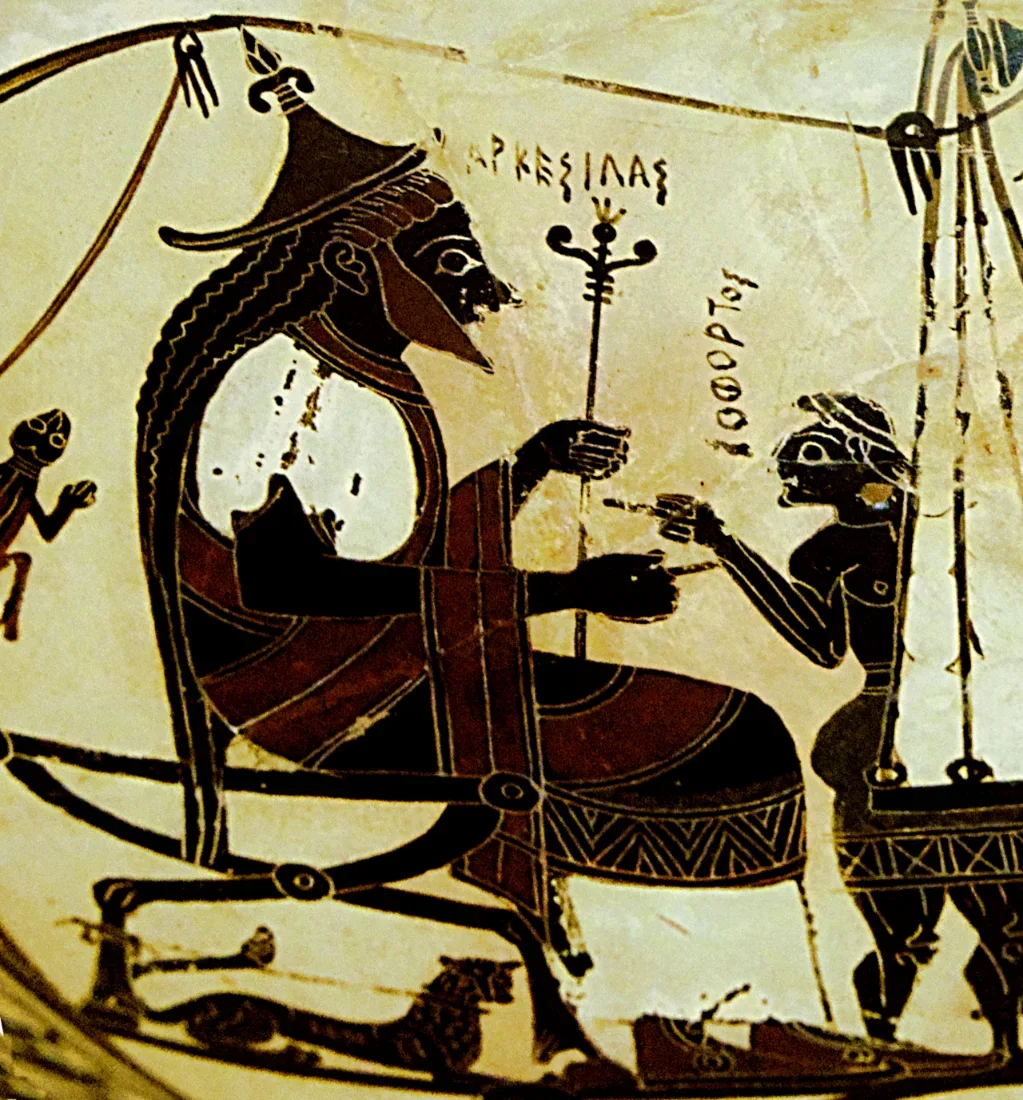
Text and translation
σάμερον μὲν χρή σε
Pindar · Pythian 4 · for Arkesilas IV of Kyrene, chariot race, 462 BCE · strophe, antistrophe and epode · text of Sandys (Loeb, via Perseus) · dactylo-epitrite
How to read each line
A guide to the Greek, syllables, pitch marks and quantities.
Show the reading key
- Above each line: the line as the edition prints it, each word placed over its own syllables. The main row: the same Greek divided into metrical syllables, each written as it is pronounced. A consonant that closes a syllable is written with it (λόθ | ρο); an elided word is closed up with the next vowel (ν’ἀ); a final consonant carried into the next word is set with a thin space (ς ἰ). Wider gaps mark word-ends.
- Above the syllables: the pitch of each syllable, from the accents. Under them: the quantity of each syllable as it falls in the line, then the transliteration, syllable by syllable, with accented syllables in capitals.
- Under each line: a line-for-line translation. In the right margin of the scansion: the line type, its scheme, and its analysis into cola.
Key to the labels
The names, patterns and symbols used beside this poem.
Show the labels and symbols
The labels in the right margin of the scansion below give the line’s analysis as the scheme file states it, then its scheme and, where the analysis notes them, the period-end, a brevis in longo or a hiatus. ‖ marks the end of a period, ||| the end of the stanza; a line without a period-end runs on into the next (synapheia). × is an anceps, long or short; the last position of every period is indifferent. ⏓ is an anceps that is usually long (West’s and Voigt’s sign). A click on any syllable highlights the colon it belongs to and explains it. The sources of the labels, with their page numbers, are given line by line under Prosody, line by line.
| Label | Name and shape | What it is |
|---|---|---|
| e | Cretic (e)— ⏑ — | The iambo-trochaic unit of dactylo-epitrite.[6] Either long may be resolved.[7] |
| link | Link-syllable (⏓)⏓ | The syllable, usually long, that may stand before, between and after the units.[6] |
| D | Hemiepes (D)— ⏑ ⏑ — ⏑ ⏑ — | The dactylic unit of dactylo-epitrite.[6] Pindar contracts its first biceps only very rarely;[8] this triad never does. |
| fin | Final long (—)— | A long after the last unit of the verse. |
| D2 | D²— ⏑ ⏑ — ⏑ ⏑ — ⏑ ⏑ — | D lengthened by one more ⏑ ⏑ —.[6] Itsumi calls it D⁺ and counts eleven examples in Pindar’s dactylo-epitrite odes, three of them in this ode.[9] |
| d | d— ⏑ ⏑ — | The shorter dactylic unit.[6] |
| anc | Opening anceps (×)× | A single syllable before the first unit of the verse, long or short.[10] |
Scansion
The opening of Pindar’s longest ode, set out in West’s dactylo-epitrite units. No source in our library prints a full scheme of the ode: Itsumi gives four of its fifteen verses, and the rest of the analysis is this page’s own, checked against all thirteen triads.
Today, Muse, you must stand beside a man who is our friend,
the king of Kyrene, land of good horses, so that, while Arkesilas holds his revel,
you may raise the fair wind of song that is owed to Leto’s children and to Pytho,
where once the priestess who sits beside the golden eagles of Zeus,
when Apollo happened to be at home, not abroad,
proclaimed in her oracle Battos as settler of fruit-bearing Libya: that he should leave the holy
island at once and found a city rich in chariots
on a gleaming white breast of land,
and should bring home to fulfilment the word Medea spoke
on Thera, in the seventeenth generation, the word that once the fierce child of Aietes
breathed from her immortal mouth, the queen of the Colchians. Thus she spoke
to the demigods who sailed with Jason the spearman:
“Hear me, sons of high-spirited men and of gods.
I declare that from this wave-struck land, one day, the daughter of Epaphos
will have a root of cities planted in her, dear to mortals,
at the foundations of Zeus Ammon.
They will give up short-finned dolphins for swift horses,
and wield reins in place of oars, and drive chariots swift as the storm.
That sign will bring it about that Thera becomes the mother-city
of great cities, the sign that once, at the outflow of Lake Tritonis,
from a god in the likeness of a man, who was offering earth
as a guest-gift, Euphamos, coming down from the prow,
received; and over him Zeus the father, son of Kronos, thundered a sign of good omen.
Metre
- The ode. Pythian 4 celebrates the chariot victory of Arkesilas IV of Kyrene in 462; it is by far the longest ode in the collection because of its epic-style narrative of Jason and the golden fleece, which matters to Arkesilas because his family claimed the Argonaut Euphamos as ancestor.[11] It has thirteen triads and runs to nearly 300 lines.[12] Itsumi takes it, the longest epinician, as typical of Pindar’s dactylo-epitrite in its proportion of short syllables.[13]
- Dactylo-epitrite. The verses are built from the units d (— ⏑ ⏑ —), D (— ⏑ ⏑ — ⏑ ⏑ —), D² (— ⏑ ⏑ — ⏑ ⏑ — ⏑ ⏑ —) and e (— ⏑ —), joined with or without a link-syllable that is usually long.[6] The margin draws every link as ⏓; in this triad all of them are long except two, -το- of τυχόντος (5) and -σι- of αἴσιον (23), which are short, and the length of the ι in ὄρνις (19) is not known.[14] West also groups e ⏓ e as E; this page keeps the two e apart, as Itsumi does.[15]
- What is sourced, and what is our own. No source in our library gives a complete scheme of this ode. Itsumi’s survey of Pindar’s dactylo-epitrite gives four of its verses: strophe verse 6 in full (e – e – D⁺, his D⁺ being West’s D²); strophe verse 4, which opens with D⁺ and no link before it; epode verse 5, an anceps followed by D⁺; and epode verse 7, where D is followed by e — e with no link between.[16] He also reports that the first long of strophe verse 8 is resolved in 23 of its 26 repetitions.[17] The margin agrees with all of these. The division of the other lines into units is our own scansion: it was checked by scanning every strophe, antistrophe and epode of the ode (lines 1–299, Sandys’s text) against the same scheme.
- The check. Everything fits except four lines outside this tab. Line 58 fits only if the ω of ἥρωες is shortened before the next vowel, correption inside the word;[18] line 250 needs ὦ Ἀρκεσίλα to make one syllable at the join (synecphonesis)[19]. In 164 (ναὶ πομπάν) Sandys’s text is one position short, and in 184 (πόθον ἔνδαιεν) a short stands where the scheme needs a long; we have no source that discusses these lines.
- Periods. Every line-end is a word-end in all thirteen triads, and the page sets each as a verse-end, following Itsumi’s practice of dividing a dactylo-epitrite verse wherever word-end coincides in all strophes.[20] Hiatus or brevis in longo proves period-end at the end of every strophe line and of epode lines 1, 3 and 6; the margin gives one instance for each. Evidence in one strophe holds for all.[21] For epode lines 2, 4 and 5 there is no such proof in any triad.
- Resolution and contraction. Resolution in dactylo-epitrite is mostly confined to e, and when it recurs in every strophe it is almost always at the beginning of a verse,[22] as in strophe verse 8 here (πόλιν, Διός). Contraction of the first biceps of D is very rare in Pindar[8] and does not occur in this triad.
- Prosody. Pindar lets a stop followed by a liquid or nasal close the syllable before it or leave it open;[23] hiatus is nearly limited to words that once began with digamma, and is the rule before οἱ.[24] Correption and synecphonesis are as in epic.[18] Two places where Sandys prints a sign joining two vowels (ἱέρεα 5, ἀργεννόεντι 8) are scanned with synecphonesis, as he marks them. Editorial macrons and breves in the input settle hidden quantities, each with its source in the note on the line; they are not shown on the page.
- Text. Race’s text (after Snell) divides the lines differently, sometimes in mid-word (Πυ-|θῶνι, ἵπ-|πους); his line numbers are the same as Sandys’s.[25] Readings that affect the metre are given in the notes on lines 4, 8 and 23.
Prosody, line by line
Every syllable, with the reason for its length. Quantities are read from the vowel where the spelling shows it, from the consonants that follow (“position”), from the accent where it tells, and from the metre where nothing else does. Editors’ notes on the text follow in the boxed paragraphs.
- 4.1
Line 4.1 · σάμερον μὲν χρή σε παρʼ ἀνδρὶ φίλῳ
σάμερον μὲν χρή σε παρʼ ἀνδρὶ φίλῳ
σάμερονμὲνχρήσεπαρ’ἀνδρὶφίλῳ- 1 —σάᾱ́ is long (its length is not shown by the ordinary spelling).
- 2 ⏑μεε is short by nature.
- 3 —ρονο is short by nature; closed by ν: long by position.
- 4 —μὲνὲ is short by nature; closed by ν: long by position; the position is anceps (⏓: usually long).
- 5 —χρήή is long by nature.
- 6 ⏑σεε is short by nature.
- 7 ⏑παα is short by the metre (position 7 must be short).
- 8 —ρ’ἀνἀ is a vowel of unknown length; closed by ν: long by position; the apostrophe marks an elided vowel; the consonant before it joins this syllable.
- 9 ⏑δρὶὶ is short by the metre (position 9 must be short).
- 10 ⏑φίί is short by the metre (position 10 must be short).
- 11 ×λῳῳ is long by nature; the last position of the period is indifferent.
- 4.2
Line 4.2 · στᾶμεν, εὐΐππου βασιλῆϊ Κυράνας, ὄφρα κωμάζοντι σὺν Ἀρκεσίλᾳ,
στᾶμεν, εὐΐππου βασιλῆϊ Κυράνας, ὄφρα κωμάζοντι σὺν Ἀρκεσίλᾳ,
στᾶμε,ν εὐΐππουβασιλῆϊΚυράνας,ὄφρακωμάζοντισὺν Ἀρκεσίλᾳ,- 1 —στᾶᾶ carries a circumflex, so it is long.
- 2 ⏑με,ε is short by nature.
- 3 —ν εὐεὐ is a diphthong, long by nature; the first consonant belongs to the previous word and is carried over to this vowel.
- 4 —ΐπΐ is a vowel of unknown length; closed by π: long by position; the position is anceps (⏓: usually long).
- 5 —πουου is a diphthong, long by nature.
- 6 ⏑βαα is short by the metre (position 6 must be short).
- 7 ⏑σιι is short by the metre (position 7 must be short).
- 8 —λῆῆ is long by nature.
- 9 ⏑ϊϊ is short by the accent rule: circumflex on the penult requires a short final syllable.
- 10 ⏑Κυῠ is short (its length is not shown by the ordinary spelling).
- 11 —ράᾱ́ is long (its length is not shown by the ordinary spelling).
- 12 —νας,ᾱ is long (its length is not shown by the ordinary spelling); the position is anceps (⏓: usually long).
- 13 —ὄφὄ is short by nature; closed by φ before a liquid: stop + liquid makes position, as it usually does in epic.
- 14 ⏑ραα is short by the metre (position 14 must be short).
- 15 —κωω is long by nature.
- 16 —μάζ is a double consonant (two sounds) and closes the syllable: long by position; the position is anceps (⏓: usually long).
- 17 —ζονο is short by nature; closed by ν: long by position.
- 18 ⏑τιι is short by the accent rule: acute on the antepenult requires a short final syllable.
- 19 ⏑σὺὺ is short by the metre (position 19 must be short).
- 20 —ν ἈρἈ is a vowel of unknown length; closed by ρ: long by position; the first consonant belongs to the previous word and is carried over to this vowel.
- 21 ⏑κεε is short by nature.
- 22 ⏑σίί is short by the metre (position 22 must be short).
- 23 ×λᾳ,ᾳ is long by nature; the last position of the period is indifferent.
- 4.3
Line 4.3 · Μοῖσα, Λατοίδαισιν ὀφειλόμενον Πυθῶνί τʼ αὔξῃς οὖρον ὕμνων,
Μοῖσα, Λατοίδαισιν ὀφειλόμενον Πυθῶνί τʼ αὔξῃς οὖρον ὕμνων,
Μοῖσα,Λατοίδαισιν ὀφειλόμενονΠυθῶνίτ’αὔξῃςοὖρον ὕμνων,- 1 —Μοῖοῖ is a diphthong, long by nature.
- 2 ⏑σα,α is short by the accent rule: circumflex on the penult requires a short final syllable.
- 3 —Λαα is long by the metre (position 3 must be long).
- 4 —τοίοί is a diphthong, long by nature; the position is anceps (⏓: usually long).
- 5 —δαιαι is a diphthong, long by nature.
- 6 ⏑σιι is short by the accent rule: acute on the antepenult requires a short final syllable.
- 7 ⏑ν ὀὀ is short by nature; the first consonant belongs to the previous word and is carried over to this vowel.
- 8 —φειει is a diphthong, long by nature.
- 9 ⏑λόό is short by nature.
- 10 ⏑μεε is short by nature.
- 11 —νονο is short by nature; closed by ν: long by position.
- 12 —Πυῡ is long (its length is not shown by the ordinary spelling); the position is anceps (⏓: usually long).
- 13 —θῶῶ is long by nature.
- 14 ⏑νίί is short by the accent rule: circumflex on the penult requires a short final syllable.
- 15 —τ’αὔαὔ is a diphthong, long by nature; ξ is a double consonant (two sounds) and closes the syllable: long by position; the apostrophe marks an elided vowel; the consonant before it joins this syllable.
- 16 —ξῃςῃ is long by nature; the position is anceps (⏓: usually long).
- 17 —οὖοὖ is a diphthong, long by nature.
- 18 ⏑ροο is short by nature.
- 19 —ν ὕμὕ is a vowel of unknown length; closed by μ: long by position; the first consonant belongs to the previous word and is carried over to this vowel.
- 20 ×νων,ω is long by nature; closed by ν: long by position; the last position of the period is indifferent.
- 4.4
Line 4.4 · ἔνθα ποτὲ χρυσέων Διὸς αἰητῶν πάρεδρος,
ἔνθα ποτὲ χρυσέων Διὸς αἰητῶν πάρεδρος,
ἔνθαποτὲχρυσέωνΔιὸς αἰητῶνπάρεδρος,The label in the margin, with its sources: Itsumi 2009, p. 419 (D⁺ opening the verse); hiatus at 35 δοῦναι.
- 1 —ἔνἔ is short by nature; closed by ν: long by position.
- 2 ⏑θαα is short by the metre (position 2 must be short).
- 3 ⏑ποο is short by nature.
- 4 —τὲὲ is short by nature; the next word begins with χρ: the syllable is closed before it: long by position.
- 5 ⏑χρυῠ is short (its length is not shown by the ordinary spelling).
- 6 ⏑σέέ is short by nature.
- 7 —ωνω is long by nature; closed by ν: long by position.
- 8 ⏑Διι is short by the metre (position 8 must be short).
- 9 ⏑ὸὸ is short by nature.
- 10 —ς αἰαἰ is a diphthong, long by nature; the first consonant belongs to the previous word and is carried over to this vowel.
- 11 —ηη is long by nature; the position is anceps (⏓: usually long).
- 12 —τῶνῶ is long by nature; closed by ν: long by position.
- 13 ⏑πάά is short by the metre (position 13 must be short).
- 14 —ρεδε is short by nature; closed by δ before a liquid: stop + liquid makes position, as it usually does in epic.
- 15 ×ρος,ο is short by nature; closed by ς: long by position; the last position of the period is indifferent.
- 4.5
Line 4.5 · οὐκ ἀποδάμου Ἀπόλλωνος τυχόντος, ἱ‿έρεα
οὐκ ἀποδάμου Ἀπόλλωνος τυχόντος, ἱ‿έρεα
οὐκἀποδάμουἈπόλλωνοςτυχόντο,ς ἱ‿έρεαbrevis in longo at period-end (a short in the final long position).
- 1 —οὐκοὐ is a diphthong, long by nature.
- 2 ⏑ἀἀ is short by the metre (position 2 must be short).
- 3 ⏑ποο is short by nature.
- 4 —δάά is long by the metre (position 4 must be long).
- 5 ⏑μουου is a diphthong, long by nature; shortened before the vowel that begins the next word (epic correption), as the metre requires.
- 6 ⏑ἈἈ is short by the metre (position 6 must be short).
- 7 —πόλό is short by nature; closed by λ: long by position.
- 8 —λωω is long by nature; the position is anceps (⏓: usually long).
- 9 —νοςο is short by nature; closed by ς: long by position.
- 10 ⏑τυυ is short by the metre (position 10 must be short).
- 11 —χόνό is short by nature; closed by ν: long by position.
- 12 ⏑το,ο is short by nature; the position is anceps (⏓: usually long).
- 13 —ς ἱ‿έἱέ is two vowels of one word pronounced together as one long syllable (synizesis); the first consonant belongs to the previous word and is carried over to this vowel.
- 14 ⏑ρεε is short by nature.
- 15 ×αα is short by the accent rule: acute on the antepenult requires a short final syllable; the last position of the period is indifferent; a short here is brevis in longo.
D ⏓ e ⏓ e. ἀποδάμου (Doric for ἀποδήμου) is shortened before Ἀπόλλωνος (correption)[18]; LSJ cites this line.[34] Sandys marks ἱέρεα with a sign joining ι and ε, so ἱε- is one syllable (synecphonesis)[19]; LSJ suggests that the word should perhaps be written ἱερέα here.[35] The second link, -το- of τυχόντος, is short: the ς passes to ἱέρεα, so the syllable ends with its short vowel.[36] The final α, short, stands at period-end (brevis in longo)[37]; hiatus at 82 proves the period-end.- 4.6
Line 4.6 · χρῆσεν οἰκιστῆρα Βάττον καρποφόρου Λιβύας, ἱερὰν
χρῆσεν οἰκιστῆρα Βάττον καρποφόρου Λιβύας, ἱερὰν
χρῆσεν οἰκιστῆραΒάττονκαρποφόρουΛιβύας,ἱερὰνThe label in the margin, with its sources: Itsumi 2009, pp. 418–419 (printed in full); hiatus at 60 κελάδῳ.
- 1 —χρῆῆ is long by nature.
- 2 ⏑σεε is short by nature.
- 3 —ν οἰοἰ is a diphthong, long by nature; the first consonant belongs to the previous word and is carried over to this vowel.
- 4 —κισι is a vowel of unknown length; closed by σ: long by position; the position is anceps (⏓: usually long).
- 5 —τῆῆ is long by nature.
- 6 ⏑ραα is short by the accent rule: circumflex on the penult requires a short final syllable.
- 7 —Βάτά is a vowel of unknown length; closed by τ: long by position.
- 8 —τονο is short by nature; closed by ν: long by position; the position is anceps (⏓: usually long).
- 9 —καρα is a vowel of unknown length; closed by ρ: long by position.
- 10 ⏑ποο is short by nature.
- 11 ⏑φόό is short by nature.
- 12 —ρουου is a diphthong, long by nature.
- 13 ⏑Λιῐ is short (its length is not shown by the ordinary spelling).
- 14 ⏑βύύ is short by the metre (position 14 must be short).
- 15 —ας,α is long by the metre (position 15 must be long).
- 16 ⏑ἱἱ is short by the metre (position 16 must be short).
- 17 ⏑εε is short by nature.
- 18 ×ρὰνὰ is a vowel of unknown length; closed by ν: long by position; the last position of the period is indifferent.
- 4.7
Line 4.7 · νᾶσον ὡς ἤδη λιπὼν κτίσσειεν εὐάρματον
νᾶσον ὡς ἤδη λιπὼν κτίσσειεν εὐάρματον
νᾶσον ὡςἤδηλιπὼνκτίσσειεν εὐάρματον- 1 —νᾶᾶ carries a circumflex, so it is long.
- 2 ⏑σοο is short by nature.
- 3 —ν ὡςὡ is long by nature; the first consonant belongs to the previous word and is carried over to this vowel.
- 4 —ἤἤ is long by nature; the position is anceps (⏓: usually long).
- 5 —δηη is long by nature.
- 6 ⏑λιι is short by the metre (position 6 must be short).
- 7 —πὼνὼ is long by nature; closed by ν: long by position.
- 8 —κτίσί is a vowel of unknown length; closed by σ: long by position; the position is anceps (⏓: usually long).
- 9 —σειει is a diphthong, long by nature.
- 10 ⏑εε is short by nature.
- 11 —ν εὐεὐ is a diphthong, long by nature; the first consonant belongs to the previous word and is carried over to this vowel.
- 12 —άρά is a vowel of unknown length; closed by ρ: long by position.
- 13 ⏑μαᾰ is short (its length is not shown by the ordinary spelling).
- 14 ×τονο is short by nature; closed by ν: long by position; the last position of the period is indifferent.
e ⏓ e ⏓ e e: the last two e stand without a link. εὐάρμᾰτον has a short α before the ending.[40] κτίσσειεν: the double σ closes κτισ-. Brevis in longo at 53 (δώματι | Φοῖβος) proves the period-end.- 4.8
Line 4.8 · πόλιν ἐν ἀργεννό‿εντι μαστῷ,
πόλιν ἐν ἀργεννό‿εντι μαστῷ,
πόλιν ἐν ἀργεννό‿εντιμαστῷ,The label in the margin, with its sources: first long resolved in 23 of the 26 strophes (Itsumi 2009, p. 417 n. 7).
- 1 ⏑πόό is short by nature; with its neighbour it resolves the long of position 1 into two shorts.
- 2 ⏑λιι is short by the metre (position 1 must be short); with its neighbour it resolves the long of position 1 into two shorts.
- 3 ⏑ν ἐἐ is short by nature; the first consonant belongs to the previous word and is carried over to this vowel.
- 4 —ν ἀρἀ is a vowel of unknown length; closed by ρ: long by position; the first consonant belongs to the previous word and is carried over to this vowel.
- 5 —γενε is short by nature; closed by ν: long by position; the position is anceps (⏓: usually long).
- 6 —νό‿ενόε is two vowels of one word pronounced together as one long syllable (synizesis); closed by ν: long by position.
- 7 ⏑τιι is short by the metre (position 6 must be short).
- 8 —μασα is a vowel of unknown length; closed by σ: long by position.
- 9 ×τῷ,ῷ is long by nature; the last position of the period is indifferent.
e ⏓ e —. The first long is resolved, πόλι-, ⏑ ⏑, as in 23 of the 26 strophes and antistrophes of the ode;[17] resolution at the start of a verse is the commonest place for it.[6] Sandys prints Schroeder’s ἀργεννόεντι, with a sign joining ο and ε, so -νόεν- is one syllable; Race prints the manuscripts’ ἀργινόεντι and names Schroeder’s conjecture in his apparatus,[31] and LSJ records ἀργινόεντι as a variant here.[41] End of the strophe.- 4.9
Line 4.9 · καὶ τὸ Μηδείας ἔπος ἀγκομίσαι
καὶ τὸ Μηδείας ἔπος ἀγκομίσαι
καὶτὸΜηδείαςἔπος ἀγκομίσαι- 1 —καὶαὶ is a diphthong, long by nature.
- 2 ⏑τὸὸ is short by nature.
- 3 —Μηη is long by nature.
- 4 —δείεί is a diphthong, long by nature; the position is anceps (⏓: usually long).
- 5 —αςα is long by the metre (position 5 must be long).
- 6 ⏑ἔἔ is short by nature.
- 7 ⏑ποο is short by nature.
- 8 —ς ἀγἀ is a vowel of unknown length; closed by γ: long by position; the first consonant belongs to the previous word and is carried over to this vowel.
- 9 ⏑κοο is short by nature.
- 10 ⏑μίί is short by the metre (position 10 must be short).
- 11 ×σαιαι is a diphthong, long by nature; the last position of the period is indifferent.
e ⏓ D, as in 1. Μηδείας has the Doric genitive -ᾱς, and its long ᾱ opens the D. Race notes that some manuscripts have ἀγκομίσαιθʼ.[31]- 4.10
Line 4.10 · ἑβδόμᾳ καὶ σὺν δεκάτᾳ γενεᾷ Θήραιον, Αἰήτα τό ποτε ζαμενὴς
ἑβδόμᾳ καὶ σὺν δεκάτᾳ γενεᾷ Θήραιον, Αἰήτα τό ποτε ζαμενὴς
ἑβδόμᾳκαὶσὺνδεκάτᾳγενεᾷΘήραιο,ν Αἰήτατόποτεζαμενὴς- 1 —ἑβἑ is short by nature; closed by β: long by position.
- 2 ⏑δόό is short by nature.
- 3 —μᾳᾳ is long by nature.
- 4 —καὶαὶ is a diphthong, long by nature; the position is anceps (⏓: usually long).
- 5 —σὺνὺ is a vowel of unknown length; closed by ν: long by position.
- 6 ⏑δεε is short by nature.
- 7 ⏑κάά is short by the metre (position 7 must be short).
- 8 —τᾳᾳ is long by nature.
- 9 ⏑γεε is short by nature.
- 10 ⏑νεε is short by nature.
- 11 —ᾷᾷ is long by nature.
- 12 —Θήή is long by nature; the position is anceps (⏓: usually long).
- 13 —ραιαι is a diphthong, long by nature.
- 14 ⏑ο,ο is short by nature.
- 15 —ν ΑἰΑἰ is a diphthong, long by nature; the first consonant belongs to the previous word and is carried over to this vowel.
- 16 —ήή is long by nature; the position is anceps (⏓: usually long).
- 17 —ταα is long by the metre (position 17 must be long).
- 18 ⏑τόό is short by nature.
- 19 ⏑ποο is short by nature.
- 20 —τεε is short by nature; the next word begins with the double consonant ζ: the syllable is closed before it: long by position.
- 21 ⏑ζαα is short by the metre (position 21 must be short).
- 22 ⏑μεε is short by nature.
- 23 ×νὴςὴ is long by nature; closed by ς: long by position; the last position of the period is indifferent.
e ⏓ D ⏓ e ⏓ D, as in 2. Θήραιον, Αἰήτα: the ν passes to Αἰ-. ποτε ζαμενής: -τε is long before ζ.[29]- 4.11
Line 4.11 · παῖς ἀπέπνευσʼ ἀθανάτου στόματος, δέσποινα Κόλχων. εἶπε δʼ οὕτως
παῖς ἀπέπνευσʼ ἀθανάτου στόματος, δέσποινα Κόλχων. εἶπε δʼ οὕτως
παῖςἀπέπνευσ’ἀθανάτουστόματος,δέσποιναΚόλχων.εἶπεδ’οὕτως- 1 —παῖςαῖ is a diphthong, long by nature.
- 2 ⏑ἀἀ is short by the metre (position 2 must be short).
- 3 —πέπέ is short by nature; closed by π before a nasal: stop + nasal makes position, as it usually does in epic.
- 4 —νευευ is a diphthong, long by nature; the position is anceps (⏓: usually long).
- 5 —σ’ἀᾱ̓ is long (its length is not shown by the ordinary spelling); the apostrophe marks an elided vowel; the consonant before it joins this syllable.
- 6 ⏑θαα is short by the metre (position 6 must be short).
- 7 ⏑νάά is short by the metre (position 7 must be short).
- 8 —τουου is a diphthong, long by nature; the next word begins with στ: the syllable is closed before it: long by position.
- 9 ⏑στόό is short by nature.
- 10 ⏑μαα is short by the metre (position 10 must be short).
- 11 —τος,ο is short by nature; closed by ς: long by position.
- 12 —δέσέ is short by nature; closed by σ: long by position; the position is anceps (⏓: usually long).
- 13 —ποιοι is a diphthong, long by nature.
- 14 ⏑ναα is short by the accent rule: acute on the antepenult requires a short final syllable.
- 15 —Κόλό is short by nature; closed by λ: long by position.
- 16 —χων.ω is long by nature; the position is anceps (⏓: usually long).
- 17 —εἶεἶ is a diphthong, long by nature.
- 18 ⏑πεε is short by nature.
- 19 —δ’οὕοὕ is a diphthong, long by nature; the apostrophe marks an elided vowel; the consonant before it joins this syllable.
- 20 ×τωςω is long by nature; closed by ς: long by position; the last position of the period is indifferent.
- 4.12
Line 4.12 · ἡμιθέοισιν Ἰάσονος αἰχματᾶο ναύταις·
ἡμιθέοισιν Ἰάσονος αἰχματᾶο ναύταις·
ἡμιθέοισιν Ἰάσονος αἰχματᾶοναύταις·- 1 —ἡἡ is long by nature.
- 2 ⏑μιι is short by the metre (position 2 must be short).
- 3 ⏑θέέ is short by nature.
- 4 —οιοι is a diphthong, long by nature.
- 5 ⏑σιι is short by the accent rule: acute on the antepenult requires a short final syllable.
- 6 ⏑ν ἸἸ is short by the metre (position 6 must be short); the first consonant belongs to the previous word and is carried over to this vowel.
- 7 —άά is long by the metre (position 7 must be long).
- 8 ⏑σοο is short by nature.
- 9 ⏑νοο is short by nature.
- 10 —ς αἰαἰ is a diphthong, long by nature; the first consonant belongs to the previous word and is carried over to this vowel.
- 11 —χμαᾱ is long (its length is not shown by the ordinary spelling); the position is anceps (⏓: usually long).
- 12 —τᾶᾶ carries a circumflex, so it is long.
- 13 ⏑οο is short by nature.
- 14 —ναύαύ is a diphthong, long by nature.
- 15 ×ταις·αι is a diphthong, long by nature; closed by ς: long by position; the last position of the period is indifferent.
D² ⏓ e —, as in 4. Ἰάσονος: Ἰ- is short. αἰχματᾶο is the Doric genitive of αἰχμητής, Doric αἰχμᾱτάς:[43] its first ᾱ fills the link.- 4.13
Line 4.13 · κέκλυτε, παῖδες ὑπερθύμων τε φωτῶν καὶ θεῶν·
κέκλυτε, παῖδες ὑπερθύμων τε φωτῶν καὶ θεῶν·
κέκλυτε,παῖδες ὑπερθύμωντεφωτῶνκαὶθεῶν·- 1 —κέκέ is short by nature; closed by κ before a liquid: stop + liquid makes position, as it usually does in epic.
- 2 ⏑λυυ is short by the metre (position 2 must be short).
- 3 ⏑τε,ε is short by nature.
- 4 —παῖαῖ is a diphthong, long by nature.
- 5 ⏑δεε is short by nature.
- 6 ⏑ς ὑὑ is short by the metre (position 6 must be short); the first consonant belongs to the previous word and is carried over to this vowel.
- 7 —περε is short by nature; closed by ρ: long by position.
- 8 —θύῡ́ is long (its length is not shown by the ordinary spelling); the position is anceps (⏓: usually long).
- 9 —μωνω is long by nature; closed by ν: long by position.
- 10 ⏑τεε is short by nature.
- 11 —φωω is long by nature.
- 12 —τῶνῶ is long by nature; closed by ν: long by position; the position is anceps (⏓: usually long).
- 13 —καὶαὶ is a diphthong, long by nature.
- 14 ⏑θεε is short by nature.
- 15 ×ῶν·ῶ is long by nature; closed by ν: long by position; the last position of the period is indifferent.
D ⏓ e ⏓ e, as in 5. Medea’s speech begins. The ς of παῖδες passes to ὑπερθύμων, whose υ is long.[44]- 4.14
Line 4.14 · φαμὶ γὰρ τᾶσδʼ ἐξ ἁλιπλάκτου ποτὲ γᾶς Ἐπάφοιο κόραν
φαμὶ γὰρ τᾶσδʼ ἐξ ἁλιπλάκτου ποτὲ γᾶς Ἐπάφοιο κόραν
φαμὶγὰρτᾶσδ’ἐξἁλιπλάκτουποτὲγᾶςἘπάφοιοκόραν- 1 —φαα is long by the metre (position 1 must be long).
- 2 ⏑μὶὶ is short by the metre (position 2 must be short).
- 3 —γὰρὰ is a vowel of unknown length; closed by ρ: long by position.
- 4 —τᾶσᾶ carries a circumflex, so it is long; closed by σ: long by position; the position is anceps (⏓: usually long).
- 5 —δ’ἐξἐ is short by nature; ξ is a double consonant (two sounds) and closes the syllable: long by position; the apostrophe marks an elided vowel; the consonant before it joins this syllable.
- 6 ⏑ἁἁ is short by the metre (position 6 must be short).
- 7 —λιπι is a vowel of unknown length; closed by π before a liquid: stop + liquid makes position, as it usually does in epic.
- 8 —λάκά is a vowel of unknown length; closed by κ: long by position; the position is anceps (⏓: usually long).
- 9 —τουου is a diphthong, long by nature.
- 10 ⏑ποο is short by nature.
- 11 ⏑τὲὲ is short by nature.
- 12 —γᾶςᾶ carries a circumflex, so it is long.
- 13 ⏑ἘἘ is short by nature.
- 14 ⏑πάά is short by the metre (position 14 must be short).
- 15 —φοιοι is a diphthong, long by nature.
- 16 ⏑οο is short by nature.
- 17 ⏑κόό is short by nature.
- 18 ×ρανα is a vowel of unknown length; closed by ν: long by position; the last position of the period is indifferent.
e ⏓ e ⏓ D², as in 6. φαμί is Doric for φημί. ἁλιπλάκτου: πλ closes -λιπ-. Race divides the line in mid-word, ἁλιπλά-|κτου.[45]- 4.15
Line 4.15 · ἀστέων ῥίζαν φυτεύσεσθαι μελησιμβρότων
ἀστέων ῥίζαν φυτεύσεσθαι μελησιμβρότων
ἀστέωνῥίζανφυτεύσεσθαιμελησιμβρότων- 1 —ἀσἀ is a vowel of unknown length; closed by σ: long by position.
- 2 ⏑τέέ is short by nature.
- 3 —ωνω is long by nature; closed by ν: long by position.
- 4 —ῥίζ is a double consonant (two sounds) and closes the syllable: long by position; the position is anceps (⏓: usually long).
- 5 —ζανα is a vowel of unknown length; closed by ν: long by position.
- 6 ⏑φυυ is short by the metre (position 6 must be short).
- 7 —τεύεύ is a diphthong, long by nature.
- 8 —σεσε is short by nature; closed by σ: long by position; the position is anceps (⏓: usually long).
- 9 —θαιαι is a diphthong, long by nature.
- 10 ⏑μεε is short by nature.
- 11 —ληη is long by nature.
- 12 —σιμι is a vowel of unknown length; closed by μ: long by position.
- 13 ⏑βρόό is short by nature.
- 14 ×τωνω is long by nature; closed by ν: long by position; the last position of the period is indifferent.
- 4.16
Line 4.16 · Διὸς ἐν Ἄμμωνος θεμέθλοις.
Διὸς ἐν Ἄμμωνος θεμέθλοις.
Διὸς ἐν Ἄμμωνοςθεμέθλοις.- 1 ⏑Διι is short by the metre (position 1 must be short); with its neighbour it resolves the long of position 1 into two shorts.
- 2 ⏑ὸὸ is short by nature; with its neighbour it resolves the long of position 1 into two shorts.
- 3 ⏑ς ἐἐ is short by nature; the first consonant belongs to the previous word and is carried over to this vowel.
- 4 —ν ἌμἌ is a vowel of unknown length; closed by μ: long by position; the first consonant belongs to the previous word and is carried over to this vowel.
- 5 —μωω is long by nature; the position is anceps (⏓: usually long).
- 6 —νοςο is short by nature; closed by ς: long by position.
- 7 ⏑θεε is short by nature.
- 8 —μέθέ is short by nature; closed by θ before a liquid: stop + liquid makes position, as it usually does in epic.
- 9 ×λοις.οι is a diphthong, long by nature; closed by ς: long by position; the last position of the period is indifferent.
e ⏓ e —, as in 8, the first long resolved: Διὸς ἐν, ⏑ ⏑ ⏑. The ν of ἐν passes to Ἄμμωνος. End of the antistrophe.- 4.17
Line 4.17 · ἀντὶ δελφίνων δʼ ἐλαχυπτερύγων ἵππους ἀμείψαντες θοάς,
ἀντὶ δελφίνων δʼ ἐλαχυπτερύγων ἵππους ἀμείψαντες θοάς,
ἀντὶδελφίνωνδ’ἐλαχυπτερύγωνἵππουςἀμείψαντεςθοάς,- 1 —ἀνἀ is a vowel of unknown length; closed by ν: long by position.
- 2 ⏑τὶὶ is short by the metre (position 2 must be short).
- 3 —δελε is short by nature; closed by λ: long by position.
- 4 —φίῑ́ is long (its length is not shown by the ordinary spelling); the position is anceps (⏓: usually long).
- 5 —νωνω is long by nature; closed by ν: long by position.
- 6 ⏑δ’ἐἐ is short by nature; the apostrophe marks an elided vowel; the consonant before it joins this syllable.
- 7 ⏑λαα is short by the metre (position 7 must be short).
- 8 —χυπυ is a vowel of unknown length; closed by π: long by position.
- 9 ⏑τεε is short by nature.
- 10 ⏑ρύύ is short by the metre (position 10 must be short).
- 11 —γωνω is long by nature.
- 12 —ἵπἵ is a vowel of unknown length; closed by π: long by position; the position is anceps (⏓: usually long).
- 13 —πουςου is a diphthong, long by nature.
- 14 ⏑ἀἀ is short by the metre (position 14 must be short).
- 15 —μείεί is a diphthong, long by nature; ψ is a double consonant (two sounds) and closes the syllable: long by position.
- 16 —ψανα is a vowel of unknown length; closed by ν: long by position; the position is anceps (⏓: usually long).
- 17 —τεςε is short by nature; closed by ς: long by position.
- 18 ⏑θοο is short by nature.
- 19 ×άς,ά is a vowel of unknown length; closed by ς: long by position; the last position of the period is indifferent.
- 4.18
Line 4.18 · ἁνία τʼ ἀντʼ ἐρετμῶν δίφρους τε νωμάσοισιν ἀελλόποδας.
ἁνία τʼ ἀντʼ ἐρετμῶν δίφρους τε νωμάσοισιν ἀελλόποδας.
ἁνίατ’ἀντ’ἐρετμῶνδίφρουςτενωμάσοισιν ἀελλόποδας.- 1 —ἁἁ is long by the metre (position 1 must be long).
- 2 ⏑νίί is short by the metre (position 2 must be short).
- 3 ⏑αα is short by the metre (position 3 must be short).
- 4 —τ’ἀνἀ is a vowel of unknown length; closed by ν: long by position; the apostrophe marks an elided vowel; the consonant before it joins this syllable.
- 5 ⏑τ’ἐἐ is short by nature; the apostrophe marks an elided vowel; the consonant before it joins this syllable.
- 6 ⏑ρεε is short by nature; τμ is carried whole into the next syllable, so this syllable stays open and short (correption before a stop + nasal cluster, as the metre needs).
- 7 —τμῶνῶ is long by nature; closed by ν: long by position.
- 8 —δίφί is a vowel of unknown length; closed by φ before a liquid: stop + liquid makes position, as it usually does in epic; the position is anceps (⏓: usually long).
- 9 —ρουςου is a diphthong, long by nature; closed by ς: long by position.
- 10 ⏑τεε is short by nature.
- 11 —νωω is long by nature.
- 12 —μάᾱ́ is long (its length is not shown by the ordinary spelling); the position is anceps (⏓: usually long).
- 13 —σοιοι is a diphthong, long by nature.
- 14 ⏑σιι is short by the accent rule: acute on the antepenult requires a short final syllable.
- 15 ⏑ν ἀἀ is short by the metre (position 15 must be short); the first consonant belongs to the previous word and is carried over to this vowel.
- 16 —ελε is short by nature; closed by λ: long by position.
- 17 ⏑λόό is short by nature.
- 18 ⏑ποο is short by nature.
- 19 ×δας.α is a vowel of unknown length; closed by ς: long by position; the last position of the period is indifferent.
- 4.19
Line 4.19 · κεῖνος ὄρνις ἐκτελευτάσει μεγαλᾶν πολίων
κεῖνος ὄρνις ἐκτελευτάσει μεγαλᾶν πολίων
κεῖνος ὄρνιςἐκτελευτάσειμεγαλᾶνπολίων- 1 —κεῖεῖ is a diphthong, long by nature.
- 2 ⏑νοο is short by nature.
- 3 —ς ὄρὄ is short by nature; closed by ρ: long by position; the first consonant belongs to the previous word and is carried over to this vowel.
- 4 ○νιςι is of unknown length; the position is anceps (⏓: usually long), so either scans.
- 5 —ἐκἐ is short by nature; closed by κ: long by position.
- 6 ⏑τεε is short by nature.
- 7 —λευευ is a diphthong, long by nature.
- 8 —τάᾱ́ is long (its length is not shown by the ordinary spelling); the position is anceps (⏓: usually long).
- 9 —σειει is a diphthong, long by nature.
- 10 ⏑μεε is short by nature.
- 11 ⏑γαα is short by the metre (position 11 must be short).
- 12 —λᾶνᾶ carries a circumflex, so it is long; closed by ν: long by position.
- 13 ⏑ποο is short by nature.
- 14 ⏑λίί is short by the metre (position 14 must be short).
- 15 ×ωνω is long by nature; closed by ν: long by position; the last position of the period is indifferent.
e ⏓ e ⏓ D. ὄρνις, “bird”, here “omen”: LSJ reports both a long and a short ι in the nominative in the poets,[51] so the link it fills is drawn ○; the ς passes to ἐκτελευτάσει. LSJ cites ἐκτελευτάσει … γενέσθαι from this passage;[52] the future has Doric ᾱ for η, and -τᾱ- fills the second link. The ι of ὄρνις is left ○: its length varies, ῑ in tragedy and ῐ in prose (Smyth § 254 a), and the trimeters have both, long in the second position at E. Ba. 1365, short in the third at Ant. 1021; position 4 here is anceps (⏓), so the metre does not decide.- 4.20
Line 4.20 · ματρόπολιν Θήραν γενέσθαι, τόν ποτε Τριτωνίδος ἐν προχοαῖς
ματρόπολιν Θήραν γενέσθαι, τόν ποτε Τριτωνίδος ἐν προχοαῖς
ματρόπολινΘήρανγενέσθαι,τόνποτεΤριτωνίδος ἐνπροχοαῖς- 1 —ματα is a vowel of unknown length; closed by τ before a liquid: stop + liquid makes position, as it usually does in epic.
- 2 ⏑ρόό is short by nature.
- 3 ⏑ποο is short by nature.
- 4 —λινι is a vowel of unknown length; closed by ν: long by position.
- 5 —Θήή is long by nature; the position is anceps (⏓: usually long).
- 6 —ρανα is a vowel of unknown length; closed by ν: long by position.
- 7 ⏑γεε is short by nature.
- 8 —νέσέ is short by nature; closed by σ: long by position.
- 9 —θαι,αι is a diphthong, long by nature; the position is anceps (⏓: usually long).
- 10 —τόνό is short by nature; closed by ν: long by position.
- 11 ⏑ποο is short by nature.
- 12 —τεε is short by nature; the next word begins with Τρ: the syllable is closed before it: long by position.
- 13 —Τριῑ is long (its length is not shown by the ordinary spelling); the position is anceps (⏓: usually long).
- 14 —τωω is long by nature.
- 15 ⏑νίί is short by the metre (position 15 must be short).
- 16 ⏑δοο is short by nature.
- 17 —ς ἐνἐ is short by nature; closed by ν: long by position; the first consonant belongs to the previous word and is carried over to this vowel.
- 18 ⏑προο is short by nature.
- 19 ⏑χοο is short by nature.
- 20 ×αῖςαῖ is a diphthong, long by nature; closed by ς: long by position; the last position of the period is indifferent.
d ⏓ e ⏓ e ⏓ D. ματρόπολιν: ματ- is long, the τρ closing it. ποτε Τρι-: -τε is short before τρ. Τρῑτωνίδος with long ι, as in Τρίτων.[53]- 4.21
Line 4.21 · λίμνας θεῷ ἀνέρι εἰδομένῳ γαῖαν διδόντι
λίμνας θεῷ ἀνέρι εἰδομένῳ γαῖαν διδόντι
λίμναςθεῷἀνέριεἰδομένῳγαῖανδιδόντιhiatus inside the line.
The label in the margin, with its sources: Itsumi 2009, p. 419 (anceps + D⁺); no hiatus or brevis in any epode.
- 1 —λίμί is a vowel of unknown length; closed by μ: long by position; the position is anceps.
- 2 —ναςα is a vowel of unknown length; closed by ς: long by position.
- 3 ⏑θεε is short by nature.
- 4 ⏑ῷῷ is long by nature; shortened before the vowel that begins the next word (epic correption), as the metre requires.
- 5 —ἀᾱ̓ is long (its length is not shown by the ordinary spelling).
- 6 ⏑νέέ is short by nature.
- 7 ⏑ριι is short by the metre (position 7 must be short); the next word begins with a vowel and nothing is elided: hiatus.
- 8 —εἰεἰ is a diphthong, long by nature.
- 9 ⏑δοο is short by nature.
- 10 ⏑μέέ is short by nature.
- 11 —νῳῳ is long by nature.
- 12 —γαῖαῖ is a diphthong, long by nature; the position is anceps (⏓: usually long).
- 13 —ανα is a vowel of unknown length; closed by ν: long by position.
- 14 ⏑διι is short by the metre (position 14 must be short).
- 15 —δόνό is short by nature; closed by ν: long by position.
- 16 ×τιι is of unknown length; the position is anceps, so either scans; the last position of the period is indifferent.
- 4.22
Line 4.22 · ξείνια πρῴραθεν Εὔφαμος καταβὰς
ξείνια πρῴραθεν Εὔφαμος καταβὰς
ξείνιαπρῴραθεν Εὔφαμοςκαταβὰς- 1 —ξείεί is a diphthong, long by nature.
- 2 ⏑νιι is short by the metre (position 2 must be short).
- 3 —αα is short by the accent rule (the accent falls too far back for a long final syllable); the next word begins with πρ: the syllable is closed before it: long by position.
- 4 —πρῴῴ is long by nature; the position is anceps (⏓: usually long).
- 5 —ραᾱ is long (its length is not shown by the ordinary spelling).
- 6 ⏑θεε is short by nature.
- 7 —ν ΕὔΕὔ is a diphthong, long by nature; the first consonant belongs to the previous word and is carried over to this vowel.
- 8 —φαᾱ is long (its length is not shown by the ordinary spelling); the position is anceps (⏓: usually long).
- 9 —μοςο is short by nature; closed by ς: long by position.
- 10 ⏑καα is short by the metre (position 10 must be short).
- 11 ⏑ταα is short by the metre (position 11 must be short).
- 12 ×βὰςὰ is a vowel of unknown length; closed by ς: long by position; the last position of the period is indifferent.
- 4.23
Line 4.23 · δέξατʼ· αἴσιον δʼ ἐπί οἱ Κρονίων Ζεὺς πατὴρ ἔκλαγξε βροντάν·
δέξατʼ· αἴσιον δʼ ἐπί οἱ Κρονίων Ζεὺς πατὴρ ἔκλαγξε βροντάν·
δέξατ’·αἴσιονδ’ἐπίοἱΚρονίωνΖεὺςπατὴρἔκλαγξεβροντάν·hiatus inside the line.
The label in the margin, with its sources: Itsumi 2009, pp. 365, 418 (D followed by e — e without a link).
- 1 —δέέ is short by nature; ξ is a double consonant (two sounds) and closes the syllable: long by position.
- 2 ⏑ξαα is short by the metre (position 2 must be short).
- 3 —τ’·αἴαἴ is a diphthong, long by nature; the apostrophe marks an elided vowel; the consonant before it joins this syllable.
- 4 ⏑σιῐ is short (its length is not shown by the ordinary spelling); the position is anceps (⏓: usually long).
- 5 —ονο is short by nature; closed by ν: long by position.
- 6 ⏑δ’ἐἐ is short by nature; the apostrophe marks an elided vowel; the consonant before it joins this syllable.
- 7 ⏑πίί is short by the metre (position 7 must be short); the next word begins with a vowel and nothing is elided: hiatus.
- 8 —οἱοἱ is a diphthong, long by nature; the next word begins with Κρ: the syllable is closed before it: long by position.
- 9 ⏑Κροο is short by nature.
- 10 ⏑νίί is short by the metre (position 10 must be short).
- 11 —ωνω is long by nature; closed by ν: long by position.
- 12 —Ζεὺςεὺ is a diphthong, long by nature; closed by ς: long by position.
- 13 ⏑παα is short by the metre (position 13 must be short).
- 14 —τὴρὴ is long by nature.
- 15 —ἔκἔ is short by nature; closed by κ before a liquid: stop + liquid makes position, as it usually does in epic; the position is anceps (⏓: usually long).
- 16 —λαγα is a vowel of unknown length; closed by γ: long by position.
- 17 ⏑ξεε is short by nature; the next word begins with βρ, a stop + liquid that does not make position here, so the syllable stays short.
- 18 —βρονο is short by nature; closed by ν: long by position.
- 19 ×τάν·ά is a vowel of unknown length; closed by ν: long by position; the last position of the period is indifferent.
e ⏓ D e ⏓ e —.[57] δέξατʼ is elided. The link is σι in αἴσιον. LSJ does not mark the ι,[58] but it belongs to the adjectival suffix -ῐος, whose ι is short,[59] so the link is short. Race prints Schroeder’s αἰσίαν for the manuscripts’ αἴσιον.[45] Hiatus before οἱ, where it is the rule.[49] End of the epode and of the triad.
Notes
- ^ Race 1997a, p. 264; Gildersleeve 1885, p. 278.
- ^ a b c Gildersleeve 1885, p. 278.
- ^ Race 1997a, p. 264.
- ^ Gildersleeve 1885, pp. 278–279.
- ^ Brown 2022, p. 334.
- ^ a b c d e f g West 1987, p. 43.
- ^ Itsumi 2009, p. 417.
- ^ a b West 1987, p. 44.
- ^ Itsumi 2009, pp. 418–419.
- ^ Itsumi 2009, p. 419.
- ^ Race 1997a, p. 264.
- ^ Brown 2022, p. 337.
- ^ Itsumi 2009, p. 77.
- ^ See the notes on those lines.
- ^ Itsumi 2009, p. xii.
- ^ Itsumi 2009, pp. 365, 418–419.
- ^ a b Itsumi 2009, p. 417 n. 7.
- ^ a b c d West 1987, p. 14.
- ^ a b West 1987, pp. 14–15.
- ^ Itsumi 2009, p. 411.
- ^ West 1987, pp. 36–37.
- ^ West 1987, p. 43; Itsumi 2009, pp. 417–418.
- ^ a b c West 1987, pp. 16–17.
- ^ a b West 1987, pp. 15–16.
- ^ Race 1997a, pp. 266–269.
- ^ LSJ s.v. σήμερον.
- ^ a b West 1987, p. 13.
- ^ LSJ s.v. Κυρήνη.
- ^ a b West 1987, p. 12 n. 1.
- ^ LSJ s.v. Πυθώ.
- ^ a b c d Race 1997a, p. 266.
- ^ Itsumi 2009, p. 419: D⁺ opening the verse without a link.
- ^ LSJ s.v. χρύσεος.
- ^ LSJ s.v. ἀπόδημος.
- ^ LSJ s.v. ἱέρεια.
- ^ West 1987, p. 12.
- ^ West 1987, p. 4.
- ^ Itsumi 2009, pp. 418–419, printed in full.
- ^ LSJ s.v. Λιβύη.
- ^ LSJ s.v. εὐάρματος.
- ^ LSJ s.v. ἀργινόεις.
- ^ LSJ s.v. ἀθάνατος.
- ^ LSJ s.v. αἰχμητής.
- ^ LSJ s.v. θυμός.
- ^ a b c d Race 1997a, p. 268.
- ^ LSJ s.v. μελησίμβροτος.
- ^ LSJ s.v. ἐλαχυπτέρυξ.
- ^ LSJ s.v. δελφίς.
- ^ a b West 1987, p. 16.
- ^ LSJ s.v. νωμάω.
- ^ LSJ s.v. ὄρνις.
- ^ LSJ s.v. ἐκτελευτάω.
- ^ LSJ s.v. Τρίτων.
- ^ Itsumi 2009, p. 419: an anceps before D⁺.
- ^ LSJ s.v. ἀνήρ.
- ^ LSJ s.v. πρῴραθεν.
- ^ Itsumi 2009, pp. 365, 418: D followed by e — e without a link.
- ^ LSJ s.v. αἴσιος.
- ^ West 1987, p. 11.
Text and sources
- Text: Pindar, The Odes of Pindar including the Principal Fragments, ed. Sir John Sandys (Loeb Classical Library, London 1937), from the Perseus Digital Library (urn:cts:greekLit:tlg0033.tlg002.perseus-grc2), Pythian 4.1–23, licensed CC BY-SA 4.0 (the licence of the Perseus repository). The whole ode (1–299) was scanned to check the scheme.
- M. L. West, Introduction to Greek Metre (Oxford 1987), pp. 4, 12–17 (prosody), 36–37 (proving period-end), 43–44 (dactylo-epitrite units, resolution, contraction; checked on the page image of p. 43).
- K. Itsumi, Pindaric Metre: ‘The Other Half’ (Oxford 2009), pp. xii, 77, 365, 411, 417–419 (Pythian 4 verses s4, s6, s8, e5, e7; verse division).
- C. G. Brown, ‘Pindar’, in L. Swift (ed.), A Companion to Greek Lyric (Wiley 2022), ch. 23, p. 337.
- Vowel quantities: Liddell–Scott–Jones (Perseus Digital Library, CC BY-SA), s.vv. σήμερον, Κυρήνη, Πυθώ, χρύσεος, ἀπόδημος, ἱέρεια, Λιβύη, εὐάρματος, ἀργινόεις, ἀθάνατος, αἰχμητής, μελησίμβροτος, θυμός, ἐλαχυπτέρυξ, δελφίς, νωμάω, ὄρνις, ἐκτελευτάω, Τρίτων, ἀνήρ, πρῴραθεν, αἴσιος.
- W. H. Race, Pindar I: Olympian Odes, Pythian Odes (Loeb Classical Library 56, Cambridge, MA 1997), pp. 264–269 (Pythian 4: introduction; lines 1–23), compared line by line.
- Translation: metrehelp.org, CC BY-SA 4.0.
Quotations from copyrighted works are not covered by this page’s licence.


