Poets and playwrightsTragedy
Sophocles
Sophocles’ tragedies and satyr drama: spoken trimeters and lyric metres.
Works
- Synopsis
- Text and translation
- How to read each line
- Key to the labels
- Scansion
- Metre
- Prosody, line by line
- How this page was scanned
- Notes
- Synopsis
- Text and translation
- How to read each line
- Key to the labels
- Scansion
- Metre
- Prosody, line by line
- Strophe and antistrophe
- Notes
- Synopsis
- Text and translation
- How to read each line
- Key to the labels
- Scansion
- Metre
- Prosody, line by line
- Strophe and antistrophe
- Notes
- Synopsis
- Text and translation
- How to read each line
- Key to the labels
- Scansion
- Metre
- Prosody, line by line
- How this page was scanned
- Notes
- Synopsis
- Text and translation
- How to read each line
- Key to the labels
- Scansion
- Metre
- Prosody, line by line
- Strophe and antistrophe
- Notes
- Modern performances
About · 1 of 7
Sophocles and his plays
In dialogue Sophocles’ metre is like Aeschylus’. In song he has a manner of his own.[1] His career is well recorded, but there is a caution. Sophocles “became canonical too easily and blandly”.[2]
Dates. The Cambridge Companion’s chronology puts his birth in 497/6 or 496/5 BC, and his first victory in 468 with Triptolemus. It puts his death in 406/5.[3] The sources differ slightly on the death. Scodel dates it to 405, “only a few months” before Aristophanes’ Frogs.[2] He first produced in 468.[2] Cropp, citing a remark of the elder Pliny, calls 468 the year of his first, “or at least first prize-winning”, production at the Dionysia.[4]
There was no record of his birth. Greeks did not register births and deaths, and the year is worked out from the Parian Marble, an inscription from Paros that lists dated events. One entry puts his first victory in 469/8 at the age of twenty-eight. Another puts his death in 406/5 at ninety-two. Both point to 497/6, and 496 has become the accepted figure.[5] The victory of 468 is reasonably certain, because the archon of that year made Cimon and his fellow generals the judges. Whether it was really his first production is another question.[6]
He was still alive at the Proagon of 406, the ceremony before the Dionysia, where he mourned Euripides. He was dead by the Lenaea of 405, when the Frogs was staged.[7]
His career of over sixty years overlapped with those of Aeschylus and Euripides, and he outlived Euripides.[8] His grandson staged the Oedipus at Colonus in 401, some five years after the poet’s death.[9]
Output and victories. The ancient figures disagree. Aristophanes of Byzantium referred to 130 plays, seventeen of them spurious, and another source to 123.[2] The Suda says 123, or more according to some.[10] Cropp reports 113 or 123, and more than 120 known titles.[4] The biographies credit him with twenty or twenty-four victories.[2] Gregory counts eighteen or more in about thirty attempts. Not even Aeschylus matched this “exceptional” record.[11]
The inscribed victory list and Diodorus give eighteen wins at the City Dionysia. The Suda’s twenty-four may include wins at the Lenaea. He was never placed third.[12] His son Iophon was also a tragedian. He won at the Dionysia in 435 and came second in 428.[13]
Public life. He was a treasurer of the Athenian alliance in 443/2, and he was elected general. His contemporary Ion of Chios tells an anecdote about him. In it he jokes that his skill in love disproved Pericles’ low opinion of his generalship. The biography makes him pious. He was the host of the god Asclepius when the cult came to Athens.[2]
Only two facts about him are beyond doubt. He was a treasurer of the alliance’s funds in 443/2, and his tragedies were staged at the City Dionysia.[14] He served as general with Pericles in the Samian War of 441/0. The usual date of the Antigone, 441, rests on an ancient link between the play and this generalship, and that link may be only a guess.[15] At about eighty-three he was one of the ten probouloi, the special officials appointed in 412/1.[16]
He was upper-class, as Ion attests. He repeatedly put his work before the archon who chose the festival’s poets. If he was not a professional poet, Pelliccia argues, nobody was.[17] The Frogs leaves him out of its contest in the underworld. He is too “good-tempered” to want to leave.[2]
Man of the theatre. Aristotle credits Sophocles with the third actor.[18] The increase of the tragic chorus from twelve to fifteen is counted a Sophoclean innovation too.[19] He may have written a prose treatise On the Chorus, now lost.[20] The ancient Life (23) says that he brought the Phrygian mode into tragedy.[21]
Hephaestion preserves one of his elegiac lines. Sophocles thought that the name Archelaus would fit neither hexameter nor elegiac verse. So he wrote Ἀρχέλεως (Archeleōs), “for it was metrical to say it so”.[22]
“Archelaus”
With its long ᾱ, the usual form puts a short between two longs, a shape that dactylic verse cannot hold. It would fit only if the ᾱ were shortened before the next vowel inside the word, and Hephaestion says that is rare in epic verse. The form Ἀρχέλεως gives a dactyl and a long.
Sophocles’ elegiac line, quoted by Hephaestion, Ench. 1.5 (Consbruch’s text, First1KGreek)
Among the three. In the spoken trimeter “Aeschylus and Sophocles” are paired against the later Euripides. Both resolve sparingly, on average in no more than one line in ten.[23] Resolution means that a long position is filled by two shorts.
In song he goes his own way. He avoids Aeschylus’ favourite closing cola. In lyric iambics he admits a long anceps a little more often than Aeschylus or Euripides.[24] He writes “several” pure aeolic strophes.[25] He also lengthens aeolic cola by choriambic expansion, a habit West counts as especially his.[26]
Reputation. For “Longinus”, he and Pindar at times sweep all before them like a blaze.[27] A speaker in Xenophon puts the New Musician Melanippides on a level with Homer and Sophocles in their fields.[28] A story of bees and honey is told of the infant Pindar, and it has a parallel in the tradition about Sophocles.[29] His plays and their dates are on the Plays tab, his songs on the Chorus and song tab.
Notes
- ^ See the Metres tabs.
- ^ a b c d e f g Scodel 2005, p. 233.
- ^ Easterling 1997, Chronology, pp. 352–353.
- ^ a b Cropp 2005, p. 277.
- ^ Tyrrell 2012, pp. 19–20; Scodel 2012, p. 27.
- ^ Scodel 2012, p. 28.
- ^ Tyrrell 2012, p. 31.
- ^ Cropp 2005, p. 277; Gregory 2005, p. 252.
- ^ Easterling 1997, pp. 216–217; Easterling 1997, Chronology, p. 354.
- ^ Kovacs 2005, p. 386.
- ^ Gregory 2005, pp. 252–253.
- ^ Tyrrell 2012, p. 25.
- ^ Scodel 2012, p. 26.
- ^ Tyrrell 2012, p. 19.
- ^ Tyrrell 2012, pp. 26–27.
- ^ Tyrrell 2012, p. 29.
- ^ Pelliccia 2009, p. 243 with n. 12.
- ^ Easterling 1997, p. 153.
- ^ Saïd 2005, p. 219; Seidensticker 2005, p. 40.
- ^ Battezzato 2005, p. 150.
- ^ Wilson 2005, p. 187.
- ^ Hephaestion, Ench. 1.5.
- ^ West 1987, p. 25; Halleran 2005, p. 170.
- ^ West 1987, p. 53.
- ^ West 1987, p. 58.
- ^ West 1987, p. 59.
- ^ Pelliccia 2009, p. 257.
- ^ Carey 2009, p. 22 n. 4.
- ^ Brown 2022, p. 334 with n. 6.
About · 2 of 7
The plays and their dates
Seven tragedies survive complete, out of more than a hundred plays.[1] The text quoted on this site is Francis Storr’s Loeb edition (1912–1913) in the Perseus Digital Library. It adds an eighth text, the satyr-play Ichneutae from Oxyrhynchus Papyrus 1174 (ed. A. S. Hunt, 1912). Only two of the seven are securely dated. For the others the Companions give estimates, and they do not always agree.
| Play | Date | Evidence or remark | Source |
|---|---|---|---|
| Ajax (Αἴας, Aias) | probably 440s | none of the surviving plays is likely to be early | Scodel 2005, pp. 233–234 |
| Antigone | 442? (Chronology); 440s (Scodel) | Easterling 1997, Chronology, p. 352; Scodel 2005, p. 234 | |
| Women of Trachis (Τραχίνιαι, Trachiniai) | undated | shows the influence of the Oresteia (458) and of Euripides (first production 455); may have influenced Bacchylides | Scodel 2005, p. 234 |
| Oedipus Tyrannus (Οἰδίπους Τύραννος, Oidipous Tyrannos) | 430–428? (Chronology); “usually put in the 420s, but this is a guess” (Scodel) | Easterling 1997, Chronology, p. 353; Scodel 2005, p. 234 | |
| Electra (Ἠλέκτρα, Ēlektra) | c. 413? (Chronology); “not too long before Philoctetes” (Scodel) | Easterling 1997, Chronology, p. 353; Scodel 2005, p. 234 | |
| Philoctetes (Φιλοκτήτης, Philoktētēs) | 409 | first prize | Easterling 1997, Chronology, p. 353; Scodel 2005, p. 234 |
| Oedipus at Colonus (Οἰδίπους ἐπὶ Κολωνῷ, Oidipous epi Kolōnōi) | 401 | produced after his death by his grandson | Easterling 1997, pp. 216–217; Chronology, p. 354 |
The Oedipus Tyrannus is generally dated to the early 420s.[2]
Not a trilogy. Translations usually print the three “Theban plays” together, as if they were a trilogy. But they were probably composed over almost forty years. When he wrote the Antigone, Sophocles can scarcely have known that an Oedipus the King was to follow.[3] In no case can we say which of his plays were produced together.[4]
The lost plays. From the lost tragedies we have only some eight hundred complete lines or pairs of adjacent half-lines. Just three dozen fragments are longer than four lines.[4] His favourite subject, to judge from the fragments, was the Trojan War, not Thebes.[5] Well over thirty tragedies drew on it.[4]
Papyri have given extensive fragments of the satyr-play Trackers (Ichneutae). They have also given some of a Trojan play, Eurypylus. Its hundred or so intelligible lines are the only extensive tragic papyrus fragments of Sophocles.[6] The Trackers tells of Apollo’s search for the cattle stolen by Hermes. About two thirds of its action belongs to the satyrs of the chorus.[7] A papyrus scrap records a production of Sophocles in the same contest as Aeschylus’ Danaid tetralogy.[8]
His Tereus was produced before 414.[9] The fragments of Tereus and of his two Tyro plays show that filicidal mothers and seduced heroines were not peculiar to Euripides.[10] His lost Thamyras was about the Thracian singer who dared to compete with the Muses. It is one of the special cases in which a stringed instrument seems to have appeared on the tragic stage.[11]
Sources and inventions. Stesichorus’ Oresteia already had Orestes’ Nurse and Clytemnestra’s dream. Both are important “in Aeschylus and in Sophocles”.[12] Sophocles may have invented Antigone’s burial of her brother. He probably also thought of having Electra herself deceived by Orestes’ false report of his death.[13] Rutherford has raised a possibility about the Erythraean paean to Asclepius, inscribed in the early fourth century. It may be a fifth-century work of Sophocles.[14]
In the metrical handbook. West quotes from all seven plays, but the Oedipus at Colonus only in a footnote on prosody.[15] Satyric drama in general may be a little less strict about Porson’s Law, though only a little. West names no play for this.[16] Dactylo-epitrite is used several times in the earlier plays of Sophocles and Euripides, and hardly at all after 415.[17]
Notes
- ^ Kovacs 2005, pp. 379, 386.
- ^ Halleran 2005, p. 181 n. 2.
- ^ Scodel 2005, p. 234.
- ^ a b c Cropp 2005, p. 277.
- ^ Scodel 2005, p. 233.
- ^ Scodel 2005, p. 233; Cropp 2005, p. 277.
- ^ Seidensticker 2005, p. 44.
- ^ Cropp 2005, p. 277; see Aeschylus › Plays and dates.
- ^ Cropp 2005, p. 279.
- ^ Gregory 2005, p. 254.
- ^ Wilson 2005, p. 186.
- ^ Finglass 2022, p. 242.
- ^ Scodel 2005, p. 238.
- ^ Morrison 2022, p. 391 n. 14.
- ^ West 1987, p. 16 n. 4.
- ^ West 1987, p. 25.
- ^ West 1987, p. 65.
About · 3 of 7
The text in antiquity
Sophocles’ text is followed here from the poet’s script to the Alexandrian edition; the late-antique selection, the Byzantine manuscripts and the modern editions are on the Manuscripts tab. The general story is told on the page How the texts reached us.
Scripts and family archives. A tragedy was written as a script for the actors and chorus who performed it under the poet’s direction. By the later fifth century, though, Sophocles and Euripides may have been writing for readers as well.[1] Lyric was written out as prose. A colon is a short unit of verse. The division of lyric into cola is commonly ascribed to Aristophanes of Byzantium (c. 255–180 BC in Sampson, c. 257–180 in Reynolds and Wilson).[2] After him, texts divided into cola become the norm.[3]
Easterling thinks that in the early days the preservation of scripts depended a great deal on family archives. Dramatists’ descendants competed with plays left unperformed at their deaths. Sophocles’ grandson did so with the Oedipus at Colonus in 401.[4]
Revivals and official copies. From 386 an “old” tragedy was revived each year at the City Dionysia. On the surviving records the provision was used mostly for Euripides. There is some evidence for revivals of Sophocles, and none for Aeschylus.[5] Under the orator Lycurgus, about 330 BC, Athens established an official copy of the three tragedians. Actors were not to deviate from it.[6] Whether earlier official copies existed is disputed.[7]
Alexandria. The Alexandrian edition included every play the scholars could find.[8] Aristophanes of Byzantium referred to 130 plays of Sophocles, seventeen of them spurious.[9] So the question of authenticity was already being asked. The text of tragedy was probably established by reference to the Athenian official copy.[10]
That copy was probably not a critical edition, and it may already have contained errors and spurious lines.[11] Modern scholars regularly credit Aristophanes of Byzantium with editing the whole of Greek tragedy, but there is no direct evidence for it. The scholia to Sophocles name him only once.[11]
The Alexandrian editors divided lyric into cola. Whether they still had the music is disputed. Fleming and Kopff argue that musical and metrical knowledge was handed down to them. Parker and Prauscello argue that it was lost.[12]
Colometry is editorial. The line-division of the lyrics in a printed text is not Sophocles’. The metrical analysis is an interpretation too. Several tragic passages, Ajax 628–634 among them, can be read either as ionic or as aeolic, and West prints both analyses side by side.[13] The medieval manuscripts agree fairly well on the colometry of easy metres. In difficult ones they vary so widely that they may go back to different ancient colometries.[14]
Dialect in the copying. Copyists trained in Attic tended to replace forms from other dialects with Attic ones. So in the lyrics of tragedy, many original Doric forms have been eliminated by successive generations of scribes.[15]
The limits of the evidence. In tragedy the same strophic pattern never recurs more than twice. So period-end shows itself only now and then: by hiatus, by brevis in longo, or by anceps next to anceps. The antistrophe repeats the strophe’s pattern, and this is called responsion. Textual corruption may destroy responsion. The editor may then be unable to say whether strophe or antistrophe preserves the true scheme.[16] One example of imperfect aeolic responsion in Sophocles is Trach. 960 against 929, where a telesillean is answered by an anaclastic form. It stands as an exception to the rule of exact responsion.[17]
In the trimeters, there are a handful of apparent breaches of Porson’s Law in tragedy, and most are suspect on textual grounds.[18] At the join between lines the dramatists “show some disrespect” for period-end, and Sophocles takes some licences there. He places a postpositive first in a line (OT 1084 f.), and a prepositive last (Ant. 171 f.). He elides across the line-break, once even ταῦτ’ (OT 332).[19]
Papyri. Ancient copies on papyrus bear witness to strands of the text that are lost everywhere else.[20] For Sophocles they have restored much of the satyr-play Ichneutae (P.Oxy. 1174)[21] and part of Eurypylus.[22]
The Ichneutae papyrus shows how an ancient copy laid out a play. Its lines are indented at two levels, which mark changes of metre and changes of speaker. No papyrus of Sophocles carries musical notation.[23]
Notes
- ^ Kovacs 2005, p. 379.
- ^ Reynolds and Wilson 1991, p. 4.
- ^ Sampson 2022, ch. 7, §’Dialect and Meter’.
- ^ Easterling 1997, pp. 216–217.
- ^ Kovacs 2005, p. 381; Easterling 1997, p. 213.
- ^ LeVen 2022, p. 365; Kovacs 2005, p. 382.
- ^ See Aeschylus › Transmission.
- ^ Kovacs 2005, p. 386.
- ^ Scodel 2005, p. 233; Kovacs 2005, p. 386.
- ^ Reynolds and Wilson 1991, p. 14.
- ^ a b Finglass 2012, p. 12.
- ^ Barbantani 2009, p. 301.
- ^ West 1987, p. 63.
- ^ Kovacs 2005, pp. 385–386.
- ^ Reynolds and Wilson 1991, pp. 47–48.
- ^ West 1987, pp. 51–52.
- ^ West 1987, p. 59.
- ^ West 1987, p. 25.
- ^ West 1987, p. 27.
- ^ Sampson 2022, ch. 7, §’Introduction’.
- ^ Reynolds and Wilson 1991, p. 196.
- ^ See the Plays tab.
- ^ Avezzù 2012, p. 48.
About · 4 of 7
Manuscripts and editions
The Transmission tab ends with the Alexandrian edition. The seven plays are followed here through late antiquity and Byzantium to the printed and modern editions; the general history is on How the texts reached us.
Seven plays. Until about AD 250 writers quote from many of the roughly three hundred plays of the three tragedians. After that, they quote only seven plays each of Aeschylus and Sophocles, the very seven we still have, and ten of Euripides.[1] Wilamowitz explained this by a school syllabus fixed by one influential schoolmaster. Reynolds and Wilson find the theory “too schematic”. They would abandon the idea that a conscious selection by one person decided what survived. Kovacs leaves open whether the selection was deliberate, or a chance result of popularity and the availability of commentaries.[2] The point is disputed.
The Laurentian manuscript. In the ninth century the plays were recopied in minuscule. Minuscule was the new lower-case script. The commentaries were cut down to fit the margins, and became the scholia.[1] The most important single witness is Laur. 32.9 in Florence, of the tenth century. It is the only medieval manuscript of all seven plays of Aeschylus, and it is “of fundamental importance” for the text of Sophocles as well.[3]
A palimpsest is a manuscript whose first writing was scraped off so that the parchment could be reused. A palimpsest in Leiden (B.P.G. 60 A) preserves parts of some Sophoclean plays. It is the “twin brother” of the Laurentian manuscript, apparently written by the same scribe.[4] Both omit Oedipus Tyrannus 800. A stemma is a family tree of the manuscripts, and a shared error like this helps editors to draw one up.[5] Editors call Laur. 32.9 “L”. L is so much more important than any other witness that even its minor errors are reported in the apparatus.[6]
A line lost everywhere. All the manuscripts omit one line of Antigone 1165–1168. Eustathius, in the twelfth century, quotes the passage complete from “good copies”. But the complete text is also in Athenaeus. Close study of the variants makes it likely that Eustathius took it from him.[7]
The triad. In the thirteenth century schools narrowed their reading to three plays of each tragedian. This is the Byzantine “triad”. For Sophocles the three were the Ajax, Electra and Oedipus Tyrannus.[8] Most later manuscripts contain only these. The other plays survived just long enough to be taken to Italy by Renaissance collectors.[9] Demetrius Triclinius, about 1305–1320, worked on the plays of the school curriculum with the help of Hephaestion’s handbook. He knew that strophe and antistrophe should respond.[10]
About seven per cent of Sophocles’ work survives.[11] After the Byzantines recovered Constantinople in 1261, many new copies were made: a few from the late thirteenth century, some two hundred from the fourteenth and fifteenth. Most contain three plays at most, and a good number only the Ajax and Electra. Triclinius edited the seven plays with scholia. His grasp of metre, and of strophic responsion in particular, let him restore Sophocles’ words in dozens of places. Modern scholarship on the text of Sophocles begins with him.[12]
Print. The first printed Sophocles came from the press of Aldus Manutius in Venice. In 1502–1504 that press issued the first editions of Sophocles, Euripides, Herodotus, Thucydides and Demosthenes.[13]
The Aldine and the other sixteenth-century editions rested on a poor source. L was known, but three hundred years passed before its value for Sophocles was seen. Triclinius’ text was the basis of the printed editions until the late eighteenth century. One of them, Willem Canter’s of 1579, was the first to set out the lyrics in responding units.[14]
Modern editions. The Cambridge Companion lists these texts:[15]
- R. D. Dawe’s Teubner (3rd edn 1996), with Dawe’s Studies on the Text of Sophocles (1973–1978);
- H. Lloyd-Jones and N. G. Wilson’s Oxford text (1990, corrected 1992), with their Sophoclea (1990);
- for the fragments, S. Radt, Tragicorum Graecorum Fragmenta vol. 4 (1977), and Lloyd-Jones’s Loeb (1996);
- Jebb’s commentary on all seven tragedies (1883–1900).
Metrical analyses of the whole of Sophocles are in Dawe’s Teubner. Analyses of all tragedy are in A. M. Dale’s Metrical Analyses of Tragic Choruses (1971–1983). West warns that those in Jebb “are antiquated”.[16] The authenticity of the trochaic tetrameters that close the Oedipus Tyrannus (1515–1530) is debated.[17] This site quotes Storr’s Loeb text (1912–1913), because the Perseus Digital Library makes it available under an open licence.[18]
Notes
- ^ a b Kovacs 2005, p. 387.
- ^ Reynolds and Wilson 1991, pp. 53–54; Kovacs 2005, p. 387.
- ^ Reynolds and Wilson 1991, p. 66.
- ^ Reynolds and Wilson 1991, p. 195.
- ^ Reynolds and Wilson 1991, p. 227.
- ^ Reynolds and Wilson 1991, p. 239.
- ^ Reynolds and Wilson 1991, pp. 70, 227.
- ^ Kovacs 2005, p. 387; Gregory 2005, p. 255.
- ^ Reynolds and Wilson 1991, p. 78.
- ^ Reynolds and Wilson 1991, pp. 75–76.
- ^ Finglass 2012, p. 10.
- ^ Finglass 2012, p. 15.
- ^ Reynolds and Wilson 1991, p. 156; see Printing.
- ^ Finglass 2012, p. 16.
- ^ Easterling 1997, p. 356.
- ^ West 1987, p. 52 with n. 5.
- ^ Halleran 2005, p. 181 n. 2.
- ^ On reading an apparatus see Apparatus.
About · 5 of 7
His metres: speech and recitative
Drama used three modes of delivery: speech, recitative and song. Sophocles’ spoken trimeter and his recited metres are treated here; his lyric cola are on the next tab.
The spoken trimeter
The opening of Oedipus Tyrannus is West’s own first specimen of the tragic trimeter:[1]
ὦ τέκνα, Κάδμου τοῦ πάλαι νέα τροφή,
τίνας ποθ’ ἕδρας τάσδε μοι θοάζετε
ἱκτηρίοις κλάδοισιν ἐξεστεμμένοι;
ō tekna, Kadmou tou palai neā trophē, / tinas poth’ hedrās tasde moi thoazete / hiktēriois kladoisin exestemmenoi?
“Children, young brood of Cadmus of old, why do you sit before me at these seats, garlanded with suppliant branches?”
Iambic trimeter, × — ⏑ — | × — ⏑ — | × — ⏑ —. Caesura after the fifth position in lines 1 and 2 (after Κάδμου, after ἕδρας), after the seventh in line 3 (after κλάδοισιν). Red: τέκ- and θ’ἕδ-, long because West’s syllable-markers put the stop in the syllable before the nasal or liquid (τέκ|να, ἕδ|ρας); -τε, a short in the final long position (brevis in longo).
Sophocles, Oedipus Tyrannus 1–3, Storr’s text (Perseus); scansion West 1987, p. 25
synthetic ∿
A caesura is a word-end at a regular place inside the line. Lines 1 and 2 have the penthemimeral caesura, which falls after the fifth position. Line 3 has the hephthemimeral caesura, which falls after the seventh. Line 2 ends with a short syllable in the final long position (-τε, -te). This is called brevis in longo.[1]
In tragedy a stop + liquid or nasal inside a word may be treated either way. So τέκνα (tekna, “children”) can be scanned tek-na (— ⏑) or te-kna (⏑ ⏑).[2] West’s syllable-markers show τέκ'να (tek’na) and ἕδ'ρας (hed’rās) long here. He marks the α (a) of νέα (neā) and of ἕδρας (hedrās) long.[1]
Resolution. Resolution means that a long position is filled by two shorts. In Sophocles, as in Aeschylus and the early iambographers, it is rare. It is found on average in at most one line in ten.[3] The first four princeps positions may be resolved, and in drama the fifth too. But in tragedy the fifth is resolved only when the anceps next to it is short.[1]
An anapaestic foot ⏑ ⏑ — is admitted in tragedy outside the first foot only for proper names. In Euripides, and once in Sophocles (Phil. 795), its first syllable or two may be formed by a prepositive.[4] A prepositive is a short word that leans on the word after it. Porson’s Law is observed: when the ninth position, the last anceps, is long, no word may end after it.[1] In OT 1 above that anceps is the short νέ- (ne-); a worked case of the law is on the Euripides page (Metres: spoken).
Across the line-join. Sophocles twice puts a postpositive at the beginning of a line (OT 1084 f. οὐκ ἂν ἐξέλθοιμ’ ἔτι ‖ ποτ’ ἄλλος, ouk an exelthoim’ eti ‖ pot’ allos, “I could never turn out to be another”). He places a prepositive in final position (Ant. 171 f. παίσαντές τε καί ‖ πληγέντες, paisantes te kai ‖ plēgentes, “striking and struck”). Like the comedians, he elides over the line-break when both the last position of one line and the first of the next are long. He usually does so with δ’, τ’ or μ’ (d’, t’, m’), but once with ταῦτ’ (taut’, OT 332).[5] In stylistic terms, no other Greek poet runs one line into the next so forcefully. This is the so-called Sophoclean enjambment.[6]
The middle of the line. In a small percentage of tragic trimeters there is a caesura at the end of the third foot. It almost always comes with an elision at that point, but occasionally without.[1] One example without elision shows Sophocles’ harsh parallelism. It is Antigone’s answer to Ismene:
σὺ μὲν γὰρ εἵλου ζῆν, ἐγὼ δὲ κατθανεῖν.
sy men gar heilou zēn, egō de katthanein.
“For you chose to live, and I to die.”
The regular caesura falls after εἵλου, the fifth position. Red: ζῆν and -νεῖν, the near-rhyme of the two infinitives, which puts a pause after the sixth position, at mid-line.
Sophocles, Antigone 555, Storr’s text (Perseus); the mid-line pause after Scodel 2005, p. 237; translation ours
synthetic ∿
The line has its regular penthemimeral caesura after εἵλου (heilou). But the near-rhyme of the infinitives ζῆν (zēn) and κατθανεῖν (katthanein) stresses a pause at mid-line, after the sixth position. That is the very place where a Greek iambic trimeter should not break.[7]
Plutarch reports that Sophocles himself described three periods of his style. The first imitated Aeschylus’ grandeur. The second was a harsh and contrived manner. The last was the style “most expressive of character, and the best” (our translation of Plutarch). Probably all the surviving plays belong to the last.[6]
Dialogue forms. In stichomythia the speakers have one line each. Sophocles shares it with the other tragedians. A single line can also be divided between speakers, and this is called antilabe. It is used to great effect in the exchange in which Oedipus forces the truth from the herdsman (OT 1173–1176).[8]
Recited metres
Between speech and song there seems to have been a mode of delivery somewhat like recitative. Actors and chorus used it, especially to introduce a choral song. Its anapaests often mark entrances. The chorus of the Ajax enters with a preamble of thirty-eight anapaestic lines before its lyrics. It is not known whether such passages were delivered by the whole chorus or by its leader.[9]
A scene of dialogue may modulate into anapaestic recitative. That is often a signal that the play is about to end, as at Ajax 1402 ff. and Philoctetes 1409 ff.[10] One of the two tragic trochaic tetrameters without the normal caesura is Phil. 1402.[11]
Notes
- ^ a b c d e f West 1987, p. 25.
- ^ West 1987, p. 16; Devine and Stephens 1994, pp. 34–35.
- ^ West 1987, p. 25; Halleran 2005, p. 170.
- ^ West 1987, p. 26 with n. 3.
- ^ West 1987, p. 27.
- ^ a b Scodel 2005, p. 236.
- ^ Scodel 2005, p. 237.
- ^ Halleran 2005, p. 169.
- ^ Davidson 2005, p. 206.
- ^ Easterling 1997, p. 158 with n. 15.
- ^ West 1987, p. 28.
About · 6 of 7
His metres: song
The lyric cola of Sophocles are described here, mostly in West’s terms. How much of each play is sung, and by whom, is on the Chorus and song tab.
Lyric iambics. Sophocles admits a long anceps more often than Aeschylus or Euripides. A clausula is the closing cadence of a period. He does not use Aeschylus’ aristophanean and pherecratean clausulae. He allows himself slightly more freedom in exact syllabic responsion, as at OT 194 against 207.[1]
Aeolic. Sophocles has several pure aeolic strophes.[2] Longer cola are sometimes created by dactylic or choriambic expansion. West counts the choriambic type as distinctively Sophoclean. He analyses Phil. 706 ff. as glᶜ | glᶜ (both with dragged close) | phᶜ | ∧ia∧ tl ia∧ | dod (dragged) ‖ gl²ᶜ | ia | tl | r |||.[3]
Dale had set out the same song. She used it to show how glyconics grow into asclepiads by added choriambs, and how the cola overlap word-end. She reads 710 as meant to be heard as aeolic, a catalectic version of the two asclepiads before it.[4] A colon has a “dragged” close when its end — ⏑ — becomes — — —. Sophocles and Euripides occasionally drag the end of a colon in this way.[3] Exact responsion is the rule with anaclasis. But at Trach. 960 ~ 929 a telesillean (tl) answers its anaclastic form (tl¨).[3]
Dochmiacs are found in every extant tragedy.[5] They are the quintessential metre of dramatic lyric, unknown in lyric outside drama.[6]
Ionics are “occasional” in Sophocles. OT 483 opens a period with a “hypermetric” long syllable before the ionic run. Ajax 628–634 admits either an ionic or an aeolic reading.[7] Dale discusses the same lines. The repeated choriamb, with a long anceps throughout, lets the opening be heard as a contracted ionic metron. She concludes that Sophocles developed a special “aeolo-ionic”, built only of longs and double shorts. It is a problem almost entirely his.[8]
Dactyls. Sophocles and Euripides sometimes write longer dactylic periods than Aeschylus. But they mark them off into tetrameters by word-division, as in El. 129 ff.[9]
ἥκετ’ ἐμῶν καμάτων παραμύθιον.
οἶδά τε καὶ ξυνίημι τάδ’, οὔ τί με
φυγγάνει, οὐδ’ ἐθέλω προλιπεῖν τόδε,
μὴ οὐ τὸν ἐμὸν στενάχειν πατέρ’ ἄθλιον.
hēket’ emōn kamatōn paramythion. / oida te kai xyniēmi tad’, ou ti me / phynganei, oud’ ethelō prolipein tode, / mē ou ton emon stenachein pater’ athlion.
“you have come to console my sufferings. I know it and understand, it does not escape me; but I will not leave off this, my lament for my wretched father.”
Four dactylic tetrameters (4da), — ⏑ ⏑ | — ⏑ ⏑ | — ⏑ ⏑ | — ⏑ ⏑, run on without a pause between them (synapheia) but each closed by word-end. Red: -νει of φυγγάνει, shortened before οὐδ’ (correption); μὴ οὐ, run together into one syllable (synecphonesis). ἄ- of ἄθλιον counts long before θλ.
Sophocles, Electra 130–133, Storr’s text (Perseus); analysis West 1987, p. 64; translation ours
synthetic ∿
Two habits are his own. First, he avoids the Aeschylean practice of emphasising contractions by word-end.[9] Second, he follows an acatalectic tetrameter with a colon that does not begin on a princeps, and so forces a change of step (El. 134–135, OT 171 f., El. 125 f.). Normally successive princeps positions are never separated by more than two shorts or one long. West counts this device as typical of Sophocles, though not confined to him.[9] Dactylo-epitrite appears in his earlier plays, and scarcely after 415.[10]
Polymetry. The long astrophic monodies and lyric dialogues of the last plays of Sophocles and Euripides show the greatest variety of metre within a single composition.[11] Phil. 1169–1217 begins in iambics, and turns to ionics in mid-sentence at 1175. Then come anapaestic, aeolic and dactylic cola, and dactylic tetrameters from 1196 to 1207. The close runs through iambic, aeolic and dactylo-epitrite cola (E², e ⏑ D —) to a final penthemimer. So every lyric type is here except cretics and dochmiacs.[12] West supposes that its singers also had to manage changes of mode, as the “new music” did.[13]
Responsion at a distance. A strophe and its antistrophe need not stand together. In the Philoctetes 391–402 is answered by 507–518, after a long scene in trimeters.[14]
Language. The lyric metres of tragedy follow the tradition of archaic choral song, the tradition of Pindar and Bacchylides. Their language has a Doric patina.[15] Whether a line was sung is often decided by the metre, and by key linguistic features such as Doric alpha. The manuscripts tend to confuse these.[16]
Notes
- ^ West 1987, p. 53.
- ^ West 1987, p. 58.
- ^ a b c West 1987, p. 59.
- ^ Dale 1968, pp. 144–145.
- ^ West 1987, p. 56.
- ^ Lourenço 2011, p. 53.
- ^ West 1987, pp. 61–63.
- ^ Dale 1968, pp. 143–144.
- ^ a b c West 1987, p. 64.
- ^ West 1987, p. 65.
- ^ West 1987, p. 66.
- ^ West 1987, pp. 66–67.
- ^ West 1987, p. 67.
- ^ Battezzato 2005, p. 152.
- ^ Battezzato 2005, p. 149.
- ^ Battezzato 2005, p. 153.
About · 7 of 7
Chorus and song in Sophocles
The Metres tabs describe Sophocles’ cola. How song is placed and used in his plays is described here.
Less choral song, more regular odes. Choral lyric takes up on average 17% of the lines of a Sophoclean play. In Aeschylus it takes 34–55%, and in Euripides 15%.[1] In the Electra it is 11%.[2] Counting all sung lines, the Oedipus Tyrannus has the fewest of his plays, just under a fifth. His plays have fewer sung lines than those of Aeschylus and Euripides.[3] Aristotle says that Sophocles treats the chorus as “one of the actors”, and that Euripides does so less successfully (Poetics 1456a25–27).[4]
A stasimon is a choral song sung between episodes. Sophocles’ stasima are shorter than Aeschylus’, most commonly two strophic pairs. They are also more standardised in plan. They tend to begin with something removed from the play’s world, a maxim or a myth, and make the connection with the action only later. Each strophe is answered once, by its antistrophe. The next pair takes a new metrical form, often reusing the same rhythms in another arrangement. This lets the poet change mood within an ode.[5] In the second stasimon of the Oedipus Tyrannus (863–910) the relevance to Oedipus appears only in the last lines, on the fading oracles given to Laius.[6]
Who sings. Where their identity is certain, Sophocles has twenty-four male and fifteen female choruses. That is the reverse of the preference in Aeschylus and Euripides. In the Ajax and Philoctetes the chorus is of adult citizen soldiers.[7]
In Aeschylus and Euripides, song mostly goes to characters who are not adult Greek men. Sophocles is the important exception. He gives his heroes extended lyric at moments of extreme pain: Heracles consumed by the poisoned robe (Trach. 983–1043), and Ajax on realising what he has done (Ajax 348–427).[8] Cicero later criticised the portrayal of the suffering Heracles, some of it in lyric metres.[9] Song can also mark joy, as in Electra’s recognition of her brother (El. 1232–1287). And actor and chorus need not both sing. At the end of the Oedipus Tyrannus the chorus-leader’s spoken iambics answer Oedipus’ lament (1313–1366).[10]
Forms. The parodos is the chorus’s entrance-song. In a dialogic parodos it becomes a lyric exchange between the chorus and a character already on stage. This appears only in Sophocles’ late plays, the Electra, Philoctetes and Oedipus at Colonus. In the Oedipus at Colonus the chorus’s promise of safety occupies the symmetrical strophic section. Its horror at Oedipus’ name fills the astrophic epode (208–253).[11]
A kommos is a lyric exchange between actors and chorus. The song over the sleeping hero in the Philoctetes (828–864) is a kommos, in which Neoptolemus chants four hexameters between strophe and antistrophe. The chorus begins as if singing a paean, a prayer to Sleep for healing. Then it urges Neoptolemus to steal the bow. So the paean, a song of healing, is turned towards killing.[12]
Genres of song. The entrance-song of the old men in the Antigone (100–161) has marked paeanic elements.[13] In the Women of Trachis the female chorus mixes the male paean (210) and the dithyramb (219) in one song (205–224). Plato condemned such mixing of lyric genres, and it is usually associated with the New Music. But it is found in tragedy from Aeschylus on.[14] The women anticipate a wedding-song for Deianira and Heracles. The audience knows that it would better suit his new marriage with Iole.[13]
This song has no antistrophe. Its iambic metres change quickly as it moves from wedding-song to paean to dithyramb, and it probably changed mode as well. The aulos-player had a showpiece here. The women even sing that they will not reject the aulos, “tyrant of my mind” (216–217).[15]
Modes and instruments. Early tragedy used mainly the Dorian and Mixolydian modes. Aristoxenus says that Sophocles was the first Athenian poet to bring the Phrygian mode into his songs and to mix in the manner of dithyramb.[16] He is the only tragedian known to have played the kithara on stage, in the title role of his Thamyras.[17]
Endings. Some of Bacchylides’ myths end abruptly. Pelliccia contrasts them with “the appalling disquiet” caused by two of Sophocles’ endings. The Electra ends without mention of the Furies, and the Women of Trachis without a hint of Heracles’ apotheosis.[18]
The new music. Actors’ song grew, and the chorus’s share shrank. This reflected the musical fashion of the later fifth century, which gave an outlet for virtuoso solo performance.[19] West’s showpiece of late polymetry, Philoctetes 1169–1217, is analysed on the Metres: sung tab.
Notes
- ^ Swift 2022, p. 378.
- ^ Battezzato 2005, p. 160.
- ^ Power 2012, p. 285.
- ^ Battezzato 2005, p. 161.
- ^ Swift 2022, pp. 378–379.
- ^ Swift 2022, pp. 379–380.
- ^ Battezzato 2005, p. 156.
- ^ Swift 2022, pp. 383–384; Battezzato 2005, p. 156.
- ^ Battezzato 2005, p. 157.
- ^ Swift 2022, p. 384.
- ^ Battezzato 2005, pp. 157–158.
- ^ Swift 2022, pp. 382–383.
- ^ a b Wilson 2005, p. 188.
- ^ Battezzato 2005, p. 163.
- ^ Power 2012, pp. 293–294.
- ^ Power 2012, p. 291.
- ^ Power 2012, p. 298.
- ^ Pelliccia 2009, p. 259.
- ^ Swift 2022, pp. 384–385.
Oedipus Tyrannus 1–77 — the opening scene
Synopsis
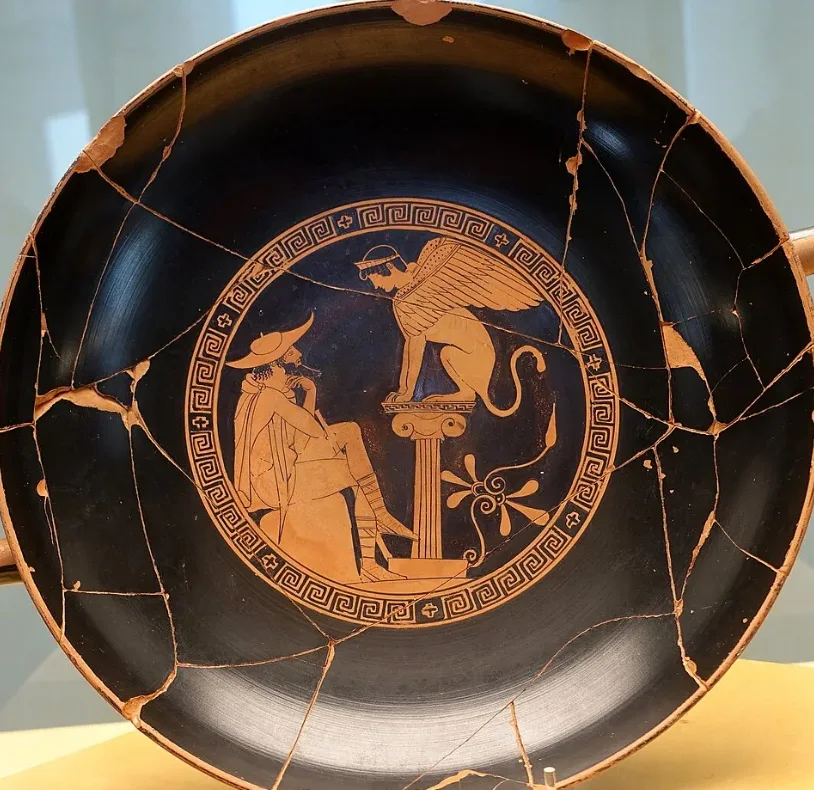
Thebes is stricken by plague. Delphi says that it will end only when the killer of the former king, Laius, is found. Oedipus, the king, takes up the search. Through a messenger from Corinth it becomes the search for his own birth. An old herdsman saw Laius die, and once saved the infant Oedipus. He proves that Oedipus is Laius’ son.[1] Oedipus has killed his father and married his mother. Jocasta hangs herself, and Oedipus puts out his own eyes.[2] No record dates the play. The Cambridge chronology gives 430–428 with a query. Halleran reports the usual dating to the early 420s, and Scodel calls the 420s a guess. The hypothesis is the ancient summary of the play. An ancient tradition goes back to it, and says that with this play Sophocles lost first prize to Philocles, Aeschylus’ nephew.[3]
These lines open the play. A crowd of suppliants, priests, young men and children comes to the king for help against the plague. Oedipus promises to find the killer of Laius.[4]
Text and translation
ὦ τέκνα, Κάδμου τοῦ πάλαι νέα τροφή
Sophocles · Oedipus Tyrannus 1–77 · iambic trimeters · text of Storr (Loeb, via Perseus)
How to read each line
A guide to the Greek, syllables, pitch marks and quantities.
Show the reading key
- Above each line: the line as the edition prints it, each word placed over its own syllables. The main row: the same Greek divided into metrical syllables, each written as it is pronounced. A consonant that closes a syllable is written with it (λόθ | ρο); an elided word is closed up with the next vowel (ν’ἀ); a final consonant carried into the next word is set with a thin space (ς ἰ). Wider gaps mark word-ends.
- Above the syllables: the pitch of each syllable, from the accents. Under them: the quantity of each syllable as it falls in the line, then the transliteration, syllable by syllable, with accented syllables in capitals.
- Under each line: a line-for-line translation. In the right margin of the scansion: the line type, its scheme, and its analysis into cola.
Key to the labels
The names, patterns and symbols used beside this poem.
Show the labels and symbols
The labels in the right margin of the scansion below name the line, its scheme, the feet as the line realises them, and the caesurae and diaereses (the named word-ends) that fall in it. In the scheme — is a long position, ⏑ a short one and × an anceps, long or short; the descriptions below say where a long may be resolved into two shorts and where two shorts may stand in place of an anceps or a short.[5] A click on any syllable highlights its metron or colon, or, with the switch, its foot.
| Label | Name and shape | What it is |
|---|---|---|
| im1 | First iambic metron× — ⏑ — | Positions 1–4. The anceps may be long or short, and in the first foot it may be replaced by two shorts, which makes the foot an anapaest (⏑ ⏑ —). Either long may be resolved into two shorts. |
| im2 | Second iambic metron× — ⏑ — | Positions 5–8. The main caesura falls inside it, after position 5 (penthemimeral) or 7 (hephthemimeral). Either long may be resolved into two shorts. Outside the first foot tragedy admits an anapaest only for a proper name. |
| im3 | Third iambic metron× — ⏑ × | Positions 9–12, the last syllable indifferent (period-end). Porson’s law: when the anceps at 9 is long, it and the following syllable belong to the same word, unless one of them is a monosyllable. The long at 10 may be resolved only when the anceps at 9 is short. |
Scansion
The opening scene: Oedipus questions the suppliants (1–13), the Priest of Zeus describes the plague (14–57), and Oedipus answers that he has already sent Creon to Delphi (58–77). Every trimeter is scanned metron by metron, with its caesura, the third anceps checked against Porson’s law, and every resolution, anapaest and prosodic licence named.
My children, newest brood of Cadmus of old,
why is it that you sit here before me like this,
wreathed with the branches of suppliants?
The city is full of incense smoke,
and full of paeans and of groaning.
These things, children, I thought it wrong to hear from messengers,
from others, and I have come here myself,
I who am called Oedipus, famous in the eyes of all.
Come, old man, speak, since it is fitting for you
to speak for these: in what mood do you sit here,
in fear or in longing? Know that I would gladly
give every help; for I would be hard-hearted
if I felt no pity for such a supplication.
Oedipus, ruler of my land,
you see how young and how old we are who sit
at your altars: some not yet strong enough
to fly far, some weighed down with age,
priests, I of Zeus, and these chosen
from the young men; and the rest of the people sit, wreathed,
in the market places, at the two temples of Pallas,
and at the prophetic embers of Ismenus.
For the city, as you see yourself, is now
tossing too violently, and can no longer lift its head
out of the depths of the bloody swell;
it is wasting in the fruit-bearing buds of the earth,
wasting in the herds of grazing cattle and in the barren
births of women; and the fire-bearing god,
most hateful plague, has struck and drives through the city,
and by him the house of Cadmus is emptied, while black
Hades grows rich in groans and wailing.
It is not as one equal to the gods that I
and these children sit at your hearth,
but as the first of men, both in the chances of life
and in dealings with the gods, we judge you;
you who came and freed the city of Cadmus
from the tribute we paid to the cruel singer,
and did it knowing nothing more from us
and untaught: by the help of a god, so it is said
and believed, you set our life upright.
And now, Oedipus, mightiest head in the eyes of all,
all of us here, your suppliants, beg you
to find some defence for us, whether you have heard
a voice from one of the gods, or know it from some man;
for in men of experience I see that the outcomes
of their counsels, too, are most alive.
Come, best of mortals, set the city upright;
come, take care: for now this land
calls you its saviour for your zeal of old;
let us never remember of your reign
that we stood upright and afterwards fell.
Set this city upright, and keep it safe.
For under a bird of good omen the fortune of that time
you gave us; be the same man now as well.
For if you are to rule this land, as you hold power over it,
it is better to rule it with men in it than empty;
since a tower is nothing, and a ship is nothing,
when it is empty of men and no one lives within.
Pitiable children, known and not unknown to me
are the desires you have come with; for I know well
that you are all sick, and, sick as you are, there is not
one of you who is as sick as I.
For your pain comes to each of you
alone, to himself and to no one else; but my
soul groans for the city and for myself and for you together.
So it is not from sleep that you wake me;
know that I have wept many tears
and gone many ways in the wanderings of thought;
and the one remedy I found by searching well,
that I have acted on: the son of Menoeceus,
Creon, my own brother-in-law, I have sent to the Pythian
house of Phoebus, to learn by what
deed or word I might save this city.
And already the day, measured against the time,
troubles me: what is he doing? For beyond what is reasonable
he is away, longer than the proper time.
But when he comes, then I would be a bad man
if I did not do all that the god makes plain.
Metre
- The line. The iambic trimeter is three iambic metra, × — ⏑ — | × — ⏑ — | × — ⏑ —, with period-end at the end of every line, so that the last position takes a short syllable as well as a long (brevis in longo).[6] West quotes lines 1–3 of this play as his specimen of the tragic trimeter.[7] The trimeter is the metre of the spoken parts of tragedy: the iambics were spoken, not sung, and were felt to come closer than other metres to the rhythm of ordinary speech.[8]
- Caesura. The line is divided by word-end after position 5 (penthemimeral caesura) or, failing that, after position 7 (hephthemimeral).[7] Here 63 of the 77 lines have the penthemimeral word-end; 13 have only the hephthemimeral one (3, 5, 11, 21, 24, 25, 44, 45, 55, 59, 65, 67, 68); line 46 has neither, and divides after the third foot with elision (ἄριστ’ ‖ ἀνόρθωσον), the rarer type West illustrates from Agamemnon 20. In line 52 the word-end after position 5 follows the prepositive καί, which West calls exceptional,[9] and the real division is the hephthemimeral one.
- Porson’s law. If the anceps of the third metron (position 9) is long, no word-end may separate it from the syllable after it, though a monosyllable on either side is allowed.[10] Position 9 is long in 28 lines; in 27 of them the long syllable stands inside a word, and in line 44 it is the monosyllable τάς. The law is kept throughout.
- Resolution and anapaests. Sophocles, like Aeschylus, resolves seldom, in at most about one line in ten:[11] here only twice in 77 lines, the third princeps in line 10 (τίνι) and the second in line 26 (ἀγέλαις). The first foot is an anapaest (⏑ ⏑ —) four times, always inside one word: ἱερῆς (18), ἀγοραῖσι (20), ἀγόνοις (27), ἱκετεύομεν (41). In tragedy the anapaest is admitted in the first foot; in the other feet it is restricted to proper names.[12]
- Prosody. A stop + liquid inside a word may make position in tragedy (τέκ‑να in line 1, ἕδ‑ρας in line 2, δακ‑ρύσαντα in line 66) or leave the syllable short (Attic correption: τέ‑κνα in line 6, ἕ‑δραν in line 13); before a word that begins with one, a short final syllable stays short (πᾶσι κλεινός, line 8).[13] Lengthening of a short final syllable before an initial stop + liquid is at best exceptional in classical dialogue, and West takes it as one sign that a tragic fragment is post-classical.[14] The clusters γμ, γν, δμ, δν always make position (Κάδμου, στεναγμάτων, ἄγνωτα).[15] Other licences: crasis (ἁγώ 6, καὐτός 22, κἀνακουφίσαι 23, κοὐκ 58, κοὐδέν’ 63, κἀμέ 64), synecphonesis of μὴ οὐ (13), internal correption in τοιάνδε (13), and elision over the line-break, μέλας δ’ | Ἅιδης (29–30).[16]
- An exception. In line 72 Storr’s τήνδε ῥυσαίμην leaves a short syllable before initial ρ, which the dialogue of Attic drama almost never does; West refers to Dodds on Euripides, Bacchae 59 and 1338 for the tragic exceptions.[17] The line is scanned as printed and the exception is noted under it.
- Vowel lengths. An α, ι or υ whose length the spelling does not show takes its length from the metre wherever the metre decides it; every such length here agrees with LSJ or with West’s rules for endings.[18] Where the metre does not decide it (at an anceps, or in the last position of the line), the note on the line gives the source for a long vowel, or a short one at the line-end (LSJ or West 1987, pp. 10–11). Eleven such vowels are long: in κατοικτίρων (13), ναοῖς (21), κάρα (23, 40), κρίνοντες (34), ἀκούσας (43), ψυχή (64), δακρύσαντα (66), ἴασιν (68), λυπεῖ and πέρα (74).
- Lloyd-Jones’s text. Storr’s text has been compared with H. Lloyd-Jones’s Loeb edition of 1994. The line numbers are the same. His text differs at 18, 39, 40, 43, 49 and 72;[19] only at 72 does the difference bear on the metre, where his τήνδ’ ἐρυσαίμην removes the short syllable before initial ρ.[20]
Prosody, line by line
Every syllable, with the reason for its length. Quantities are read from the vowel where the spelling shows it, from the consonants that follow (“position”), from the accent where it tells, and from the metre where nothing else does. Editors’ notes on the text follow in the boxed paragraphs.
- 1
Line 1 · ὦ τέκνα, Κάδμου τοῦ πάλαι νέα τροφή,
ὦ τέκνα, Κάδμου τοῦ πάλαι νέα τροφή,
ὦτέκνα,Κάδμουτοῦπάλαινέατροφή,penthemimeral caesura.
- 1 —ὦὦ is long by nature; the position is anceps.
- 2 —τέκέ is short by nature; closed by κ before a nasal: the stop + nasal cluster makes position here, as the metre requires (tragedy allows either).
- 3 ⏑να,α is short by the metre (position 3 must be short).
- 4 —Κάδά is a vowel of unknown length; closed by δ: long by position; δμ is one of the four clusters (γμ, γν, δμ, δν) that never leave the syllable before them short.[15]
- 5 —μουου is a diphthong, long by nature; the position is anceps.
- 6 —τοῦοῦ is a diphthong, long by nature.
- 7 ⏑πάά is short by the metre (position 7 must be short).
- 8 —λαιαι is a diphthong, long by nature.
- 9 ⏑νέέ is short by nature; the position is anceps.
- 10 —αᾱ is long (its length is not shown by the ordinary spelling).
- 11 ⏑τροο is short by nature.
- 12 ×φή,ή is long by nature; the last position of the line is indifferent (period-end).
Oedipus speaks (lines 1–13). West 1987, p. 25 quotes lines 1–3 as his specimen of the tragic trimeter; his marks on line 1 agree with the scansion here (τέκ‑ long, νέ‑ short, νέᾱ long, τρο‑ short). The α of νέᾱ, feminine singular with τροφή, is long by nature and is marked with a macron in the input: it fills the long position 10 by itself, not by help of the τρ that begins τροφή, since a short final syllable is lengthened before an initial stop + liquid at best exceptionally in dialogue.[14] Penthemimeral caesura after Κάδμου (word-end after position 5)[7]. The anceps at position 9 is short (νέ). In τέκνα the κν makes position, so τέκ is long: tragedy allows this inside a word.[13] In Κάδμου the δμ makes position, as γμ, γν, δμ, δν always do.[15]
- 2
Line 2 · τίνας ποθ’ ἕδρας τάσδε μοι θοάζετε
τίνας ποθ’ ἕδρας τάσδε μοι θοάζετε
τίναςποθ’ἕδραςτάσδεμοιθοάζετεpenthemimeral caesura; hephthemimeral caesura.
- 1 ⏑τίῐ́ is short (its length is not shown by the ordinary spelling); the position is anceps.
- 2 —ναςα is a vowel of unknown length; closed by ς: long by position.
- 3 ⏑ποο is short by nature.
- 4 —θ’ἕδἕ is short by nature; closed by δ before a liquid: the stop + liquid cluster makes position here, as the metre requires (tragedy allows either); the apostrophe marks an elided vowel; the consonant before it joins this syllable.
- 5 —ραςα is a vowel of unknown length; closed by ς: long by position; the position is anceps.
- 6 —τάσά is a vowel of unknown length; closed by σ: long by position.
- 7 ⏑δεε is short by nature.
- 8 —μοιοι is a diphthong, long by nature.
- 9 ⏑θοο is short by nature; the position is anceps.
- 10 —άζ is a double consonant (two sounds) and closes the syllable: long by position.
- 11 ⏑ζεε is short by nature.
- 12 ×τεε is short by nature; the last position of the line is indifferent (period-end): a short syllable here is brevis in longo.[21]
The last syllable, the short -τε of θοάζετε, stands in the final position: West 1987, p. 25, in his note on this specimen line, points out the brevis in longo here. The ι of τίνας is short (the metre: τί fills the short third position of the trimeter at E. Cyc. 37, τίνες the seventh at Cyc. 113). Position 1 is anceps, so the metre does not show it; the input marks it short. Penthemimeral caesura after ἕδρας (word-end after position 5)[7]; a word also ends at the hephthemimeral place, after τάσδε. The anceps at position 9 is short (θο). In ἕδρας the δρ makes position, so θ’ἕδ is long: tragedy allows this inside a word.[13] Elision: ποθ’ loses its final vowel before the vowel that begins the next word.[22]
- 3
Line 3 · ἱκτηρίοις κλάδοισιν ἐξεστεμμένοι;
ἱκτηρίοις κλάδοισιν ἐξεστεμμένοι;
ἱκτηρίοιςκλάδοισιν ἐξεστεμμένοι;hephthemimeral caesura.
- 1 —ἱκἱ is a vowel of unknown length; closed by κ: long by position; the position is anceps.
- 2 —τηη is long by nature.
- 3 ⏑ρίί is short by the metre (position 3 must be short).
- 4 —οιςοι is a diphthong, long by nature; closed by ς: long by position.
- 5 ⏑κλάᾰ́ is short (its length is not shown by the ordinary spelling); the position is anceps.
- 6 —δοιοι is a diphthong, long by nature.
- 7 ⏑σιι is short by the accent rule: acute on the antepenult requires a short final syllable.
- 8 —ν ἐἐ is short by nature; ξ is a double consonant (two sounds) and closes the syllable: long by position; the first consonant belongs to the previous word and is carried over to this vowel.
- 9 —ξεσε is short by nature; closed by σ: long by position; the position is anceps.
- 10 —τεμε is short by nature; closed by μ: long by position.
- 11 ⏑μέέ is short by nature.
- 12 ×νοι;οι is a diphthong, long by nature; the last position of the line is indifferent (period-end).
West 1987, p. 25 marks this line as an example of the hephthemimeral caesura. The α of κλάδοισιν is short.[23] Position 5 is anceps, so the metre does not show it; the input marks it short. No word ends after position 5, so the caesura is hephthemimeral, after κλάδοισιν (word-end after position 7)[7]. The anceps at position 9 is long (ξεσ) and inside the word ἐξεστεμμένοι, as Porson’s law requires.[7]
- 4
Line 4 · πόλις δ’ ὁμοῦ μὲν θυμιαμάτων γέμει,
πόλις δ’ ὁμοῦ μὲν θυμιαμάτων γέμει,
πόλιςδ’ὁμοῦμὲνθυμιαμάτωνγέμει,penthemimeral caesura.
- 1 ⏑πόό is short by nature; the position is anceps.
- 2 —λιςι is a vowel of unknown length; closed by ς: long by position.
- 3 ⏑δ’ὁὁ is short by nature; the apostrophe marks an elided vowel; the consonant before it joins this syllable.
- 4 —μοῦοῦ is a diphthong, long by nature.
- 5 —μὲνὲ is short by nature; closed by ν: long by position; the position is anceps.
- 6 —θυυ is long by the metre (position 6 must be long).
- 7 ⏑μιι is short by the metre (position 7 must be short).
- 8 —αα is long by the metre (position 8 must be long).
- 9 ⏑μάᾰ́ is short (its length is not shown by the ordinary spelling); the position is anceps.
- 10 —τωνω is long by nature; closed by ν: long by position.
- 11 ⏑γέέ is short by nature.
- 12 ×μει,ει is a diphthong, long by nature; the last position of the line is indifferent (period-end).
- 5
Line 5 · ὁμοῦ δὲ παιάνων τε καὶ στεναγμάτων·
ὁμοῦ δὲ παιάνων τε καὶ στεναγμάτων·
ὁμοῦδὲπαιάνωντεκαὶστεναγμάτων·hephthemimeral caesura.
- 1 ⏑ὁὁ is short by nature; the position is anceps.
- 2 —μοῦοῦ is a diphthong, long by nature.
- 3 ⏑δὲὲ is short by nature.
- 4 —παιαι is a diphthong, long by nature.
- 5 —άᾱ́ is long (its length is not shown by the ordinary spelling); the position is anceps.
- 6 —νωνω is long by nature; closed by ν: long by position.
- 7 ⏑τεε is short by nature.
- 8 —καὶαὶ is a diphthong, long by nature; the next word begins with στ: the syllable is closed before it: long by position.
- 9 ⏑στεε is short by nature; the position is anceps.
- 10 —ναγα is a vowel of unknown length; closed by γ: long by position; γμ is one of the four clusters (γμ, γν, δμ, δν) that never leave the syllable before them short.[15]
- 11 ⏑μάά is short by the metre (position 11 must be short).
- 12 ×των·ω is long by nature; closed by ν: long by position; the last position of the line is indifferent (period-end).
The α of παιᾱ́νων is long, as the circumflex of the genitive singular παιᾶνος shows;[25] it is marked with a macron in the input. Position 5 is anceps, so the metre alone would not decide it. No word ends after position 5, so the caesura is hephthemimeral, after τε (word-end after position 7)[7]. The anceps at position 9 is short (στε). In στεναγμάτων the γμ makes position, as γμ, γν, δμ, δν always do.[15]
- 6
Line 6 · ἁγὼ δικαιῶν μὴ παρ’ ἀγγέλων, τέκνα,
ἁγὼ δικαιῶν μὴ παρ’ ἀγγέλων, τέκνα,
ἁγὼδικαιῶνμὴπαρ’ἀγγέλων,τέκνα,penthemimeral caesura; hephthemimeral caesura (with elision).
- 1 —ἁᾱ̔ is long (its length is not shown by the ordinary spelling); the position is anceps.
- 2 —γὼὼ is long by nature.
- 3 ⏑διι is short by the metre (position 3 must be short).
- 4 —καιαι is a diphthong, long by nature.
- 5 —ῶνῶ is long by nature; closed by ν: long by position; the position is anceps.
- 6 —μὴὴ is long by nature.
- 7 ⏑παα is short by the metre (position 7 must be short).
- 8 —ρ’ἀγἀ is a vowel of unknown length; closed by γ: long by position; the apostrophe marks an elided vowel; the consonant before it joins this syllable.
- 9 ⏑γέέ is short by nature; the position is anceps.
- 10 —λων,ω is long by nature; closed by ν: long by position.
- 11 ⏑τέέ is short by nature; κν is carried whole into the next syllable, so this syllable stays open and short (Attic correption of a stop + nasal cluster).
- 12 ×κνα,ᾰ is short (its length is not shown by the ordinary spelling); the last position of the line is indifferent (period-end): a short syllable here is brevis in longo.[21]
ἁγώ is crasis of ἃ ἐγώ, “the things which I”; a vowel produced by contraction is long,[26] and it is marked with a macron in the input, so the first anceps is long. The α of τέκνα is short.[27] It stands in the last position of the line, where the metre does not show its length; the input marks it short. Penthemimeral caesura after δικαιῶν (word-end after position 5)[7]; a word also ends at the hephthemimeral place, after the elided παρ’. The anceps at position 9 is short (γέ). In τέκνα the κν goes whole with the next syllable, so τέ stays short (Attic correption)[13]. Elision: παρ’ loses its final vowel before the vowel that begins the next word.[22] The last syllable, κνα, is short: brevis in longo, allowed at the period-end that closes every line.[21]
- 7
Line 7 · ἄλλων ἀκούειν αὐτὸς ὧδ’ ἐλήλυθα,
ἄλλων ἀκούειν αὐτὸς ὧδ’ ἐλήλυθα,
ἄλλωνἀκούειναὐτὸς ὧδ’ἐλήλυθα,penthemimeral caesura; hephthemimeral caesura.
- 1 —ἄλἄ is a vowel of unknown length; closed by λ: long by position; the position is anceps.
- 2 —λωνω is long by nature.
- 3 ⏑ἀἀ is short by the metre (position 3 must be short).
- 4 —κούού is a diphthong, long by nature.
- 5 —εινει is a diphthong, long by nature; the position is anceps.
- 6 —αὐαὐ is a diphthong, long by nature.
- 7 ⏑τὸὸ is short by nature.
- 8 —ς ὧὧ is long by nature; the first consonant belongs to the previous word and is carried over to this vowel.
- 9 ⏑δ’ἐἐ is short by nature; the apostrophe marks an elided vowel; the consonant before it joins this syllable; the position is anceps.
- 10 —λήή is long by nature.
- 11 ⏑λυυ is short by the metre (position 11 must be short).
- 12 ×θα,α is short by the accent rule: acute on the antepenult requires a short final syllable; the last position of the line is indifferent (period-end): a short syllable here is brevis in longo.[21]
Penthemimeral caesura after ἀκούειν (word-end after position 5)[7]; a word also ends at the hephthemimeral place, after αὐτὸς. The anceps at position 9 is short (δ’ἐ). Elision: ὧδ’ loses its final vowel before the vowel that begins the next word.[22] The last syllable, θα, is short: brevis in longo, allowed at the period-end that closes every line.[21]
- 8
Line 8 · ὁ πᾶσι κλεινὸς Οἰδίπους καλούμενος.
ὁ πᾶσι κλεινὸς Οἰδίπους καλούμενος.
ὁπᾶσικλεινὸς Οἰδίπουςκαλούμενος.penthemimeral caesura.
- 1 ⏑ὁὁ is short by nature; the position is anceps.
- 2 —πᾶᾶ carries a circumflex, so it is long.
- 3 ⏑σιι is short by the accent rule (the accent falls too far back for a long final syllable); the next word begins with κλ, a stop + liquid that does not make position here, so the syllable stays short.
- 4 —κλειει is a diphthong, long by nature.
- 5 ⏑νὸὸ is short by nature; the position is anceps.
- 6 —ς ΟἰΟἰ is a diphthong, long by nature; the first consonant belongs to the previous word and is carried over to this vowel.
- 7 ⏑δίί is short by the metre (position 7 must be short).
- 8 —πουςου is a diphthong, long by nature; closed by ς: long by position.
- 9 ⏑καᾰ is short (its length is not shown by the ordinary spelling); the position is anceps.
- 10 —λούού is a diphthong, long by nature.
- 11 ⏑μεε is short by nature.
- 12 ×νος.ο is short by nature; closed by ς: long by position; the last position of the line is indifferent (period-end).
Lloyd-Jones prints the line; his apparatus notes that a papyrus perhaps left it out and that Wunder deleted it.[28] The α of καλούμενος is short.[29] Position 9 is anceps, so the metre does not show it; the input marks it short. Penthemimeral caesura after κλεινὸς (word-end after position 5)[7]. The final σι of πᾶσι stays short before the κλ that begins κλεινὸς (Attic correption)[13].
- 9
Line 9 · ἀλλ’ ὦ γεραιέ, φράζ’, ἐπεὶ πρέπων ἔφυς
ἀλλ’ ὦ γεραιέ, φράζ’, ἐπεὶ πρέπων ἔφυς
ἀλλ’ὦγεραιέ,φράζ’,ἐπεὶπρέπωνἔφυςpenthemimeral caesura.
- 1 —ἀλἀ is a vowel of unknown length; closed by λ: long by position; the position is anceps.
- 2 —λ’ὦὦ is long by nature; the apostrophe marks an elided vowel; the consonant before it joins this syllable.
- 3 ⏑γεε is short by nature.
- 4 —ραιαι is a diphthong, long by nature.
- 5 ⏑έ,έ is short by nature; the next word begins with φρ, a stop + liquid that does not make position here, so the syllable stays short; the position is anceps.
- 6 —φράζ is a double consonant (two sounds) and closes the syllable: long by position.
- 7 ⏑ζ’,ἐἐ is short by nature; the apostrophe marks an elided vowel; the consonant before it joins this syllable.
- 8 —πεὶεὶ is a diphthong, long by nature.
- 9 ⏑πρέέ is short by nature; the position is anceps.
- 10 —πωνω is long by nature.
- 11 ⏑ἔἔ is short by nature.
- 12 ×φυςυ is a vowel of unknown length; closed by ς: long by position; the last position of the line is indifferent (period-end).
- 10
Line 10 · πρὸ τῶνδε φωνεῖν, τίνι τρόπῳ καθέστατε,
πρὸ τῶνδε φωνεῖν, τίνι τρόπῳ καθέστατε,
πρὸτῶνδεφωνεῖν,τίνιτρόπῳκαθέστατε,penthemimeral caesura.
- 1 ⏑πρὸὸ is short by nature; the position is anceps.
- 2 —τῶνῶ is long by nature; closed by ν: long by position.
- 3 ⏑δεε is short by nature.
- 4 —φωω is long by nature.
- 5 —νεῖν,εῖ is a diphthong, long by nature; closed by ν: long by position; the position is anceps.
- 6 ⏑τίί is short by the metre (position 6 must be short); with its neighbour it resolves the long of position 6 into two shorts.
- 7 ⏑νιι is a vowel of unknown length; the next word begins with τρ, a stop + liquid that does not make position here, so the syllable stays short; with its neighbour it resolves the long of position 6 into two shorts.
- 8 ⏑τρόό is short by nature.
- 9 —πῳῳ is long by nature.
- 10 ⏑καᾰ is short (its length is not shown by the ordinary spelling); the position is anceps.
- 11 —θέσέ is short by nature; closed by σ: long by position.
- 12 ⏑ταα is short by the metre (position 11 must be short).
- 13 ×τε,ε is short by nature; the last position of the line is indifferent (period-end): a short syllable here is brevis in longo.[21]
The α of καθέστατε is short.[30] Position 9 is anceps, so the metre does not show it; the input marks it short. Penthemimeral caesura after φωνεῖν (word-end after position 5)[7]. The third princeps (position 6) is resolved into two shorts, τί–νι, which make up the whole of the two-syllable word τίνι;[31] the third foot is a dactyl (— ⏑ ⏑). The final νι of τίνι stays short before the τρ that begins τρόπῳ (Attic correption)[13]. The last syllable, τε, is short: brevis in longo, allowed at the period-end that closes every line.[21]
- 11
Line 11 · δείσαντες ἢ στέρξαντες; ὡς θέλοντος ἂν
δείσαντες ἢ στέρξαντες; ὡς θέλοντος ἂν
δείσαντες ἢστέρξαντε;ς ὡςθέλοντος ἂνhephthemimeral caesura.
- 1 —δείεί is a diphthong, long by nature; the position is anceps.
- 2 —σανα is a vowel of unknown length; closed by ν: long by position.
- 3 ⏑τεε is short by nature.
- 4 —ς ἢἢ is long by nature; the next word begins with στ: the syllable is closed before it: long by position; the first consonant belongs to the previous word and is carried over to this vowel.
- 5 —στέρέ is short by nature; closed by ρ: long by position; the position is anceps.
- 6 —ξανα is a vowel of unknown length; closed by ν: long by position.
- 7 ⏑τε;ε is short by nature.
- 8 —ς ὡςὡ is long by nature; closed by ς: long by position; the first consonant belongs to the previous word and is carried over to this vowel.
- 9 ⏑θέέ is short by nature; the position is anceps.
- 10 —λονο is short by nature; closed by ν: long by position.
- 11 ⏑τοο is short by nature.
- 12 ×ς ἂνἂ is a vowel of unknown length; closed by ν: long by position; the first consonant belongs to the previous word and is carried over to this vowel; the last position of the line is indifferent (period-end).
No word ends after position 5, so the caesura is hephthemimeral, after στέρξαντες (word-end after position 7)[7]. The anceps at position 9 is short (θέ).
- 12
Line 12 · ἐμοῦ προσαρκεῖν πᾶν· δυσάλγητος γὰρ ἂν
ἐμοῦ προσαρκεῖν πᾶν· δυσάλγητος γὰρ ἂν
ἐμοῦπροσαρκεῖνπᾶν·δυσάλγητοςγὰρ ἂνpenthemimeral caesura.
- 1 ⏑ἐἐ is short by nature; the position is anceps.
- 2 —μοῦοῦ is a diphthong, long by nature.
- 3 ⏑προο is short by nature.
- 4 —σαρα is a vowel of unknown length; closed by ρ: long by position.
- 5 —κεῖνεῖ is a diphthong, long by nature; closed by ν: long by position; the position is anceps.
- 6 —πᾶν·ᾶ carries a circumflex, so it is long; closed by ν: long by position.
- 7 ⏑δυυ is short by the metre (position 7 must be short).
- 8 —σάλά is a vowel of unknown length; closed by λ: long by position.
- 9 —γηη is long by nature; the position is anceps.
- 10 —τοςο is short by nature; closed by ς: long by position.
- 11 ⏑γὰὰ is short by the metre (position 11 must be short).
- 12 ×ρ ἂνἂ is a vowel of unknown length; closed by ν: long by position; the first consonant belongs to the previous word and is carried over to this vowel; the last position of the line is indifferent (period-end).
- 13
Line 13 · εἴην τοιάνδε μὴ‿ οὐ κατοικτίρων ἕδραν.
εἴην τοιάνδε μὴ‿ οὐ κατοικτίρων ἕδραν.
εἴηντοιάνδεμὴ‿οὐκατοικτίρωνἕδραν.penthemimeral caesura.
- 1 —εἴεἴ is a diphthong, long by nature; the position is anceps.
- 2 —ηνη is long by nature; closed by ν: long by position.
- 3 ⏑τοιοι is a diphthong, long by nature; the diphthong is shortened before the vowel that follows it inside the word, as the metre requires (internal correption, frequent in Attic verse with words containing αι and οι)[32].
- 4 —άνά is a vowel of unknown length; closed by ν: long by position.
- 5 ⏑δεε is short by nature; the position is anceps.
- 6 —μὴ‿οὐὴοὐ is two vowels run together across the word-boundary into one long syllable (synecphonesis).
- 7 ⏑καα is short by the metre (position 7 must be short).
- 8 —τοικοι is a diphthong, long by nature; closed by κ: long by position.
- 9 —τίῑ́ is long (its length is not shown by the ordinary spelling); the position is anceps.
- 10 —ρωνω is long by nature.
- 11 ⏑ἕἕ is short by nature; δρ is carried whole into the next syllable, so this syllable stays open and short (Attic correption of a stop + liquid cluster).
- 12 ×δραν.α is a vowel of unknown length; closed by ν: long by position; the last position of the line is indifferent (period-end).
The input ties μὴ οὐ (μὴ‿ οὐ) so that the two words make one syllable. The ι of κατοικτίρων is long.[33] Position 9 is anceps, so the metre does not show it; the input marks it long. Penthemimeral caesura after τοιάνδε (word-end after position 5)[7]. The anceps at position 9 is long (τί) and inside the word κατοικτίρων, as Porson’s law requires.[7] In ἕδραν the δρ goes whole with the next syllable, so ἕ stays short (Attic correption)[13]. In τοιάνδε the diphthong of τοι is shortened before the vowel that follows it inside the word, as often in Attic verse with such words as οἷος, τοιοῦτος, ποιεῖν.[32] Synecphonesis: the final vowel of μὴ and the first vowel of οὐ are run together into one long syllable, μὴ‿οὐ, as happens most often when the first word is a monosyllable.[34]
- 14
Line 14 · ἀλλ’ ὦ κρατύνων Οἰδίπους χώρας ἐμῆς,
ἀλλ’ ὦ κρατύνων Οἰδίπους χώρας ἐμῆς,
ἀλλ’ὦκρατύνωνΟἰδίπουςχώραςἐμῆς,penthemimeral caesura.
- 1 —ἀλἀ is a vowel of unknown length; closed by λ: long by position; the position is anceps.
- 2 —λ’ὦὦ is long by nature; the apostrophe marks an elided vowel; the consonant before it joins this syllable.
- 3 ⏑κραα is short by the metre (position 3 must be short).
- 4 —τύύ is long by the metre (position 4 must be long).
- 5 —νωνω is long by nature; the position is anceps.
- 6 —ΟἰΟἰ is a diphthong, long by nature.
- 7 ⏑δίί is short by the metre (position 7 must be short).
- 8 —πουςου is a diphthong, long by nature; closed by ς: long by position.
- 9 —χώώ is long by nature; the position is anceps.
- 10 —ραςα is long by the metre (position 10 must be long).
- 11 ⏑ἐἐ is short by nature.
- 12 ×μῆς,ῆ is long by nature; closed by ς: long by position; the last position of the line is indifferent (period-end).
- 15
Line 15 · ὁρᾷς μὲν ἡμᾶς ἡλίκοι προσήμεθα
ὁρᾷς μὲν ἡμᾶς ἡλίκοι προσήμεθα
ὁρᾷςμὲν ἡμᾶςἡλίκοιπροσήμεθαpenthemimeral caesura.
- 1 ⏑ὁὁ is short by nature; the position is anceps.
- 2 —ρᾷςᾷ is long by nature; closed by ς: long by position.
- 3 ⏑μὲὲ is short by nature.
- 4 —ν ἡἡ is long by nature; the first consonant belongs to the previous word and is carried over to this vowel.
- 5 —μᾶςᾶ carries a circumflex, so it is long; the position is anceps.
- 6 —ἡἡ is long by nature.
- 7 ⏑λίί is short by the metre (position 7 must be short).
- 8 —κοιοι is a diphthong, long by nature.
- 9 ⏑προο is short by nature; the position is anceps.
- 10 —σήή is long by nature.
- 11 ⏑μεε is short by nature.
- 12 ×θαα is short by the accent rule: acute on the antepenult requires a short final syllable; the last position of the line is indifferent (period-end): a short syllable here is brevis in longo.[21]
- 16
Line 16 · βωμοῖσι τοῖς σοῖς· οἱ μὲν οὐδέπω μακρὰν
βωμοῖσι τοῖς σοῖς· οἱ μὲν οὐδέπω μακρὰν
βωμοῖσιτοῖςσοῖς·οἱμὲν οὐδέπωμακρὰνpenthemimeral caesura; hephthemimeral caesura.
- 1 —βωω is long by nature; the position is anceps.
- 2 —μοῖοῖ is a diphthong, long by nature.
- 3 ⏑σιι is short by the accent rule: circumflex on the penult requires a short final syllable.
- 4 —τοῖςοῖ is a diphthong, long by nature; closed by ς: long by position.
- 5 —σοῖς·οῖ is a diphthong, long by nature; the position is anceps.
- 6 —οἱοἱ is a diphthong, long by nature.
- 7 ⏑μὲὲ is short by nature.
- 8 —ν οὐοὐ is a diphthong, long by nature; the first consonant belongs to the previous word and is carried over to this vowel.
- 9 ⏑δέέ is short by nature; the position is anceps.
- 10 —πωω is long by nature.
- 11 ⏑μαα is a vowel of unknown length; κρ is carried whole into the next syllable, so this syllable stays open and short (Attic correption of a stop + liquid cluster).
- 12 ×κρὰνὰ is a vowel of unknown length; closed by ν: long by position; the last position of the line is indifferent (period-end).
- 17
Line 17 · πτέσθαι σθένοντες, οἱ δὲ σὺν γήρᾳ βαρεῖς,
πτέσθαι σθένοντες, οἱ δὲ σὺν γήρᾳ βαρεῖς,
πτέσθαισθένοντε,ς οἱδὲσὺνγήρᾳβαρεῖς,penthemimeral caesura; hephthemimeral caesura.
- 1 —πτέσέ is short by nature; closed by σ: long by position; the position is anceps.
- 2 —θαιαι is a diphthong, long by nature; the next word begins with σθ: the syllable is closed before it: long by position.
- 3 ⏑σθέέ is short by nature.
- 4 —νονο is short by nature; closed by ν: long by position.
- 5 ⏑τε,ε is short by nature; the position is anceps.
- 6 —ς οἱοἱ is a diphthong, long by nature; the first consonant belongs to the previous word and is carried over to this vowel.
- 7 ⏑δὲὲ is short by nature.
- 8 —σὺνὺ is a vowel of unknown length; closed by ν: long by position.
- 9 —γήή is long by nature; the position is anceps.
- 10 —ρᾳᾳ is long by nature.
- 11 ⏑βαα is short by the metre (position 11 must be short).
- 12 ×ρεῖς,εῖ is a diphthong, long by nature; closed by ς: long by position; the last position of the line is indifferent (period-end).
- 18
Line 18 · ἱερῆς, ἐγὼ μὲν Ζηνός, οἵδε τ’ ᾐθέων
ἱερῆς, ἐγὼ μὲν Ζηνός, οἵδε τ’ ᾐθέων
ἱερῆς,ἐγὼμὲνΖηνό,ς οἵδετ’ᾐθέωνpenthemimeral caesura; hephthemimeral caesura.
- 1 ⏑ἱἱ is short by the metre (position 1 must be short); with its neighbour it fills the anceps of position 1 with two shorts, making an anapaest (⏑ ⏑ —) of the foot.
- 2 ⏑εε is short by nature; with its neighbour it fills the anceps of position 1 with two shorts, making an anapaest (⏑ ⏑ —) of the foot.
- 3 —ρῆς,ῆ is long by nature.
- 4 ⏑ἐἐ is short by nature.
- 5 —γὼὼ is long by nature.
- 6 —μὲνὲ is short by nature; closed by ν: long by position; the position is anceps.
- 7 —Ζηη is long by nature.
- 8 ⏑νό,ό is short by nature.
- 9 —ς οἵοἵ is a diphthong, long by nature; the first consonant belongs to the previous word and is carried over to this vowel.
- 10 ⏑δεε is short by nature; the position is anceps.
- 11 —τ’ᾐᾐ is long by nature; the apostrophe marks an elided vowel; the consonant before it joins this syllable.
- 12 ⏑θέέ is short by nature.
- 13 ×ωνω is long by nature; closed by ν: long by position; the last position of the line is indifferent (period-end).
Lloyd-Jones prints Bentley’s singular ἱερεύς, “I am the priest of Zeus”, for the plural of the manuscripts; the syllables and their lengths are the same.[28] Penthemimeral caesura after μὲν (word-end after position 5)[7]; a word also ends at the hephthemimeral place, after Ζηνός. The anceps at position 9 is short (δε). The first foot is an anapaest (⏑ ⏑ —): the anceps (position 1) is filled by two shorts, ἱ–ε, in ἱερῆς; in tragedy the anapaest is admitted in the first foot without the restriction to proper names that applies in the other feet, and here its three syllables lie within one word.[12] Elision: τ’ loses its final vowel before the vowel that begins the next word.[22]
- 19
Line 19 · λεκτοί· τὸ δ’ ἄλλο φῦλον ἐξεστεμμένον
λεκτοί· τὸ δ’ ἄλλο φῦλον ἐξεστεμμένον
λεκτοί·τὸδ’ἄλλοφῦλον ἐξεστεμμένονpenthemimeral caesura; hephthemimeral caesura.
- 1 —λεκε is short by nature; closed by κ: long by position; the position is anceps.
- 2 —τοί·οί is a diphthong, long by nature.
- 3 ⏑τὸὸ is short by nature.
- 4 —δ’ἄλἄ is a vowel of unknown length; closed by λ: long by position; the apostrophe marks an elided vowel; the consonant before it joins this syllable.
- 5 ⏑λοο is short by nature; the position is anceps.
- 6 —φῦῦ carries a circumflex, so it is long.
- 7 ⏑λοο is short by nature.
- 8 —ν ἐἐ is short by nature; ξ is a double consonant (two sounds) and closes the syllable: long by position; the first consonant belongs to the previous word and is carried over to this vowel.
- 9 —ξεσε is short by nature; closed by σ: long by position; the position is anceps.
- 10 —τεμε is short by nature; closed by μ: long by position.
- 11 ⏑μέέ is short by nature.
- 12 ×νονο is short by nature; closed by ν: long by position; the last position of the line is indifferent (period-end).
Penthemimeral caesura after ἄλλο (word-end after position 5)[7]; a word also ends at the hephthemimeral place, after φῦλον. The anceps at position 9 is long (ξεσ) and inside the word ἐξεστεμμένον, as Porson’s law requires.[7] Elision: δ’ loses its final vowel before the vowel that begins the next word.[22]
- 20
Line 20 · ἀγοραῖσι θακεῖ πρός τε Παλλάδος διπλοῖς
ἀγοραῖσι θακεῖ πρός τε Παλλάδος διπλοῖς
ἀγοραῖσιθακεῖπρόςτεΠαλλάδοςδιπλοῖςpenthemimeral caesura; hephthemimeral caesura.
- 1 ⏑ἀἀ is short by the metre (position 1 must be short); with its neighbour it fills the anceps of position 1 with two shorts, making an anapaest (⏑ ⏑ —) of the foot.
- 2 ⏑γοο is short by nature; with its neighbour it fills the anceps of position 1 with two shorts, making an anapaest (⏑ ⏑ —) of the foot.
- 3 —ραῖαῖ is a diphthong, long by nature.
- 4 ⏑σιι is short by the accent rule: circumflex on the penult requires a short final syllable.
- 5 —θαα is long by the metre (position 4 must be long).
- 6 —κεῖεῖ is a diphthong, long by nature; the position is anceps.
- 7 —πρόςό is short by nature; closed by ς: long by position.
- 8 ⏑τεε is short by nature.
- 9 —Παλα is a vowel of unknown length; closed by λ: long by position.
- 10 ⏑λάᾰ́ is short (its length is not shown by the ordinary spelling); the position is anceps.
- 11 —δοςο is short by nature; closed by ς: long by position.
- 12 ⏑διι is a vowel of unknown length; πλ is carried whole into the next syllable, so this syllable stays open and short (Attic correption of a stop + liquid cluster).
- 13 ×πλοῖςοῖ is a diphthong, long by nature; closed by ς: long by position; the last position of the line is indifferent (period-end).
The α of Παλλάδος is short (the metre: Παλλάδος fills the short seventh position of the trimeter at E. Hipp. 30 and 1459). Position 9 is anceps, so the metre does not show it; the input marks it short. Penthemimeral caesura after θακεῖ (word-end after position 5)[7]; a word also ends at the hephthemimeral place, after τε. The first foot is an anapaest (⏑ ⏑ —): the anceps (position 1) is filled by two shorts, ἀ–γο, in ἀγοραῖσι; in tragedy the anapaest is admitted in the first foot without the restriction to proper names that applies in the other feet, and here its three syllables lie within one word.[12] In διπλοῖς the πλ goes whole with the next syllable, so δι stays short (Attic correption)[13].
- 21
Line 21 · ναοῖς, ἐπ’ Ἰσμηνοῦ τε μαντείᾳ σποδῷ.
ναοῖς, ἐπ’ Ἰσμηνοῦ τε μαντείᾳ σποδῷ.
ναοῖς,ἐπ’Ἰσμηνοῦτεμαντείᾳσποδῷ.hephthemimeral caesura.
- 1 —ναᾱ is long (its length is not shown by the ordinary spelling); the position is anceps.
- 2 —οῖς,οῖ is a diphthong, long by nature.
- 3 ⏑ἐἐ is short by nature.
- 4 —π’ἸσἸ is a vowel of unknown length; closed by σ: long by position; the apostrophe marks an elided vowel; the consonant before it joins this syllable.
- 5 —μηη is long by nature; the position is anceps.
- 6 —νοῦοῦ is a diphthong, long by nature.
- 7 ⏑τεε is short by nature.
- 8 —μανα is a vowel of unknown length; closed by ν: long by position.
- 9 —τείεί is a diphthong, long by nature; the position is anceps.
- 10 —ᾳᾳ is long by nature; the next word begins with σπ: the syllable is closed before it: long by position.
- 11 ⏑σποο is short by nature.
- 12 ×δῷ.ῷ is long by nature; the last position of the line is indifferent (period-end).
The α of ναοῖς is long.[35] Position 1 is anceps, so the metre does not show it; the input marks it long. No word ends after position 5, so the caesura is hephthemimeral, after τε (word-end after position 7)[7]. The anceps at position 9 is long (τεί) and inside the word μαντείᾳ, as Porson’s law requires.[7] Elision: ἐπ’ loses its final vowel before the vowel that begins the next word.[22]
- 22
Line 22 · πόλις γάρ, ὥσπερ καὐτὸς εἰσορᾷς, ἄγαν
πόλις γάρ, ὥσπερ καὐτὸς εἰσορᾷς, ἄγαν
πόλιςγά,ρ ὥσπερκαὐτὸς εἰσορᾷς,ἄγανpenthemimeral caesura; hephthemimeral caesura.
- 1 ⏑πόό is short by nature; the position is anceps.
- 2 —λιςι is a vowel of unknown length; closed by ς: long by position.
- 3 ⏑γά,ά is short by the metre (position 3 must be short).
- 4 —ρ ὥσὥ is long by nature; closed by σ: long by position; the first consonant belongs to the previous word and is carried over to this vowel.
- 5 —περε is short by nature; closed by ρ: long by position; the position is anceps.
- 6 —καὐαὐ is a diphthong, long by nature.
- 7 ⏑τὸὸ is short by nature.
- 8 —ς εἰεἰ is a diphthong, long by nature; the first consonant belongs to the previous word and is carried over to this vowel.
- 9 ⏑σοο is short by nature; the position is anceps.
- 10 —ρᾷς,ᾷ is long by nature.
- 11 ⏑ἄἄ is short by the metre (position 11 must be short).
- 12 ×γανα is a vowel of unknown length; closed by ν: long by position; the last position of the line is indifferent (period-end).
- 23
Line 23 · ἤδη σαλεύει κἀνακουφίσαι κάρα
ἤδη σαλεύει κἀνακουφίσαι κάρα
ἤδησαλεύεικἀνακουφίσαικάραpenthemimeral caesura.
- 1 —ἤἤ is long by nature; the position is anceps.
- 2 —δηη is long by nature.
- 3 ⏑σαα is short by the metre (position 3 must be short).
- 4 —λεύεύ is a diphthong, long by nature.
- 5 —ειει is a diphthong, long by nature; the position is anceps.
- 6 —κἀἀ is long by crasis: the coronis marks two words contracted into one long vowel.
- 7 ⏑ναα is short by the metre (position 7 must be short).
- 8 —κουου is a diphthong, long by nature.
- 9 ⏑φίῐ́ is short (its length is not shown by the ordinary spelling); the position is anceps.
- 10 —σαιαι is a diphthong, long by nature.
- 11 ⏑κάά is short by the metre (position 11 must be short).
- 12 ×ραᾱ is long (its length is not shown by the ordinary spelling); the last position of the line is indifferent (period-end).
The ι of κἀνακουφίσαι is short (the metre: ἐκούφισας fills the short eleventh position of the trimeter at E. Rh. 281). Position 9 is anceps, so the metre does not show it; the input marks it short. The α of κάρα is long.[37] It stands in the last position of the line, where the metre does not show its length; the input marks it long. Penthemimeral caesura after σαλεύει (word-end after position 5)[7]. Crasis: κἀνακουφίσαι is καὶ ἀνακουφίσαι run together into one word, the merged vowel long.[36]
- 24
Line 24 · βυθῶν ἔτ’ οὐχ οἵα τε φοινίου σάλου,
βυθῶν ἔτ’ οὐχ οἵα τε φοινίου σάλου,
βυθῶνἔτ’οὐχοἵατεφοινίουσάλου,hephthemimeral caesura.
- 1 ⏑βυῠ is short (its length is not shown by the ordinary spelling); the position is anceps.
- 2 —θῶνῶ is long by nature.
- 3 ⏑ἔἔ is short by nature.
- 4 —τ’οὐχοὐ is a diphthong, long by nature; the apostrophe marks an elided vowel; the consonant before it joins this syllable.
- 5 —οἵοἵ is a diphthong, long by nature; the position is anceps.
- 6 —αα is long by the metre (position 6 must be long).
- 7 ⏑τεε is short by nature.
- 8 —φοιοι is a diphthong, long by nature.
- 9 ⏑νίῐ́ is short (its length is not shown by the ordinary spelling); the position is anceps.
- 10 —ουου is a diphthong, long by nature.
- 11 ⏑σάά is short by the metre (position 11 must be short).
- 12 ×λου,ου is a diphthong, long by nature; the last position of the line is indifferent (period-end).
The υ of βυθῶν is short.[38] Position 1 is anceps, so the metre does not show it; the input marks it short. The ι of φοινίου is short.[39] Position 9 is anceps, so the metre does not show it; the input marks it short. No word ends after position 5, so the caesura is hephthemimeral, after τε (word-end after position 7)[7]. Elision: ἔτ’ loses its final vowel before the vowel that begins the next word.[22]
- 25
Line 25 · φθίνουσα μὲν κάλυξιν ἐγκάρποις χθονός,
φθίνουσα μὲν κάλυξιν ἐγκάρποις χθονός,
φθίνουσαμὲνκάλυξιν ἐγκάρποιςχθονός,hephthemimeral caesura.
- 1 ⏑φθίῐ́ is short (its length is not shown by the ordinary spelling); the position is anceps.
- 2 —νουου is a diphthong, long by nature.
- 3 ⏑σαα is short by the accent rule: acute on the antepenult requires a short final syllable.
- 4 —μὲνὲ is short by nature; closed by ν: long by position.
- 5 ⏑κάᾰ́ is short (its length is not shown by the ordinary spelling); the position is anceps.
- 6 —λυξ is a double consonant (two sounds) and closes the syllable: long by position.
- 7 ⏑ξιι is short by the accent rule: acute on the antepenult requires a short final syllable.
- 8 —ν ἐγἐ is short by nature; closed by γ: long by position; the first consonant belongs to the previous word and is carried over to this vowel.
- 9 —κάρά is a vowel of unknown length; closed by ρ: long by position; the position is anceps.
- 10 —ποιςοι is a diphthong, long by nature; closed by ς: long by position.
- 11 ⏑χθοο is short by nature.
- 12 ×νός,ό is short by nature; closed by ς: long by position; the last position of the line is indifferent (period-end).
The ι of φθίνουσα is short.[40] Position 1 is anceps, so the metre does not show it; the input marks it short. The α of κάλυξιν is short.[41] Position 5 is anceps, so the metre does not show it; the input marks it short. No word ends after position 5, so the caesura is hephthemimeral, after κάλυξιν (word-end after position 7)[7]. The anceps at position 9 is long (κάρ) and inside the word ἐγκάρποις, as Porson’s law requires.[7]
- 26
Line 26 · φθίνουσα δ’ ἀγέλαις βουνόμοις τόκοισί τε
φθίνουσα δ’ ἀγέλαις βουνόμοις τόκοισί τε
φθίνουσαδ’ἀγέλαιςβουνόμοιςτόκοισίτεpenthemimeral caesura.
- 1 ⏑φθίῐ́ is short (its length is not shown by the ordinary spelling); the position is anceps.
- 2 —νουου is a diphthong, long by nature.
- 3 ⏑σαα is short by the accent rule: acute on the antepenult requires a short final syllable.
- 4 ⏑δ’ἀἀ is short by the metre (position 4 must be short); the apostrophe marks an elided vowel; the consonant before it joins this syllable; with its neighbour it resolves the long of position 4 into two shorts.
- 5 ⏑γέέ is short by nature; with its neighbour it resolves the long of position 4 into two shorts.
- 6 —λαιςαι is a diphthong, long by nature; closed by ς: long by position; the position is anceps.
- 7 —βουου is a diphthong, long by nature.
- 8 ⏑νόό is short by nature.
- 9 —μοιςοι is a diphthong, long by nature; closed by ς: long by position.
- 10 ⏑τόό is short by nature; the position is anceps.
- 11 —κοιοι is a diphthong, long by nature.
- 12 ⏑σίί is short by the accent rule: acute on the antepenult requires a short final syllable.
- 13 ×τεε is short by nature; the last position of the line is indifferent (period-end): a short syllable here is brevis in longo.[21]
The ι of φθίνουσα is short.[40] Position 1 is anceps, so the metre does not show it; the input marks it short. Penthemimeral caesura after ἀγέλαις (word-end after position 5)[7]. The anceps at position 9 is short (τό). The second princeps (position 4) is resolved into two shorts, δ’ἀ–γέ, both in the word ἀγέλαις, a word of three or more syllables, as is usual;[12] the second foot is a tribrach (⏑ ⏑ ⏑). Elision: δ’ loses its final vowel before the vowel that begins the next word.[22] The last syllable, τε, is short: brevis in longo, allowed at the period-end that closes every line.[21]
- 27
Line 27 · ἀγόνοις γυναικῶν· ἐν δ’ ὁ πυρφόρος θεὸς
ἀγόνοις γυναικῶν· ἐν δ’ ὁ πυρφόρος θεὸς
ἀγόνοιςγυναικῶν·ἐνδ’ὁπυρφόροςθεὸςpenthemimeral caesura; hephthemimeral caesura.
- 1 ⏑ἀἀ is short by the metre (position 1 must be short); with its neighbour it fills the anceps of position 1 with two shorts, making an anapaest (⏑ ⏑ —) of the foot.
- 2 ⏑γόό is short by nature; with its neighbour it fills the anceps of position 1 with two shorts, making an anapaest (⏑ ⏑ —) of the foot.
- 3 —νοιςοι is a diphthong, long by nature; closed by ς: long by position.
- 4 ⏑γυυ is short by the metre (position 3 must be short).
- 5 —ναιαι is a diphthong, long by nature.
- 6 —κῶν·ῶ is long by nature; the position is anceps.
- 7 —ἐνἐ is short by nature; closed by ν: long by position.
- 8 ⏑δ’ὁὁ is short by nature; the apostrophe marks an elided vowel; the consonant before it joins this syllable.
- 9 —πυρυ is a vowel of unknown length; closed by ρ: long by position.
- 10 ⏑φόό is short by nature; the position is anceps.
- 11 —ροςο is short by nature; closed by ς: long by position.
- 12 ⏑θεε is short by nature.
- 13 ×ὸςὸ is short by nature; closed by ς: long by position; the last position of the line is indifferent (period-end).
Penthemimeral caesura after γυναικῶν (word-end after position 5)[7]; a word also ends at the hephthemimeral place, after ὁ. The anceps at position 9 is short (φό). The first foot is an anapaest (⏑ ⏑ —): the anceps (position 1) is filled by two shorts, ἀ–γό, in ἀγόνοις; in tragedy the anapaest is admitted in the first foot without the restriction to proper names that applies in the other feet, and here its three syllables lie within one word.[12] Elision: δ’ loses its final vowel before the vowel that begins the next word.[22]
- 28
Line 28 · σκήψας ἐλαύνει, λοιμὸς ἔχθιστος, πόλιν,
σκήψας ἐλαύνει, λοιμὸς ἔχθιστος, πόλιν,
σκήψαςἐλαύνει,λοιμὸς ἔχθιστος,πόλιν,penthemimeral caesura; hephthemimeral caesura.
- 1 —σκήή is long by nature; ψ is a double consonant (two sounds) and closes the syllable: long by position; the position is anceps.
- 2 —ψαςα is long by the metre (position 2 must be long).
- 3 ⏑ἐἐ is short by nature.
- 4 —λαύαύ is a diphthong, long by nature.
- 5 —νει,ει is a diphthong, long by nature; the position is anceps.
- 6 —λοιοι is a diphthong, long by nature.
- 7 ⏑μὸὸ is short by nature.
- 8 —ς ἔχἔ is short by nature; closed by χ: long by position; the first consonant belongs to the previous word and is carried over to this vowel.
- 9 —θισι is a vowel of unknown length; closed by σ: long by position; the position is anceps.
- 10 —τος,ο is short by nature; closed by ς: long by position.
- 11 ⏑πόό is short by nature.
- 12 ×λιν,ι is a vowel of unknown length; closed by ν: long by position; the last position of the line is indifferent (period-end).
- 29
Line 29 · ὑφ’ οὗ κενοῦται δῶμα Καδμεῖον, μέλας δ’
ὑφ’ οὗ κενοῦται δῶμα Καδμεῖον, μέλας δ’
ὑφ’οὗκενοῦταιδῶμαΚαδμεῖον,μέλας δ’penthemimeral caesura; hephthemimeral caesura.
- 1 ⏑ὑῠ̔ is short (its length is not shown by the ordinary spelling); the position is anceps.
- 2 —φ’οὗοὗ is a diphthong, long by nature; the apostrophe marks an elided vowel; the consonant before it joins this syllable.
- 3 ⏑κεε is short by nature.
- 4 —νοῦοῦ is a diphthong, long by nature.
- 5 —ταιαι is a diphthong, long by nature; the position is anceps.
- 6 —δῶῶ is long by nature.
- 7 ⏑μαα is short by the accent rule: circumflex on the penult requires a short final syllable.
- 8 —Καδα is a vowel of unknown length; closed by δ: long by position; δμ is one of the four clusters (γμ, γν, δμ, δν) that never leave the syllable before them short.[15]
- 9 —μεῖεῖ is a diphthong, long by nature; the position is anceps.
- 10 —ον,ο is short by nature; closed by ν: long by position.
- 11 ⏑μέέ is short by nature.
- 12 ×λας δ’α is a vowel of unknown length; closed by ς: long by position; the elided δ’ at the end of the line is joined in speech to the first syllable of the next line (elision over the line-break)[9]; the last position of the line is indifferent (period-end).
Elision: ὑφ’ loses its final vowel before the vowel that begins the next word.[22] The line ends with the elided δ’ of μέλας δ’, whose consonant is spoken with the first syllable of the next line. West 1987, p. 27 notes that Sophocles and the comic poets allow elision across the end of a line provided that long syllables fill both the closing position of the line and the opening position of the next, and that the elided word is most often δ’, τ’ or μ’; here μέλας and Ἅι- are both long. The υ of ὑφ’ is short.[42] Position 1 is anceps, so the metre does not show it; the input marks it short. Penthemimeral caesura after κενοῦται (word-end after position 5)[7]; a word also ends at the hephthemimeral place, after δῶμα. The anceps at position 9 is long (μεῖ) and inside the word Καδμεῖον, as Porson’s law requires.[7] In Καδμεῖον the δμ makes position, as γμ, γν, δμ, δν always do.[15]
- 30
Line 30 · Ἅιδης στεναγμοῖς καὶ γόοις πλουτίζεται.
Ἅιδης στεναγμοῖς καὶ γόοις πλουτίζεται.
Ἅιδηςστεναγμοῖςκαὶγόοιςπλουτίζεται.penthemimeral caesura.
- 1 —ἍιἍι is a diphthong, long by nature; the position is anceps.
- 2 —δηςη is long by nature; closed by ς: long by position.
- 3 ⏑στεε is short by nature.
- 4 —ναγα is a vowel of unknown length; closed by γ: long by position; γμ is one of the four clusters (γμ, γν, δμ, δν) that never leave the syllable before them short.[15]
- 5 —μοῖςοῖ is a diphthong, long by nature; closed by ς: long by position; the position is anceps.
- 6 —καὶαὶ is a diphthong, long by nature.
- 7 ⏑γόό is short by nature.
- 8 —οιςοι is a diphthong, long by nature; closed by ς: long by position.
- 9 —πλουου is a diphthong, long by nature; the position is anceps.
- 10 —τίζ is a double consonant (two sounds) and closes the syllable: long by position.
- 11 ⏑ζεε is short by nature.
- 12 ×ται.αι is a diphthong, long by nature; the last position of the line is indifferent (period-end).
Ἅιδης is written with the accent on α and the ι beside it, the long ᾱ with iota adscript, Attic ᾍδης:[43] the first syllable is one long syllable. Penthemimeral caesura after στεναγμοῖς (word-end after position 5)[7]. The anceps at position 9 is long (πλου) and inside the word πλουτίζεται, as Porson’s law requires.[7] In στεναγμοῖς the γμ makes position, as γμ, γν, δμ, δν always do.[15]
- 31
Line 31 · θεοῖσι μέν νυν οὐκ ἰσούμενόν σ’ ἐγὼ
θεοῖσι μέν νυν οὐκ ἰσούμενόν σ’ ἐγὼ
θεοῖσιμέννυν οὐκἰσούμενόνσ’ἐγὼpenthemimeral caesura.
- 1 ⏑θεε is short by nature; the position is anceps.
- 2 —οῖοῖ is a diphthong, long by nature.
- 3 ⏑σιι is short by the accent rule: circumflex on the penult requires a short final syllable.
- 4 —μένέ is short by nature; closed by ν: long by position.
- 5 ○νυυ is of unknown length; the position is anceps, so either scans.
- 6 —ν οὐκοὐ is a diphthong, long by nature; the first consonant belongs to the previous word and is carried over to this vowel.
- 7 ⏑ἰἰ is short by the metre (position 7 must be short).
- 8 —σούού is a diphthong, long by nature.
- 9 ⏑μεε is short by nature; the position is anceps.
- 10 —νόνό is short by nature; closed by ν: long by position.
- 11 ⏑σ’ἐἐ is short by nature; the apostrophe marks an elided vowel; the consonant before it joins this syllable.
- 12 ×γὼὼ is long by nature; the last position of the line is indifferent (period-end).
The υ of νυν is left ○: the enclitic is short or long in tragedy,[44] short in the third position of the trimeter at E. Alc. 150 and 734, long in the second at Ant. 705 and E. Alc. 1077; position 5 here is anceps, so the metre does not decide. Penthemimeral caesura after νυν (word-end after position 5)[7]. The anceps at position 9 is short (με). Elision: σ’ loses its final vowel before the vowel that begins the next word.[22]
- 32
Line 32 · οὐδ’ οἵδε παῖδες ἑζόμεσθ’ ἐφέστιοι,
οὐδ’ οἵδε παῖδες ἑζόμεσθ’ ἐφέστιοι,
οὐδ’οἵδεπαῖδες ἑζόμεσθ’ἐφέστιοι,penthemimeral caesura.
- 1 —οὐοὐ is a diphthong, long by nature; the position is anceps.
- 2 —δ’οἵοἵ is a diphthong, long by nature; the apostrophe marks an elided vowel; the consonant before it joins this syllable.
- 3 ⏑δεε is short by nature.
- 4 —παῖαῖ is a diphthong, long by nature.
- 5 ⏑δεε is short by nature; the position is anceps.
- 6 —ς ἑἑ is short by nature; ζ is a double consonant (two sounds) and closes the syllable: long by position; the first consonant belongs to the previous word and is carried over to this vowel.
- 7 ⏑ζόό is short by nature.
- 8 —μεσε is short by nature; closed by σ: long by position.
- 9 ⏑θ’ἐἐ is short by nature; the apostrophe marks an elided vowel; the consonant before it joins this syllable; the position is anceps.
- 10 —φέσέ is short by nature; closed by σ: long by position.
- 11 ⏑τιι is short by the metre (position 11 must be short).
- 12 ×οι,οι is a diphthong, long by nature; the last position of the line is indifferent (period-end).
- 33
Line 33 · ἀνδρῶν δὲ πρῶτον ἔν τε συμφοραῖς βίου
ἀνδρῶν δὲ πρῶτον ἔν τε συμφοραῖς βίου
ἀνδρῶνδὲπρῶτον ἔντεσυμφοραῖςβίουpenthemimeral caesura; hephthemimeral caesura.
- 1 —ἀνἀ is a vowel of unknown length; closed by ν: long by position; the position is anceps.
- 2 —δρῶνῶ is long by nature; closed by ν: long by position.
- 3 ⏑δὲὲ is short by nature; the next word begins with πρ, a stop + liquid that does not make position here, so the syllable stays short.
- 4 —πρῶῶ is long by nature.
- 5 ⏑τοο is short by nature; the position is anceps.
- 6 —ν ἔνἔ is short by nature; closed by ν: long by position; the first consonant belongs to the previous word and is carried over to this vowel.
- 7 ⏑τεε is short by nature.
- 8 —συμυ is a vowel of unknown length; closed by μ: long by position.
- 9 ⏑φοο is short by nature; the position is anceps.
- 10 —ραῖςαῖ is a diphthong, long by nature; closed by ς: long by position.
- 11 ⏑βίί is short by the metre (position 11 must be short).
- 12 ×ουου is a diphthong, long by nature; the last position of the line is indifferent (period-end).
- 34
Line 34 · κρίνοντες ἔν τε δαιμόνων συναλλαγαῖς·
κρίνοντες ἔν τε δαιμόνων συναλλαγαῖς·
κρίνοντες ἔντεδαιμόνωνσυναλλαγαῖς·penthemimeral caesura.
- 1 —κρίῑ́ is long (its length is not shown by the ordinary spelling); the position is anceps.
- 2 —νονο is short by nature; closed by ν: long by position.
- 3 ⏑τεε is short by nature.
- 4 —ς ἔνἔ is short by nature; closed by ν: long by position; the first consonant belongs to the previous word and is carried over to this vowel.
- 5 ⏑τεε is short by nature; the position is anceps.
- 6 —δαιαι is a diphthong, long by nature.
- 7 ⏑μόό is short by nature.
- 8 —νωνω is long by nature; closed by ν: long by position.
- 9 ⏑συῠ is short (its length is not shown by the ordinary spelling); the position is anceps.
- 10 —ναλα is a vowel of unknown length; closed by λ: long by position.
- 11 ⏑λαα is short by the metre (position 11 must be short).
- 12 ×γαῖς·αῖ is a diphthong, long by nature; closed by ς: long by position; the last position of the line is indifferent (period-end).
- 35
Line 35 · ὅς γ’ ἐξέλυσας ἄστυ Καδμεῖον μολὼν
ὅς γ’ ἐξέλυσας ἄστυ Καδμεῖον μολὼν
ὅςγ’ἐξέλυσας ἄστυΚαδμεῖονμολὼνpenthemimeral caesura; hephthemimeral caesura.
- 1 —ὅςὅ is short by nature; closed by ς: long by position; the position is anceps.
- 2 —γ’ἐἐ is short by nature; ξ is a double consonant (two sounds) and closes the syllable: long by position; the apostrophe marks an elided vowel; the consonant before it joins this syllable.
- 3 ⏑ξέέ is short by nature.
- 4 —λυυ is long by the metre (position 4 must be long).
- 5 ⏑σαα is short by the accent rule: acute on the antepenult requires a short final syllable; the position is anceps.
- 6 —ς ἄσἄ is a vowel of unknown length; closed by σ: long by position; the first consonant belongs to the previous word and is carried over to this vowel.
- 7 ⏑τυυ is short by the metre (position 7 must be short).
- 8 —Καδα is a vowel of unknown length; closed by δ: long by position; δμ is one of the four clusters (γμ, γν, δμ, δν) that never leave the syllable before them short.[15]
- 9 —μεῖεῖ is a diphthong, long by nature; the position is anceps.
- 10 —ονο is short by nature; closed by ν: long by position.
- 11 ⏑μοο is short by nature.
- 12 ×λὼνὼ is long by nature; closed by ν: long by position; the last position of the line is indifferent (period-end).
Penthemimeral caesura after ἐξέλυσας (word-end after position 5)[7]; a word also ends at the hephthemimeral place, after ἄστυ. The anceps at position 9 is long (μεῖ) and inside the word Καδμεῖον, as Porson’s law requires.[7] In Καδμεῖον the δμ makes position, as γμ, γν, δμ, δν always do.[15] Elision: γ’ loses its final vowel before the vowel that begins the next word.[22]
- 36
Line 36 · σκληρᾶς ἀοιδοῦ δασμὸν ὃν παρείχομεν,
σκληρᾶς ἀοιδοῦ δασμὸν ὃν παρείχομεν,
σκληρᾶςἀοιδοῦδασμὸν ὃνπαρείχομεν,penthemimeral caesura; hephthemimeral caesura.
- 1 —σκληη is long by nature; the position is anceps.
- 2 —ρᾶςᾶ carries a circumflex, so it is long.
- 3 ⏑ἀἀ is short by the metre (position 3 must be short).
- 4 —οιοι is a diphthong, long by nature.
- 5 —δοῦοῦ is a diphthong, long by nature; the position is anceps.
- 6 —δασα is a vowel of unknown length; closed by σ: long by position.
- 7 ⏑μὸὸ is short by nature.
- 8 —ν ὃνὃ is short by nature; closed by ν: long by position; the first consonant belongs to the previous word and is carried over to this vowel.
- 9 ⏑παᾰ is short (its length is not shown by the ordinary spelling); the position is anceps.
- 10 —ρείεί is a diphthong, long by nature.
- 11 ⏑χοο is short by nature.
- 12 ×μεν,ε is short by nature; closed by ν: long by position; the last position of the line is indifferent (period-end).
- 37
Line 37 · καὶ ταῦθ’ ὑφ’ ἡμῶν οὐδὲν ἐξειδὼς πλέον
καὶ ταῦθ’ ὑφ’ ἡμῶν οὐδὲν ἐξειδὼς πλέον
καὶταῦθ’ὑφ’ἡμῶνοὐδὲν ἐξειδὼςπλέονpenthemimeral caesura; hephthemimeral caesura.
- 1 —καὶαὶ is a diphthong, long by nature; the position is anceps.
- 2 —ταῦαῦ is a diphthong, long by nature.
- 3 ⏑θ’ὑὑ is short by the metre (position 3 must be short); the apostrophe marks an elided vowel; the consonant before it joins this syllable.
- 4 —φ’ἡἡ is long by nature; the apostrophe marks an elided vowel; the consonant before it joins this syllable.
- 5 —μῶνῶ is long by nature; the position is anceps.
- 6 —οὐοὐ is a diphthong, long by nature.
- 7 ⏑δὲὲ is short by nature.
- 8 —ν ἐἐ is short by nature; ξ is a double consonant (two sounds) and closes the syllable: long by position; the first consonant belongs to the previous word and is carried over to this vowel.
- 9 —ξειει is a diphthong, long by nature; the position is anceps.
- 10 —δὼςὼ is long by nature; closed by ς: long by position.
- 11 ⏑πλέέ is short by nature.
- 12 ×ονο is short by nature; closed by ν: long by position; the last position of the line is indifferent (period-end).
Penthemimeral caesura after ἡμῶν (word-end after position 5)[7]; a word also ends at the hephthemimeral place, after οὐδὲν. The anceps at position 9 is long (ξει) and inside the word ἐξειδὼς, as Porson’s law requires.[7] Elision: ταῦθ’, ὑφ’ lose their final vowel before the vowel that begins the next word.[22]
- 38
Line 38 · οὐδ’ ἐκδιδαχθείς, ἀλλὰ προσθήκῃ θεοῦ
οὐδ’ ἐκδιδαχθείς, ἀλλὰ προσθήκῃ θεοῦ
οὐδ’ἐκδιδαχθείς,ἀλλὰπροσθήκῃθεοῦpenthemimeral caesura; hephthemimeral caesura.
- 1 —οὐοὐ is a diphthong, long by nature; the position is anceps.
- 2 —δ’ἐκἐ is short by nature; closed by κ: long by position; the apostrophe marks an elided vowel; the consonant before it joins this syllable.
- 3 ⏑διι is short by the metre (position 3 must be short).
- 4 —δαχα is a vowel of unknown length; closed by χ: long by position.
- 5 —θείς,εί is a diphthong, long by nature; the position is anceps.
- 6 —ἀλἀ is a vowel of unknown length; closed by λ: long by position.
- 7 ⏑λὰὰ is a vowel of unknown length; the next word begins with πρ, a stop + liquid that does not make position here, so the syllable stays short.
- 8 —προσο is short by nature; closed by σ: long by position.
- 9 —θήή is long by nature; the position is anceps.
- 10 —κῃῃ is long by nature.
- 11 ⏑θεε is short by nature.
- 12 ×οῦοῦ is a diphthong, long by nature; the last position of the line is indifferent (period-end).
Penthemimeral caesura after ἐκδιδαχθείς (word-end after position 5)[7]; a word also ends at the hephthemimeral place, after ἀλλὰ. The anceps at position 9 is long (θή) and inside the word προσθήκῃ, as Porson’s law requires.[7] The final λὰ of ἀλλὰ stays short before the πρ that begins προσθήκῃ (Attic correption)[13]. Elision: οὐδ’ loses its final vowel before the vowel that begins the next word.[22]
- 39
Line 39 · λέγει νομίζει θ’ ἡμὶν ὀρθῶσαι βίον·
λέγει νομίζει θ’ ἡμὶν ὀρθῶσαι βίον·
λέγεινομίζειθ’ἡμὶν ὀρθῶσαιβίον·penthemimeral caesura; hephthemimeral caesura.
- 1 ⏑λέέ is short by nature; the position is anceps.
- 2 —γειει is a diphthong, long by nature.
- 3 ⏑νοο is short by nature.
- 4 —μίζ is a double consonant (two sounds) and closes the syllable: long by position.
- 5 —ζειει is a diphthong, long by nature; the position is anceps.
- 6 —θ’ἡἡ is long by nature; the apostrophe marks an elided vowel; the consonant before it joins this syllable.
- 7 ⏑μὶὶ is short by the metre (position 7 must be short).
- 8 —ν ὀρὀ is short by nature; closed by ρ: long by position; the first consonant belongs to the previous word and is carried over to this vowel.
- 9 —θῶῶ is long by nature; the position is anceps.
- 10 —σαιαι is a diphthong, long by nature.
- 11 ⏑βίί is short by the metre (position 11 must be short).
- 12 ×ον·ο is short by nature; closed by ν: long by position; the last position of the line is indifferent (period-end).
Storr prints ἡμὶν, not ἡμῖν: the metre needs a short ι at position 7, and Sophocles also has the dative ἡμίν with ῐ.[48] Lloyd-Jones spells the two passive verbs λέγῃ νομίζῃ θ’ (“you are said and believed”); the scansion is the same.[49] Penthemimeral caesura after νομίζει (word-end after position 5)[7]; a word also ends at the hephthemimeral place, after ἡμὶν. The anceps at position 9 is long (θῶ) and inside the word ὀρθῶσαι, as Porson’s law requires.[7] Elision: θ’ loses its final vowel before the vowel that begins the next word.[22]
- 40
Line 40 · νῦν τ’, ὦ κράτιστον πᾶσιν Οἰδίπου κάρα,
νῦν τ’, ὦ κράτιστον πᾶσιν Οἰδίπου κάρα,
νῦντ’,ὦκράτιστονπᾶσιν Οἰδίπουκάρα,penthemimeral caesura; hephthemimeral caesura.
- 1 —νῦνῦ carries a circumflex, so it is long; closed by ν: long by position; the position is anceps.
- 2 —τ’,ὦὦ is long by nature; the apostrophe marks an elided vowel; the consonant before it joins this syllable.
- 3 ⏑κράά is short by the metre (position 3 must be short).
- 4 —τισι is a vowel of unknown length; closed by σ: long by position.
- 5 —τονο is short by nature; closed by ν: long by position; the position is anceps.
- 6 —πᾶᾶ carries a circumflex, so it is long.
- 7 ⏑σιι is short by the accent rule: circumflex on the penult requires a short final syllable.
- 8 —ν ΟἰΟἰ is a diphthong, long by nature; the first consonant belongs to the previous word and is carried over to this vowel.
- 9 ⏑δίῐ́ is short (its length is not shown by the ordinary spelling); the position is anceps.
- 10 —πουου is a diphthong, long by nature.
- 11 ⏑κάά is short by the metre (position 11 must be short).
- 12 ×ρα,ᾱ is long (its length is not shown by the ordinary spelling); the last position of the line is indifferent (period-end).
Lloyd-Jones prints νῦν δ’ for νῦν τ’; the elided particle is short either way.[49] The ι of Οἰδίπου is short.[50] Position 9 is anceps, so the metre does not show it; the input marks it short. The α of κάρα is long.[37] It stands in the last position of the line, where the metre does not show its length; the input marks it long. Penthemimeral caesura after κράτιστον (word-end after position 5)[7]; a word also ends at the hephthemimeral place, after πᾶσιν. Elision: τ’ loses its final vowel before the vowel that begins the next word.[22]
- 41
Line 41 · ἱκετεύομέν σε πάντες οἵδε πρόστροποι
ἱκετεύομέν σε πάντες οἵδε πρόστροποι
ἱκετεύομένσεπάντες οἵδεπρόστροποιpenthemimeral caesura; hephthemimeral caesura.
- 1 ⏑ἱἱ is short by the metre (position 1 must be short); with its neighbour it fills the anceps of position 1 with two shorts, making an anapaest (⏑ ⏑ —) of the foot.
- 2 ⏑κεε is short by nature; with its neighbour it fills the anceps of position 1 with two shorts, making an anapaest (⏑ ⏑ —) of the foot.
- 3 —τεύεύ is a diphthong, long by nature.
- 4 ⏑οο is short by nature.
- 5 —μένέ is short by nature; closed by ν: long by position.
- 6 ⏑σεε is short by nature; the position is anceps.
- 7 —πάνά is a vowel of unknown length; closed by ν: long by position.
- 8 ⏑τεε is short by nature.
- 9 —ς οἵοἵ is a diphthong, long by nature; the first consonant belongs to the previous word and is carried over to this vowel.
- 10 ⏑δεε is short by nature; the next word begins with πρ, a stop + liquid that does not make position here, so the syllable stays short; the position is anceps.
- 11 —πρόσό is short by nature; closed by σ: long by position.
- 12 ⏑τροο is short by nature.
- 13 ×ποιοι is a diphthong, long by nature; the last position of the line is indifferent (period-end).
Penthemimeral caesura after σε (word-end after position 5)[7]; a word also ends at the hephthemimeral place, after πάντες. The anceps at position 9 is short (δε). The first foot is an anapaest (⏑ ⏑ —): the anceps (position 1) is filled by two shorts, ἱ–κε, in ἱκετεύομέν; in tragedy the anapaest is admitted in the first foot without the restriction to proper names that applies in the other feet, and here its three syllables lie within one word.[12] The final δε of οἵδε stays short before the πρ that begins πρόστροποι (Attic correption)[13].
- 42
Line 42 · ἀλκήν τιν’ εὑρεῖν ἡμίν, εἴτε του θεῶν
ἀλκήν τιν’ εὑρεῖν ἡμίν, εἴτε του θεῶν
ἀλκήντιν’εὑρεῖνἡμί,ν εἴτετουθεῶνpenthemimeral caesura; hephthemimeral caesura.
- 1 —ἀλἀ is a vowel of unknown length; closed by λ: long by position; the position is anceps.
- 2 —κήνή is long by nature; closed by ν: long by position.
- 3 ⏑τιι is short by the metre (position 3 must be short).
- 4 —ν’εὑεὑ is a diphthong, long by nature; the apostrophe marks an elided vowel; the consonant before it joins this syllable.
- 5 —ρεῖνεῖ is a diphthong, long by nature; the position is anceps.
- 6 —ἡἡ is long by nature.
- 7 ⏑μί,ί is short by the metre (position 7 must be short).
- 8 —ν εἴεἴ is a diphthong, long by nature; the first consonant belongs to the previous word and is carried over to this vowel.
- 9 ⏑τεε is short by nature; the position is anceps.
- 10 —τουου is a diphthong, long by nature.
- 11 ⏑θεε is short by nature.
- 12 ×ῶνῶ is long by nature; closed by ν: long by position; the last position of the line is indifferent (period-end).
Storr prints ἡμίν, not ἡμῖν: again the metre needs a short ι at position 7.[51] Penthemimeral caesura after εὑρεῖν (word-end after position 5)[7]; a word also ends at the hephthemimeral place, after ἡμίν. The anceps at position 9 is short (τε). Elision: τιν’ loses its final vowel before the vowel that begins the next word.[22]
- 43
Line 43 · φήμην ἀκούσας εἴτ’ ἀπ’ ἀνδρὸς οἶσθά του·
φήμην ἀκούσας εἴτ’ ἀπ’ ἀνδρὸς οἶσθά του·
φήμηνἀκούσαςεἴτ’ἀπ’ἀνδρὸς οἶσθάτου·penthemimeral caesura; hephthemimeral caesura (with elision).
- 1 —φήή is long by nature; the position is anceps.
- 2 —μηνη is long by nature.
- 3 ⏑ἀἀ is short by the metre (position 3 must be short).
- 4 —κούού is a diphthong, long by nature.
- 5 —σαςᾱ is long (its length is not shown by the ordinary spelling); the position is anceps.
- 6 —εἴεἴ is a diphthong, long by nature.
- 7 ⏑τ’ἀἀ is short by the metre (position 7 must be short); the apostrophe marks an elided vowel; the consonant before it joins this syllable.
- 8 —π’ἀνἀ is a vowel of unknown length; closed by ν: long by position; the apostrophe marks an elided vowel; the consonant before it joins this syllable.
- 9 ⏑δρὸὸ is short by nature; the position is anceps.
- 10 —ς οἶσοἶ is a diphthong, long by nature; closed by σ: long by position; the first consonant belongs to the previous word and is carried over to this vowel.
- 11 ⏑θάά is short by the accent rule: circumflex on the penult requires a short final syllable.
- 12 ×του·ου is a diphthong, long by nature; the last position of the line is indifferent (period-end).
Lloyd-Jones prints που (“perhaps”) for του; the scansion is the same.[49] The α of ἀκούσας is long (the masculine aorist participle ends in long -ᾱς; West 1987, p. 28 prints κυρώσᾱς with the α marked long, and p. 11 says that he marks every long α, ι and υ). Position 5 is anceps, so the metre does not show it; the input marks it long. Penthemimeral caesura after ἀκούσας (word-end after position 5)[7]; a word also ends at the hephthemimeral place, after the elided ἀπ’. The anceps at position 9 is short (δρὸ). Elision: εἴτ’, ἀπ’ lose their final vowel before the vowel that begins the next word.[22]
- 44
Line 44 · ὡς τοῖσιν ἐμπείροισι καὶ τὰς ξυμφορὰς
ὡς τοῖσιν ἐμπείροισι καὶ τὰς ξυμφορὰς
ὡςτοῖσιν ἐμπείροισικαὶτὰςξυμφορὰςhephthemimeral caesura; Porson’s law observed: the long anceps at position 9 is a monosyllable.
- 1 —ὡςὡ is long by nature; closed by ς: long by position; the position is anceps.
- 2 —τοῖοῖ is a diphthong, long by nature.
- 3 ⏑σιι is short by the accent rule: circumflex on the penult requires a short final syllable.
- 4 —ν ἐμἐ is short by nature; closed by μ: long by position; the first consonant belongs to the previous word and is carried over to this vowel.
- 5 —πείεί is a diphthong, long by nature; the position is anceps.
- 6 —ροιοι is a diphthong, long by nature.
- 7 ⏑σιι is short by the accent rule: acute on the antepenult requires a short final syllable.
- 8 —καὶαὶ is a diphthong, long by nature.
- 9 —τὰςὰ is a vowel of unknown length; closed by ς: long by position; the position is anceps.
- 10 —ξυμυ is a vowel of unknown length; closed by μ: long by position.
- 11 ⏑φοο is short by nature.
- 12 ×ρὰςὰ is a vowel of unknown length; closed by ς: long by position; the last position of the line is indifferent (period-end).
- 45
Line 45 · ζώσας ὁρῶ μάλιστα τῶν βουλευμάτων.
ζώσας ὁρῶ μάλιστα τῶν βουλευμάτων.
ζώσαςὁρῶμάλιστατῶνβουλευμάτων.hephthemimeral caesura.
- 1 —ζώώ is long by nature; the position is anceps.
- 2 —σαςα is long by the metre (position 2 must be long).
- 3 ⏑ὁὁ is short by nature.
- 4 —ρῶῶ is long by nature.
- 5 ⏑μάᾰ́ is short (its length is not shown by the ordinary spelling); the position is anceps.
- 6 —λισι is a vowel of unknown length; closed by σ: long by position.
- 7 ⏑ταα is short by the accent rule: acute on the antepenult requires a short final syllable.
- 8 —τῶνῶ is long by nature; closed by ν: long by position.
- 9 —βουου is a diphthong, long by nature; the position is anceps.
- 10 —λευευ is a diphthong, long by nature.
- 11 ⏑μάά is short by the metre (position 11 must be short).
- 12 ×των.ω is long by nature; closed by ν: long by position; the last position of the line is indifferent (period-end).
The α of μάλιστα is short.[52] Position 5 is anceps, so the metre does not show it; the input marks it short. No word ends after position 5, so the caesura is hephthemimeral, after μάλιστα (word-end after position 7)[7]. The anceps at position 9 is long (βου) and inside the word βουλευμάτων, as Porson’s law requires.[7]
- 46
Line 46 · ἴθ’, ὦ βροτῶν ἄριστ’, ἀνόρθωσον πόλιν,
ἴθ’, ὦ βροτῶν ἄριστ’, ἀνόρθωσον πόλιν,
ἴθ’,ὦβροτῶνἄριστ’,ἀνόρθωσονπόλιν,caesura after the third foot (medial) (with elision).
- 1 ⏑ἴῐ̓́ is short (its length is not shown by the ordinary spelling); the position is anceps.
- 2 —θ’,ὦὦ is long by nature; the apostrophe marks an elided vowel; the consonant before it joins this syllable.
- 3 ⏑βροο is short by nature.
- 4 —τῶνῶ is long by nature.
- 5 ⏑ἄᾰ̓́ is short (its length is not shown by the ordinary spelling); the position is anceps.
- 6 —ρισι is a vowel of unknown length; closed by σ: long by position.
- 7 ⏑τ’,ἀἀ is short by the metre (position 7 must be short); the apostrophe marks an elided vowel; the consonant before it joins this syllable.
- 8 —νόρό is short by nature; closed by ρ: long by position.
- 9 —θωω is long by nature; the position is anceps.
- 10 —σονο is short by nature; closed by ν: long by position.
- 11 ⏑πόό is short by nature.
- 12 ×λιν,ι is a vowel of unknown length; closed by ν: long by position; the last position of the line is indifferent (period-end).
This is the line type West 1987, p. 25 illustrates with Aeschylus, Agamemnon 20 (νῦν δ’ εὐτυχὴς γένοιτ’ ‖ ἀπαλλαγὴ πόνων). The ι of ἴθ’ is short.[53] Position 1 is anceps, so the metre does not show it; the input marks it short. The α of ἄριστ’ is short.[54] Position 5 is anceps, so the metre does not show it; the input marks it short. There is no word-end after position 5 or 7; the line divides after the third foot, after the elided ἄριστ’. West 1987, p. 25 notes this caesura in a small percentage of tragic lines, nearly always with elision, as here. The anceps at position 9 is long (θω) and inside the word ἀνόρθωσον, as Porson’s law requires.[7] Elision: ἴθ’, ἄριστ’ lose their final vowel before the vowel that begins the next word.[22]
- 47
Line 47 · ἴθ’, εὐλαβήθηθ’· ὡς σὲ νῦν μὲν ἥδε γῆ
ἴθ’, εὐλαβήθηθ’· ὡς σὲ νῦν μὲν ἥδε γῆ
ἴθ’,εὐλαβήθηθ’·ὡςσὲνῦνμὲν ἥδεγῆpenthemimeral caesura (with elision); hephthemimeral caesura.
- 1 ⏑ἴῐ̓́ is short (its length is not shown by the ordinary spelling); the position is anceps.
- 2 —θ’,εὐεὐ is a diphthong, long by nature; the apostrophe marks an elided vowel; the consonant before it joins this syllable.
- 3 ⏑λαα is short by the metre (position 3 must be short).
- 4 —βήή is long by nature.
- 5 —θηη is long by nature; the position is anceps.
- 6 —θ’·ὡςὡ is long by nature; closed by ς: long by position; the apostrophe marks an elided vowel; the consonant before it joins this syllable.
- 7 ⏑σὲὲ is short by nature.
- 8 —νῦνῦ carries a circumflex, so it is long; closed by ν: long by position.
- 9 ⏑μὲὲ is short by nature; the position is anceps.
- 10 —ν ἥἥ is long by nature; the first consonant belongs to the previous word and is carried over to this vowel.
- 11 ⏑δεε is short by nature.
- 12 ×γῆῆ is long by nature; the last position of the line is indifferent (period-end).
The ι of ἴθ’ is short.[53] Position 1 is anceps, so the metre does not show it; the input marks it short. Penthemimeral caesura after the elided εὐλαβήθηθ’ (word-end after position 5, with elision, which is quite common at the caesura)[55]; a word also ends at the hephthemimeral place, after σὲ. The anceps at position 9 is short (μὲ). Elision: ἴθ’, εὐλαβήθηθ’ lose their final vowel before the vowel that begins the next word.[22]
- 48
Line 48 · σωτῆρα κλῄζει τῆς πάρος προθυμίας·
σωτῆρα κλῄζει τῆς πάρος προθυμίας·
σωτῆρακλῄζειτῆςπάροςπροθυμίας·penthemimeral caesura.
- 1 —σωω is long by nature; the position is anceps.
- 2 —τῆῆ is long by nature.
- 3 ⏑ραα is short by the accent rule (the accent falls too far back for a long final syllable); the next word begins with κλ, a stop + liquid that does not make position here, so the syllable stays short.
- 4 —κλῄῄ is long by nature; ζ is a double consonant (two sounds) and closes the syllable: long by position.
- 5 —ζειει is a diphthong, long by nature; the position is anceps.
- 6 —τῆςῆ is long by nature; closed by ς: long by position.
- 7 ⏑πάά is short by the metre (position 7 must be short).
- 8 —ροςο is short by nature; closed by ς: long by position.
- 9 ⏑προο is short by nature; the position is anceps.
- 10 —θυυ is long by the metre (position 10 must be long).
- 11 ⏑μίί is short by the metre (position 11 must be short).
- 12 ×ας·α is a vowel of unknown length; closed by ς: long by position; the last position of the line is indifferent (period-end).
- 49
Line 49 · ἀρχῆς δὲ τῆς σῆς μηδαμῶς μεμνώμεθα
ἀρχῆς δὲ τῆς σῆς μηδαμῶς μεμνώμεθα
ἀρχῆςδὲτῆςσῆςμηδαμῶςμεμνώμεθαpenthemimeral caesura.
- 1 —ἀρἀ is a vowel of unknown length; closed by ρ: long by position; the position is anceps.
- 2 —χῆςῆ is long by nature; closed by ς: long by position.
- 3 ⏑δὲὲ is short by nature.
- 4 —τῆςῆ is long by nature; closed by ς: long by position.
- 5 —σῆςῆ is long by nature; closed by ς: long by position; the position is anceps.
- 6 —μηη is long by nature.
- 7 ⏑δαα is short by the metre (position 7 must be short).
- 8 —μῶςῶ is long by nature; closed by ς: long by position.
- 9 —μεμε is short by nature; closed by μ: long by position; the position is anceps.
- 10 —νώώ is long by nature.
- 11 ⏑μεε is short by nature.
- 12 ×θαα is short by the accent rule: acute on the antepenult requires a short final syllable; the last position of the line is indifferent (period-end): a short syllable here is brevis in longo.[21]
Lloyd-Jones prints the optative μεμνῄμεθα (Herwerden, Nauck) for μεμνώμεθα; the scansion is the same.[56] Penthemimeral caesura after σῆς (word-end after position 5)[7]. The anceps at position 9 is long (μεμ) and inside the word μεμνώμεθα, as Porson’s law requires.[7] The last syllable, θα, is short: brevis in longo, allowed at the period-end that closes every line.[21]
- 50
Line 50 · στάντες τ’ ἐς ὀρθὸν καὶ πεσόντες ὕστερον.
στάντες τ’ ἐς ὀρθὸν καὶ πεσόντες ὕστερον.
στάντεςτ’ἐς ὀρθὸνκαὶπεσόντες ὕστερον.penthemimeral caesura.
- 1 —στάνά is a vowel of unknown length; closed by ν: long by position; the position is anceps.
- 2 —τεςε is short by nature; closed by ς: long by position.
- 3 ⏑τ’ἐἐ is short by nature; the apostrophe marks an elided vowel; the consonant before it joins this syllable.
- 4 —ς ὀρὀ is short by nature; closed by ρ: long by position; the first consonant belongs to the previous word and is carried over to this vowel.
- 5 —θὸνὸ is short by nature; closed by ν: long by position; the position is anceps.
- 6 —καὶαὶ is a diphthong, long by nature.
- 7 ⏑πεε is short by nature.
- 8 —σόνό is short by nature; closed by ν: long by position.
- 9 ⏑τεε is short by nature; the position is anceps.
- 10 —ς ὕσὕ is a vowel of unknown length; closed by σ: long by position; the first consonant belongs to the previous word and is carried over to this vowel.
- 11 ⏑τεε is short by nature.
- 12 ×ρον.ο is short by nature; closed by ν: long by position; the last position of the line is indifferent (period-end).
- 51
Line 51 · ἀλλ’ ἀσφαλείᾳ τήνδ’ ἀνόρθωσον πόλιν·
ἀλλ’ ἀσφαλείᾳ τήνδ’ ἀνόρθωσον πόλιν·
ἀλλ’ἀσφαλείᾳτήνδ’ἀνόρθωσονπόλιν·penthemimeral caesura.
- 1 —ἀλἀ is a vowel of unknown length; closed by λ: long by position; the position is anceps.
- 2 —λ’ἀσἀ is a vowel of unknown length; closed by σ: long by position; the apostrophe marks an elided vowel; the consonant before it joins this syllable.
- 3 ⏑φαα is short by the metre (position 3 must be short).
- 4 —λείεί is a diphthong, long by nature.
- 5 —ᾳᾳ is long by nature; the position is anceps.
- 6 —τήνή is long by nature; closed by ν: long by position.
- 7 ⏑δ’ἀἀ is short by the metre (position 7 must be short); the apostrophe marks an elided vowel; the consonant before it joins this syllable.
- 8 —νόρό is short by nature; closed by ρ: long by position.
- 9 —θωω is long by nature; the position is anceps.
- 10 —σονο is short by nature; closed by ν: long by position.
- 11 ⏑πόό is short by nature.
- 12 ×λιν·ι is a vowel of unknown length; closed by ν: long by position; the last position of the line is indifferent (period-end).
- 52
Line 52 · ὄρνιθι γὰρ καὶ τὴν τότ’ αἰσίῳ τύχην
ὄρνιθι γὰρ καὶ τὴν τότ’ αἰσίῳ τύχην
ὄρνιθιγὰρκαὶτὴντότ’αἰσίῳτύχηνpenthemimeral caesura; hephthemimeral caesura (with elision).
- 1 —ὄρὄ is short by nature; closed by ρ: long by position; the position is anceps.
- 2 —νιι is long by the metre (position 2 must be long).
- 3 ⏑θιι is short by the accent rule: acute on the antepenult requires a short final syllable.
- 4 —γὰρὰ is a vowel of unknown length; closed by ρ: long by position.
- 5 —καὶαὶ is a diphthong, long by nature; the position is anceps.
- 6 —τὴνὴ is long by nature; closed by ν: long by position.
- 7 ⏑τόό is short by nature.
- 8 —τ’αἰαἰ is a diphthong, long by nature; the apostrophe marks an elided vowel; the consonant before it joins this syllable.
- 9 ⏑σίῐ́ is short (its length is not shown by the ordinary spelling); the position is anceps.
- 10 —ῳῳ is long by nature.
- 11 ⏑τύύ is short by the metre (position 11 must be short).
- 12 ×χηνη is long by nature; closed by ν: long by position; the last position of the line is indifferent (period-end).
The ι of ὄρνιθι is long, as the metre requires at position 2.[57] A word ends after position 5, but the word is καί, a prepositive,[58] and West 1987, p. 27 calls a single monosyllabic prepositive before the caesura exceptional; the line’s effective division is the hephthemimeral caesura after the elided τότ’ (word-end after position 7, with elision, which is quite common at the caesura)[9]. The ι of αἰσίῳ is short.[39] Position 9 is anceps, so the metre does not show it; the input marks it short. Elision: τότ’ loses its final vowel before the vowel that begins the next word.[22]
- 53
Line 53 · παρέσχες ἡμῖν, καὶ τανῦν ἴσος γενοῦ.
παρέσχες ἡμῖν, καὶ τανῦν ἴσος γενοῦ.
παρέσχες ἡμῖν,καὶτανῦνἴσοςγενοῦ.penthemimeral caesura.
- 1 ⏑παᾰ is short (its length is not shown by the ordinary spelling); the position is anceps.
- 2 —ρέσέ is short by nature; closed by σ: long by position.
- 3 ⏑χεε is short by nature.
- 4 —ς ἡἡ is long by nature; the first consonant belongs to the previous word and is carried over to this vowel.
- 5 —μῖν,ῖ carries a circumflex, so it is long; closed by ν: long by position; the position is anceps.
- 6 —καὶαὶ is a diphthong, long by nature.
- 7 ⏑ταα is short by the metre (position 7 must be short).
- 8 —νῦνῦ carries a circumflex, so it is long.
- 9 ⏑ἴῐ̓́ is short (its length is not shown by the ordinary spelling); the position is anceps.
- 10 —σοςο is short by nature; closed by ς: long by position.
- 11 ⏑γεε is short by nature.
- 12 ×νοῦ.οῦ is a diphthong, long by nature; the last position of the line is indifferent (period-end).
- 54
Line 54 · ὡς εἴπερ ἄρξεις τῆσδε γῆς, ὥσπερ κρατεῖς,
ὡς εἴπερ ἄρξεις τῆσδε γῆς, ὥσπερ κρατεῖς,
ὡςεἴπερ ἄρξειςτῆσδεγῆς,ὥσπερκρατεῖς,penthemimeral caesura; hephthemimeral caesura.
- 1 —ὡςὡ is long by nature; the position is anceps.
- 2 —εἴεἴ is a diphthong, long by nature.
- 3 ⏑πεε is short by nature.
- 4 —ρ ἄρἄ is a vowel of unknown length; closed by ρ: long by position; the first consonant belongs to the previous word and is carried over to this vowel.
- 5 —ξειςει is a diphthong, long by nature; closed by ς: long by position; the position is anceps.
- 6 —τῆσῆ is long by nature; closed by σ: long by position.
- 7 ⏑δεε is short by nature.
- 8 —γῆς,ῆ is long by nature.
- 9 —ὥσὥ is long by nature; closed by σ: long by position; the position is anceps.
- 10 —περε is short by nature; closed by ρ: long by position.
- 11 ⏑κραα is short by the metre (position 11 must be short).
- 12 ×τεῖς,εῖ is a diphthong, long by nature; closed by ς: long by position; the last position of the line is indifferent (period-end).
Lloyd-Jones keeps 54–57; his apparatus records that van Deventer deleted them, and Reeve 56–57.[56] Penthemimeral caesura after ἄρξεις (word-end after position 5)[7]; a word also ends at the hephthemimeral place, after τῆσδε. The anceps at position 9 is long (ὥσ) and inside the word ὥσπερ, as Porson’s law requires.[7]
- 55
Line 55 · ξὺν ἀνδράσιν κάλλιον ἢ κενῆς κρατεῖν·
ξὺν ἀνδράσιν κάλλιον ἢ κενῆς κρατεῖν·
ξὺν ἀνδράσινκάλλιον ἢκενῆςκρατεῖν·hephthemimeral caesura.
- 1 ⏑ξὺῠ̀ is short (its length is not shown by the ordinary spelling); the position is anceps.
- 2 —ν ἀνἀ is a vowel of unknown length; closed by ν: long by position; the first consonant belongs to the previous word and is carried over to this vowel.
- 3 ⏑δράά is short by the metre (position 3 must be short).
- 4 —σινι is a vowel of unknown length; closed by ν: long by position.
- 5 —κάλά is a vowel of unknown length; closed by λ: long by position; the position is anceps.
- 6 —λιι is long by the metre (position 6 must be long).
- 7 ⏑οο is short by nature.
- 8 —ν ἢἢ is long by nature; the first consonant belongs to the previous word and is carried over to this vowel.
- 9 ⏑κεε is short by nature; the position is anceps.
- 10 —νῆςῆ is long by nature; closed by ς: long by position.
- 11 ⏑κραα is short by the metre (position 11 must be short).
- 12 ×τεῖν·εῖ is a diphthong, long by nature; closed by ν: long by position; the last position of the line is indifferent (period-end).
- 56
Line 56 · ὡς οὐδέν ἐστιν οὔτε πύργος οὔτε ναῦς
ὡς οὐδέν ἐστιν οὔτε πύργος οὔτε ναῦς
ὡςοὐδέν ἐστιν οὔτεπύργος οὔτεναῦςpenthemimeral caesura; hephthemimeral caesura.
- 1 —ὡςὡ is long by nature; the position is anceps.
- 2 —οὐοὐ is a diphthong, long by nature.
- 3 ⏑δέέ is short by nature.
- 4 —ν ἐσἐ is short by nature; closed by σ: long by position; the first consonant belongs to the previous word and is carried over to this vowel.
- 5 ⏑τιῐ is short (its length is not shown by the ordinary spelling); the position is anceps.
- 6 —ν οὔοὔ is a diphthong, long by nature; the first consonant belongs to the previous word and is carried over to this vowel.
- 7 ⏑τεε is short by nature.
- 8 —πύρύ is a vowel of unknown length; closed by ρ: long by position.
- 9 ⏑γοο is short by nature; the position is anceps.
- 10 —ς οὔοὔ is a diphthong, long by nature; the first consonant belongs to the previous word and is carried over to this vowel.
- 11 ⏑τεε is short by nature.
- 12 ×ναῦςαῦ is a diphthong, long by nature; closed by ς: long by position; the last position of the line is indifferent (period-end).
- 57
Line 57 · ἔρημος ἀνδρῶν μὴ ξυνοικούντων ἔσω.
ἔρημος ἀνδρῶν μὴ ξυνοικούντων ἔσω.
ἔρημος ἀνδρῶνμὴξυνοικούντωνἔσω.penthemimeral caesura.
- 1 ⏑ἔἔ is short by nature; the position is anceps.
- 2 —ρηη is long by nature.
- 3 ⏑μοο is short by nature.
- 4 —ς ἀνἀ is a vowel of unknown length; closed by ν: long by position; the first consonant belongs to the previous word and is carried over to this vowel.
- 5 —δρῶνῶ is long by nature; closed by ν: long by position; the position is anceps.
- 6 —μὴὴ is long by nature; the next word begins with the double consonant ξ: the syllable is closed before it: long by position.
- 7 ⏑ξυυ is short by the metre (position 7 must be short).
- 8 —νοιοι is a diphthong, long by nature.
- 9 —κούνού is a diphthong, long by nature; closed by ν: long by position; the position is anceps.
- 10 —τωνω is long by nature.
- 11 ⏑ἔἔ is short by nature.
- 12 ×σω.ω is long by nature; the last position of the line is indifferent (period-end).
- 58
Line 58 · ὦ παῖδες οἰκτροί, γνωτὰ κοὐκ ἄγνωτά μοι
ὦ παῖδες οἰκτροί, γνωτὰ κοὐκ ἄγνωτά μοι
ὦπαῖδες οἰκτροί,γνωτὰκοὐκἄγνωτάμοιpenthemimeral caesura; hephthemimeral caesura.
- 1 —ὦὦ is long by nature; the position is anceps.
- 2 —παῖαῖ is a diphthong, long by nature.
- 3 ⏑δεε is short by nature.
- 4 —ς οἰκοἰ is a diphthong, long by nature; closed by κ: long by position; the first consonant belongs to the previous word and is carried over to this vowel.
- 5 —τροί,οί is a diphthong, long by nature; the position is anceps.
- 6 —γνωω is long by nature.
- 7 ⏑τὰὰ is short by the metre (position 7 must be short).
- 8 —κοὐκοὐ is a diphthong, long by nature.
- 9 —ἄγἄ is a vowel of unknown length; closed by γ: long by position; γν is one of the four clusters (γμ, γν, δμ, δν) that never leave the syllable before them short;[15] the position is anceps.
- 10 —νωω is long by nature.
- 11 ⏑τάά is short by the accent rule: acute on the antepenult requires a short final syllable.
- 12 ×μοιοι is a diphthong, long by nature; the last position of the line is indifferent (period-end).
Oedipus speaks (lines 58–77). Penthemimeral caesura after οἰκτροί (word-end after position 5)[7]; a word also ends at the hephthemimeral place, after γνωτὰ. The anceps at position 9 is long (ἄγ) and inside the word ἄγνωτά, as Porson’s law requires.[7] In ἄγνωτά the γν makes position, as γμ, γν, δμ, δν always do.[15] Crasis: κοὐκ is καὶ οὐκ run together into one word, the merged vowel long.[36]
- 59
Line 59 · προσήλθεθ’ ἱμείροντες· εὖ γὰρ οἶδ’ ὅτι
προσήλθεθ’ ἱμείροντες· εὖ γὰρ οἶδ’ ὅτι
προσήλθεθ’ἱμείροντε·ς εὖγὰρ οἶδ’ὅτιhephthemimeral caesura.
- 1 ⏑προο is short by nature; the position is anceps.
- 2 —σήλή is long by nature; closed by λ: long by position.
- 3 ⏑θεε is short by nature.
- 4 —θ’ἱἱ is long by the metre (position 4 must be long); the apostrophe marks an elided vowel; the consonant before it joins this syllable.
- 5 —μείεί is a diphthong, long by nature; the position is anceps.
- 6 —ρονο is short by nature; closed by ν: long by position.
- 7 ⏑τε·ε is short by nature.
- 8 —ς εὖεὖ is a diphthong, long by nature; the first consonant belongs to the previous word and is carried over to this vowel.
- 9 ⏑γὰᾰ̀ is short (its length is not shown by the ordinary spelling); the position is anceps.
- 10 —ρ οἶοἶ is a diphthong, long by nature; the first consonant belongs to the previous word and is carried over to this vowel.
- 11 ⏑δ’ὅὅ is short by nature; the apostrophe marks an elided vowel; the consonant before it joins this syllable.
- 12 ×τιῐ is short (its length is not shown by the ordinary spelling); the last position of the line is indifferent (period-end): a short syllable here is brevis in longo.[21]
The α of γὰρ is short (the metre: γάρ fills a position that must be short in OT 62 and Medea 17, both on this site). Position 9 is anceps, so the metre does not show it; the input marks it short. The ι of ὅτι is short.[61] It stands in the last position of the line, where the metre does not show its length; the input marks it short. No word ends after position 5, so the caesura is hephthemimeral, after ἱμείροντες (word-end after position 7)[7]. Elision: προσήλθεθ’, οἶδ’ lose their final vowel before the vowel that begins the next word.[22] The last syllable, τι, is short: brevis in longo, allowed at the period-end that closes every line.[21]
- 60
Line 60 · νοσεῖτε πάντες, καὶ νοσοῦντες, ὡς ἐγὼ
νοσεῖτε πάντες, καὶ νοσοῦντες, ὡς ἐγὼ
νοσεῖτεπάντες,καὶνοσοῦντε,ς ὡςἐγὼpenthemimeral caesura.
- 1 ⏑νοο is short by nature; the position is anceps.
- 2 —σεῖεῖ is a diphthong, long by nature.
- 3 ⏑τεε is short by nature.
- 4 —πάνά is a vowel of unknown length; closed by ν: long by position.
- 5 —τες,ε is short by nature; closed by ς: long by position; the position is anceps.
- 6 —καὶαὶ is a diphthong, long by nature.
- 7 ⏑νοο is short by nature.
- 8 —σοῦνοῦ is a diphthong, long by nature; closed by ν: long by position.
- 9 ⏑τε,ε is short by nature; the position is anceps.
- 10 —ς ὡςὡ is long by nature; the first consonant belongs to the previous word and is carried over to this vowel.
- 11 ⏑ἐἐ is short by nature.
- 12 ×γὼὼ is long by nature; the last position of the line is indifferent (period-end).
Penthemimeral caesura after πάντες (word-end after position 5)[7]. The anceps at position 9 is short (τε).
- 61
Line 61 · οὐκ ἔστιν ὑμῶν ὅστις ἐξ ἴσου νοσεῖ.
οὐκ ἔστιν ὑμῶν ὅστις ἐξ ἴσου νοσεῖ.
οὐκἔστιν ὑμῶνὅστις ἐξἴσουνοσεῖ.penthemimeral caesura; hephthemimeral caesura.
- 1 —οὐκοὐ is a diphthong, long by nature; the position is anceps.
- 2 —ἔσἔ is short by nature; closed by σ: long by position.
- 3 ⏑τιι is short by the metre (position 3 must be short).
- 4 —ν ὑὑ is long by the metre (position 4 must be long); the first consonant belongs to the previous word and is carried over to this vowel.
- 5 —μῶνῶ is long by nature; the position is anceps.
- 6 —ὅσὅ is short by nature; closed by σ: long by position.
- 7 ⏑τιι is short by the metre (position 7 must be short).
- 8 —ς ἐξἐ is short by nature; ξ is a double consonant (two sounds) and closes the syllable: long by position; the first consonant belongs to the previous word and is carried over to this vowel.
- 9 ⏑ἴῐ̓́ is short (its length is not shown by the ordinary spelling); the position is anceps.
- 10 —σουου is a diphthong, long by nature.
- 11 ⏑νοο is short by nature.
- 12 ×σεῖ.εῖ is a diphthong, long by nature; the last position of the line is indifferent (period-end).
- 62
Line 62 · τὸ μὲν γὰρ ὑμῶν ἄλγος εἰς ἕν’ ἔρχεται
τὸ μὲν γὰρ ὑμῶν ἄλγος εἰς ἕν’ ἔρχεται
τὸμὲνγὰρ ὑμῶνἄλγος εἰςἕν’ἔρχεταιpenthemimeral caesura; hephthemimeral caesura.
- 1 ⏑τὸὸ is short by nature; the position is anceps.
- 2 —μὲνὲ is short by nature; closed by ν: long by position.
- 3 ⏑γὰὰ is short by the metre (position 3 must be short).
- 4 —ρ ὑὑ is long by the metre (position 4 must be long); the first consonant belongs to the previous word and is carried over to this vowel.
- 5 —μῶνῶ is long by nature; the position is anceps.
- 6 —ἄλἄ is a vowel of unknown length; closed by λ: long by position.
- 7 ⏑γοο is short by nature.
- 8 —ς εἰςεἰ is a diphthong, long by nature; the first consonant belongs to the previous word and is carried over to this vowel.
- 9 ⏑ἕἕ is short by nature; the position is anceps.
- 10 —ν’ἔρἔ is short by nature; closed by ρ: long by position; the apostrophe marks an elided vowel; the consonant before it joins this syllable.
- 11 ⏑χεε is short by nature.
- 12 ×ταιαι is a diphthong, long by nature; the last position of the line is indifferent (period-end).
- 63
Line 63 · μόνον καθ’ αὑτὸν κοὐδέν’ ἄλλον, ἡ δ’ ἐμὴ
μόνον καθ’ αὑτὸν κοὐδέν’ ἄλλον, ἡ δ’ ἐμὴ
μόνονκαθ’αὑτὸνκοὐδέν’ἄλλο,ν ἡδ’ἐμὴpenthemimeral caesura; hephthemimeral caesura (with elision).
- 1 ⏑μόό is short by nature; the position is anceps.
- 2 —νονο is short by nature; closed by ν: long by position.
- 3 ⏑καα is short by the metre (position 3 must be short).
- 4 —θ’αὑαὑ is a diphthong, long by nature; the apostrophe marks an elided vowel; the consonant before it joins this syllable.
- 5 —τὸνὸ is short by nature; closed by ν: long by position; the position is anceps.
- 6 —κοὐοὐ is a diphthong, long by nature.
- 7 ⏑δέέ is short by nature.
- 8 —ν’ἄλἄ is a vowel of unknown length; closed by λ: long by position; the apostrophe marks an elided vowel; the consonant before it joins this syllable.
- 9 ⏑λο,ο is short by nature; the position is anceps.
- 10 —ν ἡἡ is long by nature; the first consonant belongs to the previous word and is carried over to this vowel.
- 11 ⏑δ’ἐἐ is short by nature; the apostrophe marks an elided vowel; the consonant before it joins this syllable.
- 12 ×μὴὴ is long by nature; the last position of the line is indifferent (period-end).
Penthemimeral caesura after αὑτὸν (word-end after position 5)[7]; a word also ends at the hephthemimeral place, after the elided κοὐδέν’. The anceps at position 9 is short (λο). Elision: καθ’, κοὐδέν’, δ’ lose their final vowel before the vowel that begins the next word.[22] Crasis: κοὐδέν’ is καὶ οὐδένα run together into one word, the merged vowel long.[36]
- 64
Line 64 · ψυχὴ πόλιν τε κἀμὲ καὶ σ’ ὁμοῦ στένει.
ψυχὴ πόλιν τε κἀμὲ καὶ σ’ ὁμοῦ στένει.
ψυχὴπόλιντεκἀμὲκαὶσ’ὁμοῦστένει.penthemimeral caesura; hephthemimeral caesura.
- 1 —ψυῡ is long (its length is not shown by the ordinary spelling); the position is anceps.
- 2 —χὴὴ is long by nature.
- 3 ⏑πόό is short by nature.
- 4 —λινι is a vowel of unknown length; closed by ν: long by position.
- 5 ⏑τεε is short by nature; the position is anceps.
- 6 —κἀἀ is long by crasis: the coronis marks two words contracted into one long vowel.
- 7 ⏑μὲὲ is short by nature.
- 8 —καὶαὶ is a diphthong, long by nature.
- 9 ⏑σ’ὁὁ is short by nature; the apostrophe marks an elided vowel; the consonant before it joins this syllable; the position is anceps.
- 10 —μοῦοῦ is a diphthong, long by nature; the next word begins with στ: the syllable is closed before it: long by position.
- 11 ⏑στέέ is short by nature.
- 12 ×νει.ει is a diphthong, long by nature; the last position of the line is indifferent (period-end).
The υ of ψυχὴ is long.[62] Position 1 is anceps, so the metre does not show it; the input marks it long. Penthemimeral caesura after τε (word-end after position 5)[7]; a word also ends at the hephthemimeral place, after κἀμὲ. The anceps at position 9 is short (σ’ὁ). Elision: σ’ loses its final vowel before the vowel that begins the next word.[22] Crasis: κἀμὲ is καὶ ἐμέ run together into one word, the merged vowel long.[36]
- 65
Line 65 · ὥστ’ οὐχ ὕπνῳ γ’ εὕδοντά μ’ ἐξεγείρετε,
ὥστ’ οὐχ ὕπνῳ γ’ εὕδοντά μ’ ἐξεγείρετε,
ὥστ’οὐχὕπνῳγ’εὕδοντάμ’ἐξεγείρετε,hephthemimeral caesura.
- 1 —ὥσὥ is long by nature; closed by σ: long by position; the position is anceps.
- 2 —τ’οὐχοὐ is a diphthong, long by nature; the apostrophe marks an elided vowel; the consonant before it joins this syllable.
- 3 ⏑ὕὕ is a vowel of unknown length; πν is carried whole into the next syllable, so this syllable stays open and short (Attic correption of a stop + nasal cluster).
- 4 —πνῳῳ is long by nature.
- 5 —γ’εὕεὕ is a diphthong, long by nature; the apostrophe marks an elided vowel; the consonant before it joins this syllable; the position is anceps.
- 6 —δονο is short by nature; closed by ν: long by position.
- 7 ⏑τάά is short by the accent rule: acute on the antepenult requires a short final syllable.
- 8 —μ’ἐἐ is short by nature; ξ is a double consonant (two sounds) and closes the syllable: long by position; the apostrophe marks an elided vowel; the consonant before it joins this syllable.
- 9 ⏑ξεε is short by nature; the position is anceps.
- 10 —γείεί is a diphthong, long by nature.
- 11 ⏑ρεε is short by nature.
- 12 ×τε,ε is short by nature; the last position of the line is indifferent (period-end): a short syllable here is brevis in longo.[21]
No word ends after position 5, so the caesura is hephthemimeral, after εὕδοντά (word-end after position 7)[7]. The anceps at position 9 is short (ξε). In ὕπνῳ the πν goes whole with the next syllable, so ὕ stays short (Attic correption)[13]. Elision: ὥστ’, γ’, μ’ lose their final vowel before the vowel that begins the next word.[22] The last syllable, τε, is short: brevis in longo, allowed at the period-end that closes every line.[21]
- 66
Line 66 · ἀλλ’ ἴστε πολλὰ μέν με δακρύσαντα δή,
ἀλλ’ ἴστε πολλὰ μέν με δακρύσαντα δή,
ἀλλ’ἴστεπολλὰμένμεδακρύσανταδή,penthemimeral caesura; hephthemimeral caesura.
- 1 —ἀλἀ is a vowel of unknown length; closed by λ: long by position; the position is anceps.
- 2 —λ’ἴσἴ is a vowel of unknown length; closed by σ: long by position; the apostrophe marks an elided vowel; the consonant before it joins this syllable.
- 3 ⏑τεε is short by nature.
- 4 —πολο is short by nature; closed by λ: long by position.
- 5 ⏑λὰᾰ̀ is short (its length is not shown by the ordinary spelling); the position is anceps.
- 6 —μένέ is short by nature; closed by ν: long by position.
- 7 ⏑μεε is short by nature.
- 8 —δακα is a vowel of unknown length; closed by κ before a liquid: the stop + liquid cluster makes position here, as the metre requires (tragedy allows either).
- 9 —ρύῡ́ is long (its length is not shown by the ordinary spelling); the position is anceps.
- 10 —σανα is a vowel of unknown length; closed by ν: long by position.
- 11 ⏑ταα is short by the accent rule: acute on the antepenult requires a short final syllable.
- 12 ×δή,ή is long by nature; the last position of the line is indifferent (period-end).
The α of πολλὰ is short.[63] Position 5 is anceps, so the metre does not show it; the input marks it short. The υ of δακρύσαντα is long.[64] Position 9 is anceps, so the metre does not show it; the input marks it long. Penthemimeral caesura after πολλὰ (word-end after position 5)[7]; a word also ends at the hephthemimeral place, after με. The anceps at position 9 is long (ρύ) and inside the word δακρύσαντα, as Porson’s law requires.[7] In δακρύσαντα the κρ makes position, so δακ is long: tragedy allows this inside a word.[13] Elision: ἀλλ’ loses its final vowel before the vowel that begins the next word.[22]
- 67
Line 67 · πολλὰς δ’ ὁδοὺς ἐλθόντα φροντίδος πλάνοις·
πολλὰς δ’ ὁδοὺς ἐλθόντα φροντίδος πλάνοις·
πολλὰςδ’ὁδοὺςἐλθόνταφροντίδοςπλάνοις·hephthemimeral caesura.
- 1 —πολο is short by nature; closed by λ: long by position; the position is anceps.
- 2 —λὰςὰ is a vowel of unknown length; closed by ς: long by position.
- 3 ⏑δ’ὁὁ is short by nature; the apostrophe marks an elided vowel; the consonant before it joins this syllable.
- 4 —δοὺςοὺ is a diphthong, long by nature.
- 5 —ἐλἐ is short by nature; closed by λ: long by position; the position is anceps.
- 6 —θόνό is short by nature; closed by ν: long by position.
- 7 ⏑ταα is a vowel of unknown length; the next word begins with φρ, a stop + liquid that does not make position here, so the syllable stays short.
- 8 —φρονο is short by nature; closed by ν: long by position.
- 9 ⏑τίῐ́ is short (its length is not shown by the ordinary spelling); the position is anceps.
- 10 —δοςο is short by nature; closed by ς: long by position.
- 11 ⏑πλάά is short by the metre (position 11 must be short).
- 12 ×νοις·οι is a diphthong, long by nature; closed by ς: long by position; the last position of the line is indifferent (period-end).
The ι of φροντίδος is short (the metre: φροντίδ’ fills the short seventh position of the trimeter at E. Med. 341 and 1301). Position 9 is anceps, so the metre does not show it; the input marks it short. No word ends after position 5, so the caesura is hephthemimeral, after ἐλθόντα (word-end after position 7)[7]. The final τα of ἐλθόντα stays short before the φρ that begins φροντίδος (Attic correption)[13]. Elision: δ’ loses its final vowel before the vowel that begins the next word.[22]
- 68
Line 68 · ἣν δ’ εὖ σκοπῶν ηὕρισκον ἴασιν μόνην,
ἣν δ’ εὖ σκοπῶν ηὕρισκον ἴασιν μόνην,
ἣνδ’εὖσκοπῶνηὕρισκον ἴασινμόνην,hephthemimeral caesura.
- 1 —ἣνἣ is long by nature; closed by ν: long by position; the position is anceps.
- 2 —δ’εὖεὖ is a diphthong, long by nature; the next word begins with σκ: the syllable is closed before it: long by position; the apostrophe marks an elided vowel; the consonant before it joins this syllable.
- 3 ⏑σκοο is short by nature.
- 4 —πῶνῶ is long by nature.
- 5 —ηὕηὕ is a diphthong, long by nature; the position is anceps.
- 6 —ρισι is a vowel of unknown length; closed by σ: long by position.
- 7 ⏑κοο is short by nature.
- 8 —ν ἴἴ is long by the metre (position 8 must be long); the first consonant belongs to the previous word and is carried over to this vowel.
- 9 —αᾱ is long (its length is not shown by the ordinary spelling); the position is anceps.
- 10 —σινι is a vowel of unknown length; closed by ν: long by position.
- 11 ⏑μόό is short by nature.
- 12 ×νην,η is long by nature; closed by ν: long by position; the last position of the line is indifferent (period-end).
The α of ἴασιν is long.[65] Position 9 is anceps, so the metre does not show it; the input marks it long. No word ends after position 5, so the caesura is hephthemimeral, after ηὕρισκον (word-end after position 7)[7]. The anceps at position 9 is long (α) and inside the word ἴασιν, as Porson’s law requires.[7] Elision: δ’ loses its final vowel before the vowel that begins the next word.[22]
- 69
Line 69 · ταύτην ἔπραξα· παῖδα γὰρ Μενοικέως
ταύτην ἔπραξα· παῖδα γὰρ Μενοικέως
ταύτηνἔπραξα·παῖδαγὰρΜενοικέωςpenthemimeral caesura; hephthemimeral caesura.
- 1 —ταύαύ is a diphthong, long by nature; the position is anceps.
- 2 —τηνη is long by nature.
- 3 ⏑ἔἔ is short by nature; πρ is carried whole into the next syllable, so this syllable stays open and short (Attic correption of a stop + liquid cluster).
- 4 —πραξ is a double consonant (two sounds) and closes the syllable: long by position.
- 5 ⏑ξα·α is short by the accent rule: acute on the antepenult requires a short final syllable; the position is anceps.
- 6 —παῖαῖ is a diphthong, long by nature.
- 7 ⏑δαα is short by the accent rule: circumflex on the penult requires a short final syllable.
- 8 —γὰρὰ is a vowel of unknown length; closed by ρ: long by position.
- 9 ⏑Μεε is short by nature; the position is anceps.
- 10 —νοιοι is a diphthong, long by nature.
- 11 ⏑κέέ is short by nature.
- 12 ×ωςω is long by nature; closed by ς: long by position; the last position of the line is indifferent (period-end).
- 70
Line 70 · Κρέοντ’, ἐμαυτοῦ γαμβρόν, ἐς τὰ Πυθικὰ
Κρέοντ’, ἐμαυτοῦ γαμβρόν, ἐς τὰ Πυθικὰ
Κρέοντ’,ἐμαυτοῦγαμβρό,ν ἐςτὰΠυθικὰpenthemimeral caesura; hephthemimeral caesura.
- 1 ⏑Κρέέ is short by nature; the position is anceps.
- 2 —ονο is short by nature; closed by ν: long by position.
- 3 ⏑τ’,ἐἐ is short by nature; the apostrophe marks an elided vowel; the consonant before it joins this syllable.
- 4 —μαυαυ is a diphthong, long by nature.
- 5 —τοῦοῦ is a diphthong, long by nature; the position is anceps.
- 6 —γαμα is a vowel of unknown length; closed by μ: long by position.
- 7 ⏑βρό,ό is short by nature.
- 8 —ν ἐςἐ is short by nature; closed by ς: long by position; the first consonant belongs to the previous word and is carried over to this vowel.
- 9 ⏑τὰᾰ̀ is short (its length is not shown by the ordinary spelling); the position is anceps.
- 10 —Πυυ is long by the metre (position 10 must be long).
- 11 ⏑θιι is short by the metre (position 11 must be short).
- 12 ×κὰᾰ̀ is short (its length is not shown by the ordinary spelling); the last position of the line is indifferent (period-end): a short syllable here is brevis in longo.[21]
The α of τὰ is short.[63] Position 9 is anceps, so the metre does not show it; the input marks it short. The α of Πυθικὰ is short.[27] It stands in the last position of the line, where the metre does not show its length; the input marks it short. Penthemimeral caesura after ἐμαυτοῦ (word-end after position 5)[7]; a word also ends at the hephthemimeral place, after γαμβρόν. Elision: Κρέοντ’ loses its final vowel before the vowel that begins the next word.[22] The last syllable, κὰ, is short: brevis in longo, allowed at the period-end that closes every line.[21]
- 71
Line 71 · ἔπεμψα Φοίβου δώμαθ’, ὡς πύθοιθ’ ὅ τι
ἔπεμψα Φοίβου δώμαθ’, ὡς πύθοιθ’ ὅ τι
ἔπεμψαΦοίβουδώμαθ’,ὡςπύθοιθ’ὅτιpenthemimeral caesura; hephthemimeral caesura (with elision).
- 1 ⏑ἔἔ is short by nature; the position is anceps.
- 2 —πεμε is short by nature; closed by μ: long by position.
- 3 ⏑ψαα is short by the accent rule: acute on the antepenult requires a short final syllable.
- 4 —Φοίοί is a diphthong, long by nature.
- 5 —βουου is a diphthong, long by nature; the position is anceps.
- 6 —δώώ is long by nature.
- 7 ⏑μαα is short by the metre (position 7 must be short).
- 8 —θ’,ὡςὡ is long by nature; closed by ς: long by position; the apostrophe marks an elided vowel; the consonant before it joins this syllable.
- 9 ⏑πύῠ́ is short (its length is not shown by the ordinary spelling); the position is anceps.
- 10 —θοιοι is a diphthong, long by nature.
- 11 ⏑θ’ὅὅ is short by nature; the apostrophe marks an elided vowel; the consonant before it joins this syllable.
- 12 ×τιῐ is short (its length is not shown by the ordinary spelling); the last position of the line is indifferent (period-end): a short syllable here is brevis in longo.[21]
The υ of πύθοιθ’ is short (the metre: πυθέσθαι fills the short third position of the trimeter at E. Hipp. 270 and 283, πύθηαι a short of the dactyl at Il. 5.351). Position 9 is anceps, so the metre does not show it; the input marks it short. The ι of τι is short.[66] It stands in the last position of the line, where the metre does not show its length; the input marks it short. Penthemimeral caesura after Φοίβου (word-end after position 5)[7]; a word also ends at the hephthemimeral place, after the elided δώμαθ’. Elision: δώμαθ’, πύθοιθ’ lose their final vowel before the vowel that begins the next word.[22] The last syllable, τι, is short: brevis in longo, allowed at the period-end that closes every line.[21]
- 72
Line 72 · δρῶν ἢ τί φωνῶν τήνδε ῥυσαίμην πόλιν.
δρῶν ἢ τί φωνῶν τήνδε ῥυσαίμην πόλιν.
δρῶνἢτίφωνῶντήνδεῥυσαίμηνπόλιν.penthemimeral caesura; hephthemimeral caesura.
- 1 —δρῶνῶ is long by nature; the position is anceps.
- 2 —ἢἢ is long by nature.
- 3 ⏑τίί is short by the metre (position 3 must be short).
- 4 —φωω is long by nature.
- 5 —νῶνῶ is long by nature; closed by ν: long by position; the position is anceps.
- 6 —τήνή is long by nature; closed by ν: long by position.
- 7 ⏑δεε is short by nature; the next word begins with ρ, which in the dialogue of Attic drama almost always lengthens a short syllable before it, but not here.[67]
- 8 —ῥυυ is long by the metre (position 8 must be long).
- 9 —σαίαί is a diphthong, long by nature; the position is anceps.
- 10 —μηνη is long by nature; closed by ν: long by position.
- 11 ⏑πόό is short by nature.
- 12 ×λιν.ι is a vowel of unknown length; closed by ν: long by position; the last position of the line is indifferent (period-end).
Storr prints τήνδε ῥυσαίμην: the final -δε of τήνδε stays short before the initial ρ of ῥυσαίμην, as position 7 requires. West 1987, p. 17 says that in the dialogue of Attic drama a short syllable before initial ρ is almost invariably lengthened, and refers[68] to Dodds’s notes on Euripides, Bacchae 59 and 1338 for the tragic exceptions; this line, as Storr prints it, is one of them. The υ of ῥυσαίμην is long, as position 8 requires.[69] Lloyd-Jones prints τήνδ’ ἐρυσαίμην: the elided τήνδ’ joins the ἐ- of the longer form of the verb, so no short vowel stands before an initial ρ and the exception disappears. Position 7 is then ἐ-, and position 8, -ρυ-, needs a long υ.[56] Penthemimeral caesura after φωνῶν (word-end after position 5)[7]; a word also ends at the hephthemimeral place, after τήνδε. The anceps at position 9 is long (σαί) and inside the word ῥυσαίμην, as Porson’s law requires.[7]
- 73
Line 73 · καί μ’ ἦμαρ ἤδη ξυμμετρούμενον χρόνῳ
καί μ’ ἦμαρ ἤδη ξυμμετρούμενον χρόνῳ
καίμ’ἦμαρ ἤδηξυμμετρούμενονχρόνῳpenthemimeral caesura.
- 1 —καίαί is a diphthong, long by nature; the position is anceps.
- 2 —μ’ἦἦ is long by nature; the apostrophe marks an elided vowel; the consonant before it joins this syllable.
- 3 ⏑μαα is short by the accent rule: circumflex on the penult requires a short final syllable.
- 4 —ρ ἤἤ is long by nature; the first consonant belongs to the previous word and is carried over to this vowel.
- 5 —δηη is long by nature; the next word begins with the double consonant ξ: the syllable is closed before it: long by position; the position is anceps.
- 6 —ξυμυ is a vowel of unknown length; closed by μ: long by position.
- 7 ⏑μεε is short by nature; τρ is carried whole into the next syllable, so this syllable stays open and short (Attic correption of a stop + liquid cluster).
- 8 —τρούού is a diphthong, long by nature.
- 9 ⏑μεε is short by nature; the position is anceps.
- 10 —νονο is short by nature; closed by ν: long by position.
- 11 ⏑χρόό is short by nature.
- 12 ×νῳῳ is long by nature; the last position of the line is indifferent (period-end).
- 74
Line 74 · λυπεῖ τί πράσσει· τοῦ γὰρ εἰκότος πέρα
λυπεῖ τί πράσσει· τοῦ γὰρ εἰκότος πέρα
λυπεῖτίπράσσει·τοῦγὰρ εἰκότοςπέραpenthemimeral caesura; hephthemimeral caesura.
- 1 —λυῡ is long (its length is not shown by the ordinary spelling); the position is anceps.
- 2 —πεῖεῖ is a diphthong, long by nature.
- 3 ⏑τίί is a vowel of unknown length; the next word begins with πρ, a stop + liquid that does not make position here, so the syllable stays short.
- 4 —πράσά is a vowel of unknown length; closed by σ: long by position.
- 5 —σει·ει is a diphthong, long by nature; the position is anceps.
- 6 —τοῦοῦ is a diphthong, long by nature.
- 7 ⏑γὰὰ is short by the metre (position 7 must be short).
- 8 —ρ εἰεἰ is a diphthong, long by nature; the first consonant belongs to the previous word and is carried over to this vowel.
- 9 ⏑κόό is short by nature; the position is anceps.
- 10 —τοςο is short by nature; closed by ς: long by position.
- 11 ⏑πέέ is short by nature.
- 12 ×ραᾱ is long (its length is not shown by the ordinary spelling); the last position of the line is indifferent (period-end).
The υ of λυπεῖ is long.[70] Position 1 is anceps, so the metre does not show it; the input marks it long. The α of πέρα is long.[71] It stands in the last position of the line, where the metre does not show its length; the input marks it long. Penthemimeral caesura after πράσσει (word-end after position 5)[7]; a word also ends at the hephthemimeral place, after γὰρ. The anceps at position 9 is short (κό). The short monosyllable τί stays short before the πρ that begins πράσσει (Attic correption)[13].
- 75
Line 75 · ἄπεστι πλείω τοῦ καθήκοντος χρόνου.
ἄπεστι πλείω τοῦ καθήκοντος χρόνου.
ἄπεστιπλείωτοῦκαθήκοντοςχρόνου.penthemimeral caesura.
- 1 ⏑ἄᾰ̓́ is short (its length is not shown by the ordinary spelling); the position is anceps.
- 2 —πεσε is short by nature; closed by σ: long by position.
- 3 ⏑τιι is short by the accent rule (the accent falls too far back for a long final syllable); the next word begins with πλ, a stop + liquid that does not make position here, so the syllable stays short.
- 4 —πλείεί is a diphthong, long by nature.
- 5 —ωω is long by nature; the position is anceps.
- 6 —τοῦοῦ is a diphthong, long by nature.
- 7 ⏑καα is short by the metre (position 7 must be short).
- 8 —θήή is long by nature.
- 9 —κονο is short by nature; closed by ν: long by position; the position is anceps.
- 10 —τοςο is short by nature; closed by ς: long by position.
- 11 ⏑χρόό is short by nature.
- 12 ×νου.ου is a diphthong, long by nature; the last position of the line is indifferent (period-end).
The α of ἄπεστι is short.[72] Position 1 is anceps, so the metre does not show it; the input marks it short. Penthemimeral caesura after πλείω (word-end after position 5)[7]. The anceps at position 9 is long (κον) and inside the word καθήκοντος, as Porson’s law requires.[7] The final τι of ἄπεστι stays short before the πλ that begins πλείω (Attic correption)[13].
- 76
Line 76 · ὅταν δ’ ἵκηται, τηνικαῦτ’ ἐγὼ κακὸς
ὅταν δ’ ἵκηται, τηνικαῦτ’ ἐγὼ κακὸς
ὅτανδ’ἵκηται,τηνικαῦτ’ἐγὼκακὸςpenthemimeral caesura.
- 1 ⏑ὅὅ is short by nature; the position is anceps.
- 2 —τανα is a vowel of unknown length; closed by ν: long by position.
- 3 ⏑δ’ἵἵ is short by the metre (position 3 must be short); the apostrophe marks an elided vowel; the consonant before it joins this syllable.
- 4 —κηη is long by nature.
- 5 —ται,αι is a diphthong, long by nature; the position is anceps.
- 6 —τηη is long by nature.
- 7 ⏑νιι is short by the metre (position 7 must be short).
- 8 —καῦαῦ is a diphthong, long by nature.
- 9 ⏑τ’ἐἐ is short by nature; the apostrophe marks an elided vowel; the consonant before it joins this syllable; the position is anceps.
- 10 —γὼὼ is long by nature.
- 11 ⏑καα is short by the metre (position 11 must be short).
- 12 ×κὸςὸ is short by nature; closed by ς: long by position; the last position of the line is indifferent (period-end).
- 77
Line 77 · μὴ δρῶν ἂν εἴην πάνθ’ ὅσ’ ἂν δηλοῖ θεός.
μὴ δρῶν ἂν εἴην πάνθ’ ὅσ’ ἂν δηλοῖ θεός.
μὴδρῶνἂν εἴηνπάνθ’ὅσ’ἂνδηλοῖθεός.penthemimeral caesura; hephthemimeral caesura (with elision).
- 1 —μὴὴ is long by nature; the position is anceps.
- 2 —δρῶνῶ is long by nature.
- 3 ⏑ἂἂ is short by the metre (position 3 must be short).
- 4 —ν εἴεἴ is a diphthong, long by nature; the first consonant belongs to the previous word and is carried over to this vowel.
- 5 —ηνη is long by nature; closed by ν: long by position; the position is anceps.
- 6 —πάνά is a vowel of unknown length; closed by ν: long by position.
- 7 ⏑θ’ὅὅ is short by nature; the apostrophe marks an elided vowel; the consonant before it joins this syllable.
- 8 —σ’ἂνἂ is a vowel of unknown length; closed by ν: long by position; the apostrophe marks an elided vowel; the consonant before it joins this syllable.
- 9 —δηη is long by nature; the position is anceps.
- 10 —λοῖοῖ is a diphthong, long by nature.
- 11 ⏑θεε is short by nature.
- 12 ×ός.ό is short by nature; closed by ς: long by position; the last position of the line is indifferent (period-end).
Penthemimeral caesura after εἴην (word-end after position 5)[7]; a word also ends at the hephthemimeral place, after the elided ὅσ’. The anceps at position 9 is long (δη) and inside the word δηλοῖ, as Porson’s law requires.[7] Elision: πάνθ’, ὅσ’ lose their final vowel before the vowel that begins the next word.[22]
How this page was scanned
The scansion follows these rules from West 1987: the clusters γμ, γν, δμ, δν always make position;[15] a long vowel or diphthong before a word that begins with a stop + liquid is long by nature, not by position; a word that ends in a consonant carried into the next syllable, or in an elided vowel, still ends there, so that caesurae and Porson’s law are judged correctly;[55] and an anceps filled by two shorts is named an anapaest.[12] Where the spelling and metre leave a vowel’s length undecided, the line note gives the source for a long vowel or a vowel at the line-end (LSJ, or West 1987, pp. 10–11); the ᾱ of νέᾱ (1), παιᾱ́νων (5) and ἁγώ (6) are explained in their notes. Every other open α, ι, υ either takes its length from the metre, which agrees with LSJ or West’s rules in every case, or stands short at an anceps, where the page shows it short and LSJ or West’s rules confirm it.
Notes
- ^ Scodel 2005, p. 234.
- ^ Jebb 1914, p. xxiii.
- ^ Easterling 1997, Chronology, p. 353; Halleran 2005, p. 181 n. 2; Scodel 2005, p. 234; Jebb 1914, pp. xxix–xxxi.
- ^ Jebb 1914, pp. xxi–xxii.
- ^ West 1987, pp. 24–27.
- ^ West 1987, pp. 4, 24–25.
- ^ a b c d e f g h i j k l m n o p q r s t u v w x y z aa ab ac ad ae af ag ah ai aj ak al am an ao ap aq ar as at au av aw ax ay az ba bb bc bd be bf bg bh bi bj bk bl bm bn bo bp bq br bs bt bu bv bw bx by bz ca cb cc cd ce cf cg ch ci cj ck cl cm cn co cp cq cr cs ct cu cv cw cx cy cz West 1987, p. 25.
- ^ Swift 2022, p. 378, citing Aristotle, Poetics 1449a and Rhetoric 1408b.
- ^ a b c West 1987, p. 27.
- ^ West 1987, p. 25; Battezzato 2009, p. 137; Kovacs 2005, pp. 388–389.
- ^ West 1987, p. 25; Halleran 2005, p. 170.
- ^ a b c d e f g West 1987, p. 26.
- ^ a b c d e f g h i j k l m n o p q r s t u West 1987, pp. 16–17.
- ^ a b West 1987, p. 17 n. 8, p. 81.
- ^ a b c d e f g h i j k l m n West 1987, p. 16.
- ^ West 1987, pp. 14–15, 27.
- ^ West 1987, p. 17 with n. 9.
- ^ West 1987, pp. 10–11.
- ^ See the notes.
- ^ Lloyd-Jones 1994a, pp. 326–333.
- ^ a b c d e f g h i j k l m n o p q r s t u West 1987, pp. 4, 25, 27.
- ^ a b c d e f g h i j k l m n o p q r s t u v w x y z aa ab ac ad ae af ag ah ai aj ak al am an West 1987, p. 13.
- ^ LSJ s.v. κλάδος: [ᾰ].
- ^ West 1987, p. 11: noun suffix -μᾰ.
- ^ LSJ s.v. Παιάν; West 1987, p. 10: a vowel with a circumflex can only be long.
- ^ West 1987, p. 10.
- ^ a b West 1987, p. 11: the -α of the neuter plural is short.
- ^ a b Lloyd-Jones 1994a, p. 326.
- ^ LSJ s.v. καλέω: κᾰλέω.
- ^ West 1987, p. 11: all prepositions have short vowels, here κατά.
- ^ West 1987, p. 26, where the usual case is a word of three or more syllables.
- ^ a b West 1987, p. 14.
- ^ LSJ s.v. οἰκτίρω: ῑ.
- ^ West 1987, pp. 14–15.
- ^ LSJ s.v. ναός: νᾱός, the form used in tragedy.
- ^ a b c d e West 1987, pp. 10, 14–15.
- ^ a b LSJ s.v. κάρα (A): κάρᾱ.
- ^ LSJ s.v. βυθός: βῠθός.
- ^ a b West 1987, p. 11: adjectival suffix -ῐος.
- ^ a b LSJ s.v. φθίνω: φθῐ́νω.
- ^ LSJ s.v. κάλυξ: [ᾰ].
- ^ West 1987, p. 11: all prepositions have short vowels, here ὑπό.
- ^ LSJ s.v. ᾍδης.
- ^ LSJ s.v. νῦν.
- ^ a b West 1987, p. 11: all prepositions have short vowels, here σύν.
- ^ LSJ s.v. κρίνω: ῑ.
- ^ a b West 1987, p. 11: all prepositions have short vowels, here παρά.
- ^ LSJ s.v. ἐγώ.
- ^ a b c Lloyd-Jones 1994a, p. 328.
- ^ LSJ s.v. Οἰδίπους: [ῐ].
- ^ LSJ s.v. ἐγώ: in Sophocles also ἡμίν, with ῐ.
- ^ LSJ s.v. μάλα: [μᾰλᾰ].
- ^ a b LSJ s.v. εἶμι: [ῐ in all tenses].
- ^ LSJ s.v. ἄριστος: [ᾰ].
- ^ a b West 1987, pp. 25, 27.
- ^ a b c Lloyd-Jones 1994a, p. 330.
- ^ LSJ s.v. ὄρνις: gen. ὄρνῑθος.
- ^ West 1987, p. 9 n. 2.
- ^ a b LSJ s.v. ἴσος: ῐ always in Trag.
- ^ West 1987, p. 11: final -ῐ, -ῠ.
- ^ LSJ s.v. ὅτι: ὅτῐ.
- ^ LSJ s.v. ψυχή: ψῡχή.
- ^ a b West 1987, p. 11: -ᾰ of the neuter plural.
- ^ LSJ s.v. δακρύω: aorist ἐδάκρῡσα.
- ^ LSJ s.v. ἴασις: ἴᾱσις, with ῑ, citing this line.
- ^ West 1987, p. 11: final -ι is short in most words.
- ^ West 1987, p. 17.
- ^ West 1987, p. 17 n. 9.
- ^ LSJ s.v. ἐρύω (B): ῡ in tragedy.
- ^ LSJ s.v. λυπέω: λῡπέω.
- ^ LSJ s.v. πέρα (A), the adverb: πέρᾱ.
- ^ West 1987, p. 11: all prepositions have short vowels, here ἀπό.
Text and sources
- Text: Sophocles, Sophocles, vol. 1, ed. F. Storr (Loeb Classical Library, London 1912), from the Perseus Digital Library (urn:cts:greekLit:tlg0011.tlg004.perseus-grc2), licensed CC BY-SA 4.0 (the licence of the Perseus repository; the file’s TEI header states none).
- Rules: M. L. West, Introduction to Greek Metre (Oxford 1987), pp. 4 (brevis in longo), 9 (prepositives, names), 10–17 (prosody: vowel length, elision, correption, synecphonesis and crasis, hiatus, stop + liquid, initial ρ), 24–27 (the iambic trimeter), 28 (κυρώσᾱς), 81 (the trimeter after the classical period); checked against the page images.
- Vowel lengths: H. G. Liddell, R. Scott, H. S. Jones, A Greek–English Lexicon (LSJ), Perseus Digital Library edition, CC BY-SA 4.0.
- L. Battezzato, ‘Metre and music’, in F. Budelmann (ed.), The Cambridge Companion to Greek Lyric (Cambridge 2009), ch. 7, p. 137 (Porson’s law).
- D. Kovacs, ‘Text and Transmission’, in J. Gregory (ed.), A Companion to Greek Tragedy (Blackwell 2005), ch. 24, pp. 388–389 (Porson’s law and its exception for monosyllables).
- M. R. Halleran, ‘Episodes’, in J. Gregory (ed.), A Companion to Greek Tragedy (Blackwell 2005), ch. 11, p. 170 (resolution in Aeschylus and Sophocles).
- The trimeter as spoken verse: L. Swift, ‘Dramatic Lyric’, in L. Swift (ed.), A Companion to Greek Lyric (Wiley 2022), ch. 26, p. 378.
- Translation: © metrehelp.org, CC BY-SA 4.0.
- Compared with: H. Lloyd-Jones (ed. and trans.), Sophocles I: Ajax, Electra, Oedipus Tyrannus (Loeb Classical Library 20, Cambridge, MA 1994), pp. 326–333.
Quotations from copyrighted works are not covered by this page’s licence.
Oedipus Tyrannus 863–82 — the second stasimon: iambic, trochaic and aeolic cola
Synopsis
Thebes is stricken by plague. Delphi says that it will end only when the killer of the former king, Laius, is found. Oedipus, the king, takes up the search. Through a messenger from Corinth it becomes the search for his own birth. An old herdsman saw Laius die, and once saved the infant Oedipus. He proves that Oedipus is Laius’ son.[1] Oedipus has killed his father and married his mother. Jocasta hangs herself, and Oedipus puts out his own eyes.[2] No record dates the play. The Cambridge chronology gives 430–428 with a query. Halleran reports the usual dating to the early 420s, and Scodel calls the 420s a guess. The hypothesis is the ancient summary of the play. An ancient tradition goes back to it, and says that with this play Sophocles lost first prize to Philocles, Aeschylus’ nephew.[3]
Jocasta has just argued that oracles cannot be trusted, while Oedipus has begun to fear that he killed Laius. A stasimon is a choral song between episodes. In this first strophic pair of the second stasimon the chorus prays against arrogance and impiety.[4]
Text and translation
εἴ μοι ξυνείη φέροντι μοῖρα τὰν εὔσεπτον ἁγνείαν λόγων
Sophocles · Oedipus Tyrannus · second stasimon · strophe α′ and antistrophe α′ · iambics and trochaics with aeolic cola · Storr’s text (Perseus), Dale’s analysis of the closing lines (1968, pp. 141, 143)
How to read each line
A guide to the Greek, syllables, pitch marks and quantities.
Show the reading key
- Above each line: the line as the edition prints it, each word placed over its own syllables. The main row: the same Greek divided into metrical syllables, each written as it is pronounced. A consonant that closes a syllable is written with it (λόθ | ρο); an elided word is closed up with the next vowel (ν’ἀ); a final consonant carried into the next word is set with a thin space (ς ἰ). Wider gaps mark word-ends.
- Above the syllables: the pitch of each syllable, from the accents. Under them: the quantity of each syllable as it falls in the line, then the transliteration, syllable by syllable, with accented syllables in capitals.
- Under each line: a line-for-line translation. In the right margin of the scansion: the line type, its scheme, and its analysis into cola.
Key to the labels
The names, patterns and symbols used beside this poem.
Show the labels and symbols
The labels in the right margin of the scansion below give the line’s analysis as the scheme file states it, then its scheme and, where the analysis notes them, the period-end, a brevis in longo or a hiatus. ‖ marks the end of a period, ||| the end of the stanza; a line without a period-end runs on into the next (synapheia). × is an anceps, long or short; the last position of every period is indifferent. A click on any syllable highlights the colon it belongs to and explains it. The sources of the labels, with their page numbers, are given line by line under Prosody, line by line.
| Label | Name and shape | What it is |
|---|---|---|
| ia | Iambic metron (ia)× — ⏑ — | The iambic metron, × — ⏑ —.[5] Its first position is anceps. |
| tr | Trochaic metron (tr)— ⏑ — × | The trochaic metron, — ⏑ — ×.[5] Its last position is anceps. |
| cr | Cretic (cr)— ⏑ — | The cretic, — ⏑ —, which West also writes ∧ia, a syncopated iambic metron.[6] |
| ba | Baccheus (ia∧)⏑ — — | The syncopated iambic metron ⏑ — —, sometimes called a baccheus.[6] |
| c8 | Eight-syllable colon— ⏑ ⏑ ⏑ — ⏑ ⏑ — | A colon of the shape — ⏑ ⏑ ⏑ — ⏑ ⏑ —, the same in both stanzas. No source read for this page names it. |
| ith | Ithyphallic (ith)— ⏑ — ⏑ — — | The ithyphallic, — ⏑ — ⏑ — —, which serves as the catalectic form of the lekythion.[6] |
| tl | Telesillean (tl)× — ⏑ ⏑ — ⏑ — | The telesillean, × — ⏑ ⏑ — ⏑ —, an aeolic colon: a glyconic without its first position.[7] |
| c15 | Fifteen-syllable colon⏑ — ⏑ — ⏑ — ⏑ ⏑ — — ⏑ ⏑ — — — | Dale prints this scheme for 870 and says the colon is difficult to divide.[8] The antistrophe, 881, has the same shape syllable for syllable. |
| hen | Blunt hendecasyllable⏖ — × — ⏑ ⏑ — ⏑ — × — | Dale explains the last line as the blunt hendecasyllable of O.C. 533, × — × — ⏑ ⏑ — ⏑ — × —, with its first position resolved.[9] She sets that colon beside the first line of the alcaic stanza.[10] |
Scansion
After Jocasta has mocked the oracles, the chorus prays for purity in word and deed under the eternal laws of Olympus, and warns that insolence breeds the tyrant. Sophocles mixes iambic and trochaic metra with aeolic cola. The last two lines of each stanza are long cola that Dale analyses. In line 5 Storr’s text does not respond, and the page reports it.
- line 867: 12 syllables cannot be fitted to the scheme × ⏕ ⏑ — — ⏑ — ⏑ — —; the best attempt leaves 1 syllable unplaced (αἰ)
- line 877: 13 syllables cannot be fitted to the scheme × ⏕ ⏑ — — ⏑ — ⏑ — —; the best attempt leaves 2 syllables unplaced (σ’αἶ, πο)
May destiny be with me as I keep
the reverent purity of words
and of all deeds, for which laws are set up,
high-footed laws, brought to birth
through the heavenly aether, whose only father
is Olympus; no
mortal nature of men
begot them, nor shall forgetfulness ever lull them to sleep:
the god in them is great, and does not grow old.
Insolence breeds the tyrant;
insolence, if it is glutted in vain with much
that is neither timely nor to its profit,
climbs to the topmost
height and hurls itself down into sheer necessity,
where it has no use of its foot.
But the struggle that does the city good,
I ask the god never to undo;
I shall never cease to hold the god as my protector.
Metre
- The song. The second stasimon (863–910) has two strophic pairs. This tab gives the first, 863–71 ~ 873–82, in Storr’s lines. Storr’s numbering skips 872 and 879, because he joins lines that other editors divide. Anderson cites 873, “insolence breeds the tyrant”, as a sign of Athenian unease about power held by one man.[11] In the second pair the chorus asks why it should dance at all if such deeds are honoured (895–96). Battezzato cites that passage for choruses that question their own choreia.[12]
- Whose analysis. West 1987 does not analyse this stasimon. Dale gives schemes for the last two lines of the stanza. She calls 870 a fifteen-syllable colon that is hard to divide.[8] She explains the last line, her 872 (Storr’s 871), as the blunt hendecasyllable of O.C. 533 with its first position resolved.[9] She also notes that the iambics of this ode are mixed with aeolo-choriambic or dactylic cola, which brings it close to dactylo-epitrite.[13] She discusses the heavy iambics of the second pair,[14] which this tab does not cover. The labels of lines 1–7 are this page’s: they name the shapes in West’s sigla,[15] and no source read for this page gives an analysis of them. Line 4 is left unnamed.
- West’s sigla. ia is the iambic metron, × — ⏑ —; tr the trochaic, — ⏑ — ×; cr the cretic, — ⏑ —; ia∧ the baccheus, ⏑ — —; ith the ithyphallic, — ⏑ — ⏑ — —; tl the telesillean, × — ⏑ ⏑ — ⏑ —.[5] ‖ marks period-end and ||| strophe-end.[16]
- Iambic into trochaic. Lines 1–2 make one run: an iambic metron, then trochaic metra, and a cretic to close (× — ⏑ — | — ⏑ — × | — ⏑ — × | — ⏑ — × | — ⏑ —). Line 3 is an iambic trimeter whose last metron is syncopated (2ia ia∧). The stanza then turns aeolic: two telesilleans (lines 6–7), and the long cola of lines 8–9.
- Period-end. Hiatus shows period-end after line 3 in both stanzas: πρόκεινται | ὑψίποδες, and συμφέροντα | ἀκρότατον with brevis in longo. It shows period-end after line 7 in the strophe: ἀνέρων | ἔτικτεν. These are three of West’s signs of period-end.[17] Elsewhere the lines are printed in synapheia.
- Line 5: a problem of text. The analysis ia ith, × ⏖ ⏑ — | — ⏑ — ⏑ — —, fits the text that Lloyd-Jones prints in both stanzas. In the strophe he prints Enger’s οὐρανίᾳ ’ν αἰθέρι, so line 5 begins αἰθέρι τεκνωθέντες. In the antistrophe he prints ἀπότομον ὤρουσεν without αἶπος, and his 876 is G. Wolff’s ἀκρότατα γεῖσ’ ἀναβᾶσ’.[18] Storr’s text has one syllable too many in 867 (δι’ αἰθέρα, where δι’ is a syllable of its own) and two too many in 877 (αἶπος). The scanner reports both lines and does not force them. Storr’s strophe has the manuscripts’ οὐρανίαν δι’ αἰθέρα.[19] The workbench scans Storr’s text as printed.
- Prosody. The workbench uses the Attic rules (README). Before a stop with a liquid or nasal a syllable may be short or long.[20] Here the metre needs it long twice, ὕβ-ρις in 874 and ἀκ-ρότατον in 876, and short several times, as in ποδὶ χρησίμῳ (878) and ποτὲ προστάταν (882).
- Doric vowels. The language of tragic song has a Doric colouring, and Doric alpha is one of the signs that a passage was sung.[21] Here the lyric keeps ᾱ where Attic has η: τάν (864), λάθα and κατακοιμάσῃ (870), θνατά (869), μάταν (874), ἀνάγκαν (877), προστάταν (882). LSJ gives θνᾱτός as the Doric form of θνητός, λάθα as the Doric of λήθη, and Doric -ᾱσω for κοιμάω.
- Vowel lengths. The line notes give sources for these vowel lengths: θνᾱτᾱ̀ (869), ᾱ̓νέρων (869), πᾰτήρ (868), ἃ with a short α (875). Every other α ι υ that the metre decides was checked in LSJ or in West’s list of endings.[22]
- Lloyd-Jones’s text. Compared with H. Lloyd-Jones’s Loeb edition.[23] Apart from 866–67 and 876–77,[24] he divides the lines differently. He ends 863 with τάν, 870 with λά-, and 873 with ὕβρις, εἰ, and he prints the last line as Storr does. In the apparatus he records conjectures in 873 (Blaydes, Fraenkel) that he does not adopt. His numbering has no gaps: his 870–71 is Storr’s 870, his 872 Storr’s 871, his 879 Storr’s 880, and his 880–81 Storr’s 881.
Prosody, line by line
Every syllable, with the reason for its length. Quantities are read from the vowel where the spelling shows it, from the consonants that follow (“position”), from the accent where it tells, and from the metre where nothing else does. Editors’ notes on the text follow in the boxed paragraphs.
- 863
Line 863 · εἴ μοι ξυνείη φέροντι
εἴ μοι ξυνείη φέροντι
εἴμοιξυνείηφέροντιthe period runs on into l. 864 (synapheia).
- 1 —εἴεἴ is a diphthong, long by nature; the position is anceps.
- 2 —μοιοι is a diphthong, long by nature; the next word begins with the double consonant ξ: the syllable is closed before it: long by position.
- 3 ⏑ξυυ is short by the metre (position 3 must be short).
- 4 —νείεί is a diphthong, long by nature.
- 5 —ηη is long by nature.
- 6 ⏑φέέ is short by nature.
- 7 —ρονο is short by nature; closed by ν: long by position.
- 8 ⏑τιι is short by the accent rule: acute on the antepenult requires a short final syllable; the position is anceps; the line-end is not a period-end: the period runs on into the next line (synapheia), so this syllable keeps its own length, with no brevis in longo, and a word may run over into the next line.[25]
ia tr: × — ⏑ — | — ⏑ — ×. The ι of ξυνείη is not a doubtful vowel: ξυ- is short, -νεί- long, and the η of -είη long before φ. The line runs on into the next.- 864
Line 864 · μοῖρα τὰν εὔσεπτον ἁγνείαν λόγων
μοῖρα τὰν εὔσεπτον ἁγνείαν λόγων
μοῖρατὰνεὔσεπτον ἁγνείανλόγωcontinues l. 863 · one period (synapheia); the period runs on into l. 865 (synapheia).
- 1 —μοῖοῖ is a diphthong, long by nature.
- 2 ⏑ραα is short by the accent rule: circumflex on the penult requires a short final syllable.
- 3 —τὰνὰ is long by the metre (position 3 must be long).
- 4 —εὔεὔ is a diphthong, long by nature; the position is anceps.
- 5 —σεπε is short by nature; closed by π: long by position.
- 6 ⏑τοο is short by nature.
- 7 —ν ἁγἁ is a vowel of unknown length; closed by γ: long by position; γν is one of the four clusters (γμ, γν, δμ, δν) that never leave the syllable before them short;[26] the first consonant belongs to the previous word and is carried over to this vowel.
- 8 —νείεί is a diphthong, long by nature; the position is anceps.
- 9 —ανα is a vowel of unknown length; closed by ν: long by position.
- 10 ⏑λόό is short by nature.
- 11 —γωω is long by nature; the line-end is not a period-end: the period runs on into the next line (synapheia), so this syllable keeps its own length, with no brevis in longo, and a word may run over into the next line.[25]
2tr cr: — ⏑ — × | — ⏑ — × | — ⏑ —. τάν is the Doric article, with a long ᾱ. The ν of εὔσεπτον passes to ἁγνείαν, so -το- is short. Lloyd-Jones ends 863 with μοῖρα τάν and begins 864 with εὔσεπτον:[18] the same sequence of lengths.- 865
Line 865 · ἔργων τε πάντων, ὧν νόμοι πρόκεινται
ἔργων τε πάντων, ὧν νόμοι πρόκεινται
ν ἔργωντεπάντων,ὧννόμοιπρόκεινταιcontinues l. 864 · one period (synapheia).
- 1 —ν ἔρἔ is short by nature; closed by ρ: long by position; the first consonant belongs to the previous word and is carried over to this vowel; the position is anceps.
- 2 —γωνω is long by nature; closed by ν: long by position.
- 3 ⏑τεε is short by nature.
- 4 —πάνά is a vowel of unknown length; closed by ν: long by position.
- 5 —των,ω is long by nature; the position is anceps.
- 6 —ὧνὧ is long by nature; closed by ν: long by position.
- 7 ⏑νόό is short by nature.
- 8 —μοιοι is a diphthong, long by nature.
- 9 ⏑πρόό is short by nature.
- 10 —κεινει is a diphthong, long by nature; closed by ν: long by position.
- 11 ×ταιαι is a diphthong, long by nature; the last position of the period is indifferent.
- 866
Line 866 · ὑψίποδες, οὐρανίαν
ὑψίποδες, οὐρανίαν
ὑψίποδε,ς οὐρανίανthe period runs on into l. 867 (synapheia).
- 1 —ὑψ is a double consonant (two sounds) and closes the syllable: long by position.
- 2 ⏑ψίί is short by the metre (position 2 must be short).
- 3 ⏑ποο is short by nature.
- 4 ⏑δε,ε is short by nature.
- 5 —ς οὐοὐ is a diphthong, long by nature; the first consonant belongs to the previous word and is carried over to this vowel.
- 6 ⏑ραα is short by the metre (position 6 must be short).
- 7 ⏑νίί is short by the metre (position 7 must be short).
- 8 —ανα is a vowel of unknown length; closed by ν: long by position; the line-end is not a period-end: the period runs on into the next line (synapheia), so this syllable keeps its own length, with no brevis in longo, and a word may run over into the next line.[25]
- 867
Line 867 · διʼ αἰθέρα τεκνωθέντες, ὧν Ὄλυμπος
διʼ αἰθέρα τεκνωθέντες, ὧν Ὄλυμπος
δι’αἰθέρατεκνωθέντε,ς ὧνὌλυμποςcontinues l. 866 · one period (synapheia); the period runs on into l. 868 (synapheia).
- 1 ⏑δι’ῐ is short (its length is not shown by the ordinary spelling); the apostrophe marks an elided vowel; the consonant before it joins this syllable; the position is anceps.
- 2 —αἰαἰ is a diphthong, long by nature; it could not be fitted into the scheme; the position is anceps.
- 3 ⏑θέέ is short by nature; with its neighbour it resolves the long of position 2 into two shorts.
- 4 ⏑ραα is short by the metre (position 2 must be short); with its neighbour it resolves the long of position 2 into two shorts.
- 5 ⏑τεε is short by nature; κν is carried whole into the next syllable, so this syllable stays open and short (Attic correption of a stop + nasal cluster).
- 6 —κνωω is long by nature.
- 7 —θένέ is short by nature; closed by ν: long by position.
- 8 ⏑τε,ε is short by nature.
- 9 —ς ὧνὧ is long by nature; the first consonant belongs to the previous word and is carried over to this vowel.
- 10 ⏑ὌὌ is short by nature.
- 11 —λυμυ is a vowel of unknown length; closed by μ: long by position.
- 12 —ποςο is short by nature; closed by ς: long by position; the line-end is not a period-end: the period runs on into the next line (synapheia), so this syllable keeps its own length, with no brevis in longo, and a word may run over into the next line.[25]
⚠ line 867: 12 syllables cannot be fitted to the scheme × ⏕ ⏑ — — ⏑ — ⏑ — —; the best attempt leaves 1 syllable unplaced (αἰ)
ia ith as printed by Lloyd-Jones (αἰθέρι τεκνωθέντες): × ⏖ ⏑ — | — ⏑ — ⏑ — —, with τε- short before κν.[20] Storr’s διʼ αἰθέρα adds a syllable, since δι’ keeps its ι before the vowel; the scanner cannot fit the line and says so. The ῐ of διʼ is short;[27] the metre does not show it here, and the input marks it.- 868
Line 868 · πατὴρ μόνος, οὐδέ νιν
πατὴρ μόνος, οὐδέ νιν
πατὴρμόνο,ς οὐδένινcontinues l. 867 · one period (synapheia); the period runs on into l. 869 (synapheia).
- 1 ⏑παᾰ is short (its length is not shown by the ordinary spelling); the position is anceps.
- 2 —τὴρὴ is long by nature; closed by ρ: long by position.
- 3 ⏑μόό is short by nature.
- 4 ⏑νο,ο is short by nature.
- 5 —ς οὐοὐ is a diphthong, long by nature; the first consonant belongs to the previous word and is carried over to this vowel.
- 6 ⏑δέέ is short by nature.
- 7 —νινι is a vowel of unknown length; closed by ν: long by position; the line-end is not a period-end: the period runs on into the next line (synapheia), so this syllable keeps its own length, with no brevis in longo, and a word may run over into the next line.[25]
tl: × — ⏑ ⏑ — ⏑ —. πατήρ has a short first α,[28] at the anceps.- 869
Line 869 · θνατὰ φύσις ἀνέρων
θνατὰ φύσις ἀνέρων
θνατὰφύσις ἀνέρωνcontinues l. 868 · one period (synapheia).
- 1 —θναᾱ is long (its length is not shown by the ordinary spelling); the position is anceps.
- 2 —τὰᾱ̀ is long (its length is not shown by the ordinary spelling).
- 3 ⏑φύύ is short by the metre (position 3 must be short).
- 4 ⏑σιι is short by the metre (position 4 must be short).
- 5 —ς ἀᾱ̓ is long (its length is not shown by the ordinary spelling); the first consonant belongs to the previous word and is carried over to this vowel.
- 6 ⏑νέέ is short by nature.
- 7 ×ρωνω is long by nature; closed by ν: long by position; the last position of the period is indifferent.
- 870
Line 870 · ἔτικτεν οὐδὲ μή ποτε λάθα κατακοιμάσῃ·
ἔτικτεν οὐδὲ μή ποτε λάθα κατακοιμάσῃ·
ἔτικτεν οὐδὲμήποτελάθακατακοιμάσῃ·the period runs on into l. 871 (synapheia).
The label in the margin, with its sources: 15 syll. (Dale) · Dale 1968, p. 143.
- 1 ⏑ἔἔ is short by nature.
- 2 —τικι is a vowel of unknown length; closed by κ: long by position.
- 3 ⏑τεε is short by nature.
- 4 —ν οὐοὐ is a diphthong, long by nature; the first consonant belongs to the previous word and is carried over to this vowel.
- 5 ⏑δὲὲ is short by nature.
- 6 —μήή is long by nature.
- 7 ⏑ποο is short by nature.
- 8 ⏑τεε is short by nature.
- 9 —λάά is long by the metre (position 9 must be long).
- 10 —θαα is long by the metre (position 10 must be long).
- 11 ⏑καα is short by the metre (position 11 must be short).
- 12 ⏑ταα is short by the metre (position 12 must be short).
- 13 —κοιοι is a diphthong, long by nature.
- 14 —μάά is long by the metre (position 14 must be long).
- 15 —σῃ·ῃ is long by nature; the line-end is not a period-end: the period runs on into the next line (synapheia), so this syllable keeps its own length, with no brevis in longo, and a word may run over into the next line.[25]
- 871
Line 871 · μέγας ἐν τούτοις θεὸς οὐδὲ γηράσκει.
μέγας ἐν τούτοις θεὸς οὐδὲ γηράσκει.
μέγας ἐντούτοιςθεὸς οὐδὲγηράσκει.continues l. 870 · one period (synapheia).
The label in the margin, with its sources: Dale 1968, p. 141 n. 2.
- 1 ⏑μέέ is short by nature; with its neighbour it resolves the long of position 1 into two shorts.
- 2 ⏑γαα is short by the metre (position 1 must be short); with its neighbour it resolves the long of position 1 into two shorts.
- 3 —ς ἐνἐ is short by nature; closed by ν: long by position; the first consonant belongs to the previous word and is carried over to this vowel.
- 4 —τούού is a diphthong, long by nature; the position is anceps.
- 5 —τοιςοι is a diphthong, long by nature; closed by ς: long by position.
- 6 ⏑θεε is short by nature.
- 7 ⏑ὸὸ is short by nature.
- 8 —ς οὐοὐ is a diphthong, long by nature; the first consonant belongs to the previous word and is carried over to this vowel.
- 9 ⏑δὲὲ is short by nature.
- 10 —γηη is long by nature.
- 11 —ράσά is a vowel of unknown length; closed by σ: long by position; the position is anceps.
- 12 ×κει.ει is a diphthong, long by nature; the last position of the period is indifferent.
Dale’s blunt hendecasyllable with its first position resolved, ⏖ — × — ⏑ ⏑ — ⏑ — × —, the shape of O.C. 533.[9] μέγας ἐν: the first two shorts make the resolved long; the ς passes to ἐν. θεὸς οὐδέ: θε-ὸ-σου, two shorts at positions 5–6. Dale numbers the line 872.- 873
Line 873 · ὕβρις φυτεύει τύραννον·
ὕβρις φυτεύει τύραννον·
ὕβριςφυτεύειτύραννο·the period runs on into l. 874 (synapheia).
- 1 ⏑ὕῠ̔́ is short (its length is not shown by the ordinary spelling); βρ is carried whole into the next syllable, so this syllable stays open and short (Attic correption of a stop + liquid cluster); the position is anceps.
- 2 —βριςι is a vowel of unknown length; closed by ς: long by position.
- 3 ⏑φυυ is short by the metre (position 3 must be short).
- 4 —τεύεύ is a diphthong, long by nature.
- 5 —ειει is a diphthong, long by nature.
- 6 ⏑τύύ is short by the metre (position 6 must be short).
- 7 —ρανα is a vowel of unknown length; closed by ν: long by position.
- 8 ⏑νο·ο is short by nature; the position is anceps; the line-end is not a period-end: the period runs on into the next line (synapheia), so this syllable keeps its own length, with no brevis in longo, and a word may run over into the next line.[25]
- 874
Line 874 · ὕβρις, εἰ πολλῶν ὑπερπλησθῇ μάταν,
ὕβρις, εἰ πολλῶν ὑπερπλησθῇ μάταν,
ν ὕβρι,ς εἰπολλῶνὑπερπλησθῇμάτα,continues l. 873 · one period (synapheia); the period runs on into l. 875 (synapheia).
- 1 —ν ὕβὕ is a vowel of unknown length; closed by β before a liquid: the stop + liquid cluster makes position here, as the metre requires (tragedy allows either); the first consonant belongs to the previous word and is carried over to this vowel.
- 2 ⏑ρι,ι is short by the metre (position 2 must be short).
- 3 —ς εἰεἰ is a diphthong, long by nature; the first consonant belongs to the previous word and is carried over to this vowel.
- 4 —πολο is short by nature; closed by λ: long by position; the position is anceps.
- 5 —λῶνῶ is long by nature.
- 6 ⏑ὑὑ is short by the metre (position 6 must be short).
- 7 —περε is short by nature; closed by ρ: long by position.
- 8 —πληση is long by nature; closed by σ: long by position; the position is anceps.
- 9 —θῇῇ is long by nature.
- 10 ⏑μάά is short by the metre (position 10 must be short).
- 11 —τα,α is long by the metre (position 11 must be long); the line-end is not a period-end: the period runs on into the next line (synapheia), so this syllable keeps its own length, with no brevis in longo, and a word may run over into the next line.[25]
- 875
Line 875 · ἃ μὴ ʼπίκαιρα μηδὲ συμφέροντα,
ἃ μὴ ʼπίκαιρα μηδὲ συμφέροντα,
ν ἃμὴπίκαιραμηδὲσυμφέροντα,continues l. 874 · one period (synapheia); brevis in longo at period-end (a short in the final long position).
- 1 ⏑ν ἃᾰ̔̀ is short (its length is not shown by the ordinary spelling); the first consonant belongs to the previous word and is carried over to this vowel; the position is anceps.
- 2 —μὴὴ is long by nature.
- 3 ⏑πίί is short by the metre (position 3 must be short).
- 4 —καιαι is a diphthong, long by nature.
- 5 ⏑ραα is short by the accent rule: acute on the antepenult requires a short final syllable; the position is anceps.
- 6 —μηη is long by nature.
- 7 ⏑δὲὲ is short by nature.
- 8 —συμυ is a vowel of unknown length; closed by μ: long by position.
- 9 ⏑φέέ is short by nature.
- 10 —ρονο is short by nature; closed by ν: long by position.
- 11 ×τα,α is short by the accent rule: acute on the antepenult requires a short final syllable; the last position of the period is indifferent; a short here is brevis in longo.
2ia ia∧ ‖, as 865. ἅ is the neuter plural of the relative, with a short α (neuter plural -ᾰ)[22], at the anceps. LSJ s.v. ἐπίκαιρος cites this line. The final -α of συμφέροντα is short in the last, long position, before the vowel of ἀκρότατον: brevis in longo and hiatus, both signs of period-end.[17]- 876
Line 876 · ἀκρότατον εἰσαναβᾶσʼ
ἀκρότατον εἰσαναβᾶσʼ
ἀκρότατον εἰσαναβᾶthe period runs on into l. 877 (synapheia).
- 1 —ἀκἀ is a vowel of unknown length; closed by κ before a liquid: the stop + liquid cluster makes position here, as the metre requires (tragedy allows either).
- 2 ⏑ρόό is short by nature.
- 3 ⏑ταα is short by the metre (position 3 must be short).
- 4 ⏑τοο is short by nature.
- 5 —ν εἰεἰ is a diphthong, long by nature; the first consonant belongs to the previous word and is carried over to this vowel.
- 6 ⏑σαα is short by the metre (position 6 must be short).
- 7 ⏑ναα is short by the metre (position 7 must be short).
- 8 —βᾶᾶ carries a circumflex, so it is long; the line-end is not a period-end: the period runs on into the next line (synapheia), so this syllable keeps its own length, with no brevis in longo, and a word may run over into the next line.[25]
Unnamed, as 866: — ⏑ ⏑ ⏑ — ⏑ ⏑ —. ἀ- of ἀκρότατον is lengthened by position before κρ,[20] as the long first position needs. Lloyd-Jones prints G. Wolff’s ἀκρότατα γεῖσ’ ἀναβᾶσ’, “climbing the topmost cornice”; the manuscripts have ἀκροτάταν εἰσαναβᾶσ’.[18]- 877
Line 877 · αἶπος ἀπότομον ὤρουσεν εἰς ἀνάγκαν,
αἶπος ἀπότομον ὤρουσεν εἰς ἀνάγκαν,
σ’αἶπος ἀπότομον ὤρουσεν εἰςἀνάγκα,continues l. 876 · one period (synapheia); the period runs on into l. 878 (synapheia).
- 1 —σ’αἶαἶ is a diphthong, long by nature; the apostrophe marks an elided vowel; the consonant before it joins this syllable; it could not be fitted into the scheme; the position is anceps.
- 2 ⏑ποο is short by nature; it could not be fitted into the scheme; the position is anceps.
- 3 ⏑ς ἀᾰ̓ is short (its length is not shown by the ordinary spelling); the first consonant belongs to the previous word and is carried over to this vowel; the position is anceps.
- 4 ⏑πόό is short by nature; with its neighbour it resolves the long of position 2 into two shorts.
- 5 ⏑τοο is short by nature; with its neighbour it resolves the long of position 2 into two shorts.
- 6 ⏑μοο is short by nature.
- 7 —ν ὤὤ is long by nature; the first consonant belongs to the previous word and is carried over to this vowel.
- 8 —ρουου is a diphthong, long by nature.
- 9 ⏑σεε is short by nature.
- 10 —ν εἰςεἰ is a diphthong, long by nature; the first consonant belongs to the previous word and is carried over to this vowel.
- 11 ⏑ἀἀ is short by the metre (position 8 must be short).
- 12 —νάγά is a vowel of unknown length; closed by γ: long by position.
- 13 —κα,α is long by the metre (position 10 must be long); the line-end is not a period-end: the period runs on into the next line (synapheia), so this syllable keeps its own length, with no brevis in longo, and a word may run over into the next line.[25]
⚠ line 877: 13 syllables cannot be fitted to the scheme × ⏕ ⏑ — — ⏑ — ⏑ — —; the best attempt leaves 2 syllables unplaced (σ’αἶ, πο)
ia ith in Lloyd-Jones’s text, ἀπότομον ὤρουσεν εἰς ἀνάγκαν: ⏑ ⏖ ⏑ — | — ⏑ — ⏑ — —, answering his strophe exactly. Storr adds αἶπος, “height”, at the start of the line. The two extra syllables cannot be fitted, and the scanner reports the line. The ᾰ of ἀπότομον is short;[35] the metre does not show it here, and the input marks it.- 878
Line 878 · ἔνθʼ οὐ ποδὶ χρησίμῳ
ἔνθʼ οὐ ποδὶ χρησίμῳ
ν ἔνθ’οὐποδὶχρησίμῳcontinues l. 877 · one period (synapheia); the period runs on into l. 880 (synapheia).
- 1 —ν ἔνἔ is short by nature; closed by ν: long by position; the first consonant belongs to the previous word and is carried over to this vowel; the position is anceps.
- 2 —θ’οὐοὐ is a diphthong, long by nature; the apostrophe marks an elided vowel; the consonant before it joins this syllable.
- 3 ⏑ποο is short by nature.
- 4 ⏑δὶὶ is a vowel of unknown length; the next word begins with χρ, a stop + liquid that does not make position here, so the syllable stays short.
- 5 —χρηη is long by nature.
- 6 ⏑σίί is short by the metre (position 6 must be short).
- 7 —μῳῳ is long by nature; the line-end is not a period-end: the period runs on into the next line (synapheia), so this syllable keeps its own length, with no brevis in longo, and a word may run over into the next line.[25]
tl, as 868, here with a long anceps (ἐν-). The ι of ποδί stays short before χρ.[20]- 880
Line 880 · χρῆται. τὸ καλῶς δʼ ἔχον
χρῆται. τὸ καλῶς δʼ ἔχον
χρῆται.τὸκαλῶςδ’ἔχονcontinues l. 878 · one period (synapheia).
- 1 —χρῆῆ is long by nature; the position is anceps.
- 2 —ται.αι is a diphthong, long by nature.
- 3 ⏑τὸὸ is short by nature.
- 4 ⏑καα is short by the metre (position 4 must be short).
- 5 —λῶςῶ is long by nature; closed by ς: long by position.
- 6 ⏑δ’ἔἔ is short by nature; the apostrophe marks an elided vowel; the consonant before it joins this syllable.
- 7 ×χονο is short by nature; closed by ν: long by position; the last position of the period is indifferent.
tl ‖, as 869. The sentence χρῆται ends inside the line; a new one begins with τὸ καλῶς.- 881
Line 881 · πόλει πάλαισμα μήποτε λῦσαι θεὸν αἰτοῦμαι.
πόλει πάλαισμα μήποτε λῦσαι θεὸν αἰτοῦμαι.
πόλειπάλαισμαμήποτελῦσαιθεὸν αἰτοῦμαι.the period runs on into l. 882 (synapheia).
The label in the margin, with its sources: 15 syll. (Dale) · Dale 1968, p. 143.
- 1 ⏑πόό is short by nature.
- 2 —λειει is a diphthong, long by nature.
- 3 ⏑πάά is short by the metre (position 3 must be short).
- 4 —λαισαι is a diphthong, long by nature; closed by σ: long by position.
- 5 ⏑μαα is short by the accent rule: acute on the antepenult requires a short final syllable.
- 6 —μήή is long by nature.
- 7 ⏑ποο is short by nature.
- 8 ⏑τεε is short by nature.
- 9 —λῦῦ carries a circumflex, so it is long.
- 10 —σαιαι is a diphthong, long by nature.
- 11 ⏑θεε is short by nature.
- 12 ⏑ὸὸ is short by nature.
- 13 —ν αἰαἰ is a diphthong, long by nature; the first consonant belongs to the previous word and is carried over to this vowel.
- 14 —τοῦοῦ is a diphthong, long by nature.
- 15 —μαι.αι is a diphthong, long by nature; the line-end is not a period-end: the period runs on into the next line (synapheia), so this syllable keeps its own length, with no brevis in longo, and a word may run over into the next line.[25]
Dale’s fifteen-syllable shape again, syllable for syllable: ⏑ — ⏑ — ⏑ — ⏑ ⏑ — — ⏑ ⏑ — — —. Lloyd-Jones divides after λῦ-,[18] as he does in 870.- 882
Line 882 · θεὸν οὐ λήξω ποτὲ προστάταν ἴσχων.
θεὸν οὐ λήξω ποτὲ προστάταν ἴσχων.
θεὸν οὐλήξωποτὲπροστάτανἴσχων.continues l. 881 · one period (synapheia).
The label in the margin, with its sources: Dale 1968, p. 141 n. 2.
- 1 ⏑θεε is short by nature; with its neighbour it resolves the long of position 1 into two shorts.
- 2 ⏑ὸὸ is short by nature; with its neighbour it resolves the long of position 1 into two shorts.
- 3 —ν οὐοὐ is a diphthong, long by nature; the first consonant belongs to the previous word and is carried over to this vowel.
- 4 —λήή is long by nature; ξ is a double consonant (two sounds) and closes the syllable: long by position; the position is anceps.
- 5 —ξωω is long by nature.
- 6 ⏑ποο is short by nature.
- 7 ⏑τὲὲ is short by nature; the next word begins with πρ, a stop + liquid that does not make position here, so the syllable stays short.
- 8 —προσο is short by nature; closed by σ: long by position.
- 9 ⏑τάά is short by the metre (position 8 must be short).
- 10 —τανα is long by the metre (position 9 must be long).
- 11 —ἴσἴ is a vowel of unknown length; closed by σ: long by position; the position is anceps.
- 12 ×χων.ω is long by nature; closed by ν: long by position; the last position of the period is indifferent.
The hendecasyllable with its first position resolved, as 871: θεὸν οὐ answers μέγας ἐν. προστάταν has a short middle α[36] and the long ᾱ of the Doric accusative ending. The ε of ποτέ stays short before πρ.
Strophe and antistrophe
The two stanzas side by side, colon by colon. They differ only at ancipitia and at the end of the period. Line 5 is not compared: Storr’s text of 867 and 877 does not fit the scheme.[37]
| West’s label | Strophe α′ (863–71) | Antistrophe α′ (873–82) | ||
|---|---|---|---|---|
| ia tr | 863 | — | — | ⏑ — — | ⏑ — ⏑ | 873 | ⏑ — | ⏑ — — | ⏑ — ⏑ |
| 2tr cr | 864 | — ⏑ | — | — — ⏑ | — — — | ⏑ — | 874 | — ⏑ | — | — — | ⏑ — — — | ⏑ — |
| 2ia ia∧ ‖ | 865 | — — | ⏑ | — — | — | ⏑ — | ⏑ — — | 875 | ⏑ | — | ⏑ — ⏑ | — ⏑ | — ⏑ — ⏑ |
| — ⏑ ⏑ ⏑ — ⏑ ⏑ — | 866 | — ⏑ ⏑ ⏑ | — ⏑ ⏑ — | 876 | — ⏑ ⏑ ⏑ | — ⏑ ⏑ — |
| ia ith | 867 | ⏑ | ⏖ | ⏑ — — ⏑ | — | ⏑ — — does not fit West’s row[37] | 877 | ⏑ ⏖ ⏑ | — — ⏑ | — | ⏑ — — does not fit West’s row[38] |
| tl | 868 | ⏑ — | ⏑ ⏑ | — ⏑ | — | 878 | — | — | ⏑ ⏑ | — ⏑ — |
| tl ‖ | 869 | — — | ⏑ ⏑ | — ⏑ — | 880 | — — | ⏑ | ⏑ — | ⏑ — |
| 15 syll. (Dale) | 870 | ⏑ — ⏑ | — ⏑ | — | ⏑ ⏑ | — — | ⏑ ⏑ — — — | 881 | ⏑ — | ⏑ — ⏑ | — ⏑ ⏑ | — — | ⏑ ⏑ | — — — |
| hendecasyllable ||| | 871 | ⏖ | — | — — | ⏑ ⏑ | — ⏑ | — — — | 882 | ⏖ | — | — — | ⏑ ⏑ | — ⏑ — | — — |
Notes
- ^ Scodel 2005, p. 234.
- ^ Jebb 1914, p. xxiii.
- ^ Easterling 1997, Chronology, p. 353; Halleran 2005, p. 181 n. 2; Scodel 2005, p. 234; Jebb 1914, pp. xxix–xxxi.
- ^ Jebb 1914, p. xxii.
- ^ a b c West 1987, p. x.
- ^ a b c West 1987, pp. x, 52.
- ^ West 1987, pp. x, 33.
- ^ a b c Dale 1968, p. 143.
- ^ a b c Dale 1968, p. 141 n. 2.
- ^ Dale 1968, p. 141.
- ^ a b Anderson 2005, p. 129.
- ^ Battezzato 2005, p. 165.
- ^ Dale 1968, p. 84 n. 1.
- ^ Dale 1968, pp. 84, 184.
- ^ West 1987, pp. ix–x.
- ^ West 1987, p. ix.
- ^ a b c d West 1987, p. 4.
- ^ a b c d e Lloyd-Jones 1994a, p. 412.
- ^ Lloyd-Jones 1994a, p. 412, apparatus.
- ^ a b c d e West 1987, pp. 16–17.
- ^ Battezzato 2005, pp. 149, 153.
- ^ a b c West 1987, p. 11.
- ^ Lloyd-Jones 1994a, pp. 412–413.
- ^ See above.
- ^ a b c d e f g h i j k l West 1987, pp. 3–4.
- ^ West 1987, p. 16.
- ^ West 1987, p. 11: all prepositions have short vowels, here διά.
- ^ LSJ πᾰτήρ.
- ^ LSJ θνητός, Dor. θνᾱτός.
- ^ LSJ.
- ^ LSJ κοιμάω, Dor. -ᾱσω.
- ^ LSJ ὕβρις [ῠ].
- ^ LSJ s.v. ὕβρις: [ῠ by nature].
- ^ LSJ μάτην, Dor. μάτᾱν [μᾰ].
- ^ West 1987, p. 11: all prepositions, here ἀπό, have short vowels.
- ^ LSJ προστᾰ́της.
- ^ a b See the note on 867.
- ^ See the note on 877.
Text and sources
- Text: Sophocles, Oedipus Tyrannus 863–82, ed. F. Storr, Sophocles vol. 1 (Loeb Classical Library, 1912), from the Perseus Digital Library (tlg0011.tlg004.perseus-grc2), CC BY-SA 4.0. Storr’s lines and line numbers. Macrons and breves on θνᾱτᾱ̀ and ᾱ̓νέρων (869), πᾰτήρ (868) and ᾰ̔̀ (875) are aids to the scansion; the line notes give the sources.
- Metrical analysis: A. M. Dale, The Lyric Metres of Greek Drama, 2nd edn (Cambridge 1968), p. 141 with n. 2 (O.T. 872 = O.C. 533 with resolved first syllable), p. 143 (O.T. 870), p. 84 with n. 1, p. 184; read from the page images.
- Sigla and prosody: M. L. West, Introduction to Greek Metre (Oxford 1987), pp. ix–x, 4 (period-end), 11 (vowel lengths), 16–17 (stop + liquid). Also West 1987, p. 3 (synapheia and period-end); pp. 34 and 35 n. 1 (the third period of the Sapphic and Alcaic stanzas, divided between two lines of writing in antiquity).
- Context: M. J. Anderson, ‘Myth’, in J. Gregory (ed.), A Companion to Greek Tragedy (Oxford 2005), p. 129; L. Battezzato, ‘Lyric’, ibid., pp. 149, 153, 165.
- Vowel lengths: Liddell–Scott–Jones, Greek–English Lexicon, Perseus Digital Library edition, CC BY-SA 4.0 (s.vv. θνητός, ἀνήρ, πατήρ, ὕβρις, ὑψίπους, μάτην, λήθη, κοιμάω, προστάτης, ἐπίκαιρος).
- Translation: metrehelp.org, CC BY-SA 4.0.
- Compared with: H. Lloyd-Jones (ed. and trans.), Sophocles I (Loeb Classical Library 20, Cambridge, MA 1994), pp. 412–413.
Quotations from copyrighted works are not covered by this page’s licence.
Oedipus Tyrannus 883–910 — the second stasimon, second pair: heavy iambics, trochaics and hagesichoreans
Synopsis
Thebes is stricken by plague. Delphi says that it will end only when the killer of the former king, Laius, is found. Oedipus, the king, takes up the search. Through a messenger from Corinth it becomes the search for his own birth. An old herdsman saw Laius die, and once saved the infant Oedipus. He proves that Oedipus is Laius’ son.[1] Oedipus has killed his father and married his mother. Jocasta hangs herself, and Oedipus puts out his own eyes.[2] No record dates the play. The Cambridge chronology gives 430–428 with a query. Halleran reports the usual dating to the early 420s, and Scodel calls the 420s a guess. The hypothesis is the ancient summary of the play. An ancient tradition goes back to it, and says that with this play Sophocles lost first prize to Philocles, Aeschylus’ nephew.[3]
This second strophic pair closes the second stasimon, sung after Jocasta has dismissed the oracles. The chorus prays that arrogance be punished.[4] It asks why it should dance at all if such deeds are honoured (895–896). And it calls on Zeus, because the old oracles about Laius are being set aside (903–910).
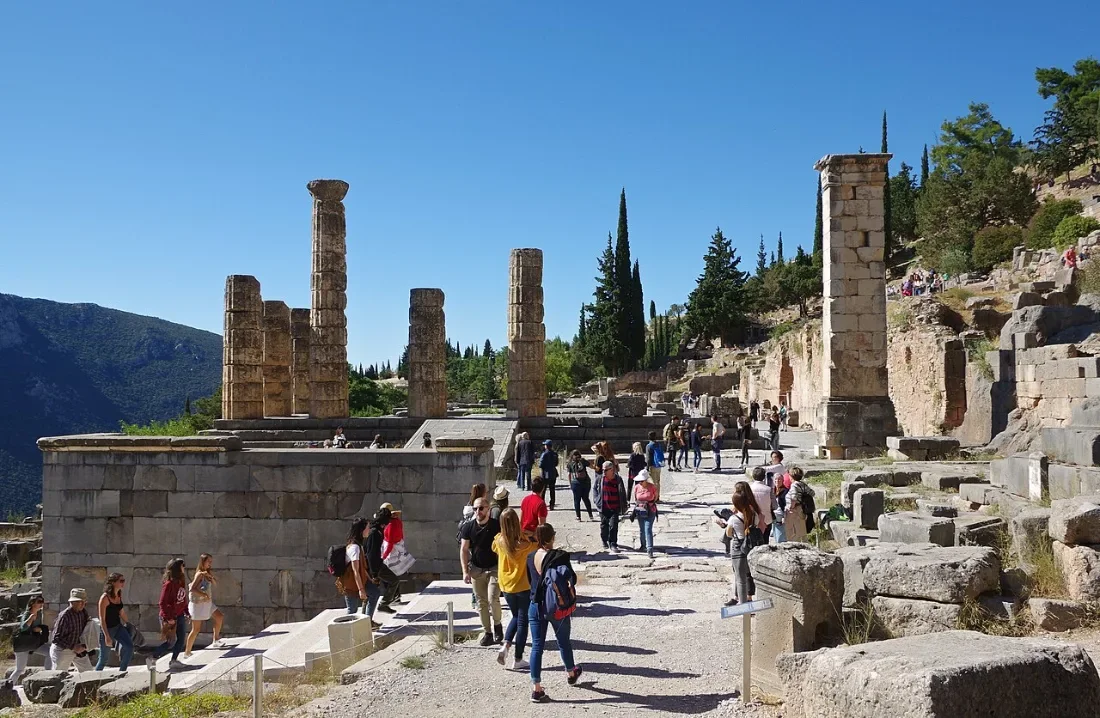
Text and translation
εἰ δέ τις ὑπέροπτα χερσὶν ἢ λόγῳ πορεύεται
Sophocles · Oedipus Tyrannus · second stasimon · strophe β′ and antistrophe β′ · iambo-trochaic with hagesichoreans · Storr’s text (Perseus), compared with Lloyd-Jones’s Loeb · two lines do not respond and two are corrupt
How to read each line
A guide to the Greek, syllables, pitch marks and quantities.
Show the reading key
- Above each line: the line as the edition prints it, each word placed over its own syllables. The main row: the same Greek divided into metrical syllables, each written as it is pronounced. A consonant that closes a syllable is written with it (λόθ | ρο); an elided word is closed up with the next vowel (ν’ἀ); a final consonant carried into the next word is set with a thin space (ς ἰ). Wider gaps mark word-ends.
- Above the syllables: the pitch of each syllable, from the accents. Under them: the quantity of each syllable as it falls in the line, then the transliteration, syllable by syllable, with accented syllables in capitals.
- Under each line: a line-for-line translation. In the right margin of the scansion: the line type, its scheme, and its analysis into cola.
Key to the labels
The names, patterns and symbols used beside this poem.
Show the labels and symbols
The labels in the right margin of the scansion below give the line’s analysis as the scheme file states it, then its scheme and, where the analysis notes them, the period-end, a brevis in longo or a hiatus. ‖ marks the end of a period, ||| the end of the stanza; a line without a period-end runs on into the next (synapheia). × is an anceps, long or short; the last position of every period is indifferent. A click on any syllable highlights the colon it belongs to and explains it. The sources of the labels, with their page numbers, are given line by line under Prosody, line by line.
| Label | Name and shape | What it is |
|---|---|---|
| tr2 | Trochaic dimeter (2tr)— ⏑ — × — ⏑ — × | Two trochaic metra, — ⏑ — × each.[5] Lourenço lists the opening colon of the pair, 883 ~ 897 in the Oxford numbering, among Sophocles’ trochaic dimeters.[6] Here its third position is resolved in both stanzas. |
| lk | Lekythion (lk)— ⏑ — × — ⏑ — | The lekythion, — ⏑ — × — ⏑ —, a trochaic metron and a cretic.[5] This page names the shape; no source read for this page labels these cola. |
| hag | Hagesichorean (hag)× — ⏑ ⏑ — ⏑ — — | The hagesichorean, × — ⏑ ⏑ — ⏑ — —.[5] Lourenço lists 885 ~ 899 and 887 ~ 901 (Oxford numbers) among the hagesichoreans of tragedy.[7] In all four places here the last syllable is short before a consonant, so the page writes its last position as ×. |
| ia2ba | Iambic trimeter, last metron syncopated (2ia ia∧)× — ⏑ — × — ⏑ — ⏑ — — | Two iambic metra and a syncopated one, ⏑ — —.[5] Dale quotes 889–91 as an example of Sophocles’ heavier iambics, which move like epitrites because the ancipitia are long.[8] Wherever these lines scan here, every anceps is long. |
| ia2 | Iambic dimeter (2ia)× — ⏑ — × — ⏑ — | Two iambic metra.[5] Both ancipitia are long in both stanzas, as Dale notes for these lines.[8] |
| ia | Iambic metron (ia)× — ⏑ — | The iambic metron, × — ⏑ —.[5] In the strophe its long is resolved (ἔτι). |
| cr | Cretic (cr)— ⏑ — | The cretic, — ⏑ —.[5] Lourenço describes 895 ~ 908 (Oxford numbers) as 2tr + cr.[6] |
| r | Reizianum (r)× — ⏑ ⏑ — × | The reizianum, × — ⏑ ⏑ — ×.[5] It closes each stanza: “why should I dance?” and “the divine is perishing”. This page names the shape; no source read for this page labels it. |
Scansion
The chorus prays that arrogance be punished, and asks why it should dance at all if the oracles about Laius fail. The pair is iambic and trochaic, with heavy iambics whose ancipitia are long, and two hagesichoreans. The text is not sound throughout. Lloyd-Jones marks 892–94 as corrupt and a gap in the antistrophe, and two other lines do not respond. The page scans what fits and reports the rest.
- line 886, position 2 (κά): scans S but the scheme needs L
But if anyone goes his way in arrogance of hand or word,
with no fear of Justice and no reverence for the seats of the gods,
may an evil fate take him
for his ill-starred luxury,
if he will not win his gains justly
and keep himself from impious deeds,
or lays foolish hands on things that must not be touched.
In such a case what man will still boast that he wards off the shafts of the gods
from his life?
For if such deeds are held in honour,
why should I dance?
No longer shall I go in reverence to the untouchable navel of the earth,
nor to the temple at Abae, nor to Olympia,
if these oracles do not come true
so that all mortals can point to them.
But, ruler, if you are rightly so called,
Zeus, lord of all, may this not escape
you and your deathless, everlasting power.
For the old oracles about Laius are fading,
and already men set them aside;
nowhere is Apollo plain to see in honours;
the divine is perishing.
Metre
- The song. This is the second strophic pair of the second stasimon (863–910). The first pair, 863–82, is the previous tab. In 895–99 the chorus asks whether it should go on dancing if such deeds are honoured. Battezzato cites the passage for tragic choruses that question their own choreia.[9] Burian calls the question “why should I dance?” (896) a famously self-referential moment, sung and danced when it seems that the oracles may fail.[10]
- Text and lines. The Greek is Storr’s (Perseus), with his line numbers. Storr prints some pairs of cola as one line: 884, 885, 897 and 900 each hold two. This page divides the cola as Lloyd-Jones prints them.[11] Lloyd-Jones numbers the cola separately, and in places his numbers differ from Storr’s by one: Storr’s 886–88 are his 887–89, Storr’s 893 is his 894, and Storr’s 905–908 are his 904–907. Lourenço and LSJ cite these lines by the Oxford numbers. For example, Lourenço’s 885 ~ 899 is this page’s 885 (first colon) ~ 900 (first colon).
- Whose analysis. West 1987 does not analyse this pair. Lourenço classes the opening colon (883 ~ 897) and 894 ~ 907 as trochaic dimeters, and 895 ~ 908 as a trochaic dimeter with a cretic.[6] He lists 885 ~ 899 and 887 ~ 901 among the hagesichoreans of tragedy.[7] Dale quotes 889–91 as an example of Sophocles’ heavier iambics, which move like the epitrites of dactylo-epitrite.[8] She adds that the context, the whole of 863–910, mixes in aeolo-choriambic or dactylic cola.[12] Elsewhere she cites 883 ff. for heavy iambo-trochaics where nothing in the context is clearly dactylo-epitrite. There are dicola of mixed movement, but not of the dactylo-epitrite kind.[13] The labels lk, 2ia, ia lk and r are this page’s: they name the shapes in West’s sigla, and no source read for this page labels those cola.
- West’s sigla. tr is the trochaic metron, — ⏑ — ×; ia the iambic metron, × — ⏑ —; cr the cretic, — ⏑ —; lk the lekythion, — ⏑ — × — ⏑ —; hag the hagesichorean, × — ⏑ ⏑ — ⏑ — —; r the reizianum, × — ⏑ ⏑ — ×.[5] ‖ marks period-end and ||| strophe-end.[14]
- Heavy iambics. In lines 5–7 (888–91 ~ 903–906) every anceps that can be scanned is long except σέ, the first syllable of 906: εἰ μὴ τὸ κέρδος κερδανεῖ δικαίως, — — ⏑ — | — — ⏑ — | ⏑ — —. Lyric iambics usually keep the anceps short, and the long anceps gives these lines the weight that Dale compares to epitrites.[15]
- The hagesichoreans. In all four places (885 ~ 900 and 886 ~ 901) the last syllable of the hagesichorean is short before a consonant: οὐδὲ | δαιμόνων, ναὸν | οὐδέ, μοῖρα | δυσπότμου, χειρόδεικτα | πᾶσιν. A short in a long final position is a sign of period-end,[16] but nothing else marks a pause here. The sources read for this page do not discuss the point, so the page writes that position as × and leaves the question open.
- Period-end. Hiatus shows period-end after line 6 in the strophe (ἔρξεται | ἢ τῶν) and after line 8 (βέλη | εὔξεται). After line 8 the antistrophe, in Storr’s text, has brevis in longo (παλαίφατα | θέσφατ’). Both are among West’s signs of period-end.[16]
- What does not scan. Three lines are reported, not forced. 886: κακά has two short vowels,[17] so the strophe has a short at the hagesichorean’s second position, where the antistrophe (εἰ μή) has a long. Lloyd-Jones prints the same words without comment, and so does Jebb, who has no note on the line; in his metrical analysis he takes κα- as an anacrusis and marks the next two shorts as standing for one long.[18] 892 and 907 are corrupt (next note). 906, σὲ τάν τε σὰν ἀθάνατον αἰὲν ἀρχάν, was reported here until 12 October 2026 as one syllable too long for its strophe. It is not: the ἀ- of ἀθάνατος is always long,[19] σάν has the long ᾱ of Doric where Attic has η (σήν)[20], and the line then answers 891 with its sixth position resolved into the two shorts -θᾰνᾰ-. Jebb scans it so: his analysis marks the matching place in the strophe, θι- of θίξεται, with the sign for a long that may be resolved, and he explains that in the antistrophe θαν- “represents, by resolution, a long syllable”.[21]
- The corrupt lines, 892–93 ~ 907. Lloyd-Jones obelizes 892–94: τίς ἔτι ποτ’ ἐν τοῖσδ’ ἀνὴρ †θυμῶν βέλη | ἕρξεται† ψυχᾶς ἀμύνων. His apparatus gives the manuscripts’ θυμοῦ or θυμῷ, Schneidewin’s θυμῶν and Hermann’s θεῶν, and the manuscripts’ ἕρξεται or ἔρξεται and ἀμύνειν, for which he prints Erfurdt’s ἀμύνων. In the antistrophe he marks a gap of four positions, φθίνοντα γὰρ ⟨— ⏑ — ×⟩ Λαΐου. The manuscripts have Λαΐου alone, or with παλαιά before or after it, and Hermann supplied ⟨τοι παλαιά⟩.[22] Storr prints Hermann’s θεῶν, εὔξεται … ἀμύνειν, and φθίνοντα γὰρ Λαΐου παλαίφατα. Lloyd-Jones’s apparatus does not list παλαίφατα. The page scans Storr’s text, in which both stanzas give ia lk, × ⏖ ⏑ — | — ⏑ — × — ⏑ —. The strophe has the same shape with θυμῶν. The gap that Lloyd-Jones marks, followed by Λαΐου (— ⏑ —), would give the same lekythion. The scansion of these lines is the scansion of a conjectural text.
- Prosody. The workbench uses the Attic rules (README). Before a stop with a liquid or nasal a syllable may be short or long.[23] Here it is short, as in δυσπότμου (887) and τοιαίδε πράξεις (895). A syllable before ξ is long, since ξ counts as two consonants:[24] θίξ- (891).
- Doric vowels. The language of tragic song has a Doric colouring, and Doric alpha is one of the signs that a passage was sung.[25] Here the lyric has δίκας (885), ψυχᾶς (893), τάν (900), ἀρχάν (906), and ναόν (900), the Doric form of the word that LSJ says tragedy uses even in dialogue.[26]
- Vowel lengths. The line notes give sources for these vowel lengths: κᾰκᾰ́ (886), ψῡχᾶς and ἀμῡ́νειν (893), τῑ́μιαι (895), κρατῡ́νων (903), σᾱ́ν and ᾱ̓θᾰ́νᾰτον (906), Λᾱΐου (907), τῑμαῖς (909). Every other α ι υ that the metre decides was checked in LSJ or in West’s list of endings,[27] except the Ἀ- of Ἀβαῖσι (900): the metre decides it, and no source read for this page gives it.
Prosody, line by line
Every syllable, with the reason for its length. Quantities are read from the vowel where the spelling shows it, from the consonants that follow (“position”), from the accent where it tells, and from the metre where nothing else does. Editors’ notes on the text follow in the boxed paragraphs.
- 884
Line 884 · εἰ δέ τις ὑπέροπτα χερσὶν ἢ λόγῳ πορεύεται,
εἰ δέ τις ὑπέροπτα χερσὶν ἢ λόγῳ πορεύεται,
εἰδέτις ὑπέροπταχερσὶν ἢλόγῳπορεύεται,the period runs on into l. 885 (synapheia).
The label in the margin, with its sources: Lourenço 2011, p. 35 n. 45.
- 1 —εἰεἰ is a diphthong, long by nature.
- 2 ⏑δέέ is short by nature.
- 3 ⏑τιι is short by the metre (position 3 must be short); with its neighbour it resolves the long of position 3 into two shorts.
- 4 ⏑ς ὑὑ is short by the metre (position 3 must be short); the first consonant belongs to the previous word and is carried over to this vowel; with its neighbour it resolves the long of position 3 into two shorts.
- 5 ⏑πέέ is short by nature; the position is anceps.
- 6 —ροπο is short by nature; closed by π: long by position.
- 7 ⏑ταα is short by the accent rule: acute on the antepenult requires a short final syllable.
- 8 —χερε is short by nature; closed by ρ: long by position.
- 9 ⏑σὶῐ̀ is short (its length is not shown by the ordinary spelling); the position is anceps.
- 10 —ν ἢἢ is long by nature; the first consonant belongs to the previous word and is carried over to this vowel.
- 11 ⏑λόό is short by nature.
- 12 —γῳῳ is long by nature.
- 13 ⏑ποο is short by nature; the position is anceps.
- 14 —ρεύεύ is a diphthong, long by nature.
- 15 ⏑εε is short by nature.
- 16 —ται,αι is a diphthong, long by nature; the line-end is not a period-end: the period runs on into the next line (synapheia), so this syllable keeps its own length, with no brevis in longo, and a word may run over into the next line.[28]
2tr | lk: — ⏑ ⏖ × — ⏑ — × | — ⏑ — × — ⏑ —. The third position of the dimeter is resolved, τις ὑ-. Lourenço counts this colon (his 883) among Sophocles’ trochaic dimeters.[6] LSJ s.v. ὑπέροπτος cites the line for the neuter plural used as an adverb, “arrogantly”. Lloyd-Jones divides after χερσίν (his 883–84). The ῐ of χερσὶν is short;[29] the metre does not show it here, and the input marks it.- 885
Line 885 · δίκας ἀφόβητος οὐδὲ δαιμόνων ἕδη σέβων,
δίκας ἀφόβητος οὐδὲ δαιμόνων ἕδη σέβων,
δίκαςἀφόβητος οὐδὲδαιμόνωνἕδησέβων,continues l. 884 · one period (synapheia); the period runs on into l. 886 (synapheia).
The label in the margin, with its sources: Lourenço 2011, p. 100 n. 215.
- 1 ⏑δίῐ́ is short (its length is not shown by the ordinary spelling); the position is anceps.
- 2 —καςα is long by the metre (position 2 must be long).
- 3 ⏑ἀἀ is short by the metre (position 3 must be short).
- 4 ⏑φόό is short by nature.
- 5 —βηη is long by nature.
- 6 ⏑τοο is short by nature.
- 7 —ς οὐοὐ is a diphthong, long by nature; the first consonant belongs to the previous word and is carried over to this vowel.
- 8 ⏑δὲὲ is short by nature; the position is anceps.
- 9 —δαιαι is a diphthong, long by nature.
- 10 ⏑μόό is short by nature.
- 11 —νωνω is long by nature.
- 12 ⏑ἕἕ is short by nature; the position is anceps.
- 13 —δηη is long by nature.
- 14 ⏑σέέ is short by nature.
- 15 —βων,ω is long by nature; closed by ν: long by position; the line-end is not a period-end: the period runs on into the next line (synapheia), so this syllable keeps its own length, with no brevis in longo, and a word may run over into the next line.[28]
hag | lk. δίκας is the Doric genitive with long ᾱ. Lloyd-Jones prints Δίκας, Justice personified; LSJ s.v. ἀφόβητος cites the line: “without fear of Justice”. The privative ἀ- is short. οὐδέ ends the hagesichorean with a short syllable before δ.[30] LSJ s.v. ἕδος cites δαιμόνων ἕδη (Oxford 886). Lourenço lists the colon as a hagesichorean.[7] The ῐ of δίκας is short;[31] the metre does not show it here, and the input marks it.- 886
Line 886 · κακά νιν ἕλοιτο μοῖρα,
κακά νιν ἕλοιτο μοῖρα,
κακάνιν ἕλοιτομοῖρα,continues l. 885 · one period (synapheia); the period runs on into l. 887 (synapheia).
The label in the margin, with its sources: Lourenço 2011, p. 100 n. 215.
- 1 ⏑καᾰ is short (its length is not shown by the ordinary spelling); the position is anceps.
- 2 ⏑κάᾰ́ is short (its length is not shown by the ordinary spelling); but the scheme needs a long syllable in this position: the line does not scan as given and is listed under Scansion problems.
- 3 ⏑νιι is short by the metre (position 3 must be short).
- 4 ⏑ν ἕἕ is short by nature; the first consonant belongs to the previous word and is carried over to this vowel.
- 5 —λοιοι is a diphthong, long by nature.
- 6 ⏑τοο is short by nature.
- 7 —μοῖοῖ is a diphthong, long by nature.
- 8 ⏑ρα,α is short by the accent rule: circumflex on the penult requires a short final syllable; the position is anceps; the line-end is not a period-end: the period runs on into the next line (synapheia), so this syllable keeps its own length, with no brevis in longo, and a word may run over into the next line.[28]
⚠ line 886, position 2 (κά): scans S but the scheme needs L
hag as Lourenço classes it (his 887)[7], but the strophe does not fit. κακά has two short vowels,[17] so the line runs ⏑ ⏑ ⏑ ⏑ — ⏑ — ⏑. Its second position is short where the antistrophe, εἰ μὴ τάδε, has a long. The workbench reports the line and does not force it. Lloyd-Jones prints the same words (his 887), and so does Jebb (his 887), with no note on them. Jebb’s metrical analysis takes κα- as an anacrusis and marks -κά νιν as two shorts standing for one long;[18] no other source read for this page discusses the line.- 887
Line 887 · δυσπότμου χάριν χλιδᾶς,
δυσπότμου χάριν χλιδᾶς,
δυσπότμουχάρινχλιδᾶ,continues l. 886 · one period (synapheia); the period runs on into l. 888 (synapheia).
- 1 —δυσυ is a vowel of unknown length; closed by σ: long by position.
- 2 ⏑πόό is short by nature; τμ is carried whole into the next syllable, so this syllable stays open and short (Attic correption of a stop + nasal cluster).
- 3 —τμουου is a diphthong, long by nature.
- 4 ⏑χάᾰ́ is short (its length is not shown by the ordinary spelling); the position is anceps.
- 5 —ρινι is a vowel of unknown length; closed by ν: long by position.
- 6 ⏑χλιι is short by the metre (position 6 must be short).
- 7 —δᾶ,ᾶ carries a circumflex, so it is long; the line-end is not a period-end: the period runs on into the next line (synapheia), so this syllable keeps its own length, with no brevis in longo, and a word may run over into the next line.[28]
- 888
Line 888 · εἰ μὴ τὸ κέρδος κερδανεῖ δικαίως
εἰ μὴ τὸ κέρδος κερδανεῖ δικαίως
ς εἰμὴτὸκέρδοςκερδανεῖδικαίωςcontinues l. 887 · one period (synapheia); the period runs on into l. 890 (synapheia).
The label in the margin, with its sources: Dale 1968, p. 84.
- 1 —ς εἰεἰ is a diphthong, long by nature; the first consonant belongs to the previous word and is carried over to this vowel; the position is anceps.
- 2 —μὴὴ is long by nature.
- 3 ⏑τὸὸ is short by nature.
- 4 —κέρέ is short by nature; closed by ρ: long by position.
- 5 —δοςο is short by nature; closed by ς: long by position; the position is anceps.
- 6 —κερε is short by nature; closed by ρ: long by position.
- 7 ⏑δαα is short by the metre (position 7 must be short).
- 8 —νεῖεῖ is a diphthong, long by nature.
- 9 ⏑διι is short by the metre (position 9 must be short).
- 10 —καίαί is a diphthong, long by nature.
- 11 —ωςω is long by nature; closed by ς: long by position; the line-end is not a period-end: the period runs on into the next line (synapheia), so this syllable keeps its own length, with no brevis in longo, and a word may run over into the next line.[28]
- 890
Line 890 · καὶ τῶν ἀσέπτων ἔρξεται
καὶ τῶν ἀσέπτων ἔρξεται
καὶτῶνἀσέπτωνἔρξεταιcontinues l. 888 · one period (synapheia).
- 1 —καὶαὶ is a diphthong, long by nature; the position is anceps.
- 2 —τῶνῶ is long by nature.
- 3 ⏑ἀἀ is short by the metre (position 3 must be short).
- 4 —σέπέ is short by nature; closed by π: long by position.
- 5 —τωνω is long by nature; the position is anceps.
- 6 —ἔρἔ is short by nature; closed by ρ: long by position.
- 7 ⏑ξεε is short by nature.
- 8 ×ταιαι is a diphthong, long by nature; the last position of the period is indifferent.
- 891
Line 891 · ἢ τῶν ἀθίκτων θίξεται ματᾴζων.
ἢ τῶν ἀθίκτων θίξεται ματᾴζων.
ἢτῶνἀθίκτωνθίξεταιματᾴζων.the period runs on into l. 892 (synapheia).
The label in the margin, with its sources: Dale 1968, p. 84; 906 resolves position 6 (Jebb 1902, p. lxxxiv).
- 1 —ἢἢ is long by nature; the position is anceps.
- 2 —τῶνῶ is long by nature.
- 3 ⏑ἀἀ is short by the metre (position 3 must be short).
- 4 —θίκί is a vowel of unknown length; closed by κ: long by position.
- 5 —τωνω is long by nature; closed by ν: long by position; the position is anceps.
- 6 —θίξ is a double consonant (two sounds) and closes the syllable: long by position.
- 7 ⏑ξεε is short by nature.
- 8 —ταιαι is a diphthong, long by nature.
- 9 ⏑μαα is short by the metre (position 9 must be short).
- 10 —τᾴᾴ is long by nature; ζ is a double consonant (two sounds) and closes the syllable: long by position.
- 11 —ζων.ω is long by nature; closed by ν: long by position; the line-end is not a period-end: the period runs on into the next line (synapheia), so this syllable keeps its own length, with no brevis in longo, and a word may run over into the next line.[28]
2ia ia∧: — — ⏑ — | — — ⏑ — | ⏑ — —. θίξεται is Blaydes’s conjecture for the manuscripts’ ἕξεται;[22] Dale quotes the line with ἕξεται.[8] Either word scans the same, long before ξ.[24] ματᾴζων has a short first α, as in μάταιος.[37]- 892
Line 892 · τίς ἔτι ποτʼ ἐν τοῖσδʼ ἀνὴρ θεῶν βέλη
τίς ἔτι ποτʼ ἐν τοῖσδʼ ἀνὴρ θεῶν βέλη
τίς ἔτιποτ’ἐντοῖσδ’ἀνὴρθεῶνβέληcontinues l. 891 · one period (synapheia).
The label in the margin, with its sources: Storr’s text; hiatus in the strophe, brevis in longo in the antistrophe.
- 1 ⏑τίῐ́ is short (its length is not shown by the ordinary spelling); the position is anceps.
- 2 ⏑ς ἔἔ is short by nature; the first consonant belongs to the previous word and is carried over to this vowel; with its neighbour it resolves the long of position 2 into two shorts.
- 3 ⏑τιι is short by the metre (position 2 must be short); with its neighbour it resolves the long of position 2 into two shorts.
- 4 ⏑ποο is short by nature.
- 5 —τ’ἐνἐ is short by nature; closed by ν: long by position; the apostrophe marks an elided vowel; the consonant before it joins this syllable.
- 6 —τοῖσοῖ is a diphthong, long by nature; closed by σ: long by position.
- 7 ⏑δ’ἀἀ is short by the metre (position 6 must be short); the apostrophe marks an elided vowel; the consonant before it joins this syllable.
- 8 —νὴρὴ is long by nature; closed by ρ: long by position.
- 9 ⏑θεε is short by nature; the position is anceps.
- 10 —ῶνῶ is long by nature; closed by ν: long by position.
- 11 ⏑βέέ is short by nature.
- 12 ×ληη is long by nature; the last position of the period is indifferent.
Corrupt in Lloyd-Jones’s text (obelized)[38]. Storr’s text, with Hermann’s θεῶν, scans as ia lk ‖: ⏑ ⏖ ⏑ — | — ⏑ — ⏑ — ⏑ —, with ἔτι as the resolved long. The η of βέλη stands in hiatus before εὔξεται: period-end.[16] The ῐ of τίς is short (the metre: τί fills the short third position of the trimeter at E. Cyc. 37, τίνες the seventh at Cyc. 113); the metre does not show it here, and the input marks it.- 893
Line 893 · εὔξεται ψυχᾶς ἀμύνειν;
εὔξεται ψυχᾶς ἀμύνειν;
εὔξεταιψυχᾶςἀμύνει;the period runs on into l. 895 (synapheia).
The label in the margin, with its sources: Lourenço 2011, p. 35 n. 45.
- 1 —εὔεὔ is a diphthong, long by nature; ξ is a double consonant (two sounds) and closes the syllable: long by position.
- 2 ⏑ξεε is short by nature.
- 3 —ταιαι is a diphthong, long by nature; the next word begins with the double consonant ψ: the syllable is closed before it: long by position.
- 4 —ψυῡ is long (its length is not shown by the ordinary spelling); the position is anceps.
- 5 —χᾶςᾶ carries a circumflex, so it is long.
- 6 ⏑ἀᾰ̓ is short (its length is not shown by the ordinary spelling).
- 7 —μύῡ́ is long (its length is not shown by the ordinary spelling).
- 8 —νει;ει is a diphthong, long by nature; the position is anceps; the line-end is not a period-end: the period runs on into the next line (synapheia), so this syllable keeps its own length, with no brevis in longo, and a word may run over into the next line.[28]
- 895
Line 895 · εἰ γὰρ αἱ τοιαίδε πράξεις τίμιαι,
εἰ γὰρ αἱ τοιαίδε πράξεις τίμιαι,
ν εἰγὰρ αἱτοιαίδεπράξειςτίμιαι,continues l. 893 · one period (synapheia); the period runs on into l. 896 (synapheia).
The label in the margin, with its sources: Lourenço 2011, p. 35 n. 45.
- 1 —ν εἰεἰ is a diphthong, long by nature; the first consonant belongs to the previous word and is carried over to this vowel.
- 2 ⏑γὰὰ is short by the metre (position 2 must be short).
- 3 —ρ αἱαἱ is a diphthong, long by nature; the first consonant belongs to the previous word and is carried over to this vowel.
- 4 —τοιοι is a diphthong, long by nature; the position is anceps.
- 5 —αίαί is a diphthong, long by nature.
- 6 ⏑δεε is short by nature; the next word begins with πρ, a stop + liquid that does not make position here, so the syllable stays short.
- 7 —πράξ is a double consonant (two sounds) and closes the syllable: long by position.
- 8 —ξειςει is a diphthong, long by nature; closed by ς: long by position; the position is anceps.
- 9 —τίῑ́ is long (its length is not shown by the ordinary spelling).
- 10 ⏑μιι is short by the metre (position 10 must be short).
- 11 —αι,αι is a diphthong, long by nature; the line-end is not a period-end: the period runs on into the next line (synapheia), so this syllable keeps its own length, with no brevis in longo, and a word may run over into the next line.[28]
- 896
Line 896 · τί δεῖ με χορεύειν;
τί δεῖ με χορεύειν;
τίδεῖμεχορεύειν;continues l. 895 · one period (synapheia).
- 1 ⏑τίῐ́ is short (its length is not shown by the ordinary spelling); the position is anceps.
- 2 —δεῖεῖ is a diphthong, long by nature.
- 3 ⏑μεε is short by nature.
- 4 ⏑χοο is short by nature.
- 5 —ρεύεύ is a diphthong, long by nature.
- 6 ×ειν;ει is a diphthong, long by nature; closed by ν: long by position; the last position of the period is indifferent.
r |||: × — ⏑ ⏑ — ×, ⏑ — ⏑ ⏑ — —. “Why should I dance?”.[10] The ῐ of τί is short (the metre: τί fills the short third position of the trimeter at E. Cyc. 37, τίνες the seventh at Cyc. 113); the metre does not show it here, and the input marks it.- 897
Line 897 · οὐκέτι τὸν ἄθικτον εἶμι γᾶς ἐπʼ ὀμφαλὸν σέβων,
οὐκέτι τὸν ἄθικτον εἶμι γᾶς ἐπʼ ὀμφαλὸν σέβων,
οὐκέτιτὸν ἄθικτον εἶμιγᾶςἐπ’ὀμφαλὸνσέβω,the period runs on into l. 900 (synapheia).
The label in the margin, with its sources: Lourenço 2011, p. 35 n. 45.
- 1 —οὐοὐ is a diphthong, long by nature.
- 2 ⏑κέέ is short by nature.
- 3 ⏑τιι is short by the metre (position 3 must be short); with its neighbour it resolves the long of position 3 into two shorts.
- 4 ⏑τὸὸ is short by nature; with its neighbour it resolves the long of position 3 into two shorts.
- 5 ⏑ν ἄᾰ̓́ is short (its length is not shown by the ordinary spelling); the first consonant belongs to the previous word and is carried over to this vowel; the position is anceps.
- 6 —θικι is a vowel of unknown length; closed by κ: long by position.
- 7 ⏑τοο is short by nature.
- 8 —ν εἶεἶ is a diphthong, long by nature; the first consonant belongs to the previous word and is carried over to this vowel.
- 9 ⏑μιι is short by the accent rule: circumflex on the penult requires a short final syllable; the position is anceps.
- 10 —γᾶςᾶ carries a circumflex, so it is long.
- 11 ⏑ἐἐ is short by nature.
- 12 —π’ὀμὀ is short by nature; closed by μ: long by position; the apostrophe marks an elided vowel; the consonant before it joins this syllable.
- 13 ⏑φαᾰ is short (its length is not shown by the ordinary spelling); the position is anceps.
- 14 —λὸνὸ is short by nature; closed by ν: long by position.
- 15 ⏑σέέ is short by nature.
- 16 —βω,ω is long by nature; the line-end is not a period-end: the period runs on into the next line (synapheia), so this syllable keeps its own length, with no brevis in longo, and a word may run over into the next line.[28]
2tr | lk, as 884, with the same resolution in the third position (τι τὸ-). ὀμφαλόν has a short α.[42] Lloyd-Jones divides after εἶμι. The ᾰ of ἄθικτον is short;[43] the metre does not show it here, and the input marks it. The ᾰ of ὀμφαλὸν is short;[44] the metre does not show it here, and the input marks it.- 900
Line 900 · οὐδʼ ἐς τὸν Ἀβαῖσι ναὸν οὐδὲ τὰν Ὀλυμπίαν,
οὐδʼ ἐς τὸν Ἀβαῖσι ναὸν οὐδὲ τὰν Ὀλυμπίαν,
ν οὐδ’ἐςτὸν Ἀβαῖσιναὸν οὐδὲτὰνὈλυμπία,continues l. 897 · one period (synapheia); the period runs on into l. 901 (synapheia).
The label in the margin, with its sources: Lourenço 2011, p. 100 n. 215.
- 1 —ν οὐοὐ is a diphthong, long by nature; the first consonant belongs to the previous word and is carried over to this vowel; the position is anceps.
- 2 —δ’ἐςἐ is short by nature; closed by ς: long by position; the apostrophe marks an elided vowel; the consonant before it joins this syllable.
- 3 ⏑τὸὸ is short by nature.
- 4 ⏑ν ἈἈ is short by the metre (position 4 must be short); the first consonant belongs to the previous word and is carried over to this vowel.
- 5 —βαῖαῖ is a diphthong, long by nature.
- 6 ⏑σιι is short by the accent rule: circumflex on the penult requires a short final syllable.
- 7 —ναα is long by the metre (position 7 must be long).
- 8 ⏑ὸὸ is short by nature; the position is anceps.
- 9 —ν οὐοὐ is a diphthong, long by nature; the first consonant belongs to the previous word and is carried over to this vowel.
- 10 ⏑δὲὲ is short by nature.
- 11 —τὰνὰ is long by the metre (position 11 must be long).
- 12 ⏑ὈὈ is short by nature; the position is anceps.
- 13 —λυμυ is a vowel of unknown length; closed by μ: long by position.
- 14 ⏑πίί is short by the metre (position 14 must be short).
- 15 —α,α is long by the metre (position 15 must be long); the line-end is not a period-end: the period runs on into the next line (synapheia), so this syllable keeps its own length, with no brevis in longo, and a word may run over into the next line.[28]
hag | lk, as 885. ναόν has a long ᾱ;[45] τάν is the Doric article. The Ἀ- of Ἀβαῖσι is short, as the metre needs at the fourth position; LSJ has no entry for the place-name, and no source read for this page gives the length. ναόν ends the hagesichorean with a short syllable before a vowel.[30] Lloyd-Jones divides after ναόν.- 901
Line 901 · εἰ μὴ τάδε χειρόδεικτα
εἰ μὴ τάδε χειρόδεικτα
ν εἰμὴτάδεχειρόδεικταcontinues l. 900 · one period (synapheia); the period runs on into l. 902 (synapheia).
The label in the margin, with its sources: Lourenço 2011, p. 100 n. 215.
- 1 —ν εἰεἰ is a diphthong, long by nature; the first consonant belongs to the previous word and is carried over to this vowel; the position is anceps.
- 2 —μὴὴ is long by nature.
- 3 ⏑τάά is short by the metre (position 3 must be short).
- 4 ⏑δεε is short by nature.
- 5 —χειει is a diphthong, long by nature.
- 6 ⏑ρόό is short by nature.
- 7 —δεικει is a diphthong, long by nature; closed by κ: long by position.
- 8 ⏑ταα is short by the accent rule: acute on the antepenult requires a short final syllable; the position is anceps; the line-end is not a period-end: the period runs on into the next line (synapheia), so this syllable keeps its own length, with no brevis in longo, and a word may run over into the next line.[28]
hag: — — ⏑ ⏑ — ⏑ — ⏑. The antistrophe has the long second position that the strophe, 886, lacks. LSJ s.v. χειρόδεικτος cites the line: “manifest”, literally “shown by the hand”. τάδε has a short α.- 902
Line 902 · πᾶσιν ἁρμόσει βροτοῖς.
πᾶσιν ἁρμόσει βροτοῖς.
πᾶσιν ἁρμόσειβροτοῖ.continues l. 901 · one period (synapheia); the period runs on into l. 903 (synapheia).
- 1 —πᾶᾶ carries a circumflex, so it is long.
- 2 ⏑σιι is short by the accent rule: circumflex on the penult requires a short final syllable.
- 3 —ν ἁρἁ is a vowel of unknown length; closed by ρ: long by position; the first consonant belongs to the previous word and is carried over to this vowel.
- 4 ⏑μόό is short by nature; the position is anceps.
- 5 —σειει is a diphthong, long by nature.
- 6 ⏑βροο is short by nature.
- 7 —τοῖ.οῖ is a diphthong, long by nature; the line-end is not a period-end: the period runs on into the next line (synapheia), so this syllable keeps its own length, with no brevis in longo, and a word may run over into the next line.[28]
lk, as 887.- 903
Line 903 · ἀλλʼ, ὦ κρατύνων, εἴπερ ὄρθʼ ἀκούεις,
ἀλλʼ, ὦ κρατύνων, εἴπερ ὄρθʼ ἀκούεις,
ς ἀλλ’,ὦκρατύνων,εἴπερ ὄρθ’ἀκούεις,continues l. 902 · one period (synapheia); the period runs on into l. 905 (synapheia).
The label in the margin, with its sources: Dale 1968, p. 84.
- 1 —ς ἀλἀ is a vowel of unknown length; closed by λ: long by position; the first consonant belongs to the previous word and is carried over to this vowel; the position is anceps.
- 2 —λ’,ὦὦ is long by nature; the apostrophe marks an elided vowel; the consonant before it joins this syllable.
- 3 ⏑κραα is short by the metre (position 3 must be short).
- 4 —τύῡ́ is long (its length is not shown by the ordinary spelling).
- 5 —νων,ω is long by nature; the position is anceps.
- 6 —εἴεἴ is a diphthong, long by nature.
- 7 ⏑πεε is short by nature.
- 8 —ρ ὄρὄ is short by nature; closed by ρ: long by position; the first consonant belongs to the previous word and is carried over to this vowel.
- 9 ⏑θ’ἀἀ is short by the metre (position 9 must be short); the apostrophe marks an elided vowel; the consonant before it joins this syllable.
- 10 —κούού is a diphthong, long by nature.
- 11 —εις,ει is a diphthong, long by nature; closed by ς: long by position; the line-end is not a period-end: the period runs on into the next line (synapheia), so this syllable keeps its own length, with no brevis in longo, and a word may run over into the next line.[28]
2ia ia∧, as 888, with both ancipitia long (ἀλλ’, εἴ-). κρατύνων: LSJ marks the α short (κρᾰτύνω) and does not mark the υ. The metre needs the υ long, and West lists the present suffix -ύνω among those with a long vowel;[27] LSJ marks ἀμύνω, of the same formation, ῡ.- 905
Line 905 · Ζεῦ, πάντʼ ἀνάσσων, μὴ λάθοι
Ζεῦ, πάντʼ ἀνάσσων, μὴ λάθοι
Ζεῦ,πάντ’ἀνάσσων,μὴλάθοιcontinues l. 903 · one period (synapheia).
- 1 —Ζεῦ,εῦ is a diphthong, long by nature; the position is anceps.
- 2 —πάνά is a vowel of unknown length; closed by ν: long by position.
- 3 ⏑τ’ἀἀ is short by the metre (position 3 must be short); the apostrophe marks an elided vowel; the consonant before it joins this syllable.
- 4 —νάσά is a vowel of unknown length; closed by σ: long by position.
- 5 —σων,ω is long by nature; closed by ν: long by position; the position is anceps.
- 6 —μὴὴ is long by nature.
- 7 ⏑λάά is short by the metre (position 7 must be short).
- 8 ×θοιοι is a diphthong, long by nature; the last position of the period is indifferent.
2ia, as 890: — — ⏑ — | — — ⏑ —. Lloyd-Jones numbers it 904.- 906
Line 906 · σὲ τάν τε σὰν ἀθάνατον αἰὲν ἀρχάν.
σὲ τάν τε σὰν ἀθάνατον αἰὲν ἀρχάν.
σὲτάντεσὰνἀθάνατον αἰὲν ἀρχάν.the period runs on into l. 907 (synapheia).
The label in the margin, with its sources: Dale 1968, p. 84; 906 resolves position 6 (Jebb 1902, p. lxxxiv).
- 1 ⏑σὲὲ is short by nature; the position is anceps.
- 2 —τάνά is a vowel of unknown length; closed by ν: long by position.
- 3 ⏑τεε is short by nature.
- 4 —σὰνᾱ̀ is long (its length is not shown by the ordinary spelling).
- 5 —ἀᾱ̓ is long (its length is not shown by the ordinary spelling); the position is anceps.
- 6 ⏑θάᾰ́ is short (its length is not shown by the ordinary spelling); with its neighbour it resolves the long of position 6 into two shorts.
- 7 ⏑ναᾰ is short (its length is not shown by the ordinary spelling); with its neighbour it resolves the long of position 6 into two shorts.
- 8 ⏑τοο is short by nature.
- 9 —ν αἰαἰ is a diphthong, long by nature; the first consonant belongs to the previous word and is carried over to this vowel.
- 10 ⏑ὲὲ is short by nature.
- 11 —ν ἀρἀ is a vowel of unknown length; closed by ρ: long by position; the first consonant belongs to the previous word and is carried over to this vowel.
- 12 —χάν.ά is a vowel of unknown length; closed by ν: long by position; the line-end is not a period-end: the period runs on into the next line (synapheia), so this syllable keeps its own length, with no brevis in longo, and a word may run over into the next line.[28]
2ia ia∧ with the sixth position resolved: ⏑ — ⏑ — | — ⏖ ⏑ — | ⏑ — —. The ἀ- of ἀθάνατον is long, as it always is in this adjective,[19] and its next two vowels are short,[46] so -θᾰνᾰ- fills one long position, answering θι- of θίξεται in 891. σάν is the Doric form of σήν, with long ᾱ.[20] The input marks the three vowels. Jebb scans the line the same way: “θαν represents, by resolution, a long syllable”.[21] Until 12 October 2026 this page left the ἀ- and σάν unmarked, scanned them short, and reported the line as one syllable too long. Lloyd-Jones prints the same words (his 905).- 907
Line 907 · φθίνοντα γὰρ Λαΐου παλαίφατα
φθίνοντα γὰρ Λαΐου παλαίφατα
φθίνονταγὰρΛαΐουπαλαίφαταcontinues l. 906 · one period (synapheia); brevis in longo at period-end (a short in the final long position).
The label in the margin, with its sources: Storr’s text; hiatus in the strophe, brevis in longo in the antistrophe.
- 1 ⏑φθίῐ́ is short (its length is not shown by the ordinary spelling); the position is anceps.
- 2 —νονο is short by nature; closed by ν: long by position.
- 3 ⏑ταα is short by the accent rule: acute on the antepenult requires a short final syllable.
- 4 —γὰρὰ is a vowel of unknown length; closed by ρ: long by position.
- 5 —Λαᾱ is long (its length is not shown by the ordinary spelling).
- 6 ⏑ΐΐ is short by the metre (position 6 must be short).
- 7 —ουου is a diphthong, long by nature.
- 8 ⏑παᾰ is short (its length is not shown by the ordinary spelling); the position is anceps.
- 9 —λαίαί is a diphthong, long by nature.
- 10 ⏑φαα is short by the metre (position 10 must be short).
- 11 ×ταα is short by the accent rule: acute on the antepenult requires a short final syllable; the last position of the period is indifferent; a short here is brevis in longo.
Lloyd-Jones marks a gap here (his 906): φθίνοντα γὰρ ⟨— ⏑ — ×⟩ Λαΐου.[38] Storr prints φθίνοντα γὰρ Λαΐου παλαίφατα, which scans as ia lk ‖, ⏑ — ⏑ — | — ⏑ — ⏑ — ⏑ ⏑, with brevis in longo at the end.[16] The α of Λάϊος is long; the trimeter shows it at 103, Λάϊός ποθ’ ἡγεμών, where Λα- fills the long sixth position, and Jebb’s metrical analysis has a long at this place, answering τοῖσδ’ in the strophe.[47] LSJ has no entry for the name. Jebb prints παλαίφατα, the conjecture of Linwood and Arndt, and explains why: after φθίνοντα γὰρ Λαΐου the line needs a metrical equivalent for θεῶν βέλη in the strophe, and the παλαιά that L has in its margin and other manuscripts have in the text points to it.[48] His apparatus adds that L has θέσφατ’ after Λαΐου, with παλαιά added in the margin by a later hand, and that most later manuscripts have παλαιά after Λαΐου, a few before it (Jebb 1914, critical note on 906 f.). The ῐ of φθίνοντα is short;[49] the metre does not show its length here. The ᾰ of παλαίφατα is short;[50] the metre does not show its length here.- 908
Line 908 · θέσφατʼ ἐξαιροῦσιν ἤδη,
θέσφατʼ ἐξαιροῦσιν ἤδη,
θέσφατ’ἐξαιροῦσιν ἤδη,the period runs on into l. 909 (synapheia).
The label in the margin, with its sources: Lourenço 2011, p. 35 n. 45.
- 1 —θέσέ is short by nature; closed by σ: long by position.
- 2 ⏑φαα is short by the metre (position 2 must be short).
- 3 —τ’ἐἐ is short by nature; ξ is a double consonant (two sounds) and closes the syllable: long by position; the apostrophe marks an elided vowel; the consonant before it joins this syllable.
- 4 —ξαιαι is a diphthong, long by nature; the position is anceps.
- 5 —ροῦοῦ is a diphthong, long by nature.
- 6 ⏑σιι is short by the accent rule: circumflex on the penult requires a short final syllable.
- 7 —ν ἤἤ is long by nature; the first consonant belongs to the previous word and is carried over to this vowel.
- 8 —δη,η is long by nature; the position is anceps; the line-end is not a period-end: the period runs on into the next line (synapheia), so this syllable keeps its own length, with no brevis in longo, and a word may run over into the next line.[28]
2tr, as 893: — ⏑ — — | — ⏑ — —. LSJ s.v. ἐξαιρέω cites the line. Lloyd-Jones numbers it 907, and Lourenço counts it as a trochaic dimeter.[6]- 909
Line 909 · κοὐδαμοῦ τιμαῖς Ἀπόλλων ἐμφανής·
κοὐδαμοῦ τιμαῖς Ἀπόλλων ἐμφανής·
κοὐδαμοῦτιμαῖςἈπόλλωνἐμφανή·continues l. 908 · one period (synapheia); the period runs on into l. 910 (synapheia).
The label in the margin, with its sources: Lourenço 2011, p. 35 n. 45.
- 1 —κοὐοὐ is a diphthong, long by nature.
- 2 ⏑δαα is short by the metre (position 2 must be short).
- 3 —μοῦοῦ is a diphthong, long by nature.
- 4 —τιῑ is long (its length is not shown by the ordinary spelling); the position is anceps.
- 5 —μαῖςαῖ is a diphthong, long by nature.
- 6 ⏑ἈἈ is short by the metre (position 6 must be short).
- 7 —πόλό is short by nature; closed by λ: long by position.
- 8 —λωνω is long by nature; the position is anceps.
- 9 —ἐμἐ is short by nature; closed by μ: long by position.
- 10 ⏑φαα is short by the metre (position 10 must be short).
- 11 —νή·ή is long by nature; the line-end is not a period-end: the period runs on into the next line (synapheia), so this syllable keeps its own length, with no brevis in longo, and a word may run over into the next line.[28]
- 910
Line 910 · ἔρρει δὲ τὰ θεῖα.
ἔρρει δὲ τὰ θεῖα.
ς ἔρρειδὲτὰθεῖα.continues l. 909 · one period (synapheia).
- 1 —ς ἔρἔ is short by nature; closed by ρ: long by position; the first consonant belongs to the previous word and is carried over to this vowel; the position is anceps.
- 2 —ρειει is a diphthong, long by nature.
- 3 ⏑δὲὲ is short by nature.
- 4 ⏑τὰὰ is short by the metre (position 4 must be short).
- 5 —θεῖεῖ is a diphthong, long by nature.
- 6 ×α.α is short by the accent rule: circumflex on the penult requires a short final syllable; the last position of the period is indifferent; a short here is brevis in longo.
r |||: — — ⏑ ⏑ — —, as 896. LSJ s.v. ἔρρω cites the line: “the divine is perishing”.
Strophe and antistrophe
The two stanzas side by side, colon by colon. They differ at ancipitia, at the resolved positions and at the period-ends. Line 7 is not compared, because 906 does not fit; line 3 differs at the second position;[52] line 8 is the conjectural text of Storr.
| West’s label | Strophe β′ (884–96) | Antistrophe β′ (897–910) | ||
|---|---|---|---|---|
| 2tr lk | 884 | — | ⏑ | ⏖ ⏑ — ⏑ | — ⏑ | — | ⏑ — | ⏑ — ⏑ — | 897 | — ⏑ ⏖ | ⏑ — ⏑ | — ⏑ | — | ⏑ | — ⏑ — | ⏑ — |
| hag lk | 885 | ⏑ — | ⏑ ⏑ — ⏑ | — ⏑ | — ⏑ — | ⏑ — | ⏑ — | 900 | — | — | ⏑ | ⏑ — ⏑ | — ⏑ | — ⏑ | — | ⏑ — ⏑ — |
| hag | 886 | ⏑ ⏑ | ⏑ | ⏑ — ⏑ | — ⏑ | 901 | — | — | ⏑ ⏑ | — ⏑ — ⏑ |
| lk | 887 | — ⏑ — | ⏑ — | ⏑ — | 902 | — ⏑ | — ⏑ — | ⏑ — |
| 2ia ia∧ | 888 | — | — | ⏑ | — — | — ⏑ — | ⏑ — — | 903 | — | — | ⏑ — — | — ⏑ | — | ⏑ — — |
| 2ia ‖ | 890 | — | — | ⏑ — — | — ⏑ — | 905 | — | — | ⏑ — — | — | ⏑ — |
| 2ia ia∧ | 891 | — | — | ⏑ — — | — ⏑ — | ⏑ — — | 906 | ⏑ | — | ⏑ | — | — ⏖ ⏑ | — ⏑ | — — |
| ia lk ‖ | 892 | ⏑ | ⏖ | ⏑ | — | — | ⏑ — | ⏑ — | ⏑ — | 907 | ⏑ — ⏑ | — | — ⏑ — | ⏑ — ⏑ ⏑ |
| 2tr | 893 | — ⏑ — | — — | ⏑ — — | 908 | — ⏑ | — — — ⏑ | — — |
| 2tr cr | 895 | — | ⏑ | — | — — ⏑ | — — | — ⏑ — | 909 | — ⏑ — | — — | ⏑ — — | — ⏑ — |
| r ||| | 896 | ⏑ | — | ⏑ | ⏑ — — | 910 | — — | ⏑ | ⏑ | — ⏑ |
Notes
- ^ Scodel 2005, p. 234.
- ^ Jebb 1914, p. xxiii.
- ^ Easterling 1997, Chronology, p. 353; Halleran 2005, p. 181 n. 2; Scodel 2005, p. 234; Jebb 1914, pp. xxix–xxxi.
- ^ Jebb 1914, p. xxii.
- ^ a b c d e f g h i West 1987, p. x.
- ^ a b c d e f g h Lourenço 2011, p. 35 n. 45.
- ^ a b c d Lourenço 2011, p. 100 n. 215.
- ^ a b c d e Dale 1968, p. 84.
- ^ a b Battezzato 2005, p. 165.
- ^ a b Burian 1997, p. 182.
- ^ Lloyd-Jones 1994a, pp. 414–415.
- ^ Dale 1968, p. 84 n. 1.
- ^ Dale 1968, p. 184.
- ^ West 1987, p. ix.
- ^ Dale 1968, pp. 84, 184.
- ^ a b c d e West 1987, p. 4.
- ^ a b LSJ κᾰκός.
- ^ a b Jebb 1885, p. xxviii; Jebb 1902, p. lxxxiii.
- ^ a b LSJ s.v. ἀθάνατος: ᾱθ- always; LSJ s.v. ἀ-.
- ^ a b de Kreij 2022, p. 144.
- ^ a b Jebb 1902, p. lxxxiv; Jebb 1885, p. xxix.
- ^ a b Lloyd-Jones 1994a, p. 414, apparatus.
- ^ a b West 1987, pp. 16–17.
- ^ a b Hephaestion, Ench. 1.3.
- ^ Battezzato 2005, pp. 149, 153.
- ^ LSJ s.v. ναός.
- ^ a b West 1987, p. 11.
- ^ a b c d e f g h i j k l m n o p West 1987, pp. 3–4.
- ^ West 1987, p. 11: final -ῐ, -ῠ.
- ^ a b See “The hagesichoreans”.
- ^ LSJ s.v. δίκη: [ῐ].
- ^ LSJ χάρις [ᾰ].
- ^ LSJ χλῐδή.
- ^ LSJ s.v. χάρις: [ᾰ].
- ^ LSJ κερδαίνω, fut. -ᾰνῶ.
- ^ LSJ δίκαιος [ῐ].
- ^ LSJ [μᾰ].
- ^ a b See “The corrupt lines”.
- ^ LSJ ψῡχή.
- ^ LSJ ἀμύνω [ῡ].
- ^ LSJ τίμιος [ῑ].
- ^ LSJ ὀμφᾰλός.
- ^ LSJ s.v. ἀ-: privative ἀ- is ᾰ.
- ^ LSJ s.v. ὀμφαλός: ὀμφᾰλός.
- ^ LSJ ναός [ᾱ].
- ^ LSJ: ἀθᾰ́νᾰτος.
- ^ Jebb 1885, p. xxix.
- ^ Jebb 1885, p. 99, note on 906.
- ^ LSJ s.v. φθίνω: φθῐ́νω.
- ^ LSJ s.v. πάλαι: [ᾰ].
- ^ LSJ τῑμή.
- ^ See the note on 886.
Text and sources
- Text: Sophocles, Oedipus Tyrannus 884–910, ed. F. Storr, Sophocles vol. 1 (Loeb Classical Library, 1912), from the Perseus Digital Library (tlg0011.tlg004.perseus-grc2), CC BY-SA 4.0. Storr’s lines and line numbers; cola divided as in Lloyd-Jones’s edition. Macrons and breves on κᾰκᾰ́ (886), ψῡχᾶς, ἀμῡ́νειν (893), τῑ́μιαι (895), κρατῡ́νων (903), Λᾱΐου (907) and τῑμαῖς (909) are aids to the scansion; the line notes give the sources.
- Metrical analysis: F. Lourenço, The Lyric Metres of Euripidean Drama (Coimbra 2011), p. 35 n. 45, p. 100 n. 215. A. M. Dale, The Lyric Metres of Greek Drama, 2nd edn (Cambridge 1968), p. 84 with n. 1, p. 184; read from the page images.
- Sigla and prosody: M. L. West, Introduction to Greek Metre (Oxford 1987), pp. ix–x, 4 (period-end), 11 (vowel lengths), 16–17 (stop + liquid). Hephaestion, Enchiridion 1.3 (ed. Consbruch 1906). Also West 1987, pp. 34 and 35 n. 1 (the third period of the Sapphic and Alcaic stanzas, divided between two lines of writing in antiquity).
- Context: L. Battezzato, ‘Lyric’, in J. Gregory (ed.), A Companion to Greek Tragedy (Oxford 2005), pp. 149, 153, 165; P. Burian, ‘Myth into muthos: the shaping of tragic plot’, in P. E. Easterling (ed.), The Cambridge Companion to Greek Tragedy (Cambridge 1997), p. 182.
- Vowel lengths: Liddell–Scott–Jones, Greek–English Lexicon, Perseus Digital Library edition, CC BY-SA 4.0 (s.vv. κακός, ψυχή, ἀμύνω, τίμιος, τιμή, κρατύνω, χάρις, χλιδή, κερδαίνω, δίκαιος, μάταιος, ὀμφαλός, ναός; cited for the lines: ὑπέροπτος, ἀφόβητος, ἕδος, δύσποτμος, ἄσεπτος, χειρόδεικτος, ἐξαιρέω, ἐμφανής, ἔρρω).
- Translation: metrehelp.org, CC BY-SA 4.0.
- Jebb: R. C. Jebb (ed.), The Oedipus Tyrannus (Pitt Press Series, Cambridge 1885), pp. xxviii–xxix (metrical analysis, read on the page images) and pp. 97–100 (text and notes), archive.org (oedipustyrannus00soph); R. C. Jebb, Sophocles: The Plays and Fragments I, The Oedipus Tyrannus (Cambridge 1902), pp. lxxxiii–lxxxiv (metrical analysis), and (1914) the critical note on 906 f., archive.org full text. Public domain.
- Compared with: H. Lloyd-Jones (ed. and trans.), Sophocles I (Loeb Classical Library 20, Cambridge, MA 1994), pp. 414–415, text and apparatus.
Quotations from copyrighted works are not covered by this page’s licence.
Antigone 1–38 — the two sisters
Synopsis
Thebes has just beaten off the Argive army of Polynices, and he and his brother Eteocles have killed each other. Their uncle Creon, now king, decrees that Eteocles shall be buried with honour, and Polynices left for the dogs and birds. Their sister Antigone buries Polynices. She holds that no human law overrides the law of the gods. Creon condemns her to be shut alive in a rock tomb, and he is deaf to his son Haemon, her betrothed. Warned by the prophet Teiresias, Creon gives way too late. Antigone has hanged herself, Haemon kills himself over her body, and Creon’s wife Eurydice stabs herself.[1] The date is uncertain. The Cambridge chronology gives 442 with a query, Scodel the 440s, and Jebb probably the Great Dionysia of 441. The ancient Argument says that the play’s success won Sophocles his generalship in the war against Samos in 440.[2]
These are the opening lines. At dawn, before Creon’s palace, Antigone tells her sister Ismene of the edict, and of her resolve to bury their brother.[3]
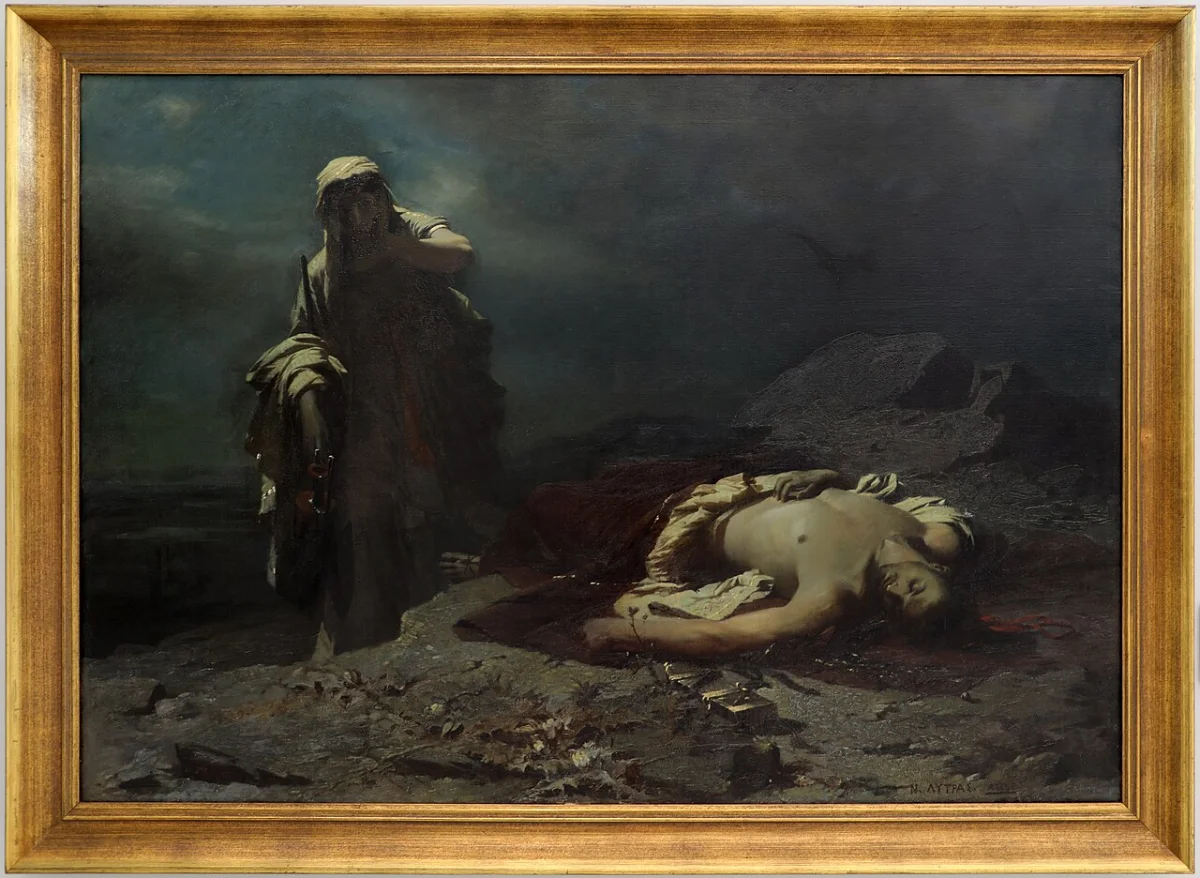
Text and translation
ὦ κοινὸν αὐτάδελφον Ἰσμήνης κάρα
Sophocles · Antigone 1–38 · iambic trimeters · text of Storr (Loeb, via Perseus)
How to read each line
A guide to the Greek, syllables, pitch marks and quantities.
Show the reading key
- Above each line: the line as the edition prints it, each word placed over its own syllables. The main row: the same Greek divided into metrical syllables, each written as it is pronounced. A consonant that closes a syllable is written with it (λόθ | ρο); an elided word is closed up with the next vowel (ν’ἀ); a final consonant carried into the next word is set with a thin space (ς ἰ). Wider gaps mark word-ends.
- Above the syllables: the pitch of each syllable, from the accents. Under them: the quantity of each syllable as it falls in the line, then the transliteration, syllable by syllable, with accented syllables in capitals.
- Under each line: a line-for-line translation. In the right margin of the scansion: the line type, its scheme, and its analysis into cola.
Key to the labels
The names, patterns and symbols used beside this poem.
Show the labels and symbols
The labels in the right margin of the scansion below name the line, its scheme, the feet as the line realises them, and the caesurae and diaereses (the named word-ends) that fall in it. In the scheme — is a long position, ⏑ a short one and × an anceps, long or short; the descriptions below say where a long may be resolved into two shorts and where two shorts may stand in place of an anceps or a short.[4] A click on any syllable highlights its metron or colon, or, with the switch, its foot.
| Label | Name and shape | What it is |
|---|---|---|
| im1 | First iambic metron× — ⏑ — | Positions 1–4. The anceps may be long or short, and in the first foot it may be replaced by two shorts, which makes the foot an anapaest (⏑ ⏑ —). Either long may be resolved into two shorts. |
| im2 | Second iambic metron× — ⏑ — | Positions 5–8. The main caesura falls inside it, after position 5 (penthemimeral) or 7 (hephthemimeral). Either long may be resolved into two shorts. Outside the first foot tragedy admits an anapaest only for a proper name. |
| im3 | Third iambic metron× — ⏑ × | Positions 9–12, the last syllable indifferent (period-end). Porson’s law: when the anceps at 9 is long, it and the following syllable belong to the same word, unless one of them is a monosyllable. The long at 10 may be resolved only when the anceps at 9 is short. |
Scansion
Antigone tells Ismene of Creon’s edict against the burial of Polynices. Like all but one of Sophocles’ surviving tragedies, the play opens with a dialogue between two characters bound by a close tie, here two sisters.[5] Each trimeter is scanned metron by metron, with its caesura, the third anceps checked against Porson’s law, and every resolution, anapaest and prosodic licence named, including the anapaest that tragedy admits outside the first foot only for a proper name (line 11).
Ismene, my own sister, of one blood with me,
do you know any of the evils that come from Oedipus
that Zeus does not bring to pass for us two while we still live?
For there is nothing painful, nothing without ruin,
nothing shameful, nothing dishonoured, that I have not
seen among your sorrows and mine.
And now what is this, in turn, that they say that to the whole city
the general has just issued as a proclamation?
Do you know anything? Have you heard? Or does it escape you
that evils fit for enemies are marching against our friends?
To me, Antigone, no word of our dear ones,
neither sweet nor painful, has come since
we two were robbed of our two brothers,
who died on one day by a double hand;
and since the Argive army has gone,
this past night, I know nothing further,
neither that I am more fortunate nor more ruined.
I knew it well, and I was bringing you outside the courtyard gates
for this reason, so that you alone might hear.
What is it? You are clearly brooding over some news.
Has not Creon, in the matter of burial, of our two brothers
honoured the one and dishonoured the other?
Eteocles, as they say, with due observance
of right and custom, he has hidden under the earth,
honoured among the dead below;
but the corpse of Polynices, who died wretchedly,
they say it has been proclaimed to the citizens that no one
is to cover with a grave or lament,
but to leave it unwept, unburied, a sweet
treasure for birds looking out for the pleasure of food.
Such, they say, is what the good Creon has proclaimed for you
and for me, yes, I say for me too,
and that he is coming here to proclaim it plainly
to those who do not know, and that he holds the matter
as no small thing: whoever does any of these things,
death by public stoning in the city is laid down for him.
That is how things stand for you, and you will soon show
whether you are noble by nature, or base though born of the good.
Metre
- The line. Three iambic metra, × — ⏑ — | × — ⏑ — | × — ⏑ —, with period-end at every line-end.[6] Twice the line ends in a prepositive that belongs with the next line, οὐ (5) and τὸ μή (27): West 1987, p. 27 notes that the dramatists occasionally place a prepositive in final position, and cites line 171 of this play. The trimeter is the metre of the spoken parts of tragedy: the iambics were spoken, not sung, and were felt to come closer than other metres to the rhythm of ordinary speech.[7] Well over 90 per cent of the spoken verse in the surviving tragedies is iambic trimeter;[8] set speeches and stichomythia alike are almost always in it, in the Attic dialect of the audience (though much heightened), while the choral odes take on a partly Doric colouring.[9]
- Caesura. Word-end after position 5 (penthemimeral) or else after position 7 (hephthemimeral);[10] lines 1, 4, 5, 9, 10, 12, 19, 25, 26, 30, 34 and 38 have only the hephthemimeral word-end. In line 18 the word before the penthemimeral place is καί, a prepositive, and the effective division is the hephthemimeral one.[11]
- Porson’s law. If the anceps of the third metron (position 9) is long, no word-end may separate it from the syllable after it, though a monosyllable on either side is allowed.[12] Position 9 is long in 20 of the 38 lines, and in every one of them the long syllable stands inside a word.
- Resolution and anapaests. Four resolved longs in 38 lines, in keeping with the sparing resolution of Aeschylus and Sophocles:[13] the first princeps in the name Ἐτεοκλέα (23, which also admits two other scansions)[14], the third in ἄταφον (29) and across the article and noun in τὸν ἀγαθόν (31), the fourth in the name Πολυνείκους (26).[15] Line 11 has an anapaest in the fifth foot, -τιγόνη- of the name Ἀντιγόνη: outside the first foot tragedy allows the anapaest only in proper names, and its three syllables ⏑ ⏑ — must fall within one word.[16]
- Prosody. Attic correption before a stop + liquid (διπλῇ 14, δὲ φροῦδος 15, Ἐτεοκλέα 23, ἔκρυψε 25, νεκροῖς 25, ἄκλαυτον 29, εἰσορῶσι πρός 30, τὸ πρᾶγμ’ 34, τι δρᾷ 35) and position inside the word (ἀθλίως 26);[17] γμ and γν always make position (κήρυγμα 8, κασιγνήτω 21, πρᾶγμ’ 34).[18] Crasis in κἀμῶν (6), κεἰσήκουσας (9), κἀμοί and κἀμέ (32); synecphonesis of μὴ εἰ- (33).[19]
- Vowel lengths. An α, ι or υ whose length the spelling does not show takes its length from the metre wherever the metre decides it; every such length here agrees with LSJ or with West’s rules for endings,[20] and the less obvious ones are noted under their lines (φᾱσι 7, 27, 31; ἵκετ’ 12; προτίσας, ἀτιμάσας 22). Where the metre does not decide it (at an anceps, or in the last position of the line), the note on the line gives the source for a long vowel, or a short one at the line-end: long in κάρα (1), ἄτης (4), ἀτωμένη (17) and ἔντιμον (25).
- Lloyd-Jones’s text. Storr’s text has been compared with H. Lloyd-Jones’s Loeb edition of 1994. The line numbers are the same; his text differs at 2–3 (where it changes the first anceps of 3), 4 and 24[21].[22]
Prosody, line by line
Every syllable, with the reason for its length. Quantities are read from the vowel where the spelling shows it, from the consonants that follow (“position”), from the accent where it tells, and from the metre where nothing else does. Editors’ notes on the text follow in the boxed paragraphs.
- 1
Line 1 · ὦ κοινὸν αὐτάδελφον Ἰσμήνης κάρα,
ὦ κοινὸν αὐτάδελφον Ἰσμήνης κάρα,
ὦκοινὸν αὐτάδελφον Ἰσμήνηςκάρα,hephthemimeral caesura.
- 1 —ὦὦ is long by nature; the position is anceps.
- 2 —κοιοι is a diphthong, long by nature.
- 3 ⏑νὸὸ is short by nature.
- 4 —ν αὐαὐ is a diphthong, long by nature; the first consonant belongs to the previous word and is carried over to this vowel.
- 5 ⏑τάᾰ́ is short (its length is not shown by the ordinary spelling); the position is anceps.
- 6 —δελε is short by nature; closed by λ: long by position.
- 7 ⏑φοο is short by nature.
- 8 —ν ἸσἸ is a vowel of unknown length; closed by σ: long by position; the first consonant belongs to the previous word and is carried over to this vowel.
- 9 —μήή is long by nature; the position is anceps.
- 10 —νηςη is long by nature; closed by ς: long by position.
- 11 ⏑κάά is short by the metre (position 11 must be short).
- 12 ×ρα,ᾱ is long (its length is not shown by the ordinary spelling); the last position of the line is indifferent (period-end).
Antigone speaks (lines 1–10). The α of αὐτάδελφον is short (the metre: αὐτάδελφον fills the short seventh position of the trimeter at Ant. 503 and 696). Position 5 is anceps, so the metre does not show it; the input marks it short. The α of κάρα is long.[23] It stands in the last position of the line, where the metre does not show its length; the input marks it long. No word ends after position 5, so the caesura is hephthemimeral, after αὐτάδελφον (word-end after position 7)[10]. The anceps at position 9 is long (μή) and inside the word Ἰσμήνης, as Porson’s law requires.[10]
- 2
Line 2 · ἆρ’ οἶσθ’ ὅ τι Ζεὺς τῶν ἀπ’ Οἰδίπου κακῶν
ἆρ’ οἶσθ’ ὅ τι Ζεὺς τῶν ἀπ’ Οἰδίπου κακῶν
ἆρ’οἶσθ’ὅτιΖεὺςτῶνἀπ’Οἰδίπουκακῶνpenthemimeral caesura; hephthemimeral caesura (with elision).
- 1 —ἆἆ carries a circumflex, so it is long; the position is anceps.
- 2 —ρ’οἶσοἶ is a diphthong, long by nature; closed by σ: long by position; the apostrophe marks an elided vowel; the consonant before it joins this syllable.
- 3 ⏑θ’ὅὅ is short by nature; the apostrophe marks an elided vowel; the consonant before it joins this syllable.
- 4 —τιthe next word begins with the double consonant Ζ: the syllable is closed before it: long by position.
- 5 —Ζεὺςεὺ is a diphthong, long by nature; closed by ς: long by position; the position is anceps.
- 6 —τῶνῶ is long by nature.
- 7 ⏑ἀἀ is short by the metre (position 7 must be short).
- 8 —π’ΟἰΟἰ is a diphthong, long by nature; the apostrophe marks an elided vowel; the consonant before it joins this syllable.
- 9 ⏑δίῐ́ is short (its length is not shown by the ordinary spelling); the position is anceps.
- 10 —πουου is a diphthong, long by nature.
- 11 ⏑καα is short by the metre (position 11 must be short).
- 12 ×κῶνῶ is long by nature; closed by ν: long by position; the last position of the line is indifferent (period-end).
The ι of Οἰδίπου is short.[24] Position 9 is anceps, so the metre does not show it; the input marks it short. Penthemimeral caesura after Ζεὺς (word-end after position 5)[10]; a word also ends at the hephthemimeral place, after the elided ἀπ’. Elision: ἆρ’, οἶσθ’, ἀπ’ lose their final vowel before the vowel that begins the next word.[25]
- 3
Line 3 · ὁποῖον οὐχὶ νῷν ἔτι ζώσαιν τελεῖ;
ὁποῖον οὐχὶ νῷν ἔτι ζώσαιν τελεῖ;
ὁποῖον οὐχὶνῷνἔτιζώσαιντελεῖ;penthemimeral caesura.
- 1 ⏑ὁὁ is short by nature; the position is anceps.
- 2 —ποῖοῖ is a diphthong, long by nature.
- 3 ⏑οο is short by nature.
- 4 —ν οὐοὐ is a diphthong, long by nature; the first consonant belongs to the previous word and is carried over to this vowel.
- 5 ⏑χὶῐ̀ is short (its length is not shown by the ordinary spelling); the position is anceps.
- 6 —νῷνῷ is long by nature.
- 7 ⏑ἔἔ is short by nature.
- 8 —τιthe next word begins with the double consonant ζ: the syllable is closed before it: long by position.
- 9 —ζώώ is long by nature; the position is anceps.
- 10 —σαιναι is a diphthong, long by nature; closed by ν: long by position.
- 11 ⏑τεε is short by nature.
- 12 ×λεῖ;εῖ is a diphthong, long by nature; the last position of the line is indifferent (period-end).
Lloyd-Jones changes the conjunction in line 2 following Hermann, breaks the sentence off after the name Zeus, and opens line 3 with an exclamation of his own conjecture. That makes the first anceps long instead of short.[26] The ι of οὐχὶ is short (the metre: οὐχί fills the short seventh position of the trimeter at E. Hipp. 498 and Supp. 908). Position 5 is anceps, so the metre does not show it; the input marks it short. Penthemimeral caesura after οὐχὶ (word-end after position 5)[10]. The anceps at position 9 is long (ζώ) and inside the word ζώσαιν, as Porson’s law requires.[10]
- 4
Line 4 · οὐδὲν γὰρ οὔτ’ ἀλγεινὸν οὔτ’ ἄτης ἄτερ
οὐδὲν γὰρ οὔτ’ ἀλγεινὸν οὔτ’ ἄτης ἄτερ
οὐδὲνγὰρ οὔτ’ἀλγεινὸν οὔτ’ἄτηςἄτερhephthemimeral caesura.
- 1 —οὐοὐ is a diphthong, long by nature; the position is anceps.
- 2 —δὲνὲ is short by nature; closed by ν: long by position.
- 3 ⏑γὰὰ is short by the metre (position 3 must be short).
- 4 —ρ οὔοὔ is a diphthong, long by nature; the first consonant belongs to the previous word and is carried over to this vowel.
- 5 —τ’ἀλἀ is a vowel of unknown length; closed by λ: long by position; the apostrophe marks an elided vowel; the consonant before it joins this syllable; the position is anceps.
- 6 —γειει is a diphthong, long by nature.
- 7 ⏑νὸὸ is short by nature.
- 8 —ν οὔοὔ is a diphthong, long by nature; the first consonant belongs to the previous word and is carried over to this vowel.
- 9 —τ’ἄᾱ̓́ is long (its length is not shown by the ordinary spelling); the apostrophe marks an elided vowel; the consonant before it joins this syllable; the position is anceps.
- 10 —τηςη is long by nature.
- 11 ⏑ἄἄ is short by the metre (position 11 must be short).
- 12 ×τερε is short by nature; closed by ρ: long by position; the last position of the line is indifferent (period-end).
Lloyd-Jones follows Hermann in making the phrase describe something full of ruin. The transmitted wording kept here says “without ruin”. Both readings end with a short syllable followed by the line’s last syllable.[26] The α of ἄτης is long.[27] Position 9 is anceps, so the metre does not show it; the input marks it long. No word ends after position 5, so the caesura is hephthemimeral, after ἀλγεινὸν (word-end after position 7)[10]. The anceps at position 9 is long (τ’ἄ) and inside the word ἄτης, as Porson’s law requires.[10] Elision: οὔτ’ (twice) loses its final vowel each time before the vowel that begins the next word.[25]
- 5
Line 5 · οὔτ’ αἰσχρὸν οὔτ’ ἄτιμόν ἐσθ’, ὁποῖον οὐ
οὔτ’ αἰσχρὸν οὔτ’ ἄτιμόν ἐσθ’, ὁποῖον οὐ
οὔτ’αἰσχρὸν οὔτ’ἄτιμόν ἐσθ’,ὁποῖον οὐhephthemimeral caesura.
- 1 —οὔοὔ is a diphthong, long by nature; the position is anceps.
- 2 —τ’αἰσαἰ is a diphthong, long by nature; closed by σ: long by position; the apostrophe marks an elided vowel; the consonant before it joins this syllable.
- 3 ⏑χρὸὸ is short by nature.
- 4 —ν οὔοὔ is a diphthong, long by nature; the first consonant belongs to the previous word and is carried over to this vowel.
- 5 ⏑τ’ἄᾰ̓́ is short (its length is not shown by the ordinary spelling); the apostrophe marks an elided vowel; the consonant before it joins this syllable; the position is anceps.
- 6 —τιι is long by the metre (position 6 must be long).
- 7 ⏑μόό is short by nature.
- 8 —ν ἐσἐ is short by nature; closed by σ: long by position; the first consonant belongs to the previous word and is carried over to this vowel.
- 9 ⏑θ’,ὁὁ is short by nature; the apostrophe marks an elided vowel; the consonant before it joins this syllable; the position is anceps.
- 10 —ποῖοῖ is a diphthong, long by nature.
- 11 ⏑οο is short by nature.
- 12 ×ν οὐοὐ is a diphthong, long by nature; the first consonant belongs to the previous word and is carried over to this vowel; the last position of the line is indifferent (period-end).
The line ends with the negative οὐ, a prepositive[28] that belongs with ὄπωπ’ in the next line; West 1987, p. 27 notes that the dramatists occasionally place a prepositive in final position. The α of ἄτιμόν is short.[29] Position 5 is anceps, so the metre does not show it; the input marks it short. No word ends after position 5, so the caesura is hephthemimeral, after ἄτιμόν (word-end after position 7)[10]. The anceps at position 9 is short (θ’ὁ). Elision: οὔτ’ (twice), ἐσθ’ lose their final vowel before the vowel that begins the next word.[25]
- 6
Line 6 · τῶν σῶν τε κἀμῶν οὐκ ὄπωπ’ ἐγὼ κακῶν.
τῶν σῶν τε κἀμῶν οὐκ ὄπωπ’ ἐγὼ κακῶν.
τῶνσῶντεκἀμῶνοὐκὄπωπ’ἐγὼκακῶν.penthemimeral caesura.
- 1 —τῶνῶ is long by nature; closed by ν: long by position; the position is anceps.
- 2 —σῶνῶ is long by nature; closed by ν: long by position.
- 3 ⏑τεε is short by nature.
- 4 —κἀἀ is long by crasis: the coronis marks two words contracted into one long vowel.
- 5 —μῶνῶ is long by nature; the position is anceps.
- 6 —οὐκοὐ is a diphthong, long by nature.
- 7 ⏑ὄὄ is short by nature.
- 8 —πωω is long by nature.
- 9 ⏑π’ἐἐ is short by nature; the apostrophe marks an elided vowel; the consonant before it joins this syllable; the position is anceps.
- 10 —γὼὼ is long by nature.
- 11 ⏑καα is short by the metre (position 11 must be short).
- 12 ×κῶν.ῶ is long by nature; closed by ν: long by position; the last position of the line is indifferent (period-end).
- 7
Line 7 · καὶ νῦν τί τοῦτ’ αὖ φασι πανδήμῳ πόλει
καὶ νῦν τί τοῦτ’ αὖ φασι πανδήμῳ πόλει
καὶνῦντίτοῦτ’αὖφασιπανδήμῳπόλειpenthemimeral caesura; hephthemimeral caesura.
- 1 —καὶαὶ is a diphthong, long by nature; the position is anceps.
- 2 —νῦνῦ carries a circumflex, so it is long; closed by ν: long by position.
- 3 ⏑τίί is short by the metre (position 3 must be short).
- 4 —τοῦοῦ is a diphthong, long by nature.
- 5 —τ’αὖαὖ is a diphthong, long by nature; the apostrophe marks an elided vowel; the consonant before it joins this syllable; the position is anceps.
- 6 —φαα is long by the metre (position 6 must be long).
- 7 ⏑σιι is short by the metre (position 7 must be short).
- 8 —πανα is a vowel of unknown length; closed by ν: long by position.
- 9 —δήή is long by nature; the position is anceps.
- 10 —μῳῳ is long by nature.
- 11 ⏑πόό is short by nature.
- 12 ×λειει is a diphthong, long by nature; the last position of the line is indifferent (period-end).
The α of φασι is long, as position 6 requires.[31] Penthemimeral caesura after αὖ (word-end after position 5)[10]; a word also ends at the hephthemimeral place, after φασι. The anceps at position 9 is long (δή) and inside the word πανδήμῳ, as Porson’s law requires.[10] Elision: τοῦτ’ loses its final vowel before the vowel that begins the next word.[25]
- 8
Line 8 · κήρυγμα θεῖναι τὸν στρατηγὸν ἀρτίως;
κήρυγμα θεῖναι τὸν στρατηγὸν ἀρτίως;
κήρυγμαθεῖναιτὸνστρατηγὸν ἀρτίως;penthemimeral caesura.
- 1 —κήή is long by nature; the position is anceps.
- 2 —ρυγυ is a vowel of unknown length; closed by γ: long by position; γμ is one of the four clusters (γμ, γν, δμ, δν) that never leave the syllable before them short.[18]
- 3 ⏑μαα is short by the accent rule: acute on the antepenult requires a short final syllable.
- 4 —θεῖεῖ is a diphthong, long by nature.
- 5 —ναιαι is a diphthong, long by nature; the position is anceps.
- 6 —τὸνὸ is short by nature; closed by ν: long by position.
- 7 ⏑στραα is short by the metre (position 7 must be short).
- 8 —τηη is long by nature.
- 9 ⏑γὸὸ is short by nature; the position is anceps.
- 10 —ν ἀρἀ is a vowel of unknown length; closed by ρ: long by position; the first consonant belongs to the previous word and is carried over to this vowel.
- 11 ⏑τίί is short by the metre (position 11 must be short).
- 12 ×ως;ω is long by nature; closed by ς: long by position; the last position of the line is indifferent (period-end).
- 9
Line 9 · ἔχεις τι κεἰσήκουσας; ἤ σε λανθάνει
ἔχεις τι κεἰσήκουσας; ἤ σε λανθάνει
ἔχειςτικεἰσήκουσα;ς ἤσελανθάνειhephthemimeral caesura.
- 1 ⏑ἔἔ is short by nature; the position is anceps.
- 2 —χειςει is a diphthong, long by nature; closed by ς: long by position.
- 3 ⏑τιι is short by the metre (position 3 must be short).
- 4 —κεἰεἰ is a diphthong, long by nature.
- 5 —σήή is long by nature; the position is anceps.
- 6 —κουου is a diphthong, long by nature.
- 7 ⏑σα;α is short by the accent rule: acute on the antepenult requires a short final syllable.
- 8 —ς ἤἤ is long by nature; the first consonant belongs to the previous word and is carried over to this vowel.
- 9 ⏑σεε is short by nature; the position is anceps.
- 10 —λανα is a vowel of unknown length; closed by ν: long by position.
- 11 ⏑θάά is short by the metre (position 11 must be short).
- 12 ×νειει is a diphthong, long by nature; the last position of the line is indifferent (period-end).
- 10
Line 10 · πρὸς τοὺς φίλους στείχοντα τῶν ἐχθρῶν κακά;
πρὸς τοὺς φίλους στείχοντα τῶν ἐχθρῶν κακά;
πρὸςτοὺςφίλουςστείχοντατῶνἐχθρῶνκακά;hephthemimeral caesura.
- 1 —πρὸςὸ is short by nature; closed by ς: long by position; the position is anceps.
- 2 —τοὺςοὺ is a diphthong, long by nature; closed by ς: long by position.
- 3 ⏑φίί is short by the metre (position 3 must be short).
- 4 —λουςου is a diphthong, long by nature; closed by ς: long by position.
- 5 —στείεί is a diphthong, long by nature; the position is anceps.
- 6 —χονο is short by nature; closed by ν: long by position.
- 7 ⏑ταα is short by the accent rule: acute on the antepenult requires a short final syllable.
- 8 —τῶνῶ is long by nature.
- 9 —ἐχἐ is short by nature; closed by χ: long by position; the position is anceps.
- 10 —θρῶνῶ is long by nature; closed by ν: long by position.
- 11 ⏑καα is short by the metre (position 11 must be short).
- 12 ×κά;ᾰ́ is short (its length is not shown by the ordinary spelling); the last position of the line is indifferent (period-end): a short syllable here is brevis in longo.[32]
The α of κακά is short.[33] It stands in the last position of the line, where the metre does not show its length; the input marks it short. No word ends after position 5, so the caesura is hephthemimeral, after στείχοντα (word-end after position 7)[10]. The anceps at position 9 is long (ἐχ) and inside the word ἐχθρῶν, as Porson’s law requires.[10] The last syllable, κά, is short: brevis in longo, allowed at the period-end that closes every line.[32]
- 11
Line 11 · ἐμοὶ μὲν οὐδεὶς μῦθος, Ἀντιγόνη, φίλων
ἐμοὶ μὲν οὐδεὶς μῦθος, Ἀντιγόνη, φίλων
ἐμοὶμὲν οὐδεὶςμῦθο,ς Ἀντιγόνη,φίλωνpenthemimeral caesura; hephthemimeral caesura.
- 1 ⏑ἐἐ is short by nature; the position is anceps.
- 2 —μοὶοὶ is a diphthong, long by nature.
- 3 ⏑μὲὲ is short by nature.
- 4 —ν οὐοὐ is a diphthong, long by nature; the first consonant belongs to the previous word and is carried over to this vowel.
- 5 —δεὶςεὶ is a diphthong, long by nature; closed by ς: long by position; the position is anceps.
- 6 —μῦῦ carries a circumflex, so it is long.
- 7 ⏑θο,ο is short by nature.
- 8 —ς ἈνἈ is a vowel of unknown length; closed by ν: long by position; the first consonant belongs to the previous word and is carried over to this vowel.
- 9 ⏑τιι is short by the metre (position 9 must be short); with its neighbour it fills the anceps of position 9 with two shorts, making an anapaest (⏑ ⏑ —) of the foot.
- 10 ⏑γόό is short by nature; with its neighbour it fills the anceps of position 9 with two shorts, making an anapaest (⏑ ⏑ —) of the foot.
- 11 —νη,η is long by nature.
- 12 ⏑φίί is short by the metre (position 11 must be short).
- 13 ×λωνω is long by nature; closed by ν: long by position; the last position of the line is indifferent (period-end).
Ismene speaks (lines 11–17). The scanning form admits two shorts at position 9 in this line only, for the name Ἀντιγόνη (-τι-γό-νη, ⏑ ⏑ —). Penthemimeral caesura after οὐδεὶς (word-end after position 5)[10]; a word also ends at the hephthemimeral place, after μῦθος. The fifth foot is an anapaest (⏑ ⏑ —): the anceps (position 9) is filled by two shorts, τι–γό, in Ἀντιγόνη; outside the first foot tragedy admits it only for a proper name, with the syllables ⏑ ⏑ — in one word.[16]
- 12
Line 12 · οὔθ’ ἡδὺς οὔτ’ ἀλγεινὸς ἵκετ’ ἐξ ὅτου
οὔθ’ ἡδὺς οὔτ’ ἀλγεινὸς ἵκετ’ ἐξ ὅτου
οὔθ’ἡδὺς οὔτ’ἀλγεινὸς ἵκετ’ἐξὅτουhephthemimeral caesura.
- 1 —οὔοὔ is a diphthong, long by nature; the position is anceps.
- 2 —θ’ἡἡ is long by nature; the apostrophe marks an elided vowel; the consonant before it joins this syllable.
- 3 ⏑δὺὺ is short by the metre (position 3 must be short).
- 4 —ς οὔοὔ is a diphthong, long by nature; the first consonant belongs to the previous word and is carried over to this vowel.
- 5 —τ’ἀλἀ is a vowel of unknown length; closed by λ: long by position; the apostrophe marks an elided vowel; the consonant before it joins this syllable; the position is anceps.
- 6 —γειει is a diphthong, long by nature.
- 7 ⏑νὸὸ is short by nature.
- 8 —ς ἵἵ is long by the metre (position 8 must be long); the first consonant belongs to the previous word and is carried over to this vowel.
- 9 ⏑κεε is short by nature; the position is anceps.
- 10 —τ’ἐξἐ is short by nature; ξ is a double consonant (two sounds) and closes the syllable: long by position; the apostrophe marks an elided vowel; the consonant before it joins this syllable.
- 11 ⏑ὅὅ is short by nature.
- 12 ×τουου is a diphthong, long by nature; the last position of the line is indifferent (period-end).
The ι of ἵκετ’ is long, as position 8 requires: it is lengthened by the augment.[34] No word ends after position 5, so the caesura is hephthemimeral, after ἀλγεινὸς (word-end after position 7)[10]. The anceps at position 9 is short (κε). Elision: οὔθ’, οὔτ’, ἵκετ’ lose their final vowel before the vowel that begins the next word.[25]
- 13
Line 13 · δυοῖν ἀδελφοῖν ἐστερήθημεν δύο,
δυοῖν ἀδελφοῖν ἐστερήθημεν δύο,
δυοῖνἀδελφοῖνἐστερήθημενδύο,penthemimeral caesura.
- 1 ⏑δυῠ is short (its length is not shown by the ordinary spelling); the position is anceps.
- 2 —οῖνοῖ is a diphthong, long by nature.
- 3 ⏑ἀἀ is short by the metre (position 3 must be short).
- 4 —δελε is short by nature; closed by λ: long by position.
- 5 —φοῖνοῖ is a diphthong, long by nature; the position is anceps.
- 6 —ἐσἐ is short by nature; closed by σ: long by position.
- 7 ⏑τεε is short by nature.
- 8 —ρήή is long by nature.
- 9 —θηη is long by nature; the position is anceps.
- 10 —μενε is short by nature; closed by ν: long by position.
- 11 ⏑δύύ is short by the metre (position 11 must be short).
- 12 ×ο,ο is short by nature; the last position of the line is indifferent (period-end): a short syllable here is brevis in longo.[32]
The υ of δυοῖν is short.[35] Position 1 is anceps, so the metre does not show it; the input marks it short. Penthemimeral caesura after ἀδελφοῖν (word-end after position 5)[10]. The anceps at position 9 is long (θη) and inside the word ἐστερήθημεν, as Porson’s law requires.[10] The last syllable, ο, is short: brevis in longo, allowed at the period-end that closes every line.[32]
- 14
Line 14 · μιᾷ θανόντοιν ἡμέρᾳ διπλῇ χερί·
μιᾷ θανόντοιν ἡμέρᾳ διπλῇ χερί·
μιᾷθανόντοινἡμέρᾳδιπλῇχερί·penthemimeral caesura.
- 1 ⏑μιῐ is short (its length is not shown by the ordinary spelling); the position is anceps.
- 2 —ᾷᾷ is long by nature.
- 3 ⏑θαα is short by the metre (position 3 must be short).
- 4 —νόνό is short by nature; closed by ν: long by position.
- 5 —τοινοι is a diphthong, long by nature; the position is anceps.
- 6 —ἡἡ is long by nature.
- 7 ⏑μέέ is short by nature.
- 8 —ρᾳᾳ is long by nature.
- 9 ⏑διῐ is short (its length is not shown by the ordinary spelling); πλ is carried whole into the next syllable, so this syllable stays open and short (Attic correption of a stop + liquid cluster); the position is anceps.
- 10 —πλῇῇ is long by nature.
- 11 ⏑χεε is short by nature.
- 12 ×ρί·ῐ́ is short (its length is not shown by the ordinary spelling); the last position of the line is indifferent (period-end): a short syllable here is brevis in longo.[32]
The ι of μιᾷ is short (the metre: μιᾷ fills the short third position of the trimeter at E. Alc. 712, μίαν the seventh at Alc. 54). Position 1 is anceps, so the metre does not show it; the input marks it short. The ι of διπλῇ is short (the metre: διπλοῦν is a short syllable in the third position of the trimeter at E. Heracl. 1043 and Supp. 333). Position 9 is anceps, so the metre does not show it; the input marks it short. The ι of χερί is short.[36] It stands in the last position of the line, where the metre does not show its length; the input marks it short. Penthemimeral caesura after θανόντοιν (word-end after position 5)[10]. The anceps at position 9 is short (δι). In διπλῇ the πλ goes whole with the next syllable, so δι stays short (Attic correption)[17]. Position 9 is anceps, so the metre does not decide here, and tragedy would allow the syllable to be long by position inside the word.[37] The last syllable, ρί, is short: brevis in longo, allowed at the period-end that closes every line.[32]
- 15
Line 15 · ἐπεὶ δὲ φροῦδός ἐστιν Ἀργείων στρατὸς
ἐπεὶ δὲ φροῦδός ἐστιν Ἀργείων στρατὸς
ἐπεὶδὲφροῦδός ἐστιν Ἀργείωνστρατὸςpenthemimeral caesura; hephthemimeral caesura.
- 1 ⏑ἐἐ is short by nature; the position is anceps.
- 2 —πεὶεὶ is a diphthong, long by nature.
- 3 ⏑δὲὲ is short by nature; the next word begins with φρ, a stop + liquid that does not make position here, so the syllable stays short.
- 4 —φροῦοῦ is a diphthong, long by nature.
- 5 ⏑δόό is short by nature; the position is anceps.
- 6 —ς ἐσἐ is short by nature; closed by σ: long by position; the first consonant belongs to the previous word and is carried over to this vowel.
- 7 ⏑τιι is short by the metre (position 7 must be short).
- 8 —ν ἈρἈ is a vowel of unknown length; closed by ρ: long by position; the first consonant belongs to the previous word and is carried over to this vowel.
- 9 —γείεί is a diphthong, long by nature; the position is anceps.
- 10 —ωνω is long by nature; closed by ν: long by position.
- 11 ⏑στραα is short by the metre (position 11 must be short).
- 12 ×τὸςὸ is short by nature; closed by ς: long by position; the last position of the line is indifferent (period-end).
Penthemimeral caesura after φροῦδός (word-end after position 5)[10]; a word also ends at the hephthemimeral place, after ἐστιν. The anceps at position 9 is long (γεί) and inside the word Ἀργείων, as Porson’s law requires.[10] The short monosyllable δὲ stays short before the φρ that begins φροῦδός (Attic correption)[17].
- 16
Line 16 · ἐν νυκτὶ τῇ νῦν, οὐδὲν οἶδ’ ὑπέρτερον,
ἐν νυκτὶ τῇ νῦν, οὐδὲν οἶδ’ ὑπέρτερον,
ἐννυκτὶτῇνῦν,οὐδὲν οἶδ’ὑπέρτερον,penthemimeral caesura; hephthemimeral caesura.
- 1 —ἐνἐ is short by nature; closed by ν: long by position; the position is anceps.
- 2 —νυκυ is a vowel of unknown length; closed by κ: long by position.
- 3 ⏑τὶὶ is short by the metre (position 3 must be short).
- 4 —τῇῇ is long by nature.
- 5 —νῦν,ῦ carries a circumflex, so it is long; the position is anceps.
- 6 —οὐοὐ is a diphthong, long by nature.
- 7 ⏑δὲὲ is short by nature.
- 8 —ν οἶοἶ is a diphthong, long by nature; the first consonant belongs to the previous word and is carried over to this vowel.
- 9 ⏑δ’ὑῠ̔ is short (its length is not shown by the ordinary spelling); the apostrophe marks an elided vowel; the consonant before it joins this syllable; the position is anceps.
- 10 —πέρέ is short by nature; closed by ρ: long by position.
- 11 ⏑τεε is short by nature.
- 12 ×ρον,ο is short by nature; closed by ν: long by position; the last position of the line is indifferent (period-end).
The υ of ὑπέρτερον is short.[38] Position 9 is anceps, so the metre does not show it; the input marks it short. Penthemimeral caesura after νῦν (word-end after position 5)[10]; a word also ends at the hephthemimeral place, after οὐδὲν. Elision: οἶδ’ loses its final vowel before the vowel that begins the next word.[25]
- 17
Line 17 · οὔτ’ εὐτυχοῦσα μᾶλλον οὔτ’ ἀτωμένη.
οὔτ’ εὐτυχοῦσα μᾶλλον οὔτ’ ἀτωμένη.
οὔτ’εὐτυχοῦσαμᾶλλον οὔτ’ἀτωμένη.penthemimeral caesura; hephthemimeral caesura.
- 1 —οὔοὔ is a diphthong, long by nature; the position is anceps.
- 2 —τ’εὐεὐ is a diphthong, long by nature; the apostrophe marks an elided vowel; the consonant before it joins this syllable.
- 3 ⏑τυυ is short by the metre (position 3 must be short).
- 4 —χοῦοῦ is a diphthong, long by nature.
- 5 ⏑σαα is short by the accent rule: circumflex on the penult requires a short final syllable; the position is anceps.
- 6 —μᾶλᾶ carries a circumflex, so it is long; closed by λ: long by position.
- 7 ⏑λοο is short by nature.
- 8 —ν οὔοὔ is a diphthong, long by nature; the first consonant belongs to the previous word and is carried over to this vowel.
- 9 —τ’ἀᾱ̓ is long (its length is not shown by the ordinary spelling); the apostrophe marks an elided vowel; the consonant before it joins this syllable; the position is anceps.
- 10 —τωω is long by nature.
- 11 ⏑μέέ is short by nature.
- 12 ×νη.η is long by nature; the last position of the line is indifferent (period-end).
The α of ἀτωμένη is long.[39] Position 9 is anceps, so the metre does not show it; the input marks it long. Penthemimeral caesura after εὐτυχοῦσα (word-end after position 5)[10]; a word also ends at the hephthemimeral place, after μᾶλλον. The anceps at position 9 is long (τ’ἀ) and inside the word ἀτωμένη, as Porson’s law requires.[10] Elision: οὔτ’ (twice) loses its final vowel each time before the vowel that begins the next word.[25]
- 18
Line 18 · ᾔδη καλῶς, καί σ’ ἐκτὸς αὐλείων πυλῶν
ᾔδη καλῶς, καί σ’ ἐκτὸς αὐλείων πυλῶν
ᾔδηκαλῶς,καίσ’ἐκτὸς αὐλείωνπυλῶνpenthemimeral caesura; hephthemimeral caesura.
- 1 —ᾔᾔ is long by nature; the position is anceps.
- 2 —δηη is long by nature.
- 3 ⏑καα is short by the metre (position 3 must be short).
- 4 —λῶς,ῶ is long by nature; closed by ς: long by position.
- 5 —καίαί is a diphthong, long by nature; the position is anceps.
- 6 —σ’ἐκἐ is short by nature; closed by κ: long by position; the apostrophe marks an elided vowel; the consonant before it joins this syllable.
- 7 ⏑τὸὸ is short by nature.
- 8 —ς αὐαὐ is a diphthong, long by nature; the first consonant belongs to the previous word and is carried over to this vowel.
- 9 —λείεί is a diphthong, long by nature; the position is anceps.
- 10 —ωνω is long by nature; closed by ν: long by position.
- 11 ⏑πυυ is short by the metre (position 11 must be short).
- 12 ×λῶνῶ is long by nature; closed by ν: long by position; the last position of the line is indifferent (period-end).
Antigone speaks (lines 18–19). A word ends after position 5, but the word is καί, a prepositive,[28] followed by the elided σ’; West 1987, p. 27 calls a single monosyllabic prepositive before the caesura exceptional, and the effective division is the hephthemimeral caesura after ἐκτός (word-end after position 7)[10]. The anceps at position 9 is long (λεί) and inside the word αὐλείων, as Porson’s law requires.[10] Elision: σ’ loses its final vowel before the vowel that begins the next word.[25]
- 19
Line 19 · τοῦδ’ οὕνεκ’ ἐξέπεμπον, ὡς μόνη κλύοις.
τοῦδ’ οὕνεκ’ ἐξέπεμπον, ὡς μόνη κλύοις.
τοῦδ’οὕνεκ’ἐξέπεμπο,ν ὡςμόνηκλύοις.hephthemimeral caesura.
- 1 —τοῦοῦ is a diphthong, long by nature; the position is anceps.
- 2 —δ’οὕοὕ is a diphthong, long by nature; the apostrophe marks an elided vowel; the consonant before it joins this syllable.
- 3 ⏑νεε is short by nature.
- 4 —κ’ἐἐ is short by nature; ξ is a double consonant (two sounds) and closes the syllable: long by position; the apostrophe marks an elided vowel; the consonant before it joins this syllable.
- 5 ⏑ξέέ is short by nature; the position is anceps.
- 6 —πεμε is short by nature; closed by μ: long by position.
- 7 ⏑πο,ο is short by nature.
- 8 —ν ὡςὡ is long by nature; closed by ς: long by position; the first consonant belongs to the previous word and is carried over to this vowel.
- 9 ⏑μόό is short by nature; the position is anceps.
- 10 —νηη is long by nature.
- 11 ⏑κλύύ is short by the metre (position 11 must be short).
- 12 ×οις.οι is a diphthong, long by nature; closed by ς: long by position; the last position of the line is indifferent (period-end).
- 20
Line 20 · τί δ’ ἔστι; δηλοῖς γάρ τι καλχαίνουσ’ ἔπος.
τί δ’ ἔστι; δηλοῖς γάρ τι καλχαίνουσ’ ἔπος.
τίδ’ἔστι;δηλοῖςγάρτικαλχαίνουσ’ἔπος.penthemimeral caesura; hephthemimeral caesura.
- 1 ⏑τίῐ́ is short (its length is not shown by the ordinary spelling); the position is anceps.
- 2 —δ’ἔσἔ is short by nature; closed by σ: long by position; the apostrophe marks an elided vowel; the consonant before it joins this syllable.
- 3 ⏑τι;ι is short by the metre (position 3 must be short).
- 4 —δηη is long by nature.
- 5 —λοῖςοῖ is a diphthong, long by nature; closed by ς: long by position; the position is anceps.
- 6 —γάρά is a vowel of unknown length; closed by ρ: long by position.
- 7 ⏑τιι is short by the metre (position 7 must be short).
- 8 —καλα is a vowel of unknown length; closed by λ: long by position.
- 9 —χαίαί is a diphthong, long by nature; the position is anceps.
- 10 —νουου is a diphthong, long by nature.
- 11 ⏑σ’ἔἔ is short by nature; the apostrophe marks an elided vowel; the consonant before it joins this syllable.
- 12 ×πος.ο is short by nature; closed by ς: long by position; the last position of the line is indifferent (period-end).
Ismene speaks. The ι of τί is short (the metre: τί fills the short third position of the trimeter at E. Cyc. 37, τίνες the seventh at Cyc. 113). Position 1 is anceps, so the metre does not show it; the input marks it short. Penthemimeral caesura after δηλοῖς (word-end after position 5)[10]; a word also ends at the hephthemimeral place, after τι. The anceps at position 9 is long (χαί) and inside the word καλχαίνουσ’, as Porson’s law requires.[10] Elision: δ’, καλχαίνουσ’ lose their final vowel before the vowel that begins the next word.[25]
- 21
Line 21 · οὐ γὰρ τάφου νῷν τὼ κασιγνήτω Κρέων
οὐ γὰρ τάφου νῷν τὼ κασιγνήτω Κρέων
οὐγὰρτάφουνῷντὼκασιγνήτωΚρέωνpenthemimeral caesura.
- 1 —οὐοὐ is a diphthong, long by nature; the position is anceps.
- 2 —γὰρὰ is a vowel of unknown length; closed by ρ: long by position.
- 3 ⏑τάά is short by the metre (position 3 must be short).
- 4 —φουου is a diphthong, long by nature.
- 5 —νῷνῷ is long by nature; closed by ν: long by position; the position is anceps.
- 6 —τὼὼ is long by nature.
- 7 ⏑καα is short by the metre (position 7 must be short).
- 8 —σιγι is a vowel of unknown length; closed by γ: long by position; γν is one of the four clusters (γμ, γν, δμ, δν) that never leave the syllable before them short.[18]
- 9 —νήή is long by nature; the position is anceps.
- 10 —τωω is long by nature.
- 11 ⏑Κρέέ is short by nature.
- 12 ×ωνω is long by nature; closed by ν: long by position; the last position of the line is indifferent (period-end).
- 22
Line 22 · τὸν μὲν προτίσας, τὸν δ’ ἀτιμάσας ἔχει;
τὸν μὲν προτίσας, τὸν δ’ ἀτιμάσας ἔχει;
τὸνμὲνπροτίσας,τὸνδ’ἀτιμάσαςἔχει;penthemimeral caesura.
- 1 —τὸνὸ is short by nature; closed by ν: long by position; the position is anceps.
- 2 —μὲνὲ is short by nature; closed by ν: long by position.
- 3 ⏑προο is short by nature.
- 4 —τίί is long by the metre (position 4 must be long).
- 5 —σας,α is a vowel of unknown length; closed by ς: long by position; the position is anceps.
- 6 —τὸνὸ is short by nature; closed by ν: long by position.
- 7 ⏑δ’ἀἀ is short by the metre (position 7 must be short); the apostrophe marks an elided vowel; the consonant before it joins this syllable.
- 8 —τιι is long by the metre (position 8 must be long).
- 9 ⏑μάᾰ́ is short (its length is not shown by the ordinary spelling); the position is anceps.
- 10 —σαςα is long by the metre (position 10 must be long).
- 11 ⏑ἔἔ is short by nature.
- 12 ×χει;ει is a diphthong, long by nature; the last position of the line is indifferent (period-end).
The ι of προτίσας is long, as position 4 requires;[40] the α of the participle ending of ἀτιμάσας is long at position 10, as in κυρώσᾱς, which West 1987, p. 28 prints with the long α marked. The α of ἀτιμάσας is short.[41] Position 9 is anceps, so the metre does not show it; the input marks it short. Penthemimeral caesura after προτίσας (word-end after position 5)[10]. Elision: δ’ loses its final vowel before the vowel that begins the next word.[25]
- 23
Line 23 · Ἐτεοκλέα μέν, ὡς λέγουσι, σὺν δίκης
Ἐτεοκλέα μέν, ὡς λέγουσι, σὺν δίκης
Ἐτεοκλέαμέ,ν ὡςλέγουσι,σὺνδίκηςpenthemimeral caesura.
- 1 ⏑ἘἘ is short by nature; the position is anceps.
- 2 ⏑τεε is short by nature; with its neighbour it resolves the long of position 2 into two shorts.
- 3 ⏑οο is short by nature; κλ is carried whole into the next syllable, so this syllable stays open and short (Attic correption of a stop + liquid cluster); with its neighbour it resolves the long of position 2 into two shorts.
- 4 ⏑κλέέ is short by nature.
- 5 —αα is long by the metre (position 4 must be long).
- 6 ⏑μέ,έ is short by nature; the position is anceps.
- 7 —ν ὡςὡ is long by nature; closed by ς: long by position; the first consonant belongs to the previous word and is carried over to this vowel.
- 8 ⏑λέέ is short by nature.
- 9 —γουου is a diphthong, long by nature.
- 10 ⏑σι,ι is short by the accent rule: acute on the antepenult requires a short final syllable; the position is anceps.
- 11 —σὺνὺ is a vowel of unknown length; closed by ν: long by position.
- 12 ⏑δίί is short by the metre (position 11 must be short).
- 13 ×κηςη is long by nature; closed by ς: long by position; the last position of the line is indifferent (period-end).
The resolution falls in the name Ἐτεοκλέα, a word of five syllables. Its last syllable, -έα, is long at position 4: the -α of the accusative singular is short except sometimes with -έα.[42] The page scans the name with the first princeps resolved (Ἐ‑τε‑ο‑κλέ‑ᾱ, ⏑ ⏑ ⏑ ⏑ —). Two other scansions fit the metre as well: an anapaest in the first foot (Ἐ‑τε | οκ‑λέ‑ᾱ, ⏑ ⏑ — ⏑ —), with κλ making position inside the word, which tragedy allows;[43] or synizesis of -εο- (Ἐ‑τεο‑κλέ‑ᾱ, ⏑ — ⏑ —), which West 1987, p. 15 calls frequent within the word when the first vowel is ε. The metre does not decide between the three. Penthemimeral caesura after μέν (word-end after position 5)[10]. The anceps at position 9 is short (σι). The first princeps (position 2) is resolved into two shorts, τε–ο, both in the word Ἐτεοκλέα, a word of three or more syllables, as is usual;[16] the first foot is a tribrach (⏑ ⏑ ⏑). In Ἐτεοκλέα the κλ goes whole with the next syllable, so ο stays short (Attic correption)[17].
- 24
Line 24 · χρήσει δικαίᾳ καὶ νόμου κατὰ χθονὸς
χρήσει δικαίᾳ καὶ νόμου κατὰ χθονὸς
χρήσειδικαίᾳκαὶνόμουκατὰχθονὸςpenthemimeral caesura.
- 1 —χρήή is long by nature; the position is anceps.
- 2 —σειει is a diphthong, long by nature.
- 3 ⏑διι is short by the metre (position 3 must be short).
- 4 —καίαί is a diphthong, long by nature.
- 5 —ᾳᾳ is long by nature; the position is anceps.
- 6 —καὶαὶ is a diphthong, long by nature.
- 7 ⏑νόό is short by nature.
- 8 —μουου is a diphthong, long by nature.
- 9 ⏑καᾰ is short (its length is not shown by the ordinary spelling); the position is anceps.
- 10 —τὰthe next word begins with χθ: the syllable is closed before it: long by position.
- 11 ⏑χθοο is short by nature.
- 12 ×νὸςὸ is short by nature; closed by ς: long by position; the last position of the line is indifferent (period-end).
- 25
Line 25 · ἔκρυψε τοῖς ἔνερθεν ἔντιμον νεκροῖς·
ἔκρυψε τοῖς ἔνερθεν ἔντιμον νεκροῖς·
ἔκρυψετοῖςἔνερθεν ἔντιμοννεκροῖς·hephthemimeral caesura.
- 1 ⏑ἔἔ is short by nature; κρ is carried whole into the next syllable, so this syllable stays open and short (Attic correption of a stop + liquid cluster); the position is anceps.
- 2 —κρυψ is a double consonant (two sounds) and closes the syllable: long by position.
- 3 ⏑ψεε is short by nature.
- 4 —τοῖςοῖ is a diphthong, long by nature.
- 5 ⏑ἔἔ is short by nature; the position is anceps.
- 6 —νερε is short by nature; closed by ρ: long by position.
- 7 ⏑θεε is short by nature.
- 8 —ν ἔνἔ is short by nature; closed by ν: long by position; the first consonant belongs to the previous word and is carried over to this vowel.
- 9 —τιῑ is long (its length is not shown by the ordinary spelling); the position is anceps.
- 10 —μονο is short by nature; closed by ν: long by position.
- 11 ⏑νεε is short by nature; κρ is carried whole into the next syllable, so this syllable stays open and short (Attic correption of a stop + liquid cluster).
- 12 ×κροῖς·οῖ is a diphthong, long by nature; closed by ς: long by position; the last position of the line is indifferent (period-end).
The ι of ἔντιμον is long.[46] Position 9 is anceps, so the metre does not show it; the input marks it long. No word ends after position 5, so the caesura is hephthemimeral, after ἔνερθεν (word-end after position 7)[10]. The anceps at position 9 is long (τι) and inside the word ἔντιμον, as Porson’s law requires.[10] In ἔκρυψε the κρ goes whole with the next syllable, so ἔ stays short (Attic correption)[17]. Position 1 is anceps, so the metre does not decide here, and tragedy would allow the syllable to be long by position inside the word.[37] In νεκροῖς the κρ goes whole with the next syllable, so νε stays short (Attic correption)[17].
- 26
Line 26 · τὸν δ’ ἀθλίως θανόντα Πολυνείκους νέκυν
τὸν δ’ ἀθλίως θανόντα Πολυνείκους νέκυν
τὸνδ’ἀθλίωςθανόνταΠολυνείκουςνέκυνhephthemimeral caesura.
- 1 —τὸνὸ is short by nature; closed by ν: long by position; the position is anceps.
- 2 —δ’ἀθἀ is a vowel of unknown length; closed by θ before a liquid: the stop + liquid cluster makes position here, as the metre requires (tragedy allows either); the apostrophe marks an elided vowel; the consonant before it joins this syllable.
- 3 ⏑λίί is short by the metre (position 3 must be short).
- 4 —ωςω is long by nature; closed by ς: long by position.
- 5 ⏑θαᾰ is short (its length is not shown by the ordinary spelling); the position is anceps.
- 6 —νόνό is short by nature; closed by ν: long by position.
- 7 ⏑ταα is short by the metre (position 7 must be short).
- 8 ⏑Ποο is short by nature; with its neighbour it resolves the long of position 8 into two shorts.
- 9 ⏑λυυ is short by the metre (position 8 must be short); with its neighbour it resolves the long of position 8 into two shorts.
- 10 —νείεί is a diphthong, long by nature; the position is anceps.
- 11 —κουςου is a diphthong, long by nature; closed by ς: long by position.
- 12 ⏑νέέ is short by nature.
- 13 ×κυνυ is a vowel of unknown length; closed by ν: long by position; the last position of the line is indifferent (period-end).
The resolution falls in the name Πολυνείκους. The α of θανόντα is short.[47] Position 5 is anceps, so the metre does not show it; the input marks it short. No word ends after position 5, so the caesura is hephthemimeral, after θανόντα (word-end after position 7)[10]. The anceps at position 9 is long (νεί) and inside the word Πολυνείκους, as Porson’s law requires.[10] The fourth princeps (position 8) is resolved into two shorts, Πο–λυ, both in the word Πολυνείκους, a word of three or more syllables, as is usual;[16] the fourth foot is a tribrach (⏑ ⏑ ⏑). In ἀθλίως the θλ makes position, so δ’ἀθ is long: tragedy allows this inside a word.[17] Elision: δ’ loses its final vowel before the vowel that begins the next word.[25]
- 27
Line 27 · ἀστοῖσί φασιν ἐκκεκηρῦχθαι τὸ μὴ
ἀστοῖσί φασιν ἐκκεκηρῦχθαι τὸ μὴ
ἀστοῖσίφασιν ἐκκεκηρῦχθαιτὸμὴpenthemimeral caesura.
- 1 —ἀσἀ is a vowel of unknown length; closed by σ: long by position; the position is anceps.
- 2 —τοῖοῖ is a diphthong, long by nature.
- 3 ⏑σίί is short by the accent rule: circumflex on the penult requires a short final syllable.
- 4 —φαα is long by the metre (position 4 must be long).
- 5 ⏑σιῐ is short (its length is not shown by the ordinary spelling); the position is anceps.
- 6 —ν ἐκἐ is short by nature; closed by κ: long by position; the first consonant belongs to the previous word and is carried over to this vowel.
- 7 ⏑κεε is short by nature.
- 8 —κηη is long by nature.
- 9 —ρῦχῦ carries a circumflex, so it is long; closed by χ: long by position; the position is anceps.
- 10 —θαιαι is a diphthong, long by nature.
- 11 ⏑τὸὸ is short by nature.
- 12 ×μὴὴ is long by nature; the last position of the line is indifferent (period-end).
The line ends with τὸ μή, two prepositives belonging to the infinitive in the next line (τὸ μὴ / τάφῳ καλύψαι); West 1987, p. 27 notes such final prepositives and cites line 171 of this play. The α of φασιν is long, as position 4 requires.[31] The ι of φασιν is short.[48] Position 5 is anceps, so the metre does not show it; the input marks it short. Penthemimeral caesura after φασιν (word-end after position 5)[10]. The anceps at position 9 is long (ρῦχ) and inside the word ἐκκεκηρῦχθαι, as Porson’s law requires.[10]
- 28
Line 28 · τάφῳ καλύψαι μηδὲ κωκῦσαί τινα,
τάφῳ καλύψαι μηδὲ κωκῦσαί τινα,
τάφῳκαλύψαιμηδὲκωκῦσαίτινα,penthemimeral caesura; hephthemimeral caesura.
- 1 ⏑τάᾰ́ is short (its length is not shown by the ordinary spelling); the position is anceps.
- 2 —φῳῳ is long by nature.
- 3 ⏑καα is short by the metre (position 3 must be short).
- 4 —λύψ is a double consonant (two sounds) and closes the syllable: long by position.
- 5 —ψαιαι is a diphthong, long by nature; the position is anceps.
- 6 —μηη is long by nature.
- 7 ⏑δὲὲ is short by nature.
- 8 —κωω is long by nature.
- 9 —κῦῦ carries a circumflex, so it is long; the position is anceps.
- 10 —σαίαί is a diphthong, long by nature.
- 11 ⏑τιι is short by the metre (position 11 must be short).
- 12 ×να,ᾰ is short (its length is not shown by the ordinary spelling); the last position of the line is indifferent (period-end): a short syllable here is brevis in longo.[32]
The α of τάφῳ is short.[49] Position 1 is anceps, so the metre does not show it; the input marks it short. The α of τινα is short.[50] It stands in the last position of the line, where the metre does not show its length; the input marks it short. Penthemimeral caesura after καλύψαι (word-end after position 5)[10]; a word also ends at the hephthemimeral place, after μηδὲ. The anceps at position 9 is long (κῦ) and inside the word κωκῦσαί, as Porson’s law requires.[10] The last syllable, να, is short: brevis in longo, allowed at the period-end that closes every line.[32]
- 29
Line 29 · ἐᾶν δ’ ἄκλαυτον, ἄταφον, οἰωνοῖς γλυκὺν
ἐᾶν δ’ ἄκλαυτον, ἄταφον, οἰωνοῖς γλυκὺν
ἐᾶνδ’ἄκλαυτο,ν ἄταφο,ν οἰωνοῖςγλυκὺνpenthemimeral caesura; hephthemimeral caesura.
- 1 ⏑ἐἐ is short by nature; the position is anceps.
- 2 —ᾶνᾶ carries a circumflex, so it is long; closed by ν: long by position.
- 3 ⏑δ’ἄἄ is a vowel of unknown length; κλ is carried whole into the next syllable, so this syllable stays open and short (Attic correption of a stop + liquid cluster); the apostrophe marks an elided vowel; the consonant before it joins this syllable.
- 4 —κλαυαυ is a diphthong, long by nature.
- 5 ⏑το,ο is short by nature; the position is anceps.
- 6 ⏑ν ἄἄ is short by the metre (position 6 must be short); the first consonant belongs to the previous word and is carried over to this vowel; with its neighbour it resolves the long of position 6 into two shorts.
- 7 ⏑ταα is short by the metre (position 6 must be short); with its neighbour it resolves the long of position 6 into two shorts.
- 8 ⏑φο,ο is short by nature.
- 9 —ν οἰοἰ is a diphthong, long by nature; the first consonant belongs to the previous word and is carried over to this vowel.
- 10 —ωω is long by nature; the position is anceps.
- 11 —νοῖςοῖ is a diphthong, long by nature; closed by ς: long by position.
- 12 ⏑γλυυ is short by the metre (position 11 must be short).
- 13 ×κὺνὺ is a vowel of unknown length; closed by ν: long by position; the last position of the line is indifferent (period-end).
Penthemimeral caesura after ἄκλαυτον (word-end after position 5)[10]; a word also ends at the hephthemimeral place, after ἄταφον. The anceps at position 9 is long (ω) and inside the word οἰωνοῖς, as Porson’s law requires.[10] The third princeps (position 6) is resolved into two shorts, ν ἄ–τα, both in the word ἄταφον, a word of three or more syllables, as is usual;[16] the third foot is a tribrach (⏑ ⏑ ⏑). In ἄκλαυτον the κλ goes whole with the next syllable, so δ’ἄ stays short (Attic correption)[17]. Elision: δ’ loses its final vowel before the vowel that begins the next word.[25]
- 30
Line 30 · θησαυρὸν εἰσορῶσι πρὸς χάριν βορᾶς.
θησαυρὸν εἰσορῶσι πρὸς χάριν βορᾶς.
θησαυρὸν εἰσορῶσιπρὸςχάρινβορᾶς.hephthemimeral caesura.
- 1 —θηη is long by nature; the position is anceps.
- 2 —σαυαυ is a diphthong, long by nature.
- 3 ⏑ρὸὸ is short by nature.
- 4 —ν εἰεἰ is a diphthong, long by nature; the first consonant belongs to the previous word and is carried over to this vowel.
- 5 ⏑σοο is short by nature; the position is anceps.
- 6 —ρῶῶ is long by nature.
- 7 ⏑σιι is short by the accent rule (the accent falls too far back for a long final syllable); the next word begins with πρ, a stop + liquid that does not make position here, so the syllable stays short.
- 8 —πρὸςὸ is short by nature; closed by ς: long by position.
- 9 ⏑χάᾰ́ is short (its length is not shown by the ordinary spelling); the position is anceps.
- 10 —ρινι is a vowel of unknown length; closed by ν: long by position.
- 11 ⏑βοο is short by nature.
- 12 ×ρᾶς.ᾶ carries a circumflex, so it is long; closed by ς: long by position; the last position of the line is indifferent (period-end).
The α of χάριν is short.[51] Position 9 is anceps, so the metre does not show it; the input marks it short. No word ends after position 5, so the caesura is hephthemimeral, after εἰσορῶσι (word-end after position 7)[10]. The final σι of εἰσορῶσι stays short before the πρ that begins πρὸς (Attic correption)[17].
- 31
Line 31 · τοιαῦτά φασι τὸν ἀγαθὸν Κρέοντα σοὶ
τοιαῦτά φασι τὸν ἀγαθὸν Κρέοντα σοὶ
τοιαῦτάφασιτὸν ἀγαθὸνΚρέοντασοὶpenthemimeral caesura.
- 1 —τοιοι is a diphthong, long by nature; the position is anceps.
- 2 —αῦαῦ is a diphthong, long by nature.
- 3 ⏑τάά is short by the accent rule: circumflex on the penult requires a short final syllable.
- 4 —φαα is long by the metre (position 4 must be long).
- 5 ⏑σιῐ is short (its length is not shown by the ordinary spelling); the position is anceps.
- 6 ⏑τὸὸ is short by nature; with its neighbour it resolves the long of position 6 into two shorts.
- 7 ⏑ν ἀἀ is short by the metre (position 6 must be short); the first consonant belongs to the previous word and is carried over to this vowel; with its neighbour it resolves the long of position 6 into two shorts.
- 8 ⏑γαα is short by the metre (position 7 must be short).
- 9 —θὸνὸ is short by nature; closed by ν: long by position.
- 10 ⏑Κρέέ is short by nature; the position is anceps.
- 11 —ονο is short by nature; closed by ν: long by position.
- 12 ⏑ταα is short by the accent rule: acute on the antepenult requires a short final syllable.
- 13 ×σοὶοὶ is a diphthong, long by nature; the last position of the line is indifferent (period-end).
The α of φασι is long, as position 4 requires.[31] The ι of φασι is short.[48] Position 5 is anceps, so the metre does not show it; the input marks it short. Penthemimeral caesura after φασι (word-end after position 5)[10]. The anceps at position 9 is short (Κρέ). The third princeps (position 6) is resolved into two shorts, τὸ–ν ἀ, which belong to two words, τὸν and ἀγαθὸν; West 1987, p. 26 notes that in this case the first word is normally a monosyllable or at most a disyllable, closely linked with the second by phrasing; the third foot is a tribrach (⏑ ⏑ ⏑).
- 32
Line 32 · κἀμοί, λέγω γὰρ κἀμέ, κηρύξαντ’ ἔχειν,
κἀμοί, λέγω γὰρ κἀμέ, κηρύξαντ’ ἔχειν,
κἀμοί,λέγωγὰρκἀμέ,κηρύξαντ’ἔχειν,penthemimeral caesura; hephthemimeral caesura.
- 1 —κἀἀ is long by crasis: the coronis marks two words contracted into one long vowel; the position is anceps.
- 2 —μοί,οί is a diphthong, long by nature.
- 3 ⏑λέέ is short by nature.
- 4 —γωω is long by nature.
- 5 —γὰρὰ is a vowel of unknown length; closed by ρ: long by position; the position is anceps.
- 6 —κἀἀ is long by crasis: the coronis marks two words contracted into one long vowel.
- 7 ⏑μέ,έ is short by nature.
- 8 —κηη is long by nature.
- 9 —ρύξ is a double consonant (two sounds) and closes the syllable: long by position; the position is anceps.
- 10 —ξανα is a vowel of unknown length; closed by ν: long by position.
- 11 ⏑τ’ἔἔ is short by nature; the apostrophe marks an elided vowel; the consonant before it joins this syllable.
- 12 ×χειν,ει is a diphthong, long by nature; closed by ν: long by position; the last position of the line is indifferent (period-end).
Penthemimeral caesura after γὰρ (word-end after position 5)[10]; a word also ends at the hephthemimeral place, after κἀμέ. The anceps at position 9 is long (ρύ) and inside the word κηρύξαντ’, as Porson’s law requires.[10] Elision: κηρύξαντ’ loses its final vowel before the vowel that begins the next word.[25] Crasis: κἀμοί is καὶ ἐμοί run together into one word, the merged vowel long.[30] Crasis: κἀμέ is καὶ ἐμέ run together into one word, the merged vowel long.[30]
- 33
Line 33 · καὶ δεῦρο νεῖσθαι ταῦτα τοῖσι μὴ‿ εἰδόσιν
καὶ δεῦρο νεῖσθαι ταῦτα τοῖσι μὴ‿ εἰδόσιν
καὶδεῦρονεῖσθαιταῦτατοῖσιμὴ‿εἰδόσινpenthemimeral caesura; hephthemimeral caesura.
- 1 —καὶαὶ is a diphthong, long by nature; the position is anceps.
- 2 —δεῦεῦ is a diphthong, long by nature.
- 3 ⏑ροο is short by nature.
- 4 —νεῖσεῖ is a diphthong, long by nature; closed by σ: long by position.
- 5 —θαιαι is a diphthong, long by nature; the position is anceps.
- 6 —ταῦαῦ is a diphthong, long by nature.
- 7 ⏑ταα is short by the accent rule: circumflex on the penult requires a short final syllable.
- 8 —τοῖοῖ is a diphthong, long by nature.
- 9 ⏑σιι is short by the accent rule: circumflex on the penult requires a short final syllable; the position is anceps.
- 10 —μὴ‿εἰὴεἰ is two vowels run together across the word-boundary into one long syllable (synecphonesis).
- 11 ⏑δόό is short by nature.
- 12 ×σινι is a vowel of unknown length; closed by ν: long by position; the last position of the line is indifferent (period-end).
Penthemimeral caesura after νεῖσθαι (word-end after position 5)[10]; a word also ends at the hephthemimeral place, after ταῦτα. The anceps at position 9 is short (σι). Synecphonesis: the final vowel of μὴ and the first vowel of εἰδόσιν are run together into one long syllable, μὴ‿εἰ, as happens most often when the first word is a monosyllable.[19]
- 34
Line 34 · σαφῆ προκηρύξοντα, καὶ τὸ πρᾶγμ’ ἄγειν
σαφῆ προκηρύξοντα, καὶ τὸ πρᾶγμ’ ἄγειν
σαφῆπροκηρύξοντα,καὶτὸπρᾶγμ’ἄγεινhephthemimeral caesura.
- 1 ⏑σαᾰ is short (its length is not shown by the ordinary spelling); the position is anceps.
- 2 —φῆῆ is long by nature.
- 3 ⏑προο is short by nature.
- 4 —κηη is long by nature.
- 5 —ρύξ is a double consonant (two sounds) and closes the syllable: long by position; the position is anceps.
- 6 —ξονο is short by nature; closed by ν: long by position.
- 7 ⏑τα,α is short by the accent rule: acute on the antepenult requires a short final syllable.
- 8 —καὶαὶ is a diphthong, long by nature.
- 9 ⏑τὸὸ is short by nature; the next word begins with πρ, a stop + liquid that does not make position here, so the syllable stays short; the position is anceps.
- 10 —πρᾶγᾶ carries a circumflex, so it is long; closed by γ: long by position; γμ is one of the four clusters (γμ, γν, δμ, δν) that never leave the syllable before them short.[18]
- 11 ⏑μ’ἄἄ is short by the metre (position 11 must be short); the apostrophe marks an elided vowel; the consonant before it joins this syllable.
- 12 ×γεινει is a diphthong, long by nature; closed by ν: long by position; the last position of the line is indifferent (period-end).
The α of σαφῆ is short.[52] Position 1 is anceps, so the metre does not show it; the input marks it short. No word ends after position 5, so the caesura is hephthemimeral, after προκηρύξοντα (word-end after position 7)[10]. The anceps at position 9 is short (τὸ). The short monosyllable τὸ stays short before the πρ that begins πρᾶγμ’ (Attic correption)[17]. In πρᾶγμ’ the γμ makes position, as γμ, γν, δμ, δν always do.[18] Elision: πρᾶγμ’ loses its final vowel before the vowel that begins the next word.[25]
- 35
Line 35 · οὐχ ὡς παρ’ οὐδέν, ἀλλ’ ὃς ἂν τούτων τι δρᾷ,
οὐχ ὡς παρ’ οὐδέν, ἀλλ’ ὃς ἂν τούτων τι δρᾷ,
οὐχὡςπαρ’οὐδέ,ν ἀλλ’ὃς ἂντούτωντιδρᾷ,penthemimeral caesura; hephthemimeral caesura.
- 1 —οὐχοὐ is a diphthong, long by nature; the position is anceps.
- 2 —ὡςὡ is long by nature; closed by ς: long by position.
- 3 ⏑παα is short by the metre (position 3 must be short).
- 4 —ρ’οὐοὐ is a diphthong, long by nature; the apostrophe marks an elided vowel; the consonant before it joins this syllable.
- 5 ⏑δέ,έ is short by nature; the position is anceps.
- 6 —ν ἀλἀ is a vowel of unknown length; closed by λ: long by position; the first consonant belongs to the previous word and is carried over to this vowel.
- 7 ⏑λ’ὃὃ is short by nature; the apostrophe marks an elided vowel; the consonant before it joins this syllable.
- 8 —ς ἂνἂ is a vowel of unknown length; closed by ν: long by position; the first consonant belongs to the previous word and is carried over to this vowel.
- 9 —τούού is a diphthong, long by nature; the position is anceps.
- 10 —τωνω is long by nature; closed by ν: long by position.
- 11 ⏑τιι is a vowel of unknown length; the next word begins with δρ, a stop + liquid that does not make position here, so the syllable stays short.
- 12 ×δρᾷ,ᾷ is long by nature; the last position of the line is indifferent (period-end).
Penthemimeral caesura after οὐδέν (word-end after position 5)[10]; a word also ends at the hephthemimeral place, after ὃς. The anceps at position 9 is long (τού) and inside the word τούτων, as Porson’s law requires.[10] The short monosyllable τι stays short before the δρ that begins δρᾷ (Attic correption)[17]. Elision: παρ’, ἀλλ’ lose their final vowel before the vowel that begins the next word.[25]
- 36
Line 36 · φόνον προκεῖσθαι δημόλευστον ἐν πόλει.
φόνον προκεῖσθαι δημόλευστον ἐν πόλει.
φόνονπροκεῖσθαιδημόλευστον ἐνπόλει.penthemimeral caesura.
- 1 ⏑φόό is short by nature; the position is anceps.
- 2 —νονο is short by nature; closed by ν: long by position.
- 3 ⏑προο is short by nature.
- 4 —κεῖσεῖ is a diphthong, long by nature; closed by σ: long by position.
- 5 —θαιαι is a diphthong, long by nature; the position is anceps.
- 6 —δηη is long by nature.
- 7 ⏑μόό is short by nature.
- 8 —λευσευ is a diphthong, long by nature; closed by σ: long by position.
- 9 ⏑τοο is short by nature; the position is anceps.
- 10 —ν ἐνἐ is short by nature; closed by ν: long by position; the first consonant belongs to the previous word and is carried over to this vowel.
- 11 ⏑πόό is short by nature.
- 12 ×λει.ει is a diphthong, long by nature; the last position of the line is indifferent (period-end).
Penthemimeral caesura after προκεῖσθαι (word-end after position 5)[10]. The anceps at position 9 is short (το).
- 37
Line 37 · οὕτως ἔχει σοι ταῦτα, καὶ δείξεις τάχα
οὕτως ἔχει σοι ταῦτα, καὶ δείξεις τάχα
οὕτωςἔχεισοιταῦτα,καὶδείξειςτάχαpenthemimeral caesura; hephthemimeral caesura.
- 1 —οὕοὕ is a diphthong, long by nature; the position is anceps.
- 2 —τωςω is long by nature.
- 3 ⏑ἔἔ is short by nature.
- 4 —χειει is a diphthong, long by nature.
- 5 —σοιοι is a diphthong, long by nature; the position is anceps.
- 6 —ταῦαῦ is a diphthong, long by nature.
- 7 ⏑τα,α is short by the accent rule: circumflex on the penult requires a short final syllable.
- 8 —καὶαὶ is a diphthong, long by nature.
- 9 —δείεί is a diphthong, long by nature; ξ is a double consonant (two sounds) and closes the syllable: long by position; the position is anceps.
- 10 —ξειςει is a diphthong, long by nature; closed by ς: long by position.
- 11 ⏑τάά is short by the metre (position 11 must be short).
- 12 ×χαᾰ is short (its length is not shown by the ordinary spelling); the last position of the line is indifferent (period-end): a short syllable here is brevis in longo.[32]
The α of τάχα is short.[53] It stands in the last position of the line, where the metre does not show its length; the input marks it short. Penthemimeral caesura after σοι (word-end after position 5)[10]; a word also ends at the hephthemimeral place, after ταῦτα. The anceps at position 9 is long (δεί) and inside the word δείξεις, as Porson’s law requires.[10] The last syllable, χα, is short: brevis in longo, allowed at the period-end that closes every line.[32]
- 38
Line 38 · εἴτ’ εὐγενὴς πέφυκας εἴτ’ ἐσθλῶν κακή.
εἴτ’ εὐγενὴς πέφυκας εἴτ’ ἐσθλῶν κακή.
εἴτ’εὐγενὴςπέφυκας εἴτ’ἐσθλῶνκακή.hephthemimeral caesura.
- 1 —εἴεἴ is a diphthong, long by nature; the position is anceps.
- 2 —τ’εὐεὐ is a diphthong, long by nature; the apostrophe marks an elided vowel; the consonant before it joins this syllable.
- 3 ⏑γεε is short by nature.
- 4 —νὴςὴ is long by nature; closed by ς: long by position.
- 5 ⏑πέέ is short by nature; the position is anceps.
- 6 —φυυ is long by the metre (position 6 must be long).
- 7 ⏑καα is short by the accent rule: acute on the antepenult requires a short final syllable.
- 8 —ς εἴεἴ is a diphthong, long by nature; the first consonant belongs to the previous word and is carried over to this vowel.
- 9 —τ’ἐσἐ is short by nature; closed by σ: long by position; the apostrophe marks an elided vowel; the consonant before it joins this syllable; the position is anceps.
- 10 —θλῶνῶ is long by nature; closed by ν: long by position.
- 11 ⏑καα is short by the metre (position 11 must be short).
- 12 ×κή.ή is long by nature; the last position of the line is indifferent (period-end).
No word ends after position 5, so the caesura is hephthemimeral, after πέφυκας (word-end after position 7)[10]. The anceps at position 9 is long (τ’ἐσ) and inside the word ἐσθλῶν, as Porson’s law requires.[10] Elision: εἴτ’ (twice) loses its final vowel each time before the vowel that begins the next word.[25]
How this page was scanned
The scansion follows these rules of West 1987: γμ, γν, δμ, δν always make position, and βλ, γλ make position where the metre leaves a choice;[18] a long vowel or diphthong before a word beginning with a stop + liquid is long by nature, not by position; a word ending in a consonant carried into the next syllable, or in an elided vowel, still ends there, so that caesurae and Porson’s law are judged correctly;[54] and an anceps filled by two shorts is named an anapaest.[16] Every line is a tragic trimeter. In line 11, two short syllables in the name Ἀντιγόνη fill the anceps of the third metron. Where the spelling and metre leave a vowel’s length undecided, the line note gives the source for a long vowel or a vowel at the line-end (LSJ, or West 1987, pp. 10–11). Every other open α, ι, υ either takes its length from the metre, which agrees with LSJ or West’s rules in every case, or stands short at an anceps, where the page shows it short and LSJ or West’s rules confirm it.
Notes
- ^ Jebb 1891, pp. xi–xvii.
- ^ Easterling 1997, Chronology, p. 352; Scodel 2005, p. 234; Jebb 1891, pp. xlii–xliv.
- ^ Jebb 1891, p. xi.
- ^ West 1987, pp. 24–27.
- ^ Roberts 2005, p. 138.
- ^ West 1987, pp. 4, 24–25.
- ^ Swift 2022, p. 378, citing Aristotle, Poetics 1449a and Rhetoric 1408b.
- ^ Halleran 2005, p. 170.
- ^ Goldhill 1997, pp. 127–128.
- ^ a b c d e f g h i j k l m n o p q r s t u v w x y z aa ab ac ad ae af ag ah ai aj ak al am an ao ap aq ar as at au av aw ax ay az ba bb bc bd be bf bg West 1987, p. 25.
- ^ West 1987, p. 27.
- ^ West 1987, p. 25; Kovacs 2005, pp. 388–389.
- ^ West 1987, p. 25; Halleran 2005, p. 170.
- ^ See the note on the line.
- ^ West 1987, pp. 25–26.
- ^ a b c d e f West 1987, p. 26.
- ^ a b c d e f g h i j k West 1987, pp. 16–17.
- ^ a b c d e f g h West 1987, p. 16.
- ^ a b West 1987, pp. 14–15.
- ^ West 1987, pp. 10–11.
- ^ See the notes.
- ^ Lloyd-Jones 1994b, pp. 4–7.
- ^ LSJ s.v. κάρα (A): κάρᾱ.
- ^ LSJ s.v. Οἰδίπους: [ῐ].
- ^ a b c d e f g h i j k l m n o p q r West 1987, p. 13.
- ^ a b Lloyd-Jones 1994b, p. 4.
- ^ LSJ s.v. ἄτη: ᾱ́τη.
- ^ a b West 1987, p. 9 n. 2.
- ^ LSJ s.v. ἀ-: privative ἀ- is ᾰ.
- ^ a b c d West 1987, pp. 10, 14–15.
- ^ a b c LSJ s.v. φημί: 3 pl. φᾱσί.
- ^ a b c d e f g h i j West 1987, pp. 4, 25, 27.
- ^ West 1987, p. 11: the -α of the neuter plural is short.
- ^ LSJ s.v. ἱκνέομαι: ῐ, except when lengthened by the augment.
- ^ LSJ s.v. δύο: [ῠ].
- ^ West 1987, p. 11: final -ι is short in most words.
- ^ a b West 1987, p. 17.
- ^ West 1987, p. 11: all prepositions have short vowels, here ὑπέρ.
- ^ LSJ s.v. ἀτάομαι: ᾱτ-, citing this line.
- ^ LSJ s.v. τίω: ῑ always in the future and aorist.
- ^ West 1987, p. 11: -ᾰ- of aorist endings.
- ^ West 1987, p. 11.
- ^ West 1987, pp. 17, 26.
- ^ Lloyd-Jones 1994b, p. 6.
- ^ West 1987, p. 11: all prepositions have short vowels.
- ^ LSJ s.v. ἔντιμος: ἔντῑμος.
- ^ LSJ s.v. θνῄσκω: aor. 2 ἔθᾰνον.
- ^ a b West 1987, p. 11: final -ῐ, -ῠ.
- ^ LSJ s.v. τάφος: [ᾰ].
- ^ West 1987, p. 11: the -α of the accusative singular is short.
- ^ LSJ s.v. χάρις: [ᾰ].
- ^ LSJ s.v. σαφής: σᾰφής.
- ^ LSJ s.v. τάχα: τάχᾰ.
- ^ West 1987, pp. 25, 27.
Text and sources
- Text: Sophocles, Sophocles, vol. 1, ed. F. Storr (Loeb Classical Library, London 1912), from the Perseus Digital Library (urn:cts:greekLit:tlg0011.tlg002.perseus-grc2), licensed CC BY-SA 4.0 (the licence of the Perseus repository; the file’s TEI header states none).
- Rules: M. L. West, Introduction to Greek Metre (Oxford 1987), pp. 4 (brevis in longo), 9 (prepositives, names), 10–17 (prosody; vowel lengths of endings pp. 10–11), 24–27 (the iambic trimeter: anapaests for proper names, prepositives at line-end), 28 (κυρώσᾱς); checked against the page images.
- Vowel lengths: H. G. Liddell, R. Scott, H. S. Jones, A Greek–English Lexicon (LSJ), Perseus Digital Library edition, CC BY-SA 4.0.
- The trimeter as spoken verse: L. Swift, ‘Dramatic Lyric’, in L. Swift (ed.), A Companion to Greek Lyric (Wiley 2022), ch. 26, p. 378.
- Spoken verse in tragedy: M. R. Halleran, ‘Episodes’, in J. Gregory (ed.), A Companion to Greek Tragedy (Blackwell 2005), ch. 11, p. 170; D. H. Roberts, ‘Beginnings and Endings’, ibid., ch. 9, p. 138; D. Kovacs, ‘Text and Transmission’, ibid., ch. 24, pp. 388–389 (Porson’s law); S. Goldhill, ‘The language of tragedy: rhetoric and communication’, in P. E. Easterling (ed.), The Cambridge Companion to Greek Tragedy (Cambridge 1997), ch. 6, pp. 127–128.
- Translation: © metrehelp.org, CC BY-SA 4.0.
- Compared with: H. Lloyd-Jones (ed. and trans.), Sophocles II: Antigone, The Women of Trachis, Philoctetes, Oedipus at Colonus (Loeb Classical Library 21, Cambridge, MA 1994), pp. 4–7.
Quotations from copyrighted works are not covered by this page’s licence.
Antigone 781–800 — third stasimon, on Eros: iambo-choriambic and aeolic cola
Synopsis
Thebes has just beaten off the Argive army of Polynices, and he and his brother Eteocles have killed each other. Their uncle Creon, now king, decrees that Eteocles shall be buried with honour, and Polynices left for the dogs and birds. Their sister Antigone buries Polynices. She holds that no human law overrides the law of the gods. Creon condemns her to be shut alive in a rock tomb, and he is deaf to his son Haemon, her betrothed. Warned by the prophet Teiresias, Creon gives way too late. Antigone has hanged herself, Haemon kills himself over her body, and Creon’s wife Eurydice stabs herself.[1] The date is uncertain. The Cambridge chronology gives 442 with a query, Scodel the 440s, and Jebb probably the Great Dionysia of 441. The ancient Argument says that the play’s success won Sophocles his generalship in the war against Samos in 440.[2]
Haemon has just left his father in anger, and Creon has announced how Antigone is to die. The chorus of Theban elders now sings of the irresistible power of Eros, which has swayed Haemon.[3]
Text and translation
Ἔρως ἀνίκατε μάχαν
Sophocles · Antigone · third stasimon, the chorus of Theban elders · strophe and antistrophe · iambo-choriambic dimeters, hagesichoreans, an expanded pherecratean · Storr’s text (Perseus); the colometry and labels after Lourenço (2011) and West’s definitions (1987)
How to read each line
A guide to the Greek, syllables, pitch marks and quantities.
Show the reading key
- Above each line: the line as the edition prints it, each word placed over its own syllables. The main row: the same Greek divided into metrical syllables, each written as it is pronounced. A consonant that closes a syllable is written with it (λόθ | ρο); an elided word is closed up with the next vowel (ν’ἀ); a final consonant carried into the next word is set with a thin space (ς ἰ). Wider gaps mark word-ends.
- Above the syllables: the pitch of each syllable, from the accents. Under them: the quantity of each syllable as it falls in the line, then the transliteration, syllable by syllable, with accented syllables in capitals.
- Under each line: a line-for-line translation. In the right margin of the scansion: the line type, its scheme, and its analysis into cola.
Key to the labels
The names, patterns and symbols used beside this poem.
Show the labels and symbols
The labels in the right margin of the scansion below give the line’s analysis as the scheme file states it, then its scheme and, where the analysis notes them, the period-end, a brevis in longo or a hiatus. ‖ marks the end of a period, ||| the end of the stanza; a line without a period-end runs on into the next (synapheia). × is an anceps, long or short; the last position of every period is indifferent. A click on any syllable highlights the colon it belongs to and explains it. The sources of the labels, with their page numbers, are given line by line under Prosody, line by line.
| Label | Name and shape | What it is |
|---|---|---|
| iach | Iambo-choriambic dimeter (ia ch)× — ⏑ — — ⏑ ⏑ — | An iambic metron followed by a choriamb, × — ⏑ — — ⏑ ⏑ —. Lourenço calls it the iambo-choriambic dimeter, often confused with the anaclastic glyconic, and finds it in aeolic contexts.[4] West’s anaclastic glyconic ○○ — × — ⏑ ⏑ —[5] needs a long in the third position, which this colon does not have. |
| iaad | Iambic metron with adonean (ia ad)× — ⏑ — — ⏑ ⏑ — — | An iambic metron prefixed to an adonean — ⏑ ⏑ — —:[6] the iambo-choriambic dimeter with one more long. The label is this page’s own; no source available to us names this colon. |
| hag | Hagesichorean (hag)× — ⏑ ⏑ — ⏑ — — | The hagesichorean, × — ⏑ ⏑ — ⏑ — —.[7] Lourenço lists 783~793, 784~794 and 789~799 among its uses in Sophocles.[8] |
| dodd | Dodrans, dragged (dod)— ⏑ ⏑ — — — | The dodrans — ⏑ ⏑ — ⏑ —[7] with its close dragged to — — —, the shape West labels “dod ‖ (dragged)” in Philoctetes 712.[9] The label here is this page’s, by analogy. |
| phc | Pherecratean with choriambic expansion (phᶜ)○○ — ⏑ ⏑ — — ⏑ ⏑ — — | The pherecratean ○○ — ⏑ ⏑ — — with one more choriamb inserted.[10] Lourenço gives this name to Antigone 787~797; Dawe calls it a minor asclepiad, catalectic.[11] |
| tl | Telesillean (tl)× — ⏑ ⏑ — ⏑ — | The telesillean, × — ⏑ ⏑ — ⏑ —.[7] |
The feet
| Foot and shape | Where |
|---|---|
| Iambic metron× — ⏑ — | One iambic metron.[5] |
| Choriamb— ⏑ ⏑ — | The choriamb, — ⏑ ⏑ —, the core of the aeolic cola.[12] |
| Adonean— ⏑ ⏑ — — | The adonean, — ⏑ ⏑ — —.[13] |
| Anceps× | A single anceps position. |
| Close⏑ — — | The hagesichorean’s close after the choriamb. |
| Dragged close— — | The close, dragged: the short replaced by a long.[9] |
| Aeolic base○○ | Two positions of which at least one must be long.[13] |
| Close— | The pherecratean’s single closing long. |
| Close⏑ — | The close of the colon after the choriamb. |
Scansion
A short hymn to Eros, sung just after Haemon has left his father in anger: one strophic pair of nine cola each, built from the choriamb — ⏑ ⏑ —. Short cola with an iambic metron in front lead into hagesichoreans, an expanded pherecratean and a telesillean. The antistrophe answers the strophe position by position, with one resolution.
Eros, unconquered in battle,
Eros, you who fall upon men’s possessions,
you who spend the night on the soft cheeks
of a girl,
you roam across the sea and among
the homesteads of the open pastures;
and none of the immortals can escape you,
nor any of men, whose lives last a day; and
whoever has you is mad.
You wrench aside the minds even of the just
into injustice, to their ruin;
you it is who have stirred up this quarrel too,
the quarrel of men of one blood.
Victory goes to the shining desire in the eyes
of the bride of the fair bed,
desire that sits in power beside the great
laws; for, unconquerable,
the goddess Aphrodite plays her game.
Metre
- The song. This is the ode the chorus sings after Haemon’s quarrel with Creon (Storr’s text has it straight after Creon’s 773–80). It is the third stasimon, after 332–75 and 582–625, and it has a single strophic pair. Griffith cites it as an example of how Eros and Aphrodite can overpower even the gods and bring down cities and armies.[14]
- Whose analysis. West does not analyse this ode. For full analyses of Sophocles he points to Dawe’s Teubner edition and to Dale’s Metrical Analyses of Tragic Lyrics, and he judges the analyses in Jebb’s Sophocles series out of date.[15] Of these, Jebb’s analysis has now been read and is compared below; Dawe and Dale could not be consulted. The colometry and the labels follow the cola Lourenço names in passing: hagesichoreans at 783~793, 784~794 and 789~799,[8] and an expanded pherecratean at 787~797.[11] Lourenço’s line numbers are given as he prints them; on this page the lines are numbered as in Jebb’s edition and Lloyd-Jones’s Loeb.[16] The first and fifth cola have the shape of his iambo-choriambic dimeter.[4] Two cola, 782 and 786, are labelled here from West’s definitions,[17] and the notes on those lines say so. Every line is scanned from the Greek, and the antistrophe is checked against the strophe position by position.
- The cola. The hagesichorean is × — ⏑ ⏑ — ⏑ — —, the telesillean × — ⏑ ⏑ — ⏑ —, the pherecratean ○○ — ⏑ ⏑ — —, the dodrans — ⏑ ⏑ — ⏑ —, the adonean — ⏑ ⏑ — —.[7] Each is built around a choriamb, — ⏑ ⏑ —, the rhythmic core of aeolic verse.[18] Cola can be lengthened by putting an iambic metron × — ⏑ — in front of them, or by repeating the choriamb inside them, marked with a superior c.[19] The iambo-choriambic dimeter × — ⏑ — — ⏑ ⏑ — appears often in Euripides in aeolic company.[20]
- Jebb’s analysis. In his edition of 1891, Jebb calls the strophe logaoedic: a first period of glyconic verses (781–4) and a second of glyconics varied by pherecratic verses (785–90), with the same scheme in the antistrophe.[21] His terms are those of the musical theory of his day: a glyconic is a four-foot verse of one “cyclic” dactyl and three chorees (trochees), a pherecratic the same with one choree fewer, and he marks long syllables prolonged to three beats (∟), syllables preliminary to the verse (anacrusis, ⁝) and pauses (∧).[22] He divides by feet, not by cola, so his divisions do not always fall at the colon-ends used here: the first syllable of the second Ἔρως completes his first glyconic (781–2), and he takes 787–8 as a pherecratic followed by a second, three-foot verse, καί σʼ οὔτʼ ἀθανάτων ‖ φύξιμος οὐδείς ∧, the very lines he uses to illustrate the pherecratic.[23] This is the colon called here, after Lourenço, a pherecratean with choriambic expansion: Jebb’s word-end after ἀθανάτων is the same place. Jebb also sees the one irregularity of responsion: if πάρεδρος (798) is sound, its first two syllables stand for the first long of a dactyl, against φύ- in 788; he thinks the words πάρεδρος ἐν ἀρχαῖς doubtful, and in his Appendix he gives four Pindaric parallels for the resolution.[24] West counts Jebb’s analyses among those now out of date;[25] they are given here for comparison, not as the basis of the scansion.
- Authorities differ: names. For 787~797, Lourenço names the colon × — — ⏑ ⏑ — — ⏑ ⏑ — — either a pherecratean with choriambic expansion (phᶜ) or an “asclepiad”, and he reports that Dawe calls the same colon a catalectic minor asclepiad.[11] For the dimeter × — ⏑ — — ⏑ ⏑ — (781, 785), Lourenço warns that it is often confused with the “wilamowitzian”.[4] West’s name for the wilamowitzian is the anaclastic glyconic ○○ — × — ⏑ ⏑ —, and he notes that the term “choriambic dimeter” is often used for it.[26] Its third position is long, which rules it out here, since 781 and 791 have a short there.
- Responsion. The two stanzas agree in every position but one: in 798 the first long of the second choriamb is resolved (πάρε-, ⏑ ⏑) where 788 has a single long (φύ-). West notes that the longs of the choriamb can be resolved in tragic aeolic, but that strophe and antistrophe usually correspond exactly.[9] The anceps positions agree too: short in 781~791, 783~793 and 784~794, long in 785~795. The table under the poem sets the stanzas side by side.
- Dovetailing and synapheia. Both stanzas link their last two cola by carrying one syllable of a word over the boundary, in the same place: ἀν-|θρώπων (789–90) ~ ἐμ-|παίζει (799–800). West calls this dovetailing and marks it ∫.[27] Strophe 785–6 runs on through an elision (ἔν τʼ | ἀγρονόμοις). No source available to us marks a period-end inside the stanza, so none is drawn; in tragic lyric, period-end shows itself only now and then, by hiatus, brevis in longo or anceps beside anceps,[28] and none of these occurs here. The lines are scanned in synapheia, but every colon ends in a syllable that is long anyway, so no quantity depends on this. A period runs on across word-division, with the syllables divided regardless of word-end.[29]
- Prosody and Doric α. The workbench uses the Attic rules (README). The language of tragic song has a Doric colouring,[30] and it keeps the original long ᾱ where Attic–Ionic has η:[31] ἀνίκᾱτε (Dor. for ἀνίκητε)[32], μάχᾱν, ἁμερίων (Dor. for ἡμερίων)[33], Ἀφροδίτᾱ, νύμφᾱς. Long scansion before a stop with a liquid is allowed in tragedy within a word,[34] and the metre needs it twice: τʼ ἀγ-ρονόμοις (786) and -ς Ἀφ-ροδίτα (800). Short scansion, “Attic correption”, is used in πάρεδρος (798). The input marks long or short those vowels whose length the spelling does not show and the metre needs or cannot decide; the line notes give the source for each.
- Lloyd-Jones’s text. Compared with H. Lloyd-Jones’s Loeb edition of 1994, the words are the same, Blaydes’ σέ γ’ at 789 included; the differences are of punctuation.[35] The lines are numbered here as Lloyd-Jones and Jebb number them: 787–8 καί σʼ … οὐδείς, 789 οὔθʼ … ἀν-, 790 -θρώπων … μέμηνεν, and in the antistrophe 797–8, 799 and 800.[36] LSJ uses the same numbers (s.v. ἡμέριος, Ant. 789). Until 12 October 2026 this page numbered the last three cola of each stanza 787, 788, 789–90 and 797, 798, 799–800.
Prosody, line by line
Every syllable, with the reason for its length. Quantities are read from the vowel where the spelling shows it, from the consonants that follow (“position”), from the accent where it tells, and from the metre where nothing else does. Editors’ notes on the text follow in the boxed paragraphs.
- 781
Line 781 · Ἔρως ἀνίκατε μάχαν,
Ἔρως ἀνίκατε μάχαν,
Ἔρωςἀνίκατεμάχα,the period runs on into l. 782 (synapheia).
The label in the margin, with its sources: Lourenço 2011, p. 115.
- 1 ⏑ἜἜ is short by nature; the position is anceps.
- 2 —ρωςω is long by nature.
- 3 ⏑ἀἀ is short by the metre (position 3 must be short).
- 4 —νίῑ́ is long (its length is not shown by the ordinary spelling).
- 5 —καᾱ is long (its length is not shown by the ordinary spelling).
- 6 ⏑τεε is short by nature.
- 7 ⏑μάά is short by the metre (position 7 must be short).
- 8 —χα,ᾱ is long (its length is not shown by the ordinary spelling); the line-end is not a period-end: the period runs on into the next line (synapheia), so this syllable keeps its own length, with no brevis in longo, and a word may run over into the next line.[37]
ia ch |: ⏑ — ⏑ — | — ⏑ ⏑ —, the iambo-choriambic dimeter in Lourenço’s first form.[4] ἀνίκατε is Doric for ἀνίκητε, “unconquered”:[38] its ι is long[39] at position 4, and its ᾱ, standing for η, fills position 5. μάχαν (Doric for μάχην) ends in ᾱν, long. The genitive μάχαν goes with ἀνίκατε: “unconquered in battle”.- 782
Line 782 · Ἔρως, ὃς ἐν κτήμασι πίπτεις,
Ἔρως, ὃς ἐν κτήμασι πίπτεις,
ν Ἔρως,ὃς ἐνκτήμασιπίπτει,continues l. 781 · one period (synapheia); the period runs on into l. 783 (synapheia).
The label in the margin, with its sources: West 1987, pp. 33–34.
- 1 ⏑ν ἜἜ is short by nature; the first consonant belongs to the previous word and is carried over to this vowel; the position is anceps.
- 2 —ρως,ω is long by nature.
- 3 ⏑ὃὃ is short by nature.
- 4 —ς ἐνἐ is short by nature; closed by ν: long by position; the first consonant belongs to the previous word and is carried over to this vowel.
- 5 —κτήή is long by nature.
- 6 ⏑μαα is short by the metre (position 6 must be short).
- 7 ⏑σιι is short by the accent rule: acute on the antepenult requires a short final syllable.
- 8 —πίπί is a vowel of unknown length; closed by π: long by position.
- 9 —τει,ει is a diphthong, long by nature; the line-end is not a period-end: the period runs on into the next line (synapheia), so this syllable keeps its own length, with no brevis in longo, and a word may run over into the next line.[37]
ia ad |: ⏑ — ⏑ — | — ⏑ ⏑ — —. The label is this page’s own: an iambic metron put in front of an adonean,[6] the iambo-choriambic dimeter with one more long; no source available to us names it. The ς of ὃς passes to ἐν, so ὃ- is short, and ἐν is closed by the κ of κτήμασι.[29] LSJ cites this line, as the manuscripts give it, for πίπτω and κτῆμα: “who fallest upon wealth, i.e. on the wealthy”.[40]- 783
Line 783 · ὃς ἐν μαλακαῖς παρειαῖς
ὃς ἐν μαλακαῖς παρειαῖς
ς ὃς ἐνμαλακαῖςπαρειαῖςcontinues l. 782 · one period (synapheia); the period runs on into l. 784 (synapheia).
The label in the margin, with its sources: Lourenço 2011, p. 100 n. 215.
- 1 ⏑ς ὃὃ is short by nature; the first consonant belongs to the previous word and is carried over to this vowel; the position is anceps.
- 2 —ς ἐνἐ is short by nature; closed by ν: long by position; the first consonant belongs to the previous word and is carried over to this vowel.
- 3 ⏑μαα is short by the metre (position 3 must be short).
- 4 ⏑λαα is short by the metre (position 4 must be short).
- 5 —καῖςαῖ is a diphthong, long by nature; closed by ς: long by position.
- 6 ⏑παα is short by the metre (position 6 must be short).
- 7 —ρειει is a diphthong, long by nature.
- 8 —αῖςαῖ is a diphthong, long by nature; closed by ς: long by position; the line-end is not a period-end: the period runs on into the next line (synapheia), so this syllable keeps its own length, with no brevis in longo, and a word may run over into the next line.[37]
- 784
Line 784 · νεάνιδος ἐννυχεύεις,
νεάνιδος ἐννυχεύεις,
νεάνιδος ἐννυχεύεις,continues l. 783 · one period (synapheia); the period runs on into l. 785 (synapheia).
The label in the margin, with its sources: Lourenço 2011, p. 100 n. 215.
- 1 ⏑νεε is short by nature; the position is anceps.
- 2 —άᾱ́ is long (its length is not shown by the ordinary spelling).
- 3 ⏑νιι is short by the metre (position 3 must be short).
- 4 ⏑δοο is short by nature.
- 5 —ς ἐνἐ is short by nature; closed by ν: long by position; the first consonant belongs to the previous word and is carried over to this vowel.
- 6 ⏑νυυ is short by the metre (position 6 must be short).
- 7 —χεύεύ is a diphthong, long by nature.
- 8 —εις,ει is a diphthong, long by nature; closed by ς: long by position; the line-end is not a period-end: the period runs on into the next line (synapheia), so this syllable keeps its own length, with no brevis in longo, and a word may run over into the next line.[37]
- 785
Line 785 · φοιτᾷς δʼ ὑπερπόντιος ἔν τʼ
φοιτᾷς δʼ ὑπερπόντιος ἔν τʼ
φοιτᾷςδ’ὑπερπόντιος ἔνcontinues l. 784 · one period (synapheia); the period runs on into l. 786 (synapheia).
The label in the margin, with its sources: Lourenço 2011, p. 115.
- 1 —φοιοι is a diphthong, long by nature; the position is anceps.
- 2 —τᾷςᾷ is long by nature; closed by ς: long by position.
- 3 ⏑δ’ὑὑ is short by the metre (position 3 must be short); the apostrophe marks an elided vowel; the consonant before it joins this syllable.
- 4 —περε is short by nature; closed by ρ: long by position.
- 5 —πόνό is short by nature; closed by ν: long by position.
- 6 ⏑τιι is short by the metre (position 6 must be short).
- 7 ⏑οο is short by nature.
- 8 —ς ἔνἔ is short by nature; closed by ν: long by position; the first consonant belongs to the previous word and is carried over to this vowel; the line-end is not a period-end: the period runs on into the next line (synapheia), so this syllable keeps its own length, with no brevis in longo, and a word may run over into the next line.[37]
- 786
Line 786 · ἀγρονόμοις αὐλαῖς·
ἀγρονόμοις αὐλαῖς·
τ’ἀγρονόμοιςαὐλαῖς·continues l. 785 · one period (synapheia); the period runs on into l. 787–8 (synapheia).
The label in the margin, with its sources: West 1987, p. 59 (the shape).
- 1 —τ’ἀγἀ is a vowel of unknown length; closed by γ before a liquid: the stop + liquid cluster makes position here, as the metre requires (tragedy allows either); the apostrophe marks an elided vowel; the consonant before it joins this syllable.
- 2 ⏑ροο is short by nature.
- 3 ⏑νόό is short by nature.
- 4 —μοιςοι is a diphthong, long by nature.
- 5 —αὐαὐ is a diphthong, long by nature.
- 6 —λαῖς·αῖ is a diphthong, long by nature; closed by ς: long by position; the line-end is not a period-end: the period runs on into the next line (synapheia), so this syllable keeps its own length, with no brevis in longo, and a word may run over into the next line.[37]
dod (dragged) |: — ⏑ ⏑ — — —. This is the shape West labels “dod ‖ (dragged)” at Philoctetes 712,[9] the dodrans — ⏑ ⏑ — ⏑ — with its close made — — —; the label here is by analogy. The first syllable is τʼ ἀγ-, long because γρ is divided between syllables. Long scansion before a stop with a liquid is allowed in tragedy within a word,[34] and the metre needs it here: the antistrophe has ῑ̔́μερος (796), with long ι. LSJ s.v. ἀγρονόμος cites this line, with αὐλαί, for the sense “affording open pasturage”.- 787–8
Line 787–8 · καί σʼ οὔτʼ ἀθανάτων φύξιμος οὐδεὶς
καί σʼ οὔτʼ ἀθανάτων φύξιμος οὐδεὶς
καίσ’οὔτ’ἀθανάτωνφύξιμος οὐδεὶcontinues l. 786 · one period (synapheia); the period runs on into l. 789 (synapheia).
The label in the margin, with its sources: Lourenço 2011, p. 113 n. 245.
- 1 —καίαί is a diphthong, long by nature; the position is anceps.
- 2 —σ’οὔοὔ is a diphthong, long by nature; the apostrophe marks an elided vowel; the consonant before it joins this syllable; the position is anceps.
- 3 —τ’ἀᾱ̓ is long (its length is not shown by the ordinary spelling); the apostrophe marks an elided vowel; the consonant before it joins this syllable.
- 4 ⏑θαα is short by the metre (position 4 must be short).
- 5 ⏑νάά is short by the metre (position 5 must be short).
- 6 —τωνω is long by nature; closed by ν: long by position.
- 7 —φύξ is a double consonant (two sounds) and closes the syllable: long by position.
- 8 ⏑ξιι is short by the metre (position 8 must be short).
- 9 ⏑μοο is short by nature.
- 10 —ς οὐοὐ is a diphthong, long by nature; the first consonant belongs to the previous word and is carried over to this vowel.
- 11 —δεὶεὶ is a diphthong, long by nature; the line-end is not a period-end: the period runs on into the next line (synapheia), so this syllable keeps its own length, with no brevis in longo, and a word may run over into the next line.[37]
phᶜ |:[11] ○○ — ⏑ ⏑ — | — ⏑ ⏑ — —. The base is καί σʼ οὔτʼ (both long); then two choriambs, with word-end between them after ἀθανάτων. The τʼ of οὔτʼ joins ἀ-, which must be long: ᾱ̓θάνατος, with a long first α, is the epic form, made by metrical lengthening of the first of three short syllables.[44] West marks it so in Pindar (ᾱ̓θανάτων, P. 12.4)[45]. φύξιμος has short ι,[46] and its first syllable is closed by ξ, which counts as two consonants.[47]- 789
Line 789 · οὔθʼ ἁμερίων σέ γʼ ἀν-
οὔθʼ ἁμερίων σέ γʼ ἀν-
ς οὔθ’ἁμερίωνσέγ’ἀν-continues l. 787–8 · one period (synapheia); the period runs on into l. 790 (synapheia).
The label in the margin, with its sources: West 1987, p. x.
- 1 —ς οὔοὔ is a diphthong, long by nature; the first consonant belongs to the previous word and is carried over to this vowel; the position is anceps.
- 2 —θ’ἁᾱ̔ is long (its length is not shown by the ordinary spelling); the apostrophe marks an elided vowel; the consonant before it joins this syllable.
- 3 ⏑μεε is short by nature.
- 4 ⏑ρίί is short by the metre (position 4 must be short).
- 5 —ωνω is long by nature; closed by ν: long by position.
- 6 ⏑σέέ is short by nature.
- 7 —γ’ἀν-ἀ is a vowel of unknown length; closed by ν: long by position; the apostrophe marks an elided vowel; the consonant before it joins this syllable; the line-end is not a period-end: the period runs on into the next line (synapheia), so this syllable keeps its own length, with no brevis in longo, and a word may run over into the next line.[37]
tl ∫:[5] — — ⏑ ⏑ — ⏑ —. ἁμερίων is Doric for ἡμερίων, “living for a day”.[48] Its first α stands for η and is long. The elided θʼ and γʼ join the following vowels.[43] The word ἀνθρώπων is divided between this colon and the next, ἀν-|θρώπων: the cola are dovetailed, ∫,[27] and the antistrophe divides ἐμ-|παίζει at the same place. Lloyd-Jones’s apparatus puts σέ γ’ (Blaydes) in line 789, and his margin numbers θρώπων … μέμηνεν 790;[35] Jebb numbers the lines the same way and notes that the manuscript L divides ἀν|θρώπων as here.[49]- 790
Line 790 · θρώπων. ὁ δʼ ἔχων μέμηνεν.
θρώπων. ὁ δʼ ἔχων μέμηνεν.
θρώπων.ὁδ’ἔχωνμέμηνεν.continues l. 789 · one period (synapheia).
The label in the margin, with its sources: Lourenço 2011, p. 100 n. 215.
- 1 —θρώώ is long by nature; the position is anceps.
- 2 —πων.ω is long by nature.
- 3 ⏑ὁὁ is short by nature.
- 4 ⏑δ’ἔἔ is short by nature; the apostrophe marks an elided vowel; the consonant before it joins this syllable.
- 5 —χωνω is long by nature; closed by ν: long by position.
- 6 ⏑μέέ is short by nature.
- 7 —μηη is long by nature.
- 8 ×νεν.ε is short by nature; closed by ν: long by position; the last position of the period is indifferent.
hag |||:[8] — — ⏑ ⏑ — ⏑ — ×. The ν of ἀνθρώπων passes to ὁ, so ὁ is short. δʼ joins ἔ- (elision)[43], which is short. The last syllable of the stanza is indifferent,[50] drawn ×. Storr puts a full stop after ἀνθρώπων. The colon begins with the end of the word ἀνθρώπων, whose first syllable belongs to 789; Jebb and Lloyd-Jones number the rest of the line 790.[51]- 791
Line 791 · σὺ καὶ δικαίων ἀδίκους
σὺ καὶ δικαίων ἀδίκους
σὺκαὶδικαίωνἀδίκουςthe period runs on into l. 792 (synapheia).
The label in the margin, with its sources: Lourenço 2011, p. 115.
- 1 ⏑σὺῠ̀ is short (its length is not shown by the ordinary spelling); the position is anceps.
- 2 —καὶαὶ is a diphthong, long by nature.
- 3 ⏑διι is short by the metre (position 3 must be short).
- 4 —καίαί is a diphthong, long by nature.
- 5 —ωνω is long by nature.
- 6 ⏑ἀἀ is short by the metre (position 6 must be short).
- 7 ⏑δίί is short by the metre (position 7 must be short).
- 8 —κουςου is a diphthong, long by nature; closed by ς: long by position; the line-end is not a period-end: the period runs on into the next line (synapheia), so this syllable keeps its own length, with no brevis in longo, and a word may run over into the next line.[37]
Antistrophe: ia ch |, as 781. σύ has short υ,[52] at the anceps; δίκαιος and ἄδικος have short ι at positions 3 and 7. καί is long before δ. The phrase continues in the next line: LSJ s.v. παρασπάω glosses ἀδίκους φρένας παρασπᾷς as “so that they are unjust”.- 792
Line 792 · φρένας παρασπᾷς ἐπὶ λώβᾳ,
φρένας παρασπᾷς ἐπὶ λώβᾳ,
φρέναςπαρασπᾷςἐπὶλώβᾳ,continues l. 791 · one period (synapheia); the period runs on into l. 793 (synapheia).
The label in the margin, with its sources: West 1987, pp. 33–34.
- 1 ⏑φρέέ is short by nature; the position is anceps.
- 2 —ναςα is a vowel of unknown length; closed by ς: long by position.
- 3 ⏑παα is short by the metre (position 3 must be short).
- 4 —ρασα is a vowel of unknown length; closed by σ: long by position.
- 5 —πᾷςᾷ is long by nature.
- 6 ⏑ἐἐ is short by nature.
- 7 ⏑πὶὶ is short by the metre (position 7 must be short).
- 8 —λώώ is long by nature.
- 9 —βᾳ,ᾳ is long by nature; the line-end is not a period-end: the period runs on into the next line (synapheia), so this syllable keeps its own length, with no brevis in longo, and a word may run over into the next line.[37]
ia ad |, as 782. φρένας: the ς closes the syllable before π. παρασπᾷς: πᾰ- is short, and -ρασ- is closed. The ὶ of ἐπί is short, and λώβᾳ has a long ending (ᾳ, iota subscript). LSJ s.v. λώβη cites ἐπὶ λώβᾳ here, “for ruin or destruction”.- 793
Line 793 · σὺ καὶ τόδε νεῖκος ἀνδρῶν
σὺ καὶ τόδε νεῖκος ἀνδρῶν
σὺκαὶτόδενεῖκος ἀνδρῶνcontinues l. 792 · one period (synapheia); the period runs on into l. 794 (synapheia).
The label in the margin, with its sources: Lourenço 2011, p. 100 n. 215.
- 1 ⏑σὺῠ̀ is short (its length is not shown by the ordinary spelling); the position is anceps.
- 2 —καὶαὶ is a diphthong, long by nature.
- 3 ⏑τόό is short by nature.
- 4 ⏑δεε is short by nature.
- 5 —νεῖεῖ is a diphthong, long by nature.
- 6 ⏑κοο is short by nature.
- 7 —ς ἀνἀ is a vowel of unknown length; closed by ν: long by position; the first consonant belongs to the previous word and is carried over to this vowel.
- 8 —δρῶνῶ is long by nature; closed by ν: long by position; the line-end is not a period-end: the period runs on into the next line (synapheia), so this syllable keeps its own length, with no brevis in longo, and a word may run over into the next line.[37]
hag |, as 783. σῠ́ is short at the anceps.[52] The ς of νεῖκος passes to ἀνδρῶν, so -κο- is short, and ἀν- is closed.- 794
Line 794 · ξύναιμον ἔχεις ταράξας·
ξύναιμον ἔχεις ταράξας·
ξύναιμον ἔχειςταράξας·continues l. 793 · one period (synapheia); the period runs on into l. 795 (synapheia).
The label in the margin, with its sources: Lourenço 2011, p. 100 n. 215.
- 1 ⏑ξύῠ́ is short (its length is not shown by the ordinary spelling); the position is anceps.
- 2 —ναιαι is a diphthong, long by nature.
- 3 ⏑μοο is short by nature.
- 4 ⏑ν ἔἔ is short by nature; the first consonant belongs to the previous word and is carried over to this vowel.
- 5 —χειςει is a diphthong, long by nature; closed by ς: long by position.
- 6 ⏑ταα is short by the metre (position 6 must be short).
- 7 —ράξ is a double consonant (two sounds) and closes the syllable: long by position.
- 8 —ξας·α is a vowel of unknown length; closed by ς: long by position; the line-end is not a period-end: the period runs on into the next line (synapheia), so this syllable keeps its own length, with no brevis in longo, and a word may run over into the next line.[37]
hag |, as 784. ξύναιμον is the old Attic spelling of σύναιμον;[53] its υ is short at the anceps, as in the strophe’s νε-. The ν of ξύναιμον passes to ἔχεις, so -μο- is short. ταράξας: the syllable -ράξ- is closed by ξ.- 795
Line 795 · νικᾷ δʼ ἐναργὴς βλεφάρων
νικᾷ δʼ ἐναργὴς βλεφάρων
νικᾷδ’ἐναργὴςβλεφάρωcontinues l. 794 · one period (synapheia); the period runs on into l. 796 (synapheia).
The label in the margin, with its sources: Lourenço 2011, p. 115.
- 1 —νιῑ is long (its length is not shown by the ordinary spelling); the position is anceps.
- 2 —κᾷᾷ is long by nature.
- 3 ⏑δ’ἐἐ is short by nature; the apostrophe marks an elided vowel; the consonant before it joins this syllable.
- 4 —ναρα is a vowel of unknown length; closed by ρ: long by position.
- 5 —γὴςὴ is long by nature; closed by ς: long by position.
- 6 ⏑βλεε is short by nature.
- 7 ⏑φάά is short by the metre (position 7 must be short).
- 8 —ρωω is long by nature; the line-end is not a period-end: the period runs on into the next line (synapheia), so this syllable keeps its own length, with no brevis in longo, and a word may run over into the next line.[37]
- 796
Line 796 · ἵμερος εὐλέκτρου
ἵμερος εὐλέκτρου
ν ἵμερος εὐλέκτρουcontinues l. 795 · one period (synapheia); the period runs on into l. 797–8 (synapheia).
The label in the margin, with its sources: West 1987, p. 59 (the shape).
- 1 —ν ἵῑ̔́ is long (its length is not shown by the ordinary spelling); the first consonant belongs to the previous word and is carried over to this vowel.
- 2 ⏑μεε is short by nature.
- 3 ⏑ροο is short by nature.
- 4 —ς εὐεὐ is a diphthong, long by nature; the first consonant belongs to the previous word and is carried over to this vowel.
- 5 —λέκέ is short by nature; closed by κ: long by position.
- 6 —τρουου is a diphthong, long by nature; the line-end is not a period-end: the period runs on into the next line (synapheia), so this syllable keeps its own length, with no brevis in longo, and a word may run over into the next line.[37]
dod (dragged) |, as 786. ἵμερος has long ι;[56] it answers the strophe’s τʼ ἀγ-. The ν of βλεφάρων passes to ἱ-. The ς of ἵμερος passes to εὐ-, so -ρο- is short.- 797–8
Line 797–8 · νύμφας, τῶν μεγάλων πάρεδρος ἐν ἀρχαῖς
νύμφας, τῶν μεγάλων πάρεδρος ἐν ἀρχαῖς
νύμφας,τῶνμεγάλωνπάρεδρος ἐν ἀρχαῖςcontinues l. 796 · one period (synapheia); the period runs on into l. 799 (synapheia).
The label in the margin, with its sources: Lourenço 2011, p. 113 n. 245.
- 1 —νύμύ is a vowel of unknown length; closed by μ: long by position; the position is anceps.
- 2 —φας,α is a vowel of unknown length; closed by ς: long by position; the position is anceps.
- 3 —τῶνῶ is long by nature; closed by ν: long by position.
- 4 ⏑μεε is short by nature.
- 5 ⏑γάά is short by the metre (position 5 must be short).
- 6 —λωνω is long by nature; closed by ν: long by position.
- 7 ⏑πάά is short by the metre (position 7 must be short); with its neighbour it resolves the long of position 7 into two shorts.
- 8 ⏑ρεε is short by nature; δρ is carried whole into the next syllable, so this syllable stays open and short (Attic correption of a stop + liquid cluster); with its neighbour it resolves the long of position 7 into two shorts.
- 9 ⏑δροο is short by nature.
- 10 ⏑ς ἐἐ is short by nature; the first consonant belongs to the previous word and is carried over to this vowel.
- 11 —ν ἀρἀ is a vowel of unknown length; closed by ρ: long by position; the first consonant belongs to the previous word and is carried over to this vowel.
- 12 —χαῖςαῖ is a diphthong, long by nature; closed by ς: long by position; the line-end is not a period-end: the period runs on into the next line (synapheia), so this syllable keeps its own length, with no brevis in longo, and a word may run over into the next line.[37]
phᶜ | with resolution: — — — ⏑ ⏑ — ⏑⏑ ⏑ ⏑ — —. The first long of the second choriamb is resolved, πάρε- (⏑ ⏑) against φύ- in 788. West allows resolution of the choriamb’s longs in tragic aeolic, while noting that exact responsion is usual.[9] The ε of πάρεδρος stays short before δρ (“Attic correption”)[34], and the workbench marks it so. The ς of πάρεδρος passes to ἐν, and the ν of ἐν to ἀρχαῖς. LSJ s.v. πάρεδρος, “sitting beside”, cites ἵμερος … τῶν μεγάλων πάρεδρος ἐν ἀρχαῖς θεσμῶν: desire sits in power beside the great laws. νύμφας is a Doric genitive with long ᾱ.- 799
Line 799 · θεσμῶν. ἄμαχος γὰρ ἐμ-
θεσμῶν. ἄμαχος γὰρ ἐμ-
θεσμῶν.ἄμαχοςγὰρ ἐμ-continues l. 797–8 · one period (synapheia); the period runs on into l. 800 (synapheia).
The label in the margin, with its sources: West 1987, p. x.
- 1 —θεσε is short by nature; closed by σ: long by position; the position is anceps.
- 2 —μῶν.ῶ is long by nature.
- 3 ⏑ἄἄ is short by the metre (position 3 must be short).
- 4 ⏑μαα is short by the metre (position 4 must be short).
- 5 —χοςο is short by nature; closed by ς: long by position.
- 6 ⏑γὰὰ is short by the metre (position 6 must be short).
- 7 —ρ ἐμ-ἐ is short by nature; closed by μ: long by position; the first consonant belongs to the previous word and is carried over to this vowel; the line-end is not a period-end: the period runs on into the next line (synapheia), so this syllable keeps its own length, with no brevis in longo, and a word may run over into the next line.[37]
tl ∫, as 789. θεσμῶν ends the sentence begun in 795 (Storr puts a full stop after it). ἄμαχος has short α’s,[57] at positions 3 and 4. The ρ of γάρ passes to ἐμ-, so γα- is short, answering σέ in 789. The ς of ἄμαχος closes its syllable before γ. The word ἐμπαίζει is divided between this colon and the next, ἐμ-|παίζει, as ἀν-|θρώπων in the strophe.- 800
Line 800 · παίζει θεὸς Ἀφροδίτα.
παίζει θεὸς Ἀφροδίτα.
παίζειθεὸς Ἀφροδίτα.continues l. 799 · one period (synapheia).
The label in the margin, with its sources: Lourenço 2011, p. 100 n. 215.
- 1 —παίαί is a diphthong, long by nature; ζ is a double consonant (two sounds) and closes the syllable: long by position; the position is anceps.
- 2 —ζειει is a diphthong, long by nature.
- 3 ⏑θεε is short by nature.
- 4 ⏑ὸὸ is short by nature.
- 5 —ς ἈφἈ is a vowel of unknown length; closed by φ before a liquid: the stop + liquid cluster makes position here, as the metre requires (tragedy allows either); the first consonant belongs to the previous word and is carried over to this vowel.
- 6 ⏑ροο is short by nature.
- 7 —δίῑ́ is long (its length is not shown by the ordinary spelling).
- 8 ×τα.ᾱ is long (its length is not shown by the ordinary spelling); the last position of the period is indifferent.
hag |||, as 790. The ς of θεός passes to Ἀ-, and that syllable, -ς Ἀφ-, is long by the division of φρ, a stop with a liquid within the word.[34] Ἀφροδίτη has long ι,[39] and the Doric Ἀφροδίτᾱ ends in long ᾱ; the last position is indifferent.[50] LSJ s.v. ἐμπαίζω cites this line. Lloyd-Jones numbers this verse 800,[58] as Jebb does, after the division ἐμ|παίζει of the manuscript L.[59]
Strophe and antistrophe
The two stanzas side by side, colon by colon, with the realisation of every position and the word-ends (|). Every syllable answers its partner but one: the resolved long in 798 (πάρε-) against the single long in 788 (φύ-).
| West’s label | Strophe (781–90) | Antistrophe (791–800) | ||
|---|---|---|---|---|
| ia ch | | 781 | ⏑ — | ⏑ — — ⏑ | ⏑ — | 791 | ⏑ | — | ⏑ — — | ⏑ ⏑ — |
| ia ad | | 782 | ⏑ — | ⏑ | — | — ⏑ ⏑ | — — | 792 | ⏑ — | ⏑ — — | ⏑ ⏑ | — — |
| hag | | 783 | ⏑ | — | ⏑ ⏑ — | ⏑ — — | 793 | ⏑ | — | ⏑ ⏑ | — ⏑ | — — |
| hag | | 784 | ⏑ — ⏑ ⏑ | — ⏑ — — | 794 | ⏑ — ⏑ | ⏑ — | ⏑ — — |
| ia ch | 785 | — — | ⏑ — — ⏑ ⏑ | — | 795 | — — | ⏑ — — | ⏑ ⏑ — |
| dod (dragged) | | 786 | — ⏑ ⏑ — | — — | 796 | — ⏑ ⏑ | — — — |
| phᶜ | | 787–8 | — | — | — ⏑ ⏑ — | — ⏑ ⏑ | — — | 797–8 | — — | — | ⏑ ⏑ — | ⏖ ⏑ | ⏑ | — — |
| tl ∫ | 789 | — | — ⏑ ⏑ — | ⏑ | — | 799 | — — | ⏑ ⏑ — | ⏑ | — |
| hag ||| | 790 | — — | ⏑ | ⏑ — | ⏑ — — | 800 | — — | ⏑ ⏑ | — ⏑ — — |
Notes
- ^ Jebb 1891, pp. xi–xvii.
- ^ Easterling 1997, Chronology, p. 352; Scodel 2005, p. 234; Jebb 1891, pp. xlii–xliv.
- ^ Jebb 1891, p. xiii.
- ^ a b c d e Lourenço 2011, p. 115.
- ^ a b c West 1987, p. x.
- ^ a b West 1987, pp. 33–34.
- ^ a b c d West 1987, pp. x, 33.
- ^ a b c d e Lourenço 2011, p. 100 n. 215.
- ^ a b c d e West 1987, p. 59.
- ^ West 1987, pp. x, 34.
- ^ a b c d Lourenço 2011, p. 113 n. 245.
- ^ West 1987, p. 34; D’Angour 2022, p. 137.
- ^ a b West 1987, p. 33.
- ^ Griffith 2005, p. 343.
- ^ West 1987, p. 52 and n. 5.
- ^ See the last point below.
- ^ West 1987, pp. x, 33–34, 59.
- ^ D’Angour 2022, p. 137.
- ^ West 1987, p. 34.
- ^ Lourenço 2011, p. 115; see the Aeolic family page.
- ^ Jebb 1891, pp. lxiii–lxiv.
- ^ Jebb 1891, pp. lv–lvii.
- ^ Jebb 1891, pp. lvi, lxiii.
- ^ Jebb 1891, pp. lxiv, 257.
- ^ West 1987, p. 52 n. 5.
- ^ West 1987, pp. x, 86.
- ^ a b West 1987, pp. 42, 86.
- ^ West 1987, p. 52.
- ^ a b West 1987, p. 12.
- ^ Battezzato 2005, p. 149.
- ^ D’Alessio 2009, p. 122.
- ^ LSJ s.v. ἀνίκητος.
- ^ LSJ s.v. ἡμέριος.
- ^ a b c d West 1987, pp. 16–17.
- ^ a b Lloyd-Jones 1994b, pp. 76–79.
- ^ Lloyd-Jones 1994b, pp. 76–79; Jebb 1891, pp. 146, 148.
- ^ a b c d e f g h i j k l m n o p West 1987, pp. 3–4.
- ^ LSJ s.v. ἀνίκητος, which cites this line.
- ^ a b LSJ [ῑ].
- ^ LSJ s.v. κτῆμα.
- ^ LSJ μᾰλᾰκός, citing μ. παρειαί from this line.
- ^ LSJ s.v. νεᾶνις, citing this line.
- ^ a b c West 1987, p. 13.
- ^ West 2018, p. 364.
- ^ West 1987, p. 43.
- ^ LSJ φύξῐμος.
- ^ West 1987, p. 12 n. 1.
- ^ LSJ s.v. ἡμέριος, which cites Ant. 789 and the same phrase, οὔθʼ ἁμερίων … ἀνθρώπων, at Ajax 398.
- ^ Jebb 1891, p. 146.
- ^ a b West 1987, p. 4.
- ^ Jebb 1891, p. 146; Lloyd-Jones 1994b, pp. 76–79.
- ^ a b LSJ σύ [ῠ].
- ^ LSJ s.v. ξύν, “old Att.” for σύν [ῠ].
- ^ LSJ νῑκάω.
- ^ LSJ.
- ^ LSJ ἵμερος [ῑ].
- ^ LSJ ἄμᾰχος.
- ^ Lloyd-Jones 1994b, p. 78.
- ^ Jebb 1891, p. 148.
Text and sources
- Text: Sophocles, Antigone 781–800, ed. F. Storr (Loeb Classical Library, 1912), from the Perseus Digital Library (tlg0011.tlg002.perseus-grc2), CC BY-SA 4.0. Storr prints each stanza in five long lines (Perseus numbers 781, 782, 785, 786, 790 and 791, 792, 795, 796, 800); the cola here divide them, with the line numbers of Jebb’s edition and Lloyd-Jones’s Loeb, which LSJ also uses. The macrons and breves on ἀνῑ́κᾱτε, μάχᾱν, νεᾱ́νιδος, ᾱ̓θανάτων, ᾱ̔μερίων, σῠ́ (twice), ξῠ́ναιμον, νῑκᾷ, ῑ̔́μερος and Ἀφροδῑ́τᾱ are editorial aids to the scansion.
- Colometry and labels: F. Lourenço, The Lyric Metres of Euripidean Drama (Coimbra 2011), p. 100 n. 215 (hagesichoreans in Ant. 783~793, 784~794, 789~799), p. 113 n. 245 (787~797; Dawe’s “ascl. minor cat”); his line numbers as he gives them, p. 115 (the iambo-choriambic dimeter).
- Metre and prosody: M. L. West, Introduction to Greek Metre (Oxford 1987), pp. x (sigla), 4, 12–13, 16–17, 33–34 (aeolic cola; prefixing, expansion), 42 (dovetailing), 43 (ᾱ̓θανάτων in Pindar), 59 (dragging; resolution and responsion in tragic aeolic), 86 (“choriambic dimeter”); checked against the page images. M. L. West, ‘Unmetrical verses in Homer’, in D. Gunkel and O. Hackstein (eds), Language and Meter (Leiden 2018), p. 364. A. D’Angour, ‘Meter and Music’, in L. Swift (ed.), A Companion to Greek Lyric (Wiley 2022), ch. 9, p. 137. Also West 1987, p. 3 (synapheia and period-end); p. 35 n. 1 (the third period of the Sapphic and Alcaic stanzas, divided between two lines of writing in antiquity).
- Context and language: M. Griffith, ‘Authority Figures’, in J. Gregory (ed.), A Companion to Greek Tragedy (Oxford 2005), ch. 21, p. 343; L. Battezzato, ‘Lyric’, ibid., p. 149; G. B. D’Alessio, ‘Language and pragmatics’, in F. Budelmann (ed.), The Cambridge Companion to Greek Lyric (Cambridge 2009), p. 122.
- Vowel lengths and glosses: Liddell–Scott–Jones, Greek–English Lexicon, Perseus Digital Library edition, CC BY-SA 4.0 (s.vv. ἀνίκητος, ἡμέριος, νεᾶνις, ἐννυχεύω, μαλακός, παρειά, κτῆμα, πίπτω, ἀγρονόμος, φύξιμος, σύ, ξύν/σύν, παρασπάω, λώβη, νικάω, βλέφαρον, ἵμερος, πάρεδρος, ἄμαχος, ἐμπαίζω, Ἀφροδίτη).
- Compared: R. C. Jebb, Sophocles: The Plays and Fragments, Part III: The Antigone, 2nd edn (Cambridge 1891), Metrical Analysis pp. lv–lvii (signs; glyconic and pherecratic verses) and lxiii–lxiv (Third Stasimon), text pp. 144–148, Appendix p. 257 (on 797 f.); read on the page images of the archive.org scan sophocles03soph. Public domain.
- Translation: metrehelp.org, CC BY-SA 4.0.
- Compared with: H. Lloyd-Jones (ed. and trans.), Sophocles II: Antigone, The Women of Trachis, Philoctetes, Oedipus at Colonus (Loeb Classical Library 21, Cambridge, MA 1994), pp. 76–79.
Quotations from copyrighted works are not covered by this page’s licence.
Modern performances
Modern performances, not ancient music: no melody for these words survives. They are shown for listening; each makes its own choices, described under it.
Philoctetes 707–28 — the stasimon: aeolic cola with choriambic expansion
Synopsis
Philoctetes owns the bow of Heracles. Years ago the Greeks abandoned him on Lemnos because of a hideous wound. Now the Trojan seer Helenus has said that Troy will fall only when Philoctetes comes there willingly with his bow.[1] Odysseus brings Achilles’ young son Neoptolemus to trick him, and Neoptolemus wins his trust with a false tale. But watching him suffer, Neoptolemus confesses the deceit. Odysseus seizes the bow, and Neoptolemus defies him and gives it back. Deception, force and persuasion all fail. Only the appearance of the deified Heracles sends both men to Troy.[2] Neoptolemus was Sophocles’ own addition to the story.[3] The play won first prize at the Great Dionysia of 409 BC, when Sophocles, by tradition, was eighty-seven.[4]
Neoptolemus has promised to sail home with Philoctetes, and the two have gone into the cave to fetch his things. The chorus of Neoptolemus’ sailors, alone in the orchestra, sings in pity for Philoctetes. This is the play’s one stasimon (676–729), and the passage is its second strophic pair.[5]
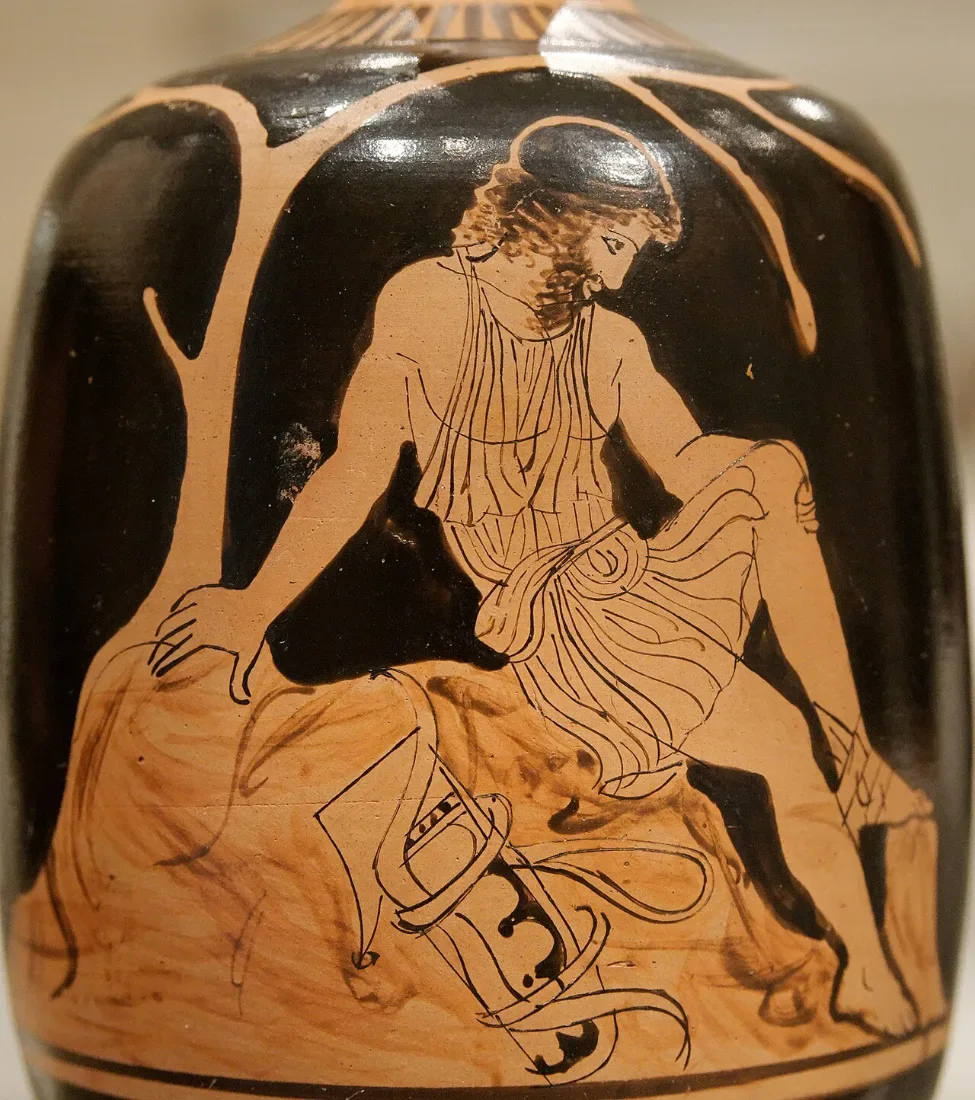
Text and translation
οὐ φορβὰν ἱερᾶς γᾶς σπόρον, οὐκ ἄλλων
Sophocles · Philoctetes · the play’s one stasimon, the chorus of Neoptolemus’ sailors · strophe β′ and antistrophe β′ · glyconics and pherecrateans expanded by choriambs · Storr’s text (Perseus), West’s analysis (1987, p. 59)
How to read each line
A guide to the Greek, syllables, pitch marks and quantities.
Show the reading key
- Above each line: the line as the edition prints it, each word placed over its own syllables. The main row: the same Greek divided into metrical syllables, each written as it is pronounced. A consonant that closes a syllable is written with it (λόθ | ρο); an elided word is closed up with the next vowel (ν’ἀ); a final consonant carried into the next word is set with a thin space (ς ἰ). Wider gaps mark word-ends.
- Above the syllables: the pitch of each syllable, from the accents. Under them: the quantity of each syllable as it falls in the line, then the transliteration, syllable by syllable, with accented syllables in capitals.
- Under each line: a line-for-line translation. In the right margin of the scansion: the line type, its scheme, and its analysis into cola.
Key to the labels
The names, patterns and symbols used beside this poem.
Show the labels and symbols
The labels in the right margin of the scansion below give the line’s analysis as the scheme file states it, then its scheme and, where the analysis notes them, the period-end, a brevis in longo or a hiatus. ‖ marks the end of a period, ||| the end of the stanza; a line without a period-end runs on into the next (synapheia). × is an anceps, long or short; the last position of every period is indifferent. A click on any syllable highlights the colon it belongs to and explains it. The sources of the labels, with their page numbers, are given line by line under Prosody, line by line.
| Label | Name and shape | What it is |
|---|---|---|
| glc | Glyconic with choriambic expansion, dragged close (glᶜ)○○ — ⏑ ⏑ — — ⏑ ⏑ — — — | The glyconic ○○ — ⏑ ⏑ — ⏑ —[6] expanded by one more choriamb — ⏑ ⏑ — (superior c)[7], and with its close dragged: the — ⏑ — at the end becomes — — —, and these longs cannot then be resolved.[8] West brackets 707 and 708 together as glᶜ “with dragged close”.[8] His ○○ is a pair of positions that may not both be short;[9] here both are long in every line. |
| phc | Pherecratean with choriambic expansion (phᶜ)○○ — ⏑ ⏑ — — ⏑ ⏑ — — | The pherecratean ○○ — ⏑ ⏑ — —[6] with one more choriamb inserted.[7] |
| ia_ss | Syncopated iambic metron (∧ia∧)— — | An iambic metron with its first and third positions suppressed.[6] |
| tl | Telesillean (tl)× — ⏑ ⏑ — ⏑ — | The telesillean, × — ⏑ ⏑ — ⏑ —:[6] a glyconic with a single anceps in place of the two-position base. |
| ia_e | Syncopated iambic metron (ia∧)⏑ — — | An iambic metron with its third position suppressed, the “baccheus”.[10] |
| dod | Dodrans, dragged (dod)— ⏑ ⏑ — — — | The dodrans, — ⏑ ⏑ — ⏑ —,[9] here with its close dragged to — — —, as West notes: “dod ‖ (dragged)”.[8] |
| gl2c | Glyconic with double choriambic expansion (gl²ᶜ)○○ — ⏑ ⏑ — — ⏑ ⏑ — — ⏑ ⏑ — ⏑ — | The glyconic with two more choriambs inserted (superior 2c)[7]. |
| ia | Iambic metron (ia)× — ⏑ — | One iambic metron.[6] |
| r | Reizianum (r)× — ⏑ ⏑ — × | The reizianum, × — ⏑ ⏑ — ×;[6] here it closes the strophe. |
The feet
| Foot and shape | Where |
|---|---|
| Aeolic base○○ | Two positions of which at least one must be long.[9] |
| Choriamb— ⏑ ⏑ — | The choriamb, — ⏑ ⏑ —,[9] the core of every aeolic colon; West notes the word-divisions between choriambs in this strophe.[11] |
| Dragged close— — | The close, dragged: the short replaced by a long.[8] |
| Close— | The pherecratean’s single closing long. |
| ∧ia∧— — | Syncopated iambic metron.[6] |
| Anceps× | A single anceps position. |
| Close⏑ — | The close of the colon after the last choriamb. |
| ia∧⏑ — — | Syncopated iambic metron.[6] |
| Iambic metron× — ⏑ — | One iambic metron.[6] |
Scansion
West’s example of the choriambic expansion that he calls “particularly Sophoclean”: aeolic cola lengthened by one or two extra choriambs, with dragged closes, set against an antistrophe that answers them syllable for syllable. The strophe is Philoctetes’ life on Lemnos, fed only by his bow; the antistrophe promises him a homecoming.
Not food from the holy earth, the sown grain, nor any other
of the things we enterprising men feed on did he take,
except when, with his quick-shooting bow,
he won food for his belly with winged arrows.
O wretched soul,
who for ten years had no joy of a draught of wine,
but, watching for where he might find standing water,
kept making his way to it.
But now, having met the son of good men,
he will come out of it happy and great, after all that;
for he brings him in a seafaring ship, after the fullness
of many months, to the home of his fathers,
of the Malian nymphs,
and to the banks of the Spercheius, where the bronze-shielded man drew near to the gods,
all-shining with his father's divine fire,
above the heights of Oeta.
Metre
- The song. The chorus of Philoctetes are the sailors of Neoptolemus; in Ajax and Philoctetes, Battezzato notes, Sophocles gives the chorus to adult citizens, soldiers.[12] This is the second strophic pair of their stasimon (676–729), the only one in the play: the chorus takes so active a part in the plot that its other lyrics are short songs inside the episodes or kommoi, the first of which (827–864) stands where a second stasimon would be;[13] Swift too calls that song not a conventional stasimon but a kommos.[14] Two strophic pairs is the commonest pattern in Sophocles and Euripides.[15] The strophe dwells on how Philoctetes lived by his bow alone, a point that, Swift observes, prepares the chorus’s next song, in which they urge Neoptolemus to take the bow while Philoctetes sleeps: she cites 708–11 for it.[16]
- Whose analysis. West quotes the strophe, with a label for each line, as his example of aeolic cola lengthened by expansion, dactylic or choriambic; the choriambic kind, he says, is especially Sophoclean:[8] glᶜ | glᶜ | (both with dragged closes) phᶜ | ∧ia∧ tl ia∧ | dod ‖ (dragged) gl²ᶜ | ia | tl | r |||. He gives sigla, not signs: each colon is written out here from his definitions,[17] and the antistrophe, which he does not quote, is scanned against the same scheme. The Greek of both stanzas is Storr’s (Perseus), whose lines are West’s lines; Storr numbers them 707–17 where West’s numbering starts at 706. Both stanzas scan without a conflict.
- The aeolic cola. The glyconic is ○○ — ⏑ ⏑ — ⏑ —, the pherecratean ○○ — ⏑ ⏑ — —, the telesillean × — ⏑ ⏑ — ⏑ —, the dodrans — ⏑ ⏑ — ⏑ —, the reizianum × — ⏑ ⏑ — ×; ○○, the aeolic base, is a pair of positions that may not both be short.[18] A superior c means choriambic expansion: the choriamb inside the colon, — ⏑ ⏑ —, is repeated one or more times, so that glᶜ has two choriambs and gl²ᶜ three.[19] In the drawn scheme in the margin the base ○○ is written × ×; in this pair both its positions are long in every line.[20]
- Dragged closes. Now and then Sophocles and Euripides end a colon that normally closes — ⏑ — with three longs, — — —, none of which may then be resolved; a dragged close can answer an undragged one, but strophe and antistrophe usually agree.[8] Lourenço finds glyconics dragged in this way rare in tragedy, and lists the Euripidean ones.[21] West marks three: the two expanded glyconics 707 and 708 (οὐκ ἄλλων, ἀλφησταί) and the dodrans 712 (μελέᾱ ψῡχᾱ́). The antistrophe drags all three in the same places (ὑπαντήσας, ἐκ κείνων, νυμφᾶν).
- Word-end between choriambs. West points to the word-ends that fall between choriambs, — ⏑ ⏑ — | — ⏑ ⏑ —, and refers back to Lesbian verse, where lines expanded by choriambs often have a caesura between them.[22] The strophe has word-end between the first two choriambs of 707, 708, 710 and 713; the antistrophe has it at the same place in 718, 720 and 721, but not in 726.
- Responsion. Aeolic strophes in drama keep exact responsion as a rule, with resolution and with dragging,[8] and there is no resolution in this pair at all. The two stanzas agree in every position except one undetermined anceps (the reizianum’s first position, 717 ~ 728)[23]. The table under the poem sets them side by side.
- Periods. West marks period-end only after the dodrans (712), and strophe-end after the reizianum (717); the other lines end with a plain |. The last position of a period is indifferent,[24] drawn ×. Lines in synapheia pass their final consonant on: ἄλλων | αἴρων (707–8), ὑπαντήσας | εὐδαίμων (718–20), ὕδωρ | ἀεί (716–17).
- West’s text and Storr’s. West prints αἰεί in the last line, Storr ἀεί;[23] West writes χρόνωι with iota adscript and marks long α ι υ (φορβᾱ̀ν, ᾱ̓νέρες, πτᾱνοῖς, ῑ̓οῖς, μελέᾱ ψῡχᾱ́, προσενώμᾱ) as he does throughout.[25] Otherwise the texts agree.
- Prosody and Doric α. The workbench uses the Attic rules (README). Before a stop with a liquid the syllable stays short:[26] γαστρί (the σ closes γασ-, τρί is short), πατρίαν (722), πατρός (727). The sung lines have Doric ᾱ for Attic η:[27] φορβάν, ψυχά, πτανοῖς, αὐλάν, Μαλιάδων, νυμφᾶν, Οἴτας. Four vowels are marked long in the input because the metre cannot show their length: ῑ̓οῖς (711) and πλᾱ́θει (727) at anceps positions, and ψυχᾱ́ (713) and προσενώμᾱ (717) in the last position of a period, both as West marks them; the notes give the sources.
- Dale’s analysis. Dale agrees that the strophe is aeolic, and her schemes have the quantities scanned here. The first three lines she reads as two asclepiads and a catalectic version of them, — — — ⏑ ⏑ — — ⏑ ⏑ — × — twice and then — — — ⏑ ⏑ — — ⏑ ⏑ — — (West’s glᶜ, glᶜ, phᶜ): such cola could in principle be heard as ionics, but at least here, she holds, Sophocles means them as aeolic.[28] The long line 713 ~ 726 is her ‘greater asclepiad’, — — — ⏑ ⏑ — — ⏑ ⏑ — — ⏑ ⏑ — ⏑ — (West’s gl²ᶜ), the one line of this Sophoclean style that ends ⏑ — (her numbers are 714 = 726)[29]. The two analyses part only in naming 716 ~ 727: West divides it ia | tl, while Dale lists it as a single ‘blunt’ hendecasyllable, × — ⏑ — × — ⏑ ⏑ — ⏑ —, the shape of the first line of the alcaic stanza; she adds that the alcaic line is itself in effect a dicolon, an iambic segment plus a short choriambic colon, which comes close to West’s division.[30]
- Lloyd-Jones’s text. Compared with H. Lloyd-Jones’s Loeb edition of 1994: he too prints Erfurdt’s πτανοῖς ἰοῖς (711), Porson’s πατρίαν (724) and Hermann’s ὄχθας (726); he differs at 717 (αἰεί, as West), 725 and 727.[31] The numbering agrees.[32]
Prosody, line by line
Every syllable, with the reason for its length. Quantities are read from the vowel where the spelling shows it, from the consonants that follow (“position”), from the accent where it tells, and from the metre where nothing else does. Editors’ notes on the text follow in the boxed paragraphs.
- 707
Line 707 · οὐ φορβὰν ἱερᾶς γᾶς σπόρον, οὐκ ἄλλων
οὐ φορβὰν ἱερᾶς γᾶς σπόρον, οὐκ ἄλλων
οὐφορβὰνἱερᾶςγᾶςσπόρο,ν οὐκἄλλωthe period runs on into l. 708 (synapheia).
The label in the margin, with its sources: West 1987, p. 59.
- 1 —οὐοὐ is a diphthong, long by nature; the position is anceps.
- 2 —φορο is short by nature; closed by ρ: long by position; the position is anceps.
- 3 —βὰνὰ is long by the metre (position 3 must be long).
- 4 ⏑ἱἱ is short by the metre (position 4 must be short).
- 5 ⏑εε is short by nature.
- 6 —ρᾶςᾶ carries a circumflex, so it is long; closed by ς: long by position.
- 7 —γᾶςᾶ carries a circumflex, so it is long; closed by ς: long by position.
- 8 ⏑σπόό is short by nature.
- 9 ⏑ρο,ο is short by nature.
- 10 —ν οὐκοὐ is a diphthong, long by nature; the first consonant belongs to the previous word and is carried over to this vowel.
- 11 —ἄλἄ is a vowel of unknown length; closed by λ: long by position.
- 12 —λωω is long by nature; the line-end is not a period-end: the period runs on into the next line (synapheia), so this syllable keeps its own length, with no brevis in longo, and a word may run over into the next line.[33]
glᶜ | with dragged close:[8] ○○ — ⏑ ⏑ — | — ⏑ ⏑ — — —. The base is οὐ φορ-; then two choriambs, βὰν ἱερᾶς | γᾶς σπόρον οὐκ, with West’s word-division between them; the close ἄλλων is dragged (— — for ⏑ —). West marks the long ᾱ of φορβᾱ́ν, Doric for φορβήν.[34] The ι of ἱερᾶς is short at position 4, as the metre requires. The ν of σπόρον passes to οὐκ, so -ρο- is short. West numbers this line 706, Storr 707.- 708
Line 708 · αἴρων τῶν νεμόμεσθʼ ἀνέρες ἀλφησταί,
αἴρων τῶν νεμόμεσθʼ ἀνέρες ἀλφησταί,
ν αἴρωντῶννεμόμεσθ’ἀνέρες ἀλφησταί,continues l. 707 · one period (synapheia); the period runs on into l. 710 (synapheia).
The label in the margin, with its sources: West 1987, p. 59.
- 1 —ν αἴαἴ is a diphthong, long by nature; the first consonant belongs to the previous word and is carried over to this vowel; the position is anceps.
- 2 —ρωνω is long by nature; closed by ν: long by position; the position is anceps.
- 3 —τῶνῶ is long by nature; closed by ν: long by position.
- 4 ⏑νεε is short by nature.
- 5 ⏑μόό is short by nature.
- 6 —μεσε is short by nature; closed by σ: long by position.
- 7 —θ’ἀἀ is long by the metre (position 7 must be long); the apostrophe marks an elided vowel; the consonant before it joins this syllable.
- 8 ⏑νέέ is short by nature.
- 9 ⏑ρεε is short by nature.
- 10 —ς ἀλἀ is a vowel of unknown length; closed by λ: long by position; the first consonant belongs to the previous word and is carried over to this vowel.
- 11 —φηση is long by nature; closed by σ: long by position.
- 12 —ταί,αί is a diphthong, long by nature; the line-end is not a period-end: the period runs on into the next line (synapheia), so this syllable keeps its own length, with no brevis in longo, and a word may run over into the next line.[33]
glᶜ | with dragged close,[8] the same shape as 707, with the word-division after νεμόμεσθʼ. The ν of ἄλλων passes to αἴρων (synapheia). West marks ᾱ̓νέρες: LSJ s.v. ἀνήρ notes that in trisyllabic forms with the stem ἀνέρ- the α is “always ᾱ”, and so in tragic lyric; it fills the long position 7. ἀνέρες ἀλφησταί is a Homeric phrase: LSJ s.v. ἀλφηστής, “Hom. only in Od., in phrase ἀνέρες ἀλφησταί”, “earners”, i.e. enterprising men.- 710
Line 710 · πλὴν ἐξ ὠκυβόλων εἴ ποτε τόξων
πλὴν ἐξ ὠκυβόλων εἴ ποτε τόξων
πλὴνἐξὠκυβόλωνεἴποτετόξωνcontinues l. 708 · one period (synapheia); the period runs on into l. 711 (synapheia).
The label in the margin, with its sources: West 1987, p. 59.
- 1 —πλὴνὴ is long by nature; the position is anceps.
- 2 —ἐξἐ is short by nature; ξ is a double consonant (two sounds) and closes the syllable: long by position; the position is anceps.
- 3 —ὠὠ is long by nature.
- 4 ⏑κυυ is short by the metre (position 4 must be short).
- 5 ⏑βόό is short by nature.
- 6 —λωνω is long by nature.
- 7 —εἴεἴ is a diphthong, long by nature.
- 8 ⏑ποο is short by nature.
- 9 ⏑τεε is short by nature.
- 10 —τόό is short by nature; ξ is a double consonant (two sounds) and closes the syllable: long by position.
- 11 —ξωνω is long by nature; closed by ν: long by position; the line-end is not a period-end: the period runs on into the next line (synapheia), so this syllable keeps its own length, with no brevis in longo, and a word may run over into the next line.[33]
phᶜ |:[8] ○○ — ⏑ ⏑ — | — ⏑ ⏑ — —, the pherecratean expanded by one choriamb, with the word-division between the choriambs (ὠκυβόλων | εἴ). LSJ s.v. ὠκυβόλος, “quick-shooting”, cites τόξα from this line; its υ is short at position 4, as the metre requires. West numbers this line 710 too. Dale: a catalectic version of the two asclepiads before it, meant to be heard as aeolic.[35]- 711
Line 711 · πτανοῖς ἰοῖς ἀνύσειε γαστρὶ φορβάν.
πτανοῖς ἰοῖς ἀνύσειε γαστρὶ φορβάν.
πτανοῖςἰοῖςἀνύσειεγαστρὶφορβά.continues l. 710 · one period (synapheia); the period runs on into l. 712 (synapheia).
The label in the margin, with its sources: West 1987, p. 59.
- 1 —πταα is long by the metre (position 1 must be long).
- 2 —νοῖςοῖ is a diphthong, long by nature.
- 3 —ἰῑ̓ is long (its length is not shown by the ordinary spelling); the position is anceps.
- 4 —οῖςοῖ is a diphthong, long by nature.
- 5 ⏑ἀἀ is short by the metre (position 5 must be short).
- 6 ⏑νύύ is short by the metre (position 6 must be short).
- 7 —σειει is a diphthong, long by nature.
- 8 ⏑εε is short by nature.
- 9 —γασα is a vowel of unknown length; closed by σ: long by position.
- 10 ⏑τρὶὶ is short by the metre (position 10 must be short).
- 11 —φορο is short by nature; closed by ρ: long by position.
- 12 —βά.ά is long by the metre (position 12 must be long); the line-end is not a period-end: the period runs on into the next line (synapheia), so this syllable keeps its own length, with no brevis in longo, and a word may run over into the next line.[33]
∧ia∧ tl ia∧ |:[8] — — | × — ⏑ ⏑ — ⏑ — | ⏑ — —. West marks πτᾱνοῖς (Doric for πτηνοῖς) and ῑ̓οῖς. The ι of ἰοῖς, “arrows”, is long[36] and stands at the telesillean’s anceps, where the metre cannot show it; it is marked long in the input. The ἀ of ἀνύσειε and its υ are short,[37] at positions 5 and 6. φορβάν closes the line with a baccheus, ⏑ — —.- 712
Line 712 · ὦ μελέα ψυχά,
ὦ μελέα ψυχά,
ν ὦμελέαψυχά,continues l. 711 · one period (synapheia).
The label in the margin, with its sources: West 1987, p. 59.
- 1 —ν ὦὦ is long by nature; the first consonant belongs to the previous word and is carried over to this vowel.
- 2 ⏑μεε is short by nature.
- 3 ⏑λέέ is short by nature.
- 4 —αthe next word begins with the double consonant ψ: the syllable is closed before it: long by position.
- 5 —ψυυ is long by the metre (position 5 must be long).
- 6 ×χά,ᾱ́ is long (its length is not shown by the ordinary spelling); the last position of the period is indifferent.
- 713
Line 713 · ὃς μηδʼ οἰνοχύτου πώματος ἥσθη δεκέτει χρόνῳ,
ὃς μηδʼ οἰνοχύτου πώματος ἥσθη δεκέτει χρόνῳ,
ὃςμηδ’οἰνοχύτουπώματος ἥσθηδεκέτειχρόνῳ,the period runs on into l. 716 (synapheia).
The label in the margin, with its sources: West 1987, p. 59.
- 1 —ὃςὃ is short by nature; closed by ς: long by position; the position is anceps.
- 2 —μηη is long by nature; the position is anceps.
- 3 —δ’οἰοἰ is a diphthong, long by nature; the apostrophe marks an elided vowel; the consonant before it joins this syllable.
- 4 ⏑νοο is short by nature.
- 5 ⏑χύύ is short by the metre (position 5 must be short).
- 6 —τουου is a diphthong, long by nature.
- 7 —πώώ is long by nature.
- 8 ⏑μαα is short by the metre (position 8 must be short).
- 9 ⏑τοο is short by nature.
- 10 —ς ἥσἥ is long by nature; closed by σ: long by position; the first consonant belongs to the previous word and is carried over to this vowel.
- 11 —θηη is long by nature.
- 12 ⏑δεε is short by nature.
- 13 ⏑κέέ is short by nature.
- 14 —τειει is a diphthong, long by nature.
- 15 ⏑χρόό is short by nature.
- 16 —νῳ,ῳ is long by nature; the line-end is not a period-end: the period runs on into the next line (synapheia), so this syllable keeps its own length, with no brevis in longo, and a word may run over into the next line.[33]
gl²ᶜ |:[8] ○○ — ⏑ ⏑ — | — ⏑ ⏑ — — ⏑ ⏑ — ⏑ —, the glyconic with two extra choriambs, printed by West over two rows (… δεκέτει / χρόνωι). Word-division between the first two choriambs (οἰνοχύτου | πώματος). LSJ cites this line for οἰνόχυτος (οἰνόχῠτος), πῶμα οἰ., “draught of wine”, and for δεκέτης, “lasting ten years”, χρόνος. πώματος has the short suffix -μᾰ.[25] West numbers the line 715. Dale: the ‘greater asclepiad’ (her 714 = 726)[29]. Lloyd-Jones’s margin numbers this verse 715 (it is the verse 713–15 of other editions).[40]- 716
Line 716 · λεύσσων δʼ ὅπου γνοίη στατὸν εἰς ὕδωρ,
λεύσσων δʼ ὅπου γνοίη στατὸν εἰς ὕδωρ,
λεύσσωνδ’ὅπουγνοίηστατὸν εἰςὕδω,continues l. 713 · one period (synapheia); the period runs on into l. 717 (synapheia).
The label in the margin, with its sources: West 1987, p. 59.
- 1 —λεύσεύ is a diphthong, long by nature; closed by σ: long by position; the position is anceps.
- 2 —σωνω is long by nature; closed by ν: long by position.
- 3 ⏑δ’ὅὅ is short by nature; the apostrophe marks an elided vowel; the consonant before it joins this syllable.
- 4 —πουου is a diphthong, long by nature.
- 5 —γνοίοί is a diphthong, long by nature; the position is anceps.
- 6 —ηη is long by nature; the next word begins with στ: the syllable is closed before it: long by position.
- 7 ⏑σταα is short by the metre (position 7 must be short).
- 8 ⏑τὸὸ is short by nature.
- 9 —ν εἰςεἰ is a diphthong, long by nature; the first consonant belongs to the previous word and is carried over to this vowel.
- 10 ⏑ὕὕ is short by the metre (position 10 must be short).
- 11 —δω,ω is long by nature; the line-end is not a period-end: the period runs on into the next line (synapheia), so this syllable keeps its own length, with no brevis in longo, and a word may run over into the next line.[33]
ia | tl |:[8] × — ⏑ — | × — ⏑ ⏑ — ⏑ —, with word-end between the two cola in both stanzas (ὅπου | ~ πατρὸς |). The οι of γνοίη, before a vowel inside the word, stands at the telesillean’s anceps; the page scans it long, but the metre cannot decide, since inside a word οι before a vowel is often shortened in Attic.[41] LSJ s.v. στατός cites στατὸν ὕδωρ, “standing water”, from this line; στατός and ὕδωρ have short α and υ,[42] at positions 7 and 10. Dale: × — ⏑ — × — ⏑ ⏑ — ⏑ —, a ‘blunt’ hendecasyllable like the first line of the alcaic stanza.[43]- 717
Line 717 · ἀεὶ προσενώμα.
ἀεὶ προσενώμα.
ρ ἀεὶπροσενώμα.continues l. 716 · one period (synapheia).
The label in the margin, with its sources: West 1987, p. 59.
- 1 ○ρ ἀἀ is of unknown length; the position is anceps, so either scans; the first consonant belongs to the previous word and is carried over to this vowel.
- 2 —εὶεὶ is a diphthong, long by nature.
- 3 ⏑προο is short by nature.
- 4 ⏑σεε is short by nature.
- 5 —νώώ is long by nature.
- 6 ×μα.ᾱ is long (its length is not shown by the ordinary spelling); the last position of the period is indifferent.
r |||:[8] × — ⏑ ⏑ — ×. The ρ of ὕδωρ passes to ἀεί (synapheia). West prints αἰεί, whose first syllable is long, like Οἴ- in the antistrophe (728); Storr prints ἀεί, and LSJ s.v. ἀεί gives its α as long or short in Attic. The metre cannot decide here, at the anceps, and the page draws the syllable ○, “length not known”; the responsion table shows the difference from 728, which disappears with West’s αἰεί. LSJ s.v. προσνωμάω, “approach”, cites this line, with the scholiast’s gloss εἰς ὕδωρ ἀεὶ προσενώμα, “moved himself to it”; West marks the contracted ᾱ of προσενώμᾱ.[44] Lloyd-Jones also prints αἰεί.[40] The α of ἀεί is left ○: its length varies in Attic,[45] short at E. Hipp. 17 (trimeter, position 11) and long at S. OT 786 (position 4), and here it stands in a free anceps, so neither the metre nor the word settles it.- 718
Line 718 · νῦν δʼ ἀνδρῶν ἀγαθῶν παιδὸς ὑπαντήσας
νῦν δʼ ἀνδρῶν ἀγαθῶν παιδὸς ὑπαντήσας
νῦνδ’ἀνδρῶνἀγαθῶνπαιδὸς ὑπαντήσαthe period runs on into l. 720 (synapheia).
The label in the margin, with its sources: West 1987, p. 59.
- 1 —νῦνῦ carries a circumflex, so it is long; closed by ν: long by position; the position is anceps.
- 2 —δ’ἀνἀ is a vowel of unknown length; closed by ν: long by position; the apostrophe marks an elided vowel; the consonant before it joins this syllable; the position is anceps.
- 3 —δρῶνῶ is long by nature.
- 4 ⏑ἀἀ is short by the metre (position 4 must be short).
- 5 ⏑γαα is short by the metre (position 5 must be short).
- 6 —θῶνῶ is long by nature; closed by ν: long by position.
- 7 —παιαι is a diphthong, long by nature.
- 8 ⏑δὸὸ is short by nature.
- 9 ⏑ς ὑὑ is short by the metre (position 9 must be short); the first consonant belongs to the previous word and is carried over to this vowel.
- 10 —πανα is a vowel of unknown length; closed by ν: long by position.
- 11 —τήή is long by nature.
- 12 —σαα is long by the metre (position 12 must be long); the line-end is not a period-end: the period runs on into the next line (synapheia), so this syllable keeps its own length, with no brevis in longo, and a word may run over into the next line.[33]
Antistrophe: glᶜ with dragged close (scheme in the note on 707). Word-division between the choriambs (ἀγαθῶν | παιδός), as in the strophe; the close ὑπαντήσας is dragged, as West’s strophe has it. ἀγαθός has a short first α;[46] the ς of παιδός passes to ὑπαντήσας, so -δὸ- is short.- 720
Line 720 · εὐδαίμων ἀνύσει καὶ μέγας ἐκ κείνων·
εὐδαίμων ἀνύσει καὶ μέγας ἐκ κείνων·
ς εὐδαίμωνἀνύσεικαὶμέγας ἐκκείνω·continues l. 718 · one period (synapheia); the period runs on into l. 721 (synapheia).
The label in the margin, with its sources: West 1987, p. 59.
- 1 —ς εὐεὐ is a diphthong, long by nature; the first consonant belongs to the previous word and is carried over to this vowel; the position is anceps.
- 2 —δαίαί is a diphthong, long by nature; the position is anceps.
- 3 —μωνω is long by nature.
- 4 ⏑ἀἀ is short by the metre (position 4 must be short).
- 5 ⏑νύύ is short by the metre (position 5 must be short).
- 6 —σειει is a diphthong, long by nature.
- 7 —καὶαὶ is a diphthong, long by nature.
- 8 ⏑μέέ is short by nature.
- 9 ⏑γαα is short by the metre (position 9 must be short).
- 10 —ς ἐκἐ is short by nature; closed by κ: long by position; the first consonant belongs to the previous word and is carried over to this vowel.
- 11 —κείεί is a diphthong, long by nature.
- 12 —νω·ω is long by nature; the line-end is not a period-end: the period runs on into the next line (synapheia), so this syllable keeps its own length, with no brevis in longo, and a word may run over into the next line.[33]
glᶜ with dragged close (note on 708). The ς of ὑπαντήσας passes to εὐδαίμων (synapheia). Word-division between the choriambs (ἀνύσει | καί); dragged close ἐκ κείνων. The ς of μέγας passes to ἐκ, so -γα- is short.- 721
Line 721 · ὅς νιν ποντοπόρῳ δούρατι, πλήθει
ὅς νιν ποντοπόρῳ δούρατι, πλήθει
ν ὅςνινποντοπόρῳδούρατι,πλήθειcontinues l. 720 · one period (synapheia); the period runs on into l. 722 (synapheia).
The label in the margin, with its sources: West 1987, p. 59.
- 1 —ν ὅςὅ is short by nature; closed by ς: long by position; the first consonant belongs to the previous word and is carried over to this vowel; the position is anceps.
- 2 —νινι is a vowel of unknown length; closed by ν: long by position; the position is anceps.
- 3 —πονο is short by nature; closed by ν: long by position.
- 4 ⏑τοο is short by nature.
- 5 ⏑πόό is short by nature.
- 6 —ρῳῳ is long by nature.
- 7 —δούού is a diphthong, long by nature.
- 8 ⏑ραα is short by the metre (position 8 must be short).
- 9 ⏑τι,ι is short by the accent rule (the accent falls too far back for a long final syllable); the next word begins with πλ, a stop + liquid that does not make position here, so the syllable stays short.
- 10 —πλήή is long by nature.
- 11 —θειει is a diphthong, long by nature; the line-end is not a period-end: the period runs on into the next line (synapheia), so this syllable keeps its own length, with no brevis in longo, and a word may run over into the next line.[33]
phᶜ (note on 710), with the word-division between the choriambs (ποντοπόρῳ | δούρατι). LSJ s.v. ποντοπόρος cites this line. δούρατι (from δόρυ, “timber”, here a ship) has short α and ι at positions 8 and 9.- 722
Line 722 · πολλῶν μηνῶν, πατρίαν ἄγει πρὸς αὐλὰν
πολλῶν μηνῶν, πατρίαν ἄγει πρὸς αὐλὰν
πολλῶνμηνῶν,πατρίανἄγειπρὸς αὐλὰνcontinues l. 721 · one period (synapheia); the period runs on into l. 725 (synapheia).
The label in the margin, with its sources: West 1987, p. 59.
- 1 —πολο is short by nature; closed by λ: long by position.
- 2 —λῶνῶ is long by nature; closed by ν: long by position.
- 3 —μηη is long by nature; the position is anceps.
- 4 —νῶν,ῶ is long by nature; closed by ν: long by position.
- 5 ⏑παα is a vowel of unknown length; τρ is carried whole into the next syllable, so this syllable stays open and short (Attic correption of a stop + liquid cluster).
- 6 ⏑τρίί is short by the metre (position 6 must be short).
- 7 —ανα is long by the metre (position 7 must be long).
- 8 ⏑ἄἄ is short by the metre (position 8 must be short).
- 9 —γειει is a diphthong, long by nature.
- 10 ⏑πρὸὸ is short by nature.
- 11 —ς αὐαὐ is a diphthong, long by nature; the first consonant belongs to the previous word and is carried over to this vowel.
- 12 —λὰνὰ is a vowel of unknown length; closed by ν: long by position; the line-end is not a period-end: the period runs on into the next line (synapheia), so this syllable keeps its own length, with no brevis in longo, and a word may run over into the next line.[33]
- 725
Line 725 · Μαλιάδων νυμφᾶν
Μαλιάδων νυμφᾶν
Μαλιάδωννυμφᾶνcontinues l. 722 · one period (synapheia).
The label in the margin, with its sources: West 1987, p. 59.
- 1 —Μαα is long by the metre (position 1 must be long).
- 2 ⏑λιι is short by the metre (position 2 must be short).
- 3 ⏑άά is short by the metre (position 3 must be short).
- 4 —δωνω is long by nature; closed by ν: long by position.
- 5 —νυμυ is a vowel of unknown length; closed by μ: long by position.
- 6 ×φᾶνᾶ carries a circumflex, so it is long; closed by ν: long by position; the last position of the period is indifferent.
- 726
Line 726 · Σπερχειοῦ τε παρʼ ὄχθας, ἵνʼ ὁ χάλκασπις ἀνὴρ θεοῖς
Σπερχειοῦ τε παρʼ ὄχθας, ἵνʼ ὁ χάλκασπις ἀνὴρ θεοῖς
Σπερχειοῦτεπαρ’ὄχθας,ἵν’ὁχάλκασπις ἀνὴρθεοῖςthe period runs on into l. 727 (synapheia).
The label in the margin, with its sources: West 1987, p. 59.
- 1 —Σπερε is short by nature; closed by ρ: long by position; the position is anceps.
- 2 —χειει is a diphthong, long by nature; the position is anceps.
- 3 —οῦοῦ is a diphthong, long by nature.
- 4 ⏑τεε is short by nature.
- 5 ⏑παα is short by the metre (position 5 must be short).
- 6 —ρ’ὄχὄ is short by nature; closed by χ: long by position; the apostrophe marks an elided vowel; the consonant before it joins this syllable.
- 7 —θας,α is long by the metre (position 7 must be long).
- 8 ⏑ἵἵ is short by the metre (position 8 must be short).
- 9 ⏑ν’ὁὁ is short by nature; the apostrophe marks an elided vowel; the consonant before it joins this syllable.
- 10 —χάλά is a vowel of unknown length; closed by λ: long by position.
- 11 —κασα is a vowel of unknown length; closed by σ: long by position.
- 12 ⏑πιι is short by the accent rule: acute on the antepenult requires a short final syllable.
- 13 ⏑ς ἀἀ is short by the metre (position 13 must be short); the first consonant belongs to the previous word and is carried over to this vowel.
- 14 —νὴρὴ is long by nature; closed by ρ: long by position.
- 15 ⏑θεε is short by nature.
- 16 —οῖςοῖ is a diphthong, long by nature; closed by ς: long by position; the line-end is not a period-end: the period runs on into the next line (synapheia), so this syllable keeps its own length, with no brevis in longo, and a word may run over into the next line.[33]
gl²ᶜ (note on 713). Here there is no word-end between the first two choriambs (παρʼ ὄχθας runs across it), unlike the strophe. The ν of ἵνʼ passes to ὁ, and the ς of χάλκασπις to ἀνήρ. The nominative ἀνήρ has a short α at position 13; LSJ s.v. χάλκασπις, “with brazen shield, of warriors”.- 727
Line 727 · πλάθει πατρὸς θείῳ πυρὶ παμφαής,
πλάθει πατρὸς θείῳ πυρὶ παμφαής,
πλάθειπατρὸςθείῳπυρὶπαμφαή,continues l. 726 · one period (synapheia); the period runs on into l. 728 (synapheia).
The label in the margin, with its sources: West 1987, p. 59.
- 1 —πλάᾱ́ is long (its length is not shown by the ordinary spelling); the position is anceps.
- 2 —θειει is a diphthong, long by nature.
- 3 ⏑παα is a vowel of unknown length; τρ is carried whole into the next syllable, so this syllable stays open and short (Attic correption of a stop + liquid cluster).
- 4 —τρὸςὸ is short by nature; closed by ς: long by position.
- 5 —θείεί is a diphthong, long by nature; the position is anceps.
- 6 —ῳῳ is long by nature.
- 7 ⏑πυυ is short by the metre (position 7 must be short).
- 8 ⏑ρὶὶ is short by the metre (position 8 must be short).
- 9 —παμα is a vowel of unknown length; closed by μ: long by position.
- 10 ⏑φαα is short by the metre (position 10 must be short).
- 11 —ή,ή is long by nature; the line-end is not a period-end: the period runs on into the next line (synapheia), so this syllable keeps its own length, with no brevis in longo, and a word may run over into the next line.[33]
ia | tl | (note on 716). πλάθω has a long α;[48] it stands at the iambic anceps and is marked long in the input. The πα- of πατρός stays short before τρ.[26] LSJ s.v. παμφαής (παμφᾰής), “all-shining, radiant, of fire”, cites this line; πυρί has short υ and ι, at positions 7 and 8. The man of the bronze shield who came near to the gods in fire is Heracles, burned on Oeta. Lloyd-Jones prints πλάθη θεὸς θείῳ πυρί (θεός Hermann’s conjecture, for πᾶσι in the manuscripts): “drew near to the gods, a god”. θεός scans like πατρός here, ⏑ —.[40]- 728
Line 728 · Οἴτας ὑπὲρ ὄχθων.
Οἴτας ὑπὲρ ὄχθων.
ς Οἴταςὑπὲρ ὄχθων.continues l. 727 · one period (synapheia).
The label in the margin, with its sources: West 1987, p. 59.
- 1 —ς ΟἴΟἴ is a diphthong, long by nature; the first consonant belongs to the previous word and is carried over to this vowel; the position is anceps.
- 2 —ταςα is long by the metre (position 2 must be long).
- 3 ⏑ὑὑ is short by the metre (position 3 must be short).
- 4 ⏑πὲὲ is short by nature.
- 5 —ρ ὄχὄ is short by nature; closed by χ: long by position; the first consonant belongs to the previous word and is carried over to this vowel.
- 6 ×θων.ω is long by nature; closed by ν: long by position; the last position of the period is indifferent.
r ||| (note on 717). The ς of παμφαής passes to Οἴτας; Οἴτας is a Doric genitive (Attic Οἴτης), with long ᾱ,[49] and its first syllable, a diphthong, fills the anceps.
Strophe and antistrophe
The two stanzas side by side, line by line, with the realisation of every position and the word-ends (|). Every syllable answers its partner, the three dragged closes included; the one difference, at the first position of the last line, is an anceps whose length in Storr’s ἀεί is undetermined, drawn ○.[23]
| West’s label | Strophe β′ (707–17) | Antistrophe β′ (718–28) | ||
|---|---|---|---|---|
| glᶜ | (dragged close) | 707 | — | — — | ⏑ ⏑ — | — | ⏑ ⏑ | — | — — | 718 | — | — — | ⏑ ⏑ — | — ⏑ | ⏑ — — — |
| glᶜ | (dragged close) | 708 | — — | — | ⏑ ⏑ — | — ⏑ ⏑ | — — — | 720 | — — — | ⏑ ⏑ — | — | ⏑ ⏑ | — | — — |
| phᶜ | | 710 | — | — | — ⏑ ⏑ — | — | ⏑ ⏑ | — — | 721 | — | — | — ⏑ ⏑ — | — ⏑ ⏑ | — — |
| ∧ia∧ tl ia∧ | | 711 | — — | — — | ⏑ ⏑ — ⏑ | — ⏑ | — — | 722 | — — | — — | ⏑ ⏑ — | ⏑ — | ⏑ | — — |
| dod ‖ (dragged) | 712 | — | ⏑ ⏑ — | — — | 725 | — ⏑ ⏑ — | — — |
| gl²ᶜ | | 713 | — | — | — ⏑ ⏑ — | — ⏑ ⏑ | — — | ⏑ ⏑ — | ⏑ — | 726 | — — — | ⏑ | ⏑ | — — | ⏑ | ⏑ | — — ⏑ | ⏑ — | ⏑ — |
| ia | tl | | 716 | — — | ⏑ — | — — | ⏑ ⏑ | — | ⏑ — | 727 | — — | ⏑ — | — — | ⏑ ⏑ | — ⏑ — |
| r ||| | 717 | ○ — | ⏑ ⏑ — — | 728 | — — | ⏑ ⏑ | — — |
Notes
- ^ Cropp 2005, p. 283; Roberts 2005, p. 144; Scodel 2005, p. 249.
- ^ Debnar 2005, p. 19; Scodel 2005, p. 249; Anderson 2005, p. 131.
- ^ Anderson 2005, p. 131.
- ^ Easterling 1997, Chronology, p. 353; Jebb 1898, p. xl.
- ^ Jebb 1898, pp. xxii, xxix.
- ^ a b c d e f g h i West 1987, p. x.
- ^ a b c West 1987, pp. x, 34.
- ^ a b c d e f g h i j k l m n o West 1987, p. 59.
- ^ a b c d West 1987, p. ix.
- ^ West 1987, pp. x, 52.
- ^ West 1987, p. 59, cf. p. 34.
- ^ Battezzato 2005, p. 156.
- ^ Jebb 1898, pp. xxii, xxix.
- ^ Swift 2022, p. 382.
- ^ Swift 2022, p. 378.
- ^ Swift 2022, p. 383.
- ^ West 1987, pp. ix–x, 34.
- ^ West 1987, pp. ix–x.
- ^ West 1987, pp. x, 34; Battezzato 2009, p. 135; D’Angour 2022, p. 137.
- ^ See the Aeolic family page (expansion) and its drama tab.
- ^ Lourenço 2011, pp. 93–94.
- ^ West 1987, pp. 59, 34.
- ^ a b c See the note on 717.
- ^ West 1987, p. 4.
- ^ a b West 1987, p. 11.
- ^ a b c West 1987, pp. 16–17.
- ^ Battezzato 2005, p. 149; D’Alessio 2009, p. 122.
- ^ Dale 1968, p. 144 n. 1; also p. 150.
- ^ a b Dale 1968, pp. 143, 144 n. 3.
- ^ Dale 1968, p. 141 with n. 1.
- ^ See the notes.
- ^ Lloyd-Jones 1994b, pp. 324–325.
- ^ a b c d e f g h i j k l West 1987, pp. 3–4.
- ^ a b c D’Alessio 2009, p. 122.
- ^ Dale 1968, p. 144 n. 1.
- ^ LSJ ἰός (A) [ῑ].
- ^ LSJ ἀνύω, ᾰνῠ-.
- ^ LSJ ψῡχή.
- ^ West 1987, p. 12 n. 1.
- ^ a b c d Lloyd-Jones 1994b, p. 324.
- ^ West 1987, p. 14.
- ^ LSJ στᾰτός, ὕδωρ [ῠ].
- ^ Dale 1968, p. 141.
- ^ West 1987, p. 10.
- ^ LSJ s.v. ἀεί: ᾰ three times in Homer, ᾱ or ᾰ in Attic.
- ^ LSJ ἀγᾰθός.
- ^ LSJ s.v. Μηλιάς.
- ^ LSJ πλάθω [ᾱ], “poet. form of πελάζω, used by Trag. in lyr.”, citing this line.
- ^ West 1987, p. 11, genitive -ᾱς.
Text and sources
- Text: Sophocles, Philoctetes 707–28, ed. F. Storr (Loeb Classical Library, 1913), from the Perseus Digital Library (tlg0011.tlg006.perseus-grc2), CC BY-SA 4.0. Macrons on ῑ̓οῖς (711), ψυχᾱ́ (713), προσενώμᾱ (717) and πλᾱ́θει (727) are editorial aids to the scansion and are not shown on the page.
- Metrical analysis: M. L. West, Introduction to Greek Metre (Oxford 1987), p. 59 (Phil. 706 ff. with sigla, read from the page image at 900 dpi; dragged endings; exact responsion); also pp. ix–x (symbols and sigla), 4, 10–12, 14 (correption within the word in Attic), 16–17, 34 (expansion; caesura between choriambs), 52 (syncopated iambic metra: the baccheus); checked against the page images. Also West 1987, p. 3 (synapheia and period-end); p. 35 n. 1 (the third period of the Sapphic and Alcaic stanzas, divided between two lines of writing in antiquity).
- Context: L. Battezzato, ‘Lyric’, in J. Gregory (ed.), A Companion to Greek Tragedy (Oxford 2005), pp. 149, 156; L. Swift, ‘Dramatic Lyric’, in L. Swift (ed.), A Companion to Greek Lyric (Wiley 2022), ch. 26, pp. 378, 382, 383; R. C. Jebb, Sophocles: The Plays and Fragments, Part IV: The Philoctetes, 2nd edn (Cambridge 1898; archive.org scan of the 1908 reprint, sophoclesplaysfr04soph), Introduction, pp. xxii (the structure: stasimon 676–729; kommos 827–864 in place of a second stasimon), xxix (only one stasimon); G. B. D’Alessio, ‘Language and pragmatics’, in F. Budelmann (ed.), The Cambridge Companion to Greek Lyric (Cambridge 2009), p. 122.
- Expansion and dragging: L. Battezzato, ‘Metre and music’, in F. Budelmann (ed.), The Cambridge Companion to Greek Lyric (Cambridge 2009), ch. 7, p. 135; A. D’Angour, ‘Meter and Music’, in L. Swift (ed.), A Companion to Greek Lyric (Wiley 2022), ch. 9, p. 137; F. Lourenço, The Lyric Metres of Euripidean Drama (Coimbra 2011), pp. 93–94.
- Vowel lengths: Liddell–Scott–Jones, Greek–English Lexicon, Perseus Digital Library edition, CC BY-SA 4.0 (s.vv. ἀνήρ, ἀλφηστής, ὠκυβόλος, ἰός (A), ἀνύω, ψυχή, οἰνόχυτος, δεκέτης, στατός, ὕδωρ, ἀεί, προσνωμάω, ἀγαθός, ποντοπόρος, Μηλιάς, χάλκασπις, πλάθω, παμφαής).
- Translation: metrehelp.org, CC BY-SA 4.0.
- Comparison: A. M. Dale, The Lyric Metres of Greek Drama, 2nd edn (Cambridge 1968), pp. 141, 143–144, 150 (Phil. 710, 714 = 726, 716), read from the page images (archive.org).
- Compared with: H. Lloyd-Jones (ed. and trans.), Sophocles II: Antigone, The Women of Trachis, Philoctetes, Oedipus at Colonus (Loeb Classical Library 21, Cambridge, MA 1994), pp. 324–325.
Quotations from copyrighted works are not covered by this page’s licence.
Ajax 622–45 — first stasimon: aeolic or ionic?
Synopsis
After Achilles’ death the Greek army at Troy awarded his armour to Odysseus, not to Ajax.[1] Ajax set out by night to kill Odysseus and the sons of Atreus. But Athena drove him mad, and he slaughtered the army’s cattle instead.[2] Sane again and disgraced, he resolves to die. Tecmessa, the captive who has borne him a son, pleads with him, but he is deaf to her. He goes to a lonely place on the shore and falls on his sword.[3] Then Menelaus and Agamemnon forbid his burial. His brother Teucer defends him, and his old enemy Odysseus persuades Agamemnon to allow it.[4] The date is unknown. Scodel puts the play, with the Antigone, probably in the 440s. Jebb judged it, if not the earliest of the seven, the next after the Antigone.[5]
Ajax has said farewell to his son and shut himself in his tent. A stasimon is a choral song between episodes. In this second strophic pair of the first stasimon his sailors from Salamis lament his affliction, and imagine his aged parents’ grief. Just after it he comes out, sword in hand, to deliver his deceptive speech.[6]
Text and translation
ἦ που παλαιᾷ μὲν σύντροφος ἁμέρᾳ
Sophocles · Ajax · first stasimon, the chorus of Salaminian sailors · strophe β′ and antistrophe β′ · aeolic cola that can also be read as ionics · Storr’s text (Perseus), West’s analysis (1987, p. 63)
How to read each line
A guide to the Greek, syllables, pitch marks and quantities.
Show the reading key
- Above each line: the line as the edition prints it, each word placed over its own syllables. The main row: the same Greek divided into metrical syllables, each written as it is pronounced. A consonant that closes a syllable is written with it (λόθ | ρο); an elided word is closed up with the next vowel (ν’ἀ); a final consonant carried into the next word is set with a thin space (ς ἰ). Wider gaps mark word-ends.
- Above the syllables: the pitch of each syllable, from the accents. Under them: the quantity of each syllable as it falls in the line, then the transliteration, syllable by syllable, with accented syllables in capitals.
- Under each line: a line-for-line translation. In the right margin of the scansion: the line type, its scheme, and its analysis into cola.
Key to the labels
The names, patterns and symbols used beside this poem.
Show the labels and symbols
The labels in the right margin of the scansion below give the line’s analysis as the scheme file states it, then its scheme and, where the analysis notes them, the period-end, a brevis in longo or a hiatus. ‖ marks the end of a period, ||| the end of the stanza; a line without a period-end runs on into the next (synapheia). × is an anceps, long or short; the last position of every period is indifferent. A click on any syllable highlights the colon it belongs to and explains it. The sources of the labels, with their page numbers, are given line by line under Prosody, line by line.
| Label | Name and shape | What it is |
|---|---|---|
| ia | Iambic metron (ia)× — ⏑ — | One iambic metron,[7] prefixed here to an aeolic colon, one of the ways in which aeolic cola are extended.[8] |
| gl | Glyconic (gl)○○ — ⏑ ⏑ — ⏑ — | The glyconic, ○○ — ⏑ ⏑ — ⏑ —;[7] ○○ is the aeolic base, two positions that may not both be short.[9] |
| hi | Hipponactean (hi)○○ — ⏑ ⏑ — ⏑ — — | The hipponactean, ○○ — ⏑ ⏑ — ⏑ — —.[7] |
| ith | Ithyphallic (ith)— ⏑ — ⏑ — — | The ithyphallic, — ⏑ — ⏑ — —;[7] here its first long is resolved into two shorts in both stanzas. |
| dod | Dodrans (dod)— ⏑ ⏑ — ⏑ — | The dodrans, — ⏑ ⏑ — ⏑ —.[9] |
| phc | Pherecratean with choriambic expansion (phᶜ)○○ — ⏑ ⏑ — — ⏑ ⏑ — — | The pherecratean ○○ — ⏑ ⏑ — — with one more choriamb inside (superior c)[10]. West’s alternative: three ionic metra, 3io.[11] |
| hic | Hipponactean with choriambic expansion (hiᶜ)○○ — ⏑ ⏑ — — ⏑ ⏑ — ⏑ — — | The hipponactean ○○ — ⏑ ⏑ — ⏑ — — with one more choriamb inside.[10] West’s alternative: an ionic dimeter followed by ⏑ ⏑ — ⏑ — —.[11] |
| ph | Pherecratean (ph)○○ — ⏑ ⏑ — — | The pherecratean, ○○ — ⏑ ⏑ — —.[7] West’s alternative: an ionic dimeter, 2io.[11] |
| ia_e | Syncopated iambic metron (ia∧)⏑ — — | An iambic metron with its third position suppressed, ia∧,[7] suffixed to the glyconic.[8] |
The feet
| Foot and shape | Where |
|---|---|
| Iambic metron× — ⏑ — | Aeolic analysis only.[11] |
| Glyconic○○ — ⏑ ⏑ — ⏑ — | Aeolic analysis only.[11] |
| Hipponactean○○ — ⏑ ⏑ — ⏑ — — | Aeolic analysis only.[11] |
| Ithyphallic— ⏑ — ⏑ — — | Aeolic analysis only.[11] |
| Dodrans— ⏑ ⏑ — ⏑ — | Aeolic analysis only.[11] |
| Ionic metron, contracted— — — | West’s ionic analysis: the ionic metron ⏑ ⏑ — — with its opening double short contracted to one long, which happens only at the beginning of a colon, after word-division.[12] |
| Ionic metron (io)⏑ ⏑ — — | West’s ionic analysis: the ionic metron, ⏑ ⏑ — —.[7] |
| Ionic close ⏑ ⏑ — ⏑ — —⏑ ⏑ — ⏑ — — | West’s ionic analysis of 630 ~ 641 ends the ionic dimeter with ⏑ ⏑ — ⏑ — —, one of the forms in which he says an ionic strophe may end, a hypercatalectic metron.[11] |
| Anaclastic ionic dimeter (2io÷)⏑ ⏑ — ⏒ — ⏑ — — | West’s ionic analysis: the anaclastic dimeter, ⏑ ⏑ — ⏒ — ⏑ — —,[7] with which an ionic strophe may end.[11] |
Scansion
West’s example of a passage that can be analysed either as ionic or as aeolic: the second half of this strophe can be heard as expanded pherecrateans and glyconics or as a run of ionic metra. The page gives both: the aeolic analysis in the colon view, the ionic in the foot view. The antistrophe answers closely, with one place where it does not fit.
Surely his mother, companion of the days of old
and of white old age, when she hears that he is sick
with a ruin of the mind,
'ailinon, ailinon' —
not the plaint of the piteous bird, the nightingale,
will she utter, ill-fated one, but in shrill-pitched songs
she will lament, and blows struck by hands
will fall upon her breast,
and the tearing of her grey hair.
Better hidden in Hades is the man sick to no purpose,
who, by his father's line the best born
of the toiling Achaeans,
no longer in the temper he was bred with
holds firm, but keeps company outside it.
O wretched father, what a ruin you have yet to learn,
the grievous ruin of your son,
such as never yet did any lifetime
of the Aeacids breed, but this man's.
Metre
- The song. The chorus of Ajax are his sailors from Salamis; in Ajax and Philoctetes, Battezzato notes, Sophocles makes the chorus adult citizens, soldiers.[13] This is the second strophic pair of their first stasimon (596–645 in Perseus), sung while Ajax is inside the hut after his madness. The strophe imagines his mother’s lament: αἴλινον αἴλινον (627) is the cry of mourning that LSJ glosses “cry of anguish, dirge”, citing this line beside Aeschylus, Agamemnon 121.[14]
- Whose analysis. West prints 628–34 (Perseus 628–33) as his instance of the tragic passages that admit both an ionic and an aeolic analysis, noting that the strophe opens with ia gl | ia hi | ith ‖ dod ‖.[11] For each line he gives two analyses side by side, aeolic and ionic: phᶜ ‖ or 3io ‖; hiᶜ | or 2io ⏑ ⏑ — ⏑ — — |; ph | or 2io |; ph | or 2io |; gl ia∧ ||| or io 2io÷ |||. The page writes each colon out from his definitions of the sigla[15] and scans the antistrophe, which he does not quote, against the same scheme. The margin label gives both of West’s analyses; the colon view highlights the aeolic cola, the foot view the ionic metra (for 622–27 both views show the aeolic cola, the only analysis West gives there). The Greek is Storr’s (Perseus), whose lines are West’s lines; Storr numbers West’s 628–34 as 628–33.
- The aeolic reading. The glyconic is ○○ — ⏑ ⏑ — ⏑ —, the hipponactean ○○ — ⏑ ⏑ — ⏑ — —, the pherecratean ○○ — ⏑ ⏑ — —; a superior c means one more choriamb inside the colon; ○○ is the aeolic base, two positions that may not both be short.[16] The strophe’s first half is aeolic with iambic additions: an iambic metron before the glyconic and before the hipponactean (prefixing)[8], an ithyphallic and a dodrans. In the drawn scheme in the margin the base ○○ is written × ×.
- The ionic reading. The ionic metron is ⏑ ⏑ — —.[7] Its opening double short may be contracted to one long, but only at the start of a colon, after a word-end:[17] every one of West’s ionic cola here begins with such a contracted metron, — — — (οὐδʼ οἰκτρᾶς, ἥσει δύσ-, θρηνήσει, ἐν στέρνοι-, δοῦποι καί). An ionic strophe may close with an anaclastic dimeter, ⏑ ⏑ — ⏒ — ⏑ — —, and a hypercatalectic metron may take the form ⏑ ⏑ — ⏑ — —:[11] both appear in West’s ionic analysis (633, 630). The aeolic base ○○ and the contracted ionic metron are the same syllables, — — —, read in two ways.[18]
- Responsion. The antistrophe answers syllable for syllable except in three places: the first anceps of the iambic metron at 625 ~ 636 (long λευ- against short ὃς), the end of 632 ~ 643,[19] and the last syllable of the stanza (633 ~ 645), which is indifferent at period-end. Contraction and resolution fall in the same places in both stanzas, including the resolved first long of the ithyphallic (φρενο- ~ πολυ-, 626 ~ 637).
- Periods. West marks period-end after the ithyphallic (626), the dodrans (627) and the expanded pherecratean (628), and strophe-end after 633. Two of these are confirmed by hiatus in one stanza:[20] ἀκούσῃ | αἴλινον (626–7) and ὁμιλεῖ. | ὦ (640–1). The antistrophe ends with brevis in longo (τοῦδε, 645). The last position of a period is indifferent,[21] drawn ×.
- West’s text and Storr’s. West prints χερόπληκτοι (631), Storr χερόπλακτοι, which is what LSJ recommends (“leg. -πλακτοι”, s.v. χερόπληκτος); West marks the long vowels of ὄρνῑθος, ᾠδᾶ̀ς and χαίτᾱς.[22] The scansion is the same.
- Prosody and Doric α. The workbench uses the Attic rules (README). Before a stop with a liquid the syllable stays short:[23] πα- in παλαιᾷ is short anyway, but -ρό- in χερόπλακτοι (631), πα- in πατρῴας (636) and ἔ- before θρ in ἔθρεψεν (643) stay short. The sung lines have Doric ᾱ for Attic η:[24] ἁμέρᾳ, μάτηρ, χερόπλακτοι, χαίτας, μάταν, τλᾶμον, ἄταν, ἅν, Αἰακιδᾶν. Three vowels at base or anceps positions, where the metre cannot show their length, are marked long in the input: μᾱ́τηρ (625), πατρῴᾱς (636), ᾱ̔̀ν (643).
- Dale’s analysis. Dale reads these lines as aeolic throughout, as in West’s aeolic analysis, and her schemes have the quantities scanned here. She sets out 622 as an iambic metron, word-end, and then the glyconic shape, × — ⏑ — | — × — ⏑ ⏑ — ⏑ — (West’s ia gl); 628 as a ‘pendant’ eleven-syllable line with two choriambs, — × — ⏑ ⏑ — — ⏑ ⏑ — — (West’s phᶜ); and 633 as the phalaecean, which she explains as a glyconic lengthened by a bacchiac, — × — ⏑ ⏑ — ⏑ — ⏑ — — (West’s gl ia∧).[25] Her line numbers here are one higher than Storr’s (624, 629, 634). She grants that the ionic ambiguity is real: the repeated choriamb of 628 comes with a long anceps (οὐδ’ οἰκτρᾶς, — — —), so the opening can be heard as a contracted ionic metron. But she prefers the aeolic reading, because such lines grow by added choriambs exactly as glyconics grow into asclepiads, and — × — is far commoner as an aeolic opening than — — — as an ionic one; she calls the result a peculiarly Sophoclean ‘aeolo-ionic’ built only of longs and double shorts.[26] So the two agree on scansion and on the aeolic labels; West prints the ionic analysis as an equal alternative, while Dale leans to the aeolic.
- Lloyd-Jones’s text. Storr’s text has been compared with H. Lloyd-Jones’s Loeb edition of 1994. The line numbers are the same (625, 630, 635, 640, 645). Most of his differences do not touch the quantities; the one that does is ἄριστα for ἄριστος at 636, with the line divisions νοσοῦν-|τα and ἄρι-|στα[27].[28]
Prosody, line by line
Every syllable, with the reason for its length. Quantities are read from the vowel where the spelling shows it, from the consonants that follow (“position”), from the accent where it tells, and from the metre where nothing else does. Editors’ notes on the text follow in the boxed paragraphs.
- 622
Line 622 · ἦ που παλαιᾷ μὲν σύντροφος ἁμέρᾳ,
ἦ που παλαιᾷ μὲν σύντροφος ἁμέρᾳ,
ἦπουπαλαιᾷμὲνσύντροφος ἁμέρᾳ,the period runs on into l. 625 (synapheia).
The label in the margin, with its sources: West 1987, p. 63 (labels).
- 1 —ἦἦ is long by nature; the position is anceps.
- 2 —πουου is a diphthong, long by nature.
- 3 ⏑παα is short by the metre (position 3 must be short).
- 4 —λαιαι is a diphthong, long by nature.
- 5 —ᾷᾷ is long by nature; the position is anceps.
- 6 —μὲνὲ is short by nature; closed by ν: long by position; the position is anceps.
- 7 —σύνύ is a vowel of unknown length; closed by ν: long by position.
- 8 ⏑τροο is short by nature.
- 9 ⏑φοο is short by nature.
- 10 —ς ἁἁ is long by the metre (position 10 must be long); the first consonant belongs to the previous word and is carried over to this vowel.
- 11 ⏑μέέ is short by nature.
- 12 —ρᾳ,ᾳ is long by nature; the line-end is not a period-end: the period runs on into the next line (synapheia), so this syllable keeps its own length, with no brevis in longo, and a word may run over into the next line.[29]
ia gl |:[30] × — ⏑ — | ○○ — ⏑ ⏑ — ⏑ —. The iambic metron ἦ που παλαι- is prefixed to the glyconic. The αι of παλαιᾷ, before a vowel inside the word, is long here at position 4 (Attic poets often shorten it; the metre decides)[31]. ἁμέρᾳ is Doric for ἡμέρᾳ,[32] with long ᾱ- at position 10.[33] σύντροφος is “brought up together with”;[34] with ἁμέρᾳ and γήρᾳ it makes the mother the companion of old days and white old age. Dale: × — ⏑ — | — × — ⏑ ⏑ — ⏑ —, an iambic metron and a glyconic shape (her 624)[35].- 625
Line 625 · λευκῷ δὲ γήρᾳ μάτηρ νιν ὅταν νοσοῦντα
λευκῷ δὲ γήρᾳ μάτηρ νιν ὅταν νοσοῦντα
λευκῷδὲγήρᾳμάτηρνιν ὅταννοσοῦνταcontinues l. 622 · one period (synapheia); the period runs on into l. 626 (synapheia).
The label in the margin, with its sources: West 1987, p. 63 (labels).
- 1 —λευευ is a diphthong, long by nature; the position is anceps.
- 2 —κῷῷ is long by nature.
- 3 ⏑δὲὲ is short by nature.
- 4 —γήή is long by nature.
- 5 —ρᾳᾳ is long by nature; the position is anceps.
- 6 —μάᾱ́ is long (its length is not shown by the ordinary spelling); the position is anceps.
- 7 —τηρη is long by nature; closed by ρ: long by position.
- 8 ⏑νιι is short by the metre (position 8 must be short).
- 9 ⏑ν ὅὅ is short by nature; the first consonant belongs to the previous word and is carried over to this vowel.
- 10 —τανα is a vowel of unknown length; closed by ν: long by position.
- 11 ⏑νοο is short by nature.
- 12 —σοῦνοῦ is a diphthong, long by nature; closed by ν: long by position.
- 13 —ταα is short by the accent rule (the accent falls too far back for a long final syllable); the next word begins with φρ: the syllable is closed before it: long by position; the line-end is not a period-end: the period runs on into the next line (synapheia), so this syllable keeps its own length, with no brevis in longo, and a word may run over into the next line.[29]
ia hi |:[30] × — ⏑ — | ○○ — ⏑ ⏑ — ⏑ — —. μάτηρ is Doric for μήτηρ;[36] its long ᾱ[33] stands at the base, where the metre cannot show it, and is marked long in the input. γήρᾳ has the long ᾳ with iota subscript. Lloyd-Jones prints λευκῷ τε (from the Suda) for λευκῷ δέ, both short, and ends the verse inside νοσοῦν-|τα.[37]- 626
Line 626 · φρενομόρως ἀκούσῃ,
φρενομόρως ἀκούσῃ,
φρενομόρωςἀκούσῃ,continues l. 625 · one period (synapheia).
The label in the margin, with its sources: West 1987, p. 63 (labels).
- 1 ⏑φρεε is short by nature; with its neighbour it resolves the long of position 1 into two shorts.
- 2 ⏑νοο is short by nature; with its neighbour it resolves the long of position 1 into two shorts.
- 3 ⏑μόό is short by nature.
- 4 —ρωςω is long by nature.
- 5 ⏑ἀἀ is short by the metre (position 4 must be short).
- 6 —κούού is a diphthong, long by nature.
- 7 ×σῃ,ῃ is long by nature; the last position of the period is indifferent.
ith ‖:[30] — ⏑ — ⏑ — —, its first long resolved into φρε-νο-, as πολυ- in the antistrophe (637). LSJ s.v. φρενομόρως (under φρενομανής): “suffering from a calamity to the mind”, with νοσοῦντα. The period ends here; the hiatus before αἴλινον confirms it. Lloyd-Jones prints Dindorf’s φρενοβόρως, “mind-devouring”, for φρενομόρως; the quantities are the same.[37]- 627
Line 627 · αἴλινον αἴλινον
αἴλινον αἴλινον
αἴλινον αἴλινονThe label in the margin, with its sources: West 1987, p. 63 (labels).
- 1 —αἴαἴ is a diphthong, long by nature.
- 2 ⏑λιι is short by the metre (position 2 must be short).
- 3 ⏑νοο is short by nature.
- 4 —ν αἴαἴ is a diphthong, long by nature; the first consonant belongs to the previous word and is carried over to this vowel.
- 5 ⏑λιι is short by the metre (position 5 must be short).
- 6 ×νονο is short by nature; closed by ν: long by position; the last position of the period is indifferent.
- 628
Line 628 · οὐδʼ οἰκτρᾶς γόον ὄρνιθος ἀηδοῦς
οὐδʼ οἰκτρᾶς γόον ὄρνιθος ἀηδοῦς
οὐδ’οἰκτρᾶςγόον ὄρνιθος ἀηδοῦςThe label in the margin, with its sources: West 1987, p. 63.
- 1 —οὐοὐ is a diphthong, long by nature; the position is anceps.
- 2 —δ’οἰκοἰ is a diphthong, long by nature; closed by κ: long by position; the apostrophe marks an elided vowel; the consonant before it joins this syllable; the position is anceps.
- 3 —τρᾶςᾶ carries a circumflex, so it is long; closed by ς: long by position.
- 4 ⏑γόό is short by nature.
- 5 ⏑οο is short by nature.
- 6 —ν ὄρὄ is short by nature; closed by ρ: long by position; the first consonant belongs to the previous word and is carried over to this vowel.
- 7 —νιι is long by the metre (position 7 must be long).
- 8 ⏑θοο is short by nature.
- 9 ⏑ς ἀἀ is short by the metre (position 9 must be short); the first consonant belongs to the previous word and is carried over to this vowel.
- 10 —ηη is long by nature.
- 11 ×δοῦςοῦ is a diphthong, long by nature; closed by ς: long by position; the last position of the period is indifferent.
phᶜ ‖ or 3io ‖.[11] Aeolic: ○○ — ⏑ ⏑ — | — ⏑ ⏑ — —. Ionic: — — — | ⏑ ⏑ — — | ⏑ ⏑ — —, the first metron contracted at the beginning of the colon, after word-division.[17] West marks ὄρνῑθος: LSJ s.v. ὄρνις gives the genitive ὄρνῑθος; its long ι fills position 7. The ἀ of ἀηδοῦς is short at position 9, as the metre requires. West numbers 628 as Storr does. Dale: — × — ⏑ ⏑ — — ⏑ ⏑ — —, a pendant hendecasyllable with two choriambs (her 629)[39].- 630
Line 630 · ἥσει δύσμορος, ἀλλʼ ὀξυτόνους μὲν ᾠδὰς
ἥσει δύσμορος, ἀλλʼ ὀξυτόνους μὲν ᾠδὰς
ἥσειδύσμορο,ς ἀλλ’ὀξυτόνουςμὲν ᾠδὰςthe period runs on into l. 631 (synapheia).
The label in the margin, with its sources: West 1987, p. 63.
- 1 —ἥἥ is long by nature; the position is anceps.
- 2 —σειει is a diphthong, long by nature; the position is anceps.
- 3 —δύσύ is a vowel of unknown length; closed by σ: long by position.
- 4 ⏑μοο is short by nature.
- 5 ⏑ρο,ο is short by nature.
- 6 —ς ἀλἀ is a vowel of unknown length; closed by λ: long by position; the first consonant belongs to the previous word and is carried over to this vowel.
- 7 —λ’ὀὀ is short by nature; ξ is a double consonant (two sounds) and closes the syllable: long by position; the apostrophe marks an elided vowel; the consonant before it joins this syllable.
- 8 ⏑ξυυ is short by the metre (position 8 must be short).
- 9 ⏑τόό is short by nature.
- 10 —νουςου is a diphthong, long by nature; closed by ς: long by position.
- 11 ⏑μὲὲ is short by nature.
- 12 —ν ᾠᾠ is long by nature; the first consonant belongs to the previous word and is carried over to this vowel.
- 13 —δὰςὰ is a vowel of unknown length; closed by ς: long by position; the line-end is not a period-end: the period runs on into the next line (synapheia), so this syllable keeps its own length, with no brevis in longo, and a word may run over into the next line.[29]
hiᶜ | or 2io ⏑ ⏑ — ⏑ — — | (printed over two rows, … ὀξυτόνους / μὲν ᾠδᾶ̀ς)[11]. Aeolic: ○○ — ⏑ ⏑ — | — ⏑ ⏑ — ⏑ — —. Ionic: — — — | ⏑ ⏑ — — | ⏑ ⏑ — ⏑ — —. The ξ of ὀξυτόνους counts as two consonants,[40] so ἀλλʼ ὀξ- gives a long syllable (λʼὀκ-) at position 7. LSJ cites ὀξυτόνους ᾠδὰς θρηνήσει from this passage (s.v. ὀξύτονος, ὀξῠ́-, “sharp-sounding, piercing”). Lloyd-Jones prints Reiske’s σχήσει for ἥσει; the first syllable is long either way.[37]- 631
Line 631 · θρηνήσει, χερόπλακτοι δʼ
θρηνήσει, χερόπλακτοι δʼ
θρηνήσει,χερόπλακτοιcontinues l. 630 · one period (synapheia); the period runs on into l. 632 (synapheia).
The label in the margin, with its sources: West 1987, p. 63.
- 1 —θρηη is long by nature; the position is anceps.
- 2 —νήή is long by nature; the position is anceps.
- 3 —σει,ει is a diphthong, long by nature.
- 4 ⏑χεε is short by nature.
- 5 ⏑ρόό is short by nature; πλ is carried whole into the next syllable, so this syllable stays open and short (Attic correption of a stop + liquid cluster).
- 6 —πλακα is a vowel of unknown length; closed by κ: long by position.
- 7 —τοιοι is a diphthong, long by nature; the line-end is not a period-end: the period runs on into the next line (synapheia), so this syllable keeps its own length, with no brevis in longo, and a word may run over into the next line.[29]
ph | or 2io |.[11] Aeolic ○○ — ⏑ ⏑ — —; ionic — — — | ⏑ ⏑ — —. The -ρό- of χερόπλακτοι stays short before πλ;[23] its -πλακ- is closed by κ. LSJ s.v. χερόπληκτος (“struck by the hand … the sound of beating with the hand”, citing this line) recommends the Doric χερόπλακτοι, which Storr prints; West has χερόπληκτοι. Lloyd-Jones spells χερόπληκτοι; η and ᾱ are both long.[37]- 632
Line 632 · ἐν στέρνοισι πεσοῦνται
ἐν στέρνοισι πεσοῦνται
δ’ἐνστέρνοισιπεσοῦνταιcontinues l. 631 · one period (synapheia); the period runs on into l. 633 (synapheia).
The label in the margin, with its sources: West 1987, p. 63.
- 1 —δ’ἐνἐ is short by nature; closed by ν: long by position; the apostrophe marks an elided vowel; the consonant before it joins this syllable; the position is anceps.
- 2 —στέρέ is short by nature; closed by ρ: long by position; the position is anceps.
- 3 —νοιοι is a diphthong, long by nature.
- 4 ⏑σιι is short by the accent rule: acute on the antepenult requires a short final syllable.
- 5 ⏑πεε is short by nature.
- 6 —σοῦνοῦ is a diphthong, long by nature; closed by ν: long by position.
- 7 —ταιαι is a diphthong, long by nature; the line-end is not a period-end: the period runs on into the next line (synapheia), so this syllable keeps its own length, with no brevis in longo, and a word may run over into the next line.[29]
ph | or 2io |,[11] the same shape as 631. The δʼ of χερόπλακτοι δʼ is elided before ἐν. The last syllable, -ται, is long by nature.- 633
Line 633 · δοῦποι καὶ πολιᾶς ἄμυγμα χαίτας.
δοῦποι καὶ πολιᾶς ἄμυγμα χαίτας.
δοῦποικαὶπολιᾶςἄμυγμαχαίτας.continues l. 632 · one period (synapheia).
The label in the margin, with its sources: West 1987, p. 63.
- 1 —δοῦοῦ is a diphthong, long by nature; the position is anceps.
- 2 —ποιοι is a diphthong, long by nature; the position is anceps.
- 3 —καὶαὶ is a diphthong, long by nature.
- 4 ⏑ποο is short by nature.
- 5 ⏑λιι is short by the metre (position 5 must be short).
- 6 —ᾶςᾶ carries a circumflex, so it is long.
- 7 ⏑ἄἄ is short by the metre (position 7 must be short).
- 8 —μυγυ is a vowel of unknown length; closed by γ: long by position; γμ is one of the four clusters (γμ, γν, δμ, δν) that never leave the syllable before them short.[41]
- 9 ⏑μαα is short by the accent rule: acute on the antepenult requires a short final syllable.
- 10 —χαίαί is a diphthong, long by nature.
- 11 ×τας.α is a vowel of unknown length; closed by ς: long by position; the last position of the period is indifferent.
gl ia∧ ||| or io 2io÷ |||.[11] Aeolic: ○○ — ⏑ ⏑ — ⏑ — | ⏑ — —. Ionic: — — — | ⏑ ⏑ — ⏒ — ⏑ — —, the anaclastic dimeter with which an ionic strophe may end.[11] LSJ cites πολιᾶς ἄμυγμα χαίτας from this line (s.v. ἄμυγμα, “scratching, tearing”); πολιός has a short ι at position 5. West marks χαίτᾱς, a Doric genitive (Attic χαίτης). Dale: the phalaecean, — × — ⏑ ⏑ — ⏑ — ⏑ — — (her 634)[39].- 635
Line 635 · κρείσσων παρʼ Ἅιδᾳ κεύθων ὁ νοσῶν μάταν,
κρείσσων παρʼ Ἅιδᾳ κεύθων ὁ νοσῶν μάταν,
κρείσσωνπαρ’Ἅιδᾳκεύθωνὁνοσῶνμάτα,the period runs on into l. 636 (synapheia).
The label in the margin, with its sources: West 1987, p. 63 (labels).
- 1 —κρείσεί is a diphthong, long by nature; closed by σ: long by position; the position is anceps.
- 2 —σωνω is long by nature; closed by ν: long by position.
- 3 ⏑παα is short by the metre (position 3 must be short).
- 4 —ρ’ἍιἍι is a diphthong, long by nature; the apostrophe marks an elided vowel; the consonant before it joins this syllable.
- 5 —δᾳᾳ is long by nature; the position is anceps.
- 6 —κεύεύ is a diphthong, long by nature; the position is anceps.
- 7 —θωνω is long by nature.
- 8 ⏑ὁὁ is short by nature.
- 9 ⏑νοο is short by nature.
- 10 —σῶνῶ is long by nature; closed by ν: long by position.
- 11 ⏑μάά is short by the metre (position 11 must be short).
- 12 —τα,α is long by the metre (position 12 must be long); the line-end is not a period-end: the period runs on into the next line (synapheia), so this syllable keeps its own length, with no brevis in longo, and a word may run over into the next line.[29]
Antistrophe (ia gl, note on 622). The ρ of παρʼ passes to Ἅιδᾳ, which has two syllables here (Ἅι-δᾳ). μάταν is the Doric form of μάτην, with short μᾰ- and long -τᾱν;[42] the ν passes to ὅς in the next line, so the long vowel itself fills position 12. Lloyd-Jones prints κρείσσων γὰρ Ἅιδᾳ for κρείσσων παρ’ Ἅιδᾳ; γα- like πα- is short before the vowel.[37]- 636
Line 636 · ὃς ἐκ πατρῴας ἥκων γενεᾶς ἄριστος
ὃς ἐκ πατρῴας ἥκων γενεᾶς ἄριστος
ν ὃς ἐκπατρῴαςἥκωνγενεᾶςἄριστοςcontinues l. 635 · one period (synapheia); the period runs on into l. 637 (synapheia).
The label in the margin, with its sources: West 1987, p. 63 (labels).
- 1 ⏑ν ὃὃ is short by nature; the first consonant belongs to the previous word and is carried over to this vowel; the position is anceps.
- 2 —ς ἐκἐ is short by nature; closed by κ: long by position; the first consonant belongs to the previous word and is carried over to this vowel.
- 3 ⏑παα is a vowel of unknown length; τρ is carried whole into the next syllable, so this syllable stays open and short (Attic correption of a stop + liquid cluster).
- 4 —τρῴῴ is long by nature.
- 5 —αςᾱ is long (its length is not shown by the ordinary spelling); the position is anceps.
- 6 —ἥἥ is long by nature; the position is anceps.
- 7 —κωνω is long by nature; closed by ν: long by position.
- 8 ⏑γεε is short by nature.
- 9 ⏑νεε is short by nature.
- 10 —ᾶςᾶ carries a circumflex, so it is long.
- 11 ⏑ἄἄ is short by the metre (position 11 must be short).
- 12 —ρισι is a vowel of unknown length; closed by σ: long by position.
- 13 —τοςο is short by nature; closed by ς: long by position; the line-end is not a period-end: the period runs on into the next line (synapheia), so this syllable keeps its own length, with no brevis in longo, and a word may run over into the next line.[29]
Antistrophe (ia hi, note on 625). The first anceps is short here (ὃς), long in the strophe (λευ-). The πα- of πατρῴας stays short before τρ;[23] its feminine genitive ending -ᾱς is long[22] and stands at the base, so it is marked long in the input. ἄριστος has a short first α.[43] Lloyd-Jones prints his own conjecture ὃς εἷς for ὃς ἐκ (εἷς, like ἐκ, is long) and ἄριστα (the reading of one manuscript) for ἄριστος, dividing ἄρι-|στα as he divides νοσοῦν-|τα in the strophe. -στα before πολυ- is short, where -στος is long: with his text the antistrophe has a short at position 13, the last position of the hipponactean, where νοσοῦντα in the strophe has -τα before φρ-, a syllable that Attic correption may leave short.[44]- 637
Line 637 · πολυπόνων Ἀχαιῶν,
πολυπόνων Ἀχαιῶν,
πολυπόνωνἈχαιῶν,continues l. 636 · one period (synapheia).
The label in the margin, with its sources: West 1987, p. 63 (labels).
- 1 ⏑ποο is short by nature; with its neighbour it resolves the long of position 1 into two shorts.
- 2 ⏑λυυ is short by the metre (position 1 must be short); with its neighbour it resolves the long of position 1 into two shorts.
- 3 ⏑πόό is short by nature.
- 4 —νωνω is long by nature.
- 5 ⏑ἈἈ is short by the metre (position 4 must be short).
- 6 —χαιαι is a diphthong, long by nature.
- 7 ×ῶν,ῶ is long by nature; closed by ν: long by position; the last position of the period is indifferent.
Antistrophe (ith, note on 626): πολυ- fills the resolved first long, as φρενο- in the strophe. πολύπονος has a short υ.[45]- 638
Line 638 · οὐκέτι συντρόφοις
οὐκέτι συντρόφοις
οὐκέτισυντρόφοιςThe label in the margin, with its sources: West 1987, p. 63 (labels).
- 1 —οὐοὐ is a diphthong, long by nature.
- 2 ⏑κέέ is short by nature.
- 3 ⏑τιι is short by the metre (position 3 must be short).
- 4 —συνυ is a vowel of unknown length; closed by ν: long by position.
- 5 ⏑τρόό is short by nature.
- 6 ×φοιςοι is a diphthong, long by nature; closed by ς: long by position; the last position of the period is indifferent.
Antistrophe (dod, note on 627). The ι of οὐκέτι is short at position 3 (final -ι)[22].- 640
Line 640 · ὀργαῖς ἔμπεδος, ἀλλʼ ἐκτὸς ὁμιλεῖ.
ὀργαῖς ἔμπεδος, ἀλλʼ ἐκτὸς ὁμιλεῖ.
ὀργαῖςἔμπεδο,ς ἀλλ’ἐκτὸς ὁμιλεῖ.The label in the margin, with its sources: West 1987, p. 63.
- 1 —ὀρὀ is short by nature; closed by ρ: long by position; the position is anceps.
- 2 —γαῖςαῖ is a diphthong, long by nature; the position is anceps.
- 3 —ἔμἔ is short by nature; closed by μ: long by position.
- 4 ⏑πεε is short by nature.
- 5 ⏑δο,ο is short by nature.
- 6 —ς ἀλἀ is a vowel of unknown length; closed by λ: long by position; the first consonant belongs to the previous word and is carried over to this vowel.
- 7 —λ’ἐκἐ is short by nature; closed by κ: long by position; the apostrophe marks an elided vowel; the consonant before it joins this syllable.
- 8 ⏑τὸὸ is short by nature.
- 9 ⏑ς ὁὁ is short by nature; the first consonant belongs to the previous word and is carried over to this vowel.
- 10 —μιι is long by the metre (position 10 must be long).
- 11 ×λεῖ.εῖ is a diphthong, long by nature; the last position of the period is indifferent.
Antistrophe (phᶜ or 3io, note on 628). ὁμιλεῖ has a long ι,[46] at position 10, where the strophe has the η of ἀηδοῦς. The period ends with ὁμιλεῖ; the hiatus before ὦ (641) confirms it.- 641
Line 641 · ὦ τλᾶμον πάτερ, οἵαν σε μένει πυθέσθαι
ὦ τλᾶμον πάτερ, οἵαν σε μένει πυθέσθαι
ὦτλᾶμονπάτε,ρ οἵανσεμένειπυθέσθαιthe period runs on into l. 642 (synapheia).
The label in the margin, with its sources: West 1987, p. 63.
- 1 —ὦὦ is long by nature; the position is anceps.
- 2 —τλᾶᾶ carries a circumflex, so it is long; the position is anceps.
- 3 —μονο is short by nature; closed by ν: long by position.
- 4 ⏑πάά is short by the metre (position 4 must be short).
- 5 ⏑τε,ε is short by nature.
- 6 —ρ οἵοἵ is a diphthong, long by nature; the first consonant belongs to the previous word and is carried over to this vowel.
- 7 —ανα is a vowel of unknown length; closed by ν: long by position.
- 8 ⏑σεε is short by nature.
- 9 ⏑μέέ is short by nature.
- 10 —νειει is a diphthong, long by nature.
- 11 ⏑πυυ is short by the metre (position 11 must be short).
- 12 —θέσέ is short by nature; closed by σ: long by position.
- 13 —θαιαι is a diphthong, long by nature; the line-end is not a period-end: the period runs on into the next line (synapheia), so this syllable keeps its own length, with no brevis in longo, and a word may run over into the next line.[29]
- 642
Line 642 · παιδὸς δύσφορον ἄταν,
παιδὸς δύσφορον ἄταν,
παιδὸςδύσφορον ἄτα,continues l. 641 · one period (synapheia); the period runs on into l. 643 (synapheia).
The label in the margin, with its sources: West 1987, p. 63.
- 1 —παιαι is a diphthong, long by nature; the position is anceps.
- 2 —δὸςὸ is short by nature; closed by ς: long by position; the position is anceps.
- 3 —δύσύ is a vowel of unknown length; closed by σ: long by position.
- 4 ⏑φοο is short by nature.
- 5 ⏑ροο is short by nature.
- 6 —ν ἄἄ is long by the metre (position 6 must be long); the first consonant belongs to the previous word and is carried over to this vowel.
- 7 —τα,α is long by the metre (position 7 must be long); the line-end is not a period-end: the period runs on into the next line (synapheia), so this syllable keeps its own length, with no brevis in longo, and a word may run over into the next line.[29]
Antistrophe (ph or 2io, note on 631). ἄτη has a long first α,[49] here in its Doric form ἄταν, whose final ᾱ (for Attic -ην) fills the last position; the ν passes to ἅν in the next line.- 643
Line 643 · ἃν οὔπω τις ἔθρεψεν
ἃν οὔπω τις ἔθρεψεν
ν ἃνοὔπωτις ἔθρεψεcontinues l. 642 · one period (synapheia); the period runs on into l. 645 (synapheia).
The label in the margin, with its sources: West 1987, p. 63.
- 1 —ν ἃνᾱ̔̀ is long (its length is not shown by the ordinary spelling); the first consonant belongs to the previous word and is carried over to this vowel; the position is anceps.
- 2 —οὔοὔ is a diphthong, long by nature; the position is anceps.
- 3 —πωω is long by nature.
- 4 ⏑τιι is short by the metre (position 4 must be short).
- 5 ⏑ς ἔἔ is short by nature; θρ is carried whole into the next syllable, so this syllable stays open and short (Attic correption of a stop + liquid cluster); the first consonant belongs to the previous word and is carried over to this vowel.
- 6 —θρεε is short by nature; ψ is a double consonant (two sounds) and closes the syllable: long by position.
- 7 ⏑ψεε is short by nature; but the scheme needs a long syllable in this position: the line does not scan as given and is listed under Scansion problems; the line-end is not a period-end: the period runs on into the next line (synapheia), so this syllable keeps its own length, with no brevis in longo, and a word may run over into the next line.[29]
⚠ line 643, position 7 (ψε): scans S but the scheme needs L
Antistrophe (ph or 2io, note on 632). ἅν is Doric for ἥν, with long ᾱ,[33] at the base, and is marked long in the input. The ἔ- of ἔθρεψεν stays short before θρ. Problem: the pherecratean ends with a long, and West marks no period-end after the corresponding line of the strophe (632, |). Run on into 645, as the page has it, the ν of ἔθρεψεν passes to αἰών and the last syllable, -ψε-, is short; with a pause after the line it would be closed by the ν and long. Our sources do not discuss the antistrophe; the page reports the short syllable rather than hiding it.- 645
Line 645 · αἰὼν Αἰακιδᾶν ἄτερθε τοῦδε.
αἰὼν Αἰακιδᾶν ἄτερθε τοῦδε.
ν αἰὼνΑἰακιδᾶνἄτερθετοῦδε.continues l. 643 · one period (synapheia); brevis in longo at period-end (a short in the final long position).
The label in the margin, with its sources: West 1987, p. 63.
- 1 —ν αἰαἰ is a diphthong, long by nature; the first consonant belongs to the previous word and is carried over to this vowel; the position is anceps.
- 2 —ὼνὼ is long by nature; the position is anceps.
- 3 —ΑἰΑἰ is a diphthong, long by nature.
- 4 ⏑αα is short by the metre (position 4 must be short).
- 5 ⏑κιι is short by the metre (position 5 must be short).
- 6 —δᾶνᾶ carries a circumflex, so it is long.
- 7 ⏑ἄἄ is short by the metre (position 7 must be short).
- 8 —τερε is short by nature; closed by ρ: long by position.
- 9 ⏑θεε is short by nature.
- 10 —τοῦοῦ is a diphthong, long by nature.
- 11 ×δε.ε is short by nature; the last position of the period is indifferent; a short here is brevis in longo.
Strophe and antistrophe
The two stanzas side by side, line by line, with the realisation of every position and the word-ends (|). Use the colon / foot switch above the poem to see West’s two analyses of 628–33 ~ 640–45 highlighted on the syllables. The signs printed in the accent colour mark the three places where the stanzas differ: an iambic anceps (625 ~ 636), the end of 632 ~ 643,[19] and the indifferent last syllable of the stanza.
| West’s label | Strophe β′ (622–33) | Antistrophe β′ (635–45) | ||
|---|---|---|---|---|
| ia gl | | 622 | — | — | ⏑ — — | — | — ⏑ ⏑ | — ⏑ — | 635 | — — | ⏑ | — — | — — | ⏑ | ⏑ — | ⏑ — |
| ia hi | | 625 | — — | ⏑ | — — | — — | ⏑ | ⏑ — | ⏑ — — | 636 | ⏑ | — | ⏑ — — | — — | ⏑ ⏑ — | ⏑ — — |
| ith ‖ | 626 | ⏖ ⏑ — | ⏑ — — | 637 | ⏖ ⏑ — | ⏑ — — |
| dod ‖ | 627 | — ⏑ ⏑ | — ⏑ — | 638 | — ⏑ ⏑ | — ⏑ — |
| phᶜ ‖ or 3io ‖ | 628 | — | — — | ⏑ ⏑ | — — ⏑ | ⏑ — — | 640 | — — | — ⏑ ⏑ | — | — ⏑ | ⏑ — — |
| hiᶜ | or 2io + ⏑ ⏑ — ⏑ — — | | 630 | — — | — ⏑ ⏑ | — | — ⏑ ⏑ — | ⏑ | — — | 641 | — | — — | ⏑ ⏑ | — — | ⏑ | ⏑ — | ⏑ — — |
| ph | or 2io | | 631 | — — — | ⏑ ⏑ — — | 642 | — — | — ⏑ ⏑ | — — |
| ph | or 2io | | 632 | — | — — ⏑ | ⏑ — — | 643 | — | — — | ⏑ | ⏑ — ⏑ |
| gl ia∧ ||| or io 2io÷ ||| | 633 | — — | — | ⏑ ⏑ — | ⏑ — ⏑ | — — | 645 | — — | — ⏑ ⏑ — | ⏑ — ⏑ | — ⏑ |
Notes
- ^ Debnar 2005, p. 12.
- ^ Scodel 2005, p. 237.
- ^ Jebb 1896, pp. xxiv–xxvi; Mossman 2005, p. 355; Davidson 2005, p. 199.
- ^ Jebb 1896, pp. xxvi–xxvii; Debnar 2005, p. 12; Scodel 2005, p. 234.
- ^ Scodel 2005, p. 234; Jebb 1896, p. li.
- ^ Jebb 1896, pp. xxiv–xxv; Debnar 2005, p. 12.
- ^ a b c d e f g h i West 1987, p. x.
- ^ a b c West 1987, p. 34.
- ^ a b West 1987, p. ix.
- ^ a b West 1987, pp. x, 34.
- ^ a b c d e f g h i j k l m n o p q r West 1987, p. 63.
- ^ West 1987, pp. x, 62–63.
- ^ Battezzato 2005, p. 156.
- ^ LSJ s.v. αἴλινος; see the Agamemnon 104–39 tab.
- ^ West 1987, pp. ix–x, 34, 62–63.
- ^ West 1987, pp. ix–x, 34; Battezzato 2009, p. 134, notes that the poets after Sappho and Alcaeus avoided the base of two shorts.
- ^ a b West 1987, p. 62.
- ^ See the Ionic family page (usage), which cites this passage, and the Aeolic family page.
- ^ a b See the note on 643.
- ^ West 1987, p. 52.
- ^ a b West 1987, p. 4.
- ^ a b c d West 1987, p. 11.
- ^ a b c West 1987, pp. 16–17.
- ^ Battezzato 2005, p. 149; D’Alessio 2009, p. 122.
- ^ Dale 1968, pp. 141–142.
- ^ Dale 1968, pp. 143–144.
- ^ See the notes on 625 and 636.
- ^ Lloyd-Jones 1994a, pp. 88–91.
- ^ a b c d e f g h i j West 1987, pp. 3–4.
- ^ a b c d West 1987, p. 63, labels only.
- ^ West 1987, p. 14.
- ^ LSJ s.v. ἡμέρα: Dor. ἁμέρα.
- ^ a b c D’Alessio 2009, p. 122.
- ^ LSJ s.v. σύντροφος.
- ^ Dale 1968, p. 142.
- ^ LSJ s.v. μήτηρ: Dor. μάτηρ.
- ^ a b c d e Lloyd-Jones 1994a, p. 88.
- ^ LSJ s.v. αἴλινος, αἴλῐνος, citing this line.
- ^ a b Dale 1968, p. 141.
- ^ West 1987, p. 12 n. 1.
- ^ West 1987, p. 16.
- ^ LSJ s.v. μάτην.
- ^ LSJ ἄριστος [ᾰ].
- ^ West 1987, pp. 16–17; Lloyd-Jones 1994a, p. 88.
- ^ LSJ πολῠ́πονος.
- ^ LSJ ὁμῑλέω.
- ^ LSJ s.v. τλήμων: Dor. τλάμων [ᾱ].
- ^ LSJ s.v. οἷος; D’Alessio 2009, p. 122.
- ^ LSJ s.v. ἄτη gives the forms ἀάτη and ἄτη, the latter with ᾱ.
- ^ LSJ ἄτερθε [ᾰ].
Text and sources
- Text: Sophocles, Ajax 622–45, ed. F. Storr (Loeb Classical Library, London 1913), from the Perseus Digital Library (tlg0011.tlg003.perseus-grc2), CC BY-SA 4.0 (the licence of the Perseus canonical-greekLit repository). Macrons on μᾱ́τηρ (625), πατρῴᾱς (636) and ᾱ̔̀ν (643) are editorial aids to the scansion and are not shown on the page.
- Metrical analysis: M. L. West, Introduction to Greek Metre (Oxford 1987), p. 63 (Aj. 628–34 with aeolic and ionic analyses and the labels of the strophe’s beginning, read from the page image at 800 dpi); also pp. ix–x (symbols and sigla), 4, 11, 12 n. 1, 14, 16–17, 34 (prefixing; choriambic expansion), 52, 62 (contraction in ionics); checked against the page images. Also West 1987, p. 3 (synapheia and period-end); p. 35 n. 1 (the third period of the Sapphic and Alcaic stanzas, divided between two lines of writing in antiquity).
- Context: L. Battezzato, ‘Lyric’, in J. Gregory (ed.), A Companion to Greek Tragedy (Oxford 2005), pp. 149, 156; G. B. D’Alessio, ‘Language and pragmatics’, in F. Budelmann (ed.), The Cambridge Companion to Greek Lyric (Cambridge 2009), p. 122.
- The aeolic base: L. Battezzato, ‘Metre and music’, in F. Budelmann (ed.), The Cambridge Companion to Greek Lyric (Cambridge 2009), ch. 7, p. 134.
- Vowel lengths and readings: Liddell–Scott–Jones, Greek–English Lexicon, Perseus Digital Library edition, CC BY-SA 4.0 (s.vv. αἴλινος, ἡμέρα, σύντροφος, μήτηρ, φρενομανής (φρενομόρως), ὄρνις, ὀξύτονος, χερόπληκτος, ἄμυγμα, μάτην, ἄριστος, πολύπονος, ὁμιλέω, τλήμων, οἷος, ἄτη, ἄτερθε).
- Translation: metrehelp.org, CC BY-SA 4.0.
- Comparison: A. M. Dale, The Lyric Metres of Greek Drama, 2nd edn (Cambridge 1968), pp. 141–144 (Aj. 624, 629, 634 in her numbering; the aeolic and ionic readings), read from the page images (archive.org).
- Compared with: H. Lloyd-Jones (ed. and trans.), Sophocles I: Ajax, Electra, Oedipus Tyrannus (Loeb Classical Library 20, Cambridge, MA 1994), pp. 88–91.
Quotations from copyrighted works are not covered by this page’s licence.


