Verse formsLyric metres
Dactylo-epitrite
The dactylic and iambo-trochaic units that combine in Pindar and Bacchylides.
The metrical families one by one: dactylic, iambic, trochaic, aeolic, ionic, anapaestic, dochmiac and the rest.
Dactylo-epitrite · 1 of 5
The elements of dactylo-epitrite
Dactylo-epitrite, abbreviated D/e, is the metre of a large number of the odes of Pindar and Bacchylides. Of their three metrical categories it is the easiest to analyse.[1] Its name joins two ancient feet: the dactyl — ⏑ ⏑ and the epitrite — ⏑ — —.[2] Hephaestion lists four epitrites among the seven-time feet. The second of them, — ⏑ — —, is “also called the trochaic heptaseme or Carian”.[3] But he has no chapter on the metre itself. The pairings of dactylic and iambic cola that make it up appear in his book as asynarteta, under names such as the ἐγκωμιολογικόν (enkōmiologikon) and the ἰαμβέλεγος (iambelegos).[4]
The modern analysis is simpler. Most D/e poems can be treated as built from a few units joined by a link-syllable:[5]
| Symbol | Shape | Note |
|---|---|---|
| d | — ⏑ ⏑ — | a single “dactylic” element |
| D | — ⏑ ⏑ — ⏑ ⏑ — | the hemiepes[2] |
| D² | — ⏑ ⏑ — ⏑ ⏑ — ⏑ ⏑ — | D with a third dactyl |
| e | — ⏑ — | a cretic shape, equivalent to ∧ia |
| E | — ⏑ — × — ⏑ — | equivalent to a lekythion |
| E² | — ⏑ — × — ⏑ — × — ⏑ — | E with a third e |
| link | usually — | before, between and after the units |
The opening of Pindar’s Pythian 12 is built from D units and links alone. Each D is the hemiepes, — ⏑ ⏑ — ⏑ ⏑ —, and each link is a single long syllable:[1]
1 αἰτέ‿ω σε, φιλάγλαε, καλλίστα βροτεᾶν πολίων,
2 Φερσεφόνας ἕδος, ἅ τ’ ὄχθαις ἔπι μηλοβότου
I beg you, lover of splendour, fairest of mortal cities, home of Persephone, you who on the banks of sheep-grazing …
Pindar, Pythian 12.1–2: hemiepes units, D, joined by link-syllables (red), — D — D ‖ D — D. In line 1, -τέω (-teō) is one syllable.
synthetic ∿
The link-syllable is normally long.[1] In Euripides there are roughly 280 long links against 70 short.[6] In drama West keeps the notation that shows it as normally long. But he notes that word-break is more readily admitted after it when it is short.[7] The symbols e and E are simply the customary ones here. One could equally write ∧ia for e, lk for E, D ia for D – e and D 2ia for D – E.[1]
The notation goes back to Maas. His d¹ (— ⏑ ⏑ —) and d² (⏑ ⏑ —) replace West’s single d. The link-syllable is also called the anceps interpositum. It did not belong to the metre as first conceived, since D/e grew out of free combinations of the hemiepes with trochaic or iambic elements.[8] So the links are not rhythmical units of their own. D, e and E were cola in their own right, and adding a syllable in front of one or after it produces a different colon.[9]
The usual combinations. A period is made by stringing units together, with or without links: — D — D, D — D, — D — E, D — e, E² — and so on. The strophe of Pindar’s Pythian 12, analysed on the Worked example tab, uses exactly these.[1] Hephaestion’s names describe the same pairings from the other side. The ἐγκωμιολογικόν is “a dactylic penthemimer and an iambic one of equal length”.[10] In West’s symbols this is D × e ×, also called the elegiambus. Its reverse, the ἰαμβέλεγος, is × e × D.[11] Hephaestion adds a “Platonic” form with two dactylic penthemimers either side of an iambic one, and a “Pindaric” one the other way round.[12]
Resolution and contraction. Resolution can occur in the sequence (⏓) ⏕ ⏑ —, the first long of an e. Less commonly it occurs in — ⏑ ⏕ — — ⏑ —, the last long of the first e in E. Exceptionally, to accommodate proper names, it occurs in — ⏑ ⏕ × D (Pindar, Isthmian 6.63), and even inside D, — ⏑ ⏑ ⏕ ⏑ ⏑ — (Isthmian 3.63). In about ten cases the resolution recurs in each responding strophe, but rather more often it is a licence taken in a single place. Contraction of the first biceps of D occurs, as in Stesichorus, but only very rarely.[13]
Catalectic forms. Simonides (PMG 581) ends periods with catalectic e and E. Catalectic e is — — (∧ia∧). Simonides, and Pindar, who has it in two odes, seem to use it to lend emphasis to a particular word. Examples are Simonides 581.6 (D | e∧ ‖) and Pythian 1.8, where ὁ δὲ κνώσσων closes a period analysed e — D e∧ ‖.[14] Catalectic E is the ithyphallic — ⏑ — ⏑ — —. It is not found in Pindar or Bacchylides, but reappears as a D/e clausula in tragedy.[14] Pindar occasionally admits other abnormal sequences, especially ⏑ ⏑ — at the beginning of a period.[14]
Irregular responsion. Bacchylides 5 is unique in letting × — ⏑ — respond with — ⏑ — at three places in the strophe. One form or the other becomes constant after the first triad. A further apparent irregularity in his Asine paean (fr. 4.70) has two possible parallels in tragedy. All three passages may be corrupt.[15]
Ancestry. D/e grew out of a kind of verse already found in Stesichorus, now with a larger share of iambo-trochaic elements.[1] The metre goes back to Stesichorus’ mixtures of enoplian, dactylic, trochaic and iambic cola.[16] In Stesichorus’ poems of the first category the dactylic sequences are mainly the cola | D |, | × D | and | × D — ‖, and occasionally | D² | and 4da∧ ‖. The anceps before a D-sequence is sometimes a biceps. Sometimes it is a “biceps/anceps”, which can be filled by two shorts or by one long or short.[17]
The ancient terms prosodiac and enoplian belong here. Ancient writers applied “enoplian” to rhythm involving the colon × — ⏑ ⏑ — ⏑ ⏑ — (×). They applied “prosodiac” to a variety of dactylic and aeolic cola and dicola. But modern scholars use both terms in differing senses.[18] So this site uses West’s D and e instead.
The modern use of the two terms is itself disputed. A. M. Dale grouped a wide range of tragic cola under the heading “prosodiac-enoplian” and treated them as a branch of aeolic. Reviewers questioned both the grouping and the names as soon as her book appeared.[19] In Euripides these cola belong with dochmiacs rather than with aeolics: they are common in the dochmiac duets and choral songs, where glyconics never occur.[20] They are also hard to keep apart from dactylo-epitrite. A colon such as the iambelegus, typical of D/e, also turns up among the dochmiacs.[21]
Notes
- ^ a b c d e f West 1987, p. 43.
- ^ a b West 1987, p. 87.
- ^ Hephaestion, Ench. 3.3.
- ^ Hephaestion, Ench. 15.10–11.
- ^ West 1987, p. 43; Battezzato 2009, p. 141; Lourenço 2011, p. 81.
- ^ Lourenço 2011, p. 81.
- ^ West 1987, p. 65.
- ^ Maehler 2004, p. 15.
- ^ Battezzato 2009, p. 141.
- ^ Hephaestion, Ench. 15.10.
- ^ West 1987, pp. 86–87; Hephaestion, Ench. 15.11.
- ^ Hephaestion, Ench. 15.12–13.
- ^ West 1987, pp. 43–44.
- ^ a b c West 1987, p. 44.
- ^ West 1987, p. 44 with n. 7.
- ^ Battezzato 2009, pp. 140–141.
- ^ West 1987, p. 37.
- ^ West 1987, pp. 87, 89.
- ^ Itsumi 1982, pp. 227–228.
- ^ Itsumi 1982, pp. 227, 529–530.
- ^ Itsumi 1982, p. 530.
Dactylo-epitrite · 2 of 5
Who used dactylo-epitrite
Before Pindar. The ingredients of D/e are Dorian. They can be followed from Alcman and Stesichorus to Pindar and Bacchylides, and D/e is the metre most closely tied to the Dorian tradition.[1] Alcman already uses a variety of dactylic units, (×) — ⏑ ⏑ — ⏑ ⏑ — (—) and (×) — ⏑ ⏑ — ⏑ ⏑ — ⏑ ⏑ — (D², × D²), beside trochaic and iambic dimeters.[2]
All of Stesichorus’ poems were extensively dactylic. In one group (e.g. Iliu Persis, Oresteia, Palinode, “Thebaid”, “Nostoi”) iambo-trochaic elements were also present, mainly at the ends of periods. There the dactylic sequences are made up chiefly of | D |, | × D | and | × D — ‖. The anceps before D is sometimes a biceps. Sometimes it is a “biceps/anceps”, filled by two shorts or by one long or short.[3]
West’s scheme of the “Thebaid” (a papyrus poem whose ancient title is not known; West refers to P. J. Parsons, ZPE 26, 1977, 7 ff.) shows what this means. In it and are his biceps/anceps sign, with and without a dotted divider. ⁝ is his dotted bar:[3]
| West’s scheme | |
|---|---|
| strophe and antistrophe | D ⁝ D — ‖ D pe ‖ D | × D — ‖ D | × D ⁝ — ⏑ — ‖ D | ia pe ||| |
| epode | D | × D | pe ‖ 2tr ‖ D ⁝ D — ‖ pe ‖ D ⁝ D — ‖ — — — ⏑ — — ||| |
In the wholly dactylic group (Geryoneis, Syotherai) there is no such clear division into cola. Periods begin — ⏑ ⏑ or ⏔ — ⏑ ⏑ and end ⏑ ⏑ — or ⏑ ⏑ — —, in a uniform rhythm. So West can describe the strophe of the Geryoneis simply as ⏔ 3da∧ ‖ ⏔ 7da∧ ‖ ⏔ 5da∧ ‖ ⏔ 14da∧∧ |||. Here a single caret means that the last dactyl is replaced by — × (pendant ending), and a double caret that it is replaced by — (blunt ending).[4] Ibycus likewise combines dactylic measures with iambo-trochaic cola, and adds asymmetrical cola of his own such as the ibycean — ⏑ ⏑ — ⏑ ⏑ — ⏑ —.[5]
Simonides, Bacchylides, Pindar. The Dorian tradition of large elaborate strophes and triads culminates in these three professionals. Their poems fall into three metrical categories, dactylo-epitrite, aeolic and iambic, with some mixtures.[6] D/e accounts for many of their poems, and is taken first because it is the easiest. Detailed analyses of every poem of Bacchylides and Pindar are in the Teubner editions by Snell, revised by Maehler.[7] Simonides PMG 581 shows the catalectic forms of e and E at period-end.[8] Hephaestion knew the Pindaric pairings as asynarteta. Of his ἰαμβέλεγος he says “we know no one to have used continuously, only scattered”, and both examples he gives are from Pindar.[9]
Tragedy and comedy. D/e is absent from the genuine plays of Aeschylus. It is used several times in Prometheus Bound, in the earlier plays of Sophocles and Euripides, hardly at all after 415, in Rhesus, and occasionally in Old and Middle Comedy.[10] For tragedy the picture is the same. There is none in Aeschylus apart from the Prometheus. Sophocles uses it occasionally. Euripides uses it frequently, but less in his later plays.[11] The dramatists’ habits differ a little from Pindar’s:[12]
| Feature | In drama |
|---|---|
| ithyphallic | the catalectic of E, used as in Simonides both at strophe-end and elsewhere, perhaps always with period-end; the colon — ith could also be called 2ia∧ |
| catalectic e and × e | — — and ⏑ — —, found but rare |
| colon-division | often coincides with word-division, as throughout E. Medea 410–20 |
| caesura | within the period e ¦ — D and D ¦ — D are commoner than e — ¦ D and D — ¦ D; word-break is more readily admitted after a short link |
| resolution and contraction | occasional, early in e (⏕ ⏑ —) and early in D (— — ⏑ ⏑ —); no responsion of resolved with unresolved or of contracted with uncontracted |
| abnormal cola | especially ⏑ ⏑ — ⏑ ⏑ — (∧D), continuing with ⏑ — × or ⏑ — ⏑ — × or dactylically |
| irregular responsion | two apparent cases of ⏓ ⏑ — × — ⏑ —, the first position long in one stanza and short in the other: PV 535 ~ 543 and Andromache 1035 ~ 1045, the latter textually suspect but with a parallel in Bacchylides |
| strophe shape | usually begins with (×) D, seldom ends with a dactylic colon; (—) ith is the commonest ending, then “double e” in various forms (× E —, E², (e) e e, e e∧); an aeolic colon may stand in the penultimate or closing position; some strophes modulate into iambic |
Here is D/e as one strand in Sophocles’ polymetric Philoctetes. It arrives among aeolic and iambic cola near the end of the hero’s great lyric scene (Perseus prints the words over three lines, 1214–1216):[13]
ὅς γε σὰν λιπὼν ἱερὰν λιβάδ’ ἐχθροῖς
ἔβαν Δαναοῖς ἀρωγός·
ἔτ’ οὐδέν εἰμι.
... I who left your sacred stream and went to help the Danaans, my enemies. I am nothing now.
Sophocles, Philoctetes 1214–1216, laid out as West analyses it.
synthetic ∿
Note the short link between e and D, and the link-syllable before the period-end. This is the pattern (×) D — ‖ that West finds already in Stesichorus.[3]
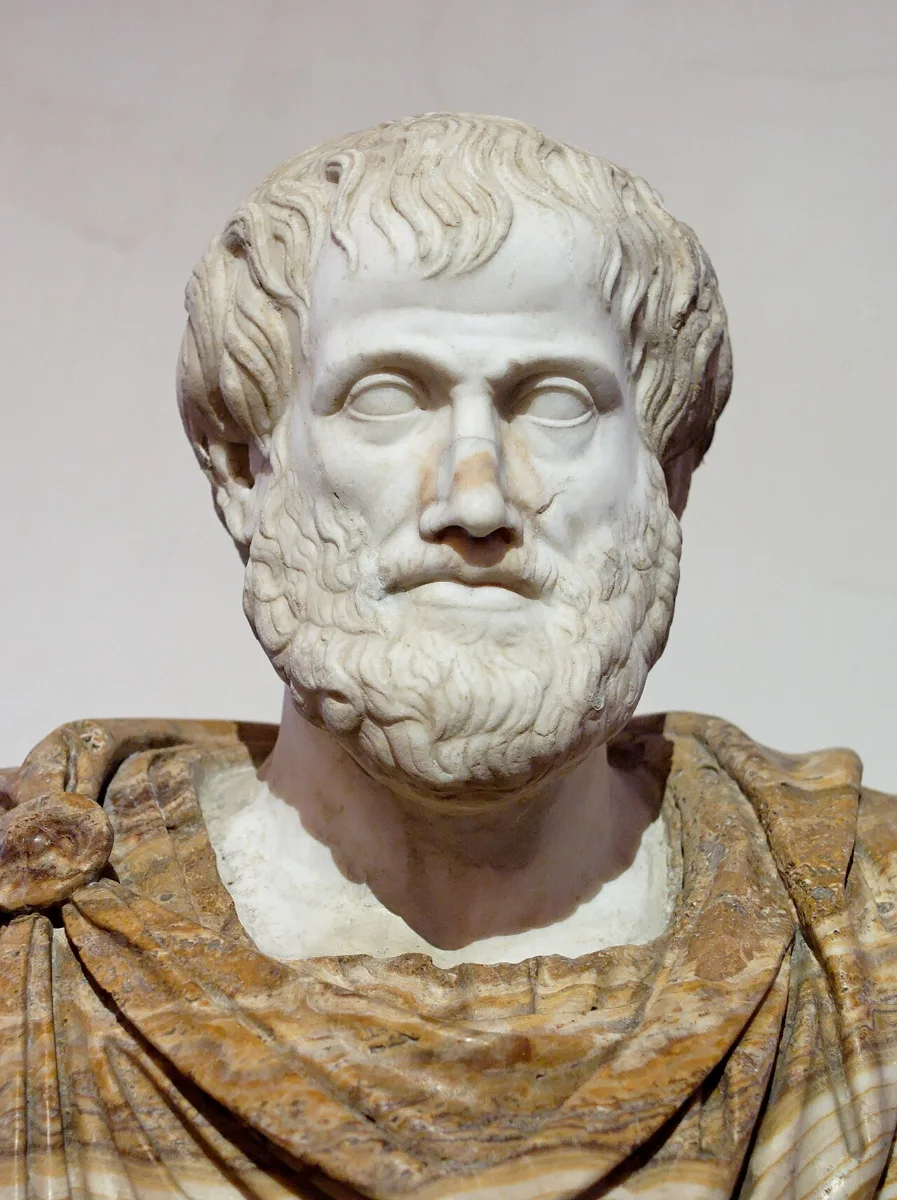
After the fifth century. In the fourth and third centuries D/e became the standard metre of what West calls “educated bourgeois lyric”. Examples are Philoxenus’ Deipnon (PMG 836), Aristotle’s hymn to Virtue (PMG 842), Cercidas’ Meliambi, and several of the inscribed hymns and paeans collected in Powell’s Collectanea Alexandrina. These poems seem generally to have been astrophic. Their structure is usually simple, with the great majority of cola marked off by word-division. The link-syllable is seldom absent, so that the rhythm runs very smoothly, even glibly. And rising starts ⏑ ⏑ — ⏑ ⏑ — are common. No D/e is found after about 190 BC.[14] Its components lived on separately. The Hellenistic epigrammatists took up Archilochian couplings of dactylic and iambic cola in place of elegiacs.[15] These are described on the page on lyric stanzas and epodes.
Notes
- ^ Battezzato 2009, pp. 140–142; Lourenço 2011, p. 81.
- ^ West 1987, p. 36.
- ^ a b c West 1987, p. 37.
- ^ West 1987, pp. 37–38.
- ^ West 1987, p. 38.
- ^ West 1987, pp. 42–43.
- ^ West 1987, p. 43.
- ^ West 1987, p. 44.
- ^ Hephaestion, Ench. 15.11.
- ^ West 1987, p. 65.
- ^ Lourenço 2011, p. 81.
- ^ West 1987, pp. 65–66.
- ^ West 1987, p. 67.
- ^ West 1987, p. 70.
- ^ West 1987, p. 76.
Dactylo-epitrite · 3 of 5
Worked example: Pindar, Pythian 12, strophe 1
Pindar’s Pythian 12, for Midas of Acragas, is monostrophic. The same eight-line strophe recurs four times (lines 1–32). Midas was a piper, the victor in the Pythian contest for the aulos. Landels reads the ode and its scholia as evidence for the instrument itself.[1]
West uses the ode to show how a dactylo-epitrite strophe breaks down into D, E and link-syllables.[2] With Maas’s sigla, these few units account for most poems in this metre.[3] The same units, with their long and short links, serve for the dactylo-epitrites of Euripides. There the old names are kept, such as “iambelegus” for × e × D.[4] Sandys’s text divides the lines as West does. Beneath each line is its scansion, with ¦ between the units, and in brackets West’s analysis. ⁝ reproduces a dotted bar that West prints after the first D of lines 2 and 4.
αἰτέω σε, φιλάγλαε, καλλίστα βροτεᾶν πολίων,
Φερσεφόνας ἕδος, ἅ τ’ ὄχθαις ἔπι μηλοβότου
ναίεις Ἀκράγαντος ἐΰδματον κολώναν, ὦ ἄνα,
ἵλαος ἀθανάτων ἀνδρῶν τε σὺν εὐμενίᾳ
δέξαι στεφάνωμα τόδ’ ἐκ Πυθῶνος εὐδόξῳ Μίδᾳ,
αὐτόν τέ νιν Ἑλλάδα νικάσαντα τέχνᾳ, τάν ποτε
Παλλὰς ἐφεῦρε θρασειᾶν Γοργόνων
οὔλιον θρῆνον διαπλέξαισ’ Ἀθάνα·
I ask you, lover of splendour, fairest of mortal cities, seat of Persephone, you who dwell on the well-built hill above the banks of sheep-grazing Acragas, O queen: graciously, with the goodwill of immortals and men, receive this crown from Pytho for glorious Midas, and himself, who defeated Hellas in the art which Pallas Athena once invented, weaving into song the deadly lament of the bold Gorgons.
Pindar, Pythian 12, the strophe, in West’s units: D = — ⏑ ⏑ — ⏑ ⏑ —, E = — ⏑ — × — ⏑ —, e = — ⏑ —. Red: the link-syllables between them.
synthetic ∿
Line by line.
Line 1. West’s scheme has sixteen positions, so αἰτέω counts as two syllables. West marks -έω as one syllable (synecphonesis within the word).[5] The line then opens with a long link, then D (τέω σε φιλάγλαε καλ-), a second link (-λί-) and a second D (-στα βροτεᾶν πολίων). West marks the second syllable of φιλάγλαε long. Before γλ it makes position.[6] Strophe 1 alone does not prove the period-end West marks. But at the same place in the third strophe there is hiatus (αὐτορύτου | ἔμμεναι, 17–18), a sign of period-end.[7]
Line 2. D — D again, but without the opening link. Φερσεφόνᾱς ἕδος ἅ is a complete hemiepes. In this strophe a word ends at West’s dotted bar, though not in every strophe (εἰναλίᾳ τε Σερί|φῳ, 12). West marks only a colon-end at the end of the line. A period may end after μηλοβότου, he notes, but nothing in any of the four strophes proves that it does.[2]
Line 3. — D — E. West marks the α of ἐΰδμᾱτον long, so the link before E, -μᾱ-, is long like the others.[2] His note records hiatus before (ϝ)άνα, a word that once began with digamma. It also records brevis in longo in the final -να, which proves period-end.[2] The Ἀ- of Ἀκράγαντος stays short before κρ. West finds this freedom with stop + liquid more in Theognis, Solon and Pindar than in earlier poetry.[6]
Lines 4–6. Line 4 repeats D — D, with ῑ in ἵλαος and the first α of ἀθανάτων long, as West marks them.[2] In the second D, τε σὺ- fill the first biceps. The ν of σύν goes with the following vowel, so σὺ- is open and short. Lines 5 and 6 are both — D — E. In 6 the final ποτε ends in a short where the rhythm wants a long. This is brevis in longo, and so period-end.[2]
Line 7. D ⏓ e: a hemiepes, a link and a single cretic-shaped e (Γοργόνων). It is the shortest period of the strophe. The link is long here (-ᾶν). But West marks it ⏓, a link that is normally long but may be short.[2] It is short in the fourth strophe (ἀελπτί-, line 31).
Line 8. E² and a final long: οὔλιον θρῆνον διαπλέξαισ’ Ἀθάνα. West marks the syllable-division διαπ|λέξαισ’. So the -α- of δια- is long before πλ.[2] The strophe thus ends in “double e”, one of the standard D/e closes.[8]
What to notice. Every period but the last begins with D, with or without a link before it. The last is E² with a final link. The link-syllable sits between every pair of units, and is long throughout this strophe. Only the link of line 7, which West marks ⏓, is short in another strophe. There is no resolution and no contraction. Period-ends rest on brevis in longo (3, 6), or on hiatus in another strophe (1). Compare Pythian 1.8, where Pindar closes a period with the catalectic e — — on ὁ δὲ κνώσσων, “and he, slumbering”, to lend the word emphasis.[9]
Notes
Dactylo-epitrite · 4 of 5
Second example: Pindar, Pythian 1.1–12
The first worked example, Pythian 12, is monostrophic: one strophe, repeated. Pythian 1, for Hieron of Aetna, is built the usual Pindaric way. It is in triads of strophe, antistrophe and epode, five of them here. Pindar often goes up to five.[1] Here is the first strophe (lines 1–6), with the antistrophe (7–12) set beside it. The whole first triad is scanned syllable by syllable on the Pindar page.
The units are West’s: D (— ⏑ ⏑ — ⏑ ⏑ —), d (— ⏑ ⏑ —) and e (— ⏑ —), joined by a link-syllable, usually long, before, between and after them.[2] The sigla go back to Maas. They come with a caution. The link is not a rhythmical unit in its own right, for D, e and E existed as independent cola. A syllable added at either end simply makes a different colon, the prosodiac × D or the enoplion × D ×.[3] West himself analyses only the end of line 8.[4] The division of the other lines is the Pindar page’s, re-checked here.
The strophe (1–6)
Below each line are its quantities, with ¦ between the units, and the units in brackets.
χρυσέα φόρμιγξ, Ἀπόλλωνος καὶ ἰοπλοκάμων
σύνδικον Μοισᾶν κτέανον· τᾶς ἀκούει μὲν βάσις, ἀγλαΐας ἀρχά,
πείθονται δ’ ἀοιδοὶ σάμασιν,
ἁγησιχόρων ὁπόταν προοιμίων ἀμβολὰς τεύχῃς ἐλελιζομένα.
καὶ τὸν αἰχματὰν κεραυνὸν σβεννύεις
ἀενάου πυρός. εὕδει δ’ ἀνὰ σκάπτῳ Διὸς αἰετός, ὠκεῖαν πτέρυγ’ ἀμφοτέρωθεν χαλάξαις,
Golden lyre, of Apollo and of the violet-tressed Muses the shared treasure: the dancing step hears you, and the festivity begins, and the singers obey your signals whenever, quivering, you strike up the opening notes of the preludes that lead the chorus. You put out even the spear-tipped thunderbolt of everlasting fire. On the sceptre of Zeus the eagle sleeps, letting his swift wings droop on either side.
Pindar, Pythian 1.1–6, the strophe, in Maas’s units: D = — ⏑ ⏑ — ⏑ ⏑ —, e = — ⏑ —, d = — ⏑ ⏑ —. Red: the link-syllables.
synthetic ∿
Reading it
Few units, many shapes. Six lines of very different length are made from three units and the links. Line 5 is three e’s with links. Line 1 is two e’s and a D. Line 6 is three D’s and two e’s, a long line of thirty positions. Most dactylo-epitrite can be treated as built from these few units.[2] Maas’s symbols serve in the same way, and they are applied throughout the dactylo-epitrites of Euripides.[5] The names are a convention. One could write cr for e, and D ia for D followed by e.[2]
Where the units join. A word does not have to end with a unit. In line 1 the first e is χρυσέᾱ, but the second runs across a word-end, -μιγξ Ἀπόλ-, and the link -λω- sits inside Ἀπόλλωνος. The ξ of φόρμιγξ counts as two consonants, and closes the syllable -μιγ-.[6] καί is shortened before ἰοπλοκάμων (correption).[7] The πλ in ἰοπλοκάμων makes the syllable before it long.[8] Lines are made of units, not of words.
The link-syllable. The link is usually long.[2] In these two stanzas every link is long but one. In line 4 the link before the first e is προ- of προοιμίων, short; at the same place in line 10 it is καί, long. That is why the brackets give ⏓ there. Three other links look short at first sight but are long. κρα- of κρατί (8) is long, as LSJ marks the dative κρᾱτί. τρα- of τραχεῖαν (10) is long, since LSJ gives τρᾱχύς. And -μα- of αἰχματάν (5) is long, as in the Doric αἰχμᾱτάς, which LSJ cites from this very line (s.vv. κράς, τραχύς, αἰχμητής).
A catalectic e. Line 2 ends with ἀρχά, two longs, where a full e would be — ⏑ —. West calls this ending a catalectic e. Pindar and Simonides use it to give weight to a word. West’s example is the end of line 8 in this ode, which answers line 2: ἁδὺ κλαΐστρον, κατέχευας· ὁ δὲ κνώσσων, analysed e – D e∧ (he quotes it with the reading κλᾱ́ιθρον, which scans the same).[4] In that D, δέ is long before the κν of κνώσσων. A stop + nasal at the start of a word closes the syllable before it.[8] The same two longs open line 3, πείθον-.
What does not happen. No long is resolved in these twelve lines, and the D never contracts its first biceps. Pindar does this only very rarely.[4] Resolution in D/e, where it occurs, sometimes recurs in every strophe. More often it is a single licence.[2]
The antistrophe (7–12)
| Line | Strophe | Antistrophe | Units |
|---|---|---|---|
| 1 ~ 7 | χρυσέα φόρμιγξ … | ἀρχὸς οἰωνῶν … | e – e – D |
| 2 ~ 8 | … ἀγλαΐας ἀρχά | … ὁ δὲ κνώσσων | e – d e – D e∧ |
| 3 ~ 9 | πείθονται … | ὑγρὸν νῶτον … | — — e – e |
| 4 ~ 10 | ἁγησιχόρων … | ῥιπαῖσι … | × D ⏓ e e – D |
| 5 ~ 11 | καὶ τὸν αἰχματὰν … | ἐγχέων ἀκμάν … | e – e – e |
| 6 ~ 12 | ἀενάου πυρός … | κώματι, κῆλα … | D e – D – D e – |
The antistrophe repeats the strophe syllable for syllable, except at one free position. This is the link in 4 ~ 10, short προ- against long καί. The opening anceps of 4 ~ 10 is long in both. ῥι- of ῥιπαῖσι (10) is long, as LSJ marks ῥῑπή. The ἁ- of ἁγησιχόρων (4) is the Doric ᾱ that stands for the η of ἡγέομαι (LSJ gives the Doric form as ἁγ-). LSJ cites ἁγησίχορος from this line, but marks no quantity on it (s.vv. ῥιπή, ἡγέομαι, ἁγησίχορος).
Where the periods end. Every line here ends with a word, but that alone does not prove period-end. West’s tests are hiatus and brevis in longo. Once a period-end is proved in one strophe, it holds at the same place in all the others.[9] The proof for lines 1 and 2 comes from the second triad. Line 21 ends ἁγνόταται and line 22 begins ἐκ. Line 22 ends καπνοῦ before αἴθων’ in 23. Both are hiatus. So there is period-end after lines 1 and 2, and so after 7 and 8, in every strophe and antistrophe of the ode.
Notes
Dactylo-epitrite · 5 of 5
Dactylo-epitrite in Bacchylides
Bacchylides, Pindar’s contemporary, is the other great user of dactylo-epitrite. He composes mostly in triads, up to at least eight of them in a poem.[1] His odes, like Pindar’s, are analysed poem by poem in the Teubner of Snell and Maehler.[2] Maehler’s commentary of 2004 adds a short account of the metre, followed here.
Which poems. Bacchylides’ odes are either triadic or monostrophic, and their metres fall, like Pindar’s, into two groups, dactylo-epitrite or ionic-aeolic.[3] The longer victory odes, such as 5 and 11, are in dactylo-epitrite. So are the dithyrambs 15, 19 and 20, the paean fr. 4, and the enkomia frs. 20B, 20C and 20D.[4] Ode 3 is unique in Bacchylides. It has an aeolic strophe and antistrophe, but an epode in dactylo-epitrite. Pindar’s Olympian 13 has a similar mixture.[5]
Symbols, and the link-syllable. Maehler uses the symbols introduced by Paul Maas: D (— ⏑ ⏑ — ⏑ ⏑ —), d¹ (— ⏑ ⏑ —), d² (⏑ ⏑ —), e (— ⏑ —) and E (— ⏑ — × — ⏑ —). Maas stated that these cola are often preceded, followed or linked by one anceps, usually long. Most of Bacchylides’ dactylo-epitrites can be analysed in these terms. But Maehler warns that the link-syllable (the anceps interpositum) was not part of the original concept of the metre. The metre seems to have grown out of a free combination of the hemiepes with trochaic or iambic elements. He quotes West’s Greek Metre (1982, p. 70): “Greek poets compose with cola and need no mortar to join them”.[4]
The name “dactylo-epitrite” was coined by R. Westphal in 1854. It assumes a long equal to two shorts, so that an epitrite (— ⏑ — — or — — ⏑ —) has the proportion 3 : 4 or 4 : 3.[6] It is a nineteenth-century coinage, from epitritos, “four thirds”.[7]
A metre of praise. Maehler finds it unsurprising that enkomia and victory odes are often in dactylo-epitrite. The metre developed out of the encomiologicum, — ⏑ ⏑ — ⏑ ⏑ — ⏑ — ⏑ — — (D ⏑ e —). This was already used by Alcaeus (383) and Anacreon (PMG 393), both quoted by Hephaestion.[8] As the name implies, it was used chiefly in poems of praise.[4] West gives the same verse as D × e ×, and calls it the elegiambus.[9] On his account D/e developed out of verse already found in Stesichorus.[2] Simonides used it in the opening line of his victory ode for Anaxilas of Rhegion, whose mules had won (PMG 515):[10]
Χαίρετ’ ἀελλοπόδων θύγατρες ἵππων
Hail, daughters of storm-footed mares!
Simonides, PMG 515: Greek from Aristotle, Rhetoric 3.2.14, Perseus, CC BY-SA 4.0. Maehler’s analysis: D ⏑ e —: the encomiologicum with a final long. Red: the link-syllables.
synthetic ∿
Maehler’s analysis requires the γα of θύγατρες to be long before τρ; the link after D is short.
Bacchylides’ own variations. The dithyrambs 19 and 20 are dactylo-epitrite with some innovations. In 19 the link-syllable is always short. A colon — ⏑ — ⏑ — — appears, which can be taken as E (or e ⏑ e) without its last short. And D appears several times without its first short, — ⏑ — ⏑ ⏑ —, giving it an “aeolic” look. In 20 the strophe seems to have eight verses, each beginning with a D preceded by one syllable. But in the eighth the D is shortened to — ⏑ ⏑ — ⏑ —, slowing the rhythm into a clausula.[11]
There are also two irregularities of responsion. In ode 5, at three places in the strophe, × — ⏑ — responds with — ⏑ —. One form or the other becomes constant after the first triad. And in the Asine paean (fr. 4.70) ἀραχνᾶν ἱστοὶ πέλονται (⏑ ⏑ — — — ⏑ — —) apparently responds with παιδικοί θ’ ὕμνοι φλέγονται (E —).[12] The second has two apparent parallels in tragedy, and West suspects that the text of all three passages may be corrupt.[13] In ode 17 Bacchylides treats cretics with link-syllables in the same way.[14]
Notes
- ^ West 1987, p. 42.
- ^ a b West 1987, p. 43.
- ^ Maehler 2004, p. 14.
- ^ a b c Maehler 2004, p. 15.
- ^ Maehler 2004, p. 16 with n. 21; Battezzato 2009, p. 142.
- ^ Maehler 2004, p. 15 n. 19.
- ^ Battezzato 2009, p. 141.
- ^ Hephaestion, Ench. 15.10.
- ^ West 1987, p. 86.
- ^ Quoted by Maehler 2004, p. 15.
- ^ Maehler 2004, pp. 15–16.
- ^ West 1987, p. 44.
- ^ West 1987, p. 44 n. 7; p. 66.
- ^ Maehler 2004, p. 17.


