Bibliography, a glossary of every term, work and name, licences, how to cite this site, and the credits for every picture.
One list of the words this site uses: metrical terms, signs and abbreviations (sigla); the works it mentions; and the names of poets, ancient and Byzantine scholars, gods, heroes and places. Modern scholars and editors are not listed here: their books and editions are in the Bibliography. Each entry gives a short definition in our own words, the source it rests on, and, under “On this site”, a link to every tab where the word appears; the links are made when the site is built, so they stay current.
Type in the box to filter (capitals and Greek accents do not matter: ανακλασις finds ἀνάκλασις), narrow the list with the buttons, or jump to a letter. The Glossary tab of the Introduction is the short version, with the core terms and their pages in West 1987; full details of every modern study are in the Bibliography.
948 entries
Signs
- :signalso less often word-end
A place where word-end is less frequent than at ⁝.
Source: West 1987, pp. ix, 19
- ::signalso change of speaker
A change of speaker within a line or scheme.
Source: West 1987, p. ix
- |signalso word-end
In a scheme, regular word-end (a caesura).
Source: West 1987, pp. ix, 19
- |||signalso strophe-end
The end (or beginning) of a strophe.
Source: West 1987, p. ix
On this site: 118 places on 29 pages
- ~signalso in responsion with
Marks two passages that correspond metrically (strophe ~ antistrophe).
Source: West 1987, p. ix
- ¦signalso colon boundary (this site)
This site’s sign for a caesura or a boundary between cola inside a scheme, where West writes | or ⁝ and :.
Source: West 1987, p. ix (for | ⁝ :); the sign ¦ is this site’s own, explained on the Notation tab
On this site: 76 places on 34 pages
- ¨signalso anaclasis
Anaclasis; the side of the siglum it stands on shows whether the double short has moved forward or back (¨gl, gl¨).
Source: West 1987, pp. x, 34
On this site: 25 places on 13 pages
- ×signalso anceps
An anceps position, which a long or a short may fill.
Source: West 1987, pp. ix, 5
- ÷signalso anaclasis in ionics
Anaclasis in ionics: 2io÷ (the anacreontic), ÷3io, 3io÷.
Source: West 1987, p. x
On this site: 11 places on 7 pages
- ᶜsignalso choriambic expansion
A superior c (or d) after a siglum marks choriambic (or dactylic) expansion, repeated as many times as the numeral says: glᶜ, gl²ᵈ, ph³ᵈ.
Source: West 1987, pp. x, 34
On this site: 35 places on 15 pages
- —signalso long
A long position in a scheme, or a long syllable in a scansion.
Source: West 1987, pp. ix, 5
- ‖signalso period-end
The end (or beginning) of a period; Lourenço adds ᴴ or ᴮ to say whether hiatus or brevis in longo shows it.
Source: West 1987, p. ix; Lourenço 2011, pp. 13–15
On this site: 190 places on 48 pages
- ⁀signalso bridge
Word-end avoided between the two positions it joins.
Source: West 1987, pp. ix, 25
On this site: 22 places on 7 pages
- ⁝signalso often word-end
A place where word-end is frequent (more often than at :); in the hexameter scheme it marks the alternative places of the caesura.
Source: West 1987, pp. ix, 19
On this site: 51 places on 23 pages
- ∧signalso suppressed position
A suppressed position: after an, da, e, io, tr it marks catalexis; with iambic metra syncopation (∧ia, ia∧, ∧ia∧); ∧∧ after dactyls a blunt ending.
Source: West 1987, pp. x, 5, 7, 38, 52
On this site: 102 places on 31 pages
- ∩signalso brevis in longo (Lourenço)
Lourenço’s sign for brevis in longo.
Source: Lourenço 2011, pp. 13–15
On this site: 8 places
- ∫signalso dovetailing
Word-end one position later than the colon-end, as in ¨gl ∫ dod.
Source: West 1987, pp. ix, 42
On this site: 15 places on 8 pages
- ⊗signalso beginning or end of composition
The beginning or end of a composition (in Lourenço, the beginning of a stanza or lyric sequence).
Source: West 1987, p. ix; Lourenço 2011, pp. 13–15
On this site: 2 places
- ⏑signalso short
A short position, or a short syllable.
Source: West 1987, p. ix
- ⏒signalso usually short
A position normally short, sometimes long, as in the dochmius kaibelianus × — ⏒ — ⏑ —.
Source: West 1987, pp. ix–x, 47, 56
On this site: 30 places on 15 pages
- ⏓signalso usually long
A position normally filled by a long, sometimes by a short, as the link-syllable of dactylo-epitrite (D ⏓ e). West puts the normal quantity below.
Source: West 1987, pp. ix, 43
On this site: 40 places on 10 pages
- ⏔signalso contractible biceps
Two short positions before a princeps that one long may replace.
Source: West 1987, pp. ix, 6
On this site: 145 places on 38 pages
- ⏕signalso resolvable long
A princeps that may be filled by two shorts.
Source: West 1987, pp. ix, 6
On this site: 131 places on 35 pages
- ⏖signalso resolved long
Two shorts filling a princeps, as in the resolved cretic — ⏑ ⏖; touching a siglum (cr⏖, gl⏖) it means the first or last position is resolved.
Source: West 1987, pp. ix–x, 6, 55
On this site: 37 places on 17 pages
- ⏗signalso triseme
A long of three morae, equal to — ⏑; ⌊ is the triseme equal to ⏑ —. West notes these angles were the signs of the ancient rhythmicians.
Source: West 1987, pp. ix, 7
On this site: 3 places on 3 pages
- ⏘signalso tetraseme
A long of four morae, equal to — —.
Source: West 1987, pp. ix, 75
On this site: 1 place
- ○ ○signalso aeolic base
Two positions of which at least one must be long: the aeolic base as West writes it once both-short is avoided.
Source: West 1987, pp. ix, 33, 44
On this site: 31 places on 15 pages
A
- acatalecticterm
Said of a verse or colon whose last metron is complete, not shortened by catalexis. Example: the iambic trimeter × — ⏑ — × — ⏑ — × — ⏑ —, whose three metra are all complete.
Source: West 1987, p. 5
See: Introduction to Greek metre › Glossary
On this site: 31 places on 19 pages
- accent προσῳδία (prosōidia)termalso accents, accented, unaccented, word accent
The one syllable of a word that stands out. In classical Greek it stood out by a higher pitch of the voice, not by stress; the high pitch fell on a single mora, so a long vowel could be high on its first half (the circumflex) or its second (the acute). The marks were first written at Alexandria about 200 BC. Example: λόγος (logos) “word”, high on λό-; δῶρον (dōron) “gift”, high on the first half of ω, then falling.
Source: Allen 1968, pp. 106, 114–115; Smyth 1920, p. 37 (§ 151); Probert 2006, pp. 8, 57–59
See: Accent and morae › A pitch accent · Accent and morae › Morae
On this site: 305 places on 61 pages
- acephaloustermalso headless
“Headless”: lacking the first syllable of the usual form; a telesillean can be described as an acephalous glyconic. Battezzato uses the word of an aeolic colon whose base is reduced to one syllable.
Source: West 1987, p. 85; Battezzato 2009, p. 134
See: Introduction to Greek metre › Glossary
On this site: 39 places on 15 pages
- Acharnaeplace
Attic deme, home of Timodemus, the victor of Pindar’s Nemean 2; the chorus of Aristophanes’ Acharnians are its men.
See: Pindar › Nemean 2 · Aristophanes › Chorus and song
On this site: 3 places on 2 pages
- Acharnianscomedy
Aristophanes’ comedy of 425 (or 426) BC, the earliest surviving comedy, in which the hero gets himself a private peace.
Source: Easterling 1997, p. 353; Seidensticker 2005, pp. 39, 42–43
See: Aristophanes › Acharnians · Aristophanes › Plays and dates
On this site: 15 places on 8 pages
- Achilleshero
The hero of the Iliad, “Peleus’ son”, whose wrath is its first word; also the title of Praxilla’s dithyramb. He arms the Myrmidons in Iliad 16.155–167, and Bacchylides’ Ode 13 tells of him and Ajax at Troy.
See: Homer › Iliad · 1.1–52 (proem; Chryses) · Praxilla › Hexameters · Homer › Iliad · 16.155–167 (the wolves simile) · Bacchylides › Ode 13
On this site: 40 places on 19 pages
- Acragasplace
Sicilian city of Theron, “seat of Persephone” in Pythian 12.
See: Pindar › Pythian 12 · Pindar › Olympian 2
On this site: 10 places on 6 pages
- acutetermalso acute accent, oxytone, paroxytone, proparoxytone
The accent mark ά, a high pitch on the syllable; a word is oxytone when it carries the acute on its last syllable, paroxytone on the next-to-last. Paroxytone line-ends are favoured in some later verse.
Source: Devine and Stephens 1994, p. 152; West 1987, pp. 71, 82
See: Accent and morae › The three marks · Accent: pitch or stress? › Evidence
On this site: 238 places on 51 pages
- adsiglum
Siglum for the adonean, — ⏑ ⏑ — ×. See adonean.
Source: West 1987, pp. ix, 33
On this site: 6 places on 5 pages
- Admetushero
King of Pherae, subject of the skolion attributed to Praxilla (“take to heart the tale of Admetus”).
See: Praxilla › Transmission · Praxilla › Praxilleia and skolion
On this site: 4 places
- adoneantermalso adonic, adoneus
The short colon — ⏑ ⏑ — × (siglum ad), a catalectic dodrans, which ends the Sapphic stanza. D’Angour connects the name with the ritual cry for Adonis; some teaching books call it the “adonic”.
Source: West 1987, pp. ix, 33; D’Angour 2022, p. 136
See: Introduction to Greek metre › Glossary · Aeolic › Lesbian stanzas
On this site: 27 places on 14 pages
- Adonishero
Subject of Praxilla’s hymn and of Sotades’ Adonis; D’Angour derives the name adonean from the lament for him.
Source: D’Angour 2022, p. 136
See: Praxilla › Hexameters · Introduction to Greek metre › Glossary
On this site: 7 places on 4 pages
- Aeacusheroalso Aiakos, Aeacids
Aeacus (Aiakos), whose descendants, the Aeacids, include Achilles and Ajax; Bacchylides’ Ode 13 gives them more than sixty lines, Pindar’s Nemean 5 five.
Source: Jebb 1905, p. 216
See: Bacchylides › Ode 13 · Homer › Iliad · 16.155–167 (the wolves simile)
On this site: 6 places on 5 pages
- Aeginaplace
Island whose great families commissioned odes from Pindar and Bacchylides, such as Bacchylides’ Ode 13 and Pindar’s Nemean 5 for Pytheas.
Source: Jebb 1905, p. 216
See: Bacchylides › Life and works · Bacchylides › Ode 13
On this site: 7 places on 4 pages
- Aelianwriter
Author of the Varia historia, which says Corinna beat Pindar five times.
See: Corinna › Life
On this site: 5 places on 4 pages
- aeolictermalso aeolic metre, aeolic cola
The family of fixed-syllable cola built round the choriamb — ⏑ ⏑ — and usually opened by a free base: glyconic, pherecratean, hipponactean and their relatives, used by Sappho and Alcaeus and taken over by Anacreon, Pindar and the dramatists.
Source: West 1987, pp. 29–35
See: Aeolic › Base and choriamb
On this site: 159 places on 43 pages
- aeolic basetermalso base
The two free positions that open some aeolic cola, a survival of the free verse-opening of inherited verse: × × in Sappho and Alcaeus (both short is rare), ○ ○ later, with the first position resolvable in Pindar.
Source: West 1987, pp. 6, 33, 44; Battezzato 2009, p. 134
See: Aeolic › Base and choriamb
On this site: 50 places on 17 pages
- aeolo-ionicterm
Dale’s name for the ambiguity of cola built only of longs and double shorts, which could be heard as aeolic or as ionic; she argues that Sophocles meant Philoctetes 710 (phᶜ) to be heard as aeolic.
Source: Dale 1968, pp. 143–144 and p. 144 n. 1
See: Lyric in drama › Worked example
On this site: 3 places on 2 pages
- Aeschylus Αἰσχύλος (Aischylos)playwright
The earliest of the three Athenian tragedians (c. 525–456 BC): sparing in spoken trimeters, lavish in song with syncopated iambics, dochmiacs, ionics and dactyls; seven plays survive.
See: Aeschylus › Life · Aeschylus › Plays and dates
On this site: 82 places on 30 pages
- Aethergod
Called the Clouds’ father in the parabasis ode of Aristophanes’ Clouds, where he is summoned in a run of dactyls.
Source: Dale 1968, p. 135
See: Aristophanes › Clouds · 563–606 (parabasis, ode and antode)
On this site: 1 place
- Aetiaelegy
Callimachus’ elegiac poem in four books on the origins of cults and customs; the poems for Berenice that frame its last two books may also have circulated separately (disputed).
Source: Barbantani 2009, p. 308 with n. 42
See: Callimachus, Theocritus and Hellenistic poets › Transmission
On this site: 3 places on 2 pages
- affricatetermalso affricates
A stop released straight into a fricative made at the same place, as English ch [tʃ] or the ts of cats. Allen thinks ζ was an affricate [dz] when the Greeks took over the alphabet, but had become [zd] in classical Attic; the ττ of Attic and the σσ of other dialects also passed through an affricate stage. Example: ζ in Ζεύς (Zeus), said [zd] in classical Attic.
Source: Allen 1968, pp. 53–58
See: Sounds › Consonants
On this site: 2 places
- Agamemnontragedyalso Ag.
First play of Aeschylus’ Oresteia (458 BC); its parodos has six strophic pairs with an anapaestic introduction and an epode.
Source: Easterling 1997, p. 352; Battezzato 2005, p. 152
See: Aeschylus › Agamemnon · 104–39 (parodos) · Aeschylus › Plays and dates
On this site: 38 places on 17 pages
- Agamemnon (king)hero
King of Argos, leader of the Greeks at Troy, hero of Aeschylus’ Agamemnon.
See: Aeschylus › Agamemnon · 1–39 (the Watchman)
On this site: 7 places on 3 pages
- Agathonplaywright
Late fifth-century tragedian of the New Music, who began the use of embolima, songs not written for one particular place in one play.
See: Introduction to Greek metre › Speech and song · Timotheus and the New Music › Life
On this site: 10 places on 6 pages
- Agido and Hagesichorachorus-leadersalso Agido, Hagesichora
The two leading girls praised by the chorus in Alcman’s Partheneion; the hagesichorean is named after Hagesichora.
Source: Power 2022, p. 247; Krummen 2009, pp. 191–192
See: Alcman › Songs and language · Alcman › Partheneion
On this site: 6 places on 3 pages
- agon ἀγών (agōn)term
The formal debate of Old Comedy, one of its set pieces, often in tetrameters.
Source: Seidensticker 2005, p. 42
See: Aristophanes › Plays and dates
On this site: 2 places on 2 pages
- Ajaxtragedy
Sophocles’ tragedy, probably of the 440s; its stasimon 622–645 is scanned on this site.
Source: Scodel 2005, pp. 233–234
See: Sophocles › Ajax · Sophocles › Plays and dates
On this site: 28 places on 13 pages
- Alcaeus Ἀλκαῖος (Alkaios)poet
Sappho’s contemporary on Lesbos: the poet of the Alcaic stanza, of political songs against Pittacus and of drinking-songs much quoted by Hephaestion.
See: Alcaeus › Life · Alcaeus › Politics
On this site: 138 places on 36 pages
- Alcaic stanzatermalso Alcaic strophe, Alcaics, Alcaic
Alcaeus’ stanza, three periods on the pattern aaA: two identical periods (pe ⁝ dod) and a longer third; Sappho uses it too. Example: the second line of Alcaeus fr. 332, πώνην, ἐπεὶ δὴ κάτθανε Μύρσιλος (pōnēn, epei dē katthane Myrsilos), “drink, since Myrsilus is dead”, — — ⏑ — — ⁝ — ⏑ ⏑ — ⏑ ×, on the scheme × — ⏑ — × ⁝ — ⏑ ⏑ — ⏑ —.
Source: West 1987, p. 34; Battezzato 2021, p. 128; Alcaeus fr. 332.2
See: Aeolic › Lesbian stanzas · Alcaeus › Metres
On this site: 61 places on 17 pages
- Alcestistragedy
Euripides’ play of 438 BC, performed fourth in place of a satyr play and combining tragic and satyric elements.
Source: Easterling 1997, p. 353; Gregory 2005, p. 258
See: Euripides › Plays and dates
On this site: 9 places on 2 pages
- AlcibiadesAthenian
Athenian politician for whose Olympic victory of 416 BC Euripides wrote an epinician.
Source: Nicholson 2022, p. 57
On this site: 5 places on 4 pages
- Alcman Ἀλκμάν (Alkman)poet
Seventh-century choral poet of Sparta, composer of maiden-songs in Laconian Doric; his Louvre Partheneion is the earliest large piece of choral lyric.
See: Alcman › Life · Alcman › Songs and language
On this site: 62 places on 26 pages
- Alexander of Macedonking
The early fifth-century Macedonian king for whom Bacchylides wrote a sympotic encomium (fr. 20B).
See: Bacchylides › Life and works
On this site: 2 places
- Alexandriaplace
The Ptolemies’ capital in Egypt, with the Museum and Library where scholars edited and catalogued the poets.
Source: Reynolds and Wilson 1991, pp. 6–7
See: How the texts reached us › Alexandria
On this site: 31 places on 20 pages
- Alexandrian editiontermalso Alexandrian editions, Alexandrian scholars, Alexandrians
The editions of the lyric poets made by scholars at Alexandria in the third and second centuries BC (Aristophanes of Byzantium, Aristarchus), who arranged the poems in books, divided them into cola and regularised their dialect.
Source: Prauscello 2021, pp. 219–221; de Kreij 2022, p. 143
See: How the texts reached us › Alexandria · Sappho › Books
On this site: 31 places on 13 pages
- alveolartermalso alveolars
Made with the tongue against the ridge just behind the upper teeth, as English t, d, n, s are. Greek ρ was an alveolar trill; τ δ θ ν were probably dentals instead. Example: the rolled ρ of πατρός (patros) “of a father” [r].
Source: Allen 1968, pp. 14, 39
See: Sounds › IPA chart
On this site: 1 place
- Alypian notationtermalso vocal notation, instrumental notation, musical notation (Greek)
The ancient Greek system of pitch signs, known from the tables of Alypius: a vocal series of Ionic letters and an older instrumental series of letter-like signs, each in triads of a natural note and its two ‘sharps’, set above the syllables of a text.
Source: West 1992, pp. 254–263; Nowacki 2020, pp. 42–45
See: Notation › Two sign systems · Notation › Reading a line · Music theory › Notation
On this site: 9 places on 9 pages
- Alypiusmusic theorist
Late Aristoxenian writer, perhaps of the fourth century AD, whose tables of the vocal and instrumental signs for every key and genus are the main key to the ancient notation.
Source: West 1992, pp. 5, 254; Anderson 1994, p. 203
See: Notation › Two sign systems
On this site: 7 places on 4 pages
- Ambrosian Lifeancient biography
An ancient life of Pindar, which tells on the authority of Chamaeleon and Ister that bees built a honeycomb on his lips.
See: Pindar › Life
On this site: 2 places
- amoibaion ἀμοιβαῖον (amoibaion)term
In drama, an exchange in song between an actor and the chorus, or a dialogue mixing sung and spoken lines; Battezzato prefers it as the general term to kommos, which is used above all of a shared lament. Example: Agamemnon 1136–55, where Cassandra sings and the chorus answers her.
Source: Battezzato 2005, p. 152; Easterling 1997, p. 158 n. 14
See: Introduction to Greek metre › Glossary
On this site: 1 place
- ansiglum
Siglum for an anapaestic metron (an∧: with catalexis, … ⏑ ⏑ — —), ⏑ ⏑ — ⏑ ⏑ —. See anapaest.
Source: West 1987, p. ix
On this site: 7 places on 7 pages
- anaclasis ἀνάκλασις (anaklasis)termalso anaclastic
A swap of quantities at a fixed place in a colon, ⏑ — standing for — ⏑ or the reverse, as when ⏑ ⏑ — — ⏑ ⏑ — — becomes the anacreontic ⏑ ⏑ — ⏑ — ⏑ — —; West writes it ¨ beside the siglum (÷ in ionics).
Source: West 1987, pp. ix–x, 8; D’Angour 2022, p. 134; Landels 1999, c. pp. 119–121
See: Introduction to Greek metre › Glossary · Ionic › The metron · Rhythm › A musician's view
On this site: 43 places on 19 pages
- Anacreon Ἀνακρέων (Anakreōn)poet
Ionian poet of Teos who sang at Samos and Athens: light songs of love and wine in glyconics, choriambs and the ionics named after him.
See: Anacreon › Life · Anacreon › Metres
On this site: 62 places on 30 pages
- Anacreonteapoemsalso Carmina Anacreontea
Short poems written in Anacreon’s manner and largely in anacreontics from the Hellenistic period into Byzantine times; the later ones favour paroxytone line-ends.
Source: West 1987, pp. 71, 73–74; Budelmann 2009, pp. 227–239
See: Ionic › Later ionic · Anacreon › Transmission
On this site: 16 places on 8 pages
- anacreontictermalso anacreontics, 2io÷
The colon ⏑ ⏑ — ⏒ — ⏑ — —, an ionic dimeter with anaclasis (2io÷), named after Anacreon; the most widely used and longest-lived ionic verse, still written in Byzantine times.
Source: West 1987, pp. x, 33, 73–74, 85; D’Angour 2022, p. 137
See: Ionic › The metron · Introduction to Greek metre › Glossary
On this site: 19 places on 12 pages
- anacrusisterm
In the musical metric of the nineteenth century, a syllable that stands before the first full foot of a verse, “preliminary” to it; Jebb marks it ⁝ in his analyses of Sophocles’ lyrics.
Source: Jebb 1891, pp. lv–lvii
See: Sophocles › Antigone · 781–800 (third stasimon, Eros)
On this site: 2 places
- Anactoriain Sappho
Named in Sappho fr. 16, the Anactoria poem.
See: Sappho › Fr. 16 (Οἰ μὲν ἰππήων…)
On this site: 1 place
- Ananiuspoet
Iambic poet who, like Hipponax, wrote choliambs.
Source: West 1987, p. 30
See: Hipponax, Semonides and the iambographers › Life · Iambic › The choliamb and other variants
On this site: 8 places on 5 pages
- anapaest ἀνάπαιστος (anapaistos)termalso anapaestic, anapaests
The foot ⏑ ⏑ —; the anapaestic metron (siglum an) is ⏔ ⏕ ⏔ ⏕, used for the recited “marching” anapaests of choral entrances and exits and for sung lament.
Source: West 1987, pp. ix, 29, 85; Battezzato 2009, p. 131
See: Anapaestic › Marching anapaests · Introduction to Greek metre › Glossary
On this site: 83 places on 30 pages
- anastropheterm
‘Turning back’: a two-syllable preposition takes its accent on the first syllable, ἄπο (apo), πάρα (para), πέρι (peri), instead of ἀπό, παρά, περί, when it follows its noun or verb or stands for a compound verb (ἔπι (epi) = ἔπεστι (epesti), “is upon, is there”). This is the older, inherited accent.
Source: Devine and Stephens 1994, pp. 364–365
See: Accent and morae › Enclitics and proclitics
On this site: 1 place
- ancepstermalso ancipitia
A position (×) that may be filled by a long or a short syllable. Not the same thing as a syllable of doubtful quantity; an anceps next to another anceps or next to a short shows that a period ends there.
Source: West 1987, pp. 5, 12–13, 37; Battezzato 2009, p. 131
See: Introduction to Greek metre › Glossary
On this site: 256 places on 49 pages
- Andromachetragedy
Euripides’ tragedy, 425 BC?; also the name of Hector’s wife, whose wedding Sappho fr. 44 describes.
Source: Easterling 1997, p. 353
See: Euripides › Plays and dates · Sappho › Fr. 44 (Ἔκτωρ καὶ συνέταιροι…)
On this site: 22 places on 12 pages
- Andromachuspoetalso Andromachus the Elder
Cretan physician to Nero who put his recipe for theriac, the Galene, into 174 lines of elegiac couplets, preserved by Galen.
See: Andromachus: the theriac poem (in Galen) › Andromachus
On this site: 10 places on 5 pages
- Antigonetragedy
Sophocles’ tragedy of Antigone’s burial of her brother, 442 BC? or in the 440s.
Source: Easterling 1997, p. 352; Scodel 2005, p. 234
See: Sophocles › Antigone · 1–38 (the two sisters) · Sophocles › Plays and dates
On this site: 18 places on 7 pages
- Antipater of Sidonpoet
Epigrammatist who makes Anacreon admit that his poetry now lives in books.
See: Anacreon › Poetry and reputation
On this site: 3 places on 3 pages
- Antipater of Thessalonicapoet
Epigrammatist whose canon of nine women poets, earthly counterparts of the nine Muses (A.P. 9.26), names Praxilla, Nossis and the others.
Source: Natoli et al. 2022, pp. 120–121, 178–179
See: Anyte › Life · Praxilla › Life
On this site: 9 places on 6 pages
- antistrophe ἀντιστροφή (antistrophē)term
The repetition of a strophe in exactly corresponding metre; strophe and antistrophe form a pair in choral song and drama. Example: Agamemnon 1146–55 repeats the metre of 1136–45.
Source: West 1987, p. 4
See: Introduction to Greek metre › Stanzas and responsion · Introduction to Greek metre › Glossary
On this site: 97 places on 31 pages
- antodetermalso antodes, ode and antode, antepirrhema
In the parabasis of Old Comedy, the sung stanza that answers the ode in responsion; ode and antode are each followed by an equal block of spoken trochaic tetrameters, the epirrhema and antepirrhema (Clouds 563–74 ~ 595–606).
Source: West 1987, p. 51 and n. 4; Dale 1968, p. 135
See: Aristophanes › Clouds · 563–606 (parabasis, ode and antode) · Lyric in drama › Comedy
On this site: 2 places on 2 pages
- Anyte Ἀνύτη (Anytē)poet
Epigrammatist of Tegea, c. 300 BC: dedications, epitaphs for girls, soldiers and animals, and some of the first pastoral landscapes, in elegiac quatrains.
See: Anyte › Life · Anyte › Metres
On this site: 8 places on 4 pages
- Aphroditegoddessalso Cypris, Κύπρις
The goddess of love, addressed in Sappho’s Hymn to Aphrodite and in the Homeric Hymn 5.
See: Sappho › Fr. 1 (Hymn to Aphrodite) · Homeric Hymns › To Aphrodite (Hymn 5) · 1–32
On this site: 68 places on 29 pages
- apocope ἀποκοπή (apokopē)term
The cutting off of a short vowel at the end of a word before a consonant (ἀποκοπή, apokopē, “cutting off”), found in poetry and in dialect inscriptions; the leftover consonant is often assimilated to the next one. Example: Homer’s ἄν, κάτ, πάρ for ἀνά, κατά, παρά; κὰπ πεδίον (kap pedion) “through the plain” for κατὰ πεδίον.
Source: Smyth 1920, p. 24 (§ 75 D)
See: Lesbian Aeolic › Features
On this site: 4 places on 2 pages
- Apollogod
The god of Delphi; Ἀπόλλωνα (Apollōna, accusative) with a lengthened first syllable is an example of metrical lengthening.
Source: West 1987, p. 21
See: Epic Ionic › Features · Accent: pitch or stress? › Melody
On this site: 78 places on 25 pages
- Apollonius of Rhodespoetalso Apollonius
Hellenistic poet of the Argonautica, one of the first librarians of Alexandria; his proem keeps the strict laws of the Callimachean hexameter, though Maas states them for Callimachus and Nonnus, not for him.
Source: Reynolds and Wilson 1991, p. 7; Maas 1962, pp. 61–62
See: Callimachus, Theocritus and Hellenistic poets › Life · Callimachus, Theocritus and Hellenistic poets › Apollonius, Argonautica · How the texts reached us › Alexandria
On this site: 23 places on 14 pages
- apparatus criticustermalso apparatus, critical apparatus
The compressed record below the text of a critical edition of where the witnesses differ and of what the editor has done.
See: How the texts reached us › Apparatus
On this site: 128 places on 29 pages
- appositivetermalso prepositive, postpositive, appositives, prepositives, postpositives
A word that cannot stand on its own in the verse: prepositives (the article, prepositions, καί (kai) and others) belong with the next word, postpositives (enclitics, γάρ (gar), δέ (de) and others) with the word before, which matters for caesura and the metrical laws.
Source: West 1987, p. 9 with n. 2
See: Introduction to Greek metre › Glossary · Introduction to Greek metre › Feet, metra, cola, periods
On this site: 118 places on 25 pages
- arsiglum
Siglum for the aristophanean, — ⏑ ⏑ — ⏑ — —. See aristophanean.
Source: West 1987, p. ix
On this site: 17 places on 10 pages
- Aratus Ἄρατος (Aratos)poet
Hellenistic poet of the Phaenomena, a hexameter poem on the stars that opens with a proem to Zeus; Callimachus’ Epigram 27 praises its Hesiodic manner and calls him “the man from Soli”. His hexameters keep Naeke’s and Hilberg’s Laws in the passage scanned here.
Source: Clayman 2022, p. 420; West 1987, p. 78; Maas 1962, p. 62
See: Callimachus, Theocritus and Hellenistic poets › Aratus, Phaenomena · 1–18 (proem to Zeus) · Callimachus, Theocritus and Hellenistic poets › Aratus, Phaenomena · Callimachus, Ep. 27 (on Aratus)
On this site: 12 places on 5 pages
- archebuleantermalso archebuleans
The verse ⏔ — ⏑ ⏑ — ⏑ ⏑ — ⏑ ⏑ — ⏑ — —.
Source: West 1987, p. 85
See: Introduction to Greek metre › Glossary
On this site: 5 places on 3 pages
- Archelausking
King of Macedon who drew Euripides, Agathon and Timotheus to his court in the last decade of the fifth century; Euripides’ Archelaus was written for him.
Source: Gregory 2005, p. 253; Csapo and Wilson 2009, p. 280
See: Euripides › Plays and dates · Timotheus and the New Music › Life
On this site: 10 places on 4 pages
- Archilochiantermalso Archilochean
Of the kind Archilochus composed: the couplings of dactylic and iambic cola in one verse that the Hellenistic epigrammatists took up.
Source: Hephaestion, Ench. 15.1–8
See: Dactylo-epitrite › Usage · Archilochus › Poetry and reputation
On this site: 5 places on 5 pages
- Archilochus Ἀρχίλοχος (Archilochos)poet
Seventh-century Ionian poet of Paros and Thasos: elegiacs, iambic trimeters, trochaic tetrameters and epodes; for Hephaestion the first to join dactylic and iambic cola in one verse.
See: Archilochus › Life
On this site: 51 places on 25 pages
- Aresgod
The war god; Melinno hails Rome as his daughter.
On this site: 17 places on 8 pages
- ArethasByzantine scholar
Byzantine scholar whose library, like Photius’ reading, contained little poetry.
Source: Reynolds and Wilson 1991, pp. 63, 65
See: How the texts reached us › Byzantium
On this site: 1 place
- Argeiusvictoralso Pantheides
Argeius of Ceos, son of Pantheides, whose Isthmian victory Bacchylides celebrated in Odes 1 and 2.
Source: Hendry 1994, introduction
See: Lyric Stanzas › Worked example · Bacchylides › Ode 2
On this site: 3 places on 2 pages
- Argonauticaepic
Apollonius of Rhodes’ Hellenistic epic of the Argonauts, quoted on this site from G. W. Mooney’s edition (1912); its proem (1.1–22), on Pelias, the one-sandalled man and the Argo, is scanned and compared with Race’s Loeb.
Source: Race 2009, pp. 2–5
See: Callimachus, Theocritus and Hellenistic poets › Apollonius, Argonautica · Callimachus, Theocritus and Hellenistic poets › Life
On this site: 7 places on 4 pages
- Argosplacealso Argive
City of the Argolid, Agamemnon’s kingdom in Aeschylus.
See: Aeschylus › Agamemnon · 1–39 (the Watchman)
On this site: 20 places on 12 pages
- Argushero
Name of two figures in the poems here: the builder of the ship Argo, as Athena directed, in the proem of the Argonautica, and the watcher with his eyes in Bacchylides’ Ode 19.
See: Callimachus, Theocritus and Hellenistic poets › Apollonius, Argonautica
On this site: 11 places on 2 pages
- Arionpoetalso Arion of Methymna
Poet of Methymna on Lesbos who composed choral songs in Corinth and Italy; with Terpander one of the first exponents of choral song at Sparta.
Source: de Kreij 2022, p. 144
See: Doric of choral lyric › Features · Doric of choral lyric › Layers and metre
On this site: 5 places on 4 pages
- AristarchusAlexandrian scholar
Alexandrian scholar and librarian who edited Alcaeus and probably Anacreon and commented on Alcman, Pindar and Bacchylides; he used the metre to correct Pindar’s text.
Source: Phillips 2022, p. 120; Reynolds and Wilson 1991, pp. 8–9
See: How the texts reached us › Alexandria · How the texts reached us › Colometry
On this site: 20 places on 13 pages
- Aristides Quintilianusmusic theorist
Writer on music of the second or third century AD who describes a third kind of voice, between speech and song.
See: Accent: pitch or stress? › Evidence · Scales and harmoniai › Harmoniai and ethos
On this site: 14 places on 9 pages
- Aristonicusgrammarian
Grammarian whose work, with that of Didymus and Theon, lies behind the medieval scholia.
See: Introduction to Greek metre › Ancient metricians
On this site: 2 places on 2 pages
- aristophaneantermalso aristophanian
The colon — ⏑ ⏑ — ⏑ — — (siglum ar), the catalectic form of ¨gl.
Source: West 1987, pp. ix, 33
See: Introduction to Greek metre › Glossary
On this site: 26 places on 13 pages
- Aristophanes Ἀριστοφάνης (Aristophanēs)playwright
The poet of Old Comedy, eleven of whose comedies survive: the comic trimeter with its licences, tetrameters for agon and parabasis, cretics, lyric parody and the pnigos.
See: Aristophanes › Life · Aristophanes › Plays and dates
On this site: 76 places on 30 pages
- Aristophanes of ByzantiumAlexandrian scholar
Alexandrian scholar and librarian (mid-third to second century BC), credited with the colometry of the lyric poets and with editions of Pindar, Alcaeus and probably Sappho; he wrote a supplement to Callimachus’ Pinakes. He divided Bacchylides’ text into strophes and short verses by responsion and by the pauses that hiatus and brevis in longo show, and put Olympian 1 at the head of Pindar’s odes.
Source: Reynolds and Wilson 1991, pp. 4–5, 15; Tribulato 2021, p. 143; Barbantani 2009, p. 299; Maehler 2004, p. 14; Brown 2022, p. 337
See: How the texts reached us › Alexandria · How the texts reached us › Colometry
On this site: 30 places on 19 pages
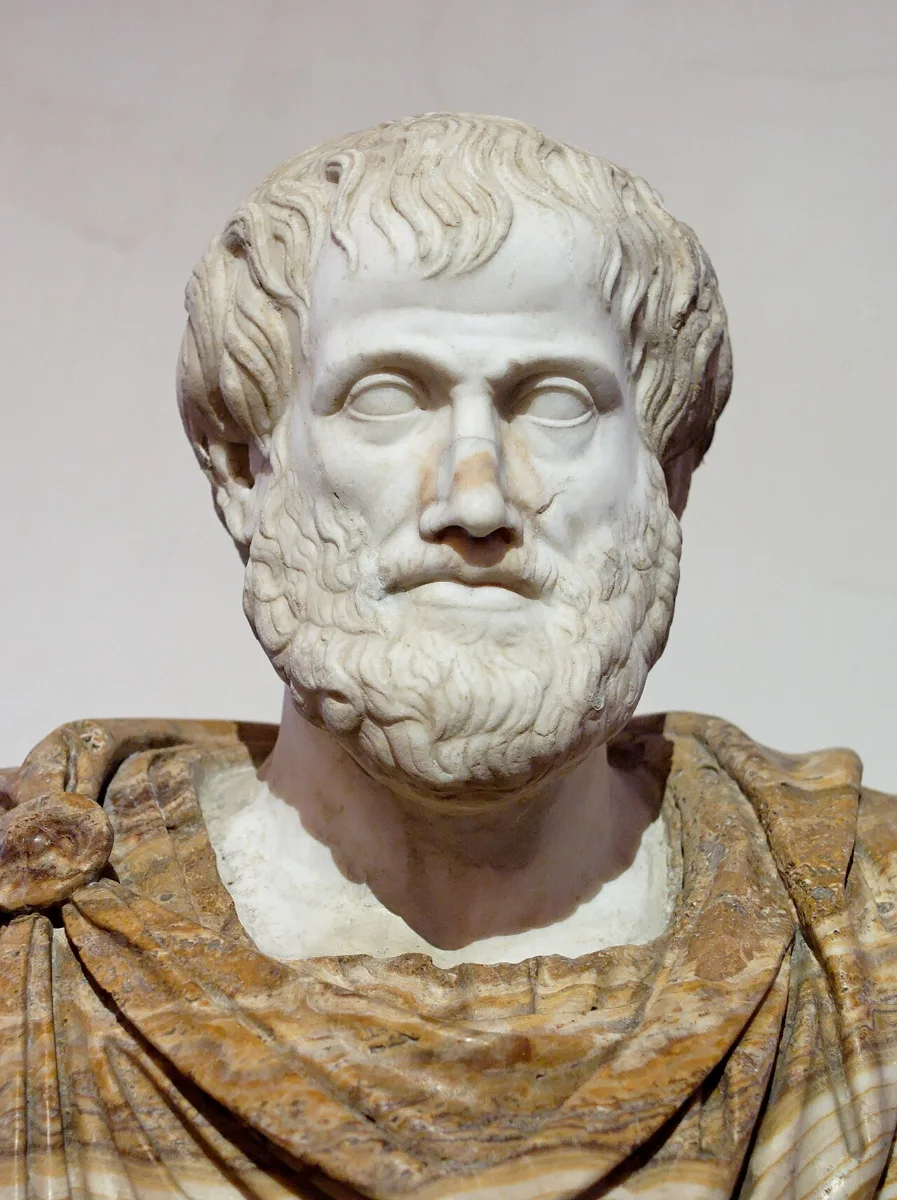
- Aristotle Ἀριστοτέλης (Aristotelēs)philosopher
Philosopher who distinguished metre (metron) from rhythm (rhythmos), judged iambics the metre closest to speech, described the accent as melodic, and in the Poetics credits Aeschylus with the second actor.
Source: Kiparsky 2018, p. 79 n. 3; D’Angour 2022, p. 135; Devine and Stephens 1994, p. 208
See: Introduction to Greek metre › Ancient metricians · Accent: pitch or stress? › Evidence
On this site: 52 places on 29 pages
- Aristoxenusmusic theorist
Ancient theorist of music and rhythm, who allowed that speech has a melody of a sort but distinguished the gliding voice of speech from the voice of song.
Source: Devine and Stephens 1994, p. 208
See: Accent: pitch or stress? › Evidence · Introduction to Greek metre › Ancient metricians · Scales and harmoniai › Aristoxenus and the Pythagoreans
On this site: 34 places on 17 pages
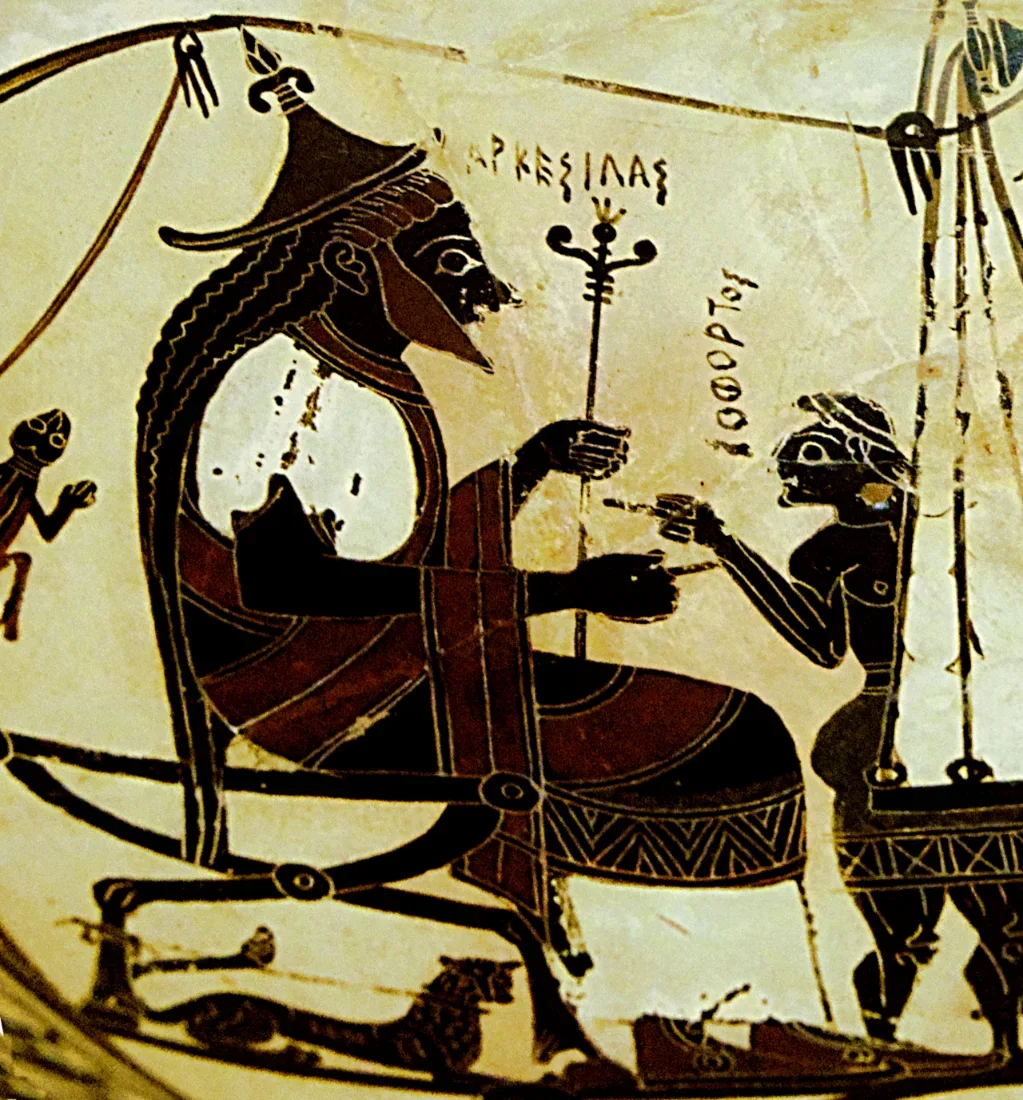
- Arkesilas IVvictoralso Arkesilas, Kyrene, Euphamos
Arkesilas IV of Kyrene, whose chariot victory of 462 BC Pindar’s Pythian 4 celebrates; the ode’s long story of Jason matters because his family claimed descent from the Argonaut Euphamos.
Source: Race 1997a, p. 264
See: Pindar › Pythian 4
On this site: 2 places
- arsis ἄρσις (arsis)term
Strictly the up-beat, the part of a foot marked with a dot in ancient musical texts, as opposed to the thesis; modern books have also used the two words the other way round. D’Angour reports a view linking them with a change of pitch.
Source: West 1987, p. 85; D’Angour 2022, p. 139 with n. 6
See: Introduction to Greek metre › Glossary · Rhythm › Arsis and thesis
On this site: 19 places on 9 pages
- Artemisgoddess
The goddess of hunting, angry in the parodos of the Agamemnon; Timotheus wrote a hymn to her for the Ephesians.
See: Aeschylus › Agamemnon · 104–39 (parodos) · Timotheus and the New Music › Life
On this site: 27 places on 13 pages
- asclepiadtermalso asclepiadean, lesser asclepiad, greater asclepiad, asclepiads
A glyconic with choriambic expansion, ○ ○ — ⏑ ⏑ — ⁝ — ⏑ ⏑ — ⏑ — (glᶜ); the greater asclepiad has the choriamb twice (gl²ᶜ). Dawe calls Antigone 787~797, × — — ⏑ ⏑ — — ⏑ ⏑ — —, a catalectic minor asclepiad; Lourenço names it a pherecratean with choriambic expansion (phᶜ).
Source: West 1987, p. 85; Battezzato 2009, p. 135; Lourenço 2011, p. 113 n. 245
See: Aeolic › Expansion · Introduction to Greek metre › Glossary
On this site: 20 places on 10 pages
- Asclepiadespoet
Hellenistic epigrammatist who praised Erinna’s short poem as a match for Homer (A.P. 7.11).
Source: Natoli et al. 2022, p. 86
See: Erinna › Life
On this site: 4 places on 4 pages
- Ascraplace
Hesiod’s village, to which his father moved from Cyme (Works and Days 633–640).
See: Hesiod › Works and Days · 633–662 (Ascra; the voyage to Chalcis)
On this site: 4 places
- Asia Minorplacealso Asia
The west coast of modern Turkey, home of the Ionian and East Aeolic Greeks.
See: Lesbian Aeolic › Sappho's dialect · Anacreon › Life
On this site: 7 places on 6 pages
- Asopichosvictor
Asopichos of Orchomenos, son of Kleodamos, for whose victory in the boys’ stadion Pindar wrote Olympian 14.
Source: Race 1997a, p. 209
See: Pindar › Olympian 14
On this site: 1 place
- Asopidslyric poemalso PMG 654 iii
Corinna’s poem on the daughters of the river Asopus and the prophet’s answer (PMG 654 col. iii), in polyschematist glyconic stanzas, on the Berlin papyrus.
Source: Gentili and Lomiento 2001, pp. 7–8
See: Corinna › The Asopids (654 iii) · 22–51 (the prophet’s answer)
On this site: 1 place
- Asopusriver god
Boeotian river god, father of the daughters in Corinna’s Asopids.
See: Corinna › Myth · Corinna › The Asopids (654 iii) · 12–21 (the daughters)
On this site: 6 places on 2 pages
- aspirate δασύ (dasy)termalso aspirated, aspiration, unaspirated
A sound with a puff of breath, [h]. The aspirated stops φ θ χ were [pʰ tʰ kʰ], p t k followed by breath, much as English p t k at the start of pot, top, cat said with emphasis; the grammarians called them δασέα (dasea) “rough” and π τ κ ψιλά (psila) “smooth”. The rough breathing (h) is an aspirate too. Example: πόρος (poros) [póros] “passage” beside φόρος (phoros) [pʰóros] “tribute”.
Source: Allen 1968, pp. 12, 16, 26; Smyth 1920, p. 11 (§ 16 a)
See: Sounds › Consonants
On this site: 35 places on 17 pages
- aspirated stoptermalso aspirates, aspirated plosive
φ, θ, χ in classical Greek: p, t, k followed by a puff of breath, single consonants, not the fricatives f, th, ch of Modern Greek, which they became in the Roman and Byzantine periods.
Source: Allen 1968, pp. 16–26
See: Sounds › Consonants
On this site: 8 places on 4 pages
- assimilationtermalso assimilated
The change of a sound to make it more like its neighbour. Final ν took on the place of the consonant that followed: ἐν πόλει (en polei) “in the city” was said, and on inscriptions often written, ἐμ πόλει, and ἐν κύκλῳ as ἐγ κύκλῳ [eŋ kýklɔː]. Example inside a word: ἐμμένω (emmenō) “I abide by”, from ἐν + μένω.
Source: Allen 1968, pp. 31–32; Smyth 1920, p. 24 (§ 77)
See: Sounds › Consonants
On this site: 5 places on 2 pages
- astrophictermalso non-strophic, polymetric, polymetry
Not divided into responding strophes; astrophic, polymetric songs, changing from one metre to another, mark the New Music and the late monodies of Euripides. Timotheus was remembered above all for giving up strophic responsion; the words then never had to fit a melody fixed in advance.
Source: West 1987, pp. 62, 66; D’Angour 2022, p. 138; Csapo and Wilson 2009, p. 284
See: Lyric in drama › Polymetry · Euripides › Actors' song
On this site: 31 places on 18 pages
- Astyanaxhero
Hector’s infant son, who shrinks from his father’s nodding crest in Iliad 6.466–481.
See: Homer › Iliad · 6.466–481 (Hector and Astyanax)
On this site: 2 places on 2 pages
- asynarteton ἀσυνάρτητον (asynartēton)termalso asynarteta, asynartete
For Hephaestion, two cola that cannot be joined into one unit but are used together as a single line; for West, two periods written as one line, as in some epodes of Archilochus. Example: Archilochus fr. 191.1, a dactylic tetrameter and an ithyphallic in one line (4da ¦ ith).
Source: Hephaestion, Ench. 15.1; West 1987, p. 32
See: Lyric Stanzas › Asynarteta · Introduction to Greek metre › Glossary
On this site: 16 places on 9 pages
- Athenagoddess
The goddess of crafts and of Athens, named in many poems here (the Distaff of Theocritus’ Idyll 28 is her gift).
See: Callimachus, Theocritus and Hellenistic poets › Theocritus, Idyll 28
On this site: 33 places on 20 pages
- Athenaeus Ἀθήναιος (Athēnaios)writer
Author of the Deipnosophistae (“Sophists at Dinner”), which quotes much lost poetry, including Xenophanes fr. 2 and the Attic skolia, whose name he explains from the order of singing. (The Athenaeus of the Delphic paean of 127 BC is a different man.)
Source: Natoli et al. 2022, p. 177
See: Anacreon › The ball and Artemon (Athenaeus) · Praxilla › Attic skolia (anonymous) · Accent: pitch or stress? › Melody
On this site: 48 places on 20 pages
- Athensplace
The city of tragedy and comedy and of Solon.
See: Aeschylus › Life · First steps › 6. Drama
On this site: 114 places on 37 pages
- Atreusheroalso Atreides, Atreidae
Father of Agamemnon and Menelaus, the “sons of Atreus” of the Iliad and the Agamemnon.
See: Epic Ionic › Metrical consequences · Aeschylus › Agamemnon · 104–39 (parodos)
On this site: 19 places on 9 pages
- Atthisin Sappho
A girl named in Sappho’s poems (“I loved you, Atthis, once, long ago”).
See: Sappho › Fr. 96 (νῦν δὲ Λύδαισιν…) · Lesbian Aeolic › Corpus and imitators
On this site: 2 places on 2 pages
- Attictermalso Attic dialect
The dialect of Athens, used for the spoken parts of tragedy and comedy; the songs of tragedy have a Doric surface.
Source: West 1987, pp. 57, 60; Goldhill 1997, p. 128
See: Attic of drama › Spoken verse
On this site: 7 places on 7 pages
- Attic correptiontermalso correptio Attica
A short vowel kept short before a stop + liquid or nasal (πλ, τρ, κν …), because the whole group begins the next syllable; normal in Attic speech and so in the spoken verse of drama, above all comedy, while earlier poetry mostly makes the syllable long. With γμ, γν, δμ, δν it never happens, and with βλ, γλ only rarely. Example: τέκνα (tekna) “children”, scanned te-kna ⏑ ⏑ as well as tek-na — ⏑; πατρός (patros) as πα-τρός.
Source: West 1987, pp. 16–17; Allen 1968, pp. 100–102; Smyth 1920, p. 35 (§ 145)
See: Introduction to Greek metre › Prosody: consonants · Overview › How dialect affects metre
On this site: 41 places on 11 pages
- Attic skoliadrinking songsalso carmina convivialia, PMG 884–901
Anonymous Athenian drinking songs quoted by Athenaeus: short hymns, sayings, myths and invitations to drink, many sung to the same tunes. A dozen share a four-verse stanza (gl ia∧ twice, an unnamed verse, dod ∫ dod); PMG 898–901 have a two-verse form.
Source: West 1987, p. 42 with n. 6; Natoli et al. 2022, p. 177
See: Praxilla › Attic skolia (anonymous)
On this site: 2 places on 2 pages
- Aulisplace
Harbour town named in several poems here: the omen at Aulis in the Agamemnon parodos, a Boeotian town in the Catalogue of Ships, and the port from which Hesiod sailed to Chalcis.
See: Aeschylus › Agamemnon · 160–75 (Hymn to Zeus) · Hesiod › Works and Days · 633–662 (Ascra; the voyage to Chalcis)
On this site: 8 places on 4 pages
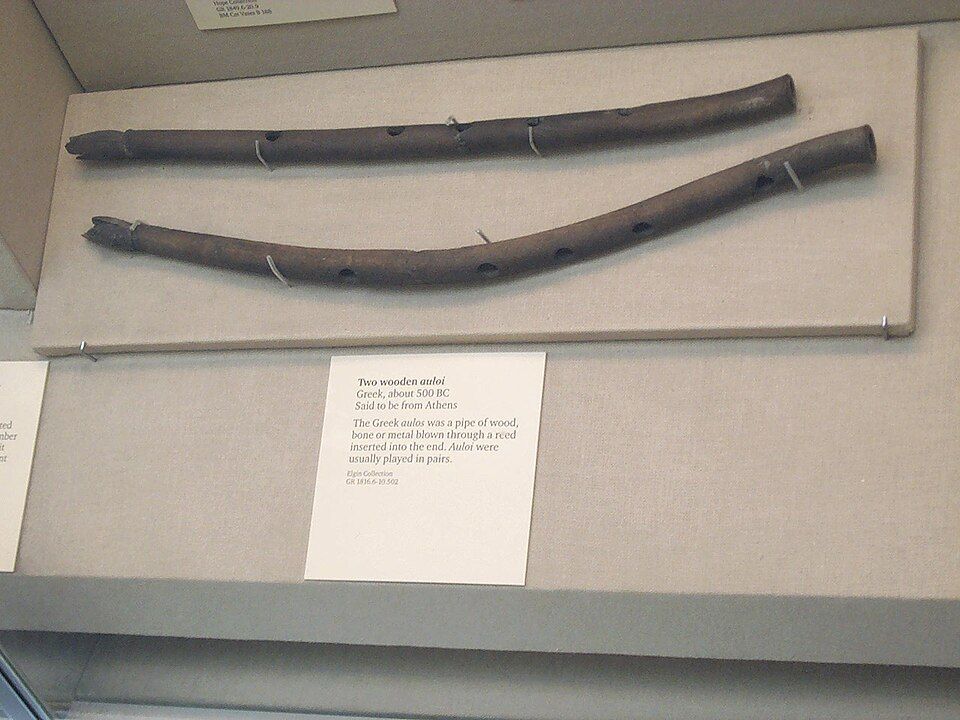
- aulos αὐλός (aulos)termalso auloi, pipe
The double reed-pipe that accompanied elegy, choral song and the recited anapaests and tetrameters of drama.
Source: D’Angour 2022, p. 132; Battezzato 2005, p. 151
See: Introduction to Greek metre › Rhythm and music · Introduction to Greek metre › Speech and song · Instruments › The aulos
On this site: 38 places on 23 pages
- Autolycus (Euripides)tragedy (lost)
A lost play of Euripides; Athenaeus quotes Xenophanes fr. 2, on the honours paid to athletes, as the source of a passage in it.
Source: Athenaeus 10.413f–414c (ed. Kaibel)
See: The elegists: Callinus, Tyrtaeus, Mimnermus, Solon, Theognis, Xenophanes › Xenophanes fr. 2
On this site: 1 place
B
- basiglum
Siglum for Battezzato’s siglum for the baccheus, ⏑ — —. See baccheus.
Source: Battezzato 2009, p. 134
On this site: 11 places on 4 pages
- Babriuspoet
Author of verse fables in choliambs (first century AD), always with an accented next-to-last syllable; his fables were found on Mount Athos in the nineteenth century.
Source: West 1987, p. 82
See: Accent: pitch or stress? › Metre · Iambic › The choliamb and other variants
On this site: 8 places on 6 pages
- Bacchaetragedyalso Ba.
Euripides’ tragedy of Dionysus and Pentheus, produced after his death and awarded first prize; it returns to older ways after the experiments of his last plays. Six of its passages are scanned on this site.
Source: Easterling 1997, p. 353; Gregory 2005, pp. 258, 269 n. 4
See: Euripides › Bacchae · 64–169 (parodos) · Euripides › Plays and dates
On this site: 35 places on 14 pages
- baccheus βακχεῖος (bakcheios)termalso bacchiac, bacchius, bacchiacs
The foot ⏑ — —; in lyric iambics it is the syncopated metron ia∧. Hephaestion counts it among the five-time feet; Battezzato (siglum ba) treats it as a catalectic iamb.
Source: West 1987, p. 52; Hephaestion, Ench. 3.2; Battezzato 2009, p. 134
See: Introduction to Greek metre › Glossary
On this site: 34 places on 18 pages
- Bacchylides Βακχυλίδης (Bakchylidēs)poet
Poet of Ceos, by tradition Simonides’ nephew and Pindar’s rival, whose victory odes and dithyrambs were recovered from a single papyrus roll in 1896.
Source: Maehler 2004, pp. 9–10
See: Bacchylides › Life and works · Bacchylides › Transmission
On this site: 100 places on 31 pages
- barbitos βάρβιτος (barbitos)term
The deeper-pitched lyre with a long curved arm, the instrument of the Lesbian poets and Anacreon; Athenaeus credits Sappho with the word.
Source: Battezzato 2021, pp. 131–132; D’Angour 2022, p. 132
See: Introduction to Greek metre › Rhythm and music · Sappho › Music · Instruments › Lyres
On this site: 11 places on 7 pages
- barytoneterm
A word with no accent on its last syllable: every paroxytone, proparoxytone and properispomenon. The Greek βαρύτονος (barytonos) means “low-toned”. Example: λόγος (logos) “word”, accented on its first syllable, is barytone.
Source: Smyth 1920, p. 38
See: Accent and morae › The three marks
On this site: 1 place
- Battosfounderalso Battus
The man whom Delphi’s oracle, in Pindar’s Pythian 4, proclaims as the settler of Libya.
See: Pindar › Pythian 4
On this site: 3 places on 2 pages
- Baucisfriend of Erinna
Erinna’s childhood friend, who died soon after her wedding, mourned in the Distaff and two epigrams.
See: Erinna › Life · Erinna › Epigrams
On this site: 3 places
- Bellermann's conventiontermalso Bellermann convention, conventional transcription, C = a
The modern equivalents for the Greek note-signs, fixed by Bellermann and Fortlage in 1847 so that the key written with the plain signs needs no sharps or flats: the vocal sign C is written as a, the a below middle c. The editors agree it sets everything about a minor third too high; Hagel would transcribe a fourth lower.
Source: Hagel 2009, pp. 9, 452–453; Pöhlmann and West 2001, p. 7; West 1992, p. 255
See: Music theory › Notation · Notation › Two sign systems
On this site: 2 places on 2 pages
- Bernand 30 and 31inscriptionsalso Colossus of Memnon epigrams, Bernand 29–32
Julia Balbilla’s Aeolic epigrams in elegiac couplets carved on the Colossus of Memnon in November AD 130, numbered after A. and É. Bernand’s edition of the inscriptions on the colossus.
Source: Tribulato 2021, pp. 143, 145
See: Julia Balbilla › Inscription 30 · Julia Balbilla › Inscription 31
On this site: 2 places
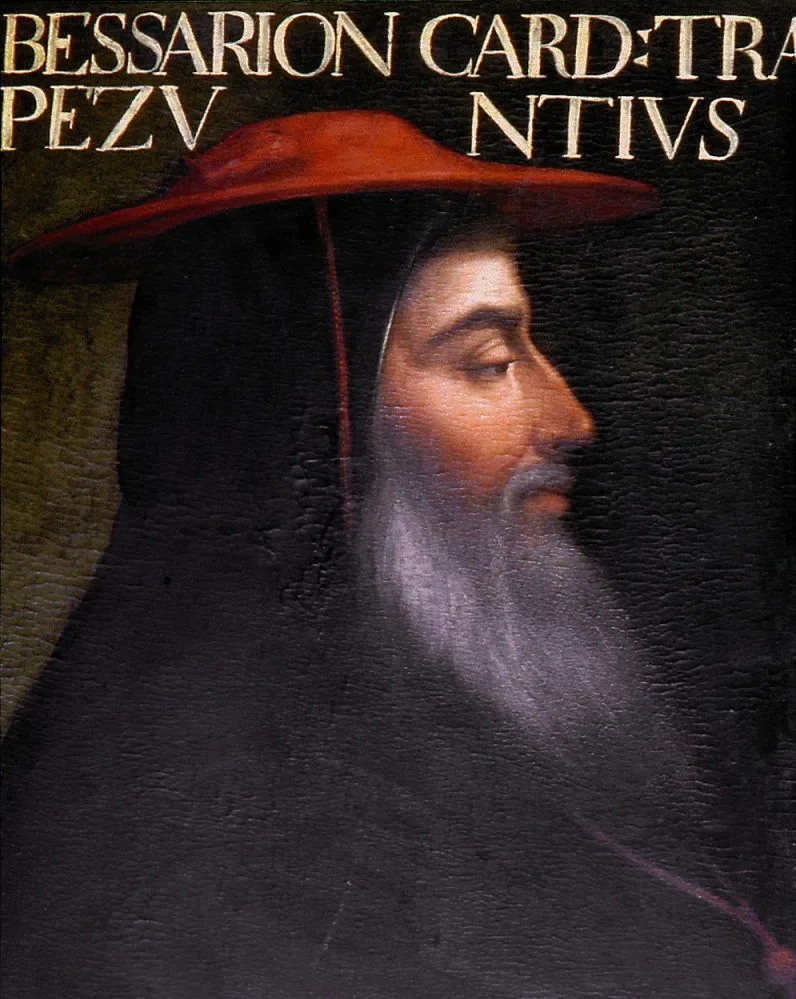
- BessarionByzantine scholar
Cardinal Bessarion (1403–1472), who aimed at a complete library of Greek literature and gave his collection to Venice in 1468.
Source: Reynolds and Wilson 1991, p. 149
See: How the texts reached us › Renaissance
On this site: 2 places on 2 pages
- bicepsterm
Two short positions before a princeps that may be replaced by one long syllable, treated as a single unit and written ⏔; used of the dactylic hexameter and the anapaest.
Source: West 1987, p. 6; Battezzato 2009, p. 131
See: Dactylic: the hexameter › Scheme
On this site: 219 places on 44 pages
- biceps/ancepsterm
A position that takes either two shorts or a single syllable of either length, found in Stesichorus and Bacchylides; West draws it .
Source: West 1987, pp. 37, 46
See: Introduction to Greek metre › Glossary
On this site: 4 places on 3 pages
- Birdscomedy
Aristophanes’ comedy of 414 BC in which two Athenians found a city of the birds; its lyric 327–351 is scanned on this site.
Source: Easterling 1997, p. 353; Seidensticker 2005, p. 42
See: Aristophanes › Birds · Aristophanes › Plays and dates
On this site: 15 places on 10 pages
- blunttermalso blunt ending, blunt close
An ending … ⏑ — on a long (in dactylic runs written ∧∧), as opposed to a pendant ending … ⏑ — ×.
Source: West 1987, pp. 6, 38
See: Introduction to Greek metre › Glossary
On this site: 22 places on 12 pages
- Boeotiaplace
Region of central Greece, home of Pindar and Corinna; the Boeotians head the Catalogue of Ships in Iliad 2.
See: Doric of choral lyric › Corinna · Corinna › Life · Homer › Iliad · 2.484–510 (invocation; Catalogue)
On this site: 12 places on 8 pages
- Boeotianterm
The dialect of Boeotia, of the Aeolic group with Thessalian and Lesbian; Corinna alone among the lyric poets writes in it, while Pindar, also a Boeotian, avoids it.
Source: Natoli et al. 2022, pp. 59, 328
See: Doric of choral lyric › Corinna · Corinna › Life
On this site: 21 places on 12 pages
- Boiscuspoetalso Boiscus of Cyzicus
Hellenistic poet of Cyzicus who boasted of inventing the catalectic iambic octameter.
Source: West 1987, p. 76
See: Callimachus, Theocritus and Hellenistic poets › Life · Callimachus, Theocritus and Hellenistic poets › Metres
On this site: 4 places on 2 pages
- breathingtermalso rough breathing, smooth breathing, spiritus asper, spiritus lenis
The sign written over (or, with a capital, before) a vowel that begins a word. The rough breathing ῾ (spiritus asper) means an [h] before the vowel; the smooth breathing ᾿ (spiritus lenis) means none. Every initial υ and ρ has the rough breathing. In metre the [h] does not count as a consonant. Example: ὅρος (horos) “boundary” beside ὄρος (oros) “mountain”.
Source: Smyth 1920, pp. 9–10 (§§ 9–14); Allen 1968, pp. 50–53; West 1987, p. 12 n. 1
See: First steps › Letters and sounds
On this site: 70 places on 33 pages
- brevis in longoterm
A short final syllable standing where the rhythm needs a long, at the end of a period; the pause that follows makes up the missing time. Lourenço marks it ∩. Example: Pindar, Pythian 12.3 ends ὦ ἄνα (ō ana), its last syllable -να short in a long position.
Source: West 1987, p. 4
See: Introduction to Greek metre › Feet, metra, cola, periods · Introduction to Greek metre › Glossary
On this site: 114 places on 33 pages
- bridgetermalso zeugma, bridges
A place in the line where poets avoid ending a word, the opposite of a caesura, marked ⁀ over the two positions; Hermann’s Bridge, Porson’s Law and Havet’s Law are bridges. Example: in the hexameter — ⏔ | — ⏔ | — ⏔ | — ⏑⁀⏑ | — ⏑ ⏑ | — ×, no word ends between the two shorts of the fourth foot (Hermann’s Bridge).
Source: West 1987, pp. ix, 21, 25, 28, 90; Battezzato 2009, p. 132
See: Introduction to Greek metre › Feet, metra, cola, periods · Introduction to Greek metre › Glossary
On this site: 111 places on 27 pages
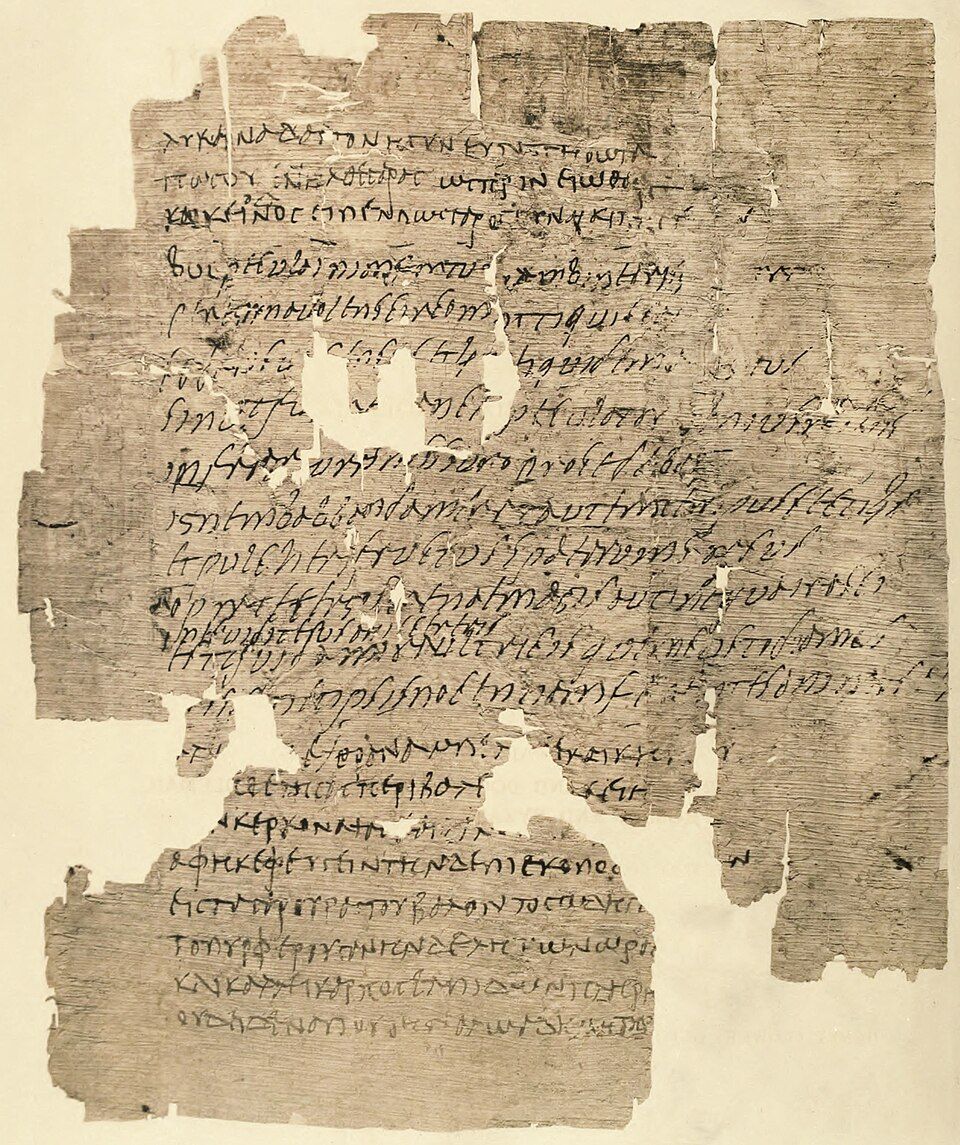
- British Library Papyrus 733papyrusalso Bacchylides papyrus, P.Lond. inv. 733
The British Library papyrus of Bacchylides (2nd century AD) shown on this site; the roll acquired in 1896 is listed as P.Lond.Lit. 46.
Source: Sampson 2022, pp. 114–115
See: Bacchylides › Transmission · Doric of choral lyric › Bacchylides
On this site: 1 place
- Bromiosgodalso Bromius, Bacchus
Cult names of Dionysus, in the Bacchae and the Dionysiaca.
See: Euripides › Bacchae · 64–169 (parodos)
On this site: 9 places on 6 pages
- Brothers Poemlyric poemalso Cypris Poem
Two poems of Sappho published in 2014 from P.GC inv. 105 and P.Sapph.Obbink, the Brothers Poem and the Cypris Poem.
Source: Finglass 2021, pp. 232–242
See: Sappho › Papyri
On this site: 5 places on 4 pages
- bucolic diaeresistermalso bucolic caesura
Word-end after the fourth foot of the hexameter when its biceps is two shorts, a frequent and favoured break, named from its use in pastoral (bucolic) poetry. Example: Theocritus 1.1 Ἁδύ τι τὸ ψιθύρισμα καὶ ἁ πίτυς | αἰπόλε τήνα (Hady ti to psithyrisma kai ha pitys | aipole tēna).
Source: West 1987, p. 21
See: Dactylic: the hexameter › Scheme · Introduction to Greek metre › Glossary
On this site: 113 places on 20 pages
- Bupalusin Hipponax
Sculptor attacked in Hipponax’s iambics (“I’ll hit Bupalus in the eye”).
See: Hipponax, Semonides and the iambographers › Poetry
On this site: 6 places on 2 pages
- Byzantineperiodalso Byzantium (empire), Byzantines
Of the Greek Middle Ages, when the classical texts were copied, selected and annotated (and some lost) before reaching the West.
See: How the texts reached us › Byzantium
On this site: 42 places on 25 pages
- Byzantiumplacealso Constantinople
The city (later Constantinople) and its empire, where the classical texts were copied in the Middle Ages; home of Moero.
See: How the texts reached us › Byzantium · Moero of Byzantium › Life
On this site: 19 places on 16 pages
C
- Cadmushero
Founder of Thebes; the Oedipus Tyrannus opens with “Children, young brood of ancient Cadmus”.
See: Sophocles › Oedipus Tyrannus · 1–77 (the opening scene) · Overview › How dialect affects metre
On this site: 18 places on 9 pages
- caesuratermalso caesurae, masculine caesura, feminine caesura, penthemimeral, hephthemimeral, trochaic caesura
A regular word-end inside a period (| in a scheme). In the hexameter’s third foot it is masculine (after the long) or feminine (after the first short); penthemimeral and hephthemimeral caesurae fall after the third and fourth princeps. Example: Iliad 1.1 μῆνιν ἄειδε θεὰ | Πηληϊάδεω Ἀχιλῆος (mēnin aeide theā | Pēlēïadeō Achilēos), a penthemimeral caesura after θεά.
Source: West 1987, pp. 4, 19, 87–88; Battezzato 2009, p. 132
See: Introduction to Greek metre › Feet, metra, cola, periods · Dactylic: the hexameter › Scheme
On this site: 253 places on 49 pages
- Cairo codexpapyrus codex
A papyrus codex of Menander found in 1905 (first edition 1907), with large parts of several plays.
Source: Allinson 1921, Introduction
See: How the texts reached us › Discoveries · Menander › Plays and papyri
On this site: 2 places on 2 pages
- Callias of Mytilenegrammarian
Grammarian of the third or second century BC who wrote a commentary on Sappho and Alcaeus.
See: Overview › Editions and orthography
On this site: 2 places on 2 pages
- Callimachus Καλλίμαχος (Kallimachos)poet
Poet and scholar of third-century BC Alexandria (Aetia, Iambi, Hymns, Hecale, Epigrams), who catalogued Greek literature in his Pinakes and refined the hexameter further than anyone.
Source: West 1987, p. 78; Reynolds and Wilson 1991, p. 7
See: Callimachus, Theocritus and Hellenistic poets › Life · Callimachus, Theocritus and Hellenistic poets › Metres
On this site: 60 places on 26 pages
- Callinuspoet
Elegist of Ephesus (seventh century BC), author of the earliest exhortatory military elegy.
Source: Aloni 2009, p. 171
On this site: 7 places on 5 pages
- Cassandraheroine
The Trojan prophetess whose dochmiacs and cretics in Agamemnon 1136–1155 alternate with trimeters.
See: Aeschylus › Agamemnon · 1136–55 (Cassandra) · Attic of drama › Lyric parts
On this site: 17 places on 7 pages
- catalexis κατάληξις (katalēxis)termalso catalectic, brachycatalectic
The shortening of the last metron of a colon or period by one or two syllables, which marks the close (∧ after the siglum); Hephaestion distinguishes catalectic, brachycatalectic and hypercatalectic endings. Example: the lekythion — ⏑ — × — ⏑ — is a trochaic dimeter with its last position cut off (2tr∧).
Source: West 1987, p. 5; D’Angour 2022, pp. 134–135; Hephaestion, Ench. 4.1–4
See: Introduction to Greek metre › Glossary
On this site: 111 places on 36 pages
- Catalogue of Shipsepic passagealso Catalogue
The list of the Greek leaders and towns in Iliad 2, introduced by an invocation of the Muses (2.484–493) and beginning with the Boeotians; three of its lines keep the metre only by lengthening a short final syllable in -ν.
Source: West 1987, pp. 18, 22
See: Homer › Iliad · 2.484–510 (invocation; Catalogue) · Hesiod › Theogony · 104–115 (the invocation)
On this site: 2 places on 2 pages
- CatullusRoman poet
Roman poet; Sappho fragments were printed in Muretus’ edition of Catullus.
See: Sappho › Editions
On this site: 8 places on 7 pages
- centtermalso cents
A hundredth of an equal-tempered semitone, so that the octave has 1,200: the modern unit, introduced by A. J. Ellis, for comparing intervals by addition. The Greek fifth is 702 cents, the fourth 498, the 9:8 tone 204 and the leimma 90.
Source: West 1992, pp. 11–12; Nowacki 2020, p. 171
See: Music theory › Intervals · Music theory › Tone and semitone
On this site: 20 places on 14 pages
- Ceosplace
Ionian island near Athens, home of Simonides and Bacchylides.
Source: Rawles 2022, p. 317
See: Simonides › Life · Bacchylides › Life and works
On this site: 21 places on 7 pages
- Cercidaspoet
Hellenistic poet who invented a stichic “meliamb”.
Source: Morrison 2022, p. 396 n. 35
See: Callimachus, Theocritus and Hellenistic poets › Lyric
On this site: 2 places on 2 pages
- chsiglum
Siglum for the choriamb, — ⏑ ⏑ —. See choriamb.
Source: West 1987, p. ix
On this site: 4 places on 4 pages
- Chalcisplacealso Amphidamas, Euboea
City on Euboea to which Hesiod made his one voyage, from Aulis, to compete at the games for Amphidamas, where he won a tripod with a song (Works and Days 650–659). In the Agamemnon the fleet lies at Aulis across from Chalcis; Lycophron of Chalcis is said to have edited comedy at Alexandria.
See: Hesiod › Works and Days · 633–662 (Ascra; the voyage to Chalcis)
On this site: 11 places on 7 pages
- Chamaeleonwriter
Peripatetic writer, a contemporary of Aristotle, who wrote on Alcman and Pindar. Hadjimichael lists his monographs On Anacreon, On Sappho, On Lasus, On Simonides, On Pindar and On Stesichorus, and finds no treatise of his on Alcman named by Athenaeus.
Source: Hadjimichael 2020, pp. 159, 175
See: Alcman › Life · Pindar › Life · How the texts reached us › Six stages · Sappho › Before Alexandria
On this site: 10 places on 8 pages
- CharaxusSappho's brotheralso Larichus
Brothers of Sappho named by the Suda (with Eurygius).
See: Sappho › Life
On this site: 1 place
- Chironcentaur
The centaur, who prophesies in Pindar’s Pythian 9; also the title of Pherecrates’ comedy that mocked Timotheus.
See: Timotheus and the New Music › Life
On this site: 4 places on 3 pages
- Choeroboscusgrammarian
Grammarian who wrote a commentary on Hephaestion’s handbook.
Source: West 2018, pp. 372–373
See: Introduction to Greek metre › Ancient metricians
On this site: 4 places on 4 pages
- choliamb χωλίαμβος (chōliambos)termalso choliambic, choliambics, choliambs, scazon, limping iambic, limping trimeter
The “lame” or “limping” iambic trimeter (or trochaic tetrameter) of Hipponax and Ananius, with a long syllable in the next-to-last position where a short is expected; taken up by Callimachus and Herodas. Example: Hipponax fr. 120 ends … τὸν ὀφθαλμόν (ton ophthalmon), with -θαλ- long in the next-to-last position.
Source: West 1987, pp. 30, 82; Battezzato 2009, p. 137
See: Iambic › The choliamb and other variants · Hipponax, Semonides and the iambographers › Metres: choliamb
On this site: 17 places on 8 pages
- choreetermalso chorees
An older name for the trochee, — ⏑. In Jebb’s terms a glyconic is one “cyclic” dactyl and three chorees, a pherecratic the same with one choree fewer.
Source: Jebb 1891, pp. lv–lvii
See: Sophocles › Antigone · 781–800 (third stasimon, Eros)
On this site: 1 place
- choregostermalso chorēgos, choragos, choregoi
At Athens, the citizen who paid for and equipped a chorus. In Dorian states, the word could mean the leader who trained and led the chorus.
See: Performance › Chorus and dance
On this site: 3 places on 3 pages
- choreia χορεία (choreia)term
Choral dance and song together; Battezzato cites Oedipus Tyrannus 895–896, where the chorus asks why it should dance if such deeds are honoured, for tragic choruses that question their own choreia.
Source: Battezzato 2005, p. 165; Burian 1997, p. 182
See: Sophocles › Oedipus Tyrannus · 883–910 (second stasimon, second pair) · Sophocles › Oedipus Tyrannus · 863–82 (second stasimon)
On this site: 2 places
- choriamb χορίαμβος (choriambos)termalso choriambic, choriambs
The four-syllable unit — ⏑ ⏑ — (siglum ch), the core of the aeolic cola; choriambic expansion repeats it inside a colon (glᶜ).
Source: West 1987, pp. ix, 34, 86; D’Angour 2022, p. 137
See: Aeolic › Base and choriamb · Introduction to Greek metre › Glossary
On this site: 95 places on 29 pages
- choriambic dimetertermalso cho dim
A name used in more than one sense. West notes that it is often given to the wilamowitzian (the anaclastic glyconic ○ ○ — × — ⏑ ⏑ —). Dale uses it of dimeters closed by a choriamb: her type B has a first metron of free form, — × — × — ⏑ ⏑ —, as in the lines for the Sun in the Clouds parabasis ode.
Source: West 1987, pp. x, 86; Dale 1968, p. 147 n. 1
See: Aristophanes › Clouds · 563–606 (parabasis, ode and antode) · Sophocles › Antigone · 781–800 (third stasimon, Eros)
On this site: 9 places on 7 pages
- choriambic expansiontermalso dactylic expansion, expansion
The repetition of an internal — ⏑ ⏑ — (choriambic, marked ᶜ) or — ⏑ ⏑ (dactylic, marked ᵈ) inside an aeolic colon, once or more: glᶜ, gl²ᵈ, ph³ᵈ.
Source: West 1987, pp. x, 34
See: Aeolic › Expansion
On this site: 44 places on 20 pages
- chorus χορός (choros)termalso choral, choruses
A group that sang and danced together, in choral lyric and in drama; in tragedy the chorus sings the stasima, in Old Comedy it also delivers the parabasis.
See: Lyric in drama › How tragic lyric works
On this site: 132 places on 38 pages
- Chrestomathyhandbook
Proclus’ handbook of literature, cited for the date of Semonides.
Source: Lennartz 2022, p. 213 with n. 37
See: Hipponax, Semonides and the iambographers › Life
On this site: 1 place
- CiceroRoman writer
Roman orator, first printed in 1465; his De republica was recovered from a palimpsest by Angelo Mai.
Source: Reynolds and Wilson 1991, pp. 193–195
See: How the texts reached us › Printing · How the texts reached us › Discoveries
On this site: 7 places on 5 pages
- Cinesiaspoet
Dithyrambic poet of the New Music, whom Aristophanes’ Birds shows floating among the clouds in search of inspiration.
Source: LeVen 2022, p. 364; Csapo and Wilson 2009, p. 282
See: Timotheus and the New Music › Life · Aristophanes › Chorus and song
On this site: 3 places on 3 pages
- circumflextermalso perispomenon, properispomenon
The accent mark ᾶ, a rise and fall on a long vowel or diphthong; in the musical documents usually set to a falling figure.
Source: Devine and Stephens 1994, p. 152; Cosgrove and Meyer 2006, p. 66
See: Accent and morae › The three marks · Accent: pitch or stress? › Melody
On this site: 226 places on 44 pages
- City Dionysiatermalso Great Dionysia, Dionysia
The Athenian festival of Dionysus at which tragedies were produced; from 386 BC an “old” tragedy was revived there each year, mostly Euripides, never, on the records, Aeschylus.
Source: Kovacs 2005, p. 381
See: Aeschylus › Transmission · Euripides › Transmission
On this site: 26 places on 7 pages
- Class I, II, III (Itsumi)termalso amalgamated
Itsumi’s three groups of the stanza-forms of Pindar’s non-dactylo-epitrite odes: Class I aeolic (Nemean 2), Class II freer dactylo-epitrite, Class III “amalgamated”, the two metres fused in long verses with long single-short runs (Olympian 1, Olympian 14), which he thinks the most characteristically Pindaric.
Source: Itsumi 2009, pp. 103–110; Itsumi 2009, pp. 141, 280, 360
See: Pindar › The other half · Pindar › Olympian 14
On this site: 6 places
- clausulatermalso clausulae
A closing cadence that rounds off a stanza: Maehler hears the shortened D of the eighth verse of Bacchylides 20 slowing the rhythm like a clausula, and Hendry describes Bacchylides 2 as iambic with priapean clausulae.
Source: Maehler 2004, p. 16; Hendry 1994, introduction
See: Bacchylides › Ode 20 · Lyric Stanzas › Worked example
On this site: 19 places on 12 pages
- CleonAthenian
Athenian politician; in Aristophanes’ Wasps, Philocleon turns Alcaeus’ warning about Pittacus against him.
See: Alcaeus › Life · Aristophanes › Life
On this site: 7 places on 3 pages
- cletic hymn κλητικὸς ὕμνος (klētikos hymnos)term
A hymn that calls gods to come; Dale’s description of the parabasis ode and antode of the Clouds, which summon twelve gods, each group in its own rhythm.
Source: Dale 1968, p. 135
See: Aristophanes › Clouds · 563–606 (parabasis, ode and antode)
On this site: 1 place
- clitictermalso clitics
A short word with no accent of its own, said together with a neighbouring word: an enclitic leans on the word before it, a proclitic on the word after it. Example: ἄνθρωπός τις (anthrōpos tis) “some person”, with the enclitic τις; ἐν οἴκῳ (en oikōi) “at home”, with the proclitic ἐν.
Source: Probert 2006, pp. 69–70; Smyth 1920, pp. 41–42 (§§ 179, 181)
See: Accent and morae › Enclitics and proclitics
On this site: 3 places
- Cloudscomedy
Aristophanes’ comedy of 423 BC on Socrates and the contest of the two Arguments; its parabasis (518–562) is in eupolideans, and its ode and antode (563–74 ~ 595–606) are Dale’s example of iambo-choriambic passing into aeolic.
Source: Easterling 1997, p. 353; West 1987, p. 50; Dale 1968, p. 135
See: Aristophanes › Clouds · 1–24 (Strepsiades awake) · Aristophanes › Clouds · 563–606 (parabasis, ode and antode) · Aristophanes › Plays and dates
On this site: 17 places on 7 pages
- codextermalso codices
A book of bound pages, which replaced the roll between the second and fourth centuries AD; works not copied into the new format were often lost.
Source: Reynolds and Wilson 1991, pp. 34–35
See: How the texts reached us › Byzantium
On this site: 12 places on 6 pages
- colarionterm
A very short colon, such as the penthemimer × — ⏑ — ×.
Source: West 1987, pp. 86, 88
See: Introduction to Greek metre › Glossary
On this site: 3 places on 3 pages
- colometrytermalso colometric
The division of a poem into lines (cola) on the page. A tradition credits Aristophanes of Byzantium with the colometry of the lyric poets, and from the second century BC the colometric layout became the norm; whether it reflects the poets’ own rhythms is debated. Example: Sappho 1.1–4, printed as three hendecasyllables and an adonean, where early copies of lyric ran the words on like prose.
Source: Battezzato 2009, p. 132; Reynolds and Wilson 1991, pp. 4–5; Barbantani 2009, p. 301
See: How the texts reached us › Colometry
On this site: 37 places on 17 pages
- colon κῶλον (kōlon)termalso cola
A metrical phrase of up to about twelve syllables, recognisable because the same shape recurs elsewhere; the building block of lyric periods. D’Angour puts the usual size at five to eight syllables. Example: the adonean — ⏑ ⏑ — × that closes each Sapphic stanza, as in Sappho 1.4 πότνια, θῦμον (potnia, thȳmon).
Source: West 1987, p. 4; D’Angour 2022, p. 133
See: Introduction to Greek metre › Feet, metra, cola, periods · Introduction to Greek metre › Glossary
On this site: 300 places on 55 pages
- Colophonplace
Ionian city, home of Mimnermus (or Smyrna), Nicander and Phoenix.
See: The elegists: Callinus, Tyrtaeus, Mimnermus, Solon, Theognis, Xenophanes › Elegy and its poets
On this site: 12 places on 7 pages
- Commageneplace
Kingdom in Syria whose last king was Julia Balbilla’s grandfather.
On this site: 3 places
- compensatory lengtheningterm
The lengthening of a vowel when a following consonant was lost; the dialects differ in the result (Ionic ξεῖνος (xeinos), Lesbian ξένος (xenos), both “stranger, guest”, with gemination elsewhere), which can change a syllable’s quantity.
Source: de Kreij 2022, pp. 143–146; Tribulato 2021, p. 136
See: Epic Ionic › Features · Lesbian Aeolic › Features
On this site: 13 places on 7 pages
- concord σύμφωνον (symphōnon)termalso concords, symphōna, symphona, discord, discords, diaphōna, consonance
An interval whose two notes go well together, sounded at once or one after the other. Greek theory admitted only three concords, the fourth (4:3), the fifth (3:2) and the octave (2:1), with their compounds; every other interval, the thirds included, was a discord, usable in melody but not as a frame.
Source: West 1992, pp. 9, 160; Landels 1999, c. p. 93
On this site: 8 places on 4 pages
- conjecturetermalso emendation, emend, emended
A correction proposed by an editor where the transmitted text seems wrong; metre has been a guide to emendation since the Alexandrians.
Source: Reynolds and Wilson 1991, pp. 8–9, 15; Kovacs 2005, pp. 388–389
See: How the texts reached us › Colometry
On this site: 50 places on 20 pages
- conjunct and disjunct συναφή, διάζευξις (synaphē, diazeuxis)termalso synaphē, diazeuxis, conjunction, disjunction, conjunct tetrachords, disjunct tetrachords, tone of disjunction
The two ways of joining tetrachords: conjunct when they share a note (seven notes, a seventh), disjunct when a tone separates them (eight notes, an octave). The separating tone is itself called the disjunction.
Source: Landels 1999, c. p. 89; West 1992, pp. 160–161
See: Music theory › Joining tetrachords
On this site: 5 places on 4 pages
- consonant clustertermalso cluster, consonant group
Two or more consonants side by side, as στ, μβρ, κλ. Normally the first consonant of a cluster goes with the syllable before, which is then closed and heavy (λεκ-τός); but a stop followed by a liquid or nasal may go whole to the next syllable and leave the syllable before light. Example: ἄστρον (astron) “star”, ἀσ-τρον, with heavy ἀσ-; πατρός (patros) “of a father”, read πα-τρός or πατ-ρός.
Source: Allen 1968, pp. 98, 100–101; Smyth 1920, p. 35 (§§ 140, 144–145)
See: Sounds › Syllables and quantity · Introduction to Greek metre › Prosody: consonants
On this site: 201 places on 39 pages
- Constitution of the Athenianstreatisealso Athenaion Politeia
The Aristotelian treatise that transmits Solon’s iambic fr. 36 entire.
See: Hipponax, Semonides and the iambographers › Poetry · The elegists: Callinus, Tyrtaeus, Mimnermus, Solon, Theognis, Xenophanes › Solon · frr. 4.1–10, 5, 6
On this site: 5 places on 2 pages
- Contest of Helicon and Cithaeronlyric poemalso mountains' contest, PMG 654 i
Corinna’s poem on the singing contest of the mountains Helicon and Cithaeron (PMG 654 col. i), in strict ionics.
See: Corinna › 654 i: the mountains’ contest · Corinna › Metres: ionics, hexameter
On this site: 2 places
- contonationterm
W. S. Allen’s name for the unit of the Greek pitch accent: the high tone together with the fall that follows it, on one syllable (the circumflex) or on two (an acute and the next syllable). No more than one short vowel may follow it, which accounts for the limits on where the accent can stand.
Source: Allen 1968, pp. 114–116
See: Accent: pitch or stress? › Contonation · Accent and morae › Where the accent stands
On this site: 2 places on 2 pages
- contractiontermalso contracted, contracted biceps
One long syllable filling the two short positions of a biceps, as when a dactyl becomes a spondee; the Lesbians’ normal Aeolic metres do not allow it (Sappho’s epic-style hexameters, fr. 105, do). Some teaching books call this “resolution”, which West reserves for the reverse. Example: in Iliad 1.7 … ἄναξ ἀνδρῶν (anax andrōn) the one long syllable ἀν- fills a biceps.
Source: West 1987, pp. 2, 6, 32, 35; Battezzato 2009, p. 131; Natoli et al. 2022, p. 337
See: Dactylic: the hexameter › Contraction · Introduction to Greek metre › Glossary
On this site: 275 places on 52 pages
- contraction (of vowels)termalso vowel contraction, contract verbs
The merging of two vowels, or a vowel and a diphthong, in neighbouring syllables of one word into a single long vowel or diphthong. A vowel made this way is always long. Attic contracts more than Ionic, which often leaves the vowels apart. Not the same as the metrical contraction of two shorts into one long. Example: ἐφίλεε (ephilee) becomes ἐφίλει (ephilei) “he loved”; πλόος (ploos) becomes πλοῦς (plous) “voyage”.
Source: Smyth 1920, pp. 9, 19, 21 (§§ 6, 48); West 1987, p. 10
See: Sounds › Vowels · Epic Ionic › Features
On this site: 275 places on 52 pages
- Corinna Κόριννα (Korinna)poet
Boeotian poet of Tanagra who told local legends in glyconic and ionic stanzas, in her own dialect; whether she was Pindar’s contemporary or a Hellenistic poet is disputed.
See: Corinna › Life · Corinna › Date
On this site: 39 places on 14 pages
- Corinthplace
Doric city where choral lyric may first have emerged, with Eumelus, and where Arion composed.
See: Doric of choral lyric › Features · Doric of choral lyric › Layers and metre
On this site: 22 places on 8 pages
- correptiontermalso epic correption, Attic correption, correpted
Shortening (Latin correptio): a syllable scanned short that could count as long. In epic correption a long vowel or diphthong at the end of a word is short before a word beginning with a vowel (epic, elegy, some lyric); in Attic correption a short vowel stays in a short syllable before a stop + liquid, the whole group beginning the next syllable (Attic speech and drama). Examples: Odyssey 1.1 ἄνδρα μοι ἔννεπε (andra moi ennepe), μοι short before ἔννεπε; Frogs 510 ἀνέβραττεν (anebratten), νε short before βρ.
Source: West 1987, pp. 14, 16–17; Allen 1968, pp. 91, 100–102; D’Angour 2022, p. 134
See: Introduction to Greek metre › Prosody: vowels · Introduction to Greek metre › Prosody: consonants · Introduction to Greek metre › Glossary
On this site: 227 places on 48 pages
- crsiglum
Siglum for the cretic, — ⏑ —. See cretic.
Source: West 1987, p. ix
On this site: 26 places on 14 pages
- crasis κρᾶσις (krāsis)term
The merging of two vowels across a word-boundary into one syllable, especially when the spelling shows it, as κἀτέρωτα (katerōta) for καὶ ἀτέρωτα (kai aterōta); one kind of synecphonesis.
Source: West 1987, pp. 15, 86
See: Introduction to Greek metre › Prosody: vowels · Introduction to Greek metre › Glossary
On this site: 100 places on 24 pages
- cratineanterm
A comic verse, ¨gl | gl¨∧: — ⏑ ⏑ — ⏒ — ⏑ — | ○ ○ — × — ⏑ —.
Source: West 1987, p. 86
See: Introduction to Greek metre › Glossary
On this site: 4 places on 4 pages
- Cratinusplaywright
Poet of Old Comedy, with Eupolis and Aristophanes one of its leading three; his Archilochoi is cited by Hephaestion.
Source: Seidensticker 2005, p. 39
See: Aristophanes › Life · Archilochus › Poetry and reputation
On this site: 11 places on 5 pages
- Cratylusdialogue
Plato’s dialogue on names, evidence for the pitch accent (the name Δίφιλος (Diphilos) spoken with the middle syllable low).
See: Accent: pitch or stress? › Evidence
On this site: 2 places on 2 pages
- Creonkingalso Haemon
Name of a king in several tragedies here (Euripides’ Medea; Sophocles’ Oedipus Tyrannus and Antigone); in the Antigone the chorus’s hymn to Eros (781–800) follows his quarrel with his son Haemon.
See: Sophocles › Antigone · 781–800 (third stasimon, Eros)
On this site: 11 places on 3 pages
- Creteplacealso Cretan
Island home of Andromachus, Mesomedes and Musurus, and of the Dictaean hymn.
See: Andromachus: the theriac poem (in Galen) › Andromachus · How the texts reached us › Printing
On this site: 33 places on 17 pages
- cretic κρητικός (krētikos)termalso cretics
The five-time metron — ⏑ — (siglum cr), whose longs may be resolved into the paeons; not to be confused with the ‘spurious’ cretic of syncopated iambics, ∧ia.
Source: West 1987, pp. ix, 39, 52, 55; Battezzato 2009, p. 131
See: Cretic and paeonic › The cretic and the paeons · Introduction to Greek metre › Glossary
On this site: 78 places on 30 pages
- CritiasAthenian
Athenian praised by Anacreon, grandfather of the oligarch of the same name.
See: Anacreon › Life
On this site: 8 places on 5 pages
- Croesusking
King of Lydia, by whose reign Herodotus dated Sappho; he appears in Bacchylides’ Ode 3 for Hieron.
See: Sappho › Life · Bacchylides › Ode 3
On this site: 3 places on 3 pages
- Curetesdivine beings
Divine beings named in Cithaeron’s song in Corinna.
See: Corinna › Date
On this site: 5 places on 3 pages
- Cybelegoddess
The goddess named in the parodos of the Bacchae; the galliambic is linked with her cult.
See: Euripides › Bacchae · 64–169 (parodos) · Ionic › Later ionic
On this site: 4 places on 3 pages
- Cycle of Agathiasanthologyalso Agathias' Cycle
The sixth-century anthology of epigrams by Agathias and his circle, whose hexameters return to a far stricter technique.
Source: West 1987, p. 81
See: Nonnus › Nonnus · The elegiac couplet › Rules and later refinements
On this site: 5 places on 4 pages
- cyclic foottermalso cyclic dactyl, cyclic anapaest
In ancient rhythmic theory, a ⏑ ⏑ — (or — ⏑ ⏑) in which the long took less than its full two units of time. The nineteenth-century musical metric used it too: for Jebb a glyconic is one “cyclic” dactyl and three chorees.
Source: West 1987, p. 38; Jebb 1891, pp. lv–lvii
See: Introduction to Greek metre › Glossary · Sophocles › Antigone · 781–800 (third stasimon, Eros)
On this site: 1 place
- Cyclopssatyr play
Euripides’ satyr play, the only complete one to survive.
See: Euripides › Plays and dates
On this site: 16 places on 7 pages
- Cymeplace
Place-name in two poems here: the Aeolian Cyme that Hesiod’s father left for Ascra (Works and Days 636), and the Cyme of Pythian 1, under which, with Sicily and Etna, Typhos lies.
See: Hesiod › Works and Days · 633–662 (Ascra; the voyage to Chalcis) · Pindar › Pythian 1
On this site: 3 places on 3 pages
- Cyreneplace
Greek city in Libya (Arcesilas IV won the Pythian chariot race); also the nymph of Pythian 9.
On this site: 8 places on 5 pages
- Cyrnusin Theognis
The young man to whom Theognis addresses his elegies.
On this site: 4 places on 2 pages
- c′termalso middle c
Middle c in the octave notation used in these transcriptions. The octaves are labelled C–B, c–b, c′–b′ and c″–b″.
Source: West 1992, p. 12
See: Overview › Reading an edition
On this site: 12 places on 6 pages
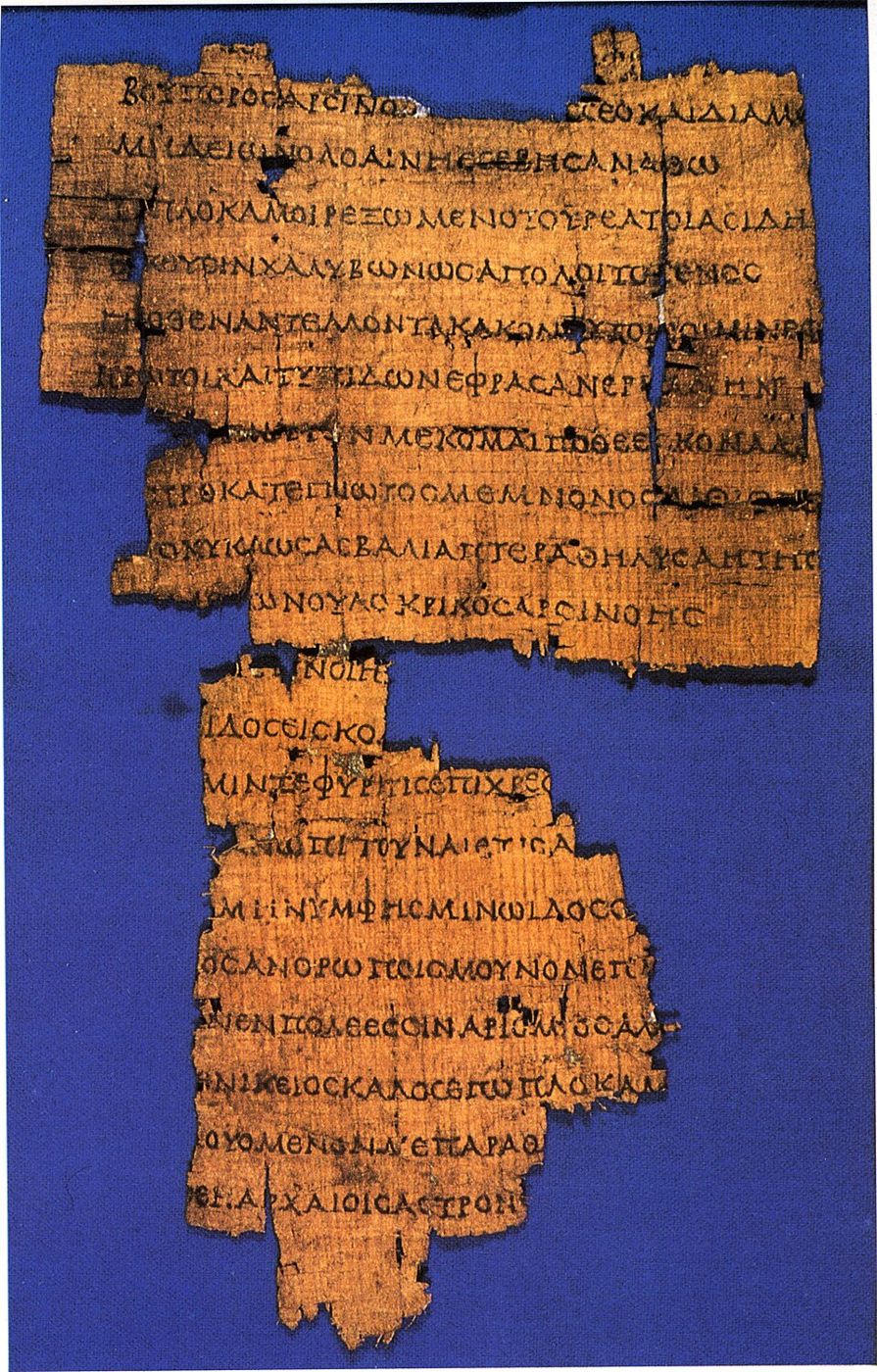
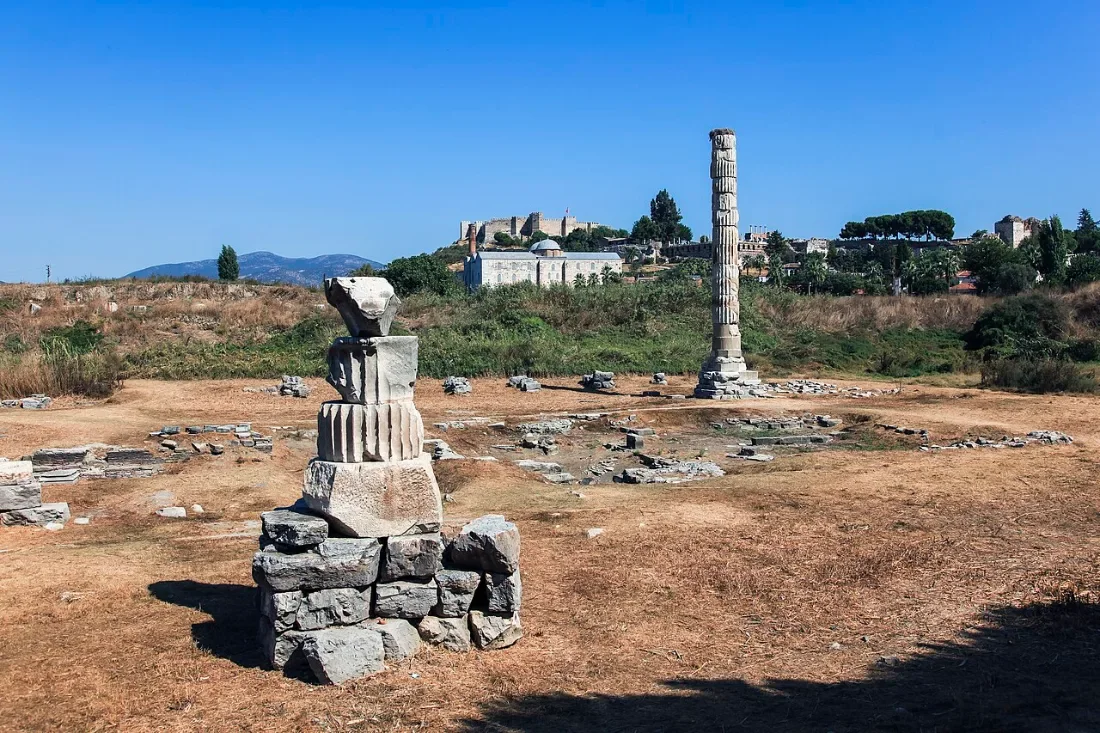
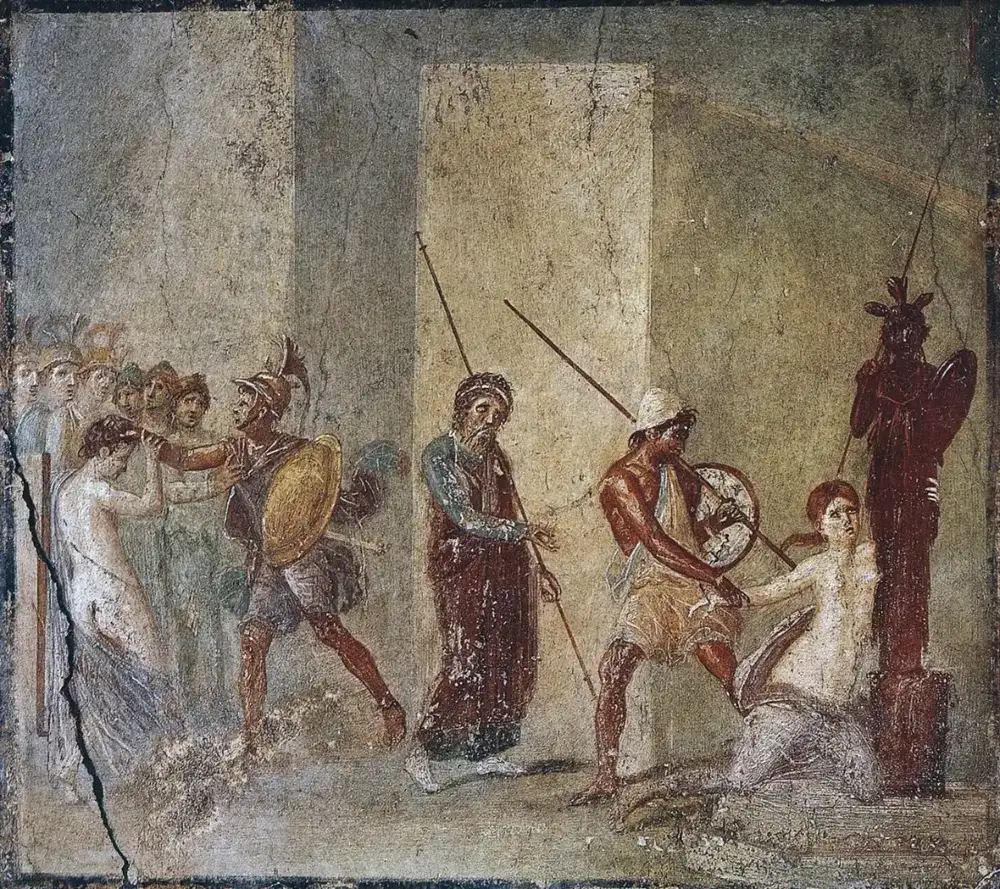
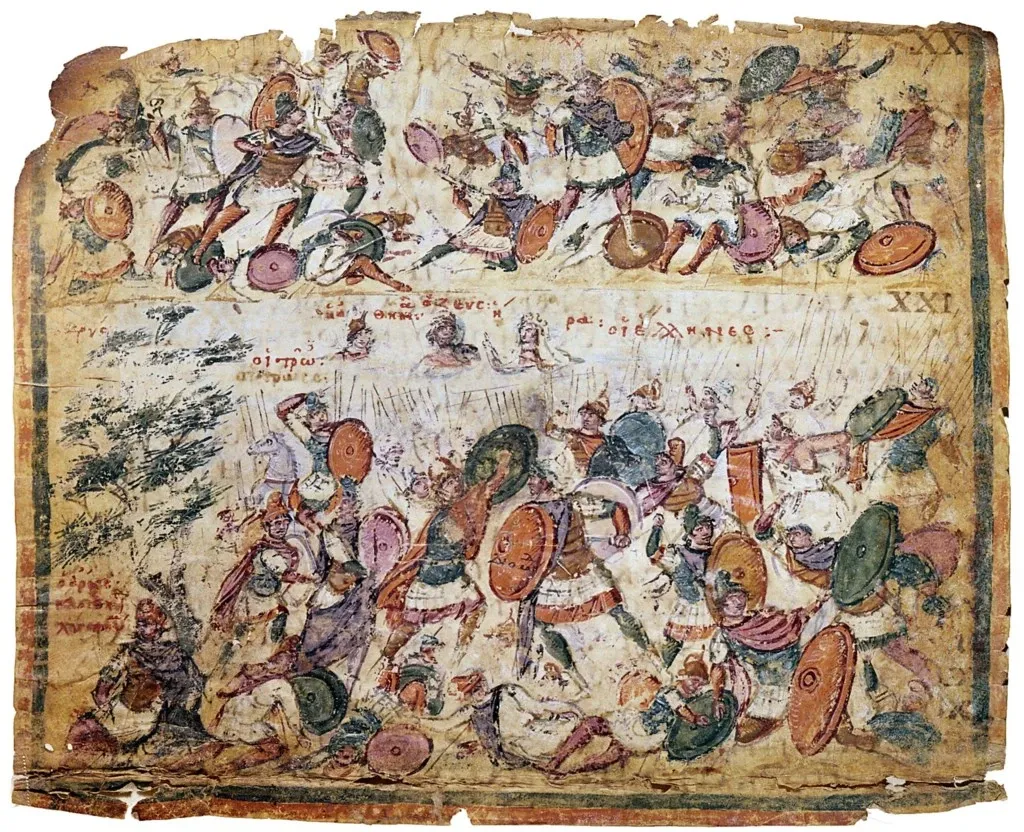
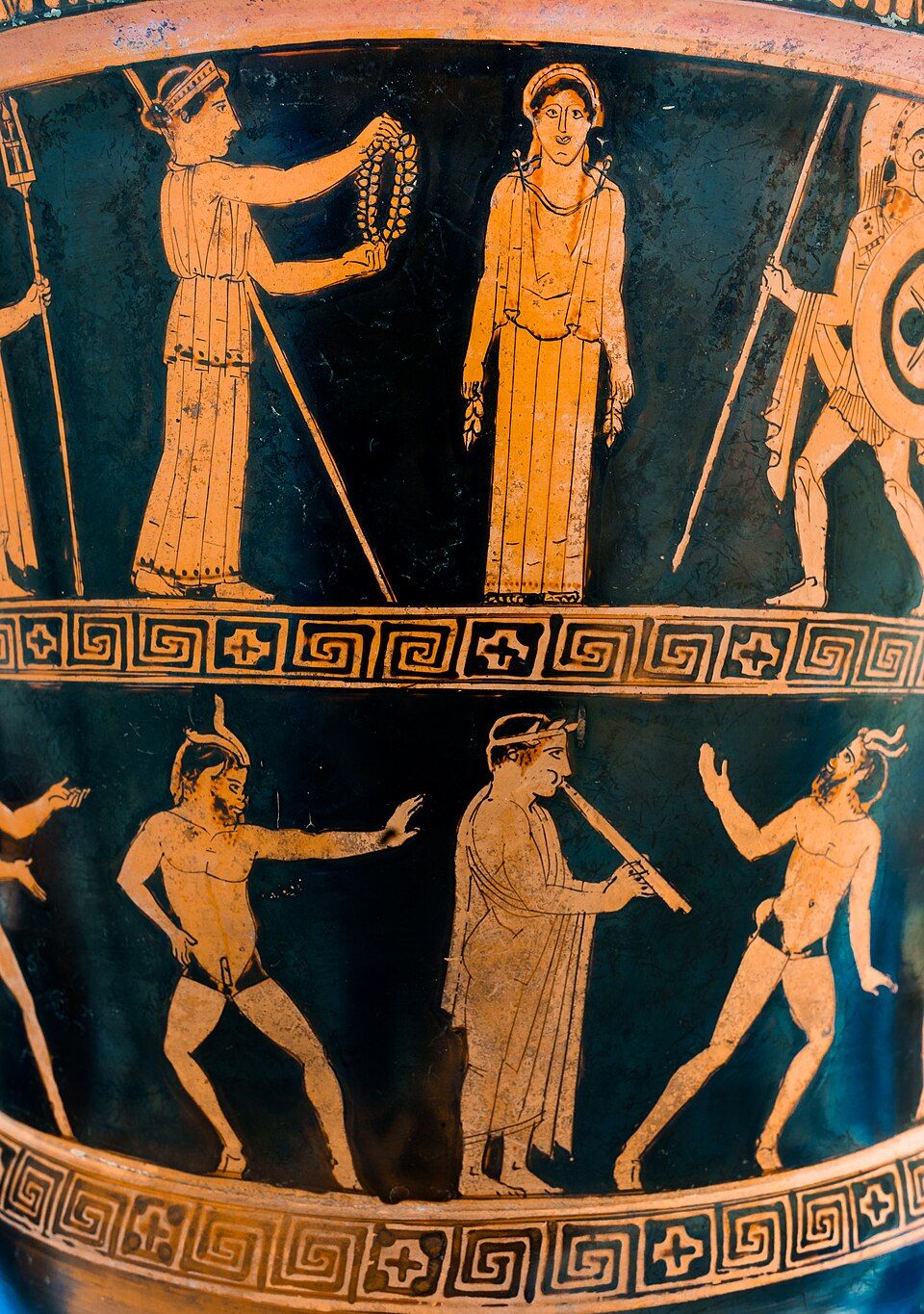
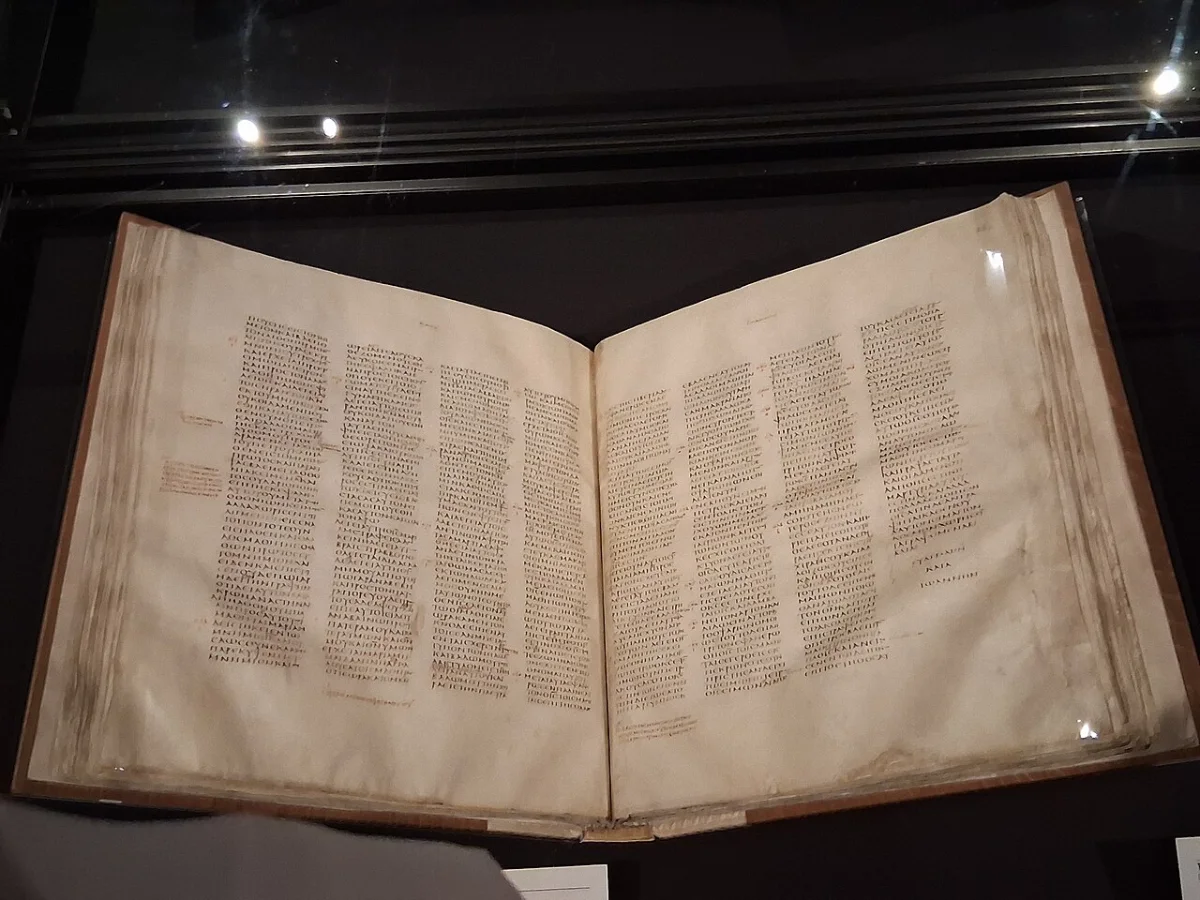
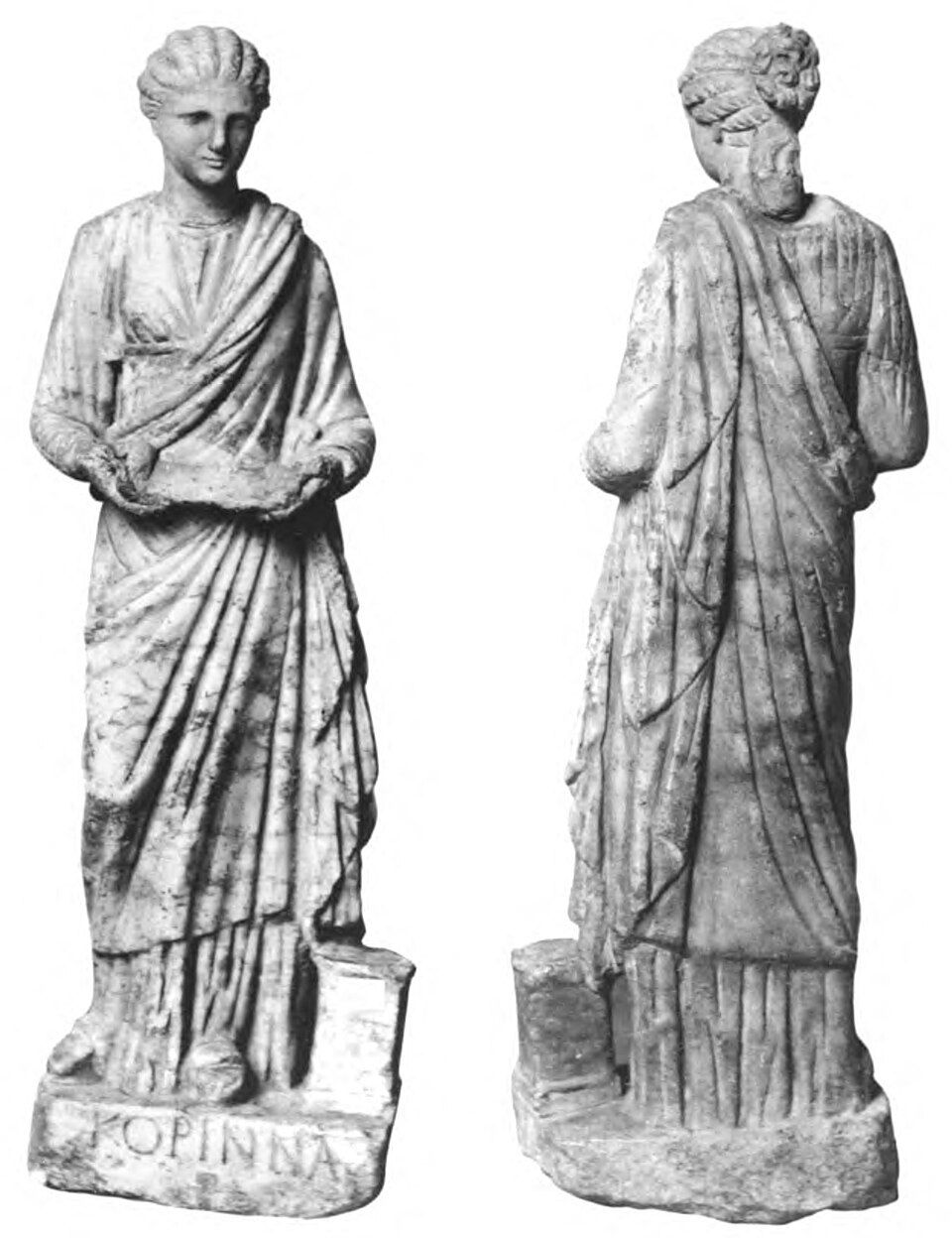
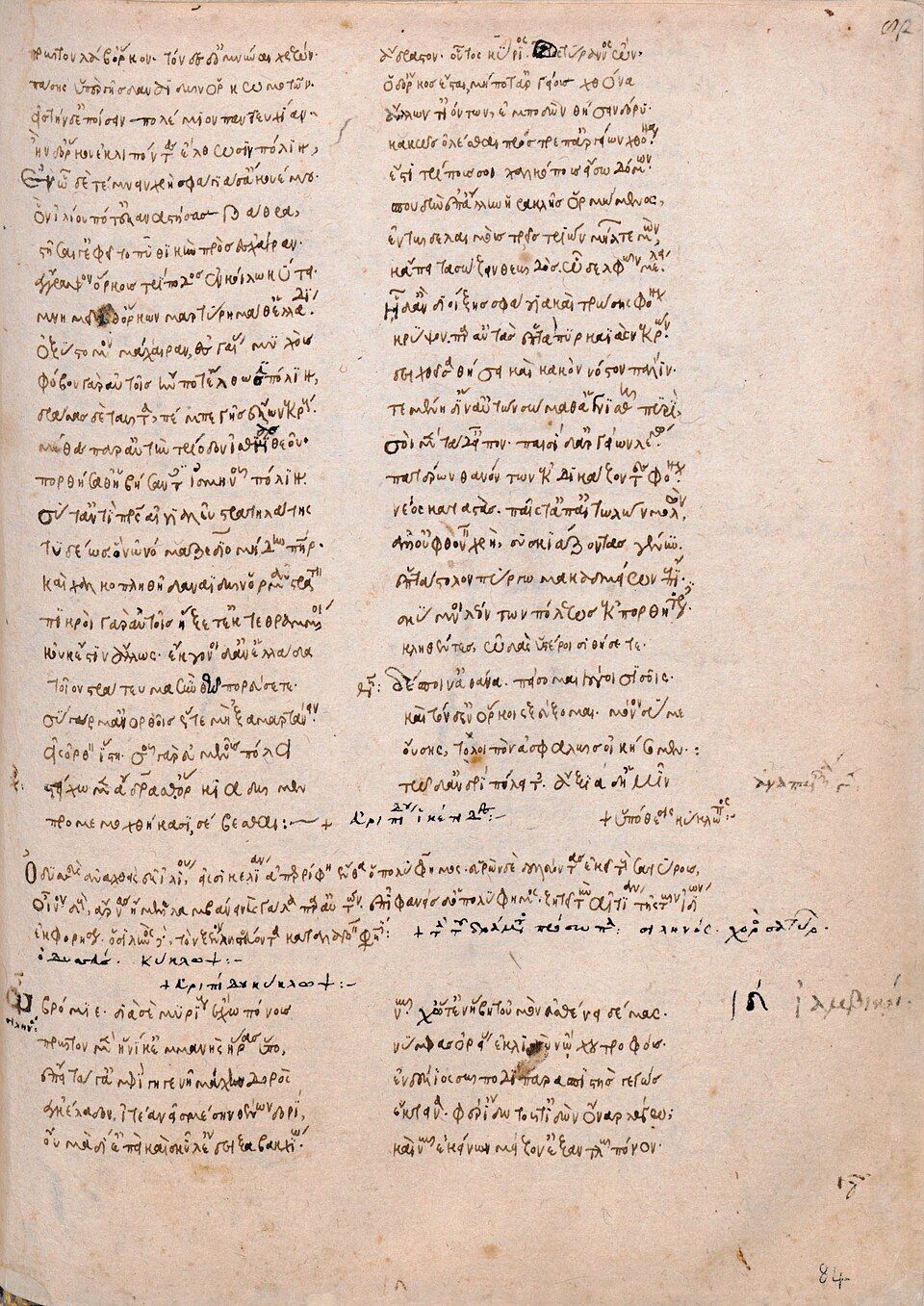
D
- D, d, E, esiglumalso D/e
Maas’s sigla for the units of dactylo-epitrite: d — ⏑ ⏑ —, D — ⏑ ⏑ — ⏑ ⏑ — (D² and D³ longer), e — ⏑ —, E — ⏑ — × — ⏑ — (e∧ — —); joined by link-syllables, as in D ⏓ e. See dactylo-epitrite.
Source: West 1987, pp. x, 43; Battezzato 2009, p. 141
See: Dactylo-epitrite › The elements
On this site: 55 places on 19 pages
- dasiglum
Siglum for a dactyl (da∧: dactyls with catalexis, ending — ×; da∧∧ ending —), — ⏑ ⏑. See dactyl.
Source: West 1987, pp. ix, 38
On this site: 31 places on 14 pages
- dactyl δάκτυλος (daktylos)termalso dactylic, dactyls
The foot — ⏑ ⏑ (siglum da), named from the Greek for “finger”; verse is dactylic when it runs in such units or when cola like — ⏑ ⏑ — ⏑ ⏑ — dominate.
Source: West 1987, pp. ix, 34, 86; D’Angour 2022, p. 132
See: Dactylic: the hexameter › Scheme · Introduction to Greek metre › Glossary
On this site: 300 places on 58 pages
- dactylic pentametertermalso 5da
A lyric colon of five dactyls (5da), not the elegiac “pentameter”. Dale notes that Aeschylus often sets one as the next-to-last colon of an iambic stanza, before the closing lekythion, as at Agamemnon 165 and 173.
Source: Dale 1968, p. 84; Lourenço 2011, p. 67 n. 137
See: Aeschylus › Agamemnon · 160–75 (Hymn to Zeus)
On this site: 3 places on 2 pages
- dactylo-anapaesticterm
Davies and Finglass’s name for the first of Stesichorus’ two kinds of metre (the other is dactylo-epitrite). The Geryoneis is of this kind: Pitotto analyses its strophe as anapaests, West as dactyls; both count the same positions.
Source: Kelly 2022, p. 45 n. 49; Pitotto 2024, pp. 19–20; West 1987, pp. 37–38
See: Stesichorus and Ibycus › Geryoneis
On this site: 1 place
- dactylo-epitritetermalso D/e, dactylo-epitrites
The metre built from the dactylic units d and D and the iambo-trochaic e and E, joined by a usually long link-syllable (D ⏓ e); the Dorian metre of Pindar and Bacchylides. The name is modern (nineteenth century), the sigla are Maas’s.
Source: West 1987, p. 43; Battezzato 2009, p. 141
See: Dactylo-epitrite › The elements · Pindar › Metres: D/e
On this site: 70 places on 21 pages
- Damonmusic theoristalso Damon of Oa
Athenian musical theorist of the mid fifth century, associate of Pericles, who held that modes and rhythms shape character and that the state should regulate them; Plato’s source for the doctrine of ethos, though his own writings are lost.
Source: West 1992, pp. 246–247; Nowacki 2020, pp. 15–16
See: Scales and harmoniai › Harmoniai and ethos · Overview › Mousikē
On this site: 7 places on 5 pages
- Dawngoddess
The dawn goddess (Eos), “golden-armed Dawn” in Bacchylides’ Ode 5.
On this site: 13 places on 7 pages
- De antidotismedical treatise
Galen’s treatise on antidotes, in which he copies Andromachus’ theriac poem in full (1.6).
See: Andromachus: the theriac poem (in Galen) › Andromachus
On this site: 9 places on 3 pages
- De compositione verborumtreatisealso On Literary Composition, On the Arrangement of Words, On Composition, Comp.
Dionysius of Halicarnassus’ treatise on word arrangement, which quotes Sappho’s Hymn to Aphrodite and describes the pitch range of the word accent (about a fifth) and the music of Euripides’ Orestes.
Source: Dionysius, De compositione verborum 11; Finglass 2021, pp. 247–248
See: Accent: pitch or stress? › Evidence · How the texts reached us › Printing
On this site: 7 places on 4 pages
- Deianeiraheroine
Heracles’ wife, whose story Bacchylides’ Ode 16 tells so allusively that its hearers must have known it.
On this site: 1 place
- Deipnosophistaemiscellanyalso Sophists at Dinner, Athenaeus
Athenaeus’ “Sophists at Dinner” (c. AD 200), a vast miscellany that quotes much lost poetry (Anacreon, Semonides, Xenophanes, Menander, the Attic skolia); cited from Kaibel’s edition.
See: Anacreon › The ball and Artemon (Athenaeus) · The elegists: Callinus, Tyrtaeus, Mimnermus, Solon, Theognis, Xenophanes › Xenophanes fr. 1 · Praxilla › Attic skolia (anonymous)
On this site: 14 places on 7 pages
- Delosplace
Island for whose great festival Bacchylides wrote ode 17.
See: Bacchylides › Life and works
On this site: 14 places on 5 pages
- Delphiplace
Apollo’s sanctuary (Pytho); the Delphic paeans with musical notation were inscribed there, and in Pythian 4 its oracle names Battos settler of Libya.
On this site: 37 places on 12 pages
- Delphic paeansinscriptionsalso Delphic hymns, paean of Athenaeus, paean of Limenius
Two paeans of 127 BC inscribed at Delphi with musical notation (by Athenaeus and by Limenius), whose melodies follow the word accent almost without exception.
Source: Cosgrove and Meyer 2006, pp. 68, 73–75; West 1987, pp. 71–72
See: Accent: pitch or stress? › Melody · Cretic and paeonic › The cretic and the paeons · Notation › A Delphic passage
On this site: 27 places on 13 pages
- Demetergoddess
The goddess of grain, subject of the Homeric Hymn to Demeter (found in 1777) and of Philicus’ hymn in choriambic hexameters.
See: Homeric Hymns › To Demeter (Hymn 2) · 1–21 · How the texts reached us › Discoveries
On this site: 24 places on 8 pages
- Demetrius TricliniusByzantine scholaralso Triclinius
Schoolmaster at Thessalonica about 1305–1320, the first Byzantine to understand the metres of classical poetry and use them in editing, sometimes well, often by inserting stopgap words.
See: How the texts reached us › Byzantium · Aeschylus › Manuscripts
On this site: 12 places on 6 pages
- Demosthenesorator
Athenian orator, first printed by Aldus in 1502–1504 with Sophocles and Euripides; his speech On the False Embassy (19.255) preserves Solon’s elegy fr. 4.
Source: Reynolds and Wilson 1991, pp. 156–157
See: How the texts reached us › Printing · The elegists: Callinus, Tyrtaeus, Mimnermus, Solon, Theognis, Xenophanes › Solon · fr. 4.11–39 (Eunomia)
On this site: 8 places on 5 pages
- dentaltermalso dentals
Made with the tip of the tongue against the upper teeth: τ [t], δ [d], θ [tʰ] and ν [n]. Allen argues that these were true dentals, as in French, rather than the alveolars of English t, d, n. Example: τόξον (toxon) “bow”, δῶρον (dōron) “gift”, θεός (theos) “god”.
Source: West 1987, p. 11; Smyth 1920, p. 11 (§§ 16, 19); Allen 1968, pp. 14, 31
See: Sounds › IPA chart · Sounds › Consonants
On this site: 4 places on 2 pages
- diaeresis διαίρεσις (diairesis)term
Word-end that coincides with the end of a metron or colon; Battezzato uses it of word-end between two metra. Example: the fixed word-end in the middle of the elegiac pentameter, — ⏔ — ⏔ — | — ⏑ ⏑ — ⏑ ⏑ —, where the first hemiepes ends.
Source: West 1987, p. 86; Battezzato 2009, p. 132
See: Introduction to Greek metre › Feet, metra, cola, periods · Introduction to Greek metre › Glossary
On this site: 189 places on 35 pages
- diaeresis (the sign ¨) διαίρεσις (diairesis)termalso trema
The two dots written over ι or υ (ϊ, ϋ) to show that it does not form a diphthong with the vowel before it, so that the two are said in separate syllables (διαίρεσις, diairesis, “separation”). Not the same as the metrical diaeresis, word-end at the end of a metron. Example: προΐστημι (proïstēmi) “I set before”, with ο and ι apart; νηΐ (nēï) “to a ship”.
Source: Smyth 1920, p. 9 (§ 8)
See: Sounds › Diphthongs and digraphs
On this site: 189 places on 35 pages
- dialecttermalso dialects, literary dialect
In Greek poetry the dialect goes with the genre, not the poet’s birthplace: Ionic for epic, elegy and iambus, Lesbian Aeolic for the Lesbian monodists, Doric for choral lyric, Attic for dramatic dialogue.
Source: D’Alessio 2009, p. 120; West 1987, p. 3
On this site: 5 places on 4 pages
- dialēpsis διάληψις (dialēpsis)termalso dialepsis
“Division”: sounding the octave harmonic of a lyre or kithara string by touching its midpoint lightly as the plectrum strikes. Landels, who tested it on a monochord, argues that it could double a seven-stringed instrument’s range and may explain the octave marks of the notation; his hypothesis.
Source: Landels 1999, c. pp. 61–62
See: Instruments › Ranges and pitch
On this site: 1 place
- Dicaeopoliscomic hero
Hero of Aristophanes’ Acharnians, who makes his own peace.
See: Aristophanes › Acharnians
On this site: 2 places on 2 pages
- Dictaean Hymn to the Kourosinscriptionalso Dictaean hymn
An ionic hymn of the fourth or third century BC from Crete, an example of ionic in religious use.
See: Callimachus, Theocritus and Hellenistic poets › Life · Ionic › Later ionic
On this site: 7 places on 4 pages
- Didymusgrammarian
Grammarian whose commentaries, with those of Aristonicus and Theon, lie behind the medieval scholia.
See: Introduction to Greek metre › Ancient metricians · Pindar › Transmission
On this site: 10 places on 8 pages
- diesis δίεσις (diesis)termalso dieseis, quarter-tone, quarter-tones, enharmonic diesis
A step smaller than a semitone, above all the enharmonic quarter-tone; for Philolaus it was a semitone. The word may first have been the pipers’ term for “letting through” a little air from a finger-hole.
Source: Nowacki 2020, p. 172; Landels 1999, c. pp. 35, 87, 90; Hagel 2009, pp. 443–444
See: Music theory › Tone and semitone · Music theory › Tetrachord
On this site: 15 places on 7 pages
- digamma ϝ (the sound [w])termalso wau, initial digamma
The letter ϝ, the sound w, lost in Ionic and Attic before Homer’s text was fixed but kept in some dialects; many Homeric words, above all in formulae, scan as if it were still there, which explains apparent hiatus and lengthening. Example: ἄναξ (anax) “lord” was once ϝάναξ (wanax); so in Iliad 1.7 Ἀτρεΐδης τε ἄναξ ἀνδρῶν (Atreïdēs te anax andrōn) the τε is not elided before it.
Source: West 1987, pp. 22–23; Kiparsky 2018, p. 116; Smyth 1920, p. 8 (§ 3 D); Allen 1968, pp. 45–47
See: Epic Ionic › Features · Dactylic: the hexameter › Prosody of epic
On this site: 128 places on 25 pages
- digraphtermalso digraphs
Two letters written for one sound. In classical Attic ει and ου were often digraphs for single long vowels, [eː] and [oː] (later [uː]), not diphthongs: the grammars’ “spurious diphthongs”. Example: ει in εἶναι (einai) “to be”, from older ἔσναι, a long [eː]; ου in πλοῦς (plous) “voyage”, contracted from πλόος (ploos).
Source: Allen 1968, pp. 67–68, 72–73; Smyth 1920, p. 9 (§ 6)
See: Sounds › Vowels
On this site: 10 places on 5 pages
- dimetertermalso dimeters, monometer
A run of two metra (a trimeter has three, a tetrameter four); a numeral before a siglum gives the count, as 2ia, 4da.
Source: West 1987, pp. x, 5
See: Introduction to Greek metre › Feet, metra, cola, periods
On this site: 83 places on 33 pages
- Diogenes Laertiuswriter
Biographer of the philosophers, the source of some quoted verse.
See: The elegists: Callinus, Tyrtaeus, Mimnermus, Solon, Theognis, Xenophanes › Xenophanes fr. 1
On this site: 2 places
- Dionysiacaepic
Nonnus’ epic of Dionysus in 48 books of hexameters, from the god’s double birth to his Indian war, written after Greek speech had lost its long and short syllables.
See: Nonnus › Nonnus · Nonnus › Dionysiaca · 1.1–33
On this site: 8 places on 4 pages
- Dionysius of Halicarnassuscritic
Critic whose On Literary Composition quotes Sappho’s Hymn to Aphrodite and describes the pitch range of the word accent; he reports the colometry credited to Aristophanes of Byzantium.
Source: Reynolds and Wilson 1991, pp. 4–5; Finglass 2021, pp. 247–248
See: Accent: pitch or stress? › Evidence · How the texts reached us › Colometry
On this site: 37 places on 20 pages
- Dionysusgod
The god of the dithyramb, of the City Dionysia and of Euripides’ Bacchae; Nonnus’ Dionysiaca tells his story from his double birth.
See: Euripides › Bacchae · 64–169 (parodos) · Nonnus › Nonnus
On this site: 39 places on 16 pages
- diphthong δίφθογγος (diphthongos)termalso diphthongs
Two vowels said in one syllable, the voice gliding from the first to the second, which is ι or υ (δίφθογγος, diphthongos, “having two sounds”). Every diphthong is long: it counts two morae, like a long vowel, so a syllable that contains one is heavy. Example: αι in παῖς (pais) “child” [ai], like English high [haɪ]; οι in οἶκος (oikos) “house”, like toy [tɔɪ]; αυ in αὐτός (autos) “self”, like how [haʊ].
Source: Smyth 1920, p. 9 (§ 5); Allen 1968, pp. 75–77, 81
See: Sounds › Diphthongs and digraphs
On this site: 261 places on 54 pages
- diseme δίσημος (disēmos)termalso diseme sign, tetraseme, pentaseme
A note of two time-units, marked in the scores by a bar above the pitch sign; the tetraseme and pentaseme of the treatises occur in no score.
Source: West 1992, p. 266; Anderson 1994, pp. 205–206
See: Notation › Rhythmic signs
On this site: 6 places on 3 pages
- Distaffhexameter poem
Erinna’s lament in hexameters for her friend Baucis, three hundred lines by ancient report, praised by the Hellenistic epigrammatists as a match for Homer.
Source: Natoli et al. 2022, p. 86
See: Erinna › Life · Erinna › Metres
On this site: 6 places on 3 pages
- dithyramb διθύραμβος (dithyrambos)termalso dithyrambs
A choral song for Dionysus, performed in competition at Athens; Bacchylides’ dithyrambs survive on papyrus, and Timotheus’ New Music transformed the genre.
Source: Maehler 2004, pp. 10, 18; Csapo and Wilson 2009, p. 280
See: Timotheus and the New Music › Metres · Performance › Chorus and dance
On this site: 43 places on 18 pages
- dochmiac δόχμιος (dochmios)termalso dochmius, dochmiacs, dochmii
The colon ⏒ — — ⏒ — (siglum δ), basically ⏑ — — ⏑ —, any long resolvable and either short ‘dragged’ into a long; the rhythm of high agitation in tragedy. The name means “askew”.
Source: West 1987, pp. ix, 56; D’Angour 2022, p. 134; Battezzato 2009, p. 142
See: Dochmiac › The dochmius · Introduction to Greek metre › Glossary
On this site: 47 places on 21 pages
- dochmius kaibelianustermalso kaibelianus
A rare variant of the dochmius, × — ⏒ — ⏑ — (siglum kδ).
Source: West 1987, pp. x, 46, 56
See: Dochmiac › The dochmius · Introduction to Greek metre › Glossary
On this site: 4 places on 3 pages
- dodsiglum
Siglum for the dodrans (dod¨, the reversed dodrans ○ ○ — ⏑ ⏑ —), — ⏑ ⏑ — ⏑ —. See dodrans.
Source: West 1987, p. ix
On this site: 26 places on 12 pages
- dodranstermalso dod, reversed dodrans
The colon — ⏑ ⏑ — ⏑ — (siglum dod), “three quarters” of a glyconic; the reversed dodrans (dod¨) is ○ ○ — ⏑ ⏑ —. Dale calls the two dodrans A and B. Itsumi writes the reversed dodrans — ⏑ — ⏑ ⏑ — (rdod), its second position short in nearly all of Pindar, and builds the aeolic phrases from these two six-position units with or without a base.
Source: West 1987, pp. ix, 33, 86; Itsumi 2009, p. 24
See: Introduction to Greek metre › Glossary · Pindar › The other half
On this site: 22 places on 11 pages
- Dorictermalso Doric dialect, Laconian, lyric koinē, Doric colouring
The dialect group of the Peloponnese and the west; in poetry, Alcman’s Laconian and the Doric-based lyric koinē of choral song (ᾱ for η, as Μιτυλήναν (Mitylānan) for Attic Μιτυλήνην (Mitylēnēn) “Mytilene”; -οντι (-onti) for Ionic -ουσι (-ousi) in the third person plural of verbs; νιν (nin) “him, her”), which also colours the songs of tragedy. There the long “Doric alpha” is one of the signs that a passage was sung (Battezzato’s “Doric patina”): Cassandra’s spoken trimeters at Agamemnon 1138–1139 have Attic vowels, her sung lines Doric ᾱ.
Source: de Kreij 2022, pp. 144–146, 157–159; Maehler 2004, p. 11; Battezzato 2005, pp. 149, 153; West 1987, p. 57; Natoli et al. 2022, p. 332
See: Doric of choral lyric › Features · Attic of drama › Lyric parts
On this site: 77 places on 29 pages
- double consonanttermalso double consonants, doubled consonant
(1) One of the letters ζ, ξ, ψ, each standing for two consonants: ζ [zd], ξ [ks], ψ [ps]. (2) A consonant written twice (ππ, λλ, σσ) and said long, as in English hip-pocket. Either kind closes the syllable before it, which is then heavy. Example: ἔξω (exō) “outside”, with heavy ἐξ- because ξ is [ks]; ἵππος (hippos) “horse”, ἱπ-πος, with a heavy first syllable.
Source: Smyth 1920, p. 11 (§ 21); West 1987, p. 12 n. 1; Allen 1968, pp. 10, 53–57
See: Sounds › Syllables and quantity
On this site: 181 places on 36 pages
- dovetailingtermalso dovetailed
Joining two cola so that a word runs one syllable past the boundary between them; word-end then comes one position later than the colon-end. West marks it ∫.
Source: West 1987, pp. ix, 42, 86
See: Introduction to Greek metre › Glossary
On this site: 16 places on 14 pages
- downsteptermalso terracing
In Ranieri’s model of the Greek accent, borrowed from Japanese, the drop to a low pitch on the mora after the accented high one, with the successive highs of a sentence stepping lower towards its end.
Source: Ranieri 2021, pp. 26–27
See: Pronunciation systems › Lucian · Pitch and prominence › Pitch without stress
- downtrendtermalso catathesis
The gradual lowering of the accent peaks through a phrase; catathesis is the step down after each full accent. In the Delphic hymns each accent is set on average just over a semitone below the one before, and the melody is set higher again at the start of a new phrase.
Source: Devine and Stephens 1994, pp. 435–436, 441–442, 450
See: Accent and morae › A pitch accent
On this site: 1 place
- dragtermalso dragged
A long syllable admitted in a position that is normally short, as in the dochmius (σ’ ἀμ- at Agamemnon 1145); hence West’s ⏒ for “usually short”. In aeolic a dodrans may end with a dragged close, — ⏑ ⏑ — — —, which Sophocles and Euripides occasionally use (Antigone 786).
Source: West 1987, pp. 56, 59, 86
See: Dochmiac › The dochmius · Lyric in drama › Worked example · Introduction to Greek metre › Glossary
On this site: 33 places on 16 pages
- dynamic analysistermalso dynamic approach, mutant
Itsumi’s name for the method West took over from Snell: following how each sequence grows out of the one before and calling a variant a “mutant” of its source colon. Itsumi grants its merits but finds that it cannot show which forms are usual, and adds explicit rules for dividing verses into phrases; Kiparsky uses “dynamic approach” of Itsumi’s own book, in the opposite sense.
Source: Itsumi 2009, pp. 3–7; Kiparsky 2018, p. 84
On this site: 3 places on 2 pages
- Dyskoloscomedyalso Dyscolus
Menander’s comedy, the only one complete, from a papyrus codex (P.Bodmer 4).
See: Menander › Plays and papyri · How the texts reached us › Discoveries
On this site: 10 places on 6 pages
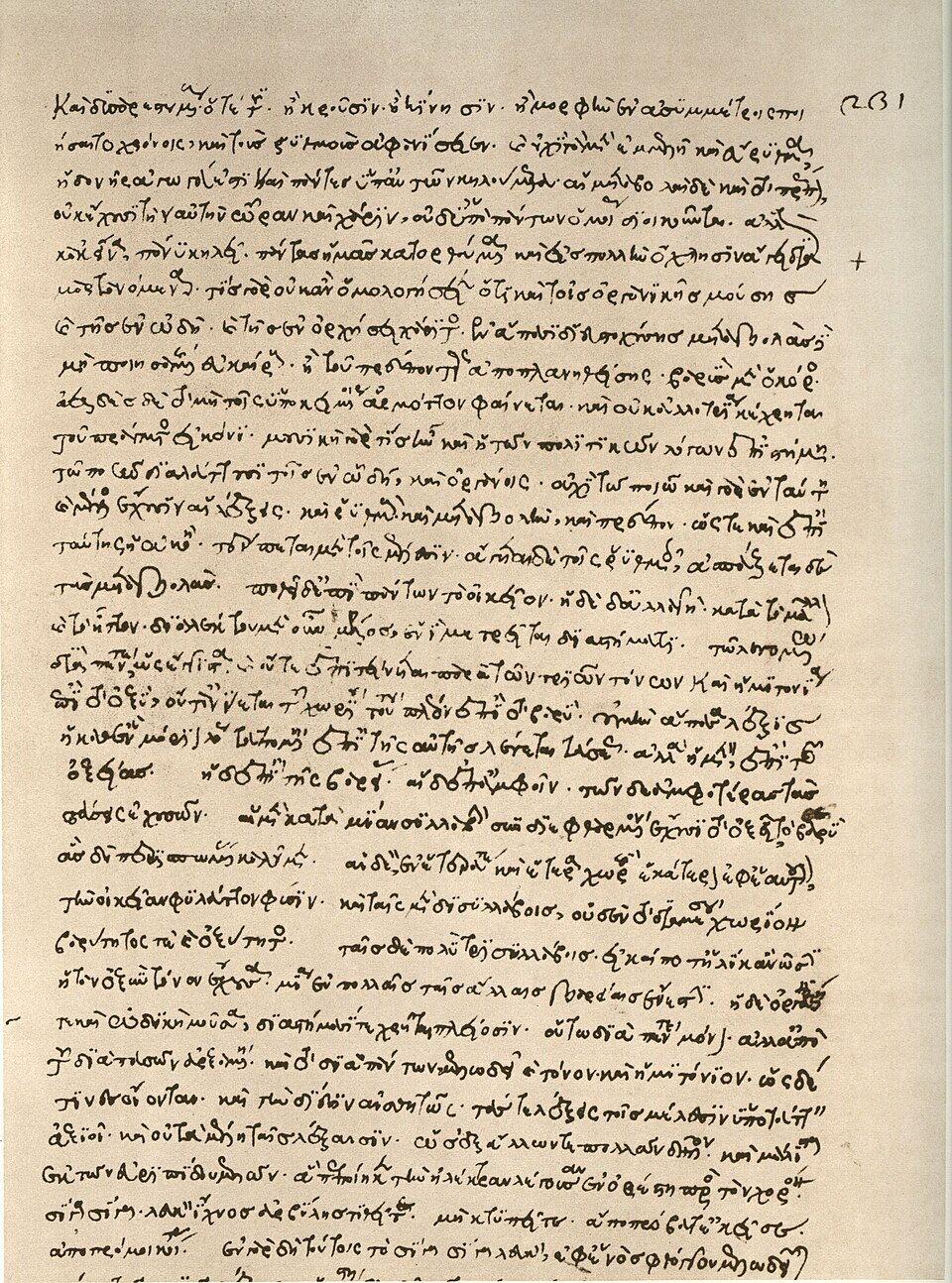
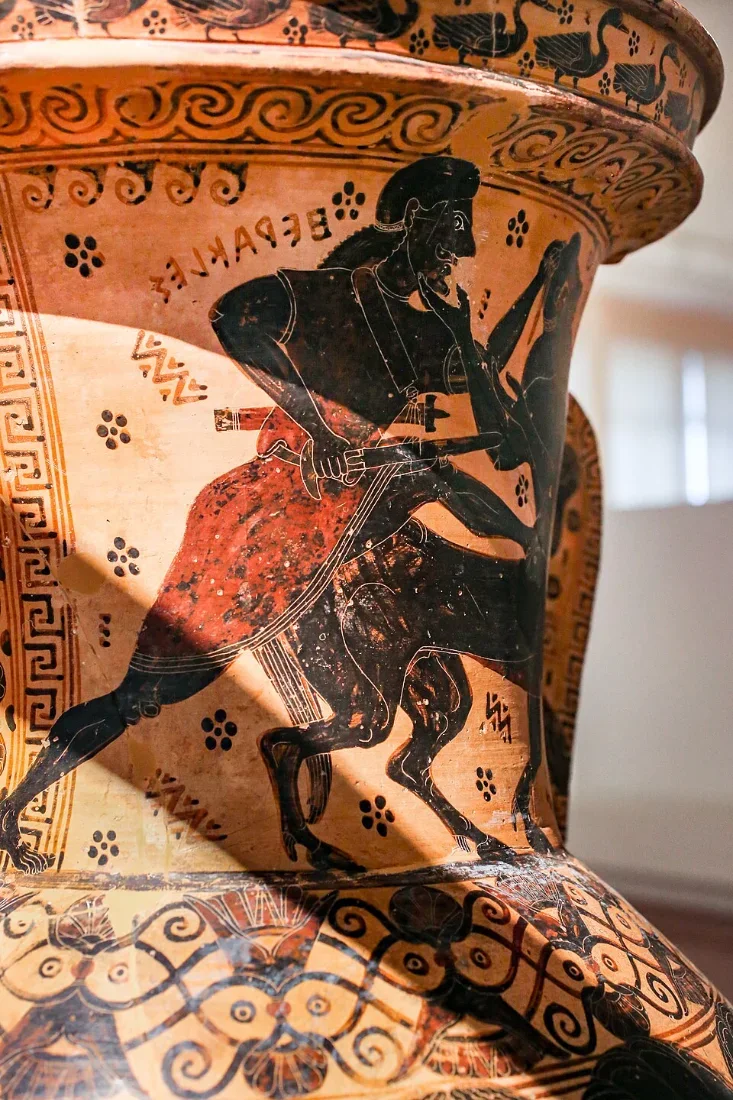
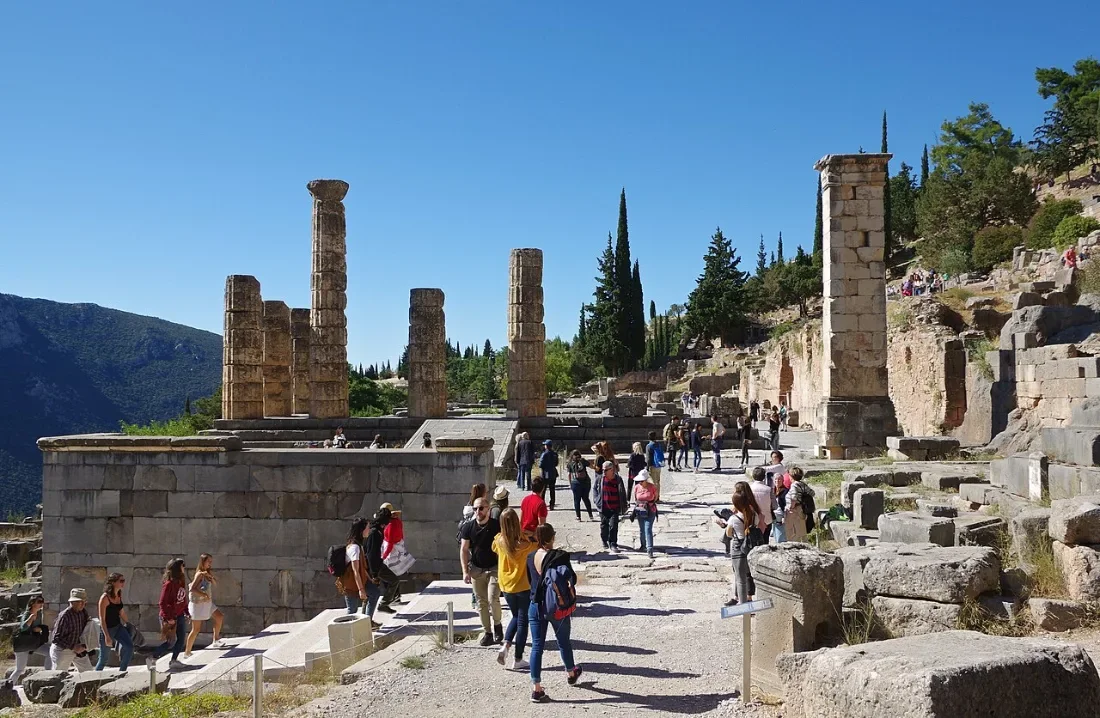
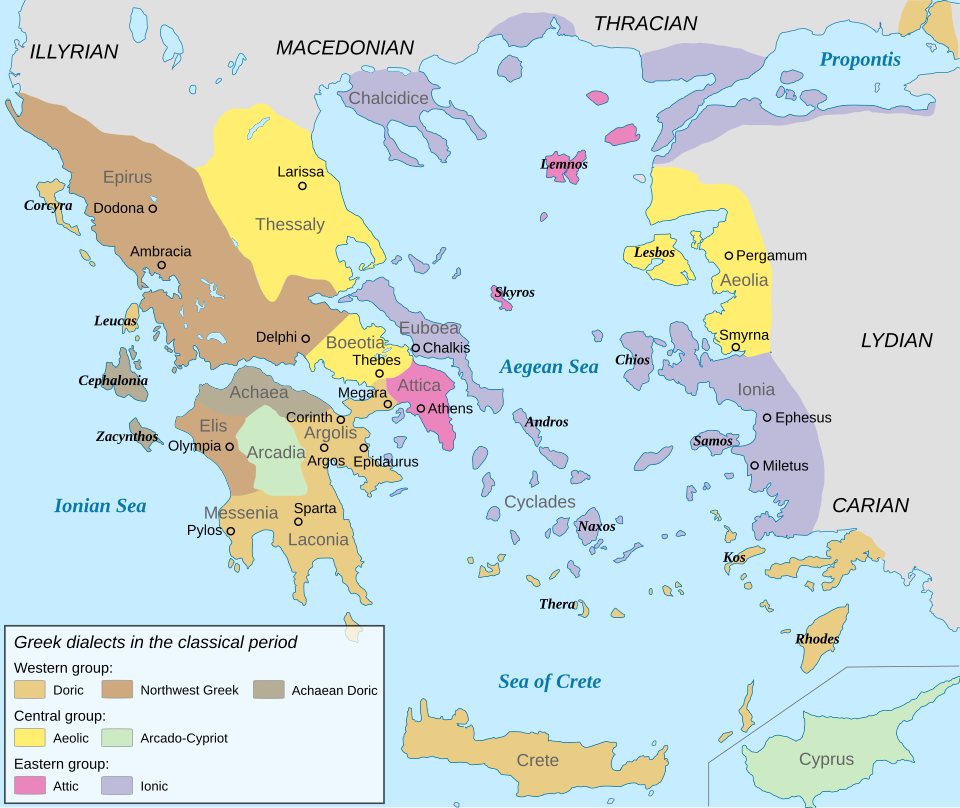
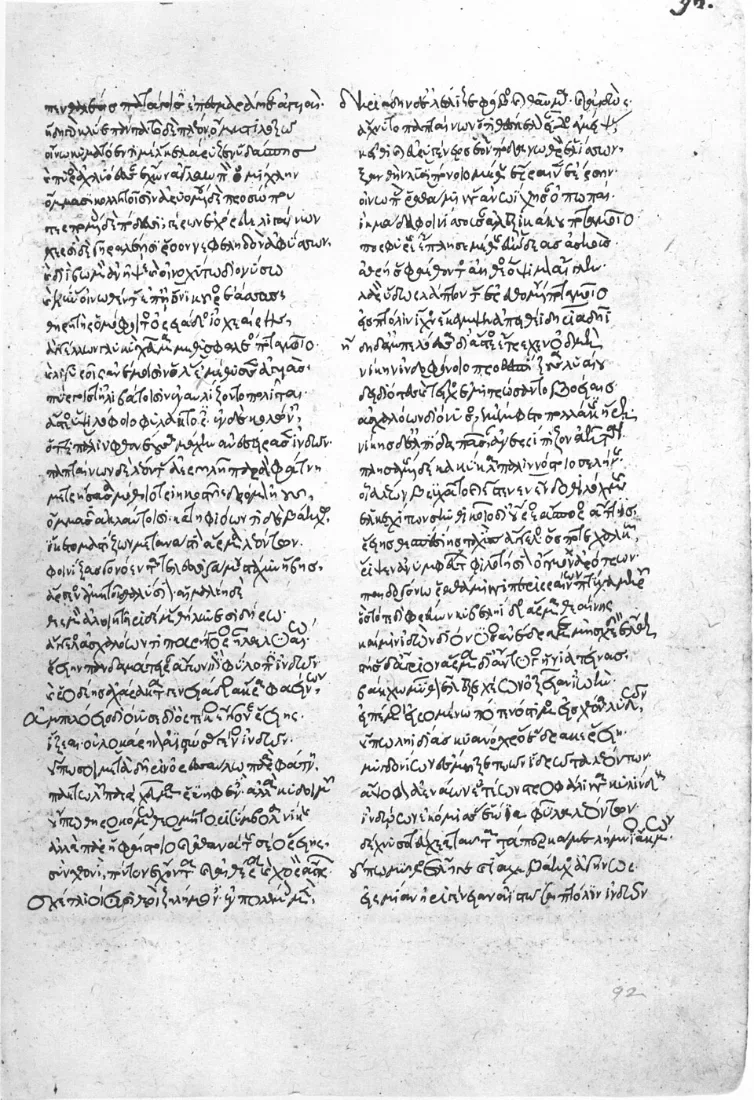
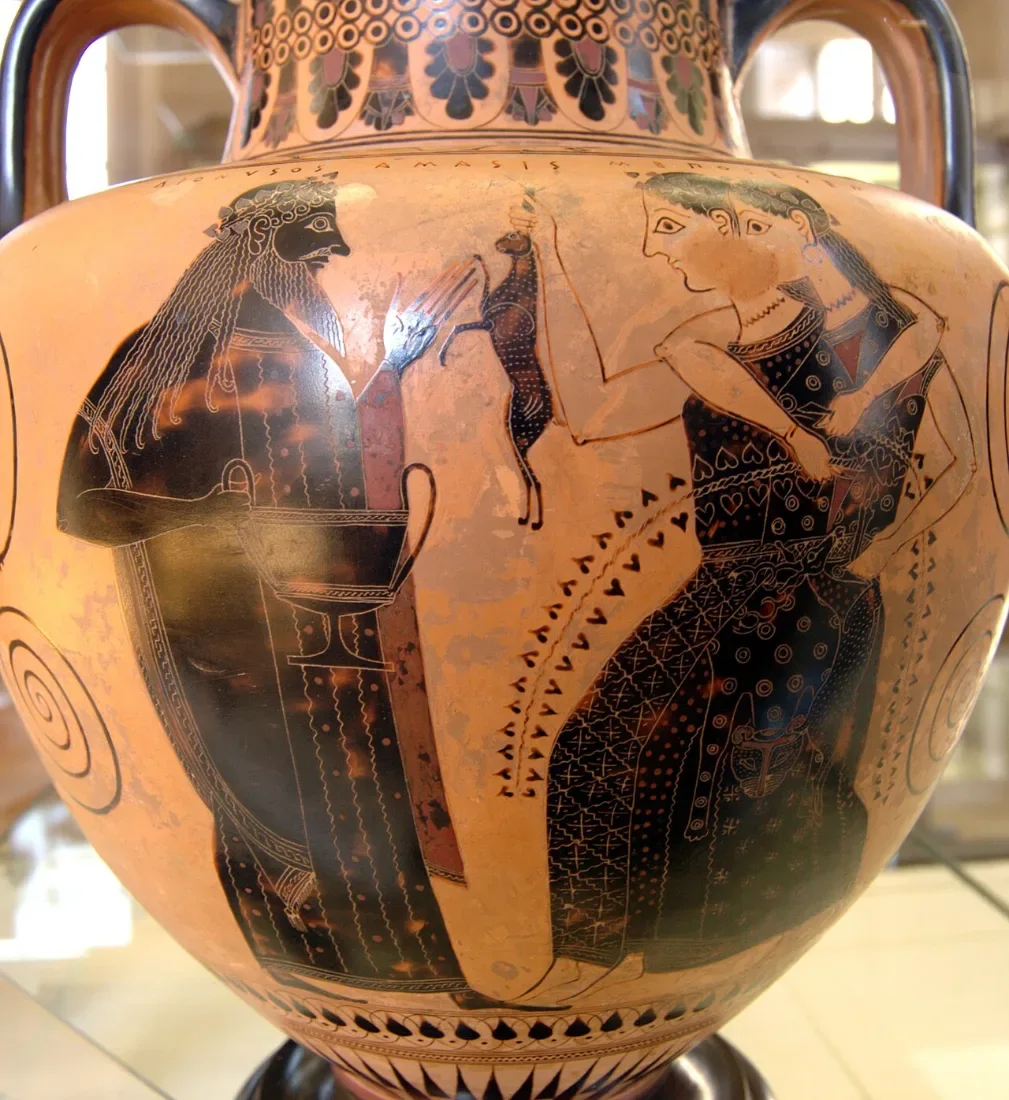
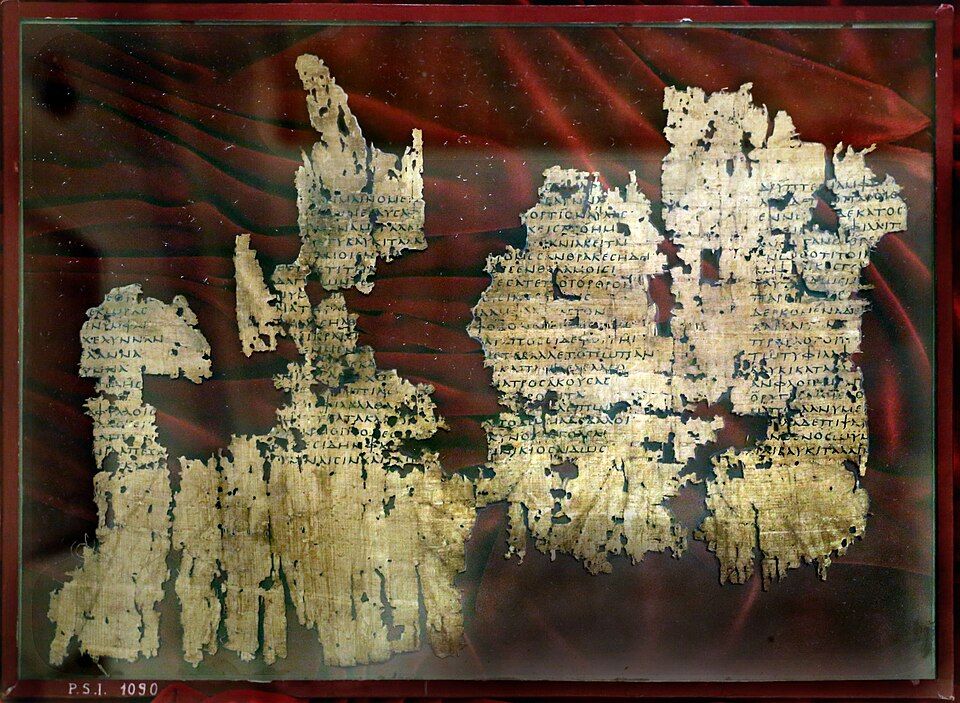
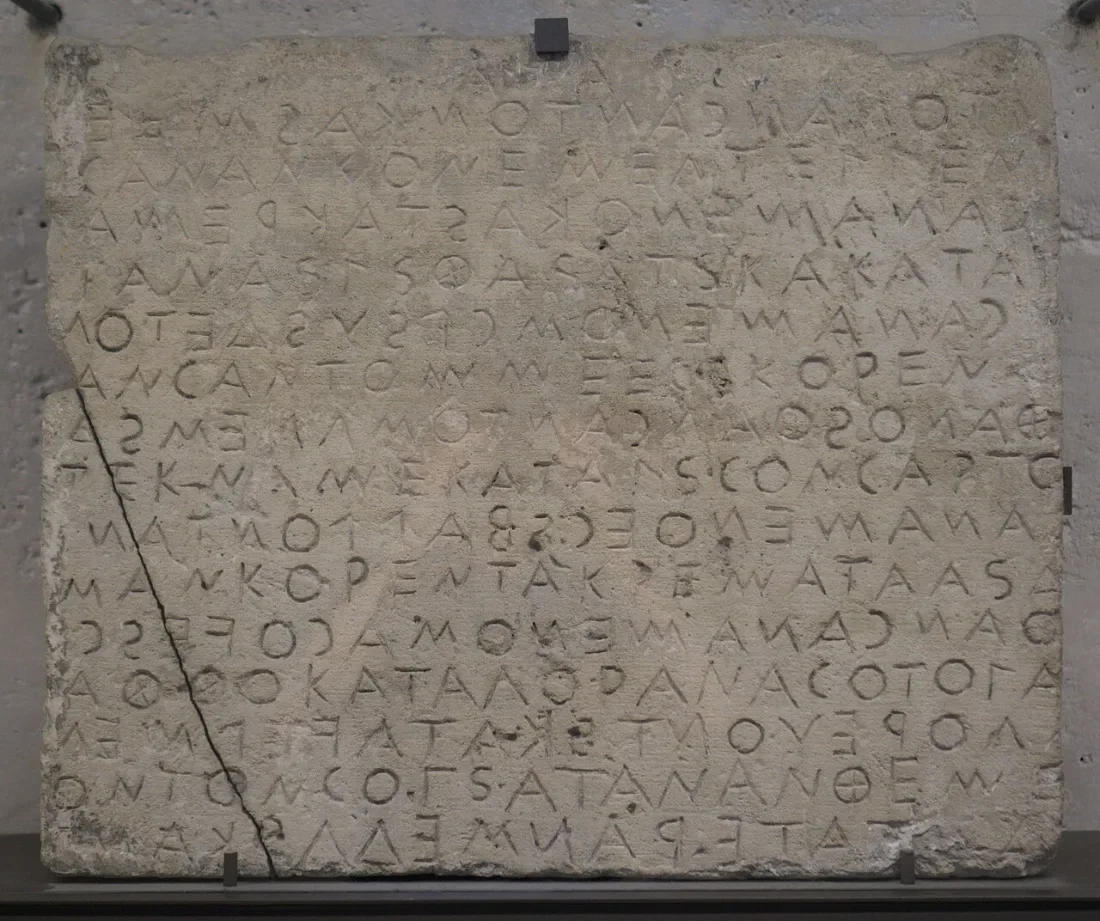
E
- e-phrasetermalso e-phrases, single-short movement
Itsumi’s single-short phrases: e (— ⏑ —), its prolonged forms e², e³, e⁵, and the headless ∧e (⏑ —). Long runs of them, round a double-short core, make the “single-short movement” of Olympian 1.
Source: Itsumi 2009, pp. xii–xiii, 141–146
See: Pindar › Olympian 1 · Pindar › Olympian 14
On this site: 4 places on 2 pages
- Ecclesiazusaecomedyalso Assemblywomen
Aristophanes’ comedy of 393/2 (or 391) BC in which women disguised as men pack the Assembly.
Source: Easterling 1997, p. 354; Swift 2022, p. 386
See: Aristophanes › Plays and dates
On this site: 3 places
- Eclogae (Stobaeus)anthologyalso Anthologion, Ecl.
Stobaeus’ fifth-century anthology of excerpts, which preserves Melinno’s hymn and many lines of elegy and iambus.
See: Melinno › Transmission · The elegists: Callinus, Tyrtaeus, Mimnermus, Solon, Theognis, Xenophanes › Transmission
On this site: 2 places
- editio princepstermalso first edition
The first printed edition of a text, usually little more than a copy of whatever manuscript the printer had.
See: How the texts reached us › Printing
On this site: 2 places
- Egyptplace
Where almost all papyri have been found; Greek was read there into the seventh century AD.
See: How the texts reached us › Discoveries
On this site: 37 places on 20 pages
- Electra (plays)tragedies
Tragedies by Sophocles (c. 413 BC?) and Euripides (before 415 BC?); Euripides’ Electra was left out of the Aldine edition and first printed by Vettori in 1545. Electra is also a singer in the great lament of the Libation Bearers.
Source: Easterling 1997, p. 353; Scodel 2005, p. 234
See: Sophocles › Plays and dates · Euripides › Plays and dates
On this site: 22 places on 11 pages
- elegiac couplettermalso elegiacs, couplet, elegiac distich
A dactylic hexameter followed by a pentameter (two hemiepes); the oldest Greek stanza in continuous use, from Archilochus to the epigrams of late antiquity. Example: Callimachus, Epigram 1.1–2, ξεῖνος Ἀταρνείτης τις ἀνήρετο Πιττακὸν οὕτω / τὸν Μυτιληναῖον, παῖδα τὸν Ὑρράδιον (xeinos Atarneitēs tis anēreto Pittakon houtō / ton Mytilēnaion, paida ton Hyrradion), “A stranger from Atarneus once put this question to Pittacus, / the man of Mytilene, son of Hyrrhas”: a hexameter, then a pentameter.
Source: West 1987, p. 24; Bartol 2022, p. 221; Callimachus, Ep. 1.1–2
See: The elegiac couplet › Scheme · The elegists: Callinus, Tyrtaeus, Mimnermus, Solon, Theognis, Xenophanes › Metres
On this site: 51 places on 20 pages
- elegiambustermalso encomiologicum, encomiologicus
The sequence — ⏑ ⏑ — ⏑ ⏑ — × — ⏑ — × (D × e ×), the reverse of the iambelegus.
Source: West 1987, p. 86
See: Introduction to Greek metre › Glossary
On this site: 4 places on 3 pages
- elegy ἐλεγεία (elegeia)termalso elegiac, elegeion, elegeia
Poetry in elegiac couplets, in Ionic, on war, politics, love and advice; Bowie’s definition, a song usually to the aulos and sung chiefly at symposia, is widely accepted. Its link with lament is late.
Source: Bartol 2022, pp. 221–222; Aloni 2009, p. 168
See: The elegists: Callinus, Tyrtaeus, Mimnermus, Solon, Theognis, Xenophanes › Elegy and its poets · The elegiac couplet › Usage and poets
On this site: 60 places on 23 pages
- elementtermalso elements
Maas’s word for what West calls a position; Battezzato, writing in Maas’s terms, counts five kinds: long, short, anceps, biceps and the indifferent final element.
Source: West 1987, p. 86; Battezzato 2009, p. 131
See: Introduction to Greek metre › Glossary
On this site: 59 places on 37 pages
- elisiontermalso elided, elide
The loss of a short vowel at the end of a word before a word beginning with a vowel; Sophocles and comedy even elide across the end of the line. Example: Sappho 1.1 Ποικιλόθρον’ ἀθανάτ’ Ἀφρόδιτα (Poikilothron’ athanat’ Aphrodita), with two final vowels elided.
Source: West 1987, pp. 13–14, 27
See: Introduction to Greek metre › Prosody: vowels · Introduction to Greek metre › Glossary
On this site: 249 places on 50 pages
- embolima ἐμβόλιμα (embolima)term
Choral songs not written for one particular place in one play, introduced by Agathon.
See: Introduction to Greek metre › Speech and song
On this site: 2 places on 2 pages
- Enchiridion Ἐγχειρίδιον περὶ μέτρων (Encheiridion peri metrōn)metrical handbookalso Handbook on Metres, Ench.
Hephaestion’s “Handbook on Metres” (second century AD), which defines quantity, feet and the metres and quotes lines of many lost poets as examples; cited on this site by chapter and section from Consbruch’s edition (1906).
Source: Prauscello 2021, p. 221
See: Introduction to Greek metre › Ancient metricians
On this site: 126 places on 39 pages
- enclitictermalso enclitics
A short word with no accent of its own that leans on the word before it, its host: τις (tis) “someone”, τε (te) “and”, the unemphatic μου (mou) “of me”, σε (se) “you” and others. The two are accented as one word, so the host may gain a second accent: ἄνθρωπός τις (anthrōpos tis), “some person”.
Source: Probert 2006, pp. 69–70; Smyth 1920, pp. 42–43
See: Accent and morae › Enclitics and proclitics
On this site: 206 places on 41 pages
- encomium ἐγκώμιον (enkōmion)termalso enkomia, encomia
A song of praise for a person, such as Bacchylides’ encomium for Alexander of Macedon (fr. 20B).
Source: Maehler 2004, p. 10
See: Bacchylides › Life and works · Bacchylides › Occasions
On this site: 12 places on 10 pages
- enjambmentterm
The running on of a sentence from one line into the next; Prauscello shows that in Theocritus’ Idyll 29 it happens only after odd-numbered lines, recreating the Lesbian distichs. Example: Callimachus, Epigram 1.1–2, … ἀνήρετο Πιττακὸν οὕτω / τὸν Μυτιληναῖον (… anēreto Pittakon houtō / ton Mytilēnaion), “put this question to Pittacus, / the man of Mytilene”: the phrase runs on into the next line.
Source: Morrison 2022, pp. 397–398; Callimachus, Ep. 1.1–2
See: Callimachus, Theocritus and Hellenistic poets › Lyric
On this site: 4 places on 3 pages
- ennsiglum
Siglum for the enneasyllable, × — × — ⏑ ⏑ — ⏑ —. See enneasyllable.
Source: West 1987, p. x
On this site: 2 places on 2 pages
- enneasyllabletermalso enn
The nine-syllable colon × — × — ⏑ ⏑ — ⏑ — (siglum enn), in effect a glyconic with an extra syllable at the front.
Source: West 1987, pp. x, 87
See: Introduction to Greek metre › Glossary
On this site: 6 places on 3 pages
- enoplian ἐνόπλιος (enoplios)termalso enoplion, enoplians
An ancient name, used of rhythms built on × — ⏑ ⏑ — ⏑ ⏑ — (×) and similar dactylic cola; modern scholars give it no single sense. Battezzato’s enoplion is × — ⏑ ⏑ — ⏑ ⏑ — ×.
Source: West 1987, p. 87; Battezzato 2009, pp. 137, 141
See: Introduction to Greek metre › Glossary
On this site: 15 places on 8 pages
- epaoidetermalso ἐπαοιδή, incantation, charm
“Song sung over” someone or something: an incantation. The magical papyri use the word for their verse charms, and a charm may call itself a “perfect incantation”.
Source: Preisendanz 1931, pp. 145, 151
- Ephesusplace
Ionian city, home of Callinus and Hipponax.
See: Hipponax, Semonides and the iambographers › Life
On this site: 8 places on 5 pages
- epic correptiontermalso correptio epica
The shortening of a long vowel or diphthong at the end of a word before a word that begins with a vowel, so that its syllable counts as short; usual in epic, elegy and some lyric, and almost confined to double-short rhythm. With a diphthong the second half is said as a glide into the next vowel. Example: Odyssey 1.1 ἄνδρα μοι ἔννεπε (andra moi ennepe), with μοι short before ἔ-; Odyssey 1.2 πλάγχθη ἐπεί (plankhthē epei), with -θη short.
Source: West 1987, p. 14; Allen 1968, pp. 78, 91
See: Introduction to Greek metre › Prosody: vowels · Dactylic: the hexameter › Prosody of epic
On this site: 117 places on 21 pages
- Epic Cycleepicalso Sack of Troy, Iliou Persis
The early epics on the Trojan War besides Homer’s; Stesichorus told some of the same stories (his Sack of Troy, Iliou Persis) in long dactylic triads.
See: Stesichorus and Ibycus › Stesichorus
On this site: 3 places on 3 pages
- Epicharmusplaywright
Comic poet who neglected the caesura of the trochaic tetrameter that Menander keeps.
See: Trochaic › The tetrameter catalectic
On this site: 9 places on 8 pages
- Epidaurian Hymn to Paninscription
An inscribed hymn whose ending, with the Song of Seikilos, is the only post-classical verse with syncopation.
Source: West 1987, p. 71
See: Introduction to Greek metre › Rhythm and music · Later and Hellenistic metres › Hellenistic book lyric
On this site: 3 places on 3 pages
- epigram ἐπίγραμμα (epigramma)termalso epigrams, epitaph, dedication
A short poem, such as a dedication or an epitaph, usually in elegiac couplets; the epigrams of Simonides, Anyte, Nossis, Erinna and others survive in the Greek Anthology.
See: Simonides › Epigrams · in the Greek Anthology · The elegiac couplet › Usage and poets
On this site: 66 places on 28 pages
- Epigrams (Callimachus)epigramsalso Ep. 27
Callimachus’ short poems in elegiac couplets. They are numbered differently by editors: Epigram 27, on Aratus, is 27 in Wilamowitz and Clayman, 29 in Mair, 56 Gow–Page and A.P. 9.507.
Source: Clayman 2022, p. 420
See: Callimachus, Theocritus and Hellenistic poets › Callimachus, Epigrams · Callimachus, Theocritus and Hellenistic poets › Aratus, Phaenomena · Callimachus, Ep. 27 (on Aratus)
On this site: 3 places on 3 pages
- epinician ἐπινίκιον (epinikion)termalso victory ode, victory odes, epinicia
A song celebrating a victory in the games, the genre of Pindar’s four books and of many of Bacchylides’ odes; Simonides may have been the first canonical poet to compose one (disputed).
Source: Rawles 2022, p. 325 with n. 12; Nicholson 2022, p. 48
See: Pindar › Victory odes · Simonides › Poems
On this site: 33 places on 11 pages
- epirrhematic dialogueterm
Battezzato’s name for an exchange that mixes song and spoken verse, as when Cassandra sings two lines and speaks two trimeters in each stanza of Agamemnon 1136–1155; in Aeschylus an actor’s lyric is always part of such an exchange with the chorus.
Source: Battezzato 2005, p. 153
See: Dochmiac › Second example
On this site: 2 places on 2 pages
- epirrhematic syzygytermalso epirrhema
In the parabasis of Old Comedy, a sung strophe and antistrophe each followed by a block of sixteen or twenty recited trochaic tetrameters. Example: the parabasis of Clouds, ode and antode at 563–74 ~ 595–606.
Source: West 1987, p. 51
See: Lyric in drama › Comedy · Introduction to Greek metre › Glossary
On this site: 5 places on 4 pages
- epitrite ἐπίτριτος (epitritos)termalso epitrites
The four-syllable foot — ⏑ — — (and its variants, four in Hephaestion according to where the short falls); the word gives the second half of “dactylo-epitrite”.
Source: West 1987, p. 87; Hephaestion, Ench. 3.3; Battezzato 2009, p. 141
See: Introduction to Greek metre › Glossary
On this site: 17 places on 8 pages
- epode ἐπῳδός (epōidos)termalso epodes, epodic
(1) In the Ionian epodes of Archilochus and Hipponax, the shorter line that follows a longer one; (2) in triadic song, the third stanza, of a different shape, after strophe and antistrophe. Example of (1): Archilochus fr. 191, whose second line, × — ⏑ — × ¦ — ⏑ — ⏑ — —, is shorter than the first.
Source: West 1987, pp. 31, 36; Battezzato 2009, p. 137; Lennartz 2022, p. 208
See: Lyric Stanzas › Triadic structure
On this site: 71 places on 27 pages
- Erasmian pronunciationtermalso Erasmian
The reformed pronunciation of ancient Greek named after Erasmus’ dialogue of 1528, which replaced the Byzantine pronunciation of the Renaissance teachers; in England it was later distorted by the changes in English vowels.
Source: Allen 1968, pp. 125–131; Reynolds and Wilson 1991, p. 159
See: Sounds › Reading aloud · How the texts reached us › Renaissance
On this site: 10 places on 5 pages
- ErasmusRenaissance scholaralso Desiderius Erasmus, Erasmus of Rotterdam
Desiderius Erasmus of Rotterdam (c. 1466–1536), the Dutch humanist, whose dialogue of 1528 on the right pronunciation of Latin and Greek, printed at Basel, gave its name to the reformed “Erasmian” pronunciation; the reform was a small part of his work, which ranged over classical and biblical learning.
Source: Probert 2006, p. 99; Allen 1968, p. 127
See: Pronunciation systems › Erasmian
On this site: 9 places on 4 pages
- EratosthenesAlexandrian scholar
One of the first librarians of Alexandria.
Source: Reynolds and Wilson 1991, p. 7
See: How the texts reached us › Alexandria
On this site: 3 places on 2 pages
- Erinna Ἤριννα (Ērinna)poet
Poet of the Distaff, a hexameter lament for her friend Baucis, and of three epigrams; probably fourth century BC, though the Suda made her Sappho’s companion.
See: Erinna › Life · Erinna › Metres
On this site: 10 places on 7 pages
- Erosgod
The god of desire, prominent in Alcman, Anacreon and the epigrammatists; the third stasimon of Sophocles’ Antigone (781–800) is a short hymn to him.
See: Anacreon › Poetry and reputation · Alcman › More metres · Sophocles › Antigone · 781–800 (third stasimon, Eros)
On this site: 26 places on 17 pages
- Erotematagrammar
Manuel Chrysoloras’ Greek grammar, which in 1471 became the first Greek grammar to be printed.
See: How the texts reached us › Renaissance
On this site: 1 place
- Erythraean paeaninscription
A monostrophic paean to Asclepius in dactylic metre, inscribed at Erythrae in the early fourth century; Rutherford has raised the possibility that it is by Sophocles.
See: Callimachus, Theocritus and Hellenistic poets › Lyric · Sophocles › Plays and dates
On this site: 2 places on 2 pages
- ethos ἦθος (ēthos)termalso musical ethos, doctrine of ethos
The character a harmonia, rhythm or genus was believed to impart to the hearer: the doctrine of Damon, Plato and Aristotle, mocked already in a papyrus of about 390 BC and denied by the Epicureans.
Source: West 1992, pp. 246–253; Nowacki 2020, pp. 11–16
See: Scales and harmoniai › Harmoniai and ethos
On this site: 5 places on 5 pages
- Etnaplacealso Aetna, Aitna
The Sicilian volcano of Pythian 1, under which Typhos lies, and the city named Aetna (Aitna): Race heads the ode “For Hieron of Aetna”, Chromius was its regent (Nemeans 1 and 9), and Aeschylus’ Women of Aetna is among the plays the Alexandrians had under his name.
Source: Race 1997a, p. 219
See: Pindar › Pythian 1 · Dactylo-epitrite › Second example
On this site: 6 places on 4 pages
- Eugeniusgrammarian
Fifth-century writer on the colometry of fifteen plays, named as a possible compiler of the school selection of tragedies.
Source: Reynolds and Wilson 1991, pp. 53–54
See: How the texts reached us › Byzantium
On this site: 2 places on 2 pages
- Eumeluspoet
Early poet of Corinth with whom choral lyric may first have emerged.
See: Doric of choral lyric › Features
On this site: 3 places
- Eumenidestragedy
Last play of the Oresteia (458 BC).
Source: Easterling 1997, p. 352
See: Aeschylus › Plays and dates
On this site: 6 places
- Eunomiaelegy
“Good Order”: the title of Tyrtaeus’ elegiac poem on the Spartan constitution, cited by Aristotle and Strabo, and the name given to Solon’s elegy fr. 4 on the ruin of the city and on good order, which Demosthenes had read out to a jury; in Bacchylides’ Ode 15 Eunomia stands with Dike and Themis.
Source: Gerber 1999a, pp. 112–117; Demosthenes 19.255 (ed. Butcher)
See: The elegists: Callinus, Tyrtaeus, Mimnermus, Solon, Theognis, Xenophanes › Solon · fr. 4.11–39 (Eunomia) · Bacchylides › Ode 15
On this site: 3 places on 2 pages
- eupolideanterm
A comic verse (Clouds 518–562 and many fragments) of two anaclastic glyconics, the second catalectic: gl¨ ⁝ gl¨∧ ‖. Dale notes that its first metron never takes the iambic form × — ⏑ —, which the choriambic dimeters of the parabasis ode that follows (Clouds 571 ~ 603) do admit.
Source: West 1987, p. 50; Dale 1968, p. 147 n. 1
See: Introduction to Greek metre › Glossary · Aristophanes › Clouds · 563–606 (parabasis, ode and antode)
On this site: 6 places on 3 pages
- Eupolisplaywright
Poet of Old Comedy, one of its leading three with Cratinus and Aristophanes.
Source: Seidensticker 2005, p. 39
See: Aristophanes › Life · Lyric in drama › Comedy
On this site: 11 places on 6 pages
- Euripides Εὐριπίδης (Euripidēs)playwright
Athenian tragedian, with nineteen plays the largest tragic corpus: a trimeter that loosens year by year (the basis for dating his plays) and lyrics moving towards the astrophic arias of the New Music.
Source: West 1987, pp. 25–26
See: Euripides › Plays and dates
On this site: 146 places on 43 pages
- Eusebiuschronographer
Chronographer who dated Sappho by Alyattes, a generation earlier than Herodotus’ dating.
Source: Kivilo 2021, p. 20
See: Sappho › Life
On this site: 11 places on 6 pages
- EustathiusByzantine scholar
Twelfth-century scholar who probably read more of Pindar’s victory odes than survive.
Source: Reynolds and Wilson 1991, p. 66
See: How the texts reached us › Byzantium · Pindar › Transmission
On this site: 10 places on 8 pages
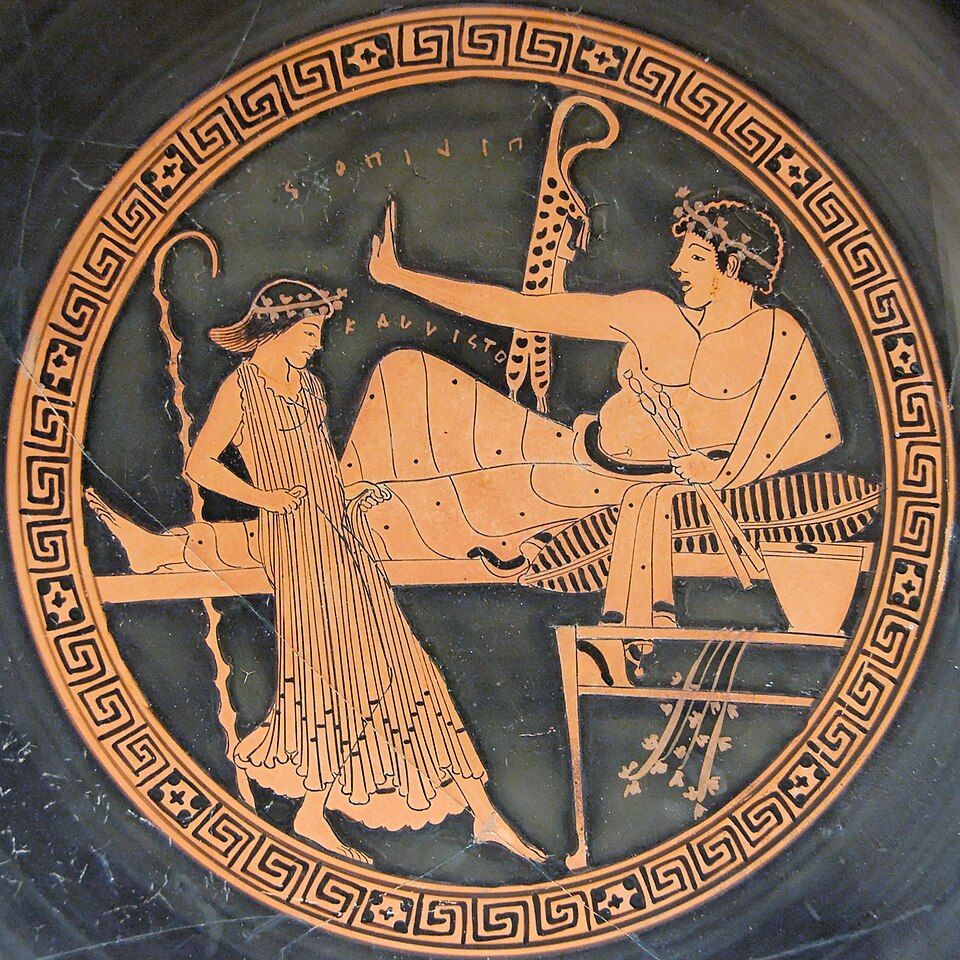
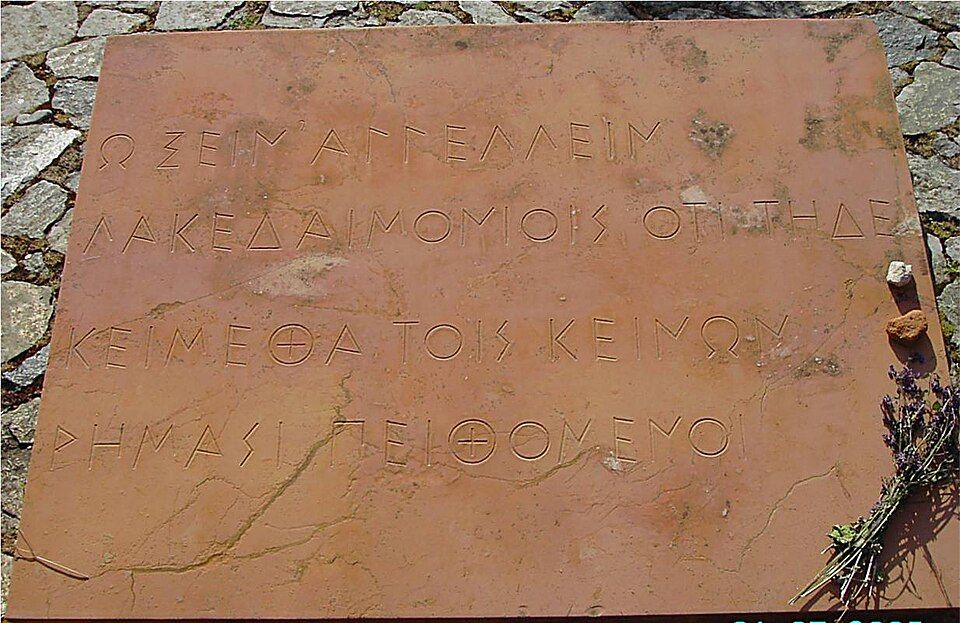
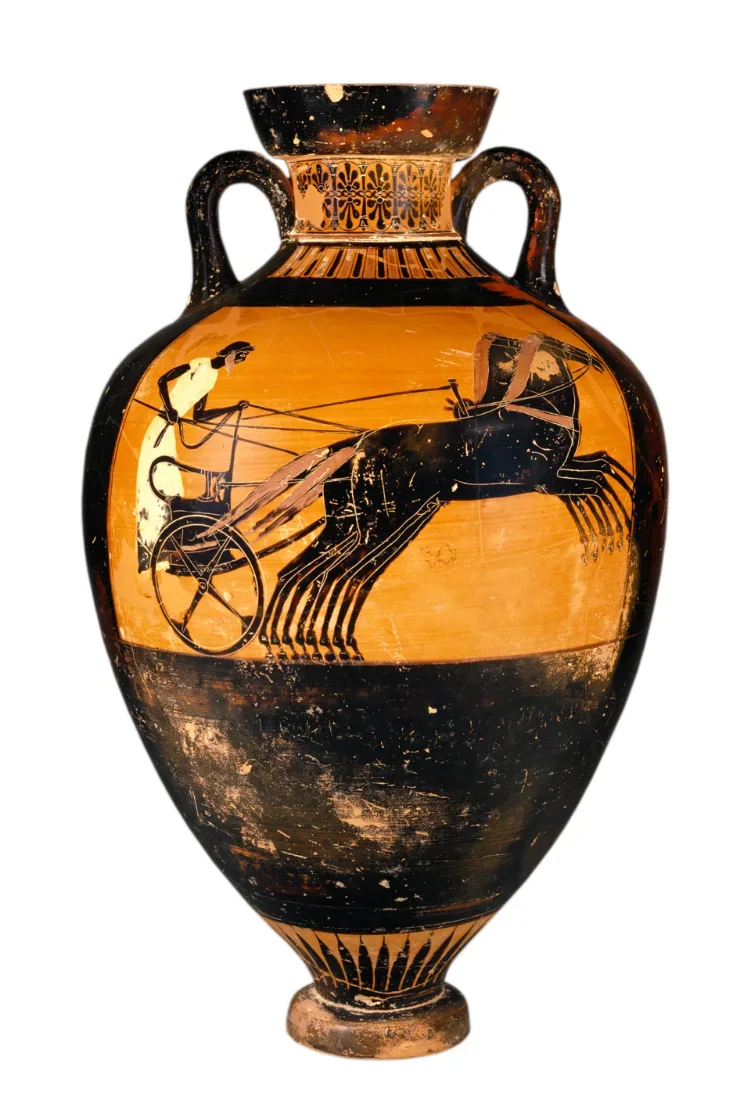
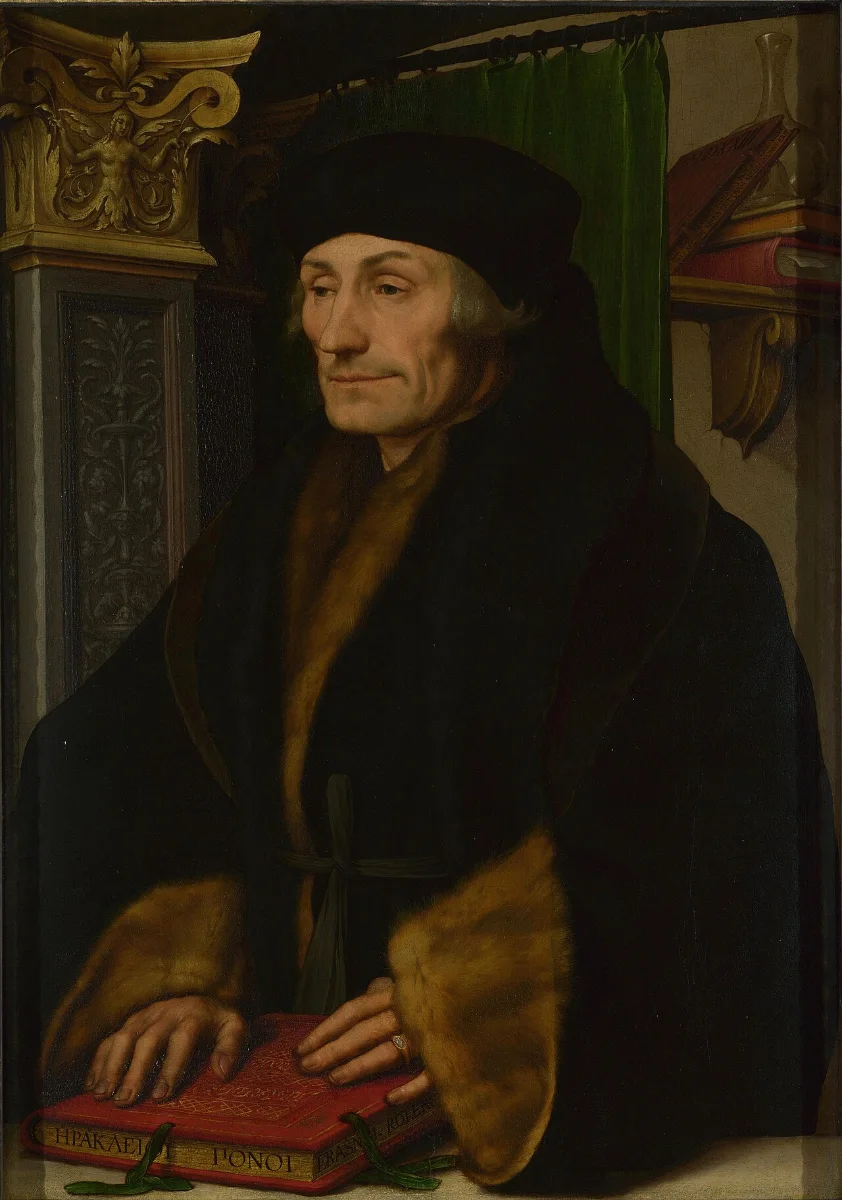
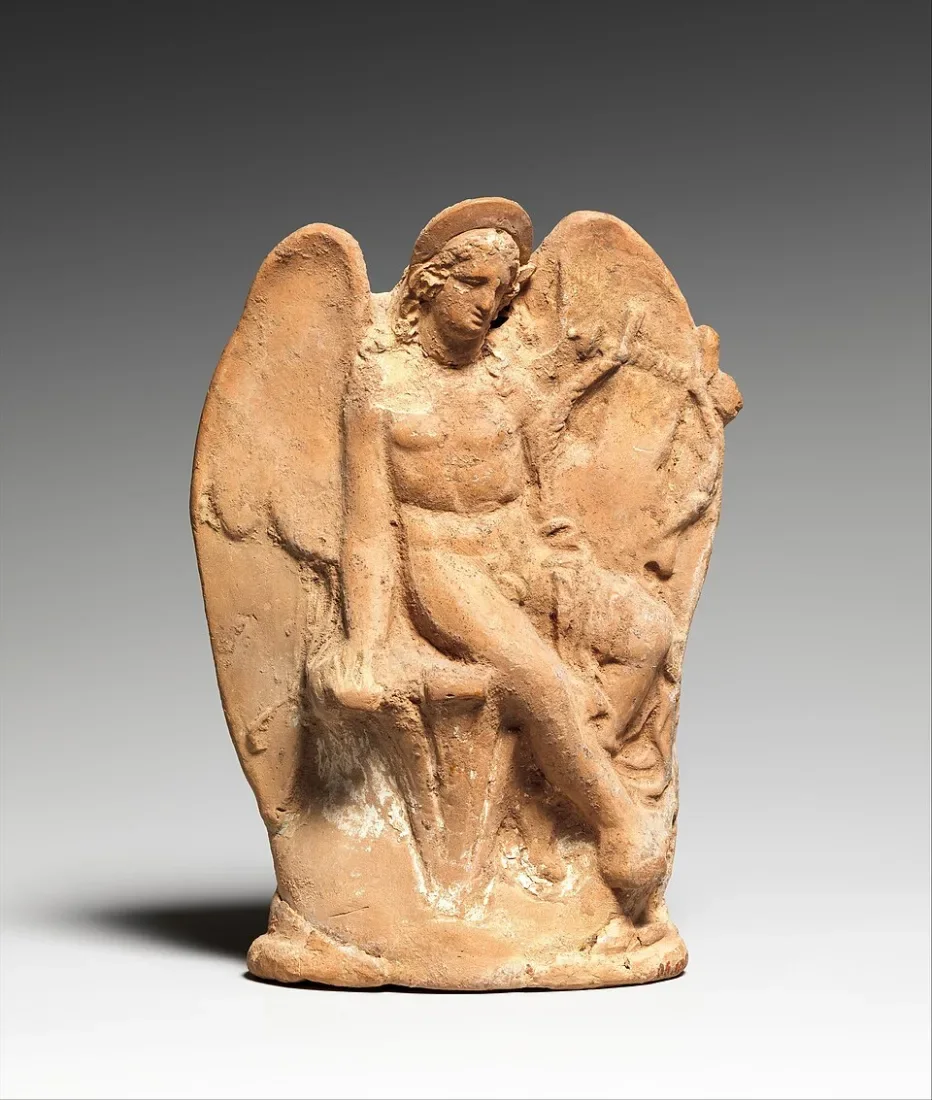
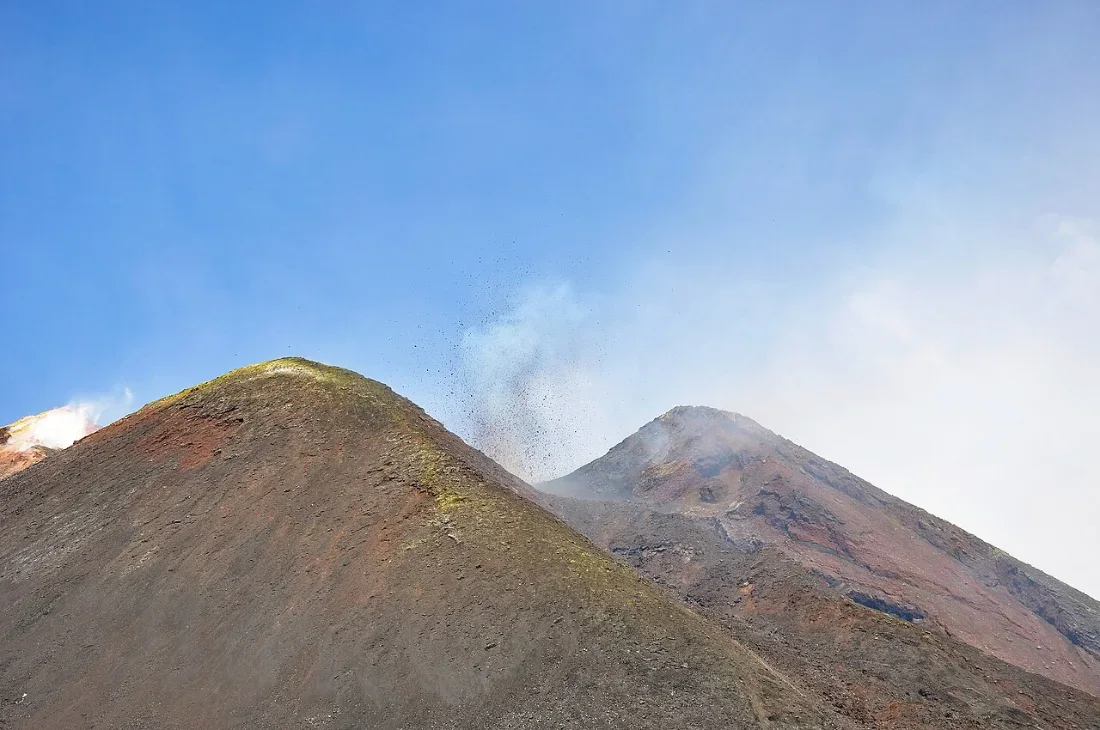
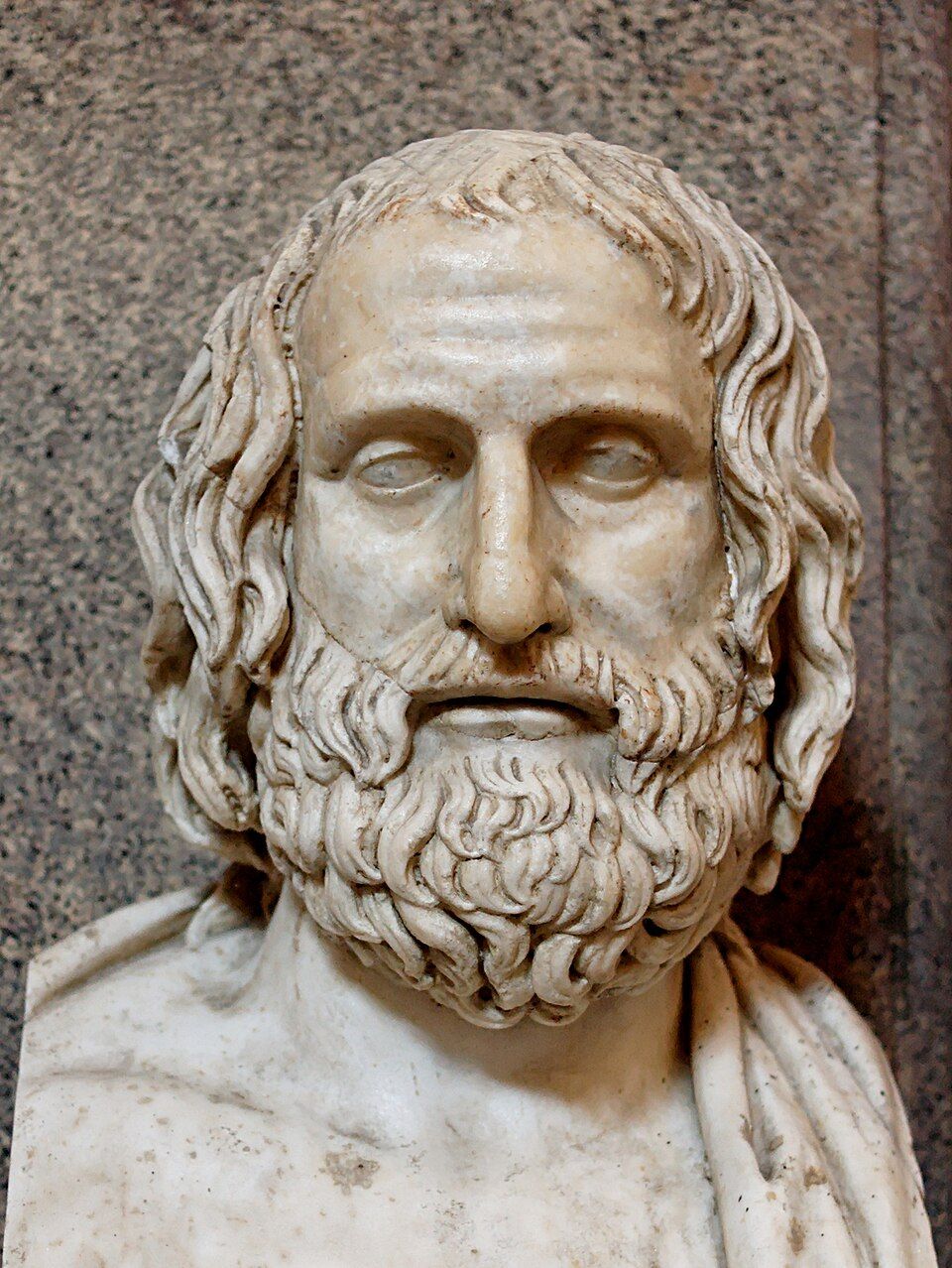
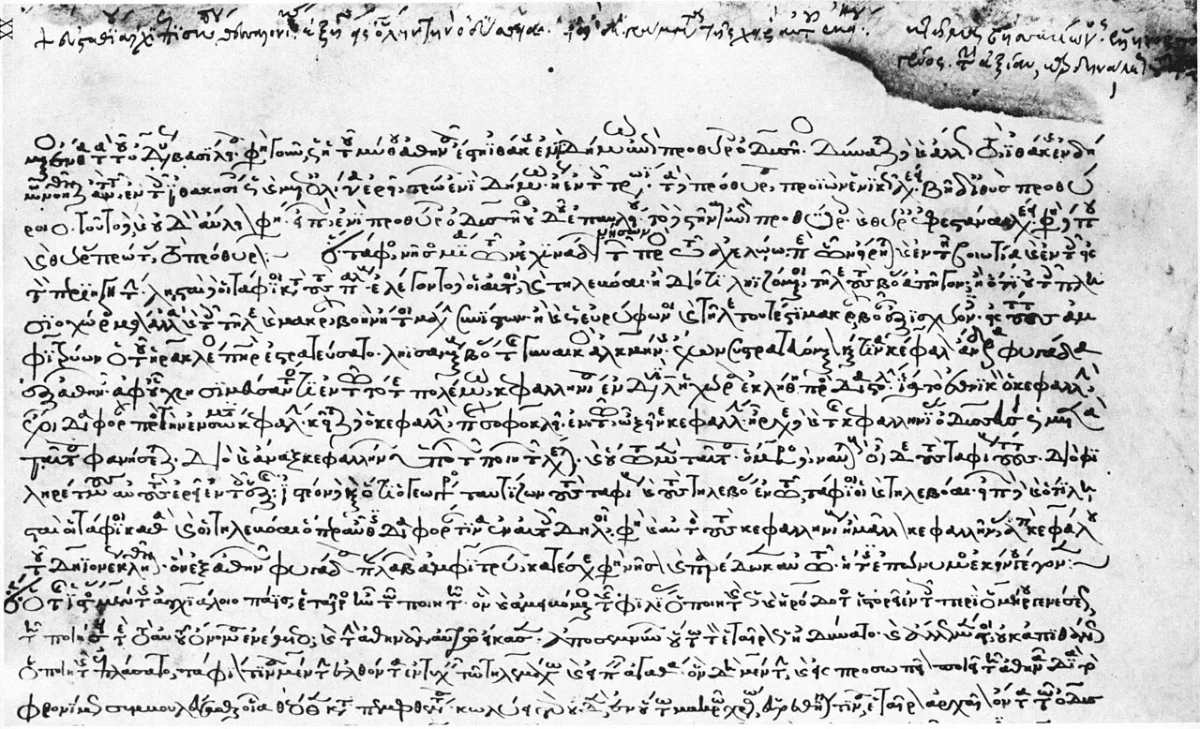
F
- falling glidetermalso glide (of pitch)
In the accent, the fall of the voice from a high pitch back to low: on the syllable after an acute, or within the one long syllable that carries a circumflex. Allen takes the idea from the Indian grammarians’ svarita. Example: on the Seikilos stone the second syllable of ὅλως (holōs) “at all” falls after the high first; λυποῦ (lypou) “grieve” has rise and fall on its last syllable.
Source: Allen 1968, pp. 111–112, 114
See: Accent: pitch or stress? › Contonation · Accent and morae › Morae
On this site: 17 places on 6 pages
- falling rhythmtermalso rising rhythm, falling, rising
A sequence that begins — ⏑ is falling; one that begins × — ⏑ or ⏑ ⏑ — is rising.
Source: West 1987, p. 6
- First1KGreekonline libraryalso Open Greek and Latin
The Open Greek and Latin project’s collection (CC BY-SA 4.0) that supplies Hephaestion’s Enchiridion and related texts, from Consbruch’s edition.
Source: Bibliography, Texts and tools
See: Bibliography and licences › Texts and tools
On this site: 132 places on 43 pages
- five-act ruleterm
The division of a comedy into five distinct episodes, seen in Menander and in Plautus and Terence; fifth-century tragedy had no such rule.
See: Menander › Plays and papyri
On this site: 1 place
- Florenceplace
Where Chrysoloras began regular Greek lectures in 1397; its Laurentian library holds Laur. 32.9.
See: How the texts reached us › Renaissance
On this site: 11 places on 9 pages
- foot πούς (pous)termalso feet
The ancient unit of two to four syllables (iamb, dactyl, spondee and the rest), each with its number of time-units; in iambic, trochaic and anapaestic verse two feet make a metron. West uses foot-names only to point to a place in a line. Example: μῆνιν ἄ- (mēnin a-), — ⏑ ⏑, the first foot of the Iliad, a dactyl.
Source: West 1987, p. 5; Hephaestion, Ench. 3.1–3; D’Angour 2022, p. 134
See: Introduction to Greek metre › Feet, metra, cola, periods · Introduction to Greek metre › Glossary
On this site: 300 places on 62 pages
- formantterm
A band of frequencies that the mouth and throat reinforce in a vowel; the first two formants, set by the height and backness of the tongue and the rounding of the lips, are what distinguish [i] from [a] or [u], and what the vowel chart maps.
Source: Devine and Stephens 1994, pp. 1–20; Allen 1968, pp. 3–4
See: Sounds › Mouth and vowels · Sound lab
On this site: 5 places on 5 pages
- formulatermalso formulae, formulaic
In Parry’s definition, a group of words regularly used under the same metrical conditions to express a given idea; the formulae of oral epic fit the cola of the hexameter and preserve old forms. Example: ἄναξ ἀνδρῶν Ἀγαμέμνων (anax andrōn Agamemnōn), “lord of men, Agamemnon”, which fills the line from the caesura after the third-foot trochee to the end.
Source: Nagy 1990, pp. 18, 31; West 1987, pp. 19, 22–23; Clark 2004, pp. 121–124
See: Homer › Formula and metre · Epic Ionic › Features
On this site: 34 places on 17 pages
- fragmenttermalso fragments, fr., frr.
A poem or piece of a poem that survives only in part, on papyrus or quoted by a later author; fragments are numbered by the edition cited, with its initial (V, LP, PMG, W).
Source: Swift (ed.) 2022, pp. x–xi
See: Bibliography and licences › Texts and tools
On this site: 165 places on 45 pages
- freer dactylo-epitritetermalso freer D/e
Itsumi’s name for the second metre of Pindar’s non-dactylo-epitrite odes: built like dactylo-epitrite from e (— ⏑ —), d (— ⏑ ⏑ —) and their longer forms, but with d rather than D as the basic double-short unit, fewer link-syllables and shorter verses.
Source: Itsumi 2009, pp. 21–23
On this site: 5 places
- frequency (of a note)termalso hertz, Hz, vibration frequency
The number of vibrations a sounding string or column of air makes in one second, counted in hertz (Hz). The faster the vibration, the higher the note; pitch does not change with loudness.
Source: West 1992, p. 8; Landels 1999, c. pp. 136, 145–147
See: Music theory › Pitch
On this site: 3 places on 3 pages
- fricativetermalso spirant, fricatives
A consonant made by narrowing the airway so that the breath rubs through with a hiss or buzz (Smyth’s “spirant”). Classical Attic had only one, σ [s]. Later φ θ χ became the fricatives [f θ x], and β δ γ [v ð ɣ], as in Modern Greek; in the fifth and fourth centuries BC they were still stops. Example: σ in σοφός (sophos) “wise” [s]; Modern Greek φ θ χ in φως, θεός, χέρι: [f θ x].
Source: West 1987, p. 11; Smyth 1920, p. 11 (§ 17); Allen 1968, pp. 16, 20–22, 29–30, 43
See: Sounds › Consonants · Pronunciation systems › Byzantine and Modern
On this site: 16 places on 6 pages
- Frogscomedyalso Ran.
Aristophanes’ comedy of 405 BC, first prize at the Lenaea, in which Dionysus judges a contest between Aeschylus and Euripides; the source of the name lekythion.
Source: Easterling 1997, p. 353; D’Angour 2022, p. 133
See: Aristophanes › Plays and dates · Introduction to Greek metre › Glossary
On this site: 19 places on 12 pages
- fundamental frequencytermalso F0, pitch
The rate at which the vocal folds vibrate, measured in hertz and heard as pitch; the physical quantity behind the Greek pitch accent, and the trace a sound analyser draws for it. Loudness (intensity) and duration are the other two dimensions of prominence.
Source: Devine and Stephens 1994, pp. 204–208; Probert 2006, pp. 55–57
See: Pitch and prominence › Hearing pitch as stress · Sound lab
On this site: 2 places
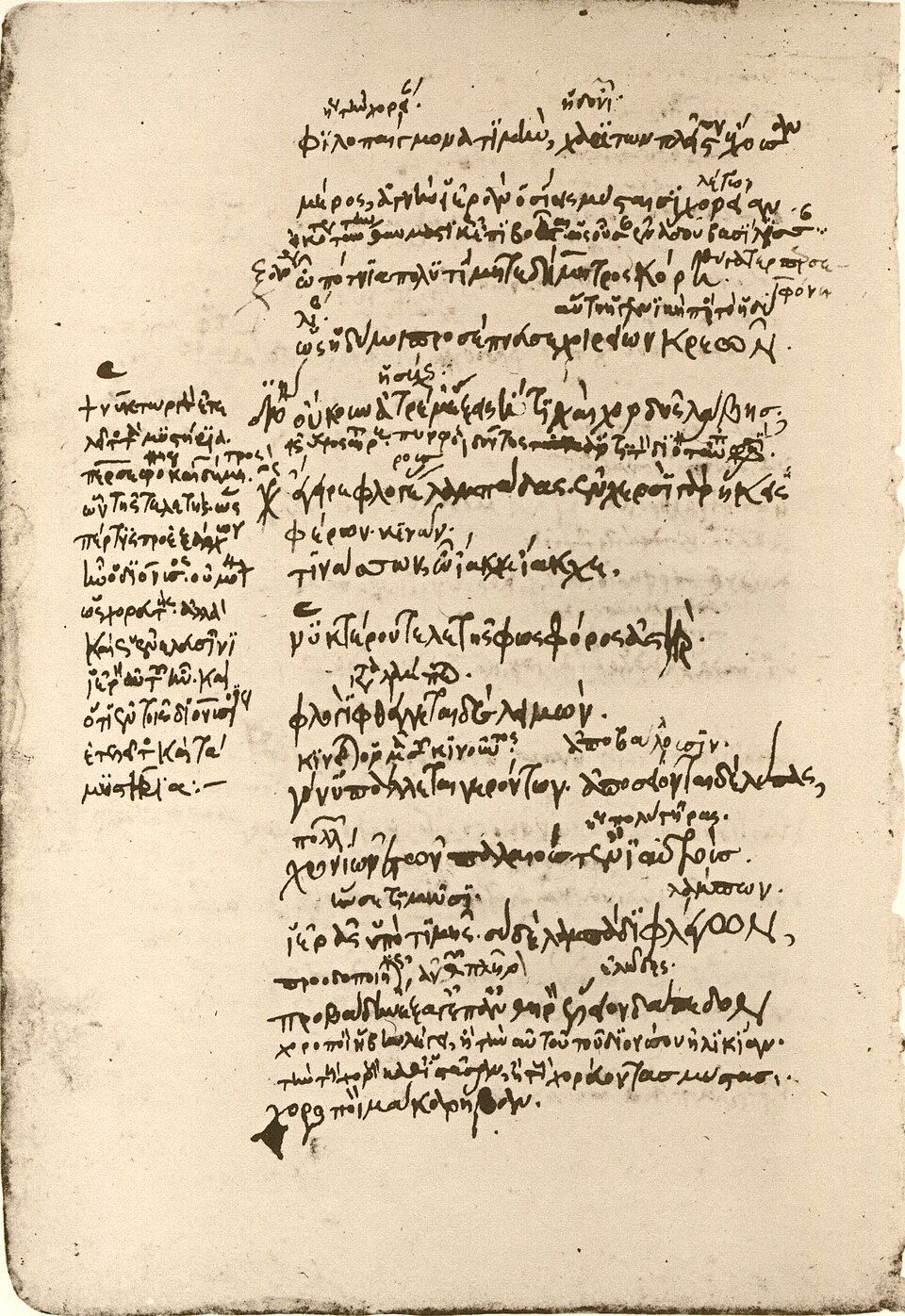
G
- Galenphysician
Physician whose De antidotis and To Piso preserve Andromachus’ theriac poem and verses of Nicander.
See: Andromachus: the theriac poem (in Galen) › Andromachus · Andromachus: the theriac poem (in Galen) › To Piso
On this site: 11 places on 5 pages
- Galene Γαλήνη (Galēnē)elegiac poem
Andromachus’ recipe for theriac, an antidote, in 174 lines of elegiac couplets addressed to Nero; it survives because Galen copied it into his De antidotis.
Source: West 1987, p. 24; Aloni 2009, p. 168
See: Andromachus: the theriac poem (in Galen) › Andromachus · Andromachus: the theriac poem (in Galen) › Galene (theriac poem) · 1–14
On this site: 8 places on 4 pages
- galliambictermalso galliambics
An ionic metre associated with the cult of Cybele.
Source: West 1987, pp. 73–74
See: Ionic › Later ionic · Later and Hellenistic metres › Hellenistic book lyric
On this site: 4 places on 3 pages
- Garlandanthologyalso Garland of Meleager, Stephanos
Meleager’s anthology of epigrams (first century BC), into which he wove the women poets: “the sweet maiden-skinned crocus of Erinna”.
See: Erinna › Life · Nossis › Transmission
On this site: 9 places on 5 pages
- geminationterm
Doubling of a consonant, as in Lesbian ἔμμι (emmi) “I am” and κλεννός (klennos) “famous”, where other dialects lengthen the vowel instead: Attic εἰμί (eimi), κλεινός (kleinos).
Source: Tribulato 2021, pp. 136–138; de Kreij 2022, pp. 144–146
See: Lesbian Aeolic › Features · Doric of choral lyric › Features
On this site: 2 places on 2 pages
- genus γένος (genos)termalso genera, enharmonic, chromatic, diatonic, enharmonic genus, chromatic genus, diatonic genus
One of the three ways of placing the two moving notes of a tetrachord: diatonic (semitone, tone, tone), chromatic (two semitones and a minor third) and enharmonic (two quarter-tones and a ditone). Classical serious music was mostly enharmonic; Roman-period scores are almost all diatonic.
Source: West 1992, pp. 162–166; Anderson 1994, p. 198
See: Scales and harmoniai › Tetrachords and genera · Music theory › Tetrachord
On this site: 24 places on 10 pages
- George Pisidespoet
Byzantine poet of the seventh century whose trimeter is the end of the story of the classical trimeter.
See: Attic of drama › Koinē and accent
On this site: 3 places on 3 pages
- Geryonmonsteralso Hydra
The monster whose death Stesichorus’ Geryoneis tells: in fr. 19 Heracles’ arrow, dipped in the Hydra’s poison, splits one of his heads, and his neck droops like a poppy.
Source: Pitotto 2024, p. 36
See: Stesichorus and Ibycus › Geryoneis
On this site: 1 place
- Geryoneislyric narrative
Stesichorus’ long narrative poem on Geryon, recovered from papyri published in 1967 and composed in triads. West counts it among his wholly dactylic poems; Pitotto, whose text (2024) is used here, reads the strophe as anapaestic, the same positions under another name.
Source: West 1987, pp. 37–38; Pitotto 2024, pp. 19–20
See: Stesichorus and Ibycus › Transmission · Stesichorus and Ibycus › Geryoneis
On this site: 7 places on 4 pages
- Giantsmythical beings
The monstrous enemies of the gods; Dionysus fights them in Nonnus’ Dionysiaca.
See: Nonnus › Nonnus
On this site: 5 places on 3 pages
- glsiglum
Siglum for the glyconic (¨gl and gl¨ its anaclastic forms, — ⏑ ⏑ — ⏑ — ⏑ — and ○ ○ — × — ⏑ ⏑ —), ○ ○ — ⏑ ⏑ — ⏑ —. See glyconic.
Source: West 1987, p. x
On this site: 88 places on 27 pages
- glidetermalso glides, consonantal glide
The movement of the tongue from one vowel towards another inside a single syllable, which is what makes a diphthong; also the brief [j] or [w] into which the second half of a diphthong runs before another vowel. Example: αυ in αὐτός (autos) “self” glides from [a] towards [u], like English how [haʊ]; before a vowel οι was said [ojj], as in English toy yacht, so the first syllable of τοιοῦτος (toioutos) “such” is heavy, unless the glide is reduced, as drama often allows.
Source: Allen 1968, pp. 76–79, 90
See: Sounds › Diphthongs and digraphs
On this site: 17 places on 6 pages
- glycsiglum
Siglum for Battezzato’s siglum for the glyconic; likewise pher (pherecratean), hipp (hipponactean), cho (choriamb), wil (wilamowitzianus), with expansion written glycᶜʰᵒ, glycᵈᵃ. See glyconic.
Source: Battezzato 2009, pp. 134–136
On this site: 130 places on 37 pages
- glyconictermalso glyconics
The central aeolic colon ○ ○ — ⏑ ⏑ — ⏑ — (siglum gl; × × in Sappho and Alcaeus), with anaclastic forms ¨gl and gl¨; Hephaestion files it under the antispastic metres.
Source: West 1987, pp. x, 33; Battezzato 2009, p. 134; Hephaestion, Ench. 10.2
See: Aeolic › Base and choriamb · Introduction to Greek metre › Glossary
On this site: 92 places on 28 pages
- Gorgonsmythical beings
Snake-haired monsters; Pentheus is called one of their race in the Bacchae’s fourth stasimon.
See: Euripides › Bacchae · 977–1023 (fourth stasimon)
On this site: 4 places on 3 pages
- Gow–Pagenumbering
A numbering of Hellenistic epigrams after the edition of Gow and Page: Callimachus’ Epigram 27 on Aratus is 56 Gow–Page.
Source: Clayman 2022, p. 420
See: Callimachus, Theocritus and Hellenistic poets › Aratus, Phaenomena · Callimachus, Ep. 27 (on Aratus)
On this site: 10 places on 6 pages
- Gracesgoddessesalso Aglaia, Euphrosyne, Thalia
Goddesses of charm, often invoked in lyric (Theocritus’ Idyll 28); Pindar’s Olympian 14, for a victor from Orchomenos, is mostly a hymn to them and names them Aglaia, Euphrosyne and Thalia.
Source: Race 1997a, p. 209
See: Callimachus, Theocritus and Hellenistic poets › Theocritus, Idyll 28 · Pindar › Olympian 14
On this site: 12 places on 7 pages
- Grammaire homériquemodern study
Chantraine’s grammar of Homer, to which West refers for the full list of words with initial digamma.
Source: West 1987, p. 22
See: Dactylic: the hexameter › Prosody of epic
On this site: 1 place
- gravetermalso grave accent
The accent mark ὰ written for an acute on a final syllable before another word; for Devine and Stephens a lowered high pitch, neither unaccented nor fully accented.
Source: Devine and Stephens 1994, pp. 152, 181–182
See: Accent and morae › The three marks
On this site: 205 places on 36 pages
- Greek Anthologyanthologyalso Palatine Anthology, Anthologia Graeca, A.P., AP, Anth. Pal.
The Byzantine collection of Greek epigrams, chiefly in the tenth-century Palatine manuscript, which preserves the epigrams of Simonides, Anyte, Nossis, Erinna and many others; cited from Paton’s Loeb.
Source: Reynolds and Wilson 1991, p. 66
See: Simonides › Epigrams · in the Greek Anthology · How the texts reached us › Byzantium
On this site: 34 places on 15 pages
- Greek Magical Papyricorpus of papyrialso PGM, Papyri Graecae Magicae
Handbooks and single spells on papyri from Egypt, mostly of the Roman period, edited by K. Preisendanz (2 vols, 1928, 1931; 2nd edn by A. Henrichs, 1973–74). They contain some thirty hymns in hexameters and iambics and use lines of Homer as charms.
Source: Preisendanz 1931, pp. 1, 50
On this site: 3 places on 2 pages
- Gregory of Nazianzuspoet
Christian writer of the fourth century AD in whom the stress accent first reaches literary verse.
Source: Devine and Stephens 1994, p. 215
See: Accent: pitch or stress? › Metre
On this site: 3 places on 3 pages
- Gygesking
Lydian king (680–644 BC) mentioned by Archilochus (fr. 19), which helps date him; also the subject of a Hellenistic papyrus drama.
Source: Lennartz 2022, p. 209 n. 13
See: Archilochus › Life · Attic of drama › Later Attic
On this site: 6 places on 6 pages
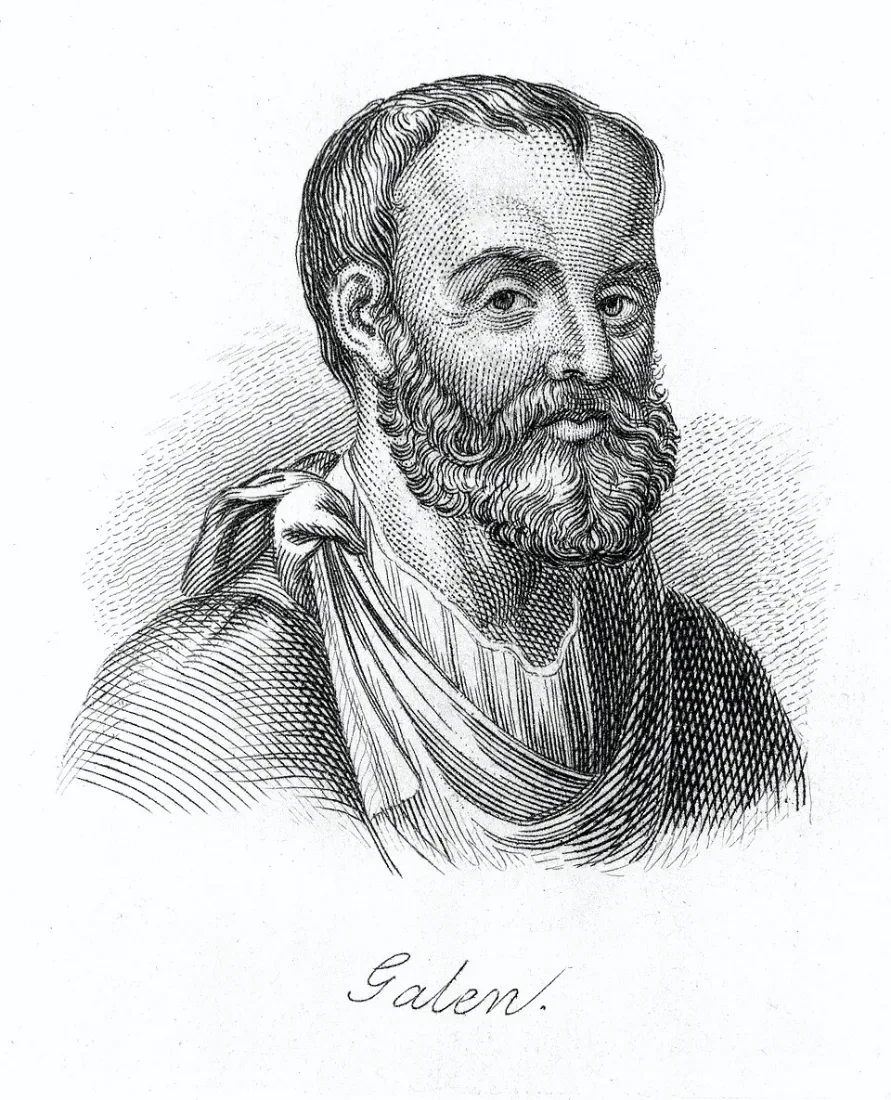
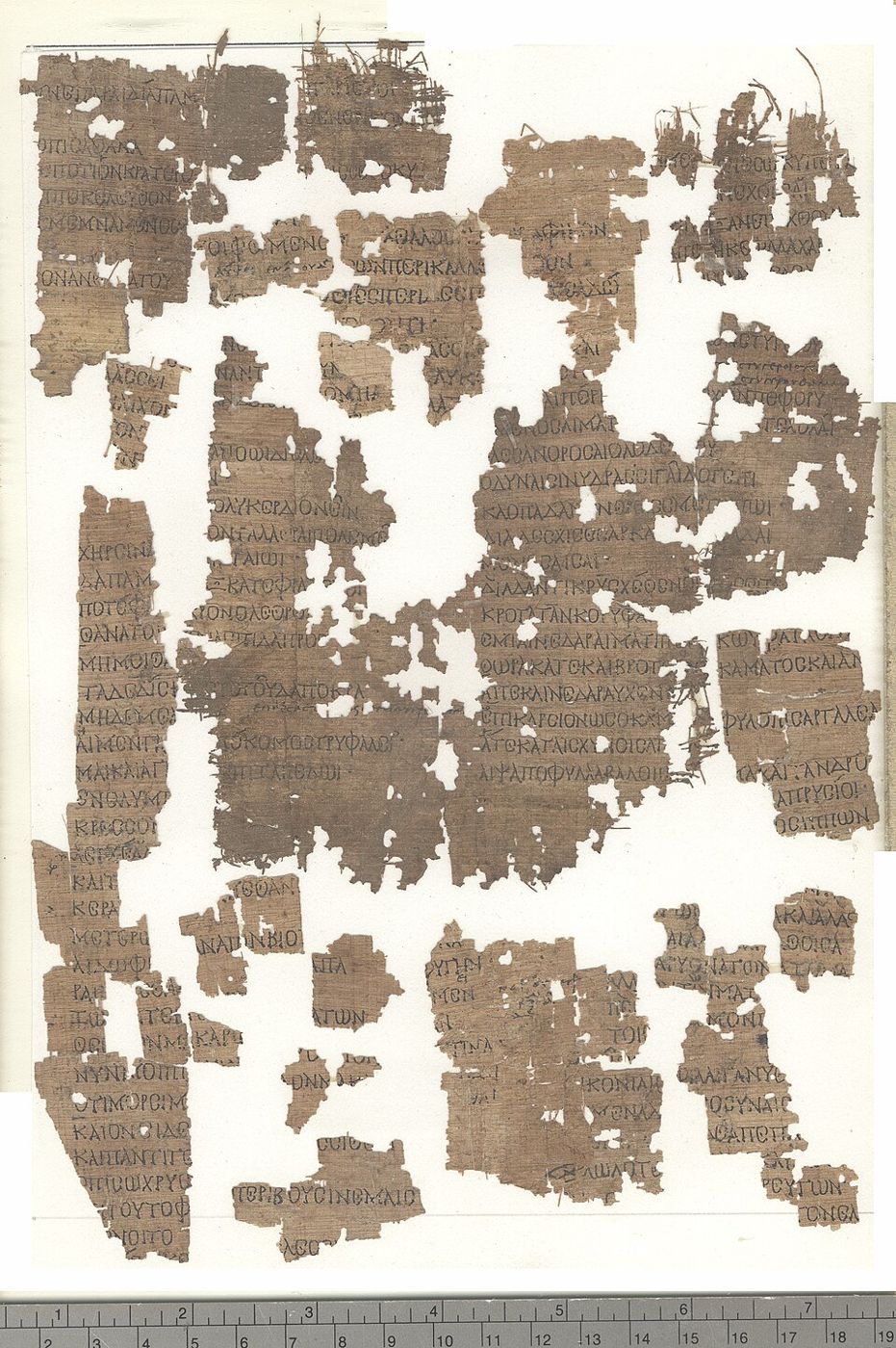
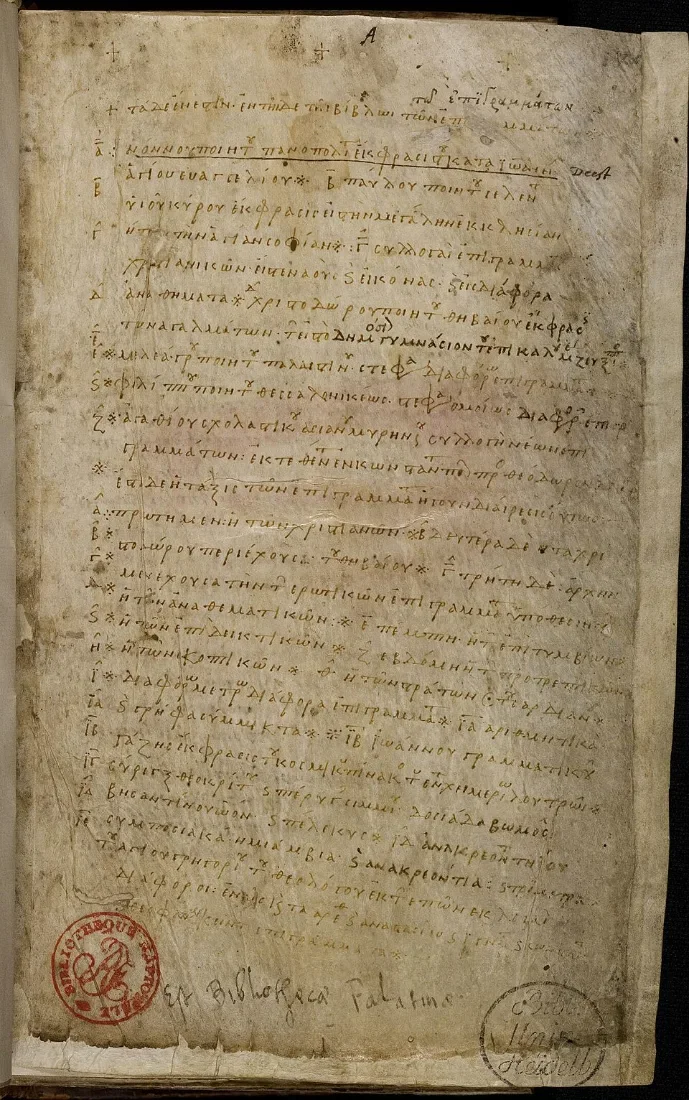
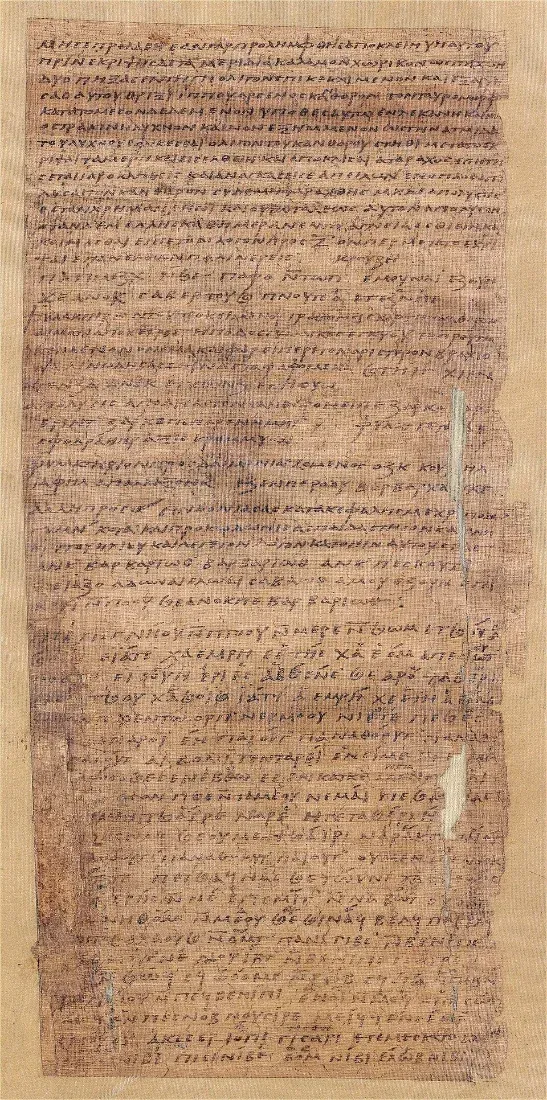
H
- Hadesgod
The god of the dead and his realm, into which Aristophanes’ Frogs goes.
See: Aristophanes › Plays and dates
On this site: 20 places on 11 pages
- Hadrianemperor
Roman emperor at whose court Mesomedes and Julia Balbilla worked.
See: Julia Balbilla › Life · Attic of drama › Koinē and accent
On this site: 12 places on 9 pages
- hagsiglum
Siglum for the hagesichorean (hag¨, anaclastic, × — × — ⏑ ⏑ — —), × — ⏑ ⏑ — ⏑ — —. See hagesichorean.
Source: West 1987, p. x
On this site: 33 places on 16 pages
- hagesichoreantermalso hag
The aeolic colon × — ⏑ ⏑ — ⏑ — — (siglum hag), one syllable longer than the telesillean; named after Hagesichora of Alcman’s Partheneion. West named it; Dale called it a “choriambic enoplian”, and Lourenço finds its family, aeolic or enoplian, ambiguous; three cola of Antigone 781–800 are hagesichoreans.
Source: West 1987, pp. x, 33; Lourenço 2011, p. 100 with n. 215
See: Introduction to Greek metre › Glossary · Lyric in drama › Worked example
On this site: 38 places on 16 pages
- half-basetermalso full base
Itsumi’s terms for what may stand before his aeolic units, the dodrans and reversed dodrans: a single anceps (half-base: × + dodrans is the telesillean) or two positions ○ ○ (full base: ○ ○ + dodrans is the glyconic).
Source: Itsumi 2009, pp. xii, 24
On this site: 2 places
- Harmodius and AristogeitonAtheniansalso Harmodius, Aristogeiton
The Athenian tyrannicides who killed Hipparchus, commemorated in an epigram attributed to Simonides.
On this site: 5 places on 4 pages
- harmonia ἁρμονία (harmonia)termalso mode, modes, Lydian mode, Mixolydian, Dorian mode
A tuning or scale of the lyre, the ancient “mode” (Dorian, Lydian, Mixolydian and others); Sappho and Terpander were said to have used the mournful Mixolydian.
Source: Battezzato 2021, pp. 129–130; D’Angour 2022, pp. 140–141
See: Sappho › Music · Introduction to Greek metre › Rhythm and music · Scales and harmoniai › Harmoniai and ethos · Music theory › Species and harmoniai
On this site: 27 places on 17 pages
- Havet's Lawterm
The rule corresponding to Porson’s for the opening of the trochaic tetrameter. West says Porson discovered it too; Maas credits it to L. Havet (1886).
Source: West 1987, p. 28; Maas 1962, p. 35
See: Trochaic › The tetrameter catalectic · Introduction to Greek metre › Feet, metra, cola, periods
On this site: 12 places on 6 pages
- heavy iambicstermalso heavier iambics
Lyric iambics whose ancipitia are long, — — ⏑ —, so that they move like the epitrites of dactylo-epitrite; Dale’s example is Oedipus Tyrannus 889–891, where lyric iambics usually keep the anceps short.
Source: Dale 1968, pp. 84, 184
See: Sophocles › Oedipus Tyrannus · 883–910 (second stasimon, second pair)
On this site: 2 places
- heavy syllabletermalso light syllable
Terms for long and short syllables that Allen takes from the ancient Indian grammarians, keeping long and short for vowels: a syllable is heavy if it has a long vowel or diphthong or is closed by a consonant, light if it ends in a short vowel. A closed syllable is heavy without its vowel becoming long. Example: in ἄνδρα (andra) “man” the first syllable ἀν- is heavy though its α is short, because ν closes it; in λόγος (logos) both syllables are light.
Source: Allen 1968, pp. 97–98; West 1987, pp. 12–13
See: Sounds › Syllables and quantity · Introduction to Greek metre › Quantity
On this site: 33 places on 18 pages
- Hecalehexameter poem
Callimachus’ short hexameter epic, still read in twelfth-century Byzantium by Michael Choniates and since lost.
See: Callimachus, Theocritus and Hellenistic poets › Transmission
On this site: 15 places on 7 pages
- Hecategoddessalso Hecate-Selene
Hecate-Selene, one of the gods addressed in the hymns of the magical papyri.
On this site: 2 places
- Hectorhero
The Trojan hero whose wedding to Andromache Sappho narrates in fr. 44; Iliad 6.440–465, where he answers Andromache, and 6.466–481, where he takes off his helmet for Astyanax and prays for him, are scanned on this site.
See: Sappho › Fr. 44 (Ἔκτωρ καὶ συνέταιροι…) · Homer › Iliad · 6.440–465 (Hector answers Andromache) · Homer › Iliad · 6.466–481 (Hector and Astyanax)
On this site: 15 places on 10 pages
- Hecubatragedy
Euripides’ tragedy, before 423 BC?
Source: Easterling 1997, p. 353
See: Euripides › Plays and dates
On this site: 14 places on 9 pages
- Helenheroine
Helen of Troy, subject of Stesichorus’ Helen and Palinode, of Euripides’ Helen (412 BC) and of Sappho fr. 16.
See: Stesichorus and Ibycus › Stesichorus · Sappho › Fr. 16 (Οἰ μὲν ἰππήων…)
On this site: 26 places on 16 pages
- Heliconplace
Mountain in Boeotia, home of Hesiod’s Muses, and a contestant in Corinna’s poem on the mountains.
See: Corinna › 654 i: the mountains’ contest
On this site: 10 places on 5 pages
- Heliodorus (metrician)metrician
Metrician of the early Roman empire whose commentary on the metres of Aristophanes is partly preserved in the scholia.
Source: Reynolds and Wilson 1991, pp. 45, 77; West 2018, pp. 372–373
See: How the texts reached us › Byzantium · Aristophanes › Manuscripts
On this site: 5 places on 4 pages
- Heliosgodalso the Sun
The Sun, summoned in the Clouds parabasis ode with choriambic dimeters and a priapean; hymns to Helios stand among the hymns of the magical papyri (PGM III).
Source: Dale 1968, p. 135; Herrero Valdés 2019, pp. 261, 264
See: Aristophanes › Clouds · 563–606 (parabasis, ode and antode)
On this site: 8 places on 5 pages
- Hellenisticperiodalso Hellenistic period, Hellenistic age
The age of the Alexandrian scholars and book-poets (Callimachus, Theocritus) from the third century BC, who refined the stichic metres and invented new ones.
Source: West 1987, pp. 76–82
See: Callimachus, Theocritus and Hellenistic poets › Life · Later and Hellenistic metres › Hellenistic book lyric
On this site: 114 places on 53 pages
- Hellespontplacealso Sigeum
The strait by Troy; Mytilene fought Athens for Sigeum there in Alcaeus’ time.
See: Alcaeus › Politics
On this site: 3 places on 2 pages
- hemiepes ἡμιεπές (hēmiepes)termalso hemiepe
The colon — ⏑ ⏑ — ⏑ ⏑ — (D in dactylo-epitrite), “half an epic line”; the pentameter is two of them.
Source: West 1987, pp. 24, 87; Battezzato 2009, p. 137
See: The elegiac couplet › Scheme · Introduction to Greek metre › Glossary
On this site: 139 places on 27 pages
- hendecasyllabletermalso hendecasyllables, Sapphic hendecasyllable, Phalaecian hendecasyllable
An eleven-syllable line; Hephaestion’s “Sapphic hendecasyllable” is the first line of the Sapphic stanza, which he analyses as a trochaic pair, a choriamb and an iambic close. Example: Sappho 1.1 Ποικιλόθρον’ ἀθανάτ’ Ἀφρόδιτα (Poikilothron’ athanat’ Aphrodita), eleven syllables, — ⏑ — × — ⏑ ⏑ — ⏑ — ×.
Source: Hephaestion, Ench. 14.1; D’Angour 2022, p. 134
See: Introduction to Greek metre › Glossary · Aeolic › Lesbian stanzas
On this site: 33 places on 12 pages
- Henninian accentuationtermalso Henninian, Latin-rule accent
The habit, proposed by Henning (Henninius) in 1684 after Vossius, of stressing Greek by the Latin rule, on a heavy penult or else on the antepenult, regardless of the written accent; it became the practice of Britain, the Netherlands and their former colonies.
Source: Allen 1968, pp. 135–136; Probert 2006, pp. 100–101
See: Pronunciation systems › Erasmian · Sounds › Reading aloud
On this site: 2 places on 2 pages
- Hephaestion Ἡφαιστίων (Hēphaistiōn)metrician
Metrician of the second century AD, author of the Enchiridion (“Handbook on Metres”), On Signs and On Poems, which define the terms of metre and quote lines of many lost poets as examples.
Source: Prauscello 2021, p. 221; Battezzato 2009, p. 137 n. 12
See: Introduction to Greek metre › Ancient metricians
On this site: 136 places on 42 pages
- heptasyllabletermalso hepta
Itsumi’s name for the aeolic phrase × — ⏑ — ⏑ ⏑ —, a single anceps before the reversed dodrans; West’s anaclastic telesillean (tl¨).
Source: Itsumi 2009, pp. xii, 24; West 1987, p. x
See: Pindar › The other half · Pindar › Nemean 4
On this site: 4 places on 2 pages
- Heragoddess
Wife of Zeus, to whom Nossis dedicates a robe in one of her epigrams.
See: Nossis › Epigrams
On this site: 22 places on 9 pages
- Heracleshero
The hero of many poems here: Bacchylides’ Ode 16, Euripides’ Heracles and Alcestis (the strongman who overpowers the ogre), Menander’s Pseudheracles; his arrow kills Geryon in Stesichorus’ Geryoneis, and Tyrtaeus calls the Spartans his stock (fr. 11).
See: Euripides › Plays and dates · Stesichorus and Ibycus › Geryoneis · The elegists: Callinus, Tyrtaeus, Mimnermus, Solon, Theognis, Xenophanes › Tyrtaeus fr. 11
On this site: 19 places on 11 pages
- Hermann's Bridgeterm
In the hexameter, no word-end between the two shorts of the fourth biceps (a postpositive counts with the word before it). Breaches: about once in 550 lines of Homer (West); about once in 390 lines (Maas, who credits G. Hermann, 1805). Callimachus and Nonnus keep it always; Maas notes a few exceptions in Aratus, each after a monosyllabic postpositive.
Source: West 1987, p. 21; D’Alessio 2009, p. 123 n. 31; Maas 1962, pp. 60, 62
See: Dactylic: the hexameter › Scheme · Introduction to Greek metre › Feet, metra, cola, periods · Later and Hellenistic metres › Worked example
On this site: 89 places on 13 pages
- Hermesgod
The messenger god, subject of the Homeric Hymn to Hermes and of Sophocles’ Ichneutae, and invoked by Hipponax.
See: Hipponax, Semonides and the iambographers › Poetry · Sophocles › Plays and dates
On this site: 34 places on 12 pages
- Hermopolisplace
Town in Egypt from which come Corinna’s Berlin papyrus (P.Berol. 13284) and PGM XXIIa, two leaves of a fourth- or fifth-century notebook of Homeric lines for healing.
Source: Preisendanz 1931, pp. 146–147
On this site: 6 places on 3 pages
- Herodaspoetalso Herondas
Hellenistic author of mimiambi in choliambs, drawing on Hipponax.
Source: Barbantani 2009, p. 309; West 1987, p. 82
See: Callimachus, Theocritus and Hellenistic poets › Life
On this site: 10 places on 6 pages
- Herodotushistorian
Historian of the fifth century BC who linked Sappho with Amasis and Croesus; his phrase for oracles given in verse, ἐν ἑξαμέτρῳ τόνῳ (1.47), recurs in a magical papyrus (PGM III).
Source: Kivilo 2021, p. 20; Preisendanz 1928, pp. 50–51
See: Sappho › Life
On this site: 17 places on 11 pages
- Hesiod Ἡσίοδος (Hēsiodos)poet
Poet of the Theogony and the Works and Days, hexameter poems that on the metrical evidence were composed in the hexameter from the start.
See: Hesiod › Metres
On this site: 95 places on 25 pages
- heterophonytermalso heterophonic accompaniment, unison accompaniment
An accompaniment that departs from the sung line with notes of its own. Whether the Greek aulos and lyre did this, or doubled the voice in unison, is disputed: West reads the instrumental notes of the Orestes papyrus as sounding against the voice, Anderson holds unison the norm.
Source: West 1992, pp. 205–207; Anderson 1994, p. 181
See: Melody and accent › Orestes · Instruments › The aulos
On this site: 1 place
- hexsiglum
Siglum for the dactylic hexameter (in Lourenço 2011 an “aeolic hexasyllable” oo — ⏑ ⏑ —), — ⏕ — ⏕ — ⏕ — ⏕ — ⏑ ⏑ — ×. See hexameter.
Source: West 1987, p. x; Lourenço 2011, pp. 13–15
On this site: 3 places on 3 pages
- hexameter ἑξάμετρος (hexametros)termalso hexameters, dactylic hexameter
The line of epic: six dactylic metra, the last catalectic (— ×), the biceps contractible except usually in the fifth foot; in practice two cola divided at the caesura. Siglum hex.
Source: West 1987, pp. x, 19; Battezzato 2009, p. 138
See: Dactylic: the hexameter › Scheme · Introduction to Greek metre › Glossary
On this site: 210 places on 53 pages
- hisiglum
Siglum for the hipponactean (¨hi, hi¨ anaclastic), ○ ○ — ⏑ ⏑ — ⏑ — —. See hipponactean.
Source: West 1987, p. x
On this site: 39 places on 16 pages
- hiatusterm
Two vowels meeting across a word-break, each keeping its full value, with no elision or merging; in verse that otherwise avoids it, a sign of period-end. Example: Pindar, Pythian 12.3 ὦ ἄνα (ō ana), where ὦ keeps its full length before a vowel.
Source: West 1987, pp. 15, 36; Battezzato 2009, p. 131
See: Introduction to Greek metre › Prosody: vowels · Introduction to Greek metre › Glossary
On this site: 221 places on 44 pages
- Hieron of Syracusetyrantalso Hieron, Hiero
Tyrant of Syracuse, patron of Pindar, Bacchylides, Simonides and Aeschylus; his Olympic chariot victory of 468 BC is celebrated in Bacchylides’ Ode 3. Pindar’s Olympian 1 is for his Olympic win with the racehorse Pherenikos (476 BC), Pythian 1 for his chariot victory of 470 BC as “Hieron of Aetna”.
Source: Itsumi 2009, p. 143; Race 1997a, p. 219
See: Bacchylides › Life and works · Pindar › Victory odes · Pindar › Olympian 1 · Pindar › Pythian 1
On this site: 17 places on 5 pages
- Hilberg's Lawterm
In the strict hexameter of Callimachus and Nonnus, word-end never follows a contracted second biceps; the companion of Naeke’s Law, first hinted at by J. Hilberg (1879). Homer breaks it freely (Iliad 2.484, 6.466; Works and Days 635, 648), and West notes that in Homer such word-end is frequent only after the first biceps. Example: Iliad 2.484, ἔσπετε νῦν μοι, Μοῦσαι (espete nyn moi, Mousai), “tell me now, Muses”: the second foot νῦν μοι is — —, and a word ends with it.
Source: Maas 1962, p. 62; West 1987, p. 20
See: Epic Ionic › Metrical consequences · Introduction to Greek metre › Glossary · Homer › Iliad · 6.466–481 (Hector and Astyanax)
On this site: 13 places on 8 pages
- Himeraplace
City on the north coast of Sicily most often associated with Stesichorus.
See: Stesichorus and Ibycus › Stesichorus
On this site: 3 places on 2 pages
- Hipparchusruler
Son of Pisistratus who invited Anacreon and Simonides to Athens.
See: Anacreon › Life · Bacchylides › Life and works
On this site: 12 places on 5 pages
- Hippolytustragedy
Euripides’ tragedy of 428 BC (the revised version), which won first prize; it has the first lyric monodies for an actor.
Source: Easterling 1997, p. 353; Battezzato 2005, p. 153
See: Euripides › Plays and dates · Euripides › Actors' song
On this site: 10 places on 3 pages
- hipponacteantermalso hipponacteans, hi
The aeolic colon ○ ○ — ⏑ ⏑ — ⏑ — — (siglum hi), one syllable longer than the glyconic.
Source: West 1987, pp. x, 33; Battezzato 2009, p. 134
See: Introduction to Greek metre › Glossary
On this site: 34 places on 14 pages
- Hipponax Ἱππῶναξ (Hippōnax)poet
Iambic poet of Ephesus, the master of the choliamb, whose targets include the sculptor Bupalus; revived by Callimachus and Herodas.
Source: West 1987, p. 30; Barbantani 2009, p. 309
See: Hipponax, Semonides and the iambographers › Life · Hipponax, Semonides and the iambographers › Metres: choliamb
On this site: 39 places on 20 pages
- Homer Ὅμηρος (Homēros)poet
The poet of the Iliad and Odyssey, some 28,000 dactylic hexameters in a formulaic art-language with centuries of history behind it; his metre and language set the norm for all later epic.
Source: Kelly 2022, p. 34; West 1987, p. 19
See: Homer › Life · Homer › Formula and metre
On this site: 240 places on 61 pages
- Homeric Hymnshymnsalso Homeric Hymn, Hymn to Demeter, Hymn to Aphrodite (Homeric), Hymn to Hermes, Hymn to Apollo
Hexameter hymns to the gods in the language of epic, attributed in antiquity to Homer; this site scans passages of the hymns to Demeter (2) and Aphrodite (5).
See: Homeric Hymns › Overview · Homeric Hymns › To Demeter (Hymn 2) · 1–21
On this site: 78 places on 19 pages
- Homeridaesingers
The “sons of Homer”, singers who, as Nemean 2 opens, begin their songs from Zeus, as Timodemus begins his victories at Nemea.
See: Pindar › Nemean 2
On this site: 2 places on 2 pages
- Homeromanteiondice oraclealso Homer oracle, PGM VII 1–148
The dice oracle at the start of the magical roll PGM VII (third century AD): three throws give a number triplet from ααα to ϛϛϛ, and each triplet is answered by a single line of Homer, 216 in all.
Source: Preisendanz 1931, pp. 1, 6
- HoraceRoman poet
Roman lyric poet for whom Alcaeus mattered around 25 BC; the Plantin Horace of 1566 was the first book to use sigla.
See: Alcaeus › Life · How the texts reached us › Printing
On this site: 20 places on 10 pages
- hymn ὕμνος (hymnos)termalso hymns
A song to a god; in hexameters in the Homeric Hymns and Callimachus, in lyric metres in Sappho (fr. 1), Melinno’s hymn to Rome and the later hymns with notation.
See: Homeric Hymns › Overview · Sappho › Fr. 1 (Hymn to Aphrodite)
On this site: 191 places on 50 pages
- Hymn to Aphrodite (Sappho fr. 1)lyric poemalso Sappho fr. 1, fr. 1
Sappho’s only complete poem, seven Sapphic stanzas preserved by Dionysius of Halicarnassus; first printed in 1508.
Source: Finglass 2021, pp. 247–248
See: Sappho › Fr. 1 (Hymn to Aphrodite) · How the texts reached us › Printing
On this site: 21 places on 5 pages
- Hymn to Romelyric poem
Melinno’s only surviving poem, five Sapphic stanzas hailing Rome as a daughter of Ares, preserved by Stobaeus (Ecl. 3.7.12).
Source: Natoli et al. 2022, p. 193
See: Melinno › Hymn to Rome · Melinno › Transmission
On this site: 2 places
- Hymn to Zeus (Aeschylus)choral ode
The name usually given to Agamemnon 160–83, two strophic pairs of the parodos in which the old men turn to Zeus, “whoever he is”; the first pair is lekythia broken by a dactylic pentameter before the last colon, and the next ends with “learning by suffering”.
Source: Dale 1968, p. 84; Woodruff 2005, p. 502
See: Aeschylus › Agamemnon · 160–75 (Hymn to Zeus) · Aeschylus › Agamemnon · 176–91 (“learning by suffering”)
On this site: 2 places
- Hymn to Zeus (Callimachus)hymnalso Callimachus' Hymn to Zeus
The first of Callimachus’ six hexameter Hymns, whose opening West takes as his specimen of the refined Hellenistic hexameter.
Source: West 1987, p. 78
See: Callimachus, Theocritus and Hellenistic poets › Callimachus, Hymn to Zeus · Callimachus, Theocritus and Hellenistic poets › Metres
On this site: 4 places on 4 pages
- hyperaeolicismtermalso hyperaeolic, hyper-Aeolic, hyperdoricism
A form that looks Aeolic (or Doric) but that comparative linguistics shows to be impossible, created by ancient editors regularising the dialect. Example: φίλημμι (philēmmi), “I love”, at Sappho fr. 58.15, formed by false analogy with ἔμμι (emmi), the genuine Lesbian for “I am”.
Source: de Kreij 2022, pp. 143, 147–149
See: Overview › Editions and orthography · Lesbian Aeolic › Features
On this site: 7 places on 5 pages
- hyperbatonterm
A phrase split by another word, usually the verb, as in καινὸν ἀγγέλλεις ἔπος (kainon angelleis epos), “new is the word you bring”, where the verb splits καινὸν … ἔπος, “new word”. The word put first is usually the emphatic one.
Source: Devine and Stephens 1994, pp. 483–484; Clyde 1857, p. 171
See: Introduction to Greek metre › Feet, metra, cola, periods
On this site: 1 place
- hypercatalecticterm
Said of a colon one or two syllables longer than its normal form. Example: Corinna’s ionic poem PMG 654 i, five dimeters ⏑ ⏑ — — ⏑ ⏑ — — and a hypercatalectic close.
Source: West 1987, p. 5; Hephaestion, Ench. 4.4
See: Introduction to Greek metre › Glossary
On this site: 16 places on 10 pages
- hyphen (music) ὑφ' ἕν (hyph’ hen)termalso slur
A slur drawn under two or three pitch signs to show that they belong to one syllable; the older scores doubled the vowel instead.
Source: West 1992, pp. 267–268; Anderson 1994, p. 207
See: Notation › Rhythmic signs
On this site: 6 places on 2 pages
- hypodochmiustermalso hypodochmiac
A variant of the dochmius, — ⏑ — ⏑ — (siglum hδ).
Source: West 1987, pp. x, 46, 56
See: Dochmiac › The dochmius · Introduction to Greek metre › Glossary
On this site: 7 places on 5 pages
- hyporchema ὑπόρχημα (hyporchēma)termalso hyporchemata, dancing songs
A dancing song; one of the genres of Bacchylides and Pindar named by the ancient editions.
Source: Maehler 2004, p. 10
See: Bacchylides › Life and works · Pindar › Transmission
On this site: 2 places on 2 pages
- Hypsipyletragedy
A lost tragedy of Euripides known from a papyrus (P.Oxy. 852).
See: Euripides › Plays and dates · How the texts reached us › Discoveries
On this site: 4 places on 3 pages
- hδsiglum
Siglum for the hypodochmius, — ⏑ — ⏑ —. See hypodochmius.
Source: West 1987, p. x
On this site: 2 places on 2 pages
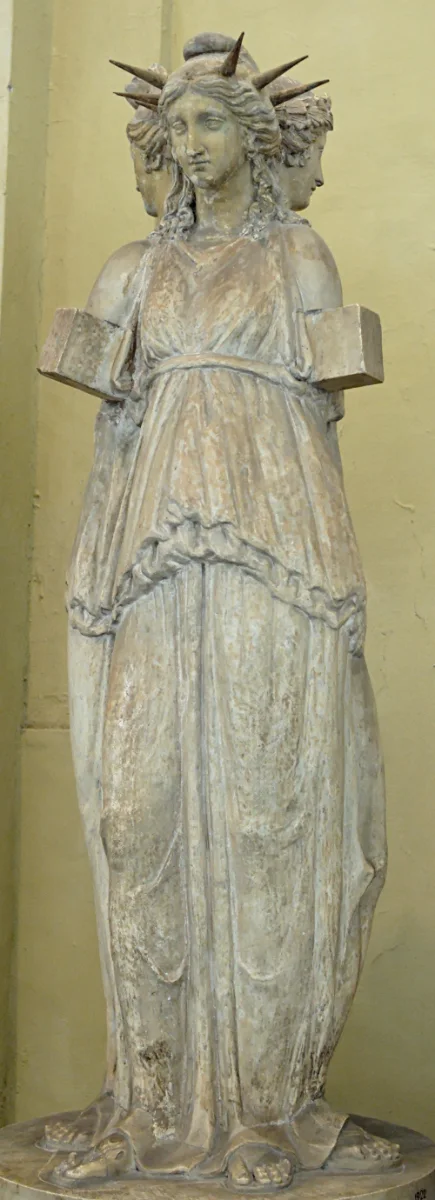
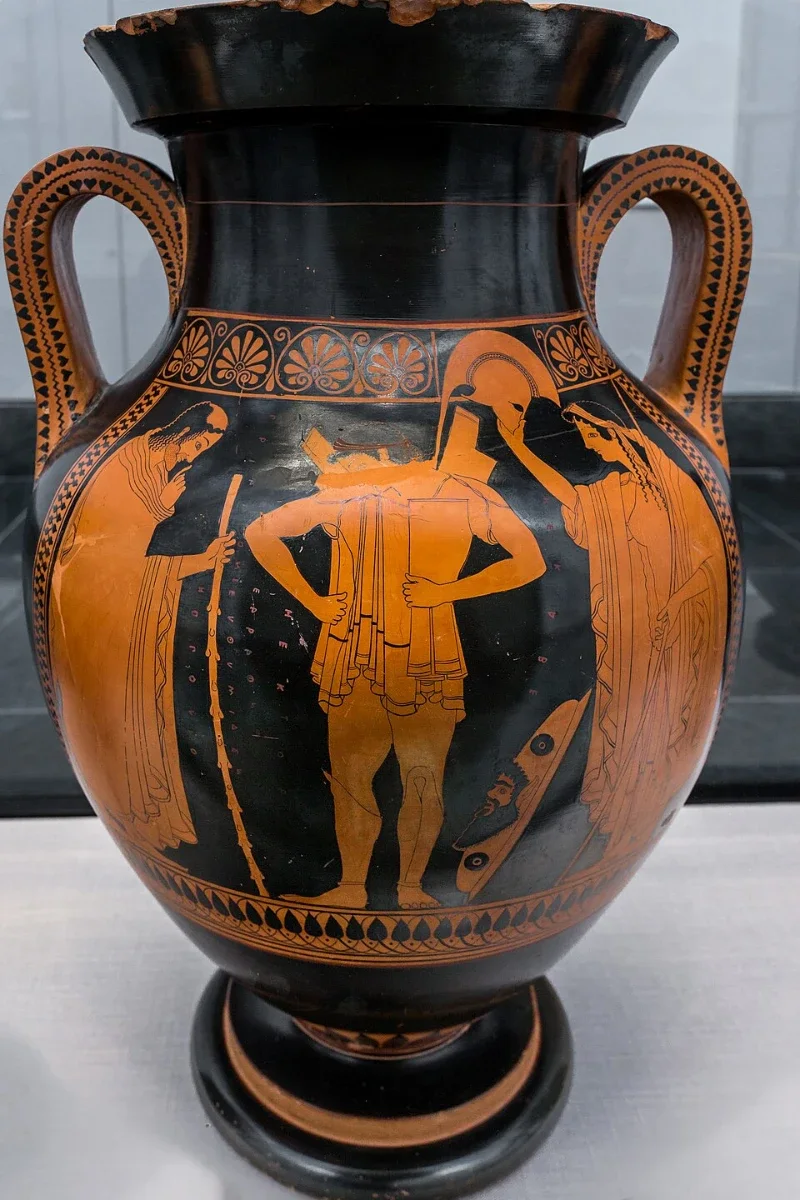
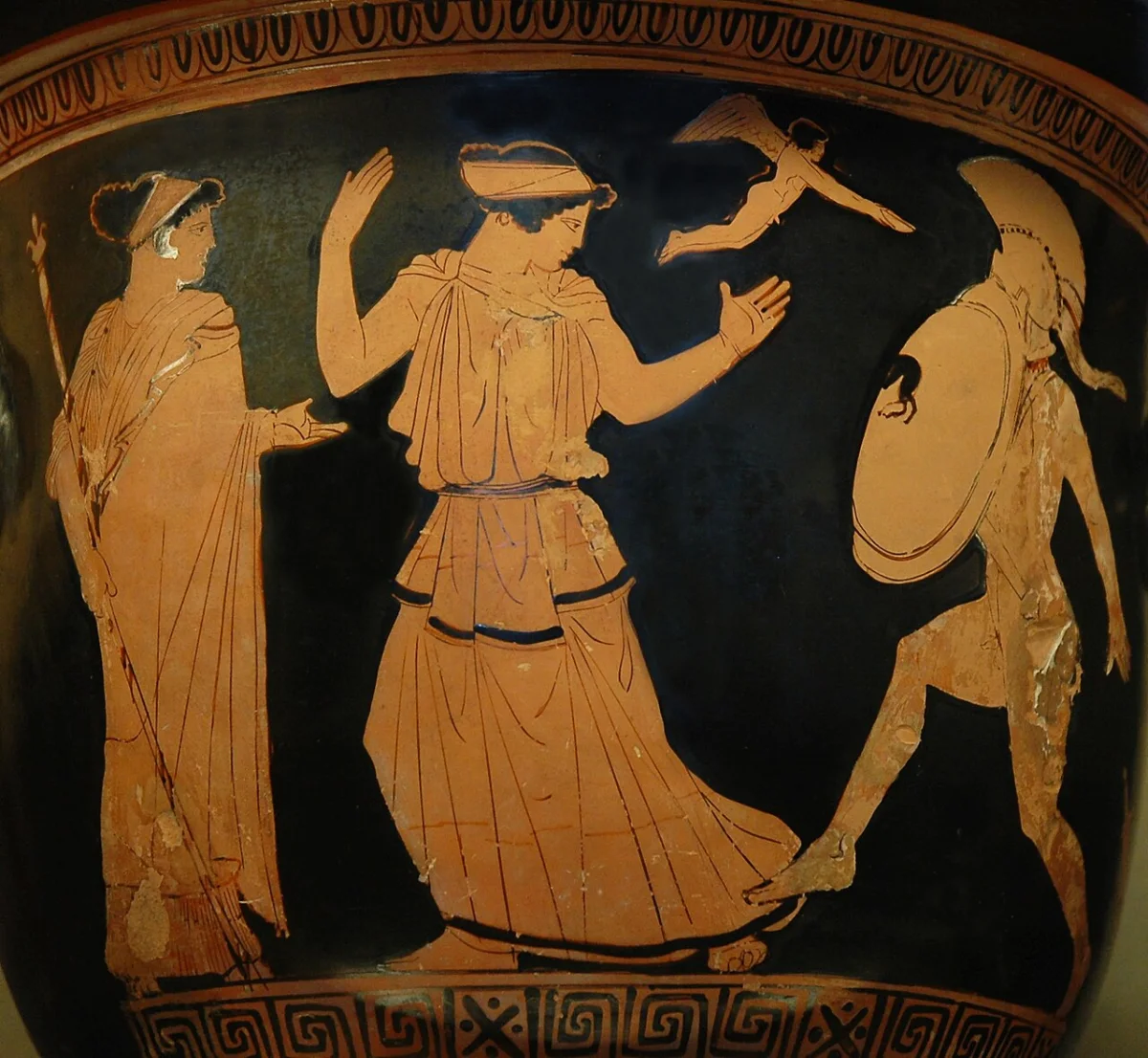
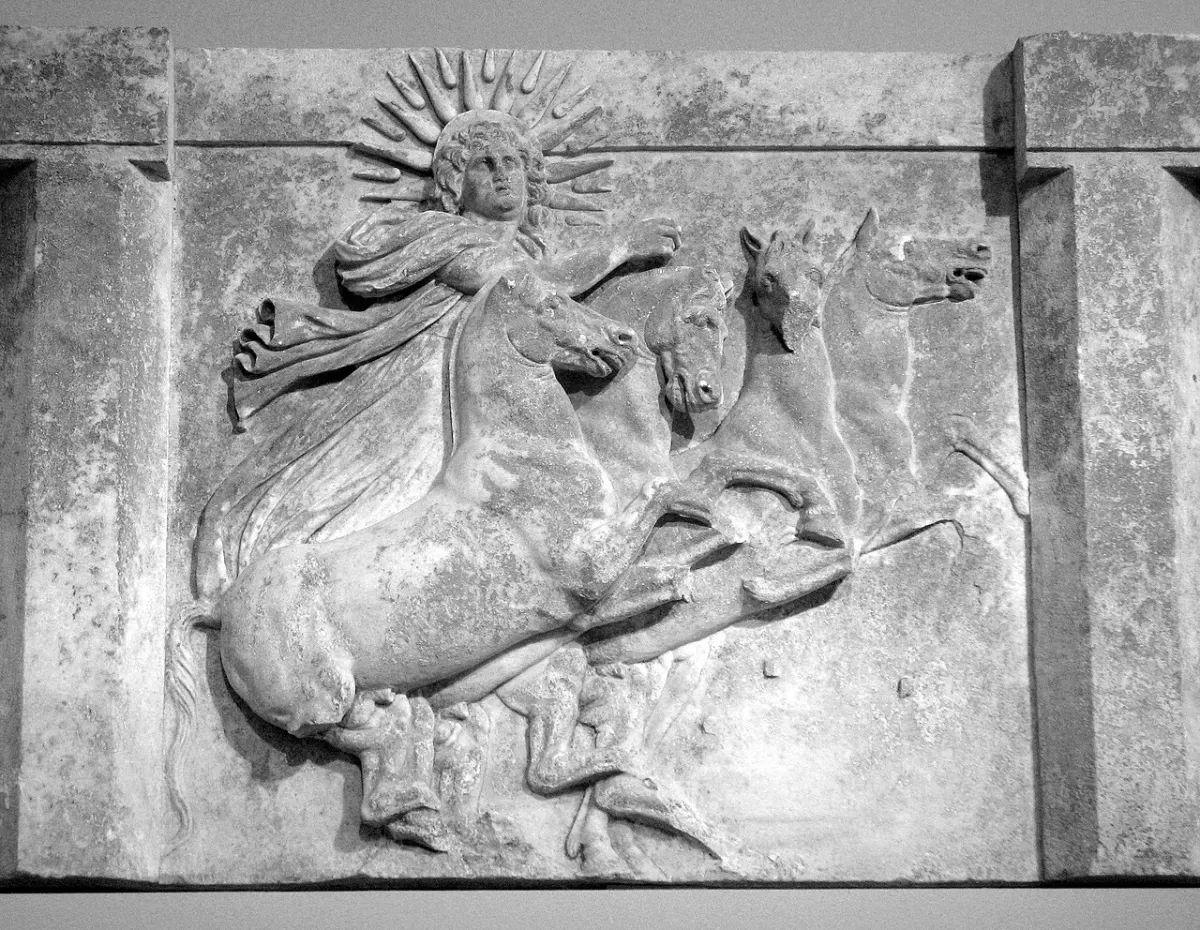
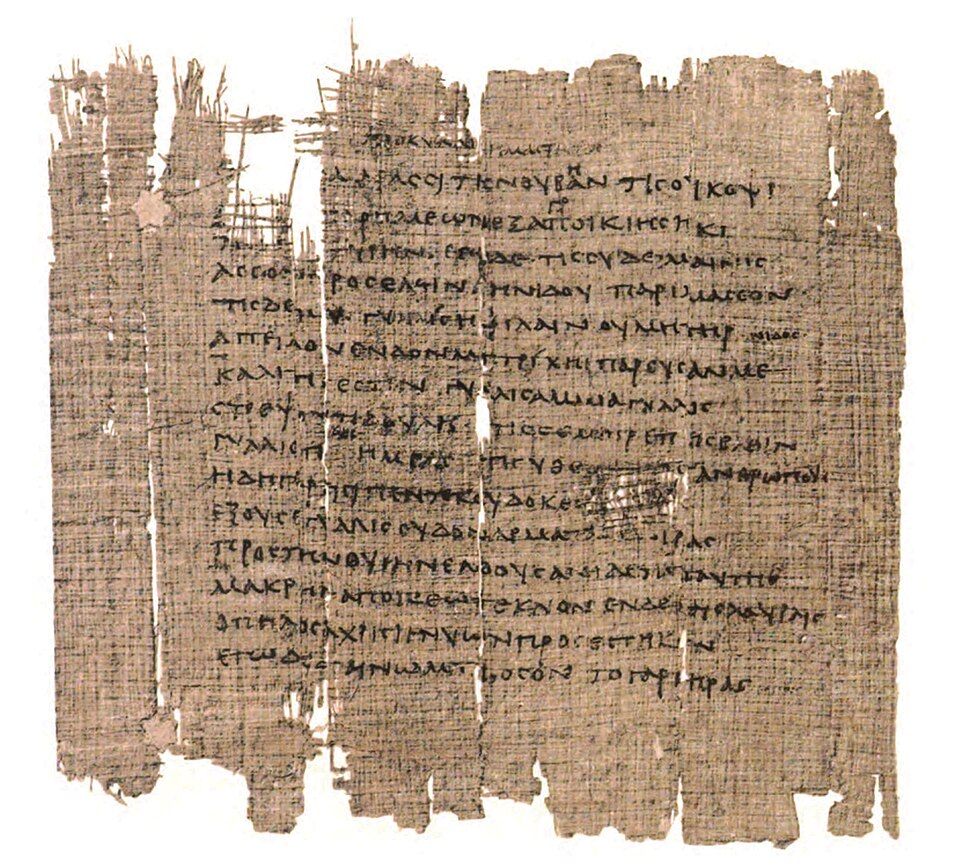
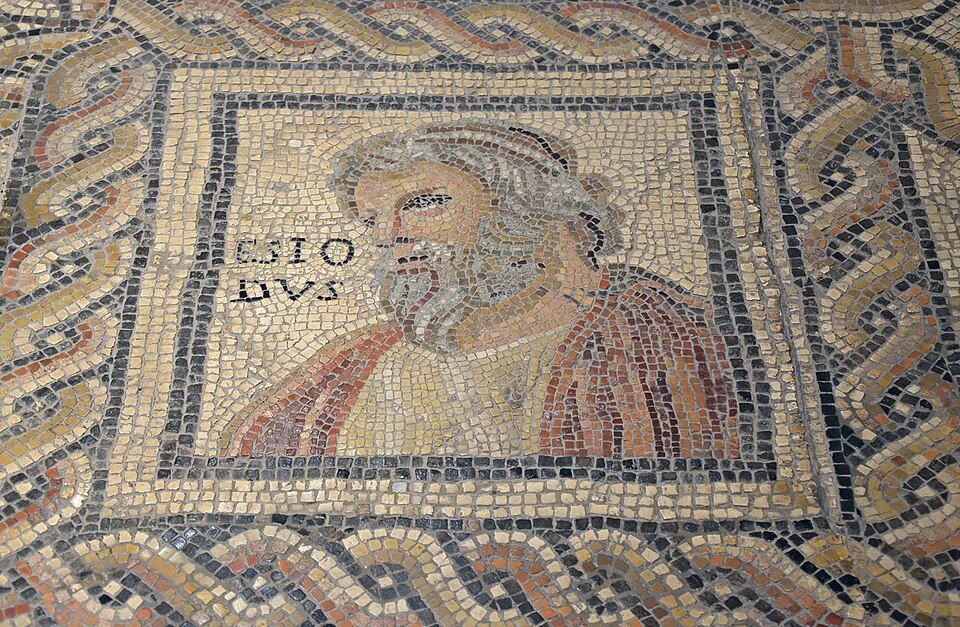
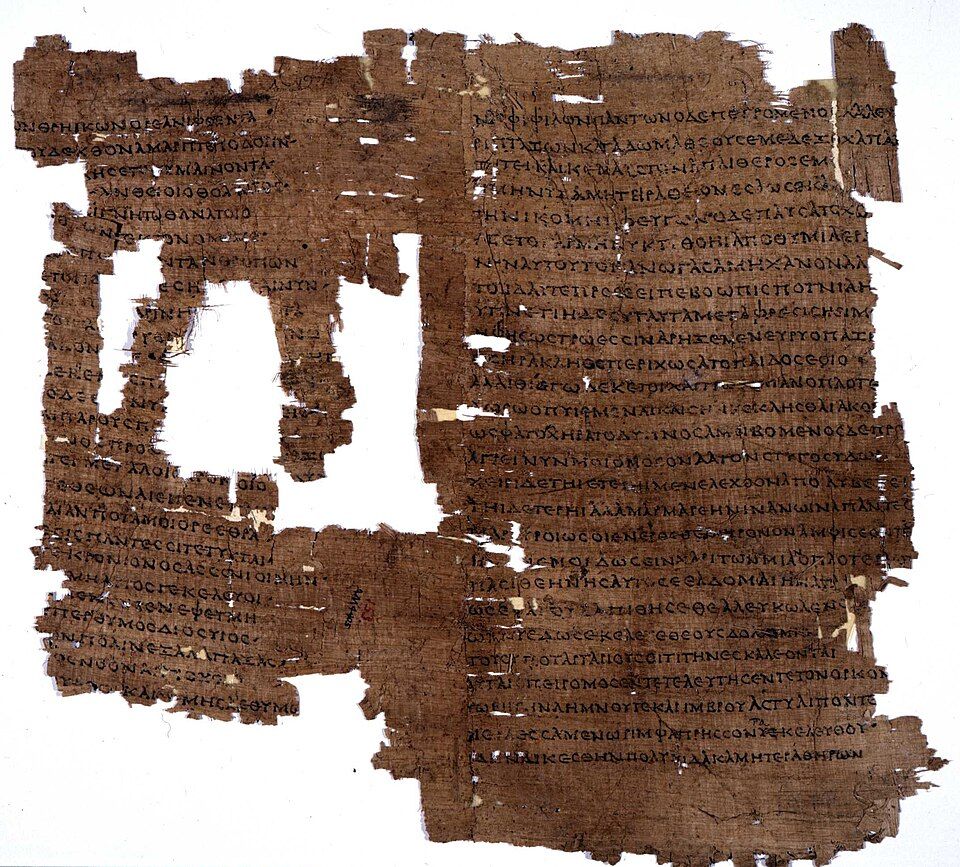
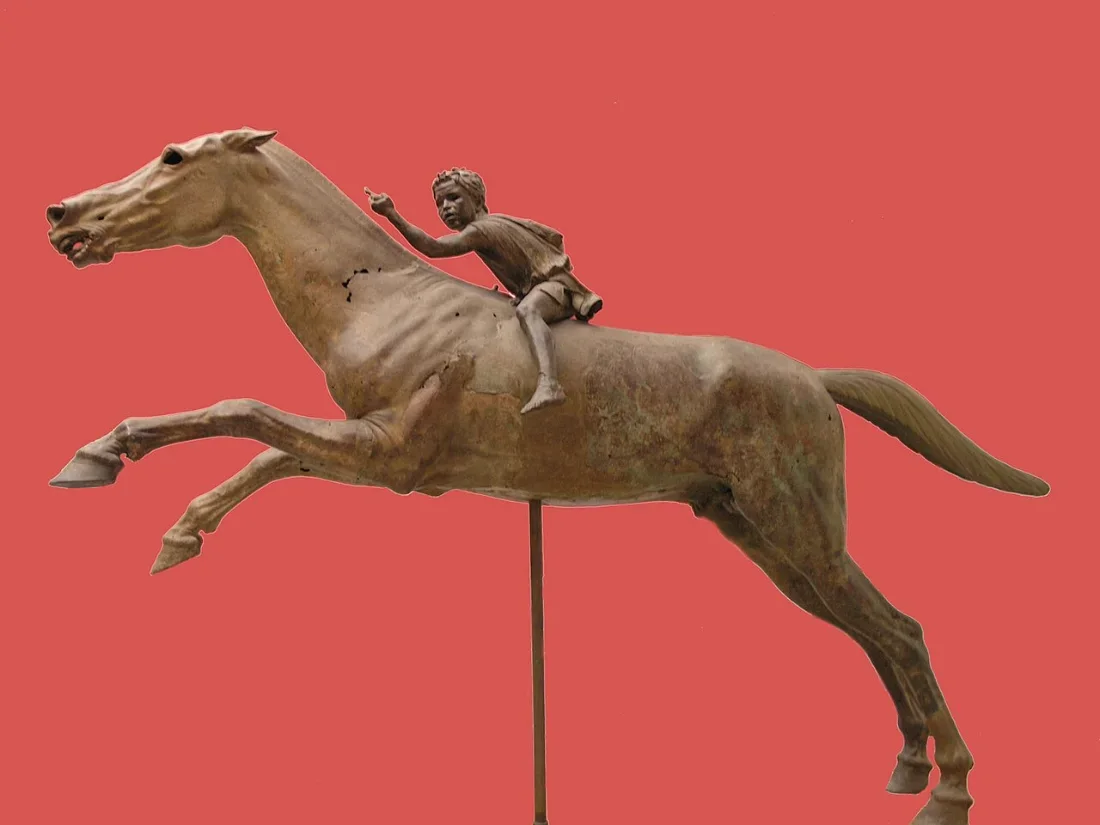
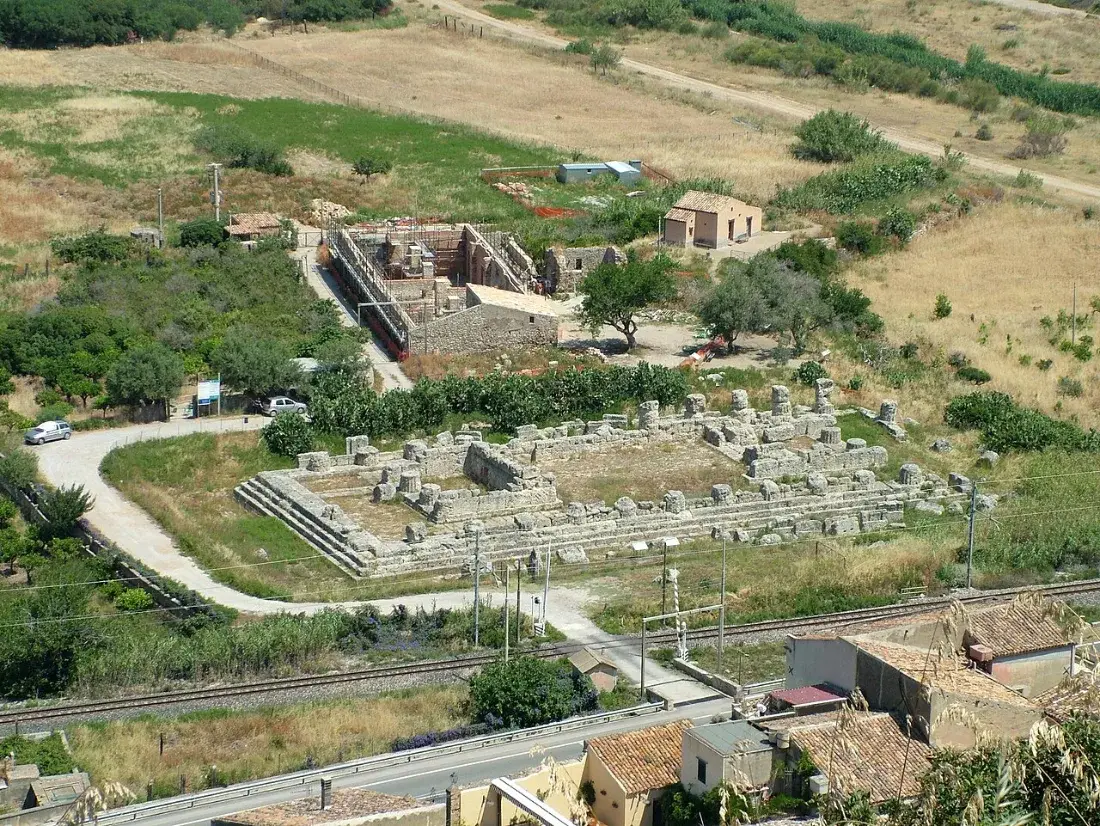
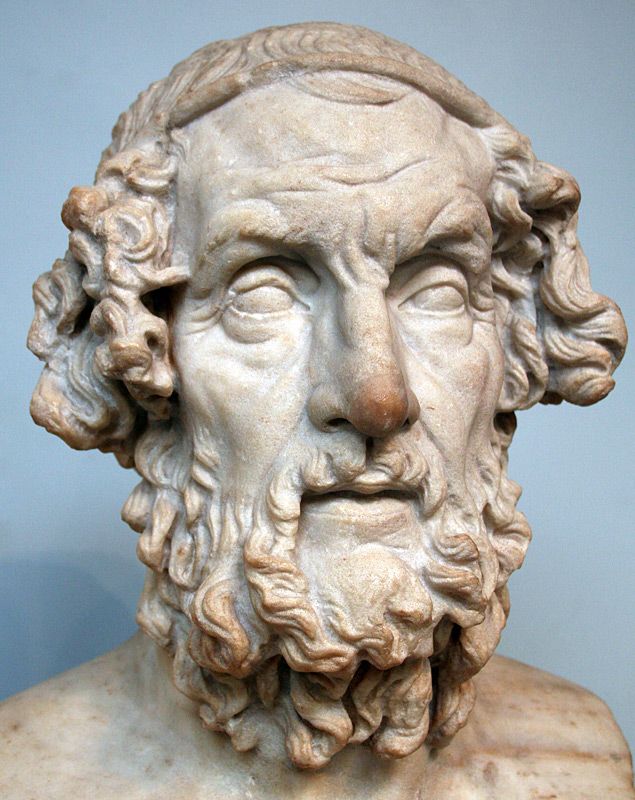
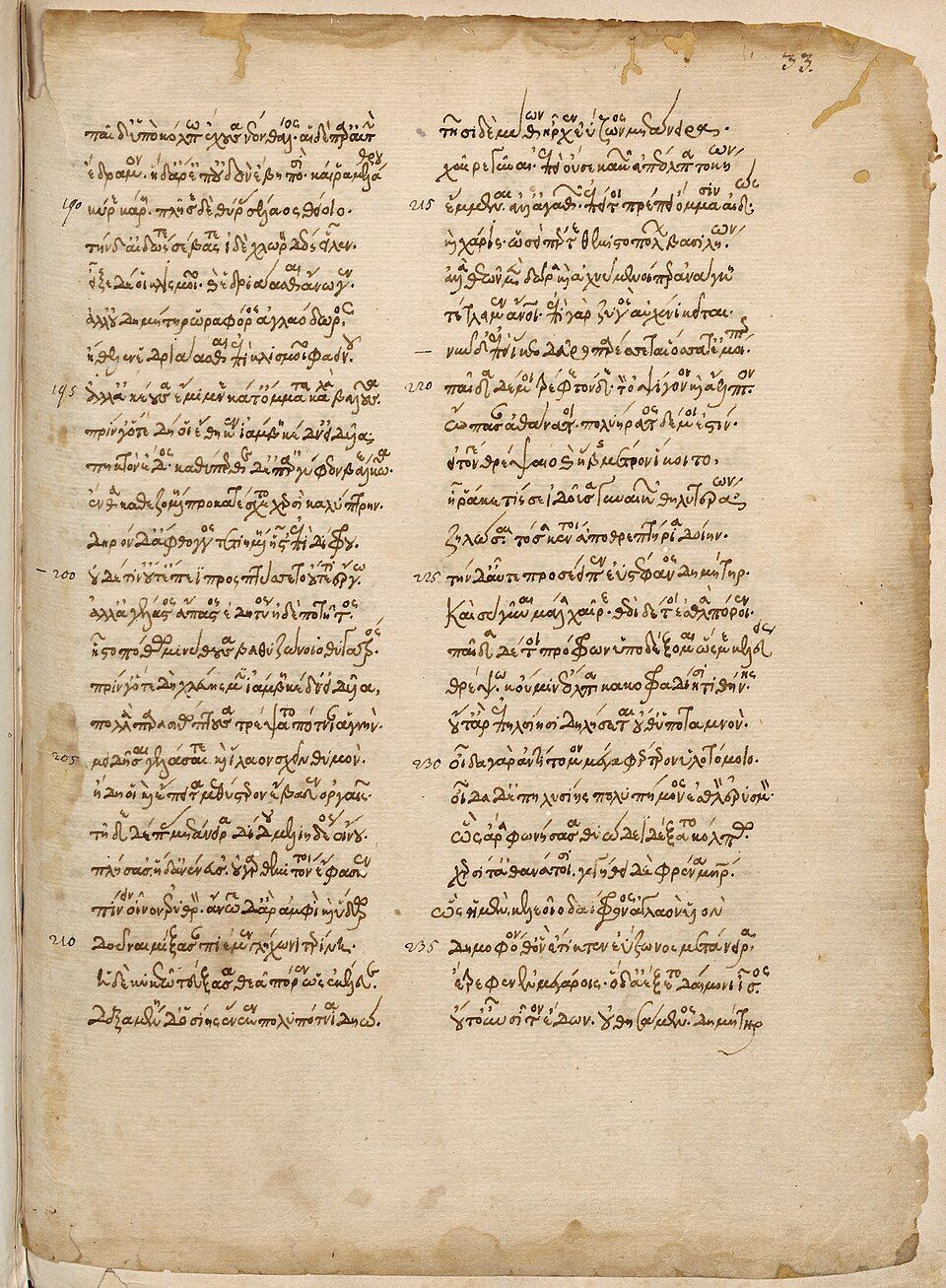
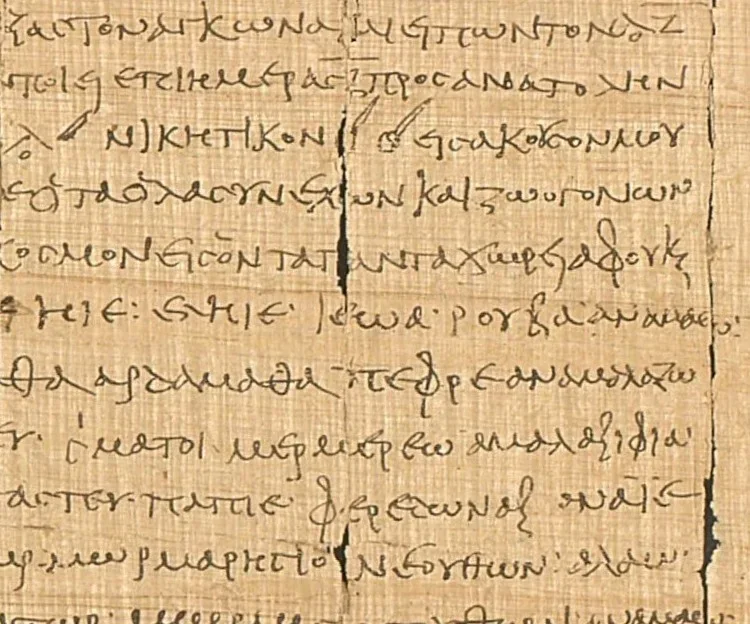
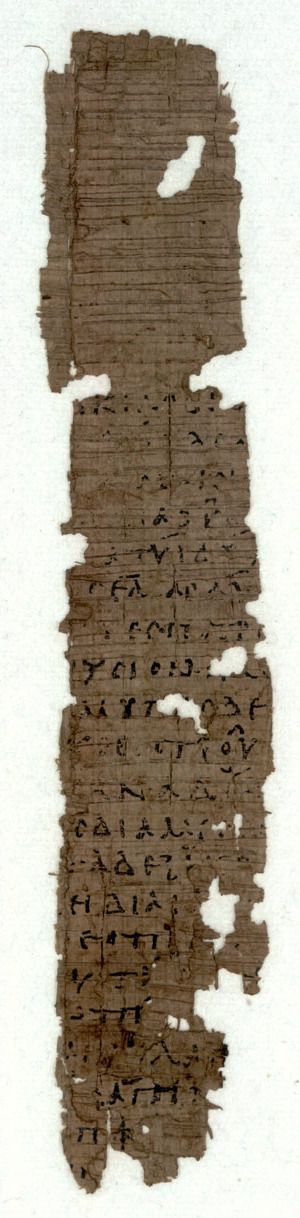
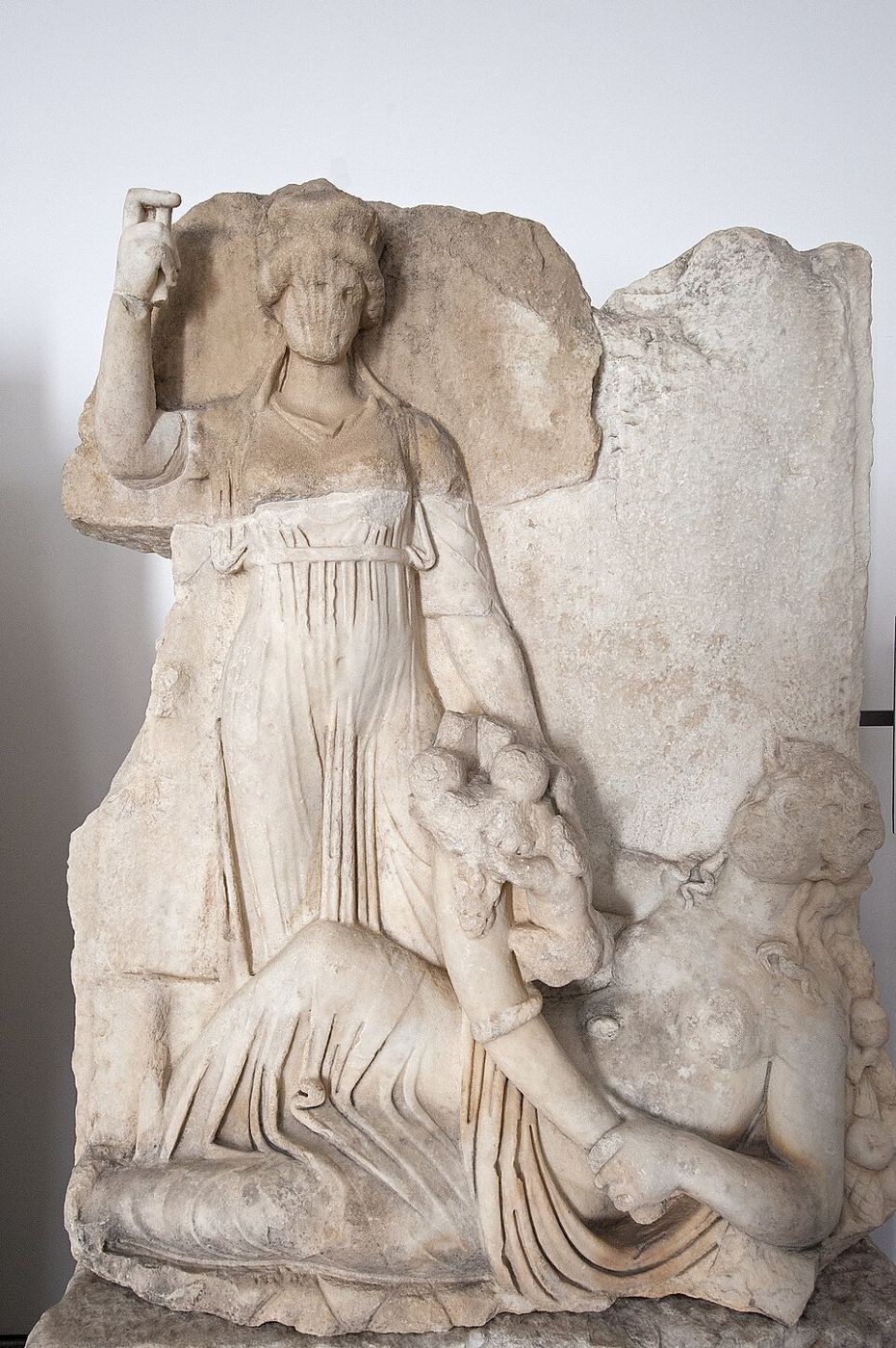
I
- iasiglum
Siglum for an iambic metron; ∧ia, ia∧, ∧ia∧ are its syncopated forms — ⏑ —, ⏑ — —, — —, × — ⏑ —. See iamb.
Source: West 1987, pp. x, 7, 52
On this site: 71 places on 28 pages
- iamb ἴαμβος (iambos)termalso iambic, iambics, iambs
The foot ⏑ —; the iambic metron (siglum ia) is × — ⏑ —, with syncopated forms ∧ia, ia∧, ∧ia∧. The iambic trimeter is the line of Archilochus and of dramatic dialogue.
Source: West 1987, pp. x, 5, 87; Battezzato 2009, p. 131
See: Iambic › The trimeter · Introduction to Greek metre › Glossary
On this site: 201 places on 56 pages
- iambelegusterm
The sequence × — ⏑ — × — ⏑ ⏑ — ⏑ ⏑ — (× e × D), used in Archilochus’ epodes.
Source: West 1987, p. 87
See: Introduction to Greek metre › Glossary · Lyric Stanzas › Asynarteta
On this site: 8 places on 5 pages
- Iambi (Callimachus)iambic poemsalso Iambi
Callimachus’ book of thirteen iambic poems reviving the spirit of Hipponax (Iambus 1 brings him back from the dead), mostly choliambic, some in Doric.
Source: West 1987, p. 82; Barbantani 2009, p. 309
See: Callimachus, Theocritus and Hellenistic poets › Transmission
On this site: 12 places on 7 pages
- iambo-choriambicterm
Name for Anacreon’s verses that join expanded anaclastic glyconics to iambic metra, such as ¨glᶜ ia; with an iambic dimeter added they form his strophes. Lourenço’s iambo-choriambic dimeter, × — ⏑ — — ⏑ ⏑ —, is common in Euripides among aeolic cola (Antigone 781, 785); Dale notes that comic lyric uses iambo-choriambic more than the elaborate aeolic types, and that it passes easily into aeolic (Clouds 563–74).
Source: West 1987, p. 40; Lourenço 2011, p. 115; Dale 1968, pp. 135, 147
See: Anacreon › Metres · Aeolic › Anacreon and Pindar · Sophocles › Antigone · 781–800 (third stasimon, Eros) · Aristophanes › Clouds · 563–606 (parabasis, ode and antode)
On this site: 12 places on 8 pages
- iambus ἴαμβος (iambos)termalso iambos, iambi
The genre of Archilochus, Semonides and Hipponax, in iambic, trochaic and epodic verse and in Ionic, part of the same Ionian tradition as epic and elegy; Callimachus revived it in his Iambi.
Source: West 1987, pp. 3, 82; D’Alessio 2009, pp. 120, 123
See: Hipponax, Semonides and the iambographers › Poetry
On this site: 60 places on 28 pages
- ibyceantermalso ibyceans
The colon — ⏑ ⏑ — ⏑ ⏑ — ⏑ — (dodᵈ), prominent in Ibycus.
Source: West 1987, p. 38
See: Stesichorus and Ibycus › Ibycus' metres · Introduction to Greek metre › Glossary
On this site: 6 places on 5 pages
- Ibycus Ἴβυκος (Ibykos)poet
Poet of Rhegium (sixth century BC) who carried Stesichorus’ art to Polycrates’ court on Samos; the ibycean colon is named after him.
See: Stesichorus and Ibycus › Ibycus · Stesichorus and Ibycus › Ibycus' metres · Stesichorus and Ibycus › Ibycus 287
On this site: 49 places on 17 pages
- Ichneutaesatyr playalso Trackers
Sophocles’ satyr play on Apollo’s search for the cattle stolen by Hermes, recovered from P.Oxy. 1174 (ed. A. S. Hunt, 1912).
Source: Reynolds and Wilson 1991, p. 196
See: Sophocles › Plays and dates · How the texts reached us › Discoveries
On this site: 4 places on 3 pages
- ictusterm
An old term for the beat of a verse; West thinks it harmless if it means only the beat, misleading if it suggests a stress strong enough to lengthen a syllable. Little used in Greek metrics today. Allen used it of a stress on the strong position of the foot, where heavy, stressable syllables stand (disputed).
Source: West 1987, pp. 87–88; Allen 1968, pp. 105, 120–122
See: Introduction to Greek metre › Glossary · Accent: pitch or stress? › Stress and ictus
On this site: 11 places on 6 pages
- Idasheroalso Marpessa
Son of Aphareus, who carried off Marpessa in a chariot drawn by horses from his divine father Poseidon; her father Euenos could not follow across the river Lykormas. The subject of Bacchylides 20, sung by Spartan girls.
Source: Maehler 2004, pp. 220–221
See: Bacchylides › Ode 20
On this site: 2 places
- Idyllspoemsalso Idyll
Theocritus’ poems, chiefly bucolic hexameters in Doric, but including Aeolic experiments (Idylls 28–31 in Sappho’s metres); quoted from R. J. Cholmeley’s edition.
Source: Morrison 2022, pp. 396–398
See: Callimachus, Theocritus and Hellenistic poets › Theocritus, Idyll 1 · Callimachus, Theocritus and Hellenistic poets › Theocritus, Idyll 28
On this site: 12 places on 6 pages
- Iliadepicalso Il.
Homer’s epic of the wrath of Achilles in the Trojan War, with the Odyssey some 28,000 hexameters in a formulaic language with centuries of history behind it.
See: Homer › Iliad · 1.1–52 (proem; Chryses) · Homer › Formula and metre
On this site: 123 places on 41 pages
- indifferenttermalso indifferent element, ἀδιάφορος
Battezzato’s name for the final element before a pause, which may be long or short at will and which he keeps apart from anceps; Hephaestion already calls the last syllable of every metre ἀδιάφορος (adiaphoros), “indifferent”.
Source: Battezzato 2009, p. 131 with n. 2; Hephaestion, Ench. 4.5
See: Introduction to Greek metre › Glossary
On this site: 202 places on 37 pages
- International Phonetic Alphabettermalso IPA
The alphabet of the International Phonetic Association, one sign for each speech sound, arranged in a chart by place and manner of articulation for consonants and by tongue position and lip rounding for vowels; the site writes sounds in it between square brackets.
Source: International Phonetic Association, IPA chart (revised to 2015; 2020 printing); Allen 1968, pp. 1–9
See: Sounds › IPA chart · Sounds › Mouth and vowels
On this site: 4 places on 4 pages
- interpolationtermalso interpolated
Lines added to a text after its author, often detected by breaches of metrical rules, as at Iphigenia in Aulis 1578–1614.
Source: Kovacs 2005, pp. 388–389
On this site: 7 places on 5 pages
- interval (music) διάστημα (diastēma)termalso diastēma, diastema, intervals
The distance in pitch between two notes. Aristoxenus treated it as a magnitude judged by ear, the Pythagoreans as a ratio of string lengths.
Source: Landels 1999, c. pp. 88, 132
See: Music theory › Intervals · Scales and harmoniai › Aristoxenus and the Pythagoreans
On this site: 1 place
- Ioheroine
Heroine of Bacchylides’ dithyramb Ode 19, “Io, for the Athenians”.
On this site: 4 places on 3 pages
- iosiglum
Siglum for an ionic metron (io∧ ⏑ ⏑ —; 2io÷ the anacreontic), ⏑ ⏑ — —. See ionic.
Source: West 1987, p. x
On this site: 23 places on 13 pages
- Ioleheroine
Captive princess in Sophocles’ Women of Trachis; Ἰόλη ’καλεῖτο (Iolē ’kaleito), “she was called Iole”, for Ἰόλη ἐκαλεῖτο, is West’s example of prodelision.
See: Introduction to Greek metre › Prosody: vowels
On this site: 2 places on 2 pages
- Iontragedy
Euripides’ tragedy, not dated in the sources; Ion’s monody shows the Doric colouring of tragic song.
Source: Battezzato 2005, p. 149
See: Euripides › Plays and dates · Attic of drama › Lyric parts
On this site: 17 places on 11 pages
- Ion of Chiospoet
Writer whose anecdotes lie behind the ancient Life of Aeschylus.
See: Aeschylus › Life · Sophocles › Life
On this site: 5 places on 5 pages
- Ioniaplace
The Greek coast and islands of Asia Minor, where epic, elegy and iambus took their Ionic form.
On this site: 9 places on 5 pages
- ionictermalso ionics, ionic a minore, ionic a maiore
The metron ⏑ ⏑ — — (siglum io), Hephaestion’s ionic “from the lesser” (a minore); the rarer ionic a maiore is — — ⏑ ⏑. With anaclasis it gives the anacreontic.
Source: West 1987, pp. x, 33, 88; D’Angour 2022, p. 137; Hephaestion, Ench. 3.3
See: Ionic › The metron · Introduction to Greek metre › Glossary
On this site: 65 places on 23 pages
- Ionic dialecttermalso Ionic, Ionian, epic Ionic
The dialect of Ionia and the core of Homer’s language, inherited by elegy and iambus: original ᾱ has become η, and contraction is limited.
Source: de Kreij 2022, p. 143; D’Alessio 2009, p. 120
On this site: 14 places on 12 pages
- iota subscripttermalso iota adscript, adscript
The small ι written under α, η, ω (ᾳ, ῃ, ῳ) in the long diphthongs; with capitals, and in many papyri and editions, it stands on the line instead (adscript), as in ΤΗΙ ΩΙΔΗΙ. It was no longer said by the second century BC and often no longer written from about 100 BC; writing it under the line is a medieval habit. Example: τῇ ᾠδῇ (tēi ōidēi) “to the song”.
Source: Smyth 1920, p. 9 (§ 5); Allen 1968, pp. 80–83
See: Sounds › Diphthongs and digraphs
On this site: 38 places on 21 pages
- Iphigenia among the Taurianstragedyalso IT, Iphigenia in Tauris
Euripides’ tragedy of c. 413 BC.
Source: Easterling 1997, p. 353
See: Euripides › Plays and dates
On this site: 7 places on 4 pages
- Iphigenia at Aulistragedyalso IA, Iphigeneia in Aulis
Euripides’ last tragedy, produced after his death; its transmitted ending (1578–1629) breaks Porson’s Law and other rules and is judged an interpolation.
Source: Kovacs 2005, pp. 388–389
See: Euripides › Plays and dates
On this site: 15 places on 6 pages
- ischiorrhogictermalso broken-hipped
“Broken-hipped”: a choliamb in which the fourth syllable from the end is long as well as the next-to-last; Callimachus avoids it.
Source: West 1987, pp. 30, 82
See: Iambic › The choliamb and other variants · Hipponax, Semonides and the iambographers › Metres: choliamb
On this site: 8 places on 6 pages
- Isthmian Odesvictory odesalso Isthmians, Isthmian
Pindar’s odes for victors at the Isthmian games near Corinth, the last of his four books.
On this site: 12 places on 6 pages
- itacismtermalso iotacism
The drift of ει, η, υ, οι and υι to the sound [i], completed in Byzantine Greek, so that ἡμεῖς (hēmeis) “we” and ὑμεῖς (hymeis) “you” sound alike; the chief difference between the ancient vowels and the modern ones.
Source: Horrocks 2010, pp. 160–169, 274; Ranieri 2021, pp. 3–4; Allen 1968, pp. 65–66, 74
See: Pronunciation systems › Byzantine and Modern · Pronunciation systems › Comparison
On this site: 2 places
- Italyplace
Where the western Greeks lived (Ibycus, Nossis, Stesichorus) and where Greek texts came in the Renaissance.
See: How the texts reached us › Renaissance · Stesichorus and Ibycus › Ibycus
On this site: 26 places on 16 pages
- ithsiglum
Siglum for the ithyphallic, — ⏑ — ⏑ — —. See ithyphallic.
Source: West 1987, p. x
On this site: 16 places on 12 pages
- ithyphallictermalso ithyphallics, ith
The colon — ⏑ — ⏑ — — (siglum ith), the catalectic lekythion; for Hephaestion a brachycatalectic trochaic dimeter.
Source: West 1987, pp. x, 31, 52; Hephaestion, Ench. 6.3
See: Introduction to Greek metre › Glossary
On this site: 35 places on 18 pages
- Ityshero
The child the nightingale laments (“Itys, Itys”), to whom the chorus compares Cassandra’s cries in Agamemnon 1142–1145.
See: Dochmiac › Second example
On this site: 3 places on 2 pages
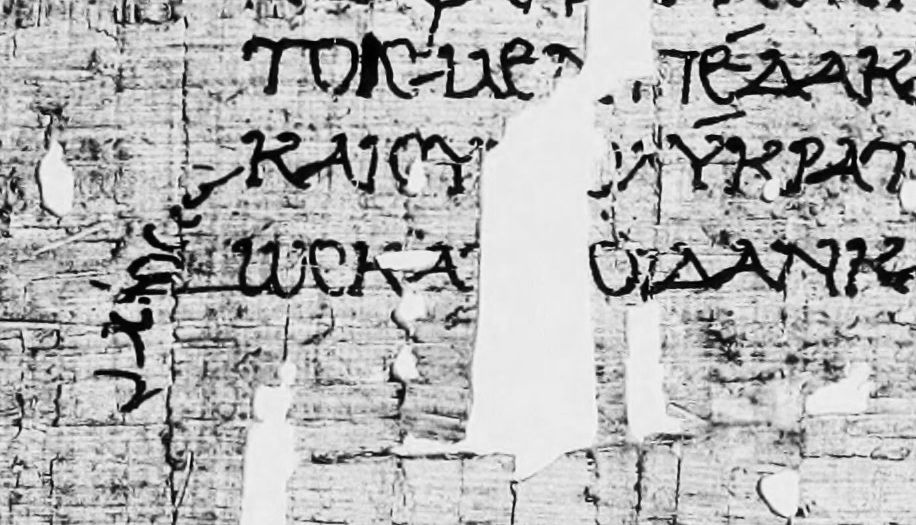
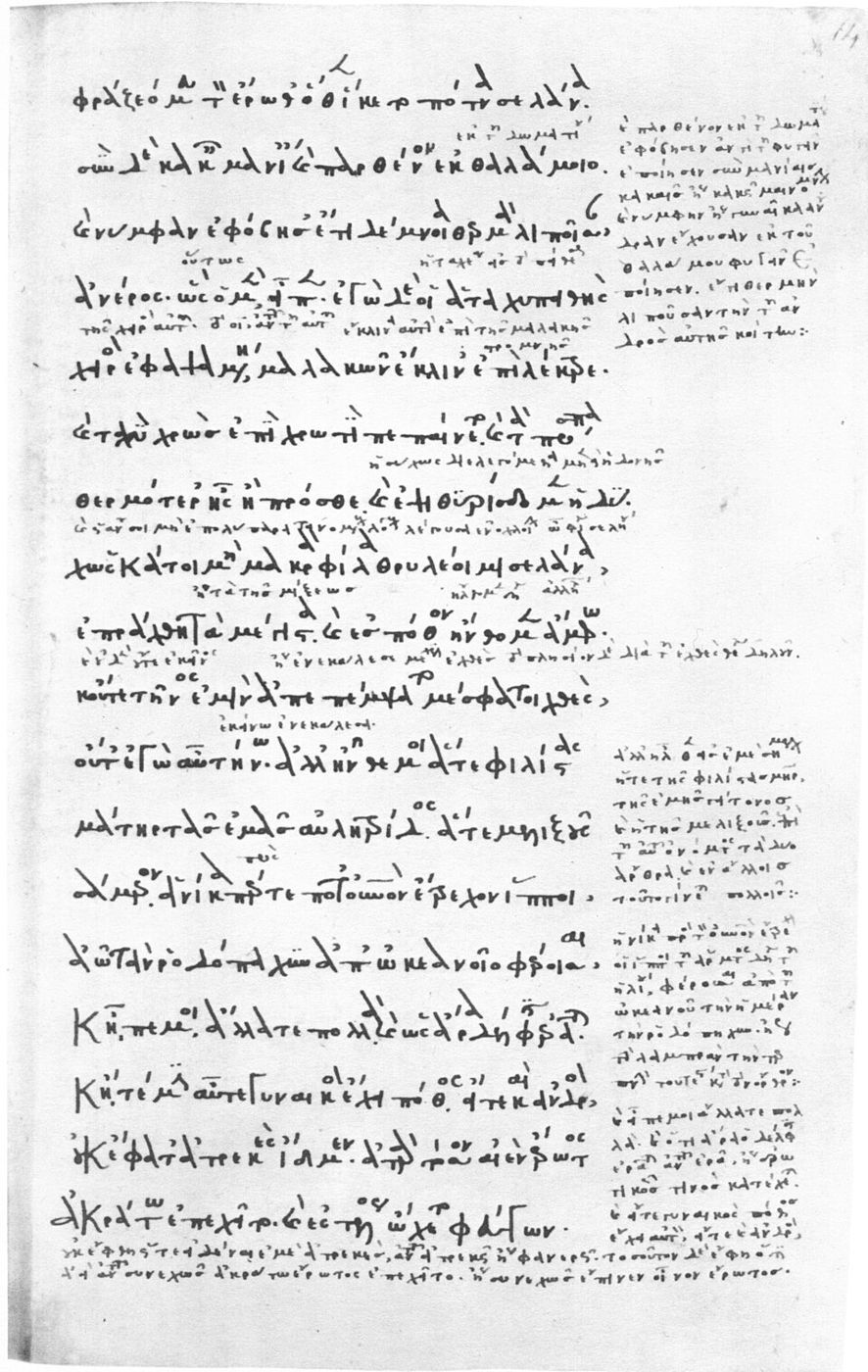
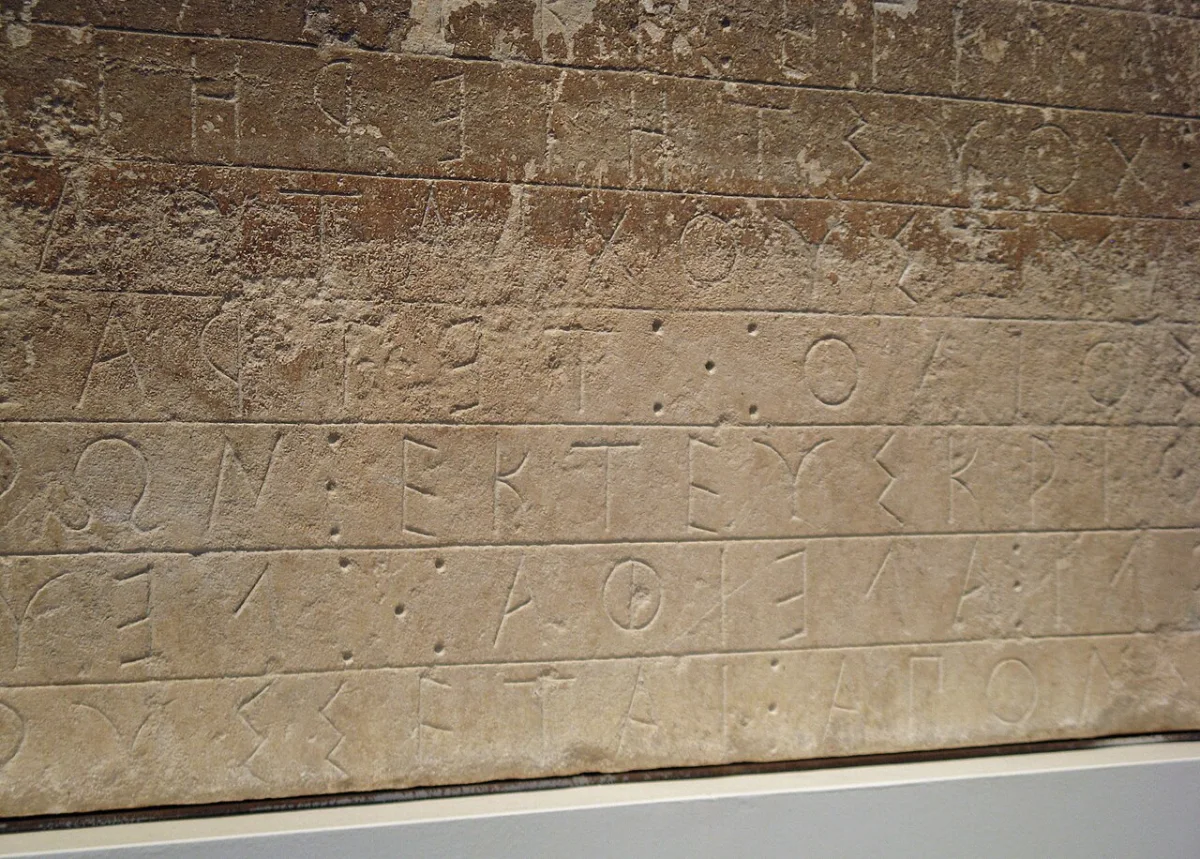
J
- Jasonheroalso Pelias, Argo
Leader of the Argonauts, whose desertion of Medea drives Euripides’ play; Pelias is named in the Nurse’s prologue. The proem of Apollonius’ Argonautica tells how Pelias, warned against a man with one sandal, sent him for the golden fleece in the Argo, and Pindar’s Pythian 4 tells his story at epic length.
Source: Race 1997a, p. 264
See: Euripides › Medea · 1–48 (prologue) · Callimachus, Theocritus and Hellenistic poets › Apollonius, Argonautica · Pindar › Pythian 4
On this site: 15 places on 6 pages
- Jocastaheroine
The queen of Oedipus Tyrannus; after she has mocked the oracles the chorus sings the second stasimon (863–910).
See: Sophocles › Oedipus Tyrannus · 863–82 (second stasimon) · Sophocles › Oedipus Tyrannus · 883–910 (second stasimon, second pair)
On this site: 3 places
- John TzetzesByzantine scholaralso Tzetzes
Twelfth-century scholar who still read some Callimachus and Hipponax now lost.
See: How the texts reached us › Byzantium · Callimachus, Theocritus and Hellenistic poets › Transmission
On this site: 6 places on 4 pages
- Julia Balbillapoetalso Balbilla
A princess of Commagene at Hadrian’s court who in November AD 130 had four epigrams in Sappho’s Aeolic carved on the Colossus of Memnon.
On this site: 11 places on 6 pages
- Julius Africanuswriteralso Africanus
Author of the Kestoi, finished about AD 225; a papyrus page of its eighteenth book (PGM XXIII) has a magical invocation in hexameters worked into Odysseus’ consultation of the dead.
Source: Preisendanz 1931, p. 150
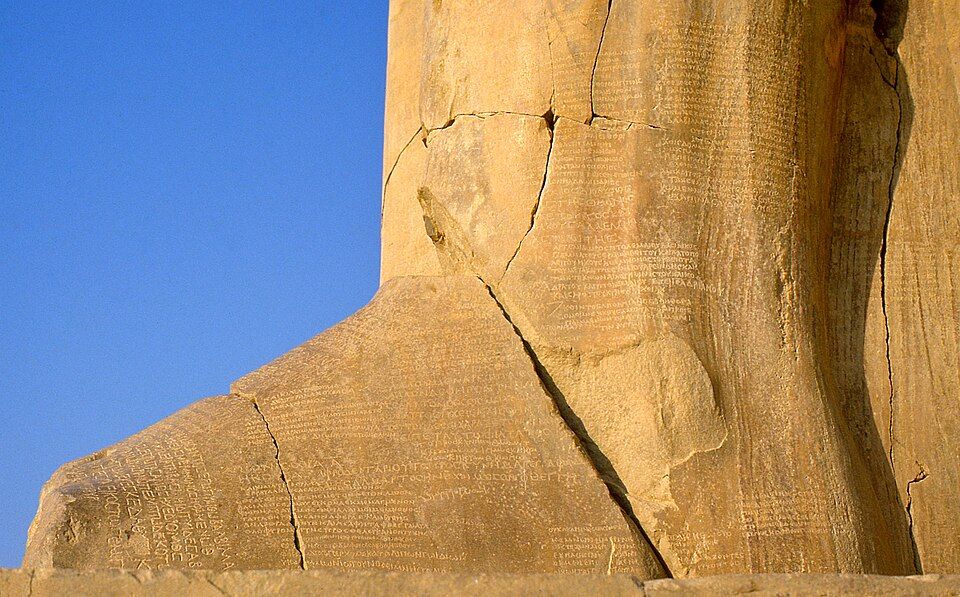
K
- kampētermalso kampe, kampai
A “bend” in a melody: a modulation out of the tuning in which it began. Comic poets used the word for the changes associated with the New Music.
Source: West 1992, pp. 356–372
See: Performance › The New Music
On this site: 1 place
- Kestoimiscellanyalso Cesti
Julius Africanus’ miscellany, finished about AD 225; a papyrus page of book 18 (PGM XXIII) has a hexameter invocation of the dead inserted into Odyssey 11.
Source: Preisendanz 1931, p. 150
- kithara κιθάρα (kithara)termalso cithara, kitharode, citharode, kitharody, citharody
The concert lyre. A citharode sang to his own cithara: Timotheus’ citharodic nomes, such as the Persians, were solo songs of this kind.
Source: Csapo and Wilson 2009, p. 277; D’Angour 2022, p. 132
See: Introduction to Greek metre › Rhythm and music · Timotheus and the New Music › Life · Instruments › Lyres
On this site: 30 places on 16 pages
- Knightscomedy
Aristophanes’ comedy of 424 BC.
Source: Easterling 1997, p. 353
See: Aristophanes › Plays and dates
On this site: 7 places on 3 pages
- koinē κοινή (koinē)termalso koine
The common Greek of the late Classical and Hellenistic periods, into which a number of Ionic forms passed and in which the distinction of long and short syllables was gradually lost; the Doric-based language of choral song is called the lyric koinē.
Source: de Kreij 2022, p. 143; West 1987, pp. 68–69
See: Attic of drama › Koinē and accent
On this site: 15 places on 11 pages
- kommos κομμός (kommos)term
A lament sung by actor and chorus together (Aristotle’s term); see amoibaion.
Source: Battezzato 2005, p. 152; Easterling 1997, p. 158 n. 14
See: Introduction to Greek metre › Glossary
On this site: 3 places on 2 pages
- Kronosgodalso Cronos
Kronos (Cronos), named in Pindar’s Olympian 1 and Pythian 4; in the opening of Nonnus’ Dionysiaca Zeus is “the son of Cronos”.
See: Pindar › Olympian 1 · Later and Hellenistic metres › Worked example
On this site: 9 places on 7 pages
- krotala κρόταλα (krotala)termalso castanets, clappers
Wooden castanets, a pair in each hand of a dancer, which mark a rhythm.
Source: West 1992, pp. 122–124; Anderson 1994, p. 186
On this site: 5 places on 4 pages
- kroupezatermalso kroupezai, clapper-shoe, foot-clapper
An aulos-player’s shoe fitted with a clapper. The player used it to beat time for a chorus with the foot.
Source: West 1992, pp. 123–124; Anderson 1994, pp. 185–186
See: Instruments › Percussion · Rhythm › Arsis and thesis
On this site: 3 places on 3 pages
- Kunstsprachetermalso art-language
“Art-language”: a poetic dialect learnt from the tradition rather than spoken, such as Homer’s mixture of Ionic and Aeolic or the Doric of choral lyric.
Source: West 1987, pp. 57, 60; Kelly 2022, p. 34
See: Homer › Formula and metre
On this site: 2 places on 2 pages
- kδsiglum
Siglum for the dochmius kaibelianus, × — ⏒ — ⏑ —. See dochmius kaibelianus.
Source: West 1987, p. x
On this site: 3 places on 3 pages
L
- labialtermalso labials, bilabial, labiodental
Made with the lips. Greek π [p], β [b], φ [pʰ] and μ [m] are bilabial, made with both lips; a labiodental, made with the lower lip against the upper teeth, is the [f] or [v] into which φ and β later turned. Example: πόρος (poros) “passage”, βίος (bios) “life”, φόρος (phoros) “tribute”, μῆνις (mēnis) “wrath”.
Source: West 1987, p. 11; Smyth 1920, p. 11 (§§ 16, 19); Allen 1968, pp. 21, 31
See: Sounds › IPA chart · Sounds › Consonants
On this site: 3 places on 2 pages
- Laconiandialectalso Laconia
The Doric of Laconia (Sparta), the local base of Alcman’s language.
See: Doric of choral lyric › Features · Alcman › Songs and language
On this site: 16 places on 9 pages
- Laius and Polynicesheroesalso Laius, Polynices, Eteocles
Figures of the Theban saga: Laius, Oedipus’ father (title of Aeschylus’ lost play), whose oracles the chorus of Oedipus Tyrannus fears are failing (906–907); Eteocles and Polynices, his sons, in the Seven against Thebes.
See: Aeschylus › Plays and dates
On this site: 9 places on 3 pages
- Lasus of Hermionepoet
Late sixth-century musician to whom LeVen, following D’Angour, traces the “tradition of innovations” behind the New Music.
See: Timotheus and the New Music › Reception
On this site: 4 places on 4 pages
- Laur. 32.9manuscriptalso Laurentianus 32.9, Medicean manuscript
The tenth-century Florence manuscript of Aeschylus, Sophocles and Apollonius, the chief witness for Aeschylus and Sophocles.
Source: Reynolds and Wilson 1991, p. 66
See: How the texts reached us › Byzantium · Aeschylus › Manuscripts
On this site: 6 places on 3 pages
- law of limitationterm
The rules that limit how far from the end of a Greek word the accent can stand. An acute stands no further back than the antepenult, a circumflex no further back than the penult. If the last vowel is long, no accent stands on the antepenult and no circumflex on the penult. Example: ἄνθρωπος (anthrōpos), “human being”, but genitive ἀνθρώπου (anthrōpou).
Source: Probert 2006, p. 60; Smyth 1920, pp. 37, 39
See: Accent and morae › Where the accent stands
On this site: 1 place
- Laws (Plato)dialogue
Plato’s last dialogue, the first source for the legend that Tyrtaeus came from Athens.
- Leidenplace
Dutch university city whose library holds the manuscript in which the Homeric Hymn to Demeter was found.
See: How the texts reached us › Discoveries
On this site: 134 places on 29 pages
- Leiden conventionstermalso Leiden system
The signs editors use in printing papyri, such as a dot under a letter read with doubt.
On this site: 1 place
- leimma λεῖμμα (leimma)termalso rest
In the scores, a lambda-shaped sign for a rest of one unit, or for the prolongation of the note before it; in Pythagorean theory, the remainder 256:243 left when two tones are taken from a fourth.
Source: West 1992, pp. 235, 266–267; Psaroudakes 2018, pp. 125–126
See: Notation › Rhythmic signs · Scales and harmoniai › Aristoxenus and the Pythagoreans · Music theory › Tone and semitone
On this site: 3 places on 3 pages
- lekythion ληκύθιον (lēkythion)termalso lecythion, lekythia, lk
The colon — ⏑ — ⏒ — ⏑ — (siglum lk), a catalectic trochaic dimeter, in West’s terms a syncopated iambic metron and a full one (∧ia ia); the name comes from Aristophanes’ joke ληκύθιον ἀπώλεσεν (lēkythion apōlesen, “lost his little oil-flask”) in the Frogs. Dale notes that Aeschylus, more than his successors, ends a stanza with a lekythion, often after a penultimate colon in another metre (Agamemnon 160–75).
Source: West 1987, pp. x, 32, 52; Hephaestion, Ench. 6.2; D’Angour 2022, p. 133; Dale 1968, pp. 83–84
See: Introduction to Greek metre › Glossary · Aeschylus › Agamemnon · 160–75 (Hymn to Zeus)
On this site: 30 places on 18 pages
- Lenaeafestival
Athenian winter festival of Dionysus with comic contests, older and “more inward-looking” than the City Dionysia; the Frogs won there.
Source: Seidensticker 2005, p. 39
See: Aristophanes › Life · Aristophanes › Plays and dates
On this site: 6 places on 4 pages
- lengthening by a final continuanttermalso final continuant
A short final syllable ending in a consonant such as ν, treated as long before a following vowel as if the consonant closed it; in Homer it falls nearly always in the princeps, often just before the masculine caesura (Iliad 2.500, 504, 507; Works and Days 651).
Source: West 1987, pp. 18, 22; West 2018, p. 371
See: Homer › Iliad · 2.484–510 (invocation; Catalogue) · Hesiod › Works and Days · 633–662 (Ascra; the voyage to Chalcis)
On this site: 34 places on 12 pages
- Lesbian Aeolictermalso East Aeolic, Aeolic dialect, Lesbian
The dialect of Lesbos (East Aeolic) in which Sappho and Alcaeus composed, as the Alexandrian edition spells it: ᾱ kept, gemination (ἔμμι (emmi), Attic εἰμί (eimi) “I am”), -οισα (-oisa) for Attic -ουσα (-ousa), psilosis, recessive accent. Examples: σελάννα (selanna) for Attic σελήνη (selēnē) “moon”; λίποισα (lipoisa) for λιποῦσα (lipousa) “leaving behind”.
Source: Tribulato 2021, pp. 136–138, 144; Natoli et al. 2022, pp. 329–330
See: Lesbian Aeolic › Features
On this site: 30 places on 16 pages
- Lesbosplace
Island off Asia Minor, home of Sappho, Alcaeus, Terpander and Arion and of the East Aeolic dialect.
See: Lesbian Aeolic › Features · Sappho › Life
On this site: 40 places on 18 pages
- Letogoddess
Mother of Apollo (“Leto’s son” in Bacchylides’ Ode 3).
See: Bacchylides › Ode 3
On this site: 25 places on 10 pages
- Libation Bearerstragedyalso Choephori, Χοηφόροι
Second play of the Oresteia (458 BC); its great lament (306–478) for chorus, Orestes and Electra runs to eleven strophic pairs.
Source: Battezzato 2005, p. 152
See: Aeschylus › Plays and dates
On this site: 10 places on 3 pages
- link ancepstermalso long link anceps
An anceps that joins two units inside a verse, as the link-syllable does in dactylo-epitrite; in Itsumi’s classification a long link anceps in mid-verse is one mark of the freer dactylo-epitrite stanzas of his Class II.
Source: Itsumi 2009, pp. 106–109
See: Pindar › The other half · Dactylo-epitrite › The elements
On this site: 9 places on 3 pages
- link-syllabletermalso link syllable, link-syllables
The usually long syllable (⏓) that stands before, between and after the units of dactylo-epitrite.
Source: West 1987, p. 43
See: Dactylo-epitrite › The elements · Introduction to Greek metre › Glossary
On this site: 22 places on 8 pages
- liquid ὑγρός (hygros)termalso liquids
λ or ρ: a consonant made with the airflow narrowed but never stopped, so that it can be held like a vowel (West calls these and the nasals “continuants”). The ancient name ὑγρός (hygros) “liquid, fluid” was given with an eye to metre, and grammars often count the nasals μ ν with the liquids. After a stop it forms a group that may leave a short syllable before it short. Example: λ in λόγος (logos) “word” [lóɡos]; ρ in πατρός (patros) “of a father”, where πα- can scan short (πα-τρός) or long (πατ-ρός).
Source: West 1987, pp. 11, 16; Allen 1968, pp. 38–39; Smyth 1920, p. 11 (§§ 18–19)
See: Sounds › Consonants · Introduction to Greek metre › Prosody: consonants
On this site: 249 places on 51 pages
- lksiglum
Siglum for the lekythion, — ⏑ — ⏒ — ⏑ —. See lekythion.
Source: West 1987, p. x
On this site: 19 places on 14 pages
- Locriplacealso Epizephyrian Locri, Locris
Epizephyrian Locri in southern Italy, Nossis’ home.
See: Nossis › Life
On this site: 5 places on 3 pages
- Loebseriesalso Loeb Classical Library
The Loeb Classical Library, editions with facing English translation; several older Loebs in the public domain (Smyth’s Aeschylus, Murray’s Odyssey, Paton’s Greek Anthology) supply texts quoted on this site.
Source: Bibliography, Texts and tools
See: Bibliography and licences › Texts and tools
On this site: 249 places on 36 pages
- logaoedic λογαοιδικόν (logaoidikon)term
A nineteenth-century label for verse in irregular rhythm, now abandoned; Hephaestion’s logaoedics are dactylic cola that end in a trochaic pair. Jebb (1891) calls the strophe of Antigone 781–800 logaoedic, glyconics varied by pherecratics.
Source: West 1987, p. 88; Hephaestion, Ench. 7.8; Jebb 1891, pp. lxiii–lxiv
See: Introduction to Greek metre › Glossary · Sophocles › Antigone · 781–800 (third stasimon, Eros)
On this site: 12 places on 6 pages
- Londonplace
Where the British Library holds the Bacchylides papyrus.
See: Bacchylides › Transmission
On this site: 197 places on 46 pages
- long by naturetermalso length by nature, φύσει, short by nature
A syllable is long by nature (φύσει, physei) when its vowel is long or a diphthong, whatever follows it; a vowel that is itself short is “short by nature”, though its syllable may still be long by position. Example: μῆ- in μῆνιν (mēnin), “wrath”, long because η is a long vowel.
Source: West 1987, p. 12; Battezzato 2009, pp. 130–131
See: Introduction to Greek metre › Quantity
On this site: 201 places on 40 pages
- long by positiontermalso length by position, θέσει, makes position
A syllable with a short vowel counts as long when two or more consonants follow before the next vowel, because the first consonant closes it; Hephaestion’s θέσει μακραί (thesei makrai, “long by position”). “Position” here has nothing to do with the positions of a scheme.
Source: West 1987, p. 12; Hephaestion, Ench. 1.3
See: Introduction to Greek metre › Quantity · First steps › 3. Long or short?
On this site: 222 places on 43 pages
- LPabbreviationalso Lobel–Page, L–P
Lobel and Page, Poetarum Lesbiorum Fragmenta (Oxford 1955), the earlier standard edition of Sappho and Alcaeus.
Source: Swift (ed.) 2022, pp. x–xi
See: Bibliography and licences › Texts and tools
On this site: 1 place
- LSJlexiconalso Liddell–Scott–Jones, Greek–English Lexicon
Liddell, Scott and Jones, A Greek–English Lexicon (9th edn, 1940), cited from Perseus chiefly for the quantities of α, ι and υ.
Source: Bibliography, Texts and tools
See: Bibliography and licences › Texts and tools
On this site: 194 places on 39 pages
- Lucianwriter
Writer whose little parody Podagra imitates tragedy; after him no successive trimeters are run together.
See: Attic of drama › Later Attic · Attic of drama › Koinē and accent
On this site: 13 places on 10 pages
- Lucian pronunciationtermalso Lucian system
Luke Ranieri’s system for speaking the Greek of the first and second centuries AD (published 2020–2021, with Raphael Turrigiano), named after Lucian of Samosata: vowel length, the pitch accent (reinforced by stress in his practice) and double consonants kept, the fricatives and a partly advanced vowel system adopted; his own construction on Allen’s and Horrocks’ research.
Source: Ranieri 2021, pp. 2, 8, 14–28
See: Pronunciation systems › Lucian · Pronunciation systems › Comparison
On this site: 1 place
- Lycambes and Neobulein Archilochusalso Lycambes, Neobule
Figures of a late and disputed story about Archilochus’ life.
See: Archilochus › Life
On this site: 5 places on 2 pages
- Lycophronpoet
Hellenistic poet of the Alexandra, whose trimeter is handled fairly strictly.
See: Attic of drama › Later Attic
On this site: 16 places on 8 pages
- Lydiaplace
Kingdom of Asia Minor (Gyges, Croesus), in Sappho a measure of beauty and luxury; Alcman’s birthplace in one tradition.
See: Sappho › Life · Alcman › Life
On this site: 39 places on 21 pages
- lyra λύρα (lyra)termalso chelys, tortoise-shell lyre
The bowl lyre with a tortoise-shell sound-box, the ordinary instrument of the non-professional, played at home, at school and at the symposium by men, women and children.
Source: West 1992, pp. 56–57; Anderson 1994, pp. 171–175
See: Instruments › Lyres
On this site: 6 places on 5 pages
- lyretermalso lyra, lyres, seven-stringed lyre
The stringed instrument of monody and much choral song; early melody probably followed the natural pitches of the words within one harmonia of the seven-stringed lyre.
Source: D’Angour 2022, pp. 132, 140–141
See: Introduction to Greek metre › Rhythm and music · Sappho › Music · Instruments › Lyres
On this site: 86 places on 33 pages
- lyrictermalso melic, monody, choral lyric
Poetry for singing; scholars separate melic song (by a soloist, monody, or by a chorus, choral lyric) from elegy and iambus, which were recited or sung to the aulos in the same Ionian tradition as epic.
Source: D’Angour 2022, p. 132; D’Alessio 2009, pp. 120, 123
See: Introduction to Greek metre › What metre is
On this site: 69 places on 34 pages
- Lyric Ninetermalso nine lyric poets, canon of nine
The Hellenistic list of nine melic poets of the first rank: Alcman, Stesichorus, Ibycus, Sappho, Alcaeus, Anacreon, Simonides, Pindar and Bacchylides, none later than Bacchylides, so that Timotheus is excluded; Corinna was later added as “the tenth”. Nagy argues that the list was a performed Panathenaic repertoire before it was a textual canon.
Source: Currie and Rutherford 2020, pp. 9–10; Nagy 2020, pp. 95, 110
See: How the texts reached us › Six stages · Corinna › Date
On this site: 10 places on 10 pages
- Lysistratacomedy
Aristophanes’ comedy of 411 BC in which a sex strike ends the war.
Source: Easterling 1997, p. 353
See: Aristophanes › Plays and dates
On this site: 8 places on 4 pages
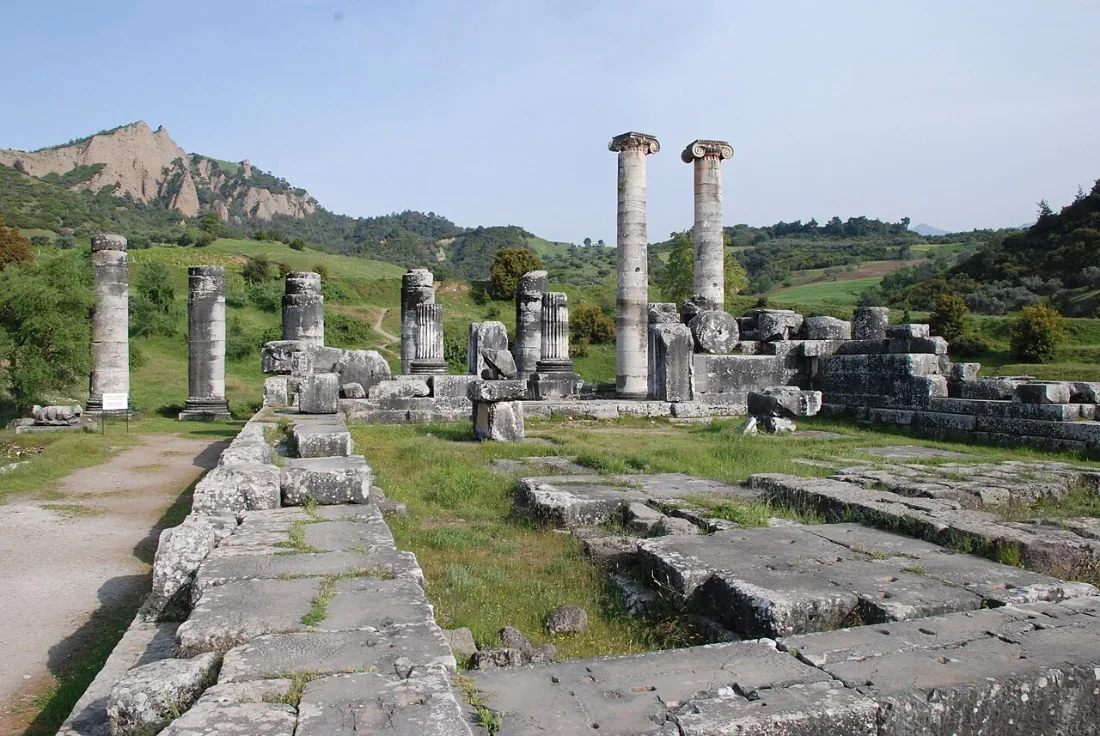
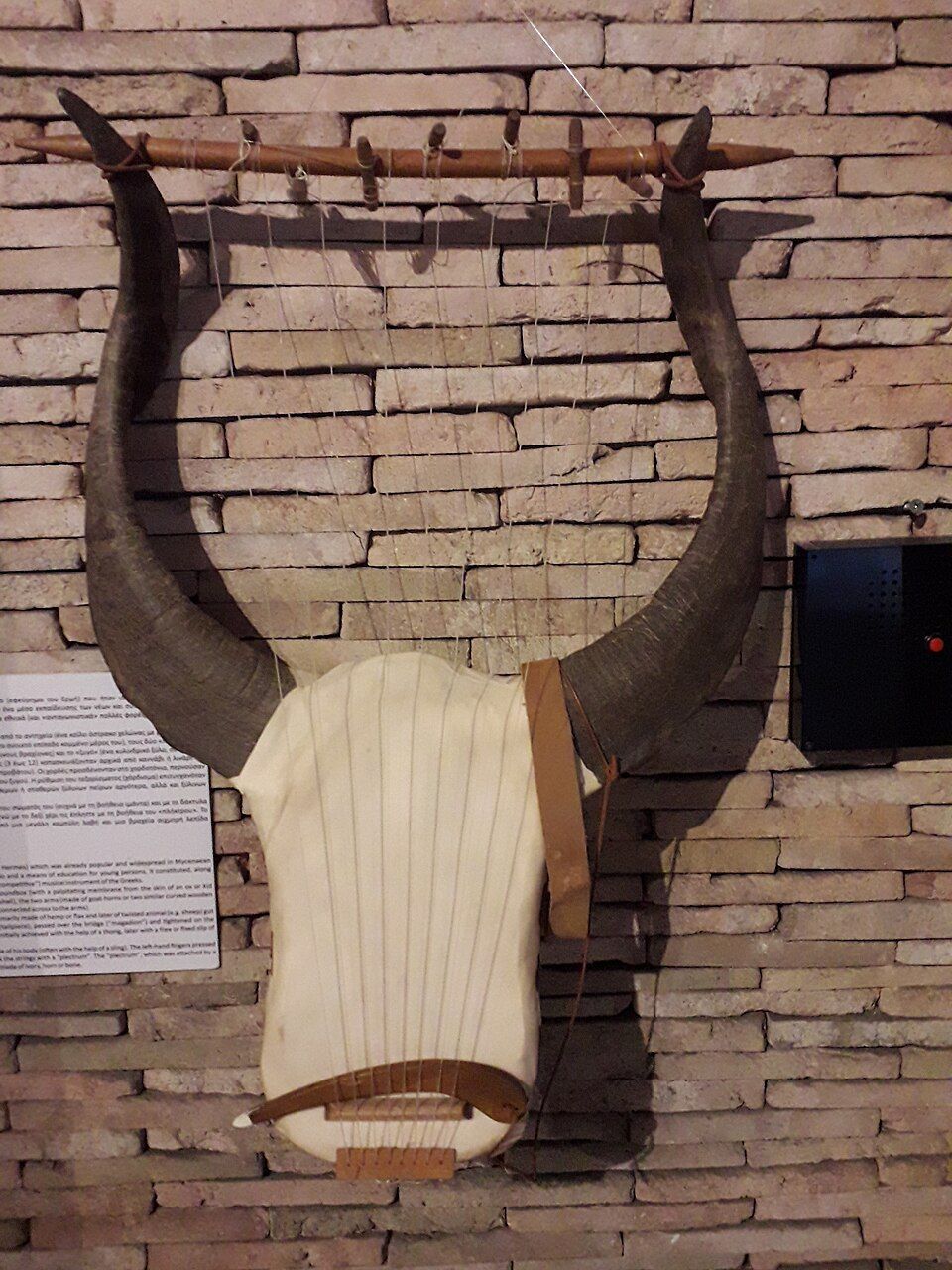
M
- macrontermalso breve, macrons, breves
A short line written over a vowel (ᾱ) to show that it is long; a breve (ᾰ) shows that it is short. They are needed only for α, ι and υ, whose length the normal spelling does not show. Alexandrian scholars invented such marks, but the papyri use them only now and then; modern editions, and this site, add them as aids. Example: χώρᾱ (khōrā) “country”, with long final α, beside γλῶσσᾰ (glōssa) “tongue”, with short final α.
Source: Allen 1968, pp. 85–86; West 1987, p. 11
See: Sounds › Vowels
On this site: 105 places on 26 pages
- manner of articulationtermalso plosive, stop, fricative, nasal, trill, approximant
How the airflow is obstructed in a consonant: stopped completely (a plosive or stop), narrowed to friction (a fricative), sent through the nose (a nasal), interrupted by a vibrating tongue or uvula (a trill), or barely narrowed (an approximant). Attic φ θ χ were stops with breath; their modern values are fricatives.
Source: Allen 1968, pp. 1–4, 16–27; Horrocks 2010, pp. 170–171
See: Sounds › IPA chart · Sounds › Consonants
On this site: 3 places
- Manuel ChrysolorasByzantine scholar
Byzantine diplomat who in 1397 began the first regular lectures on Greek in Italy, at Florence; his Erotemata was the first Greek grammar printed (1471).
See: How the texts reached us › Renaissance
On this site: 1 place
- manuscriptterm
A text copied by hand. Some ancient Greek music survives in medieval manuscripts of treatises on music.
Source: Pöhlmann and West 2001, p. 5
See: Overview › Scores in manuscripts · How the texts reached us › Byzantium
On this site: 117 places on 34 pages
- Medeatragedyalso Med.
Euripides’ tragedy of 431 BC, which came third; five of its passages, spoken and sung, are scanned on this site.
Source: Easterling 1997, p. 353
See: Euripides › Medea · 1–48 (prologue) · Euripides › Plays and dates
On this site: 50 places on 23 pages
- Megaraplace
Doric-speaking city, Theognis’ home.
See: Epic Ionic › Ionic under the metre
On this site: 5 places on 2 pages
- Melanippidespoet
Dithyrambic poet of the New Music.
See: Timotheus and the New Music › Life
On this site: 4 places on 3 pages
- Melanippidespoet-composeralso Melanippides of Melos
Dithyrambic composer active c. 440–415 BC, the first assailant of Music in Pherecrates’ comedy: he replaced the antistrophes of the dithyramb with instrumental interludes, making it through-composed.
Source: West 1992, pp. 357–358
See: Performance › The New Music
On this site: 4 places on 3 pages
- Meleagerpoet
Poet and anthologist whose Garland collected Hellenistic epigram, women poets included (“the perfumed iris of Nossis”); also the hero of Bacchylides’ Ode 5.
Source: Natoli et al. 2022, pp. 120–121
See: Erinna › Life · Nossis › Transmission
On this site: 11 places on 6 pages
- Melinnopoet
Author of one surviving poem, a hymn to Rome in Sapphic stanzas preserved by Stobaeus; whether she wrote in the second century BC or AD is disputed.
See: Melinno › Life · Melinno › Hymn to Rome
On this site: 7 places on 4 pages
- melosterm
A song, or its melody. In Plato’s account, a song combines words, rhythm and harmonia.
Source: Nowacki 2020, pp. 16–17
See: Overview › Mousikē
On this site: 3 places on 3 pages
- Memnonhero
Hero of the Trojan saga after whom the colossal statue in Egyptian Thebes, the Colossus of Memnon, is named; Julia Balbilla’s epigrams are carved on it.
On this site: 6 places on 3 pages
- Menander Μένανδρος (Menandros)playwright
The poet of New Comedy, recovered largely from papyri; in the metrical handbooks the representative of its style of versification, with a trimeter freer than tragedy’s but tidier than Aristophanes’.
Source: West 1987, pp. 26–29
See: Menander › Life
On this site: 17 places on 11 pages
- Menelaushero
King of Sparta, Helen’s husband; his speech on Justice is in Bacchylides’ Ode 15.
See: Bacchylides › Ode 15
On this site: 6 places on 5 pages
- mesē μέση (mesē)termalso mese, paramesē, hypatē, nētē, lichanos, proslambanomenos
The ‘middle’ string and note of the lyre, the common tonal centre of a Greek melody; the other notes are named by their place on the instrument (hypatē ‘topmost’, nētē ‘bottom’, lichanos ‘forefinger’) or by their relation to mesē.
Source: West 1992, pp. 64, 219–222
See: Scales and harmoniai › The Perfect System · Music theory › Joining tetrachords
On this site: 6 places on 4 pages
- Mesomedespoet
Cretan poet at Hadrian’s court whose hymns survive with musical notation; his dialect is a loose mixture of poetic forms.
See: Attic of drama › Koinē and accent · Accent: pitch or stress? › Melody · Melody and accent › Mesomedes and Seikilos
On this site: 23 places on 16 pages
- Mesomedes' hymnshymns
Three hymns of Mesomedes, a Cretan at Hadrian’s court, transmitted with musical notation; their melodies follow the accent by design.
Source: Cosgrove and Meyer 2006, pp. 68, 73–75
See: Accent: pitch or stress? › Melody · Melody and accent › Mesomedes and Seikilos
On this site: 1 place
- Metapontumplace
Greek city in southern Italy, home of the victor of Bacchylides’ Ode 11.
See: Bacchylides › Ode 11
On this site: 5 places on 3 pages
- metathesis μετάθεσις (metathesis)term
The swapping of two neighbouring sounds (μετάθεσις, metathesis, “transposition”). Example: ζ, probably [dz] when the alphabet was taken over, became [zd] in Attic by metathesis; Smyth’s example inside a word is Πνύξ (Pnyx), the Athenian assembly hill, beside its genitive Πυκνός (Pyknos).
Source: Allen 1968, pp. 54–55; Smyth 1920, p. 32 (§ 128)
See: Sounds › Consonants
On this site: 1 place
- metrical lengtheningtermalso lengthening, Streckformen, stretched forms
The lengthening of a short vowel so that a word which could not otherwise enter the hexameter (⏑ ⏑ ⏑ or ⏑ — — ⏑) can be used, as Ἀπόλλωνα (Apollōna, “Apollo”, accusative) with long first α; the spelling sometimes shows it (οὔνομα (ounoma) for ὄνομα (onoma), “name”; Οὐλύμποιο (Oulympoio), “of Olympus”).
Source: West 1987, p. 21; Kiparsky 2018, p. 117
See: Epic Ionic › Features · Dactylic: the hexameter › Prosody of epic
On this site: 80 places on 16 pages
- metron μέτρον (metron)termalso metra
A recurring unit of three to six syllables (an iambic metron is × — ⏑ —) into which verse of regular rhythm can be divided.
Source: West 1987, p. 5
See: Introduction to Greek metre › Feet, metra, cola, periods · Introduction to Greek metre › Glossary
On this site: 244 places on 52 pages
- Michael ChoniatesByzantine scholar
Twelfth-century Byzantine who owned Callimachus’ Hecale and quoted it in his letters, one of the last Byzantines to read more classical poetry than we can.
See: How the texts reached us › Byzantium · Callimachus, Theocritus and Hellenistic poets › Transmission
On this site: 2 places on 2 pages
- Midas of Acragasaulete
The aulos-player for whose victory at Delphi Pindar wrote Pythian 12.
See: Pindar › Metres: D/e · Pindar › Pythian 12
On this site: 5 places on 3 pages
- Miletusplace
Ionian city, home of Timotheus.
See: Timotheus and the New Music › Life
On this site: 10 places on 5 pages
- Mimnermuspoet
Elegist of Colophon (or Smyrna), seventh century BC, whose poems were collected as the sympotic Nanno and the narrative Smyrneis.
See: The elegists: Callinus, Tyrtaeus, Mimnermus, Solon, Theognis, Xenophanes › Mimnermus frr. 12, 9
On this site: 10 places on 6 pages
- minusculetermalso transliteration
The small script that replaced the large uncial script in the ninth century (first dated minuscule book 835); almost every author’s text depends on copies made in it.
Source: Reynolds and Wilson 1991, pp. 58–59; de Kreij 2022, p. 143
See: How the texts reached us › Byzantium
On this site: 5 places on 5 pages
- Mnemosynegoddess
Memory, mother of the Muses; named in Hesiod’s Theogony and the title of Moero’s hexameter poem.
See: Hesiod › Metres · Moero of Byzantium › Mnemosyne
On this site: 20 places on 11 pages
- Mnemosyne (Moero)hexameter poemalso Mnemosyne
Moero of Byzantium’s hexameter poem, of which ten lines on the infant Zeus survive.
See: Moero of Byzantium › Mnemosyne · Moero of Byzantium › Transmission
On this site: 20 places on 11 pages
- Moeropoetalso Moero of Byzantium, Myro
Hellenistic poet of Byzantium, c. 300 BC, remembered for epic, elegy and lyric; two epigrams and ten hexameters of her Mnemosyne survive.
See: Moero of Byzantium › Life · Moero of Byzantium › Metres
On this site: 8 places on 4 pages
- molossus μολοσσός (molossos)termalso molossi
Three longs, — — —; found in some hymns of all long syllables.
Source: West 1987, pp. 40, 88; Battezzato 2009, p. 131
See: Introduction to Greek metre › Glossary
On this site: 6 places on 4 pages
- monochord κανών (kanōn)termalso kanōn, kanon, canon (instrument)
A single string over a graduated rule with a movable bridge, the Pythagoreans’ instrument for measuring intervals as ratios of string length; they called it the kanōn, “measuring rod”. It was probably built to test the theory rather than to discover it.
Source: West 1992, pp. 240–242; Landels 1999, c. pp. 131–135
On this site: 3 places on 3 pages
- monodytermalso actors' song, aria
A solo song. In tragedy the first self-contained monodies for an actor come in Euripides’ Hippolytus of 428 BC; in his later plays they grow into long astrophic, polymetric arias.
Source: Battezzato 2005, p. 153; West 1987, p. 62
See: Euripides › Actors' song · Attic of drama › Lyric parts
On this site: 28 places on 19 pages
- monostrophicterm
Made of one strophe repeated, with no antistrophe and epode of a different shape: Pindar’s Nemean 2 (one five-verse strophe sung five times) and Pythian 12.
Source: Itsumi 2009, p. 279; West 1987, p. 42
See: Pindar › Nemean 2 · Dactylo-epitrite › Second example
On this site: 16 places on 9 pages
- moratermalso morae, χρόνος πρῶτος, time-unit
The smallest unit of time in ancient rhythmic theory (χρόνος πρῶτος, chronos prōtos): a short syllable has one, a long two. The Latin name was first used in this sense by Gottfried Hermann; for the accent the mora is counted on vowels, a short vowel one, a long vowel or diphthong two. Example: λῆξαι (lēxai) “to cease”, with high pitch on the first mora of η (circumflex), beside the optative λήξαι, high on the second (acute); in metre μῆ- of μῆνιν (mēnin) is two morae, -νιν one.
Source: West 1987, pp. 7, 88; Allen 1968, pp. 81, 100, 107, 115
See: Introduction to Greek metre › Quantity · Sounds › Syllables and quantity · Accent and morae › Morae · Accent: pitch or stress? › Contonation · Introduction to Greek metre › Glossary
On this site: 48 places on 23 pages
- Mount Athosplace
Monastic peninsula where Babrius’ fables were found in the nineteenth century.
See: How the texts reached us › Discoveries
On this site: 2 places on 2 pages
- mousikē μουσική (mousikē)termalso mousike, music (ancient sense)
The art of the Muses: for the Greeks the whole of a sung performance, words, tune, rhythm and dance together; Plato defines a song as words, rhythm and harmonia.
Source: West 1992, pp. 1, 225; Nowacki 2020, p. 16
See: Overview › Mousikē
On this site: 2 places on 2 pages
- Musaeuspoet
Late hexameter poet whose short poem was the first Greek book printed by Aldus; its earliest manuscripts are of the tenth century.
Source: Reynolds and Wilson 1991, pp. 66, 156–157
See: How the texts reached us › Printing · How the texts reached us › Byzantium
On this site: 2 places
- Musesgoddessesalso Muse, Calliope
The goddesses of song invoked at the start of epic and hymn (the Muses of Helicon in Hesiod); Calliope is named in Alcman and Bacchylides.
See: Hesiod › Theogony · 1–35 (the Muses of Helicon) · Homer › Odyssey · 1.1–21 (proem)
On this site: 85 places on 39 pages
- Mycenaeanterm
Of the Bronze Age Greek dialect; Gallavotti and Trümpy derive an old poetic language from it, a view not generally accepted.
On this site: 3 places on 3 pages
- Myrmidonspeople
Achilles’ men, whom the Iliad compares to a pack of wolves as he arms them (16.155–167).
See: Homer › Iliad · 16.155–167 (the wolves simile)
On this site: 2 places
- Myrsilustyrant
Tyrant of Mytilene, expelled with the help of Alcaeus and Pittacus.
See: Alcaeus › Politics · Alcaeus › Fr. 332 (Alcaic)
On this site: 3 places
- Myrtispoet
Boeotian woman poet, Corinna’s reputed teacher, of whom almost nothing survives.
Source: Natoli et al. 2022, pp. 60–61; Stehle 2009, p. 65
See: Corinna › Life · Doric of choral lyric › Corinna
On this site: 7 places on 3 pages
- Mytileneplace
The chief city of Lesbos, scene of Alcaeus’ politics; it and Eresus both claimed Sappho.
See: Alcaeus › Politics · Sappho › Life
On this site: 19 places on 7 pages
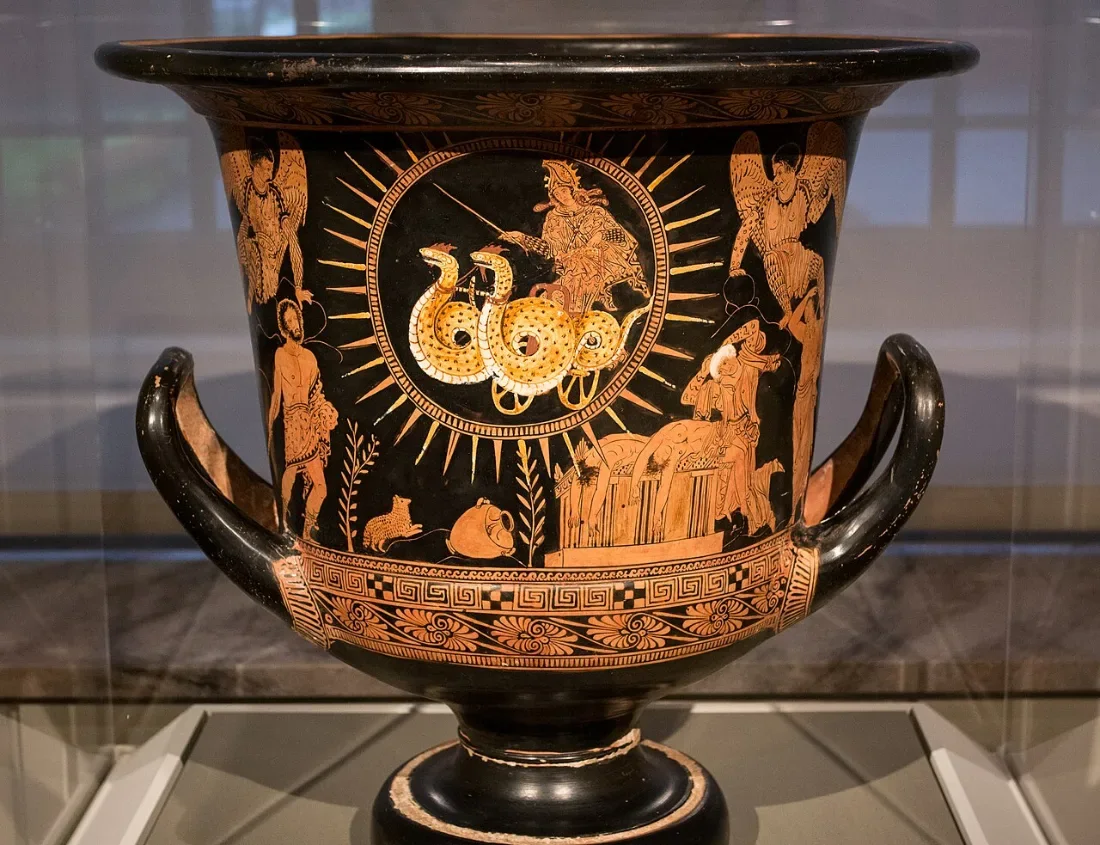
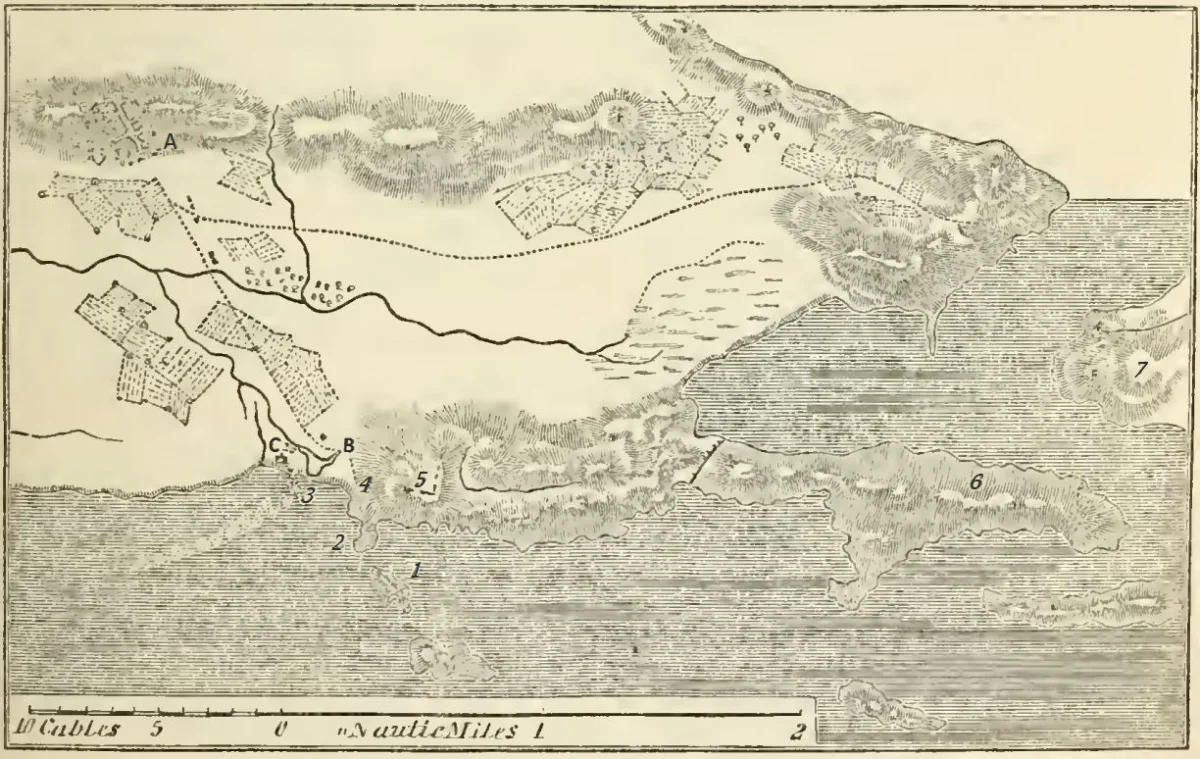
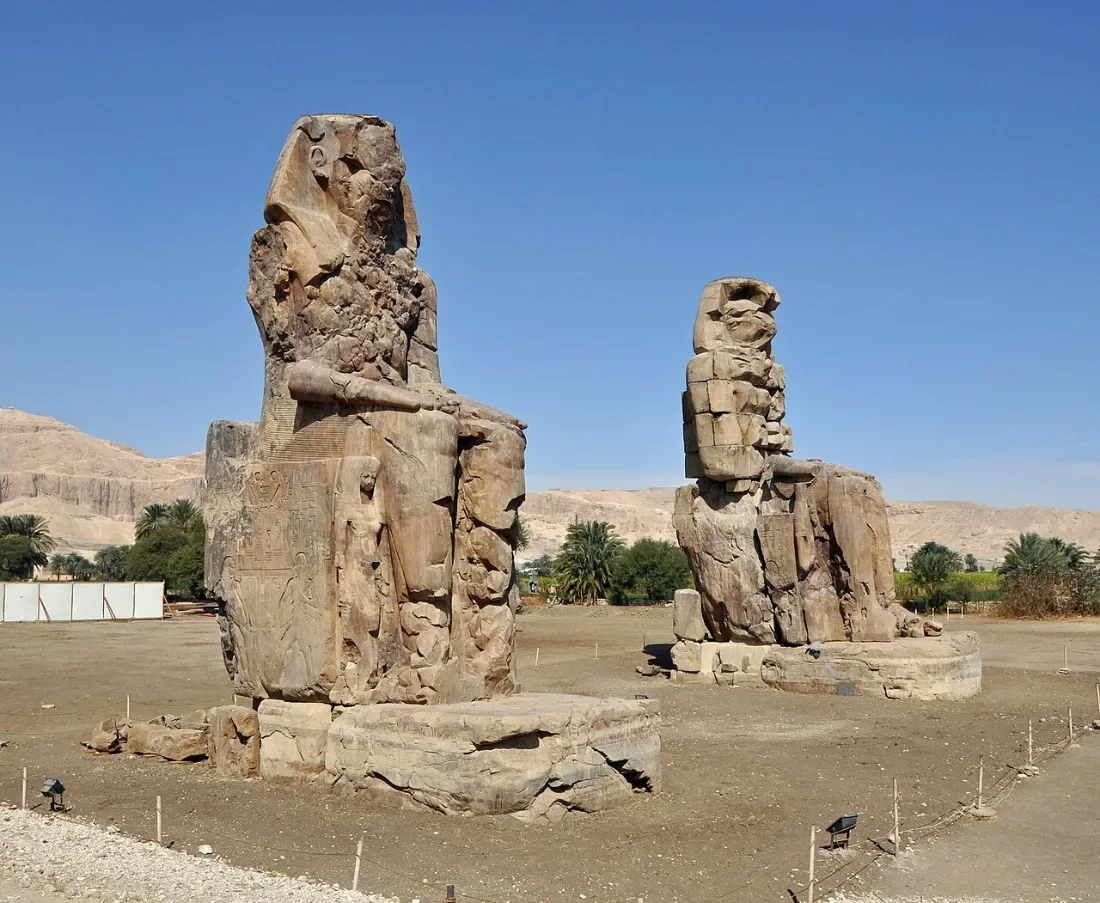
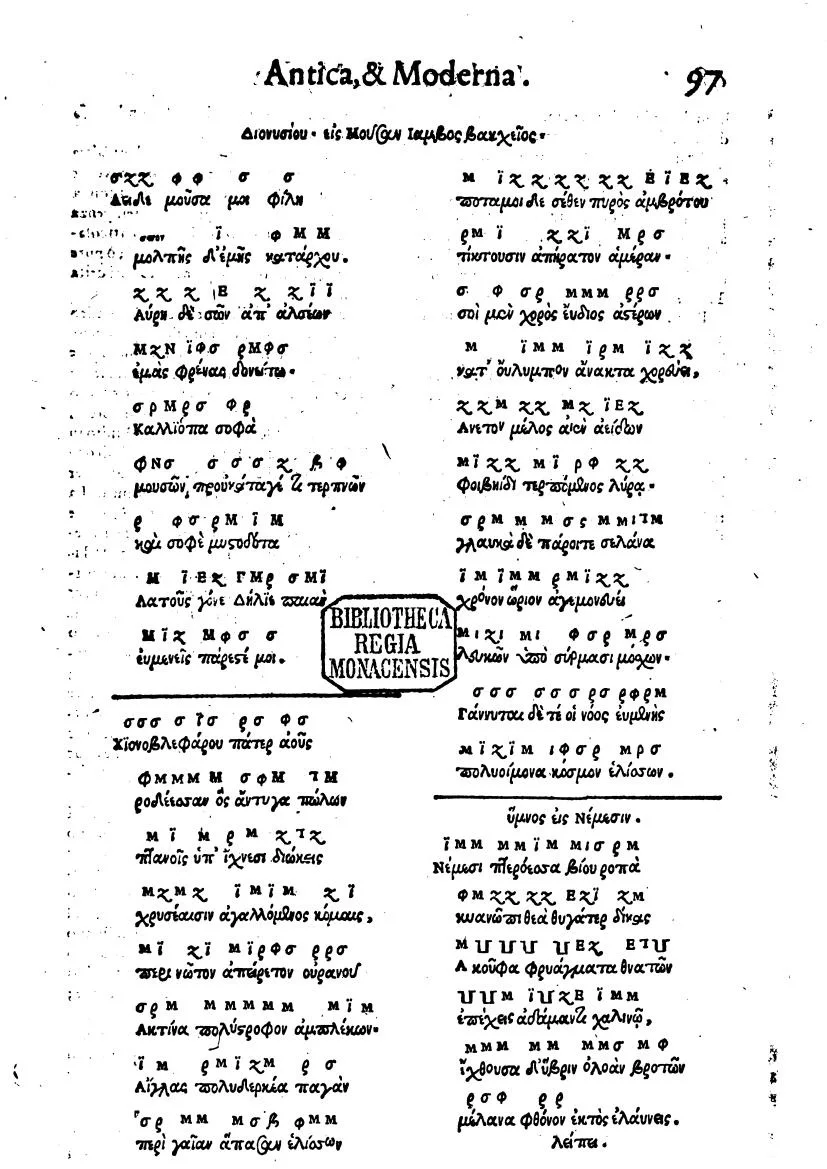
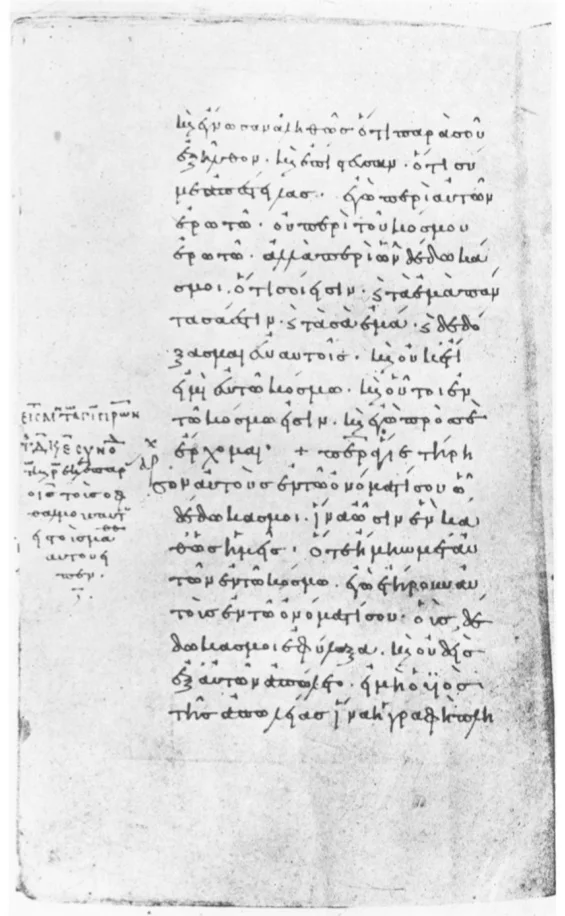
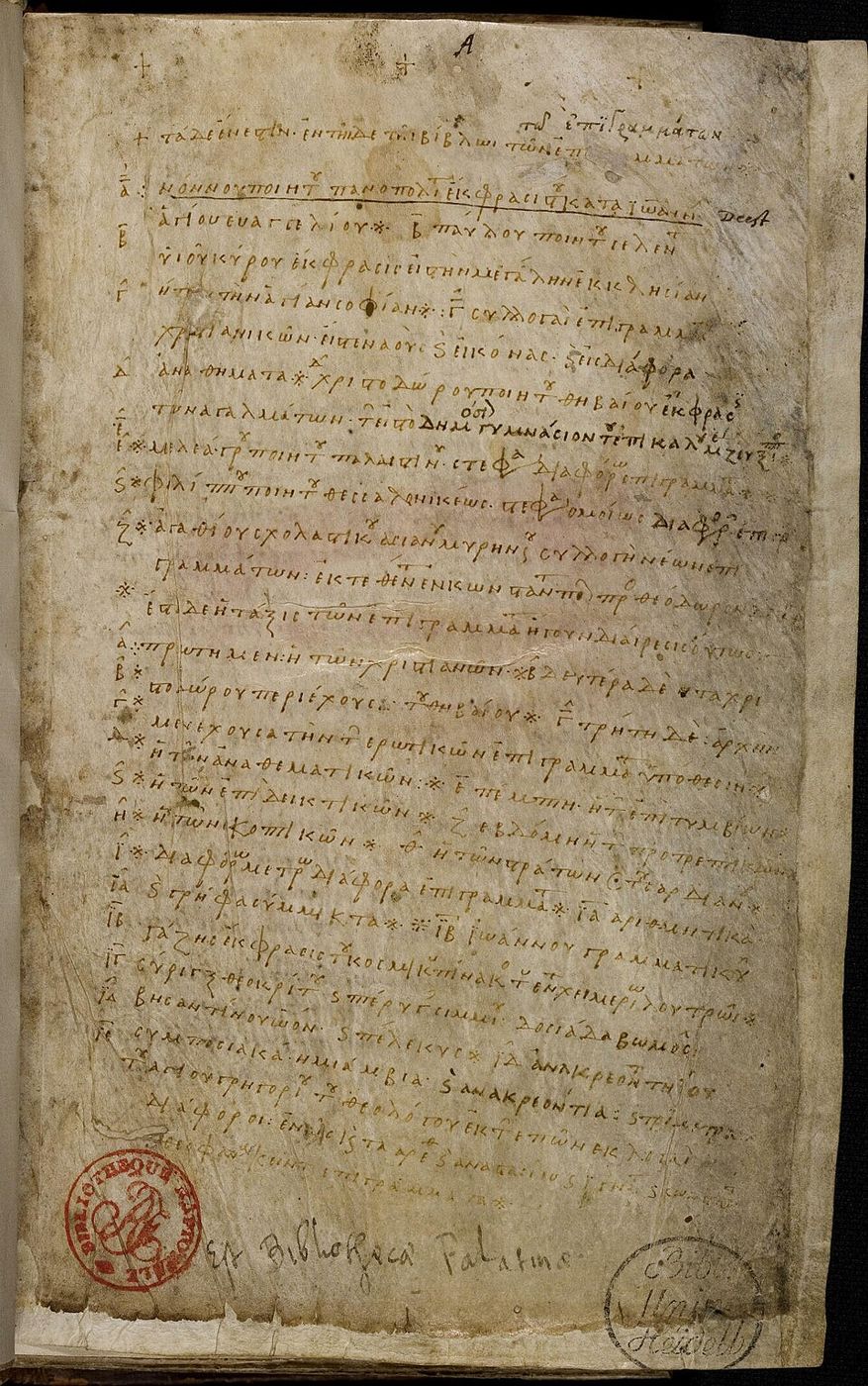
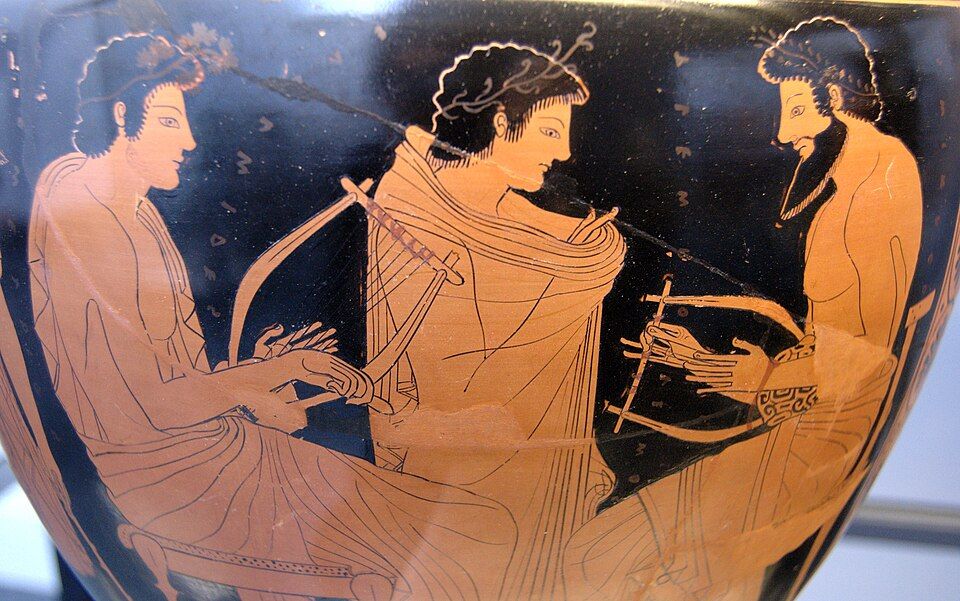
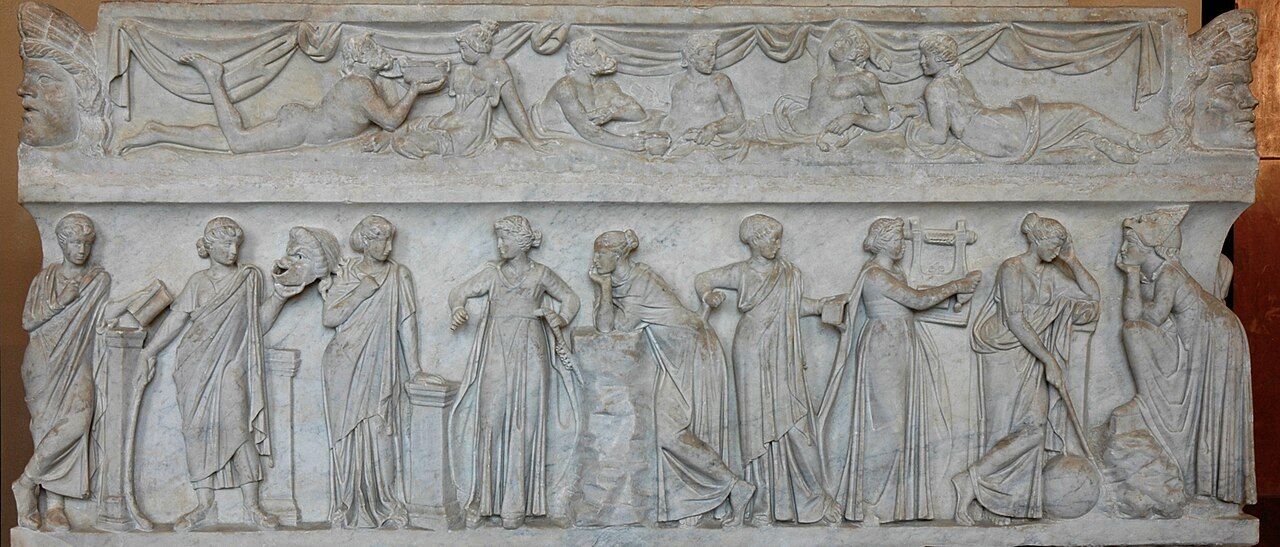
N
- Naeke's Lawterm
In the refined Hellenistic hexameter, word-end is avoided after a contracted fourth biceps; in Callimachus’ Hymns and Hecale and in Nonnus it never occurs (Maas, who credits A. F. Naeke, 1835). Homer does not keep it (Iliad 2.500, 6.481). Example: Iliad 1.2, μυρί’ Ἀχαιοῖς ἄλγε’ ἔθηκε (mūri’ Achaiois alge’ ethēke), “laid countless woes on the Achaeans”: the fourth foot -χαιοῖς is — —, and the word ends with it.
Source: West 1987, pp. 78–79; Maas 1962, p. 62
See: Dactylic: the hexameter › Development · Later and Hellenistic metres › Stichic refinement
On this site: 25 places on 10 pages
- Nannoelegy
Mimnermus’ book of short sympotic elegies, named after an aulos-player said to be his beloved.
On this site: 1 place
- nasaltermalso nasals, nasal consonant
A consonant made with the mouth closed at some point and the breath let out through the nose: μ [m] at the lips, ν [n] at the teeth, and [ŋ], written γ before γ, κ, χ and ξ. After a stop a nasal forms a group (τέκνα, “children”) that may leave a short syllable before it short, though less readily than a liquid. Example: μ and ν in μῆνιν (mēnin) “wrath”; γ in ἄγγελος (angelos) “messenger” [áŋɡelos].
Source: West 1987, pp. 11, 16; Smyth 1920, p. 11 (§ 19); Allen 1968, pp. 31–33
See: Sounds › Consonants · Introduction to Greek metre › Prosody: consonants
On this site: 207 places on 41 pages
- natural keyterm
The key written with the basic, unmodified signs of the ancient notation. By the modern transcription convention, Hypolydian uses these signs and is written as A minor.
Source: Hagel 2009, p. 9; Nowacki 2020, pp. 27–28
See: Scales and harmoniai › Keys and species · Notation › Two sign systems
On this site: 3 places on 2 pages
- Nemeaplace
Site of the Nemean games, where Pytheas (Bacchylides 13) won the boys’ pancration.
Source: Jebb 1905, p. 212
See: Bacchylides › Ode 13 · Pindar › Nemean 2
On this site: 8 places on 3 pages
- Nemean Odesvictory odesalso Nemeans, Nemean, Nem.
Pindar’s odes for victors at Nemea; Nemeans 2 and 4, in aeolic metre, are scanned on this site.
See: Pindar › Nemean 2 · Pindar › Nemean 4 · Pindar › Victory odes
On this site: 21 places on 8 pages
- Neoptolemushero
Achilles’ son, who chants hexameters in the kommos of Sophocles’ Philoctetes.
See: Sophocles › Chorus and song
On this site: 4 places on 3 pages
- Neroemperor
Roman emperor, addressed in Andromachus’ theriac poem; Andromachus was his chief physician.
See: Andromachus: the theriac poem (in Galen) › Andromachus
On this site: 7 places on 3 pages
- Nestor's Cupinscription
An eighth-century cup inscribed with two hexameters, among the earliest hexameters in writing.
See: Homer › Life
On this site: 2 places on 2 pages
- New Musicterm
The style of the late fifth century associated with Timotheus and late Euripides: astrophic, polymetric song for virtuoso performers, with changes of mode and rhythm.
Source: Csapo and Wilson 2009, p. 277; LeVen 2022, pp. 364–367
See: Timotheus and the New Music › Metres · Lyric in drama › The New Music · Performance › The New Music
On this site: 26 places on 16 pages
- Nicanderpoetalso Nicander of Colophon
Didactic poet of Colophon, author of the Theriaca on venomous creatures, quoted by Galen.
See: Andromachus: the theriac poem (in Galen) › Nicander in Galen’s To Piso
On this site: 5 places on 2 pages
- nome νόμος (nomos)termalso citharodic nome, nomes
A solo song of a singer accompanying himself on the cithara; Timotheus’ Persians is one.
Source: Csapo and Wilson 2009, p. 277
See: Timotheus and the New Music › Life
On this site: 4 places on 2 pages
- nomos (music) νόμος (nomos)termalso nome, nomoi, Pythikos nomos, citharodic nomos
A named melody for a formal setting, citharodic, aulodic or instrumental; the pipers’ Pythikos nomos told Apollo’s fight with the serpent in five sections, and the citharodic nomos of Timotheus is the free form of the New Music.
Source: West 1992, pp. 212–217
See: Performance › Cult and competitions · Performance › The New Music
On this site: 8 places on 3 pages
- Nonnus Νόννος (Nonnos)poetalso Nonnus of Panopolis
Poet of Panopolis in Egypt whose Dionysiaca, 48 books of hexameters written after the loss of vowel quantity, carried Alexandrian refinement of the line further than ever.
See: Nonnus › Nonnus · Nonnus › Nonnian hexameter
On this site: 25 places on 14 pages
- Nossis Νοσσίς (Nossis)poet
Epigrammatist of Epizephyrian Locri, c. 300 BC: twelve Doric quatrains on women’s dedications, portraits and love, claiming Sappho’s inheritance.
See: Nossis › Life · Nossis › Metres
On this site: 7 places on 4 pages
- Nymphsgoddesses
Spirits of springs, mountains and trees, invoked in pastoral (Theocritus’ Idyll 1).
See: Callimachus, Theocritus and Hellenistic poets › Theocritus, Idyll 1
On this site: 10 places on 6 pages
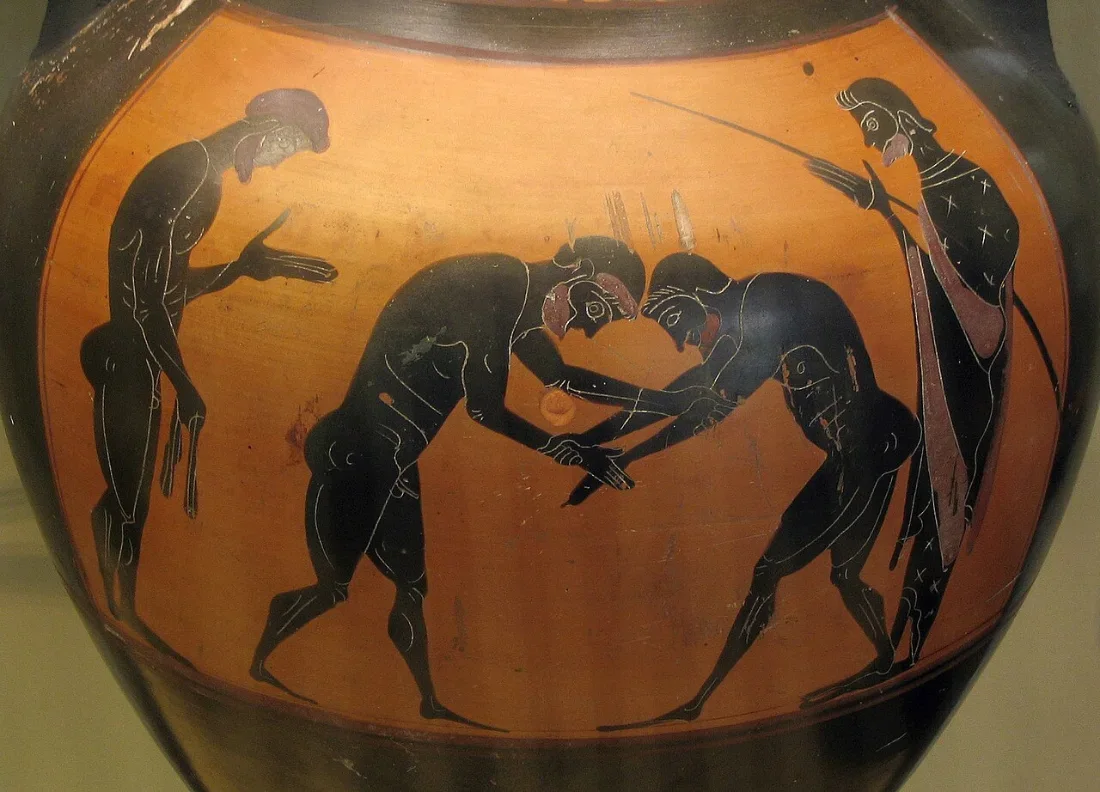
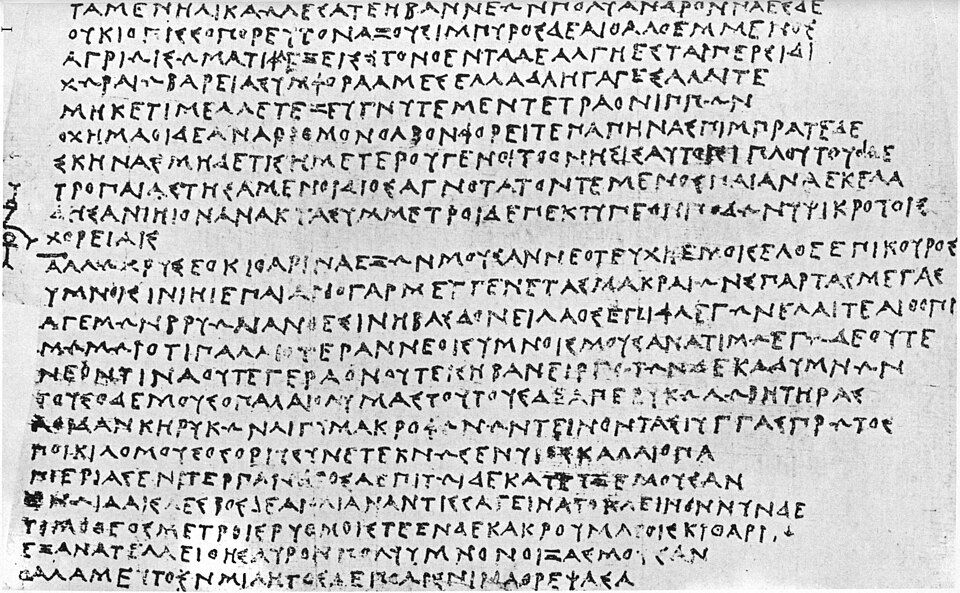
O
- octave διὰ πασῶν (dia pasōn)termalso octaves, dia pasōn, dia pason
The interval between two notes whose vibrations stand in the ratio 2:1: the notes blend so well that they share a letter name, and men and boys singing together sing an octave apart. The Greeks built it from a fourth and a fifth.
Source: West 1992, pp. 8, 40–41, 160–161; Landels 1999, c. pp. 95, 106–107
On this site: 33 places on 11 pages
- octave species εἶδος τοῦ διὰ πασῶν (eidos tou dia pasōn)termalso species, species of the octave, eidos
One of the seven patterns of tones and semitones an octave can show depending on where it is cut from the scale; the species carry the names Mixolydian to Hypodorian in the reverse order of the keys.
Source: West 1992, pp. 185–186, 227; Anderson 1994, pp. 201–202
See: Scales and harmoniai › Keys and species · Music theory › Species and harmoniai
On this site: 9 places on 6 pages
- Odes (Bacchylides)victory odes and dithyrambsalso Bacchylides' odes, dithyrambs
Bacchylides’ victory odes and dithyrambs, recovered almost entire from “the great papyrus A”, found in 1896 and acquired for the British Museum.
Source: Maehler 2004, p. 28; Sampson 2022, pp. 114–115
See: Bacchylides › Life and works · Bacchylides › Ode 17
On this site: 18 places on 5 pages
- Odysseushero
The hero of the Odyssey, “the man of many turns”.
See: Homer › Odyssey · 1.1–21 (proem) · Homer › Odyssey · 9.1–20 (Odysseus names himself)
On this site: 13 places on 7 pages
- Odysseyepicalso Od.
Homer’s epic of the return of Odysseus; its first line is the example Hephaestion uses for a “common” syllable.
See: Homer › Odyssey · 1.1–21 (proem) · Epic Ionic › Metrical consequences
On this site: 61 places on 26 pages
- Oedipushero
King of Thebes, hero of Sophocles’ Oedipus Tyrannus and Oedipus at Colonus and of Aeschylus’ lost Theban trilogy.
See: Sophocles › Oedipus Tyrannus · 1–77 (the opening scene) · Aeschylus › Plays and dates
On this site: 31 places on 14 pages
- Oedipus at Colonustragedy
Sophocles’ last tragedy, produced after his death by his grandson in 401 BC.
Source: Easterling 1997, pp. 216–217, 354
See: Sophocles › Plays and dates
On this site: 10 places on 4 pages
- Oedipus Tyrannustragedyalso Oedipus the King, OT
Sophocles’ tragedy of Oedipus’ discovery, usually dated to the 420s; its second stasimon and the exchange with the herdsman are discussed on this site.
Source: Easterling 1997, p. 353; Scodel 2005, p. 234
See: Sophocles › Oedipus Tyrannus · 1–77 (the opening scene) · Sophocles › Plays and dates
On this site: 34 places on 17 pages
- Old Comedygenrealso Middle Comedy, New Comedy
The phases of Athenian comedy: Old Comedy of Aristophanes, Eupolis and Cratinus, with chorus, parabasis and direct political attack; Middle Comedy; and New Comedy of Menander, with its tidier trimeter.
Source: Seidensticker 2005, pp. 39, 42; West 1987, pp. 26–29
See: Aristophanes › Life
On this site: 27 places on 15 pages
- Olympiaplace
Sanctuary of Zeus and site of the Olympic games, celebrated in Pindar’s Olympians and Bacchylides’ odes.
See: Pindar › Victory odes · Bacchylides › Occasions
On this site: 22 places on 5 pages
- Olympiadterm
A four-year period between Olympic games, by which ancient chronographers dated events, as the Suda dates Simonides’ birth to the 56th or 62nd Olympiad.
Source: Rawles 2022, p. 317
See: Simonides › Life
On this site: 6 places on 5 pages
- Olympian Odesvictory odesalso Olympians, Olympian, Ol.
The first of Pindar’s four books of victory odes, for victors at Olympia; Olympians 1 (first triad), 2 and 14 are scanned on this site.
See: Pindar › Olympian 1 · Pindar › Olympian 2 · Pindar › Olympian 14 · Pindar › Victory odes
On this site: 37 places on 19 pages
- Olympusplace
Mountain home of the gods; in Melinno, Rome’s “holy Olympus” on earth.
On this site: 39 places on 15 pages
- On Musictreatisealso De musica
The pseudo-Plutarchan treatise on music, which credits Sappho (and elsewhere Terpander) with the Mixolydian mode.
Source: Battezzato 2021, p. 130
See: Sappho › Music · Timotheus and the New Music › Transmission
On this site: 3 places on 3 pages
- On Poems (Hephaestion)treatise
Hephaestion’s treatise that reports how the old copies of Sappho’s Books 2 and 3 marked each song.
Source: de Kreij 2022, p. 608
See: Sappho › Books
On this site: 2 places
- On Signs Περὶ σημείων (Peri sēmeiōn)treatise
Hephaestion’s short treatise on the critical signs of lyric texts: the paragraphos after a stanza, the coronis at the end of a poem.
Source: Reynolds and Wilson 1991, p. 10; Barbantani 2009, p. 300
See: How the texts reached us › Alexandria
On this site: 2 places on 2 pages
- On the False Embassyspeechalso Demosthenes 19
Demosthenes’ speech 19, in which he had Solon’s elegy on good order (fr. 4) read out to the jury (§ 255); the elegy is scanned here from Butcher’s text of the speech.
Source: Demosthenes 19.255 (ed. Butcher); Gerber 1999a, pp. 112–117
On this site: 2 places
- On the Sublimetreatisealso [Longinus], Longinus
The treatise of uncertain date and authorship (“Longinus”) that quotes Sappho fr. 31.
See: How the texts reached us › Poet by poet · Sappho › Fr. 31 (Φαίνεταί μοι…)
On this site: 5 places on 4 pages
- Onomasticonlexicon
Pollux’s thematic dictionary, the only ancient source for Anyte’s home at Tegea.
See: Anyte › Life
On this site: 1 place
- open syllabletermalso closed syllable, open, closed
A syllable that ends in its vowel is open, one that ends in a consonant closed; a closed syllable is always long, an open one is short only if its vowel is short. Example: in ἄνδρα (andra), “man”, Odyssey 1.1, ἀν- is closed by ν and so long, though its α is short.
Source: West 1987, p. 12; Battezzato 2009, pp. 130–131
See: Introduction to Greek metre › Quantity
On this site: 224 places on 55 pages
- Orchomenosplacealso Minyai
City of the Minyai, home of Asopichos; Olympian 14, mostly a hymn to the Graces, is Pindar’s only ode for a victor from there.
Source: Race 1997a, p. 209
See: Pindar › Olympian 14
On this site: 1 place
- Oresteiatragic trilogy
Aeschylus’ trilogy of 458 BC (Agamemnon, Libation Bearers, Eumenides, with the satyr play Proteus), which won first prize; the only trilogy that survives.
Source: Easterling 1997, p. 352; Saïd 2005, p. 215
See: Aeschylus › Plays and dates
On this site: 21 places on 9 pages
- Oresteia (Stesichorus)lyric narrative
Stesichorus’ poem on Orestes, which already had Orestes’ Nurse and Clytemnestra’s dream, later important in Aeschylus and Sophocles.
See: Stesichorus and Ibycus › Stesichorus · Sophocles › Plays and dates
On this site: 3 places on 2 pages
- Orestestragedyalso Or.
Euripides’ tragedy of 408 BC, in which some 35% of trimeters have a resolution; a papyrus preserves music for lines 338–344.
Source: Easterling 1997, p. 353; West 1987, pp. 25–26; Wilson 2005, p. 191
See: Euripides › Orestes · Euripides › Plays and dates
On this site: 46 places on 22 pages
- Orpheushero
The legendary singer, named in the second stasimon of the Bacchae.
See: Euripides › Bacchae · 519–575 (second stasimon)
On this site: 22 places on 15 pages
- orthotoneterm
Said with its own accent. The word is used of an enclitic that keeps its accent, for emphasis or at the start of a sentence, as ἔστι (esti) “is, exists” after οὐκ (ouk) “not”: οὐκ ἔστι (ouk esti), “it is not so”.
Source: Smyth 1920, p. 43
See: Accent and morae › Enclitics and proclitics
On this site: 1 place
- ostracon ὄστρακον (ostrakon)termalso ostrakon, ostraca, ostraka, potsherd
A potsherd used as writing material. Sappho fr. 2 survives only on one, written in Egypt between 225 and 150 BC, the only piece of Sappho on that material; its many mistakes are of spelling, not of dialect.
Source: Finglass 2021b, pp. 234, 242, 244
See: Sappho › Fr. 2 (ἄγνον ὄππ[αι]…) · Sappho › Before Alexandria
On this site: 6 places on 3 pages
- OvidRoman poet
Roman poet; a commentator on his Ibis is the unsupported source of a story about Menander’s death.
See: Menander › Life
On this site: 3 places on 2 pages
- Oxford Classical Textseriesalso OCT, Oxford Classical Texts
The Oxford series of critical editions; Hall and Geldart’s Aristophanes and Monro and Allen’s Homer, quoted on this site, are among them.
Source: Bibliography, Texts and tools
See: Bibliography and licences › Texts and tools · Aristophanes › Plays and dates
On this site: 20 places on 6 pages
- Oxyrhynchusplace
Town in Egypt (al-Bahnasa) whose rubbish mounds yielded the Oxyrhynchus Papyri.
See: How the texts reached us › Discoveries · Sappho › Papyri
On this site: 18 places on 11 pages
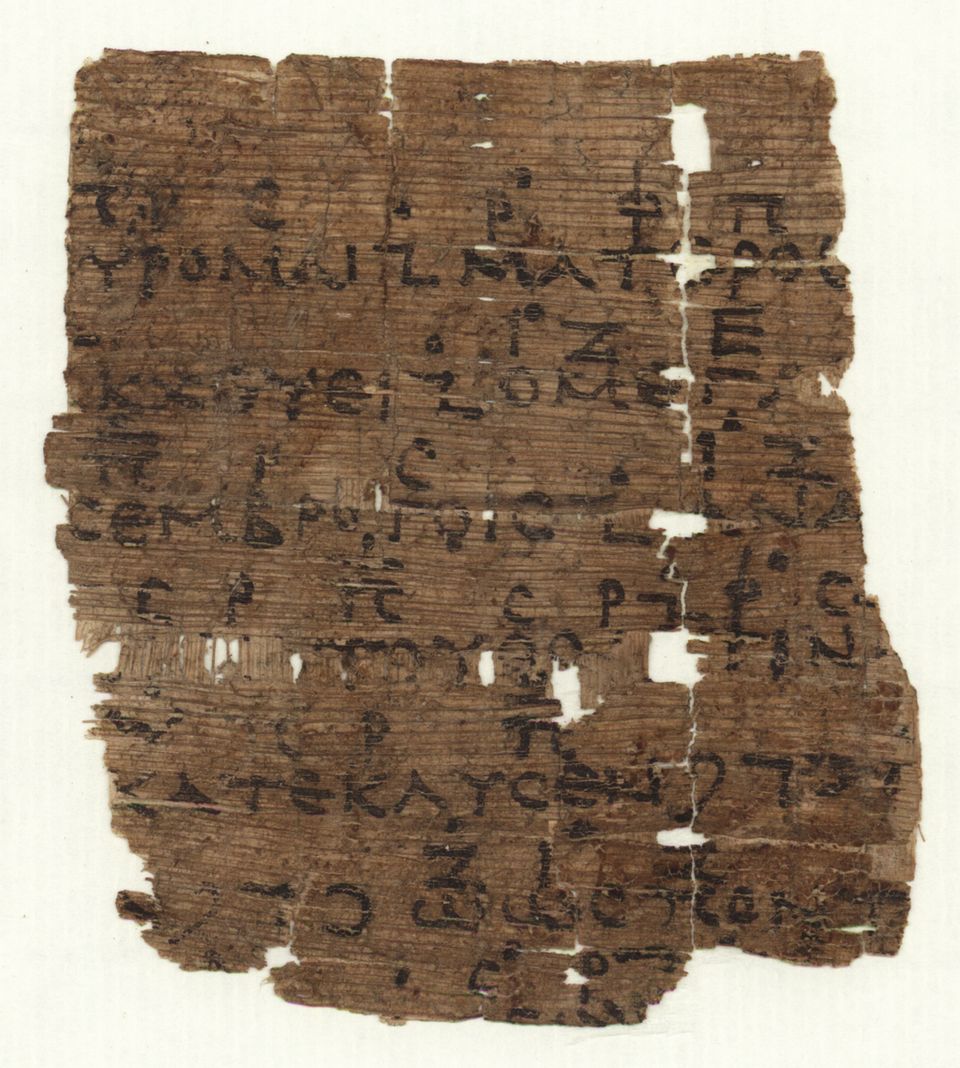
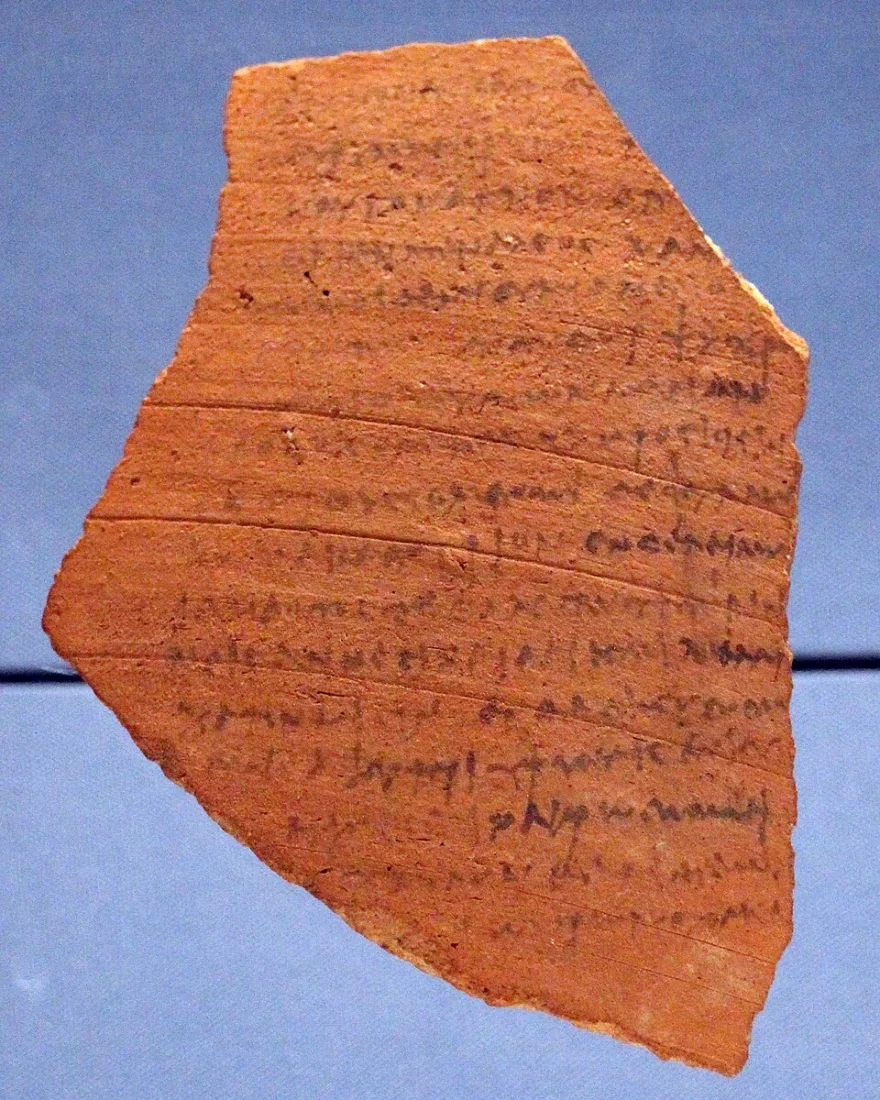
P
- P.Berlin 6870papyrus
A second-century AD papyrus with music, including a lament of Ajax whose melody seems to invert the accent rule on purpose.
Source: Cosgrove and Meyer 2006, pp. 80–81
See: Accent: pitch or stress? › Melody
On this site: 2 places on 2 pages
- P.Berol. 13284papyrusalso Berlin papyrus (Corinna), PMG 654
The “Berlin papyrus” of Corinna (PMG 654) from Hermopolis, of the second century AD, first published in 1907 by Schubart and Wilamowitz.
On this site: 11 places on 6 pages
- P.Berol. 5006parchment
A seventh-century parchment with Sappho, the first Sappho fragment found (published by Blass, 1880), showing that she was still read in Egypt.
Source: Finglass 2021, p. 232
See: Sappho › Papyri
On this site: 2 places on 2 pages
- P.Berol. 9722papyrus
A late papyrus of Sappho (frr. 92–97), read outside the school syllabus in the country districts of Egypt.
See: Sappho › Papyri
On this site: 3 places
- P.Berol. 9875papyrusalso Timotheus papyrus
The fourth-century BC papyrus of Timotheus’ Persians, excavated at Abusir in 1902, written in running script like prose, without colometry.
Source: Reynolds and Wilson 1991, p. 4; Sampson 2022, p. 115
See: How the texts reached us › Alexandria · Timotheus and the New Music › Transmission
On this site: 7 places on 5 pages
- P.Bodmer 4papyrus codex
The papyrus that gave the complete Dyskolos of Menander.
See: How the texts reached us › Discoveries · Menander › Plays and papyri
On this site: 2 places on 2 pages
- P.Dryton 50papyrusalso fragmentum Grenfellianum
The fragmentum Grenfellianum, a long Hellenistic lyric monologue, polymetric and astrophic: the last text in which dochmiacs appear.
See: Attic of drama › Later Attic · Dochmiac › Usage
On this site: 5 places on 4 pages
- P.Fouad inv. 239papyrus
A papyrus of Sappho (fr. 44A) whose accents mark the Aeolic recessive accent and whose scribe corrected ἀεί (aei) “always” to Aeolic ἄϊ (ai).
Source: Sampson 2022, p. 93
See: Overview › Papyri and metrical evidence · Lesbian Aeolic › Features
On this site: 5 places on 4 pages
- P.Köln 429 + 430papyrusalso Cologne papyrus
The third-century BC Cologne papyrus of Sappho, older than the Alexandrian edition and arranged differently, with the Tithonus poem.
Source: Finglass 2021, pp. 232–239
See: Sappho › Papyri · Lesbian Aeolic › Grammarians and papyri
On this site: 7 places on 5 pages
- P.Lille 76a + 73papyrus
An early papyrus of Stesichorus (the Lille Stesichorus) already laid out in cola, a difficulty for crediting Aristophanes of Byzantium with colometry.
Source: Reynolds and Wilson 1991, p. 14; Barbantani 2009, p. 301
See: How the texts reached us › Colometry · Stesichorus and Ibycus › Transmission
On this site: 3 places on 3 pages
- P.Oxy.papyrus seriesalso Oxyrhynchus Papyri, Oxyrhynchus
The Oxyrhynchus Papyri, from the rubbish mounds of Oxyrhynchus (al-Bahnasa) in Egypt, published by Grenfell and Hunt from 1898; the source of most papyri of Sappho, Alcaeus, Pindar and much else.
Source: Finglass 2021, p. 233; Sampson 2022, p. 115
See: How the texts reached us › Discoveries · Sappho › Papyri
On this site: 47 places on 26 pages
- P.Oxy. 1174papyrus
The papyrus of Sophocles’ satyr play Ichneutae.
See: How the texts reached us › Discoveries · Sophocles › Transmission
On this site: 2 places on 2 pages
- P.Oxy. 1231papyrus
A second-century AD Sappho roll (now in Oxford), published in 1914, with parts of frr. 15–18 and 30 and most of fr. 16, from Book 1 of the Alexandrian edition.
Source: Finglass 2021, p. 234
See: Sappho › Papyri · Overview › Papyri and metrical evidence
On this site: 4 places on 2 pages
- P.Oxy. 1232papyrus
A Sappho roll published in 1914 with fr. 44, apparently added after the end-title of Book 2.
Source: Finglass 2021, p. 234; de Kreij 2022
See: Sappho › Books · Sappho › Papyri
On this site: 2 places
- P.Oxy. 1786papyrus
A third-century AD Christian hymn with musical notation, one of the documents tested for accent and melody.
Source: Cosgrove and Meyer 2006, pp. 80–81
See: Accent: pitch or stress? › Melody
On this site: 1 place
- P.Oxy. 1787papyrus
A Sappho papyrus of the second or third century AD (frr. 58–87), which overlaps with the Cologne papyrus to complete the Tithonus poem.
Source: Finglass 2021, pp. 232–239
See: Sappho › Papyri · Sappho › In numbers
On this site: 2 places
- P.Oxy. 1800papyrus
A papyrus of about AD 200 with a treatise On Sappho, the first fairly full account of her life.
Source: Kivilo 2021, p. 11
See: Sappho › Life
On this site: 1 place
- P.Oxy. 2256papyrus
A papyrus with a scrap of a hypothesis (fr. 3), published in 1952, which showed that Aeschylus’ Suppliant Maidens was produced against Sophocles in the 460s.
Source: Saïd 2005, p. 216
See: Aeschylus › Plays and dates
On this site: 1 place
- P.Oxy. 2288papyrus
One of eight Oxyrhynchus papyri of Sappho published in 1951, with fr. 1.
Source: Finglass 2021, pp. 232–242
See: Sappho › Papyri
On this site: 2 places
- P.Oxy. 2321papyrus
A papyrus whose Ionic dialect and metre make its ascription to Anacreon secure for its editor Lobel.
On this site: 1 place
- P.Oxy. 2735papyrus
A lyric papyrus whose dialect and Doric accents narrow its author to Stesichorus or Ibycus.
See: Overview › Papyri and metrical evidence · Stesichorus and Ibycus › Transmission
On this site: 2 places on 2 pages
- P.Oxy. 5191papyrus
A Roman-period lyric fragment mixing Ionic and Doric with no East Aeolic, evidence that the lyric koinē was still alive.
Source: de Kreij 2022, p. 160
See: Attic of drama › Koinē and accent · Lesbian Aeolic › Corpus and imitators
On this site: 2 places on 2 pages
- P.Oxy. 852papyrus
The papyrus of Euripides’ Hypsipyle.
See: How the texts reached us › Discoveries · Euripides › Transmission
On this site: 2 places on 2 pages
- paean παιάν (paian)termalso paeans
A choral song to Apollo (and other gods); the Delphic paeans of 127 BC survive with musical notation, and Maehler takes Bacchylides’ ode 17 for a paean.
Source: Maehler 2004, p. 23; West 1987, pp. 71–72
See: Accent: pitch or stress? › Melody · Bacchylides › Life and works · Performance › Cult and competitions
On this site: 61 places on 28 pages
- Paean of Isyllusinscription
An ionic paean of the late fourth century BC, an example of ionic in religious use.
See: Callimachus, Theocritus and Hellenistic poets › Life · Later and Hellenistic metres › Hellenistic book lyric
On this site: 4 places on 3 pages
- Paeans (Pindar)choral songs
Pindar’s paeans, known from papyri that carry learned marginalia citing Hellenistic scholars.
Source: Phillips 2022, p. 122
See: Pindar › Transmission · Bacchylides › Transmission
On this site: 4 places on 4 pages
- paeon παιών (paiōn)termalso paeons, paeonic, first paeon, fourth paeon
A resolved cretic of five morae: — ⏑ ⏖ (the metricians’ first paeon) or, more rarely, ⏖ ⏑ — (fourth paeon).
Source: West 1987, pp. 39, 55; Hephaestion, Ench. 3.3, 13.1
See: Cretic and paeonic › The cretic and the paeons · Introduction to Greek metre › Glossary
On this site: 29 places on 17 pages
- palataltermalso palatals, palatalised
Made with the tongue against the hard palate, like the y [j] of English yes. Classical Attic used this place only for the glide [j]: κ was not palatalised before front vowels, as it is in Modern Greek. Older grammars such as Smyth use “palatal” for κ γ χ, which phonetics now calls velars. Example: κῆρυξ (kēryx) “herald”, with a plain [k] before η in classical Attic.
Source: Allen 1968, pp. 15, 49, 125; Smyth 1920, p. 11 (§ 16)
See: Sounds › Mouth and vowels
On this site: 5 places on 2 pages
- palimbaccheustermalso palimbacchiac, palimbacchius
The foot — — ⏑, the baccheus reversed.
Source: West 1987, p. 88; Hephaestion, Ench. 3.2
See: Introduction to Greek metre › Glossary
On this site: 3 places on 3 pages
- palimpsesttermalso palimpsests
A manuscript whose first writing was erased and written over; the erased lower text can sometimes be read again, as with two leaves of Euripides’ Phaethon found in 1715–1716.
Source: Reynolds and Wilson 1991, pp. 192–193
See: How the texts reached us › Discoveries
On this site: 3 places on 3 pages
- Palinodelyric poem
Stesichorus’ recantation about Helen, known above all from Plato’s account.
See: Stesichorus and Ibycus › Transmission · Doric of choral lyric › Dactyls and Pindar
On this site: 5 places on 3 pages
- Pangod
The god of the Epidaurian Hymn to Pan and of pastoral poetry.
See: Introduction to Greek metre › Rhythm and music · Callimachus, Theocritus and Hellenistic poets › Theocritus, Idyll 1
On this site: 13 places on 8 pages
- pancration παγκράτιον (pankration)contest
One of the contests of the games: Pindar’s Nemean 2 is for Timodemus, a pancration victor, and Bacchylides’ Ode 13 for the boy Pytheas of Aegina, who won it at Nemea.
Source: Jebb 1905, p. 212
See: Pindar › Nemean 2 · Bacchylides › Ode 13
On this site: 5 places on 3 pages
- Panhellenicterm
Common to all Greeks: the Panhellenic games and myths, as against local ones.
See: Corinna › Life · Pindar › Victory odes
On this site: 6 places on 4 pages
- papyrustermalso papyri, roll, papyrus roll, P.Oxy.
Writing material made from the papyrus plant, and a text written on it; papyri from Egypt, copied in antiquity, have restored much lost lyric (Sappho, Alcaeus, Bacchylides, Alcman, Timotheus, Menander).
Source: Sampson 2022, pp. 91–118; Reynolds and Wilson 1991, pp. 34–35
See: How the texts reached us › Discoveries
On this site: 163 places on 54 pages
- papyrus rolltermalso roll, rolls, book-roll
The form of the classical Greek book: a roll of papyrus written on one side, without word-division and with little punctuation, and before the Hellenistic period without accents; the codex replaced it between the second and fourth centuries AD.
Source: Reynolds and Wilson 1991, pp. 2–4, 34–35
See: How the texts reached us › Alexandria
On this site: 6 places on 5 pages
- parabasis παράβασις (parabasis)term
The set piece of Old Comedy in which the chorus addresses the audience, ending in the epirrhematic syzygy of strophe, antistrophe and blocks of trochaic tetrameters.
Source: West 1987, pp. 50–51; Seidensticker 2005, p. 42
See: Lyric in drama › Comedy · Aristophanes › Chorus and song
On this site: 13 places on 5 pages
- paragraphos παράγραφος (paragraphos)termalso coronis, koronis, asterisk
A short horizontal stroke in the margin marking the end of a stanza; the coronis marks the end of a poem (or of a triad’s epode), as Hephaestion’s On Signs describes.
Source: Reynolds and Wilson 1991, p. 10; Barbantani 2009, p. 300
See: How the texts reached us › Alexandria
On this site: 31 places on 15 pages
- parakatalogē παρακαταλογή (parakatalogē)termalso parakataloge, recitative (Greek), chanting
Recitation of verse to instrumental accompaniment, between speech and song, ascribed to Archilochus; in drama probably the delivery of marching anapaests and of some tetrameters.
Source: West 1992, p. 40
See: Performance › Chorus and dance
On this site: 9 places on 7 pages
- Parnassusplace
Mountain above Delphi, named in Ion’s monody.
See: Attic of drama › Lyric parts
On this site: 11 places on 8 pages
- parodos πάροδος (parodos)term
The chorus’s entrance song in a play; the parodos of the Agamemnon has six strophic pairs with an anapaestic introduction and an epode.
Source: Battezzato 2005, p. 152
See: Anapaestic › Marching anapaests
On this site: 18 places on 9 pages
- paroemiac παροιμιακός (paroimiakos)termalso paroemiacs
The catalectic anapaestic dimeter ⏔ — ⏔ — ⏑ ⏑ — —, which closes a run of anapaests; the name means “proverbial”, which Hephaestion doubted, since proverbs come in every metre.
Source: West 1987, pp. 75, 88; Hephaestion, Ench. 8.6
See: Anapaestic › Marching anapaests · Introduction to Greek metre › Glossary
On this site: 18 places on 11 pages
- Parosplace
Cycladic island, home of Archilochus.
See: Archilochus › Life
On this site: 9 places on 5 pages
- partheneion παρθένειον (partheneion)termalso maiden-song, maiden-songs, partheneia
A song for a chorus of girls; Alcman’s Louvre Partheneion is the earliest large piece of choral lyric to survive.
Source: Power 2022, pp. 246–247; Krummen 2009, p. 191
See: Alcman › Songs and language · Alcman › Partheneion
On this site: 19 places on 12 pages
- Partheneion (Alcman)choral lyricalso Louvre Partheneion, Louvre partheneion, PMG 1
Alcman’s maiden-song for a chorus of Spartan girls (PMG 1), found on a papyrus at Saqqara in 1855 and now in the Louvre: the earliest large piece of choral lyric to survive.
Source: Athanassaki 2022, pp. 5, 11; Power 2022, pp. 246–247
See: Alcman › Partheneion · Alcman › Songs and language
On this site: 13 places on 7 pages
- Patroclushero
Achilles’ friend, whose Iliadic death Bacchylides’ Meleager recalls.
On this site: 3 places on 2 pages
- Pausaniaswriter
Travel writer who explained Corinna’s reported victory over Pindar by her dialect and perhaps her beauty.
See: Corinna › Life · Doric of choral lyric › Corinna
On this site: 12 places on 9 pages
- pesiglum
Siglum for the penthemimer, × — ⏑ — ×. See penthemimer.
Source: West 1987, p. x
On this site: 8 places on 5 pages
- Peacecomedy
Aristophanes’ comedy of 421 BC, staged as a real peace with Sparta was about to be made; the hero flies to Olympus on a dung beetle.
Source: Easterling 1997, p. 353; Cartledge 1997, p. 9
See: Aristophanes › Plays and dates
On this site: 10 places on 4 pages
- pēktis πηκτίς (pēktis)termalso pektis, harp, trigōnos, magadis
The many-stringed Lydian harp known to Sappho, Alcaeus and Anacreon, sounding octave concords; harps appear in Attic art after 450, nearly always in women’s hands, and Plato banned them for their many notes.
Source: West 1992, pp. 70–75; Anderson 1994, pp. 178–179
See: Instruments › Panpipe, trumpet, harps
On this site: 3 places on 3 pages
- Peleushero
Father of Achilles; Alcman sang of Peleus and Thetis.
See: Homer › Iliad · 1.1–52 (proem; Chryses) · Alcman › Songs and language
On this site: 21 places on 12 pages
- Peloponneseplace
Southern Greece, home of the Dorian dialects.
On this site: 20 places on 12 pages
- Pelopshero
Hero of Olympia, whose grounds are named in Bacchylides’ Ode 11; Aristophanes of Byzantium put Olympian 1, which tells of Pelops, at the head of Pindar’s odes.
Source: Brown 2022, p. 337
See: Bacchylides › Ode 11 · Pindar › Olympian 1
On this site: 5 places on 3 pages
- pendanttermalso pendant ending, pendant close, pendent
An ending … ⏑ — × (in dactylic runs written ∧), the final syllable seeming to hang from the long before it; contrasted with blunt. Pitotto, after Haslam, uses pendant and blunt of the period-ends of the Geryoneis; Itsumi writes “pendent”.
Source: West 1987, pp. 6, 38; D’Angour 2022, p. 136; Pitotto 2024, p. 20 and n. 8; Itsumi 2009, p. 279
See: Introduction to Greek metre › Glossary
On this site: 24 places on 12 pages
- pentameter πεντάμετρος (pentametros)termalso pentameters
The second line of the elegiac couplet, — ⏔ — ⏔ — | — ⏑ ⏑ — ⏑ ⏑ —: two hemiepes with a fixed word-break between them; the name (“five measures”) is traditional but misleading.
Source: West 1987, p. 24; Bartol 2022, p. 221 with n. 1
See: The elegiac couplet › Scheme · Introduction to Greek metre › Glossary
On this site: 129 places on 28 pages
- penthemimertermalso pe
The short colon × — ⏑ — × (siglum pe), “five halves”, a colarion used in Archilochus’ epodes.
Source: West 1987, pp. x, 31, 88
See: Introduction to Greek metre › Glossary
On this site: 23 places on 14 pages
- Pentheushero
King of Thebes who opposes Dionysus in Euripides’ Bacchae.
See: Euripides › Bacchae · 370–433 (first stasimon)
On this site: 6 places
- penulttermalso ultima, antepenult
The last syllable of a word is the ultima, the one before it the penult, and the one before that the antepenult. The Greek accent can stand only on one of these three. Example: in ἄν-θρω-πος (an-thrō-pos), “human being”, ἀν- is the antepenult, -θρω- the penult and -πος the ultima.
Source: Smyth 1920, p. 37
See: Accent and morae › Where the accent stands
On this site: 214 places on 46 pages
- Perfect System σύστημα τέλειον (systēma teleion)termalso Greater Perfect System, Lesser Perfect System, Unmodulating System, systēma teleion
The two-octave scale of Greek theory, four tetrachords and an added note, from which the regular scales were cut; the Greater has the disjunct branch above mesē, the Lesser the conjunct one, and together they are the Unmodulating System.
Source: West 1992, pp. 221–223; Hagel 2009, pp. 5–6; Anderson 1994, pp. 199–201
See: Scales and harmoniai › The Perfect System · Music theory › Joining tetrachords
On this site: 7 places on 4 pages
- periodtermalso periods, period-end
The stretch of verse within which metrical and prosodic continuity holds (synapheia); it never ends inside a word, and its end (‖) is shown by pause, hiatus, brevis in longo or catalexis.
Source: West 1987, pp. 3–4; Battezzato 2009, p. 131
See: Introduction to Greek metre › Feet, metra, cola, periods · Introduction to Greek metre › Glossary
On this site: 259 places on 60 pages
- Persephonegoddess
Demeter’s daughter, whose seat Pindar’s Pythian 12 calls Acragas.
See: Pindar › Pythian 12 · Homeric Hymns › To Demeter (Hymn 2) · 1–21
On this site: 13 places on 5 pages
- Persesperson
Hesiod’s brother, whom the Works and Days addresses; at 633 he is told to sail only in season.
See: Hesiod › Works and Days · 633–662 (Ascra; the voyage to Chalcis) · Hesiod › Works and Days · 1–26 (the two Strifes)
On this site: 2 places
- Perseus Digital Libraryonline libraryalso Perseus, canonical-greekLit
The digital library of Tufts University whose canonical-greekLit texts (CC BY-SA 4.0) supply most of the Greek quoted on this site, each from a named public-domain edition.
Source: Bibliography, Texts and tools
See: Bibliography and licences › Texts and tools · Bibliography and licences › Licences and citing
On this site: 326 places on 57 pages
- Persians (Aeschylus)tragedyalso Persae, Πέρσαι
Aeschylus’ tragedy of 472 BC on the defeat of the Persians at Salamis, the only surviving tragedy on recent history; its ionic lyrics are often read as designed to sound exotic.
Source: Easterling 1997, p. 352; Saïd 2005, p. 215
See: Aeschylus › Persians · Aeschylus › Plays and dates
On this site: 34 places on 17 pages
- Persians (Timotheus)citharodic nome
Timotheus’ citharodic nome, of which about a third survives on a fourth-century BC papyrus (P.Berol. 9875) written out like prose. It is astrophic and largely iambic; Wilamowitz’s edition (1903) prints the Phrygian’s speech (162–173) with a scheme of short iambic metra.
Source: Csapo and Wilson 2009, pp. 277, 284, 289; Reynolds and Wilson 1991, p. 4; Wilamowitz 1903, pp. 32–33
See: Timotheus and the New Music › Transmission · Timotheus and the New Music › Persians · How the texts reached us › Alexandria
On this site: 7 places on 6 pages
- persistent accentterm
The accent of nouns and adjectives, which stays on the syllable it has in the nominative as far as the rules allow: ἄνθρωπος (anthrōpos) “human being”, but genitive ἀνθρώπου (anthrōpou), where the long last vowel pulls the accent one syllable on. Finite verbs have a recessive accent instead.
Source: Smyth 1920, p. 47; Probert 2006, p. 65 n. 27
See: Accent and morae › Nouns and adjectives
On this site: 2 places
- PGM XXmagical papyrusalso P. Berol. 7504, headache charm
A charm against headache (Berlin papyrus 7504, completed from P. Amherst 11): a story of seven maidens who quench a fire, in Homeric hexameters, with a stretch of prose, the command to the pain, in the middle. Preisendanz prints it as prose but treats it as verse and suspects a lost hexameter.
Source: Preisendanz 1931, p. 145
- phsiglum
Siglum for the pherecratean, ○ ○ — ⏑ ⏑ — —. See pherecratean.
Source: West 1987, p. x
On this site: 134 places on 43 pages
- Phaedrusdialogue
Plato’s dialogue, which describes the accent as melodic.
See: Accent: pitch or stress? › Evidence
On this site: 1 place
- Phaenomenadidactic poem
Aratus’ hexameter poem on the stars, which opens with a proem to Zeus in the manner of Hesiod; Callimachus praised it as Hesiodic in theme and manner (Epigram 27). Maas notes a few exceptions to Hermann’s Bridge in it.
Source: Mair and Mair 1921, pp. 206–207; Clayman 2022, p. 420; Maas 1962, p. 62
See: Callimachus, Theocritus and Hellenistic poets › Aratus, Phaenomena · 1–18 (proem to Zeus) · Callimachus, Theocritus and Hellenistic poets › Aratus, Phaenomena · Callimachus, Ep. 27 (on Aratus)
On this site: 4 places on 2 pages
- Phaethontragedy
A lost tragedy of Euripides (around 420 BC); two fifth-century leaves of it were the first classical text recovered from a palimpsest.
Source: Reynolds and Wilson 1991, pp. 192–193
See: How the texts reached us › Discoveries · Euripides › Plays and dates
On this site: 3 places on 2 pages
- phalaeciantermalso phalaecean, Phalaecian hendecasyllable
The Hellenistic verse gl ia∧ (scheme: — × — ⏑ ⏑ — ⏑ — ⏑ — —), which continued in use into the Roman period: the metre of Catullus’ hendecasyllables. Example: Catullus 1.1, cui dono lepidum novum libellum, “to whom do I give my charming new little book?”, — — — ⏑ ⏑ — ⏑ — ⏑ — —.
Source: West 1987, pp. 76–77; Catullus 1.1
See: Callimachus, Theocritus and Hellenistic poets › Metres · Later and Hellenistic metres › Hellenistic book lyric
On this site: 5 places on 4 pages
- Phaonlegend
The ferryman whom, in a later legend, Sappho loved; for Lardinois a fabrication, like her leap from the Leucadian rock.
See: Sappho › Life
On this site: 1 place
- pherecrateantermalso pherecrateans, ph
The catalectic glyconic ○ ○ — ⏑ ⏑ — — (siglum ph).
Source: West 1987, pp. x, 33; Battezzato 2009, p. 134
See: Aeolic › Base and choriamb · Introduction to Greek metre › Glossary
On this site: 58 places on 23 pages
- Pherecratesplaywright
Poet of Old Comedy whose Chiron made Timotheus the most notorious lyricist of his day.
Source: Csapo and Wilson 2009, p. 280
See: Timotheus and the New Music › Life · Aristophanes › Life
On this site: 3 places on 3 pages
- Pherenicushorse
Hieron’s racehorse, whose Olympic victory of 476 BC Bacchylides’ Ode 5 and Pindar’s Olympian 1 celebrate.
See: Bacchylides › Life and works
On this site: 2 places
- Pherenikoshorse
Hieron’s racehorse, whose victory at Olympia Olympian 1 celebrates.
See: Pindar › Olympian 1
On this site: 1 place
- Philicuspoetalso Philicus of Corcyra
Hellenistic poet of Corcyra, “one of the Pleiad”, who wrote a hymn to Demeter in catalectic choriambic hexameters and falsely claimed the metre as his invention.
Source: Hephaestion, Ench. 9.4
See: Callimachus, Theocritus and Hellenistic poets › Life · Callimachus, Theocritus and Hellenistic poets › Lyric
On this site: 4 places
- Philoctetestragedy
Sophocles’ tragedy of 409 BC, which won first prize; its lyric 1169–1217 runs through iambics, ionics, anapaests, aeolics, dactyls and dactylo-epitrite.
Source: Easterling 1997, p. 353; West 1987, p. 62
See: Sophocles › Philoctetes · Sophocles › Plays and dates
On this site: 24 places on 8 pages
- Philoxenuspoet
Dithyrambic poet of the New Music.
See: Timotheus and the New Music › Life · Anacreon › Transmission
On this site: 7 places on 6 pages
- Philoxenuspoet-composeralso Philoxenus of Cythera
Dithyrambic composer of the New Music (c. 435–380 BC), who changed mode, genus and rhythm within a song; his Mysians moved through five keys and his Cyclops was a dithyramb with two singing soloists.
Source: West 1992, pp. 364–366; Nowacki 2020, p. 18
See: Performance › The New Music
On this site: 7 places on 6 pages
- phlyakesterm
The farcical tragedies of Rhinthon of Syracuse, whose epitaph by Nossis dates her to about 300 BC.
See: Nossis › Life
On this site: 1 place
- Phoenician Womentragedyalso Phoenissae
Euripides’ tragedy of 409 BC?, heavily interpolated; also the title of an earlier play by Phrynichus, model for Aeschylus’ Persians.
Source: Easterling 1997, p. 353
See: Euripides › Plays and dates
On this site: 16 places on 8 pages
- Phoenix of Colophonpoet
Hellenistic writer of choliambs, who provides the one doubtful pure iambic ending in them.
Source: West 1987, p. 82
See: Callimachus, Theocritus and Hellenistic poets › Life · Hipponax, Semonides and the iambographers › Metres: choliamb
On this site: 5 places on 4 pages
- phorminx φόρμιγξ (phorminx)term
The epic singer’s lyre: in West’s view a four-stringed round-based box lyre in general use in the eighth century, before the seven-stringed instrument of the seventh.
Source: West 1992, pp. 50–53
See: Instruments › Lyres
On this site: 1 place
- PhotiusByzantine scholar
Byzantine scholar whose great survey of his reading almost wholly omits poetry.
Source: Reynolds and Wilson 1991, pp. 63, 65
See: How the texts reached us › Byzantium
On this site: 4 places on 4 pages
- phrase (Itsumi)termalso aeolic phrase, tel+3, phrase names
Itsumi, following L. P. E. Parker, says phrase where West says colon (and verse for period), since Pindar’s cola are often hard to bound. A plus sign counts the positions added after the choriamb: tel+3 is the telesillean prolonged by ⏑ — —.
Source: Itsumi 2009, pp. xii–xiii, 10 with n. 19, 24, 27–28
See: Pindar › The other half · Pindar › Nemean 2
On this site: 9 places on 3 pages
- Phrygiantermalso Phrygian mode
Of Phrygia in Asia Minor: the Phrygian mode (Sophocles is said to have brought it into tragedy) and the Phrygian slave of Euripides’ Orestes, the one low-status character with a true song.
Source: Wilson 2005, p. 187
See: Sophocles › Life · Introduction to Greek metre › Speech and song
On this site: 24 places on 11 pages
- Phrynichusplaywright
Early Athenian tragedian, Aeschylus’ rival, whose Phoenician Women was apparently the model for the Persians.
See: Aeschylus › Life · Aeschylus › Plays and dates
On this site: 8 places on 5 pages
- Phrynispoet
The most famous citharode in Greece before Timotheus, who defeated him around 415 BC.
Source: Csapo and Wilson 2009, p. 280; LeVen 2022, p. 365
See: Timotheus and the New Music › Life
On this site: 3 places on 3 pages
- Phrynispoet-composeralso Phrynis of Mytilene
Lesbian citharode, Panathenaic victor in probably 446 BC, mocked in the Clouds for his ‘bends’ (modulations); he raised the kithara’s strings to nine and was beaten in contest by Timotheus about 420.
Source: West 1992, pp. 356, 360–361
See: Performance › The New Music
On this site: 3 places on 3 pages
- Pieriaplace
Region named in Bacchylides as the home of the Muse Urania.
On this site: 7 places on 4 pages
- Pinakescatalogue
Callimachus’ catalogue of Greek literature in 120 books, giving for each author the opening words of each work and a short life; Aristophanes of Byzantium wrote a supplement.
Source: Reynolds and Wilson 1991, p. 7; Barbantani 2009, p. 299
See: How the texts reached us › Alexandria
On this site: 4 places on 3 pages
- Pindar Πίνδαρος (Pindaros)poet
The Theban master of the victory ode: four books of epinicians in dactylo-epitrite and aeolic triads, the most elaborate metre in Greek.
See: Pindar › Life · Pindar › Victory odes
On this site: 151 places on 48 pages
- Pisaplace
Place-name used for Olympia and its games in Olympian 1 and 14 and in Xenophanes fr. 2; LSJ gives Πῖσα (Pīsa) with a long ι, the Doric Πίσα (Pisa).
Source: LSJ s.v. Πῖσα
See: Pindar › Olympian 1 · The elegists: Callinus, Tyrtaeus, Mimnermus, Solon, Theognis, Xenophanes › Xenophanes fr. 2
On this site: 4 places on 2 pages
- pitch accenttermalso musical accent, tonal accent
The classical Greek word accent as most handbooks describe it: a rise and fall of the voice rather than a stress. It played no part in the classical metre; later it took on stress.
Source: Devine and Stephens 1994, pp. 152, 204; West 1987, pp. 68–69
See: Accent and morae › A pitch accent · Attic of drama › Koinē and accent
On this site: 45 places on 20 pages
- pitch-height ruleterm
Cosgrove and Meyer’s name for the first of the rules linking melody and accent in the musical documents: the accented syllable of a word is set to a note as high as or higher than any other syllable of the word.
Source: Cosgrove and Meyer 2006, p. 66
See: Accent: pitch or stress? › Melody
On this site: 2 places on 2 pages
- Pittacusruler
Ruler of Mytilene, Alcaeus’ ally against Myrsilus and then his enemy; Simonides quotes his saying “hard it is to be noble”.
See: Alcaeus › Politics · Simonides › Poems
On this site: 8 places on 5 pages
- place of articulationtermalso articulation, bilabial, labiodental, dental, alveolar, palatal, velar, uvular, glottal
Where in the vocal tract a consonant is made, from the lips (bilabial) through the teeth, the alveolar ridge, the hard palate and the velum to the uvula, the pharynx and the glottis; classical Attic used the lips, teeth, ridge, velum and glottis.
Source: Allen 1968, pp. 1–4, 12–58; Horrocks 2010, pp. xviii–xix
See: Sounds › Mouth and vowels · Sounds › IPA chart
On this site: 2 places
- Plataea elegyelegyalso new Simonides
Simonides’ elegy on the battle of Plataea, published from papyrus in 1992.
Source: Sampson 2022, p. 113
See: How the texts reached us › Discoveries · Simonides › Poems
On this site: 15 places on 7 pages
- Platophilosopher
Philosopher whose dialogues are evidence for the pitch accent (Cratylus, Phaedrus) and quote poets such as Simonides (Protagoras).
See: Accent: pitch or stress? › Evidence · Simonides › Poems
On this site: 37 places on 20 pages
- Plautus and TerenceRoman playwrightsalso Plautus, Terence
The Roman comic playwrights who adapted New Comedy; their plays show the five-act structure.
See: Menander › Plays and papyri
On this site: 2 places
- Pleiadesstars
The star group, which Moero is credited with calling “doves”.
See: Moero of Byzantium › Life
On this site: 4 places on 2 pages
- Plutarchwriter
Biographer and essayist; a treatise On Music under his name and his anecdotes (Corinna advising the young Pindar) are cited on this site. He rejected Works and Days 650–662, Hesiod’s voyage to Chalcis, as Most’s apparatus reports.
Source: Most 2018, pp. 138–141
See: Corinna › Life · Sappho › Music
On this site: 21 places on 16 pages
- PMGabbreviationalso Poetae Melici Graeci
D. L. Page, Poetae Melici Graeci (Oxford 1962), the standard numbering of the fragments of Alcman, Anacreon, Corinna, Ibycus, Simonides and other lyric poets.
Source: Swift (ed.) 2022, pp. x–xi
See: Bibliography and licences › Texts and tools
On this site: 58 places on 19 pages
- PMGFabbreviationalso Poetarum Melicorum Graecorum Fragmenta
M. Davies, Poetarum Melicorum Graecorum Fragmenta (Oxford 1991), vol. 1 (Alcman, Stesichorus, Ibycus).
Source: Swift (ed.) 2022, pp. x–xi
See: Bibliography and licences › Texts and tools
On this site: 8 places on 4 pages
- pnigos πνῖγος (pnīgos)termalso pnige
In Aristophanes, a burst of ten to sixty iambic or trochaic metra in unbroken synapheia that sometimes ends a passage of excited dialogue; the ancient name means “breathlessness”.
Source: West 1987, pp. 49, 89
See: Lyric in drama › Comedy · Aristophanes › Metres: spoken
On this site: 7 places on 5 pages
- Poeticstreatise
Aristotle’s treatise on poetry, which credits Aeschylus with the second actor.
See: Aeschylus › Plays and dates
On this site: 23 places on 10 pages
- Polluxlexicographer
Author of the Onomasticon, the only ancient source to say Anyte came from Tegea.
See: Anyte › Life
On this site: 8 places on 5 pages
- Polycratestyrant
Tyrant of Samos at whose court Anacreon and Ibycus sang; he died in 522 BC.
See: Anacreon › Life · Stesichorus and Ibycus › Ibycus
On this site: 9 places on 2 pages
- polyschematist πολυσχημάτιστος (polyschēmatistos)term
“Multiform”: said of aeolic cola and verses whose responding lines take different shapes, through anaclasis or a free base (Hephaestion’s πολυσχημάτιστα, polyschēmatista); Corinna’s Asopids are polyschematist glyconics.
Source: West 1987, p. 89; Hephaestion, Ench. 16.1
See: Introduction to Greek metre › Glossary
On this site: 8 places on 6 pages
- Porson's Lawtermalso Porson's bridge
In the tragic trimeter a long syllable in the third anceps must belong to the same word as the following syllable, unless one of them is a monosyllable; so a line does not end — — | — ⏑ —. It holds in archaic iambus too; comedy ignores it. Maas states it as a general ban on word-end after a long anceps and counts about one breach in every five lines of comic dialogue.
Source: West 1987, p. 25; Battezzato 2009, p. 137; Maas 1962, pp. 34–35
See: Iambic › The trimeter · Introduction to Greek metre › Feet, metra, cola, periods
On this site: 40 places on 16 pages
- Poseidongod
The sea god, named in Bacchylides’ Ode 17 and in Corinna’s poems.
See: Bacchylides › Ode 17 · Corinna › Myth
On this site: 18 places on 9 pages
- positiontermalso positions
A place in a metrical scheme, long, short or anceps, filled in a particular line by a syllable of the right length; Maas’s “element”. Not to be confused with “length by position”. Example: the iambic metron × — ⏑ — has four positions: anceps, long, short, long.
Source: West 1987, pp. 5, 86
See: Introduction to Greek metre › Glossary
On this site: 346 places on 67 pages
- praxsiglum
Siglum for Lourenço’s siglum for the praxillean, — ⏑ ⏑ — ⏑ ⏑ — ⏑ ⏑ — ⏑ — —. See praxillean.
Source: Lourenço 2011, p. 15
On this site: 3 places on 3 pages
- Praxillapoet
Poet of Sicyon (mid-fifth century BC): hymns, dithyrambs and, by tradition, drinking-songs; the praxillean verse is named after her.
See: Praxilla › Life · Praxilla › Metres
On this site: 11 places on 4 pages
- praxilleantermalso praxilleion, praxilleia, prax
The verse — ⏑ ⏑ — ⏑ ⏑ — ⏑ ⏑ — ⏑ — —, named after Praxilla of Sicyon.
Source: West 1987, p. 89; Lourenço 2011, p. 15
See: Praxilla › Metres · Introduction to Greek metre › Glossary
On this site: 6 places on 4 pages
- Priamhero
King of Troy (“the city of Priam” in the Agamemnon’s parodos).
See: Aeschylus › Agamemnon · 104–39 (parodos)
On this site: 8 places on 7 pages
- priapeanterm
The verse gl | ph, a glyconic and a pherecratean; one of the two Hellenistic metres that lived on into the Roman period.
Source: West 1987, pp. 76–77
See: Callimachus, Theocritus and Hellenistic poets › Metres · Later and Hellenistic metres › Hellenistic book lyric
On this site: 10 places on 8 pages
- princepstermalso longum, principes
A long position of the scheme (locus princeps), Maas’s longum; it may be resolved into two shorts except at the end of a period. Example: each — in the hexameter — ⏔ — ⏔ — ⏔ — ⏔ — ⏑ ⏑ — × is a princeps.
Source: West 1987, pp. 6, 88
See: Introduction to Greek metre › Glossary
On this site: 161 places on 36 pages
- proceleusmatictermalso proceleusmatics
Four shorts, ⏑ ⏑ ⏖: an anapaest with its long resolved.
Source: West 1987, pp. 61, 89
See: Introduction to Greek metre › Glossary
On this site: 6 places on 5 pages
- proclitictermalso proclitics
One of ten short words with no accent of their own that lean on the word after them: ὁ (ho), ἡ (hē), οἱ (hoi), αἱ (hai) “the”; ἐν (en) “in”, εἰς (eis) “into”, ἐκ (ek) “out of”; εἰ (ei) “if”, ὡς (hōs) “as” and οὐ (ou) “not”. Example: ἐν οἴκῳ (en oikōi), “at home”, is said as one word accented on οἴ-.
Source: Smyth 1920, p. 41; Probert 2006, pp. 69–70
See: Accent and morae › Enclitics and proclitics
On this site: 3 places on 3 pages
- Procluswriter
Author of a Chrestomathy, cited for the date of Semonides.
Source: Lennartz 2022, p. 213 with n. 37
See: Hipponax, Semonides and the iambographers › Life
On this site: 8 places on 7 pages
- prodelisiontermalso aphaeresis
The loss of a short vowel at the start of a word after a long vowel ending the word before, as in Ἰόλη ’καλεῖτο (Iolē ’kaleito).
Source: West 1987, p. 15
See: Introduction to Greek metre › Prosody: vowels · Introduction to Greek metre › Glossary
On this site: 11 places on 7 pages
- proemtermalso prooimion, procemium
The opening of a poem that announces its theme, such as the first lines of the Iliad, the Odyssey or Nonnus’ Dionysiaca.
See: Nonnus › Nonnus · Homer › Iliad · 1.1–52 (proem; Chryses)
On this site: 15 places on 9 pages
- Prolegomena ad Homerummodern study
F. A. Wolf’s work of 1795, stimulated by the Venice Iliad’s scholia, which began the modern Homeric Question.
See: How the texts reached us › Discoveries
On this site: 1 place
- Prometheus Boundtragedyalso Prometheus, PV
Tragedy transmitted under Aeschylus’ name whose authenticity is disputed; it uses dactylo-epitrite, which the undisputed plays never do, and has far less choral lyric.
Source: Saïd 2005, p. 216; Battezzato 2005, p. 165 n. 1
See: Aeschylus › Plays and dates
On this site: 12 places on 9 pages
- prominencetermalso perceived prominence, perceived stress
The standing-out of one syllable in a word, which a listener may hear as a stress whatever produced it; in English a rise or fall of pitch is enough to make a syllable sound stressed, so the Greek pitch accent is heard by English speakers as a stress.
Source: Devine and Stephens 1994, pp. 204–205; Probert 2006, pp. 8, 54; Thompson 1902, p. 427
See: Pitch and prominence › Hearing pitch as stress · Pitch and prominence › Pitch without stress
On this site: 15 places on 9 pages
- proodetermalso mesode, ephymnion, proodes, mesodes, ephymnia
In drama, a stanza without a responding partner placed before the strophic pairs (proode) or between them (mesode); an ephymnion is a refrain repeated after a lyric section.
Source: West 1987, p. 50; Battezzato 2005, p. 152
See: Introduction to Greek metre › Stanzas and responsion · Introduction to Greek metre › Glossary
On this site: 5 places on 4 pages
- prosodiactermalso prosodiacs
An ancient name for various dactylic and aeolic cola, partly overlapping with enoplian; modern usage varies, Battezzato’s prosodiac being × — ⏑ ⏑ — ⏑ ⏑ — (× D). Jebb calls the rhythm of Bacchylides 20, ⏓ — ⏑ ⏑ — ⏑ ⏑ —, the prosodiac; Maehler describes the same verses as one syllable and a D.
Source: West 1987, p. 89; Battezzato 2009, p. 141; Jebb 1905, p. 120; Maehler 2004, p. 16
See: Introduction to Greek metre › Glossary · Bacchylides › Ode 20
On this site: 8 places on 5 pages
- Protagorasdialogue
Plato’s dialogue, which quotes Simonides’ song to Scopas piece by piece.
Source: Rawles 2022, pp. 321–323
See: Simonides › Poems
On this site: 2 places on 2 pages
- prōtos chronos πρῶτος χρόνος (prōtos chronos)termalso protos chronos, primary duration, time-unit
Aristoxenus’ ‘primary duration’: the smallest indivisible time in a given piece, normally the short syllable, longer in slow spondaic tempo; every other value is a multiple of it.
Source: West 1992, pp. 244–245
See: Rhythm › Aristoxenus' rhythmics · Music theory › Rhythm
On this site: 3 places on 3 pages
- PSI 1300ostraconalso Sappho ostracon
A potsherd of 225–150 BC with Sappho fr. 2, written without colometry.
Source: Finglass 2021, pp. 232–242
See: Sappho › Papyri · Callimachus, Theocritus and Hellenistic poets › Transmission
On this site: 3 places on 2 pages
- psilosis ψίλωσις (psilōsis)term
Loss of initial aspiration (the rough breathing), a genuine feature of Lesbian attested in an inscription of about 318 BC. Example: Lesbian ἴππος (ippos) for Attic ἵππος (hippos) “horse”.
Source: Tribulato 2021, pp. 136–138, 144; de Kreij 2022, p. 148 n. 14; Natoli et al. 2022, p. 329
See: Lesbian Aeolic › Features
On this site: 16 places on 5 pages
- Ptolemieskingsalso Ptolemy, Berenice, Arsinoe
The Macedonian kings of Egypt under whom the Museum and Library of Alexandria were founded; Callimachus and Theocritus wrote for Ptolemy, Berenice II and Arsinoe.
Source: Reynolds and Wilson 1991, pp. 6–7
See: How the texts reached us › Alexandria · Callimachus, Theocritus and Hellenistic poets › Life
On this site: 23 places on 12 pages
- Ptolemymusic theoristalso Claudius Ptolemy
The astronomer, whose Harmonics of the second century AD tests the Pythagorean ratios against the tunings of working citharodes and reduces the keys to seven; Hagel ranks it above every other treatise for clarity.
Source: West 1992, pp. 232–233, 239–240; Hagel 2009, p. 451; Nowacki 2020, pp. 29–33
See: Scales and harmoniai › Aristoxenus and the Pythagoreans · Scales and harmoniai › Keys and species
On this site: 1 place
- pyknon πυκνόν (pyknon)termalso pykna
The three close-packed notes at the bottom of a chromatic or enharmonic tetrachord; the notation writes its two upper notes as ‘sharps’ of the lowest.
Source: West 1992, pp. 162, 262
See: Scales and harmoniai › Tetrachords and genera · Notation › Two sign systems · Music theory › Tetrachord
On this site: 4 places on 4 pages
- pyrrhic πυρρίχιος (pyrrhichios)term
The foot of two shorts, ⏑ ⏑.
Source: West 1987, p. 89
See: Introduction to Greek metre › Glossary
On this site: 8 places on 5 pages
- Pytheasvictor
Pytheas of Aegina, winner of the boys’ pancration at Nemea, perhaps in 481 BC, for whom Bacchylides wrote Ode 13 and Pindar his fifth Nemean.
Source: Jebb 1905, pp. 212, 216
See: Bacchylides › Ode 13
On this site: 1 place
- Pythian Odesvictory odesalso Pythians, Pythian, Pyth.
Pindar’s odes for victors at the Pythian games at Delphi; Pythian 12, for an aulos-player, and the first triads of Pythians 1 and 4 are scanned on this site.
See: Pindar › Pythian 12 · Pindar › Pythian 1 · Pindar › Pythian 4 · Pindar › Victory odes
On this site: 41 places on 16 pages
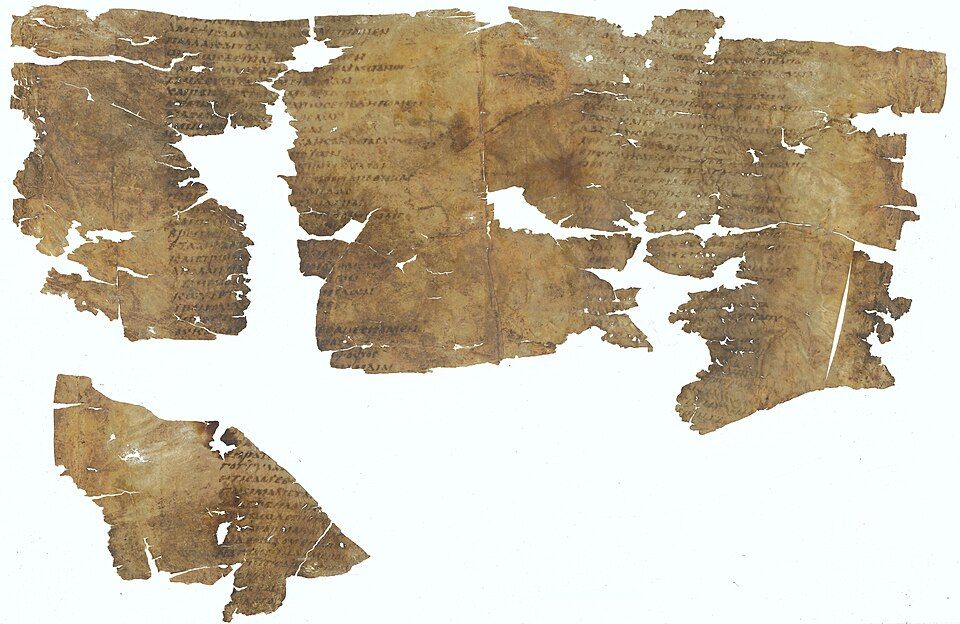
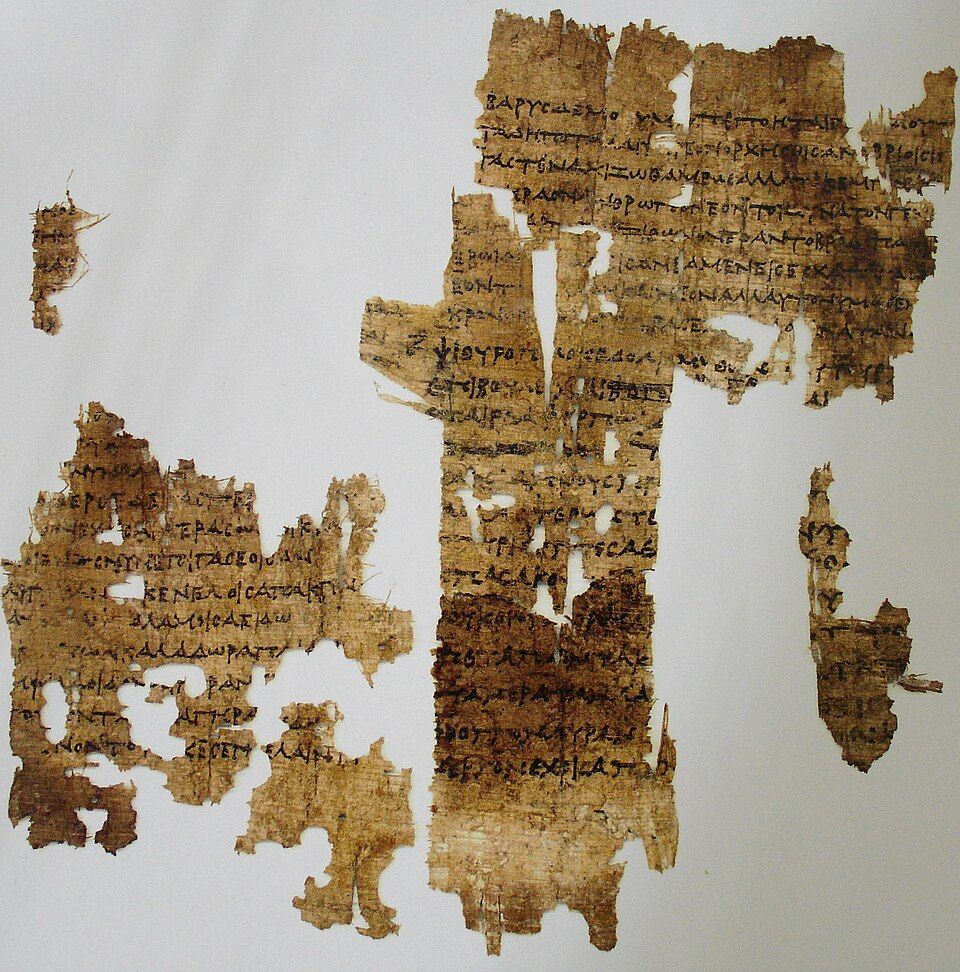
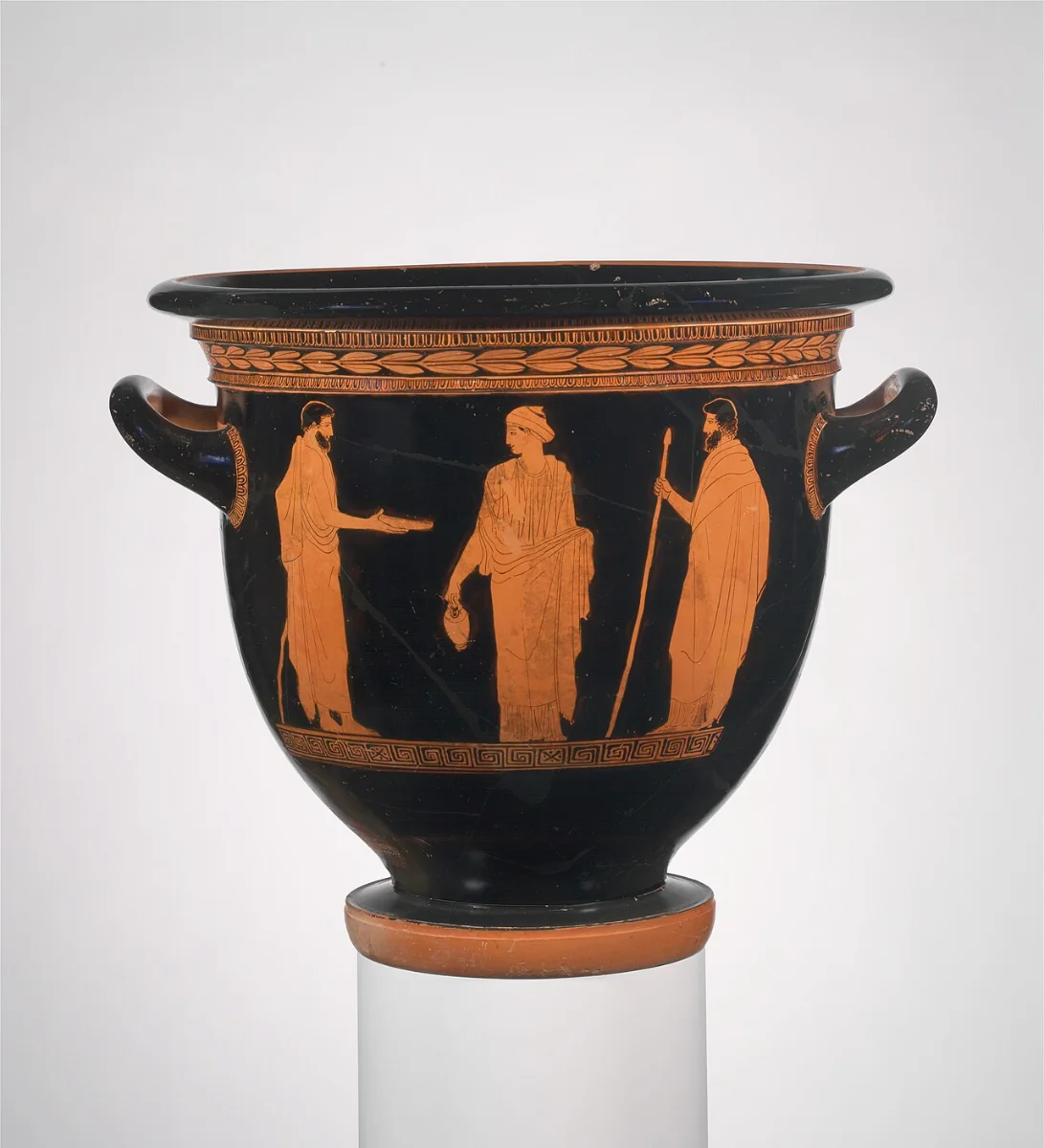
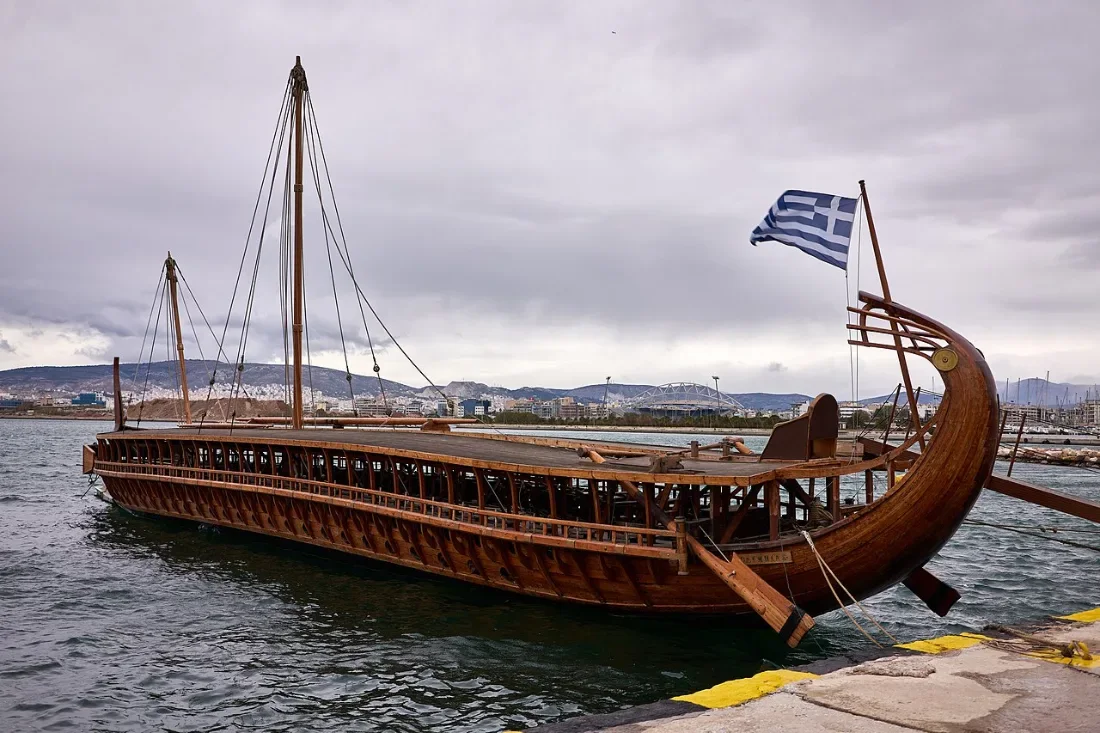
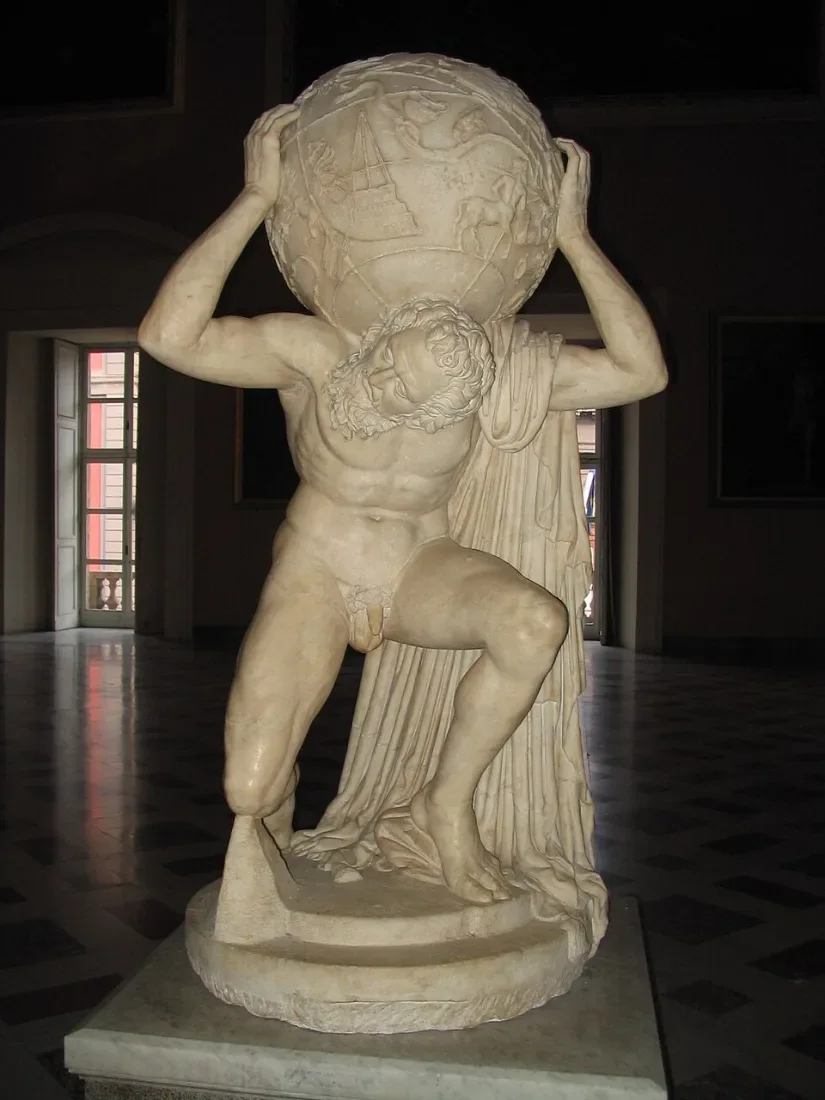
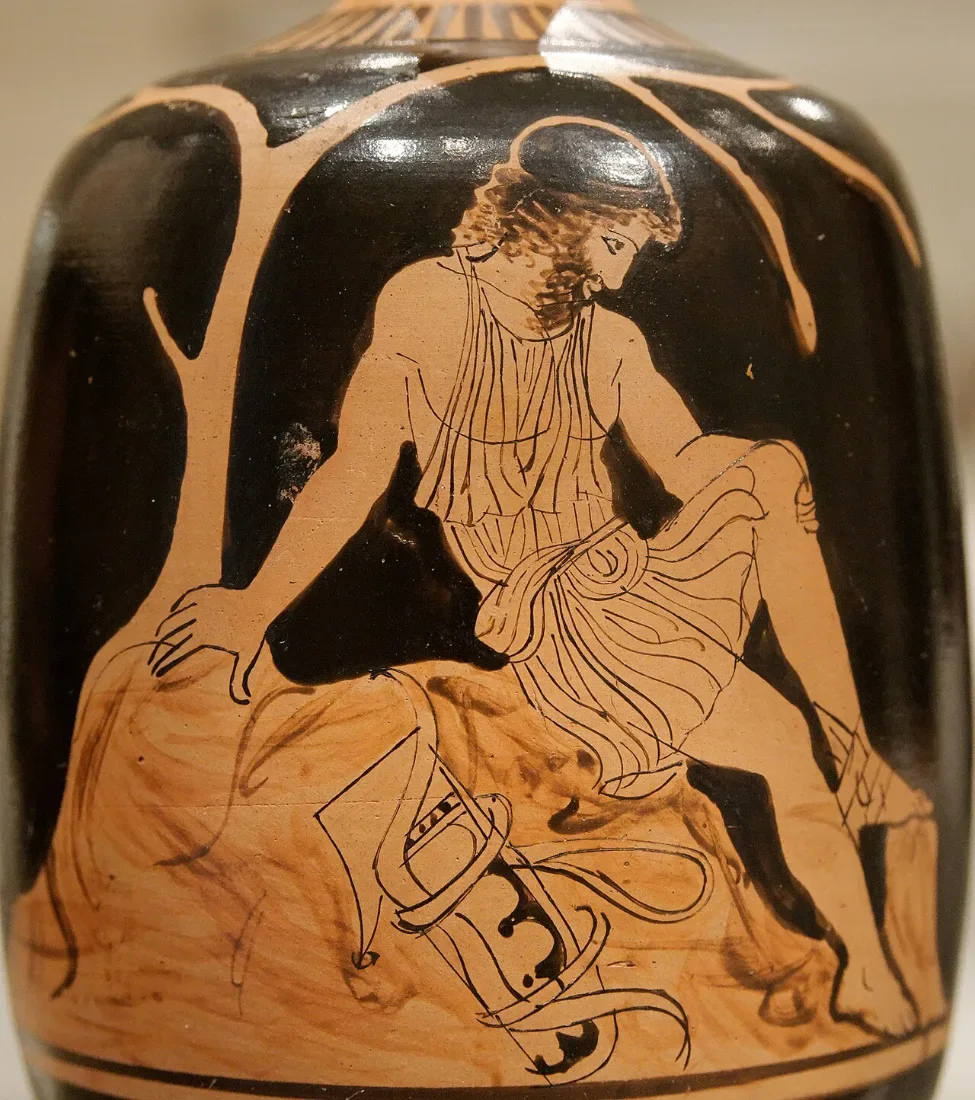
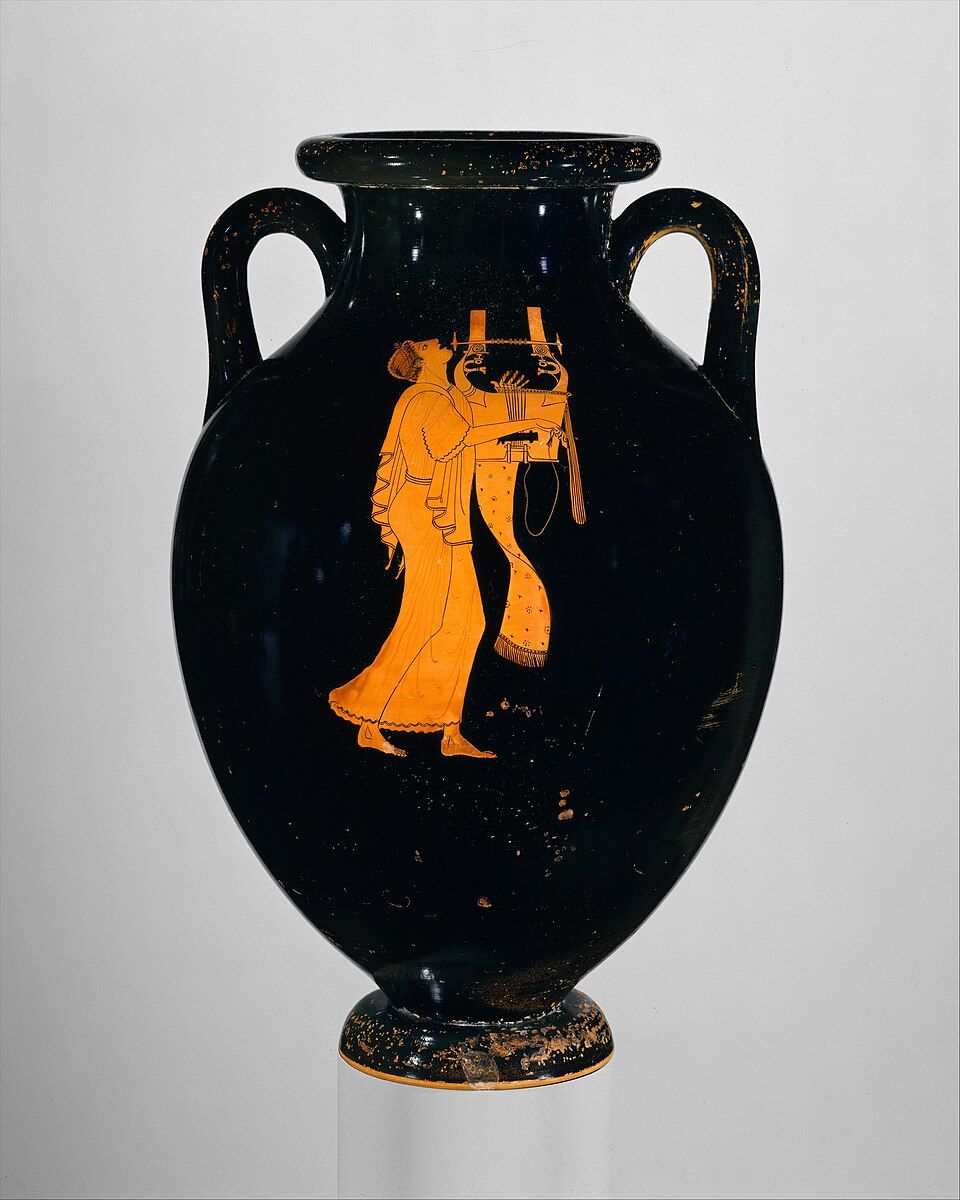
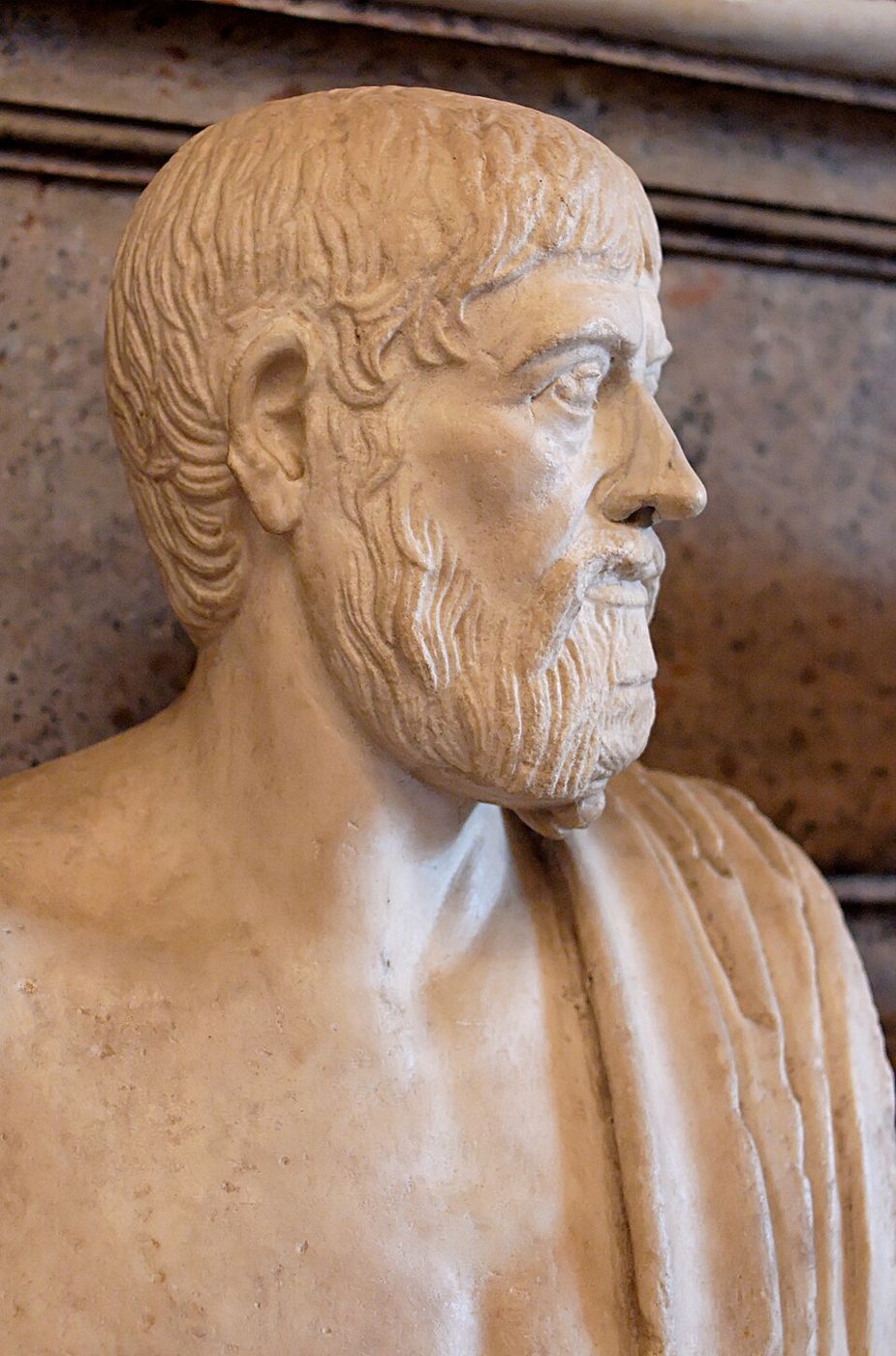
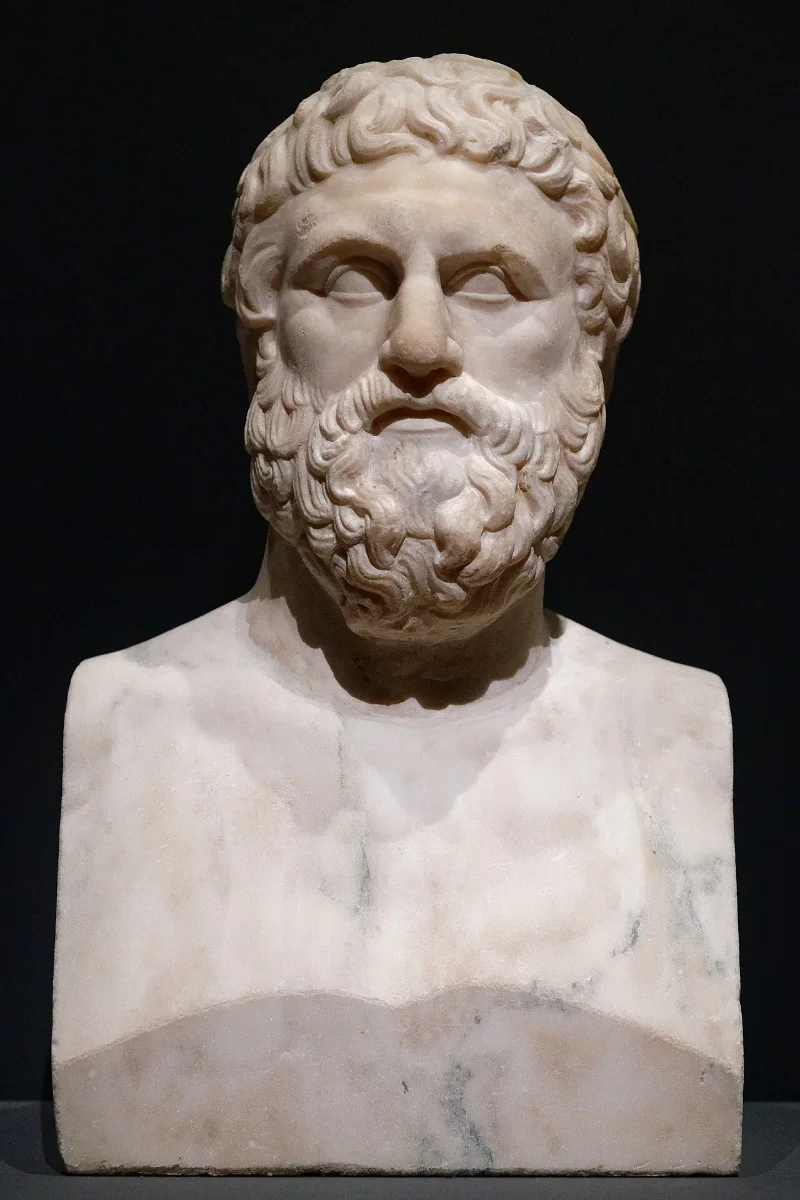
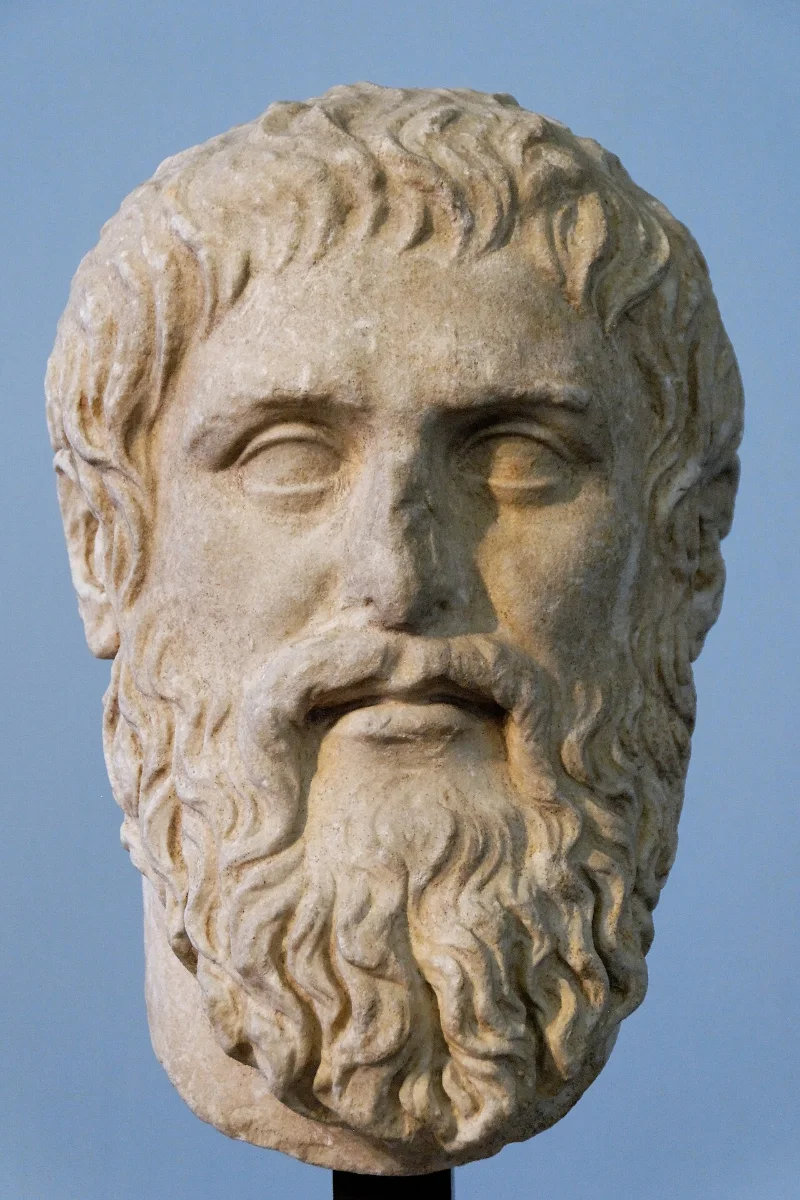
Q
- quantitytermalso syllable quantity, length, weight, syllable weight
The length of a syllable, long or short, on which Greek verse is built, rather than on stress; a long syllable normally takes the time of two shorts in song. Example: μῆνιν ἄειδε (mēnin aeide), “sing the wrath”, Iliad 1.1, scans — ⏑ ⏑ — ⏑ ⏑: μῆ- is long, -νιν and ἀ- short.
Source: West 1987, pp. 6–7, 10, 13
See: Introduction to Greek metre › Quantity · First steps › 3. Long or short?
On this site: 267 places on 61 pages
- QuintilianRoman writer
Roman critic who says that “revised” versions of Aeschylus’ plays won prizes.
See: Aeschylus › Life
On this site: 6 places on 5 pages
R
- rsiglum
Siglum for the reizianum (Lourenço: reiz), × — ⏑ ⏑ — ×. See reizianum.
Source: West 1987, p. x; Lourenço 2011, p. 15
On this site: 8 places on 5 pages
- Ravenna Aristophanesmanuscriptalso Ravennas
The tenth-century manuscript in Ravenna, the oldest complete copy of Aristophanes’ eleven comedies.
Source: Reynolds and Wilson 1991, p. 66
See: How the texts reached us › Byzantium · Aristophanes › Manuscripts
On this site: 2 places on 2 pages
- recessive accenttermalso barytonesis
An accent drawn back as far from the end of the word as the rules allow; a feature of Lesbian Aeolic, in which no word is oxytone. In every dialect the finite verb is recessive.
Source: Tribulato 2021, pp. 136–138, 143–144; Sampson 2022, p. 93; Probert 2006, pp. 86–87
See: Lesbian Aeolic › Features · Overview › Papyri and metrical evidence · Accent and morae › Verbs
On this site: 19 places on 6 pages
- recitative παρακαταλογή (parakatalogē)termalso parakataloge, parakatalogē
Delivery between speech and song, with instrumental accompaniment (παρακαταλογή, parakatalogē); in drama it belongs to stichic metres and long uniform runs such as marching anapaests. Battezzato notes that we do not know whether it was a special chant.
Source: West 1987, p. 48; Battezzato 2005, p. 151
See: Introduction to Greek metre › Speech and song · Introduction to Greek metre › Glossary
On this site: 21 places on 13 pages
- reizianumtermalso reizianum, reiz
The short aeolic colon × — ⏑ ⏑ — × (siglum r), the catalectic telesillean.
Source: West 1987, pp. x, 33
See: Introduction to Greek metre › Glossary
On this site: 25 places on 11 pages
- Republic (Plato)dialogue
Plato’s dialogue, used by Devine and Stephens as a test of rules for the accent in prose.
See: Accent: pitch or stress? › Stress
On this site: 5 places on 4 pages
- resolutiontermalso resolved, resolutions
Two short syllables filling a long position (⏖), allowed anywhere except in the last princeps of a period; frequent in Euripides’ later trimeters and in dochmiacs.
Source: West 1987, p. 6; Battezzato 2009, p. 131; D’Angour 2022, p. 133
See: Introduction to Greek metre › Glossary
On this site: 271 places on 51 pages
- responsiontermalso correspond, irregular responsion
The metrical correspondence of antistrophe to strophe, syllable for syllable, allowing for anceps, final positions, resolution and contraction; marked ~. Where it is inexact, scholars speak of irregular responsion. Example: Agamemnon 1136–45 ~ 1146–55.
Source: West 1987, pp. 4, 37, 44, 89; Battezzato 2009, p. 132
See: Introduction to Greek metre › Stanzas and responsion · Introduction to Greek metre › Glossary
On this site: 98 places on 27 pages
- Reuchlinian pronunciationtermalso Reuchlinian, Byzantine pronunciation
The Renaissance name, after Erasmus’ opponent Reuchlin, for the Byzantine pronunciation that the Greek refugees taught, essentially Modern Greek: fricatives, itacism, no vowel length, a stress on the written accent.
Source: Allen 1968, pp. 125, 130 n. 2; Ranieri 2021, p. 3
See: Pronunciation systems › Byzantine and Modern · Pronunciation systems › Erasmian
On this site: 3 places on 2 pages
- Rheagoddessalso Cronus
Mother of Zeus by Cronus; Callimachus’ Hymn to Zeus tells how she bore him in Parrhasia.
See: Callimachus, Theocritus and Hellenistic poets › Callimachus, Hymn to Zeus · Hesiod › Metres
On this site: 38 places on 11 pages
- Rhegiumplace
Greek city in southern Italy, home of Ibycus.
See: Stesichorus and Ibycus › Ibycus
On this site: 7 places on 3 pages
- Rhesustragedy
A tragedy transmitted under Euripides’ name whose authorship is disputed: probably a fourth-century play for Easterling and Cropp.
Source: Easterling 1997, p. 211 n. 2; Cropp 2005, pp. 288, 292
See: Euripides › Plays and dates
On this site: 13 places on 5 pages
- Rhetoric (Aristotle)treatise
Aristotle’s treatise on rhetoric, which describes the accent as melodic.
See: Accent: pitch or stress? › Evidence
On this site: 10 places on 8 pages
- Rhinthonplaywright
Writer of farcical tragedies (phlyakes) at Syracuse, whose epitaph by Nossis dates her.
See: Nossis › Life
On this site: 4 places on 2 pages
- Romeplace
The city hailed in Melinno’s hymn as daughter of Ares.
On this site: 112 places on 41 pages
S
- Sabinaempress
Hadrian’s empress, whose companion Julia Balbilla was.
See: Julia Balbilla › Life · Julia Balbilla › Inscription 30
On this site: 4 places on 2 pages
- Salamisplace
Island off Athens, scene of the sea battle on which Aeschylus’ Persians draws; the subject of Solon’s elegy.
See: Aeschylus › Plays and dates
On this site: 13 places on 9 pages
- Salamis (Solon)elegy
Solon’s elegy urging the Athenians to fight for Salamis.
- salpinx σάλπιγξ (salpinx)termalso trumpet
The straight bronze trumpet, used for signals in war, assembly and games rather than for music; the Greeks thought it Etruscan.
Source: West 1992, pp. 118–121
See: Instruments › Panpipe, trumpet, harps
On this site: 2 places on 2 pages
- Samosplace
Island of Polycrates’ court, where Anacreon and Ibycus sang.
See: Anacreon › Life · Stesichorus and Ibycus › Ibycus
On this site: 15 places on 5 pages
- Sapphic stanzatermalso Sapphic strophe, Sapphics, Sapphic
Sappho’s stanza of three periods: two eleven-syllable lines and a longer third period that runs on into the closing adonean (written as lines 3 and 4); used by Alcaeus too and, much later, by Melinno.
Source: West 1987, p. 34; Battezzato 2021, pp. 126–129
See: Aeolic › Lesbian stanzas · Sappho › Metres
On this site: 32 places on 12 pages
- Sappho Σαπφώ (Sapphō)poetalso Psappho
Lyric poet of Lesbos, c. 600 BC, in the Lesbian dialect: the Sapphic stanza, wedding songs and cult hymns, collected by the Alexandrians in books (nine, say the Suda and an epigram) and known today from quotations and papyri.
Source: Kivilo 2021, p. 20; Prauscello 2021, pp. 219–224
See: Sappho › Life · Sappho › Books
On this site: 196 places on 53 pages
- Sappho fr. 16lyric poem
Sappho’s poem “Some say a host of horsemen …”, on what is most beautiful, in Sapphic stanzas, mostly from P.Oxy. 1231.
See: Sappho › Fr. 16 (Οἰ μὲν ἰππήων…) · How the texts reached us › Discoveries
On this site: 15 places on 8 pages
- Sappho fr. 31lyric poemalso Φαίνεταί μοι, phainetai moi
Sappho’s poem “He seems to me equal to the gods”, in Sapphic stanzas, quoted by the treatise On the Sublime.
See: Sappho › Fr. 31 (Φαίνεταί μοι…) · How the texts reached us › Poet by poet
On this site: 7 places on 4 pages
- Sappho fr. 44lyric poemalso Wedding of Hector and Andromache
Sappho’s narrative of the wedding of Hector and Andromache, in gl²ᵈ with epic colouring, from P.Oxy. 1232; whether it belonged to Book 2 is disputed.
Source: de Kreij 2022, pp. 603–625
See: Sappho › Fr. 44 (Ἔκτωρ καὶ συνέταιροι…) · Sappho › Books
On this site: 16 places on 9 pages
- Saqqaraplace
Egyptian necropolis where Alcman’s partheneion was found in 1855.
See: How the texts reached us › Discoveries
On this site: 1 place
- Sardisplace
Capital of Lydia, whose fall Bacchylides’ Ode 3 tells.
See: Bacchylides › Ode 3
On this site: 4 places on 4 pages
- satyr playtermalso satyr-play, satyr plays
The comic play with a chorus of satyrs that followed a tragic trilogy; its trimeters are slightly laxer than tragedy’s (Porson’s Law).
See: Attic of drama › Spoken verse · Aeschylus › Plays and dates
On this site: 26 places on 9 pages
- scansiontermalso scan, scanned, scanning
The long and short syllables of a particular line, worked out and written down, showing how its words fill the positions of the metre’s scheme; West distinguishes this scansion of an actual verse from the abstract scheme. Example: Iliad 1.1 μῆ-νιν ἄ-ει-δε θε-ὰ Πη-λη-ϊ-ά-δεω Ἀ-χι-λῆ-ος scans — ⏑ ⏑ — ⏑ ⏑ — — — ⏑ ⏑ — ⏑ ⏑ — ×.
Source: West 1987, pp. 5, 12
See: First steps › 3. Long or short?
On this site: 329 places on 57 pages
- scheme (metre)termalso metrical scheme, scheme (pattern)
The shape of a metre written in signs, one sign for each position. A scheme gives the pattern before words are fitted to it; a scansion shows the syllables of a particular line.
See: First steps › 2. The signs
On this site: 46 places on 23 pages
- scholia σχόλια (scholia)termalso scholion, scholiast
Notes written in the margins of medieval manuscripts, descended from ancient commentaries such as those of the Alexandrian scholars; Heliodorus’ commentary on Aristophanes’ metres survives partly in them.
Source: Phillips 2022, p. 120; Reynolds and Wilson 1991, pp. 45, 77
See: How the texts reached us › Byzantium · Overview › Editions and orthography
On this site: 48 places on 25 pages
- Scopaspatron
Thessalian noble to whom Simonides addressed the song on goodness quoted in Plato’s Protagoras.
See: Simonides › Life · Simonides › Poems
On this site: 4 places on 2 pages
- score (music)termalso musical score, notated score
A written record of music. In an ancient Greek vocal score, note-signs stand above the syllables, with additional signs for rhythm where needed.
Source: Pöhlmann and West 2001, p. 7
See: Overview › What survives · Overview › Reading an edition
On this site: 5 places on 4 pages
- Seikilos epitaphinscriptionalso Song of Seikilos, Seikilos stele
A short song inscribed with musical notation on a gravestone, perhaps of the first century AD; one of the few post-classical pieces with syncopation, and a test case for accent and melody.
Source: West 1987, p. 71; Cosgrove and Meyer 2006, pp. 68, 73–75
See: Introduction to Greek metre › Rhythm and music · Accent: pitch or stress? › Melody · Notation › Seikilos sign by sign
On this site: 30 places on 14 pages
- Seleucusancient critic
Ancient critic who, like Aristarchus, condemned the end of the Theogony’s invocation (114–115).
Source: Most 2018, pp. 10–11
See: Hesiod › Theogony · 104–115 (the invocation)
On this site: 1 place
- Semeleheroine
Mother of Dionysus, in the Bacchae and the Dionysiaca.
See: Euripides › Bacchae · 1–42 (prologue) · Nonnus › Nonnus
On this site: 18 places on 8 pages
- semitone ἡμιτόνιον (hēmitonion)termalso semitones, hēmitonion, half-tone
A step of about half a tone; the Greeks called any such step hēmitonion. The Pythagorean semitone, the leimma (256:243, 90 cents), is what remains when two true tones are taken from a fourth, and is smaller than a true half-tone.
Source: Landels 1999, c. p. 90; West 1992, pp. 10–12; Nowacki 2020, p. 173
See: Music theory › Tone and semitone
On this site: 25 places on 9 pages
- semivoweltermalso semivowels, semi-vowel
A sound between a vowel and a consonant: ι and υ used as the consonants [j] and [w] (the y of yes, the w of wet), and the old ϝ [w]. The grammarians’ wider use also counts λ μ ν ρ and σ. Example: Homer’s Αἰγυπτίας (Aigyptias) “Egyptian”, scanned — — —, with its second ι said as the consonant [j].
Source: West 1987, pp. 11, 15; Smyth 1920, p. 11 (§ 20); Allen 1968, pp. 1, 49
See: Sounds › IPA chart
On this site: 2 places on 2 pages
- Semonidespoetalso Semonides of Amorgos
Iambic poet of Amorgos, probably seventh century BC, whose fr. 7 derives types of women from animals; not to be confused with Simonides.
Source: Carey 2009, pp. 160–161; Lennartz 2022, p. 214
See: Hipponax, Semonides and the iambographers › Life · Hipponax, Semonides and the iambographers › Poetry
On this site: 15 places on 10 pages
- -sēmostermalso -semos, sēmos
“Of … time-units”: a suffix in the names of musical durations. A tetrasēmos measure lasts four units, a hexasēmos six, a dōdekasēmos twelve and an oktōkaidekasēmos eighteen.
Source: Pöhlmann and West 2001, pp. 116–119
See: Overview › The Bellermann exercises
On this site: 1 place
- Seven against Thebestragedyalso Seven
Aeschylus’ tragedy of 467 BC, third play of a Theban trilogy; its ending (1005–1078) is thought spurious by many.
Source: Easterling 1997, p. 352; Saïd 2005, p. 216
See: Aeschylus › Plays and dates
On this site: 9 places on 5 pages
- SHabbreviationalso Supplementum Hellenisticum
Supplementum Hellenisticum, the collection of Hellenistic poetic fragments by which pieces such as Boiscus’ octameter and Melinno’s hymn are numbered.
Source: West 1987, p. 76
See: Callimachus, Theocritus and Hellenistic poets › Transmission
On this site: 6 places on 3 pages
- sibilanttermalso sibilants
A hissing fricative such as [s] or [z]. In Greek it is σ (ς), the only fricative of classical Attic, which Dionysius of Halicarnassus describes as a hiss (σύριγμα, syrigma); it was voiced [z] before β γ δ μ, and the s-sound recurs in ζ [zd], ξ [ks] and ψ [ps]. Example: σ in σοφός (sophos) “wise” [s]; in κόσμος (kosmos) “order” [z], as in English cosmic.
Source: Smyth 1920, p. 11 (§ 17); Allen 1968, pp. 43–44, 53–57
See: Sounds › Consonants
On this site: 3 places on 2 pages
- Sicilyplace
Island of the western Greeks; Stesichorus is associated with Himera, and the tyrants of Syracuse and Acragas were patrons of Pindar, Bacchylides and Aeschylus.
See: Stesichorus and Ibycus › Stesichorus · Aeschylus › Life
On this site: 22 places on 14 pages
- Sicyonplace
City in the Peloponnese north-west of Corinth, Praxilla’s home.
See: Praxilla › Life
On this site: 4 places
- Simmias of Rhodespoet
Hellenistic poet who, Hephaestion says, used the choriambic hexameter before Philicus.
Source: Hephaestion, Ench. 9.4
See: Callimachus, Theocritus and Hellenistic poets › Life
On this site: 1 place
- Simonides Σιμωνίδης (Simōnidēs)poet
Professional poet of Ceos, by ancient tradition a generation older than Pindar and Bacchylides, who wrote Doric song and Ionic elegy; his dactylo-epitrite and iambic strophes head the tradition Pindar and Bacchylides perfected, and many epigrams were attributed to him.
Source: Rawles 2022, p. 317
See: Simonides › Life · Simonides › Metres
On this site: 87 places on 29 pages
- Sirensmythical beings
Winged singers carved on Baucis’ tombstone in Erinna’s epigram.
On this site: 2 places on 2 pages
- skolion σκόλιον (skolion)termalso skolia, drinking-song, drinking songs
A drinking song sung in turn at a symposium; songs of Alcaeus and Anacreon came to be sung as skolia, and Praxilla’s were famous. Athenaeus explains the name, “crooked”, from guests singing in no fixed order; West notes that the word names no form of composition, only a song or excerpt performed after dinner.
Source: Yatromanolakis 2009, pp. 213–214; Natoli et al. 2022, p. 177; West 1987, p. 42 n. 6
See: Alcaeus › Songs · Praxilla › Praxilleia and skolion · Praxilla › Attic skolia (anonymous)
On this site: 22 places on 11 pages
- Smyrneiselegy
Mimnermus’ long narrative elegy on the history of Smyrna.
On this site: 1 place
- Snell–Maehleredition
The modern standard text of Bacchylides, by B. Snell and H. Maehler, as printed in Campbell’s Loeb; in Ode 13 it fills several gaps in the papyrus differently from Jebb, all within the same scheme.
Source: Campbell 1992, pp. 192–195
See: Bacchylides › Ode 13
On this site: 4 places on 3 pages
- Socratesphilosopher
Athenian philosopher, a character in Plato’s dialogues (the Cratylus gives the first reference to the accent) and in Aristophanes’ Clouds.
See: Accent: pitch or stress? › Evidence · Aristophanes › Plays and dates
On this site: 12 places on 7 pages
- Soliplace
Aratus’ city (Callimachus calls him “the man from Soli”); also the city of Philocyprus, Solon’s host, for whom Solon wrote a departure-song.
See: Callimachus, Theocritus and Hellenistic poets › Aratus, Phaenomena · Callimachus, Ep. 27 (on Aratus)
On this site: 3 places
- Solon Σόλων (Solōn)poet
Athenian statesman and poet (c. 630–560 BC; archon probably 594/3) who wrote elegiacs, iambic trimeters and trochaic tetrameters, many defending his reforms.
Source: Aloni 2009, p. 172; Bowie 2022, pp. 303–316
See: The elegists: Callinus, Tyrtaeus, Mimnermus, Solon, Theognis, Xenophanes › Solon · fr. 4.11–39 (Eunomia) · Hipponax, Semonides and the iambographers › Solon · trimeters (fr. 36)
On this site: 38 places on 20 pages
- Sophocles Σοφοκλῆς (Sophoklēs)playwright
Athenian tragedian, with seven plays and the papyrus Ichneutae surviving: strict trimeters, lyrics that favour aeolic cola with choriambic expansion.
See: Sophocles › Life · Sophocles › Plays and dates
On this site: 93 places on 35 pages
- sotadeantermalso sotadeans
A catalectic tetrameter of ionics in broken-up form, named after Sotades, used for popular, often bawdy entertainment and for moralising verse.
Source: West 1987, p. 74
See: Callimachus, Theocritus and Hellenistic poets › Metres · Ionic › Later ionic
On this site: 6 places on 4 pages
- Sotadespoet
Poet of the early third century BC who gave his name to the sotadean.
Source: West 1987, p. 74
See: Callimachus, Theocritus and Hellenistic poets › Life
On this site: 4 places on 3 pages
- Spartaplace
City of Laconia, home of Alcman’s maiden-songs and of Tyrtaeus’ elegy, where choral song first flourished; Bacchylides 20 was sung by Spartan girls.
See: Alcman › Life · Doric of choral lyric › Features
On this site: 36 places on 17 pages
- split anapaesttermalso split anapaests
An anapaestic foot in the iambic trimeter that a word-break divides after its first short; New Comedy avoids it. Example: τοῖς πέντε ταλάντοις (tois pente talantois), “those five talents”, Aristophanes, Acharnians 6: the anapaest is -τε τα-λάν-, and πέντε ends after its first short.
Source: West 1987, pp. 26, 29
See: Attic of drama › Spoken verse
On this site: 9 places on 6 pages
- spondee σπονδεῖος (spondeios)termalso spondees, spondaic, spondeiazon
Two longs, — —; the name comes from the libation (σπονδή, spondē) hymns sung all in long syllables. A spondaic (σπονδειάζων, spondeiazōn) hexameter has a spondee in the fifth foot, usually filled by a four-syllable word; West says some Alexandrian poets favoured it, and Aratus’ proem has four in eighteen lines.
Source: West 1987, pp. 39, 78, 89; Battezzato 2009, p. 131
See: Introduction to Greek metre › Glossary · Callimachus, Theocritus and Hellenistic poets › Aratus, Phaenomena · 1–18 (proem to Zeus)
On this site: 240 places on 49 pages
- spurious diphthongtermalso spurious diphthongs
The grammars’ name for ει and ου when they stand for a long vowel made by contraction or compensatory lengthening rather than an old diphthong. Allen calls it a misnomer: in classical Attic both kinds were single long vowels, written alike.
Source: Allen 1968, pp. 67–68, 72–73
See: Sounds › Vowels
On this site: 2 places on 2 pages
- stadioncontest
A foot-race of the games; the scholia give the boys’ stadion as the event of Pindar’s Olympian 14.
Source: Race 1997a, p. 209
See: Pindar › Olympian 14
On this site: 1 place
- standing and moving notes φθόγγοι κινούμενοι (phthongoi kinoumenoi)termalso standing notes, moving notes, fixed notes, movable notes, phthongoi kinoumenoi
The outer notes of a tetrachord, a fourth apart, stand still in every genus; the two inner, moving notes take different places in the diatonic, chromatic and enharmonic.
Source: West 1992, p. 162; Landels 1999, c. p. 90; Nowacki 2020, p. 175
See: Music theory › Tetrachord
On this site: 6 places on 3 pages
- stasimon στάσιμον (stasimon)termalso stasima
A choral song performed between episodes of a tragedy, usually in strophic pairs.
Source: Swift 2022, pp. 378–380
See: Sophocles › Chorus and song · Euripides › Chorus
On this site: 20 places on 5 pages
- StatiusRoman poet
Roman poet who calls Corinna’s poetry tenuis (Silvae 5.3.158).
On this site: 4 places on 3 pages
- stele στήλη (stēlē)termalso stelae, stēlē
An upright inscribed stone. The one complete ancient Greek song, the Seikilos epitaph, is cut on a small marble column of this kind from Aidin near Tralles, now in Copenhagen (inv. 14897); grave reliefs such as the stele of Hegeso are stelae too.
Source: West 1992, p. 280; Pöhlmann and West 2001, pp. 88–90
See: Notation › Seikilos sign by sign
On this site: 1 place
- stemmatermalso stemma codicum, archetype
A family tree of the manuscripts of a text, showing which were copied from which, back to a lost archetype; the method was formulated in the nineteenth century (Lachmann) and stated classically by Paul Maas.
Source: Reynolds and Wilson 1991, pp. 209–211
On this site: 3 places on 3 pages
- Stesichorus Στησίχορος (Stēsichoros)poet
Sixth-century western Greek poet (Metaurus, Himera) who told epic stories (Geryoneis, Sack of Troy, Oresteia) in long dactylic triads; much recovered from papyri since 1956.
See: Stesichorus and Ibycus › Stesichorus · Stesichorus and Ibycus › Stesichorus' metres · Stesichorus and Ibycus › Geryoneis
On this site: 53 places on 20 pages
- stichictermalso kata stichon, κατὰ στίχον
Written line by line in one repeated verse, without stanzas, like the hexameter or the trimeter (κατὰ στίχον, kata stichon, “line by line”).
Source: West 1987, p. 19; Battezzato 2009, p. 132
See: Introduction to Greek metre › Stanzas and responsion · Introduction to Greek metre › Glossary
On this site: 41 places on 27 pages
- stichomythiatermalso antilabe
Dialogue in alternate single lines; antilabe is a single line divided between speakers, as in the exchange that forces the truth from the herdsman in the Oedipus Tyrannus.
Source: Halleran 2005, p. 169
See: Sophocles › Metres: spoken
On this site: 4 places on 2 pages
- stigmē στιγμή (stigmē)termalso stigme, stigmai, arsis point, point
The point written above a note in a score to mark the arsis, the up-beat; the thesis goes unpointed. The Seikilos stone and the Orestes papyrus carry them, the Delphic paeans do not.
Source: West 1992, p. 268; Pöhlmann and West 2001, pp. 15, 90
See: Notation › Rhythmic signs · Rhythm › Arsis and thesis
On this site: 8 places on 7 pages
- Stobaeusanthologist
Fifth-century AD compiler of an anthology of excerpts, which alone preserves Melinno’s hymn and many lines of elegy and iambus.
Source: Natoli et al. 2022, p. 193
See: Melinno › Life · The elegists: Callinus, Tyrtaeus, Mimnermus, Solon, Theognis, Xenophanes › Transmission
On this site: 11 places on 8 pages
- stop ἄφωνα (aphōna)termalso plosive, mute, stop consonant
A consonant made by closing the mouth completely for a moment, so that the breath is stopped and then released; also called a plosive or a mute (the ancient grammarians’ ἄφωνα, aphōna). Greek had nine: π β φ at the lips, τ δ θ at the teeth, κ γ χ at the soft palate, in three orders: plain voiceless π τ κ, voiced β δ γ, aspirated φ θ χ. Example: the three stops made at the lips in πόρος (poros) “passage”, βίος (bios) “life”, φόρος (phoros) “tribute”: [p b pʰ].
Source: West 1987, p. 11; Smyth 1920, p. 11 (§ 16); Allen 1968, pp. 12, 16–17, 28
See: Sounds › Consonants · Introduction to Greek metre › Prosody: consonants
On this site: 234 places on 47 pages
- stop + liquidtermalso muta cum liquida, plosive + liquid, mute and liquid
A stop consonant followed by λ, ρ (or a nasal), as in πατρός (patros, “of a father”), whose first syllable πα- can therefore scan either way; such a group may leave a preceding short vowel short or make it long, and the poets and dialects differ in how they treat it (Lesbian always long; Attic speech short).
Source: West 1987, pp. 16–17 with n. 7, 27
See: Introduction to Greek metre › Prosody: consonants · Overview › How dialect affects metre
On this site: 238 places on 49 pages
- Strabowriter
Geographer cited for the lives of Anacreon, Archilochus, Alcaeus and Tyrtaeus.
See: Anacreon › Life
On this site: 6 places on 5 pages
- stress accenttermalso stress
An accent carried by loudness and length; Greek developed one as vowel quantity was lost, so that by about the third century AD quantitative verse had become an artificial exercise and accentual verse appears.
Source: West 1987, pp. 68–69; Devine and Stephens 1994, p. 215
See: Accent: pitch or stress? › Stress
On this site: 18 places on 12 pages
- strophe στροφή (strophē)termalso stanza, strophes, stanzas, strophic
A structure of one or more periods repeated in the same shape (end marked |||); in choral lyric and drama it is answered by an antistrophe. Example: the Sapphic stanza, three hendecasyllables and an adonean, repeated seven times in Sappho 1.
Source: West 1987, p. 4; Battezzato 2009, p. 132
See: Introduction to Greek metre › Stanzas and responsion · Introduction to Greek metre › Glossary
On this site: 222 places on 53 pages
- Sudalexicon
The tenth-century Byzantine encyclopaedic lexicon, a main source for the lives of the poets, often unreliable.
Source: Kivilo 2021, p. 11
See: Sappho › Life · Corinna › Life
On this site: 31 places on 18 pages
- Suppliant Maidenstragedyalso Suppliants, Suppliant Women (Aeschylus)
Aeschylus’ tragedy of the Danaids, once thought the earliest surviving tragedy; a papyrus (P.Oxy. 2256 fr. 3) showed it was produced against Sophocles in the 460s.
Source: Easterling 1997, pp. 151, 352; Saïd 2005, p. 216
See: Aeschylus › Plays and dates
On this site: 1 place
- syllableterm
A unit of speech built around one vowel sound. Greek metre counts syllables and measures their quantity.
Source: Allen 1968, pp. 1, 97–98
See: First steps › 1. Rhythm · First steps › From sounds to syllables
On this site: 415 places on 73 pages
- syllable divisiontermalso syllabification
Where one syllable ends and the next begins. In Greek verse a single consonant between two vowels goes with the second (λέ-γω), and of two or more consonants at least the first goes with the syllable before (λεκ-τός, ἄλ-λος); inside a period the ends of words are ignored. Example: Iliad 1.1 μῆνιν ἄειδε (mēnin aeide) divides μῆ-νι-νἄ-ει-δε, so the ν of μῆνιν begins the next syllable and νι is open.
Source: Allen 1968, p. 98; West 1987, p. 12; Smyth 1920, p. 35 (§ 140)
See: Sounds › Syllables and quantity · Introduction to Greek metre › Quantity
On this site: 27 places on 13 pages
- symposium συμπόσιον (symposion)termalso symposia, sympotic
The drinking party at which monody, elegy, iambus and skolia were performed; the Hellenistic court symposium was one setting of learned poetry.
Source: Yatromanolakis 2009, pp. 213–214; Barbantani 2009, p. 310
See: The elegists: Callinus, Tyrtaeus, Mimnermus, Solon, Theognis, Xenophanes › Elegy and its poets · Alcaeus › Songs
On this site: 57 places on 19 pages
- Symposium (Plato)dialogue
Plato’s dialogue, at whose end Socrates argues that one poet could write both tragedy and comedy.
See: Aristophanes › Life
On this site: 1 place
- synapheia συνάφεια (synapheia)term
The unbroken metrical and prosodic connection of everything within a period, so that word-ends inside it behave like word-ends inside a line; where a period runs over more than one written line, synapheia continues across the line-break. Example: Sappho 1.11–12, where the word αἴθερος (aitheros) begins in one line and ends in the next.
Source: West 1987, pp. 3, 34; D’Angour 2022, p. 136
See: Introduction to Greek metre › Feet, metra, cola, periods · Introduction to Greek metre › Glossary
On this site: 91 places on 27 pages
- synartesisterm
Running one colon on into the next without a word-break between them.
Source: West 1987, p. 90
See: Introduction to Greek metre › Glossary
On this site: 6 places on 2 pages
- syncopationtermalso syncopated
In Greek metre, a metron with a position suppressed and its time added to a neighbouring long, which becomes a triseme (e.g. ∧ia ⌊ ⏑ —); different from musical syncopation, which is closer to anaclasis.
Source: West 1987, pp. 7–8, 52, 90; Kiparsky 2018, p. 97
See: Iambic › Tragedy and comedy
On this site: 50 places on 24 pages
- synecphonesistermalso synaloepha
Two neighbouring vowels pronounced as one syllable; called synizesis especially within a word (θεός, theos, as one syllable), crasis when the spelling shows the merger.
Source: West 1987, pp. 14–15, 86; Battezzato 2009, p. 139 n. 14; Hephaestion, Ench. 2.1
See: Introduction to Greek metre › Prosody: vowels · Introduction to Greek metre › Glossary
On this site: 62 places on 31 pages
- synizesis συνίζησις (synizēsis)termalso synizeses
Two neighbouring vowels in one word, or across two words, said as one syllable though both are written (συνίζησις, synizēsis, “settling together”); one kind of synecphonesis. It is commonest when the first vowel is ε. Example: θεός (theos) “god” as one long syllable; Iliad 1.1 Πηληϊάδεω (Pēlēïadeō), whose -εω is one syllable.
Source: West 1987, pp. 14–15; Smyth 1920, p. 21 (§§ 60–61); Allen 1968, p. 93
See: Introduction to Greek metre › Prosody: vowels
On this site: 110 places on 24 pages
- synthetictermalso synthetic clip, synthetic audio
A sound made by a computer for this site rather than recorded from a speaker. The Phonology section marks every such clip ∿ and names the program, so that it is never mistaken for a real voice. The programs are espeak-ng, with Praat for the pitch contour; piper-tts’s Modern Greek voice; and Praat alone, which can move the vowel quality of a recording (the Lucian mid vowels). Vowel clips cut to a short or a long length from a Wikimedia Commons recording, and diphthongs made by joining two such recordings, are not synthetic and are not marked. Their source line says what was done.
Source: metrehelp.org, Phonology section
See: Pronunciation systems › Comparison · Sounds › IPA chart
On this site: 2 places on 2 pages
- Syracuseplace
Sicilian city of Hieron, patron of Pindar, Bacchylides and Aeschylus.
See: Bacchylides › Life and works · Aeschylus › Life
On this site: 19 places on 10 pages
- syrinx σῦριγξ (sȳrinx)termalso panpipe, panpipes
The panpipe, a row of stopped tubes blown across: the herdsman’s instrument and Pan’s, high in pitch and with almost no part in Athenian life; also the name of a pitch-bending device on the aulos.
Source: West 1992, pp. 86, 109–112; Anderson 1994, pp. 184–185
See: Instruments › Panpipe, trumpet, harps
On this site: 7 places on 5 pages
- system σύστημα (systēma)termalso systems
In ancient usage, a grouping of different cola or verses into a larger whole; today usually a run of cola in a single rhythm forming one period, like a run of anapaests.
Source: West 1987, p. 90
See: Introduction to Greek metre › Glossary
On this site: 55 places on 32 pages
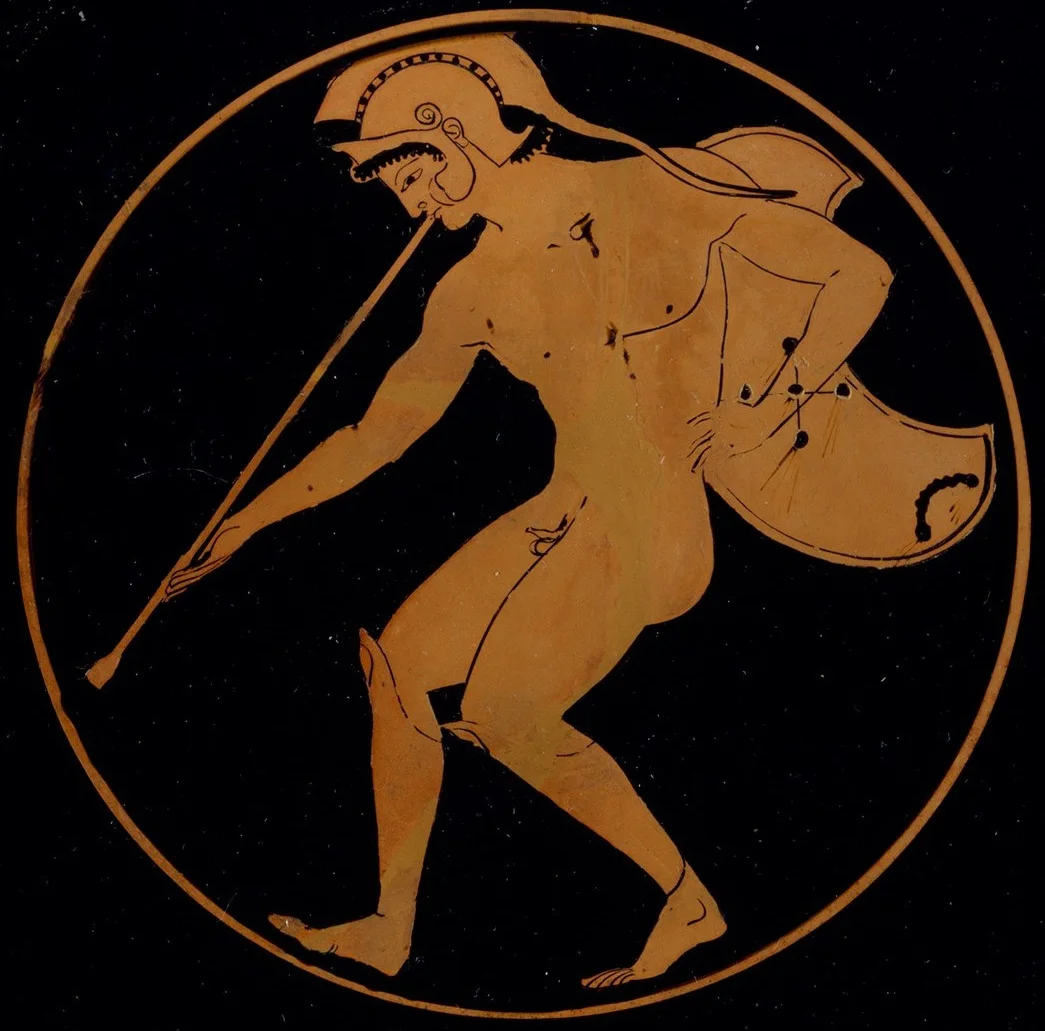
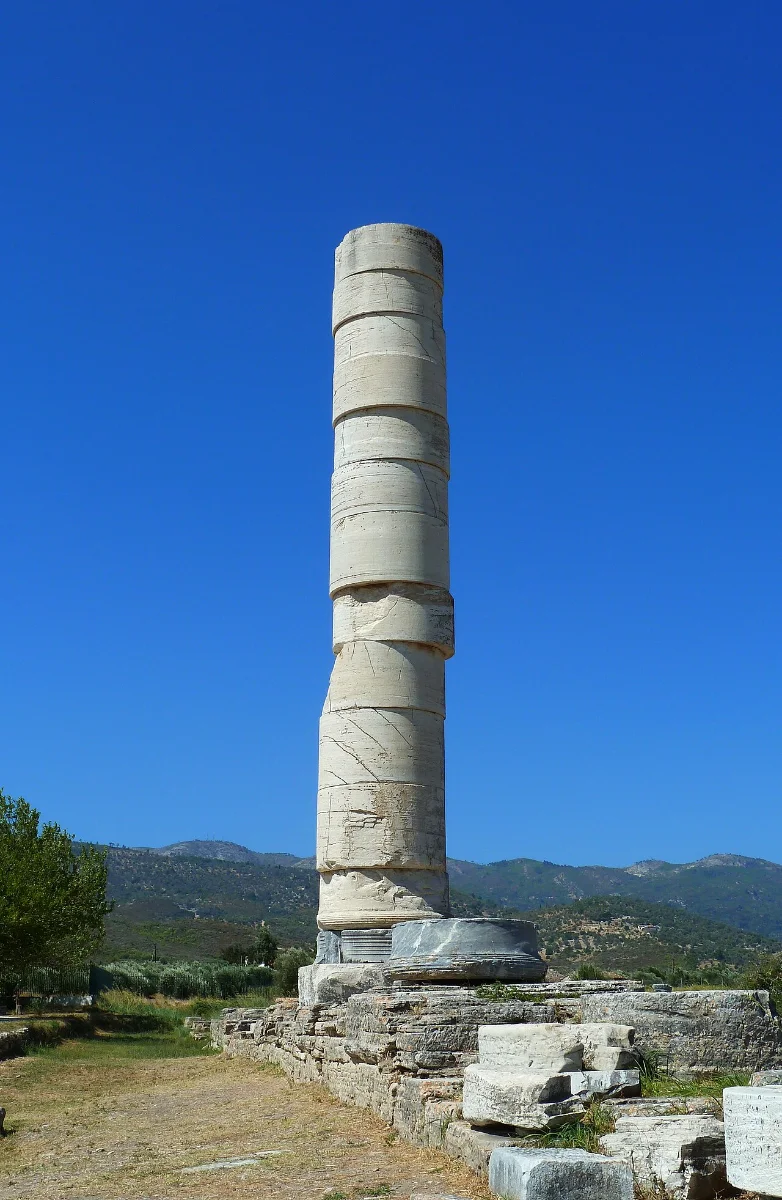
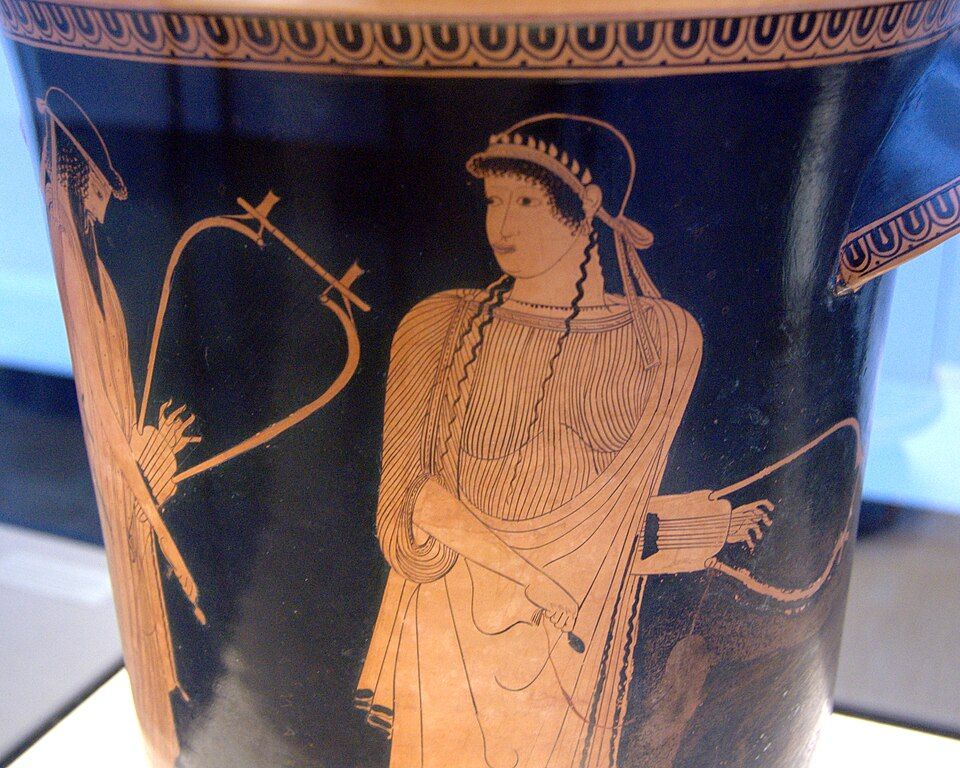
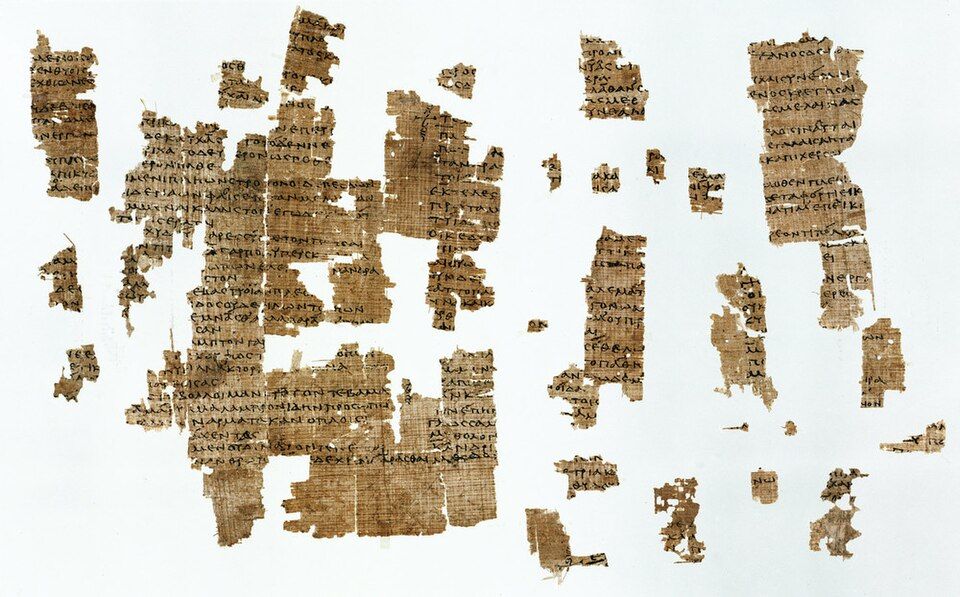
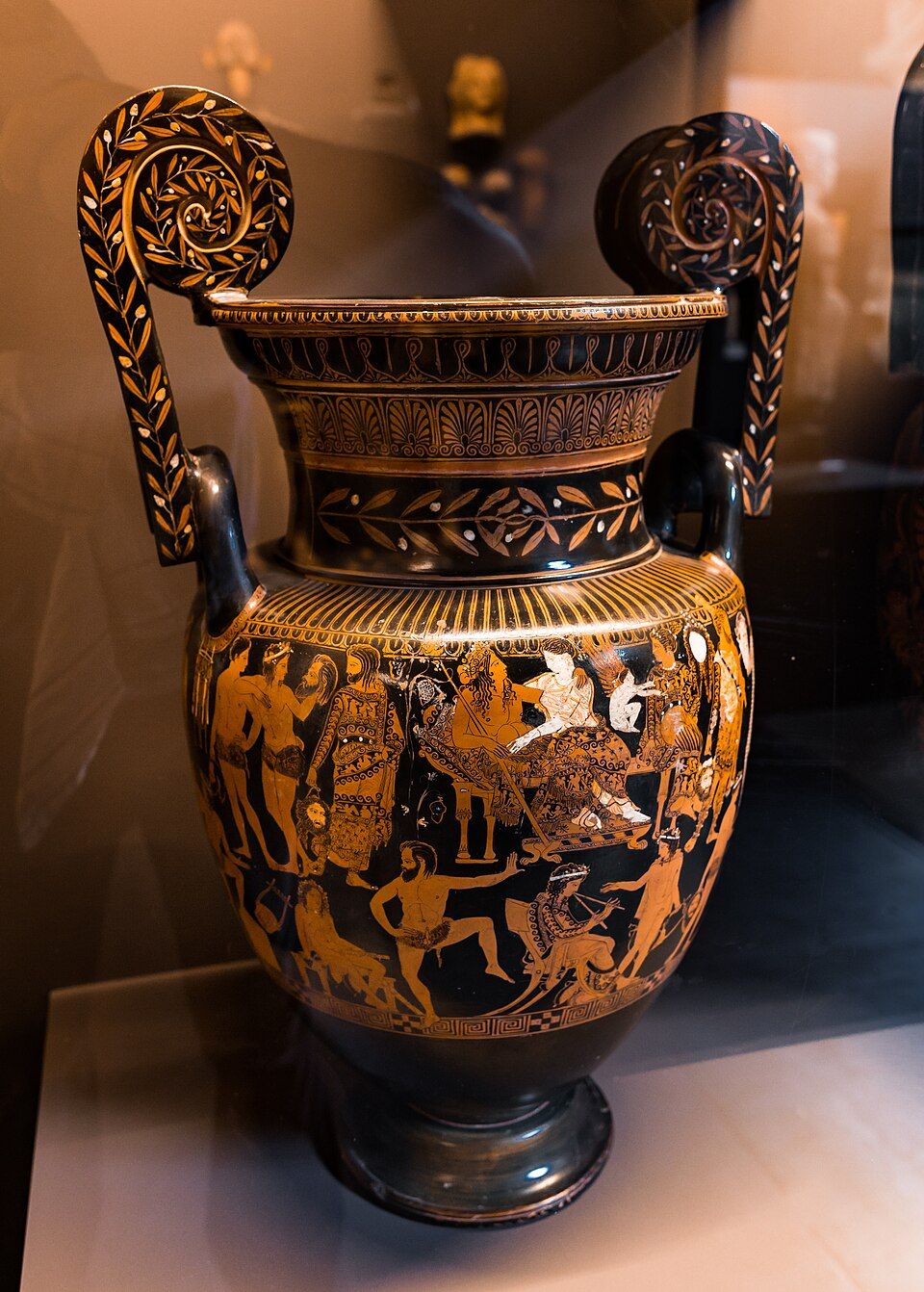
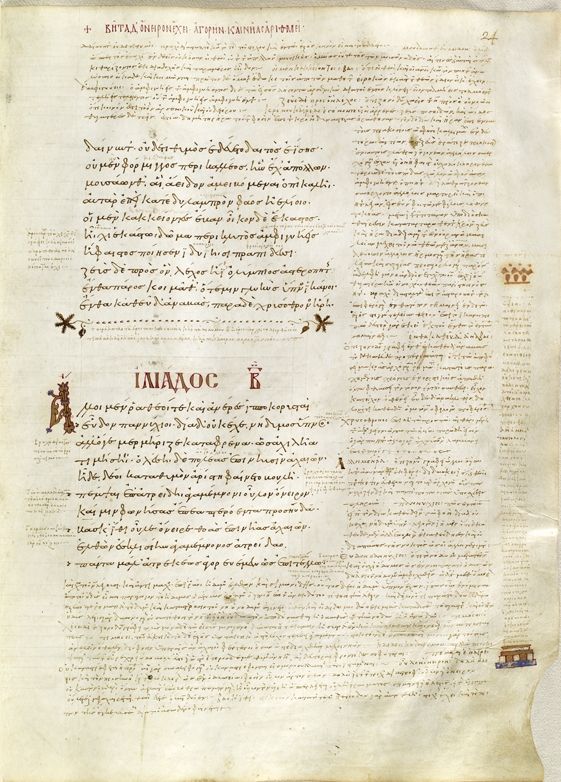
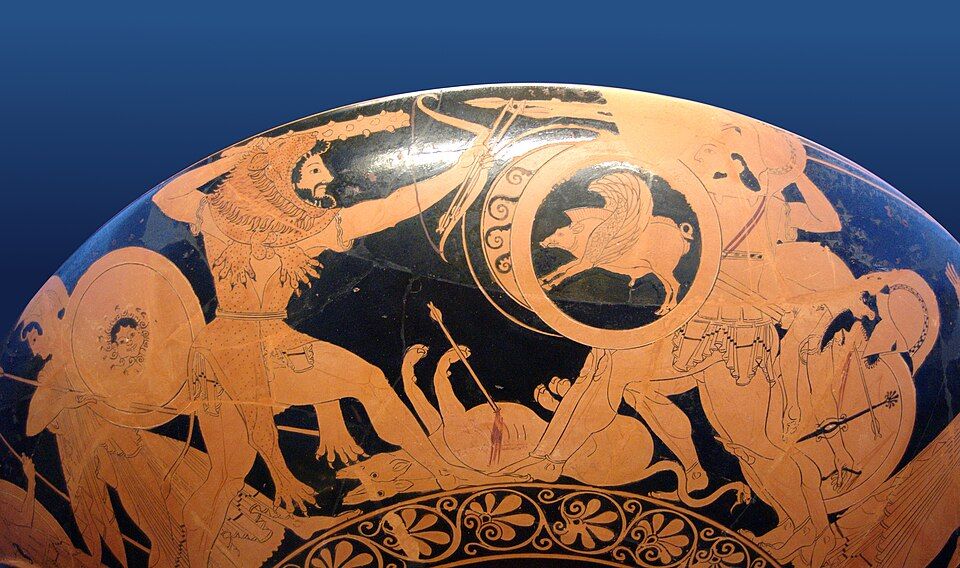
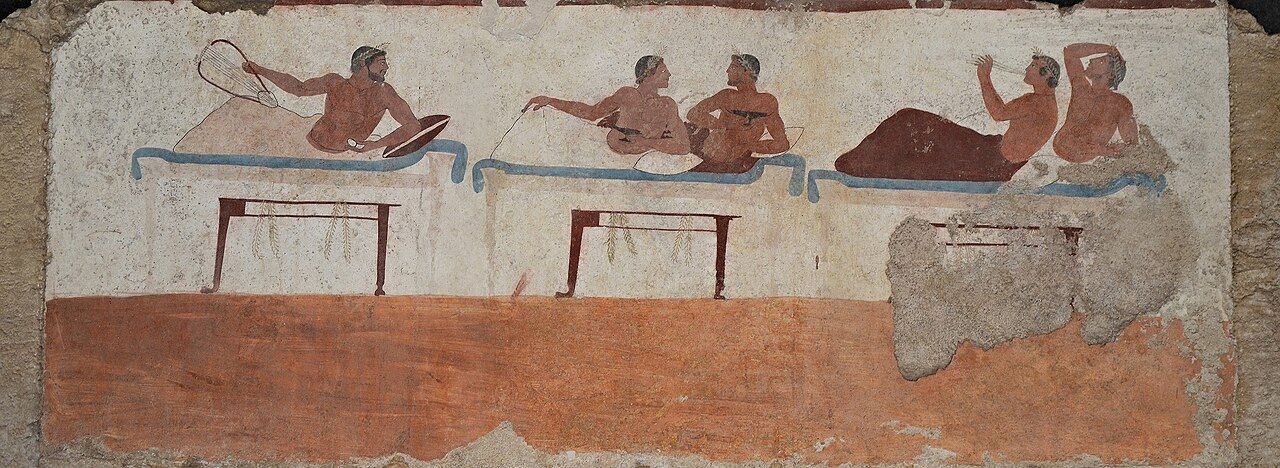
T
- Tabula Iliaca Capitolinarelief
A calcite tablet of the late first century BC that illustrates “the Sack of Troy according to Stesichorus”.
See: Stesichorus and Ibycus › Transmission
On this site: 1 place
- Tatianwriter
Christian writer of the second century AD who claims to have seen statues of women poets, Anyte, Moero and Praxilla among them.
See: Anyte › Life · Praxilla › Life
On this site: 6 places on 4 pages
- technitai τεχνῖται (technītai)termalso Artists of Dionysus, artists' guilds
The professional musicians and actors of the Hellenistic age, organised from about 290 BC in guilds named for Dionysus, which supplied festivals with choruses and performers; the Athenian guild sang the Delphic paeans in 128 BC.
Source: West 1992, pp. 374–375
See: Performance › Cult and competitions · Notation › A Delphic passage
On this site: 1 place
- Telephus elegyelegyalso new Archilochus
An elegy of Archilochus on Telephus, published from papyrus in 2005.
Source: Sampson 2022, p. 113
See: How the texts reached us › Discoveries
On this site: 2 places on 2 pages
- Telesillapoet
Woman poet of the classical period who, with Myrtis and Praxilla, probably composed choral poetry.
Source: Stehle 2009, p. 65
See: Praxilla › Life
On this site: 4 places
- telesilleantermalso telesilleans, tl
The aeolic colon × — ⏑ ⏑ — ⏑ — (siglum tl), a glyconic one syllable short at the front.
Source: West 1987, pp. x, 33
See: Introduction to Greek metre › Glossary
On this site: 26 places on 9 pages
- Telestespoet
Dithyrambic poet named among the New Musicians.
See: Timotheus and the New Music › Life
On this site: 1 place
- Telosplace
Island in the Dodecanese whose Doric Erinna largely writes.
Source: Natoli et al. 2022, pp. 328, 332
See: Erinna › Life · Attic of drama › Koinē and accent
On this site: 3 places on 2 pages
- Teosplace
Ionian city on the coast of Asia Minor, Anacreon’s birthplace.
See: Anacreon › Life
On this site: 6 places on 3 pages
- Terpanderpoet
Early citharode from Lesbos who, with Arion, was among the first exponents of choral song at Sparta; said to have used the Mixolydian mode and introduced the barbitos.
Source: de Kreij 2022, p. 144; Battezzato 2021, pp. 130, 132
See: Doric of choral lyric › Features · Sappho › Music
On this site: 11 places on 10 pages
- testimoniatermalso testimonium
Ancient statements about an author’s life and work, as distinct from the fragments of the work; for Sappho the first fairly full account is a papyrus treatise of about AD 200 (P.Oxy. 1800), the next the Suda.
Source: Kivilo 2021, p. 11
See: Sappho › Life
On this site: 29 places on 9 pages
- tetrachord τετράχορδον (tetrachordon)termalso tetrachords
Four notes spanning a perfect fourth, the building block of every Greek scale; its outer notes are fixed, its two inner notes move with the genus. Tetrachords are conjunct when they share a note and disjunct when a tone separates them.
Source: West 1992, pp. 160–162
See: Scales and harmoniai › Tetrachords and genera · Scales and harmoniai › The Perfect System · Music theory › Tetrachord
On this site: 16 places on 6 pages
- tetrametertermalso tetrameters, trochaic tetrameter
A verse of four metra. The commonest is the trochaic tetrameter catalectic, — ⏑ — × — ⏑ — × | — ⏑ — × — ⏑ —, an iambic trimeter with — ⏑ — in front, used by Archilochus and Solon and in some scenes of drama; comedy also has iambic and anapaestic tetrameters. Example: Aeschylus, Persians 226, ἀλλὰ μὴν εὔνους γ’ ὁ πρῶτος τῶνδ’ ἐνυπνίων κριτὴς (alla mēn eunous g’ ho prōtos tōnd’ enypniōn kritēs), “well then, you, the first to interpret these dreams, have been kind”.
Source: West 1987, pp. 5, 28
See: Trochaic › The tetrameter catalectic
On this site: 91 places on 29 pages
- tetrasemeterm
A long position lasting four morae, as long as two ordinary longs, written ⏘.
Source: West 1987, pp. ix, 75, 90
See: Introduction to Greek metre › Glossary
On this site: 4 places on 3 pages
- Teubnerseriesalso Bibliotheca Teubneriana
The Leipzig series of critical editions (Bibliotheca Teubneriana); Consbruch’s Hephaestion of 1906, used here, is one of them.
Source: Bibliography, Texts and tools
See: Bibliography and licences › Texts and tools
On this site: 33 places on 18 pages
- theatrocracyterm
Plato’s word for the rule of the audience over music: public taste becomes the judge of a performance.
See: Performance › Later history
On this site: 2 places
- Thebaid (Stesichorus)lyric narrativealso Thebais, Lille Stesichorus
The Stesichorean poem on the sons of Oedipus from the Lille papyrus (P.Lille 76a + 73), whose scheme uses West’s biceps/anceps.
Source: West 1987, p. 37
See: Stesichorus and Ibycus › Transmission
On this site: 7 places on 4 pages
- Thebesplace
Chief city of Boeotia, Pindar’s home and the setting of the Theban plays; also the Egyptian Thebes of the Colossus of Memnon.
See: Pindar › Life · Julia Balbilla › Life
On this site: 48 places on 16 pages
- Themisgoddess
Goddess of right order, named in Hesiod’s Theogony and Bacchylides’ Ode 15.
See: Hesiod › Metres · Bacchylides › Ode 15
On this site: 9 places on 5 pages
- Theocritus Θεόκριτος (Theokritos)poet
Hellenistic poet of the Idylls: Doric bucolic hexameters and Lesbian experiments in Sappho’s metres.
See: Callimachus, Theocritus and Hellenistic poets › Life · Callimachus, Theocritus and Hellenistic poets › Lyric
On this site: 33 places on 18 pages
- Theognideaelegyalso Theognis' corpus
The collection of elegiac couplets that goes under Theognis’ name, the earliest copies of which date from the tenth century.
Source: Reynolds and Wilson 1991, p. 66
See: How the texts reached us › Byzantium
On this site: 7 places on 6 pages
- Theognis Θέογνις (Theognis)poet
Elegist addressed to the boy Cyrnus; the collection under his name, the Theognidea, gathers couplets of more than one author.
Source: Bowie 2022, pp. 303–316
See: The elegiac couplet › Scheme
On this site: 39 places on 17 pages
- Theogonyepicalso Th.
Hesiod’s hexameter poem on the birth of the gods, about 1,000 lines; its opening tells how the Muses gave him his staff on Helicon.
Source: Kelly 2022, p. 35
See: Hesiod › Theogony · 1–35 (the Muses of Helicon)
On this site: 17 places on 7 pages
- Theongrammarian
Scholar under Tiberius who commented on the Hellenistic poets; his work lies behind some scholia.
See: Callimachus, Theocritus and Hellenistic poets › Transmission · Introduction to Greek metre › Ancient metricians
On this site: 3 places on 3 pages
- Theophilusancient writeralso Hippolytus (writer)
Theophilus and Hippolytus, ancient authors whose quotations of the Theogony’s invocation lack line 111.
Source: Most 2018, pp. 10–11
See: Hesiod › Theogony · 104–115 (the invocation)
On this site: 2 places on 2 pages
- Theophrastusphilosopher
Philosopher, Aristotle’s successor, printed by Aldus with Aristotle (1495–1498).
See: How the texts reached us › Printing
On this site: 3 places on 3 pages
- Theriacadidactic poem
Nicander of Colophon’s didactic poem in hexameters on venomous creatures, quoted by Galen in To Piso.
See: Andromachus: the theriac poem (in Galen) › Nicander in Galen’s To Piso
On this site: 4 places on 2 pages
- Theron of Acragastyrant
Tyrant of Acragas for whom Pindar wrote Olympian 2.
See: Pindar › Olympian 2 · Pindar › Victory odes
On this site: 3 places
- Theseushero
Athenian hero of Bacchylides’ Ode 17 (Theseus and Minos).
See: Bacchylides › Ode 17
On this site: 3 places on 2 pages
- thesis θέσις (thesis)term
The down-beat of a foot, the opposite of arsis.
Source: West 1987, p. 90
See: Introduction to Greek metre › Glossary · Rhythm › Arsis and thesis
On this site: 18 places on 9 pages
- Thesmophoriazusaecomedyalso Women at the Thesmophoria
Aristophanes’ comedy of 411 BC in which Euripides and his kinsman burlesque Euripides’ tragedies; Hephaestion knew a second version.
Source: Easterling 1997, p. 353; Hall 1997, p. 95
See: Aristophanes › Plays and dates
On this site: 12 places on 6 pages
- Thessaliandialect
Dialect of Thessaly, of the Aeolic group with Boeotian and Lesbian.
Source: Natoli et al. 2022, p. 328
See: Doric of choral lyric › Corinna
On this site: 4 places on 4 pages
- Thessalonicaplace
City where Demetrius Triclinius taught around 1305–1320.
See: How the texts reached us › Byzantium
On this site: 15 places on 12 pages
- Thessalyplace
Region of northern Greece, home of Simonides’ patron Scopas and of a victor of Bacchylides.
See: Simonides › Life · Bacchylides › Life and works
On this site: 8 places on 5 pages
- Thetisgoddess
Sea goddess, mother of Achilles; Alcman sang of Peleus and Thetis.
See: Alcman › Songs and language
On this site: 5 places on 5 pages
- Thucydideshistorian
Athenian historian of the Peloponnesian War.
See: How the texts reached us › Printing · Doric of choral lyric › Layers and metre
On this site: 13 places on 6 pages
- Timodemusvictoralso Timodemidae
Timodemus son of Timonoüs, of Acharnae, a pancration victor, for whom Pindar wrote Nemean 2; his family, the Timodemidae, are named at line 18.
See: Pindar › Nemean 2
On this site: 1 place
- Timotheus Τιμόθεος (Timotheos)poet
Citharode of Miletus (late fifth to early fourth century BC), the symbol of the New Music, known above all from the papyrus of his Persians.
Source: Csapo and Wilson 2009, pp. 277–280
See: Timotheus and the New Music › Life · Timotheus and the New Music › Metres · Timotheus and the New Music › Persians
On this site: 32 places on 19 pages
- Tithonushero
Subject of Sappho’s poem on old age, the Tithonus poem.
See: Sappho › Papyri · Sappho › In numbers
On this site: 6 places on 3 pages
- Tithonus poemlyric poemalso New Sappho, fr. 58
Sappho fr. 58 on old age, made virtually complete in 2004 by the overlap of the Cologne papyrus (third century BC) with P.Oxy. 1787.
Source: Finglass 2021, pp. 232–239
See: Sappho › Papyri · Sappho › In numbers
On this site: 7 places on 4 pages
- tlsiglum
Siglum for the telesillean (tl¨ anaclastic, × — × — ⏑ ⏑ —; Lourenço: tel), × — ⏑ ⏑ — ⏑ —. See telesillean.
Source: West 1987, p. x; Lourenço 2011, p. 15
On this site: 16 places on 8 pages
- To Piso on Theriacmedical treatisealso Ad Pisonem, De theriaca ad Pisonem, To Piso
Galen’s treatise on theriac addressed to Piso, prose with verse quoted in it (Nicander’s hexameters).
See: Andromachus: the theriac poem (in Galen) › To Piso · Andromachus: the theriac poem (in Galen) › Nicander in Galen’s To Piso
On this site: 9 places on 3 pages
- tonal centretermalso tonal center
The note around which a melody is organised and to which it returns. The tonal centre need not be the starting note of the scale used to write the music.
Source: West 1992, pp. 184–189
See: Melody and accent › Mesomedes and Seikilos
On this site: 3 places on 2 pages
- tone (music) τόνος (tonos)termalso whole tone, 9:8 tone, major tone
The step by which a fifth exceeds a fourth, ratio 9:8 (204 cents): found on the lyre by tuning up a fifth and down a fourth. Aristoxenus worked with a tone of about 200 cents that he could halve and quarter.
Source: West 1992, pp. 10–12, 166–167; Landels 1999, c. pp. 91, 93
See: Music theory › Tone and semitone
On this site: 9 places on 5 pages
- tonos τόνος (tonos)termalso tonoi, key, keys, Hypolydian, Iastian, Hyperphrygian
A key: one of the thirteen (later fifteen) transpositions of the two-octave system, named after the old modes but fixing pitch rather than character. The key of a score is a notational fact, like a key signature, and need not match its octave species.
Source: West 1992, pp. 228–233; Nowacki 2020, pp. 24–29
See: Scales and harmoniai › Keys and species · Notation › Reading a line · Music theory › Keys
On this site: 19 places on 8 pages
- trsiglum
Siglum for a trochaic metron (tr∧ with catalexis, ending … — ⏑ —), — ⏑ — ×. See trochee.
Source: West 1987, p. x
On this site: 15 places on 11 pages
- triadtermalso triads, triadic
Strophe, antistrophe and epode taken as a set and repeated, the structure of most of Pindar’s and Bacchylides’ odes. Example: Bacchylides 5, whose lines 93–95 close a strophe and line 96 opens the antistrophe.
Source: West 1987, pp. 36, 42; Battezzato 2009, pp. 132–133
See: Lyric Stanzas › Triadic structure · Introduction to Greek metre › Glossary
On this site: 51 places on 19 pages
- tribrachtermalso tribrachs
Three shorts filling a foot: an iamb or trochee with its long resolved.
Source: West 1987, p. 90
See: Introduction to Greek metre › Glossary
On this site: 28 places on 12 pages
- trilltermalso trilled, rolled r
A consonant made by letting the tip of the tongue vibrate several times against the ridge behind the teeth. Greek ρ was such a trill, rolled as in Italian or Scottish English, not the r of southern English; at the start of a word, and after φ θ χ, it was voiceless. Example: ῥόδον (rhodon) “rose”, with a voiceless rolled [r̥]; πατρός (patros) “of a father”, with a voiced [r].
Source: Allen 1968, pp. 39–41
See: Sounds › Consonants
On this site: 7 places on 4 pages
- trilogytermalso tetralogy
Three tragedies produced together, with a satyr play to follow; the three plays of Aeschylus’ Oresteia form one.
Source: Easterling 1997, p. 352
See: Aeschylus › Plays and dates
On this site: 10 places on 3 pages
- trimetertermalso trimeters, iambic trimeter
A verse of three metra; above all the iambic trimeter × — ⏑ — × — ⏑ — × — ⏑ —, the spoken verse of iambus and of dialogue in tragedy and comedy, usually with a caesura after its fifth or seventh position. Example: Sophocles, Oedipus Tyrannus 1, ὦ τέκνα, Κάδμου τοῦ πάλαι νέα τροφή (ō tekna, Kadmou tou palai nea trophē), “Children, newest brood of ancient Cadmus”.
Source: West 1987, pp. 5, 25
On this site: 136 places on 37 pages
- trisemetermalso trisemes
A long of three morae, in syncopated iambic and trochaic song, written ⌊ (= ⏑ —) or ⏗ (= — ⏑); the signs are those of the ancient rhythmicians.
Source: West 1987, pp. ix, 7, 90
See: Introduction to Greek metre › Glossary · Notation › Rhythmic signs
On this site: 16 places on 8 pages
- trochee τροχαῖος (trochaios)termalso trochaic, trochees
The foot — ⏑; the trochaic metron (siglum tr) is — ⏑ — ×, used above all in the catalectic tetrameter of Archilochus and of drama.
Source: West 1987, pp. x, 5, 90; D’Angour 2022, p. 135
See: Trochaic › The tetrameter catalectic · Introduction to Greek metre › Glossary
On this site: 219 places on 52 pages
- Trojan Womentragedyalso Troades, Tro.
Euripides’ tragedy of 415 BC, part of a connected set on the Trojan War.
Source: Easterling 1997, p. 353
See: Euripides › Plays and dates
On this site: 17 places on 9 pages
- Troyplacealso Ilium, Ilion, Ilios, Trojan
The city of the Trojan War, setting of the Iliad and of much lyric and tragedy.
See: Homer › Iliad · 6.440–465 (Hector answers Andromache) · Sappho › Fr. 44 (Ἔκτωρ καὶ συνέταιροι…)
On this site: 45 places on 18 pages
- tympanon τύμπανον (tympanon)termalso frame drum, drum, kymbala, cymbals
A shallow frame drum held in the left hand and struck with the right, and the small bronze cymbals that went with it: instruments of the orgiastic cults of Dionysus and the Mother, played almost only by women.
Source: West 1992, pp. 124–126; Anderson 1994, pp. 185–186
On this site: 1 place
- Typhosmonster
The hundred-headed monster of Pythian 1, who lies under Cyme, Sicily and Etna.
See: Pindar › Pythian 1
On this site: 2 places on 2 pages
- Tyrtaeuspoet
Elegist of seventh-century Sparta, connected with the Second Messenian War, who wrote elegy in Ionic; his Eunomia was on the Spartan constitution.
Source: Bartol 2022, pp. 224–225; Aloni 2009, p. 171
See: The elegists: Callinus, Tyrtaeus, Mimnermus, Solon, Theognis, Xenophanes › Tyrtaeus fr. 10 · The elegists: Callinus, Tyrtaeus, Mimnermus, Solon, Theognis, Xenophanes › Tyrtaeus fr. 11
On this site: 14 places on 9 pages
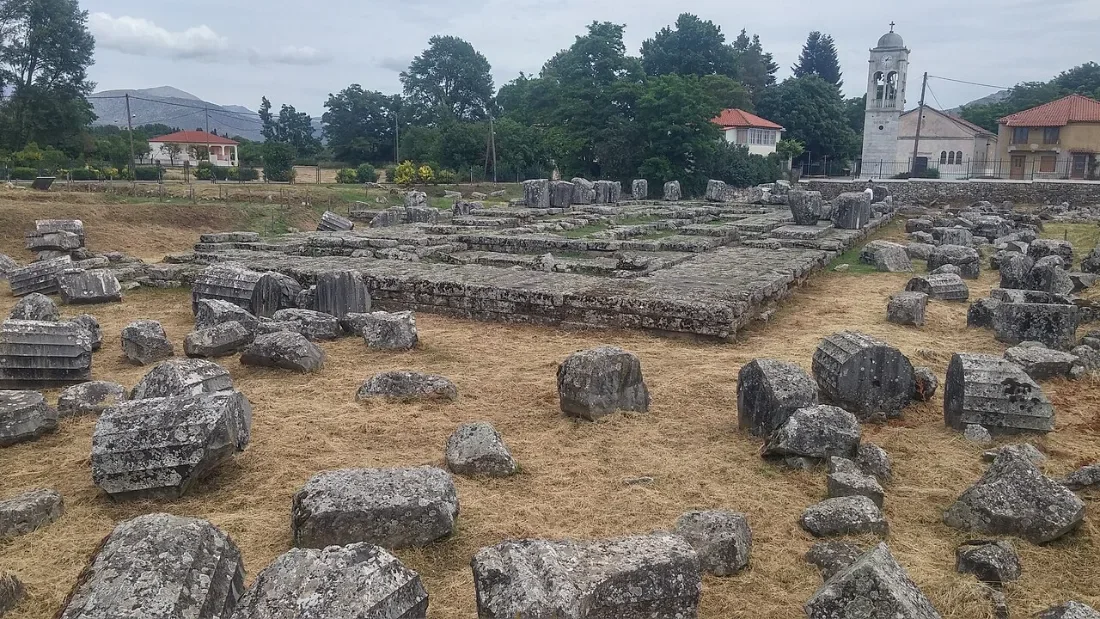
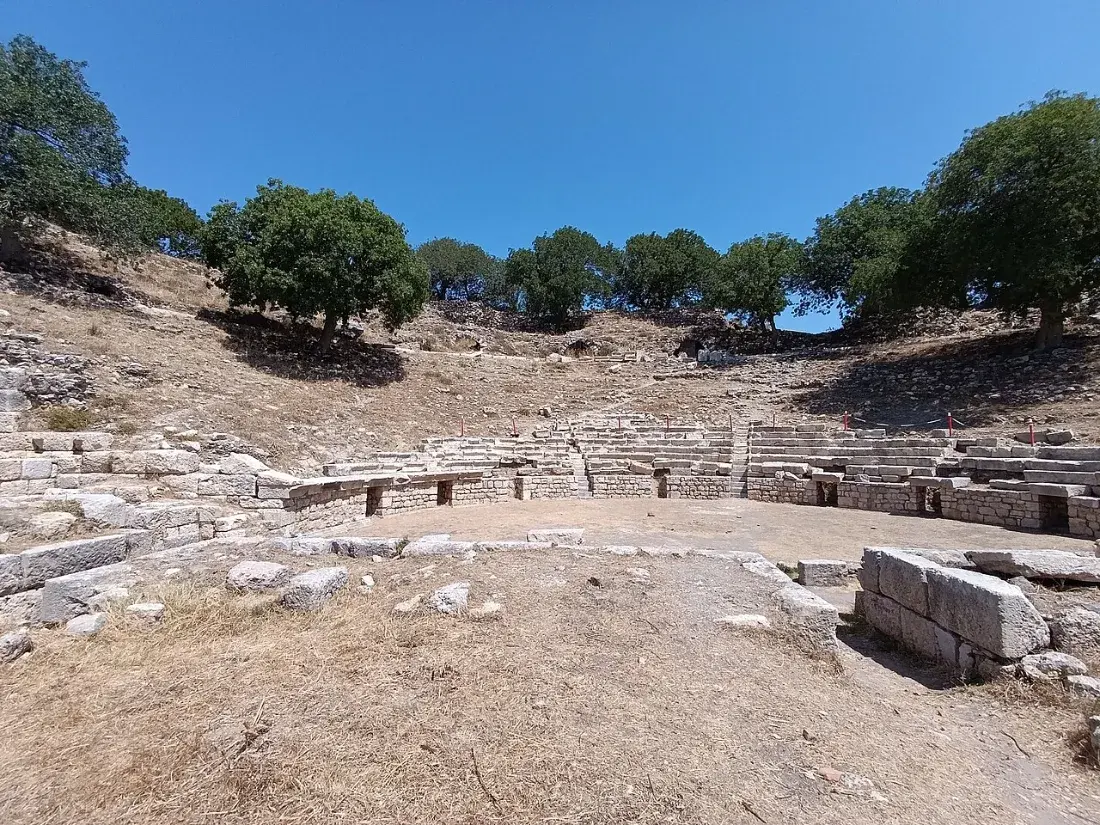
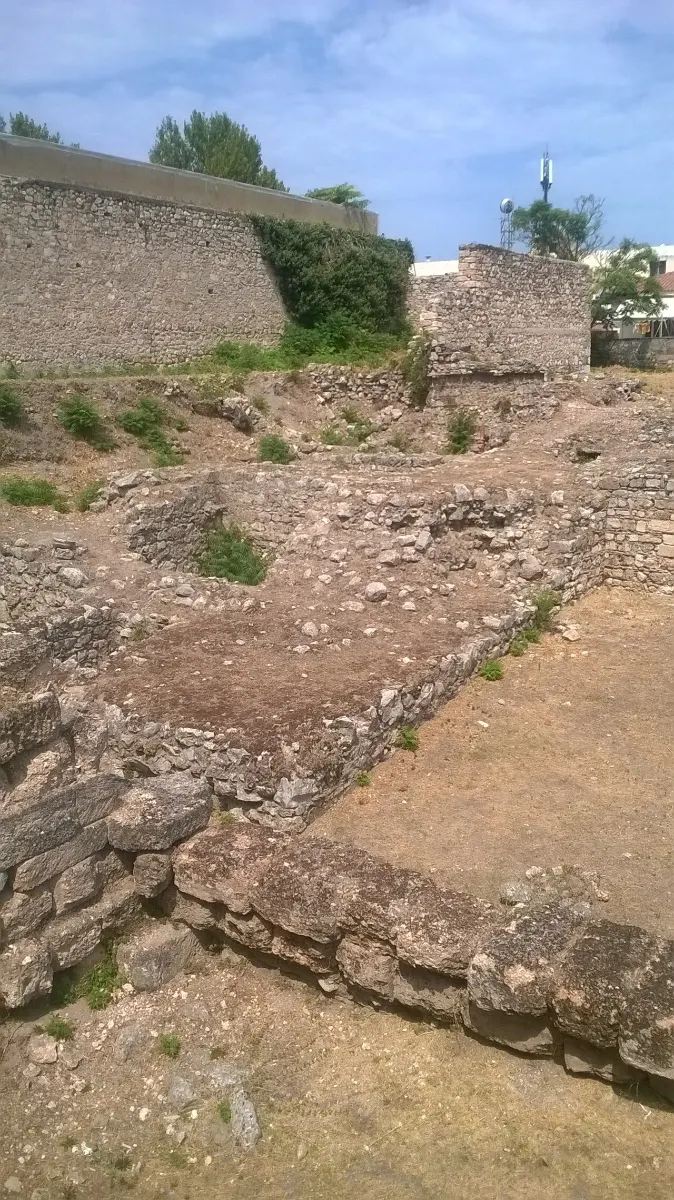
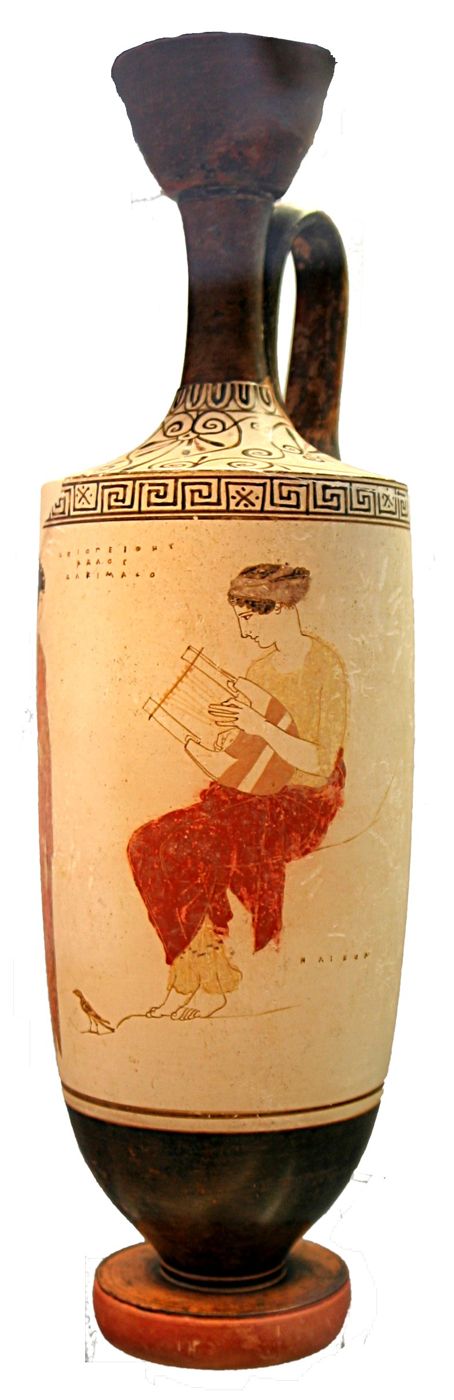
U
- uncialtermalso majuscule, uncials
The large script of separate capital letters (majuscule) in which ancient and early Byzantine books were written; in the ninth century it gave way to minuscule, and errors shared by all our manuscripts of an author often go back to misreadings of uncial letters when the old books were transcribed.
Source: Reynolds and Wilson 1991, pp. 58–60
See: How the texts reached us › Byzantium
On this site: 2 places on 2 pages
- Urania and TerpsichoreMusesalso Urania, Terpsichore
Two of the Muses: Urania in Bacchylides’ Odes 4 and 16; Terpsichore bids Corinna sing in PMG 655.
See: Corinna › Life
On this site: 5 places on 3 pages
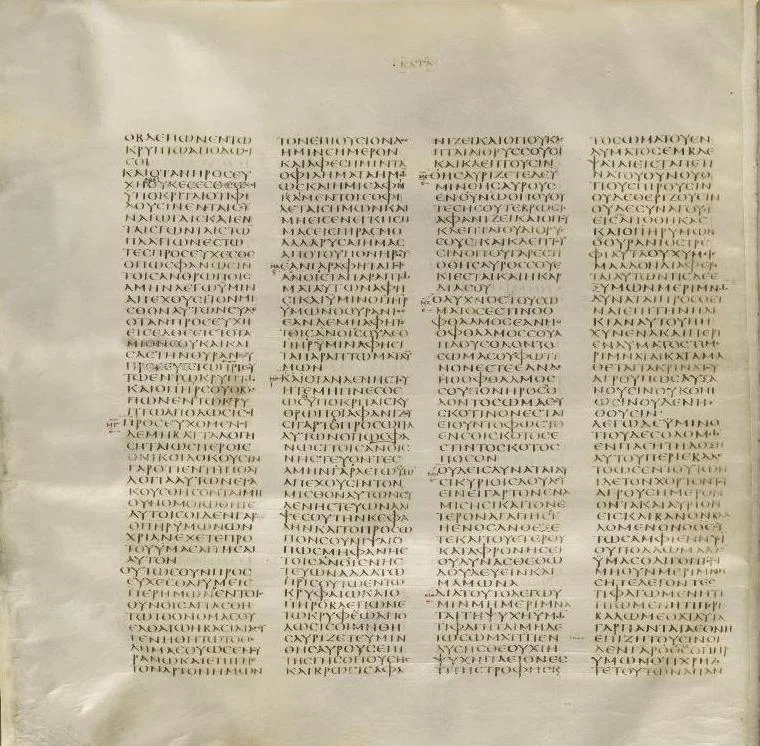
V
- Vabbreviationalso Voigt numbers
After a fragment number: numbered as in Voigt’s edition of Sappho and Alcaeus (1971), which this site follows.
Source: Voigt 1971
See: Bibliography and licences › Texts and tools · Sappho › Editions
On this site: 3 places on 3 pages
- Varia historiamiscellany
Aelian’s miscellany, which says Corinna beat Pindar five times.
See: Corinna › Life
On this site: 1 place
- Vedictermalso Vedic metre, Indo-European
The oldest Indian verse; its metres share features with the Greek (free opening, regulated close), which West treats as inherited from Indo-European verse.
Source: West 1987, p. 6; Battezzato 2009, p. 133
See: Epic Ionic › Metrical consequences
On this site: 19 places on 14 pages
- velartermalso velars, palatal (Smyth’s name)
Made with the back of the tongue against the soft palate (velum): κ [k], γ [ɡ], χ [kʰ], and the nasal [ŋ] written γ before them. Older grammars such as Smyth call these “palatals”. Example: Κρόνος (Kronos) beside χρόνος (khronos) “time”, [k] against [kʰ]; γάμος (gamos) “marriage” [ɡ].
Source: West 1987, p. 11; Smyth 1920, p. 11 (§ 16); Allen 1968, pp. 15, 27, 33
See: Sounds › IPA chart · Sounds › Consonants
On this site: 4 places on 3 pages
- Veniceplace
Centre of the printing trade, where Aldus issued the first editions of Greek authors, and home of the Venice Iliad.
See: How the texts reached us › Printing
On this site: 12 places on 6 pages
- Venice Iliadmanuscriptalso Venetus A
The tenth-century manuscript of the Iliad in Venice, whose scholia (published by Villoison in 1788) brought news of the Alexandrian critics.
Source: Reynolds and Wilson 1991, p. 66
See: How the texts reached us › Byzantium · How the texts reached us › Discoveries
On this site: 4 places on 2 pages
- versetermalso verses
In metrics a technical term: a unit defined by synapheia (a period), not simply a line on the page; Battezzato likewise keeps “verse” and “line” apart.
Source: West 1987, p. 3; Battezzato 2009, p. 132
- voces magicaetermalso magical words, vox magica
The strings of strange names and letters in Greek spells; in the hymns of the magical papyri they often break into or close a verse and seldom fit its rhythm.
Source: Betz 1986, PGM II 64–183 n. 25; Galoppin 2017
- voicedtermalso voiceless, unvoiced
Said of a sound made while the vocal folds vibrate: all vowels, β δ γ, λ μ ν, ρ (except at the start of a word, where it was voiceless) and ζ. A voiceless sound is made without that vibration: π τ κ, φ θ χ, σ, ξ, ψ. Example: δ [d] in δῶρον (dōron) “gift” is voiced, τ [t] in τόξον (toxon) “bow” voiceless; σ itself became voiced [z] before a voiced consonant, so Ἀθήναζε (Athēnaze) “to Athens”, from Ἀθήνας + δε, was said with [zd].
Source: Smyth 1920, pp. 10–11 (§ 15); Allen 1968, pp. 2, 43
See: First steps › Letters and sounds · Sounds › IPA chart
On this site: 20 places on 13 pages
W
- Wabbreviationalso IEG, West's Iambi et Elegi
After a fragment number: numbered as in M. L. West, Iambi et Elegi Graeci (2nd edn, Oxford 1989–1992), the edition of the iambic and elegiac poets (IEG).
Source: Swift (ed.) 2022, pp. x–xi; Cingano 2022, p. 290 n. 1
See: Bibliography and licences › Texts and tools
On this site: 23 places on 10 pages
- Waspscomedy
Aristophanes’ comedy of 422 BC.
Source: Easterling 1997, p. 353
See: Aristophanes › Plays and dates
On this site: 14 places on 8 pages
- Wealthcomedyalso Plutus
Aristophanes’ last surviving comedy, of 388 BC.
Source: Easterling 1997, p. 354
See: Aristophanes › Plays and dates
On this site: 4 places on 2 pages
- Wernicke's Lawtermalso Wernicke
In the hexameter, a word whose next-to-last syllable is long and whose last vowel is short is placed so as to scan … — ⏑ or at line-end; so word-end after a contracted fourth biceps hardly ever follows a short open vowel (West). Maas states the facts as rules of lengthening by position: in Homer a final syllable ending in a vowel is never lengthened in the contracted fourth biceps (he cites Hilberg 1879), and he keeps the name Wernicke’s Law for the companion rule that one ending in a consonant is seldom lengthened there (Wernicke 1819). The facts agree; the name covers different observations.
Source: West 1987, p. 20; Maas 1962, p. 77
See: Introduction to Greek metre › Glossary · Dactylic: the hexameter › Scheme · Homer › Iliad · 6.466–481 (Hector and Astyanax)
On this site: 67 places on 5 pages
- wilsiglum
Siglum for Battezzato’s and Lourenço’s siglum for the wilamowitzianus, ○ ○ — × — ⏑ ⏑ —. See wilamowitzianus.
Source: Battezzato 2009, p. 136; Lourenço 2011, p. 15
On this site: 6 places on 4 pages
- wilamowitzianustermalso wil, wilamowitzian, choriambic dimeter
The anaclastic glyconic ○ ○ — × — ⏑ ⏑ —, also called the choriambic dimeter (Battezzato: wil, cho dim). Lourenço warns that the iambo-choriambic dimeter × — ⏑ — — ⏑ ⏑ — is often confused with it; its third position is long, which tells them apart.
Source: West 1987, pp. x, 86, 90; Battezzato 2009, p. 136; Lourenço 2011, p. 115
See: Introduction to Greek metre › Glossary · Sophocles › Antigone · 781–800 (third stasimon, Eros)
On this site: 12 places on 7 pages
- Women of Trachistragedyalso Trachiniae
Sophocles’ undated tragedy of Heracles and Deianira, which shows the influence of the Oresteia and of Euripides.
Source: Scodel 2005, p. 234
See: Sophocles › Plays and dates
On this site: 7 places on 3 pages
- word-endtermalso word end, word-ends, word-division
The point in a verse where one word stops and the next begins. Its regular places have names: a caesura is word-end inside a foot or metron, a diaeresis word-end at its end, and a bridge a place where word-end is avoided. Short words that lean on the next or the previous word do not count. Example: Iliad 1.1 μῆνιν ἄειδε θεὰ | Πηληϊάδεω Ἀχιλῆος (mēnin aeide theā | Pēlēïadeō Achilēos), with word-end after θεά inside the third foot.
Source: West 1987, pp. 4, 21, 86
See: Introduction to Greek metre › Feet, metra, cola, periods
On this site: 287 places on 58 pages
- Works and Daysdidactic epicalso Op.
Hesiod’s didactic hexameter poem on farming and justice, about 800 lines.
Source: Kelly 2022, p. 35
See: Hesiod › Works and Days · 1–26 (the two Strifes)
On this site: 10 places on 4 pages
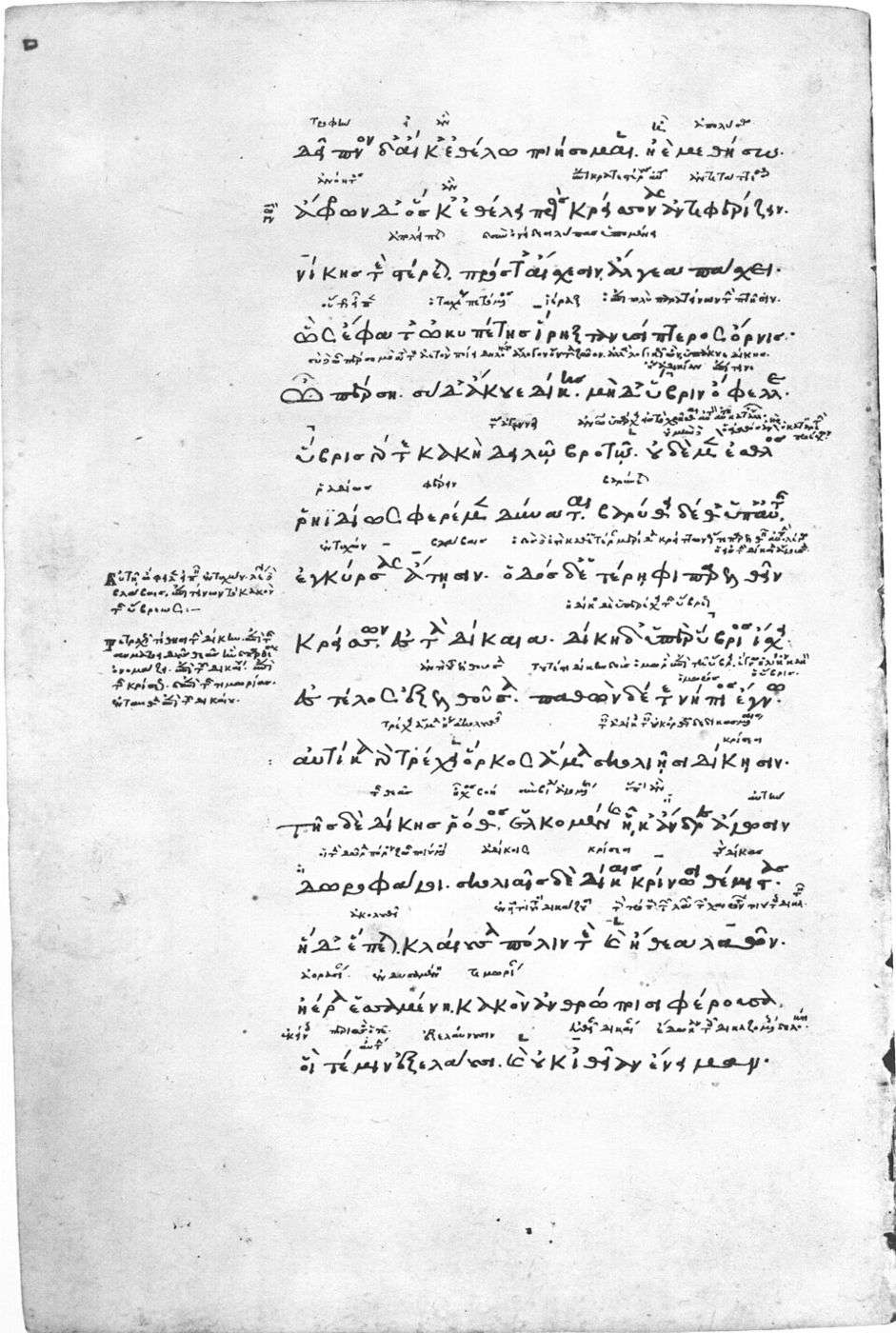
X
- Xenophanespoet
Poet who wrote both elegy and hexameters; his elegy fr. 1 describes a well-ordered symposium, and fr. 2 sets his wisdom above the strength of athletes.
Source: Bartol 2022, p. 224
See: The elegists: Callinus, Tyrtaeus, Mimnermus, Solon, Theognis, Xenophanes › Xenophanes fr. 1 · The elegists: Callinus, Tyrtaeus, Mimnermus, Solon, Theognis, Xenophanes › Xenophanes fr. 2
On this site: 8 places on 6 pages
- XerxesPersian kingalso Darius
King of Persia defeated by the Greeks; in Aeschylus’ Persians he has only anapaests and lyrics, no trimeters, and the Queen fears for the house of Darius.
See: Aeschylus › Persians
On this site: 5 places on 4 pages
Z
- Zenobiusparoemiographer
Collector of proverbs who explains “sillier than Praxilla’s Adonis” from her hymn.
See: Praxilla › Life
On this site: 3 places
- ZenodotusAlexandrian scholar
One of the first librarians of Alexandria and a leading literary man of his day.
Source: Reynolds and Wilson 1991, p. 7
See: How the texts reached us › Alexandria
On this site: 5 places on 4 pages
- Zeus Ζεύς (Zeus)god
The chief of the gods, named throughout the poems scanned here (Aphrodite is “child of Zeus” in Sappho fr. 1; Callimachus’ first hymn is to him; Aratus’ Phaenomena opens with him, and the Hymn to Zeus of the Agamemnon calls on him “whoever he is”).
See: Sappho › Fr. 1 (Hymn to Aphrodite) · Callimachus, Theocritus and Hellenistic poets › Callimachus, Hymn to Zeus · Callimachus, Theocritus and Hellenistic poets › Aratus, Phaenomena · 1–18 (proem to Zeus) · Aeschylus › Agamemnon · 160–75 (Hymn to Zeus)
On this site: 160 places on 44 pages
Greek
- γ-nasaltermalso gamma nasal, velar nasal, agma
The nasal [ŋ], the ng of English song [sɒŋ]. Greek wrote it with γ before γ, κ, χ and ξ: ἄγγελος (angelos) [áŋɡelos] “messenger”, ἄγκυρα (ankyra) [áŋkyra] “anchor”, τυγχάνω (tynchanō) [tyŋkʰánɔː] “I happen”, σφίγξ (sphinx) [spʰíŋks] “sphinx”. In γγ only the first γ is nasal.
Source: Allen 1968, p. 33; Smyth 1920, pp. 11, 25
See: Sounds › Consonants
On this site: 2 places
- δsiglum
Siglum for the dochmius, ⏒ — — ⏒ —. See dochmiac.
Source: West 1987, p. ix
On this site: 109 places on 39 pages
- σωτῆρα ruletermalso final trochee rule
An accented long penult takes the circumflex when the last vowel is short (σωτῆρα (sōtēra) “saviour”, δῶρον (dōron) “gift”) and the acute when it is long (δώρου (dōrou) “of a gift”). Its other name, the final trochee rule, is misleading, because the rule counts the length of vowels, not of syllables.
Source: Probert 2006, p. 61; Smyth 1920, p. 39
See: Accent and morae › Where the accent stands
On this site: 3 places
Nothing matches. Try fewer letters, another spelling, or a Greek word without accents.
